Tag Archives: Lotus

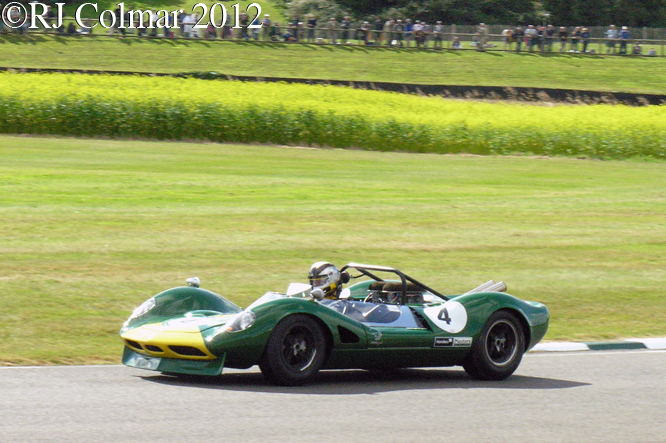
Cut and Bury – Lotus Ford 64

After coming close to winning the 1968 Indianapolis 500 with the Pratt & Whitney gas turbine powered Lotus 56 driven by Joe Leonard the powers at Indianapolis decided to ban gas turbine power and all wheel drive for the 1969 season, but eventually relented and allowed all wheel drive vehicles that had wheels no more than 9″ wide all round. Rear wheel drive vehicles were allowed to go to 14″ wide wheels at the rear.
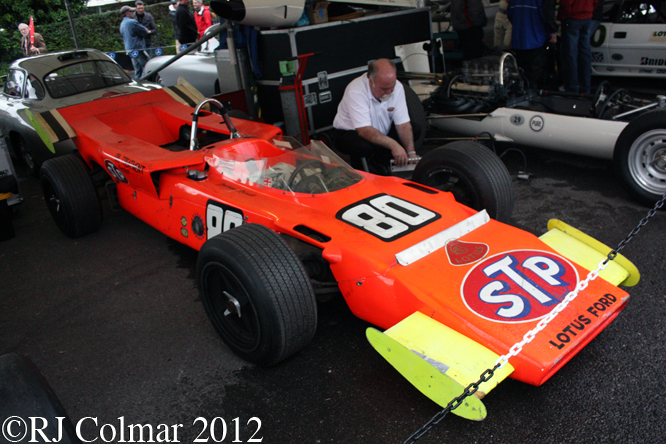
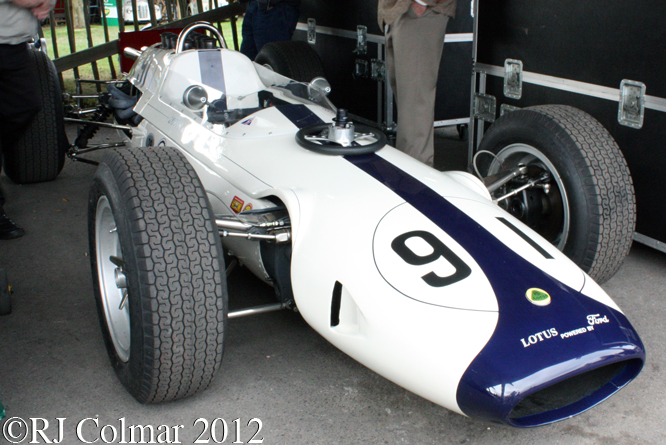
Lotus Ford 64, Goodwood Festival Of Speed

Colin Chapman rose to the challenge of building a car to the new regulations with the financial encouragement from Andy Granatelli’s STP Oil Treatment. The Lotus 64 was a new chassis which was powered by a 700hp turbocharged double overhead cam Ford V8 motor driving an all wheel drive system that was lifted from the Lotus 56 as indeed was much of the rest of the chassis.

In order to connect the motor to the mid mounted gearbox the motor had to be mounted backwards so the drive came from the front, as on the ill feted Lotus Ford 63 all wheel drive Grand Prix car.

Mario Andretti, Graham Hill and Jochen Rindt were lined up to drive the three team cars and a spare was built just in case of unforeseeable eventualities. Straight out of the box the cars were on the pace of the gas turbine Lotus 56 from the year before setting record speeds. However Mario Andretti’s car had a rear hub failure which sent him into the wall. Mario was lucky to get away with superficial burns to his face and after it was determined the failure was due to a design fault that could not be rectified in the available time frame the three Lotus 64’s were withdrawn from the race.

Mario jumped into the #2 Hawk Ford belonging to Granatelli and promptly qualified 2nd to AJ Foyt and then won the race after Lloyd Ruby was knocked out of contention by leaving the pits with his refueling hose still attached.

Andy Granatelli wanted to buy one of the remaining 64’s but when negotiations broke down Colin Chapman is alleged to have ordered the now engineless cars be returned to Hethel, Lotus home base, where he promised to take a hack saw to them personally cut them up and dig a whole and personally bury them. As it turned out all three cars were put in a shed.

Jochen Rindt’s #80 is seen above sans motor, this is the second of the three remaining 64’s to have emerged in recent years the other one has a correct Ford motor installed.

Thanks for joining me on this “Cut and Bury” edition of “Gettin’ a li’l psycho on tyres, I hope you will join me again tomorrow when I’ll be looking at the first car to record a 200 mph average closed circuit lap during a race. Don’t forget to come back now !

Share

Continental Curiosities – Danville Concour’s d’Elegance

It’s a great thrill to welcome Jay Wollenweber to ‘Gettin’ a li’l psycho on tyres’. Jay has been running a blog called ‘California Streets‘ since 2009 and has kindly sent me some of his photo’s from the recent Danville Concours d’Elegance and a lot of information to use in today’s “Continental Curiosities” blog.

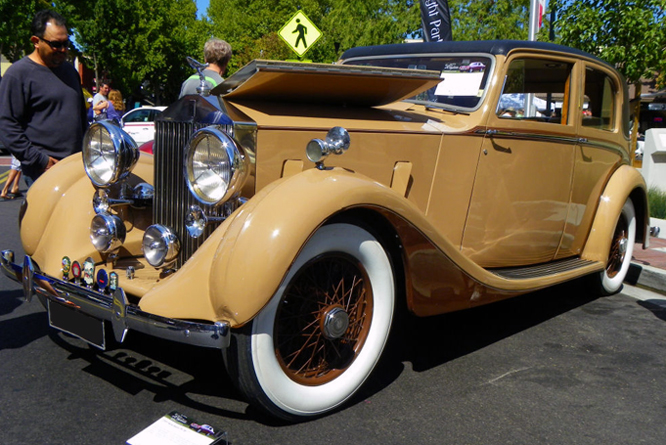
Rolls Royce 25/30 James Young, Danville Concours d' Elegance

H Mann Esq lost an arm in the 1914/18 Great war and so when he ordered his 1937 Rolls Royce 23/30, seen above, with James Young coachwork he had the gear stick mounted on the floor in the center of the car instead of it’s usual position between the driver and the drivers door.

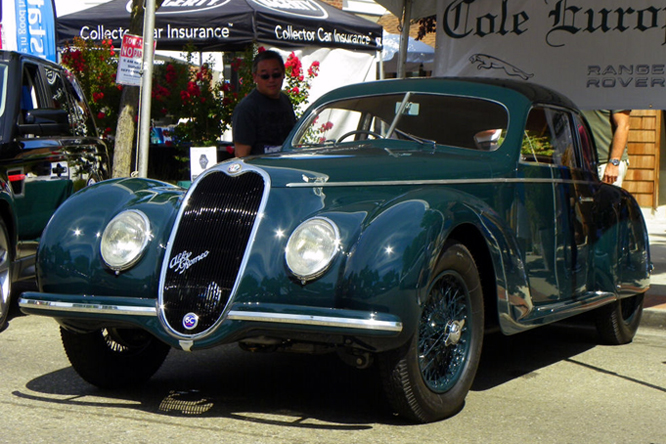
ALFA Romeo 6C 2500 Sport Touring Berlinetta, Danville Concours d' Elegance

Jay tells me the 1939 ALFA Romeo 6C 2500 Sport Touring Berlinetta seen above won the Best In Show Award the weekend before last, chassis #915030 also won the Pebble Beach Concours d’Elegance in 1998.

Allard K2, Danville Concours d' Elegance

In 1950 Allard introduced the K2 to replace the side valve V8 Ford powered K1. 118 similar K2 cars were built with the very first one having an earlier K1 body fitted as part of a rush order making 119 K2’s in all. This particular car is fitted with a 5424cc / 331 cui Cadillac V8.

Bentley R-Type, Gooda Special, Danville Concours d' Elegance

The Bentley above started life as a four seat 106 mph 1954 R-Type. Chassis #B77ZX was modified for competition with a new coupé body by Robert Peel for Bob Gooda with the registration RG27, that number plate now hangs on a Mercedes. Brian Dumps can be seen racing the car at Silverstone in this linked photograph.

Austin Healey 100/6, Danville Concours d' Elegance

Above is an Austin Healey 100/6 2+2 BN4, distinguished by the smaller distance between the rear of the cockpit and the boot / trunk lid.

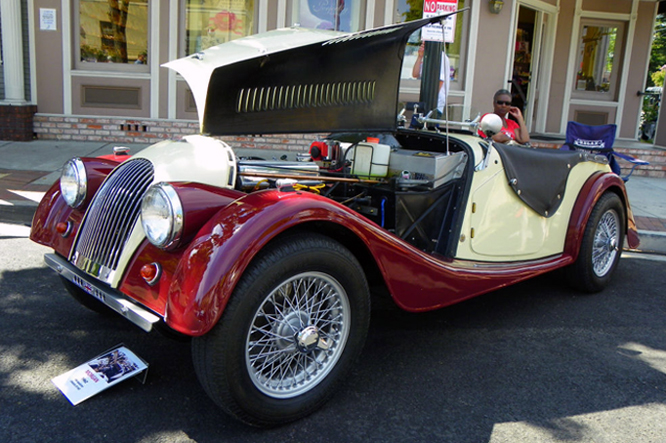
Morgan +4, Danville Concours d' Elegance

In 1962 Chris Lawrence and Richard Shepherd-Barron won their class at Le Mans in a hard topped Triumph powered Morgan +4 similar to the 1962 model above.

Lotus Elan S2, Danville Concours d' Elegance

The 1965 Lotus Elan S2 was a slightly more refined, quieter and more docile, model of the first series of Elans introduced in 1962. Average Joe motorist would have been put off the fun little car by the price, if he had not one Lotus representative at the time is alleged have said “we’re in big trouble!”

Austin FX4D, Danville Concours d' Elegance

The black London Cab is an icon of London in much the same way as the bright red double deck buses and Buckingham Palace. I do not ever recall seeing one like this 1967 Austin FX4D with white wall tyres, the narrow London streets of 1967 would have made a mockery of the additional expense.

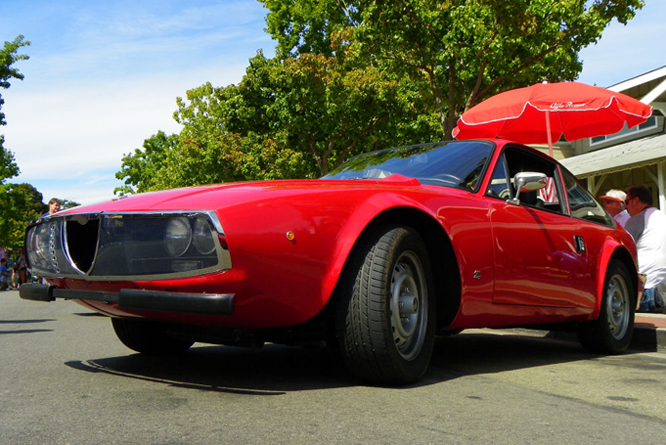
ALFA Romeo Junior Zagato, Danville Concours d' Elegance

1n 1969 Zagato began manufacturing the ALFA Romeo Junior Zagato based on a shortened 1300 GT Junior chassis pan with a steel shell, aluminium bonnet / hood and door skins. The 1972 model above appears to be one of the last of the 1,108 cars built, before production switched for 12 months to a similar but longer car built on a full length 16 GT Junior chassis of which 402 examples were built.

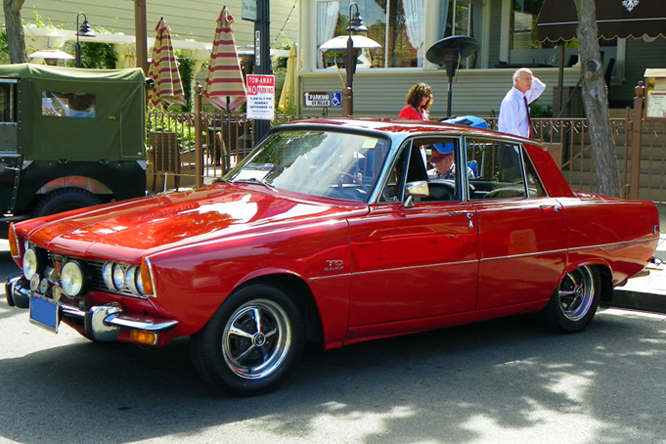
Rover 2000 TC, Danville Concours d' Elegance

The Rover 2000 TC above is a one owner car that has lived in San Francisco since new in 1969, you can see more photographs and find out more about this particular car on this link.

BMW 2002 Turbo, Danville Concours d' Elegance

The first patent for an exhaust driven turbocharger to force air at more than atmospheric pressure into the cylinder head of an internal combustion motor was awarded to Swiss Engineer Alfred Büchi, who was head of diesel engine research at Gebruder Sulzer, in 1905. Despite the significant increases in performance seen in both commercial diesel and piston powered aircraft. General Motors is credited with bringing turbo technology with first the Oldsmobile F85 Jetfire and a month later on Chevrolet Corvair Monza Spider in 1962. BMW was the first European manufacturer to use a turbocharger for a passenger car application in 1973, the 170 hp BMW 2002 above dates from 1975, not the reverse 2002 turbo stickers on the airdam, a crude attempt to inject the car with ‘eingebaute vorfahrt’ a ‘built in right of way’ normally the preserve in Germany for the 3 pointed star of Mercedes Benz.

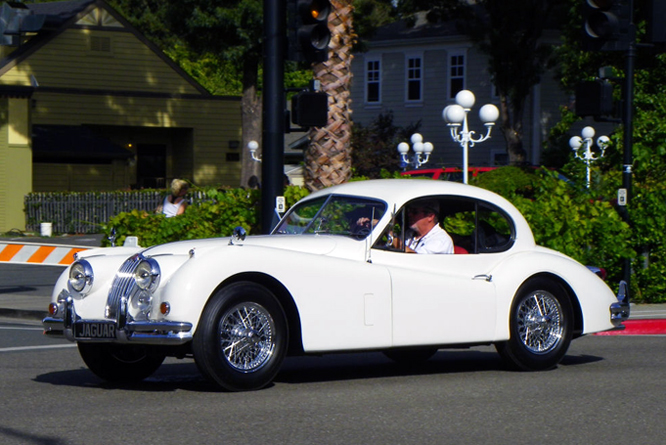
Jaguar XK 140 FHC, Danville Concours d' Elegance

Finally it is always great to hear about two GALPOT regulars meeting up, especially on the far side of another continent as Jay did with Geoffrey Horton and his Jaguar XK140 FHC SE MC seen above.

My thanks to Jay Wollenweber for his photographs and the information about today’s featured cars. More of Jay’s photographs will feature in tomorrow’s Americana blog while Geoffrey’s photographs will feature on Ferrari Friday’s blog.

Thanks for joining me on this ‘Continental Curiosities’ edition of “Gettin’ a li’l psycho on tyres” I hope you will join me again tomorrow. Don’t forget to come back now !

Share

Goodwood Revival 2012 – #6 Lotus

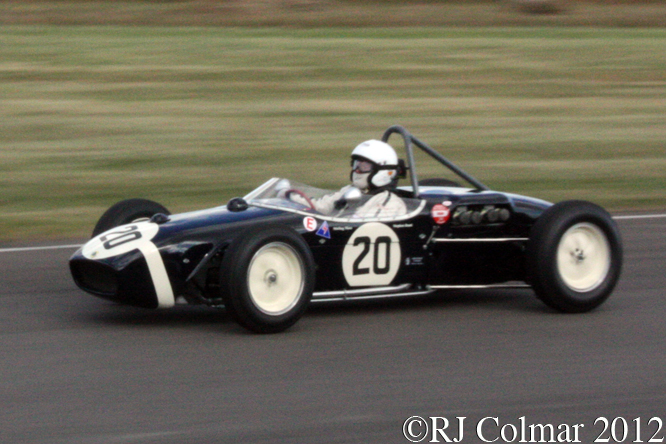
Today’s post features some of the Lotus cars that were on track at Goodwood Revival last week.

Lotus Ford 30, Goodwood Revival

The looks and early form of the Lotus 30 flattered to deceive even with Jim Clark at the wheel, this one driven by Paul Wright features the cool exhausts coming out of the top and is one of the few whose lines have not been spoiled with a rear spoiler.

Lotus Ford 29, Goodwood Revival

Dan Gurney played an instrumental part in taking Lotus to Indy in 1963, this is the Lotus Ford 29 chassis #29/2 Dan used in practice for the 1963 Indy 500 until he put in the wall during morning practice on Pole Day. Dan qualified the spare chassis #29/1 running the #93 12th and finished the race in 7th place after a late pit stop dropped him from 3rd.

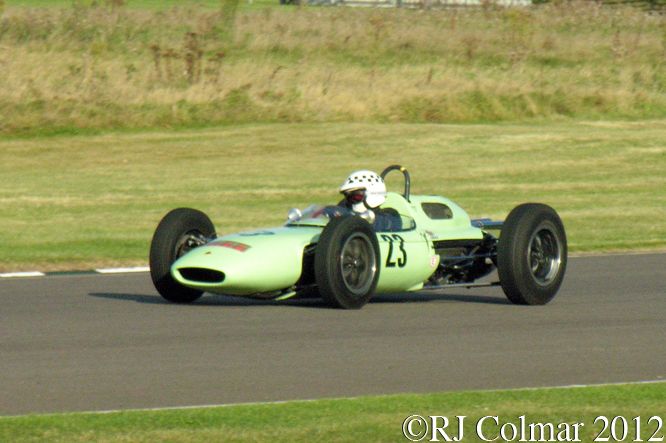
Lotus Climax 24, Goodwood Revival

Lotus designed the space frame Lotus 24 for it’s customers in 1962, while keeping back the new monocoque Lotus 25 for the works team. The Climax powered #23 driven by Michel Wanty above is chassis #942 which was one of two supplied to the British Racing Partnership Team racing under the UDT Lystall banner for Innes Ireland and Marsten Gregory to drive. Gregory drove the car once to a 7th place finish in the ’62 British Grand Prix while Ireland retired the car in five from seven races started before finishing 5th in the South African Grand Prix.

Lotus BRM 24, Goodwood Revival

British Racing Partnerships also used a BRM powered Lotus 24 in 1962 with which Gregory managed a best 6th place in the ’62 US Grand Prix, the following season BRP fielded two BRM powered Lotus 24 for Ireland and Jim Hall, Jim finished 6th in the British and 5th in the German Grand Prix. The Lotus BRM 24 driven above by Nigel Williams is chassis #P1 which was supplied to the Reg Parnell Racing team for 1963. Marsten Gregory, Roger Ward, Hap Sharp and Chris Amon all had a go in it with Sharp scoring a best 7th place in the 1963 Mexican Grand Prix. The following season Peter Revson drove the car now fitted with bodywork from a 1963 Lola Mk4A, as seen above, for Parnell on two occasions in Belgium and Britain without any worthwhile results.

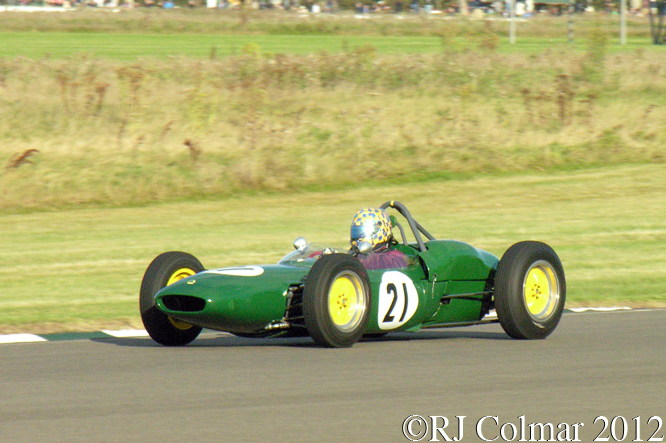
Lotus Climax 21, Goodwood Revival

Dan Collins was out in the Classic Team Lotus entered Lotus Climax 21 #933 which I looked at in December.

Lotus 18, Goodwood Revival

Rob Walkers famous Lotus Climax 18 chassis #912 used by Stirling Moss to win the 1960 and 1961 Monaco Grand Prix was being driven by Stephen Bond.

Lotus 16, Goodwood Revival

Entered by Real Auto Club Catalunya was the Lotus 16 driven by Joachim Foch-Rusinol seen here blasting past the 1959 Tec Mec Maserati 250F at St Mary’s corner. The 1959 Lotus 16 was Colin Chapman’s second seat design after the 1956 Lotus 12.

Lotus Bristol X, Goodwood Revival

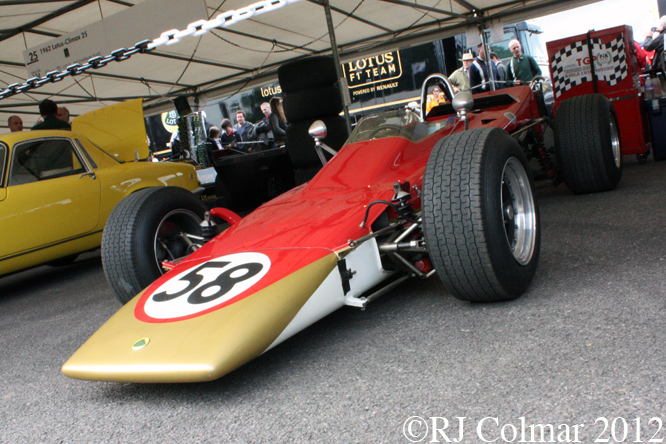
Finally the 1955 Lotus Bristol X driven by Malcolm Paul and Rick Bourne, who is seen at the wheel here, charges into the evening during the Freddie March Memorial Trophy race to a 6th place finish.

My thanks to Wouter Melisson from The Nostalgia Forum and http://www.ultimatecarpage.com for his help identifying Michel Wanty’s Lola Mk4A bodied Lotus 24.

Thanks for joining me on this “#6 Lotus Edition” of “Gettin a li’l psycho on tyres” I hope you will join me tomorrow for a look at what happens when a dictatorship put’s all the necessary resources into the hands of a couple of racing teams. Don’t forget to come back now !

Share

Wedge Evolution – Lotus 61

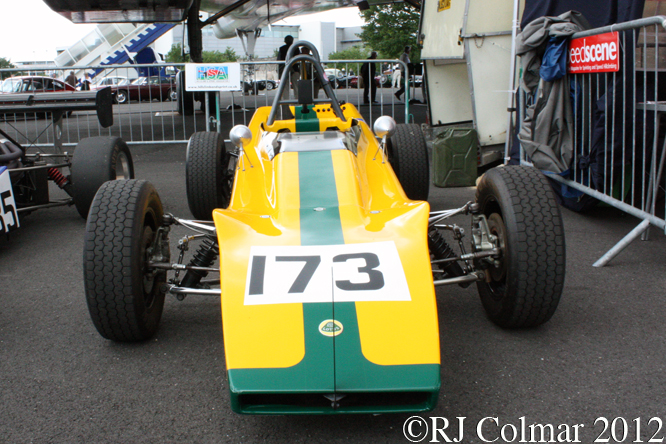
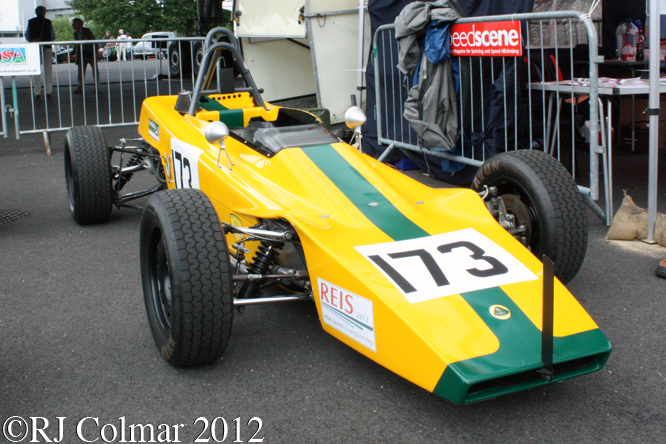
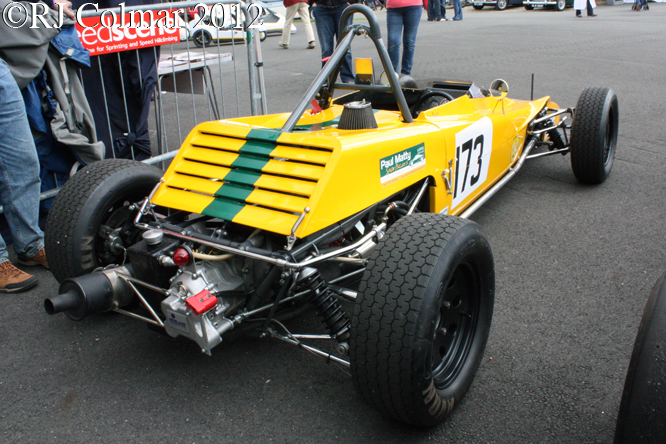
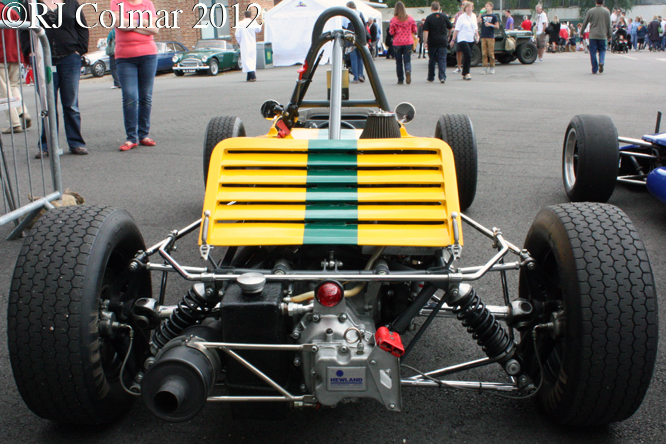
The 1969 Lotus 61 Formula Ford chassis origins can be traced back through the Lotus 51 Formula Ford, Lotus 31 Formula 3, and to the Lotus 22 Formula Junior designs.

Lotus Ford 61, Brooklands Double Twelve

The main external difference between the broadly cigar shaped Lotus 51 and the 61 is the introduction of the wedge shaped body which was first seen on the Pratt & Whitney turbine powered Lotus 56 Indy Car of 1968.

Lotus Ford 61, Brooklands Double Twelve

The last Lotus 51’s were in fact built concurrently with the first Lotus 61’s under the wedge body the 61’s have a slightly stiffer chassis thanks to additional chassis tubes that optimised the triangulation of the structure.

Lotus Ford 61, Brooklands Double Twelve

Further differences between the 51 and 61 models can be seen in the mounting of the steering rack, easier to adjust on the 61, and the brake master cylinder resevoirs, integral on the 51 and remote on the 61 which was not always considered an advantage when they needed topping up on the latter.

Lotus Ford 61, Prescott

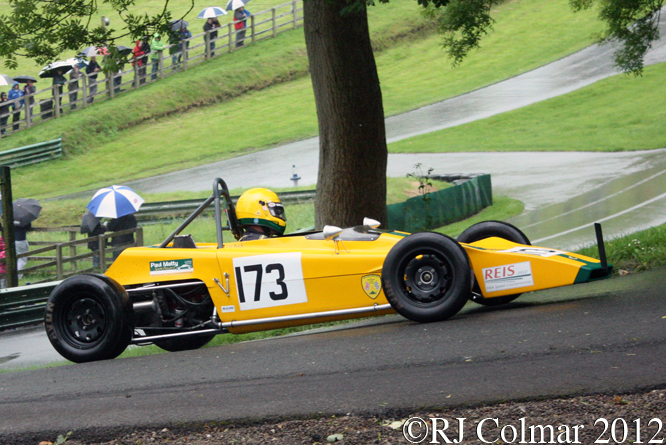
Above Les Buck is seen at Prescott Hillclimb competing in the Pre 1972 Classic Racing car class.

Australian Dave Walker and Brit Ian Ashley drove for the works Lotus Formula Ford team in 1969, Walker won the British Formula Ford Championship and came third in the European Formula Ford Championship.

Lotus Ford 61, Brooklands Double Twelve

There were three variants of the Lotus 61 with M and MX featuring aerodynamic updates to improve the efficiency of the cooling system, the MX nose finished up with a lower nose than the original and no engine cover was supplied as most customers had found their cars were quicker without them.

Lotus Ford 61, Brooklands Double Twelve

Despite Dave Walkers championship success and sales of 248 Lotus 61’s this would prove to be the last but one Lotus model built for Formula Ford a class that would be come dominated by a new breed specialist Formula Ford suppliers.

Thanks for joining me on this “Wedge Evolution” edition of “Gettin’ a li’l psycho on tyres”, I hope you will join me for a Concours d’Elegance edition tomorrow. Don’t forget to come back now !

Share

Seven 4 The 70’s – Lotus 60 Seven Series IV #S4/2668

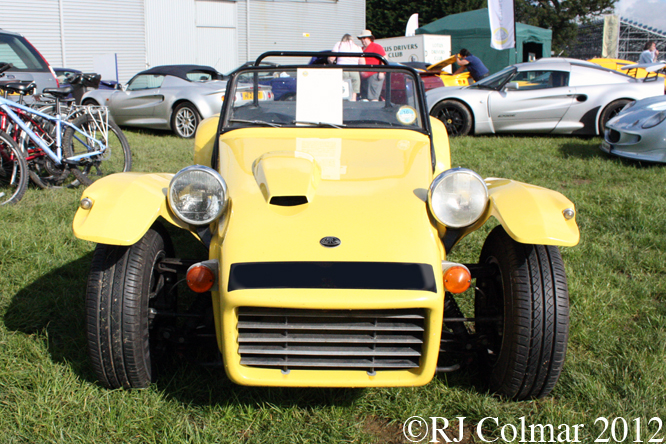
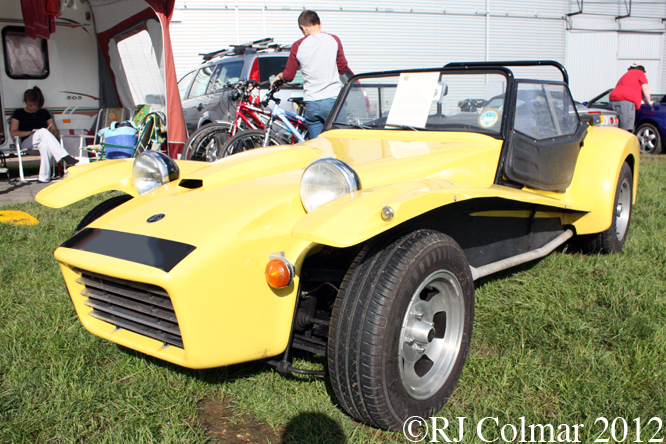
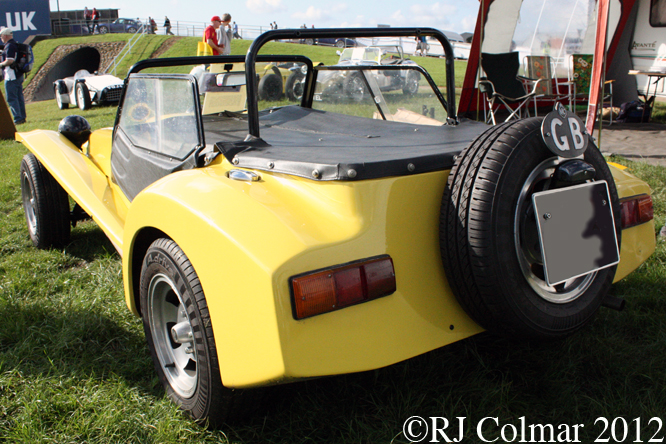
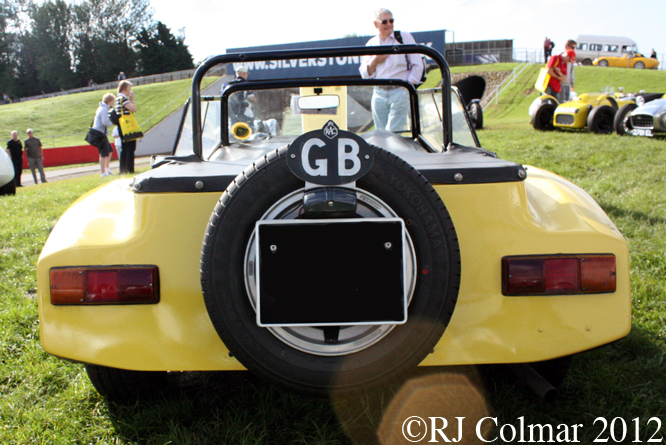
For 1970 Lotus introduced the Series IV version of it’s popular kit car the Lotus Seven with straight edge styled fiber glass body panels replacing the aluminium body work of the first three incarnations of the model which had evolved since 1957.

Lotus 60 Seven Series IV, Silverstone Classic

Three engine options were offered with the kits Ford 1300 GT, 1600 GT and Lotus big valve twin cam as used in the Lotus Europa Twin Cam, today’s featured car has the 1600cc / 97.6 cui motor which produces 85 hp more than double that of the 1957 Lotus Seven.

Lotus 60 Seven Series IV, Silverstone Classic

The Wolferace alloy wheels are not standard but were available in 1970 when this car was built.

Lotus 60 Seven Series IV, Silverstone Classic

Amazingly this 42 year old car has only 68,000 miles on the clock from new.

Lotus 60 Seven Series IV, Silverstone Classic

Around 1,000 Series IV Sevens were built the last kits being supplied to Caterham’s in Kent,UK and Steel Brothers in Christchurch, New Zealand where the last kit was built. After Caterham ran out of Series IV kit’s, with the agreement of Lotus, they started developing versions of the older Lotus Seven Series III design, something which they still do to this day manufacturing vehicles for both road and track.

Thanks for joining me on this “Seven 4 The 70’s” edition of “Gettin’ a li’l psycho on tyres” I hope you will join me again tomorrow when I’ll be visiting Silverstone for a six hour endurance race. Don’t forget to come back now !
Share

OK, But Not Very Fast – Lotus 58

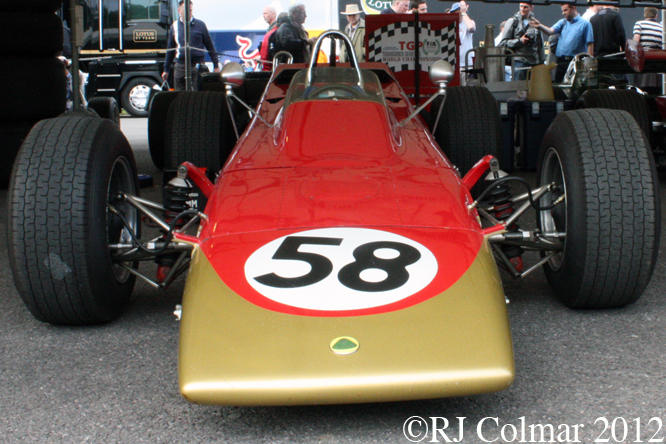
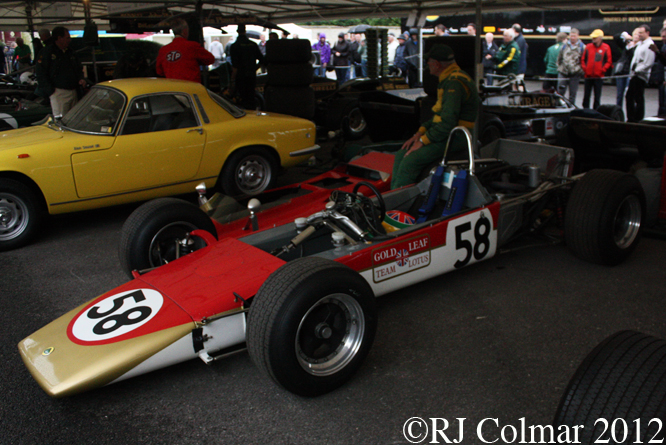
The Lotus 58 was designed with de Dion suspension front and rear, in Colin Chapman’s eternal quest for more grip, to take part in Formula 2 races for the 1968 season.

Lotus 58, Goodwood Festival of Speed

Chapman’s original intention was for the 58 to be used as a development vehicle for the Lotus 57 Grand Prix car which was to have used a similar chassis but fitted with a larger Ford Cosworth 3 litre / 183 cui that powered the various iterations of the Lotus 49.

The Lotus 58 chassis and wedge shaped body closely resembles that of the Lotus 56 Indy challenger but is powered by a 225 hp four cylinder 1598 cc / 97.5 cui Ford Cosworth FVA motor which met the requirements of the second tier open wheel Formula 2 regulations.

Lotus 58, Goodwood Festival of Speed

The one and only Lotus 58 chassis was completed the day Jim Clark was killed at Hockenheim, his death along with that of Jim’s replacement Mike Spence at Indy in a Lotus 56 along with numerous crashes that befell Jackie Oliver in his Lotus 49’s meant that development of the Lotus 58 was pushed back until the end of 1968 when Lotus had to decide which cars to take to the Antipodes for the Tasman Series.

Graham Hill thoroughly tested the car with a Tasman Spec 2.5 litre / 152.5 cui Cosworth DFW motor and came to the conclusion that it was “OK, but not very fast”. It would appear the advantages of the de Dion suspension which keep the wheels vertical in the corners and thereby keep a larger tyre footprint on the ground were not obvious enough to pursue. The Lotus 58 was pushed aside never having raced in Formula 2 as originally intended, or in the Tasman series, while the similar Cosworth DFV powered Lotus 57 never even left the drawing board.

Lotus 58, Goodwood Festival of Speed

In 1998 two enthusiasts persuaded Colin’s son Clive Chapman to restore the Lotus 58 and he gave the task to former Hill and Clark engineer at Lotus Eddie Dennis. After some 1500 hours of work Dennis ran the car at the former works Lotus test track at Hethel before handing it over to the new owners Malcolm Ricketts and Don Hands.

Thanks for joining me on this “OK, But Not Very Fast” edition of “Gettin’ a li’l psycho on tyres” I hope you will join me again tomorrow. Don’t forget to come back now !
Share

World Wide Racing – Lotus 56B R1

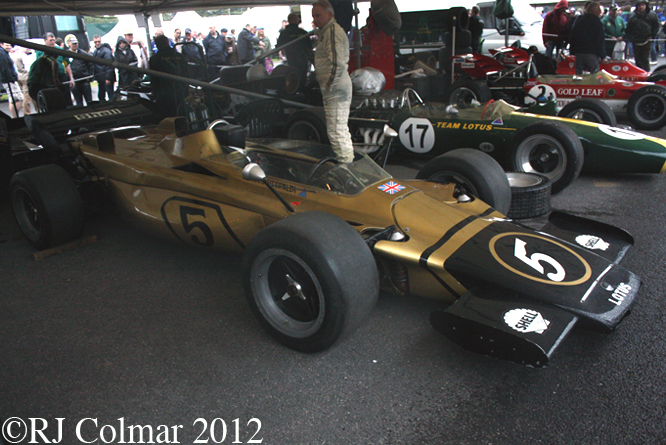
The Lotus 56B is the Formula One version of the “Son of Silent Sam” Lotus 56 Indy challenger that came within a couple of laps of winning the 1968 Indianapolis 500 with Joe Leonard at the wheel.

Lotus 56B, Goodwood Festival of Speed

This Formula One version of the Lotus 56 was a fresh chassis built with additional fuel capacity, it was unusual to make scheduled pits stops of fuel back during Grand Prix races in the 1970’s, and with additional wings front and rear to aid the considerable traction and handling advantages of the the all wheel drive transmission.

Just as at Indianapolis in 1968 the Pratt and Whitney STN6/76 had to be considerably detuned to meet the regulations which tried to keep it competitive with the 3 liter / 183 cui piston motors in use at the time.

56B R1 had four non-championship outings before taking part in three Grand Prix. The upshot was that the car was the class of the field in wet conditions, where it’s weight disadvantage was minimised but it struggled to make the top half of the grid in dry conditions.

Three drivers were given a shot in the car, Emerson Fittipaldi, Reine Wisell, and Dave Walker. Fittipaldi managed the cars only finish at the 1971 Italian Grand Prix where he qualified a lowly 18th on the grid and came home 8th well ahead of expectations for the car which was never to be seen in a Grand Prix again.

Regular followers of GALPOT maybe wondering why the car is painted Gold and Black instead of the by now traditional Red, White & Gold of the Gold Leaf Team Lotus.

In 1970 Jochen Rindt had been killed in an accident at Monza driving a Gold Leaf Team Lotus 72. Fearing legal repercussions from the notoriously slow and fickle Italian authorities investigating Rindt’s accident Colin Chapman took steps to avoid encumbrance or at worst arrest by opting to keep a low profile by entering just the one car in place of the usual two in the 1971 Italian Grand Prix.

To further keep the Italian authorities off his trail he entered the Lotus 56B under the World Wide Racing banner and had the car painted in Gold and Black, weather this was to obscurely promote the John Player Special brand which was owned by the same, Imperial, tobacco company as Gold Leaf remains unclear, though in 1972 Imperial switched the brand being promoted by Lotus to John Player Special whose black and gold colours are echoed on the current incarnation of Lotus on the Grand Prix grid.

Thanks for joining me on this “World Wide Racing” edition of “Gettin’ a li’l psycho on tyres” I hope you will join me again tomorrow. Don’t forget to come back now !

Share