Tag Archives: Lotus

Nice Door Handles – Morris Marina ADO 28

With the merger of Jaguar with British Motor Corporation in 1966 the new merger was renamed British Motor Holdings and after a further merger with Leyland commercial vehicles the corporation became known as British Leyland Motor Corporation in 1968. British Leyland as it was known decided that the Austin and Morris brands should be differentiated in the early 1970’s with Austin vehicles being based around the front wheel drive (FWD) concept pioneered by Ales Issignosis with models like the Mini, 1100 and 1800 series vehicles while Morris vehicles would be more traditional with front engines driving rear axles (RWD) as they had on the Morris Minor and Morris Oxford models.
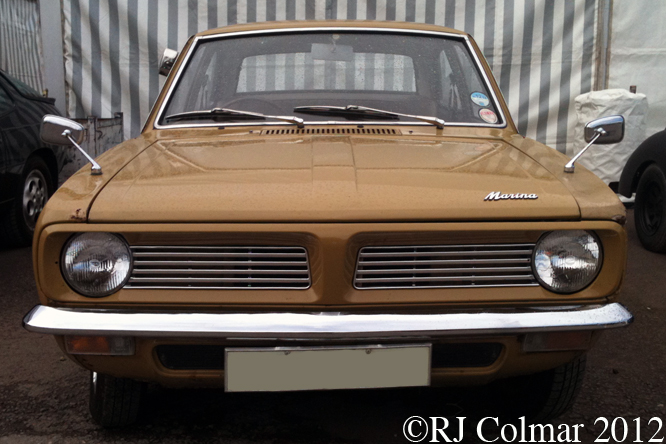
Morris Marina, Bristol Classic Car Show, Shepton Mallet

The design of the Marina coded ADO 28 was started by Roy Haynes who’s CV included the design of the popular Mk II Ford Cortina, however a disagreement over a common floor pan to share between models as espoused by Roy led to him quitting and Triumph Designer Harry Webster finishing the job by which time the intended Macpherson strut front suspension had been abandoned in favour of Morris Minor style tortion bars and a new gearbox design was abandoned in favour of an existing item from the Triumph parts bin.
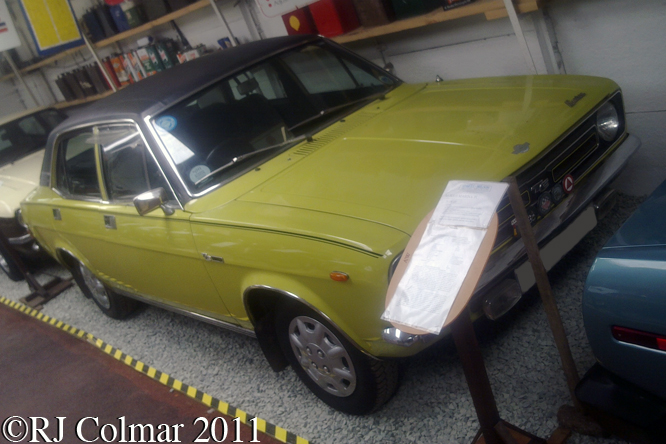
Morris Marina, Atwell Wilson Museum, Calne

All in all the development costs of the conservative RWD concept Marina ended up exceeding those of the more radical FWD Allegro which was developed to be Austin’s competitor in the small family car market. Production facilities at Cowley had to be upgraded which included some comedy as an overpass was built so that the motors could be sent from a plant on the opposite side of a municipal road to the assembly plant, no sooner had the overpass been completed than the municipality offered to sell the road which British Leyland did not think twice to accept.
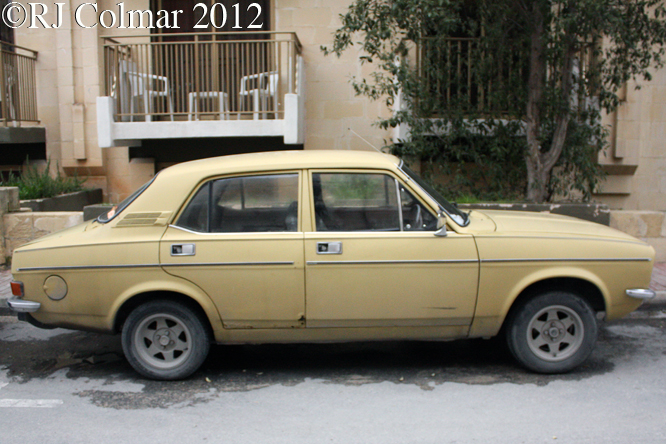
Morris Marina, Qwara, Malta

On a positive note the AMC Ambassador inspired vertical hinged door handles were a huge hit with Lotus founder Colin Chapman who specified them for use on the Lotus Elite, Eclat and Esprit models, Marina door handles were also adopted by Scimitar for the GTE shooting break while British Leyland used the same handles on the Triumph TR7/TR8, Austin Allegro and they eventually even found their way, finished in matt black, onto the Land Rover Discovery Series I.
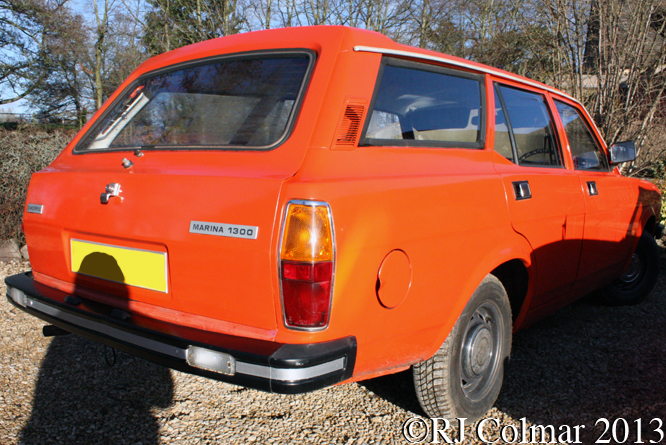
Morris Marina, Cotswolds Classic Car Club, Frogsmill, Andoversford

Marina cars were powered by a variety of motors most common of which for the UK market was a 57 hp 4 cylinder A series which did not do much for performance but kept the handling within safer limits than the heavier more powerful motors which promoted lane changing understeer / push which induced the odd brown trousers moment for some Marina pilots.
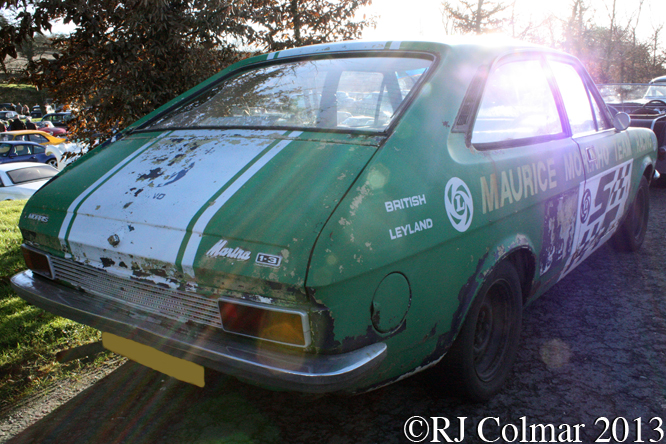
Morris Marina, Cotswolds Classic Car Club, Frogsmill, Andoversford

The Marinas seen here are in order top to bottom a ’72 Coupé at the Bristol Classic Car Show, Shepton Mallet, ’74 Twin Carburettor saloon sedan at the Atwell Wilson Museum, a Maltese 1500 saloon / sedan with after market alloy wheels and waist trim in Qwara, a ’79 Estate and ’72 Coupé both at the Cotswolds Classic Car Club meeting held at Frogsmill, Andoversford and below a saloon / sedan with an unusually straight rear bumper seen at last years Classics at the Castle, Sherborne.
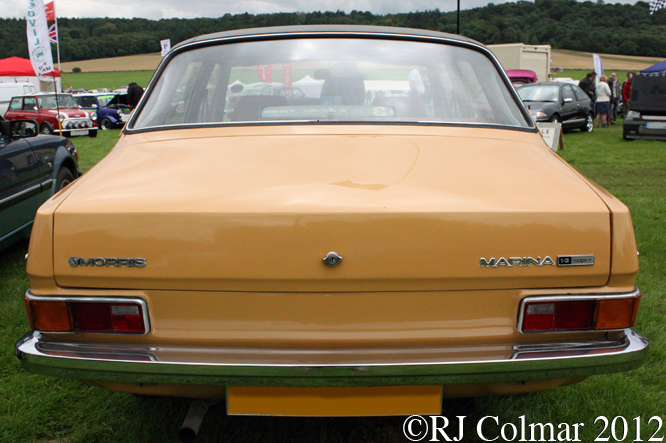
Morris Marina, Classics at the Castle, Sherborne

Although much derided for almost every detail apart from the door handles the undemanding early 70’s British public lapped up Marina’s painted in tepid colours like Russet Brown, Harvest Gold, and Limeflower Green for the car to peak at second in the sales charts behind the Ford Cortina in 1973 and remain in the top 3 or 4 until 1980. Eventually over 897,000 Marina’s were sold in the UK of which 745 are thought to remain on British roads.

Thanks for joining me on this “Nice Door Handles” edition of “Gettin’ a li’l psycho on tyres” I hope you will join me again tomorrow. Don’t forget to come back now !

Share

Romano’s Granddaughter – Lotus Elise Series I

In 1993 Lotus was purchased from GM by Romano Artioli chairman of the revived Bugatti manufacturer, and the following year the Type 111 was conceived by Julian Thompson with Richard Rackman and given the Elise name after Romano’s Granddaughter Elisa.

Lotus Elise Series 1, Bristol Classic Car Show, Shepton Mallet

The Series 1 Elise was launched in 1996 powered by a mid mounted 4 cylinder Rover K Series motor that produced just 118 hp, however thanks to the fiberglass body and bonded aluminium chassis the Elise only weighed 725 kg / 1,600 lbs so the car could accelerate from rest to 60 mph in just 5.8 seconds with a top speed of 124 mph.

Lotus Elise Series 1, Bristol Pegasus Motor Club, BAWA

Getting in and out of a Lotus Elise are probably the most difficult features of the car, the ergonomics are secondary to track day performance, but apart from that the Elise is said to be great fun to drive and economical to run thanks to the light weight and virtually non existent load capacity beside the passengers.

Lotus Elise Series 1, Bristol

In 1996 Romano had sold Lotus on to current owners Proton in order to fund the losses that had accumulated due to the insolvency of Bugatti.

Thanks to changes in crash sustainability regulations the Series 1 Elise was replaced in 2000 after more than 8600 had been built by the more sustainable and consequently slightly heavier Elise Series 2.

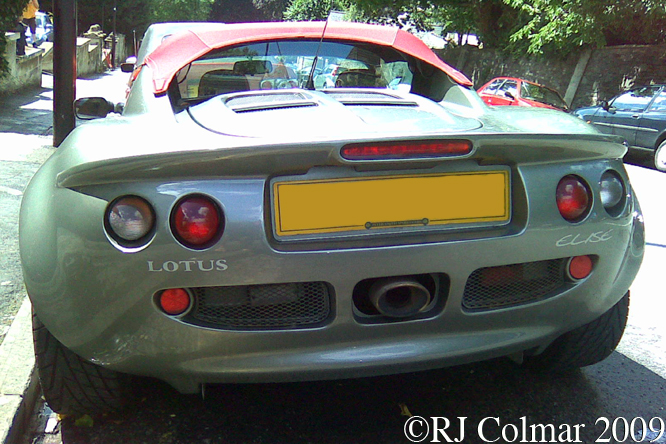
The top and bottom cars featured today are standard ’98 and ’97 1.8i models while the middle one is a later ’99 111S which came with variable valve timing 143 hp and a 130 mph top speed.

Thanks for joining me on this “Romano’s Granddaughter” edition of “Gettin’ a li’l psycho on tyres”, I hope you will join me again tomorrow. Don’t forget to come back now !

Share

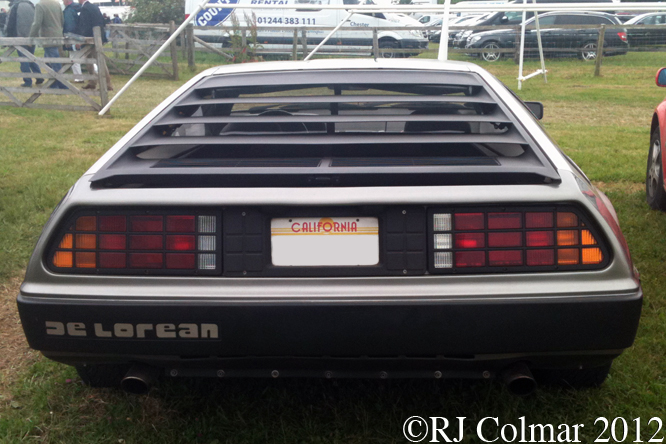
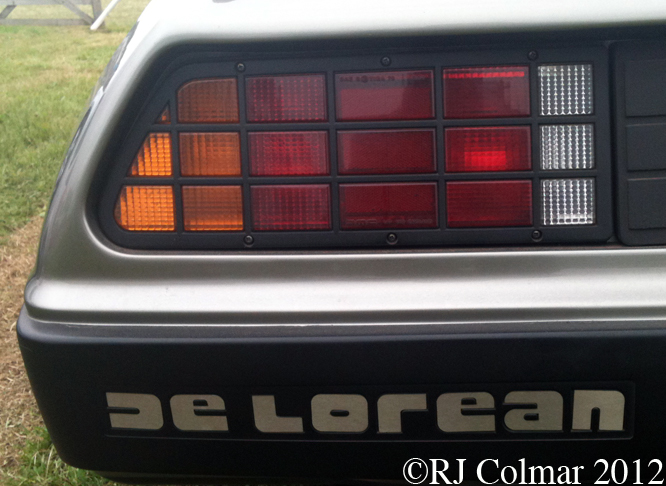
Time Machine – DeLorean DMC-12

John DeLorean was an experienced auto industry executive with time spent at Packard and General Motors where he was responsible for overseeing the introduction of the Pontiac GTO and Firebird muscle cars amongst other models in the GM range when he decided he could do it all better himself in 1973 and founded the DeLorean Motor Company with a vision to build a US$12,000 2 seat sports car.

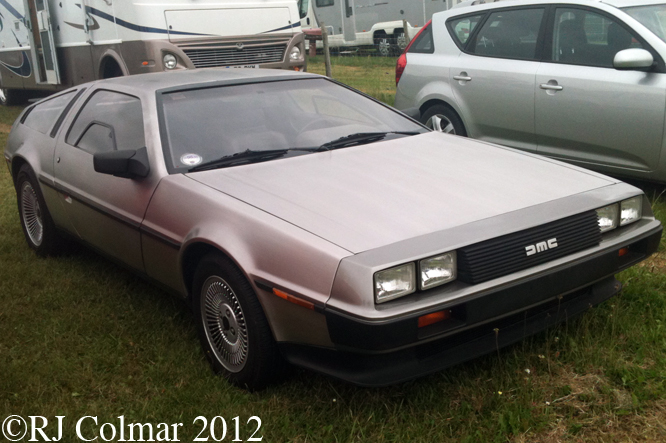
DeLorean DMC-12, Goodwood Festival Of Speed

In 1976 the prototype DeLorean appeared with a body designed Giorgetto Giugiaro featuring gull wing doors and bare metal finish panels clothing a fibre glass body. A centrally mounted Citroen / NSU wankel motor mounted on a revolutionary Elastic Resevoir Moulded (ERM) chassis had been envisaged at this stage.

DeLorean DMC-12, Goodwood Festival Of Speed

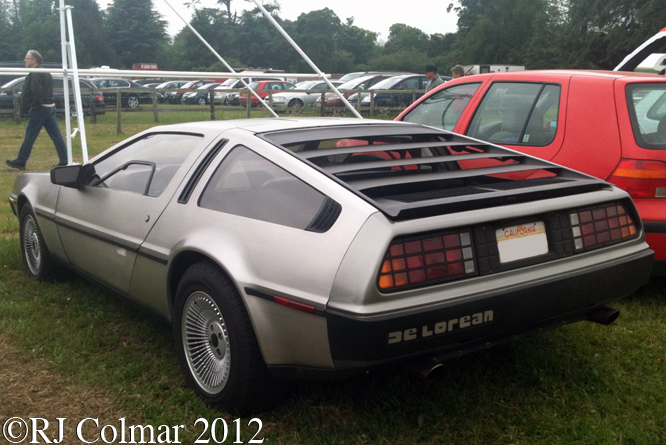
As the dead line approached for manufacturing to begin it became apparent that neither the wankel motor or the ERM chassis was not up to job and Colin Chapman’s Lotus was given the task of re engineering the car which included using a steel back bone chassis and suspension similar to that used in the Lotus Esprit but with a Peugeot/Renault/Volvo aluminium block V6 (PRV V6) mounted behind the rear axle.

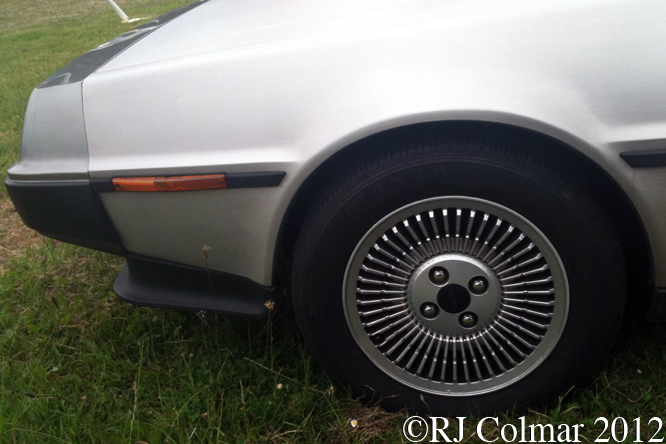
DeLorean DMC-12, Goodwood Festival Of Speed

By 1981 DeLorean had secured $120m of funding to build a factory in the suburbs of Belfast, Northern Ireland and Renault had met it’s contractual obligations to build the facility. Quality issues had not been fully ironed out as production got underway in January 1981 with a largely inexperienced workforce earning premium wages.

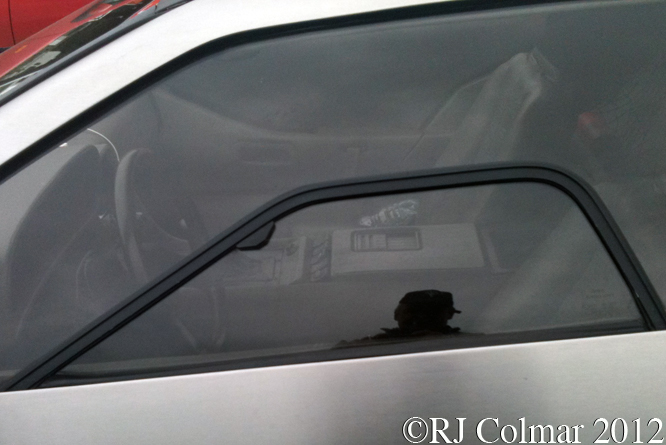
DeLorean DMC-12, Goodwood Festival Of Speed

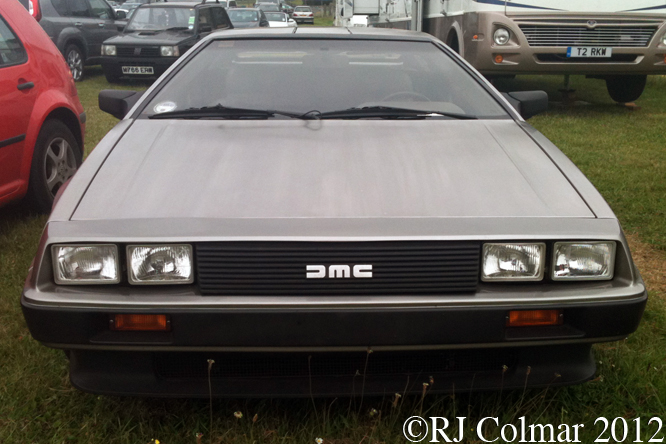
All DMC-12’s were built with left hand drive as standard, two batches of cars totaling less than 30 vehicles in all were converted by Wooler-Hodec Ltd to RHD specification, today’s featured car seen at last years Goodwood Festival of Speed is not one of them.

DeLorean DMC-12, Goodwood Festival Of Speed

Clothed in SS304 brushed stainless steel panels which by design were nearly impossible to paint and repair, most damaged panels having to simply be replaced, the only options on the DMC-12 were manual or automatic transmission and black or grey interior.

DeLorean DMC-12, Goodwood Festival Of Speed

Although big enough to comfortably seat John DeLoreans 6′ 4″ frame the DMC-12 was not particularly well received by the press, it’s US spec 130hp failed to give the kind of performance expected from a car with a US$25,000 dollar sticker price. Road & Track recorded a 0-60moh time of 10.1 seconds with a US spec car while the European Spec DMC-12 with 150 hp managed a more respectable time of 8.8 seconds.

DeLorean DMC-12, Goodwood Festival Of Speed

It is thought that 9000 DMC’s were built up until the end of production when the UK Government pulled the plug on the project, at the time US agencies appear to have been involved in entrapping John DeLorean into a drug deal as he attempted to find the funds to save his company. John was arrested but successfully defended himself with a government entrapment plea.

In 1985 a DMC-12 became the star in the first of the Back to the Future film Trilogy. In 2008 DMC-12 production restarted in Humble, Texas on a build to order basis using many original parts that were in stock when the original factory was closed. There are even plans for an electric DMC-12 to enter production this year.

Thanks for joining me on this “Time Machine” edition of “Gettin’ a li’l psycho on tyres” I hope you will join me again tomorrow. Don’t forget to come back now !

Share

Project Sport 500 – Lotus Esprit Sport 350 No.26

When the Lotus Type 82 Esprit Turbo was introduced in April 1981 it had a new chassis which was built to accommodate a V8 or the hitherto ubiquitous 4 cylinder type 907/910 motors. It was not until two complete body restyles later that the V8 type 918 would finally see the light of day in the back of a Julian Thompson styled Esprit in 1996.

Lotus Esprit, Sport 350, Classic and Sports Car Action Day, Castle Combe

The Julian Thompson styled Esprit replaced the Peter Stevenson styled Esprit in 1993 alongside the new body came a redesigned interior and for the first time on an Esprit power steering.

Lotus Esprit, Sport 350, Classic and Sports Car Action Day, Castle Combe

The twin turbocharged all aluminium 918 V8 Esprits were restricted to 350 hp which was deemed the most that the Renault derived transmission and drive train could handle. In 1998 V8 Esprits were built to either luxury SE or sporty GT specification.

Lotus Esprit, Sport 350, Classic and Sports Car Action Day, Castle Combe

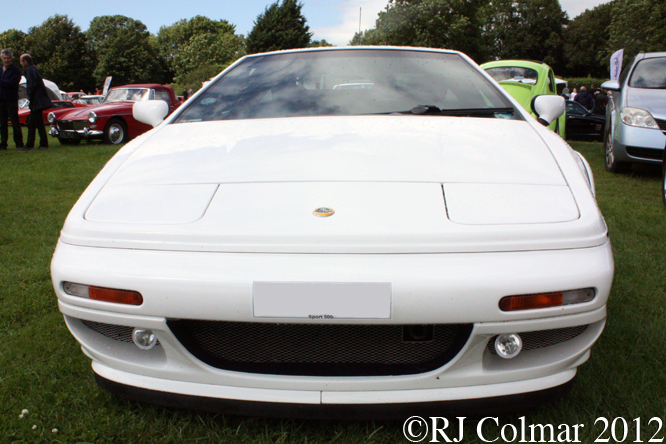
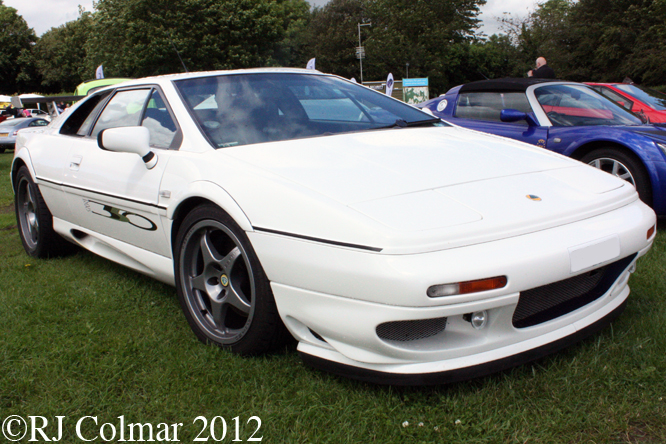
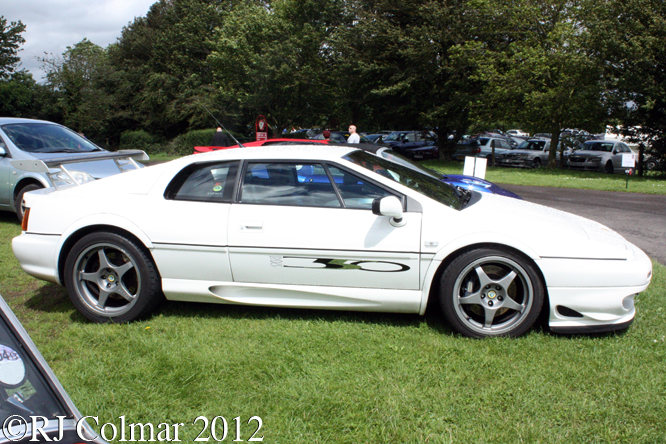
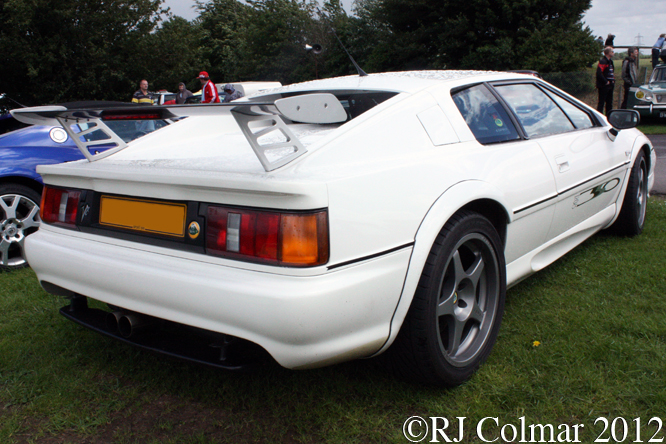
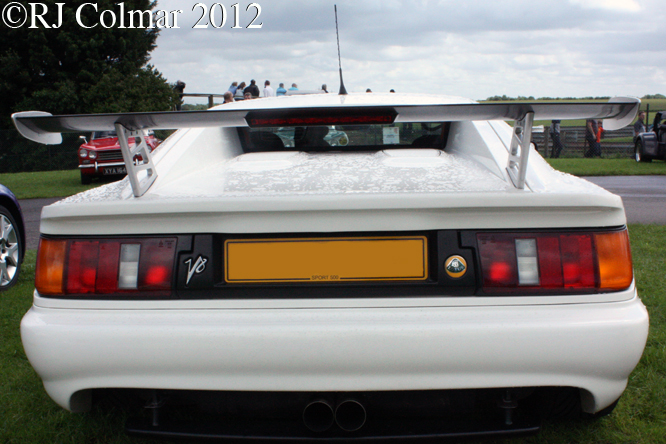
The ultimate incarnation of the Esprit was the Sport 350, such as the one seen here during last years Classic and Sports Car Action Day at Castle Combe. These models were built with AP racing brakes, stiffer suspension, revised electronic control unit (ECU) for the motor and a carbon fibre rear wing mounted on aluminium uprights. With 350 hp these cars can reach 100 mph from rest in just under 10 seconds.

Lotus Esprit, Sport 350, Classic and Sports Car Action Day, Castle Combe

Only 55 of an intended production run of 50 Esprit Sport 350’s were built between 1999 and 2001, all bar 48 of them were painted silver, four were black, two white and one ice blue.
Lotus Esprit, Sport 350, Classic and Sports Car Action Day, Castle Combe

Rob the owner of Sport 350 No.26, also known as Project Sport 500, has upgraded this particular vehicle to produce 500 hp and “run right past 60 mph in (the) first of it’s six gears”. You can see some of the work Rob has undertaken to achieve this performance on this linked page.

Only 15 Sport 350’s remain in the UK according to Rob one of them is a right off in a salvage yard.

My thanks to Rob for his help with today’s post.

Thanks for joining me on this “Project Sport 500” edition of “Gettin’ a li’l psycho on tyres”, I hope you will join me again tomorrow. Don’t forget to come back now !

Share

Which Type ? – Lotus Esprit X180R

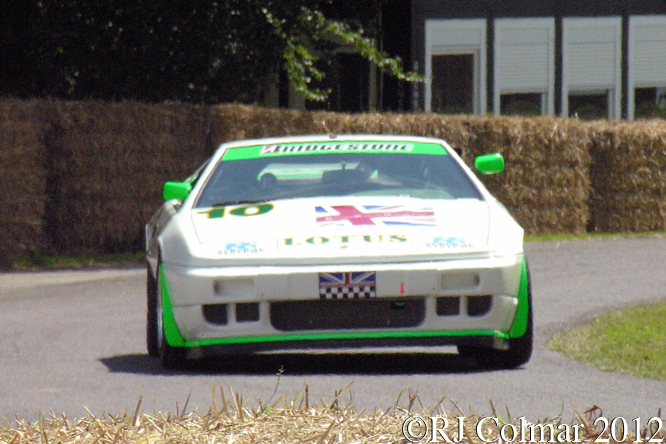
In 1990 Lotus built 2 racing cars based on the Peter Stevens designed Esprit Turbo SE X180 which became known as the X180R and everyone appears to agree that the car was given the Lotus Type 105 number. These cars were built to be raced in the Sports Car Club of America (SCCA) Escort World Challenge by Doc Bundy and Scott Lagasse and won 4 times in 8 races.

Lotus  Esprit X180R, Goodwood Festival of Speed

Flush with success Lotus then built three new 300hp versions of the X180R’s the following season for the IMSA Bridgestone Super Car Championship in 1991 which Doc Bundy duly won in 1992.

There is some disagreement amongst internet sources about the type numbers of the 3 cars built in 1991 which some sources suggest were given the Type 106 number while others have it that all five race cars built in 1990 and 1991 are Type 105’s and that 20 road going versions of the X180R racer were given the Lotus Type 106 type number. Other sources suggest the 20 road going versions of the X180R are actually Type 105’s.

To confuse the identification issue further it would appear the 2 1990 race cars were updated to 1991 spec so technically these might be Type 105/106’s.

If you are a Lotus historian and can definitively put the record straight on the type 105’s and 106’s please do not hesitate to chime in below. I’d be most grateful.

The car seen above driven by Doc Bundy at Goodwood Festival of Speed carries the later 1991 spec body work differentiated by the splitter (green) that runs into extended lower front wheel arches (also green)

Thanks for joining me on this “Which Type ?’ edition of “Getting a li’l psycho on tyres” I hope you will join me again tomorrow. Don’t forget to come back now.

Share

Nelson Rowes to Double – HSCC Thruxton Revival Easter Sunday

Sunday finally brought months of waiting to an end for this race fan as I headed to Thruxton after teaching my Mum how to use her cruise control very early on Sunday morning.

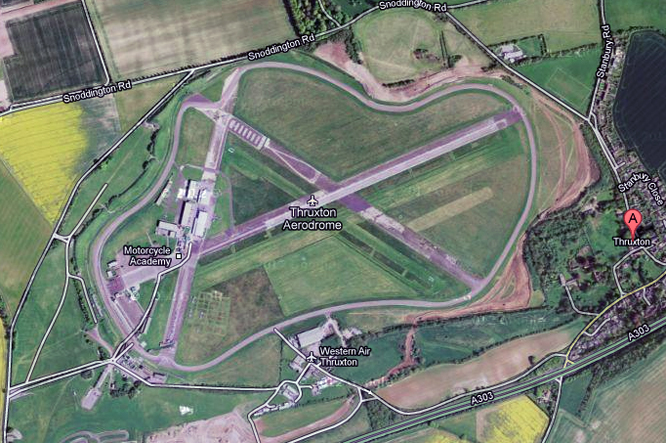
Thruxton Circuit, Hampshire, UK

Thruxton Circuit in Hampshire like many British race tracks began life as a military air base during the 1939 – 45 war, it opened in 1940 and served as a base for the RAF and USAF troop carrying aircraft and gliders notably used for the D-Day landings on June 6th 1944 and many subsequent operations requiring large numbers of air borne troops. The first race meetings were held on a circuit using the perimeter roads in the 1950’s but the track was considered too bumpy and it was not until the British Automobile Racing Club, BARC, needed a new home following the closure of the Goodwood circuit in 1966 the Thruxton was reactivated more or less in the form we know it today.

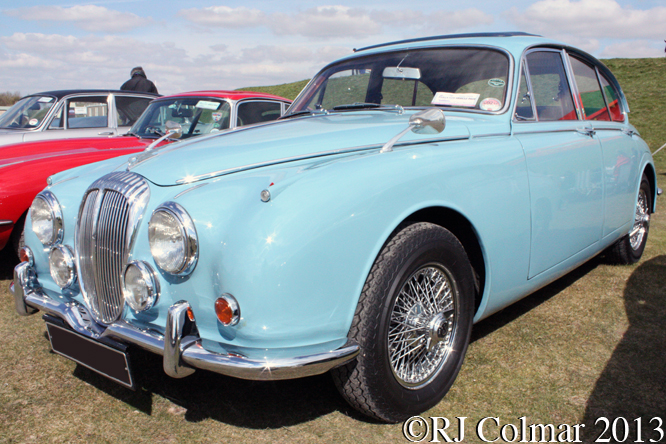
Daimler V8-250, Thruxton Easter Revival

Last time I was at Thruxton well known Grand Prix pundit and 13 time Grand Prix winner David Coultard was still driving in Formula Ford in 1989, my first visit to Thruxton a couple of years earlier was notable for a win by my school pal Sven driving his Alfa Romeo Alfasud for whom I was acting as gofer. Consequently I got to drive his car round the track at snails pace following Sven as he stood in the back of the victory parade lap car. The entrance to the circuit on Sunday was flanked by a variety of Mini’s, Triumphs and Jaguars, in amongst the Jaguar Enthusiasts Club vehicles was this 1969 Daimler V8 250.

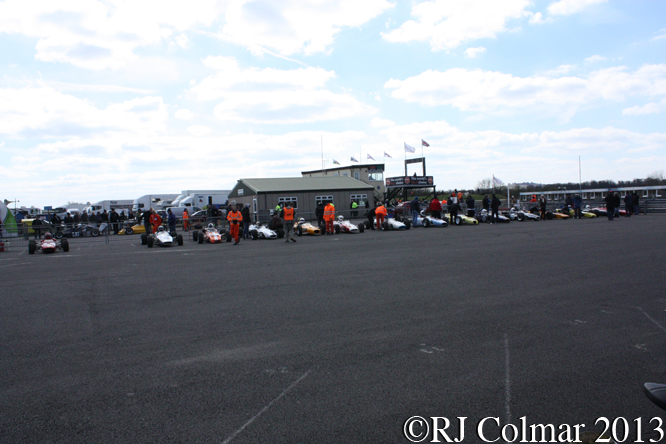
HSCC Classic Racing Cars, Thruxton Easter Revival

I got to the track just as the last practice was about to begin above the HSCC Classic Racing Cars, comprising Formula 2,3,B and Ford open wheelers dating from 1963 to 1970 line up in the holding area prior to the start of their practice session.

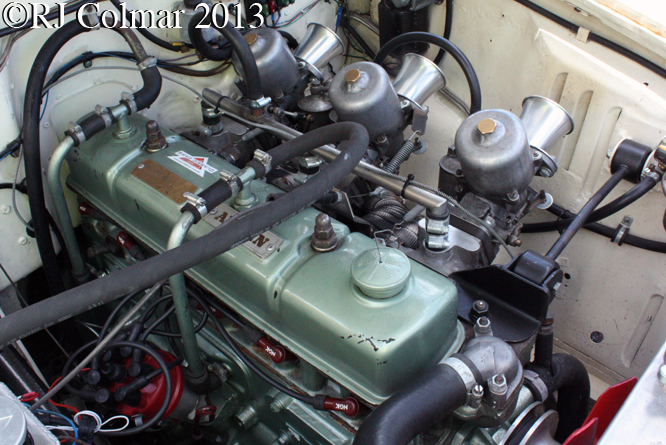
Austin A105, Thruxton Easter Revival

The paddock was full of delights like this 1958 six cylinder Austin A105 of the type that Jack Sears used to win the very first British Saloon Car Championship in 1958. Thruxton has a great mix of corners from tight 90 degrees to long sweepers meaning this A105 driven by Andrew Davenall found it’s self in a race long scrap with the much better handling Mini Cooper of David Dunnell which went in favour of the former towards the back of the HSCC Historic Touring Car field.

Kvanti Mk I, Thruxton Easter Revival

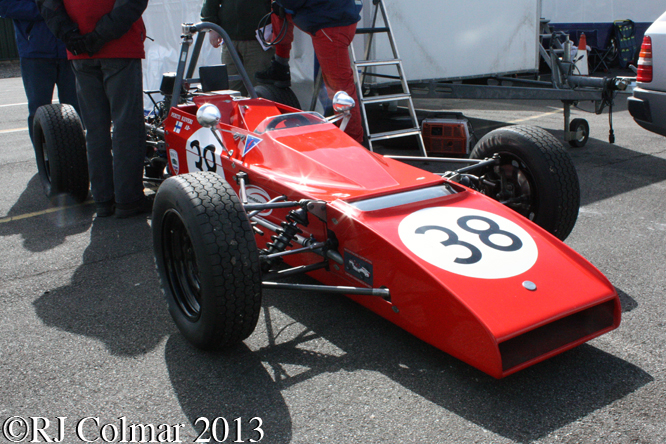
Making a welcome appearance from Finland in the Historic Formula Ford race was this 1971 Kvanti Mk I driven by Pertti Kilveri.

Ford Boss 302 Mustang, Thruxton Easter Revival

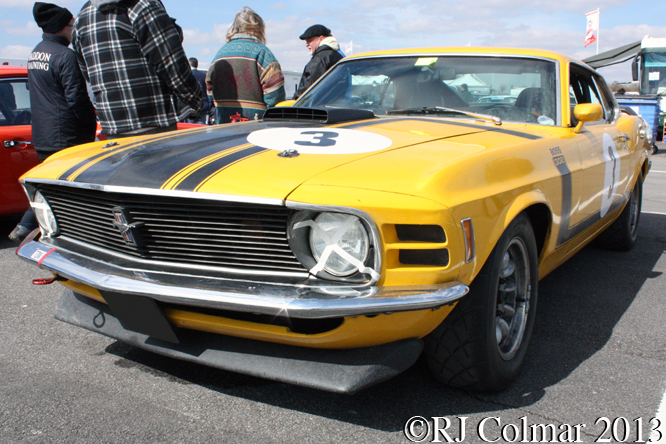
Another car that was to find it’s self in the midst of a mid field scrap was this 1969 Boss Mustang driven by Martin Edridge which managed to edge out the 1969 Camaro driven by Nick Savage both of whom were miles behind the better handling Lotus Elan’s that took the top three spots in the HSCC Historic Road Sports Championship.

Osella BMW PA4, Thruxton Easter Revival

There were two races for racing cars powered by 2 litre 92 cui motors at Thruxton on Sunday the Martini Trophy Race featured 2 litre Group 6 cars like the BMW powered 1976 Osella PA4 driven by Italian Cosimo Turizio unfortunately Cosimo retired shortly before the end of the race handing Ray Mallock driving a 1976 Mallock Mk18 in the invitational class a second place finish.

Nissan Primera GT, Thruxton Easter Revival

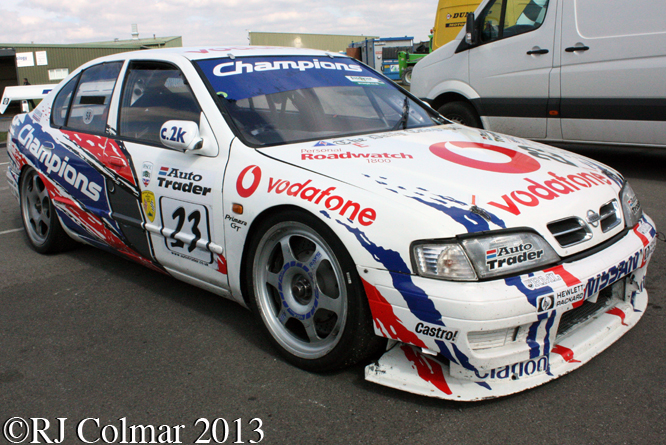
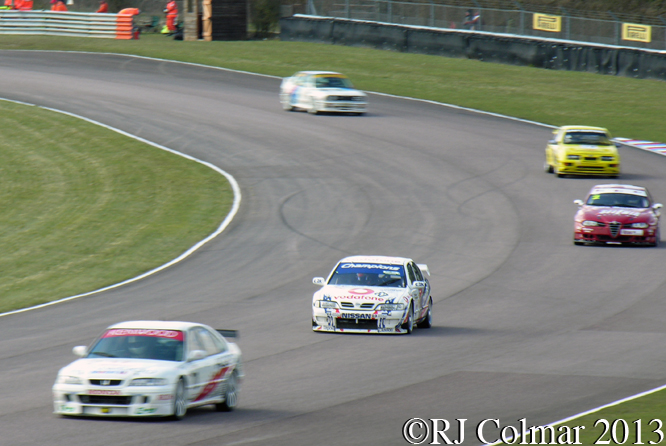
The Super Touring Car Race featured Derek Palmer’s 1999 Nissan Primera GT, which was originally built and prepared by Ray Mallock Limited (RML) for Laurent Aiello who became the first Frenchman to win the British Touring Car Championship.

Brabham BT30, Thruxton Easter Revival

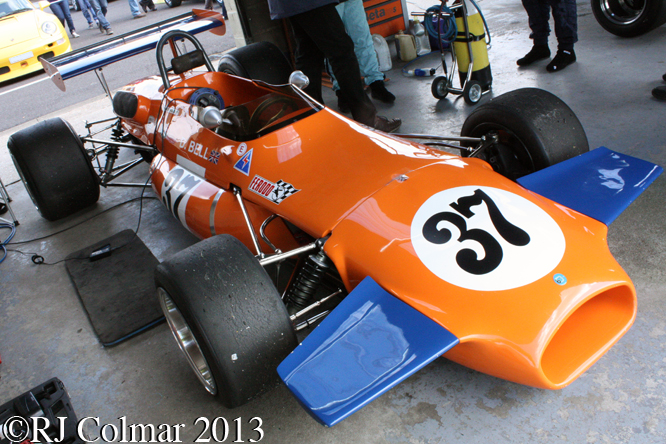
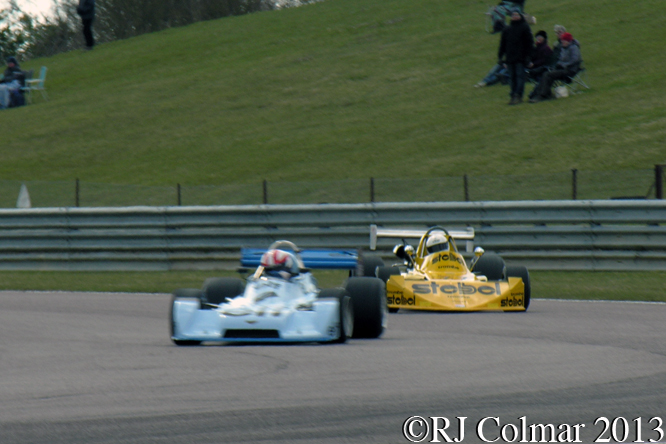
Ted Walker was in the pits time keeping for Lincoln Small who was driving the Brabham BT30 in the featured Jochen Rindt Trophy race. Lincoln’s Brabham is the same one that Derek Bell drove for Tom Wheatcroft to a second place finish in the 1970 European Formula 2 Championship.

Jochen Rindt Trophy Race, Thruxton Easter Revival

The Jochen Rindt Trophy race on Sunday was won by Martin O’Connell driving a 1977 Chevron B40 that looks as though it might be the same won as Alain Prost drove for Fred Opert prior to becoming a four time World Champion. Martin is seen above leading Andrew Smith’s March 742 car at Campbell Corner on the opening lap. Andrew finished second but only after loosing a couple of places in the opening laps and regaining them.

Super Touring Car Race, Thruxton Easter Revival

There was not a huge entry for the Super Touring Car Race on Sunday, partly because some of the entries were lost after the race for these cars held the day before. However Derek Palmer in the Nissan was always ready to take any advantage of Stewart Whyte’s 1996 Honda Accord although he did not have the speed to challenge Stewart for the top spot on the podium.

Chevron B36, Thruxton Easter Revival

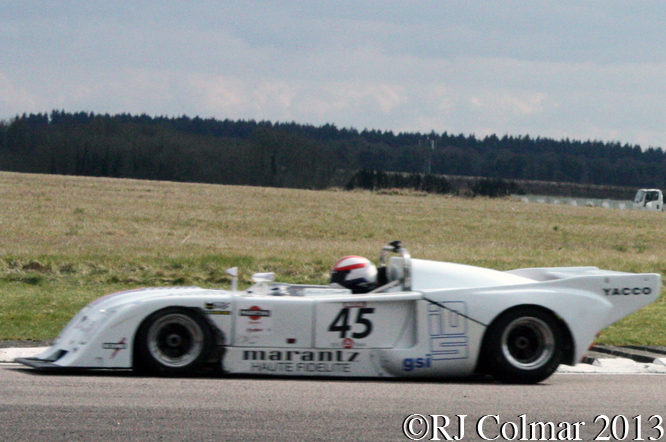
Martin O’Connel came close to scoring a second comfortable win on Sunday with his Chevron B36 above in the Martini Trophy Race however he suffered a puncture which handed the lead to the similar car of Nick Flemimg.

HSCC Historic Road Sports Race, Thruxton Easter Revival

The HSCC Historic Road Sports Race was as mentioned earlier a Lotus Elan benefit, but not before Andrew Sheppard, driving a nimble 1962 Lotus Seven S2, had found a way past the #9 1963 Elan of eventual winner Roger Waite. Andrew unfortunately was soon to retire out on the circuit.

HSCC Historic Formula Ford Race, Thruxton Easter Revival

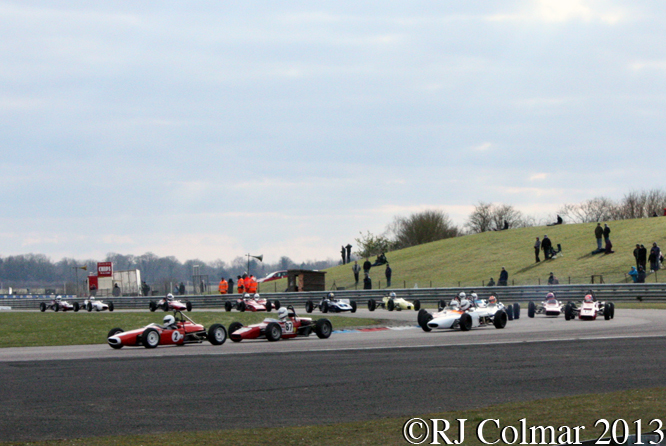
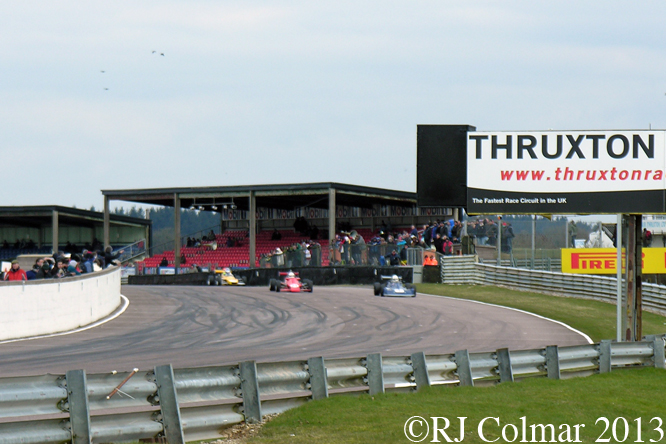
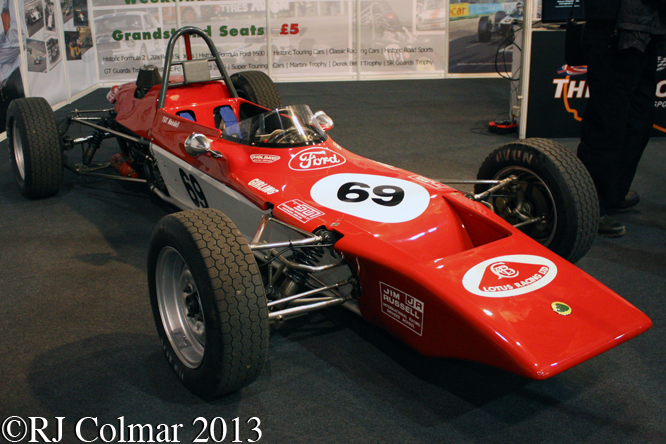
The full grid of Formula Ford cars was thinned out after a contretemps on the opening lap after the first attempted start. Bristol Veterinarian Nelson Rowe, driving the #87 1971 Crosslé 20F, made a great start from the first attempt but was beaten by Benn Simms driving the #2 1968 Jmr 7 Jomo on the second start as seen above. Nelson quickly found away past Benn and drove to his first victory of the day having only to worry if he had enough petrol to make it to the finish after the additional start and pace lap. Former Grand Prix driver Tiff Needell seen above in 7th place second from right was thrilled to find away to a third place finish in his 1971 Lotus 69 and was heard talking about appearance money before committing to making any further appearances in the series.

HSCC Historic Touring Car  Race, Thruxton Easter Revival

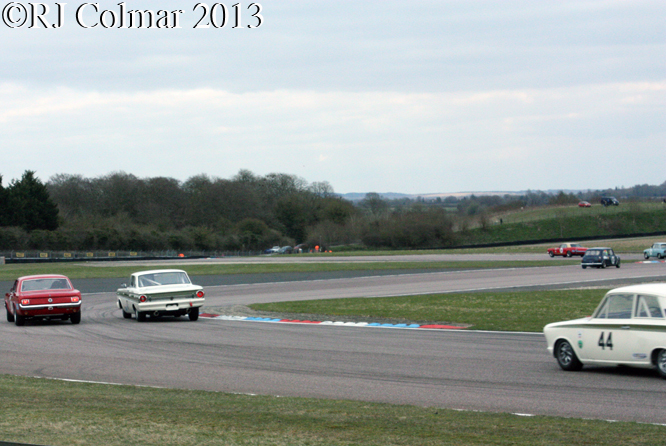
The HSCC Historic Touring Car Race also had to be stopped after Neil Brown went bouncing into what looked like at least 3 barrel rolls at nobel. Amazingly Neil released himself and appeared completely unharmed from the incident. Richard Dutton made a second clean start and headed for a comfortable win in his read and gold 1965 Mustang which can be seen leading some back markers above but it was Mike Gardiner driving a 1964 Ford Falcon who took the restart from the back of the grid who provided most of the entertainment. Mike is seen above relieving the ’65 Mustang driven by Warren Biggs of second place going into Campbell.

Historic Formula Ford 2000  Race, Thruxton Easter Revival

Nelson Rowe driving the #1 1979 Reynard SF79 was in command of the Pinto powered Historic Formula Ford 2000 race through out all though teenager Callum Grant did his best to earn a beer driving a 1978 Delta T78 to a commendable second place finish.

Lotus 59, Thruxton Easter Revival

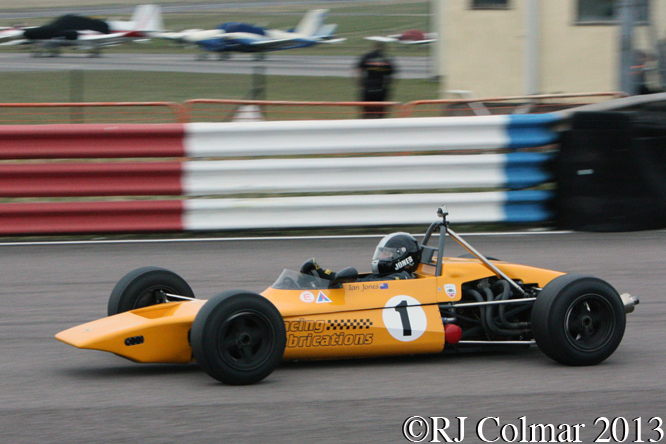
The final race of the day for HSCC Classic Racing Cars was a Ian Jones benefit, he was never headed from poll driving the #1 1969 Lotus 59 seen above in Formula B spec. Again despite the absence of a memorable duel for the lead there were some great scraps going on behind Ian. All in all I got my 12 quids worth on a day where the temperatures were marginally above freezing and a good supply of affordable track side snacks and hot drinks kept my sense of humour from running for the cover of the nearest duvet or three.

Thanks for joining me on this “Nelson Rowes to Double” edition of “Gettin’ a li’l psycho on tyres” I hope you will join me again tomorrow. Don’t forget to come back now !
Share

Basic Instinct Pretty Woman – Lotus X180 Esprit Turbo

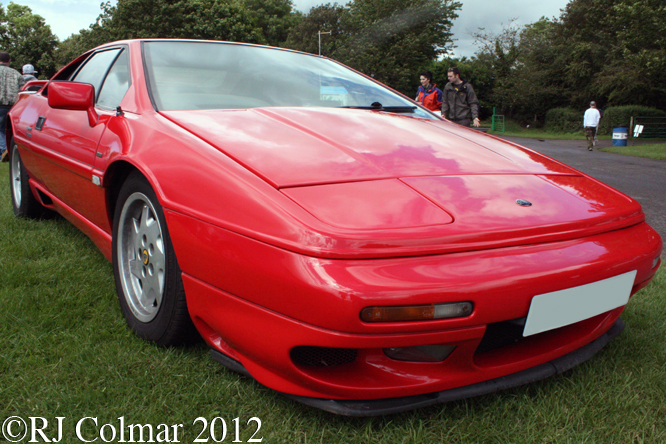
Having been taken over by General Motors in 1986 the future of Lotus Cars was more secure than at almost anytime in the manufacturers history. Prior to the take over Peter Stevens had been employed to revamp the sharp edged Giugiaro styled Lotus Esprit, which had been in production since since 1975, around the chassis of the existing Series 3 Esprit under the project name X180.

Lotus Esprit Turbo, Classic and Sports Car Action Day, Castle Combe

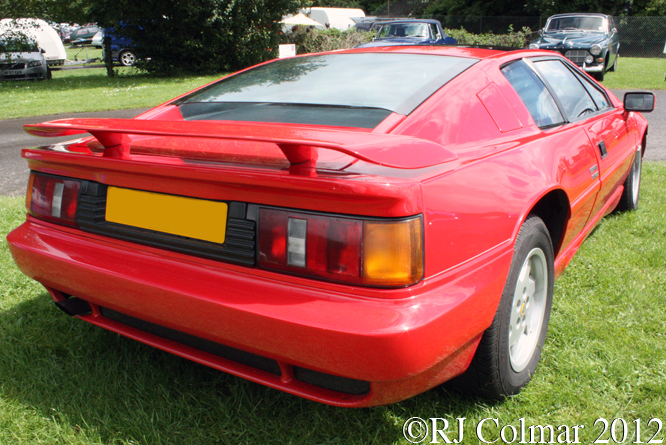
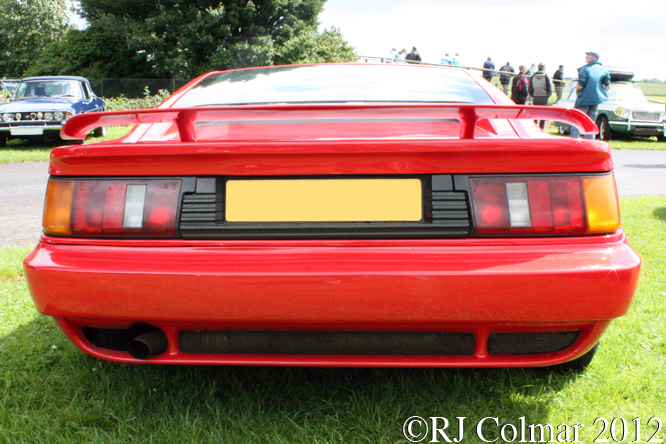
Despite the new body not varying by more than an inch in any dimension from the old one Stevens managed to transform the look of the Esprit by using rounded lines. Ironically despite the smoother shape the new X180 is has a marginally higher aerodynamic co efficient than it’s straight edged predecessor.

Lotus Esprit Turbo, Classic and Sports Car Action Day, Castle Combe

15 months after Stevens started work on the X180 it was ready to be launched in October 1987 with the new body work being manufactured with the Lotus patended vacuum-assisted resin-injection (VARI) process.

Lotus Esprit Turbo, Classic and Sports Car Action Day, Castle Combe

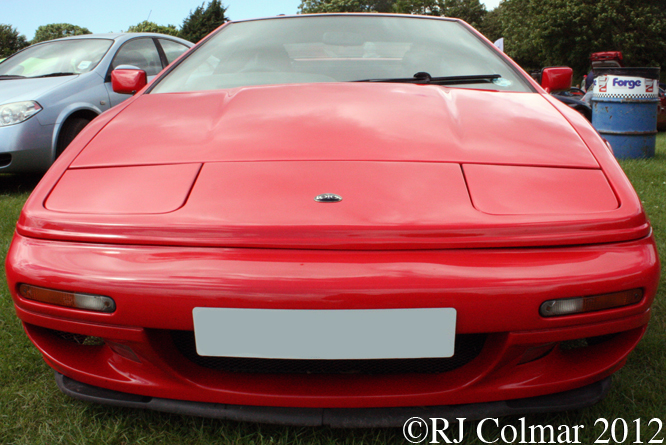
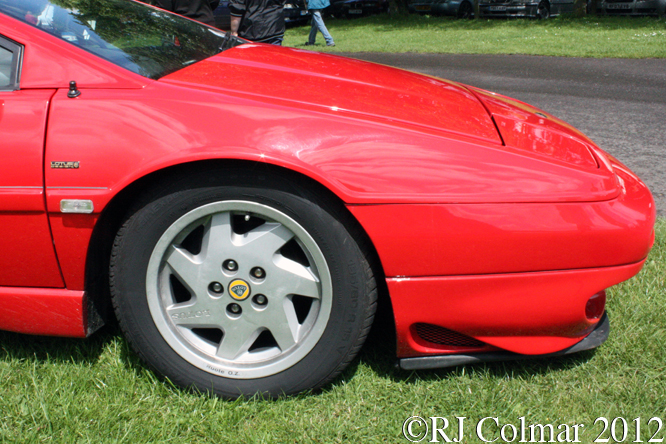
Despite the similarity of the old and new bodies they could be easily distinguished by the new alloy wheels cast to a Lotus design by OZ. Esprit aficionados will notice that the front bumper / spoiler on this particular 1988 Esprit Turbo seen at last years Classic and Sports Car Action Day at Castle Combe dates from the final S4 Esprit incarnation which was restyled by Julian Thompson in 1993.

Lotus Esprit Turbo, Classic and Sports Car Action Day, Castle Combe

The X180 Esprit was powered by the same type 910 normally aspirated or turbocharged motors as it’s Esprit predecessors, with the 215 hp turbo motor the zero to 60 mph time was marginally reduced to 5.4 seconds from the previous 5.6 seconds and top speed was over 150 mph. The X180’s handling benefited from the improved torsional rigidity of the new body.

Lotus Esprit Turbo, Classic and Sports Car Action Day, Castle Combe

Record Esprit sales of 1058 units in 1988 would not be bettered despite the cars appearance in high profile films that included Pretty Woman 1990 and Basic Instinct 1992, and a sting of lesser films including The Rookie 1990, Taking Care Of Business 1990 and the Bond spoof If Looks Could Kill / Teen Agent 1991.

Thanks for joining me on this “Basic Instinct Pretty Woman” edition of “Gettin’ a li’l psycho on tyres” I hope you will join me again tomorrow. Don’t forget to come back now !
Share