Tag Archives: McLaren

20th Anniversary – Goodwood Festival Of Speed

Last weekend saw the 20th Anniversary celebrations of the Goodwood Festival of Speed. According to tea total journalist Doug Nye the event only got off the ground because he was present at a rather drunken evening at which Lord March and some friends were fantasising about an event which might attract a few thousand motor enthusiasts. Next morning when Doug reminded the Lord of what had been said they decided to act and so was born the Goodwood Festival Of Speed which has become one of the highlights of the British Motoring Season.
Goodwood, Festival Of Speed

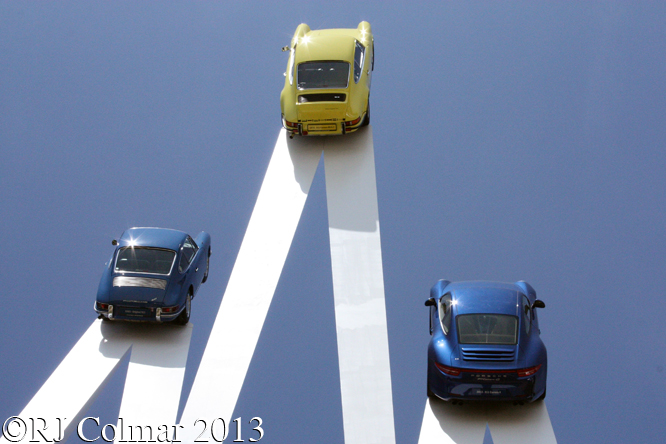
The event has become so big that it sells out on both the Saturday and Sunday and an extra day has been added on the Thursday, called the “Moving Motor Show” on which the hill climb track is turned over to corporate sponsors who entertain their guests with rides up the hill. It was on the Thursday that I went with my parents after my Dad found a free ticket offer in the “Daily Telegraph“. Many anniversaries besides Goodwood’s 20th were being celebrated, the three Porsche’s above formed the tip of a sculpture by Gerry Judah celebrating the 50th Anniversary of the Porsche 911 featuring a 1963 911 on the left, a ’73 Carrera RS in the middle and a 2013 Carrera 4 on the right.
Mercedes W196, Goodwood, Festival Of Speed

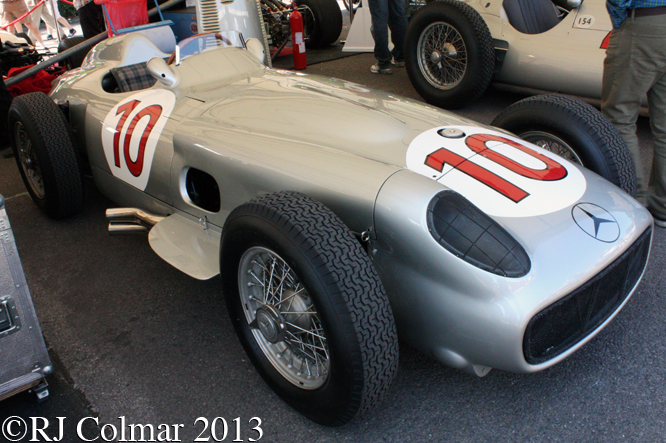
On the Friday a 1954 Mercedes Benz W196 similar to the one pictured here was sold at the Bonham’s Festival of Speed Auction for US$ 29.6 million to become the most expensive car ever sold at auction. John Lennon’s Blue ’64 Ferrari 330GT fetched US$ 543,750 setting a new record for the 330 GT 2+2 model.
Honda RA300, Goodwood, Festival Of Speed

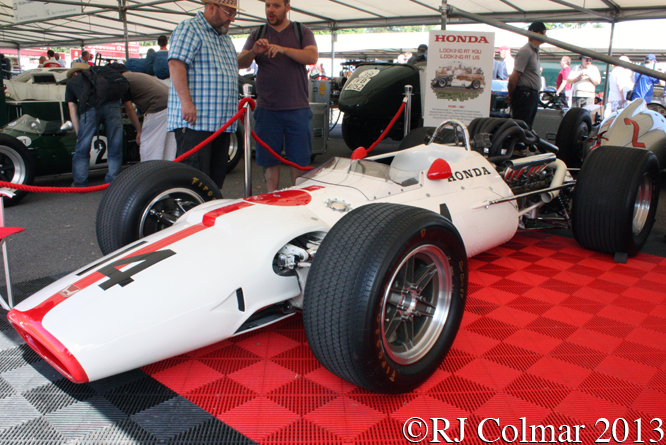
In the autumn of 1967 my folks purchased their first television, a black and white model, one of my earliest memories of it was a news cast featuring the 1967 Italian Grand Prix which was won by John Surtees driving this very V12 Honda RA300, a car that was very easy to distinguish from the rest of the field because it was white and all the others were various shades of grey.
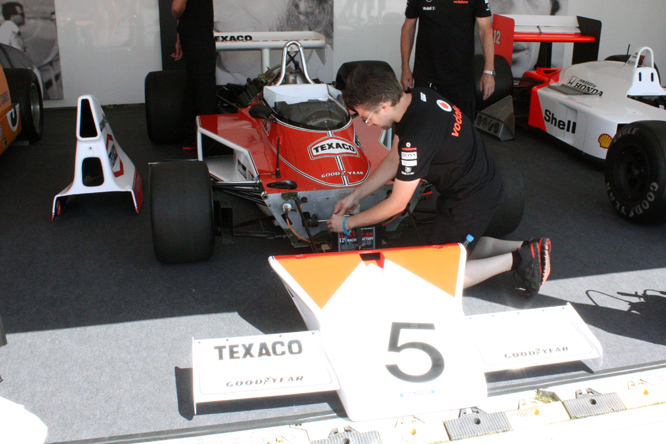
McLaren M23, Goodwood, Festival Of Speed

Emerson Fittipaldi moved from Lotus to join the McLaren team which had relieved BRM of Marlboro sponsorship and Lotus of Texaco sponsorship for the 1974 season. Emerson driving a Marlboro Team Texaco McLaren M23 ended up winning a very open World Drivers Championship by just 3 points from Clay Regazzoni driving a Ferrari 312 B3.
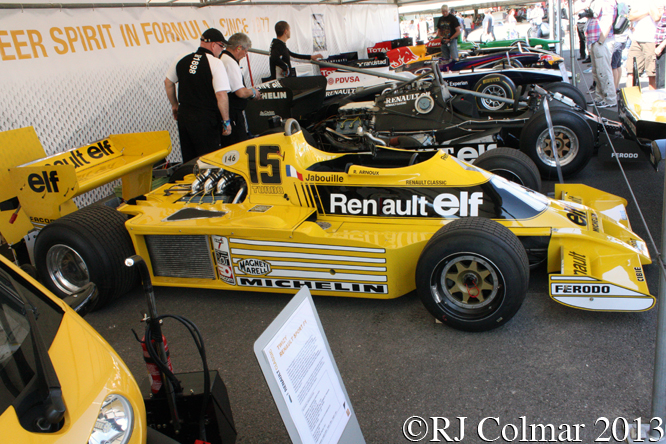
Renault RS01, Goodwood, Festival Of Speed

Having won Le Mans in 1978 Renault put all of it’s effort into winning the Formula One Drivers and Constructors championships with the first turbocharged Formula One car. Above is the 1978 RS01 which proved fast on occasion, particularly at altitude, but fragile.
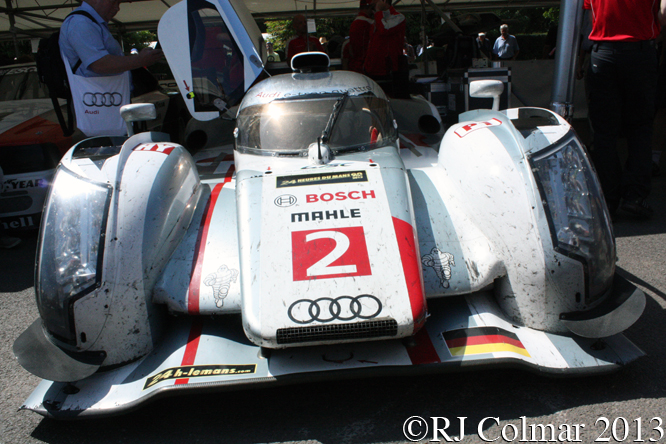
Audi R18 E-tron Quattro, Goodwood, Festival Of Speed

Fresh from victory lane, and looking several thousand miles the worse for wear, in the 90th Anniversary edition of the Le Mans 24 hours was the Audi R18 E-tron Quattro driven by Tom Kristensen, Alan McNish and Loic Duval.
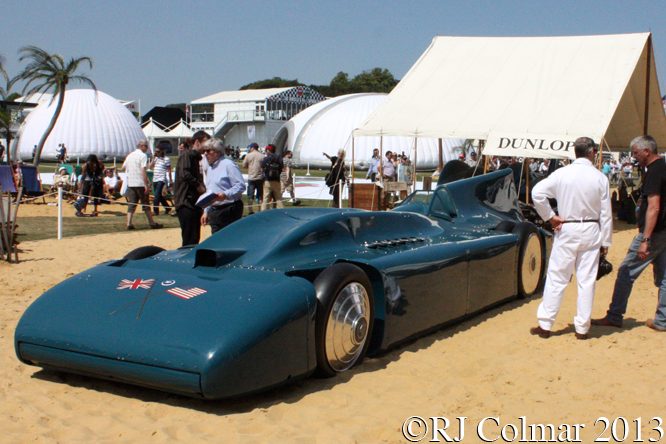
Campbell-Railton Blue Bird, Goodwood Festival Of Speed

Sir Malcom Campbell became the first man on four wheels to exceed 300 mph when he set a new Land Speed Record at Bonneville of 301mph on September 3rd 1935 when driving the 2300 hp supercharged Rolls Royce V12 powered Campbell-Railton Blue Bird. The piece of land on which Blue Bird was displayed normally serves as Lord Marches cricket pitch.
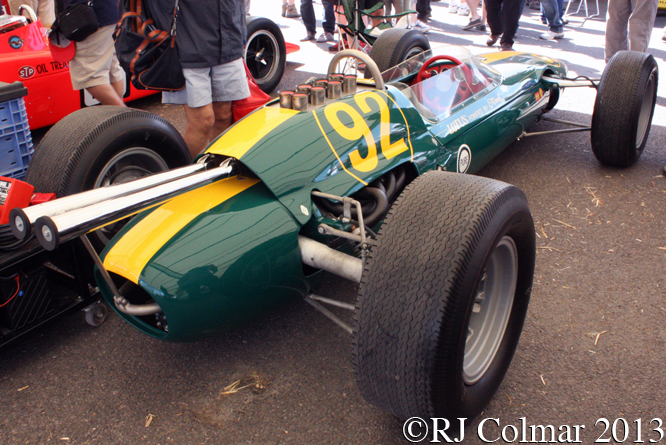
Lotus Ford 29, Goodwood Festival Of Speed

Regular readers will remember that the #92 Lotus Ford 29 driven by Jim Clark at Indianapolis in 1963 was destroyed in a fatal accident with Bobby Marshman at the wheel during a gruesome testing accident at Phoenix at the end of 1964. The car seen above is chassis #29/1 actually driven with a white and blue paint job by Dan Gurney to a seventh place finish at Indy in 1963. The car has been seen at the Indy Museum for many years (decades ?) bearing Jim Clark’s livery. The spare ’63 Lotus 29 chassis #29/2 currently carries the #91 white and blue livery used by Gurney.
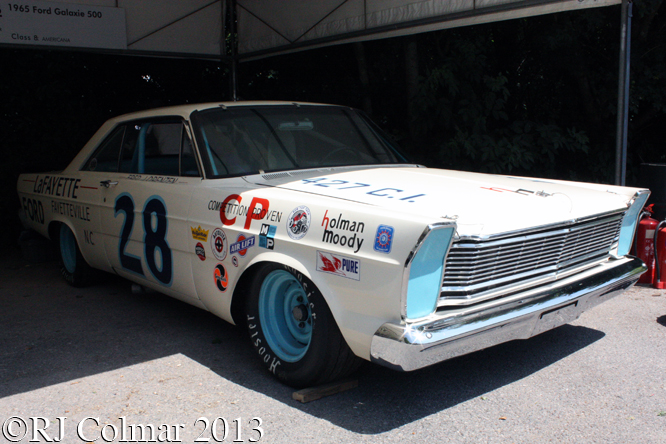
Ford Galaxie 500, Goodwood Festival Of Speed

“According to the programme” the Ford Galaxie 500 above was driven to victory in the 1965 Daytona 500 by Fred Lorenzen and then given a ’66 body for testing at Daytona the following year, however a search on the internet show’s that this might not be the only car sharing the story.
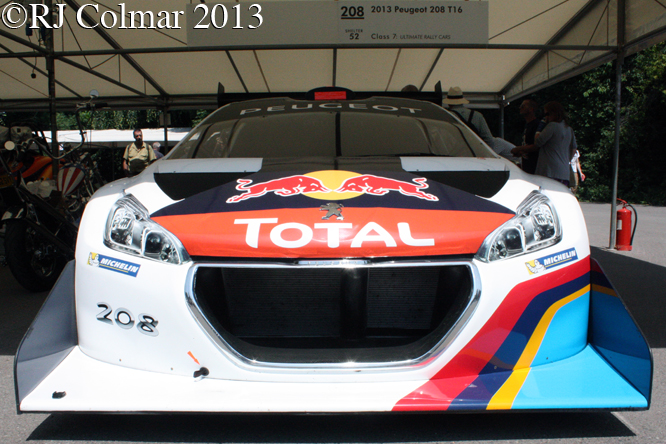
Peugeot 208 T16, Goodwood Festival Of Speed

Another car to arrive at Goodwood from victory lane was the 875 hp twin turbo V6 Peugeot 208 T16 with which Alsatian 9 (nine) time World Rally Champion Sebastian Loeb won this years Pikes Peak race to the clouds hill climb in a mind bending 8m 13.8 seconds an astonishing 95 seconds faster than Rhys Millens 2012 full 12.42 mile course record of 9m 46.1s. Tighten your reality belts to see how Mr Loeb set the record in the film linked here.
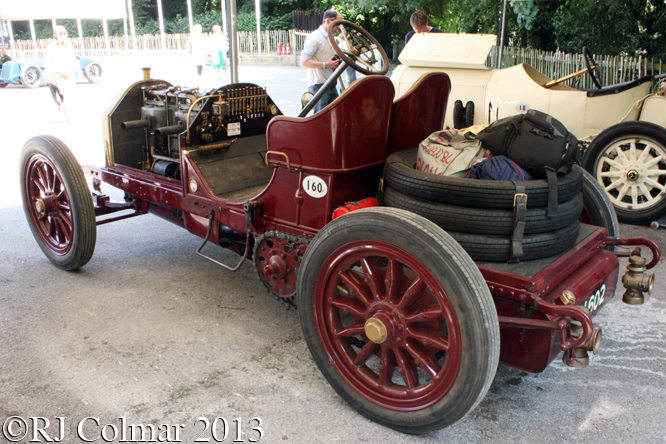
Mercedes 60hp, Goodwood Festival Of Speed

Any one who was reading GALPOT back in January might remember I spent a night and a day on the Exeter Trial being chased by a 4×4 Panda and following this 1903 Mercedes 60 hp Simplex crewed by Ben and Roger Collings, my appreciation of what these vehicles can do rose sharply as a result of the experience.
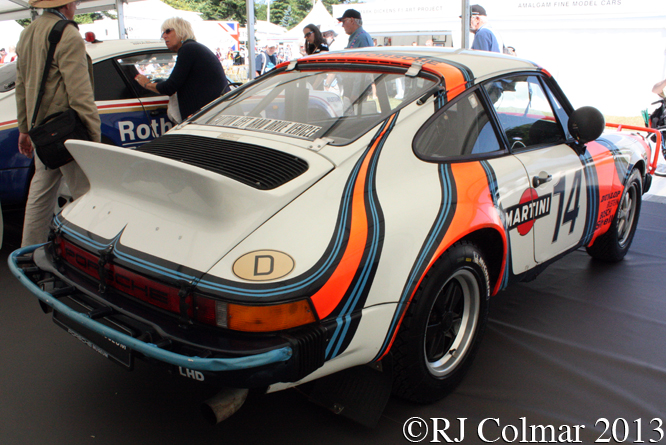
Porsche 911SC, Goodwood Festival Of Speed

Car of the show for me was this 1978 Porsche 911 SC driven by Kenyan Vic Preston Jnr with co driver John Lyall to second place in the 1978 Safari Rally. I always thought if I was going to have a 911 for the road I may as well have one that could survive the rigours of Africa where I learned to drive and this one has a particularly cool paint job.

Over the coming months some of these vehicles will be featured in more depth.

Thanks for joining me on this “20th Anniversary Festival Of Speed” edition of “Gettin’ a li’l psycho on tyres”, I hope you will join me again tomorrow. Don’t forget to come back now !

Check out the latest from the Formula One silly season at Motorsports Unplugged on this link.

Share

Dinger’s All Wheel Drive – McLaren Ford M9A

After the limited success of the Ferguson P99 in circuit racing from 1961 to 1963 Peter Westbury drove the P99 in 1964 and won the British Hillclimb Championship.

McLaren Ford M9A, Donington Park Museum

Meanwhile Andy Granatelli working with Ferguson had entered Bobby Unser in the Studebaker STP Special for the 1964 Indy 500 where he qualified 22nd but retired after an accident on the opening lap. BRM also became interested in all wheel drive in 1964 building the BRM P67 to test the system in anticipation of the forthcoming 3 litre / 183 cui motors that were to be mandated for Formula One in 1966. The P67 was driven in practice for the 1964 British Grand Prix by Grand Prix debutant Richard Attwood where the car was the slowest to take part. BRM concluded remarkably quickly that all wheel drive held no benefits for them and with drew the car from the race.

McLaren Ford M9A, Donington Park Museum

In 1968 Peter Westbury resurrected the P67 to win the British Hill Climb Championship again. By this time the Granatelli entered ’67 Paxton Special and ’68 Lotus 56 had both come with in 25 miles of winning the Indy 500 in successive years with gas turbine cars both featuring all wheel drive.

McLaren Ford M9A, Donington Park Museum

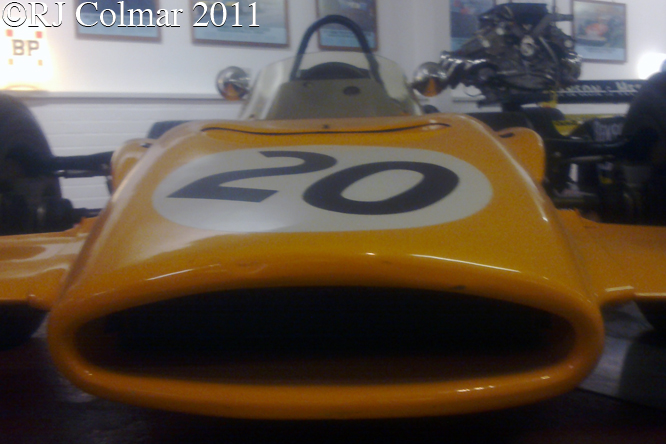
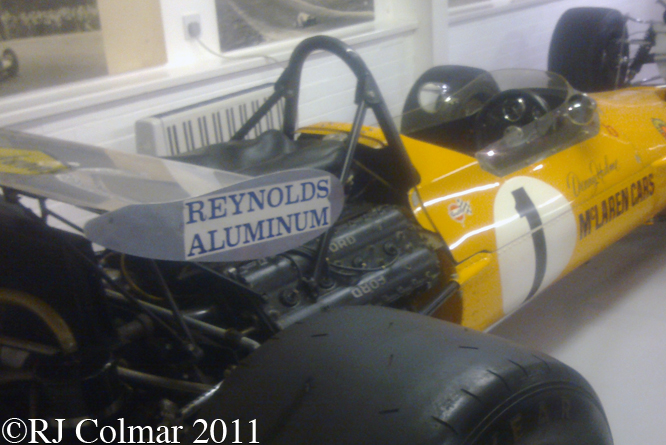
By 1969 four teams were ready to try all wheel drive again despite BRM’s Tony Rudd telling anyone who would listen that the system would not work in Formula One. One of those teams was led by Bruce McLaren who helped Swiss designer Jo Marquart with the Ford Cosworth powered M9A.

McLaren Ford M9A, Donington Park Museum

The car was tested and entered into the 1969 British Grand Prix for Derek ‘Dinger’ Bell to drive. Derek qualified 15th, of seventeen, and retired having completed just 5 laps when the rear suspension failed.

McLaren Ford M9A, Donington Park Museum

For McLaren this was enough to confirm what BRM had realised, that all wheel drive was not for Formula One, by 1969 improvements in aerodynamics and tyres which by now were much wider than when the Ferguson P99 first appeared had reduced the necessity for drive to the front wheels.

Thanks for joining me on this “Dinger’s All Wheel Drive” edition of “Gettin’ a li’l psycho on tyres” I hope you will join me again tomorrow. Don’t forget to come back now !

Share

Third Time Lucky – McLaren Ford M7A

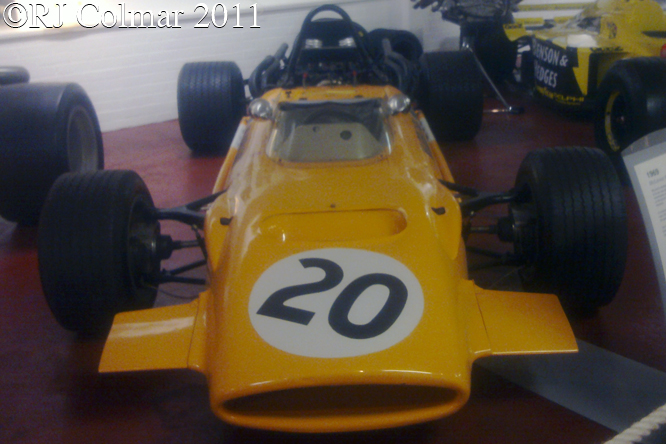
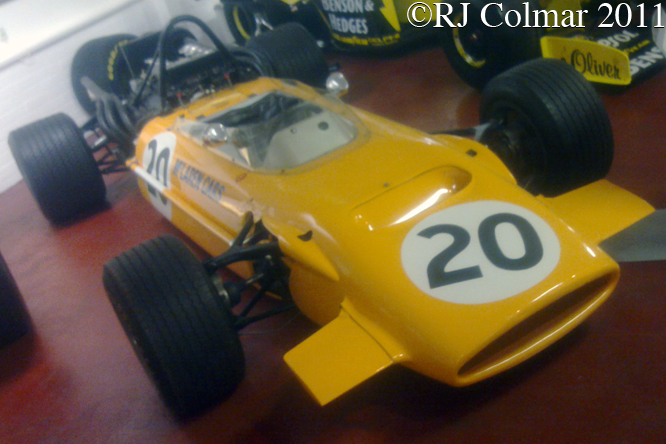
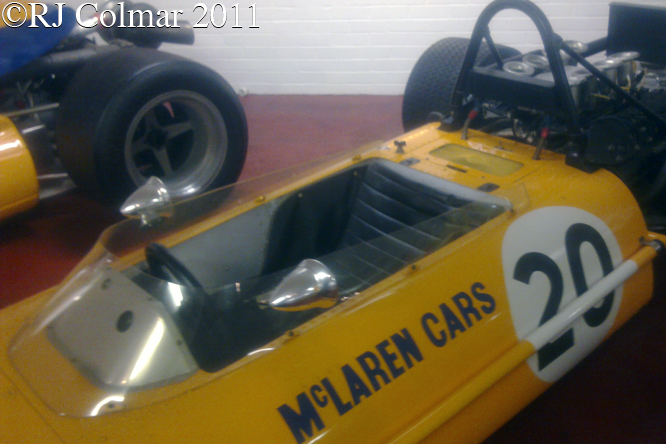
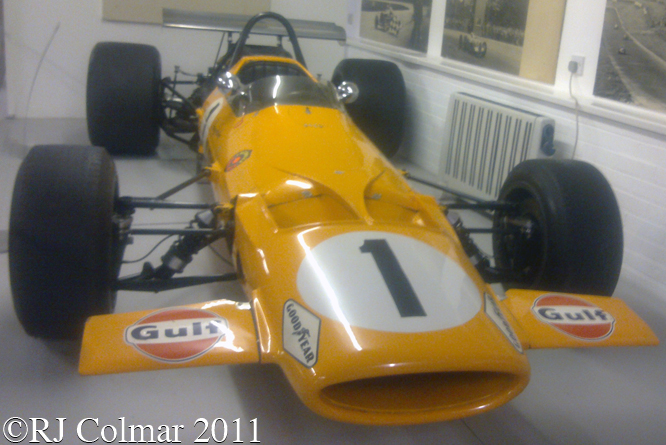
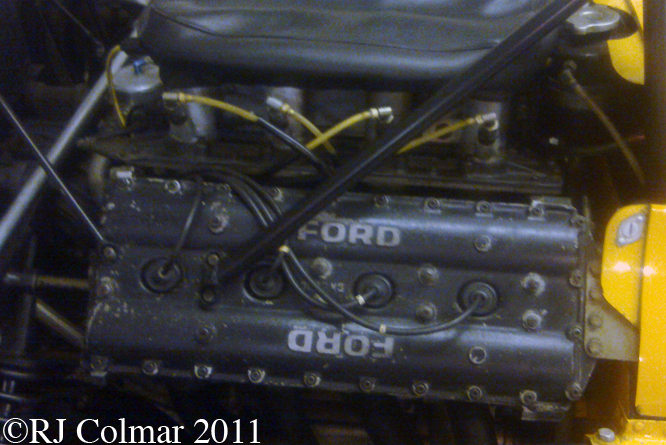
After the disappointments of the Ford Indy derived V8 and Serenissima V8 used in the 1966 McLaren M2B, the interim BRM V8 Formula 2 based McLaren M4B and BRM V12 powered M5A of 1967 Bruce Mclaren bought 5 Ford Cosworth DFV motors for the 1968 season which were used as in the integral structure of the McLaren M7A designed by Robin Herd, Gordon Coppuck and Bruce himself.

McLaren M7A, Donington Park Museum

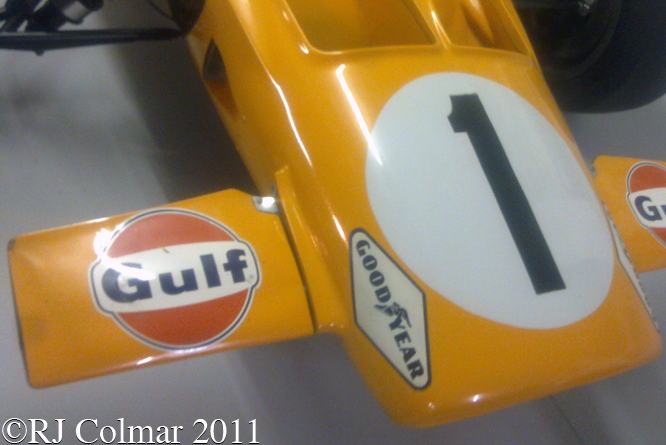
The M7A’s and 3 derivatives, M7B, M7C, and Alfa Romeo powered M7D were entered by the works team from 1968 to 1970. For 1968 the works Formula One McLaren’s were sponsored  by Shell while the McLaren Can Am Cars were sponsored by Gulf.

McLaren M7A, Donington Park Museum

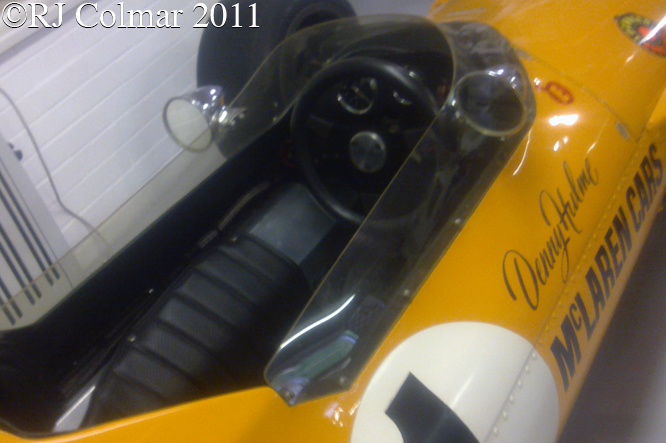
Reigning World Champion Denny Hulme left Brabham to join McLaren in 1968 and on the M7A’s debut at the non Championship Race of Champions at Brands Hatch Bruce came first and team mate Denny Third. The M7A’s came in first and second at the non Championship International Trophy at Silverstone with Denny Hulme came edging the team founder.

McLaren M7A, Donington Park Museum

On their third championship appearance, after Spain and Monaco, Bruce McLaren became the second man to win a Grand Prix bearing his own name crossing the line first to win the 1968 Belgian Grand Prix. It would prove to be his forth and final Grand Prix victory.

McLaren M7A, Donington Park Museum

Denny Hulme won the Italian and Canadian Grand Prix towards the end of the season and finished third in the World Drivers Championship behind Graham Hill and Jackie Stewart, Bruce finished fifth in points standings. McLaren finished second in the constructors Championship behind Lotus but ahead of the Ken Tyrrell entered Matra driven by Jackie Stewart all three constructors used Ford Cosworth DFV motors.

McLaren M7A, Donington Park Museum

In 1969 Bruce only drove an M7A in South Africa where he finished fifth before focusing on the M7C, which will be the subject of a future blog, which featured a more substantial monocoque. Denny meanwhile continued driving the M7A throughout the 1969 season winning the season finale in Mexico. Denny finished the season 6th in points with Bruce 3rd, the Mclaren team finished 4th and last of the Ford Cosworth DFV powered teams in the constructors championship.

The M7B fitted with outrigged panier fuel tanks made only one works championship appearance at the 1969 South African Grand Prix where Bruce Mclaren finished 5th. He later sold the car to Colin Crabbe who’s Antique Automobiles team entered it in four races for Vic Elford who finished a best fifth in the 1969 Dutch Grand Prix.

In 1970 McLaren adapted an M7 to take a non stressed Alfa Romeo V8 which became known as the M7D the car recorded three DNQ’s, did not qualify, a not classified finish in France and a DNS, did not start, in the 1970 British Grand Prix. After the first four events Nanni Galli took over the M7D from Andrea de Adamich, recording the cars third DNQ at the Italian Grand Prix.

Privately entered M7A were driven in three races by Dan Gurney for All American Racers in 1968, best finish forth in the US Grand Prix, and Basil van Rooyen for Team Lawson in the 1969 South African Grand Prix where he retired with brake problems after completing 12 laps.

Thanks for joining me on this “Third Time Lucky” edition of ‘Gettin’ a lil’ psycho on tyres’ I hope you will join me again tomorrow. Don’t forget to come back now !

06/07/13 Errata as Tim has pointed out below Bruce finished the 1960 season second in the World Drivers Championship and so his 3rd place in points in 1969 did not equal his career best as originally stated. Apologies for any confusion.

Share

Number 2 Drivers – British Grand Prix

Last Friday I popped along to Silverstone last Friday to see the first two practice sessions for the British Grand Prix. This was my first visit to Silverstone for Formula One action since 1981 when John Watson won the race for McLaren.

Rosberg, Mercedes Benz, F1 W04, British Grand Prix, P2, Silverstone

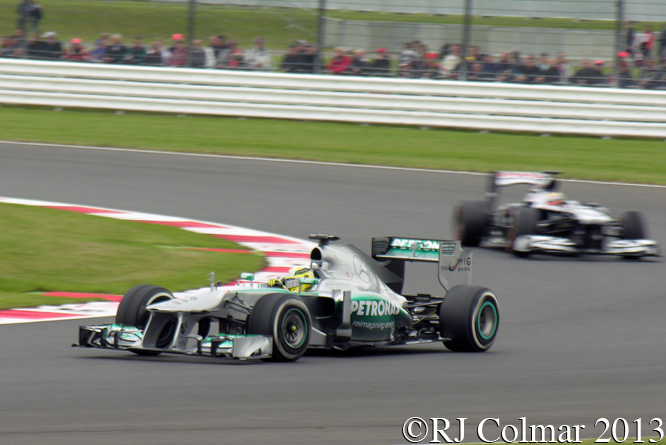
Today’s blog focuses on how the 11 teams number 2 drivers got on, above Nico Rosberg driving his Mercedes F1 W04 finished the opening day of practice at the top of the time sheets. Nico qualified second for the race and won after team mate Lewis Hamilton blew a tyre and then Sebastian Vettel retired with transmission problems. Despite having visiting pit row for the second time this season, twice more than his team mate Nico is still three seven points behind his team mate Lewis Hamilton, who has yet to win and fifty points behind Championship leader Lewis Hamilton.

Webber , Red Bull Renault, RB9, British Grand Prix, P2, Silverstone

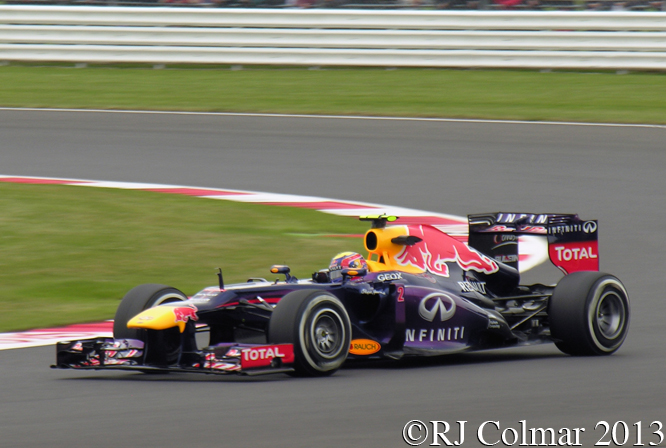
Last years British Grand Prix winner Mark Webber, seen driving his Red Bull Renault RB9 above, similarly set a faster time than his team mate Sebastian Vettel on the opening day of practice. Mark qualified 4th behind his team mate for the race and dropped to 15th after making contact with Romain Grosjean on the opening lap and recovered to finish in second place on his final British Grand Prix appearance. Mark announced at the British Grand Prix that he would be retiring from Formula One at the end of the season and joining Porsche’s Le Mans program for 2014.

Massa , Ferrari, F138, British Grand Prix, P1, Silverstone

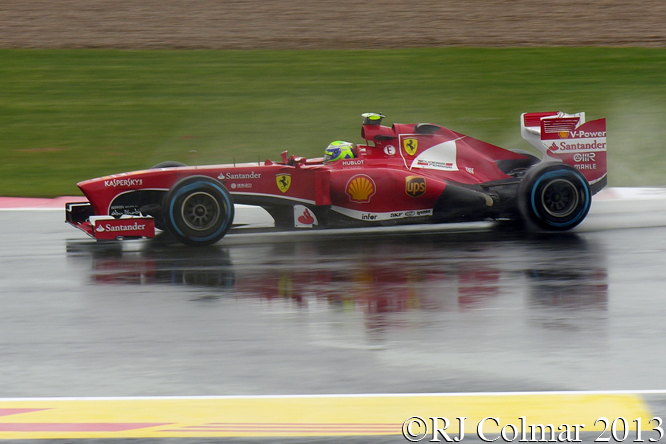
Ferrari’s Felipe Massa is seen driving his F138 in the first practice session he was slowest of the the eleven drivers to set a time in the morning and in the afternoon knocked a wheel of the front when he came off the drying track in the afternoon and again set the slowest time of the 22 drivers in the afternoon. Felipe could only qualify 12th for the race, but despite a high speed blow out did well to recover a sixth place finish by the end of the race.

Sutil , Force India Mercedes, VJM06, British Grand Prix, P2, Silverstone

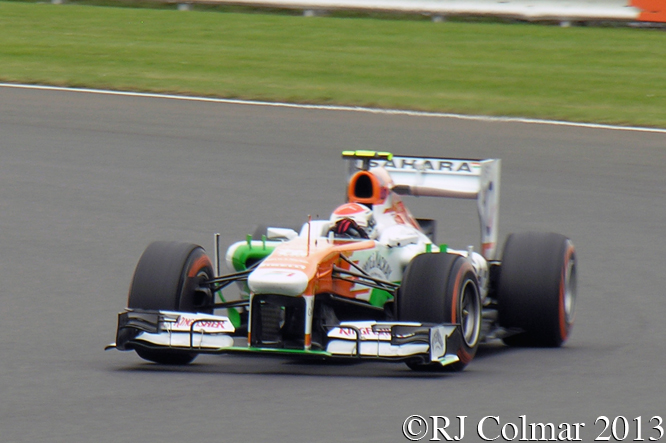
Adrian Sutil driving a Mercedes powered Force India VJM06 set 8th fastest time on day one, qualified 7th for the race and spent a long period running in third place behind Vettel and Rosberg but then got swamped at the end to finish 7th.

Ricciardo, Torro Rosso Ferrari, STR8, British Grand Prix, P1, Silverstone

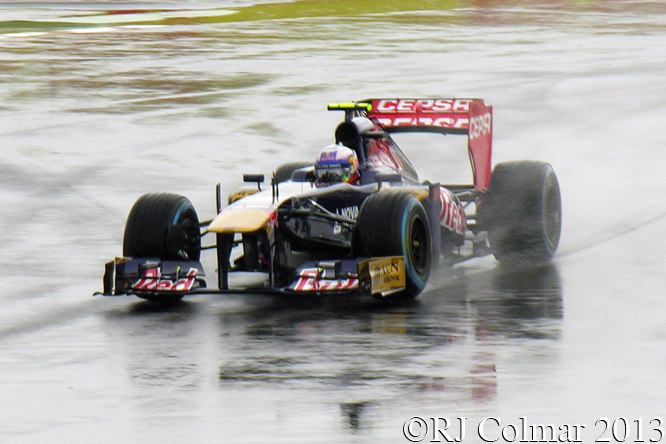
Daniel Ricciardo one of several drivers in the frame to replace the retiring Mark Webber at Red Bull, finished the opening practice session at the top of the time sheets, he qualified his Ferrari powered Torro Rosso STR8 an impressive 6th, seven places ahead of his team mate Jean Eric Vergne. After running in 4th place for much of the race he too was swamped at the end to finish 8th.

Bottas, Williams Renault, FW35, British Grand Prix, P1, Silverstone

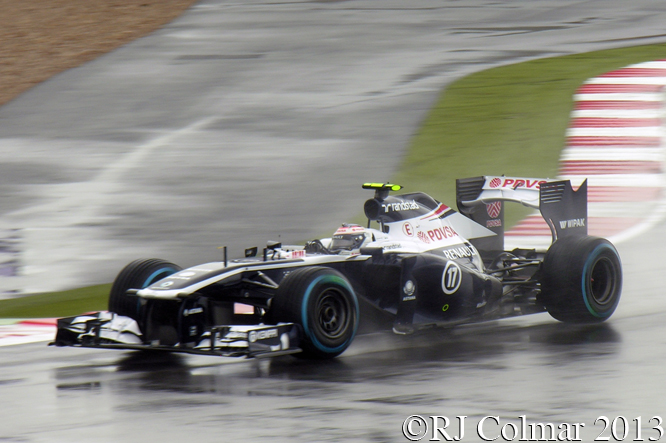
Williams were celebrating the 600th Grand Pix at Silverstone unfortunately Valtteri Bottas driving his Renault powered FW35 could not repeat his fine Canadian 7th fastest qualifying performance. Starting 16th Valttteri came home 12th in the race.

Gutiérrez, Sauber Ferrari, C32, British Grand Prix, P1, Silverstone

Mexico’s Esteban Gutiérrez started the British Grand Prix from 17th place on the grid in his Ferrari powered Sauber C32 and climbed to 14th by the end of the race.

Chilton, Marussia Cosworth, MR02, British Grand Prix, P2, Silverstone

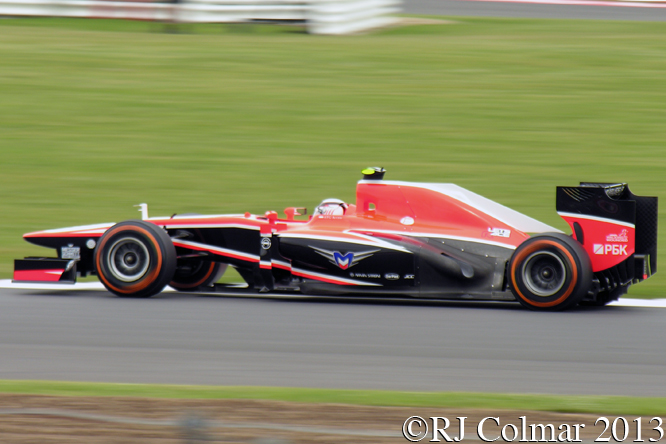
Max Chilton in the Cosworth powered Marrusia MR02 was the slowest qualifier but thanks to penalties for Paul di Resta and Giedo van der Garde he started his home Grand Prix from 20th and finished 17th.

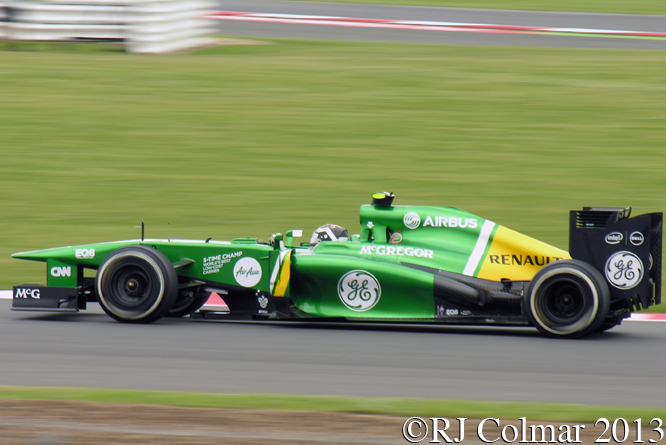
van der Garde, Caterham Renault, CT03, British Grand Prix, P2, Silverstone

van der Garde started the British Grand Prix from last place after ignoring blue flags, shown to signal that he was about to be lapped, in Canada and finished the race 18th and last unlapped runner.

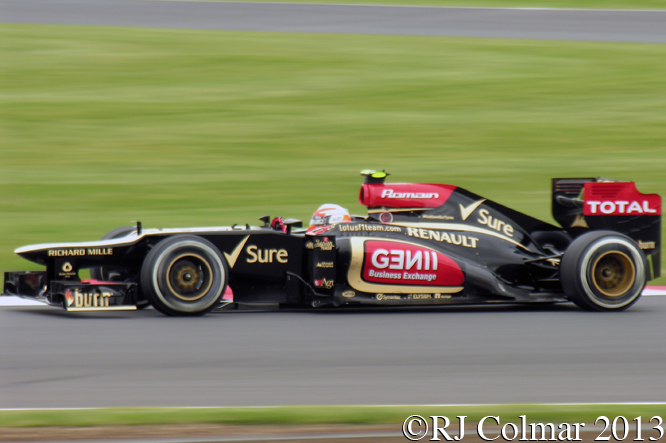
Grosjean, Lotus Renault, E21, British Grand Prix, P2, Silverstone

Driving his Renault powered Lotus E21 Romain Grosjean started the British Grand Prix from 7th on the grid but was involved in a collision with Mark Webber on the opening lap he finished the race 19th 1 lap down last car still running.

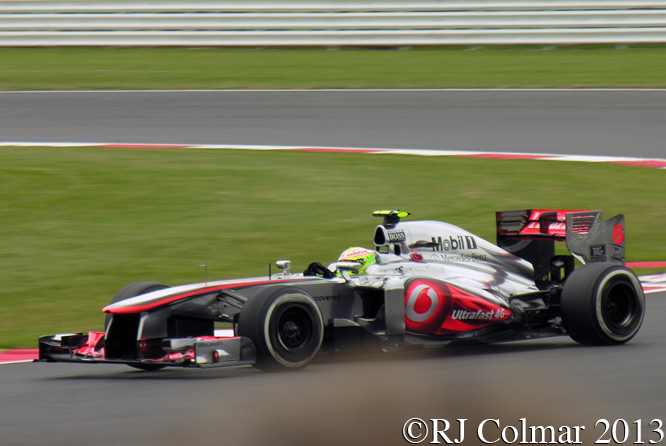
Perez, McLaren Mercedes, MP4-28, British Grand Prix, P2, Silverstone

Finally Sergio Pérez suffered a tyre failure during practice on the opening day that would be a portent for 4 similar failures on race day. Starting from 13th on the grid Sergio suffered a second puncture on race day that forced his retirement due to the damage to his Mercedes powered McLaren MP4-28 caused by the flailing remains of the tyre on lap on lap 46.

More on the British Grand Prix at Motorsports Unplugged.

Thanks for joining me on this “Number 2 Drivers” edition of “Gettin’ a li’l psycho on tyres” I hope you will join me again for an Independence Day edition tomorrow. Don’t for get to come back now !

Share

Shimmying Past Scrutineers – Ford Mark IV #J5

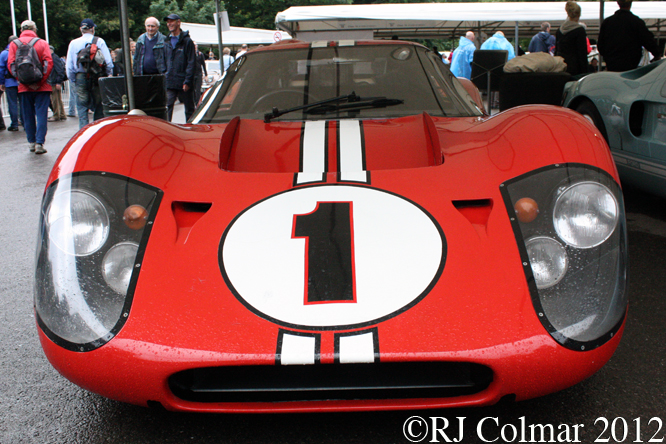
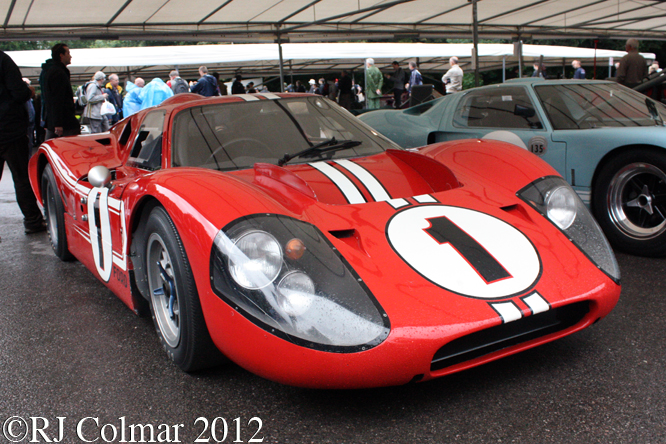
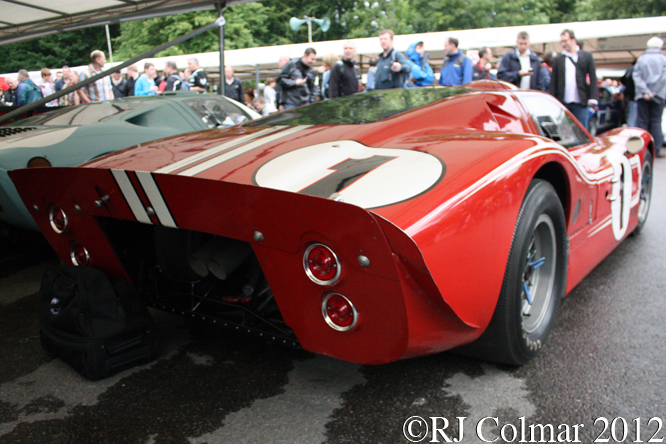
The Ford Mark IV was the culmination of Ford’s determination to crush Ferrari on it’s own turf, after Enzo had bailed out of selling his eponymous company to the men from Dearborn at the last minute in 1963.

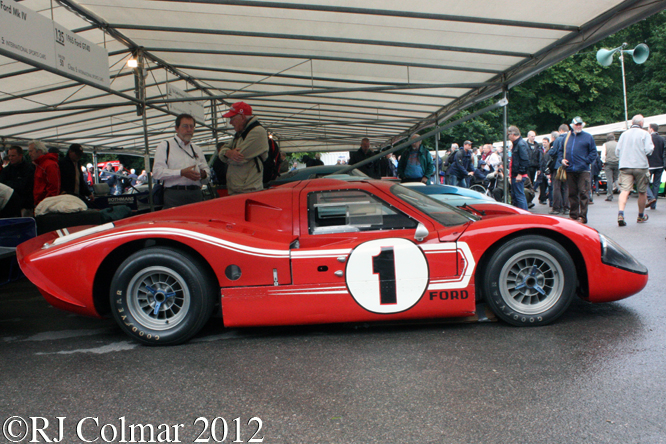
Ford Mark IV, Goodwood Festival of Speed

What started out as an Eric Broadley designed Lola GT powered by a Ford Indy spec V8 in 1963 had been developed into the Ford GT40 with input from Ford’s designers led by Roy Lunn. The GT40 was the subject of two humiliating failures at Le Mans in ’64 and ’65 but then blossomed into the Shelby developed 7 litre / 427 cui Ford GT40 Mark II that swept to a 1,2,3 victory at Le Mans in 1966.

Ford Mark IV, Goodwood Festival of Speed

Unable to convince Ford that they needed to build the GT40 with an aluminium frame to save weight Eric Broadley left the GT40 project in 1965 and returned to Lola while Ford and Shelby got to grips with producing a steel framed car that was both powerful enough and strong enough to last 24 hours at a race winning pace.

Ford Mark IV, Goodwood Festival of Speed

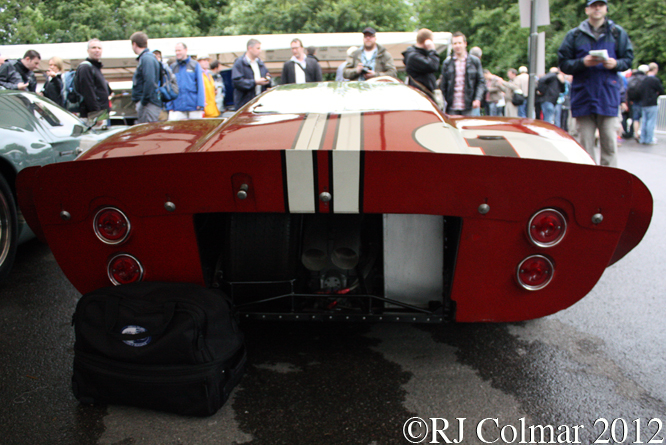
Ford soon realised that Eric was right about the extra weight carried by the steel framed cars and before the steel framed GT40 Mk II’s romped to victory, in ’66, they set about building an aluminium framed version of the GT40 with the same drive train and suspension components known as the J-Car featuring an innovative aluminium honeycomb monocoque manufactured by Brunswick Aerospace.

Ford Mark IV, Goodwood Festival of Speed

The J-Car was subject to much experimentation with body shapes and even crash testing after Ken Miles had been killed in a freak accident testing a J-Car. By 1967 Ford had four of the new Mark IV’s ready for the Le Mans 24 hours powered by 7 litre / 427 cui motors.

Ford Mark IV, Goodwood Festival of Speed

According to Dan Gurney the Mark IV’s were fitted with suspension shims to ensure they passed the scrutineers / tech inspectors minimum ride height test held in the middle of town, these shims then “fell off” on the way back to the race track to ensure the Fords had some aerodynamic stability when they hit 200 plus mph on the 4 mile Mulsanne straight.

Ford Mark IV, Goodwood Festival of Speed

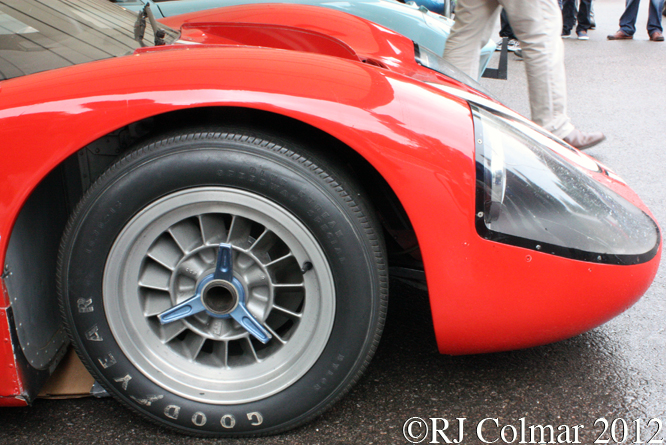
Dan Gurney set the winning car up then he and Le Mans rookie AJ Foyt then set about winning the race, during the middle of the night Dan over slept forcing AJ to do a double stint behind the wheel but other than that their car had no problems on it’s way to a four lap victory over the Ferrari P4 of Ludovico Scarfiotti and Mike Parkes. The sister Shelby run Goodyear shod car of Bruce McLaren and Mark Donohue came forth behind another Ferrari P4 after loosing time with a tale piece that was ripped off.

Ford Mark IV, Goodwood Festival of Speed

On the podium Dan Gurney started a tradition of shaking up the winners bottle and spraying champagne all over the gathered revelers which has been repeated by race winners around the world countless times since. The day after the race the Mark IV’s were effectively banned from racing in 1968 and Ford withdrew from any further factory participation on the spot.

Ferrari ended up winning the World Sports Car Championship in 1967 but it hardly mattered since everyone remembers who won the signature event of the series the Le Mans 24 hour race.

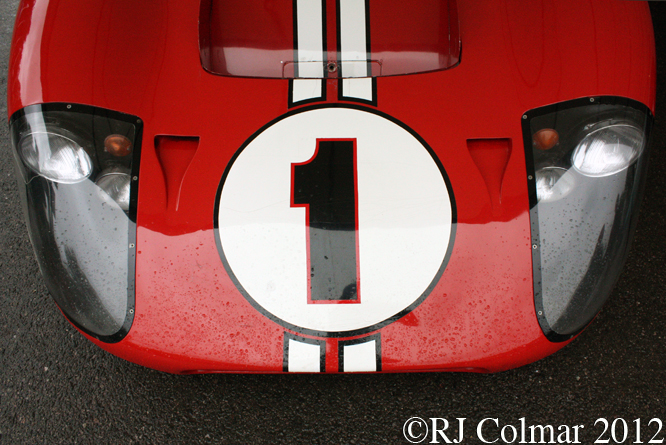
The car driven by Gurney was different from the three other Mark IV’s in the race because to accommodate Dan’s 6’3″ frame a blister was built into the roof and the seat was lowered. After the race all four Mark IV’s, the two Firestone shod cars run by Holman Moody had crashed out, returned to the States were overhauled and all four painted to look like the winner complete with a blister in the roof.

The winning car chassis #J5 has been kept at the Ford Museum however I am led to believe this is the same car that appeared at Goodwood last year, but I maintain an open mind since Ford sold chassis #J6 to New York collector James Glickenhaus believing they had sold him the 1967 winning car until closer inspection revealed otherwise.

Thanks for joining me on this “Shimmying Past Scrutineers” edition of “Gettin’ a li’l psycho on tyres” I hope you will join me again tomorrow. Don’t forget to come back now !

PS Don’t miss my Canadian Grand Prix opinions at Motorsports Unplugged.

Share

Dealer Pressure – Aston Martin DP 212

Following the success of the Aston Martin DBR1 at Le Mans and the 1959 World Sports Car championship the Aston Martin team refocused it’s attentions on an ill timed Grand Prix effort that folded by the end of 1960, by which time the front engined Aston Martin DBR4 and DBR5 were completely out classed by rear engined cars.

Aston Martin DP212, Goodwood Revival

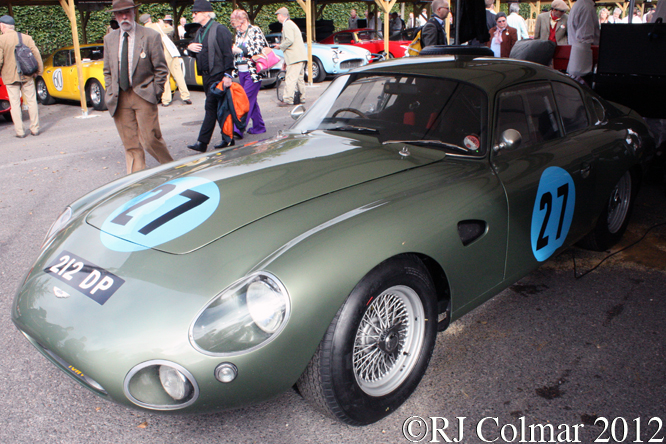
Under pressure from dealers to come up with a new racing program David Brown sanctioned the development of the DP 212 for the 1962 Le Mans 24 hours.

The cars was built using an Aston Martin DB4GT frame with a 345hp 4 litre / 244 cui six cylinder motor and a sensuous slippery long body to suit the potential of 4 mile Mulsanne straight at Le Mans.

Graham Hill and Richie Ginther were engaged to drive the car at Le Mans where it had a brief moment of glory leading the opening lap of the 24 hour endurance race with Graham Hill at the wheel, however from there on the car dropped down the field over the next six hours until it retired from 9th place with piston failure following an oil pipe fracture.

The original bodywork was found to experience stability problems at speed and after aerodynamic tests was replaced with a Kamm tail of the sort that was later used on the back of the Aston Martin DB6.

Subsequently DP212’s only other appearance was at the 1963 Le Mans test weekend where Jo Schlesser, Bruce McLaren, Lucien Bianchi and William Kimberly drove the car which recorded 5th fastest time. By the 1963 Le Mans 24 hour race the DP212 had been replaced by the DP 214 and DP215 models.

DP212 was later converted to a road car with even larger 349 hp motor and driven in a variety of events by Hon.John Dawnay, later Viscount Downe, and Mike Salmon the later winning the 1974 Classic Car Championship with it.

Thanks for joining me on this “Dealer Pressure” edition of “Gettin’ a li’l psycho on tyres” I hope you will join me again tomorrow for a look at a Le Mans winner from Germany. Don’t forget to come back now !

Share

38.907 sec Champion – Ferrari F2008

After an acrimonious 2007 season in which a Ferrari employee had been caught passing sensitive Ferrari documents to a McLaren employee after the McLaren Employees wife was dobbed in by a photocopy shop the 2008 season was relatively calm. The big story of 2008 being the on track battle between sophomore sensation Lewis Hamilton driving for McLaren and Ferrari’s de facto number two driver Felipe Massa who unexpectedly stepped up to the plate while his team mate reigning Champion Kimi Räikönnen experienced a post championship slump that saw him get bought out of a very expensive contract by the seasons end.

Ferrari F2008, Goodwood Festival Of Speed

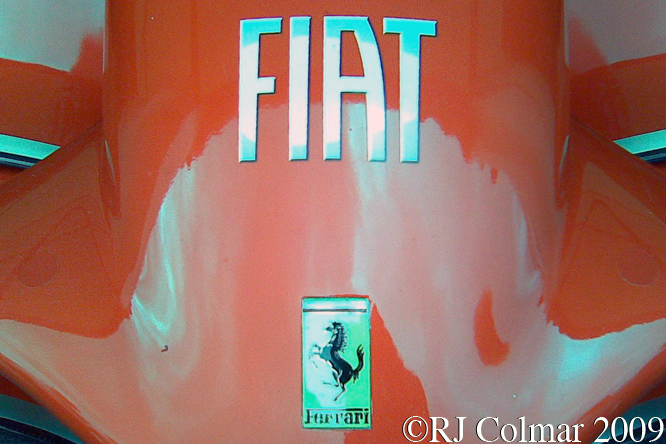
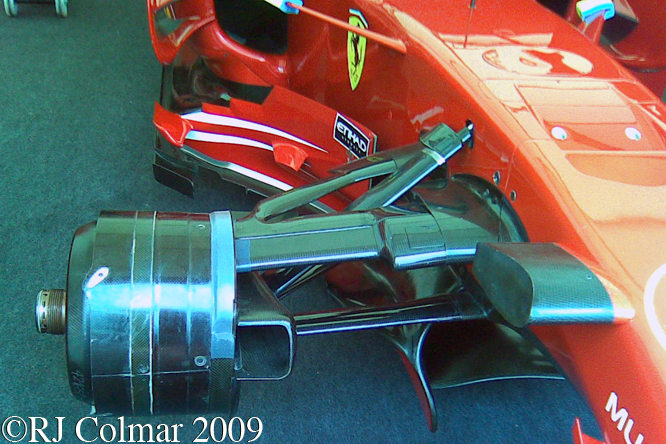
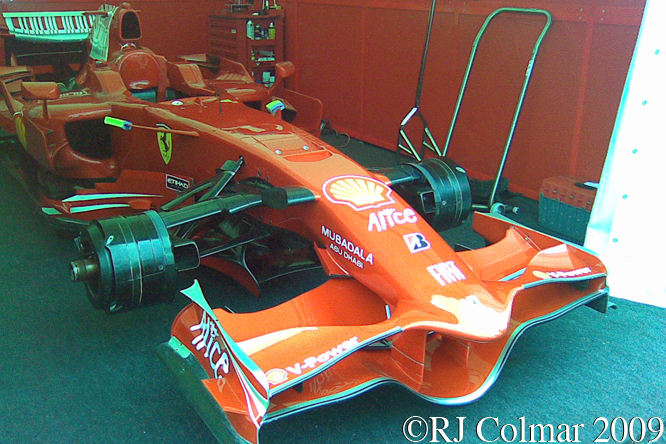
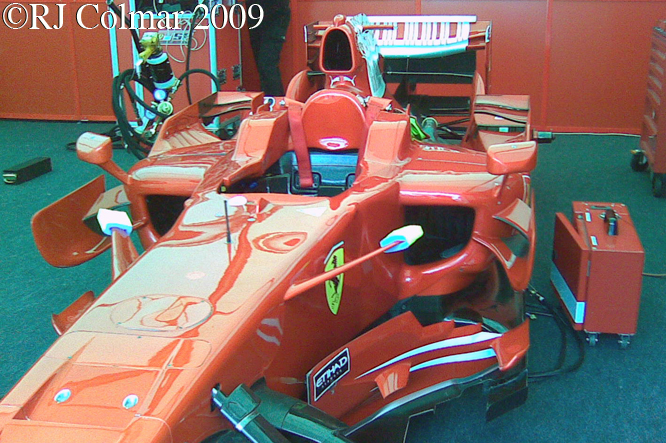
Designed by an international team that included Italians Mario Almondo and Aldo Costa, Frenchman Giles Simon and Greek Nicolas Tombazis the F2008 ran with a 2.4 litre 146 cui V8 motor that was restricted, by a newly mandated McLaren Electronic Control Unit (ECU), to a maximum of 19,000 revolutions per minute (rpm).

Ferrari F2008, Goodwood Festival Of Speed

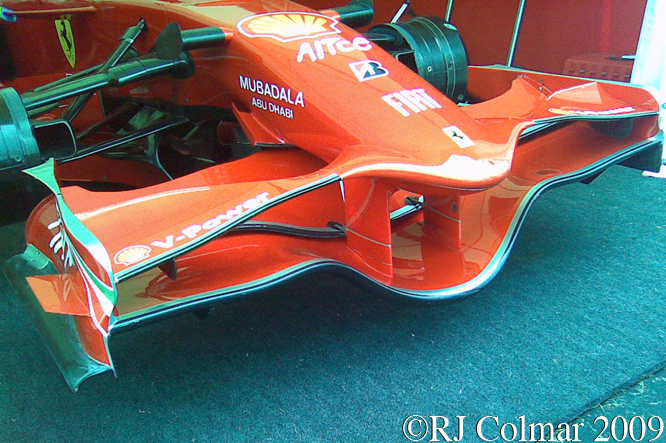
The curious front wing shape was partly a result of regulations demanding certain parts of the wing needing to be a minimum of 5 inches of the ground.

Ferrari F2008, Goodwood Festival Of Speed

This was the last season for which grooved tyres which had been mandated since 1998 to keep cornering speeds in check had been mandated. At the time Ferrari and one or two other well funded teams were running multiple wind tunnels simultaneously 24/7 to seek out the tiniest of aerodynamic advantages.

Ferrari F2008, Goodwood Festival Of Speed

Going into the Brazilian Grand Prix, last race of the season, Lewis Hamilton had five wins and led the championship with 94 points, while Felipe Massa had also scored 5 wins but only had 87 points due to his inferior placings, so there were multiple possibilities for Lewis to claim the championship but Felipe had to win with Hamilton finishing sixth or lower to claim the championship. Felipe started well by claiming his sixth pole position of the year, to Hamilton’s seven pole starts, and led the race which was delayed by rain and run in slippery conditions to cross the line first.

Ferrari F2008, Goodwood Festival Of Speed

Hamilton meanwhile had started from third on the grid was involved in a battle for 4th position with the Ferrari powered Torro Rosso of Sebastion Vettel going into the final pitstops, during which the dry shod Toyota of Timo Glock overtook the pair of them. Lewis and Sebastian both opted for intermediate tyres. Vettel was the first to catch and pass Glock to reclaim 4th place for good. Hamilton meanwhile only managed to pass Glock who’s dry tyres were struggling for grip on the damp track going into the very last corner of the very last lap to claim the necessary fifth spot crossing the finish line 38.907 secs behind Felipe Lewis relived the Ferrari driver of the World Drivers Championship title. Ferrai did however have the consolation of winning the Constructors World Championship for a record 16th time.

Thanks for joining me on this “38.907 sec Champion” edition of “Gettin’ a li’l psycho on tyres” I hope you will join me again tomorrow. Don’t forget to come back now !

Share