Tag Archives: MG

NASCAR Contender ? – MG MGA 1600 Mk II

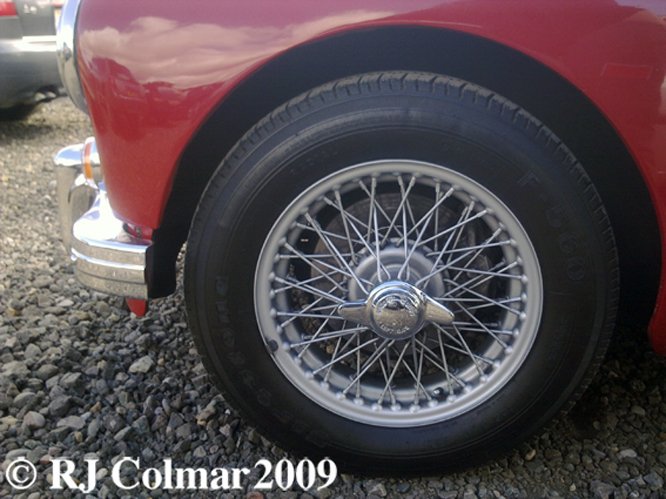
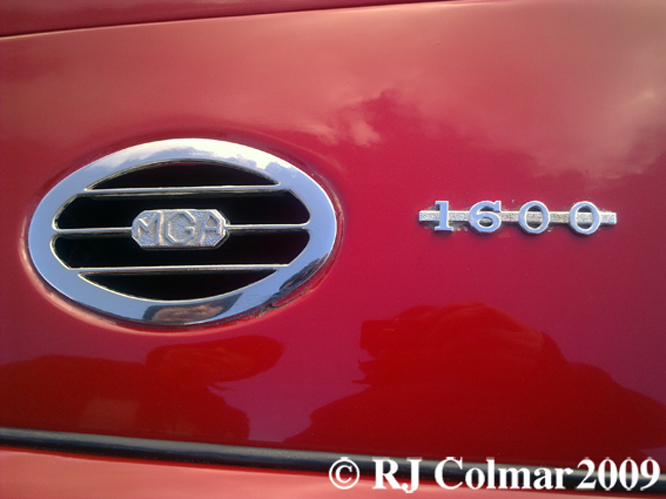
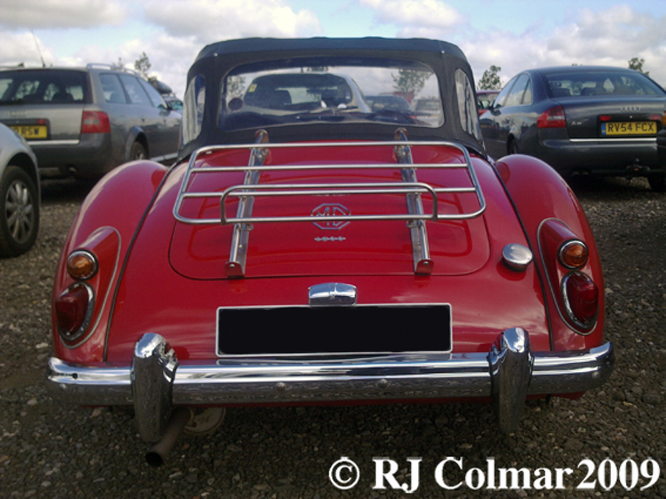
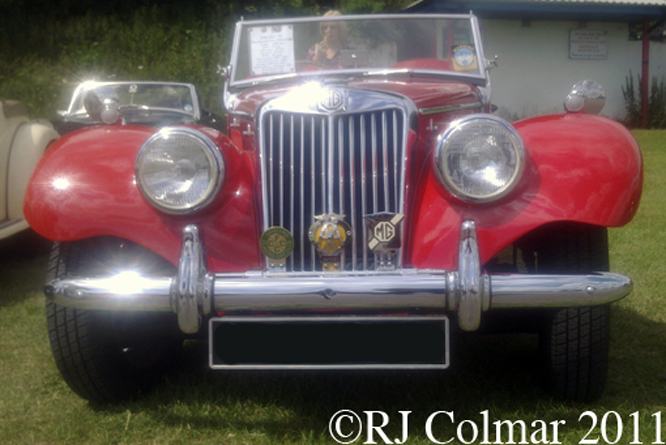
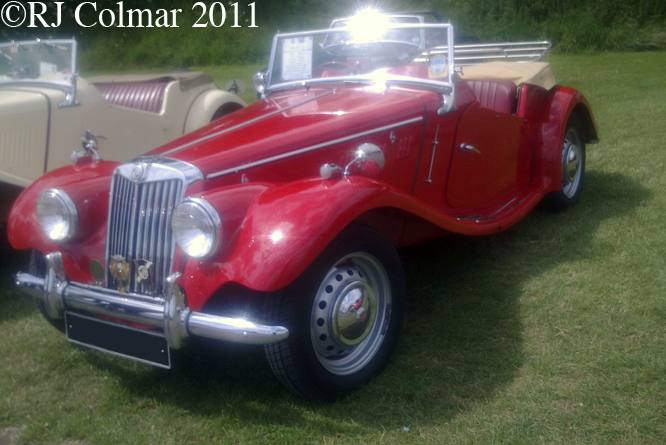
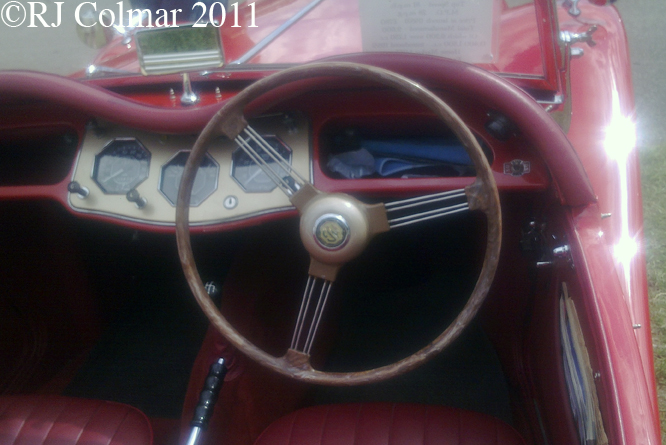
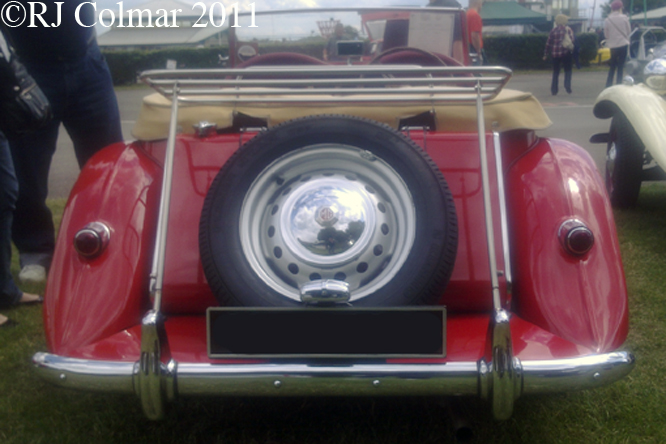
Launched in 1960 the MGA 1600 MK II was the last of the MG A series cars to enter production. From the front the 1600 MkII wasdistinguishable from the original MGA 1600 by the bottom of the radiator grill with the bars either side of the central grill bar dropping away more radically on the later model.
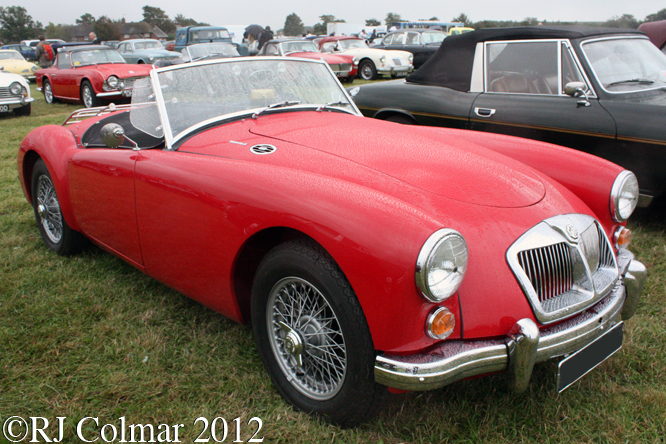
MG A 1600 MK II, Goodwood Revival

There were many changes under the bonnet / hood that included a larger 1622 cc / 98.9 cui 90 hp 4 cylinder motor up from 1588cc / 96.9 cui which combined with larger valves and reworked combustion chambers in the cylinder brought the power up from 78 hp to 90 hp.

The new motor combined with new rear axle ratio’s improved the cars top speed to 102 mph, thought the acceleration from rest to 60 mph was slightly slower than than the model it replaced at 13.7 secs, as was the fuel consumption which dropped to 22.3 mpg imperial.

The is no truth in the internet rumour that Spencer Tracey backed his Dodge into an MGA at the Drive In in the film ‘Guess who is coming to dinner’, it was a hopped up hi boy. Among the films the MGA did have bit parts in was “Fast Lady”, blink and you might miss it in the linked trailer.

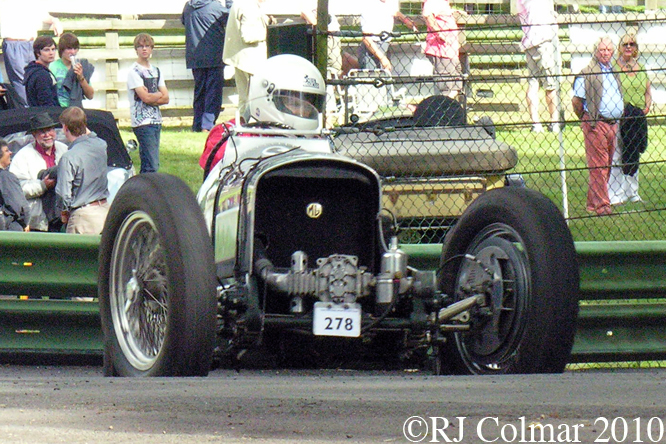
There is also speculation on the internet that Smokey Cook may have driven an MGA at Bowman-Gray Stadium in 1963 to record the last start by a foreign manufacturer in a NASCAR race until the arrival of Toyota in the 21st Century. No pictorial evidence has been found of what type of MG Smokey drove that day, though at least one photo has been found of Fred Harb driving a TD at Bowman fitted with a small block Chevy V8 allegedly picked up with a transmission for just $150 from a junk yard. It seems most likely that this is the type of “hobby stock class” grid filler from the tracks regular series rather than a specially prepared for NASCAR MGA. If you know different and have either documents or photographs to prove what kind of MG Smokey Cook drove at Bowman in 1963 please chime in below.

Like the MGA Twin Cam and 1600 De Luxe the 1600 MkII and MkII De Luxe had disc brakes all round with competition center lock wheels an optional extra. Between 1960 and 1962 MGA production tailed off with just 8,719 of these Mk II vehicles being built. Total MGA production between 1955 and 1962 reached 101,081 making it the all time best selling sports car of the day. Amazingly all but 5000 of the total MGA production run remained in the country of origin.

Thanks for joining me on this “NASCAR Contender ?” edition of ‘Gettin’ a li’l psycho on tyres’. I hope you will join me again tomorrow. Don’t forget to come back now !

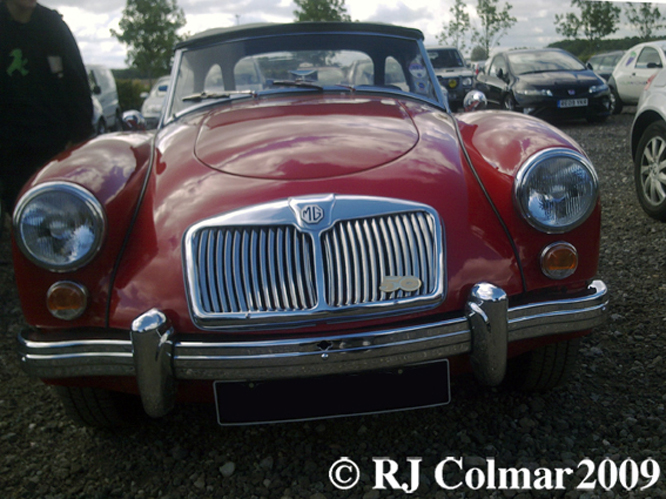
16 09 12 Errata :- it has come to my attention that the original set of photo’s posted with this blog were of the earlier MG 1600 not the MkII with the distinctive grill now seen above at the 2012 Goodwood Revival. Apologies for any confusion.

Share

Almost Always True – MG MGA 1600

The story of the MGA sarts with an MG TD special chassis #EX172 registration UMG400 which despite it’s works experimental chassis number was built for privateer George Philips to race at Le Mans in 1951, the car featured a low slung body desgined by Syd Evener, the body was so low that a special wide chassis had to be built to accommodate the driver between the chassis rails rather than above them as had been the case with all of the MG T series cars.

MG MGA, Silverstone

#EX172 was a public relations success, though it only lasted three hours of the 24 hour race for which it was designed. Due to the rationalisation going on in the British Motor Corporation, a conglomerate which MG became a part of in 1952, MGA production was stalled for two years while resources were put into launching the Austin Healey 100/4.

MG MGA, Silverstone

The MGA finally came to market in 1955 fitted with a 58 hp motor, in 1958 a 108 hp twin cam version became available which had to be detuned to 100hp after problems manifested themselves with the high compression motor.

MG MGA, Silverstone

The 1600 MGA was launched in 1959 with a 78 hp version of the BMC ‘B’ motor, disc brakes on the front. One of these £940 models was tested with a rest to 60 mph time of 13.3 seconds, top speed of 96 mph and 29.7 mpg (imperial).

MG MGA, Silverstone

This 1960 model is one of 31,501 manufactured between 1959 and 1960. Elvis Presley fans may recognise this car as similar to the one used in the film Blue Hawaii in which he sings the Weisman and Wise number ‘Almost Always True‘.

Thanks for joining me on this ‘Almost Always True’ edition of ‘Gettin’ a li’l psycho on tyres’, I hope you will join me again, tomorrow. Don’t forget to come back now !

Share

T for 2 – MG TF

Following the demise of the MG PB in 1936 MG launched the 2 seater MG TA as it’s replacement the same year.

MG TF, Castle Combe, C&SCAD

3000 TA’s were up until 1939 when the TA was replaced by the TB of which just 379 were built prior to the requirements of the War Office taking precedence of the MG manufacturing facilities.

MG TF, Castle Combe, C&SCAD

After the war with the huge demand for vehicles world wide the MG TC came into it’s own with 10,000 examples built from 1945 to 1950, when the TD, which started to break away from the look of the older models with it’s relatively small 15″ steel road wheels and chrome bumpers, was launched. 30,000 of these phenomenal export earners were built with 23,488 of them going to the USA and just 1,656 remaining for UK showrooms !

MG TF, Castle Combe, C&SCAD

The TF as seen in todays photos at Castle Combe during last years Classic & Sportscar Action day was launched 1953 featuring headlights integrated with the front wings, for the first time in the T series. This 1954 model was fitted with a 1250 cc 76 cui motor with 56 hp which would take the car from rest to 60 mph in 18.9 secs and on to a top speed of 81 mph and return 28 mpg.

MG TF, Castle Combe, C&SCAD

Over three years 9600 TF’s were manufactured of which all but 1057 were exported. Eagle eyed GALPOT readers with a solid state hard drive may recall the Replica Prize Winning Brazilian Avalone 11 was fashioned after the MG TF.

Thanks for joining me on this ‘T for 2’ edition of ‘Gettin’ a li’l psycho on tyres’, wishing all GALPOT contributors & readers a romantic Valentines Day, I hope you will join me again tomorrow. Don’t forget to come back now !

Share

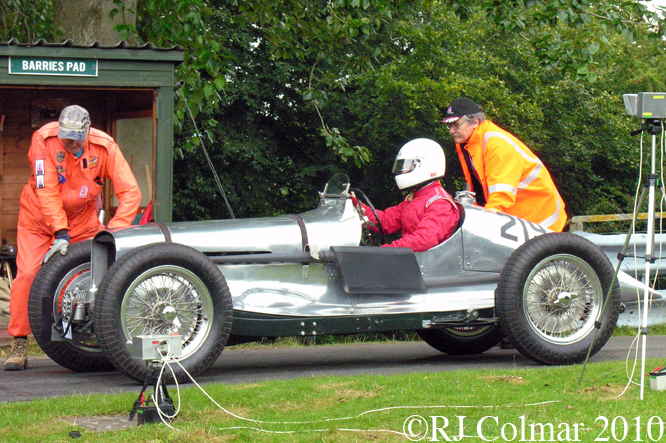
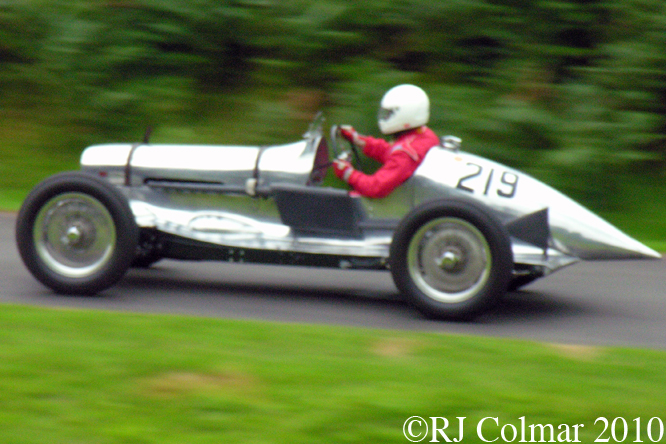
Hire Car – MG Bellevue Special

The MG Bellevue Special appears to have started life as one of the 745 MG N series sports cars built from 1934 to 1936. The first NA series chassis around which this particular vehicle was built was originally supplied with a twin carburetor 56 hp six cylinder motor upgraded from the Wolseley Hornet.

MG Bellevue Special, Prescott

In two seater guise this car was prepared by Walter ‘Wilkie’ Wilkinson of Bellevue Garages in Wandsworth London as a racing hire car for use at Brooklands in the 1935/36 seasons.

MG Bellevue Special, Loton Park

In 1937 Walter converted the car into an ‘offset’ single seater using earlier MG K-Type axles, brakes and wheels and the sleek aluminium body along with a rack of six Amal carburetors. The six carburetors were later replaced with a supercharger.

MG Bellevue Special, Loton Park

Wilke Wilkinson, a founder member of the British Racing Mechanics Club, went on to prepare the Le Mans Winning ‘D-Type’ Jaguars of Eccurie Eccose in 1956 & 57 and moved on to work with the BRM Grand Prix team where Graham Hill and Jackie Stewart were the drivers in residence. This car seen driven by Ian Baxter at Prescott and Luton Park has recently been sold, the asking price was £175,000.

Thanks for joining me on this ‘Hire Car’ edition of ‘Gettin’ a li’l psycho on tyres, I hope you will join me again tomorrow. Don’t forget to come back now !

Share

Supercharged – MG PA

The MG P series was launched in 1934 part of a continuing series of upgrades of the earlier M-Type and J-Type roadsters.

MG PA, Loton Park

The main differences were that the P Types had a slightly longer wheel base and a 36 hp variant of the over head cam cross flow Morris Minor / Wolseley 10 4 cylinder motor with more reliable 3 bearing crankshaft. The PB types launched in 1934 had a slightly larger and more powerful 43 hp motor.

MG PA, Loton Park

Andrew Morlands 1934 PA seen here at Loton Park is fitted with an earlier supercharged motor possibly originating from an MG J3. Around 2000 PA types were built and a further with a further 500 PB types up to 1936.

Thanks for joining me on this PA edition of ‘Gettin’ a li’l psycho on tyres’ I hope you will join me again tomorrow when I’ll be looking at a celebrity Ford Escort Mexico. Don’t forget to come back now !

Share

Race Winning Body – MG K3 #K3001/K3003

In October 1932 MG launched the K-Type Magnette at the London Motor Show, featuring a 48″ track and either a 94″ or 108″ wheel base the chassis was powered by a 6 cylinder 39 hp 1087cc / 66 cui motor with a cross flow cylinder head that originated from the 1930 Wolseley Hornet.The K1 Magnet was fitted with a saloon body on the 109″ wheel base and in all 181 were manufactured up to 1934 in KA, KB and lastly KD specifications which reflected a series of motor upgrades during the production run.

In 1933 the K2 a two seater on the 94″ chassis was launched, 16 were built with KB spec motors and 4 more with KD motors and pre selector gear boxes.

MG K3 K3001, Prescott

The princely sum of £795 could secure a supercharged K3 racing variant, as seen driven above at Prescott by Brandon Smith – Hillard, at first, as above, fitted with Powerplus superchargers just below the radiator and later with Marshall units. Fitted with pre selector gearboxes three K3’s including #K3001 above were entered into the 1933 where George Eyston and Giovanni Lurani driving chassis #K3003 came in 21st behind Tazio Nuvolari in an ALFA Romeo but took a class victory with Earl Howe and Hugh Hamilton coming in 22nd overall and 2nd in class in #K3001.

Subsequently #K3001 was raced at Brooklands, shared for the Shelsley Walsh by Land Speed Record holder and Mille Miglia class winner George Eyston with MM team mate Giovanni Lurani, raced throughout Europe by Bobby Kolrusche in 1934.

The Mille Miglia chassis #K3003 meantime had been given to the great Tazio Nuvolari to drive in the 1933 Ulster TT which he promptly won outright beating two 8 cylinder ALFA Romeo’s running in the 3 liter 183 cui class.

At some point after 1934 and before the commencement of the 2nd World War the body from the Mille Miglia and Tourist Trophy winning #K3003 replaced that on #K3001 which is how #K3001 appears in the photo above one of just 33 K3’s to have been built from 1933 to 1934.

My thanks to Ed of the Wessex MG Club Newsletter for details about this chassis.

Thanks for joining me on this ‘Race Winning Body’ edition of ‘Gettin’ a li’l psycho on tyres’, I hope you will join me again tomorrow, don’t forget to come back now !

Share

Quintessential British Sports Car – MG J2

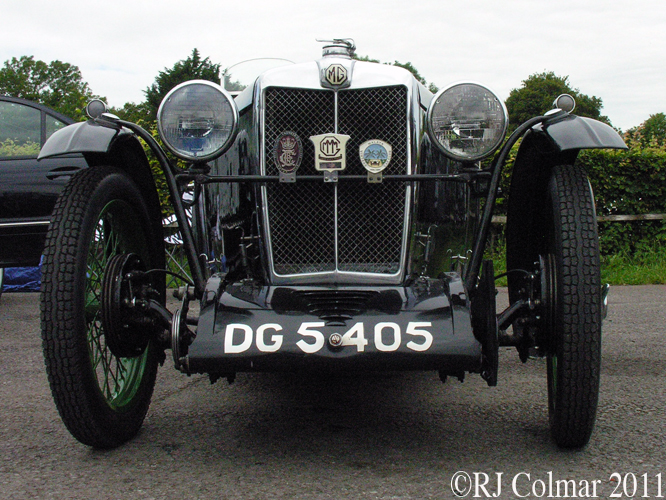
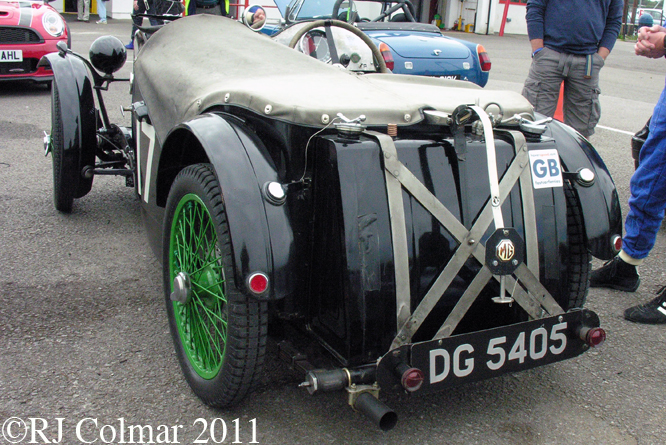
The MG J series produced from 1932 to 1934 came in 4 distinct models the J1 a 2 door 4 seat open or closed sports car with a 847 cc / 51 cui motor, J2 a two seater open only version, as seen in todays blog, of the J1, J3 similar to a J3 but with a 750 cc / 45 cui supercharged motor and the J4 a pure racing version of the J3 with a 72 hp supercharged motor.

MG J2, Castle Combe, Wessex Sprint

The 1932 J2 is easily distinguishable by the front cycle style mud guards which in 1933 were replaced with front mudguards joined by running boards to the rear wings a feature that was to remain with all subsequent MG sports cars all the way through to the TF model which was manufactured until 1955.

MG J2, Castle Combe, Wessex Sprint

The 36 hp motor, was similar to that used in the earlier M-Type looked at last week, featuring a cross flow cylinder head and twin SU carburetors but only a two bearing crankshaft which had a limited life at maximum rpm. The Castrol GTX oil breather catch tank is a relatively recent requirement for competition.

MG J2, Castle Combe, Wessex Sprint

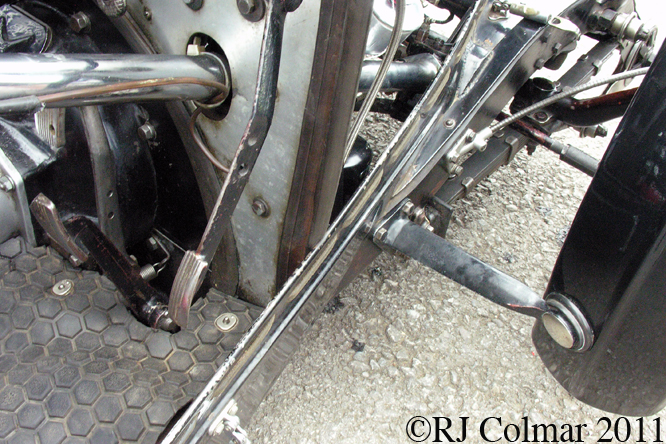
Lifting the side opening bonnet panels of the J2 reveals the four speed gearbox and foot wells. The steering column operates Marles steering gear and the drivers side front brake cable can be seen emerging from the chassis rail above.

MG J2, Castle Combe, Wessex Sprint

The two humped dash scuttle of the J Series would turn out to be another trade mark MG feature that was continually carried forward over twenty years to the 1955 MG TF. Note the how the potential crankshaft saving engine revolution counter dominates the dash board instrumentation.

MG J2, Castle Combe, Wessex Sprint

Just over 2000 J2’s were built out numbering the combined total of all the other J series MG’s by more than 2 to 1, this particular example, seen at last years Wessex Sprint, was acquired by Mike Hawke for £85 in October 1953, the car cost just short of £200 new in 1932.

Mike is known to have campaigned this car successfully at both Castle Combe and Silverstone before passing the car on to his son Jeremy who won his class at Castle Combe on the day these photo’s were taken.

Thanks for joining me on this Quintessential British Sports Car edition of ‘Gettin’ a lil psycho on tyres’ I hope you will join me tomorrow when I’ll be featuring a hot version of “The car you always promised yourself. Don’t forget to come back now !

Share