Tag Archives: Moss

Super Saturday Part 1/2 – Silverstone Classic

Artist Gerhard Richter once observed something akin to ‘that so long as one still has an object from the past it remains contemporary’, at Silverstone Classic on Super Saturday, the world’s biggest classic car show, there were many objects from man’s not so long past and many came to life in a vibrant crescendo of the twelve races which I was privileged to witness.
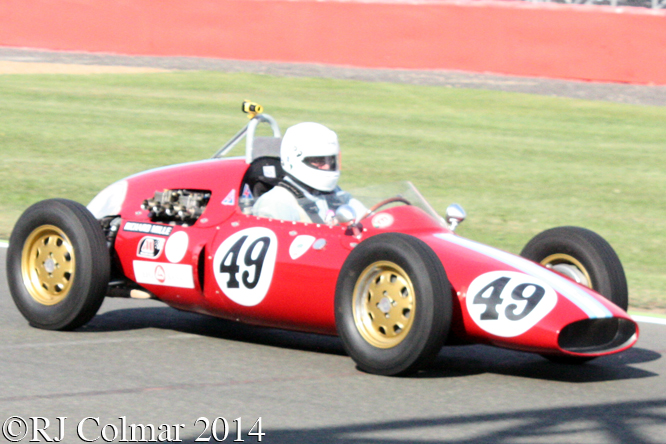
de Tomaso ISIS, Gregory, Silverstone Classic

For some time I have been on the look out for a Formula Junior de Tomaso. The 1959 FIAT powered ISIS example driven by Mike Gregory was one of two different de Tomaso models in the opening Peter Arundell Trophy Formula Junior race of the day which was won by Sam Wilson driving a Lotus after his main challenger David Methley spun out in his evil handling Brabham.
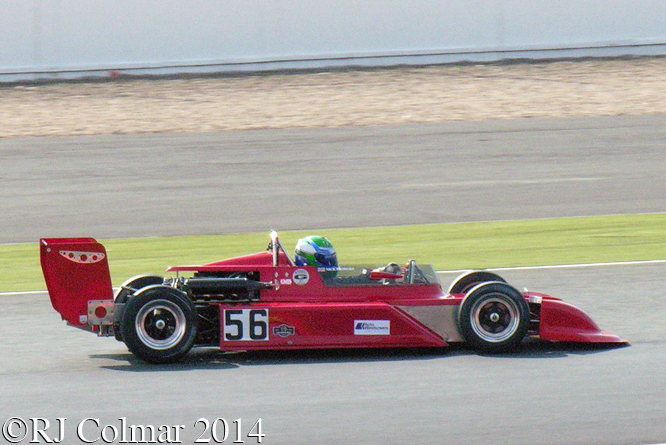
March 783, Padmore, Silverstone Classic

Silverstone Classic are great at introducing new events to their crowded schedule and one of the debutant events on this years schedule was the Brian Henton Trophy for classic Formula 3 cars of the type that helped launch the careers of Tony Brise, Tom Pryce, Gunnar Nilsson and Stephen South not to mention Nelson Piquet, Derek Warwick, and a chap called Ayrton da Silva who changed his name to something more snappy. Above Nick Pardmore guides his 1978 March 783, with ’79 side pods, through Stowe Corner on his way to victory.
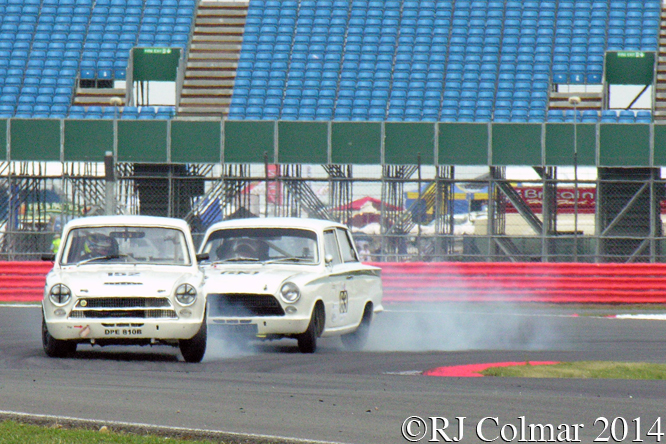
Ford Cortinas, Shedden, Meaden, Silverstone Classic

For the best part of half an hour British Touring Car Championship (BTCC) regular Gordon Shedden and Richard Meaden kept us entertained with door handle to door handle racing at the front of the Sir John Whitmore Trophy race for under 2 litre / 122 cui saloon cars. Unfortunately when Gordon, seen leading above, came in for his mandatory pit stop his Lotus Cortina expired with an over heating issue before BTCC veteran Matt Neale could take over leaving Richard and Grant Tromans to take a well earned win.
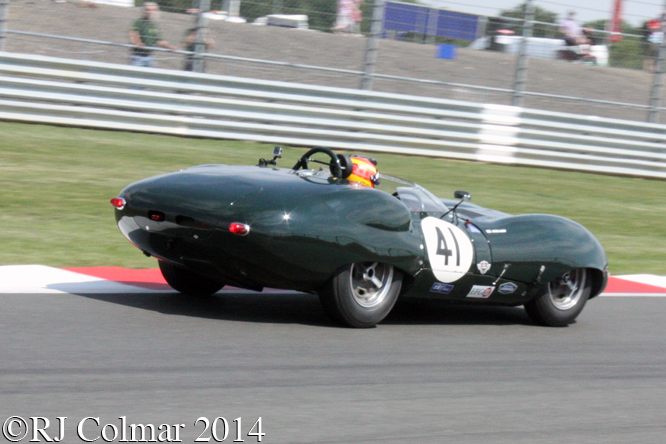
Lister Costin Jaguar, Ward, Silverstone Classic

Chris Ward driving the Costin bodied Lister Jaguar above twice held the lead in the Stirling Moss Trophy for pre ’61 Sports Cars but he could not hold off the winning Knobbly bodied Lister Jaguar driven by Jon Minshaw/Phil Keen.
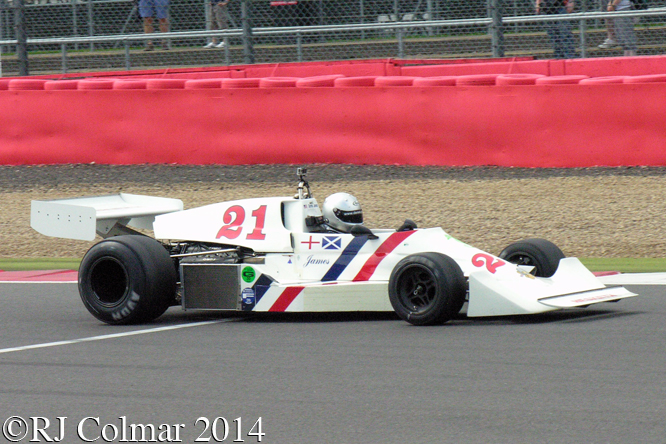
Hesketh 308C, Jones, Silverstone Classic

In 1975 it was announced that the hitherto enormous air boxes that had become an aesthetic blight on Formula One were to be banned along with various other changes. The first car to be built to the new regulations was the Hesketh 308C which was designed by Harvey Postlethwaite for James Hunt to drive. Above Derek Jones is seen driving a 308C in the FIA Masters Formula One race which was won by Ollie Hancock in a ’78 Fittipaldi F5A, after the race was stopped to allow the extraction of Sidney Hoole from what remained of the fabulous Ensign N173. Sidney was taken to hospital with a leg injury described as not ‘thought to be serious’.
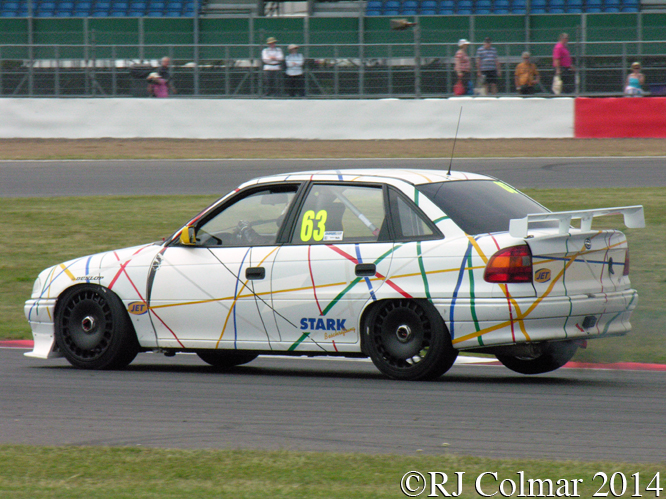
Opel Belmont (sic), Wolfe, Silverstone Classic

The sixth event of the Silverstone Classic ‘Super Saturday’ was the Jet Super Touring Car Trophy for a variety of Touring cars from the Early 70’s to the turn of the Millennium. The close fought race was won by James Dodd from Stewart Whyte both driving Honda Accords. Andy Wolfe is seen driving a 1993 Jet sponsored Opel Astra, listed incorrectly in the programme as an Opel Belmont, which won it’s class in the 1993 Nurburgring 24 hours.

Thanks for joining me on this ‘Super Saturday Part 1/2′ edition of “Gettin’ a li’l psycho on tyres” I hope you will join me again tomorrow when I’ll continue with the second half of the Super Saturday race programme. Don’t forget to come back now !

Share

Birdcage Streamliner – Maserati Tipo 60 #2451

Despite winning the 1957 World Championship Drivers Title, there was no constructors title until 1958, with Juan Manuel Fangio, Maserati was in dire financial trouble at the end of the year and after four sports car were written off in South America the Italian Government had to step in as receiver to save the company.

Immediately all motor racing programmes run by the factory were cancelled, but just one year later the case was made for Maserati to resume building racing cars so long as they were paid for and raced by customers.

Engineer Gulio Alfieri was given a brief was to build a low cost, competitive, two seater racer, using existing parts stock where possible.

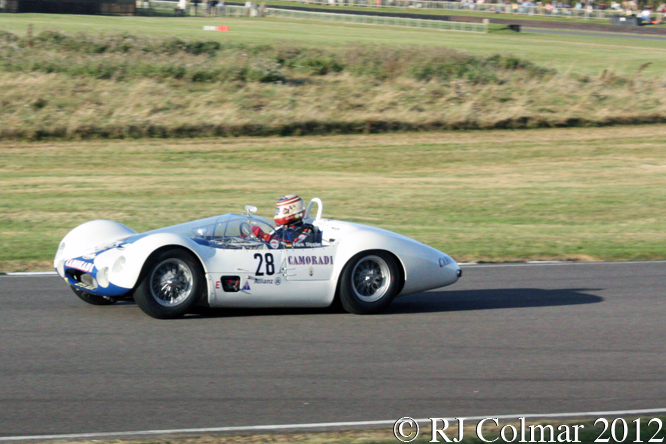
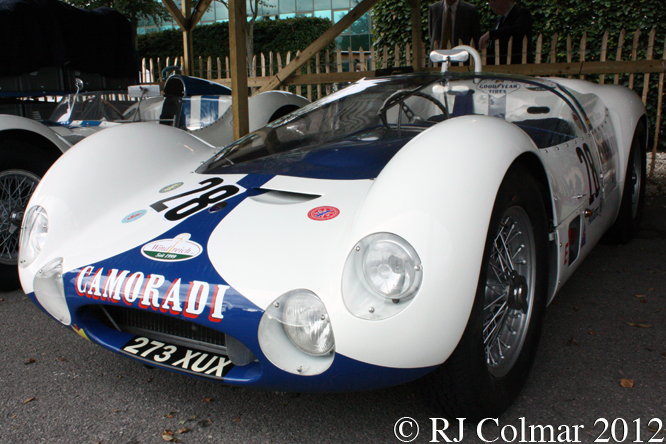
Maserati Tipo 60, Goodwood, Revival

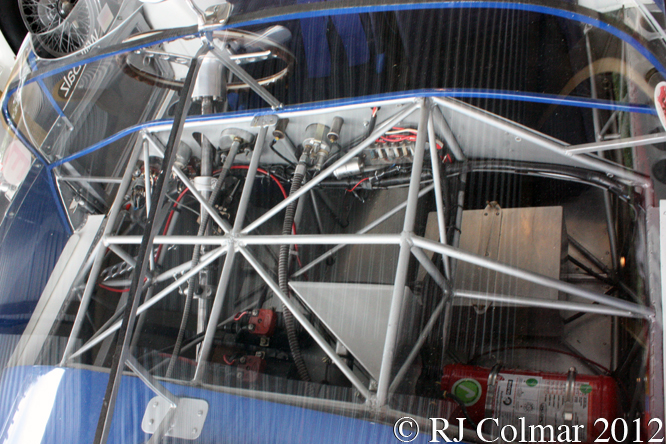
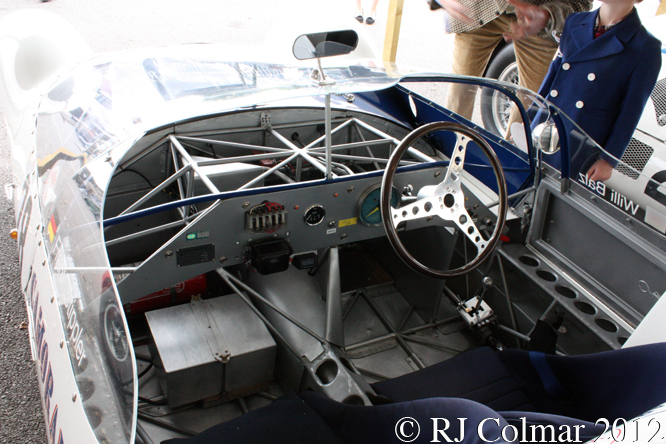
In the absence of sufficient contacts to help him build a monocoque chassis Alfiei devised a space frame Tipo 60 chassis built up from thin tubes with a 2 litre / 122cui 4 cylinder motor that became known as the ‘Birdcage’.

Today’s featured chassis #2451 started life as the prototype Tipo 60 and on the 12th of July 1959 it was driven to a win in the Rouen Grand Prix by Stirling Moss.

Stirling Moss is said to have been impressed with the ‘rightness’ of the design, the light but precise steering, the totally neutral handling characteristics with the superb brakes also being singled out for praise.

Maserati Tipo 60, Willi Balz, Goodwood, Revival

Italian hillclimb specialist Odoardo Govoni then drove #2451 to a win on the ‘Pontedecimo-Giovi’ hillclimb on the 20th September 1959, soundly beating the favourite Giorgio Scarlatti’s Ferrari Dino 196S.

Maserati chairman Omer Orsi authorised the production of six Tipo 60 chassis and it was not long before requests from the US came in for cars fitted with 3 litre / 183 cui motors.

Subsequently Alferi was asked to work on a 3 litre motor and he managed to squeeze one into a Tipo 60 which which then became the Tipo 61 to distinguish the larger engine size.

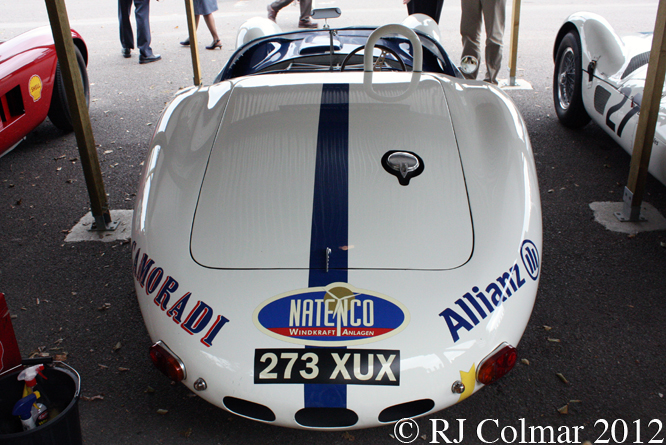
Maserati Tipo 60, Goodwood, Revival

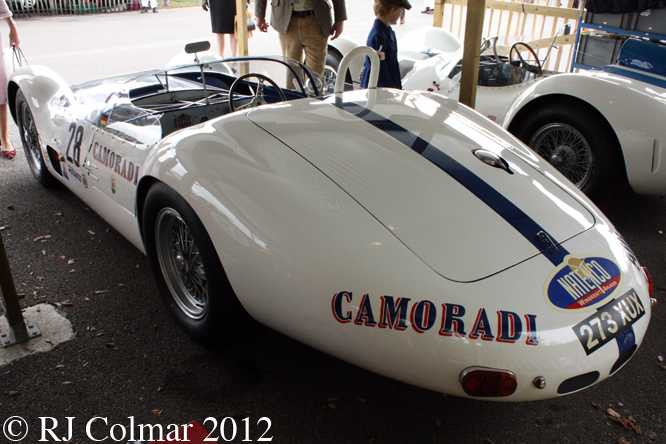
In September 1959 Lloyd Perry ‘Lucky’ Crasner tested a Tipo 60 and immediately ordered two 3 litre cars for his CA-sner MO-tor RA-cinq DI-vision, better known as the Camoradi Racing Team.

A shortfall in manufacturing capacity left Maserati no alternative but to fit a 4 cylinder 3 litre / 193 cui motor to the prototype chassis #2451 which was then shipped out to Nassau in December 1959 for Dan Gurney, Carroll Shelby and Jo Bonnier to test in preparation for the Nassau Speedweek.

Dan claimed a class victory in the Preliminary Governor’s Trophy while Carrol retired from the Nassau Trophy Race after a puncture and then an accident.

Maserati Tipo 60, Goodwood, Revival

Dan and Marsten Gregory qualified #2451 2nd for the 1960 1000kms at Buenos Aires but retired with a broken shock absorber mounting bolt after leading comfortably.

Carroll Shelby teamed up with Masten to drive #2451 in the Sebring 12 hours but retired with an engine issue.

At the Targa Florio #2451 was entered for Umberto Maglioli and Nino Vaccarella who led the race at 3/4 distance only to crash after a rock punctured the fuel tank.

During the subsequent repairs #2451 had a new streamline tail added along with the extreme screen which was designed to meet the Le Mans minimum height screen regulations and minimise the frontal area of the car. The other 2 Camoradi T61’s had the modified tail fitted for Le Mans, but not the low frontal area screen.

Maserati Tipo 60, Goodwood, Revival

#2451 was the fastest car at Le Mans in 1960, after a starting problem saw Marsten cross the start line in 24th place he had recovered the lead by the Mulsanne Corner on the opening lap overtaking 18 vehicles on the Mulsanne Straight.

After a couple of hours Marsten handed #2451 over to Chuck Daigh but the car lost an hour with another starter problem. Between the forth and eighth hours Marsten and Chuck had recovered two of their lost laps, but at midnight the car was retired either with a blown motor or an electrical issue depending on which sources one reads.

The Le Mans race was the last race of the 1960 World Sportscar Championship season and #2451 was chosen by Camoradi backer Frank Harrison as the car he was promised and wanted to run in the USA.

06 Maserati Tipo 60_1663sc

Harrison entered the car for Jim Jeffords who won with it at Road America on July 31st, 1960. In April 1961 Fred Gamble drove #2451 to a class victory at Marlboro .

Sources are not conclusive on #2451 being the car that William Kimberly drove to victory for Frank Harrison at Courtland in July 1961.

Frank sold #2451 to Don Skogmo, a regular winner aboard a Maserati Tipo 61, who is thought never to have raced #2451.

In 1971 #2451 found a new lease of life in the British ‘JCB’ historic championship where it was driven to a championship victory by Brian Joscelyne.

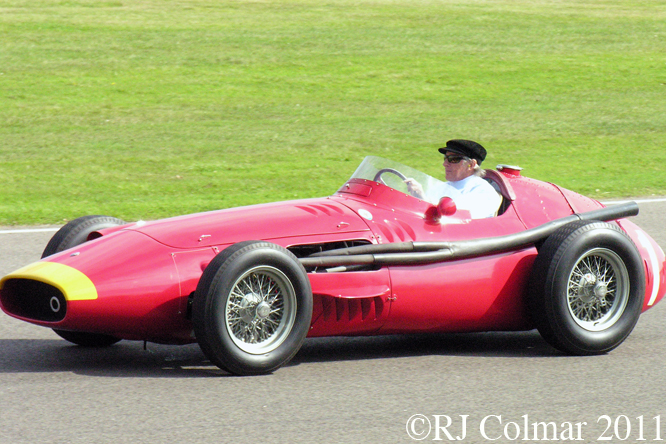
By 1980 #2451 was to be found in the Rosso Bianco collection belonging to Peter Kaus. Today the car, which was first registered for UK road use in 2010, is owned by Windpower magnate and Maserati Collector Willi Balz who is seen at the wheel at Goodwood a couple of years ago.

Thanks for joining me on this “Birdcage Streamliner” edition of “Gettin’ a li’l psycho on tyres”, I hope you will join me again tomorrow when I’ll be looking at a versatile Talbot that raced at Le Mans in 1939. Don’t forget to come back now !
Share

Unwelcome Early Night – Maserati 300S #3054

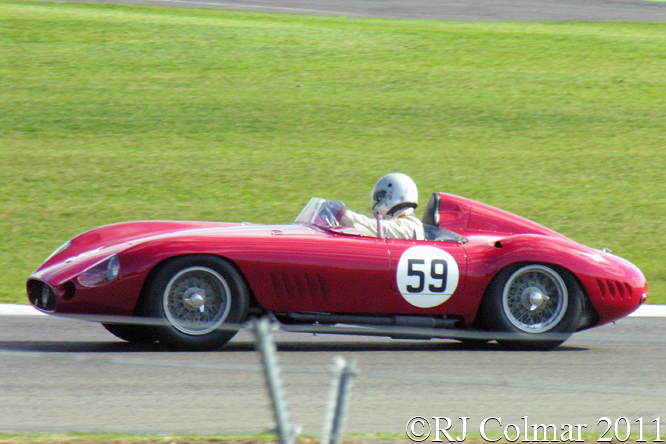
Carrying the #15 on the 1955 Le Mans entry list, one spot below Mike Sparken’s #14 Ferrari 750 Monza chassis 0504M which I looked at some time ago, was today’s featured Maserati 300S chassis #3054 which was to be driven by Roberto Mieres and Cesare Perdisa two weeks after the car had been driven to victory at Monza by Luigi Musso and Jean Behra.

24 laps into the race #3054 was running in second place overall when it retired with a gearbox problem giving the drivers an unwelcome early night. Ironically this occurred 1 lap after the #14 Ferrari had retired with a broken motor.

Maserati 300S, Rettenmaier, Silverstone Classic

A second Maserati 300S #3055, driven by Luigi Musso and Luigi Valenzano lasted 239 laps before it’s gearbox also failed making it the last car to retire from the 24 hour classic.

From it’s first four starts, by a 2 litre A 6GS in ’54 another in ’55 along side the two 3 litre cars, in the Le Mans 24 Hours Maserati had yet to record a single finish.

Maserati 300S, Rettenmaier, Silverstone Classic

With it’s gearbox repaired Jean Behra drove #3054 two weeks later to victory in the 1955 Portuguese Grand Prix and at the end of 1955 Juan Manuel Fangio drove #3054 to victory in the first Venezuelan Grand Prix.

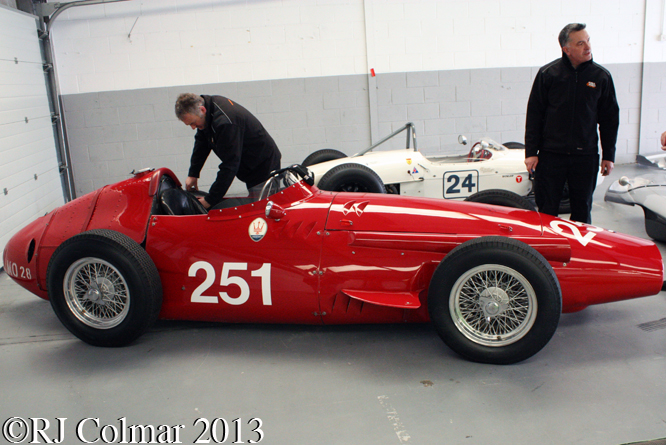
For 1956 the #3054 was fitted with a long nose body and the car was taken to Buenos Aires where Stirling Moss and Carlos Menditeguy drove her to victory in the 1000km race. Piero Taruffi and Jean Behra then drove #3054 to 5th overall and 1st in class in Sebring 12 Hours.

Carlos Menditeguy teamed up with Jean Behra to drive #3054 in the 1957 1000kms race at Buenos Aires finishing second but 1st in class.

The #3054 was subsequently sold to Venezuelan Escuderia Sorocaima and the known results during his ownership include a 22 overall and 3rd in class finish in the 1962 3 hour Daytona race with Guido Lollobrigida at the wheel.

After Daytona Charlie Kolb bought the car and recorded 2nd place finishes with it at Fernandina Beach and Marlboro before going one better to record a win at Savanah which appears to be the last recorded in period outing for #3054.

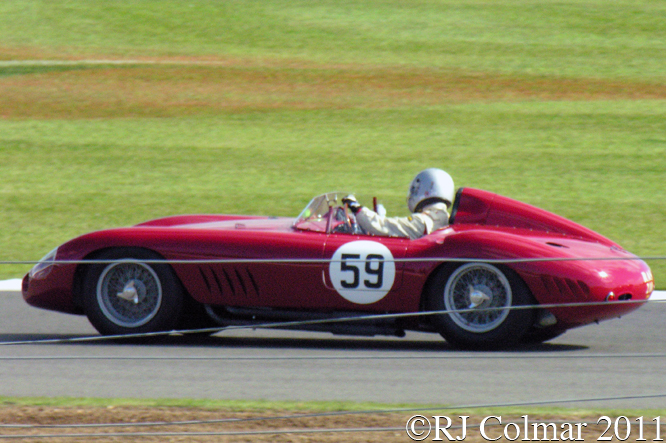
The car is seen in these photo’s at the Silverstone Classic with Stephan Rettenmaier at the wheel.

Thanks for joining me on this “Unwelcome Early Night” edition of “Gettin’ A L’il Psycho On Tyres”, I hope you will join me again tomorrow for a look at the first Le Mans winning Bugatti. Don’t forget to come back now !
Share

Ringmeister – Maserati 250F T2 #2529

For the 1957 season Maserati manufactured 3 lightweight versions of the 250F to keep pace with the Lancia Ferrari D50’s which Juan Manuel Fangio drove to his fourth World Drivers Championship title in 1956.

Third of the three T2’s was chassis #2529 which was shared during 1957 between Stirling Moss, Harry Schell and the returning ‘Old Man’ Fangio who despite his success was not overly enamoured by his time at Maranello.

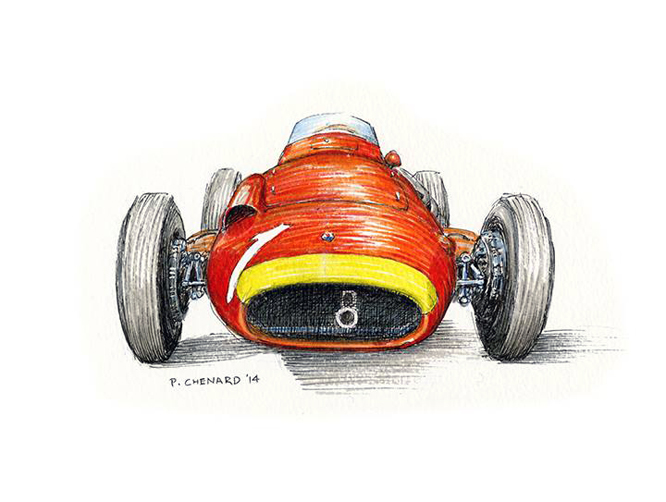
Maserati 250F, by Paul Chenard


Pen&ink and markers on watercolour paper 9″x 7″ © Paul Chenard 2014

Fangio won the opening two championship races of the 1957 season at home in Argentina and in Monaco, the third race of the Championship season was the Indy 500 for which only Giuseppe Farina of the regular World Drivers Championship contenders was entered.

Farina did not start the ’57 Indy 500 which was won by Sam Hanks in the Epperly Special. Fangio then drove today’s featured 250F T2 chassis #2529 to victory in the 1957 French Grand Prix.

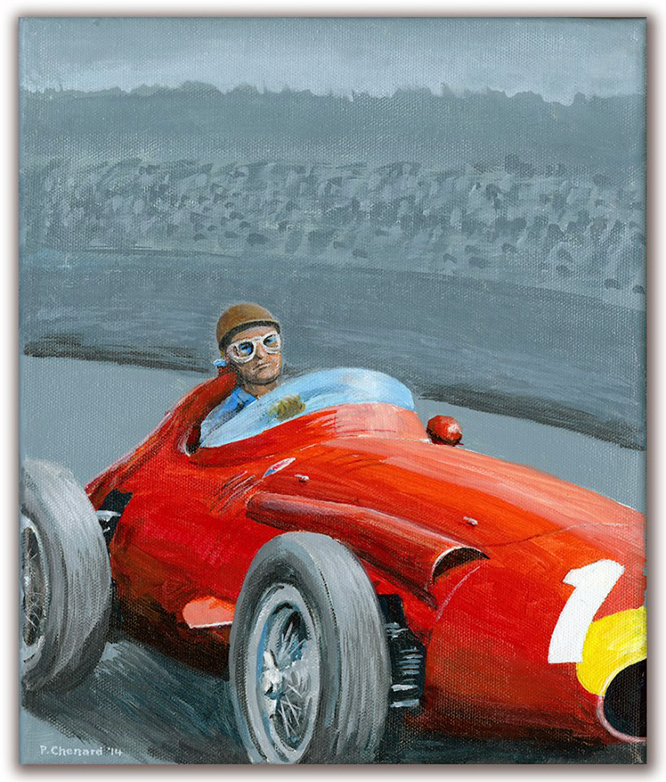
Maserati 250F, by Paul Chenard

Acrylic on canvas 10″x 12″ © Paul Chenard 2014

At the British Grand Prix Fangio retired #2529 with an engine problem leaving Tony Brooks and Stirling Moss to share the first championship Grand Prix victory for Vanwall.

Fangio qualified #2529 on pole, with a time 16 seconds faster than he had driving a Lancia Ferrari 1956, for the 1957 German Grand Prix alongside him Mike Hawthorn qualified 2nd in his Lancia Ferrari with the lightweight 250F T2 of Jean Behra and Lancia Ferrari of Peter Collins filling out the front row of the grid.

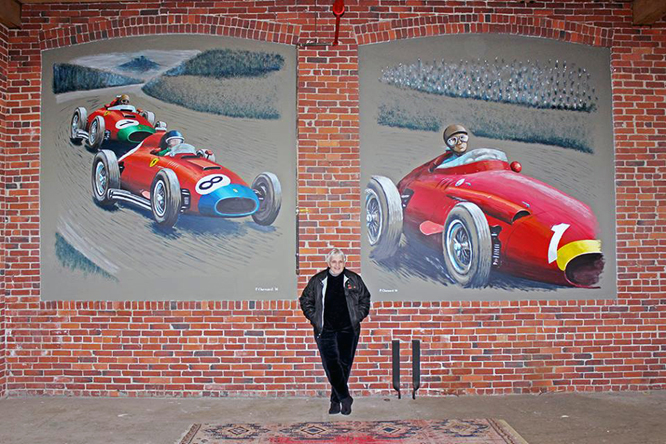
Maserati 250F, Denise McCluggage by Paul Chenard

1957 German Grand Prix Mural @ 9′ x 18′ © Paul Chenard 2014, with Denise McCluggage at European Motorsports, Lawrence, MA

On a hot day at the Nurburgring on August 4th 1957 the Ferrari’s of Hawthorn and Collins set off into an immediate lead of the 311 mile German Grand Prix, but by lap 3 Fangio had passed both and unbeknown to the Englishmen sailed off into the distance in order to make a large enough lead to enable him to make a scheduled pit stop, having started the race like Behra in fourth on half empty tanks.

During his pit stop Behra lost time when he broke his filler cap off while climbing back into the car. Fangio was even less fortunate spending 54 seconds in the pits after a mechanic had lost a wheel nut. Fangio rejoined the race in third place 48 seconds behind the battling Howthorn and Collins.

Maserati 250F, SIr Jackie Stewart, Goodwood Revival

Over the next 10 laps Fangio broke the Nurburgring lap record nine times seven times in succession passing Hawthorn for the lead on the penultimate lap with two wheels on the grass to record possibly the greatest Grand Prix victory ever, enough to secure “El Maestro” his fifth and final World Championship Victory.

Fangio noted after the race “I have never driven that quickly before in my life and I don’t think I will ever be able to do it again”, and later admitted “Nürburgring was my favourite track. I fell totally in love with it and I believe that on that day in 1957 I finally managed to master it. It was as if I had screwed all the secrets out of it and got to know it once and for all. . . For two days I couldn’t sleep, still making those leaps in the dark on those curves where I had never before had the courage to push things so far.”

As it turned out Fangio would not win any more championship Grand Prix races before retiring mid way through 1958, meaning the car #2529, seen driven by Sir Jackie Stewart at Goodwood Revival above, was the won in which possibly the greatest driver of all time won his last two Grand Prix victories.

Unusually unlike many of the other Maserati 250F’s it’s number was never used on any other chassis nor did it ever carry any other chassis number. Fangio drive #2529 to second place finishes championship races at Pescara and Monza with Harry Schell taking the car over for the GP Modena where he finished 3rd.

Fangio drove the car to 4th with fastest lap in the non championship 1957 GP du Maroc and 4th in the opening round of the 1958 Championship in Argentina. The car was then sold on to Scuderia Sudamericana who entered #2529 for Giorgio Scarlatti and Jo Bonnier who achieved little by way of success apart from a win for Bonnier in a non championship Formula Libre race at Watkins Glen.

Scuderia Ugolini entered the #2529 again for Giorgio Scarlatti in 1959 it’s final championship appearance being in the 1960 Argentinian Grand Prix from which Scarlatti retired with overheating issues.

After spending time in the Briggs Cunningham museum #2529 was bought by Hartmut Ibing in 1988 in a silent auction.

I did not realise it at the time I took the photograph but having Sir Jackie Stewart drive Fangio’s ’57 German Grand Prix winning car at Goodwood was particularly pertinent because Sir Jackie also took a famous win at the Nurburgring, but this time in the rain in the German Grand Prix of 1968.

My thanks to Paul Chenard for kindly allowing me to use reproductions of his artwork in today’s post.

Thanks for joining me on this “Ringmeister” edition of “Gettin’ a li’l psycho on tyres” I hope you will join me again tomorrow when for a look at a Bugatti. Don’t forget to come back now !
PS in a fitting tribute to David McKinney who wrote the definitive “Maserati 250F” last weeks featured 250F #2522/16/23/26 now owned by Graham Adelman was present at Davids funeral last week. My thanks to Tim Murray for forwarding this information.

Share

Identity Crisis What Identity Crisis ? – Maserati 250F #2522/16/23/26

Welcome to the second edition of Maserati Monday, today’s featured Maserati 250F chassis #2522 was built as a works car for the 1956 season. So far so good, it was raced twice in Argentina at the beginning of the season by Stirling Moss carrying the older #2516 identity finishing a best 2nd in the second non championship race.

Back in Europe the #2522 appears to have been raced with it’s correct #2522 identity until August 1956. During this period Stirling won the Glover Trophy at Goodwood and followed that up with a win in the 1956 Monaco Grand Prix.

Cesare Perdisa was given #2522 to drive in Belgian Grand Prix, while Stirling Moss driving another 250F took an early lead in the race only to lose it to a slow starting Fangio driving a Ferrari on lap 5. On lap ten Moss lost a rear wheel and ended up running back to the pits where he took over #2522 from Cesare and went on to finish 3rd behind the two Ferrari of Collins and Paul Frère.

In the French Grand Prix Cesare and Stirling ended up sharing #2522 again finishing 5th. In the British Grand Prix Stirling drove #2522 to a solo 8th place finish and in Germany #2522 now driven by Umberto Maglioli retired with steering problems which reoccurred in the Italian Grand Prix after Maglioli had handed over #2522, now running with the #2523 identity, to Jean Behra.

Maserati 250F, HGPCA Test Day, Silverstone

Over the winter #2522 with the #2523 identity was fitted with a V12 motor in place of the original straight six, the car was run in practice in the non championship race at Siracusa and again by non other than El Maestro Fangio in the practice for the 1957 Monaco Grand Prix, but the V12 was never raced.

Argentinian all round sportsman Carlos Menditeguy drove #2522/16/23 refitted with a six cylinder motor in the non championship 1957 Grand Prix de Reims where he qualified 9th and retired with a gearbox issue. For the non championship GP di Pescara and championship 1957 Italian GP Fangio was assigned #2522/16/23 but he only drove it in practice.

On the 13th April 1958 Maria-Teresa de Filippis made her Formula one debut driving #2522/16/23 in the non championship GP di Siracusa and finished 5th, a month later she was not so lucky failing to qualify for the Monaco Grand Prix driving the same car. Carrol Shelby was the last person recorded as having driven #2522/16/23 in period he qualified 17th and retired after just 1 lap with handling issues and ended up taking over Masten Gregory’s 250F and recording a shared 4th place finish one lap down, a performance for which he was not awarded any world championship points. #2522/16/23 then passed into the hands of Scuderia Centro Sud.

Towards the end of 1958 chassis #2522/16/23 was given the identity it carries to this day namely #2526 and passed through the hands of Keith Campbell, Richard Bergel, Lord Angus Clydesdale, Earl of Strathmore, Bobby Bell and it’s current owner Peter Heuberger for whom the car is seen prepared in the pits at last years HGPCA Test day at Silverstone last year.

To keep you on your toes David McKinney records that the identity #2522 was also used for the original chassis #2507 now owned by Jose Albuquerque which as you know I looked at last week !

With thanks to David McKinney and his book Maserati 250F which was kindly lent to me by Tim Murray.

Thanks for joining me on this “Identity Crisis What Identity Crisis ?” edition of “Gettin’ a li’l psycho on tyres” I hope you’ll join me tomorrow when I’ll be looking at a vintage Bugatti. Don’t forget to come back now !
PS It is with great sadness that I have learned that David McKinney passed away a couple of weeks ago. It was my privilege to meet David on a couple of occasions and for GALPOT to have benefited from his knowledge which he never hesitated to share on many more going back to the blogs earliest days.

I am sure you will join me in sending sincerest condolences to Davids family and many friends. RIP David the man who knew “lots of things“.

Share

Coffee, Croissant & Cars #09/13 – Avenue Drivers Club

On second Sunday’s of the week in Bristol there is nowhere quite like Queen Square in Bristol for car enthusiasts to go for the monthly gathering of the Avenue Drivers Club.

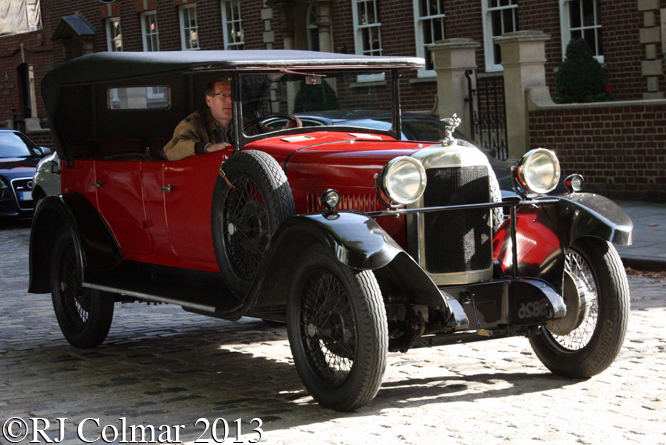
Sunbeam 14/40, Avenue Drivers Club, Queen Sq, Bristol

I managed to get down there at 8:30 am for the last meeting and already enthusiasts were coming in thick and fast. Around 2850 Sunbeam 14/40’s like the example above were built between 1924 and 1926, among novelties for the period were standard front brakes.

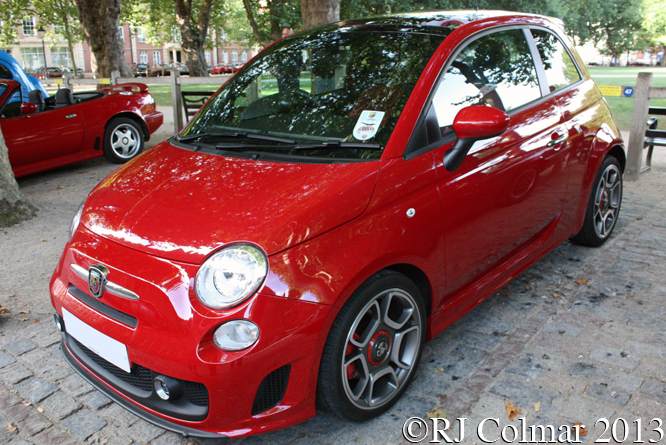
Abarth, 500, Avenue Drivers Club, Queen Sq, Bristol

Amongst those I met on the day was regular GALPOT reader Colin who owns this 2010 Abarth 500 one of the earliest imported examples of the type that did not spend it’s early life on the Hertz Rental fleet.

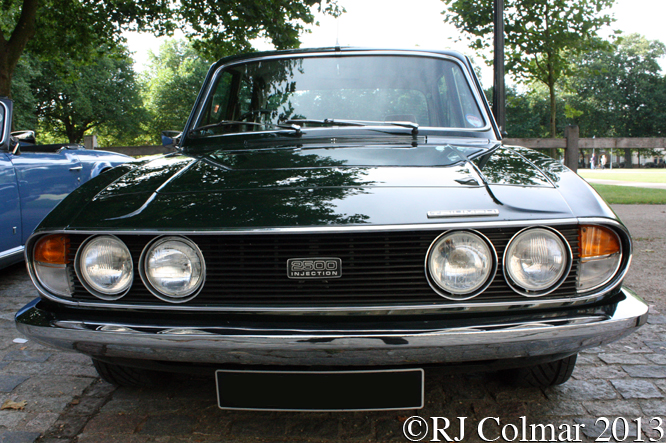
Triumph 2500 PI Mk2, Avenue Drivers Club, Queen Sq, Bristol

Readers of last Tuesdays blog might remember that Brian Culcheth and Johnstone Syer drove a Triumph 2500 PI Mk2 like the 1970 example seen here to a second place on the London to Mexico World Cup Rally.

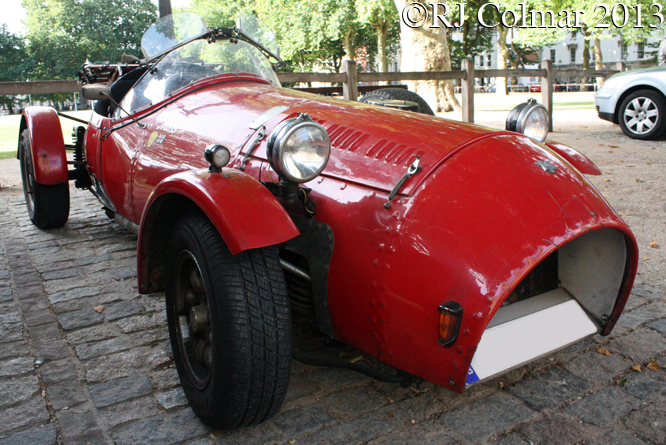
Moss Monaco, Avenue Drivers Club, Queen Sq, Bristol

John Cowperthwaite designed and built the first Moss Kit Car in Sheffield around 1981, it is thought 70 Moss Monaco‘s have been built, mostly using either Triumph Herald or Ford Escort motors and running gear.

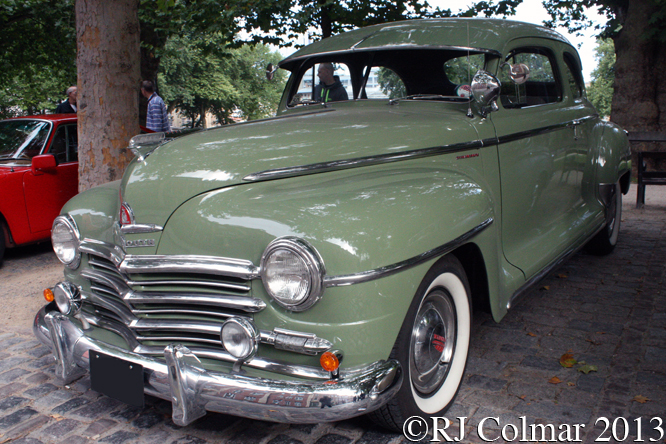
Plymouth Special De Luxe Coupe, Avenue Drivers Club, Queen Sq, Bristol

Plymouth’s first new model after the 1939/45 was was the Deluxe, introduced in 1946, which came with a push button on the dash to start the 95 hp straight six motor. The example above appears to be a 1948 Special De Luxe Coupé.

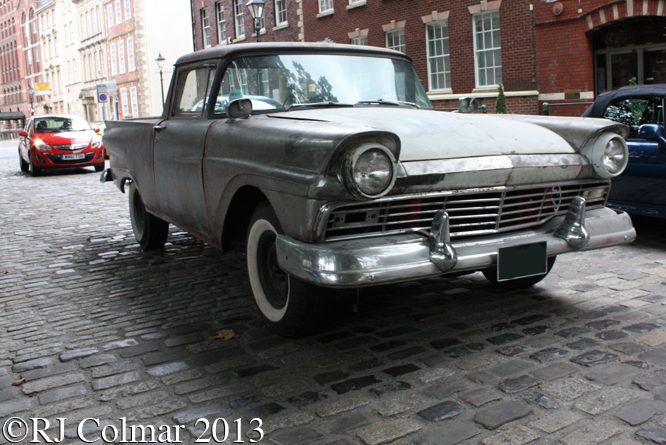
Ford Ranchero, Avenue Drivers Club, Queen Sq, Bristol

Looking like it came out of the Twighlight B&W TV series was this 1957 Ford Ranchero, which circulated the Square once before seemingly vanishing into thin air.

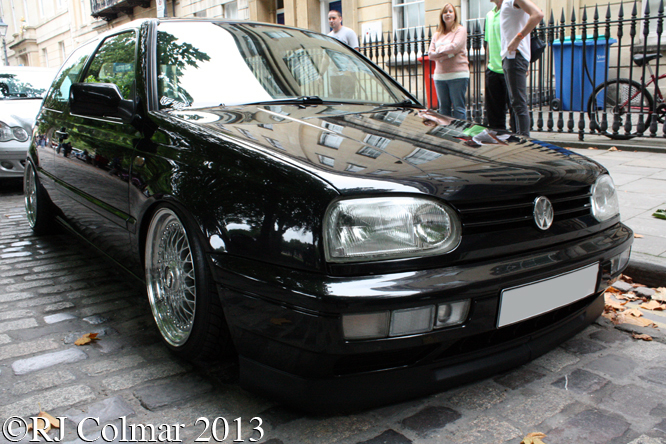
VW Golf VR6 MkIII, Avenue Drivers Club, Queen Sq, Bristol

The secret of low riding is air suspension, this two owner Golf VR6 MkIII rides on air suspension sourced from a Heavy Goods Vehicle (HGV) trailer.

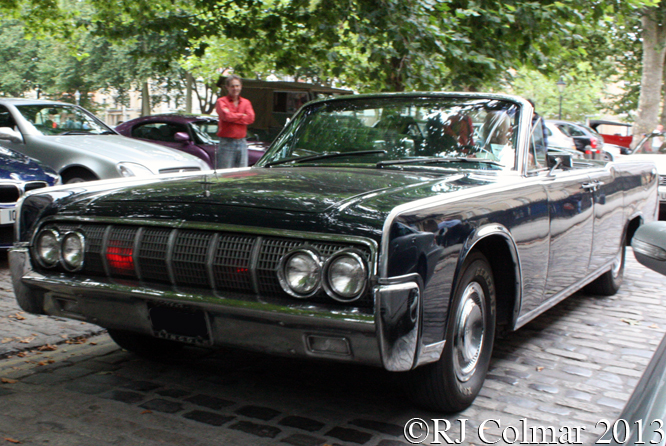
Lincoln Continental, Avenue Drivers Club, Queen Sq, Bristol

Looking suitably presidential with it’s red flashing lights mounted behind the grill and suicide rear doors was this 1964 Lincoln Continental which was imported into this country in 1991.

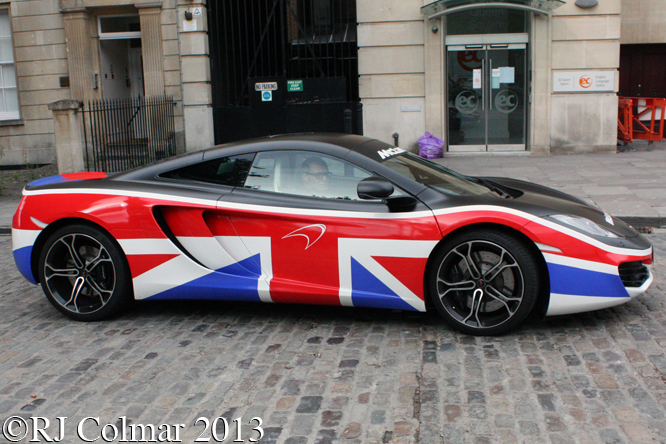
McLaren 12C Great , Avenue Drivers Club, Queen Sq, Bristol

Embarrassingly when I saw this Mclaren Great 12C I half expected Austin Powers to step out. It turns out that McLaren have been supporting an innovation initiative with these Union Jack liveried cars with the strap line, Innovation Is Great Britain.

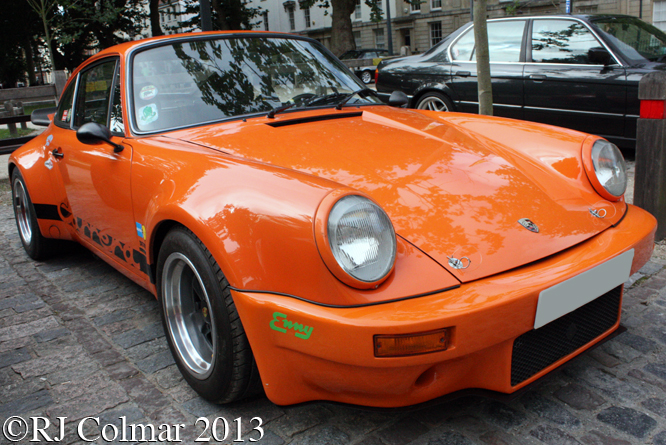
Porsche 911 RS, Avenue Drivers Club, Queen Sq, Bristol

Finally rumour had it that the owner of this Porsche RS had to break out a pick axe to remove some rubber sleeping policeman his ex wife had installed in a shared drive way, just to get the RSR bodied Porsche onto the road !

Thanks for joining me on this “Coffee, Croissant & Cars #09/13” edition of “Gettin’ a li’l psycho on tyres”, I hope you will join me for Americana Thursday tomorrow when I’ll be looking at a racing Corvette C2. Don’t forget to come back now !
Share

Alf’s Shot – Walker Climax

When Stirling Moss won the 1958 Argentinian Grand Prix driving an underpowered Cooper Climax T43 he became the first man to win a Formula One Championship race driving a rear engined car and also the first man to win such a race in a privately entered car for wealthy Walkers Whiskey heir Rob Walker. At the following championship race Maurice Trintignant won for the second time at Monaco driving Walkers Cooper Climax T45.

Walker, a former racer, had promised his wife he would no longer race when he married in 1940 and after the 39/45 war he became a well respected entrant of all manner of cars starting with a Formula 2 Connaught for Tony Rolt in 1953 going on to include; a Lotus 18, the Ferguson P99 and a couple of Lotus 49’s, one of which became the last privately entered car to win a Formula One Championship race at Brand Hatch in 1968 with Jo Siffert at the wheel.

From 1971 to 1973 Rob joined forces with John Surtees, the following year he supporting a third Yardley sponsored McLaren for former Surtees Driver Mike Hailwood with his last financial involvement being in 1974 when he teamed up with Harry Stiller to enter a Hesketh for future, 1980, Formula One Champion Alan Jones, after which he continued as a time keeper for a number of teams.

Walker Climax, Goodwood Revival

1959 Stirling won two more championship races driving a Rob Cooper Climax T51 which was wrenched by chief mechanic Alf Francis with whom Stirling had worked through most of the 1950’s starting when Alf was working for HWM.

Alf Francis managed to persuade Moss and Rob Walker, who paid the bills, to let him have a shot at designing a Formula One car for the 1960 season. By all accounts out of loyalty they agreed and Alf working with former Ferrari and Maserati chassis designer Valerio Colotti, who had gone into business under the Studio Tecnica Meccanica, abbreviated to Tec Mec, name, came up with today’s featured Climax powered car

Stirling did test the car, but found it not to his liking so Moss and Walker opted to lease a Lotus 18 with which they won four races over the next two years with Stirling finishing 3rd in the championship in ’60 and ’61.

02 IMG_1435sc

Alf Francis had worked closely with Colotti when Moss bought a Maserati 250F in 1954 and went on to found Colotti Francis Systems. Alf Francis was later responsible for the Derrington Francis with engine tuner Vic Derrington. The ATS powered Derrington Francis made one appearance before Dan Gurney tested the car, after he had damaged it the Derrington Francis team folded.

Stirling Moss observed that his long serving mechanic Alf was like a good PA who thinks they can run the company and that when they set up they fail.

Although the Walker Climax never raced in period it has regularly appeared in historic events driven by owner Richard Parnell. Note Colotti’s involvement sometimes sees the car referred to as the Walker Climax Tec Mec Tipo 10.

Thanks for joining me on this “Alf’s Shot” edition of “Gettin’ a li’l psycho on tyres” I hope you will join me again tomorrow. Don’t forget to come back now !
Share