Tag Archives: Museum

Fahr’n Fahr’n Fahr’n – Opel Manta S

In 1982 I found myself studying at Paderborn University, Germany as part of an exchange programme from Trent Polytechnic, Nottingham, England not far from where my cousins lived, one weekend I hitched over to visit them to find that one of them had bought a ten year old Opel Manta similar in colour to the ’73 model seen here at the Atwell Wilson Motor Museum, but with the bigger 90 hp motor and if I am not mistaken a vinyl roof.
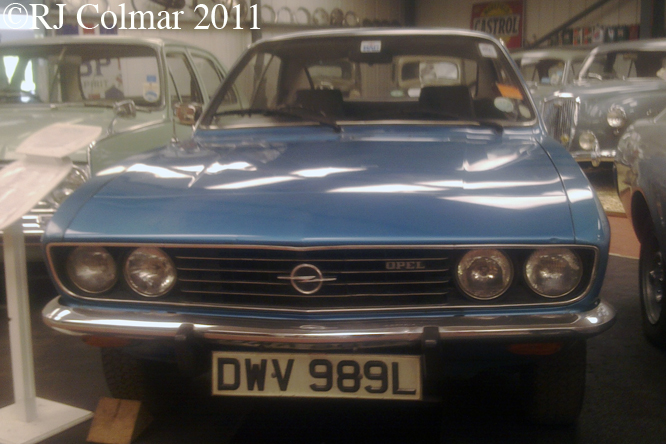
Opel Manta S, Atwell Wilson MM

On the Sunday my 19 year old cousin kindly offered to spare me the hitchhike back and gave me a lift in his car, not only that but he pulled in at a service station on the A44 Autobahn and let me drive the car the rest of the way back to college.
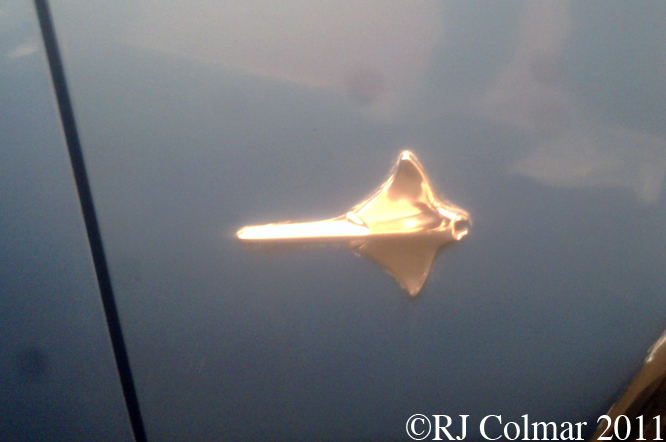
Opel Manta S, Atwell Wilson MM

It was an unforgettable drive, the first time I had driven on the wrong side of the road, the first time I had driven a car with a gear stick on the wrong side and perhaps most importantly the first time I had legally driven at an indicated 165 kph ! Just over 100 mph.
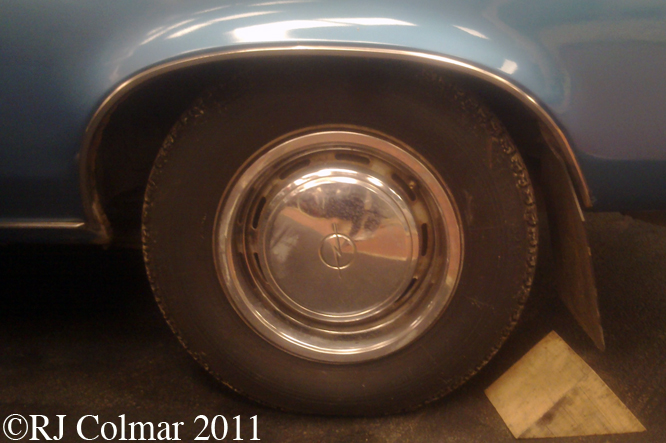
Opel Manta S, Atwell Wilson MM

The experience was terrifying, thrilling, liberating and mesmerising in equal measure, I did not want the journey to end, not unlike the early techno pop song Kraftwerk song Autobahn.
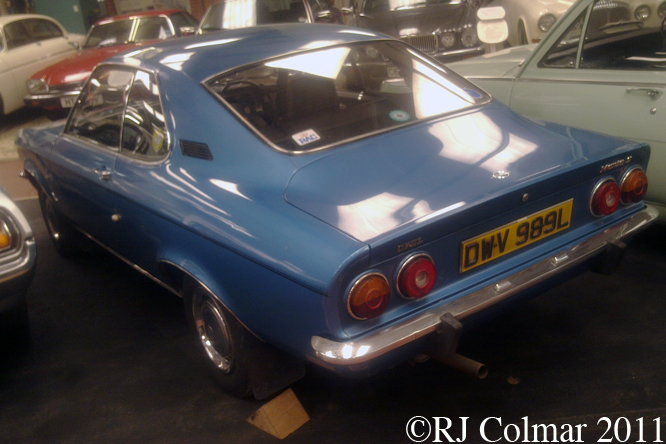
Opel Manta S, Atwell Wilson MM

Opel’s fastback Manta was based on the more mundane saloon / sedan Opel Ascona though it was actually launched in 1970 some months before the bread and butter Ascona model.
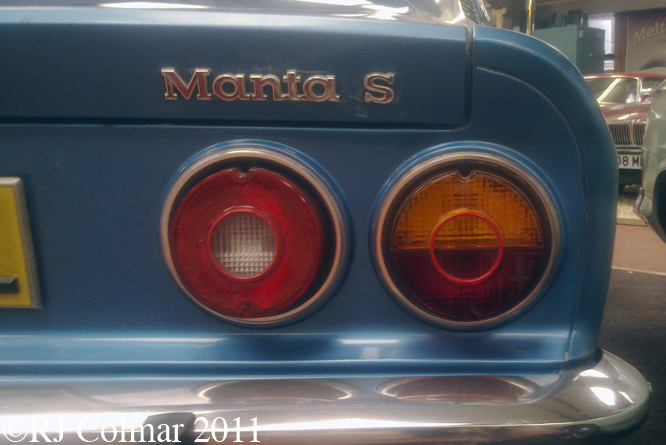
Opel Manta S, Atwell Wilson MM

Manta’s and their drivers are popular objects of fun in German culture with drivers being characterised as wearing shades, that why Manta’s need 8 head lights, gold chains the only thing that remains when a Manta burns and having red rally stripes on the walls of their garages because Manta drivers forget to pull their arms in when driving into said garages.
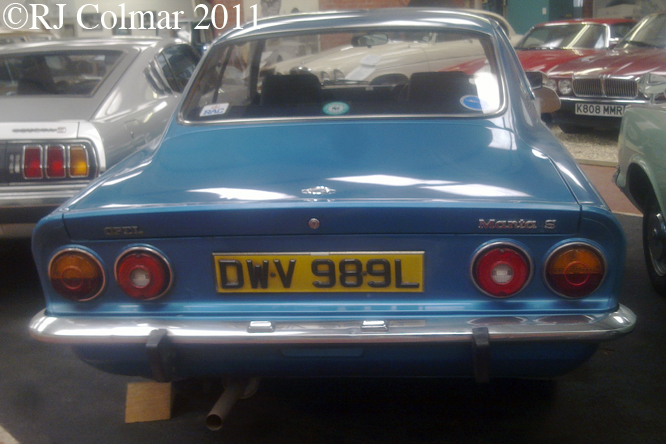
Opel Manta S, Atwell Wilson MM

The first series Manta was in production up until 1975 with examples being sold in the United States through Buick Dealers. I don’t think you need to understand too much German to understand how the Manta was marketed in this link.

Thanks for joining me on this Manta edition of ‘Gettin’ a li’l psycho on tyres’, I hope you will join me again tomorrow. Don’t forget to come back now !

PS Don’t forget …

Automobiliart GALPOT Seasonal Quiz
Automobiliart, Paul Chenard

December 26th – January 2nd

Win a set of Paul Chenard Greetings Cards
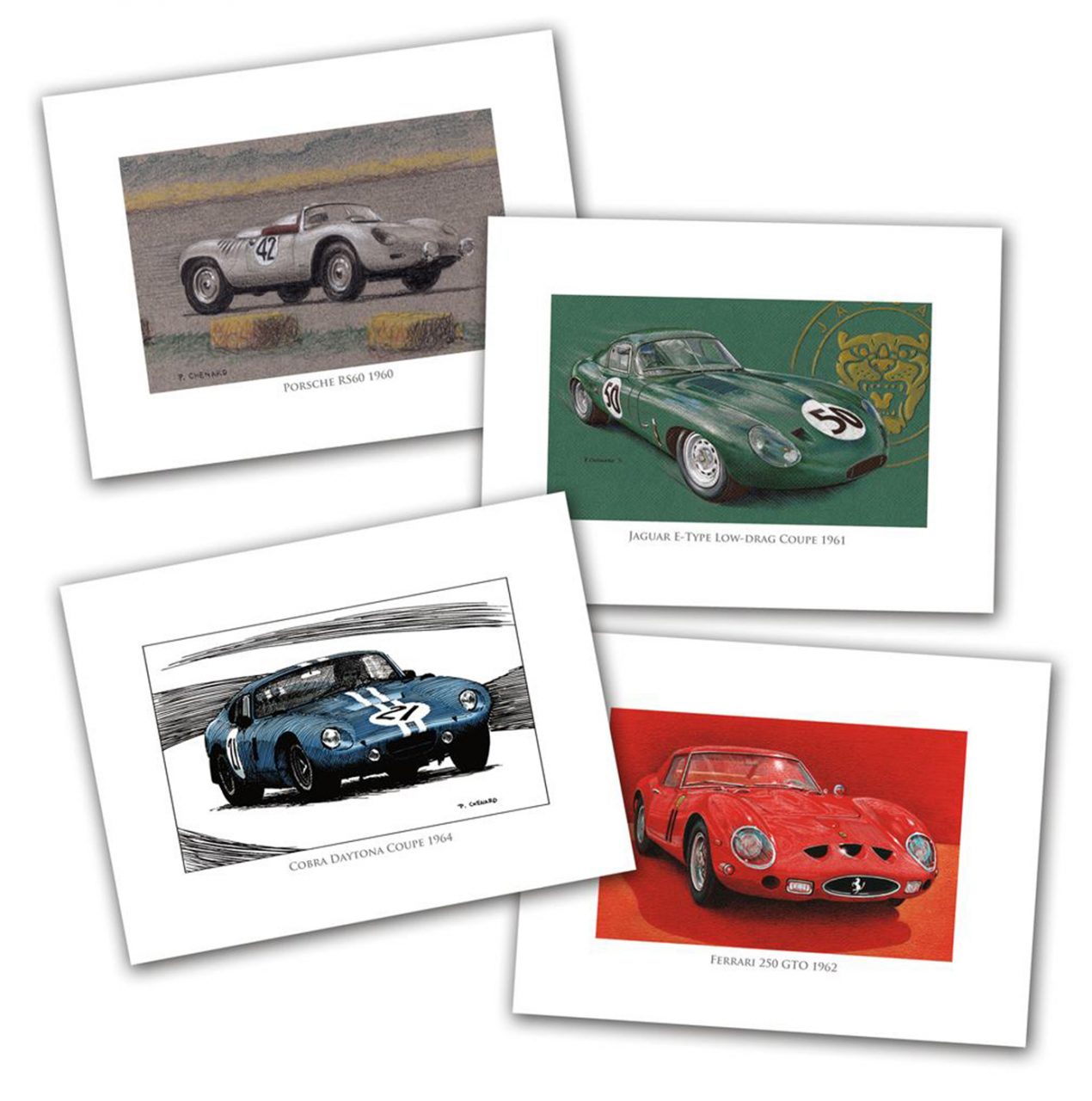
Sports-GT cars set, Paul Chenard

Set 1 Sports & GT Cars

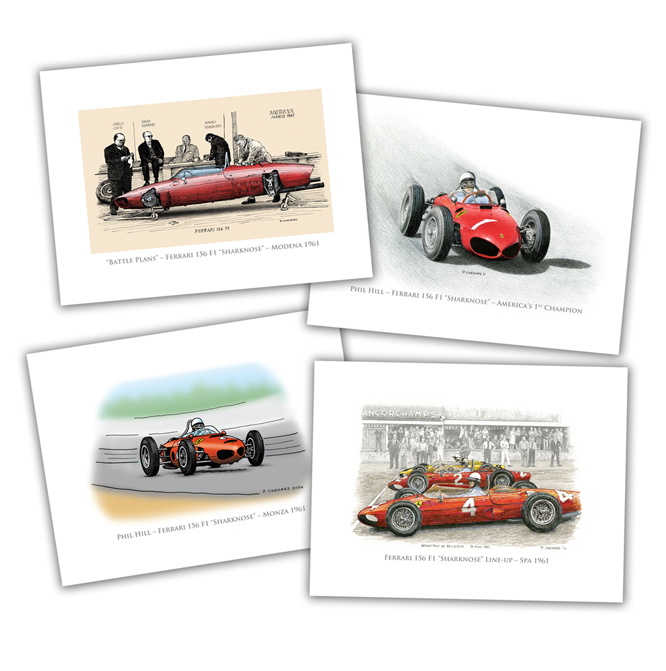
Phil Hill, Sharknose Ferrari Set, Paul Chenard

Set 2 Phil Hill World Drivers Championship 50th Anniversary Edition
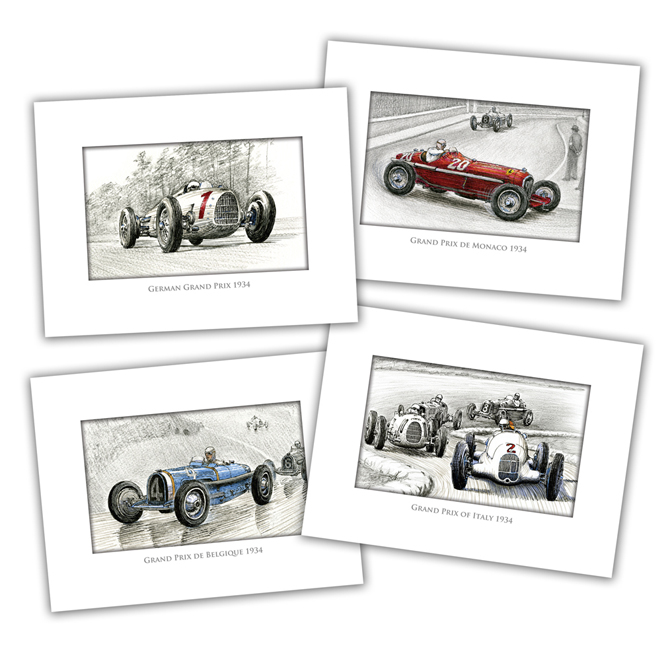
1934 GP Season Card set, Paul Chenard

Set 3 1934 Season

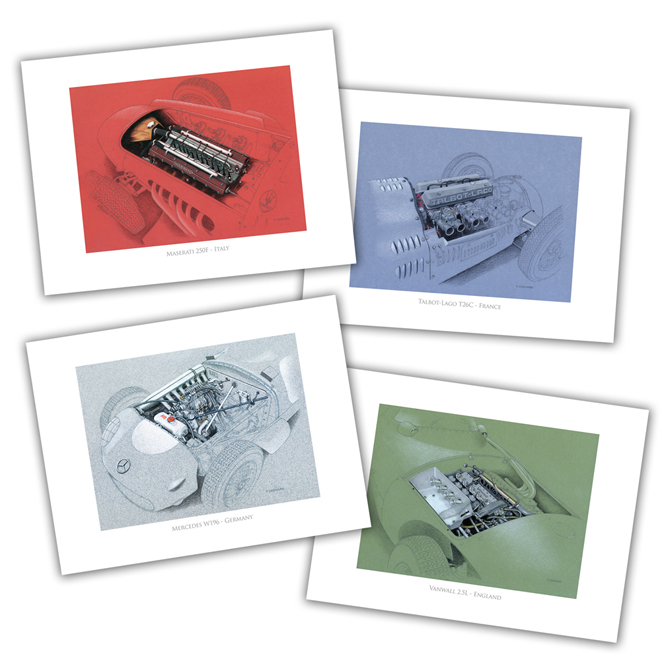
1950s Grand Prix Engines

Set 4 Grand Prix Engines of the 1950’s

or
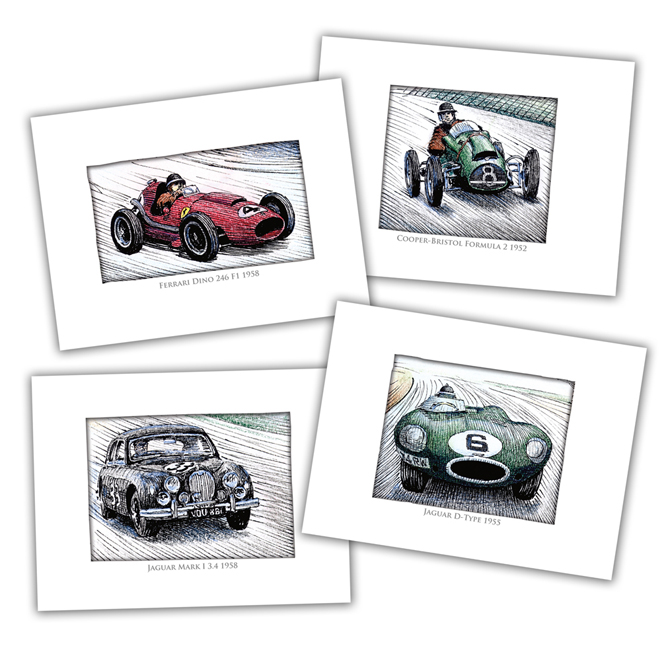
Mike Hawtorns racecars Card set, Paul Chenard

Set 5 Mike Hawthorn’s Race Cars

The Automobiliart GALPOT Seasonal Quiz will comprise 8 categories.

Overall winner chooses one set of Paul Chenard Greetings Cards from the five sets shown above.

The cards measure 15.24cm x 11.43cm, come in packs of 12 with 3 copies of 4 designs in each set, plus A6 envelopes.

Which set will you choose ?

The free to enter Automobiliart GALPOT Seasonal Quiz will run from December 26th – January 2nd Entries close January 8th 2012, Winner announced January 16th 2012.

Full details on December 26th at GALPOT.

Looking for Automotive Seasonal Gift Idea’s? Visit Automobiliart Now !

Share

Phil Hill Tribute – Peterson Museum

It’s a great pleasure to blog about the recent tribute to Phil Hill, celebrating the 50th anniversary of his World Championship win, at the Peterson Automotive Museum thanks to GALPOT’s roving correspondent Geoffrey Horton.

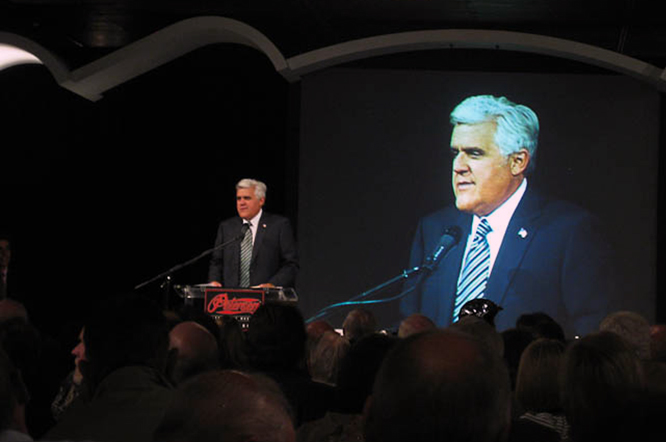
Jay Leno, Phil Hill Tribute, PAM

Ueber car enthusiast Jay Leno was amongst the guests to lend humour to the occasion.

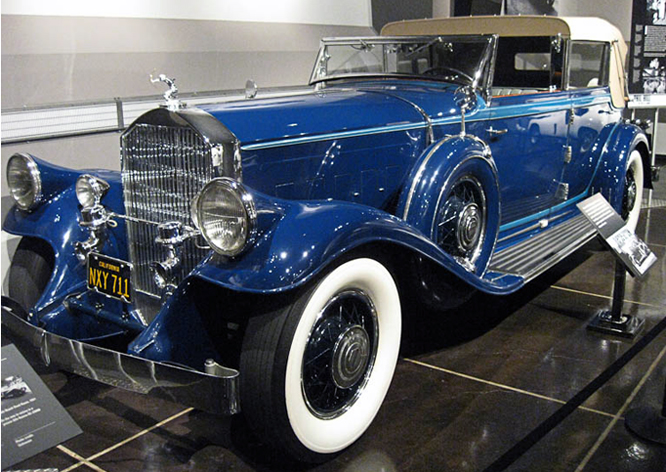
Pierce Arrow, PAM

Amongst the exhibits was this 1931 Pierce Arrow convertible sedan by Lebaron that was ordered new by Phil’s Aunt and in which Phil leaned to drive. He also used the car to attend USC and in 1955 he restored the car with his brother Jerry and promptly unexpectedly won the Best in Show award at Pebble Beach.

Peterson Automotive Museum

Some of Phil’s competitors from his early days at this event shared with the appreciative audience stories of Phil’s early exploits with an MG TC in Cal Club events which were not always entirely legal events held on circuits.

Ferrari 375MM Vignale, Peterson Automotive Museum

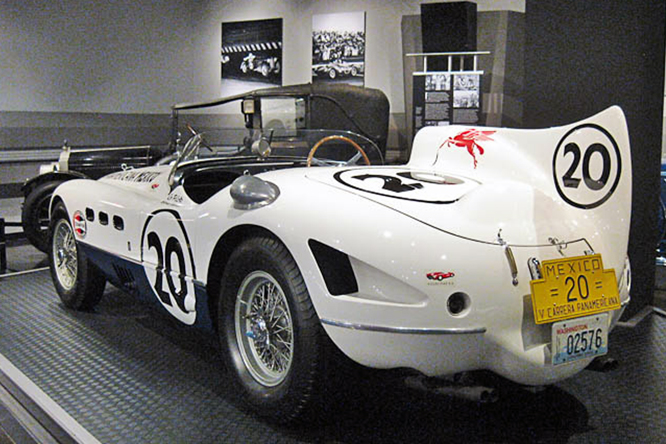
Of the delectable Ferrari’s present that Phil has driven was this unique 1953 375MM with Vignale bodywork and non stock tailfin that was added after the car was built in 1954. Phil drove this car to a second place finish in the 1954 Carrera Panamericana. It was also later driven by Carol Shelby.

Peterson Automotive Museum

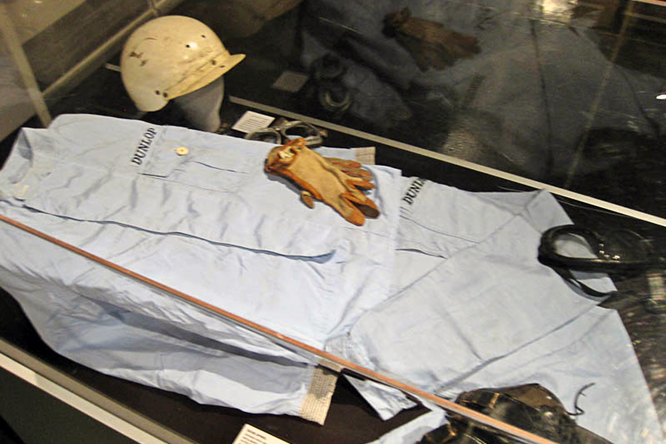
Nothing remains of the original Shark Nose Ferrari 156 which he used to win the 1961 World Drivers Championship, they were all destroyed on the instruction of Enzo Ferrari, but the helmet seen here was used by Phil in his Championship winning season.

Packard Model 30, Peterson Automotive Museum

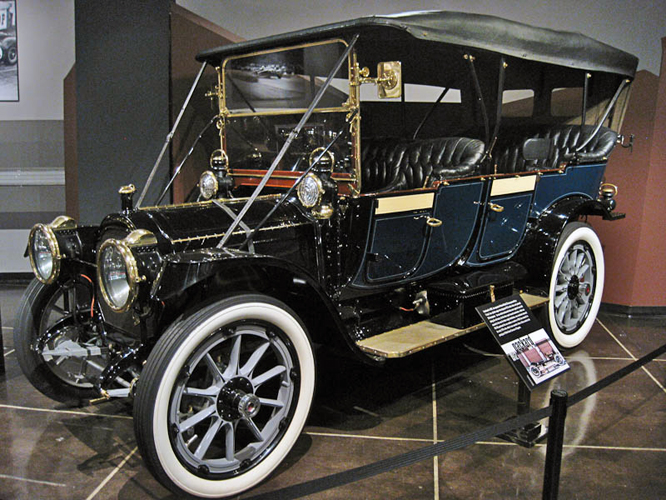
This 1912 Packard Model 30 with a gearbox mounted ahead of the rear axle and rear cable operated brakes only was purchased by Phil in 1966 and won it’s class at Pebble Beach Concours d’Elegance in the 1970’s

Peterson Automotive Museum

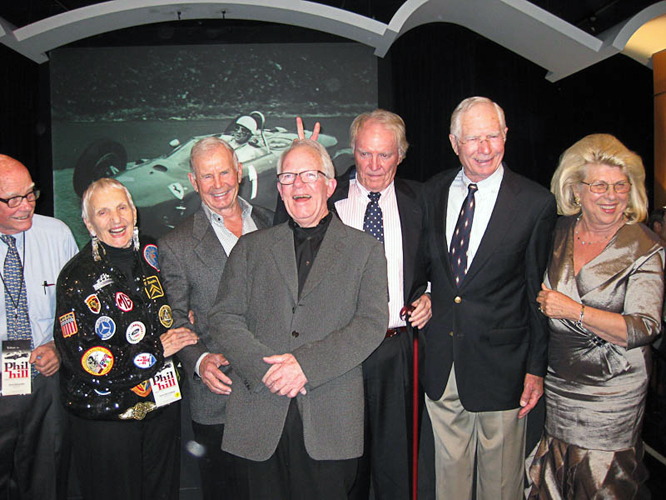
Guests who discussed the life and times of Phil were left to right, John Lamm, Editor at Large “Road and Track, Denise McLuggage racing driver and journalist, Parnelli Jones, Jesse Alexander photographer, Dan Gurney, Jim Hall and Phil’s wife Alma.

My thanks to Geoffrey Horton for sending me the photo’s and the details of the Phil Hill Tribute evening at Peterson Automotive Museum.

Thanks for joining me on this Phil Hill edition of ‘Gettin’ a li’l psycho on tyres’ I hope you will join me again tomorrow. Don’t forget to come back now !

Share

Baby Continental – Vauxhall 101 Super

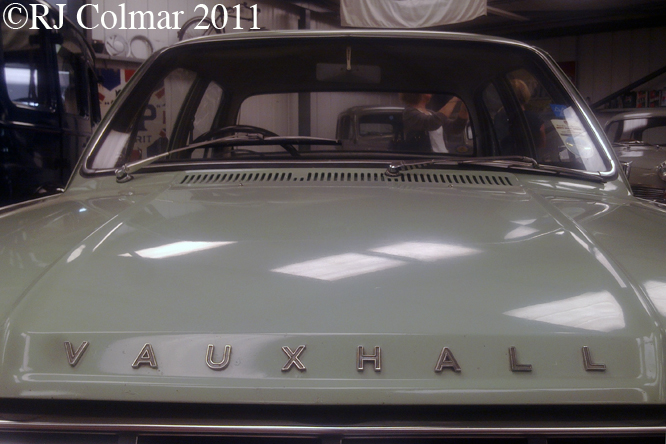
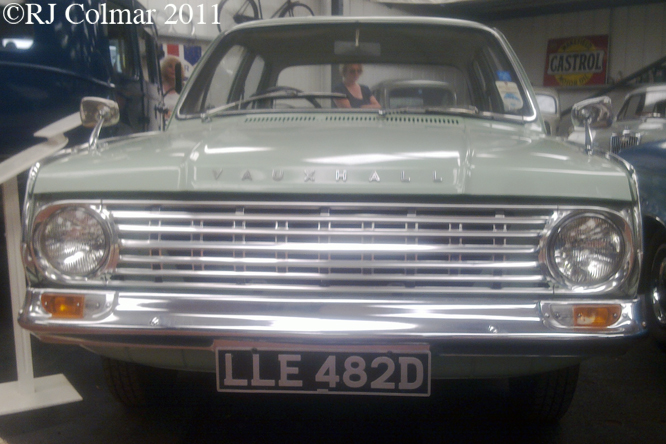
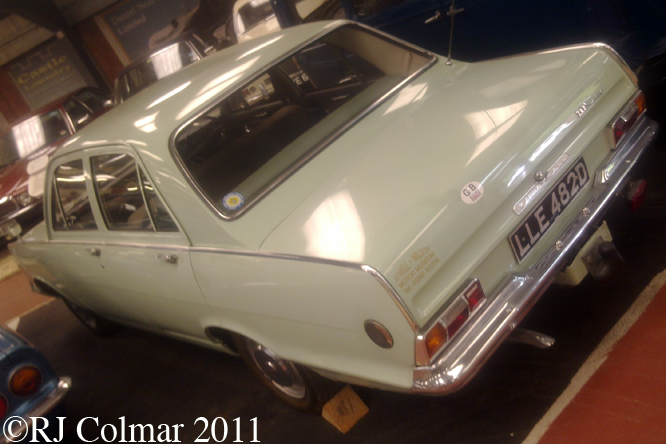
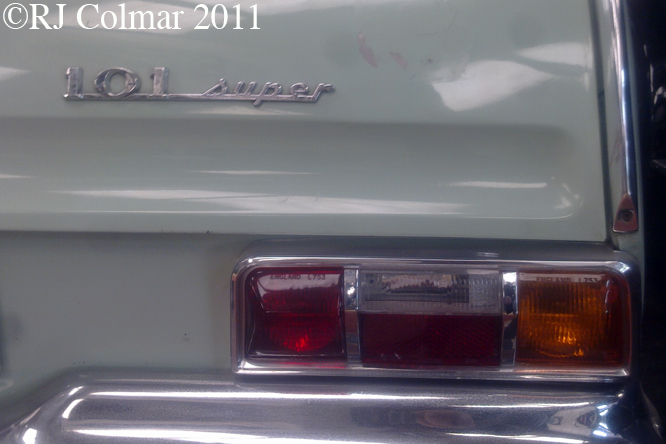
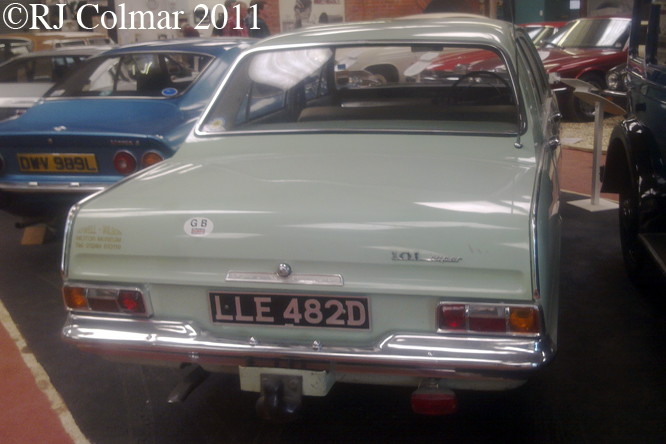
The Vauxhall 101 was the third generation Vauxhall Victor given the 101 badge because it had 101 improvements over it’s predecessor the Victor FB.

Vauxhall 101 Super, Atwell Wilson MM

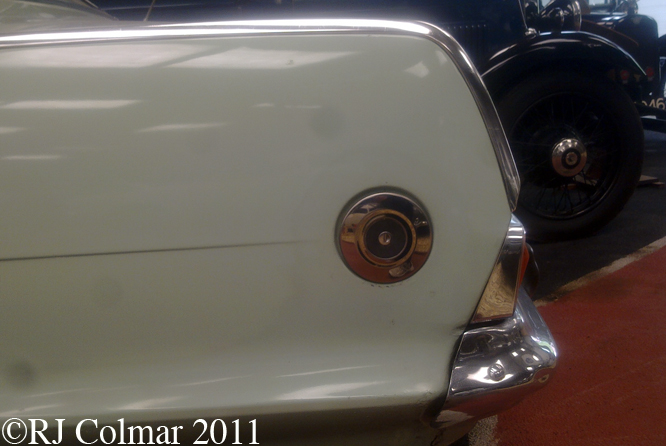
Like the contemporary fourth generation Lincoln Continental the 101 Super carried bright work on the leading edge of the front wings that ran from the top of the front bumper around the top edge of the front wings along the mid rift to the top of the rear wings and around to the top of the rear wings.

Vauxhall 101 Super, Atwell Wilson MM

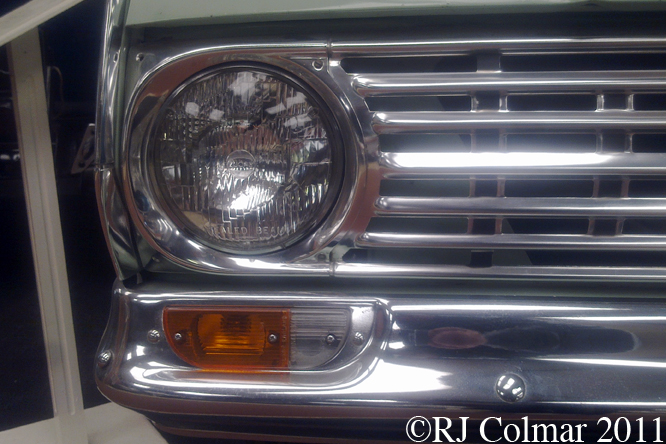
Imitating another feature that had been seen in the USA for some time the 101 was among the first British designs to incorporate the side light and indicator clusters into the front bumper.

Vauxhall 101 Super, Atwell Wilson MM

The 101 was the last of the Victor models to feature an engine with rocker operated overhead valves. The 1595 cc / 97 cui 4 cylinder motor produced 66 hp.

Vauxhall 101 Super, Atwell Wilson MM

There was a choice of transmissions standard column shifted 3 speed, 4 speed floor shifted or Powerglide Automatic.

Vauxhall 101 Super, Atwell Wilson MM

Contemporary reports noted that the low gearing gave the car class leading acceleration, 0 to 60 in 20.4 seconds, but made the fuel consumption, 23.1 miles per gallon, worst in class by a full 10%.

Vauxhall 101 Super, Atwell Wilson MM

Front servo assisted brake discs were options along with a radio that was integrated into the dash.

Vauxhall 101 Super, Atwell Wilson MM

Between 1964 and 1967 219,814 101 Victor FC models were built along with an additional 13,499 VX 4/90 performance models using the same body. The 1966 model featured today was seen at the Atwell Wilson Motor Museum.

Thanks for loining me on this 101 edition of ‘Gettin’ a li’l psycho on tyres I hope you will join me again tomorrow. Don’t forget to come back now !

Share

Hitchhikers Guide To Disambiguation – Ford Prefect

Many readers may think Ford Prefect is the character Ix from a small planet in the vicinity of Betelgeuse who disguised himself as an out of work actor after getting stuck on planet Earth for 15 years while visiting the Earth to update the Guide in either the radio comedy, tv series, book, radio adaption of the books or film ‘The Hitchhickers Guide to the Galaxy.

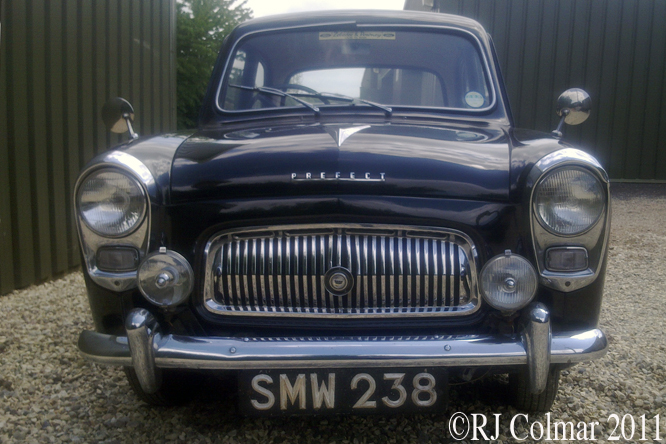
Ford Prefect

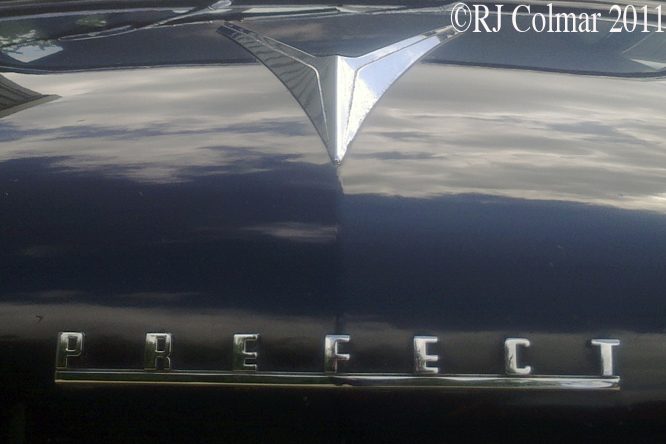
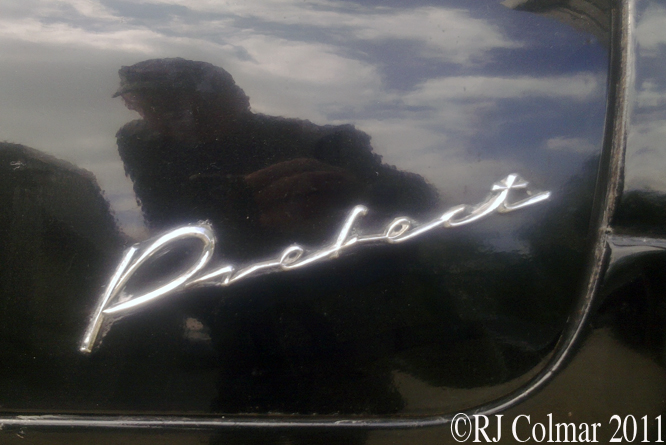
In fact a Ford Prefect, note not “PERFECT” as many have incorrectly read and or heard the second word, is a motor car which Ix mistook for a superior form of life when visiting earth in the Sci Fi comedy.

Ford Prefect, Atwell Wilson Motor Museum, 2011

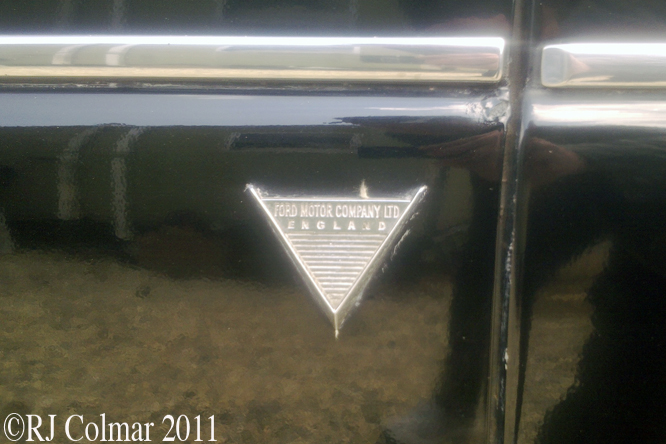
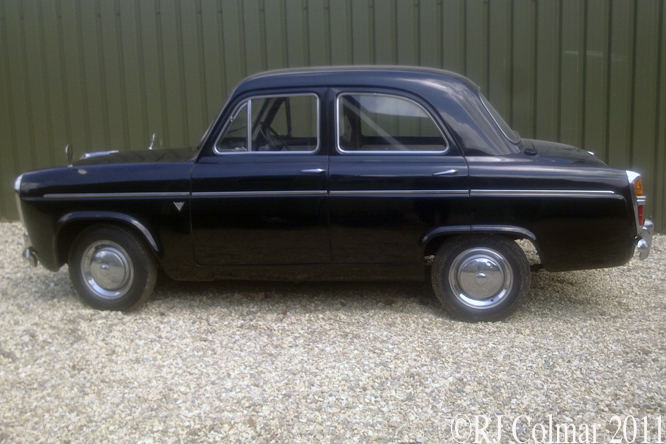
The Ford Prefect was in production from 1938 to 1959 in four distinct evolutions.

Ford Prefect, Atwell Wilson Motor Museum, 2011

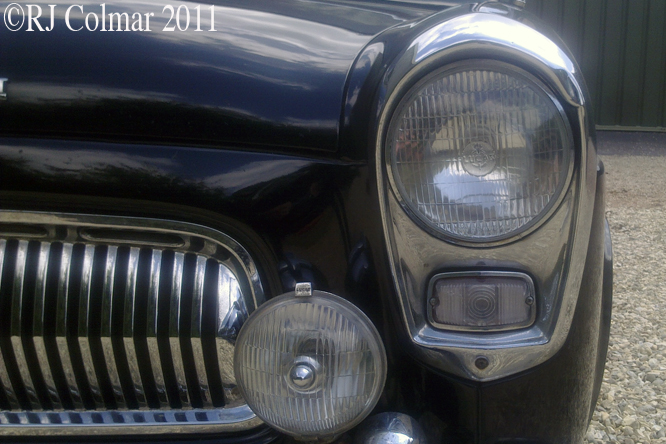
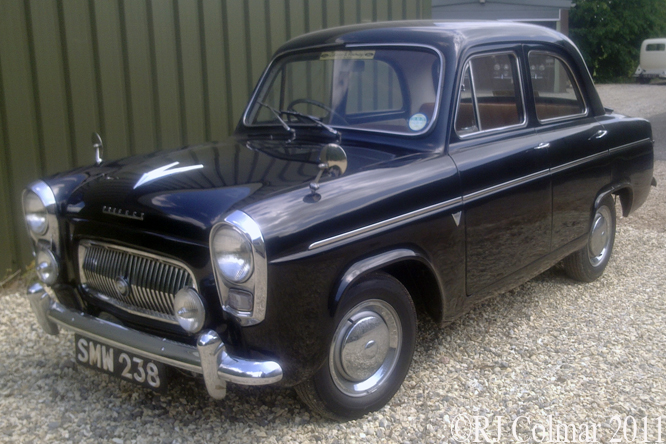
With the front wings incorporated into the overall 3 box design of the body we can say for sure this is a series 3 or 4 car.

Ford Prefect, Atwell Wilson Motor Museum, 2011

The absence of a rakish small chrome strip from the front of the existing chrome waste strip down to the wheel arch further suggests this is an earlier 100E Series 3 car which was in production from 1953 to 1959.

Ford Prefect, Atwell Wilson Motor Museum, 2011

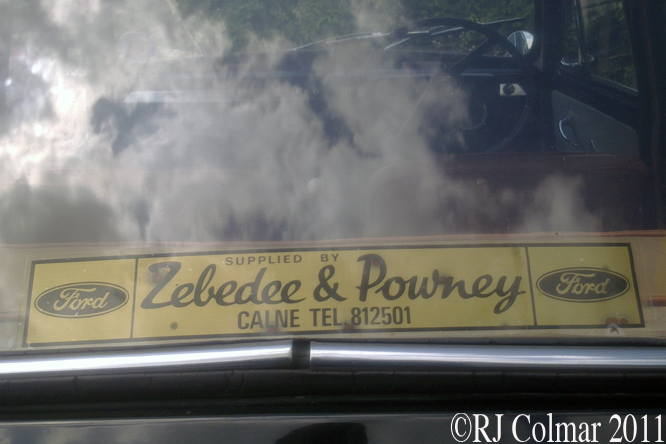
The tax disc in the front window of this car suggested that it had stopped being used as a daily driver in 1979 which seems strangely at odds with what looks like a vehicle that is more than capable of passing an MOT (a safety inspection required in the UK before a vehicle can be taxed) when I saw it at the Atwell Wilson Motor Museum where many of the cars are regular runners.

Powered by a 1172 cc / 71.5 cui 4 cylinder side valve engine mated to a 3 speed manual gearbox the Series 3 Prefect was tested as being capable of accelerating from rest to 60 mph in 32.2 seconds and having a top speed of 71 mph.

Ford Prefect, Atwell Wilson Motor Museum, 2011

The four door version of the otherwise visually similar Ford Popular and Anglia models was also built under license in Latvia where it was sold as the Ford-Vairogs Junior.

Ford Prefect, Atwell Wilson Motor Museum, 2011

There was an estate / station wagon of the Ford Prefect known as the Squire while the estate / station wagon version of the similar Ford Anglia was know as the Ford Escort. For reasons long forgotten in the mists of time the French and Greek translations, among others, of Hitchhikers Guide to the Galaxy incorrectly give the name chosen by Ix while staying on earth as Ford Escort, though Ix probably chose that name for the same reasons as he chose Ford Prefect in the English version, and most other translations of the book, namely to an alien it probably looks like cars are the most intelligent species on the planet.

Thanks for joining me on this Hitchhikers Guide edition of ‘Gettin’ a li’l psycho on tyres’, I hope you’ll join me again tomorrow when I’ll be trading in Science Fiction for a big Voyager. Don’t forget to come back now !

Share

Forward Control Flathead – Fordson 7V

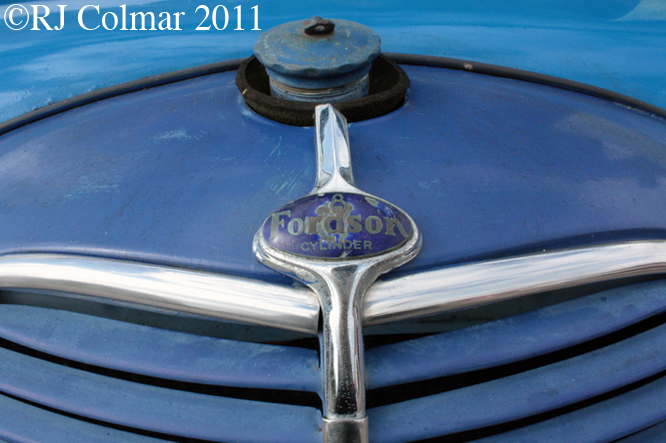
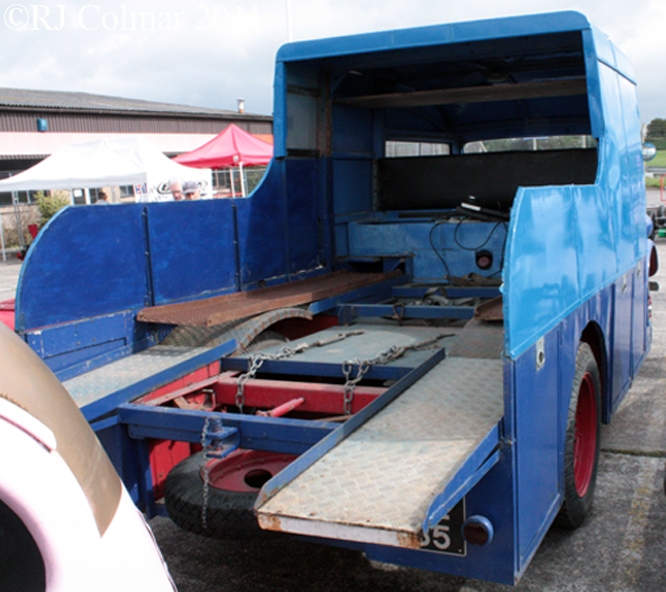
The Fordson 7V truck built in Britain from 1937 to 1948 had two enduring innovations.

Fordson 7V, Rare Breeds, Haynes International Motor Museum

The first was it’s flathead V8 the first Ford V8 which was originally built in the USA in 1932. This motor in various guises from 136 CUI / 2.2 litre to 337 CUI 5.7 litre was in production until 1973 when German built trucks with a variation of this motor ceased production. This easy to maintain and upgrade motor was popular with hot rodders and racers alike, indeed Allard amongst other special builders also installed a variation this motor in some of its most successful competition models.

Fordson 7V, Rare Breeds, Haynes International Motor Museum

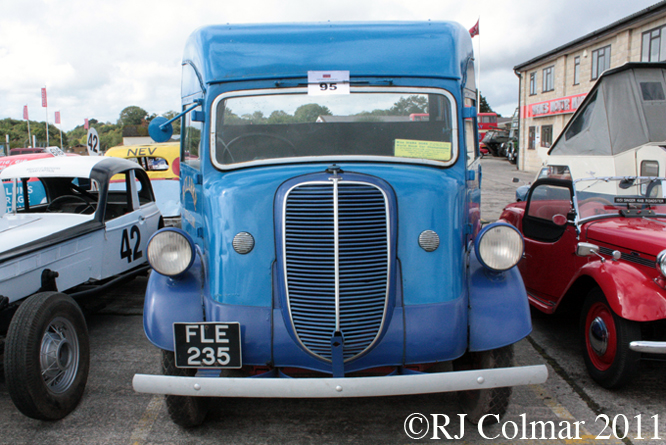
The second innovative feature of the Fordson 7V was the forward control cab which placed the driver alongside the motor which improved the drivers vision of the road and allowed for greater maneuverability in congested urban environments. This particular feature did not take off until the 1960’s Ford having taken a step back placing the driver in the traditional position behind the motor with it’s 1950’s Trader models. Note the cab also has an unusual for the period one piece windscreen.

Fordson 7V, Rare Breeds, Haynes International Motor Museum

Fordson 7V’s like this particular one were the vehicle of choice for Britain’s National Fire Service during the 2nd World War and painted grey they were an all to familiar sight during the Blitz Krieg. The Fordson 7V chassis was also adapted during the 2nd World War to build the armoured flathead V8 powered tracked Loyd Carrier.

Fordson 7V, Rare Breeds, Haynes International Motor Museum

With the cessation of hostilities and the post war boom in motor racing Fordon 7V’s fitted with Flathead V8’s were much in demand for use as racing transporters giving many fire tenders a second lease of life.

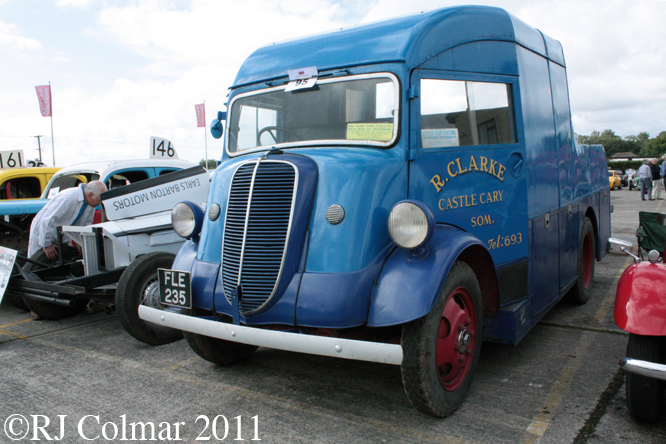
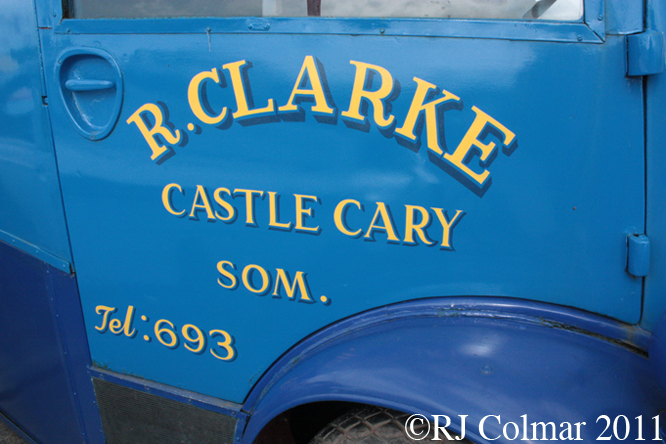
Fordson 7V, Rare Breeds, Haynes International Motor Museum

The Clarke family use this 1937 example, seen at the Rare Breeds Show, to transport their collection of replica Stock Cars as raced in the 1950’s.

Thanks for joining me on today’s transporter edition of ‘Gettin’ a li’l psycho on tyres’ I hope you will join me again tomorrow when I’ll be looking at British built variations of one of the worlds most popular cars. Don’t forget to come back now !

Share

Perfect Car For A Wedding #6 – Rolls Royce Corniche

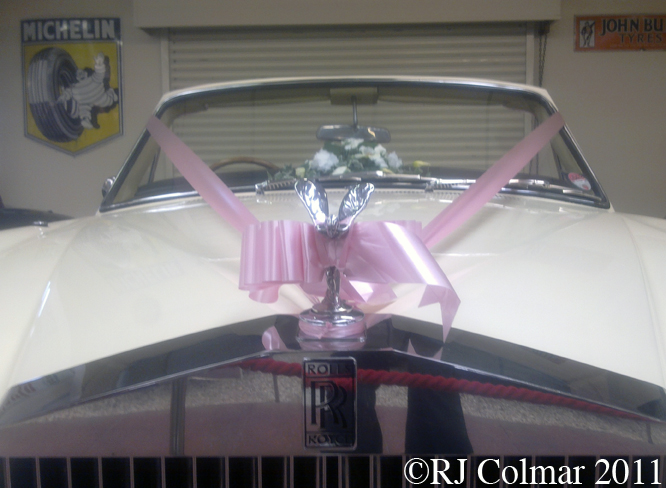
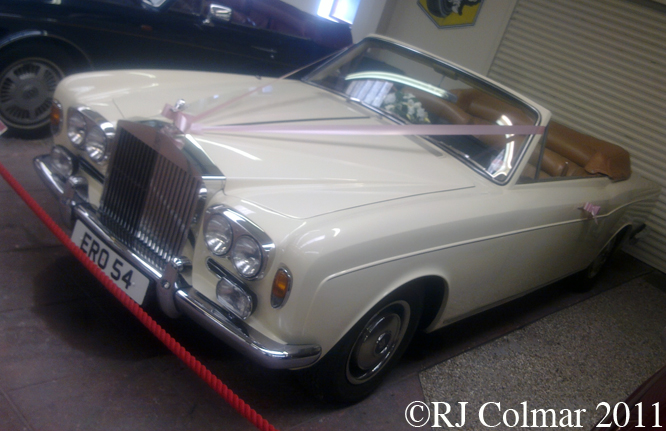
I am off to a wedding today, the first one I have attended where my friends children are the ones getting married, so it seems appropriate to feature another Perfect Car for a wedding on today’s blog.

Rolls Royce Corniche, Haynes IMM

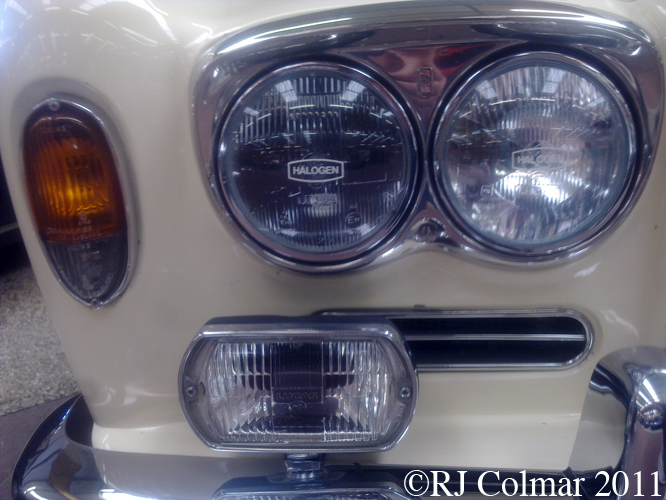
Today’s Rolls Royce is known as the Silver Shadow Mulliner Park Ward Drop Head Coupé which first appeared in 1967 was renamed Corniche in 1971 when this model scene at the Haynes International Motor Museum was built.

Rolls Royce Corniche, Haynes IMM

The Corniche assembled and finished in London by Mulliner Park Ward is based on the Rolls Royce Silver Shadow / Bentley T floor plan with the same ‘adequate’ aluminium 6230 cc / 380 cui Rolls Royce motor.

Rolls Royce Corniche, Haynes IMM

The Corniche name was first used by Rolls Royce in the 1930’s for a Mark V prototype with Parisian coach work by van Vooren, legend has it that after 15,000 miles of Continental testing in Europe was awaiting repatriation to England when it was hit by a bomb at Dieppe docks.

In the UK it would probably take a particularly brave couple to opt for a convertible on their wedding day but then as they used to say in Rome ‘Fortes fortuna adiuvat’. For the brave this Corniche can be hired from the Haynes International Motor Museum.

Wishing Lotti & Ronnie and all those getting married today all the best and many happy years together.

Thanks for joining me on this Corniche edition of ‘Gettin a lil’ psycho on tyres’, I hope you’ll join me again tomorrow. Don’t forget to come back now !

Share

Two Time World Champ – Ferrari 500 #005

In 1951 there was a close fought contest for the World Drivers Championship between the Alfa Romeo drivers in old pre war 1.5 litre / 91.5 cui supercharged cars and Ferrari drivers in new 4.5 litre / 274.5 cui normally aspirated cars. Juan Manuel Fangio won the title but a run of three straight victories by Ferrari drivers González and Ascari was enough to convince Alfa Romeo that they could not hope to be so competitive with their old cars and so with no money to fund the building and development of new machines they quit Grand Prix racing as two time champions.

Ferrari 500, Donington

Alfa Romeo’s withdrawal left the FIA, organisers of World Championship Grand Prix Racing, with a shortage of entrants for the 1952 season only the up and coming Ferrari and brand new BRM team, who had built a beautiful sounding, but hideously complicated and unreliable 1.5 litre 91.5 cui supercharged V16 vehicle being prepared to enter events run to the existent formula one regulations.

Ferrari 500, Donington

The FIA decided that they would run the 1952 and 1953 World Championship for cars built to Formula 2 regulations with normally aspirated 2 litre / 122 cui engines while new formula one regulations would be introduced in 1954. Ferrari had all the bases covered for 1952 as he had coincidentally just instructed Aurelio Lamperdi to design a 4 cylinder 2 litre / 122 cui engine that was powerful and extremely efficient.

Ferrari 500, Donington

For 1952 Ferrari built six type ‘500’ Formula 2 Cars cars to compete in the World Championship and they won all of seven races into which they were entered missing the Indy 500, run to different regulations in which Alberto Ascari competed with a Ferrari 375.

On his return from the 1952 Indy 500 Alberto Ascari won the six remaining World Championship races with the car, seen here at Donington Park, on his way to capturing the 1952 World Championship. Ascari retained the title using the same chassis in 1953 with another 5 victories.

The Ferrari ‘500’ design is one of the most successful of all time only the McLaren MP4/4 which won 15 races out of 16 in 1988 as against 7 out of 8 eligible events in 1952 for the ‘500’ is statistically more successful, though it could be argued that since the Indy 500 was not run to the same regulations as the rest of the 1952 World Championship the Ferrari ‘500’ has a 100 % winning record for the 1952 season.

This particular #005 chassis won an unequalled 7 straight World Championship Grand Prix races from 1952 to 1953, and 9 straight world championship races entered again the 1953 Indy 500 counted as a World Championship Grand Prix in 1953, and is credited with a total of 11 World Championship Grand Prix wins in total. As the highly regarded Doug Nye says of chassis #005 “Possibly the most successful chassis in Grand Prix history.”

The 4 cylinder engine went on to have a hugely successful career in sports car racing when installed in the 500 Mondial and 500 Testa Rossa’s.

Thanks for joining me on this Ferrari Friday edition of ‘Gettin’ a lil’ psycho on tyres, I hope you will join me again tomorrow. Don’t forget to come back now !

Share