Tag Archives: of

Minimalist, Cheap & Rugged – Citroën 2CV

My friend Candice, who just became a member of the National Motorsports Press Association, writes a regular Tuesday blog called “Simple Joys”. I know her Simple Joy on wheels would probably be a Morgan three wheeler, mine would definitely be a Citroën 2CV.
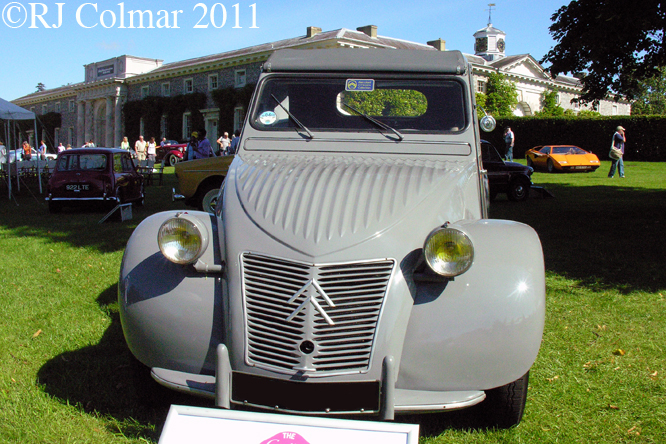
Citroën 2CV, Goodwood Festival of Speed

The Citroën 2CV was designed as an uncompromisingly utilitarian vehicle designed to move agricultural France on from dependence on the horse and cart.
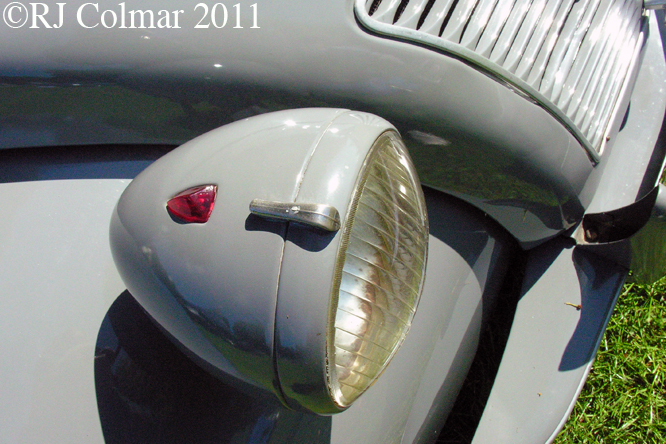
Citroën 2CV, Goodwood Festival of Speed

A market survey of Frances largely agricultural population in the 1930’s revealed that there was a demand for an umbrella on four wheels, that could carry 50 kgs / 110 lbs of farm produce to market at 30 mph and be driven across a ploughed field carrying a basket of eggs without breaking them, all while wearing a pair of clogs.
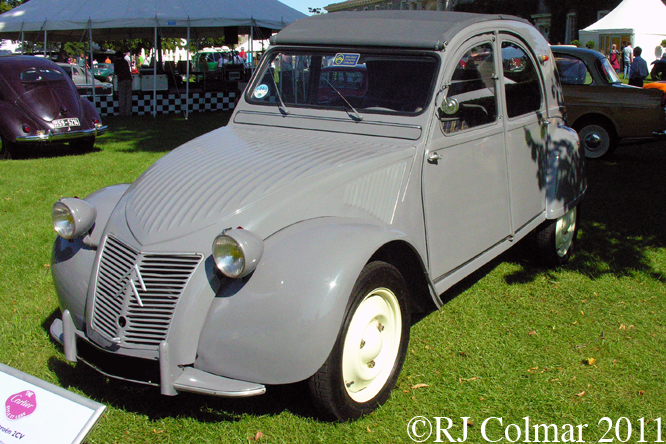
Citroën 2CV, Goodwood Festival of Speed

Pierre-Jules Boulanger set about guiding the same design team that had devised the Citroën Traction Avant to come up with a radical solution to the design criteria for a “Toute Petite Voiture” – very small car.
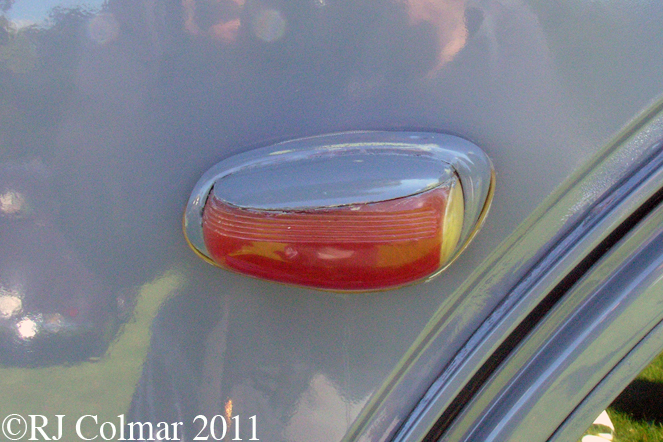
Citroën 2CV, Goodwood Festival of Speed

The original 2CV (2hp) made largely of aluminium was to have had a water cooled 2 cylinder engine and was scheduled for launch in 1939 but these plans were abandoned with the onset of the 1939/45 war. During the war it was realised the the price of aluminium would become prohibitive for post was production so the car was redesigned to make use of steel and the engine redesigned to be air cooled with a four speed gearbox.
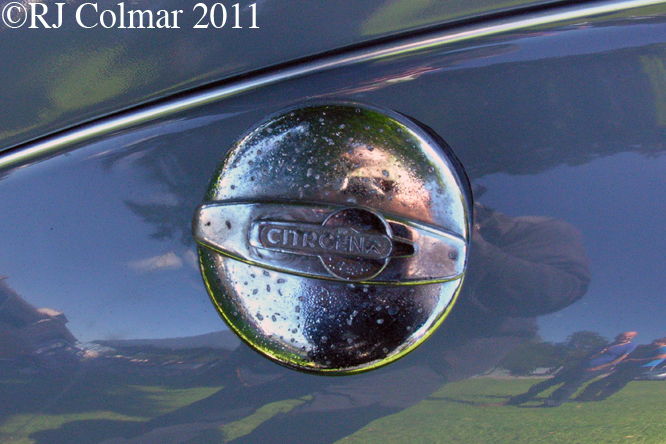
Citroën 2CV, Goodwood Festival of Speed

A 2CV was finally launched in 1948 with a pull chord starter that was soon replaced with an electric starter. Despite much humour and scorn in the press Citroën were flooded with orders and the Deux Cheveau became a huge success with a three year waiting list built up in just three months !
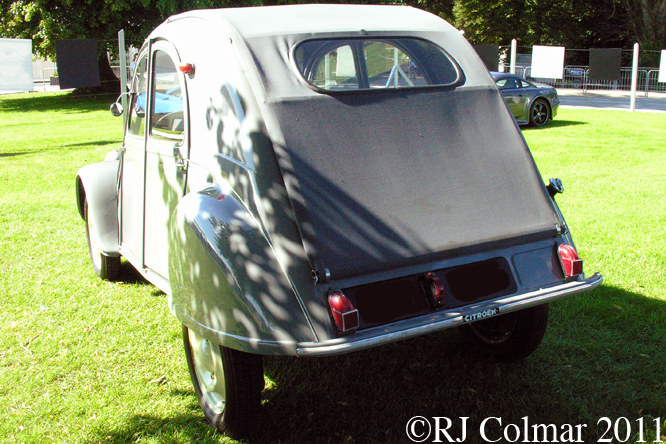
Citroën 2CV, Goodwood Festival of Speed

Amazingly Citroën 2CV’s were used in competition events like the Mille Miglia in the early to late 1950’s, though they did not experience any overwhelming success.
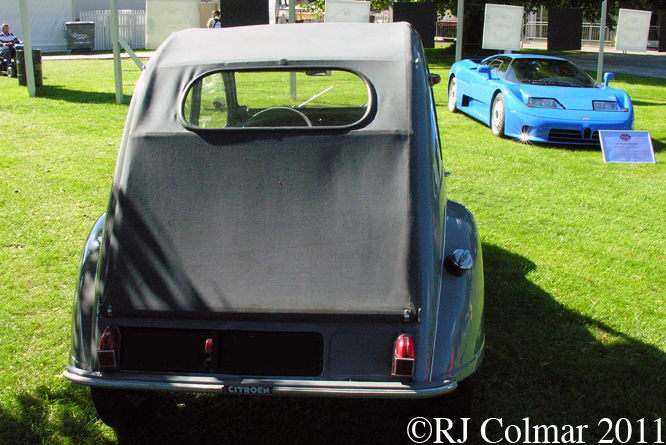
Citroën 2CV, Goodwood Festival of Speed

2CV’s were developed into a large number of variants the Fourgonette van pioneered the use of a large rear box section that has seen many passenger vehicles reconfigured to commercial use, there was a pickup and a Sahara off road road version with two engines to provide four wheel drive.

The 2CV remained in production, much modified from this 1954 iteration, seen at the Goodwood Festival of Speed, until 1990. Of all the cars I have owned the half a dozen minimalist cheap and rugged 2CV’s easily gave me the most smiles per mile.

Thanks for joining me on this “Minimalist, Cheap and Rugged” edition of “Gettin’ a li’l psycho on tyres”, I hope you will join me again tomorrow for Americana Thursday. Don’t forget to come back now !

Share

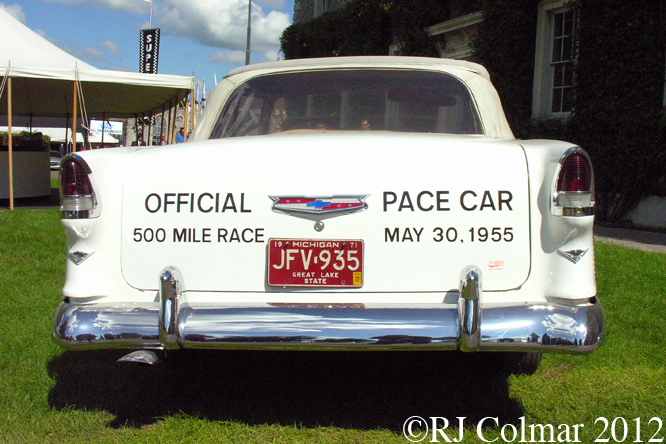
Hot One Of Fifteen – 1955 Chevrolet Bel Air Indy Pace Car

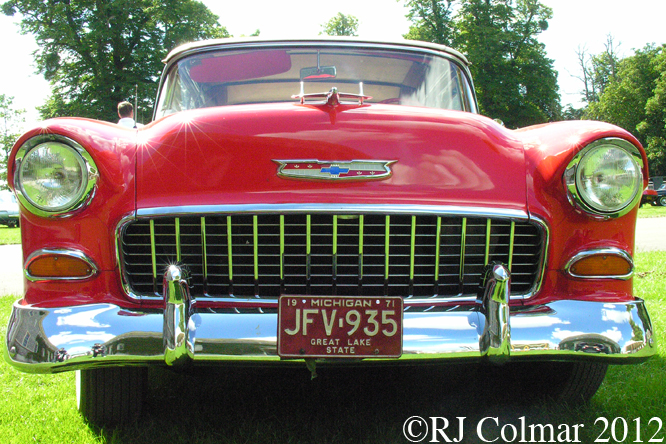
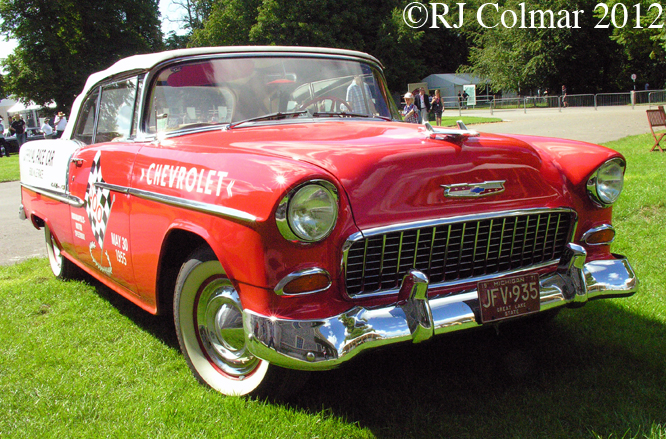
For 1955 Chevrolet launched it’s second generation full size Bel Air range, to replace the almost entirely new 1954 Bel Air. with two tone paintwork and for the first time a new 4.3 litre 265 cui V8 ‘small block’ engine option that would remain part of General Motors product mix with many improvements over several decades.

Chevrolet Bel Air, Goodwood FoS

The crisp clean styling of the 1955 Bel Air was set off by a Ferrari inspired chrome square potato chip grill as seen on the car below photographed at last years Goodwood Festival of Speed.

Chevrolet Bel Air, Goodwood FoS

Alongside two straight six motor options the new ‘small block’ came tuned with either a 162 hp Turbo-Fire with twin barrel carburetor, 180 hp Power Pack Super Turbo – Fire with four barrel carburetor or towards the end of the model year a 195 hp competition option with a high compression motor.

Chevrolet Bel Air, Goodwood FoS

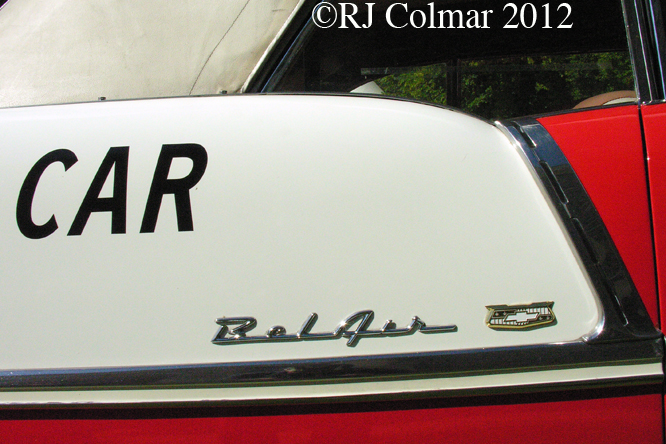
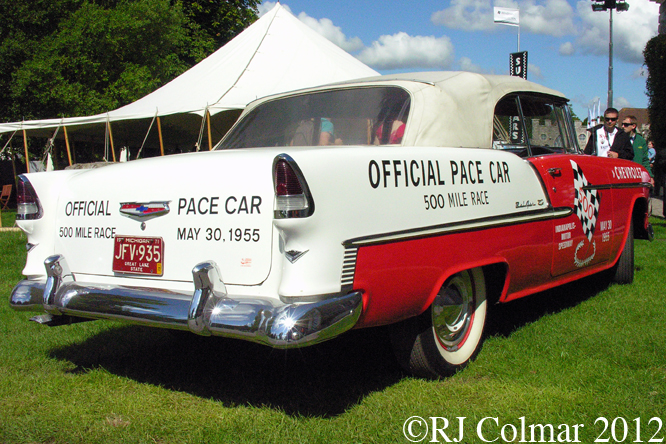
Being selected to perform pace car duties for the 1955 Indy 500 is reckoned to have given Chevrolet’s Bel Air marketing campaign a terrific boost, it is said that a fleet of 15 two tone Red & White Bel Airs were in attendance at what proved to be an unforgettable race.

Chevrolet Bel Air, Goodwood FoS

Chevrolet Sales Manager Thomas H Keating was given the honour of pacing the field for the Indy 500 on May 30th 1955 and he can be seen at the wheel of what Keating claimed to be a 180 hp vehicle, on this linked photo, sitting beside him is thought to be Indianapolis Motor Speedway owner Tony Hulman. The linked photo is telling for what it does not show, namely it is quite clearly not about to pace the Indy 500 and as we shall see it might not even be the actual vehicle used to pace the event.

Chevrolet Bel Air, Goodwood FoS

The give away as to which vehicle paced the event can be seen at 13m 37 secs into this linked clip when the pace car that actually led the field away can be clearly seen to be carrying a movie camera in the boot / trunk necessitating a rather large slit to afford the camera rearward vision and to accommodate the upper film reel. No one knows for sure what happened to that particular car after the event.

Chevrolet Bel Air, Goodwood FoS

Bill Vukovich looked to be on course for a third straight Indy victory in 1955 with a 17 second lead on the 57th lap, of 200, when he ran into someone else’s accident and ended flying over the back stretch perimeter fence and coming to rest up turned and on fire giving the two time defending champion no chance of survival. Bob Sweikert who had worked his way up from 14th on the grid, and was second in the John Zink Special at the time of the accident crossed the line 3 hours 53 mins and 59 secinds after the Bel Air pace car had entered pit road to start the race.

Bob took home one of the fifteen Bel Air pace cars with his wife and their kids, he went on to win the 1955 AAA big car championship and Midwest Sprint Car Championship, becoming the only winner of what is known cumulatively as the American Motor Sports Triple Crown. The following year Sweikert was killed in a sprint car accident at Salem Speedway racing Ed Elisan whom he had raced as a teenager in his home town of East Bay California.

Thanks for joining me on this ‘Hot One Of Fifteen’ edition of ‘Gettin’ a li’l psycho on tyres’ I hope you will join me again tomorrow. Don’t forget to come back now !
Share

Big Valve Special – Lotus 74 Europa Special

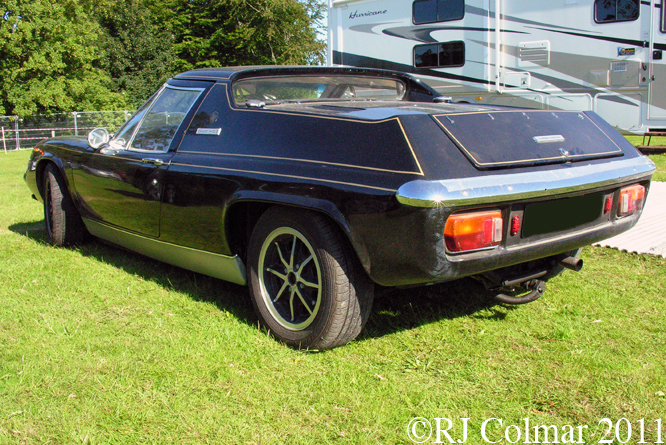
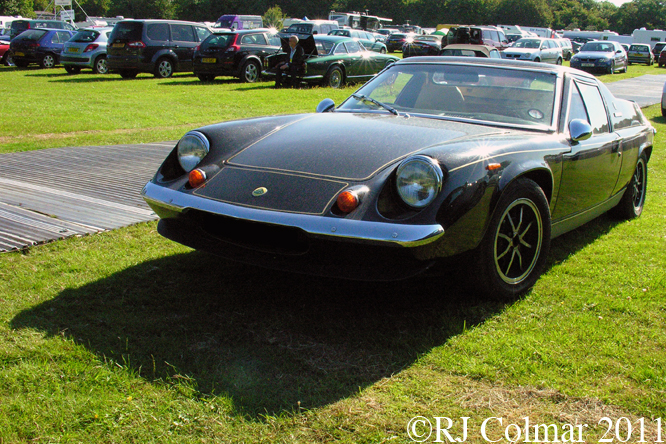
In 1971 Chief Engineer Mike Kimberley oversaw the development of the upgraded Lotus Europa Twin Cam Type 74. featuring a 105 hp Twin Cam motor coupled with a stronger Renault 4 speed gearbox.

Lotus Europa Special, Goodwood FoS

The upgraded Europa featured a 105 hp Twin Cam motor coupled with a stronger Renault 4 speed gearbox.

Lotus Europa Special, Goodwood FoS

After the first 1580 Europa Twin Cams has been built the Europa model was again upgraded with a 126 hp ‘big valve variant of the twin cam motor.

Lotus Europa Special, Goodwood FoS

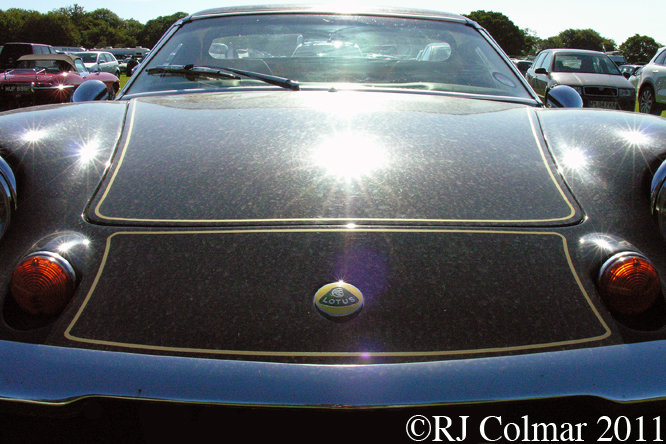
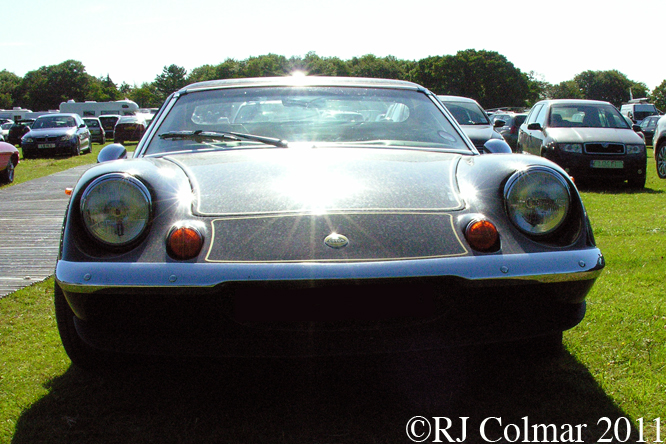
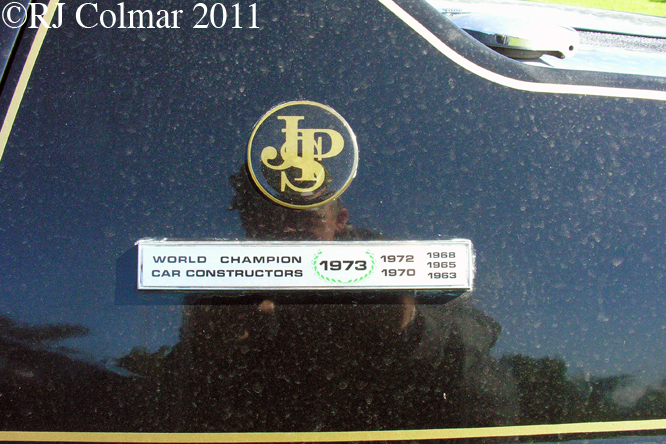
The first 200 ‘Big Valve’ Europa’s were planned as a limited ‘Europa Special’ edition of 200 featuring the black and gold “John Player Special”, tobacco brand, paint work of the works Lotus Racing cars which won the 1972 World Constructors Championship and World Drivers Championship with Emerson Fittipaldi at the wheel.

Lotus Europa Special, Goodwood FoS

The 200 ‘Europa Special’ limited edition vehicles, all featuring a 5 speed gearbox, launched in September 1972 are distinguishable by a numbered badge on the dash panel.

Lotus Europa Special, Goodwood FoS

Such was the popularity of the Europa Special that the model was continued after the initial planned batch of 200 had been built sans numbered dashboard badges and in a variety of colours including black and gold until 1975.

Lotus Europa Special, Goodwood FoS

I was unable to discern if the 1972 Europa Special seen here is one of the first 200 numbered cars, or one of post limited edition models, when I saw it at last years Goodwood Festival of Speed. Note how the rear bodywork has been tidied up to give better rear visibility when compared to the Type 54 Europa I looked at last week.

Lotus Europa Special, Goodwood FoS

A Europa with the big valve motor was tested in period carrying a passenger from rest to 60 mph in 6.6 seconds and with a maximum speed of 122 mph. In all 3130 big valve Europa Specials were built from September 1972 to 1975.

Thanks for joining me on this ‘Big Valve Special’ edition of ‘Gettin’ a li’l psycho’ on tyres’ I hope you will join me again tomorrow when I’ll be reviewing last weeks Bristol Italian Auto Moto Festival. Don’t forget to come back now !
12 05 09 Lotus Type 74 disambiguation, it has come to light that at least one internet source lists two Lotus Type 74’s one the Europa Twin Cam / Europa Special and the other an open wheel Formula 2 car, former Lotus employee Rob, Kayemod on The Nostalgia Forum, has kindly informed me that the Formula 2 cars were only ever referred to at the Lotus factory as “Texaco Stars” in deference to their sponsor and that the Type 74 designation seems to have been applied to the racing car retrospectively.

Share

Japanese Edition – MG RV8

After the success of the Mazda MX5/Miata/Eunos launched in 1989 that all the models sited by Mazda as having been influential on it’s design instantly experienced an increase in demand on the classic market, those cited influences included the Triumph Spitfire, Austin Healey Sprite, MG MGB and Lotus Elan.

MG RV8, Goodwood, FoS

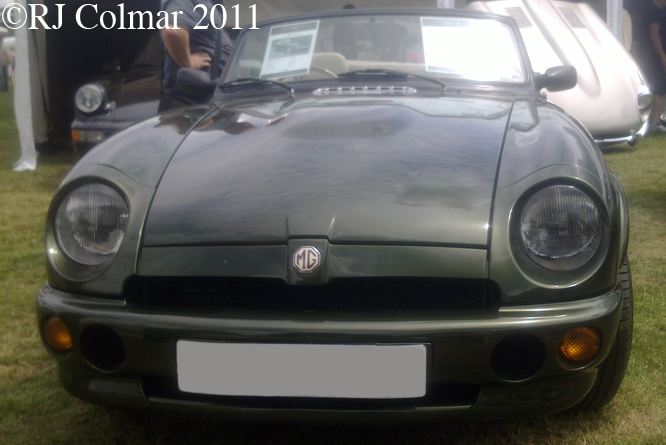
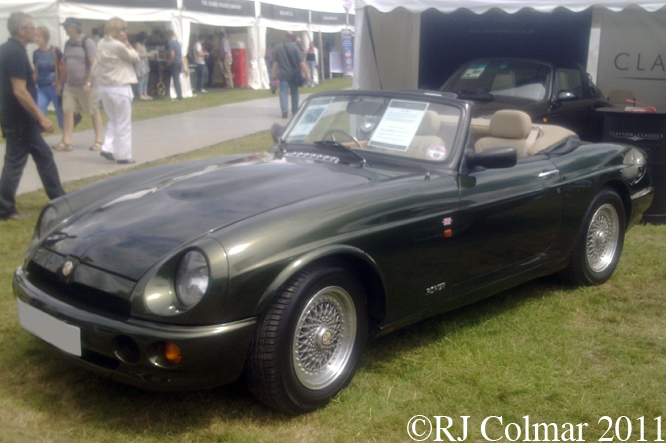
Such was the demand for all things British in Japan in the early 1990’s that several specialists including Central England Sports Cars and the Frogeye Company on the Isle of White ran thriving businesses exporting renovated Spridgets by the half dozen to Japan. MG also saw the interest in British sports cars created by the MX5 as a opportunity and built a limited edition of 2000 MG RV8’s loosely based around the MG B Roadster.

MG RV8, Goodwood, FoS

At the heart of the RV8 roadster was a 3,946 cc / 240 cui V8 based on the aluminium Buick Rover V8 that had become the motor of choice amongst British sports car builders, slightly ironically the original MG B Roadster had never been available the the V8 that was an option for the B GT Coupé bodyshell.

MG RV8, Goodwood, FoS

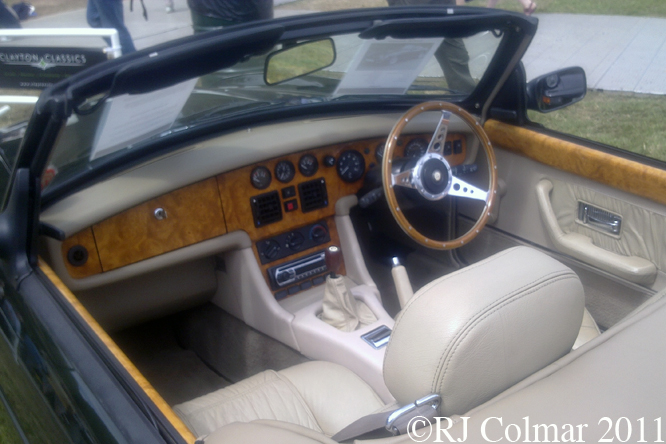
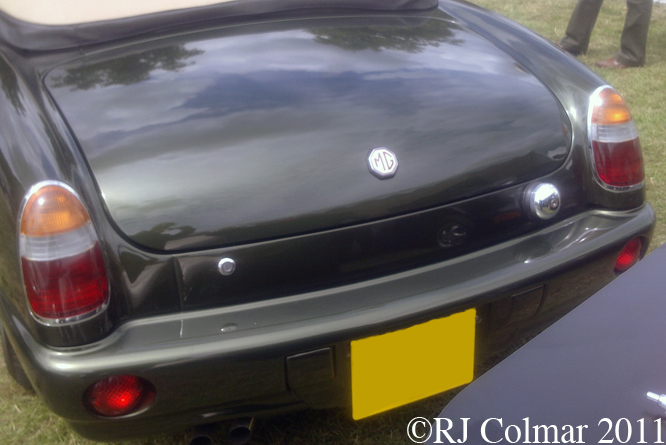
BBS wheels a good dose of Connolly leather and a splash of veneered Burr Elm completed the look of the reincarnation of the worlds most numerous sports car.The boot / trunk lid and doors are the only panels to carry over from the original MG B all though beneath the skin the rear drum brakes and some suspension components were also carried over from the MG B that was phased out in 1980.

MG RV8, Goodwood, FoS

The RV8 is built for those who travel light the floor of the boot trunk is so high that there is little space for anything beside the full size spare wheel. Between 1993 and 1995 1579 MG RV8’s were exported to Japan leaving just 421 to be distributed through the rest of the world.

Thanks for joining me on this ‘Japanese Edition’ of ‘Gettin’ a li’l psycho on tyres’, I hope you will join me again tomorrow. Don’t forget to come back now !
Share

Unlucky In Love – Auburn 851 SC Speedster

The Auburn 8-851 SC was a response to the failure of the previous 12 cylinder 12-160 model to sell at Dodge V8 prices, customers, even during those depression years up to 1933, erroneously thought there had to be something wrong with the product to be offered at such bargain prices !

Auburn 851 SC, Goodwood Revival

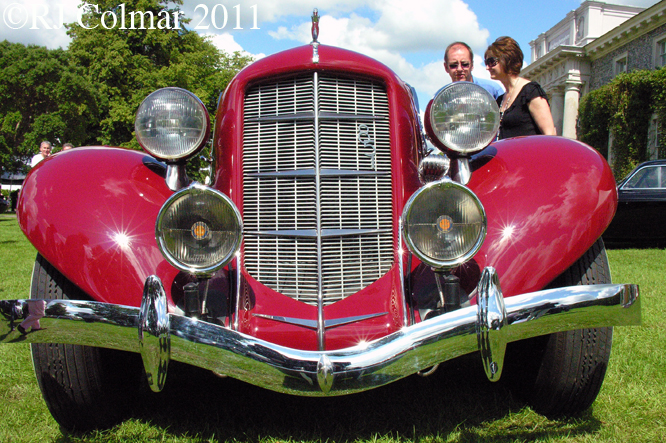
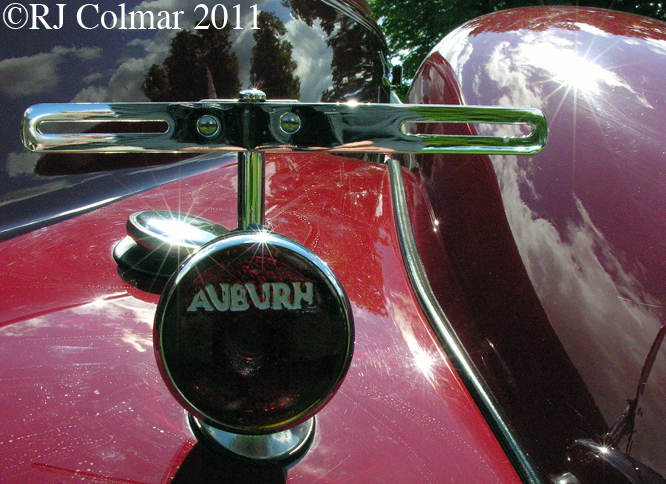
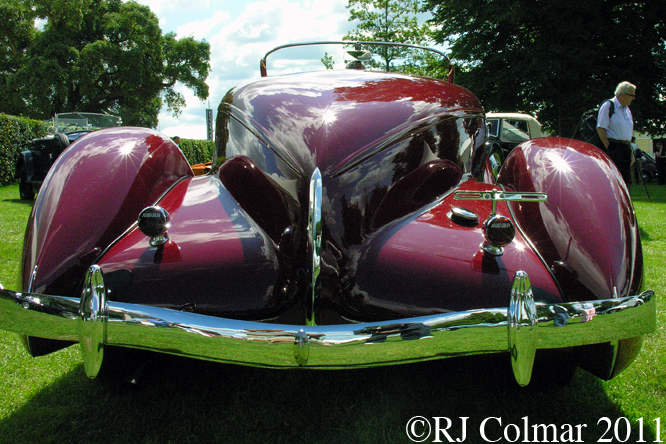
Restyled by Gordon Beuhrig, of a model originally designed by Alan Leamy, the Speedster is one of the all time most memorable elegant designs from nose to boat tail.

Auburn 851 SC, Goodwood Revival

The 8 indicating 8 cylinders was dropped from the model name to become ‘851’ which was available with a normally aspirated straight 8 Lycoming motor or a 150 hp supercharged one.

Auburn 851 SC, Goodwood Revival

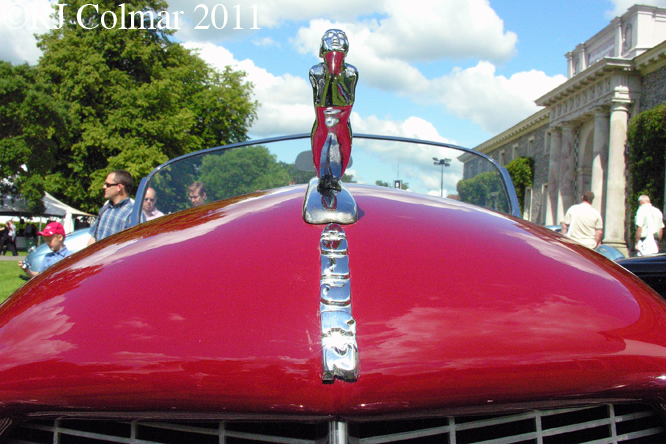
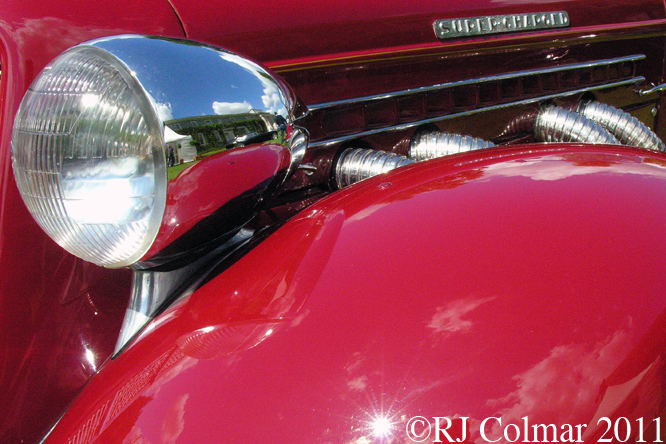
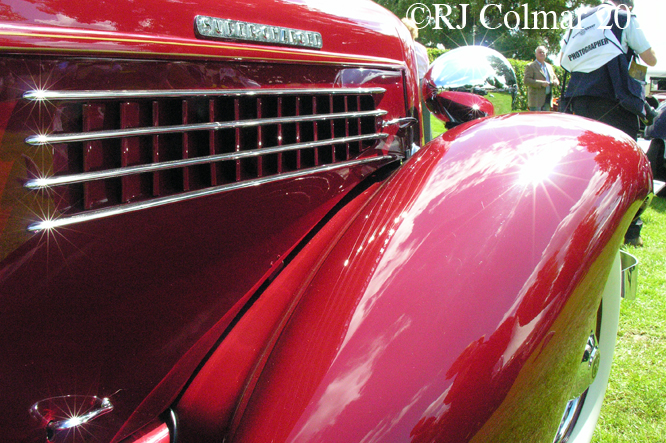
The casual observer looking at the front of an Auburn was never left in any doubt about the Supercharged version of the “851” chrome headers of the SC were matched by tasteful text on the bonnet / hood which shouted out top of the range model …

Auburn 851 SC, Goodwood Revival

even on the intake side of the motor !

Auburn 851 SC, Goodwood Revival

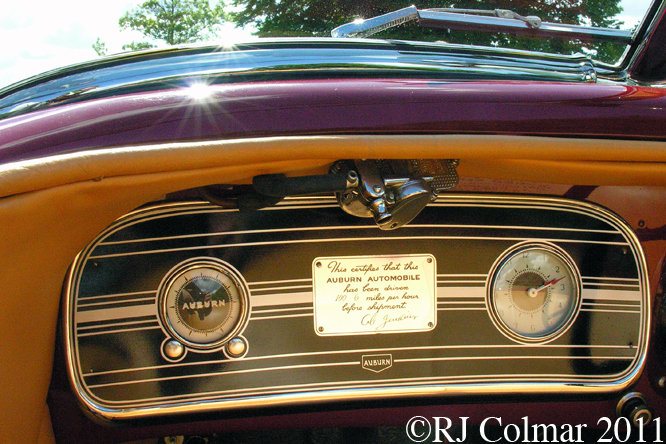
Fabled speed merchant Ab Jenkins took a stock 851 SC Speedster and ran it for 12 hours at an average speed of 100 mph soon after the model launched on January 1st 1935. Ab Jenkins was then employed to test each 851 SC Speedster to over 100 mph before shipment, the plaque on this one shows Ab tested the car to 100.6 mph.

Auburn 851 SC, Goodwood Revival

Around 5000 normally aspirated and supercharged version of the ‘851’ were sold in 1935, but the following year sales of the same model rebadged ‘852’ tanked leading EL Cord to wind up production at the 40 year old Auburn company for good.

Auburn 851 SC, Goodwood Revival

This particular car was purchased by Eduardo Montinola as a courting gift for Philippine model Susan Magalona who married Eduardo’s rival Carlos Ledesma a sugar baron in what was described as the marriage of the year, in the Philippines, with gifts that included a truck full of peanuts ! The Marriage was loveless and annulled and Susan subsequently married millionaire diplomat by the name of Federico Elizalde.

Thanks for joining me on this ‘Unlucky In Love’ edition of ‘Gettin’ a li’l psycho on tyres’ I hope you will join me again tomorrow. Don’t forget to come back now !
Share

Abbotts Body – Ford Zephyr 6 Farnham

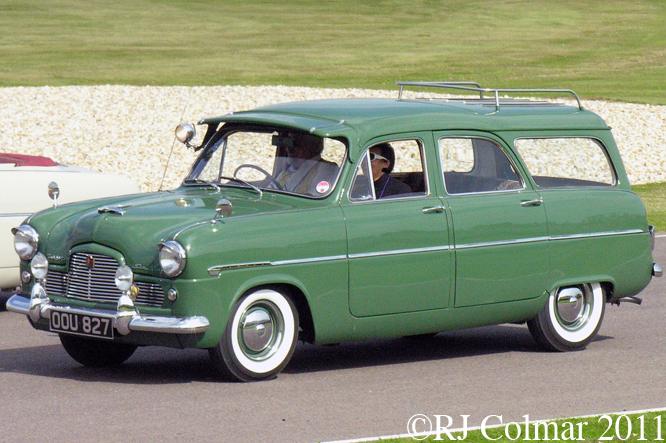
Last week I had a look at the remains of the 1953 Ford Zephyr 6 that won the 1953 Monte Carlo Rally, today’s car is a 1957 Zephyr 6 with estate / station wagon coach work by Abbots of Farnham, seen here at the Goodwood Revival.

Ford Zephyr 6 Farnham, Goodwood Revival

Between 1951 and 1956 148,629 Zephyr 6 saloon /sedan models were built along with 4048 convertibles with body work made by Carbodies these days called London Taxis International a company best known for making most of London’s black cabs.

To satisfy the demand for Zephyr 6 customers wanting an estate or station wagon Ford did a deal with Abbots of Farnham who converted saloons supplied by Ford into estates which were sold as Farnhams.

It is not known how many Zephyr 6 Farnhams were built but production at the Abbotts works was sufficient for Bristol to move the relatively low volume production of the 405 drop head bodies from Abbotts to Tickfords in Newport Pagnell.

Thanks for joining me on this Farnham edition of ‘Gettin’ a li’l psycho on tyres’ I hope you will join me again tomorrow. Don’t forget to come back now !
Share

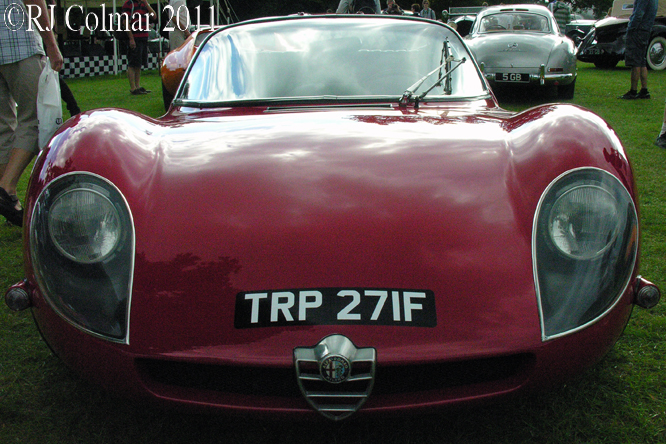
Molto Bello – ALFA Romeo 33 Stradale

In 1967 ALFA Romeo developed the T33 ‘Periscope’ for racing in the 2 litre / 122 cui sports car category, while the V8 engine designed by Orazio Satta and Giuseppe Bosso was extremely powerful the cars were badly prepared and lethal suffering many reliability issues, though one did win an insignificant hill climb in Belgium on it’s debut and another won an equally unimportant sports car race at Vallengua.

ALFA Romeo 33 Stradale, Goodwood FoS

Despite the lack of any significant international success and the deaths of Jean Rolland and Leo Cella in testing accidents ALFA Romeo decided to defray the costs of their competition efforts by building a road car based on the T33.

ALFA Romeo 33 Stradale, Goodwood FoS

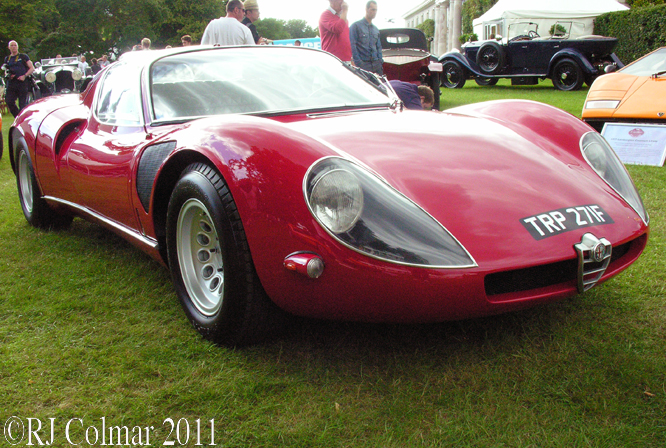
The resulting Tipo 33 Stradale road car with a wheel base 6 inches longer than the racer is one of the most alluring vehicles ever seen, featuring unusual dihedral opening butterfly doors.

ALFA Romeo 33 Stradale, Goodwood FoS

The racing pedigree of the 33 Stradale is patently obvious in every every sinuous detail and the car has the performance to match the looks, from test the car reaches 60 mph in 5.5 seconds when required and a top speed of 160 mph should be possible.

ALFA Romeo 33 Stradale, Goodwood FoS

All of this technology came with a $17,000 price tag making the 33 Stradale the most expensive car on the market in 1968. Only 18 of these cars were built along with the one off 33.2, Iguana, Carabo and Navajo concept cars.

Thanks for joining me on the lawn at Goodwood House, I hope you will join me again tomorrow. Don’t forget to come back now !
Share