Tag Archives: of

Wobbly Web Wheels – Lotus 12

Despite only being fitted with mock up engine and all new rear transaxle made of wood the Lotus 12 with a chassis made of Reynolds 531 tubing looked sensational to the select members of the press lucky enough to it in the stable block at the back of a hotel in Hornsey in October 1956.
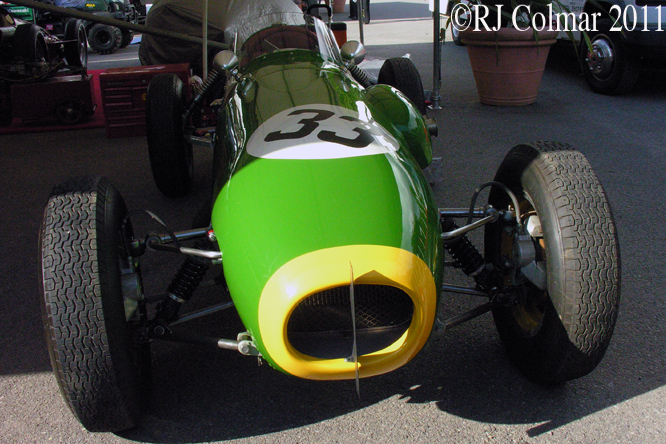
Lotus 12

Lotus 12, Goodwood Festival of Speed, June 2011

The space frame chassis had independent wishbone suspension on the front and was to be powered by a 4 cylinder Coventry Climax motor built to meet the then second tier Formula 2 regulations. The gearbox mounted to the rear transaxle was to feature a sequential shift as used on motor cycles.
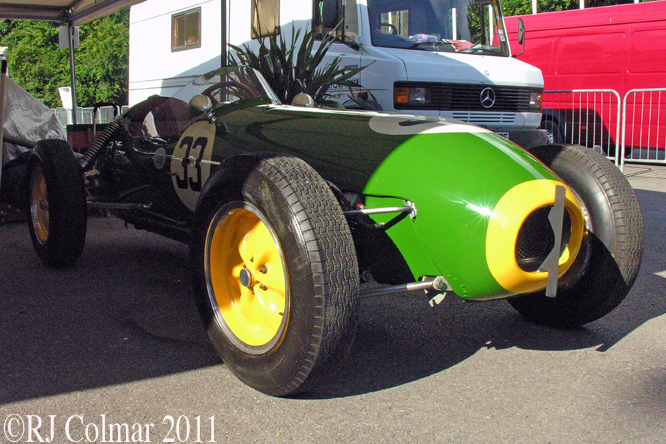
Lotus 12

Lotus 12, Goodwood Festival of Speed, June 2011

Typical of designer Colin Chapmans maxim to add lightness the magnesium ‘wobbly web’ wheels, inspired by a design Colin had seen on a US military aircraft, were fitted with six wheel nuts instead of the more common central knock off nut because Formula 2 races did not, as a general rule, require pit stops to change tyres and the six small wheel nuts weighed less than the one knock off nut.
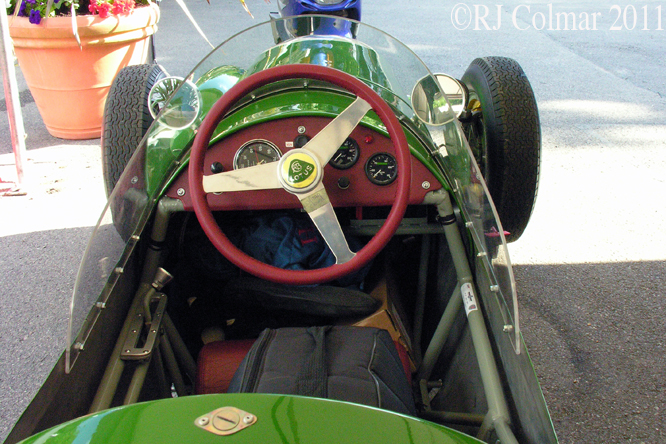
Lotus 12

Lotus 12, Goodwood Festival of Speed, 2011

Colin Chapmans first foray into open wheel racing under his own Lotus banner while innovative was not as successful in 1957 as had been the Vanwall for which Colin had designed the chassis, but this did not prevent him from fitting the 12 with an oversize version of the Formula 2 Coventry Climax engine and running two examples at the Monaco Grand Prix in 1958 for Graham Hill and a second F2 spec car for Cliff Allinson to mark Lotus first entry into the top Formula One tier of the sport.
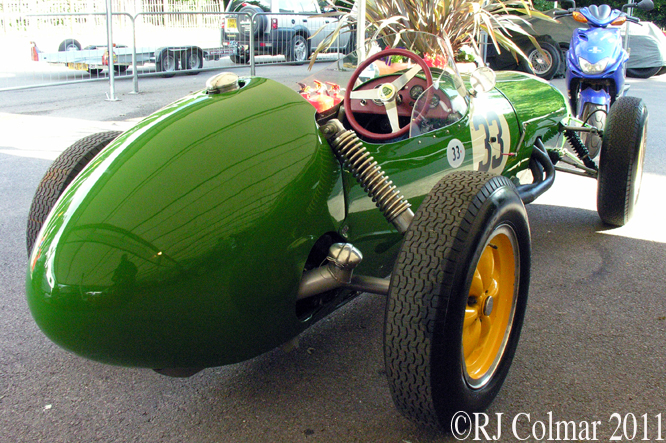
Lotus 12

Lotus 12, Goodwood Festival of Speed, 2011

The first two Lotus 12’s featured de Dion suspension but Chapman refined his design by fitting his own version of the Macpherson struts fitted with universal joints that became known as the Chapman strut, a system also used on the Lotus Elise. In Formula One races the Lotus 12 scored some promising sixth place finishies and a remarkable 4th place in Belgium but the most important Colin Chapman was now playing on the big stage where he would leave an indelible mark right up until his untimely demise im 1982.

Thanks for joining me on this Wobbly Web edition of ‘Gettin’ a li’l psycho on tyres’ I hope you will join me again tomorrow when we will be looking at a big cat. Don’t forget to come back now !

Share

A Clockwork Orange – Adams Probe 16

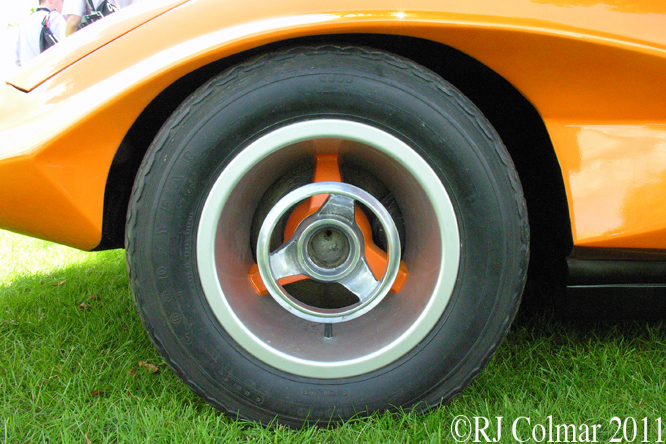
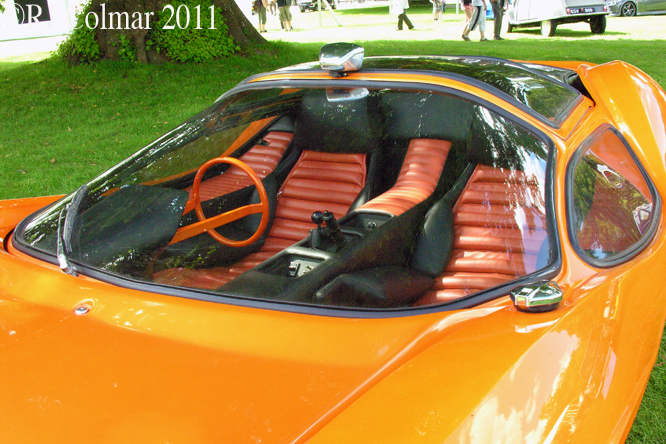
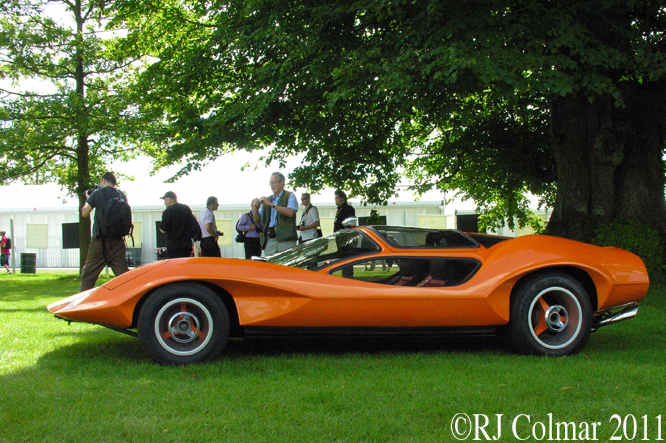
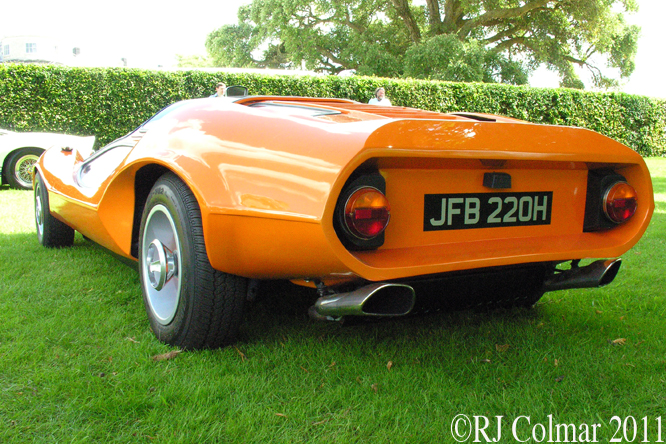
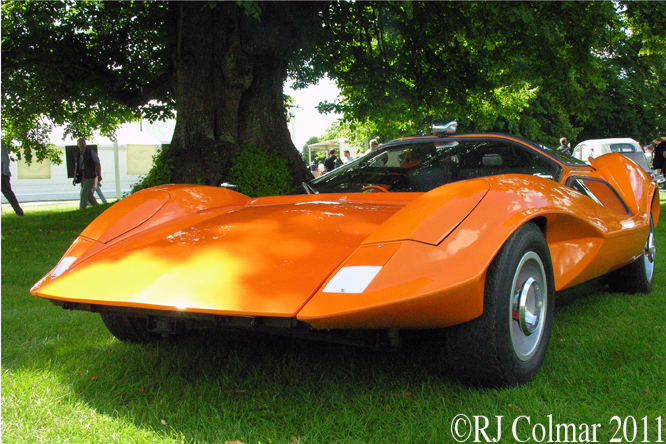
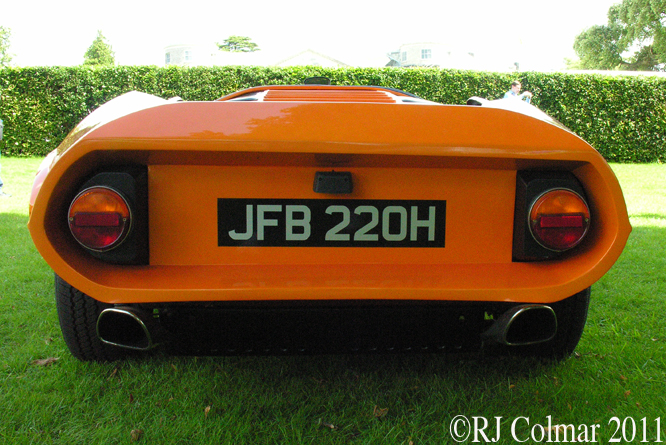
For anyone, like me, who was a kid during the fierce competition to conquer space through the 1960’s part of the vision for the future included mandatory white jump suits, jet packs and incredibly cool cars like the Adams Probe 16 seen here at the Goodwood Festival of Speed earlier this year.

Adams Probe 16, Goodwood Festival of Speed

This design came about as a result of an investigation into the extremes of styling by Dennis and Peter Adams who are credited as having introducing a number of modifications to the Marcos GT which became the Marcos Fastback GT.

Adams Probe 16, Goodwood Festival of Speed

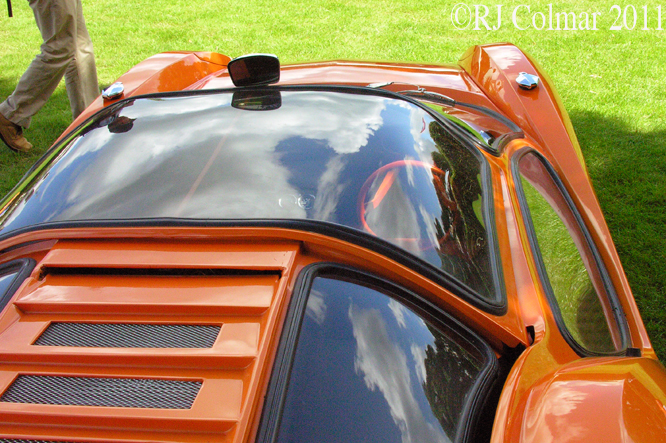
With a roof line at just 34″ above the ground, that is a full 6″ shorter than the Le Mans winning Ford GT 40 which took it’s name from it’s 40″ height, access to the Probe 16 is effected through a slide back glass roof panel.

Adams Probe 16, Goodwood Festival of Speed

It would appear that the three Probe 16’s were manufactured at the the old Marcos factory at Bradford on Avon in Wiltshire, power came from a mid mounted 4 cylinder motor sourced from, an at the time very common, front wheel drive Austin 1800.

Adams Probe 16, Goodwood Festival of Speed

Winning the award for the best British Styling Exercise at the London Motor Show in 1969 did not raise the public profile of this vehicle enough for it to go into volume production. Though four similar Probe 2001’s were manufactured by the Probe Motor Company and WT Nugent Engineering between 1970 and 1972. Up to 48 further vehicles which used some of the Probe 16 body moulds are thought to have been built under the Centaur brand.

Adams Probe 16, Goodwood Festival of Speed

Of the three original Probe 16’s one went to Wichita Lineman singer song writer Jim Webb, by way of complete contrast another Probe 16 went to Sunshine Of Your Love singer song writer Jack Bruce. Jack passed his Probe 16 on to Mountain drummer on the Nantucket Sleigh Ride Cody Laing.

Adams Probe 16, Goodwood Festival of Speed

However AB/4 seen here is arguably the most famous of the trio of Probe 16’s having played the role of Durango 95 in the Stanley Kubric ultra violence shock flic A Clockwork Orange. After its flirtation with the silver screen AB/4 spent many years in the Pollock Auto Showcase.

Adams Probe 16, Goodwood Festival of Speed

AB/4 still painted it’s original yellow, was repatriated in 1987 and featured in the pseudo comedy television series Top Gear at the beginning of the century.

More detailed information about all of the Probe 16 related cars can be found on the probe2001.com website, on the linked page some photos of AB/4 can be seen of the car being driven around Brands Hatch. Thanks to The Nostalgia Forum reader MCS the driver of the car at Brands Hatch has been identified as most likely being Ray Allen who immortalised his place in the annals of motor racing history for winning the worlds very first Formula Ford race.

My thanks to MCS and everyone else who contributed to the Adams Probe 16 thread at The Nostalgia Forum.

Thanks for joining me on this A Clockwork Orange edition of ‘Gettin’ a li’l psycho on tyres’, I hope you will join me again tomorrow. Don’t forget to come back now !
Share

For A Few £’s More – Jensen S-V8

After the owner of WJ Smiths & Sons a body works passed away in 1934 two employees, the brothers Richard and Alan Jensen bought the assets and founded Jensen as a coachbuilding firm. Building customised bodies for proprietary chassis supplied by Morris, Singer, Standard and Wolseley. One of their early commissions was for a car based on a Ford V8 for Hollywood legend Clark Gable, this highly acclaimed car facilitated a deal with Ford to produce a limited edition of Jensen Fords.

Jensen S-V8, Goodwood Festival of Speed

The following year Jensen launched the Jensen S type also powered by a Ford V8. Jensen diversified into light commercial vehicles marketed under the JNSN brand and during the war were engaged to make tank turrets and specialised vehicles, ambulances and fire engines.

Jensen S-V8, Goodwood Festival of Speed

After the 2nd World War Jensen produced the Jen Tug light truck for hauling trailers around goods yards and won a number of contracts to produce bodies for among others the military all wheel drive Austin Gipsy, the Austin A40 Sports, Austin-Healey 100, Volvo P1800 and Sunbeam Tiger.

Jensen S-V8, Goodwood Festival of Speed

Concurrently Jensen built an Austin parts bin based Interceptor, and fibreglass bodied 541 Coupé. Perhaps their best known model is the Chrysler powered Interceptor introduced in 1966 with a steel body designed by Carrozzeria Touring and built by Vignale.

Jensen S-V8, Goodwood Festival of Speed

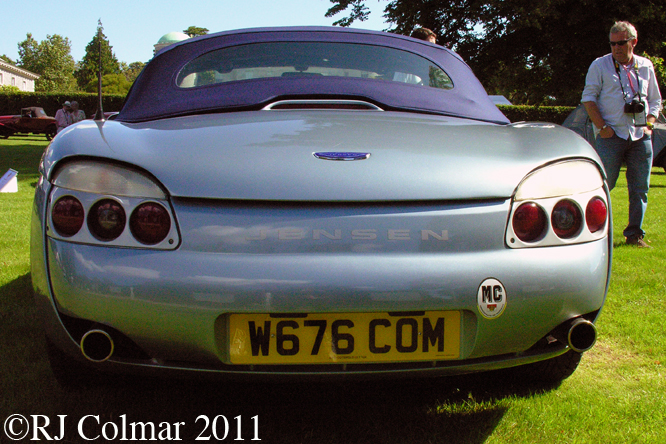
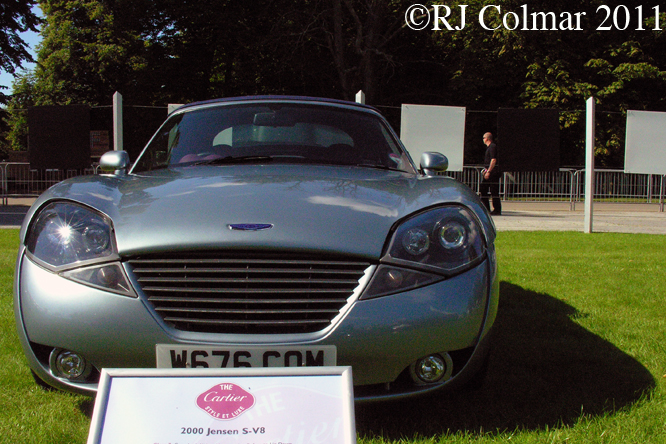
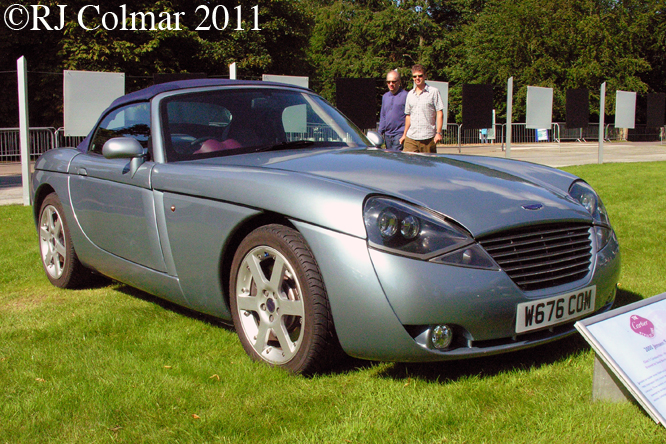
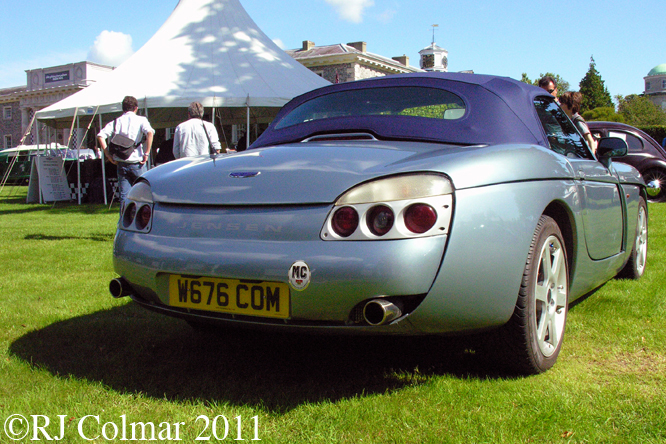
The Interceptor remained in production until the company folded in 1976, several attempts were made to revive production one resulting in 11 MK4 Interceptors being built. In 1998 the Ford Mustang Cobra V8 powered aluminium bodied Jensen S-V8, harking back to the 50’s and 60’s 541 and CV8 models was shown to the public and 300 orders were taken to build the car at a new £9 million facility at Speke in Liverpool.

Jensen S-V8, Goodwood Festival of Speed

Unfortunately quality problems including the manufacture of the aluminium body panels slowed the expected production rate and only 20 vehicles were produced, including the one seen here at Goodwood Festival of Speed, before the company again went under in 2002. The Oselli company purchased a licence to complete a further 12 cars, all with heavier easier to manufacture steel bodies, and retained the parts from a further 6 vehicles for spares.

Since production of the 20 original £40,000 cars has ceased at an average unit cost to investors of £450,000 it has been claimed that Jensen went under for the want of just £500,000 to see them through.

Thanks for joining me on this underfunded edition of ‘Gettin’ a lil’ psycho on tyres’ I hope you will join me again tomorrow. Don’t forget to come back now !
Share

Woodland For The Tenacious – Spyker Silvestris V8 Prototype

If innovation were enough to guarantee success everybody would know the name Spyker and quite a few of us would probably be driving one, given that in 1903 Spyker launched a 60 hp racer that was the first motor car with a six cylinder engine, four wheel drive AND four wheel brakes.

Spyker, Goodwood FoS

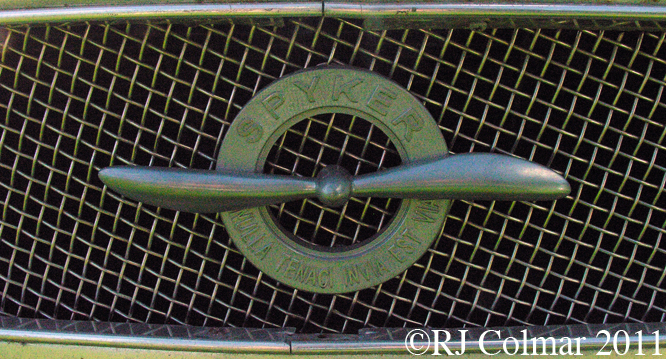
The company motto “Nulla tenaci invia est via” translates as “For the tenacious, no road is impassable”, to which might be added “even if the way is blocked for 70 years”, for despite building the royal horse drawn ‘Golden’ carriage for the Dutch royal family in 1898, which is still in use today and introducing 6 cylinder powered vehicles, four wheel drive and four wheel braking systems, Spyker went under in 1929.

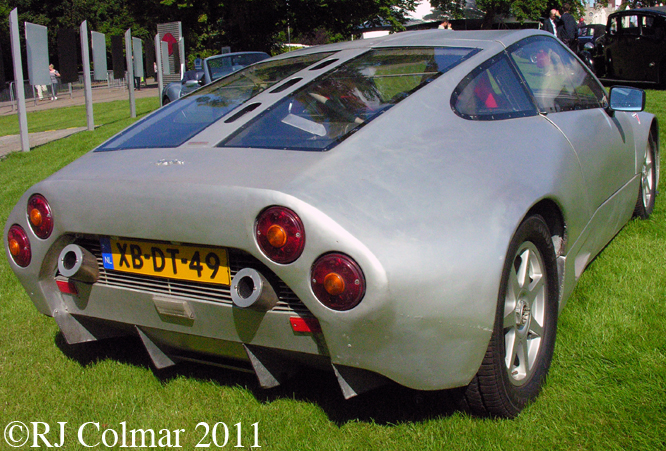
Spyker Silvestris, Goodwood FoS

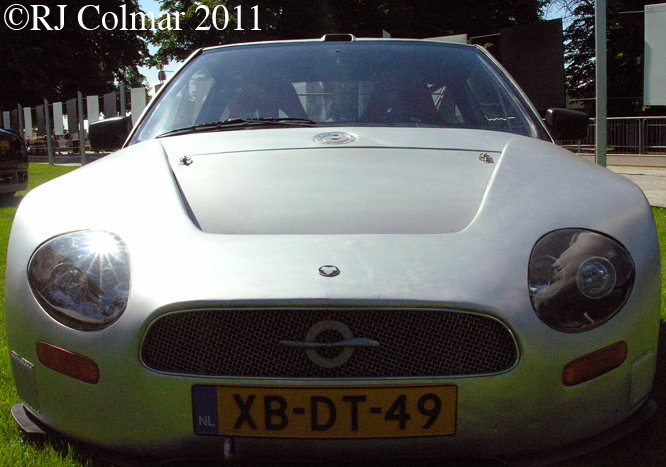
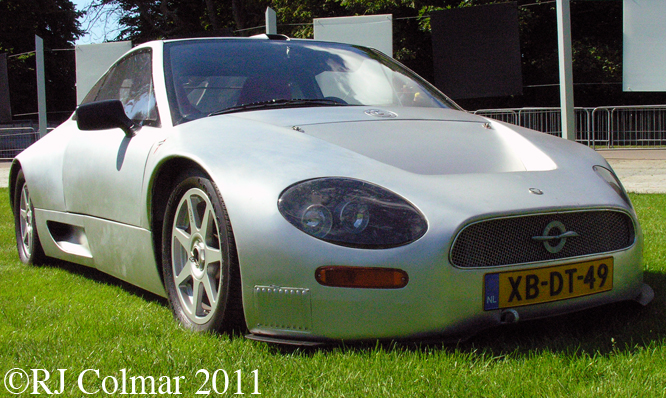
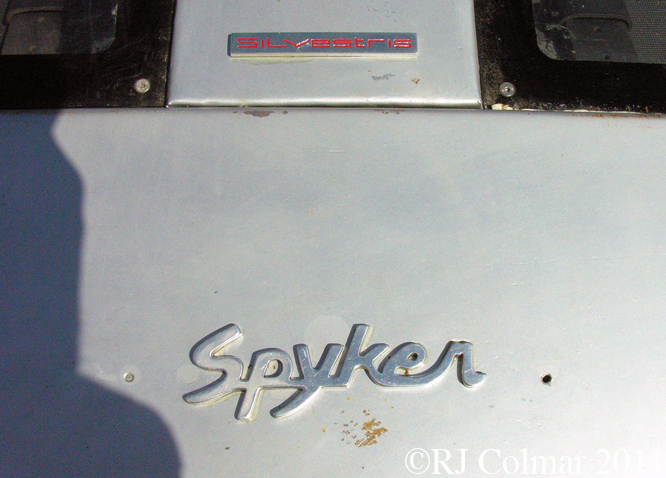
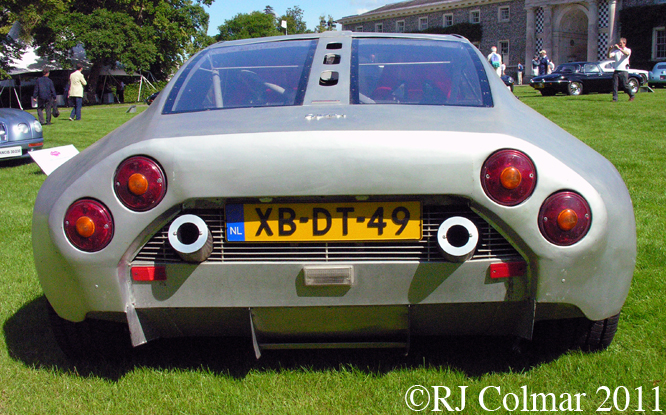
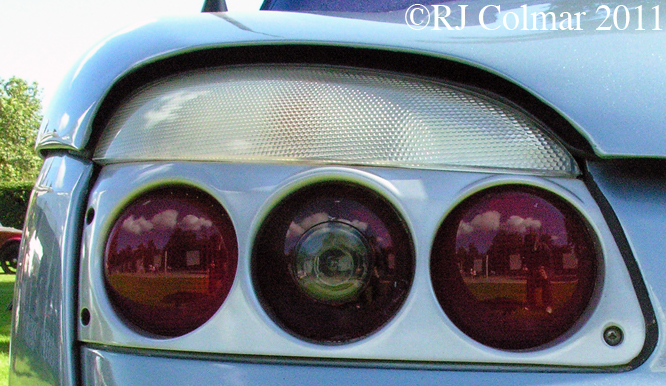
Between 1990 and 1996 Maarten de Bruijn hand built the Silvestris (translation ‘Woodland’) V8, seen here at Goodwood, Festival of Speed, with which he and Victor Muller would revive the Spyker brand.

Spyker Silvestris, Goodwood FoS

Many of the design features of the Spyker C8 model which went into production in 2000 can be seen in the Silvestre which has smaller overall dimensions than the production C8.

Spyker Silvestris, Goodwood FoS

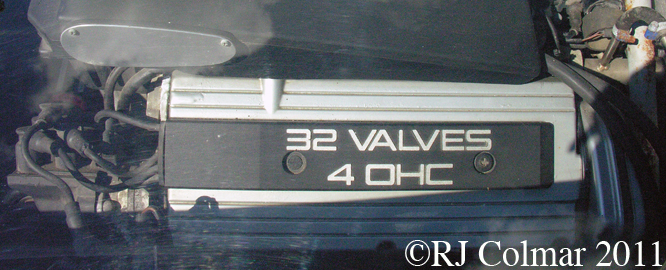
Power for the prototype Spyker came from a 265 hp quad cam (dohc) Audi V8 attached to a similarly sourced gearbox.

Spyker Silvestris, Goodwood FoS

The Silvestris weighing just 960 kgs 2,116 lbs is thought to be capable of 0 – 62 mph in 4.5 secs.

Spyker Silvestris, Goodwood FoS

Builder Maarten de Bruijn still owns the Silvestris which won it’s class in the Cartier Concours at Goodwood this year.

Spyker Silvestris, Goodwood FoS

In 2005 Maarten left Spyker to start a new venture Silvestris Aquamotive which builds aluminium space frame speed boats.

Thanks for joining me on today’s Woodland edition of ‘Gettin’ a lil’ psycho on tyres’ I hope you will join me again tomorrow. Don’t forget to come back now !
Share

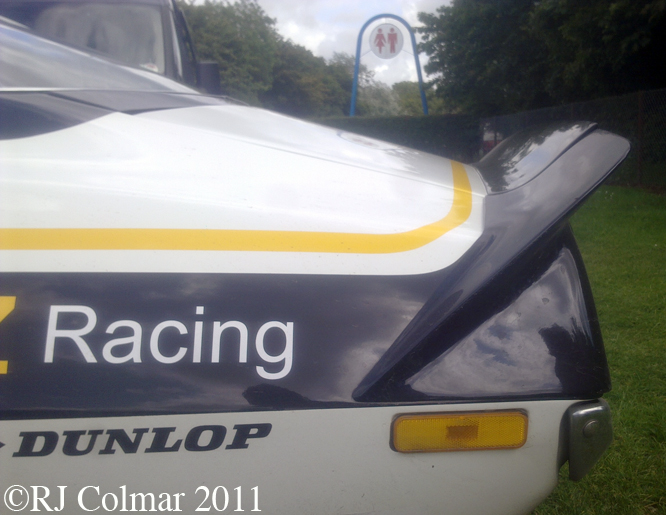
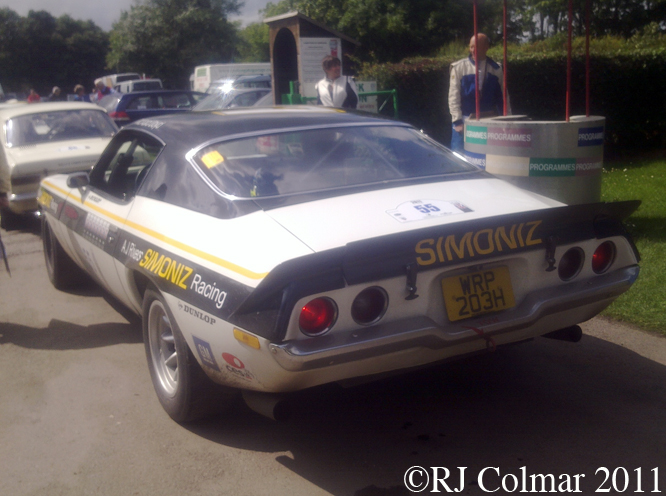
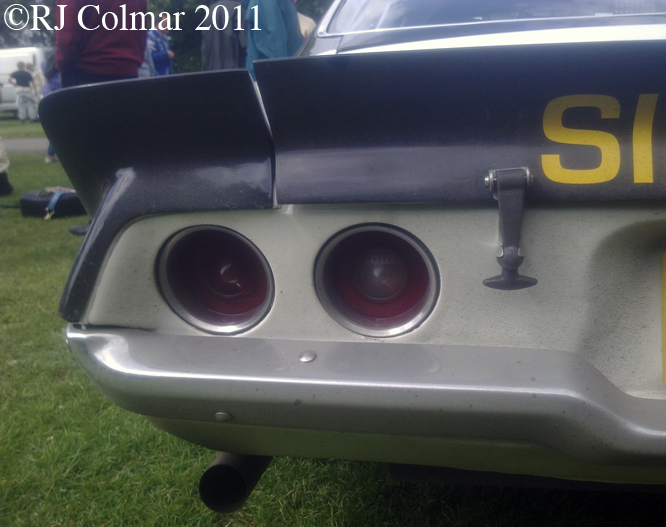
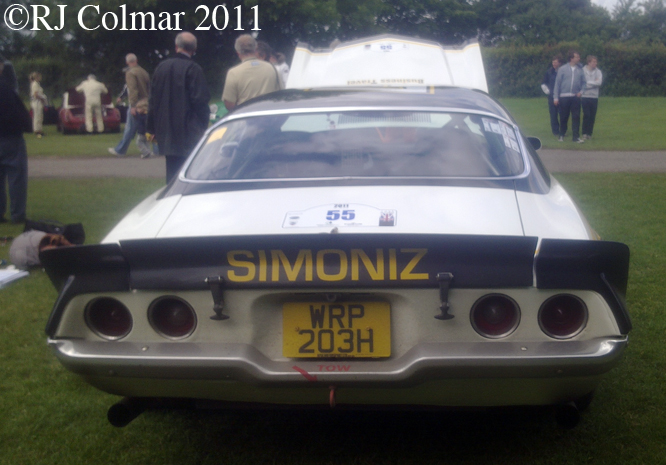
The Super Hugger – AJ Rivers Simoniz Chevrolet Camaro Z28 Replica

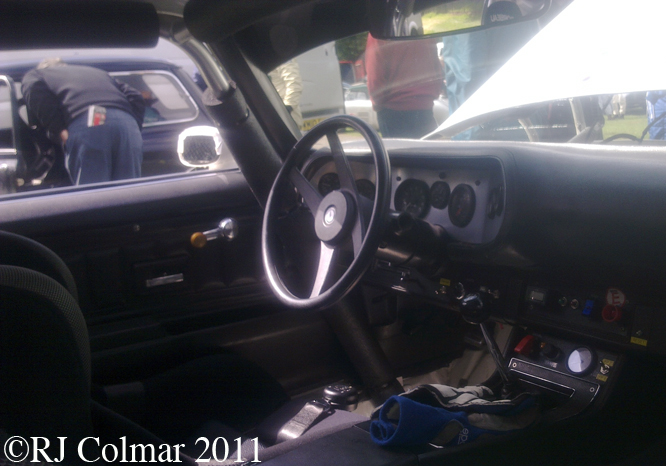
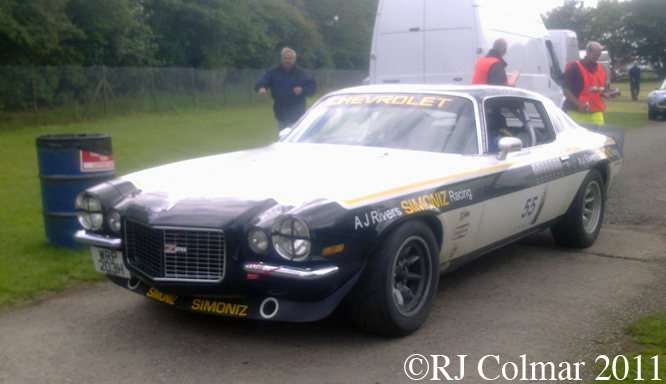
Chevrolet Camaro Z28, Castle Combe TB

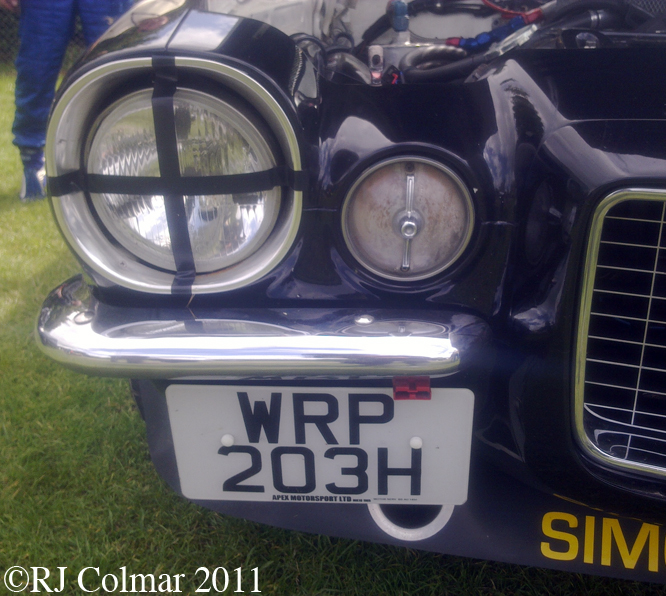
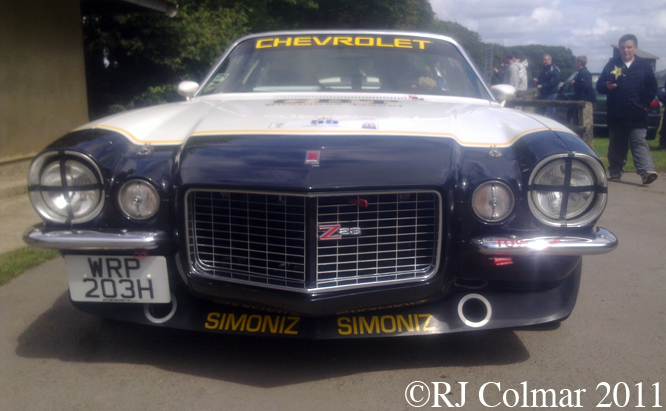
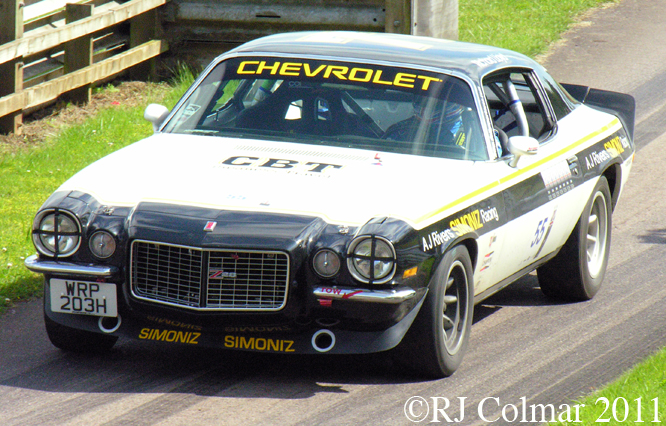
While I was whizzing up to Castle Combe in the teaming rain a couple of weeks ago, I went flying past a rumbling cloud of spray that turned out to be this Chevrolet Camaro like the one once owned by former saloon car driver and race team owner Richard Lloyd.

Chevrolet Camaro Z28, Castle Combe TB

It turns out the wide tyres were having trouble cutting through the water lying on the motorway and the Chevy was aquaplaning at speeds far lower than those I was travelling at in my borrowed Kia Picante with skinny tyres.

Chevrolet Camaro Z28, Castle Combe TB

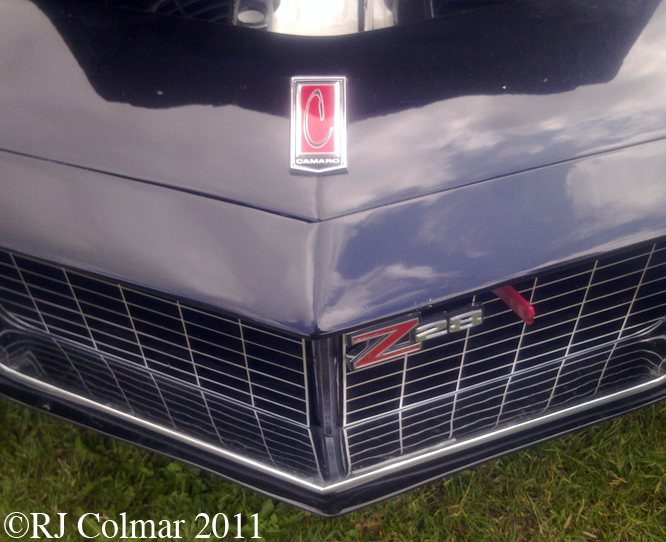
This is an early second generation 1970 Camaro,

Chevrolet Camaro Z28, Castle Combe TB

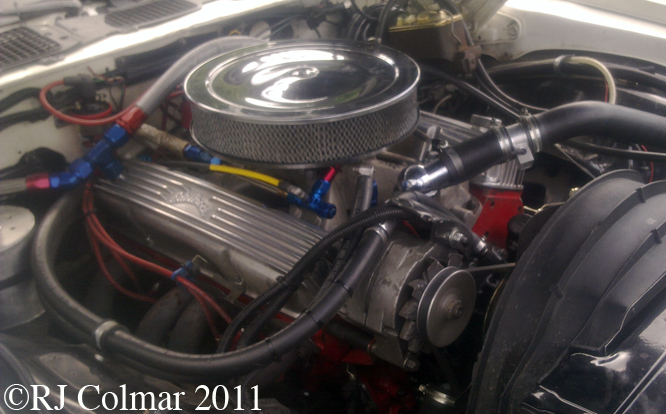
fitted with a 5700cc / 350 cui V8 rated at 360 hp as part of the

Chevrolet Camaro Z28, Castle Combe TB

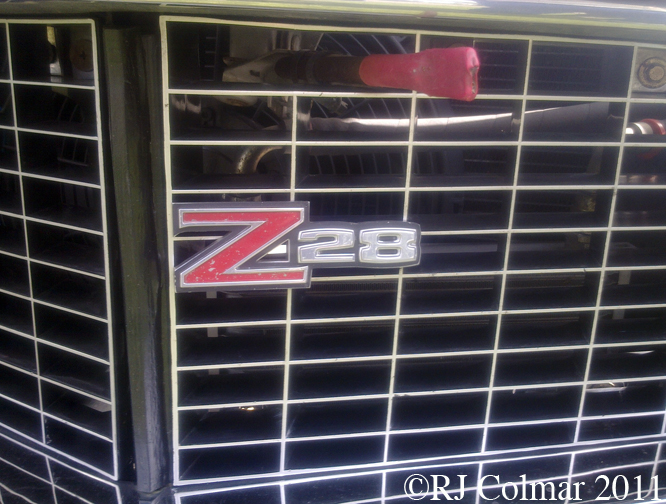
Z28 performance package, a peak in the story of muscle car performance which with the onset of the 1973 fuel crisis would never be matched in the remainder of the 20th century.

Chevrolet Camaro Z28, Castle Combe TB

The Chevrolet Camaro Z28 had a successful career in British Saloon Car racing, Frank Gardner used one to win the 1973 British Saloon car championship outright.

Chevrolet Camaro Z28, Castle Combe TB

For 1974 the British Saloon Car Championship was open to vehicles in a much lower state of tune known as Group 1 regulations and several Camaro’s and one Plymouth Barracuda fought for top class honours, some of the Chevy’s including one run by Richard Lloyd, if I remember correctly, ran with either a 7 litre / 427 cui or a 7.4 litre 451 cui motor.

Chevrolet Camaro Z28, Castle Combe TB

Back in 1973 while Richard was still running his car with a 5.7 litre / 350 cui motor he was scheduled to run in an event called the Avon Tour of Britain, that went round the entire country taking in races at many of the best circuits, rally stages and even a drag strip.

Chevrolet Camaro Z28, Castle Combe TB

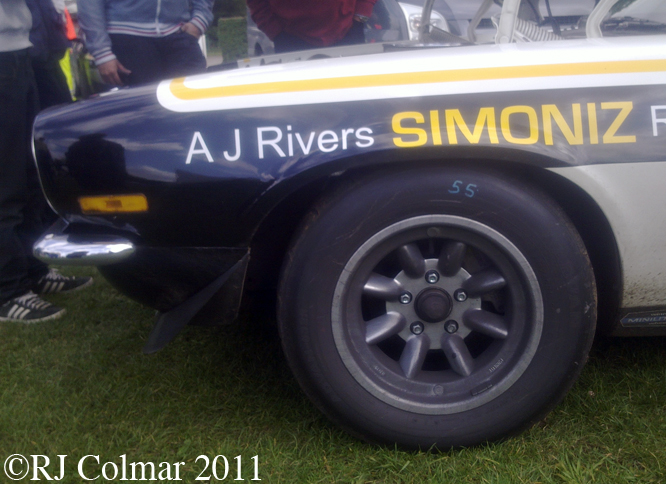
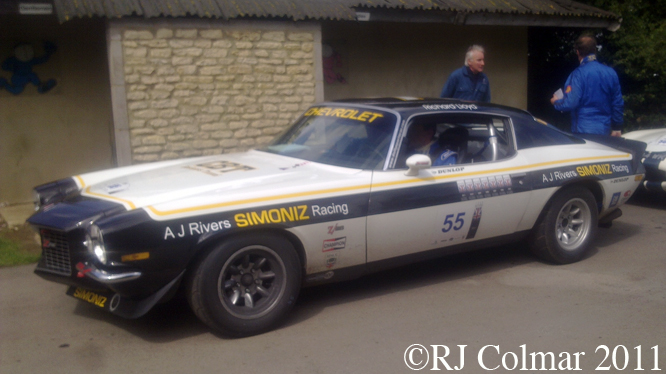
Richard fell ill prior to the event so he drafted in his team mate from the Spa 24 hours, up and coming British Grand Prix driver, James Hunt into the Simoniz Camaro at the last minute, James promptly ended up walking away with the victors trophy.

Chevrolet Camaro Z28, Castle Combe TB

The car seen here is a replica of Richard’s AJ Rivers entered car that was built up for the 2005 Tour Britannia a mini Avon Tour of Britain for mostly historic vehicles.

Chevrolet Camaro Z28, Castle Combe TB

Richard and his former entrant Alan Rivers competed in the Tour Britania from 2005 – 2007, but in 2008 Richard lost his life in a tragic plane crash that claimed the lives of several other well known figures from British Motorsport.

Chevrolet Camaro Z28, Castle Combe TB

In memory of his friend Alan Rivers used the car one last time in the 2008 Tour Britania, before it was acquired by Stuart Scott and Steve Wood.

Chevrolet Camaro Z28, Castle Combe TB

Stuart and Steve have entered this vehicle in every Tour Britannia since,

Chevrolet Camaro Z28, Castle Combe TB

clocking class wins in 2010 and 2011.

Chevrolet Camaro Z28, Castle Combe TB

Stuart hopes to take the Camaro to the Historic Festival at Lime Rock CT in September.

Thanks for joining me onto day’s Z28 edition of ‘Gettin’ a lil psycho on tyres’, I hope you’ll join me again tomorrow when I’ll be going Dutch. Don’t forget to come back now !
Share

F.A.Turbo Express – Joest Porsche 962 C #962-011

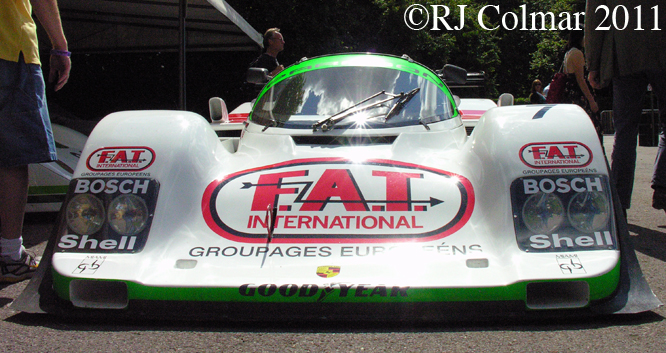
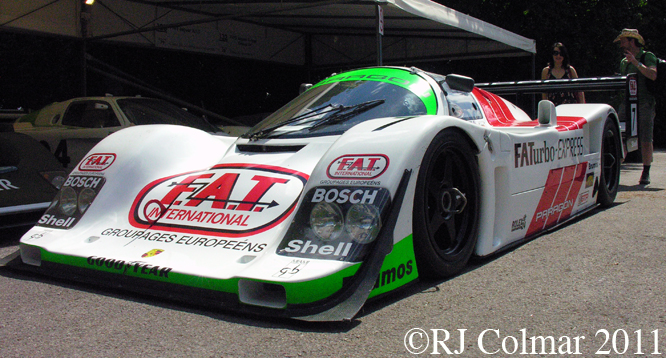
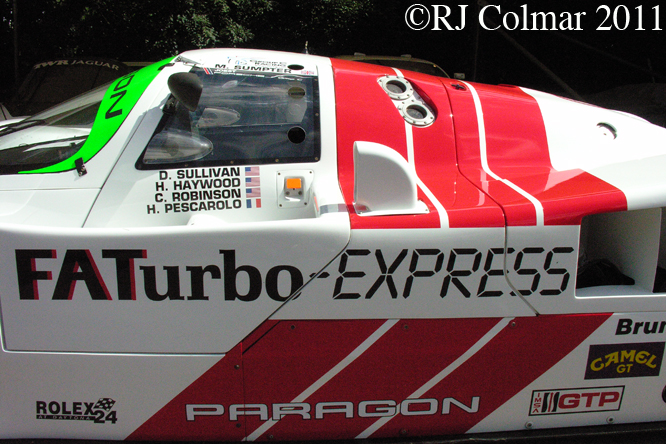
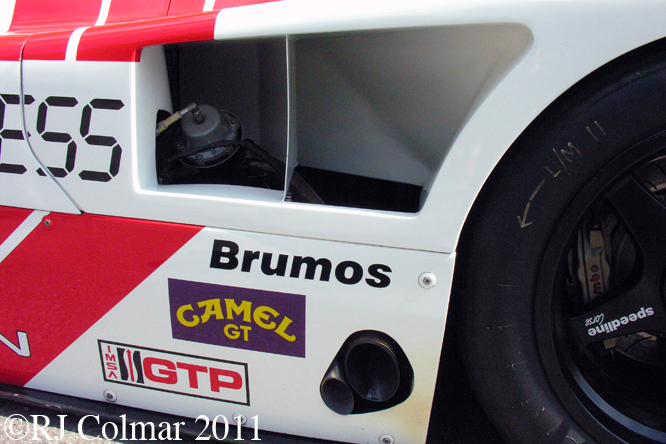
Following on from yesterdays Lancia LC2 blog today I am looking at a FATurbo Express sponsored Porsche 962 C that used to be run in Group C races by the Joest Team in the second of a series of three blogs on Group C cars.

Joest Porsche 962 C - Goodwood FoS

The Porsche 962 was born out of the Porsche 956 programme in 1985, the principle difference between the two models is that the drivers feet are behind the front axle line in the 962 which affords the driver better protection in the event of a frontal accident.

Joest Porsche 962 C - Goodwood FoS

The 962 was built to compete with twin turbo motors in the World Prototype Sportscar Championship and with single turbo motors in the IMSA GTP series. 962’s are known to have won 82 races of at least 250 races that they competed in. Although the Porsche factory raced the 962 it increasingly left it’s customers to represent the marque from 1987 on, apart from the riveting 1988 Le Mans 24 hour race.

Joest Porsche 962 C - Goodwood FoS

Former Porsche driver Reinhold Joest’s team continued to receive support from the Porsche factory at Le Mans in 1989 and 1990. Indeed to emphasise the level of backing Joest received from Porsche the last 6, of 16, works built Porsche 962 chassis all went to the Joest Team.

Joest Porsche 962 C - Goodwood FoS

This chassis is thought to be #962-011 the last of the 956/962 series to win a World Prototype Sports Car championship event at Dijon, France driven by Bob Wollek and Frank Jelinski in May 1989. Chassis #962-011 is thought to have won at least 8 other races the last of which was an open formula Interserie event at Zeltweg, Austria in the hands of Manuel Reuter in October 1993.

Joest Porsche 962 C - Goodwood FoS

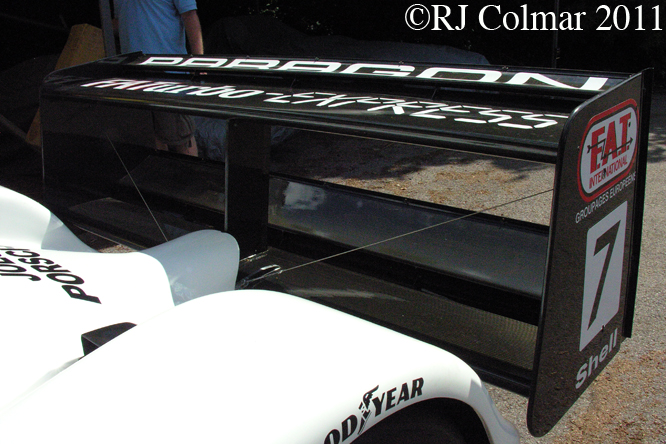
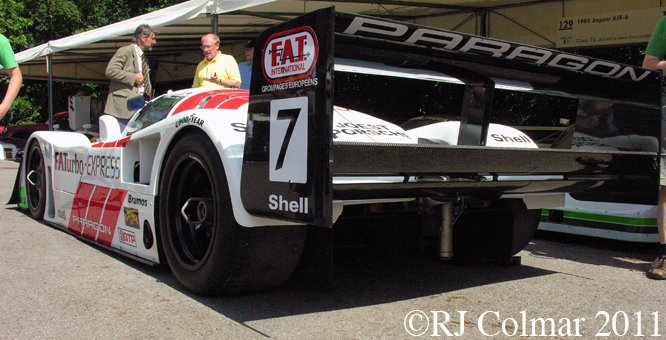
The #962-011 chassis raced with FAT International colours, thought to be a european logisitics company, in the 1993 Daytona 24 hours with Chip Robinson (USA)/Hurley Haywood (USA)/Henri Pescarolo (F)/Danny Sullivan (USA) listed as drivers but running with the #6. At it’s next race the Sebring 12 Hours the car appeared as a back up car for ‘John Winter’ and Manuel Reuter carrying the #7 T.

Joest Porsche 962 C - Goodwood FoS

This car is not carrying standard Porsche 962 bodywork, as Jaguar and later Mercedes became increasingly competitive in Group C events Porsche customers undertook their own aerodynamic development programme’s to stay competitive.

Joest Porsche 962 C - Goodwood FoS

Joest Racing won the Le Mans 24 hours twice with private Porsche 956 entries in 1984 and 1985 and then twice again with Porsche powered TWR chassis in 1996 and 1997. Today Joest is known as a crack Audi team having clocked up 5 wins at Le Mans running the Audi R8 (3 wins), R10TDI, and this year the R18TDI.

This car has taken part in the Group C race at the Silverstone Classic before, I have not seen an entry list for this years event, but I am hoping Paragon who run the car will be able to bring it along again this year.

My thanks to Thundersport and Porsche expert Mike at The Nostalgia Forum who confirmed the chassis number.

Hope you have enjoyed today’s FAT Turbo Express edition of ‘Gettin’ a little psycho on tyres’ and that you will join me again tomorrow for a look under the skin of a Japanese Group C car built in England. Don’t forget to come back now !
Share

Fit for a Sheikh – Bristol 405 Drophead

The Bristol 405 introduced in 1953 was the first Bristol to dispense with the BMW inspired grill and is unusual for having a single fog light placed in the middle.

There were two versions of the 405 this Drophead of which 43 were built and an imposing 4 door saloon of which 308 were built until production ended in 1958.

A 1971 cc / 120 cui straight six motor was exclusively tuned to produce 125 hp for the Drophead, the Saloon was given a 105 hp version of this engine. One blogger described the sound of this motor as being like ‘a squadron of Lancasters‘.

The first two 405 D’s were strictly two seaters with fully retracting roofs, however all bar one of the remaining Dropheads had roofs that rested on the rear body work making space for rear seats. A one off 405 D was produced for Sheikh Yusuf Mohammed Al Tawil and shipped to Jeddah in 1955 painted gold with silver wheels, white wall tyres and an electro-hydraulic operated roof.

The slick action four speed gearbox of all 405’s were fitted with a Laycock overdrive for high speed cruising operated by the large toggle switch to the right of the steering wheel.

The first 18 to 20 Bristol 405 Drophead chassis were sent to Abbots of Farnham where the bodywork was crafted. Abbots landed a large contract to build estate / station wagon version of the Ford Zephyr and Zodiac models and the remaining 405 D’s were sent to Tickford, in Newport Pagnell, for body work to be built according to the Abbots of Farnham drawings. I am not sufficiently drenched in Bristol Cars lore to tell you where this particular body was crafted… yet.

I suspect I could get used to fresh air motoring in a vehicle fit for a Sheik that sounds like a ‘squadron of Lancasters‘ how about you ?

Thanks to the owner of this fabulous vehicle for bringing it to the Sunday Service at the BMW Plant a couple of weeks ago.

Hope you have enjoyed today’s fit for a Sheikh edition of ‘Gettin’ a lil’ psycho on tyres and that you will join me again tomorrow for a Swedish tease. Don’t forget to come back now !
Share