Tag Archives: Porsche

Thirty Years Ago #2 – Group C

On May the 16th 1982 I awoke excitied to catch my first glimpse of a new endurance sports car series at Silverstone. The Group C series was born out of the GT Prototype class which had hitherto run only at Le Mans for closed cockpit 2 seat cars with just safety features, some overall limits on dimensions and a limited amount of fuel for rules. Here is a summary of a few Group C cars I saw that day.
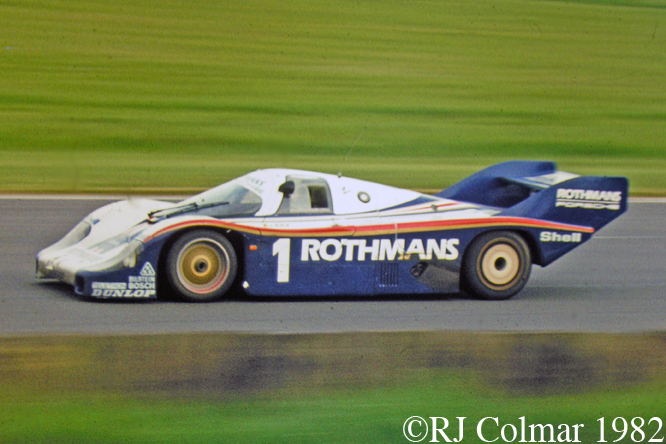
Porsche 956, Silverstone

It took three years for the series to really take off with support from three manufacturers but for that first year in 1982 Porsche were prepared in particularly overkill fashion with the Porsche 956 which used a 650 hp twin turbo charged 2.65 litre / 156 cui flat 6 motor that had originally been conceived for the banned 1980 Interscope Porsche Indy Car.

The motor was successfully tested in preparation for Group C in the back of two Porsche 936’s at Le Mans in 1981, Ickx and Bell scoring an emphatic win by 14 laps. Featuring an aluminium monocoque the 956 was designed to take full advantage of ‘ground effect’ aerodynamic technology that had been developing in Formula One since 1976.

Uniquely among the first generation of Group C cars the 956 had been tested in exactly the same way as all Porsche road car designs meaning it alone among it’s competitors could negotiate potted and cobbled streets with out any noticeable detriment to the integrity of the chassis or performance of the motor. Like the Porsche 935 and 936 models it replaced the 956 was utterly dominant in the first 3 years of Group C, sweeping aside a puny effort from Lancia who competed with the Ferrari powered Lancia LC 2 from 1983 to 1985, not having any real competition until the arrival of Jaguar in 1985. Quite simply the 956 nearly killed the series as in 1983 the first of 28 customer 956’s started to fill out the grid.

However Porsche did not have it quite their own way, in 1982, as Lancia sort to wrest the World Sports Car Drivers Championship from Porsche drivers by entering a couple of cars built to the old open top regulations, which had one year left to run, these open Group 6 cars did not need to adhere to the fuel consumption regulations of Group C. Lancia won three races outright including the Porsche 956’s debut race at Silverstone. However Lancia driver Ricardo Patrese was eight points short of winning the title which went to Jacky Ickx who shared the #1 956 seen at Silverstone above with Derek Bell. At Le Mans in 1982 the works Porsche team led by Ickx and Bell took 1,2,3 victory.

Chassis #001 driven here by Icks and Bell easily qualified on pole but constrained by the fuel allowance in the race meant they finished 3 laps behind the race winning Group 6 Lancia LC1. #001 was used on two further occasions, as a test car at Le Mans and in the 200 mile Norisring German Racing Championship (DRM) race which it won with Jochen Mass at the wheel, before it was retired.

In 1983 Ickx retained his World Endurance Drivers title, before handing it over to team mate Stefan Bellof in in 1984. Ickx retired from racing in 1986 after a fatal accident involving Bellof now driving for the private Brun Team at Spa in 1986.

Derek Bell shared the World Endurance Drivers title in 1986 and 1987 driving Porsche 962’s with team mate Hans-Joachim Stuck on both occasions.
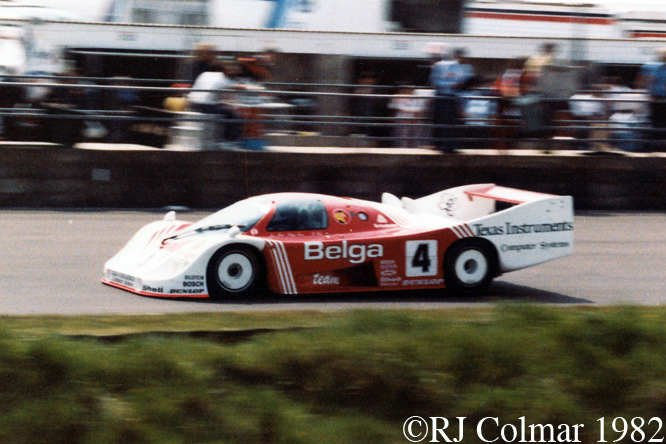
Porsche 936C, Silverstone

While Porsche customer teams like Joest and Kremer had to wait until 1983 before being able to purchase customer Porsche 956’s with which to compete in the new series, neither sat idle in 1982 both teams building Group C cars of their own devising using Porsche engines.

Of the two the Joest team car was the first to compete, built around a Joest built Porsche 936 chassis #JR005 with a smaller 2.1 litre / 128 cui twin turbo flat 6 motor. The 936C driven by Frenchman Bob Wollek, and the Belgian Martin brothers, Jean-Michell and Philippe, finished third on it’s debut at Silverstone and continued to be a top ten finisher in Group C events until the end of 1986 when it was effectively outlawed by new footwell regulations.

Joest would become the Porsche factories team of choice whenever the works team was not present at the track. Joest cars won Le Mans in the absence of the factory team in 1984 and 1985 with the same 956B chassis #117, one of the few chassis to win the 24 hour marathon twice. Joest repeated the feat in 1996/1997 winning with Le Mans with the same TWR/Porsche. Joest Racing then became with the über successful Audi and Bentley campaigns that have dominated Le Mans since the turn of the century.

Bob Wollek never won the Le Mans 24 hour race but he did win the Daytona 24 hour race four times. Three of them driving the 956 successor Porsche 962’s.
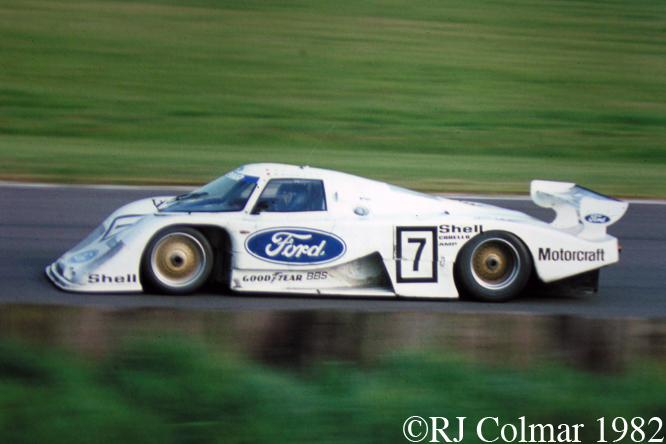
Ford C100, Silverstone

Fords involvement in the series proved a little half hearted despite the involvement of Len Terry in the design and a Cosworth V8 DFL motor based on the 3 litre / 183 cui DFV but now stretched to 4 litres / 244 cui. The larger motors sounded frankly awful and suffered from excessive vibrations that hindered reliability.

Manfred Winklehock and Klaus Ludwig, who is seen at the wheel here, qualified 4th but could only finish eighth in the race. The C100’s only wins were recorded by Klaus Ludwig in the German DRM championship and by the end of 1982 Ford called a halt to it’s Group C programme.

Peer Motorsport acquired the two time DRM winning C100 chassis #04 for 1983, it was mostly raced in the British Thundersport Series where it recorded one further victory in the hands of Irishman David Kennedy and Scotsman Jim Crawford at Donington Park.

Klaus Ludwig would go on to join the Joest Team and won the 1984 and 1985 Le Mans driving the 956B chassis 117 sharing the driving with Henri Pescarolo in 1984 and Paolo Barilla and ‘John Winter’ in 1985.

WM P82, Silverstone

WM was founded by two Peugeot design studio employees in 1969 Gerard Welter and Michel Meunier in 1969 who in their spare time built two cool coupe’s the first WM P69 was based on a Peugeot 204 Cabriolet platform and the second WM P70 was a mid engined design.

Their next effort the WM P76 was built to the Le Mans GTP regulations first announced in 1976 was powered by a Peugeot/Renault/Volvo (PRV) V6 stock block. Over the next 13 years they built 7 distinct models adding twin turbo’s the PRV motors in 1977. In 1980 they scored a best 4th place and first in GTP at Le Mans.

The WM P82 took part in 5 Group C races, Roger Dorchy, Jean Daniel Raulet and Michel Pignard driven car is seen above on the WM teams second ever outing abroad, it qualified 39th and finished 11th. The WM teams best 1982 result was on it’s first trip abroad to Monza where it qualified 11th and came in 6th. The teams natural reliance on the PRV block was probably it’s down fall for all though eventually tuned to give over 900 hp in 1988 it was actually designed to initially produce 150 to 200 hp.

Sensing that a win at Le Mans was not in their grasp by 1987 WM focused on becoming the first team to reach 400 km/h on the legendary 3.1 mile Mulsanne straight during the 24 hour race. With the engine producing 950 hp and all the cooling blanked off and special Michelin tyres the WM P88 of Roger Dorchy was timed at 405 km/h / 253 mph at 9pm in the evening of the 1988 race. This record will probably stand for all time given that in 1990 2 chicanes were added to the straight to slow the cars down. Rogers car unsurprisingly retired from the race with overheating issues.

WM made way for for an official Peugeot Works team in 1990, in 199O Gerard Welter took over the team completelu renaming it WR (Welter Racing), which scored a class win at Le Mans in 1993 and sensationally locked out the front row of the grid at Le Mans in 1995.
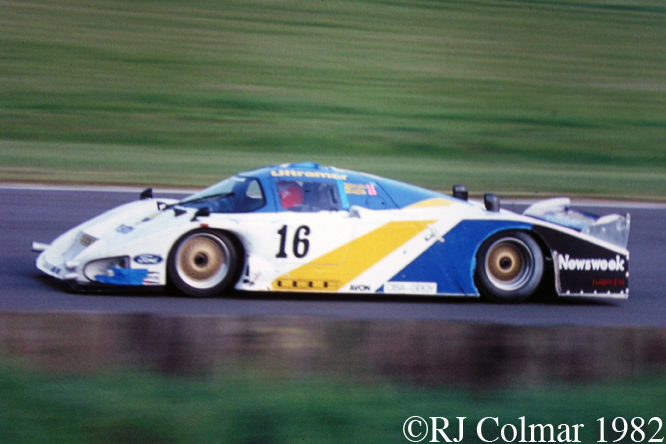
Lola T610, Silverstone

Lola’s involvement with Le Mans dates back to a contract with Ford to develop the fabled GT40, racing under it’s own name it has never won Le Mans. The T610 was powered by the same 4 litre / 244 cui Ford Cosworth DFL as the Ford C100, but proved even more unreliable, despite qualifying 8th at Silverstone, Guy Edwards and Rupert Keegan who is seen in the car here could manage only a 16th place finish.

The T610’s best result of the season was a 7th place finish at Brands Hatch. Lola would hook up with Nissan to produce several Group C Le Mans challengers at the end of the 1980’s including the outright qualifying lap record holding Nissan R90CK which held the record at 3m 27 secs from 1990 until 2008.

Guy Edwards would become a mover and shaker in Group C when he lent his considerable sponsorship finding talents towards the Jaguar Group C project run by Tom Walkinshaw Racing.
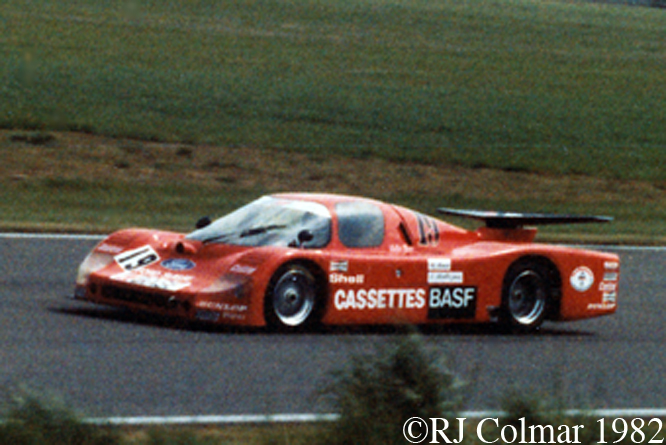
Sauber SHS C6, Silverstone

The Sauber SHS C6 was another Ford powered Group C contender and predictably unreliable Walter Brun and Seigfried Muller Jr qualified 12th and finished 13th after loosing the rear wing. The teams best result, a 4th place finish came during a DRM race at Hockenheim. The an SHS6 running in the privateer C2 class appeared in the Group series until 1986.

Peter Sauber hooked up with Mercedes Benz unofficially in 1986 and by 1987 started getting works support leading to a victory at Le Mans and the World Sportscar Championship in 1989. Sauber went on to become a Mercedes Powered Formula One constructor returning the famous manufacturer to the top tier of the sport in 1993 after a 38 year break.

In 1983 Walter Brun ended up taking over the GS Sport Company that had been operating in partnership with Sauber in 1982. His operation eventually became a Porsche customer team running 956’s and then the replacement 962’s with which Brun Motorsport won the 1986 World Sports Prototype Championship. By 1992 the team folded after a dabbling in the disastrous EuroBrun Formula One project and attempting to build his own Judd powered Le Mans challenger.
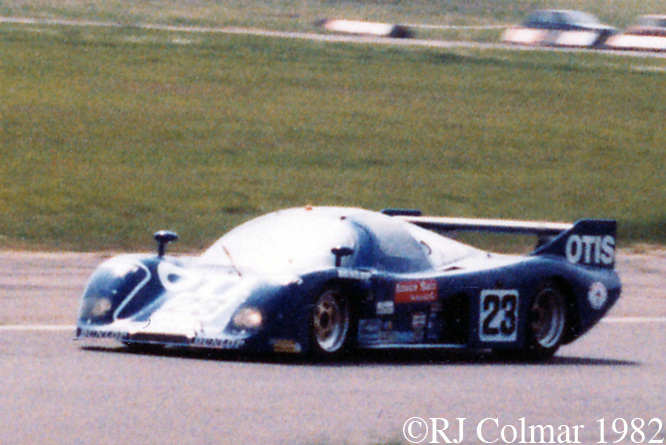
Rondeau M382, Silverstone

Le Mans based Group C team Rondeau like WM started out competing at the 24 hour classic in the GTP class in 1976 winning the GTP class in both 1976 and 1977 under the Inaltera name.

In 1978 the team which always used 3 litre 183 cui Ford Cosworth V8 motors now raced under the founder, Jean, Rondeau’s own name. Jean Rondeau with Bernard Darniche and Jacky Haran scored his second Le Mans GTP class victory with an M378 and in 1979 the team won the unlimited sports prototype class at Le Mans going one better in 1980 with and overall Le Mans victory for Jean Rondeau and Jean-Pierre Jaussaud.

Another Le Mans GTP class victory, 2nd overall, followed in 1981 for Haran, Phillipe Streif and Jean Louis Schlesser

Like Ford, Lola and Sauber, Rondeau plumped for the Cosworth DFL but somehow found some reliability where others had failed Pescarolo and Gorgio Francia indeed won the first ever Group C race, at Monza, with a Rondeau M382. Pescarolo and Gordon Spice seen above at Silverstone qualified 9th and finished 5th.

This same car won it’s class, 2nd overall, at the Nurburgring with Pescarolo and Rolf Stommelen at the wheel.
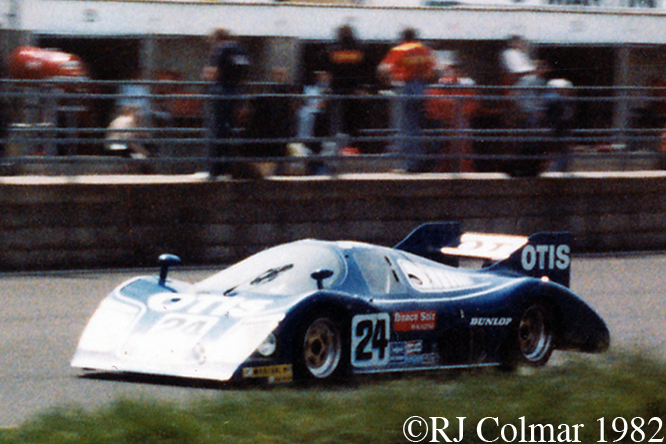
Rondeau M482, Silverstone

While the #23 M382 Rondeau was based on a design that could trace it’s origins back to the 1976 Inaltera the Rondeau team fielded a second design which should have taken advantage of the prevailing ground effect technology of the period unfortunately on it’s debut at Silverstone Jean Rondeau and Francois Migault could only qualify 27th and failded to finish after bodywork and suspension breakages. The car failed to appear at Le Mans and when it appeared in 1983 it was with heavily revised bodywork.

The Rondeau scored more points in Group C than any other team in 1982 but Porsche were allowed to have points accumulated by a car running in a lower GT class added to their points tally and were declared 1982 World Endurance Champions, Rondeau’s sponsor OTIS announced it’s immediate withdrawal from the team in disgust.

With no significant sponsorship Rondeau concentrated all of it’s efforts on Le Mans for 1983 all three DFL powered revised M482’s retired with motor related issues an only the Christian Bussi teams car recorded a finish, a lack luster 19th.

Rondeau’s team folded at the end of 1983 and Jean was killed by a train in a bizarre accident while following police car over a level crossing in 1985. Rondeau cars continued to appear in Group C races at Le Mans and elsewhere until 1987.
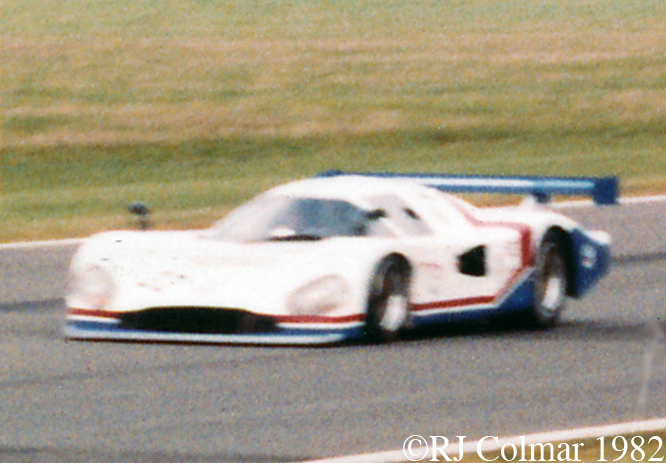
Nimrod NRA/C2, Silverstone

Finally while certainly not the last of the Group C cars that appeared at Silverstone in May 1982 the Nimrod NRA/C2 is notable because it featured an Aston Martin Tickford V8 motor, from the Vantage V8 model, which sounded fantastic in comparison with the Cosworth DFL V8 and the flat 6 Porsche. The private #32 Viscount Downe entry seen here driven by Ray Mallock and Mike Salamon qualified three places better than the works entry in 11th and finished 6th while the works car retired.

Through out 1982 the Viscount Downe entry out qualified the works entry usually by three places and manged a finish which the works entry never did. The Aston Martin Owners Club president Viscount Downe Team finishes secured a third place finish for Nimrod Aston Martin in the 1982 World Endurance Championship behind Porsche and Rondeau, with the more successful Lancia running in the old Group 6 class it was ineligible to score points in the manufacturers championship.

Both Nimrod teams continued into 1984 with the works team running AJ Foyt, Darrel Waltrip and Guillermo Maldonado in a Pepsi Challenger liveried example in the Daytona 24 Hours. However with ever more Porsche 956’s filling the grid and a distinct lack of reliability the works team folded in 1983 and the Viscount Downe team in 1984.

Ray Mallock would eventually run the Ecurie Ecosse team in the lower Group C2 class taking the class title in 1986 before overseeing the return, to Group C, of a fully works backed Aston Martin project in 1989. For 1990 Ray was involved with the Nissan R90CK project. His team has won numerous touring car titles with Vauxhall, Nissan and Chevrolet for whom he currently runs the successful works World Touring Car Championships cars.

Due to a concerted attempt to become an adult and various unavoidable associated commitments, weddings, graduation and such like it would be three years before I attended another Group C race, when I came back Group C was really taking off with Jaguar entering the fray and efforts from other teams like Toyota and Mercedes (Sauber) beginning to gather momentum. By the end of 1992 I had attended more than a dozen Group C races and seen some fantastic battles all of which will have to wait for future editions of GALPOT.

Thanks for joining me on this “Thirty Years Ago #2” edition of ‘Gettin’ a li’l psycho on tyres’ I hope you will join me again tomorrow when I’ll be looking at the Simply Italian parade at the National Museum as originally promised yesterday. Don’t forget to come back now !

Share

Never Seen It As Bad As This ! – Prescott Speed Hill Climb

Britain’s wettest drought in history continued apace this weekend, but I did not let that get in the way of attending 3 very different events in 3 days. I’ll not be blogging them in order for any particular reason but I’ll start with the last one, Prescott Speed Hillclimb which I attended yesterday afternoon, first and post blogs on the Bristol Italian Auto Moto Festival on Sunday and the Spring Performance Car Action Day at Castle Combe next Monday.

March 792, Prescott SHC

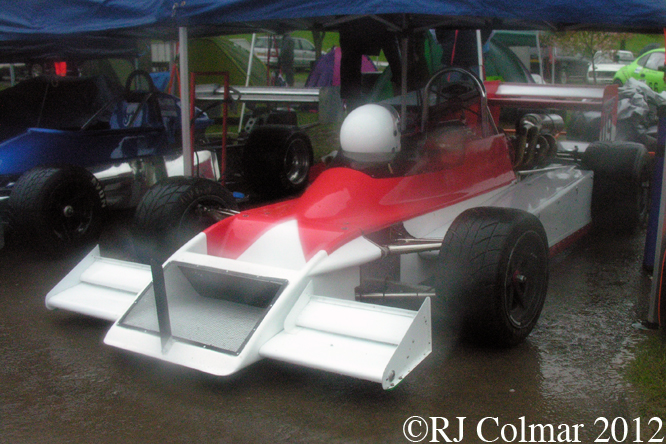
I got to Prescott yesterday afternoon just in time to have a quick £3.00 bacon sarnie and have a quick look around the paddock before making my way to the top of the hill. The last time I saw a March 792 sporting Philip Morris Marlboro colours for Swedish hot shot Eje Elgh, like the one above belonging to Stuart Ridge, was 25th March 1979 at Silverstone.

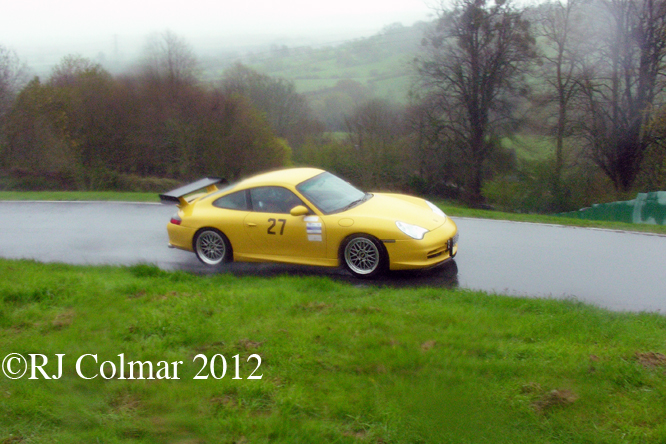
Porsche 996 GT3, Prescott SHC

The two days had much in common it was close to freezing at Silverstone and only 4º C yesterday, at both events it was absolutely tipping with rain but mercifully there are a few more trees at Prescott which gave a vestigal illusion of shelter from the strong Easterly winds. Above Robert Lancaster-Gaye above heads for a over 2000 cc / 122 cui Road Going class win in his Porsche 996 GT3.

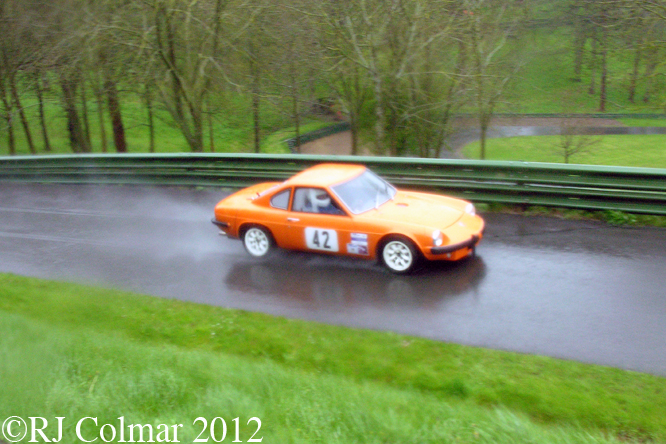
Ginetta G15, Prescott SHC

Before I left home I checked the weather and there were severe weather and flood warnings for the beautiful Gloucestershire countryside in which Prescott is located. Andrew Russell could not get below 60 seconds in the Modified Series Production class Hillman Imp powered Ginetta G15.

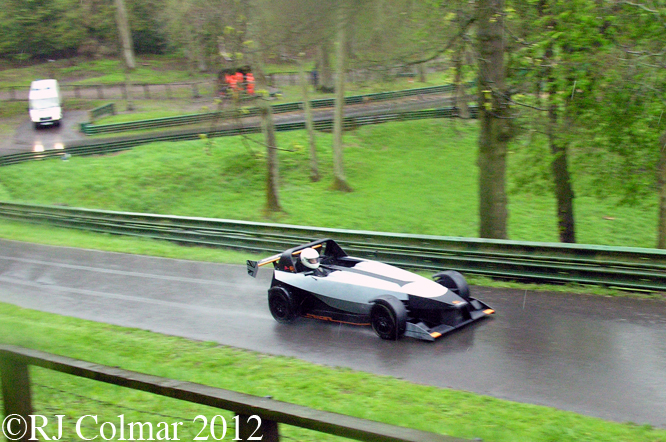
Westfield iRacer, Prescott SHC

With a 120 mph capability and 0-60 time of 5 seconds the Westfield iRacer is shockingly quick for a vehicle that is barely audible thanks to it’s two 100 hp electric motors which drive each rear wheel. The iRacer was being demonstrated in racing spec which has a 15 minute battery life. 2/3rds of the battery weight can be saved for hill climb events which, in the UK, rarely last more than a minute per run.

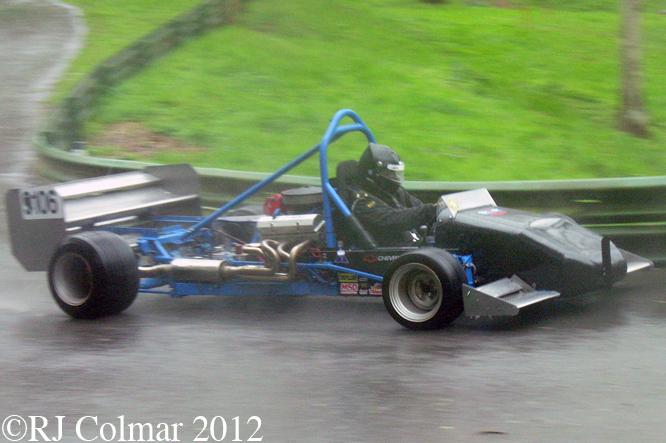
Chevrolet Special, Prescott SHC

Part of the attraction of going to Prescott was the promise of seeing some big brutal cars with plenty of horsepower, nothing quite prepared me for the two Chevrolet Specials and Jagernought Rover which were built for sand racing in the Channel Isles, thats Gurnsey, Jersey and Alderney in the English Channel. Scot Rayson’s Chevrolet Special above used to be Jaguar powered, it still has the Jaguar running gear but is now powered by a 6.3 litre 384 cui Chevy V8. Spare a thought for the Sand Racers who as I write this are headed back across the English Channel in significantly less than calm waters.

OMS 25, Prescott SHC

One reason today’s blog was posted a little late is that the intelweb will tell you the driver of the car above is Tricia Davis to add to the confusion the programme tells me that the car is a Reynard 913 which it most certainly is not. The programme tells me Tricia did not take part while a Terry Davis did but also in a Reynard. I believe most of the photo’s on the interweb showing this helmet and ascribing it to Tricia are incorrectly labeled and vice versa for Terry Davis. I further believe that Terry has acquired or at the very least borrowed an OMS 25 for the event. My ears were too wrapped up against the weather to discern if this information was disseminated over the Prescott tanoy. Please correct me below if I have that completely wrong !

DJ Firehawk, Prescott SHC

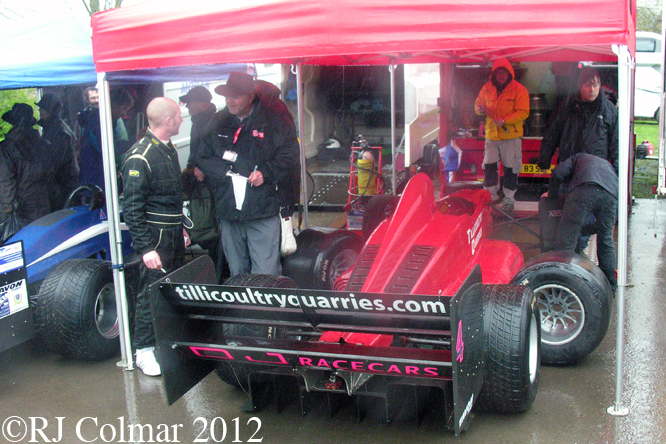
As I was walking down the hill during the event one marshal quipped that he had never seen the conditions so bad, fortunately this did not stop Wallace Menzies claiming a Race Cars over 2000 cc / 122 cui class victory in the #4 Cosworth powered Tillicoultry Quarries DJ Firestorm, that’s a Firestorm model manufactured by DJ Race Cars. To the left of the #4 DJ Firestorm Lee Adams can be seen telling a journalist….

GWR Raptor, Prescott SHC

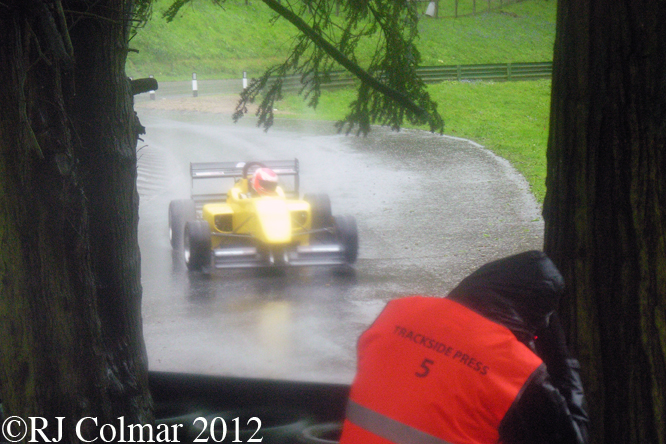
how he stormed up Prescott in 43.82 seconds to claim fastest time of the day (FTD) in his giant killing up to 1600 cc / 97.6 cui class GWR Raptor Extreme, seen commencing his final run above.

My thanks to the Prescott press office for a hot off the press copy of the unconfirmed results which not only allowed me to share the information here but also warmed my hands up nicely as I walked back to the car.

Thanks for joining me on this ‘Never Seen It As Bad As This !’ edition of ‘Gettin’ a li’l psycho on tyres’ I hope you will join me again tomorrow when I shall be looking at continuing the series of blogs on Colin Coppers specials looking at the Kayne Special III. Don’t forget to come back now !
Share

Firing Up 2012 – Race Retro

Thanks to my membership of the Bristol Pegasus Motor Club I enjoyed my second trip to Race Retro over the past weekend.

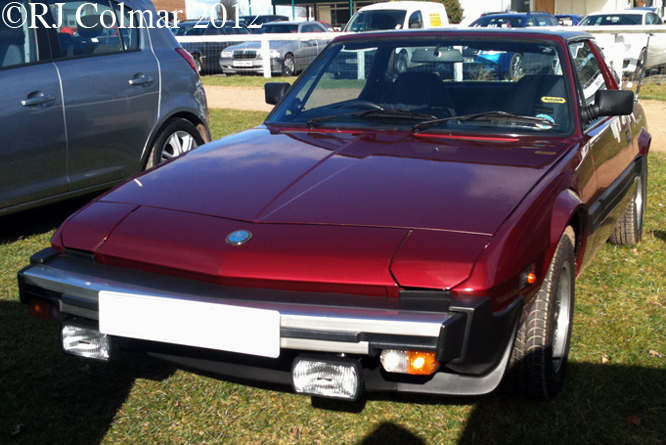
Bertone X1/9

Just like last year I had trouble getting out of the car park thanks to the fabulous collection of sports cars fellow enthusiasts had brought out for a spin in the glorious sunshine. This Bertone X1/9 particularly caught my eye, I spent many years lusting after an X1/9 when I left school. I eventually ended up with a slightly more practical , cheaper to insure FIAT 128, I’ll be taking a closer look at the X1/9 on Sunday.

Twini Cooper S, Race Retro

Silverstone Auctions have taken the place of H&H Auctions as Race Retro’s Auctioneer partners, among the unusual gems scheduled to go under the hammer was this Twini Austin Cooper S a replica of two experimental works cars originally built in 1963 that raced in the Targa Florio. This replica was built on a 1965 chassis with two Cooper S motors, gearboxes and disc brakes all round.

Chevrolet Can Am, Race Retro

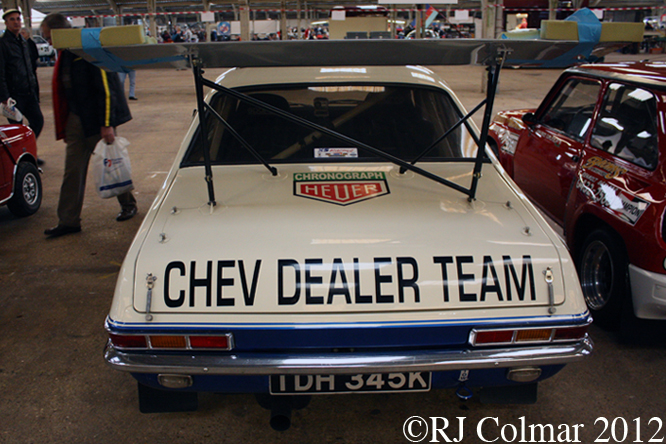
In the Rally shed it was nice to see the replica South African Chevrolet Firenza CanAm now fitted with a huge rear wing reminiscent of Formula 1 & Can Am cars in 1968 and as used in the original Chev Dealer Team car in 1974.

Nanette, Race Retro

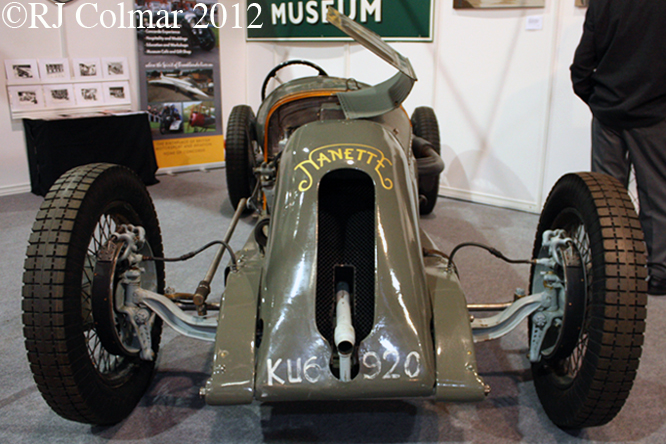
Nanette seen above on the Brooklands stand was a special built by Felix Scriven in 1925, it was originally fitted with an unreliable Sage motor, which contributed to this car originally being called, Mother Goose until a 4 cylinder Hooker motor that originated from the Marlborough Thomas special and which could be configured as either a 1.5 litre / 92 cui or 1.75 litre / 107 cue motor according to which of two crankshafts was used.

Porsche 956, Race Retro

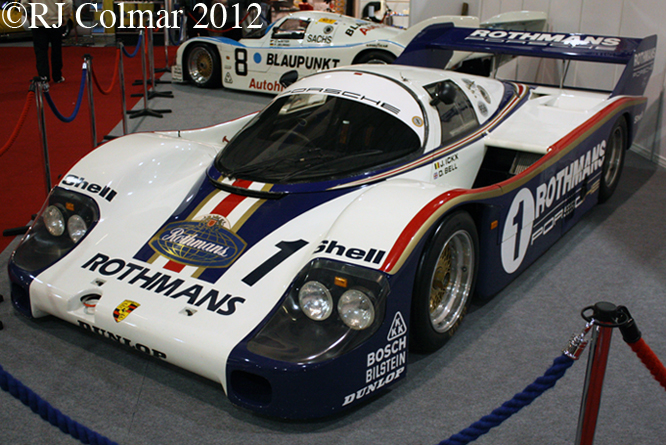
Among the anniversaries being celebrated at Race Retro was the 30th anniversary of the Porsche 956 which evolved into the 956B and 962 and 962 C series that dominated Le Mans, the Daytona 24 hours, Group C and IMSA from 1982 until 1987. The #1 above appears to be a 956 with distinctive 1982 paintwork while the #8 in the background carries the 1988 bodywork of the 962 C commonly carried by chassis #116.

Toleman TG 184, Race Retro

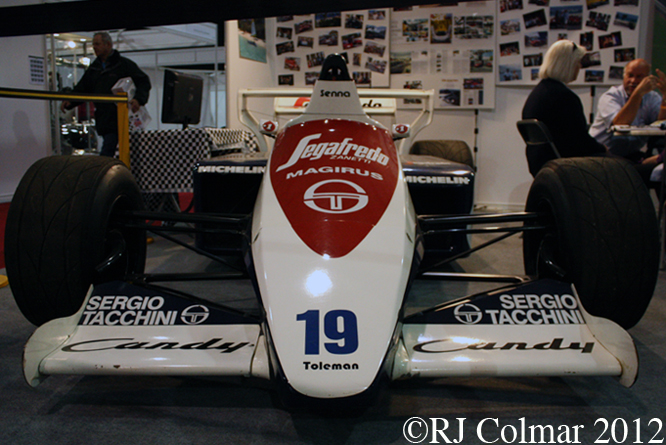
The multiple award winning success of “Senna” the documentary on the Brazilian Triple World Champion has focused interest in his cars, the Toleman TG184 was of the type that Senna drove once his team had secured a supply of Michelin tyres after the first two races of Senna’s 1984 rookie F1 season.

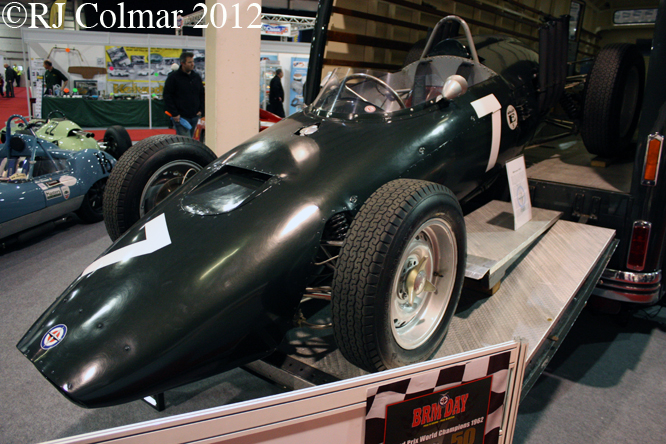
BRM P57, Race Retro

The town of Bourne in Lincolnshire will be celebrating the 50th anniversary of BRM’s World Championship year on October 7th. Graham won the championship driving a BRM P57 with a BRM V8 similar to the #7 in the photo above, though after all these years BRM are probably still at least as well remembered for building a supercharged 1.5 litre 92 cui V16 in 1949 and possibly the most complex racing motor of all time the 3 litre / 183 cui H16, which is said to make so much noise the first time it was opened up in anger every one in the pits at Riems dived for cover as it came down the start finish straight for the first time ! I’ve made it a mission to try and hear the H16 in action this year and hope to be at BRM Day at Bourne in October.

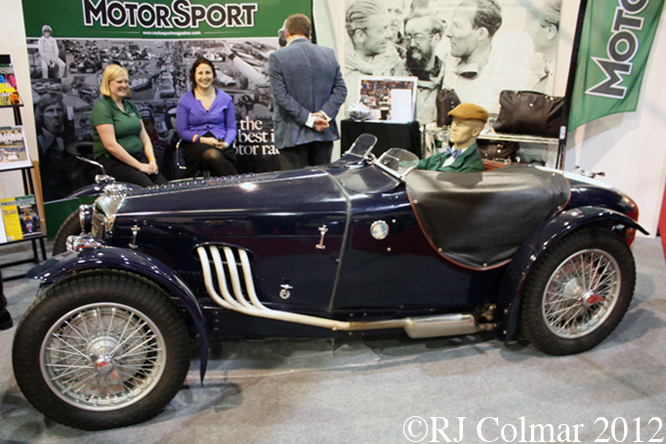
Riley Ulster Imp, Race Retro

Finally on a personal note it is 40 years since I bought my first copy of Motor Sport, the December 1972 edition was packed with the details of the 1972 Canadian and US Grand Prix’s which Jackie Stewart won in anticipation of an extremely successful final 1973 season. On the Motor Sport stand above is the 1934 Riley Ulster Imp in which after a successful post WW2 competition history the car was acquired by Leslie Hawthorn the proprietor of the Tourist Trophy Garage in Farnham who gave it to his son Mike who raced this car on his competition debut at the Brighton Speed Trials where he won his class and drove it in his first race which ‘The Farnham Flyer’ also won on his way to becoming the first ten British World Champions.

I’ll be posting more blogs featuring vehicles seen at Race Retro 2012 in the coming days and weeks, starting tomorrow with an unusual MG-B.

Thanks for joining me on this ‘Firing Up 2012’ edition of ‘Gettin’ a li’l psycho on tyres’ I hope you will join me again tomorrow. Don’t forget to come back now !
Share

Spirit of the 60’s – Dyrham Park

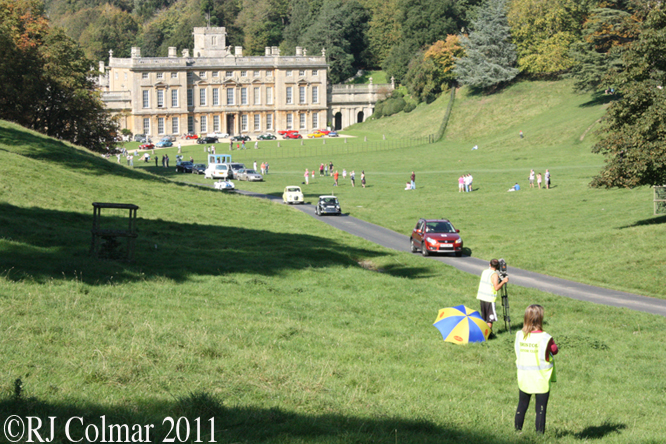
On Sunday I ambled through the back lanes of Gloucestershire with a couple of friends to visit Dyrham Park a Neo Classic country mansion, that was built for William III’s Secretary at War William Blathwayt, set in a 274 acre deer park.

Dyrham Park

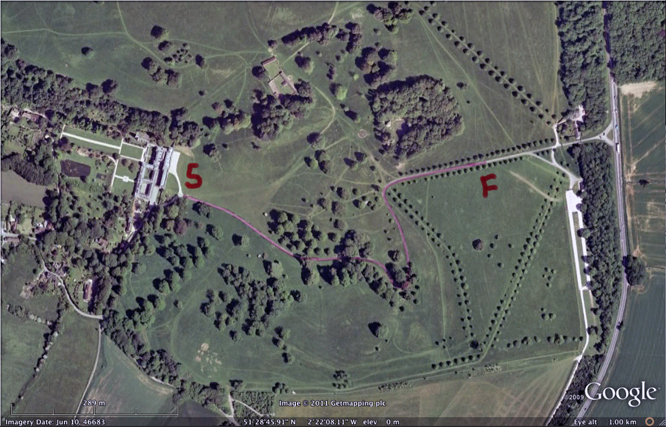
The house was made over to the state in the late 1950’s and the National Trust subsequently took over the running of the estate in 1961. That same year the Bristol Motor Cycle & Light Car Club organised a hillclimb on an 800 yard course that started at the Mansion house and went up the winding front drive towards the main gates of the estate.

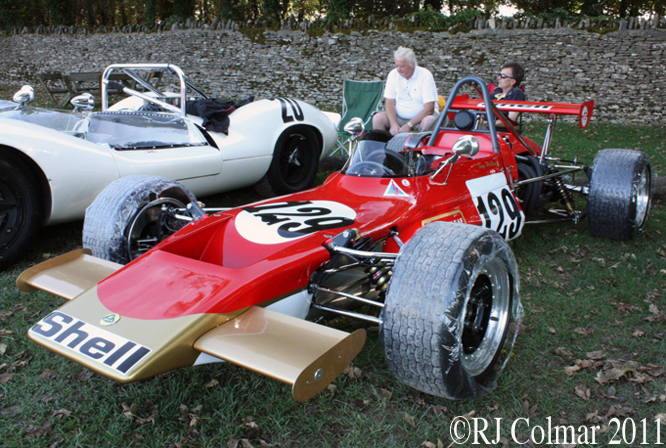
Lotus 69, Dyrham Park

To celebrate the centenary of what is now known as the Bristol Motor Club a Spirit of the 60’s demonstration was organised at Dyrham Park to mark the six events that were organised from 1961 – 1966. Not all the vehicles present on Sunday, like Tony Wallens 1971 Lotus 69 were strictly of the correct period but they all added to flavour on another Indian Summers day.

Brabham BT18 Buick V8, Chris Merrick, Dyrham Park

Making his way through the hairpin to the start line is Chris Merrick in a Brabham BT18 / Buick V8 that once belonged to Bryan Eccles who set, probably for all time, the course record of 30.05 secs in 1966.

Berkley B105, Neil Barber, Dyrham Park

Some of you may remember I stumbled across a Berkeley B105 earlier this year at the Silverstone Classic, this 1959 example heading for the assembly area belongs to Neil Barber.

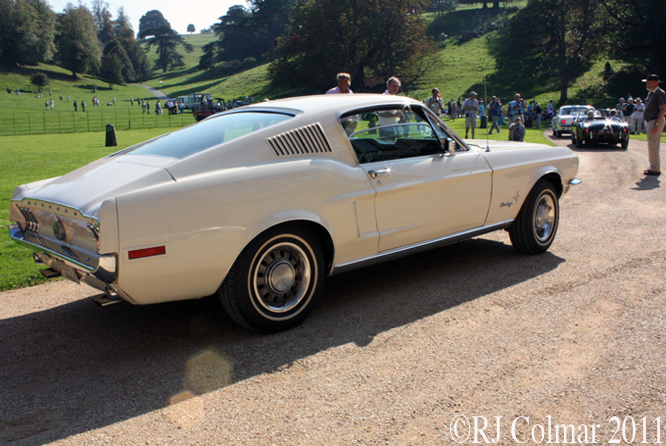
Ford Mustang, 302, Steve Hillcox, Dyrham Park

Steve Hillcox in the 302 cui Mustang Fastback can is seen above preparing to leave the assembly area for his run up the narrow 800 yard course.

Dyrham Park

Following the Suzuki Pace Car heading for the sweeps on one of the demonstration runs are Jeffrey Allen in his 1967 Mini Cooper, Steve Dowling in his 1959 Austin A35 and David Valsler in his Turner which he found in Ohio.

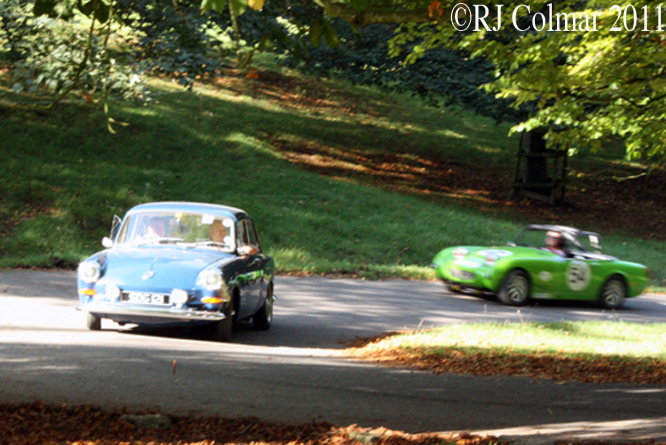
Volkswagen, Notchback, John Robbins, Dyrham Park

John Robbins above negotiates the hairpin in his 1967 VW Notchback ahead of Colin Gale in his 1966 Austin Healey Sprite.

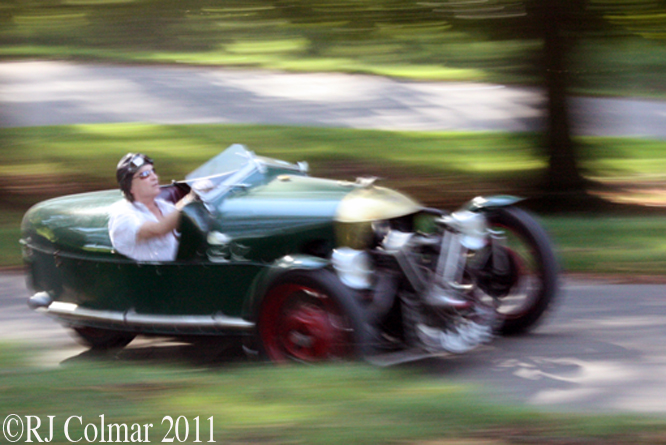
Morgan Super Sport, Ron Clements, Dyrham Park

I believe this is Ron Clements in his 1933 Morgan Super Sport which bears a quote from two time Le Mans winner Sir Tim Birkin on the side “Better to die at full throttle than to live behind a desk.” Sir Tim died from as a result of burns sustained while racing a Maserati in the 1933 Tripoli Grand Prix.

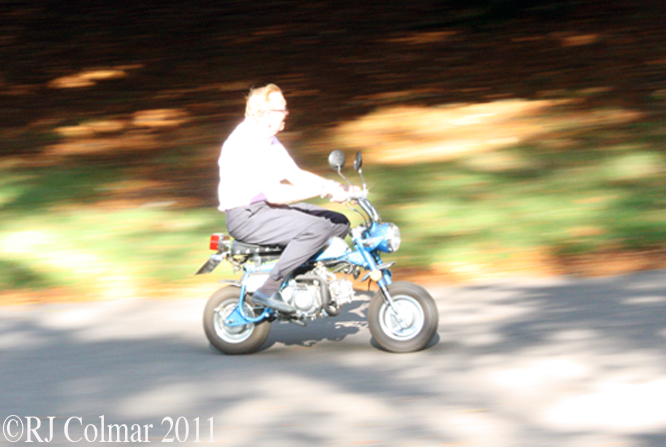
Monkey Bike, Vince Woodman, Dyrham Park

One of the slower passes up the hill had they been timed would possibly have gone to former British Saloon car stalwart Vince Woodman on this Honda monkey bike,

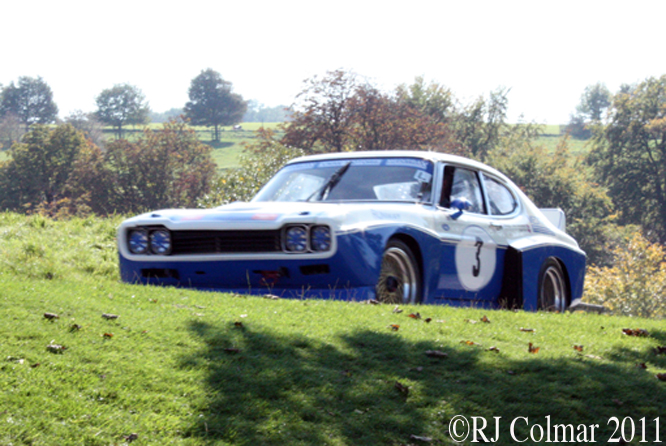
Ford Cologne Capri, Vince Woodman, Dyrham Park

though without doubt had the event been timed he would have been in the running for top tin top with his 3.4 litre 1973 Cologne Capri seen here rounding Neptune before the finish straight.

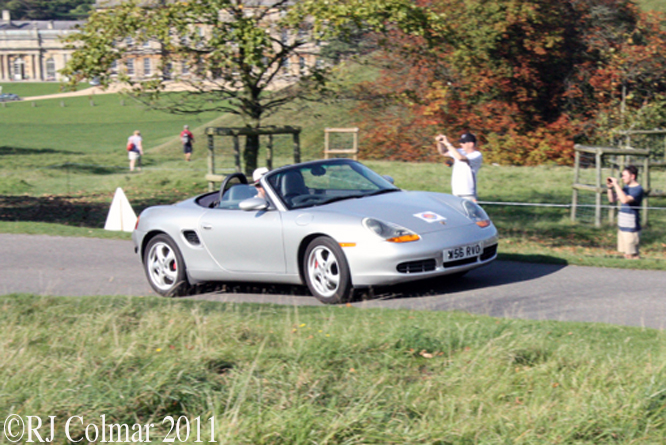
Porsche Boxter, Dyrham Park

Somewhere between 4-5000 spectators are thought to have been entertained by over one hundred cars that each made several runs up the hill, apparently at one point the gates had to be closed because the A46 Bath Road had become blocked. At 4 pm the course car passed for the last time bringing an entertaining day to an end.

Thanks for joining me on this Dyrham Park edition of ‘Gettin’ a li’l psycho on tyres’ I hope you will join me again tomorrow. Don’t forget to come back now !

Share

1% Efficiency Gain – Porsche 935 K3 #00017

The dominating sports car of the mid 70’s to early 1980’s was the Porsche 935, built for a set of regulations known as Group 5. The 935 was based around the Porsche 911, the works factory team developed three distinct versions in ‘76, ‘77 and ’78 when the Moby Dick version marked the high tide of factory 935 development. Porsche also built a customer version of the 935 the 935/77A.

Meanwhile the Kremer Brothers set about developing their own 935, the K1, based on the Porsche 934 model, that was available for the technically less demanding Group 4 regulations in 1976. In 1977 the Kremer brothers acquired a customer 935 and in 1978 followed their own development path based on the 935/77A to develop the K2.

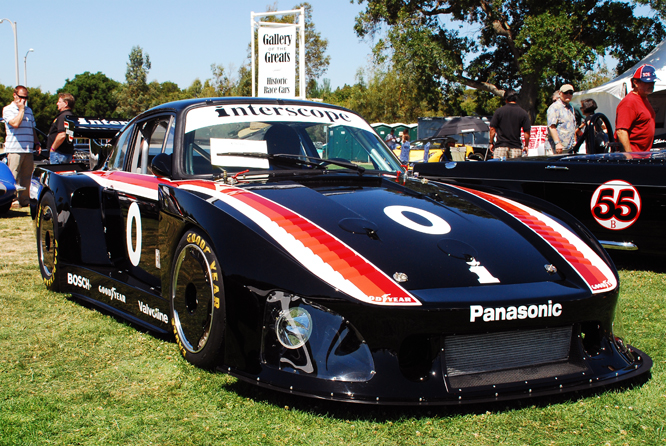
Porsche 935 K3 #00017, Palo Alto

For 1979 their K3 model featured over 100 detail changes from the standard customer 935 ’77 which included a lighter air to air intercooler in place of the hitherto ubiquitous air to water sytem, composite carbon fibre panels which saved 30 kgs / 62 lbs. The DM 400,000 K3 was thought to have been 1% more efficient than the standard customer 935 ’77 which over an endurance distance of 6, 12 or 24 hours would accrue to a handy advantage.

The K3 scored the 935 models only win at Le Mans in the hands of the Klaus Ludwig and the Whittington Brothers Don and Bill and a string of customers were soon knocking on the Kremer Brothers door in Cologne asking for copies.

Porsche 935 K3 #00017, Palo Alto

It is believed the Kremer Brothers built 13 K3’s and supplied kits to update older 935 models. I have not managed to ascertain if this 935 K3 is one of the Kremer brothers built models or one built up from a kit around a donor car, it carries the paint work of a vehicle belonging to Ted Field that was raced by Ted, Danny Ongias and Milt Minter in the Daytona 24 hours that came in 3rd from 5th on the grid.

Canepa Design are known to have recently restored such a car and if as seems highly probable this is the same vehicle the chassis number of this vehicle is # 00017.

My thanks to URY914 at The Nostalgia Forum for confirming that this car may have been converted to Trans Am spec and entered by John Klug Racing in 1983 and to Geoffey Horton who kindly sent me these photos from Palo Alto Concours d’Elegance.

Thank you for joining me on this Interscope edition of Gettin’ a lil’ psycho on tyres’, wishing you all a happy bank holiday Monday, I hope you will join me again tomorrow. Don’t forget to to come back now !

Share

To Roll And Not to Rock – Silverstone Classic

Thanks to my friend Caroline lending me her Audi Convertible for one last time I managed to cram a substantial part of what was happening at the Silverstone Classic this weekend into just one 10 hour visit.

Allgaier Porsche, Silverstone Classic

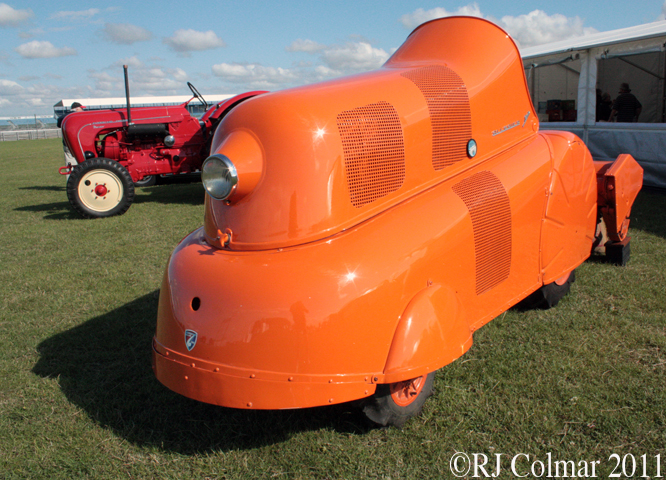
If you like discovering vehicles you never new existed the Silverstone Classic is just the place for you, amongst many vehicles I have never seen before are this streamlined Porsche ‘Diesel’ powered Allgaier agricultural vehicle.

Roger Willis, Mercury Cyclone, Silverstone Classic

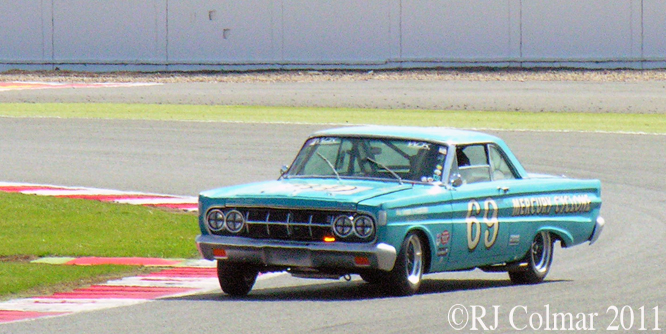
Unfortunately my visit coincided with qualification sessions only, Roger Willis, seen here, shared this Mercury Cyclone with 1966 British Saloon Car Champion John Fitzpatrick making a welcome change to a field dominated by Mustangs, Galaxies and a couple of Jags all of varying 1960’s vintages.

Vauxhall Ventora, Silverstone Classic

The Vauxhall Ventora on which this cut down funny car is loosely based was a 4 door saloon / sedan by a General Motors owned marque.

JAH 1L, Silverstone Classic

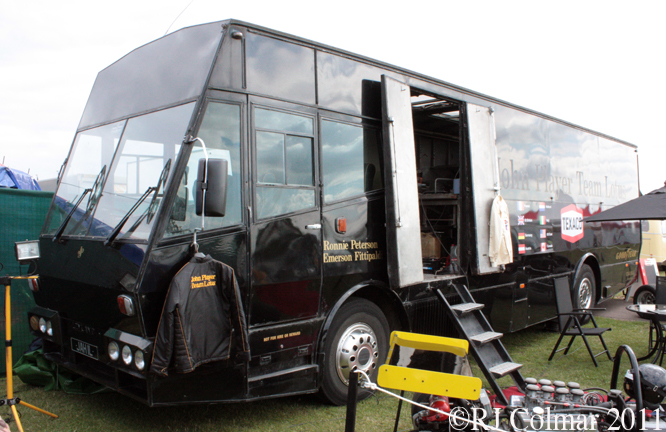
This well known transporter reg JAH 1L was in use by Team Lotus from 1973 until the 1980’s is painted here in it’s original 1973 John Player Special colour scheme.

March 2 4 0, Silverstone Classic

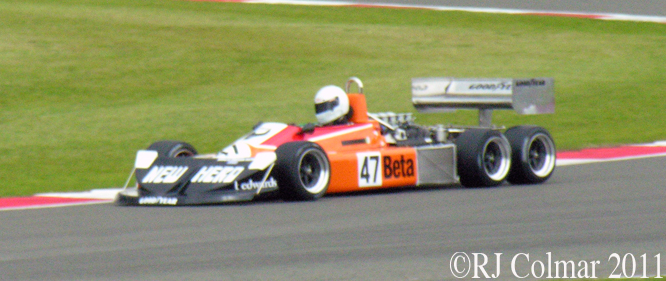
I was disappointed not to see the CGA Engineering March 761 out but this 1977 spec Formula 1 March 2 4 0 more than made up for it. Allegedly the car was built as a publicity stunt, it never raced but was used to good effect on hill climbing events.

Nippy, Sentinel, Silverstone Classic

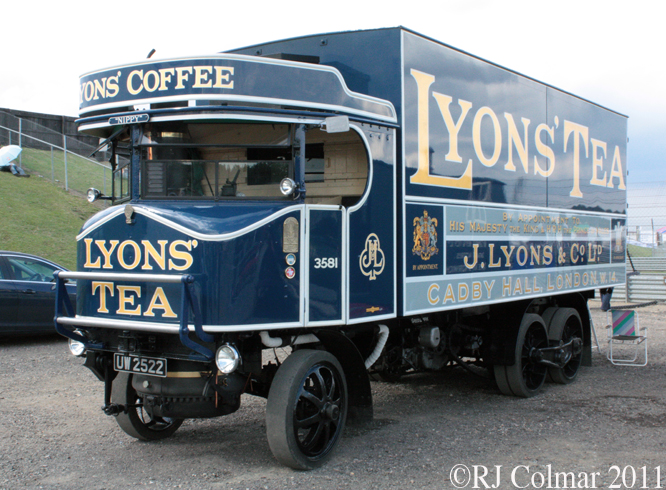
Six wheel vehicles, and steam powered vehicles were very much in evidence at Silverstone, found the idea of having this Sentinel steam powered truck delivering tea quite amusing.

Foden 6x6 DROPS, Silverstone Classic

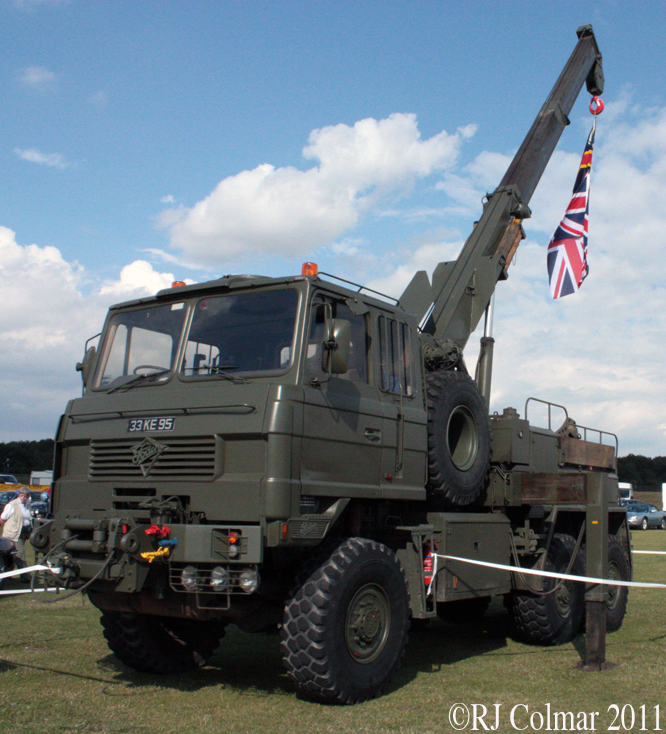
I believe the brave lads from the British Army had the tallest vehicle present, I believe this is a Foden 6×6 DROPS vehicle, the Foden marque has disappeared as has a significant contingent of the British Forces.

Berkley, Silverstone Classic

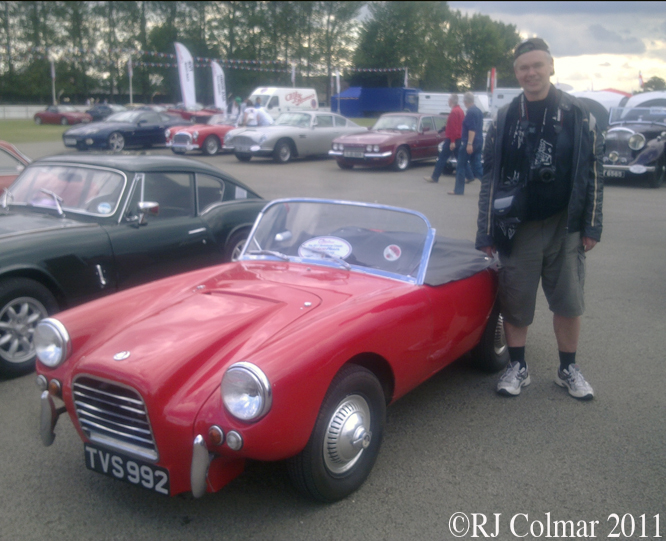
At the other end of the scale one of the smaller, electric kiddy Land Rover was the smallest , 4 wheel vehicles I saw was this 1959 Berkley.

Bob Berridge, Sauber C11, Silverstone Classic

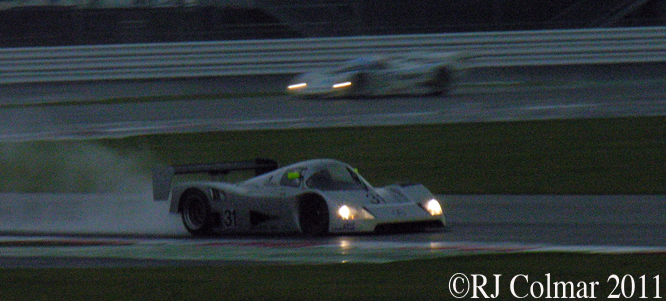
Rain added a little authenticity to the late Group C practice session which was only about 20mins long, I could have stayed out all night listening to the mighty roar that eminates from the Sauber C11 of Bob Berridge by far the best sounding and looking Group C ever IMHO.

Aston DB2/4, Touring, Silverstone Classic

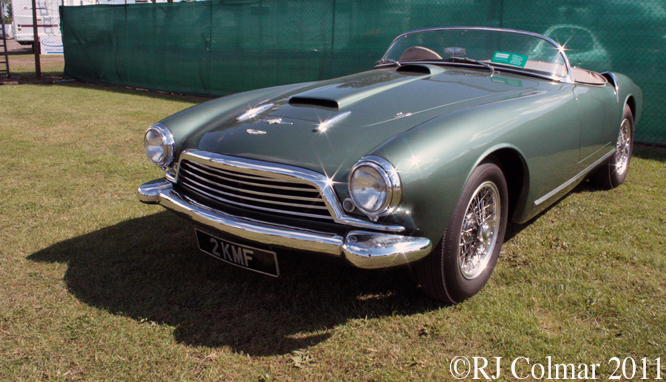
Car of the day for me was this 1953 Touring Aston DB2/4 I believe the RHD is a giveaway that this car was won by a Mr Smith who responded to a newspaper competition to sum up the cars design with a catch phrase.

Even if I had been camping I probably would have been too exhausted to catch the line up of tribute bands on the first night of the Silverstone Classic festival I guess all of my passion is focused on cars and very little of it on music.

PS It would appear NASCAR contractors who prefer to settle their differences in pit row rather than on track might want to take a leaf out of events that unfolded at the Silverstone Classic in the pit lane. See linked story by Tony ‘Giraffe’ Gallagher.

Thanks for joining me on another Classic edition of ‘Gettin’ a lil’ psycho on tyres’, I hope you will join me again tomorrow. Don’t forget to come back now !
Share

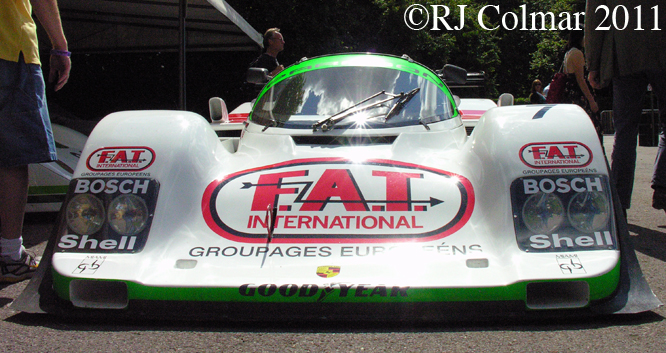
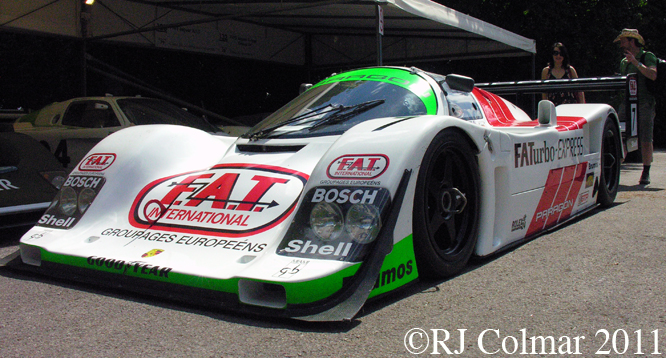
F.A.Turbo Express – Joest Porsche 962 C #962-011

Following on from yesterdays Lancia LC2 blog today I am looking at a FATurbo Express sponsored Porsche 962 C that used to be run in Group C races by the Joest Team in the second of a series of three blogs on Group C cars.

Joest Porsche 962 C - Goodwood FoS

The Porsche 962 was born out of the Porsche 956 programme in 1985, the principle difference between the two models is that the drivers feet are behind the front axle line in the 962 which affords the driver better protection in the event of a frontal accident.

Joest Porsche 962 C - Goodwood FoS

The 962 was built to compete with twin turbo motors in the World Prototype Sportscar Championship and with single turbo motors in the IMSA GTP series. 962’s are known to have won 82 races of at least 250 races that they competed in. Although the Porsche factory raced the 962 it increasingly left it’s customers to represent the marque from 1987 on, apart from the riveting 1988 Le Mans 24 hour race.

Joest Porsche 962 C - Goodwood FoS

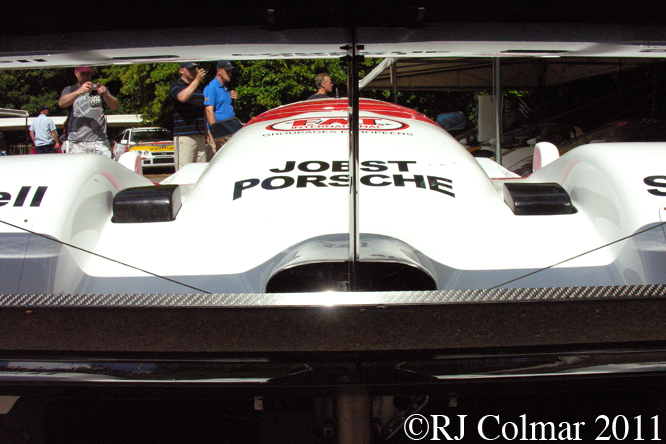
Former Porsche driver Reinhold Joest’s team continued to receive support from the Porsche factory at Le Mans in 1989 and 1990. Indeed to emphasise the level of backing Joest received from Porsche the last 6, of 16, works built Porsche 962 chassis all went to the Joest Team.

Joest Porsche 962 C - Goodwood FoS

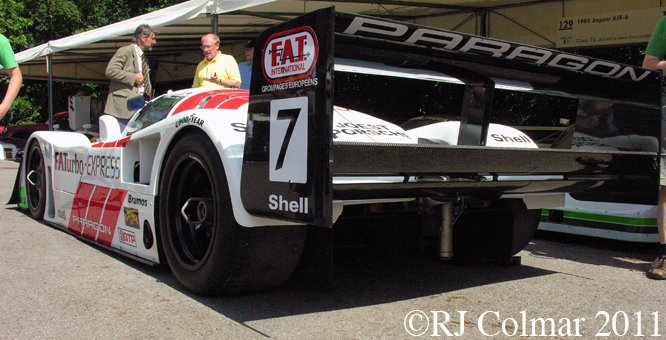
This chassis is thought to be #962-011 the last of the 956/962 series to win a World Prototype Sports Car championship event at Dijon, France driven by Bob Wollek and Frank Jelinski in May 1989. Chassis #962-011 is thought to have won at least 8 other races the last of which was an open formula Interserie event at Zeltweg, Austria in the hands of Manuel Reuter in October 1993.

Joest Porsche 962 C - Goodwood FoS

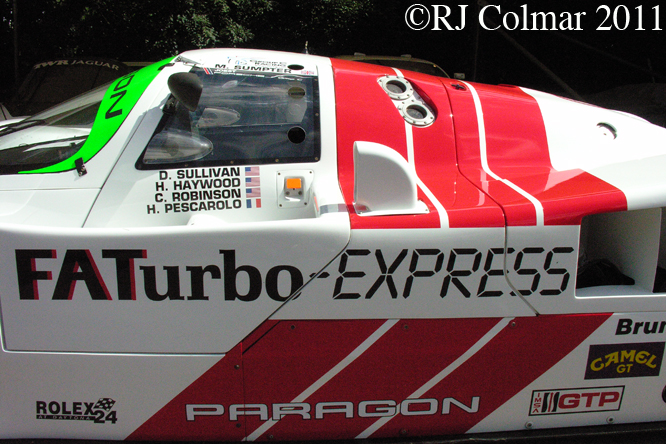
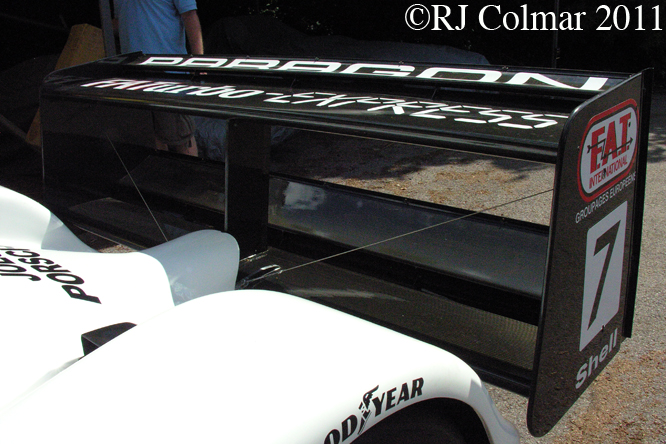
The #962-011 chassis raced with FAT International colours, thought to be a european logisitics company, in the 1993 Daytona 24 hours with Chip Robinson (USA)/Hurley Haywood (USA)/Henri Pescarolo (F)/Danny Sullivan (USA) listed as drivers but running with the #6. At it’s next race the Sebring 12 Hours the car appeared as a back up car for ‘John Winter’ and Manuel Reuter carrying the #7 T.

Joest Porsche 962 C - Goodwood FoS

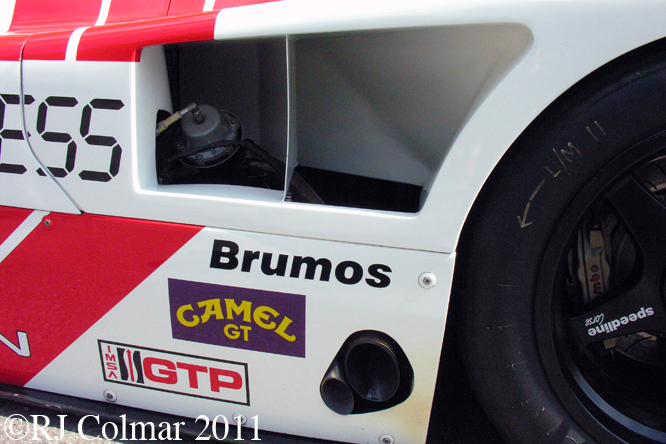
This car is not carrying standard Porsche 962 bodywork, as Jaguar and later Mercedes became increasingly competitive in Group C events Porsche customers undertook their own aerodynamic development programme’s to stay competitive.

Joest Porsche 962 C - Goodwood FoS

Joest Racing won the Le Mans 24 hours twice with private Porsche 956 entries in 1984 and 1985 and then twice again with Porsche powered TWR chassis in 1996 and 1997. Today Joest is known as a crack Audi team having clocked up 5 wins at Le Mans running the Audi R8 (3 wins), R10TDI, and this year the R18TDI.

This car has taken part in the Group C race at the Silverstone Classic before, I have not seen an entry list for this years event, but I am hoping Paragon who run the car will be able to bring it along again this year.

My thanks to Thundersport and Porsche expert Mike at The Nostalgia Forum who confirmed the chassis number.

Hope you have enjoyed today’s FAT Turbo Express edition of ‘Gettin’ a little psycho on tyres’ and that you will join me again tomorrow for a look under the skin of a Japanese Group C car built in England. Don’t forget to come back now !
Share