Tag Archives: Psychoontyres

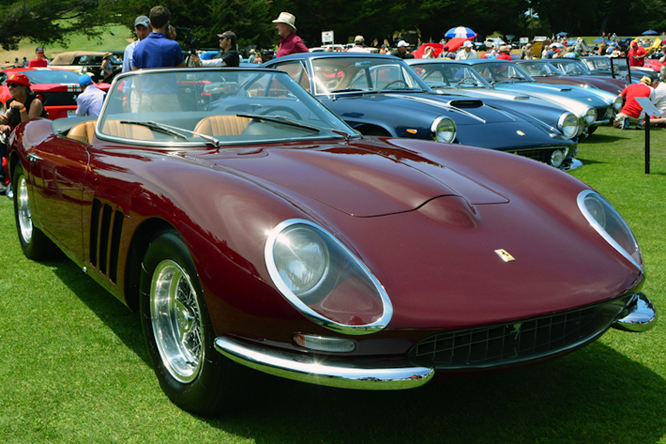
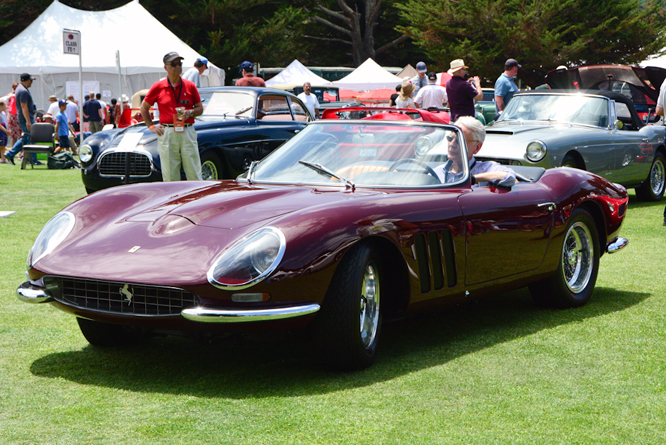
Tom Meade Special – Ferrari 250 GT SWB NeMBo Spyder #3771GT

Today’s featured Ferrari started life as a 1962 Ferrari 250 GT SWB Berlinetta with a steel Berlinetta body that was supplied to E Molozzi.

By this time a Californian Tom Meade had hitched from Norway to Rome in pursuit of a dream to own an Italian exotic car with his savings from a four year stint in the US Navy.

Tom eventually got to the Maserati factory at Modena where he managed to procure an old Maserati 350S sans engine and fit it with a Corvette motor that was surplus to Lloyd “Lucky” Crasners requirements.

Ferrari 250 GT SWB Nembo Spyder, Hillsborough Concours d'Elegance

With input from Gentilini and Fantuzzi Tom’s first special was completed and sent to San Fransisco where Tom briefly settled until some friends landed the car in a Marin County tree top.

With the proceeds from the sale of the wreckage Tom returned to Italy in 1963 where he bought two less than perfect Maserati’s and made them roadworthy before acquiring chassis #3771GT.

It is not clear why #3771GT needed a rebody but it may have been due to flood damage from the 1966 disaster that struck Florence, it appears that a William Dixon was involved in commissioning Tom to rebody the car to his own specifications which included fitting a Ferrari 250 GTO/64 windscreen.

Ferrari 250 GT SWB Nembo Spyder, Hillsborough Concours d'Elegance

My understanding is that Neri & Bonaccini got the car mechanically back on it’s feet by 1968 two years after William Dixon from Seattle bought it.

The contraction of the Neri Mead and BOnaccini names that gives #3771GT it’s NeMBo sorbriquet which coincidentally is also the Italian name given to the Superman cartoon character and equally coincidentally means ‘coat’ in Swahili.

My thanks to Geoffrey Horton for sharing these photographs of #3771GT taken at Hillsborough Concours d’Elegance last year.

“Thanks for joining me on this “Tom Meade Special” edition of “Gettin’ a li’l psycho on tyres” I hope you will join me again tomorrow. Don’t forget to come back now !

Share

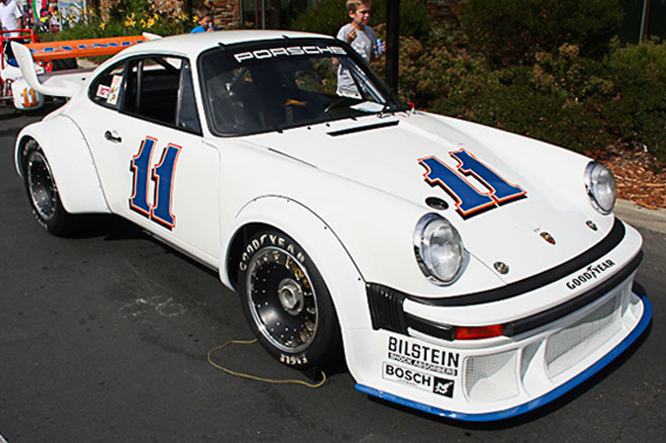
Intercooled IMSA GTO Racer – Porsche 934/5 930 770 0954

Two years after the introduction of the Porsche 930 street car marketed as the 911 Turbo Porsche manufactured a run of 400 Porsche 934 street cars mandated by a set of rules known as Group 4 in order that it’s customers could compete with a 550 hp race version of the 934 in 1976.

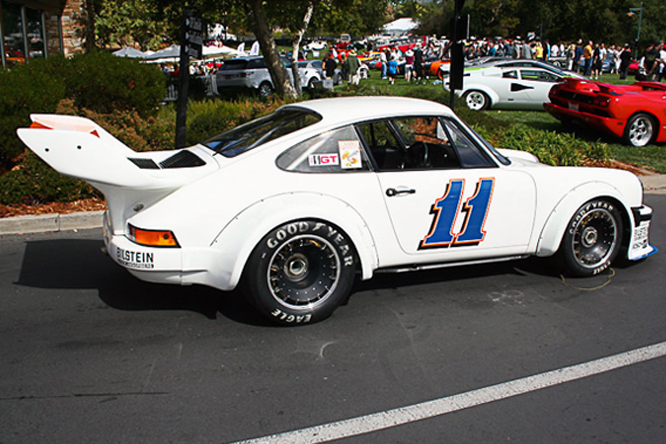
In 1977 Porsche built a further 10 white 934/5’s for it’s US customers who raced to the more liberal IMSA GTO series, aside from differences in the front and rear wheels arches and the rear wing which supplemented the tea tray spoiler the 934/5 was fitted with an intercooler which helped cool the combustion charge and raised the output to 600hp at 7000 rpm.

Porsche 934/5, Niello Serrano Concours d’Elegance

George Dyer took delivery of 934/5 #930 0954 in 1977 to supplement the non turbo charged 911 Carrera RSR which he had been racing since 1973 and co drove to victory in the 1977 Sebring 12 Hours with Brad Frisselle.

Records at RacingSportsCars.com show George raced the 934/5, which I believe to be today’s featured car, on nine occasions in 1977 with a win in the 250 mile Paul Revere race at Daytona being the cars stand out success.

Porsche 934/5, Niello Serrano Concours d’Elegance

Current owner Bruce Canepa raced #0954 once in 1978 finishing 7th at Sears Point before driving the car with Rick Mears and Monte Shelton to a third place finish in the 1979 Daytona 24 hours which seems to have been the cars final race appearance.

My thanks to Geoffrey Horton for arranging for me to share these photo’s of the car taken by Karl Krause at Niello Serrano Concours d’Elegance a couple of years ago.

Thanks for joining me on this “Intercooled IMSA GTO Racer” edition of “Gettin’ a li’l psycho on tyres” I hope you will join me again tomorrow when I’ll be looking at a Jaguar powered special that anticipated the arrival of the E-Type Jaguar. Don’t forget to come back now !

Share

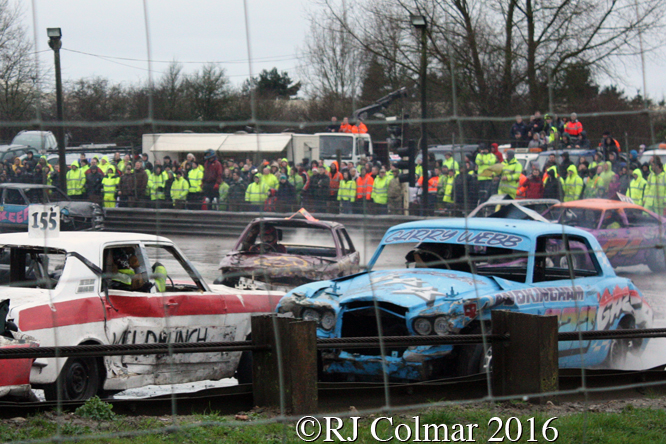
Heavy Metal Classic – Standlake Arena

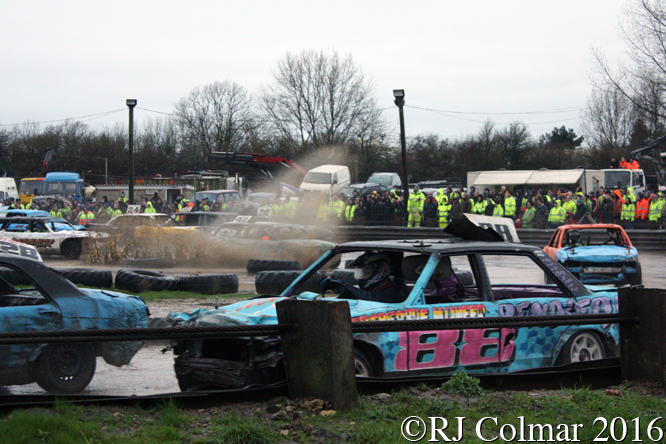
With a full entry of 228 National Bangers and the first date of the season the Heavy Metal Classic at Standlake Arena near Witney in Oxfordshire attracted a full stadium of spectators and almost full overflow car park despite the promise of heavy rain and just above freezing temperatures.

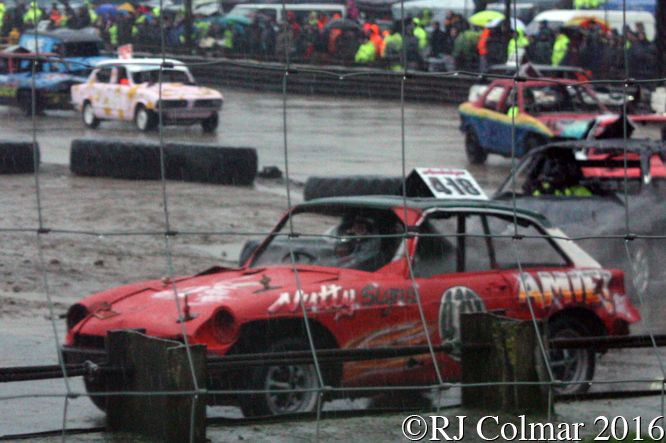
MG B GT, Amie Chandler, Heavy Metal Classic, Standlake Arena

I confess my brain was so frozen I do not remember too many details of what went on though I do remember an interesting conversation regarding the machinations of Dr Jonathon Palmer’s empire based at Brands Hatch, above the #418 MG B GT was driven by Amie Chandler in the “Under 2 litre RWD Classics” class.

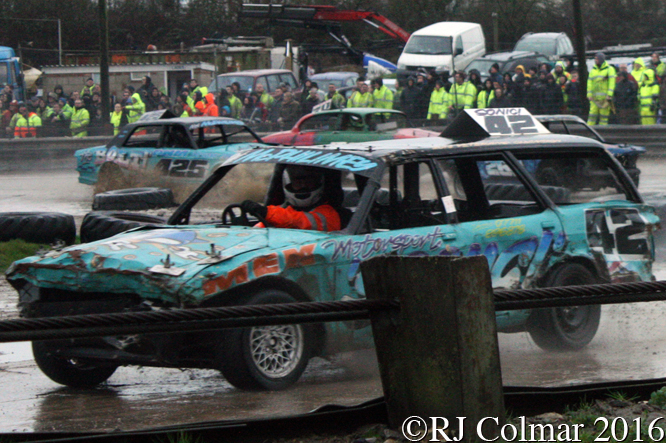
Ford Granada Estate, Pat McPhilimy, Heavy Metal Classic, Standlake Arena

Pat McPhilimy strikes a professional pose in his #42 Ford Granada Estate during the first race for the Unlimited Class.

Rolls Royce Corniche, Garry Webb, Heavy Metal Classic, Standlake Arena

The Unlimited Class featured 2 Rolls Royces, above the rare Rolls Royce Corniche driven by Garry Webb is seen passing the #155 Ford Zodiac Mk IV driven by Robert Philips.

Ford Ka, Paul, Quinell, Heavy Metal Classic, Standlake Arena

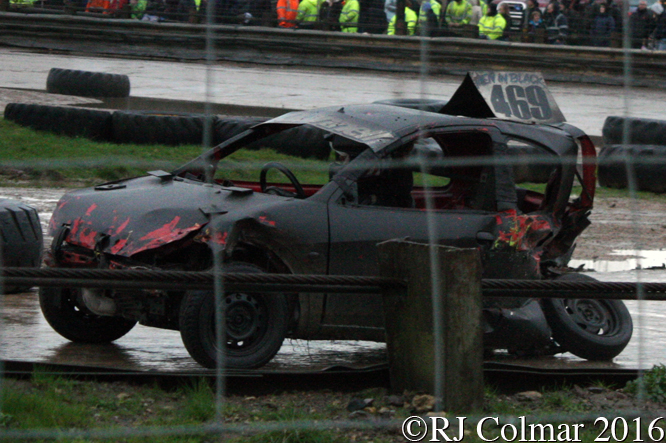
Paul Quinell easily won the unofficial most trashed rear axle with both wheels still attached and rotating award in his #469 Ford Ka which ran in the Micro Banger Class.

Heavy Metal Classic, Standlake Arena

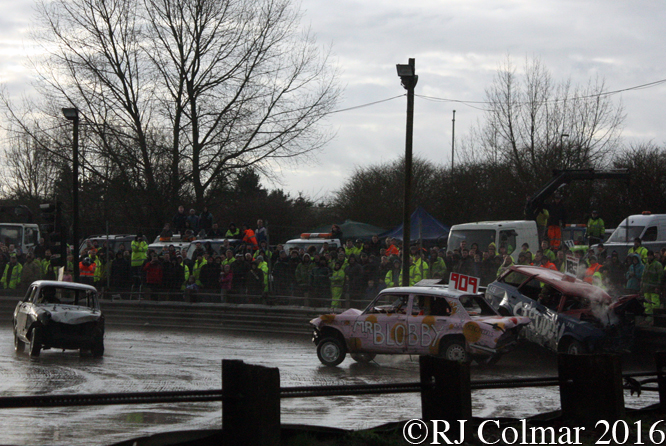
Peter Dodge guides his BMC Farina, could be an Austin or Morris but is almost certainly not a Wolseley, past the wreck that comprises the #909 Triumph Toledo driven by Jamie “Mr Blobby” Duff and #183 Morris Marina Estate Jack Strudwick that has been rear ended by an unidentified competitor.

Morris Marina Van, Billy Bond, Heavy Metal Classic, Standlake Arena

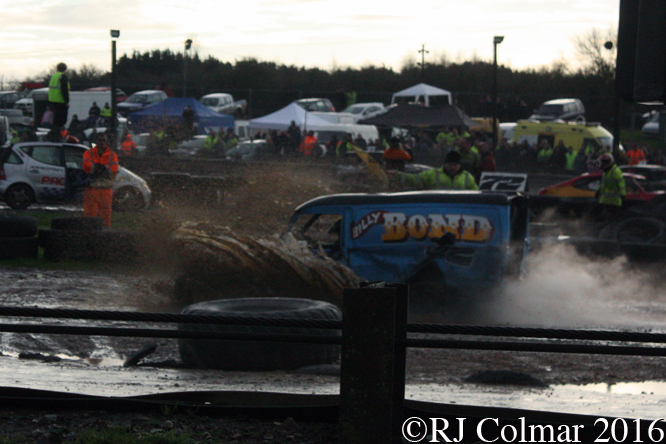
Short on steering control but still making progress Billy Bond dips his #72 Morris Marina van in the infield mud above.

BMC Farina, James Dodge, Heavy Metal Classic, Standlake Arena

James Dodge like Peter pedaling a BMC Farina engages in a bit of rim riding hoping he will not get T boned by the green #632 Ford Cortina driven by Kallum Reed.

Jaguar Mark X, Steven Hart, Heavy Metal Classic, Standlake Arena

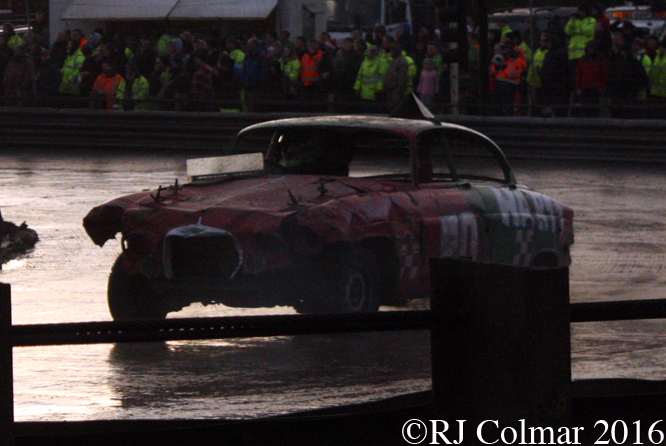
The #70 Jaguar Mark X driven by Steven Hart above in the Unlimited Class sports a deflector on the bonnet, how effective it was at either keeping the occupant dry or giving him improved vision is debatable.

Ford Granada, Randy Mulder, Heavy Metal Classic, Standlake Arena

I’m pretty sure the winning car of the unlimited class was the #88 Ford Granada driven by Randy Mulder, though looking at the entry list I see there was a second #88 entered for Billy Page so I am now not quite so sure.

Either way after an entertaining afternoon getting rather wet and cold watching 228 Bangers slip and slide through the mud I headed back to the overflow car park and was pleased to get my Golf Estate out of the parking facility without the aid of a four wheel drive pickup truck that was standing by just in case.

Thanks for joining me on this “Heavy Metal Classic” edition of “Gettin’ a li’l psycho on tyres.” I hope you will join me again tomorrow when I’ll be looking at another Daytona 24 Hour competitor. Don’t forget to come back now !

Share

Mors Ianua Vitae – Mors Grand Prix

Émile Mors was born in 1859 into a family whose father Louis was a pioneering electrical engineer who founded an electrical equipment manufacturing business bearing the family name.

Mors Grand Prix, Goodwood, Festival of Speed,

In 1895 Émile founded his own company bearing the family name to make motor cars, an early strap line for the company appears to have been “Mors ianua vitae” is a double entendre “Mors is the gateway to life” or the more sinister “Death is the gateway to life”.

Mors Grand Prix, Goodwood, Festival of Speed,

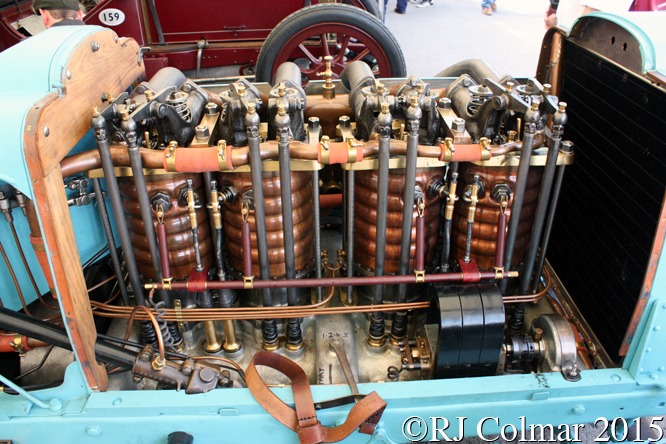
A great believer in competing against the best in 1901 Mors built a 10 litre / 610 cui V4 engine with side valves and dry sump lubrication that at 950 rpm produced 60 hp for the car that Henri Fournier drove 527 km to win both the 1901 Paris Bordeaux trial by half an hour and 1105 km’s Paris to Berlin race which he by over an hour from Panhard et Levassoir drivers on each occasion.

Mors Grand Prix, Goodwood, Festival of Speed,

Despite customers that included the Honorable Charles Stewart Rolls (before making the acquaintance of Henry Royce) and William K. Vanderbilt Jr, Émile’s business fell victim to fall out from the failure by F. Augustus Heinze’s United Copper Company to corner the copper market in New York and he had to sell to André Citroën who became chairman of the company in 1908.

Mors Grand Prix, Goodwood, Festival of Speed,

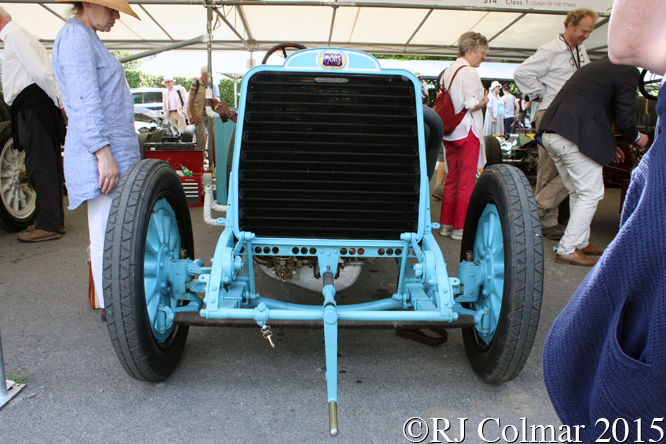
André decided to try and revive the companies fortunes by building three cars powered by 100hp 12.5 liter / 775 cui motors with overhead push rod actuated valves and minimal brakes for the 1908 French Grand Prix.

Mors Grand Prix, Goodwood, Festival of Speed,

As often is the case more haste meant less speed and one of the under powered cars failed to start while the other two finished 17th and 16th almost 90 mins behind the winning Mercedes driven by Christian Lautenschlager.

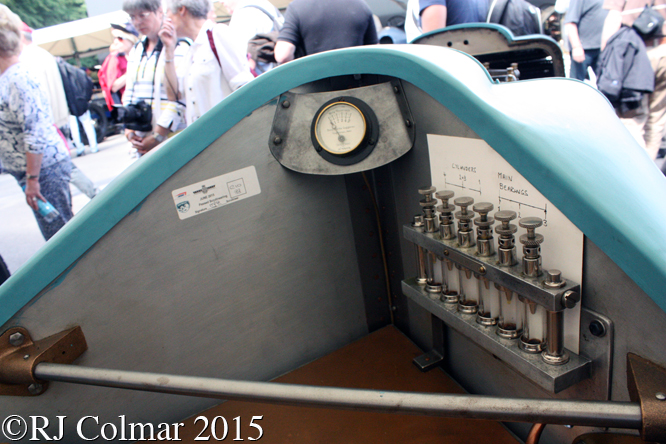
I believe the example seen here at Goodwood last year owned by The Revs Institute was the one driven to the 16th place finish by the bearded Belgian Camille “Le Diable Rouge” Jenatzy ahead of his team mate known only as Landon, on what proved to be Mors final Grand Prix appearance, by 1925 André dropped the Mors name entirely in favour of his own.

Thanks for joining me on this “Mors Ianua Vitae” edition of “Gettin’ a li’l psycho on tyres” I hope you will join me again tomorrow for a spot of Banger racing. Don’t forget to came back now !

Share

Fastest Machine In The World – Benz 200hp Reconstruction

Despite the fact that Carl Benz was of the opinion that motor racing did not add anything of value to the production of motor cars, in 1909 he was persuaded to build a 200hp Benz racing car by fellow Benz & Cie board member Julius Ganss argument that there was one thing above all to be gained from the proposed car, which was to be built with the aim of becoming the first internal combustion powered machine in the World to travel at 200 km/h / 124 mph, publicity.

The Benz engineers based the new 200hp model on their 150hp 1908 Grand Prix challenger but enlarged the four cylinder bores so that the capacity was increased from 15.1 litres / 921 cui to 21.5 litres 1312 cui, making the largest engines that were ever fitted into a car by either Benz or their later partners with whom they would merge Daimler.

Benz employee Fritz Erle is credited with the 200hp models first success when he won the Grand Duchess of Hesse prize after recording a speed of 159.3 km/h / 98.98 mph over a flying kilometer at Frankfurt am Main in August 1909.
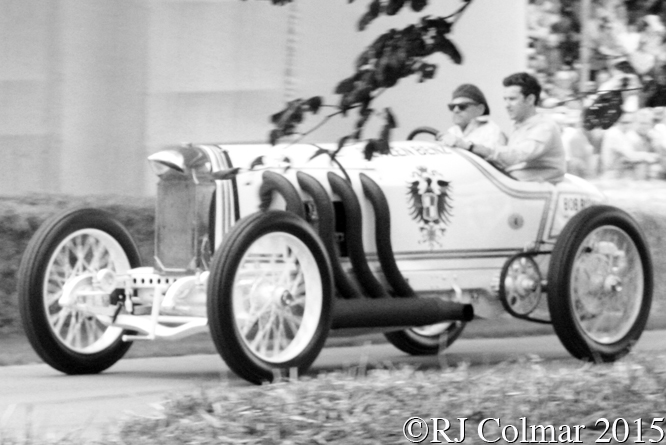
Benz 200hp Reconstruction, Bill Evans, Goodwood, Festival Of Speed,

The concrete had barely dried at Brooklands when Victor Héméry driving the same car with it’s original 1908 Grand Prix style body arrived in November 1909 and promptly raised the internal combustion powered World Speed Record recorded over a flying kilometer to 202.7 km/h / 125.95 mph.

Meantime a second 200hp machine No.2 was being prepared with a slimmer body, similar to the one on today’s featured car, better suited to Land Speed Record braking, and with venues in Europe struggling for space to accommodate the speeds being achieved it was sent to the Benz US agent Jesse Froehlich for George Robertson to drive in a head to head race against Ralph de Palma.

However it appears Barney Oldfield’s manager found out about the 200hp cars presence in the USA and wishing to protect his client’s position Ernie Moross made an offer to swap the new machine for his older 150hp Benz plus $6,000 which was accepted.
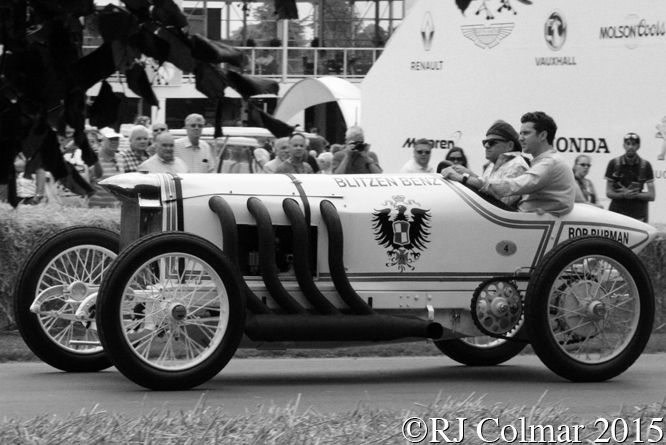
Benz 200hp Reconstruction, Bill Evans, Goodwood, Festival Of Speed,

In March 1910 Barney Oldfield drove the car, dubbed “Lightening Benz” by Ernie, to a new one way, unofficial in Europe, record of 211.97 km/h / 131.71 mph, beating the times set by Fred Marriot aboard the steam powered Stanley Rocket in 1906.

Barney was barred from AAA sanctioned events for participating in unsanctioned Barnstorming events in April 1911 when Bob Burman set a one way record, unrecognised in Europe, of 225.65 km/h / 140.21 mph over the flying mile and 228.1 km/h / 141.73 mph over the flying kilometer at Daytona driving Ernie’s Blitzen Benz.

By 1913 the UK Benz agent L. G. “Cupid” Hornsted acquired the 200hp No.3, for which he had specified a number of modifications, this car became known as “Schlanker Joseph” or “Lean Joseph” with which he set the first two way record at Brooklands over the flying mile leaving it at 199.70 km/h / 124.09 mph in June 1914.
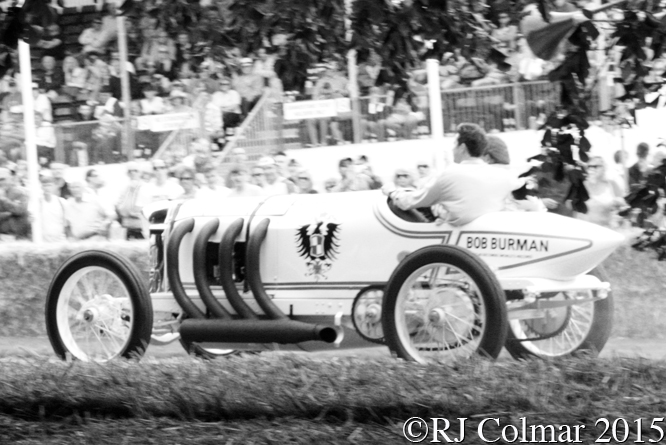
Benz 200hp Reconstruction, Bill Evans, Goodwood, Festival Of Speed,

The history of the six 200hp Benz racing cars is a little clouded, not least because there was only one Blitzen Benz built, 200hp No.2, but almost all of the 200hp car’s are referred to by that name.

Today’s featured Reconstruction of the car Bob Burman drove at Daytona in April 1911 was commissioned and built regardless of cost by Bob Burman enthusiast Bill Evans, who is seen at the wheel in these photographs taken at Goodwood.

The motor #9141 comes from Benz 200hp No.3 that L. G. “Cupid” Hornsted drove at Brooklands in 1914, Captain John Duff and his passenger survived after No.3 swerved off the banking at Brooklands in September 1922 and the remains of the car were returned to Benz at Manheim.

Daimler Benz lent Bill their own 200hp model, which was reconstructed for 50th anniversary of the founding of Benz in 1935 using some parts from No.3 believed to include the radiator and central body, in order to help him reconstruct the rest of his car.

Thanks for joining me on this “Fastest Machine In The World” edition of “Gettin’ a li’l psycho on tyres, I hope you will join me again for Mors. Don’t forget to come back now !
Share

Main Battle Tank Logistics – MAN LKW 10 t mil gl KAT I (8×8)

In 1962 the German federal agency for defence technology and procurement (Bundesamt für Wehrtechnik und Beschaffung, BWB) suggested the bidding companies for a new range of amphibious 2,3 and 4 axle vehicles with a 4 – 10 ton payload form a common development bureau to spread the huge development costs of the project.

Under the leadership of MAN (Maschinenfabrik Augsburg-Nürnberg) it’s partners that included Klöckner-Humboldt-Deutz (KHD), Büssing, Krupp and Henschel formed the “Common Bureau of the German Utility Vehicle Industry” (Gemeinschaftsbüro der Deutchen Nutzfahrzeugindustrie) in 1964 to meet the demands of the project.

LKW 10 t mil gl KAT I (8x8), Ben Gott, Charlie Sincock, Goodwood Festival of Speed

By 1976 when the first KAT 1 was delivered the requirements for the vehicles whose primary role was Main Battle Tank (MBT) Logistics, keeping up with them off road to supply them with ammunition and fuel, had altered ditching the amphibious requirement, but keeping the off road requirement meaning the vehicles needed a 1.2 m / 4′ fording capability like the main battle tanks they were intended to supply.

To date 3 generations of MAN KAT 1s have been built with payloads capacities of 5 tons for the 4×4 up to 15 tons for the Long Wheel Base 8×8 developed for the German Air Force, an example of the latter was used by Porsche as one of their support vehicles on their Dakar team in the 1980’s.

LKW 10 t mil gl KAT I (8x8), Ben Gott, Charlie Sincock, Goodwood Festival of Speed

One of the more interesting aspects of the Dakar Rally which I believe is unique to the event is that all support vehicles for the car and motorcycle entrants are competitors in a support vehicle category.

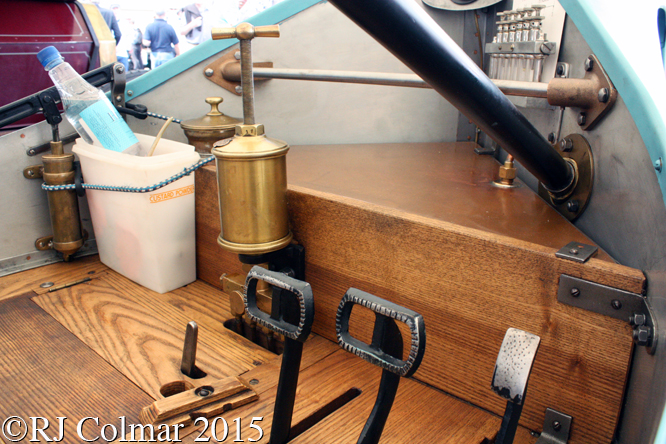
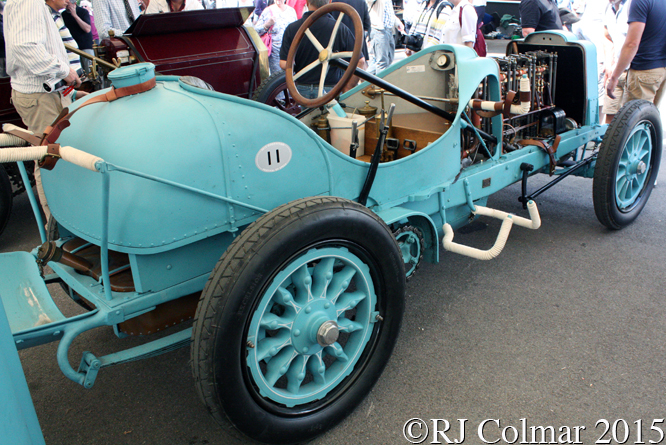
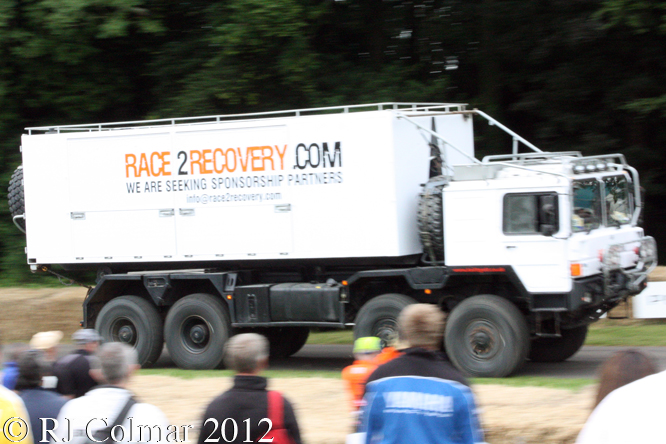
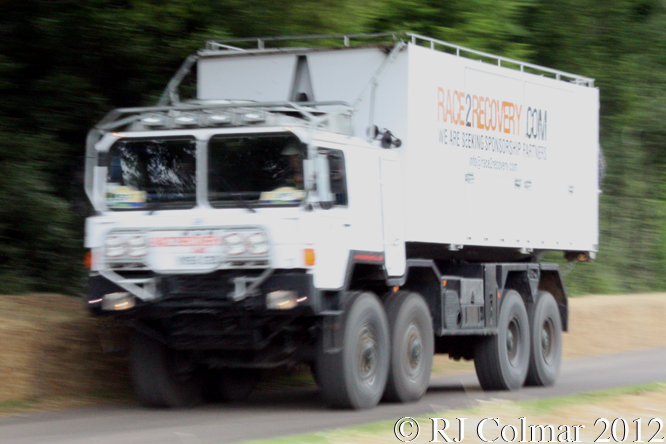
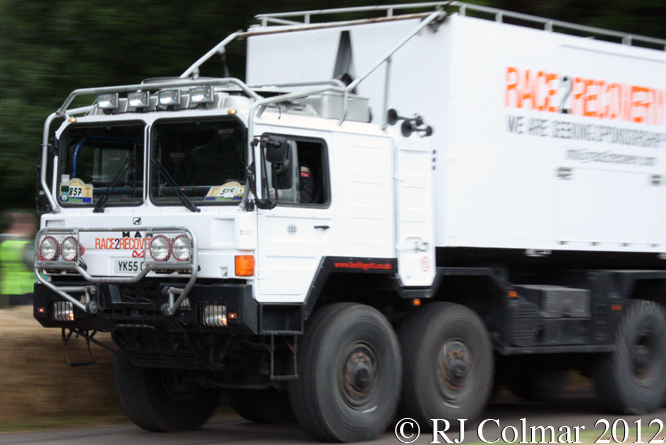
The Race2Recovery team used the short wheel base MAN LKW (Lastkraftwagen) 10 t mil gl (militarisiert geländegängig – military, cross country) KAT I ( seen in these photographs crewed by Ben Gott and Charlie Sincock at Goodwood Festival of Speed, in their successful 2013 attempt on the Dakar.

LKW 10 t mil gl KAT I (8x8), Ben Gott, Charlie Sincock, Goodwood Festival of Speed

First registered in the UK on the 19th of December 2005 I believe this example, the largest vehicle ever seen on the Goodwood hillclimb, is powered by a turbocharged 12 litre / 732 cui Deutz V8 producing 320 hp that drives all eight wheels with an automatic 16 speed gearbox up to a theoretical top speed of 80 mph.

On the 22nd of February 2010 a merger between the military division of MAN Nutzfahrzeuge AG and Corporate Sector Defence of Rheinmetall AG was rubber stamped by Bundeskartellamt (German Government Mergers Dept) with a new entity Rheinmetall MAN Military Vehicles GmbH, or RMMV, that is now responsible for building the latest version of the LKW 10 t mil gl KAT I (8×8) which is known as the HX range.

Thanks for joining me on this “Main Battle Tank Logisitics” edition of “Gettin’ a li’l psycho on tyres” I hope you will join me again tomorrow. Don’t forget to come back now !
Share

Layout By Committee – Hardy Special III

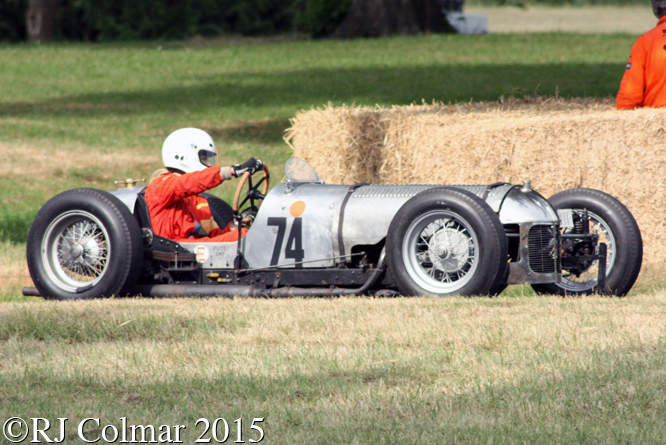
Having built a Riley based special Dick Hardy undertook his work on his second special in 1955 starting with a 1921 GN chassis he found under a pile of rubble at Micheal Meo’s garage in Hamstead around 1953.

Inspired by pre war Auto Unions Dick fitted a supercharged 1928 JAP twin engine, that he bought in 1954, behind the drivers seat in the Hardy Special II.

Hardy Special II, Rachel Williams, Chateau Impney

The Hardy Special II was quick but the period engines were weak, today the Hardy Special II is owned by the Gray family who still compete with it.

The VSCC committee appears to have refused to let Dick build another rear engined special, no doubt for fear of too many others being encourage to build similar vehicles and so the Hardy Special III came to be built with the engine in the front.

Hardy Special II, Rachel Williams, Chateau Impney

I gather Dick did not begin work on the Hardy Special III until he was already in his seventies around 2001.

He started by fitting the steering gear from a three wheel van to a 1922 GN chassis with 1932 Morgan front suspension.

Hardy Special II, Rachel Williams, Chateau Impney

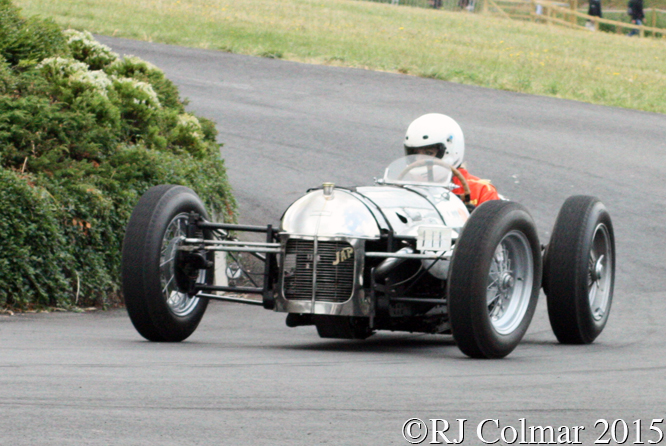
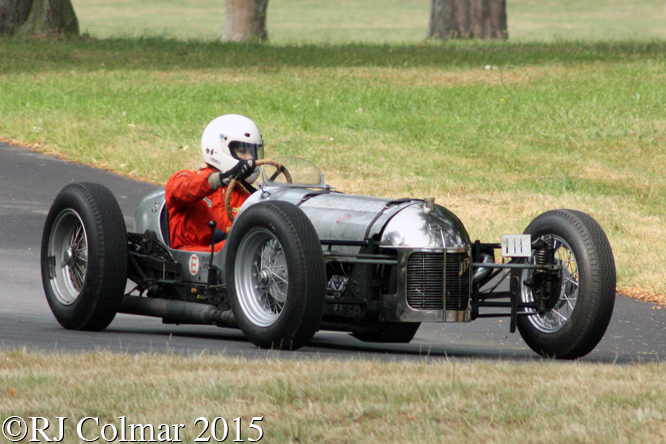
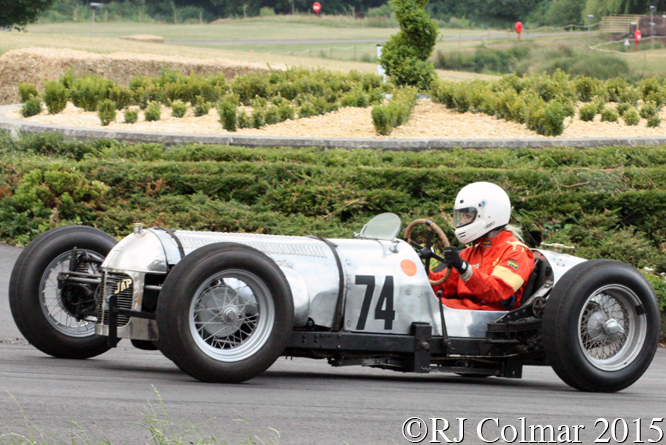
Dick again chose a super charged motor for his third special, but this time a 1096cc / 66.8 cui V twin JAP KTOR.

Rachel Williams is seen at the wheel of the Hardy Special III in these photographs at Chateau Impney last year.

Hardy Special II, Rachel Williams, Chateau Impney

Thanks for joining me on this “Layout By Committee” edition of “Gettin’ a li’l psycho on tyres” I hope you will join me again tomorrow. Don’t forget to come back now !
Share