Tag Archives: Rally

Second Coming ? – MG Maestro 1600

Advertisers excelled them selves in 1983 when they were tasked with coming up with a strap line for the hot version of British Leyland’s Austin Maestro which was to be badged as an MG, they proclaimed the MG Maestro 1600 was “Born To Perform Miracles“.
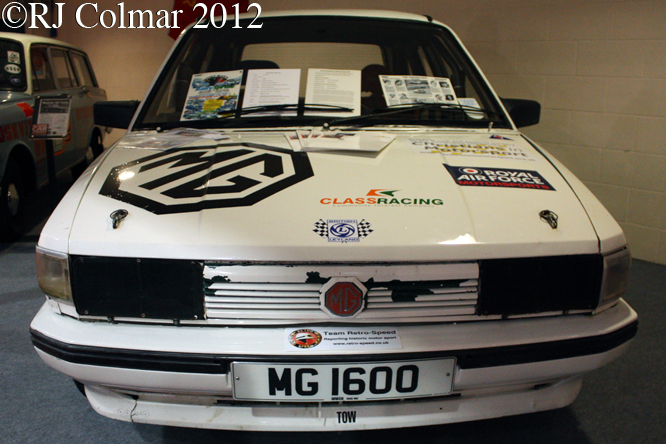
MG Maestro 1600, Race Retro, Stoneliegh

Of course depending on your belief system it would be very easy see how such brazenness was bound to disappoint after all even if you believe in miracles it is a bit much to expect a metal box on four wheels and an internal combustion engine to perform works which are usually the preserve of the the son of the big man with a big white beard dressed in a white robe.
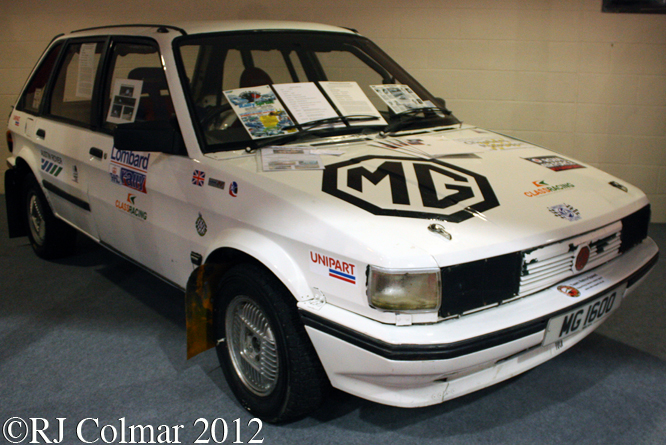
MG Maestro 1600, Race Retro, Stoneliegh

However the basic Maestro was comfortable and especially roomy, compared to trend setting VW Golf, Vauxhall Astra and Ford Escort against which it was competing in the market, however the Austin Maxi derived R series motor was prone to hot start issues, premature crankshaft failures and the VW Golf size wheel bearings proved unequal to the task of carrying the larger heavier Maestro which led to further failures, all of which was compounded by the British Leyland managements legendary difficulties in getting it’s work force to achieve the kind of build quality that was taken for granted by some of it’s competitors.
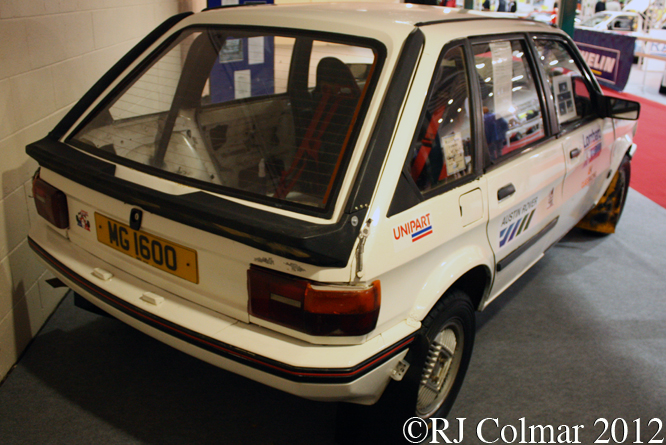
MG Maestro 1600, Race Retro, Stoneliegh

The MG Maestro 1600 had a further problem added to those of it’s lesser Austin Maestro bretheren in the form of the twin Webber carburetors which boosted the power to 110 hp but which proved difficult for dealership technicians to tune. Unsurprisingly the MG Maestro 1600, as seen here, fell well short of miracle performing expectations and was only in production for the 1983/84 model year when it was replaced by the 2.0 EFi which was much better placed to out perform it’s rivals.

This particular vehicle is one of eight cars prepared for the 1983 Rally Sprint race. Rally Sprint was a multi disciplinary event for four Grand Prix drivers and four Rally drivers which comprised a rally stage in which competitors used identical Rover SD1s, an autotest using identical MG Metros and a race for identical MG Maestro 1600s.

Tony Pond drove this car in the race, it was the only white car in the race so is easy to identify, Pond finished third in the race with a severely savaged passenger door just about hanging on. Tony who had been Rally Sprint Champion in 1980/81 and 1982 lost his title after a thrilling race to a young man who had yet to win his first Grand Prix namely future world champion Nigel Mansell.

Thanks for joining me on this “Second Coming ?” edition of “Getting a li’l psycho on tyres” I hope you will join me again tomorrow. Don’t forget to come back now !

Share

The Love Boat – Citroén Ami 8 Estate

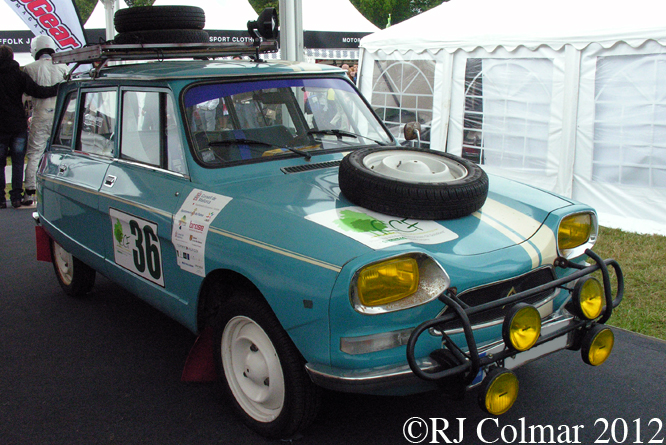
Today’s Continental Curiosity is yet another 2 cylinder from France. Based on the chassis and upgraded mechanical running gear of the utilitarian Citroén 2CV the slightly less utilitarian and rustic Ami was launched in the Spring of 1961 with the more powerful 22 hp flat 2 motor that was an option only on the 2CV which it was eventually intended to replace.

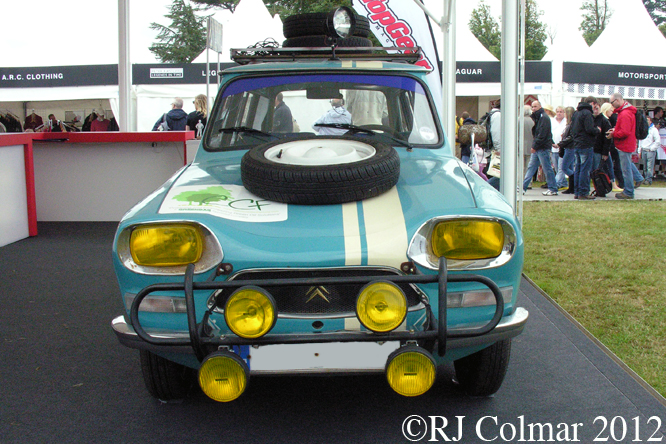
Citroén Ami 8, Goodwood Festival of Speed

Despite poor initial sales due to it’s lack of refinements after a series of upgrades which included rear sliding windows and an increase to 32 hp for the two cylinder models sales eventually overtook those of the 2CV and the Ami topped the sales charts in France for several years.

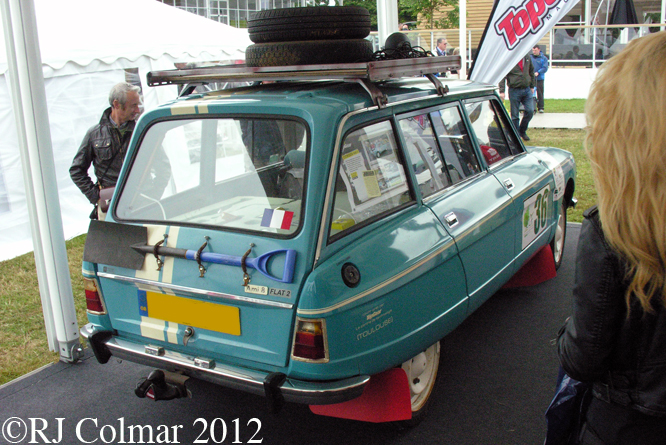
Citroén Ami 8, Goodwood Festival of Speed

There was a more powerful 4 cylinder Ami Super which was described as a ‘Q car par excellence’ by one British Magazine, however French Tax regulations combined with it’s utilitarian underpinnings did not result in significant additional sales of the Ami Super. A further prototype Ami M35 Coupé series was also built in limited numbers for preferential customers powered by a single rotary Comotor Wankel engine.

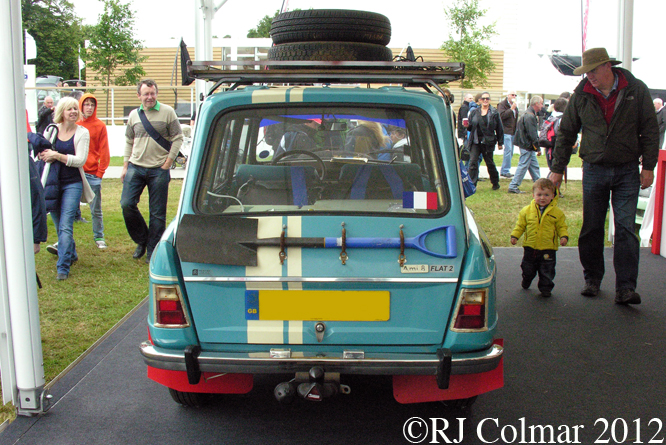
Citroén Ami 8, Goodwood Festival of Speed

This particular 1976 Ami seen at Goodwood Festival of Speed nick named “The Love Boat” was acquired by present owner and Top Gear presenter James May, who allegedly ‘competed’ in a Majorcan Classic Rally with glamour model Madison Welch in the co drivers seat.

Citroén Ami 8, Goodwood Festival of Speed

Production of the Ami spread from France to Spain and Argentina, with Complete Knock Down kits also assembled in Africa and Chile with world wide sales topping 1.8 million when production came to an end in 1978. The Citroén 2CV, on which the Ami was based and which the Ami was intended to replace, continued in production until 1990.

Thanks for joining me on this “The Love Boat” edition of “Gettin’ a li’l psycho on tyres”, I hope you will join me again tomorrow. Don’t forget to come back now !
Share

Dominating Réunion – Alpine A110 1600S

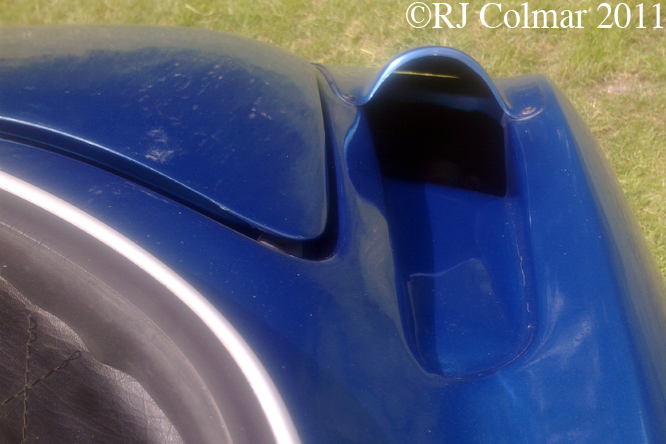
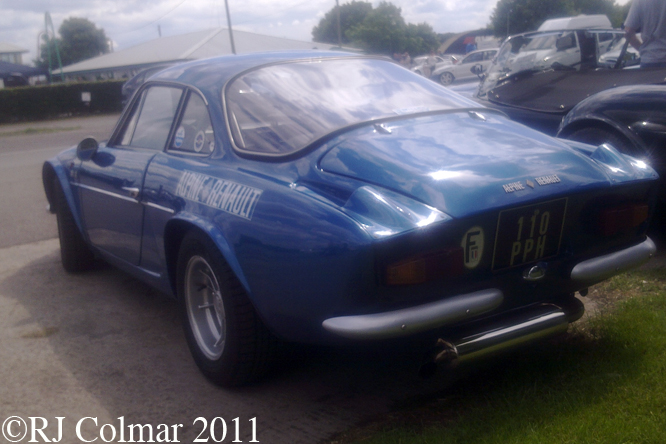
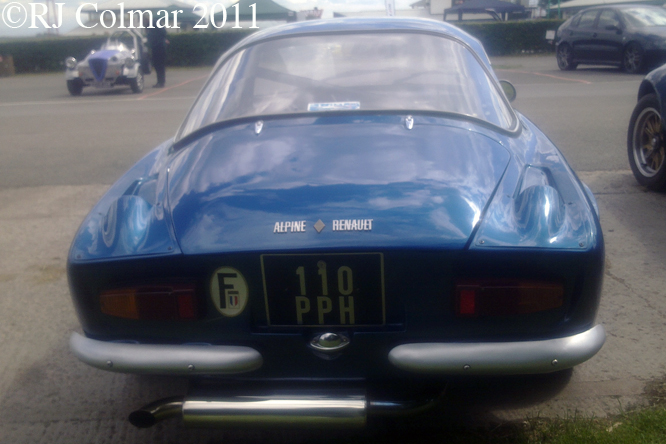
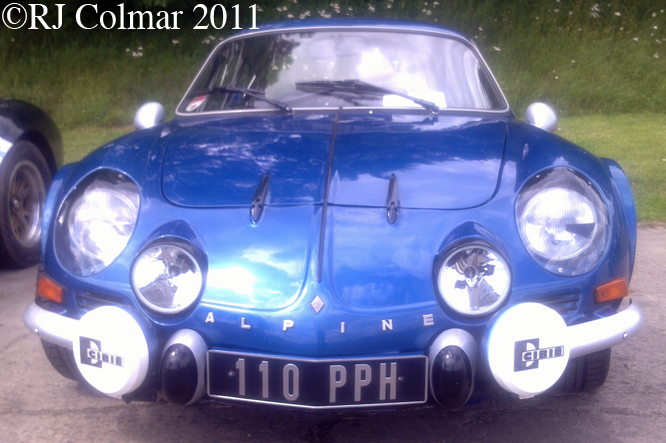
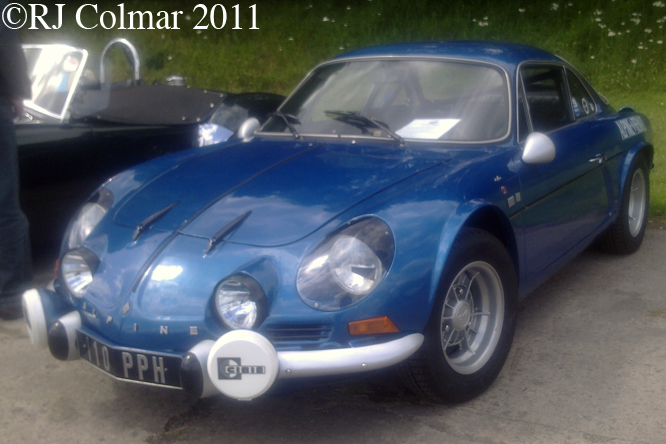
Jean Rédélé’s rear engined Alpine A110 “Berlinette” launched in 1961 was an evolution of the A108. Distinguishing features include proprietary Renault R8 running gear in place of the Renault Dauphin running gear of the A108 and a larger tail for the fiberglass body to accommodate the larger R8 derived motors.

Alpine Renault, A110, 1600S, Castle Combe C&SCAD

The cars were manufactured at the Dieppe factory, which today operates under the the Renault Sport banner, with further cars being assembled in Mexico under the name Dinalpin and perhaps most unlikely of all from 1967 to 1969 in Bulgaria under the name ‘Bulgaralpine‘.

Alpine Renault, A110, 1600S, Castle Combe C&SCAD

Over the years of production up to 1977 the choice of straight 4 cylinder engine sizes ranged from 95 hp 1.1 liters / 67 cui through to 125 hp 1.6 liters / 97 cui, the latter giving the a top speed of 130 mph and zero to 60 mph in 7 seconds.

Alpine Renault, A110, 1600S, Castle Combe C&SCAD

With these sorts of performance figures the vehicle was a shoe in for a successful competition career in particular on tarmac rallies, Jean Vinatier won the French National Rally title in 1969 in an A110 and both Ove Anderson (1971) and Jean-Claude Andruet (1973) won the Monte Carlo Rally in A110’s the latter victory contributing to Alpine Renault, rebranded after Renault’s 1970 buy out, winning the first World Rally Championship in 1973.

Alpine Renault, A110, 1600S, Castle Combe C&SCAD

The A110 cars also have a successful track racing history in Europe and the United State still winning its class in races as late as 1980.

During the course of finding out about the A110 I have found several inaccuracies one that the A110 was inspired by Colin Chapmans Lotus Elan, this is not true the A110 preceded the announcement of the Elan by 1 year. Also I have seen the A110 mentioned in connection with the Brazilian assembled Willys Interlagos, the Interlagos built from 1962 to 1966 and most successfully raced by Wilson Fittipaldi, brother of twice world champion and Indy 500 winner Emerson, was based on the A110’s predecessor the A108.

Alpine Renault, A110, 1600S, Castle Combe C&SCAD

This particular vehicle seen at Castle Combe Classic and Sport Car Action Day was originally exported to Renault St Denis, Il de La Réunion out in the Indian Ocean between islands of Madagascar and Mauritius, in 1973. It immediately made an impact sweeping Réunion’s two biggest events the ‘Mille Kilometers‘ and ‘Tour de la Réunion‘ from 1973 to 1975. The car was acquired by it’s current owner in 1991.

Thanks for joining me on this ‘Dominating Réunion’ edition of ‘Gettin’ a li’l psycho on tyres’ I hope you’ll join me again. Don’t forget to come back now !

Share

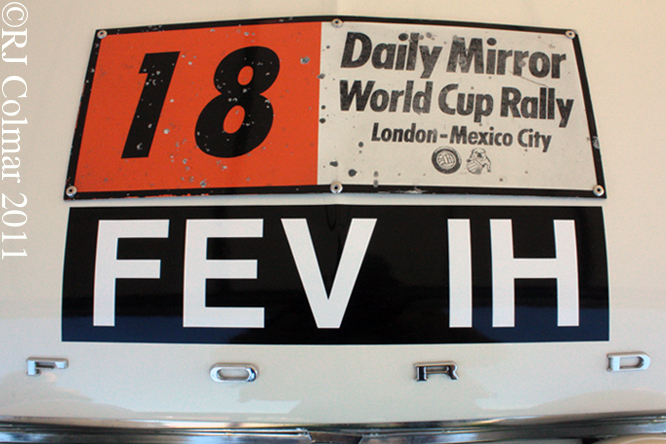
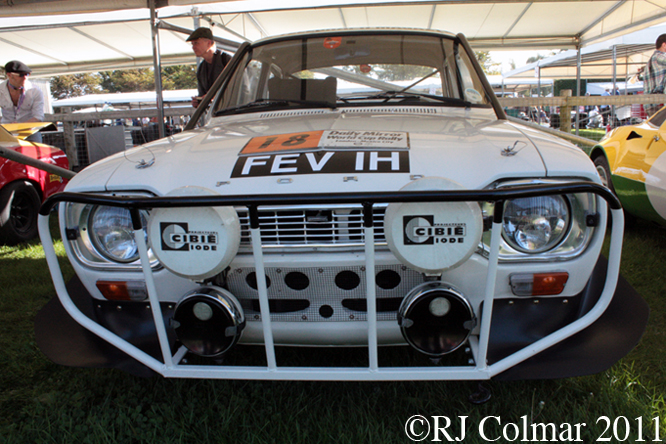
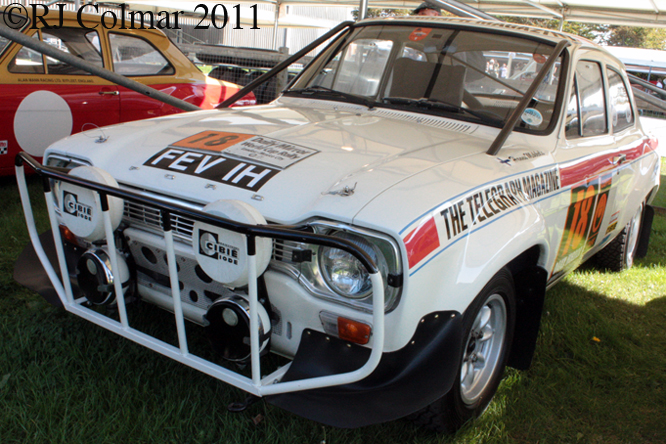
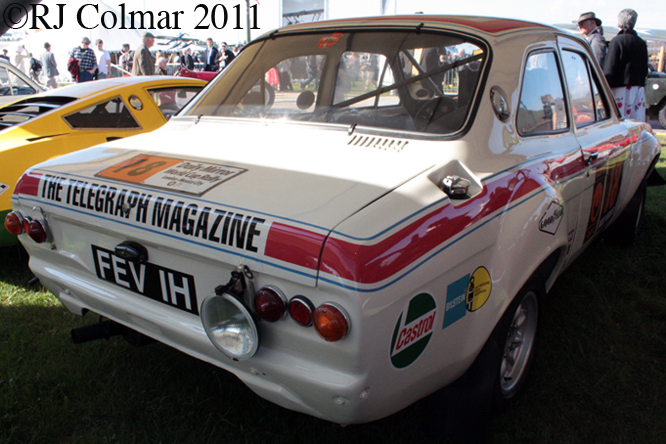
Bombproof Escort – Ford Escort 1850GT FEV 1H

Motorsport owe’s much of it’s history to the publishers of Newspapers keen create events which would resonate and engage their readers, indeed the very first recorded motorsport events emanated from the minds of the editors of ‘Le Vélocipède’, who in 1887 attracted a single car entry for a 1.2 mile race across Paris and ‘Le Petit Journal’, who in 1897 69 entries for a 79 mile ‘race’ from Paris to Rouen. By 1908 individual events took on global challenges such as the 12,000 mile 169 day New York west to Paris race which was co sponsored by The New York Times and Le Martin.

Ford Escort 1850 GT, Goodwood Revival

Possibly inspired by another 10,000 mile ten day event the London to Sydney Rally of 1968, Australian advertising sage Wylton Dickson came up with the idea of organizing a 1970 World Cup Rally to link London which had played host to the 1966 World (Soccer) Cup to Mexico which was to play host to the 1970 World (Soccer) Cup at a party in London over a glass of wine while chatting to Irish Rally Champion Paddy Hopkirk.

Ford Escort 1850 GT, Goodwood Revival

Wylton, who had never so much as seen a rally before approached Stuart Turner Ford competitions manager who gave him the thumbs up and the Daily Mirror who provided the sponsorship for the event. British Rally Champion John Sprinzel was allowed to set up an HQ at the Royal Automobile Clubs Belgrave offices from which to run the whole 16,000 mile event which crossed 26 countries on three continents in 25 days.

Ford Escort 1850 GT, Goodwood Revival

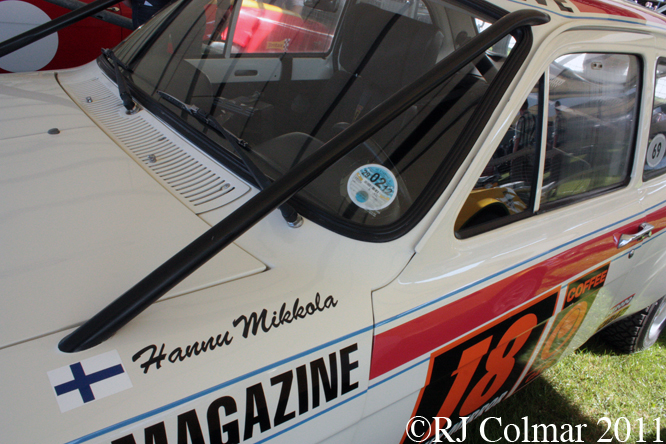
Good to his word when the 1970 World Cup Rally was announced Stuart Turner entered 6 Ford Escorts into the event for Poles Sobieslaw Zasada / Marek Wachowsk, Finns Hannu Mikkola / Gunnar Palm, England soccer star Jimmy Greaves with pro co driver Tony Fall, Monte Carlo Rally winners Raunno Aaltonen / Henry Liddon, British rally stars Roger Clark / Alec Poole and Finish rally legend Timo Makinen co driven by Frenchman Gilbert Staepelaere. Other entries in the 96 car field included a VW Beach Buggy a five car factory Moskivitch team from the USSR and two privately entered Rolls Royce’s a Silver Cloud and a Silver Shadow !

Ford Escort 1850 GT, Goodwood Revival

Ford’s official reason for fitting these bars in front of the windscreen was that they were to protect the drivers from Condors in the Andes mountains of South America, but it has been noted that these bars connect the top of the front suspension towers to the top of the A pillars which coincidentally helps transfer suspension shock to the roof diverting them away from some of the weaker welds in the bodywork.

Ford Escort 1850 GT, Goodwood Revival

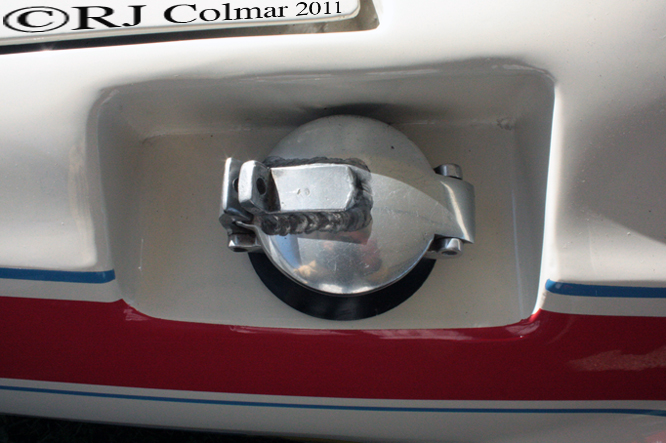
It is thought enough parts were produced for just 8 of the 1970 World Cup spec 1850 GT Escorts, which after the disappointment of easily leading the 1968 London to Sydney Marathon only for the Lotus Twin Cam engine in Roger Clark’s Cortina Lotus to fail, meaning these cars were built to be bomb proof against all foreseeable eventualities. Instead of using Lotus Twin Cam motors Ford Kent 1600cc / 97 cui pushrod motors were bored out to 1850cc / 112 cui fitted with a single Weber carburetor and dry sump lubrication which aids ground clearance. These motors were simple, durable and above all easily repairable, they were tuned to run on the low octane fuel that was to be found in the high altitude andean mountains on the South American legs of the route where stages of 500 plus miles were not uncommon and average speeds in excess of 90 mph were expected in order not to attract penalty points.

Ford Escort 1850 GT, Goodwood Revival

Hannu Mikkola had a relatively trouble free run dropping just 9 hours in penalty points over the course of the 25 day marathon, 4 of the other Escorts in the top 6 of the 23 finishers. During the course of the event FEV 1H became one of the most famous of Rally Vehicles of all time and is still among the most loved. As a result of the 1970 World Cup Rally win Ford launched a new sporty version of the Escort called the Ford Mexico with the 1600 / 97 cui Kent pushrod motor fitted to an Advanced Vehicle Operations strengthened “Type 49” body shell.

In 1995 there was a 25th Anniversary re run of the 1970 World Cup Rally, miraculously Ford ‘found’ a new unused Escort shell and built a new car to the same specifications as FEV 1H. Hannu Mikkola came out of retirement with Gunnar Palm to win the rerun as well, the new cars registration is H1 FEV.

Thanks for joining me on this Bombproof Escort edition of ‘Gettin’ a li’l psycho on tyres’, I hope you will join me again tomorrow. Don’t forget to come back now !
Share

Gatso’s Monte Carlo – Ford Zephyr 6

The largest British Fords from 1950 to 1972 were marketed as the Zephyr and Zodiac models. The first Zephyrs, built between 1951 and 1956, were a longer version of the 4 cylinder Ford Consul fitted with a 70 hp straight six motor.

Ford Zephyr 6, Goodwood Revival

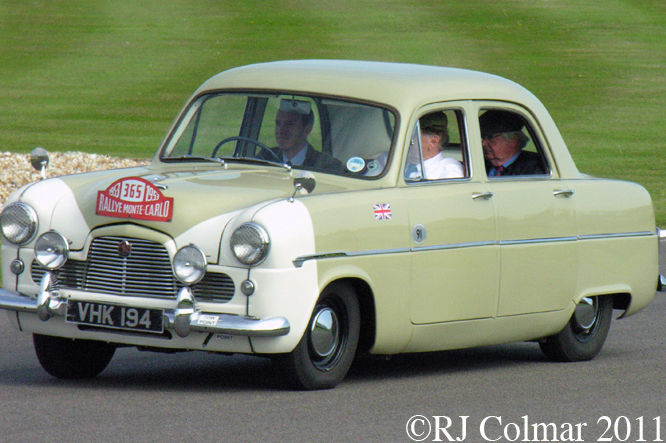
The Zephyr 6 above, seen at the Goodwood Revival, is the reshelled remains of the car that Maurice ‘Maus’ Gatsonides and Peter Worledge drove to victory in the 1953 Monte Carlo Rally.

Many drivers may well have heard of the Gatso speed camera, this was developed by Gatsonides originally so that he could measure and improve his cornering speeds in competition.

When ‘Maus’ drove ‘VHK 194’ to his Monte victory it was a Left Hand Drive car that was reshelled into a Right Hand Drive model after sustaining comprehensive damage in an accident.

Richard Dredge drove VHK 194 a couple of years ago. In his amusing report Richard stated the motor has good torque, but not much top end and that the ergonomics appeared to be an after thought, describing the bench seat as giving ‘all the support of a water bed.’

In 1955 Vic Preston Sr and DP Marwaha drove a similar Ford Zephyr 6 to victory on the East African Safari Rally.

Thanks for joining me on this ‘Gatso’ edition of ‘Gettin’ a li’l psycho on tyres’, I hope you will join me again tomorrow. Don’t forget to come back now !
Share

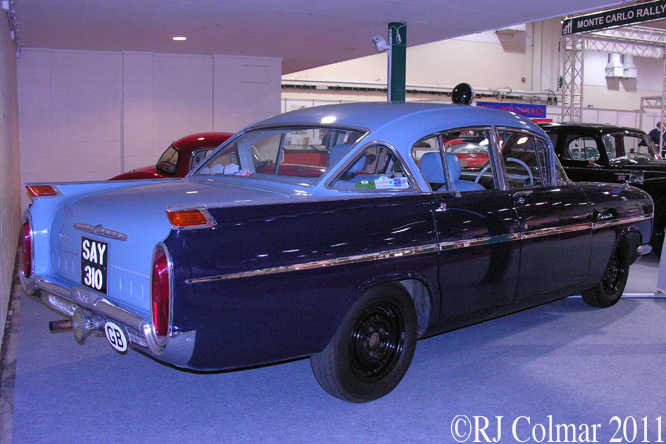
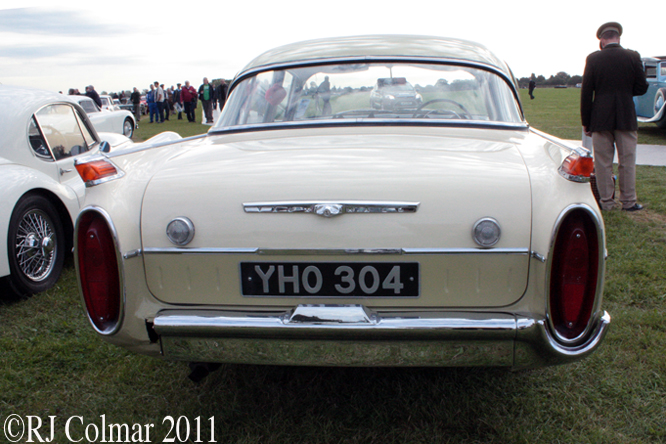
Dream Car – Vauxhall Cresta PA

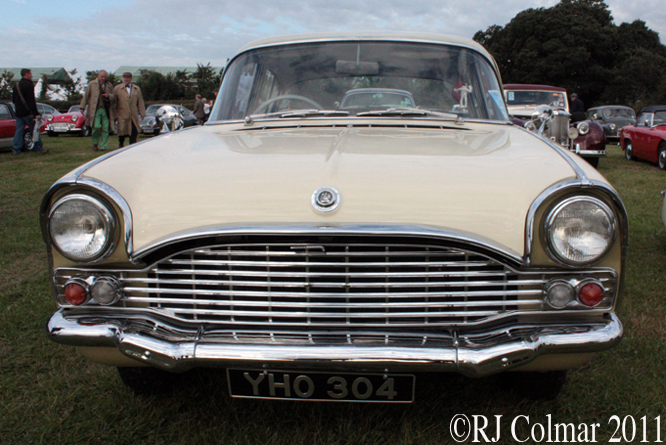
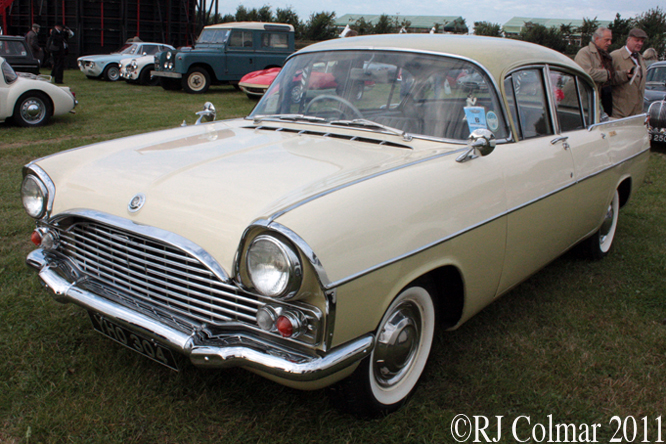
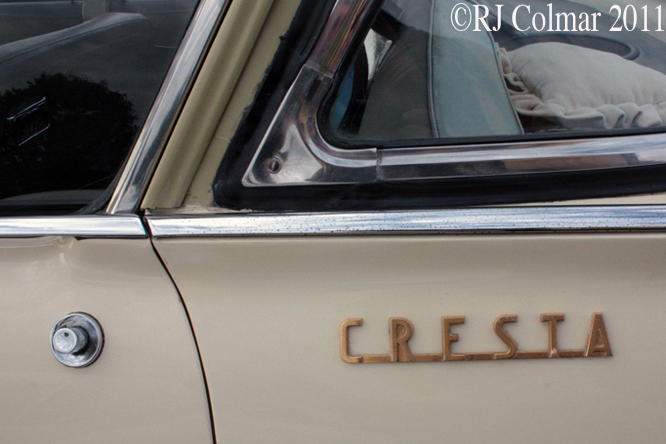
I don’t believe it is any exaggeration to say that no other British mass production vehicle quite captured the spirit of the US Dream Car concepts of the 1950’s quite like the second iteration of the Vauxhall Cresta known as the PA.

1958 Vauxhall Cresta, Race Retro

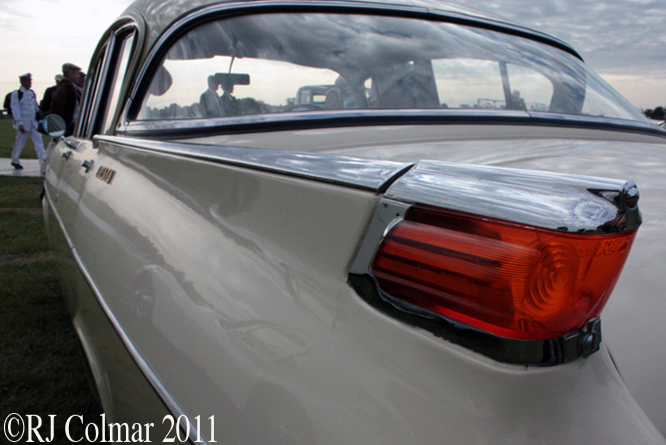
With unadulterated optimistic styling that mimics both the Packard Caribbean production car and Lincoln Futurama Concept car of 1955 the Cresta PA personifies the Rock’n’Roll era of the 1950’s in much the same way as the 1957 Cadillac Series 62.

1958 Vauxhall Cresta, Goodwood Revival

The Cresta PA could seat six with a three abreast bench seat up front, which thanks to a column shift for its three speed gearbox and dashboard mounted handbrake facilitated easy smooching twixt driver and companion.

1958 Vauxhall Cresta, Goodwood Revival

Both of the cars featured in today’s post were powered by a 2262 cc / 138 cui straight 6 cylinder motor that delivered 70 hp enough for the Cresta to reach 60 mph from rest in 16.8 seconds and a top speed of 89 mph.

1958 Vauxhall Cresta, Race Retro

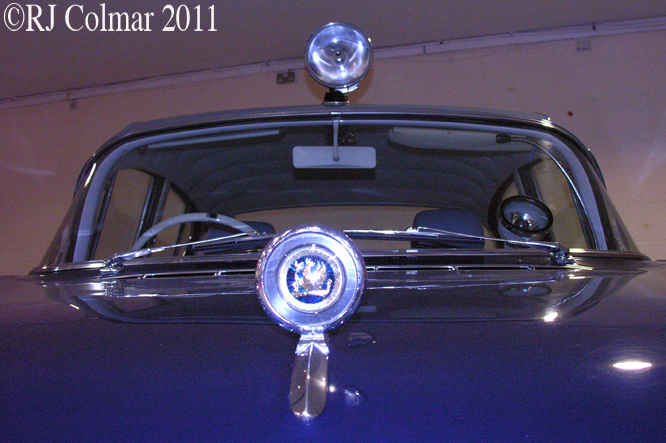
This two tone blue example appears to be a 1958 model, it was used by John Walker and Frank Dimblebee in the 1960 Monte Carlo Rally.

1958 Vauxhall Cresta, Goodwood Revival

Seats covered in leather and nylon, fitted woven carpets and a heater came fitted as standard for the 1960 model above.

1958 Vauxhall Cresta, Goodwood Revival

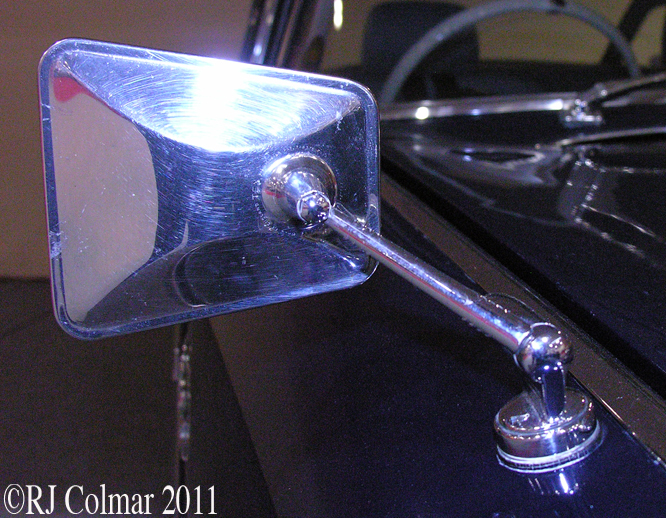
Options included radio, fog lights, reversing lights, locking filler cap and external mirrors.

1958 Vauxhall Cresta, Race Retro

The asking price for one of these classics in good condition today is around £10,000 which reflects the fact that few of the 81,841 PA’s built between 1957 and 1962 have survived.

1960 Vauxhall Cresta, Goodwood Revival

Fans of British ska band The Specials may remember a Cresta PA featured in the video for their seminal hit ‘Ghost Town‘, that was a 1962 model fitted with a larger 104 hp 2651 cc / 162 cui straight six.

Hope you have enjoyed this British Dream Car edition of ‘Gettin’ a li’l psycho on tyres’ and that you will join me again tomorrow. Don’t forget to come back now !
Share

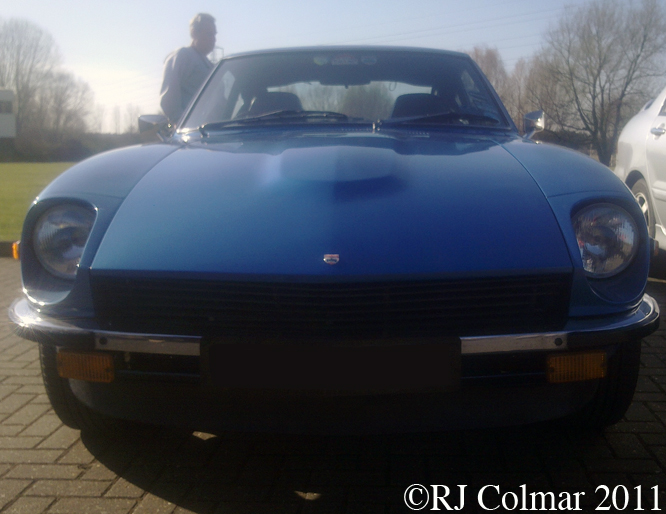
Nissan’s Fairlady – Datsun 240 Z

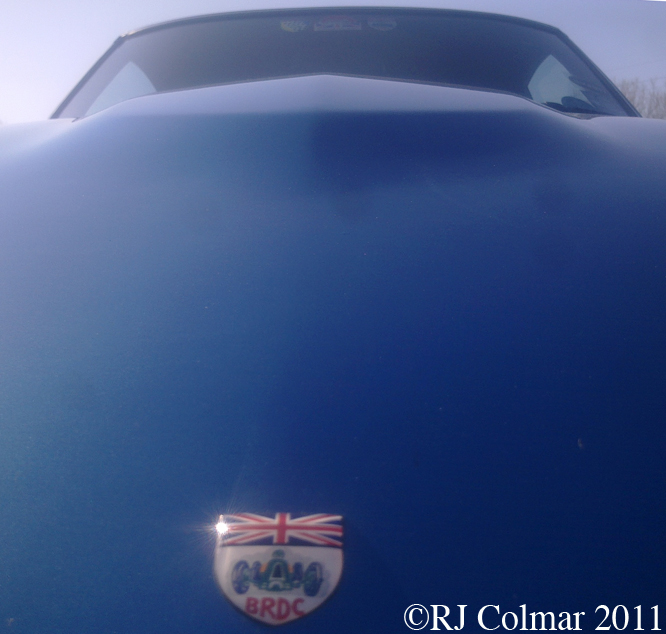
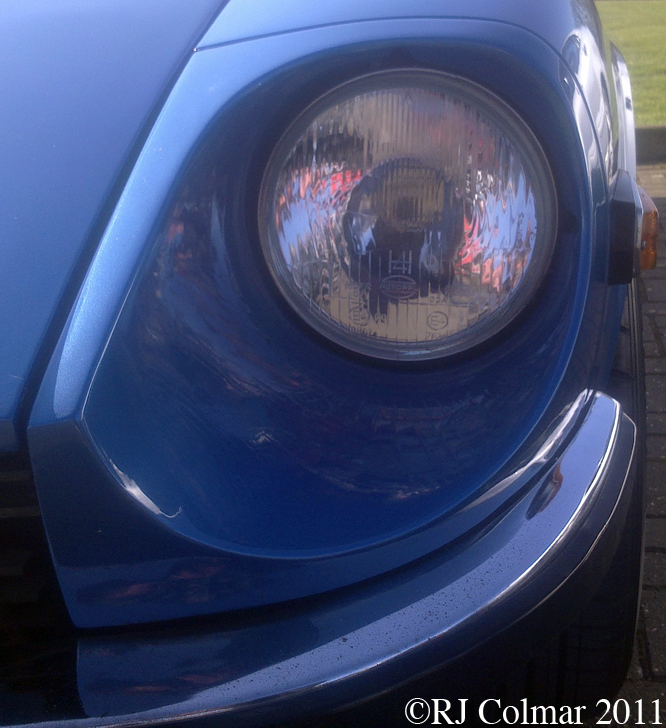
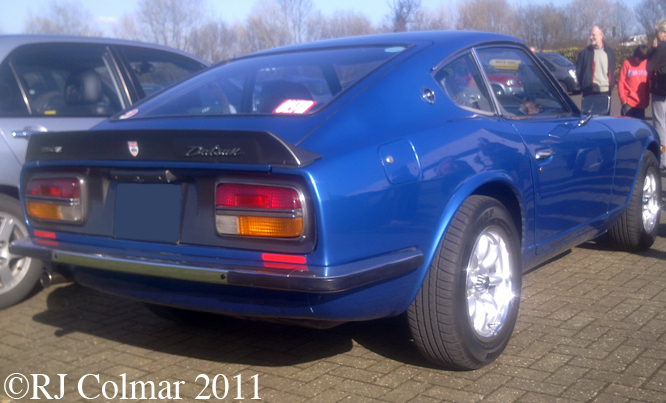
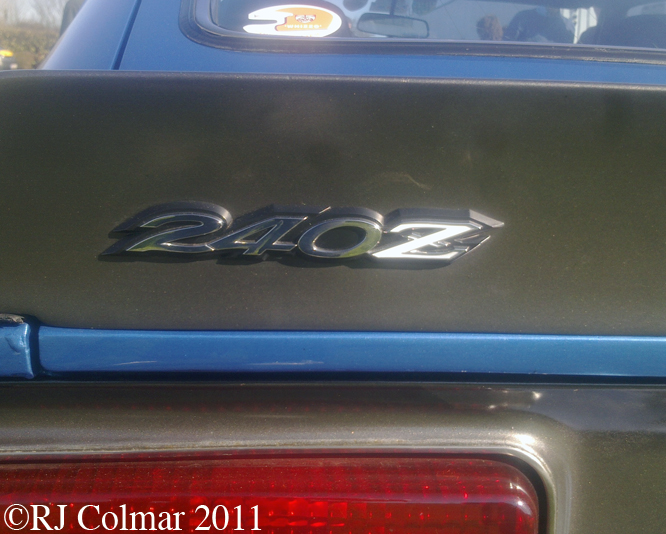
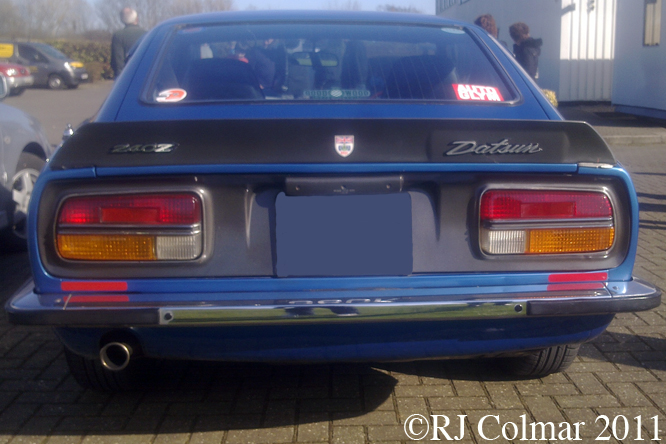
Datsun 240 Z

BRDC are the initials of the British Racing Drivers Club and signify that the owner of this vehicle, well known rally and racing driver Barrie ‘Whizzo’ Williams, is a member.

Datsun 240 Z

The Datsun 240 Z, featuring styling cue’s taken from the E-Type Jaguar, was in production from 1970 – 1973.

Datsun 240 Z

Unknown to me until I wrote this, in Japan 2 litre / 122 cui in line 6 cylinder versions of the 240 Z, known locally as the Nissan Fairlady Z, were available with single and double overhead cam options.

Datsun 240 Z

For the rest of us the 150 hp 2.393 cc / 146 cui single overhead cam six cylinder is the more familiar motor. This vehicle is easily identified as a second series model by the Z in the circle on the C pillar.

Datsun 240 Z

Amazingly in 1971 and 1973 Datsun 240 Z’s driven by Edgar Hermann and Shekhar Mehta respectively won the gruelling East African Safari Rally proving this was no flimsy boulevard cruiser.

Datsun 240 Z

In 1996 Nissan launched a programme to buy 240 Z’s back and restore them to factory specifications and sold them for $24,000.

Hope you have enjoyed today’s Fairlady edition of ‘Getting a lil’ psycho on tyres’ and that you will join me again tomorrow. Don’t forget to come back now !
Share