Tag Archives: Ralph

When The Going Gets Cool – 24 Hours Of Le Mans

This years Le Mans 24 Hours race was probably won when someone at Porsche decided that this years 919 Hybrid challenger needed to be upgraded from last years 6MJ class to run in the 8MJ class, evidence of this was first hinted at by the 919’s performance on the Hangar Straight at Silverstone earlier in the year.
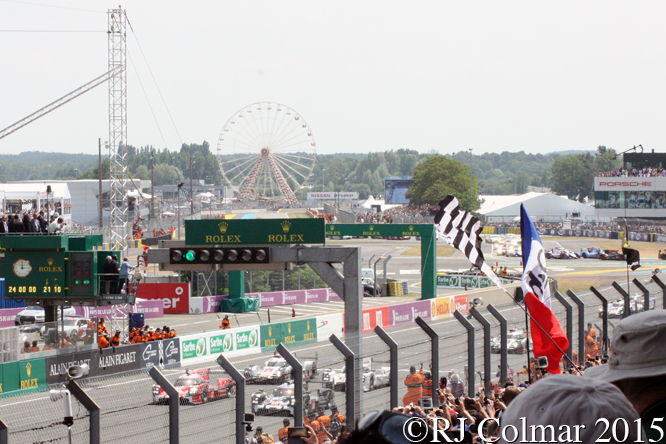
Le Mans 2015

Qualifying this year was a simple affair, the three Porsche 919 Hybrids locked out the first three places with the #18 car of Marc Lieb, Romain Dumas and Neel Jani on pole after setting a blistering pace with a time of 3m 16.887s in the opening qualifying session, next came the three Audi R18 e-tron quattro’s with the #8 driven by Loïc Duval, Lucas di Grassi and Oliver Jarvis starting 4th followed by the two Toyota TS040 Hybrid’s who’s #2 driven by Alexander Wurz, Stéphane Sarrazin and Mike Conway started 7th, the first seven cars are seen above taking the prompt 3pm start of the race.
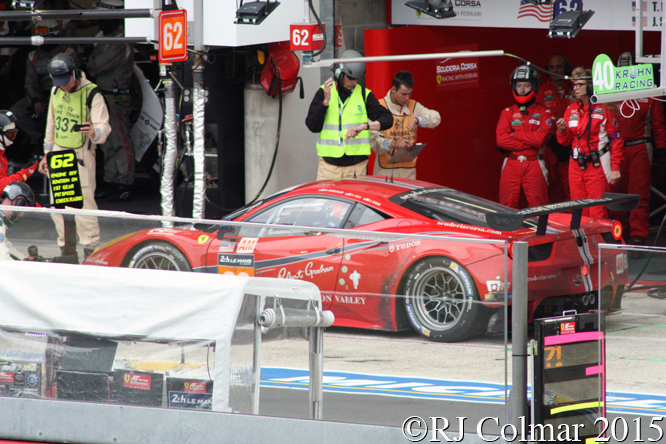
Ferrari 458 Italia GT2, Bill Sweedler, Townsend Bell, Jeff Segal, Le Mans,

The American entered Scuderia Corsa #62 Ferrari 458 Italia GT2 of Bill Sweedler, Townsend Bell and Jeff Segal looked set for a fourth place finish in the GTE Am class at it’s final pit stop seen above. Then with less than an hour to go long time GTE Am leader and class pole starter Paul Dalla Lana inexplicably shot across the kitty litter at the Ford Chicane and hit the wall so hard as to retire his #98 Aston Martin Vantage V8 from the race instantly, fortunately without injury to the driver, all of which promoted all those behind him up one place in class meaning the #62 finished third in GTE Am, and 24th overall from 51st on the grid.
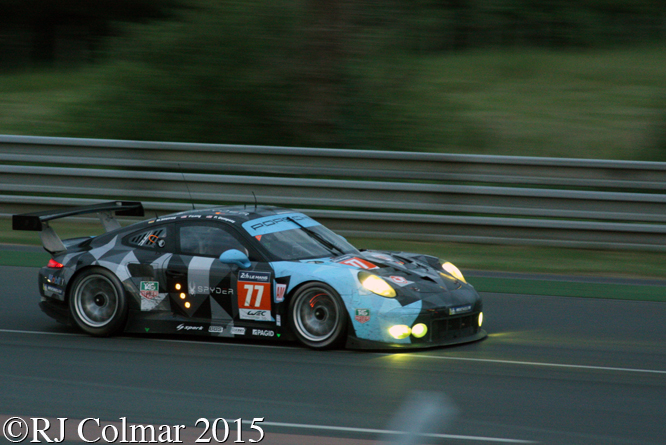
Porsche 911 RSR, Patrick Dempsey, Patrick Long, Marco Seefried, Le Mans,

A popular second in the GTE Am class after fending off the #62 Scuderia Corsa Ferrari was the #77 Dempsey-Proton Racing Porsche 911 RSR driven by Patrick “Grey’s Anatomy” Dempsey, Patrick Long and Marco Seefried seen approaching the Porsche curves above on it’s way to a 22nd place overall finish from 47th on the grid.
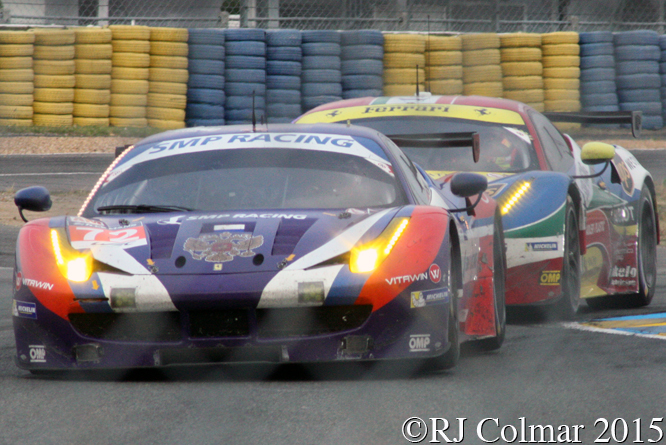
Ferrari 458 Italia GT2, Viktor Shaitar, Aleksey Basov, Andrea Bertolini, Le Mans,

After the retirement of the #98 Aston Martin the #72 Ferrari 458 Italia GT2 shared by Viktor Shaitar, Aleksey Basov and Andrea Bertolini only had to avoid beaching itself in the gravel as it had done at Indianapolis earlier in the race to score a first Le Mans class win for a Russian entrant, the SMP Racing #72 Ferrari is seen at the Dunlop Chicane on the Saturday evening as it headed for a 20th place finish overall from 43rd on the grid.
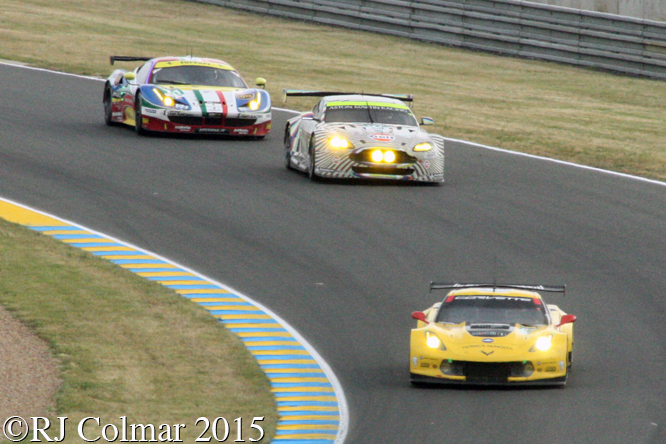
GT Pro, Le Mans

5 hours into the race the three leading GTE Pro runners were still racing nose to tail, above the #64 Corvette CR.7 is seen above being chased by the #97 Aston Martin and #51 Ferrari through the Chapel Descent.
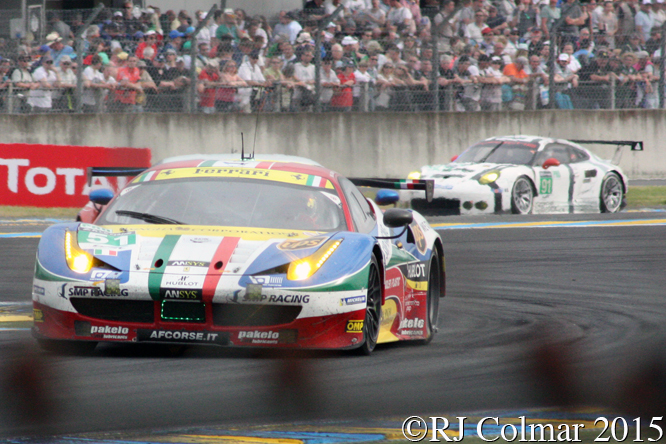
Ferrari 458 Italia GT2, Gianmaria Bruni, Giancarlo Fisichella, Toni Vilander, Le Mans,

Unfortunately the #97 Aston Martin shared by Darren Turner, Stefan Mücke and Rob Bell retired after the latter damaged the oil feed on a kerb after completing 110 laps, this left the AF Corse #51 Ferrari 458 Italia GT2 shared by Gianmaria Bruni, Giancarlo Fisichella and Toni Vilander to recover from a fifth hour puncture and challenge the #64 Corvette with 2 hours to go. An hour later the #51, seen above at Dunlop Chicane, pitted with a gearbox problem and returned to the track after a 30 minute break to hold on to a third in GTE Pro and 25th place overall from 35th on the grid.
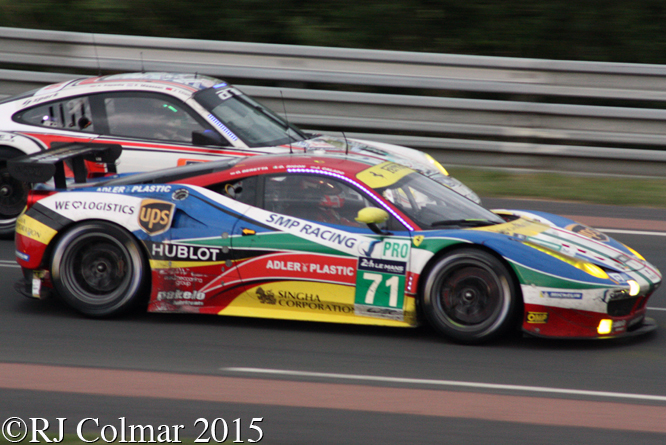
Ferrari 458 Italia GT2, Davide Rigon, James Calado, Olivier Beretta, Le Mans,

Davide Rigon, James Calado and Olivier Beretta finished 2nd in the GTE Pro class, 21st overall, from 54th on the grid after a qualifying penalty was applied, having dropped out of contention for the class lead when the alternator on the #71 AF Course Ferrari 458 Italia GT2 was replaced at the cost of four laps.
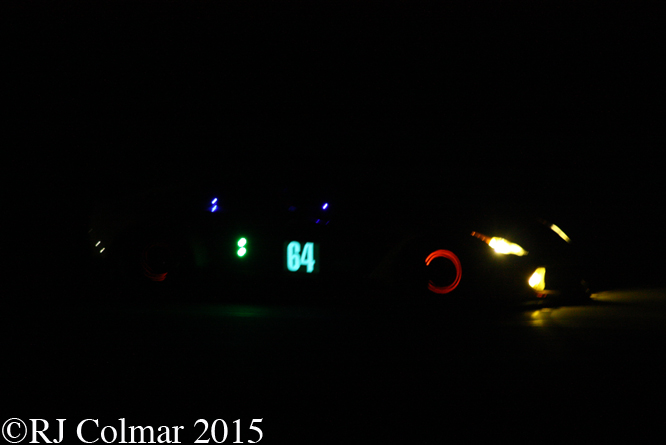
Chevrolet Corvette C7.R, Oliver Gavin, Tommy Milner, Jordan Taylor, Le Mans,

Despite being the slowest GTE Pro car to qualify and starting from 43rd on the grid the works Corvette Racing-GM C7.R driven by Oliver Gavin, Tommy Milner and Jordan Taylor came through to win the class and finish 17th overall 5 laps ahead of it nearest rival. The car proved to be bullet proof reliable and comfortable enough to drive at a pace that always kept it in contention if not ahead of the GTE Pro pack.
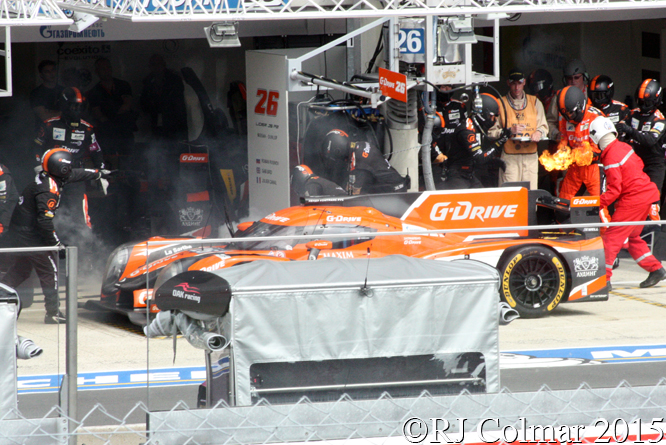
Ligier JS P2, Roman Rusinov, Julien Canal, Sam Bird, Le Mans,

Starting from 12th on the grid, 2nd in the LMP2 class, the last thing Sam Bird needed on his first pit stop was for his G-Drive Racing #26 Nissan powered Ligier JS P2 to catch fire along with the gloves of one of his mechanics as seen above. After the fires were quelled without injury, Sam with team mates Roman Rusinov and Julien Canal ran 2nd in class until they were demoted to 3rd in LMP2 during the 23rd hour of the race, where they remained finishing 11th overall.
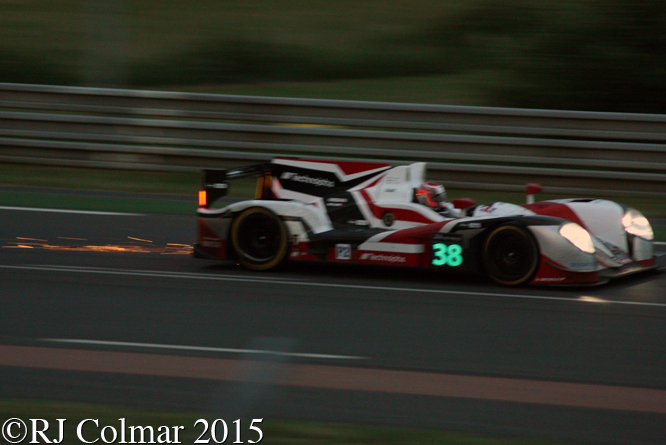
Gibson 015S, Simon Dolan, Oliver Turvey, Mitch Evans, Le Mans,

Fastest LMP2 car in the race belonged to the Jota Sport, who’s Gibson 015S, formerly known as a Zytek when it won the LMP2 class last year, driven by Simon Dolan, Oliver Turvey and Mitch Evans, lost three laps to a sensor change before the trio completed the come back drive of the race to finish, just 48 seconds adrift of this years LMP2 winners, in 10th place overall from 14th on the grid.
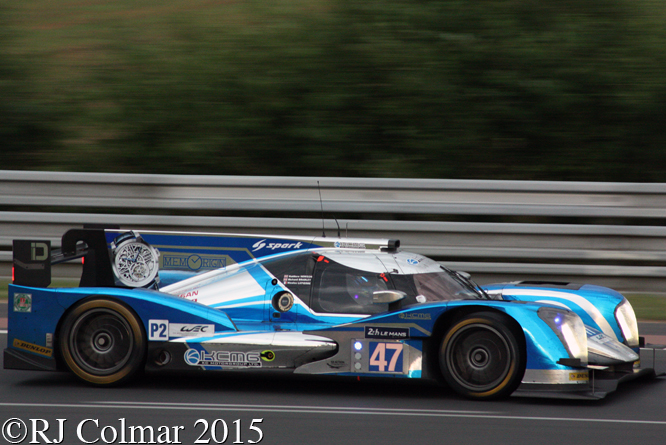
Oreca 05, Matthew Howson, Richard Bradley, Nicolas Lapierre, Le Mans,

Similarly Nissan powered as the 2nd and 3rd place LMP2 class finishers the Hong Kong based KCMG team’s new #47 Oreca 05 coupé is built to the LMP2 regulations mandated for 2017, drivers Matthew Howson, Richard Bradley and Nicolas Lapierre started from class pole and 11th on the grid. Apart from a drive through penalty for a pit lane infringement, a stop to fix a dicky illuminated number the car should have comfortably won it’s class, but two kitty litter excursions at the Mulsanne and Indianapolis corners on Sunday meant the three top LMP2 cars all completed 358 laps, with the #47 9th overall.
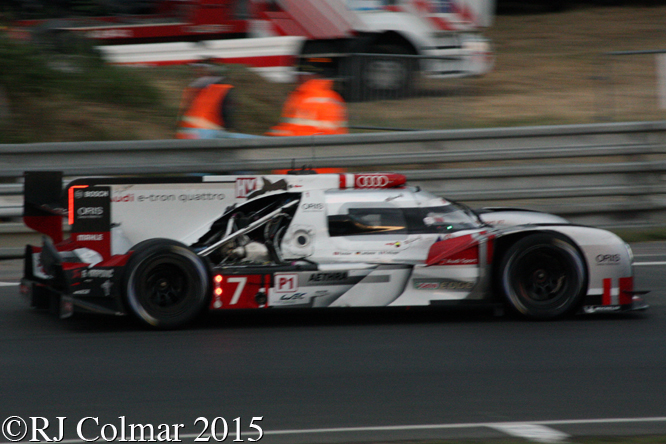
Audi R18 e-tron quattro, André Lotterer, Marcel Fässler, Benoît Tréluyer, Le Mans,

From fifth on the grid André Lotterer showed his hand early by passing two Porsche 919’s for the lead on the same lap after the first safety car period, however in the third hour team mate Benoît Tréluyer suffered a puncture and then glanced the barriers at Tetre Rouge handing the advantage back to the two leading Porsche’s. Further troubles for the Audi Sport Team Joest #7 Audi R18 e-tron quattro manifested themselves when a part of the rear body work flew off, as seen above, when Marcel Fässler was at the wheel 16 hours into the race four hours before the car received a drive through penalty for a slow zone misdemeanor. Then 21 hours from the start André set the fastest race lap, 3m 17.475s, and thereafter unscheduled stops for more bodywork repairs and oil were insufficient to prevent the car from finishing on the third, just two laps down on the winning car.
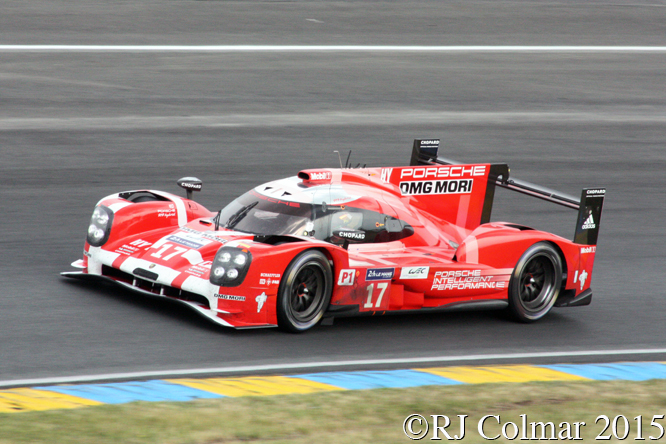
Porsche 919 Hybrid, Timo Bernhard, Brendon Hartley, Mark Webber, Le Mans

The #17 Porsche 919 Hybrid driven by Timo Bernhard, Brendon Hartley and Mark Webber starting from second on the grid was the early leader of the race and despite giving up the lead temporarily to André Lotterer’s Audi it maintained the advantage if not always in the lead until midnight when the car was penalised for slow zone misdemeanor by Brendon Hartley with a stop go penalty that handed the advantage to the sister #19 919 Hybrid. The #17 could not keep pace with it’s sister through the night and eventually finished 1 lap down in 2nd place at the finish despite spending the least amount of time, 29m 42.060s, in the pits of any competitor.
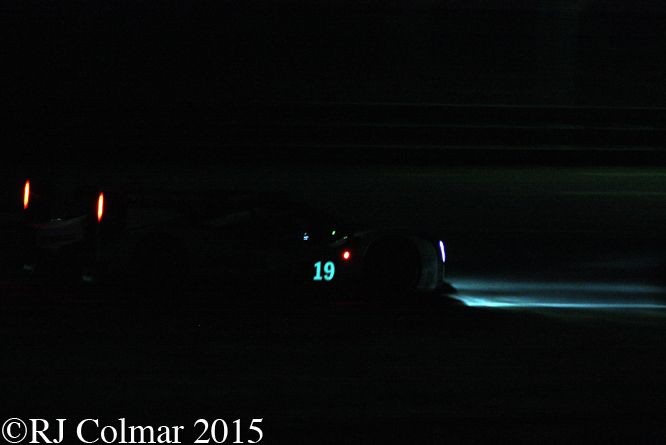
Porsche 919 Hybrid, Earl Bamber, Nick Tandy, Nico Hülkenberg, Le Mans,

Starting from third on the grid the #19 driven by Le Mans novices Earl Bamber and Nico Hülkenberg sharing with two time LMP2 Le Mans starter Nick Tandy, performed better than all the others during the cooler night time conditions so that, even with a 10 second delay due to an overcrowded pit and a brief visit to the garage during a safety car period to repair some damage incurred by Nico after he tapped a back marker, the #19 was able to comfortably lead the #17 over the finish line just three laps short of setting a record distance for the event.
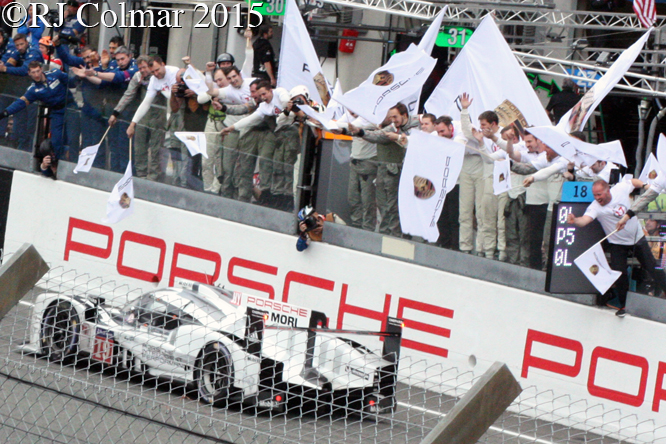
Porsche 919 Hybrid, Earl Bamber, Nick Tandy, Nico Hülkenberg, Le Mans,

The decision to run in the 8 MJ class benefited Porsche not only with consistently better top speeds on the long Mulsanne Straight, but also with a superior fuel consumption that over the 24 hours was estimated to have handed Porsche a 2 and half minute advantage over Audi thanks to four seconds saved per fuel stop.
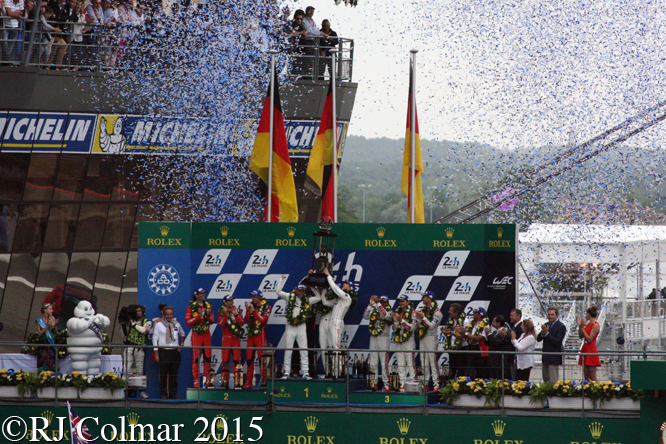
Le Mans LMP1 Podium, Ickx, Tréluyer, Lötterer, Fässler, Tandy, Bamber, Hülkenberg, Webber, Hartley, Bernhard,

By winning this race Porsche, who last won the race in 1998, can now claim a record 17 Le Mans wins, four more than Audi, but more importantly the victory has proved the technology which sits in it’s 918 Spyder road cars that cost upwards of UK£750,000 / US$850,000.

Special thanks to my school friend Tom for getting me to the race for the first time since 1992.

Thanks for joining me on this “When The Going Gets Cool” edition of “Gettin’ a li’l psycho on tyres” I hope you will join me again tomorrow when I’ll be looking at a US Le Mans challenger. Don’t forget to come back now.

Share

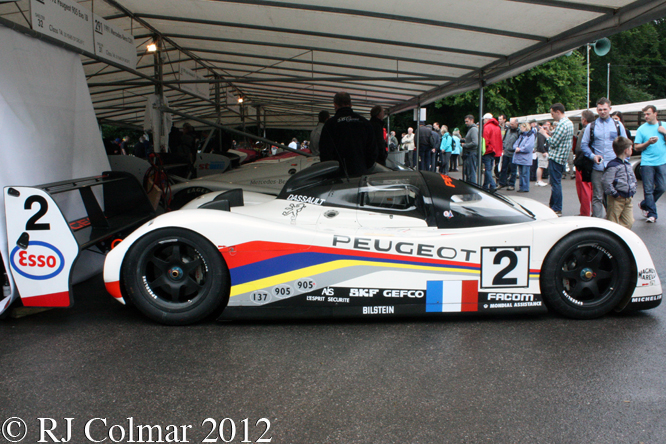
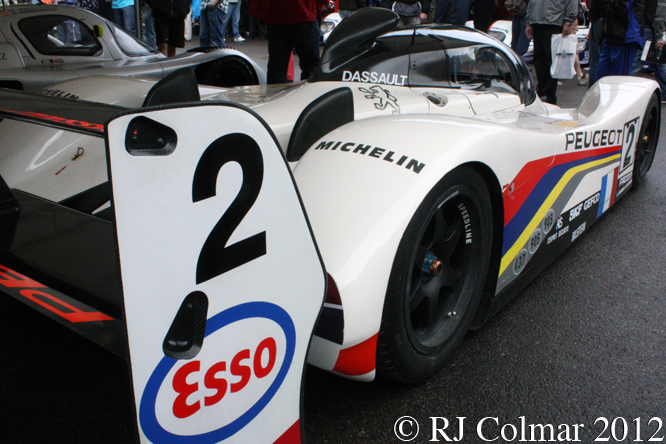
Le Pole Again – Peugeot 905 EVO1 Bis LM #EV11

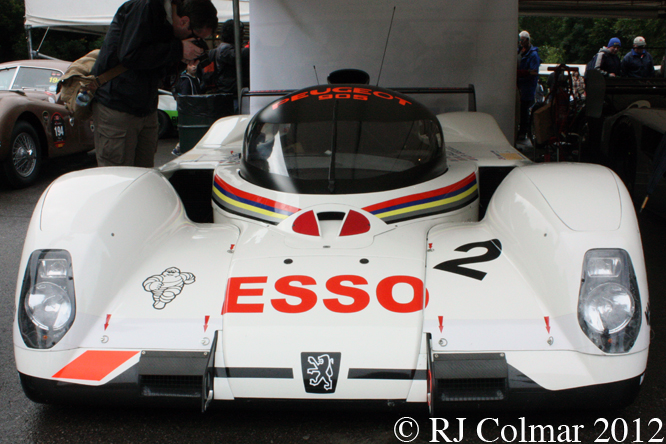
In 1990 Peugeot Talbot Sport launched it’s 905 sports car programme to compete in the new 3.5 litre / 216 cui sports car class that was to commence in 1991.

The 905 was powered by a V10 motor with the two banks of cylinders inclinded at 80º and featured a carbon fibre monocoque engineered by the Dassault aerospace manufacturer.

Keke Rosberg and Jean-Pierre Jabouille shared a 905 for the last two races of the 1990 World Sports Prototype Championship with their only finish coming at Mexico where they finished 13th from 11th on the grid.

Peugeot 905 Evo 1 Bis LM, Goodwood, Festival of Speed,

Mauro Baldi and Philippe Alliot won the opening round of the 1991 Sportscar World Championship at Suzuka from 4th on the grid driving a 905, but there after the 905’s reliability nose dived as they tried to keep up with the much faster Jaguar XJ14.

After both 905’s retired before the four hour mark from the 1991 Le Mans 24 hours the cars were heavily revised with a more powerful engine supported by a more sophisticated aero package that include two rear wings and the option for a front wing.

Magny Cours and Mexico saw the heavily revised cars score 1-2 victories with Keke Rosberg and Yannick Dalmas leading Phillipe Alliot and Mauro Baldi home on both occasions, but too late to prevent Jaguar and Teo Fabi from winning the Manufacturers and Drivers Championships.

Peugeot 905 Evo 1 Bis LM, Goodwood, Festival of Speed,

Jaguar withdrew from the sport at the end of 1991 leaving Peugeot, Yannick Dalmas and Jaguar refugee Derek Warwick to claim the 1992 World Sportscar Manufacturers and share the Drivers titles, the teams only opposition in the six race series came from Toyota who only won the opening round.

With little manufacturer support the 1993 World Sportscar series was cancelled and the 905’s only two appearances were at the Le Mans Test weekend where, Philippe Alliot and Mauro Baldi were quickest and at the Le Mans 24 Hours.

The paintwork on today’s featured car suggests that this might be the chassis, #EV11, which was used as a spare car in the last two races of the 1990 season and was then not seen again until the 1993 Le Mans 24 hours where it appeared in EVO 1 Bis LM spec for Philippe Alliot, Mauro Baldi and Jean-Pierre Jabouille who qualified on pole, as the same trio had done a year earlier driving chassis #EV16.

Peugeot 905 Evo 1 Bis LM, Goodwood, Festival of Speed,

The 1993 Le Mans 24 Hour race proved to be a walkover for the Peugeot team who finished 1st, 2nd and 3rd with Philippe, Mauro and Jean-Pierre in third place exactly as they had been in 1992.

Thanks for joining me on this “Le Pole Again” edition of “Gettin’ a li’l psycho on tyres” I hope you will join me again tomorrow when I’ll be running through all the podium finishers from this years thrilling Le Mans 24 Hours race. Don’t forget to come back now !

Share

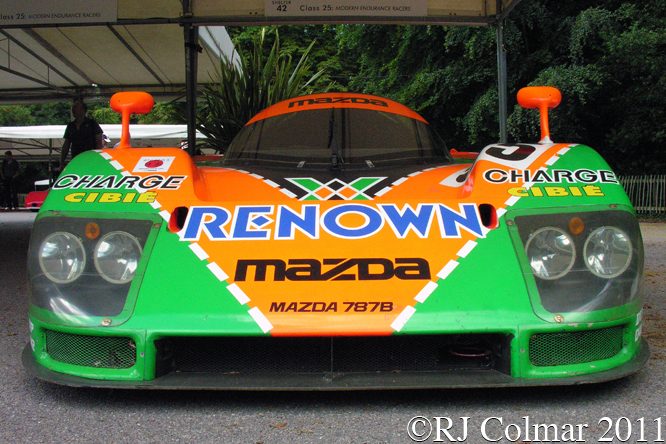
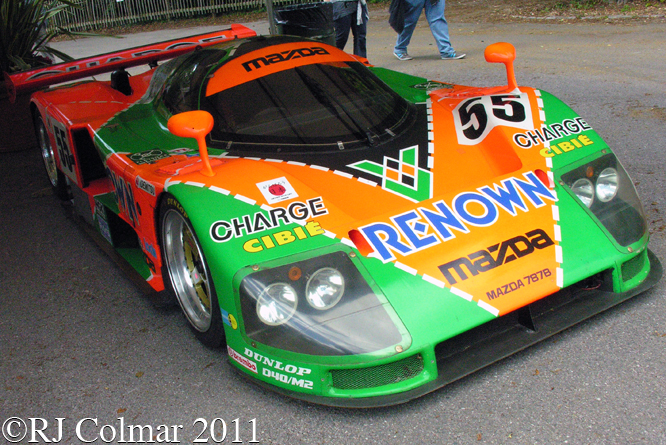
ECU Controlled Telescopic Intake Runners – Mazda 787B #002

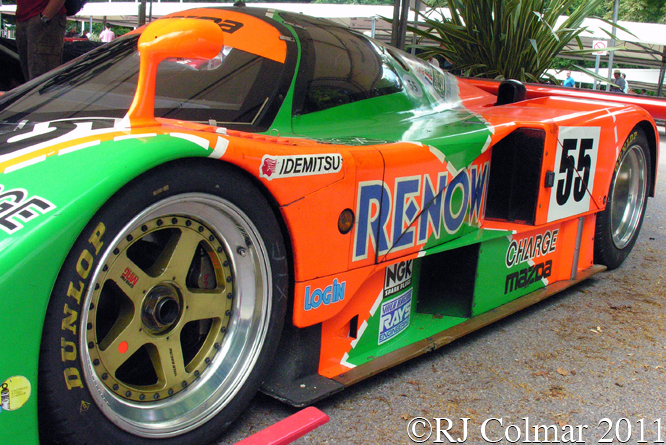
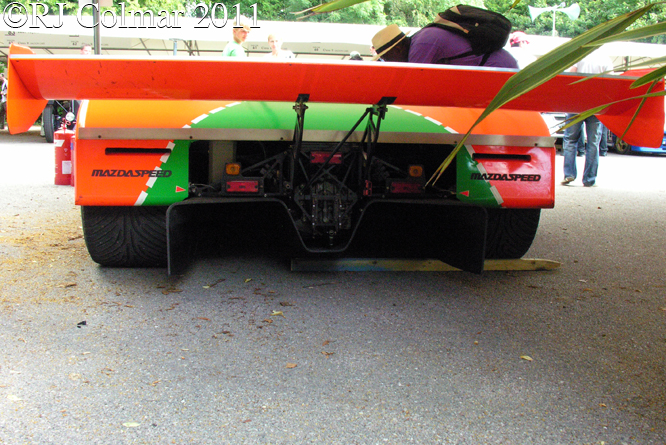
The news from Mazdaspeed in 1990 was that they had further developed their 4 rotor wankel to include stepped variable telescopic intake runners and three spark plugs per rotor so that their motors could produce a peak 900 hp or 700hp in race configuration.

Mazda 787B, Goodwood Festival of Speed,

To cope with the new demands of the more powerful motor Nigel Stroud designed the 787 chassis which most obviously differed from it’s 757 and 767 predecessors by having more forward weight distribution with front mounted radiator with vents in front of the windscreen replacing the previous side mounted radiators.

Mazda 787B, Goodwood Festival of Speed,

Two 787’s were built for the 1990 season, both cars retired from the 1990 Le Mans race and the best result for the 787 was recorded in 1991 at the Nurburgring where Maurizio Sandro Sala and David Kennedy finished 5th from 14th on the grid.

Mazda 787B, Goodwood Festival of Speed,

For 1991 the four rotor wankels were further upgraded with ECU controlled continuously variable telescopic intake runners which optimised engine power and torque at varying rpm.

Mazda 787B, Goodwood Festival of Speed,

Three new 787B chassis were built for the 1991 season and the two existing 787’s were fitted with the continuously variable intake motors.

Mazda 787B, Goodwood Festival of Speed,

The 787B’s proved far more reliable than the 787 predecessor clocking up two 6th place finishes at Suzuka and Fuji before two 787B’s were sent to Le Mans.

Mazda 787B, Goodwood Festival of Speed,

Unlike the old turbocharged Group C cars which had to run a 1000kg weight limit the IMSA GTP spec Mazda was allowed to run at 830 kgs.

Mazda 787B, Goodwood Festival of Speed,

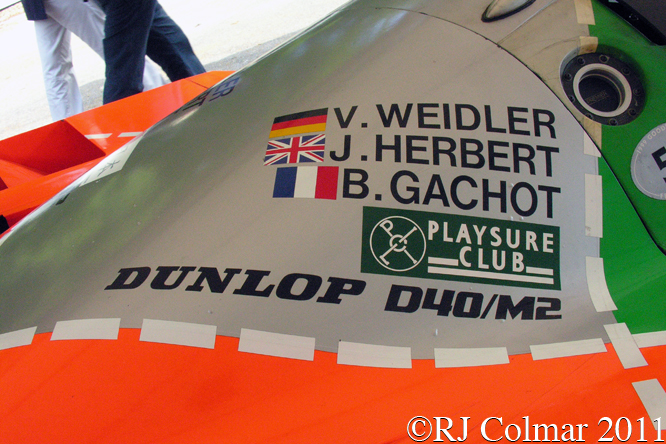
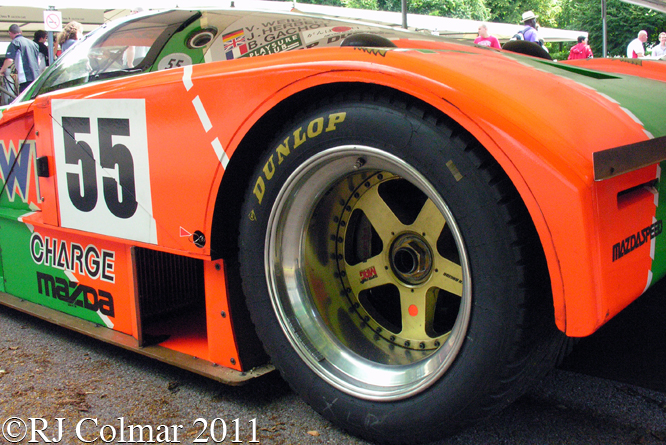
As a consequence the #55 787B chassis #002 featured today driven by Johnny Herbert, Volker Weidler and Bertrand Gachot which started only 19th on the grid, 12th fastest qualifier, came through to score the first Le Mans win for a car powered by a non reciprocating engine and the first and so far only Le Mans win for a Japanese manufacturer after all the faster, but heavier Group C turbo cars had wilted.

Thanks for joining me on this “ECU Controlled Telescopic Intake Runners” edition of “Gettin’ a li’l psycho on tyres” I hope you will join me again tomorrow when I’ll be looking at a French Le Mans challenger. Don’t forget to come back now !

Share

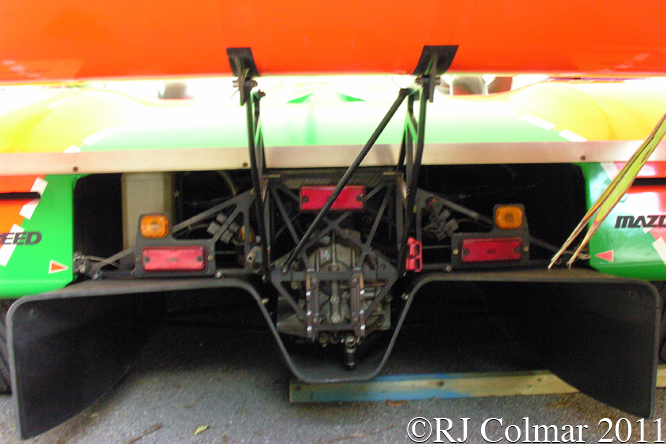
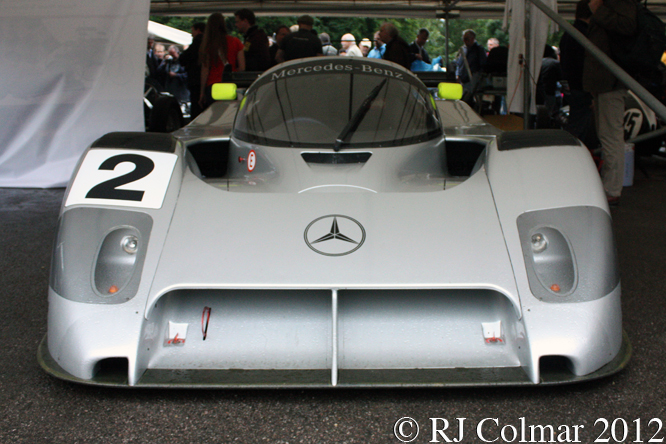
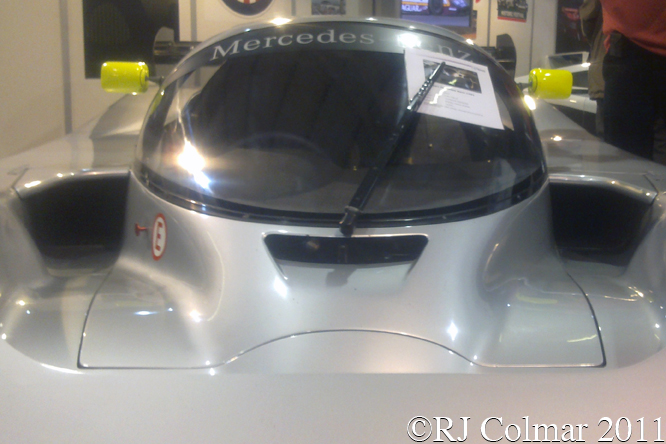
Lowering The Centre Of Gravity – Mercedes Benz C291

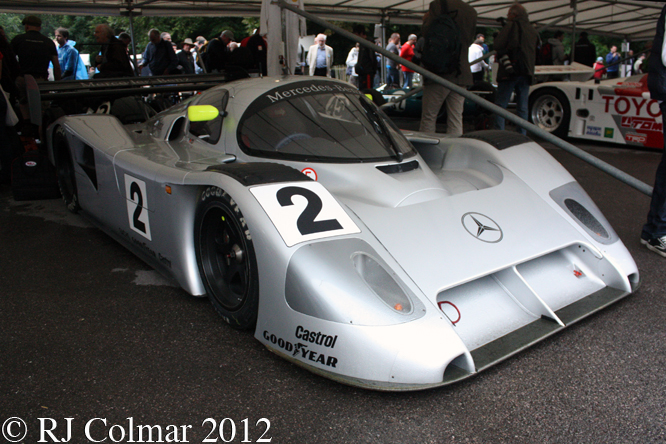
When the rules of the Group C Sports cars were ruined for the 1991 season, to the advantage of Formula One, at the behest of Messrs Ecclestone and Moseley to mandate 750kg vehicles to be powered by 3.5 litre / 213 cui motors of the same size as had been introduced to Formula One in 1989 Dr Hermann Hiereth sat down at Mercedes Benz offices in Stuttgart-Ünterturckheim and devised a flat 12 engine with transverse gearbox that lowered the center of gravity compared to the twin turbo V8 design that was being used to power the Group C Sauber C9 and C11 designs for the 1989 and 1990 seasons.

Mercedes Benz C291, Race Retro, Stoneleigh

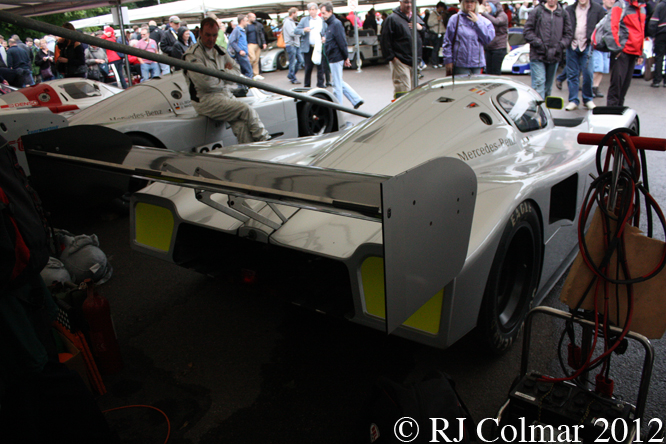
Unfortunately Leo Ress responsible for chassis design at Sauber based in Hinwill, Switzerland was not present at the meeting in Stuttgart when the new engine layout was approved and so he had to make do with a low wide power unit that limited his options for the ground effect venturi that helped to suck the car to the ground as had become de riguer in racing cars since the advent of the Lotus 79 Formula One car.

Mercedes Benz C291, Goodwood Festival of Speed,

Perhaps as a consequence of these restrictions Leo was left with no choice but to design a car that optimised top speed at the cost of handling, the exact opposite of what his rivals at Jaguar and Peugeot were doing with their V8 and V10 powered challengers.

Mercedes Benz C291, Race Retro, Stoneleigh

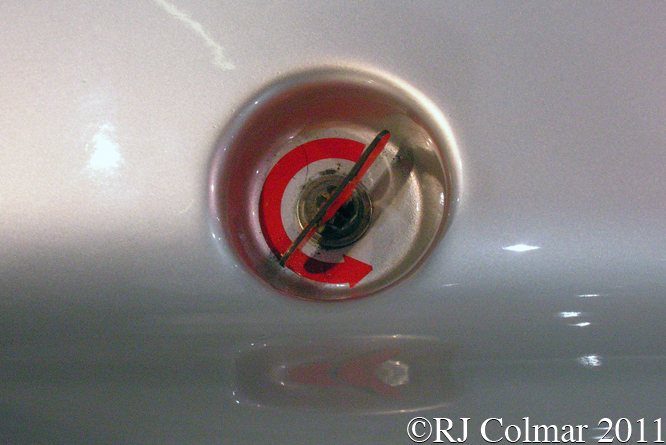
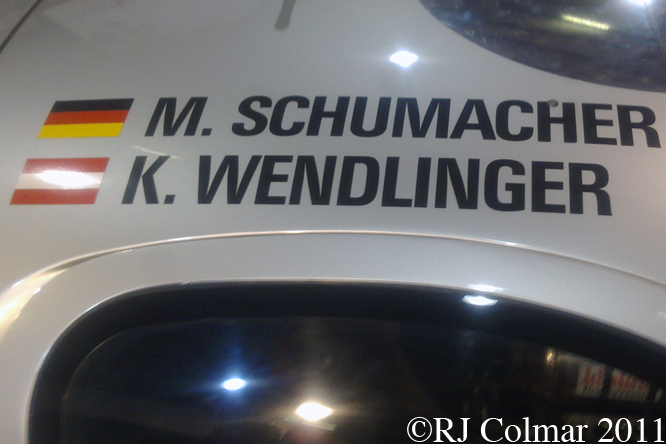
The overweight C291 driven by 22 year old rising stars Karl Wendlinger and Michael Schumacher retired from it’s first race at Suzuka after starting from 3rd on the grid and catching fire during the race after the fuel filler jammed partially open during a pit stop, at Monza the engine failed on the grid from which it was to have started 6th and again during the race which it started one lap down.

Mercedes Benz C291, Goodwood Festival of Speed,

The youngsters recorded an excellent 2nd place finish 1 lap down on the winning Jaguar XJR14 driven by Teo Fabi and Derek Warwick at Silverstone, before a disgraceful lap of 6m 55.969s convinced the team to stick with the heavily ballasted, to the mandated 900kg, but reliable C11 model for the Le Mans 24 Hours.

Mercedes Benz C291, Race Retro, Stoneleigh

At the Nurburgring two C291’s were entered with Jean Louis Schlesser and Jochen Mass qualifying 6th right behind the sister car driven by Wendlinger and Schumacher, both cars retired gearbox and engine failure respectively.

Mercedes Benz C291, Race Retro, Stoneleigh

The two C291 cars qualified in the same order at Magny Cours as in Germany 6th and 3rd respectively, but retired with a broken throttle linkage and water leak respectively.

Mercedes Benz C291, Goodwood Festival of Speed,

Little changed in the C291’s fortunes in Mexico where Wendlinger and Schumacher qualified 2nd but failed to finish due to oil pump problems and where Schlesser and Mass retired from 6th on the grid with electrical issues.

Mercedes Benz C291, Race Retro, Stoneleigh

The C291’s final appearance was at Autopolis in Japan where against form Jean Louis and Jochen translated a 7th place start to a fifth place finish and even more remarkably Karl and Michael translated a sixth place start in to a win.

Much as Ecclestone and Moseley had hoped Mercedes Benz abandoned Group C at the end of the season and entered the Formula One fray as an engine supplier initially to Sauber for whom Karl continued to drive.

Micheal of course after a one off appearance in a Jordan moved to the Benetton Formula One team with whom he won the first two of his eventual seven world championships.

Le Mans was as usual left to pick up the pieces wrought by the wreckless legislation promoted by Moseley and Ecclestone.

At the time of writing it is not exactly clear which C291 belongs to Andrew Haddon who is believed to be the owner of the car shown in these photo’s taken at Race Retro and Goodwood Festival of Speed some years ago.

Thanks for joining me on this “Lowering The Centre Of Gravity” edition of “Gettin’ a li’l psycho on tyres” I hope you will join me again tomorrow for another raucous Mazda Monday. Don’t forget to come back now !

Share

Braving The Elements – Bristol 450

Bristol Cars introduction to motor racing came as a supplier of 2 litre 6 cylinder motors which were used by chassis manufacturers that included AFN who produced Fraser Nash cars, Cooper, Lister, Lotus and smaller operations like Warrior.

Bristol 450, Autumn Classic, Castle Combe

The first use of a Bristol 2 litre engine at Le Mans came in 1949 when Norman Culpan drove his Fraser Nash High Speed from Yorkshire to the La Sarthe circuit where he was joined by AFN director HJ Adlington and the pair recorded a third place finish 11 laps down on the winning Ferrari 166MM driven by Luigi Chinetti and Lord Selsdon, after the race Norman drove his car back to Yorkshire and AFN produced a run of 34 cars known as Le Mans Replica and Le Mans Mk II’s, these cars have also since been replicated by Crosthwaite & Gardiner, Werner Oswald and others.

Bristol 450, Autumn Classic, Castle Combe

In 1952 Percy Kemish and Stan Ivermee were responsible for setting up the Bristol’s Racing Department which included employees Ken Evans, Rupert Gildersleeve, and Stan Sparks.

Bristol 450, Autumn Classic, Castle Combe

The chassis for the first Bristol 450 Le Mans challengers were based heavily on the Bristol powered ERA G-Type, an open wheeler with an unusually wide chassis and offset driver which had been bought from ERA proprietor Leslie Johnson at the end of the 1952 season, while the aerodynamically tested coupé body appeared remarkably crude with lights that looked like they had been added as an after thought.

Bristol 450, Autumn Classic, Castle Combe

Two Bristol 450’s made the grid for the 1953 Le Mans race one retired when a connecting rod broke causing the car to skid off the Mulsanne Straight on the 30th lap and the second retired after a crankshaft balance weight sheered through the sump and exhaust causing a fire after completing 70 laps.

05 Bristol 450_4569sc

With the crankshaft balance weights removed Peter Wilson and Jack Fairman drove a 450 to a 2 litre class victory and 5th place overall in the Reims 12 hour race in July 1953.

Bristol 450, Autumn Classic, Castle Combe

For 1954 the 450’s received refined coupé bodies with faired in headlights and two pronounced tail fins, this time the team finished 1st, 2nd and 3rd in class at Le Mans as Peter Wilson with Jim Mayers, Tommy Wisdom with Jack Fairman and Mike Keen sharing with Tommy Line brought their cars in 7th, 8th and 9th places overall, at Reims the 450’s came home in 10th, 11th and 12th places overall, 2nd, 3rd and 4th in the 2 litre class.

Bristol 450, Autumn Classic, Castle Combe

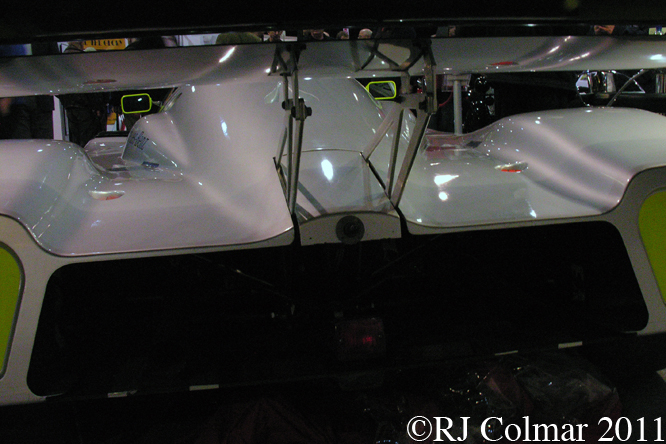
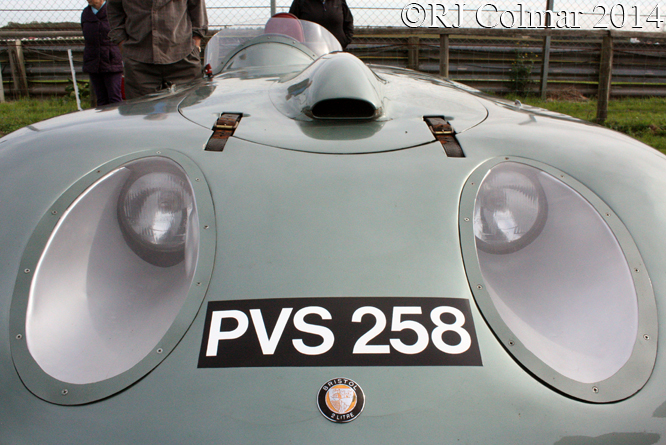
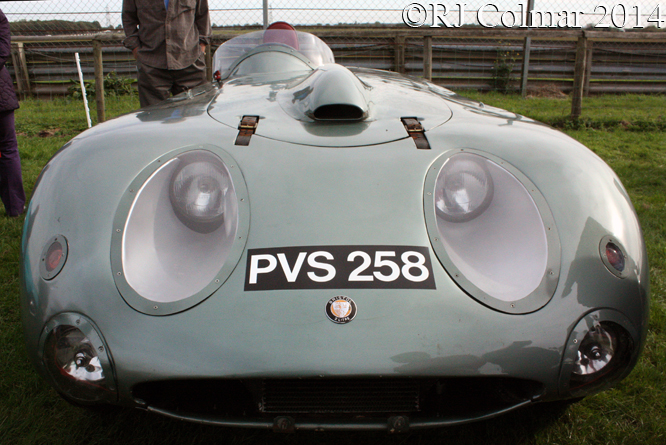
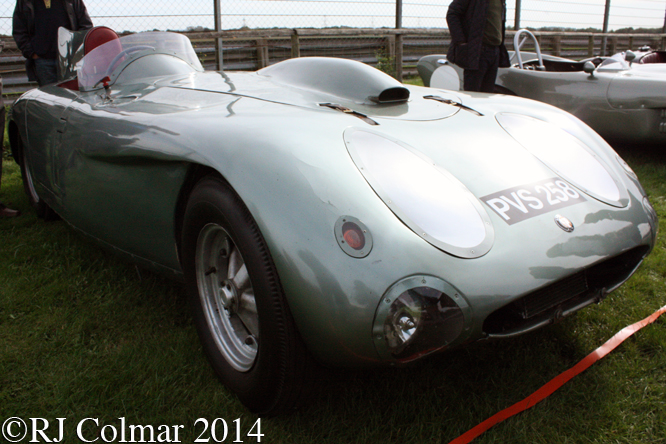
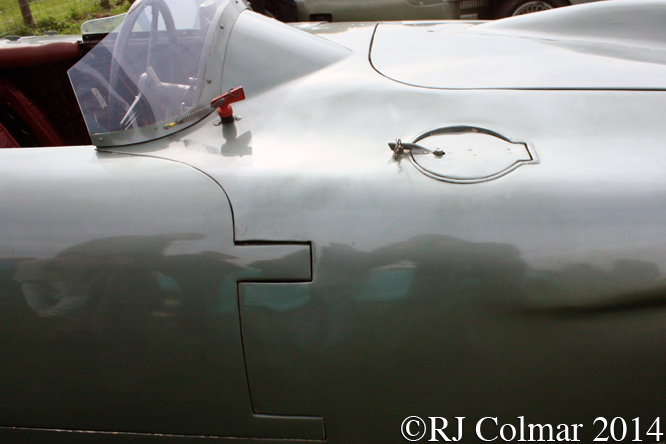
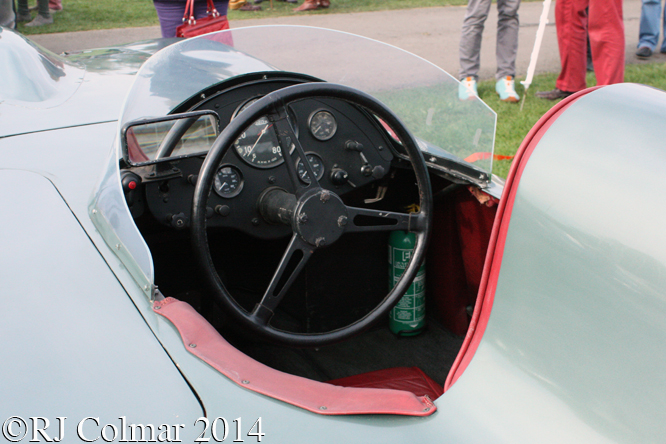
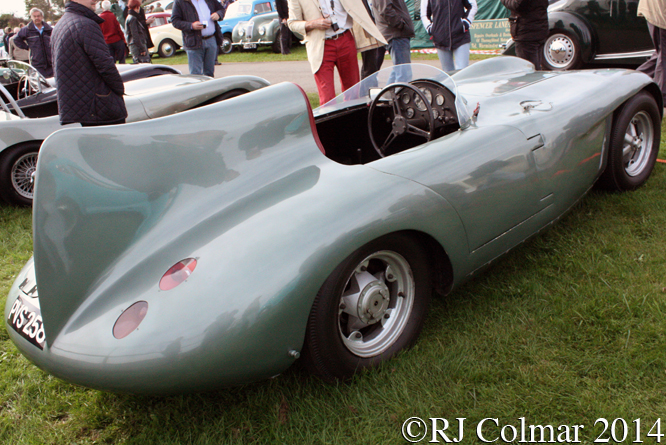
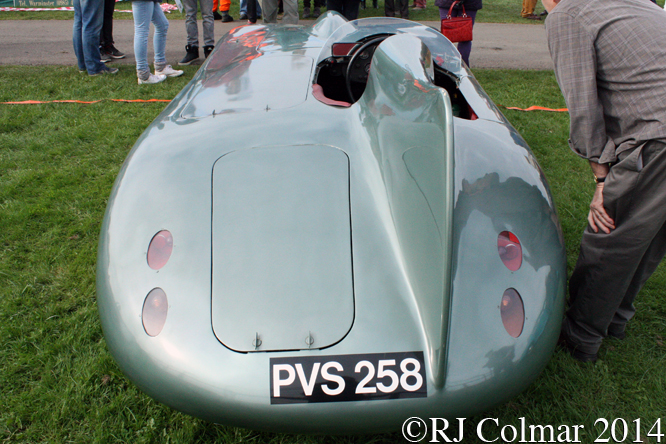
For 1955 more speed was sought by taking the roofs off the cars and running them with a screen for the driver who now had to brave the elements and deck over the passenger seat as seen in these photos taken at last years Autumn Classic meeting at Castle Combe.

Running with the same driving squad as 1954, the now 150 mph cars achieved exactly same result at Le Mans as in 1954, this time with Mike Keen and Tommy Line pipping Tommy Wisdom and Jack Fairman for 8th place.

The teams prize monies for the 1955 race were donated to the fund set up to help the victims of the 1955 Le Mans disaster and the Racing Department was disbanded before the Bristol Cars Division was separated from the Bristol Aeroplane Company in Autumn 1955.

The teams cars were all broken up bar today’s featured car, which is said to have been built up from the best parts of the broken up cars but without one of the motors built for the 450 racing programme, for many years this 450 belonged to Bristol Cars proprietor Tony Crook.

Thanks for joining me on this “Braving The Elements” edition of “Gettin’ a li’l psycho on tyres” I hope you will join me again tomorrow when I’ll be looking at a 1990’s Mercedes Benz Le Mans Challenger. Don’t forget to come back now !

Share

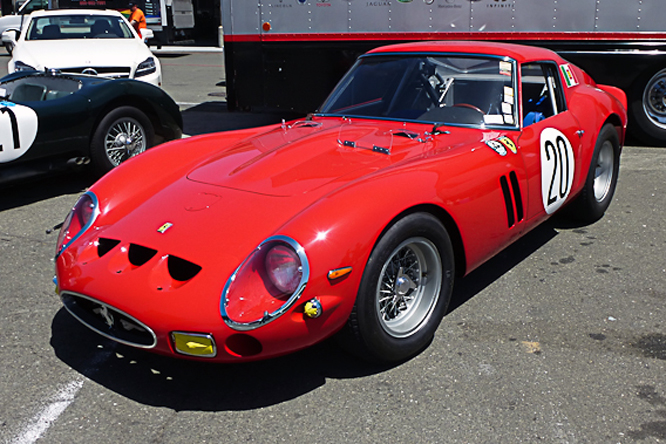
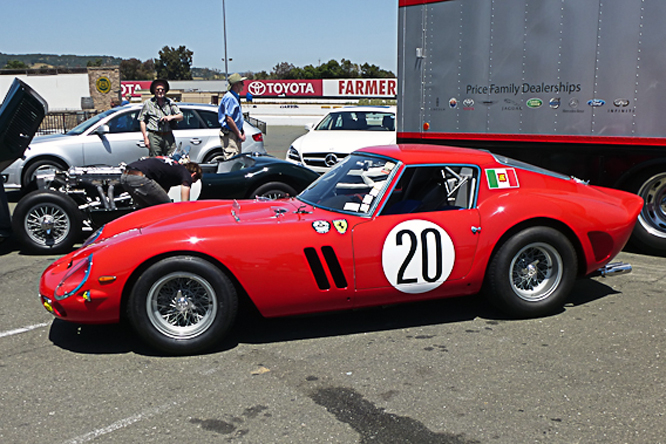
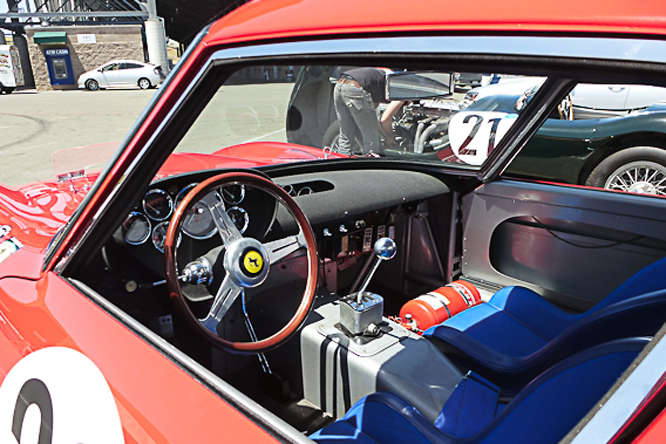
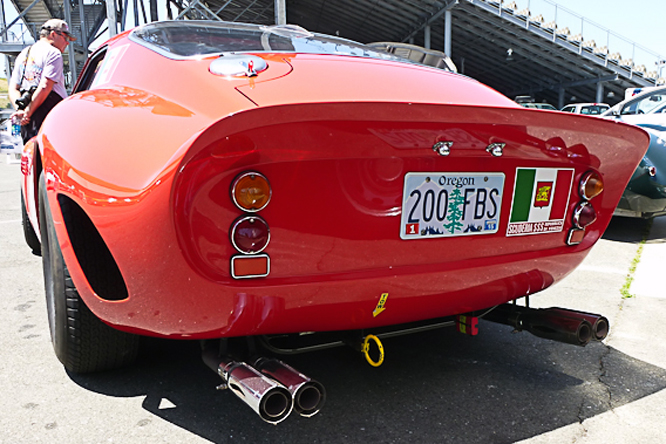
Confiscated By The FBI – Ferrari 250 GTO #4757GT

When Enzo Ferrari delayed the delivery of Count Giovanni Volpi di Misurata’s second Ferrari for the 1962 Le Mans 24 hours the Count turned to several former employees of the Ferrari team to convert his 250 GT SWB into a GTO challenger the infamous Ferrari “Breadvan”.

Ferrari 250 GTO, Sonoma Historics,

It would appear that Count Volpi and Enzo made up their differences the following season when the Count is believed to have taken delivery of today’s featured GTO chassis #4757GT after it had been entered in the 1963 Le Mans 24 Hours by the factory for Carlo Mario Abate and Fernand Tavano who crashed the car after completing 105 laps from 12th on the grid.

Ferrari 250 GTO, Sonoma Historics,

Carlo Abate is then known to have driven #4757 to class victories on four hillclimbs before it was entered in the 1963 Tour de France by Scuderia SSS Repubblica di Venezia for Fernand Tavano and Lorenzo Bandini who retired from the event after an accident.

Ferrari 250 GTO, Sonoma Historics,

Georges Marquet acquired the for the 1964 season and under the Ecurie Francorchamps umbrella competed in at least a dozen events including races and hillclimbs winning the Coupes Benelux, Zandvoort, Anvers hillclimb and Bomeree hillclimb events outright.

Ferrari 250 GTO, Sonoma Historics,

There after the car made it’s way to the USA via Jaques Swatters in 1965.

In 1982 Christopher Murray of Middletown Rhode Island is said to have bought #4757 for $345,000 two years before fleeing to Spain to avoid a drugs related indictment.

Murray was murdered in Spain in 1987 the same year the FBI who had confiscated the car in December 1984 sold it through a sealed bid auction for $1.6 million.

From 1988 to 2009 #4757 resided in The Netherlands and returned to the USA in 2010 when it’s present owner bought the car.

My thanks to Geoffrey Horton who took these photographs of #4757 at last years Sonoma Historics meeting.

Thanks for joining me on this “Confiscated By The FBI” edition of “Gettin’ a li’l psycho on tyres” I hope you will join me again tomorrow when I’ll be looking at only surviving Le Mans Bristol. Don’t forget to come back now !

Share

GT1 Class Winner – Chevrolet Corvette C6.R #004

Gary Pratt and Jim Miller founded the New Hudson, Michigan based Pratt & Miller Engineering and Fabrication in 1989.

In 1999 their relationship with General Motors, which continues to this day, got off the ground with the development of the Corvette C5.R.

The success of the C5.R program led to the commencement of C6.R GT1 program which took to the endurance circuits in 2005 with 8 GT1 Corvette chassis being built between up until 2008.

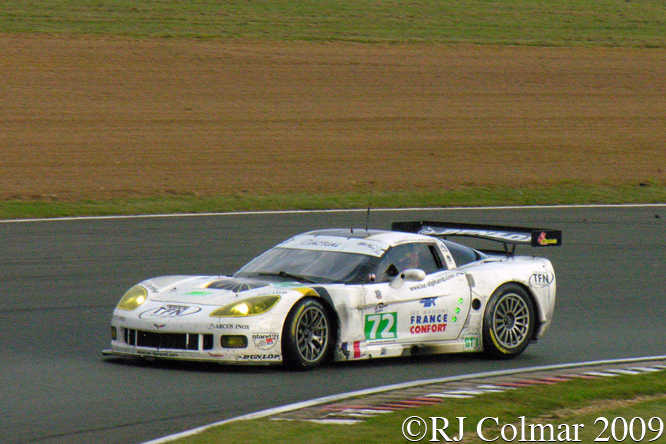
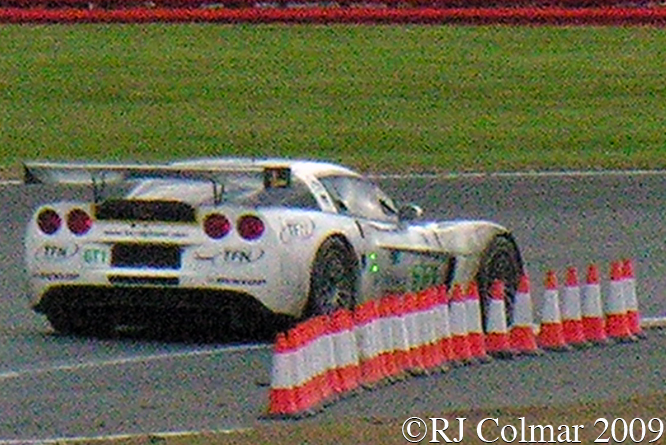
Corvette C6R, Clairay, Jousse, Goueslard, Siverstone 1000km,

Today’s featured chassis #C6R-004 was built new for the 2006 ALMS season and was driven to three straight class victories at Sebring, Huston and Mid Ohio by Oliver Gavin and Olivier Beretta who were joined by Jan Magnussen for the longer 12 hour victory at Sebring.

The Sebring class winning trio then drove the car to a fourth class victory at Le Mans the same year after finishing 4th overall from 22nd on the grid.

Luc Alphand Aventures acquired the car for the 2007 European Le Mans Series season and Luc joined by Jérôme Policand and Patrice Goueslard guided the car to another class win first time out in the Monza 1000kms.

Corvette C6R, Clairay, Jousse, Goueslard, Siverstone 1000km,

Later in 2008 Bruno Hernandez and Soheil Ayari drove chassis #C6R-004 and recorded a pair of heat wins in French FFSA GT Championship events run at Albi and Magny Cours.

In 2009 Luc, Jérôme and Patrice drove the car to a class victory at Spa a month before Luc sustained injuries in an all terrain motorcycle event that forced him to retire from competition driving and riding.

Luc was replaced by Julien Jousse at Algarve where #C6R-004 recorded it’s final class victory in 2009.

Jérôme, Patrice and Julien shared the car at the 2009 Silverstone 1000kms, where today’s pictures were taken, to record a 22nd place finish from 23rd on the grid.

After taking part in a couple more FFSA and FIA GT events the car was retired from competition at the end of the season.

Share