Tag Archives: Rover

Battersea Dogs Car – Rover P6 3500 Series 1 Estoura

Thanks to a timely reminder from David Rootes I made it to the Rare Breeds Car Show at the Haynes International Motor Museum on Sunday.
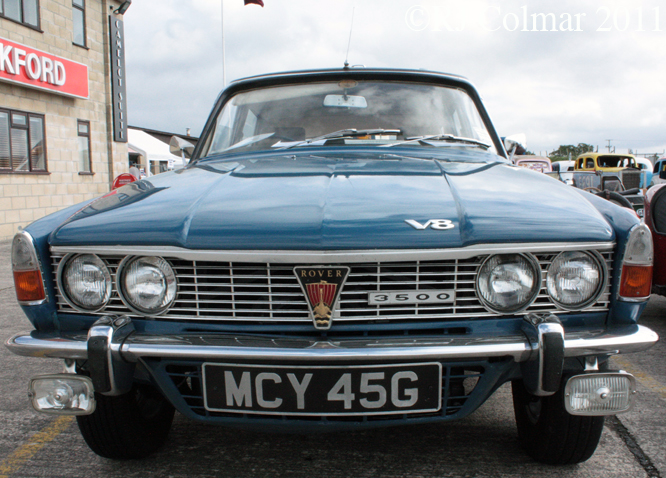
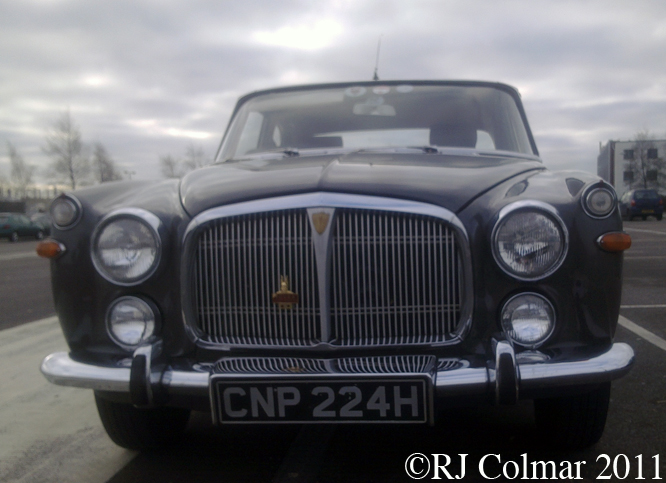
Rover P6 3500 Estoura, Rare Breeds, Haynes IMM

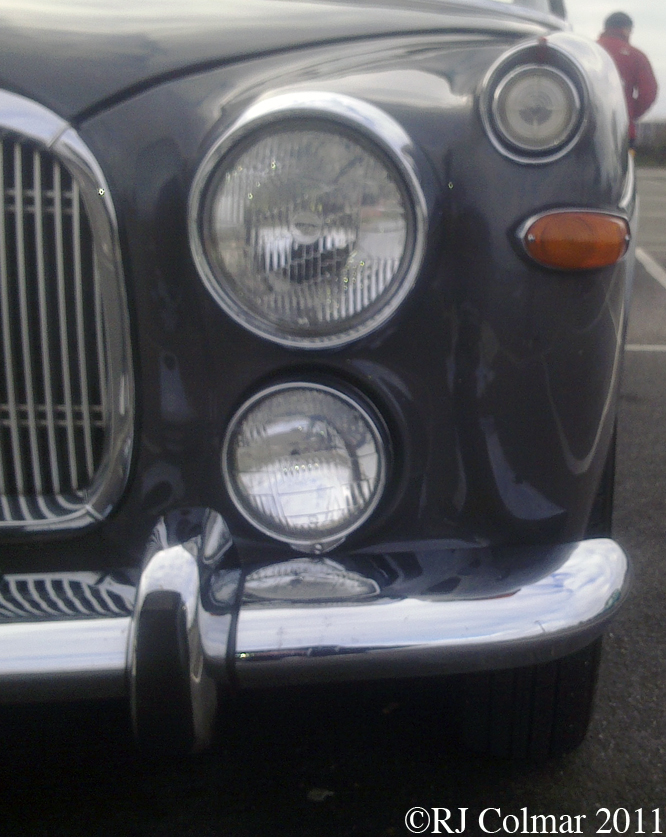
Amongst a variety of rare vehicles was this 1969 Series I Rover 3500 which preceded the Series II Rover 2200 SC I looked at last week. P6 models fitted with the aluminium 215 Buick derived V8 are easily distinguishable from their 4 cylinder siblings by the extra air intake below the bumper.
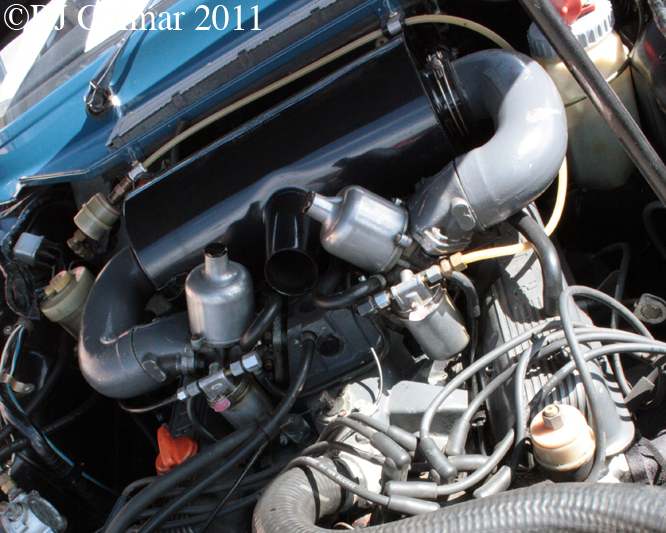
Rover P6 3500 Estoura, Rare Breeds, Haynes IMM

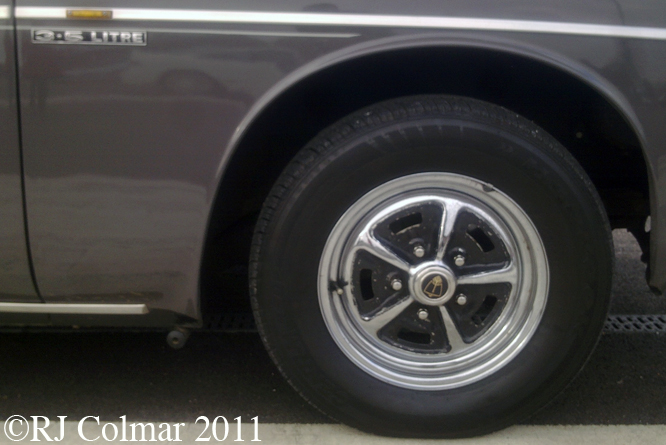
The engine compartment of the P6 was originally designed to accommodate a Rover gas turbine motor, but this option never came to fruition and instead the 158 hp twin carburettor V8 as had been fitted to the the Rover P5B was fitted to the top of the range P6 models.
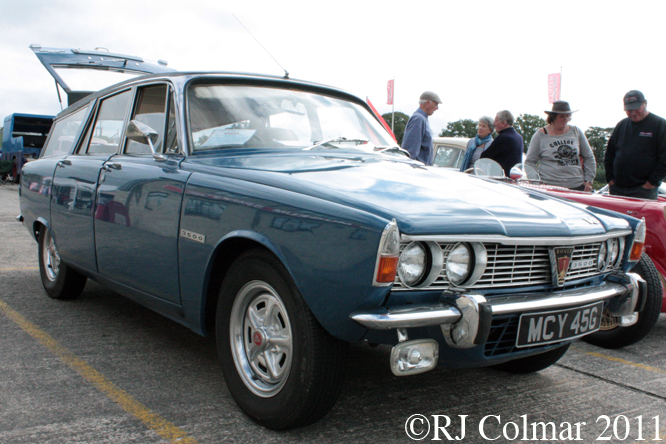
Rover P6 3500 Estoura, Rare Breeds, Haynes IMM

According to the owner of this Estoura variant only 157 P6 saloons were converted to estate / station wagon models between 1969 and 1976. This is the oldest of 4 Series 1 Estoura’s known to have survived.
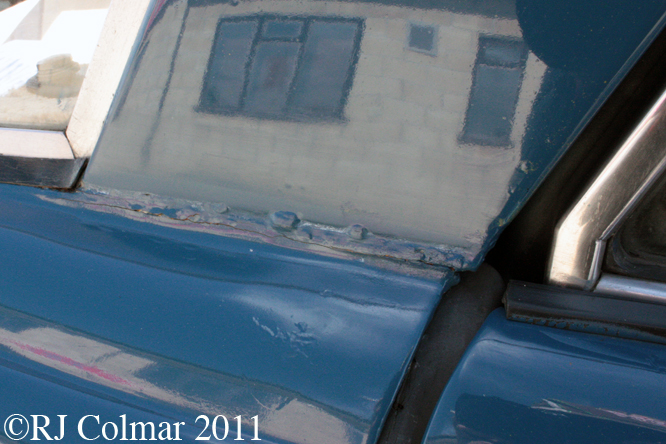
Rover P6 3500 Estoura, Rare Breeds, Haynes IMM

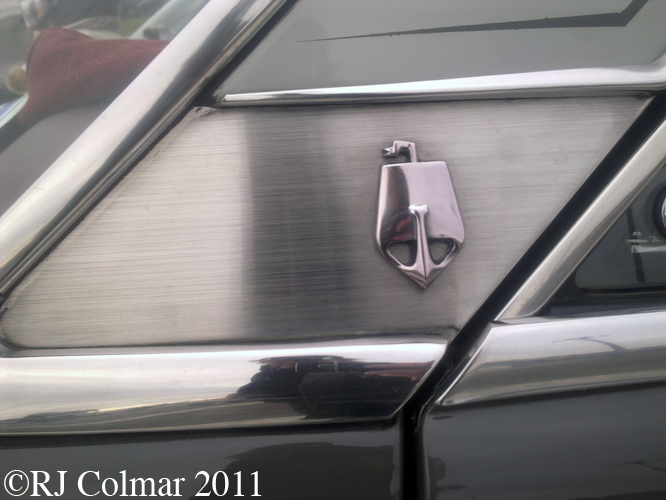
Conversion of the saloon P6 to Estoura spec included replacing the original roof and C pillars with a new pod, designed by Brian Roll, that was riveted and welded in by FLM Panelcraft of Battersea. Although the conversion was approved by Rover and did not affect warranties no rust protection was added to bare surfaces which were simply painted over with the out come that these cars are more prone to rot than standard P6’s.
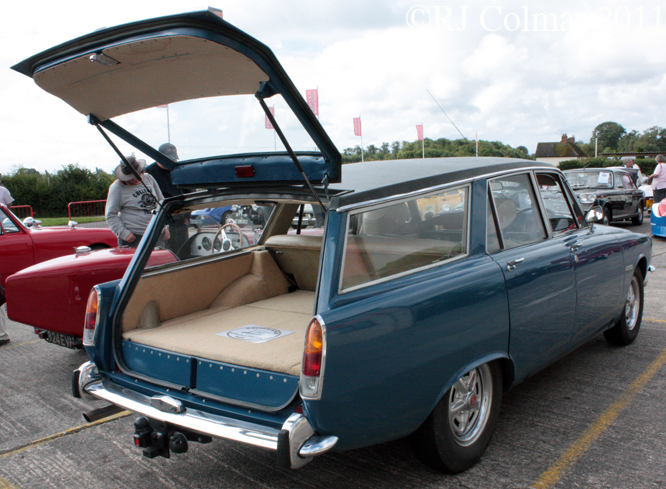
Rover P6 3500 Estoura, Rare Breeds, Haynes IMM

Once FLM had converted the P6 shell the cars were sent to either Crayford, HR Owen or Hurst Park Motors where a variety of interior and exterior trims were fitted.

07 IMG 2459sc

The load space while significantly improved is not particularly deep or easy to access even for a canine compared to a modern day Estate / Station Wagon or MPV.

Thanks for joining me on this Estoura edition of ‘Gettin’ a lil’ psycho on tyres’, I hope you will join me again tomorrow. Don’t forget to come back now !


Share

Royal Tragedy – Rover P6 Series II 2200 SC

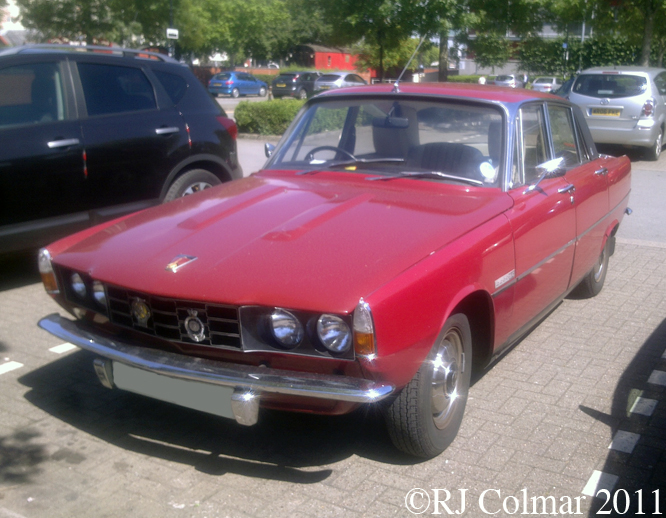
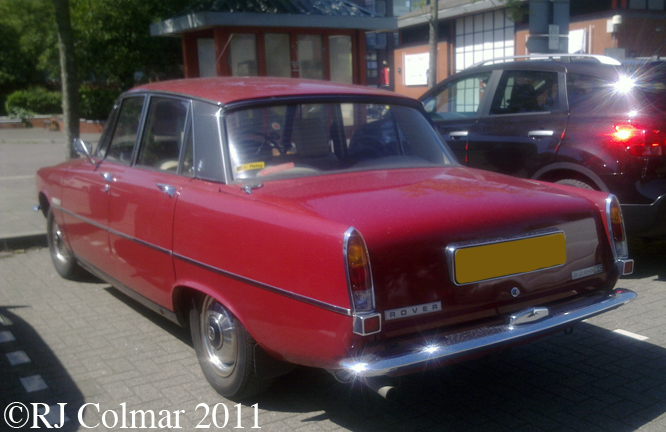
Some of you may remember I found a cut’n’shut Rover Series I P6 Cabriolet behind a hedge last year, today I am looking at the Series II P6 introduced in October 1970.

Rover P6 Series II 2200 SC

Initially the P6 Series II comprised exterior changes to the grill, plastic replacing alloy, rear lights and the instrumentation and switches of the two more expensive Twin Carburettor and 3500 versions.

Rover P6 Series II 2200 SC

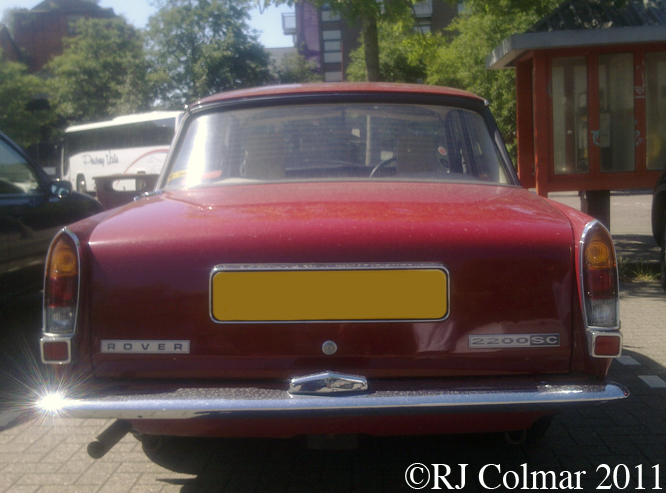
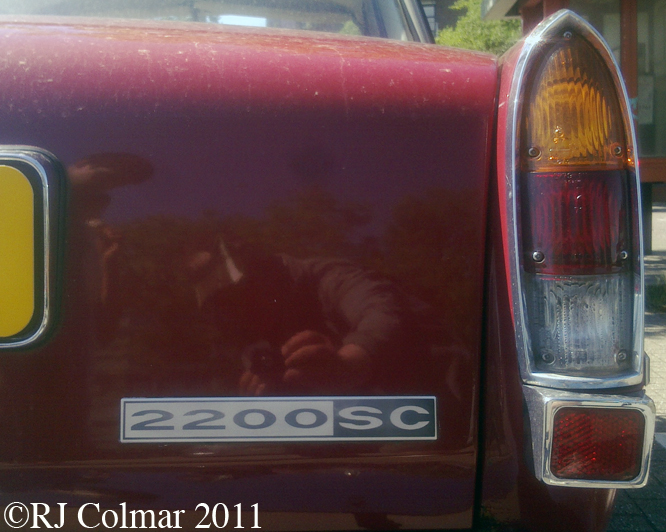
From 1973 the Series II P’6s came in three flavours the 98 hp 2200SC, Single Carburettor, 115hp 2200, Twin Carburettor and 3500.

Rover P6 Series II 2200 SC

Production of the P6 ceased in March 1977 with 32, 270 units produced over four years. Allegedly the last 2200 model was a Left Hand Drive export model that was converted to Right Hand Drive by the Tourist Trophy Garage in Farnham.

Rover P6 Series II 2200 SC

British Leyland, the nationalised merger of large swathes of the British motor industry was entering it’s worst period of industrial relations during the production of the P6 and this was reflected in abominable reliability issues, one driving organisation reporting that their 3500 P6 had required three engines, two gearboxes, two clutch housings and a wiring loom in 6000 miles motoring over 6 months and was off the road for 114 days out of the 165 days that it was tested over !

Rover P6 Series II 2200 SC

An attempt was made to export a high spec P6 to the USA but with less than 1500 units sold many of the cars built for the USA were eventually sold in Left Hand Drive European markets instead.

Rover P6 Series II 2200 SC

While driving her daughter Stéphanie home on September 13th, 1982, Princess Grace of Monaco, nee Grace Kelly, suffered a stroke which caused her to drive her P6 off the road. She never regained consciousness and died from her injuries the next day, while Stéphanie who fractured her neck in the accident, made a full recovery.

Thanks for joining me on this edition of ‘Gettin’ a lil’ psycho on tyres’, I hope you will join me again tomorrow. Don’t forget to come back now !

Share

Powered Under Licence – Rover P5B 3.5 litre Coupe

In September 1960 the author of a technical review on the then new all aluminium 185 hp Buick 215 V8 engine could have had little idea of how prophetic for the British automotive industry his following words would be, “We will wager that the most widely copied engine of the next 10 years will be the superb new aluminium V8 by Buick.”

Rover P5B 3.5 Coupé, Mini Factory

Despite it’s glowing press the Buick V8 and various Oldsmobile and Pontiac variants these motors were only in production from 1961 to 1963, after 750,000 units had been produced the Buick, Oldsmobile and Pontiac switched back to cheaper to manufacture iron blocks which were cast with thinner walls than had hitherto been possible.

Rover P5B 3.5 Coupé, Mini Factory

Rover managing director Bill Martin-Hurst was on a sales mission trying to get Mercury Marine in Wisconsin interested in Rover gas turbine engines for marine applications when he stumbled across a Buick V8 being prepared for power boat racing on the Mercury Marine shop floor.

Rover P5B 3.5 Coupé, Mini Factory

Bill realised immediately that such a motor might have a future in several Rover car projects and had the motor on the shop floor shipped to England and made enquires at GM about making their recently discontinued aluminium motor under licence.

Rover P5B 3.5 Coupé, Mini Factory

Somewhat disbelieving GM agreed a deal which eventually included the soon to retire designer of the aluminium Buick 215 Joe Turley who would help prepare the V8 for production in a market that put engines under more stress, no speed limit at the UK at the time, than encountered in its original US application.

Rover P5B 3.5 Coupé, Mini Factory

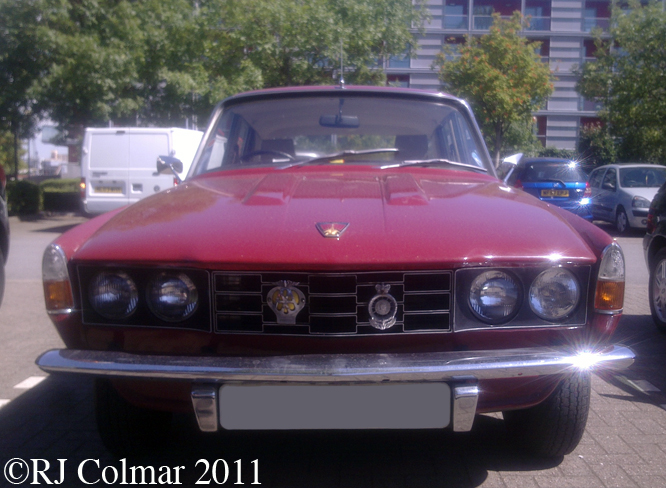
The Buick V8 was first tested in a P6 prototype, but the final iteration of older P5 design seen here, with a B for Buick designation, was the first Rover to be offered to the public with an aluminium Buick 215 V8 derived motor in 1967.

Rover P5B 3.5 Coupé, Mini Factory

Four successive British Prime Ministers and the Queen of England used P5B’s, so impressed was the British government with these vehicles that they bought the last batch of them for future government ministers to use in 1973. Indeed Prime Minister Margret Thatcher was often seen in one as late as 1979, before switching to a Jaguar.

Rover P5B 3.5 Coupé, Mini Factory

A Rover P5B featured alongside a Lamborghini Islero in ‘The Man Who Haunted Himself‘ starring Roger Moore, Olga Geoges-Picot and Hildegard Neil.

Vehicles featured on GALPOT that are powered by variations of the aluminium Rover V8 include :-

CMT

Reliant Scimitar GTE V8

Triumph TR7 Rally Sprint Replica

Triumph TR8 Convertible Replica

Triumph TR8 Twin Turbo

Further examples of Rover V8 powered vehicles can be found in these less specific blogs :-


GMC Suburban

Darian Wildcat T89 GTR

MGB Kayne Special

Rover SD1

Thanks for joining me on this Powered Under License edition of ‘Gettin’ a lil’ psycho on tyres’, I hope you will join me again for a Scandinavian Edition tomorrow. Don’t forget to come back now !
Share

Poor Mans Roller – Rover P5 Mark II 3 Litre

The P5 was Rovers top of the range saloon / sedan when it was introduced in 1958 .

Rover P5 MkII 3 Litre, BMW Factory, Pistonheads,

Initially powered by a 115 hp, 2,995 cc / 182.8 cui straight six with the novel F head featuring an overhead intake valve and side exhaust valve as on the smaller motor used in the P4 series.

Rover P5 MkII 3 Litre, BMW Factory, Pistonheads

In 1962 the Mark II P5 was launched, as seen here, now with 129 hp, a quarter light front window and no glass wind deflectors atop the door windows.

Rover P5 MkII 3 Litre, BMW Factory, Pistonheads

The prototype P5 was fitted with 11 inch drum brakes all round however by the time the car was launched to the public disc brakes were fitted to the front wheels.

Rover P5 MkII 3 Litre, BMW Factory, Pistonheads

This was the vehicle of choice for a succession of British Prime Ministers and UK Government cabinet ministers and it is said Her Majesty the Queen of England preferred her Rover P5 as her daily driver.

Rover P5 MkII 3 Litre, BMW Factory, Pistonheads

When production ceased in 1965 15,676 Rover P5 Mrak II 3 litre saloons had been manufactured.

Thanks for joining me on the poor mans Rolls Royce edition of ‘Gettin’ a lil psycho on tyres’ I hope you will join me again tomorrow. Don’t forget to come back now !
Share

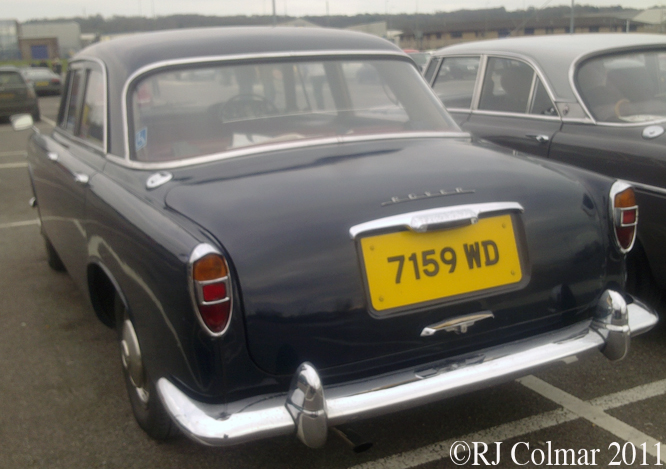
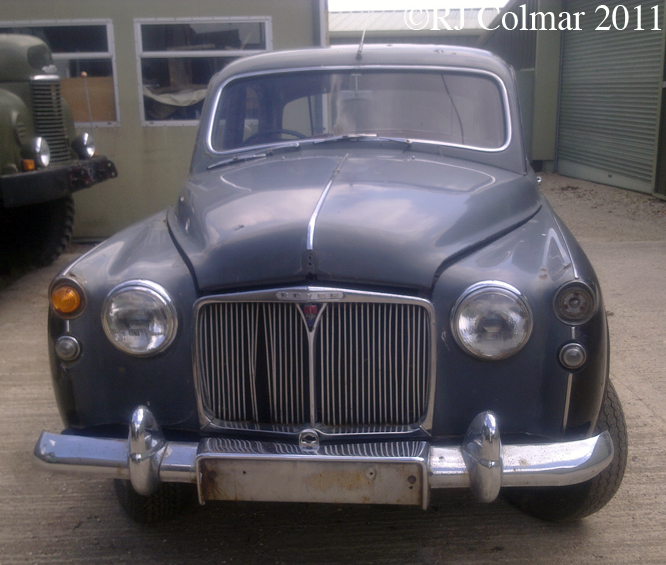
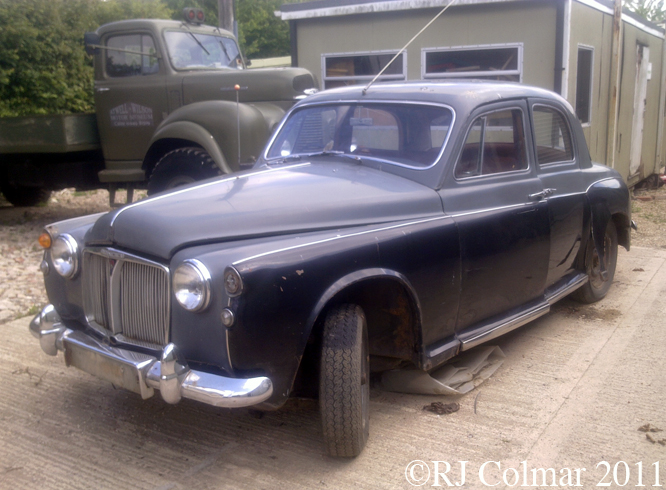
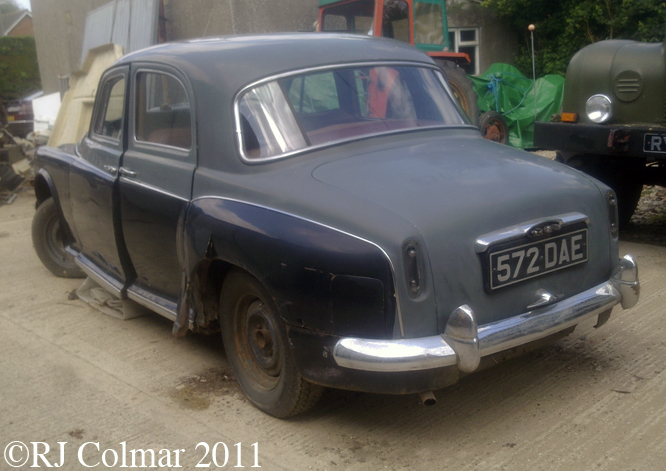
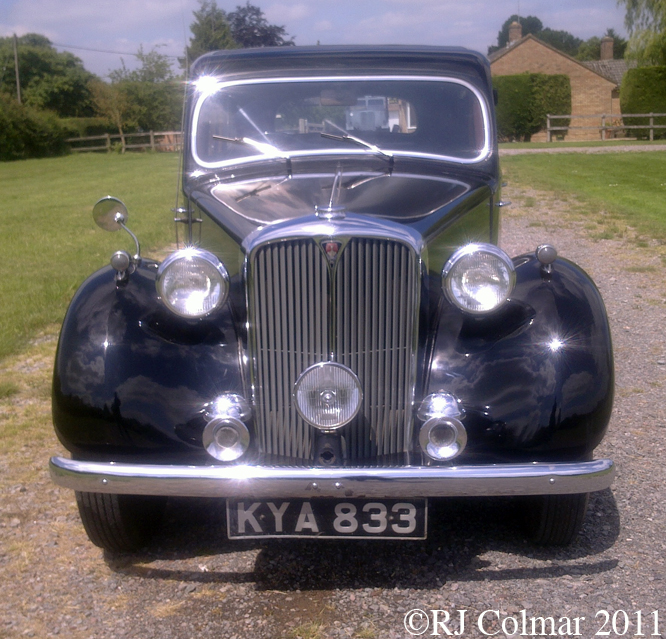
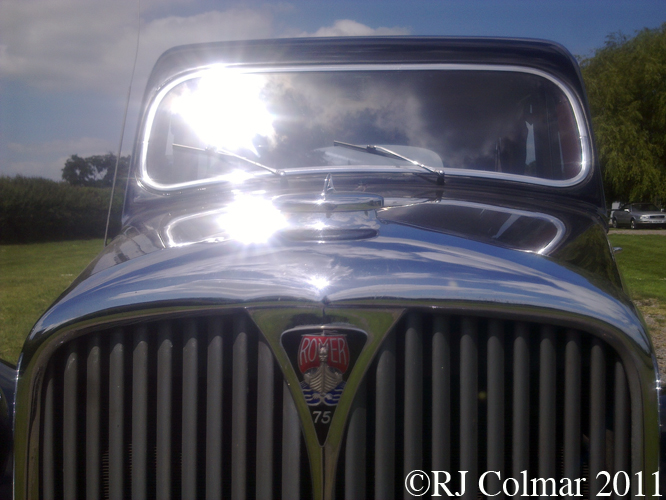
Awaiting TLC #2 – Rover 75 P4

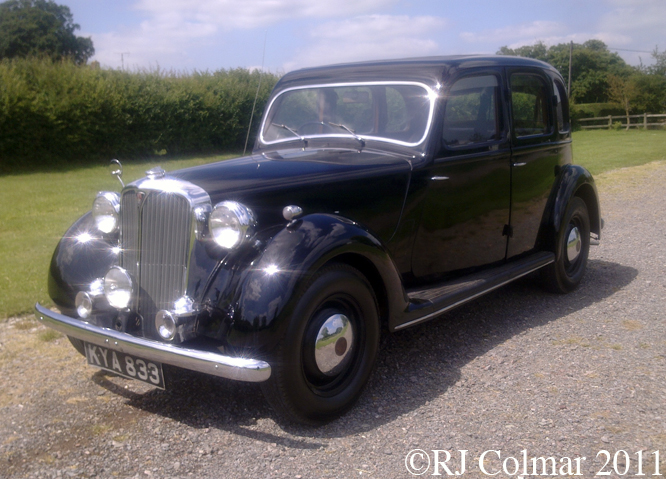
The Rover P4 range of vehicles was introduced in 1949 to replace the interim out dated P3 vehicles which had been rushed into production in 1948 as the Rover company sort to rebuild itself as a vehicle manufacturer having spent the years during World War 2 manufacturing aircraft.

Rover P4 75, Atwell Wilson MM

Drawing inspiration from the 3rd generation Raymond Loewy designed Studebaker Champion launched in 1946, at the request of the Wilkes brothers who owned Rover, Gordon Bashford was responsible for what was known in the factory as the P4. The original P4’s came fitted with a central spot lamp mounted in the grill, but this feature was dropped early in production which eased the difficulties keeping the engine cool.

Rover P4 75, Atwell Wilson MM

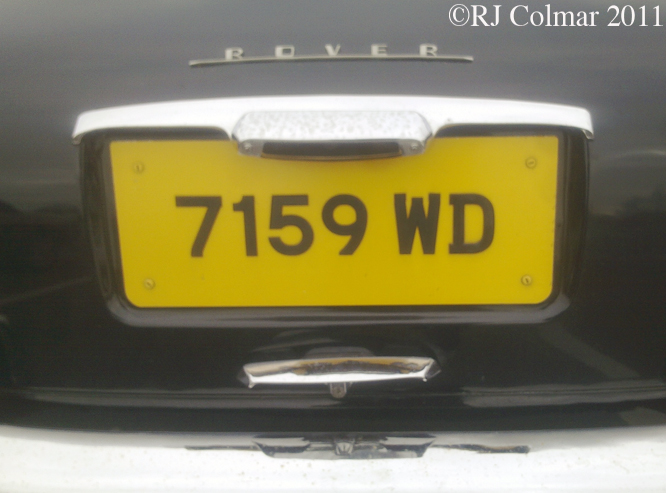
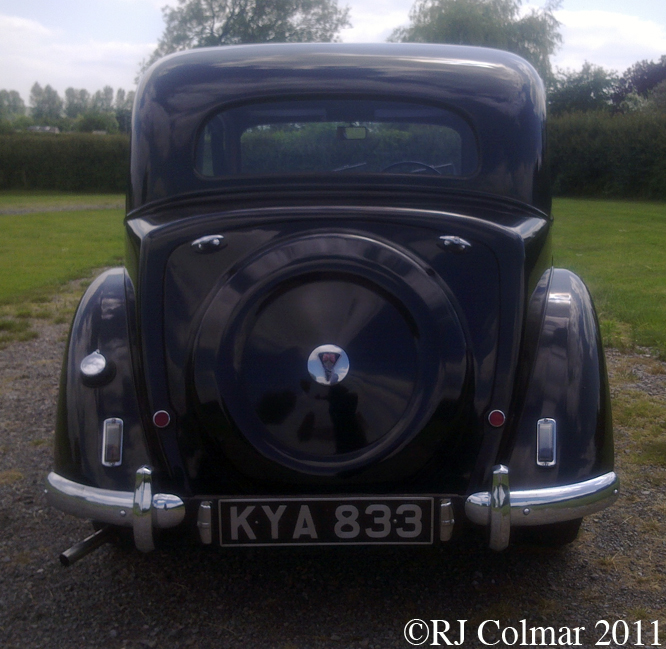
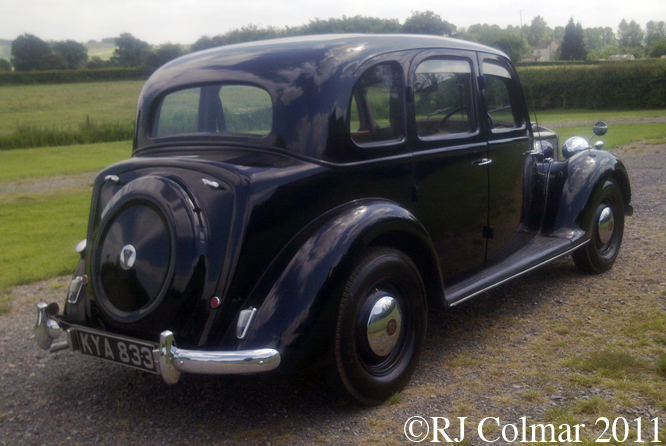
The P4 was continually being upgraded and from 1954 a distinct MkII version was available that was then restyled again into the form shown in these photo’s in 1957, a Mk 2.2 if you will.

Rover P4 75, Atwell Wilson MM

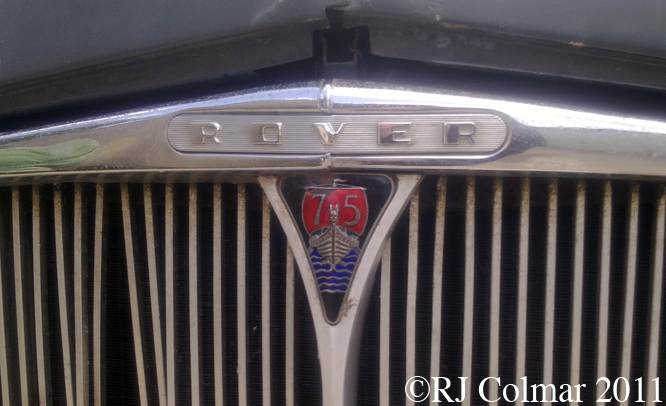
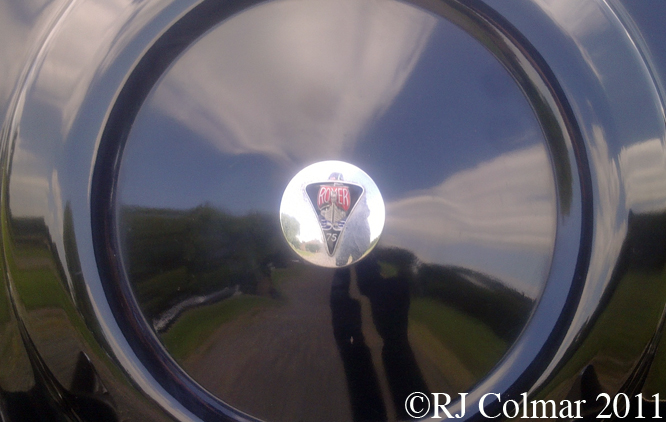
Because of material shortages immediately after WW2 these vehicles incorporated a high percentage of aluminium content and were to be seen in competitions of the day including the 1955 Mille Miglia in which Lando Barsotti brought his #347 Rover 75 P4 home in 271st place. The 75 seen here was powered by a 2.2 litre /136 cui 6 cylinder motor featuring the same overhead inlet valves and side exhaust valve design as had been a feature of the earlier P3.

Rover P4 75, Atwell Wilson MM

The final MK II P4’s were produced in 1959 with 9,974 Mk II’s produced over it’s five year production run.

I spotted this particular vehicle at the back of the Atwell – Wilson Motor Museum. I am not sure what they planned to do with it, good working examples of the type tend not to fetch more than £ 2000 so the cost of restoration would appear to be a little prohibitive.

Thanks for joining me on this Awaiting TLC edition of ‘Gettin’ a lil psycho on tyres’, I hope you will join me again tomorrow. Don’t forget to come back now !
Share

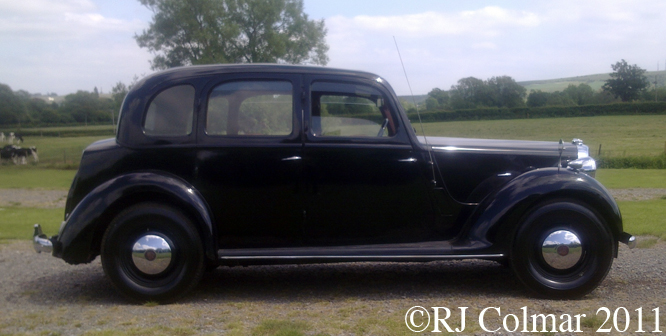
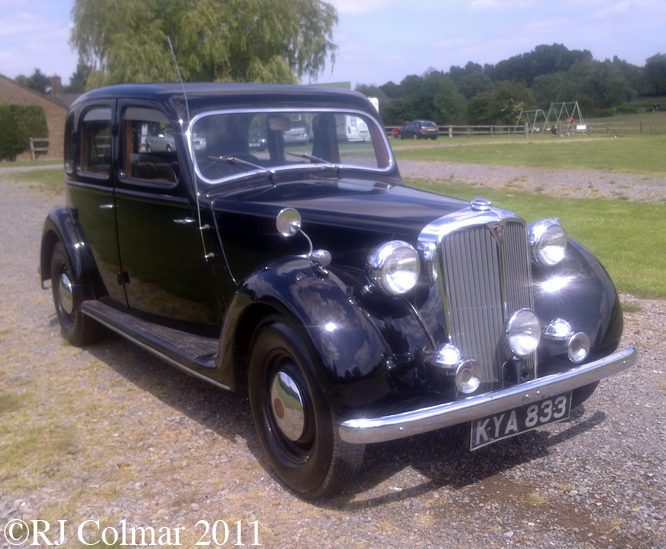
Interim Model – Rover 75 P3

In 1878 the Rover Company was founded as Starley & Sutton Co. of Coventry which by 1885 had developed the template for the modern bicycle in the form of the Rover Safety Bicycle.

Rover 75 P3, Atwell Wilsom MM

From 1904 still using the Rover Marque brand the company started building motor cars and motorcycles.

Rover 75 P3, Atwell Wilsom MM

After World War 2 Rover moved to it’s Solihull factory where it had engaged in building aircraft for the war effort, since it’s car plant in Coventry had been wiped out by bombing during the hostilities. The interim P3, launched in 1948, was Rovers first post war model.

Rover 75 P3, Atwell Wilsom MM

The Rover 75 version of the P3 was powered by a novel new six cylinder motor that featured overhead inlet valves and side exhaust valves that had been developed prior to the commencement of hostilities in 1939.

Rover 75 P3, Atwell Wilsom MM

The styling combined elements of the pre war Rover 12 and 16 but only the Rover 12 wings and bonnet were carried over from the narrower earlier designs.

Rover 75 P3, Atwell Wilsom MM

The unitary monocoque design, requiring no independent chassis, featured independent front suspension and hybrid hydraulic / mechanical brakes.

Rover 75 P3, Atwell Wilsom MM

This the 75 body style seen here was known as a light six saloon and cost a relatively expensive £1106, £ 26 more than the similar 4 cylinder ‘Sports Saloon’ known as the Rover 60.

Rover 75 P3, Atwell Wilsom MM

From 1948 – 1949 7,837 Rover 75’s were produced before the all new P4 vehicle was introduced.

Rover 75 P3, Atwell Wilsom MM

The engine and gearbox of the P3 formed the basis of the very first agricultural all terrain ‘Land Rover’ conceived in 1947. Note the vehicle above built in times of material austerity features a cyclops third head light but only one wing mirror.

This particular P3 can be seen at the Atwell Wilson Motor Museum in Calne.

Thanks for joining me on this ‘overhead and side valve’ edition of ‘Gettin’ a lil psycho on tyres’, I hope you’ll join me again tomorrow. Don’t forget to come back now !
Share

Driver to Sponsor – Simon Lewis

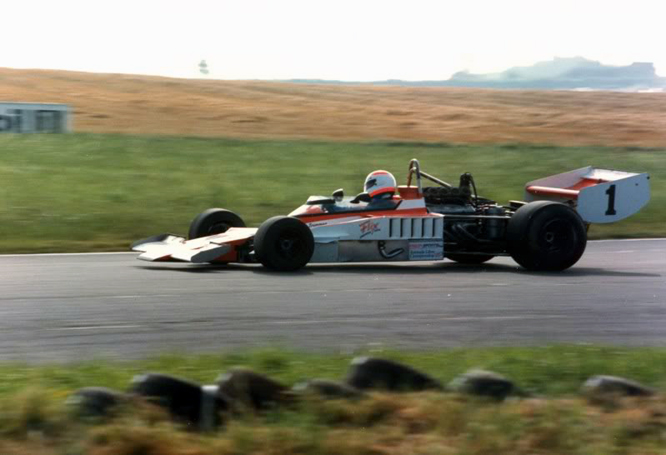
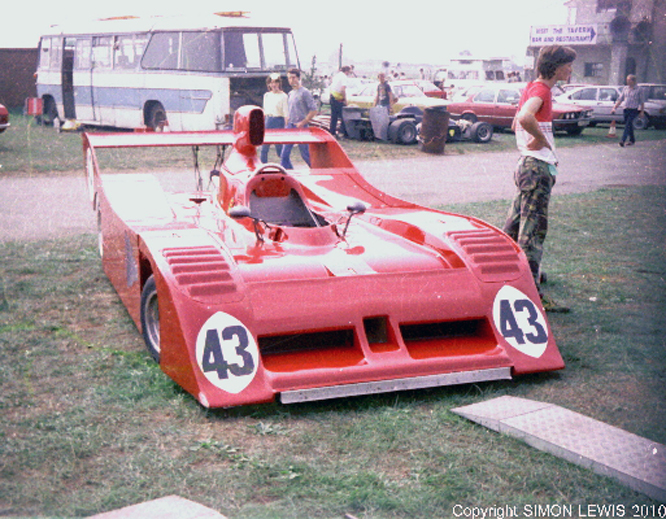
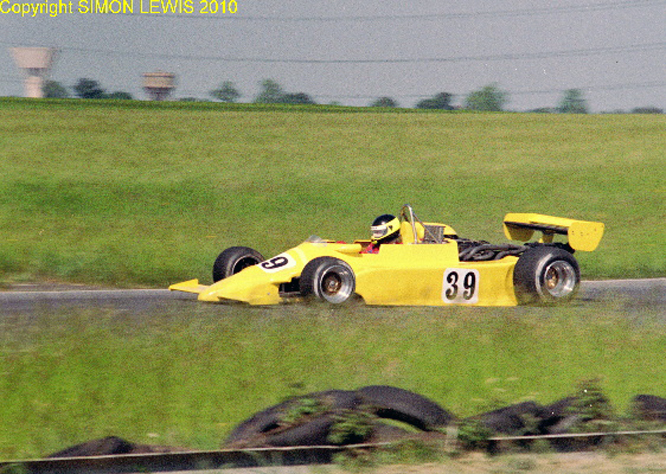
During the early 1980’s Simon Lewis was a regular spectator at Castle Combe where the biggest attraction used to be Formula Libre events run for any car built to known regulations.

McLaren M30, Castle Combe

At the top end of the entry would be vehicles that had run in Grand Prix like Alo Lawlers McLaren Cosworth DFV M30 resplendent in it’s original colours and bearing the name of it’s original driver Alain Prost,

Lola T330, Castle Combe

or Formula 5000 vehicles like Tony Trimmers Lola Chevrolet T330,

Lola T530, Castle Combe

and once in a while something extremely exotic like a Can Am 2 Lola Chevrolet T530 would appear.

March BMW 822, Castle Combe

A car with a large engine was not a pre requisite to be a contender to win as Eddie McLurg found out when he beat the big boys driving a 2 litre Formula 2 March BMW 822 Formula 2 car to victory in May 1989.

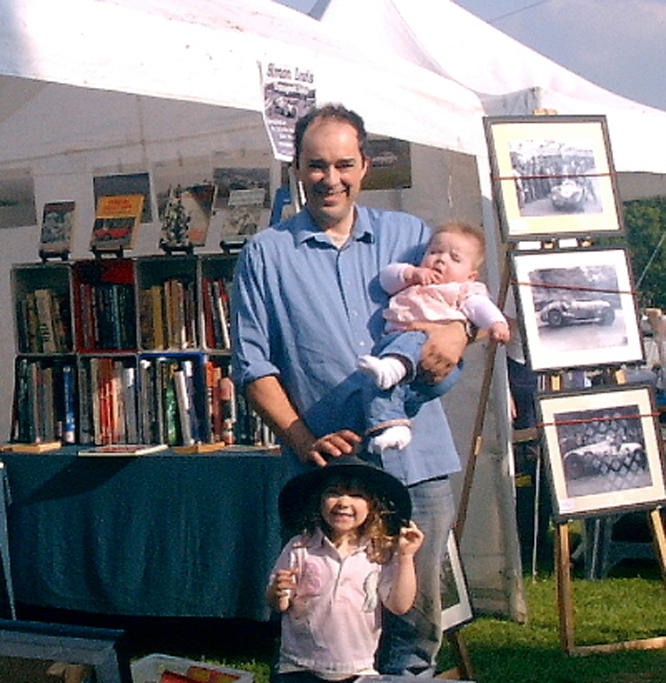
Simon Lewis

When he turned 18 Simon started on the long path to becoming a book mogul, surprisingly he specialised in automotive books with a business called Simon Lewis Transport Book Shop.

Simon Lewis, Rover SD1

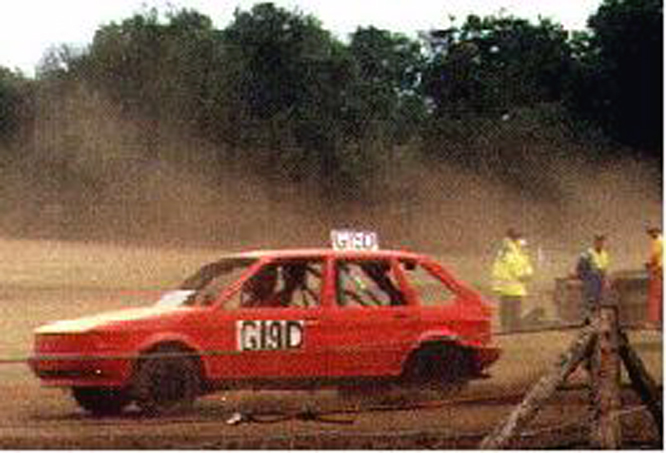
As and when resources allowed Simon turned to competing in rally events running against £50,000 Subaru’s in an comparatively archaic gargantuan Rover SDI after three seasons the enlarged to 4.5 litre / 274 cui Rover V8 was put into a Ford Escort shell for a season.

Simon Lewis, Rover 220, Castle Combe

When that project proved fruitless Simon moved to circuit racing at Castle Combe with a Rover Montego Turbo and then with some success he ran the Rover 220 Turbo seen above.

Simon Lewis, MG Maestro

Simon has also tried his hand at Grass Track racing with an MG Maestro, that vibrated so bad in top gear that the bits of roll cage in Simon’s eye line ‘became almost invisible’,

Simon Lewis, Morrish Kawasaki

and at hill climbing with a Kawasaki powered Morrish built in Cornwall.

Van Diemen RF00, Swift SC92, Castle Combe

(# 6 Roger Orgee Van Diemen RF00 & #17 Alex Drabble Swift SC92)

Inspired by the reaction to a thread on The Nostalgia Forum Simon has taken a leap of faith and decided to sponsor a new Mono Libre series at Castle Combe in 2011.

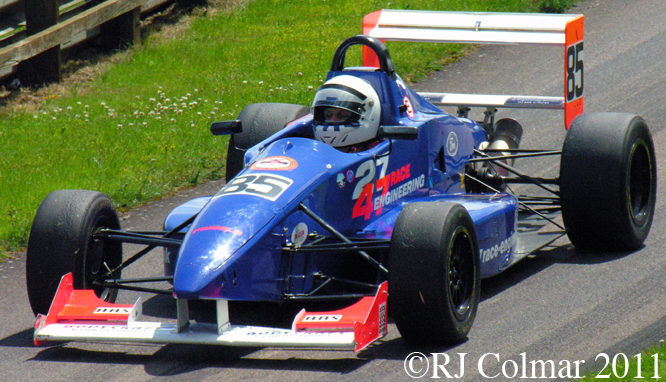
Nemesis Mygale, Castle Combe

(Winner of the first race #85 Peter Bragg Nemesis Mygale)

With a snappy title THE SIMON LEWIS TRANSPORT BOOKS FREE SINGLE-SEATER SERIES is open to any open wheeler that can pass the 108 db noise test.

Ralt RT 3, Castle Combe

(# 3 David Cox Ralt RT3)

An interesting array of single seaters took part in the first race was on July the 18th, I caught practice the day before and look forward to seeing the next races on July 24th.

If you have a single seater that can pass the 108 db noise test and is in need of exercise you could do worse than make enquiries at the Castle Combe website.

Hope you will join me in wishing Simon and his series all the best.

Thanks for joining me on this Simon Lewis Transports Books Free Single Seater edition of ‘Gettin’ a lil psycho on tyres’, join me again tomorrow for a Grand Prix edition of Ferrari Friday. Don’t forget to come back now !
Share