Tag Archives: Silverstone

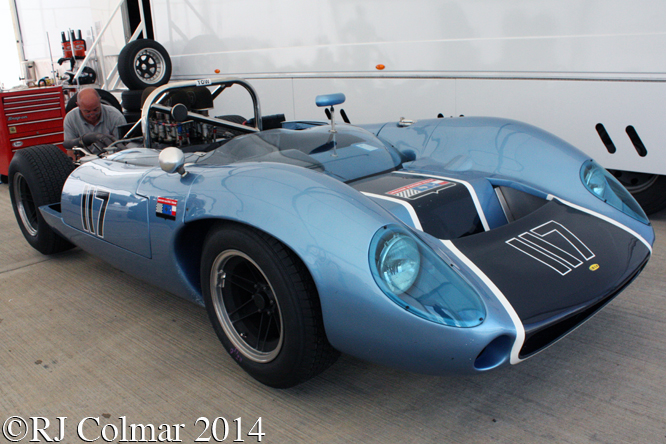
Scratched Entry – Lola T70 SL70/13

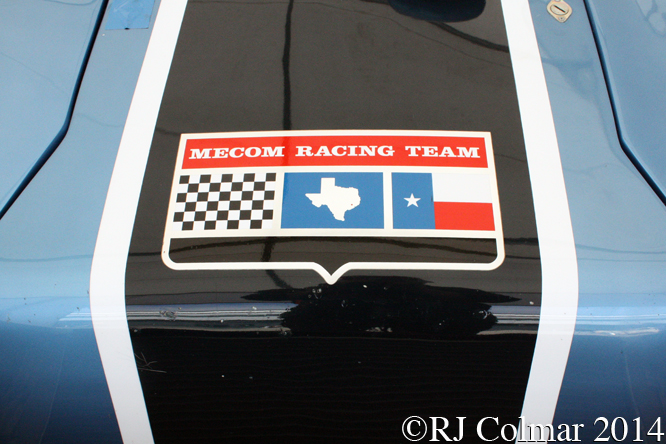
In 1955 aged just 15 John Mecom Jr went to work for one of the wealthiest independent oil men in Texas and indeed the world, namely his father John Whitfield Mecom Snr. By 1960 Jr had dropped out of University of Oklahoma, but was kept busy negotiating oil deals in the middle east and founding the Mecom Racing Team.

Lola T70, Silverstone Classic

The Mecom Racing Team ran sports cars for the likes of a young Roger Penske and Augie Pabst, a one off open wheel Formula One Lotus for Rob Schroeder in 1962, before running rookies Jackie Stewart and Graham Hill at the Indy 500 in 1966. Graham won the race which had been dominated by Jackie until 8 laps from the end.

Lola T70, Silverstone Classic

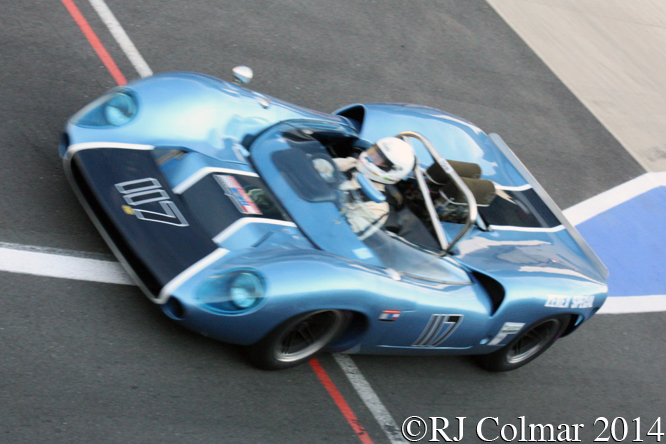
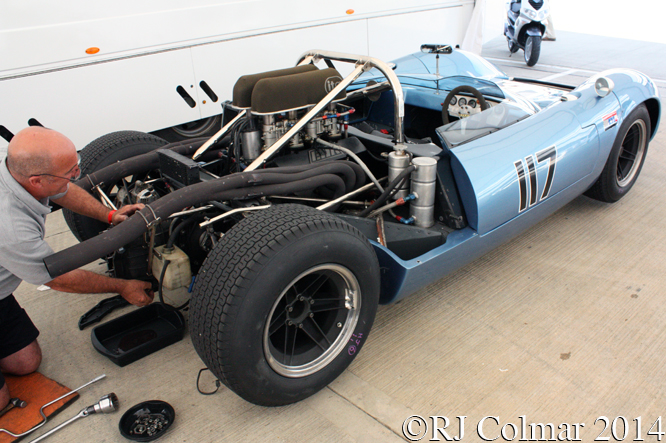
Today’s featured Lola T70, which I believe is chassis SL70/13, is one of at least three T70’s that were owned by the Mecom Racing Team. So far as I know the car was driven by Walt Hangsen in qualifying for the 1965 Las Vegas 200 mile race during which Walt crashed and seriously damaged the Ford 4.7 litre / 286 cui powered car after qualifying 6th fastest.

Lola T70, Jones, FIA Masters Historic Sports Cars, Silverstone Classic

As a result of the accident the Mecom Racing Team scratched their entries for this car and the sister chassis SL70/12, which was to have been driven by Jackie Stewart, from the 1965 Nassau Speed Week.

Lola T70, Silverstone Classic

Alongside his racing activities John Mecom Jr founded the New Orleans Saints football, grid iron, team in 1966 and wound up the Mecom Racing Team in 1967.

SL70/13 eventually found its way to the UK where Colin Parry-Williams raced it with a 5 litre / 302 cui Chevy motor in the 1980’s and 1990’s.

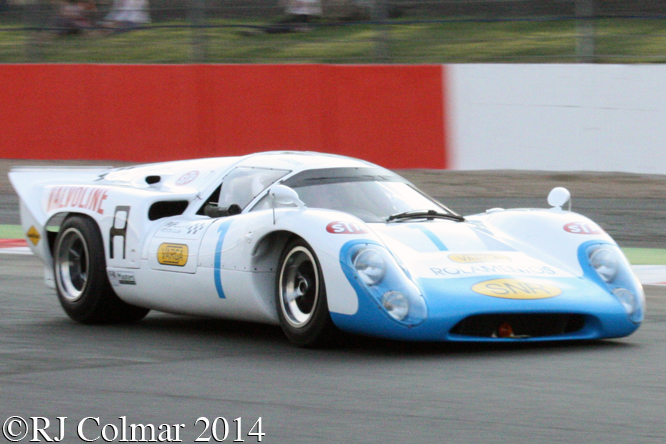
Howard Jones is seen at the wheel of SL70/13, now powered by a 5.7 litre / 328 cui motor, about to take part in the FIA Masters Historic Sports Cars race at Silverstone Classic above. Howard acquired the car in 2006.

Thanks for joining me on this “Scratched Entry” edition of “Gettin’ a li’l psycho on tyres”, I hope you will join me again for Ferrari Friday tomorrow. Don’t forget to come back now !

Share

Super Saturday Part 2/2 – Silverstone Classic

Today’s blog continues on from yesterday with coverage of the second half of the Silverstone Classic Super Saturday race programme.

Porsche 911, Slater, Silverstone Classic

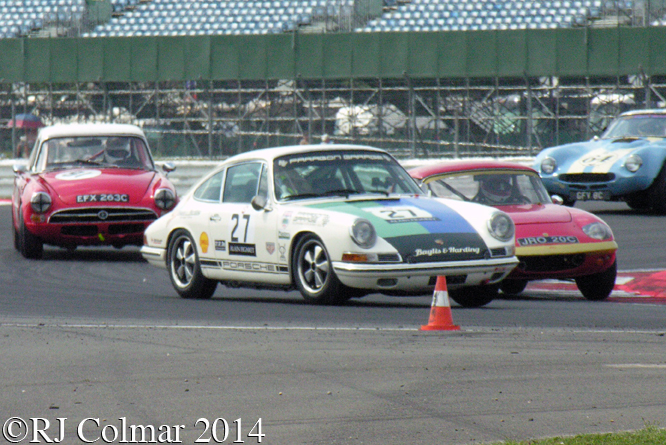
The 50 min Choppard International Trophy for pre’66 GT Cars was won convincingly by Sean McInerney driving the #64 TVR Griffith seen above about to thread it’s way passed the; #27 Porsche 911 driven by Adrian Slater, the #31 Lotus Elan driven by John Sheldon and the #91 Sunbeam Tiger shared by Neil Merry and Terry van der Zee.

Brabham BT4, Minshaw, Silverstone Classic

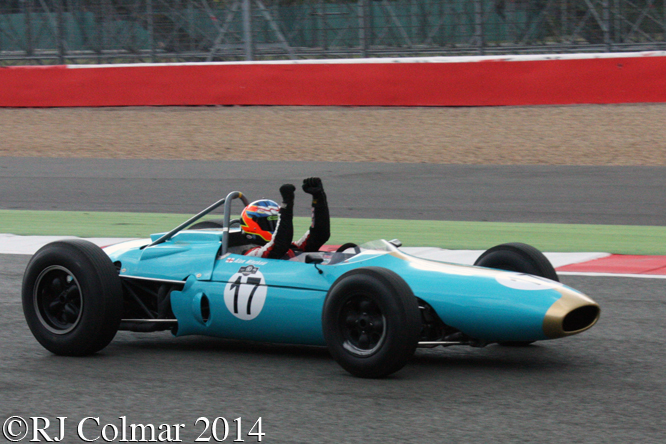
Jason Minshaw won the first of the weekends two Jack Brabham Memorial Trophy races driving the 1962 Brabham BT4 seen above. It is sad to have to report that in the second race for pre ’66 Grand Prix cars the following day Denis Welch was killed in an accident while driving his Lotus 18. I am sure you will want to join me in offering sincerest condolences to Denis’s family and many friends.

Ford Falcons, Voyazides, Gardiner, Silverstone Classic

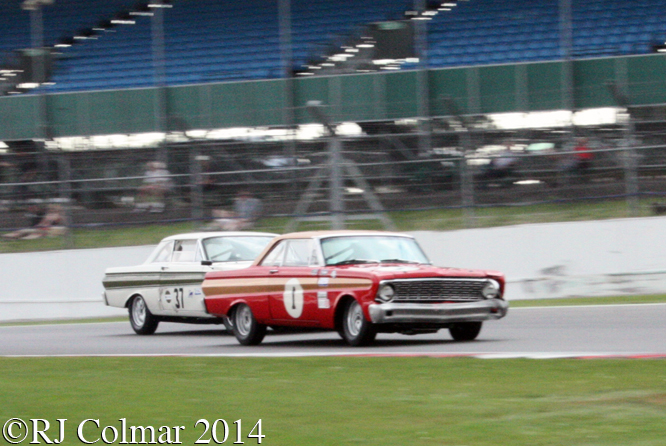
Perversely the Mustang Celebration Trophy proudly presented by Pure Michigan was dominated by the type that the Mustang wiped off the sales floor, namely the Ford Falcons driven by Leo Voyazides #1 and Mike Gardiner #37. Leo is seen above sweeping into a lead that he did not relinquish for the rest of the race.

Maserati Centenary Trophy Start, Silverstone Classic

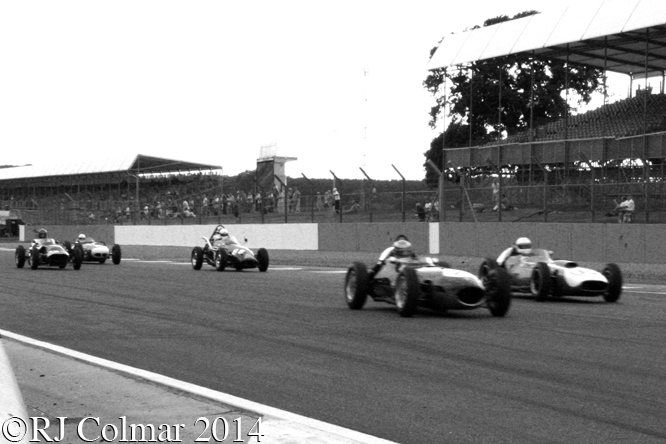
Light was fading at the start of the Maserati Centenary Trophy for pre ’61 Grand Prix cars and photographers such as your truely were having to resort to every trick in photoshop to get an image. Above Philip Walker driving the #1 Lotus 16 is seen streaking into what proved to be an unassailable lead ahead of; the #30 Offy powered Scarab driven by Bristol’s Julian Bronson, #88 ‘Toothpaste Tube’ Connaught C Type driven by Michael Steele, the, #27 Tec-Mech driven by Tony Wood, #35 Kurtis driven by Fred Harper.

Lola T70, Voyazides, Silverstone Classic

Leo Voyazides thirst for victory was unsatiated after winning the Mustang Celebration trophy and he is seen above driving his Lola T70 in the FIA Historic Masters Sports Cars race in hot pursuit of the cheeky 2 litre / 122 cui Chevron B19 driven by Martin O’Connell. No one knows exactly what happened to Martin, but he ended up in the rough stuff, uninjured leaving Leo and Simon Hadfield a clear road to victory lane.

Mercedes Benz C11, Berridge, Silverstone Classic

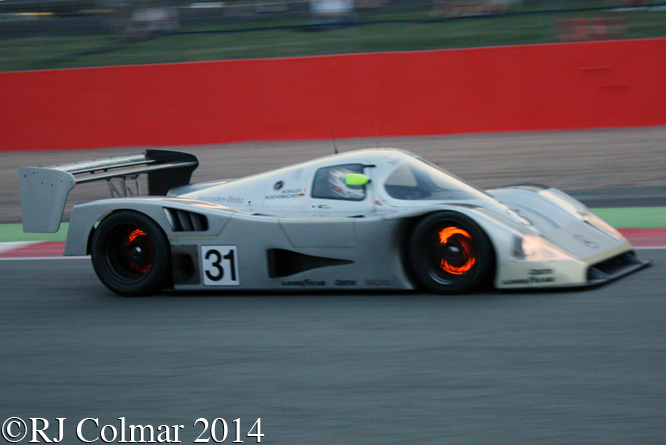
The final race of Super Saturday was my favourite not because it was the most closely contested, it was not despite the best efforts of Katsu Kobota driving a Nissan to take the challenge to the winning #31 Mercedes Benz C11 driven by eventual Group C Endurance winner Bob Berridge, but because the twin turbo V8 C11 driven at full speed is music to my ears and poetry in motion to my eyes. I could watch that car circulating all day and night as I did in 1991 at Le Mans, with out a care in the world.

Approaching 9pm it was all over time to return my photographers bib to the Media Office, jump into a courtesy BMW, driven by an ex Royal Protection Officer, which on the way back to the car park took me past the crowds waiting for Bonnie Tyler to give a rendition of “Total Eclipse Of The Heart”.

Thanks for joining me on this “Super Saturday Part 2/2” edition of Gettin’ a li’l pscyho on tyres. I’ll be staying with Silverstone Classic for the rest of the week I hope you will join me starting with Maserati Monday tomorrow. Don’t forget to come back now !

Share

Super Saturday Part 1/2 – Silverstone Classic

Artist Gerhard Richter once observed something akin to ‘that so long as one still has an object from the past it remains contemporary’, at Silverstone Classic on Super Saturday, the world’s biggest classic car show, there were many objects from man’s not so long past and many came to life in a vibrant crescendo of the twelve races which I was privileged to witness.

de Tomaso ISIS, Gregory, Silverstone Classic

For some time I have been on the look out for a Formula Junior de Tomaso. The 1959 FIAT powered ISIS example driven by Mike Gregory was one of two different de Tomaso models in the opening Peter Arundell Trophy Formula Junior race of the day which was won by Sam Wilson driving a Lotus after his main challenger David Methley spun out in his evil handling Brabham.

March 783, Padmore, Silverstone Classic

Silverstone Classic are great at introducing new events to their crowded schedule and one of the debutant events on this years schedule was the Brian Henton Trophy for classic Formula 3 cars of the type that helped launch the careers of Tony Brise, Tom Pryce, Gunnar Nilsson and Stephen South not to mention Nelson Piquet, Derek Warwick, and a chap called Ayrton da Silva who changed his name to something more snappy. Above Nick Pardmore guides his 1978 March 783, with ’79 side pods, through Stowe Corner on his way to victory.

Ford Cortinas, Shedden, Meaden, Silverstone Classic

For the best part of half an hour British Touring Car Championship (BTCC) regular Gordon Shedden and Richard Meaden kept us entertained with door handle to door handle racing at the front of the Sir John Whitmore Trophy race for under 2 litre / 122 cui saloon cars. Unfortunately when Gordon, seen leading above, came in for his mandatory pit stop his Lotus Cortina expired with an over heating issue before BTCC veteran Matt Neale could take over leaving Richard and Grant Tromans to take a well earned win.

Lister Costin Jaguar, Ward, Silverstone Classic

Chris Ward driving the Costin bodied Lister Jaguar above twice held the lead in the Stirling Moss Trophy for pre ’61 Sports Cars but he could not hold off the winning Knobbly bodied Lister Jaguar driven by Jon Minshaw/Phil Keen.

Hesketh 308C, Jones, Silverstone Classic

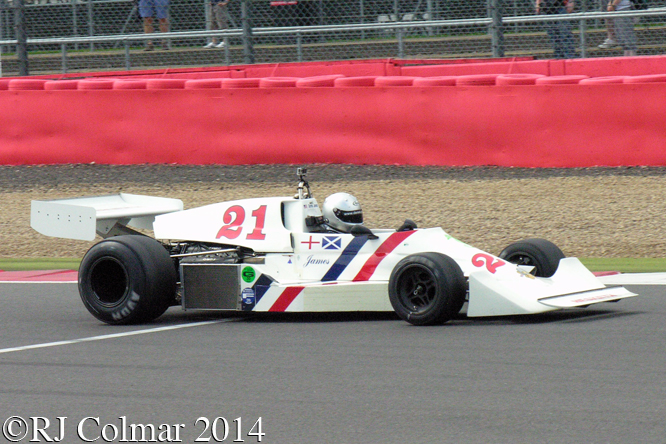
In 1975 it was announced that the hitherto enormous air boxes that had become an aesthetic blight on Formula One were to be banned along with various other changes. The first car to be built to the new regulations was the Hesketh 308C which was designed by Harvey Postlethwaite for James Hunt to drive. Above Derek Jones is seen driving a 308C in the FIA Masters Formula One race which was won by Ollie Hancock in a ’78 Fittipaldi F5A, after the race was stopped to allow the extraction of Sidney Hoole from what remained of the fabulous Ensign N173. Sidney was taken to hospital with a leg injury described as not ‘thought to be serious’.

Opel Belmont (sic), Wolfe, Silverstone Classic

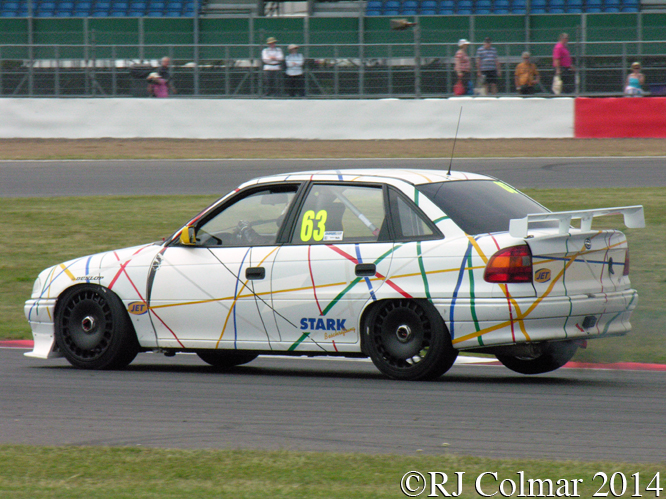
The sixth event of the Silverstone Classic ‘Super Saturday’ was the Jet Super Touring Car Trophy for a variety of Touring cars from the Early 70’s to the turn of the Millennium. The close fought race was won by James Dodd from Stewart Whyte both driving Honda Accords. Andy Wolfe is seen driving a 1993 Jet sponsored Opel Astra, listed incorrectly in the programme as an Opel Belmont, which won it’s class in the 1993 Nurburgring 24 hours.

Thanks for joining me on this ‘Super Saturday Part 1/2′ edition of “Gettin’ a li’l psycho on tyres” I hope you will join me again tomorrow when I’ll continue with the second half of the Super Saturday race programme. Don’t forget to come back now !

Share

Hot In Miami – Jaguar XJR5 #006

If one foreigner deserves a knighthood for trying to keep the British Motor industry alive while it was in self destruct mode twixt the early 1960’s and late 1980’s my nomination without question would go to Bob Tullis who prepared and raced a succession of British sports cars from Triumph and Jaguar to numerous victories over the 30 years in question.

Perhaps most remarkably of all having been a successful driver for 20 years, which included driving a few non British vehicles like the Dodge Dart, AMC Javelin,Bruce Jennings Porsche 911 and a one off drive in a works Oldsmobile Cutlass, Bob and Group 44 Inc business partner Brian Feurstenau managed to persuade Mike Dale of Jaguar Cars Inc, New Jersey, to fund an IMSA GT Prototype project which would see Jaguar return to Le Mans nearly 30 years after their last official appearance at the circuit in 1955.

Tullis who’s diverse endurance experience included driving the Triumph Spitfire Coupé and Howmett gas turbine car at Le Mans employed Lee Dykstra to design the new Jaguar XJR5 IMSA GTP challenger.

Jaguar XJR5, Miles, Silverstone Classic

The XJR5 was to be powered by a variant of the 2 valve per cylinder 5.34 litre / 326 cui Jaguar V12 which Bob had successfully campaigned in his Trans Am Quaker State Group 44 Inc Jaguar E-Type and later XJS models since the mid 1970’s.

In August 1982 Bob and long time co driver Canadian Bill Adam drove the XJR5 to a debut 3rd place finish behind two of the outgoing Porsche 935’s at Road America to score a debut class victory.

Bob and Bill scored the teams first overall victory at Road Atlanta in April 1983, two more followed at Lime Rock and Mosport, Doc Bundy then shared the final XJR5 victory in 1983 at Pocono with Bob.

Jaguar XJR5, Miles, Silverstone Classic

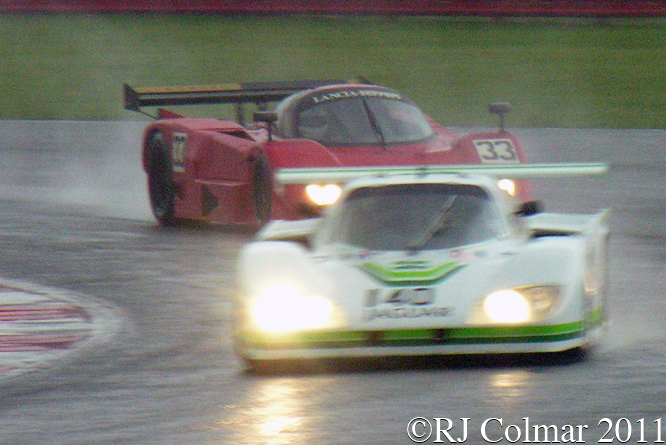
Today’s featured chassis #006 first appeared at the 1984 Daytona 24 Hours where Bill Adam, Pat Bedard and Brian Redman qualified 6th and were classified a disappointing 24th, the sister car driven by Doc Bundy, David Hobbs and Bob Tullius qualified and finished 3rd.

Next time out at Miami with Brian and Doc at the wheel chassis #006 qualified 4th but more importantly crossed the line first when the chequered flag fell. Despite the team increasing the capacity of it’s V12 motors to a full 6 litres / 366 cui a couple of months later this would prove be their only overall victory in 1984.

After Porsche’s top driver Derek Bell had been suitably impressed with the XJR5 after testing it in 1983 Jaguar gave the green light to Bob and Group 44 to take the cars, one of which would be #006 driven by Tony Adamowicz, John Watson and Claude Ballot-Léna to Le Mans in 1984.

Jaguar XJR5, Miles, Silverstone Classic

Tony, John and Claude qualified 19th and retired after an accident on lap 212 while the sister car driven by Brian, Doc and Bob qualified 14th and made it to lap 291 before the gearbox gave up.

Chassis #006 returned to the States and finished the season with a 2nd place finish in the Daytona 3 Hours with Brian and Hurley Haywood at the wheel.

For 1985, by which time Lee Dykstra reckoned he had redesigned 99% of the XJR5, #006 was prepared for the Le Mans 24 hours.

Jaguar XJR5, Miles, Silverstone Classic

Jim Adams joined Brian and Hurley in chassis #006 where the car was qualified 17th and retired after only 151 laps with a constant velocity joint failure.

The sister car driven by Bob, Chip Robinson and Claude qualified 16th and finished 13th overall and first in the GTP class.

The cars final two races were back in the States where Chip Robinson joined Hurley to score a best 2nd place finish at Pocono in September 1985 on it’s final in period race appearance.

At Daytona in December 1985 the XJR5 model appeared for the last time, before it was replaced by the all new XJR7 in 1986, Brian and Hurley sent the model into retirement with a fine second place less than 8.5 seconds behind the winning Hobert Racing Porsche 962 driven by Al’s Holbert and Unser.

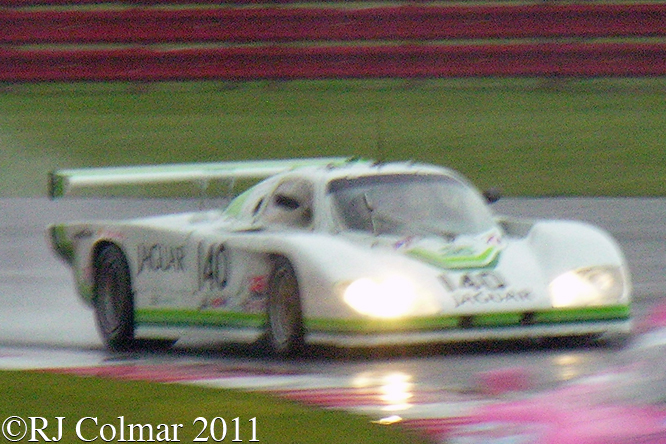
Today #006 is owned by Don Miles who can be seen driving the car at Silverstone Classic events in these photographs.

Thanks for joining me on this “Hot In Miami” edition of “Gettin’ a li’l psycho on tyres” I hope you will join me again for Ferrari Friday tomorrow. Don’t forget to come back now !

Share

Polska Kronika Filmowa ? – Talbot T150 / T26 #82935 / 90202

Today’s blog tells the story of how I came to wonder if today’s Talbot T26C 90202 seen a couple of months ago at the VSCC Spring Start meeting featured in a 1948 edition of Polska Kronika Filmowa a Polish weekly newsreel.

Talbot T26, VSCC Spring Start, Silverstone

So far as I have been able to discern this vehicle was originally built in 1937 as a T150 chassis number #82935 and fitted with a 4 litre / 244 cui 6 cylinder motor and registered for road use with the French licence plate 439W1.

Talbot T26, VSCC Spring Start, Silverstone

Albert Divo raced the car on at least 3 occasions with a best finish of 2nd in the 1937 Marne Grand Prix. In September 1937 Raymond Sommer driving #82935 now bearing the French licence plate 4397RL2 retired from the Tourist Trophy with engine problems. #82935 is shown by one source to have been intended to be part of a two car Talbot-Lago team at the 1937 Le Mans 24 hours that did not show up.

Talbot T26, VSCC Spring Start, Silverstone

In 1938 René Carrière and Anthony Hannoyer drove the works entered #82935 to a fifth place finish on the Mille Miglia, two months later René shared the now Luigi Chinetti entered car with René Le Bègue at Le Mans, but retired after completing 101 laps.

Talbot T26, VSCC Spring Start, Silverstone

Two weeks later the mudguards came off and René Carrière drove #82935, entered once again by the Talbot factory and carrying the #4, seen at 1:03 in this linked clip, to a gallant 4th place finish, first non Mercedes and only 10 laps down, on the French Grand Prix winning Mercedes Benz W154 of winner Manfred von Brauchitsch.

Talbot T26, VSCC Spring Start, Silverstone

For it’s final two known appearances in 1938 #82935 was fitted with a 4.5 litre / 274 cui straight six and given a T26 identity with the chassis number #90202, it was not the only T150 to become a T26. René Carrière won pole position driving the car, with it mudguards refitted for the Tourist Trophy, but could only finish 4th. Philippe Etancelin joined René Carrière to drive the upgraded car in the 1938 Paris 12 Hours from which it was retired after an accident.

Talbot T26, VSCC Spring Start, Silverstone

The renumbered chassis #90202 made only two known appearances in 1939 the first at Le Mans where entered by Chinetti and driven by Luigi Chinetti and T.A.S O. Mathieson the car suffered another accident and retired on lap 154. T.A.S.O. Mathieson is credited with entering #90202 in the Grand Prix du Comminges run at St. Gaudens for Luigi Chinetti to drive, but once again the car retired. Chinetti entered himself to drive #90202 in the Liege Grand Prix on the 26th August 1939 a week before WW2 hostilities broke out on 1st September, but the race was cancelled.

Talbot T26, VSCC Spring Start, Silverstone

After the war Lord Selsdon, who coincidentally raced against #90202 in a Lagonda V12 at Le Mans in 1939, became the owner of #90202 by 1946, a time when almost anything that could move was thrown in to race at almost every available opportunity. Louis Chiron drove #90202 entered by Lord Selsdon at an event run at Bois de la Cambre in June 1946 but retired with a fuel pump ‘issue’.

Talbot T26, VSCC Spring Start, Silverstone

Chiron then appears to have played a part in ensuring that French patron of the Ecurie France team Paul Vallée rented or at least borrowed #90202 from Lord Selsdon for part of the 1947 season when the car was to be driven by Chiron, so far as I know he never did, but Yves Giraud-Cabantous may have driven the car referred to a ‘26SS‘ in 1947, though in which events I have not been able to ascertain.

Lord Selsdon had the car back by the 1948 British Grand Prix which was featured on the Polska Kronika Filmowa newsreel I mentioned on the top of this thread, but #90202 took no part in that event as Lord Selsdon had only been given a reserve entry.

The last mention I have found for #90202 in Lord Selsdon’s ownership is in 1949 the Jersey Road Race where Frank Le Gallais retired with a gearbox problem.

Peter Waring is known to have finished at least three races driving #90202 in 1953 recording a best 3rd at Silverstone. It was left to Dick Fitzwilliam to record the chassis last known in period win in a National Handicap event at Goodwood in 1954 nearly twenty years after the versatile chassis which had raced Mercedes Benz as an open wheeler, completed a Mille Miglia and competed in two Le Mans 24 hour races.

The Talbot #90202 seen here at the VSCC Spring Start at Silverstone earlier this year is raced by Richard Pilkington with and without mud guards and road lights.

Thanks for joining me on this “Polska Kronika Filmowa ?” edition of “Gettin’ a li’l psycho on tyres, I hope you’ll join me again tomorrow for a car that is often incorrectly given the wrap for the blanket 70 mph restriction on Britain’s motorway network. Don’t forget to come back now !

Share

Unfinished Business – Lister Coupe #

After building a successful range of open top sports racing cars powered by MG, Bristol, Jaguar and Chevrolet motors between 1953 and 1958 Brian Lister turned to Frank Costin to build an all new spaceframe chassis with an open body to be powered by a 3 litre six cylinder Jaguar XK motor for a crack at Le Mans which he considered “unfinished business”.
01 Lister Coupé_7625sc

However after the death of his lead driver Archie Scott-Brown at Spa driving a Lister in 1958 and the fatal accident which killed his 1959 leading driver Ivor Bueb, driving a Cooper open wheeler in 1959, Brian Lister was prompted to retire from building racing cars bearing his name leaving the 3 litre spaceframe project which had never been given a chassis number unfinished.
Lister Coupé, HGPCA Test Day, Silverstone

Rhostyllen, North Wales, garage proprietor Syd Diggory finished the open bodied spaceframe car off fitting a 3.8 litre Jaguar motor in 1960. Syd entered the car in several events for Bruce Halford, who won one race at Brands Hatch with it.
Lister Coupé, HGPCA Test Day, Silverstone

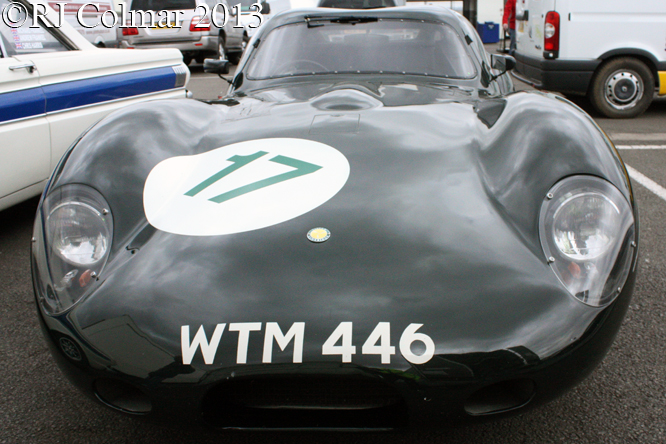
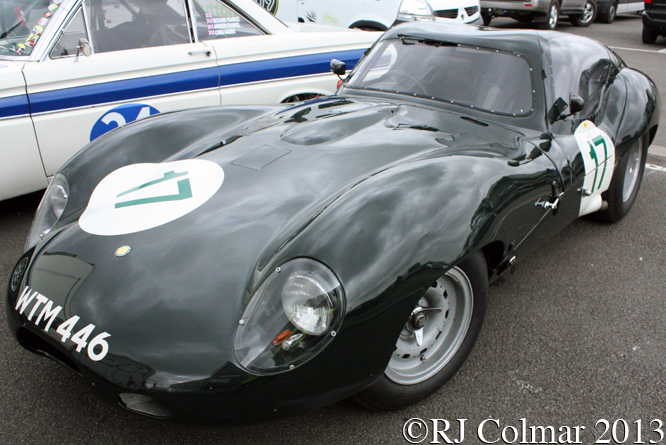
John Coundley acquired it in 1961 after his own Lister chassis #126 with the registration WTM446 had been damaged by Stephen Ouvaroff on the set of the film “The Green Helmet”.

Lister Coupé, Goodwood Revival

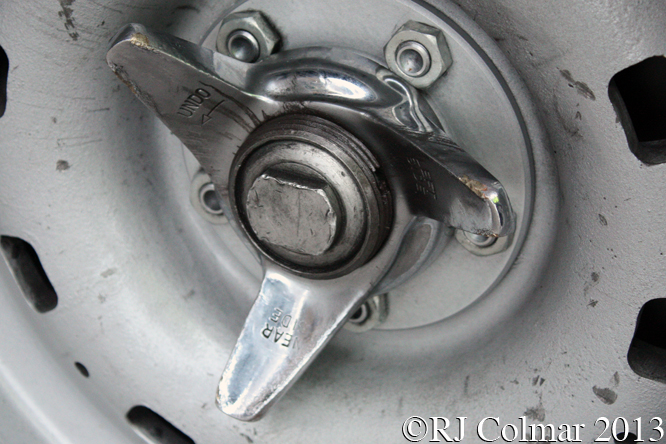
12 months later Le Mans racer Peter Sargent bought both the space frame Lister and the damaged, in former owner John Coundley’s eyes ‘written off’ tube framed #BHL126 registered WTM446. Peter commissioned the space framed car’s designer Frank Costin to design the double bubble closed coupé body fabricated from aluminium which is seen on the car today. Frank also made various chassis and suspension modifications to accommodate rising rate front suspension and 15″ Dunlop wheels.
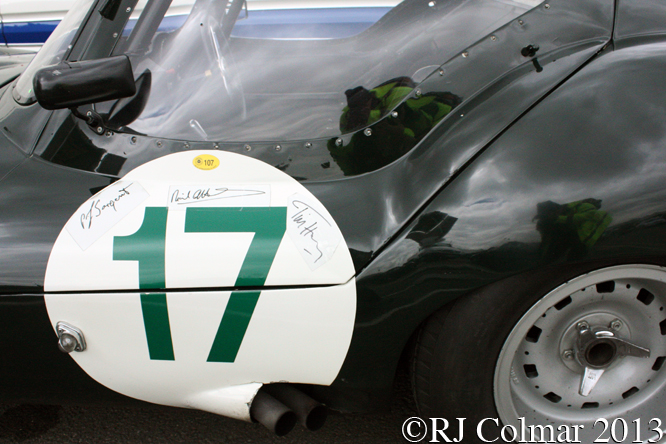
Lister Coupé, HGPCA Test Day, Silverstone

Peter Sargent was joined by Peter Lumsden at the 1963 Le Mans test weekend to drive the barely finished unpainted rebodied car, bearing the registration number WTM446 from the older #BHL126 Lister and temporarily fitted with Webber carburetors.
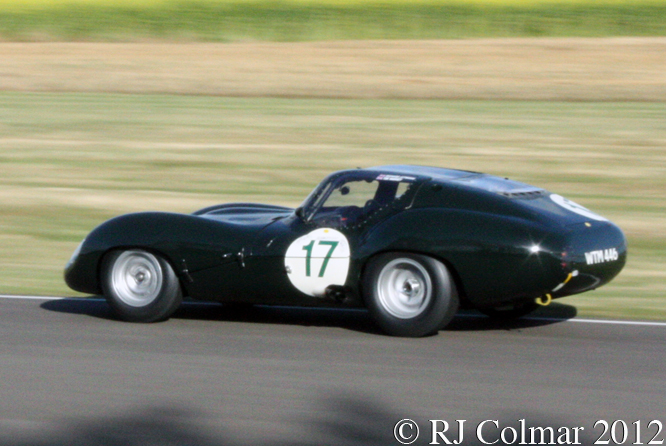
Lister Coupé, Goodwood Revival

The Coupé proved to be quicker than the E-Type Jaguar the two Peters had shared at Le Mans in 1962 but was in need of further development which continued right up until the day before the race when it was found that a subframe was allowing the front wheels to toe out like a ‘barn door’.
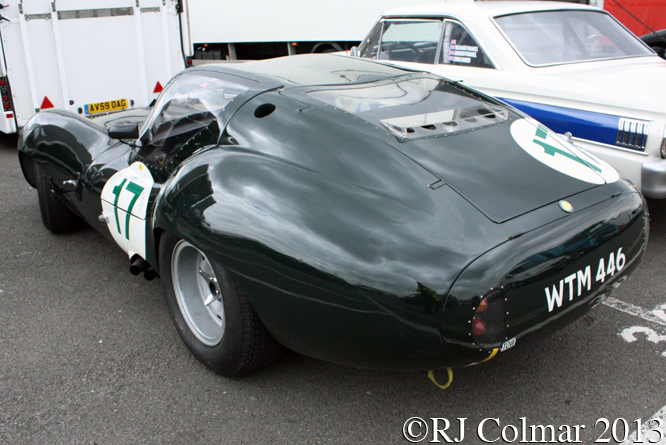
Lister Coupé, HGPCA Test Day, Silverstone

With a fix for the suspension the Lister went to the grid with a fuel injected motor rebuilt by Jaguar fitted with oval exhausts in place of the round ones to raise the ground clearance. The Lister reached 16th place by the third hour of the event when it’s retirement was brought about by clutch failure.
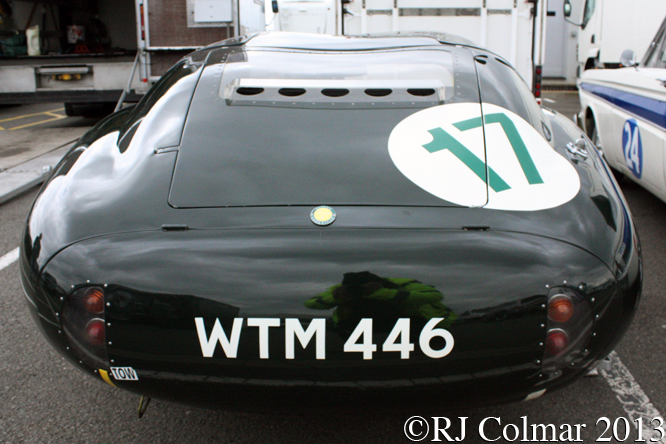
Lister Coupé, HGPCA Test Day, Silverstone

Peters Lumsden and Seargeant continued developing and racing the Lister Coupé with some success in club meetings through 1963.

In 1964 John Coundley and Jack Fairman shared the car in the 1000 kms race at the Nurburgring where they qualified a lowly 68th and retired with rear suspension failure on the Coupé’s final international appearance.

David Harvey, now Jaguar owners club chairman become the next owner of the unique Lister and had it fitted with a D-Type motor and gearbox. David and his wife drove it competitively in sprints and hillclimbs, earning a class record at Gurston Down, and when his usual road car was off the road the Coupé was also used as a daily driver since it was registered and taxed with it’s WTM 446 registration.

The known chain of ownership of the Coupé includes historic owner and collector Neil Corner before it was acquired by Hexagon of Highgate who had the roof chopped off to return the car to the open top specification as it was raced from 1960 to 1962. In 1972 Gerry Marshall won the last ever motor race run at Crystal Palace in the open top space frame Lister. Some years later Gerry drove the car again under new ownership to win the 1980 Lloyds and Scottish Championship historic series.

The Coupé GT bodywork was returned to the car by Maurice Gomm for Dr Philippe Renault a private museum owner from Le Mans in the mid 1980’s.

More recently the Lister Coupé has become a regular competitor at Goodwood Revival where it survived major damage in 2006 and 2010. In 2012 the Lister Coupé was shared by 1970 Le Mans winner Richard Attwood and 1992 British Touring Car Champion Tim Harvey.

The two entities that have born the registration WTM446 became the subject of a court battle after the Lister #BHL126, which former owner John Coundley had considered a “write off”, was brought back to life.

The new owner of the rebuilt #BH126 took the owner of the spaceframe Lister Coupé and the Driver and Vehicle Licensing Agency (DVLA) to court in a dispute over who owned the WTM446 registration. The Court appears to have found that no car should have that number and has not issued it to either vehicle since.

Thanks for joining me on this “Unfinished Business” edition of “Gettin’ a li’l psycho on tyres” I hope you will join me again tomorrow for a look at a Cunningham. Don’t forget to come back now !
Share

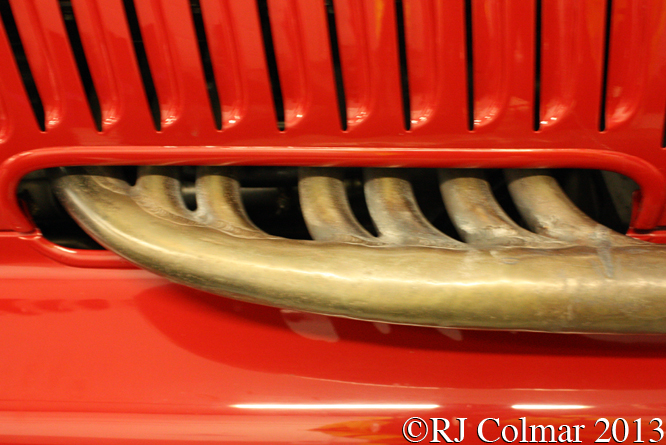
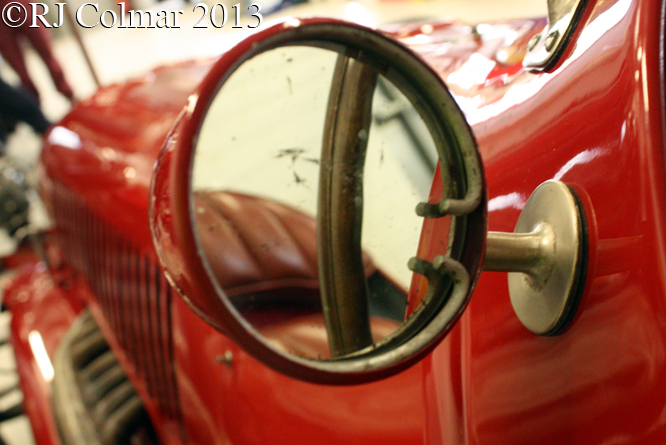
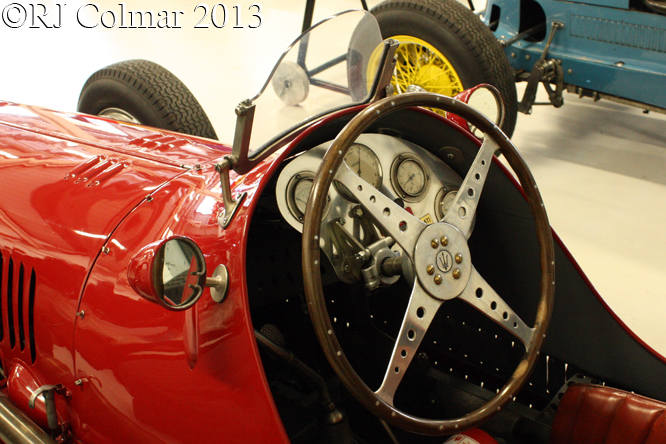
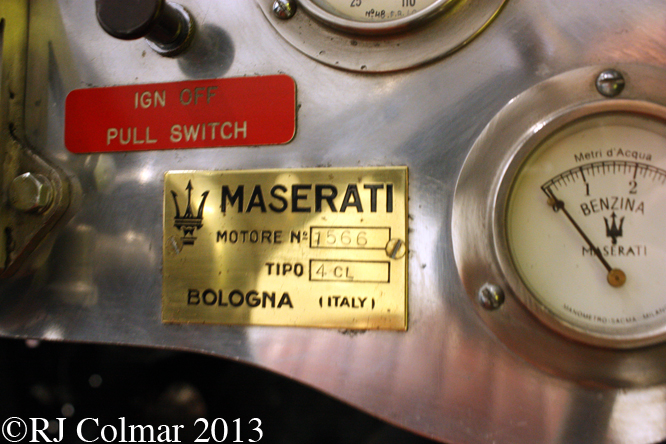
4 Pot Square Bore – Maserati 4CL #1566

Fed up with the German Silver Arrow’s from Mercedes Benz and Auto Union stealing their thunder and pride the Italian Motorsports Authorities decided to cut Alfa Romeo and Maserati some slack by announcing that all of the Grand Prix run on Italian soil in 1939 would be for 1.5 litre / 91.5 cui Voiturettes which would exclude the German monsters that had been sweeping all before them in the top European open wheel series since 1935.

Maserati 4CL, HGPCA Test Day, Silverstone

To take advantage of the new rules Ernesto Maserati designed a new 4 cylinder motor with bore and stroke dimensions roughly equal, known as square bore though the cylinders were of course round, and with four valves per cylinder to replace the 6 cylinder 12 valve motor fitted to the previous moderately successful 6CM.

Maserati 4CL, HGPCA Test Day, Silverstone

To handle the extra 30 hp of the new motor the 6 CM ladder chassis was moderately upgraded; with more use of aluminium, repositioned suspension to lower the chassis and the track was nearly 2″ wider.

Maserati 4CL, HGPCA Test Day, Silverstone

For the Tripoli Grand Prix, effectively on Italian soil since Lybia was an Italian colony at the time, Maserati produced one 4CL with a streamlined body for Luigi Villoresi to drive. Luigi qualified on pole in the race, generally regarded as having the finest field of voiturettes ever seen.

Maserati 4CL, HGPCA Test Day, Silverstone

However both Luigi and the other two 4 CL’s including #1566 seen here, driven in Tripoli by Giovanni Rocco retired leaving, Mercedes Benz to an uncontested victory with two W165 cars they had built in secret, much to the dismay of the Italians.

Maserati 4CL, HGPCA Test Day, Silverstone

Fortunately the W165’s, having made their point, were never to race again leaving Jonnie Wakefield in a private 4CL to score 3 victories to which the works team added 2 more before the outbreak of hostilities in the 1939/45 war. Luigi Villoresi driving a 4CL won at Targa Florio against opposition only from Axis aligned countries in 1940 and Giovanni Rooco driving #1566 finished third in the same race to record his best result in the car before the war.

Maserati 4CL, HGPCA Test Day, Silverstone

After the cessation of hostilities #1566 found it’s way to France where it was acquired by Robert Mazaud, a driver who set a lap record in the Le Mans 24 Hours, on his debut there, aboard a Delahaye in 1938. Robert would score his best result aboard #1566, 3rd at St Cloud in Belgium, a few weeks before being killed after an accident at the wheel of #1566 in the Nantes Grand Prix in France.

Maserati 4CL, HGPCA Test Day, Silverstone

Raymond Sommer, Tazio Nuvolari and Giorgio Pelassa all drove 4CL’s to victory in 1946, but it was 1947 when the 4CL really came on song with 10 victories to the models credit. Luigi Villoresi won 6 races with; Nello Pagani, Reg Parnell, Yves Giraud-Cabantous and Christian Kautz each winning one a piece.

Maserati 4CL, HGPCA Test Day, Silverstone

To the best of my knowledge Jean Judet entered #1566 in at least six events between 1946 and 1950 recording at least five retirements.

In all 15 4CL’s were built between 1939 and 1946, I believe #1566 seen in these photographs, at the HGPCA Test Day at Silverstone last year, has belonged to the family of the late Rodney Smith since 2004.

Thanks for joining me on this “4 Pot Square Bore” edition of “Gettin’ a li’l psycho on tyres”, I hope you will join me again tomorrow for a look at a Bugatti. Don’t forget to come back now !
Share