Tag Archives: Silverstone

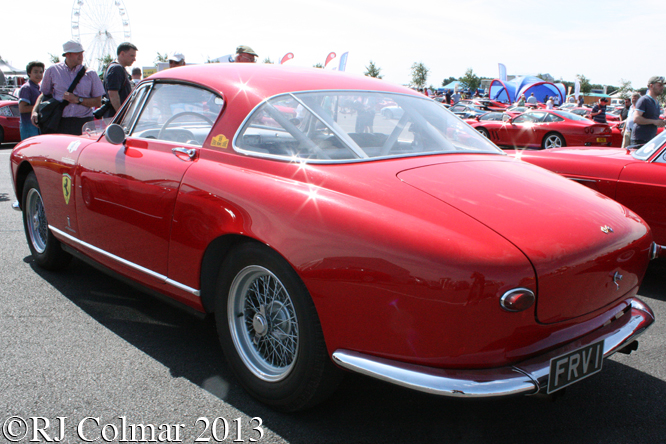
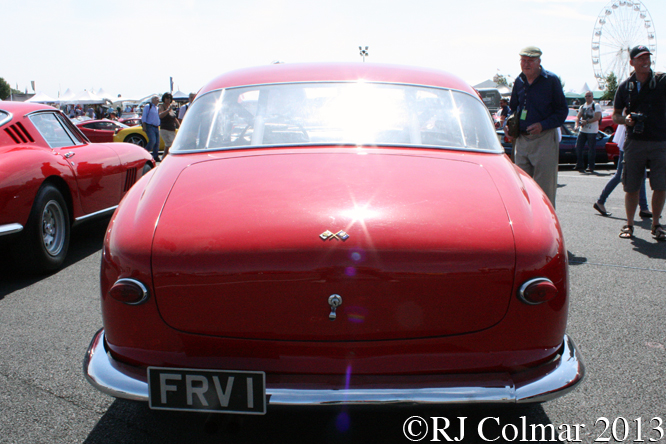
Non Stop Runner – Ferrari 250 Europa GT Pininfarina #0373GT

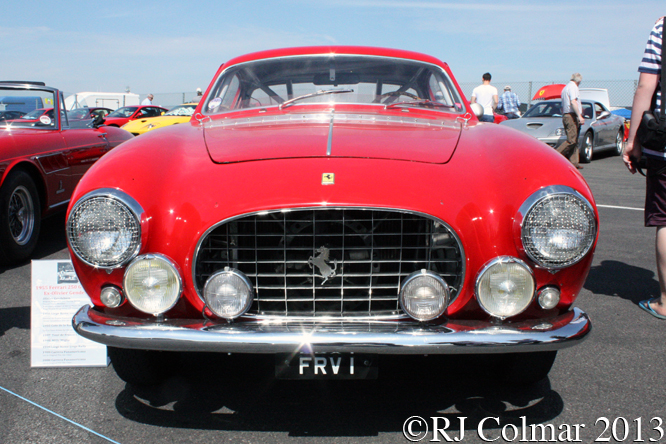
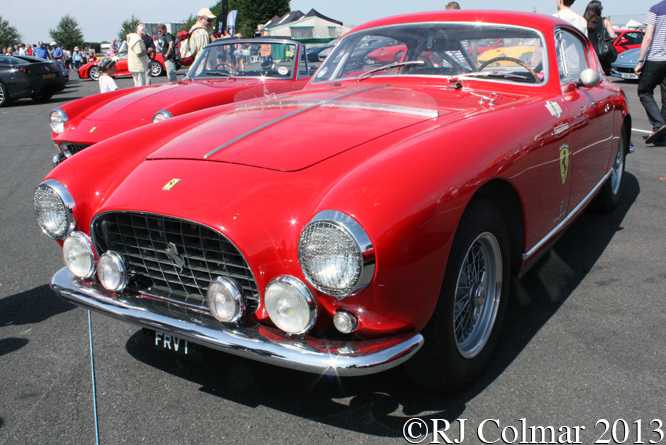
Last week I looked at a 1953 Ferrari 250 Europa Coupé. This week features one of just 28 slightly later Ferrari 250 Europa GT chassis #0373GT built in November 1954.

Ferrari 250GT Europa, Silverstone Classic

#0373GT was delivered to Jacques Swaters dealership Garage Francorchamps and sold to Belgian Jacques Washer in 1955. Washer entered the car in at least two events for his cousin Olivier Gendebien in 1956.

Ferrari 250GT Europa, Silverstone Classic

Oliver finished second in class on the Cote de la Roche Hillclimb in the Ardennes, before taking part in the 1956 Liege Rome Liege rally across Europe. Oliver and his co driver Pierre Stasse finished the non stop 2000 mile event 3rd overall.

Ferrari 250GT Europa, Silverstone Classic

In the 1990’s the car was fitted with a Ferrari 250 GT/E motor and differential, along with a gearbox from a Ferrari 412. The motor was tuned to give 300hp and more recently the car has been fitted with ‘modern’ brakes.

Ferrari 250GT Europa, Silverstone Classic

#0373GT has taken part in numerous classic events including the 1999 re run of the Rome Liege Rome Rally. The same year #0373GT won it’s class on the La Carrera Panamericana repeating the feat in 2000, on the second occasion fitted with period correct Halibrand alloy wheels.

The car is seen in these photo’s at the recent Silverstone Classic.

Thanks for joining me on this “Non Stop Runner” edition of “Gettin’ a li’l psycho on tyres” I hope you will join me when I be looking at a Can Am March. Don’t forget to come back now.

PS Some thoughts on what to watch out for at the Belgian GP at Motorsports Unplugged.

Share

Where Do We Go Now ? – Silverstone Classic

Last Saturday it was back to Silverstone for the third time in a month, but this time for the Silverstone Classic a three day event.
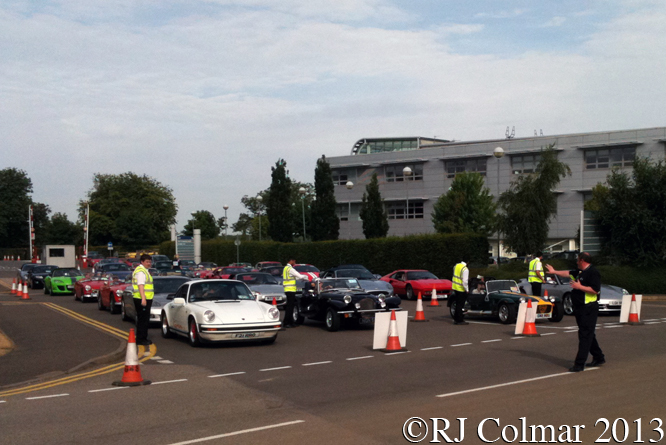
Silverstone Classic

Silverstone Classic is billed as the largest participant motorsports event in the United Kingdom.
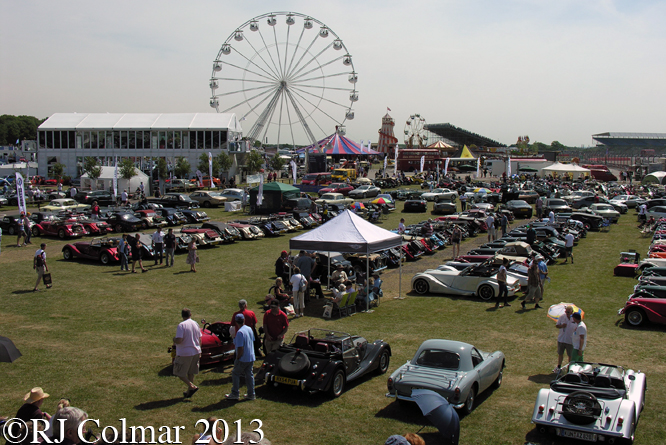
Silverstone Classic

Sponsors of the event BMW brought a long a big wheel, unfortunately I get vertigo on a step ladder so I was not able to sample the, by all accounts, spectacular view from the top.
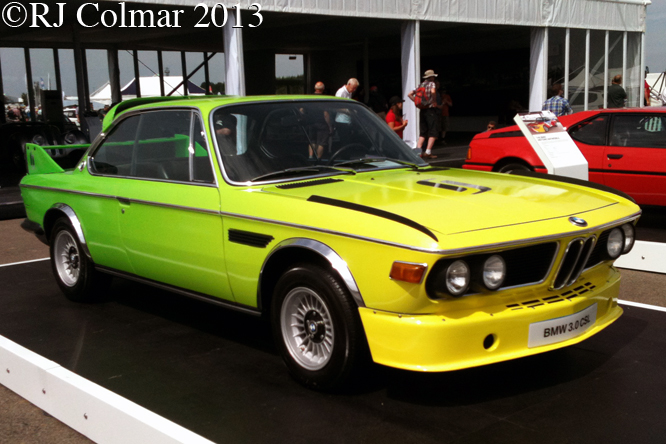
BMW 3.0 CSL, Silverstone Classic

I’m not too sure when the fad for lurid paint scheme’s started on road cars in Germany, but I do remember it quite vividly when I visited the country in 1974, above this particularly cool post July 1973 ‘Batmobile’ BMW 3.0 CSL was on display outside the BMW hospitality unit.
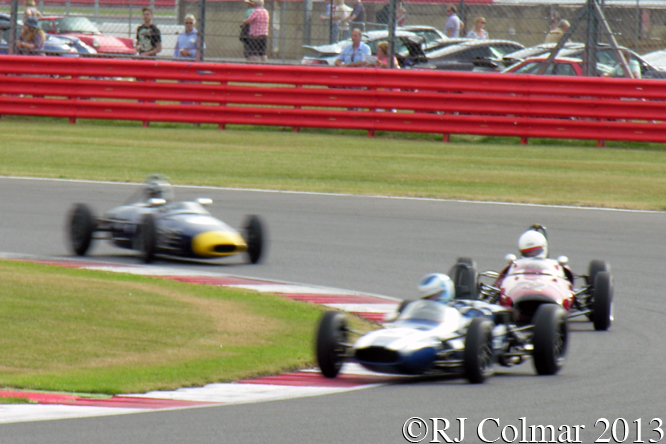
Wilson, Lotus 20/22, Hibberd, Lotus 22, Silverstone Classic

Racing got underway promptly at 9 am with the Formula Juniors who were racing for the Peter Arundell Trophy. The race was hotly contested between the #53 Lotus 20/22 of Sam Wilson and #79 of Andrew Hibberd, after trading places many times, Andy won the 9 lap race by just over half a second.
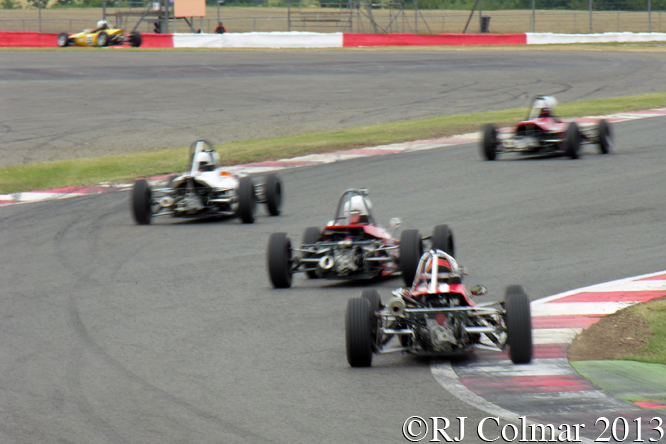
Formula Ford, Silverstone Classic

Callum Macleod won the Balvenie Trophy for Historic Formula Fords by nearly five seconds, above a gaggle of Formula Fords exits Maggotts Corner and heads for Beckett’s corner in a scrap more typical of the class.
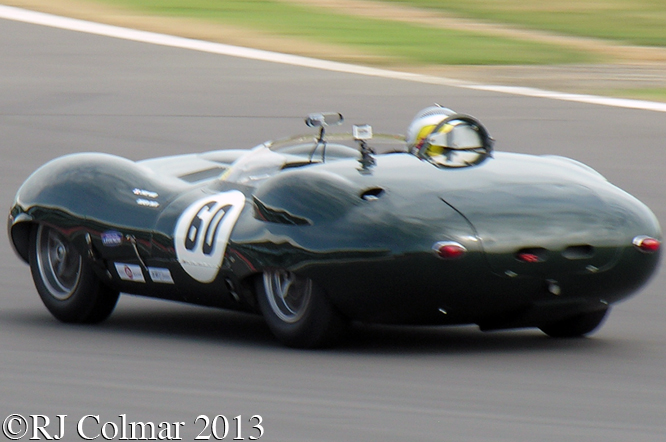
Smith, Ward, Costin, Lister, Silverstone Classic

Gary Pearson led the opening laps of the Stirling Moss Trophy for Pre ’61 sports cars in his knobbly Lister Jaguar, but Oliver Bryant in a Lotus 15 soon chased him down for the lead and an eventual victory shared with Grahame Bryant. Meanwhile Chris Ward and Andrew Smith came through the field from 11th to finish second 2 seconds adrift in the lush Costin bodied Jaguar powered Lister seen above.
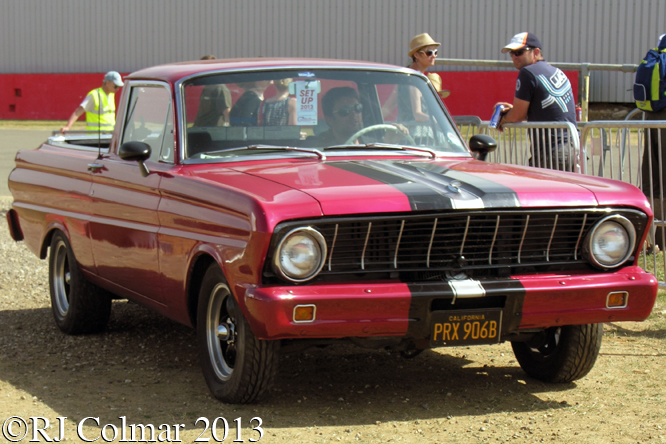
Ford Ranchero, Silverstone Classic

Out on the old Hanger Straight UK Street Machines were holding a shootout in which this ’64 Ford Ranchero was taking part.
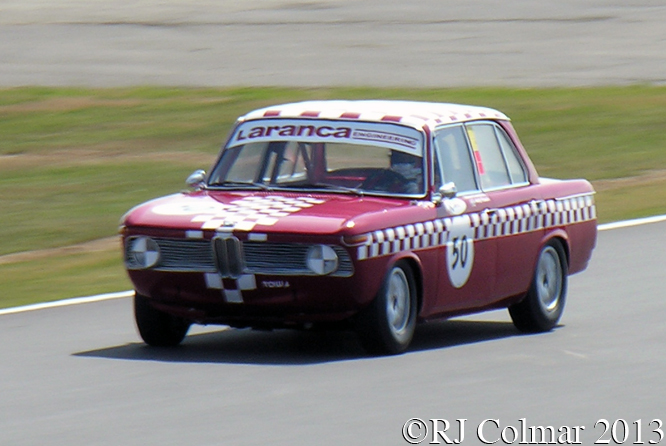
Priaulx, Solomons, BMW1800Ti, Silverstone Classic

Former British Hillclimb Champion and three time World Touring Champion Andy Priaulx led the opening stages of the Sir John Whitmore Trophy for Under 2 Litre Touring Cars in this BMW 1800Ti, but it was Leo Voyazides aided by former Merzario engineer Simon Hadfield that came through to win in a Lotus Cortina. Priaulx sharing with Richard Solomons came home fifth.
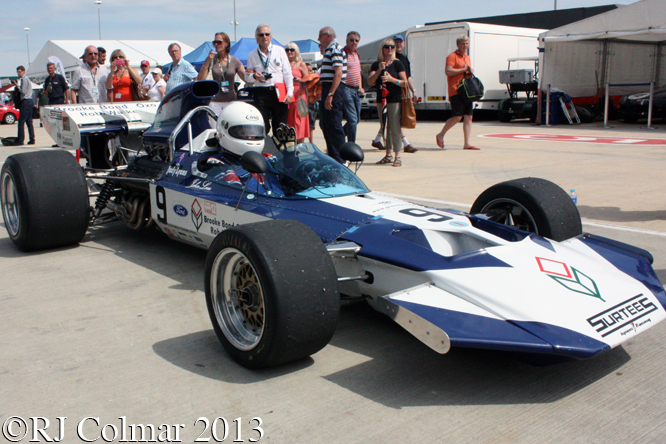
Lyons, Surtees, TS9, Silverstone Classic

Judy Lyons in her Surtees TS9 gives us a wave as she prepares to take part in the FIA Masters Historic Formula One race for which she qualified 3rd from last and finished last three laps down. Judy’s husband Frank finished 16th driving a Hesketh 308E while her son Michael won the race driving a former Longhorn Indycar chassis now in Williams FW07 spec as raced by Rupert Keegan in 1980.
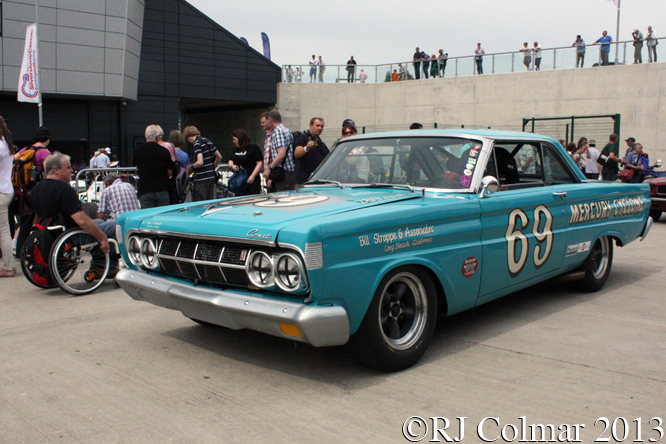
Wills, Panayiotou, Mercury, Comet, Cyclone, Silverstone Classic

Leo Voyazides and Simon Hadfield won the Trans-Atlantic Touring Car Trophy, by over 16 seconds, sharing a Ford Falcon. The Mercury Comet Cyclone above was shared by Roger Wills and Chris Panayiotou who finished 6th.
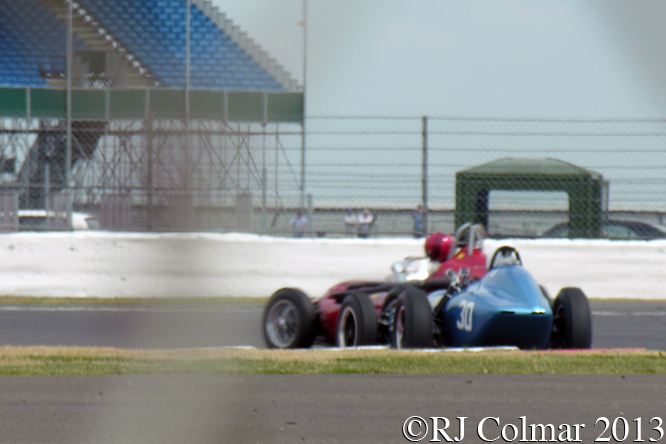
Wood, Tec Mec, Bronson, Scarab, Silverstone Classic

Tony Wood qualified the #27 Tec Mec Maserati on pole for the Froilan Gonzalez Trophy for HGPCA Pre’61 Grand Prix Cars, but Julian Bronson sitting alongside Wood on the grid in the #30 Offy powered Scarab made a great race of it and came through to score the open wheel Scarabs second ever victory, having won a similar race at Pau in France a couple of weeks ago.
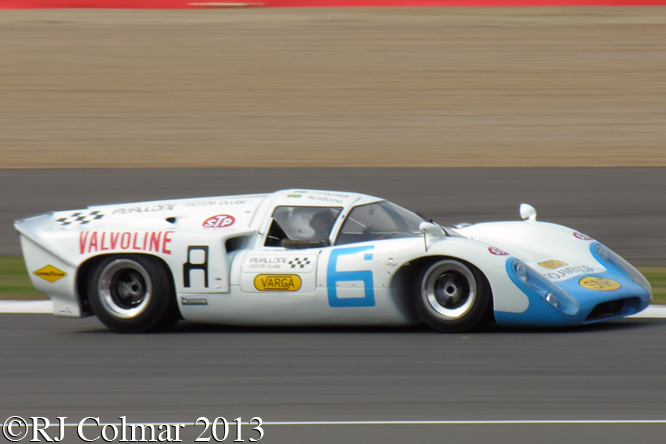
Voyazides, Hadfield, Lola T70, Mk IIIb, Silverstone Classic

The #6 Lola T70 Mk IIIb chassis #SL76/153 won the FIA Masters Historic Sports Cars race giving Leo Voyazides and Simon Hadfield their third victory of the day. The car appears in the colours used by Carlos Avallone in South America.
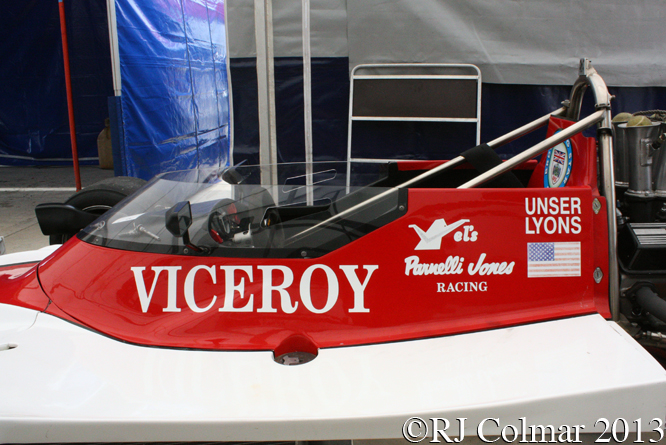
Lola T400, Silverstone Classic

Michael Lyons second victory of the day came when he drove this ex Vels Parnelli Lola T400 chassis #HU7 a to dominant victory in the Peter Gethin Trophy for Formula 5000 and Formula 2 cars.
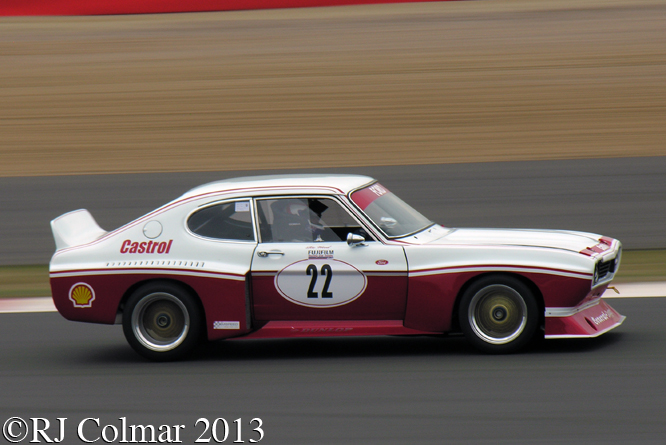
Wood, Cologne, Ford, Capri, Silverstone Classic

Neil Smith driving an ALFA Romeo 156 won the Super Touring Car Trophy by just over 2/10ths of a second from Frank Wrathall driving a Vauxhall Cavalier, above is the circa 1974 Ford RS3100 of Ric Wood which came in 13th overall winning class G and setting fastest lap in class.
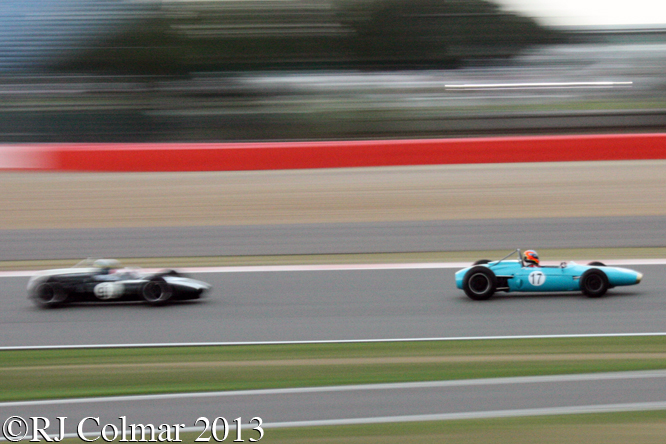
Minshaw, Brabham, BT4, Hughes, Cooper, T53, Silverstone Classic

The skies turned dark as the pre 1966 1.5 litre / 91 cui Grand Prix cars came out to play for the Jim Clark Trophy. Jason Minshaw is seen above driving his Branham BT4 being chased by Jonathon Hughes in his Cooper T53. Jason crossed the line first on lap 4 after which the race had to be abandoned as a summer storm dropped huge quantities of water on the track.
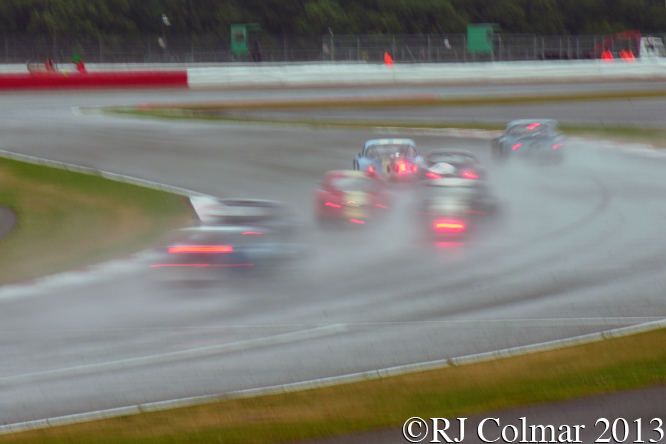
Heidsieck, Trophy, Silverstone, Classic

After nearly an hour the storm had passed and the marshalls had swept most of the excess water away. However as the Piper Heidsieck International Trophy for pre’66 GT Cars came out rain started again, but we got a start after the grid had followed the pace car around for a couple of laps. The TVR’s of Mike Whittaker and Owen O’Neil lead the field through Farm, above as the race gets underway. Conditions got progressively worse and the race was called after 45 mins of the scheduled 60 mins had run. John and Gary Pearson were declared the winners in their E-type Jaguar from Leo Voyazides and Simon Hadfield who missed a fourth victory of the day by 13 seconds in their AC Cobra.

Unfortunately, but completely understandably, the one race for Group C Sportscars I had got up for at 5 am specifically to see scheduled to run at sundown, had to be scratched as the rain in Spain continued to teem down mainly on Northamptonshire, England.

Exhausted by a day full of close racing, as I headed back to the car, I heard the familiar Guns ‘n’ Roses lyric “Where do we go now” wafting across from the stage where The Guns and Roses Experience were playing, to which my answer was unequivocal, “A warm and safe place”.

Thanks for joining me on this “Where Do We Go Now ?” edition of “Gettin’ a li’l psycho on tyres”, I hope you will join me again tomorrow. Don’t forget to come back now !

Share

In Law’s Instrumental Help – Ligier Matra JS17

At the end of 1978 Chrysler Europe was taken over by Peugeot and almost immediately rebranded the French Simca and British Hillman models as Talbot’s resurrecting a name that had last appeared in Formula One in 1951.

In 1972 MATRA, who were taken over by Simca, withdrew from Formula One to concentrate on a successful sports car program which was itself discontinued at the end of 1974 after MATRA had won three consecutive Le Mans 24 Hour races and two World sports Car Championships under the direction of Gerard Ducarouge.

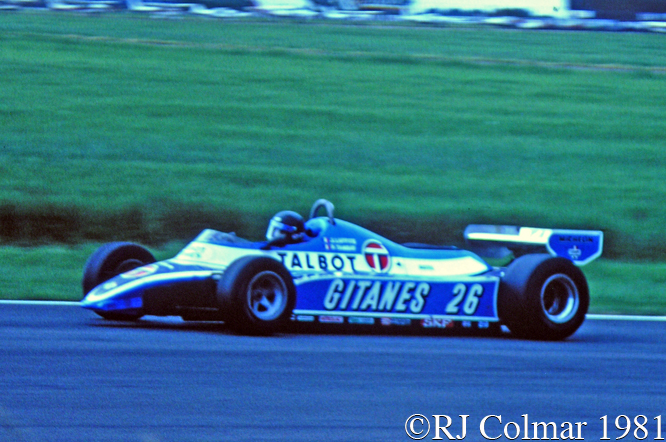
Laffite, Ligier MATRA JS 17, British Grand Prix, Silverstone

Ducarouge went to work for Ligier to design a Matra powered Formula One car in 1976, the JS5 was quite successful for a new comer and the following year Jaques Laffite won the 1977 Swedish Grand Prix driving a MATRA V12 powered Ligier JS7. MATRA stopped developing their V12 in 1978 and Ligier suffered a consequent dip in their fortunes.

For 1979 and 1980 Ligier opted for the popular Cosworth DFV V8’s and immediately returned to victory lane with two surprising wins for Laffite in Argentina and Brazil with the JS11 model, but the team lost it’s direction did not present the anticipated championship challenge. In 198O Laffite won just one race but the team scored enough points to finish second in the constructors championship.

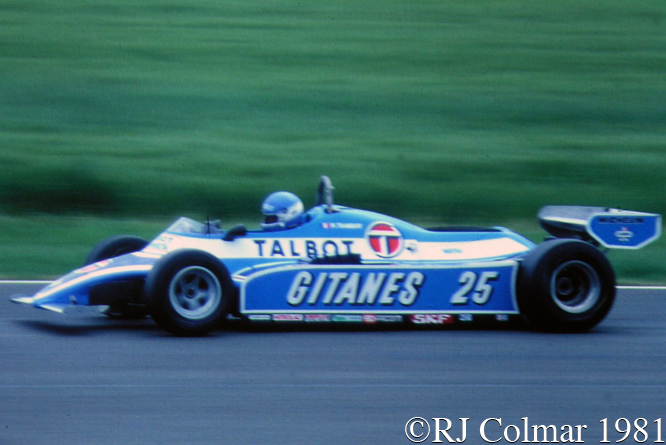
Tambay, Ligier MATRA JS 17, British Grand Prix, Silverstone

By 1981 Peugeot returned the Talbot name to Formula One by teaming up with Ligier and an updated version of the MATRA V12 was used to power the JS17’s featured today. Laffite was to be teamed up with brother in law, ex Renault refugee, Jean Pierre Jabouille who was recovering from injuries sustained when he crashed his Renault Turbo in the 1980 Canadian Grand Prix.

Jean Pierre Jarrier stood in for Jabouille for the first two races but when Jabouille returned to the cockpit he failed to qualify for two races in five attempts so he was replaced by Patrick Tambay seen at the wheel of the #25 here for the second half of the season, but crucially Jabouille remained with the team acting as an engineer. Patrick qualified for all of the remaining races but did not finish any of them.

Ligier MATRA JS 17, Test Day, Donington Park

Laffite meantime scored a couple of 2nd place finishes in Spain and Sweden along with 3 third place finishes in Monaco, Britain and Germany. Just before the French Grand Prix Gerard Ducarouge was fired by Guy Ligier.

At the Austrian Grand Prix Jabouille was instrumental in helping Laffite choose the correct tyre to suit both the Ligier and the track which resulted in the car qualifying 4th behind two turbo charged Renaults and Villenueve’s turbocharged Ferrari.

Ligier MATRA JS 17, Test Day, Donington Park

During the race after passing Villeneuve and his quick off the grid Ferrari team mate Didier Pironi, Jaques chased down the leading Renaults. Alain Prost in the lead car retired with collapsed suspension before Jacques passed the second Renault for the lead and eventual victory when René Arnoux hesitated over taking a pair of back markers.

Jacques then retired in Holland and Italy before bouncing back with a win from 10th on the grid in Canada to put him 3rd in the championship table, 6 points off the leader, with a slim chance of winning the 1981 Drivers Championship going into the Caesers Palace Grand Prix held in Las Vegas. In the event Jacques qualified just 12th behind Championship leader Carlos Reutemann who was on pole in his Williams and 2nd in standings Nelson Piquet who was 4th in his Brabham.

Reutemann inexplicably choked under the championship pressure during the race to finish 7th out of the points while Piquet salvaged a fifth place finish, one spot ahead of Jacques, enough to win the Championship. Alan Jones won the race in his Williams thereby depriving Jacques of a third place finish in the Championship, so for the third consecutive time Jacques Laffite recorded what would be his career best 4th place finish in the final championship standings.
With only the #26 scoring any points all season Ligier finished the season 4th in the Constructors Championship.

Thanks for joining me on this “In Law’s Instrumental Help” edition of “Gettin’ a li’l psycho on tyres” I hope you will join me again tomorrow. Don’t forget to come back now !

Share

Young Driver Test – Silverstone

Last Friday I popped over to Silverstone for the final day of the three day Formula One “Young Driver Test”.

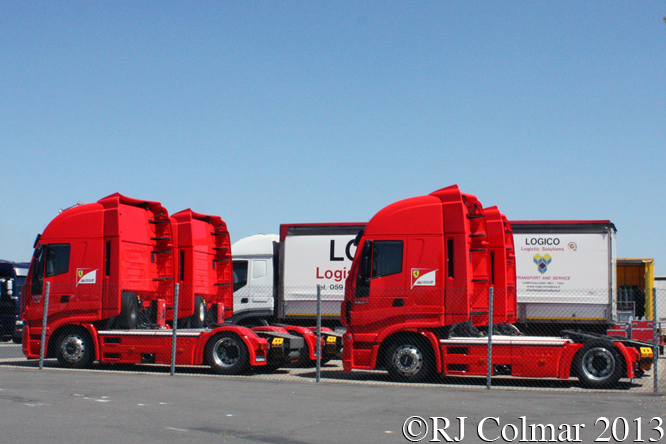
Ferrari Trucks, Young Driver Test, Silverstone

On the way over to the paddock there was an imposing array of Ferrari tractor units.

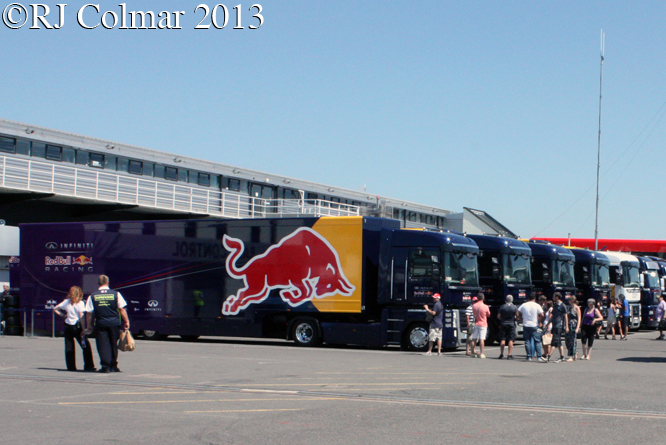
Red Bull Transporters, Young Driver Test, Silverstone

Even though paddock access was restricted there were a few fans hoping to catch a glimpse of Sebastian Vettel on his way from the Red Bull hospitality suite to the pits.

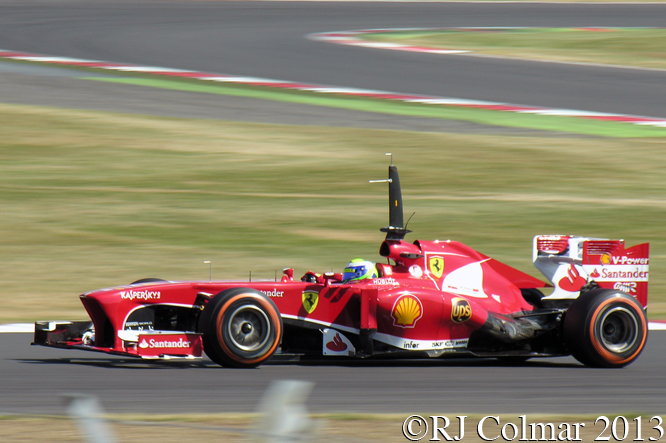
Massa, Ferrari F138, Young Driver Test, Silverstone

The on track action started at 9 am sharp most of the cars were running with an array of extra airspeed sensors, such as that seen on Felipe Massa’s Ferrari F138, not usually seen on the race cars.

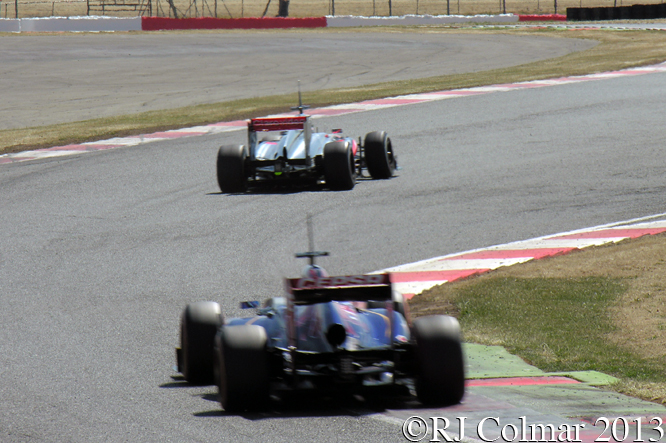
Parffett, McLaren MP4-28, Vergne, Torro Rosso STR8, Young Driver Test, Silverstone

McLaren’s Kevin Magnussen and Torro Rosso’s Daniel Ricciardo set the pace on day one and day two respectively, on Friday Gary Parffet and Jean Eric Vergne took over the respective cars seen at Becketts above.

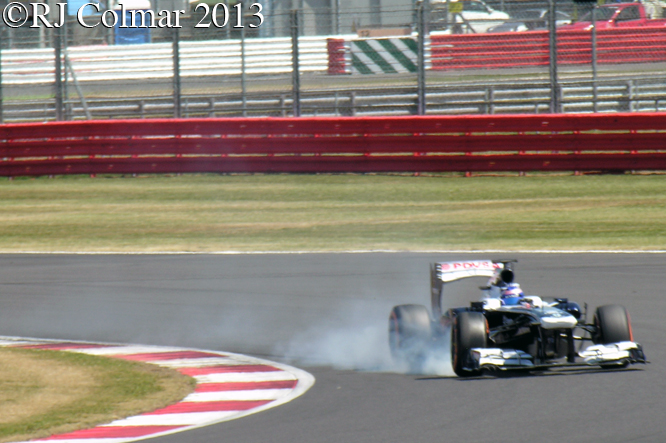
Wolff, Williams FW35, Young Driver Test, Silverstone

Making her second appearance in testing for the Williams team was Susie Wolff who recorded 89 laps, nearly two Grand Prix distances recording ninth best time of the day, just under a second slower than Williams team leader Pastor Maldonado recorded the day before.

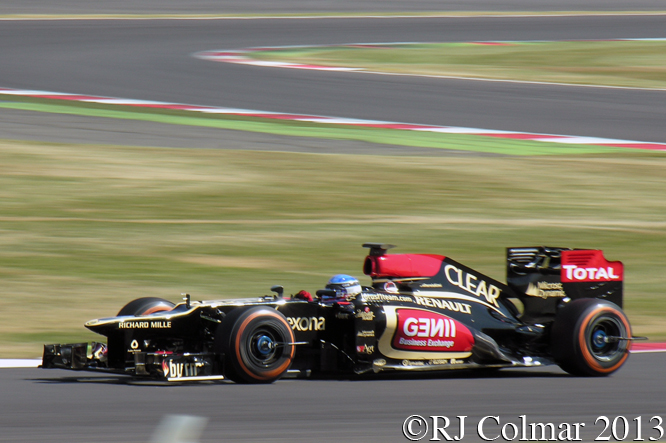
Prost, Lotus E21, Young Driver Test, Silverstone

Nicolas Prost, son of four time World Champion Alain, driving the Lotus E21 set third fastest time on Friday.

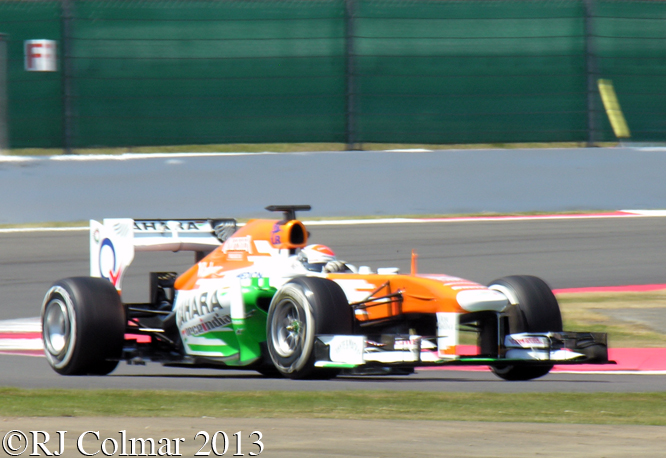
Sutil, Force India VJM06, Young Driver Test, Silverstone

Second best time of the day was recorded by Force India regular Adrian Sutil trying out the new tyres that will be used at the Hungarian Grand Prix next week.

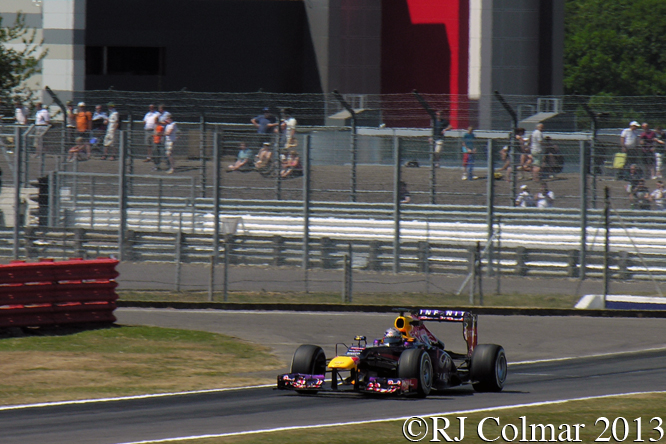
Vettel, Red Bull RB9, Young Driver Test, Silverstone

Fastest time of all three days was recorded by Sebastian Vettel, who like Sutil was testing the Hungarian Spec Pirelli’s.

McLaren MP4-28, Young Driver Test, Silverstone

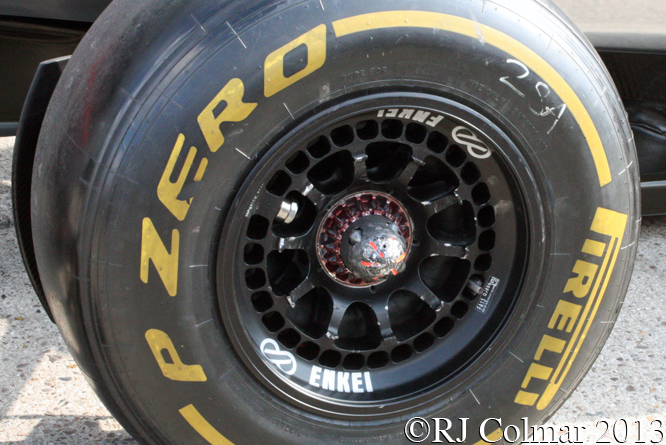
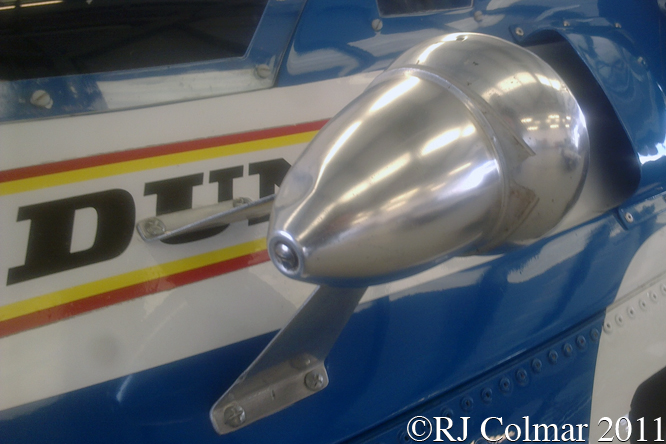
After the test there was a ‘sold out’ pit lane walk about during which most of the teams put a car out for display. The well worn wheel nut above is seen on the McLaren.

Caterham CT03, Young Driver Test, Silverstone

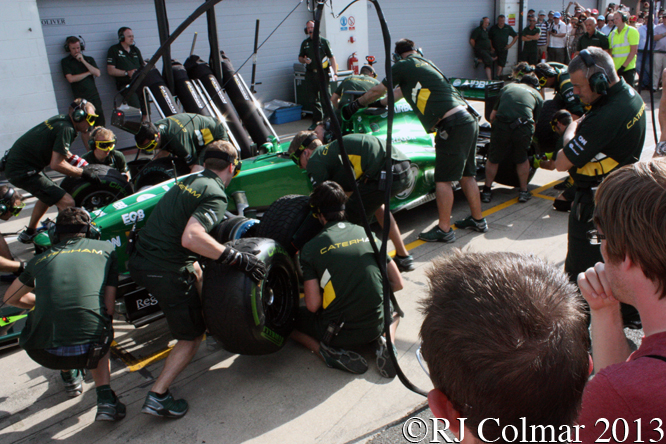
Caterham put on a demonstration of pit stop drill, blink and you’ll miss it at this close range.

My thanks to Tony “Giraffe” Gallagher for additional track access.

Thanks for joining me on this “Young Driver Test” edition of “Gettin’ a li’l psycho on tyres”, I hope you will join me again tomorrow. Don’t forget to come back now !
Share

French Built Championship Winner – MATRA Ford MS80 #MS80/3

For 1969 MATRA CEO Jean-Luc Lagardère took a gamble to try and win the 1969 Drivers and Manufacturers Championships by suspending the entry of MATRA V12 powered cars by the works MATRA team and putting all of the teams efforts behind Ken Tyrrells Ford DFV powered MATRA International team cars.

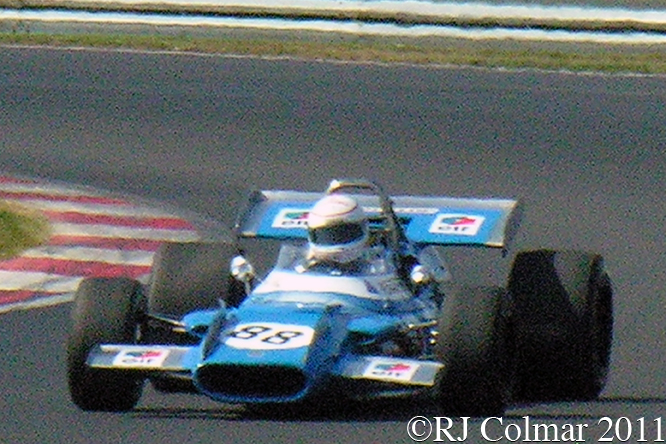
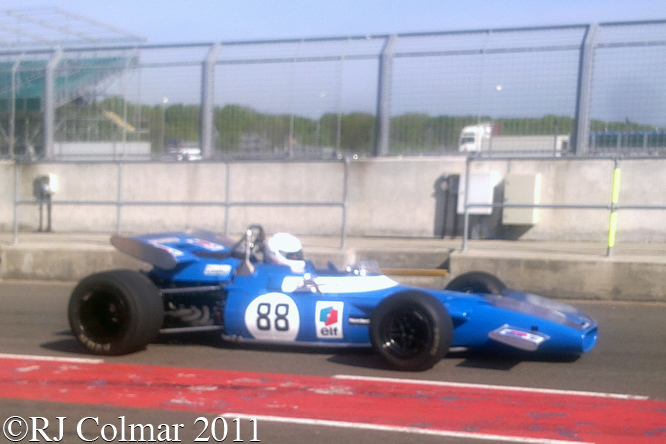
MATRA MS80, Silverstone Classic, Press Day

Even with all the focus being on the MATRA International Team cars the 1969 MS80 was not ready for the start of the season, fortunately the old Ford Powered MATRA MS10 was still good enough for Jackie Stewart to win the championship opening South African Grand Prix.

MATRA MS80, Silverstone Classic, Press Day

The MS80 made it’s public debut at the non Championship Race of Champions from the Lotus 49 of Graham Hill. At the Spanish Grand prix run around the streets of Barcelona at Montjuich Park Stewart won again starting from starting from forth on the grid after the faster Lotus 49’s of Rindt and Hill retired at the same spot a few laps apart as a result of crashes caused by wing failures, and Chris Amon who lead Stewart by over 30 seconds retired with a seized motor after half distance.

Maydon, MATRA MS80, Silverstone Classic, Press Day

At Monaco Stewart retired but then went on to win in Holland, France, backed up by team mate Jean Pierre Beltoise who finished second and Great Britain. In the German Grand Prix Stewart finished second to Jacky Ickx driving a Brabham before winning the Itallian Grand Prix at Monza.

MATRA MS80, Silverstone Classic, Press Day

Stewart retired from both the Canadian and US Grand Prix by which time Ickx who won in Canada was too far back in the points standings to catch the Scot. Stewart finished 4th in Mexico to round out the season in which he won his first drivers Championship and MATRA International their only World Manufacturers title.

Maydon, MATRA MS80, Test Day, Mallory Park

Only two MS80’s were completed for the 1969 season, a Ford Cosworth all wheel drive MS84 was also built but this featured MS80 suspension and a unique space frame chassis and was used originally as a spare car to replace the older MATRA MS10’s.

MATRA MS80, Silverstone Classic, Press Day

It is a credit to the determination of MATRA CEO Jean-Luc Lagardère to win both drivers and manufacturers championships that he sanctioned the building of the MS80 which featured fuel tanks that were integral to the monocoque that was reinforced inside by a number of transverse bulkheads, effectively splitting the fuel tank in many small interconnected cells.

Maydon, MATRA MS80, Silverstone Classic, Press Day

It had been announced well before 1969 that for 1970 rubber bag fuel tanks would be mandated that precluded the use of many interconnected fuel cells, so effectively the MS80 was restricted to being a one season challenger at the end of which it was outlawed.

MATRA MS80, Silverstone Classic, Press Day

At the end of 1969 Stewart and Tyrrell decided that they wanted to use the Ford Cosworth DFV in 1970 and MATRA who had been taken over by French manufacturer Simca, a French Chrysler subsidiary, were adamant they wanted to return to V12 power for 1970. To date the MATRA MS80 remains the only car built in France to win the World manufacturers championship. Note: the Renault’s driven by Fernando Aonso to Drivers and Manufacturers Championship success in 2005 and 2006 were built in Enstone, UK in the same premises that are now home to the Lotus F1 Team.

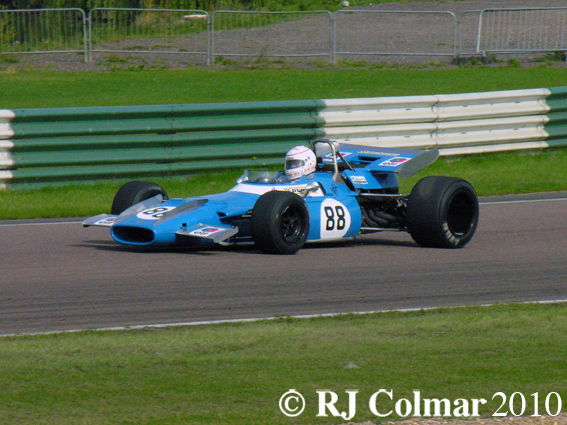
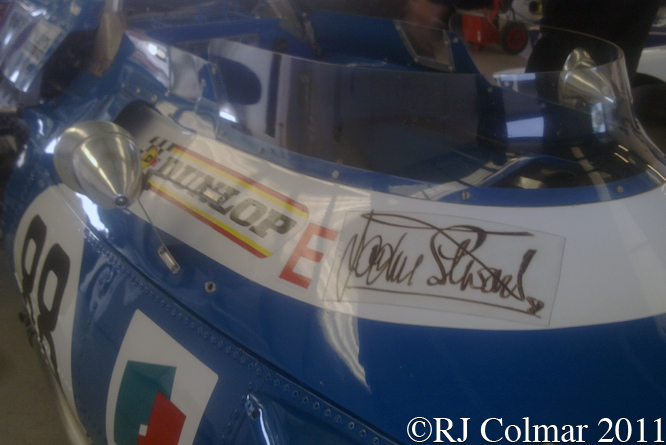
Chassis #MS80/3 seen in today’s photographs was built up from an unused spare tub for owner/driver Ray Maydon, who is seen driving the car at a Silverstone Classic test day top and bottom and at a Mallory Park test day in the middle.

My thanks to Walter Melissen of the The Nostalgia Forum and Ultimatecarpage.com for his assistance in identifying the chassis number and owner driver of today’s featured model.

Thanks for joining me on this “French Built Championship Winner” edition of “Gettin’ a li’l psycho on tyres” I hope you will join me again tomorrow. Don’t forget to come back now !
Share

Showboating – March Cosworth 2-4-0

The story of March racing cars presence in Formula One was one of a meteoric rise in a blaze of publicity and a slow decline, the company founded in October 1969 had built six of the 22 cars that started the 1970 British Grand Prix, thanks to Ken Tyrrell who bought three March cars for 1970, after his split with Matra, a March driven by reigning Driver Champion Jackie Stewart started on pole position at the first race of the 1970 season and won the Spanish Grand Prix, the second race of the season.

In 1971 Ronnie Peterson joined the works team and finished second in the drivers championship with no wins but 4 second place finishes. It was not until 1975 that the works March team won it’s first championship Grand Prix when Vittorio Brambilla crossed the line first at the prematurely concluded 1975 Austrian Grand Prix and promptly crashed into the crash barrier on the slowing down lap. For 1976 Ronnie Peterson rejoined the March team and won the Italian Grand Prix which proved to be the team and manufacturers final championship Grand Prix victory.

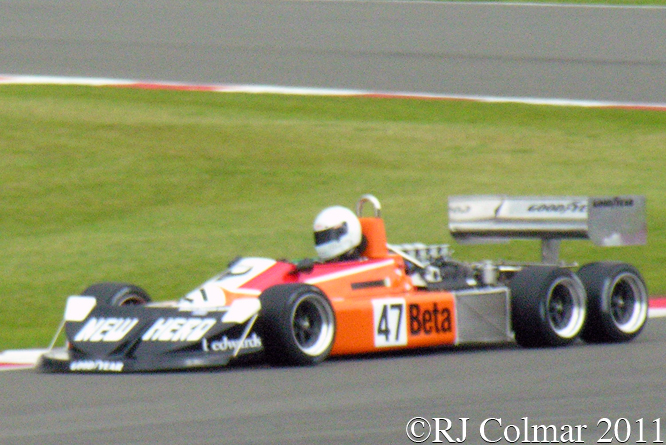
March Cosworth 2-4-0, Silverstone Classic

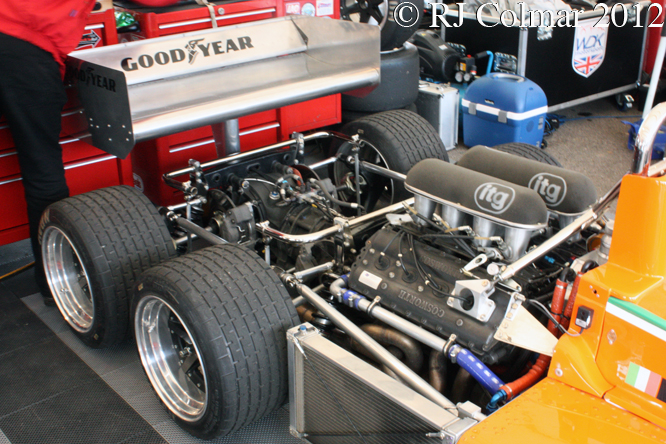
Looking forward to 1977 the team was short of cash when designer Robin Herd, who had designed the all wheel drive Cosworth in 1969 after he left McLaren, came up with the idea of building a six wheel car with four driven rear wheels as a way to improve on the mildly successful 6 wheel, 4 steering wheels at the front, Tyrrell P3/4. Team co-founder Max Moseley was instantly sold on the idea realising a six wheel March would be an excellent vehicle to generate some publicity and attract potential sponsors.

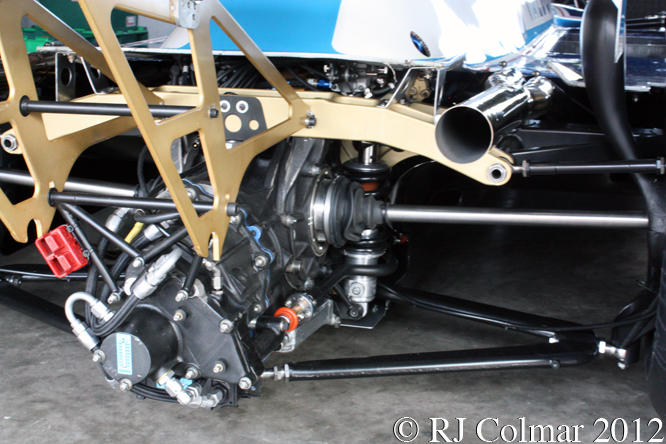
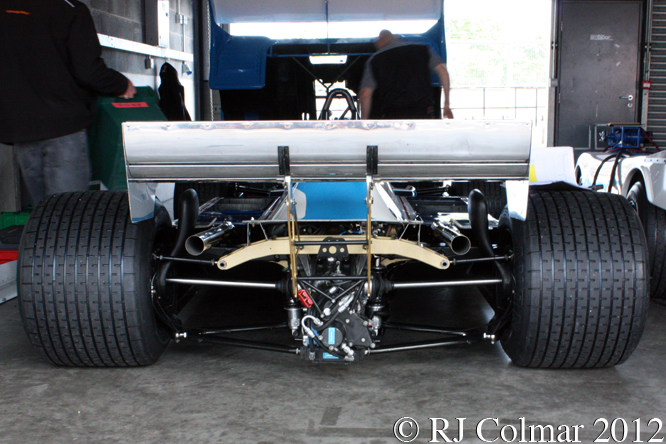
The shortage of cash meant the team focused on building the 4 wheel drive train and attendant suspension and attaching it to the back of a 1976 March 761, according to the best sources available to me this was chassis #761/1 which after several accidents was on it’s third monocoque tub and renumbered 761/10 for it’s press launch in early 1977 where a white prototype was shown. Turns out that only two of the rear wheels were driven at the press launch because not all of the internal components of the drive train had been finished in time to be installed.

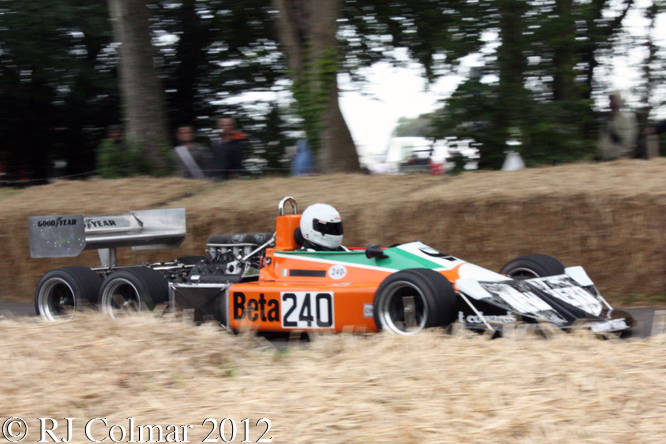
March Cosworth 2-4-0, Silverstone Classic

When all the parts were ready they were attached to the back of chassis #761/2 and Howden Ganley was employed to test the car with a strange mix of old body panels including a nose clearly marked Doug Sherison Racing that probably came from a March 76A Formula 5000 car.

Howden commented on his experience “I tested the 6-wheeler three or four times. I think once at Goodwood and the other times at Silverstone. There were a few teething problems with the transmission – but eventually it all worked OK. I do not recall Max ever asking me to go easy on the power. In fact the last test in the pouring rain at Silverstone I used full acceleration without encountering any traction problems. Quite impressive.”

March Cosworth 2-4-0, Silverstone Classic

The concept did indeed attract a lot of attention and in March 1977 Rothmans held a press day at Silverstone at which they announced they would sponsor Ian Scheckter who tested the all wheel drive system now attached to a much older chassis, painted in Rothmans colours, that started life in 1974 as a March 741 #741/1 was renumbered to become #751/4 in 1975 and renumbered again to become #761/5 in 1976.

Regrettably after testing the concept the March team decided to revert to running a conventional 4 wheel 2 wheel drive layout for their 761’s which were updated to 761B spec for the start of the 1977 season. Around this time a well known picture began circulating of Alex Ribeiro sitting in his Hollywood sponsored car fitted with the 4 wheel drive transmission and a third set of rear wheels, as can be seen in this link young Brazilian F3 pilot Nelson Piquet can hardly keep a straight face in the prank photo.

At the end of the season March folded it’s F1 operation, although it was continuing to make good money on the 2-4-0 from the Scalextric model rights and from a show car for which there was much demand. Despite the fact that the 6 wheel March 2-4-0 was never raced, so far as I know Robin Herd remains the only man to have designed two four wheel drive formula one cars neither of which raced, in period, a couple of years later Roy Lane managed to acquire the 4 wheel drive axles and fitted them to his March 771 which he used in the 1979 British Hillclimb Championship.

Roy won a round of the championship at Wiscombe Park but found that the advantages of the system in wet conditions were out weighed by the performance of the lighter 2 wheel drive in the dry and ended up converting his car back to a conventional layout during the course of the season in which he failed in his attempt to recapture the British Hillclimb Championship.

The car featured today was built up by Anthony and Jeremy Smith with one of the two original 4 wheel drive transmissions built and a chassis who’s in period identity has not been established. Jeremy is seen at the wheel of the car at Silverstone top and Goodwood middle. By complete coincidence this March 2-4-0, there is another at the Louwman Museum, is currently for sale at Speedmaster Cars in Wetherby.

My thanks to James Hanson at Speedmaster Cars who kindly answered my questions about the chassis of today’s featured car and to members of The Nostalgia Forum, not least Tony “Giraffe” Gallagher, who posted pieces of the March 2-4-0 jigsaw puzzle seen on this linked thread.

Thanks for joining me on this “Showboating” edition of “Gettin’ a li’l psycho on tyres” I hope you will join me again tomorrow. Don’t forget to come back now !
PS Anyone planning on going to next weeks Silverstone Classic please remember this year will be advanced ticket only available on this link.

Share

Dinger’s All Wheel Drive – McLaren Ford M9A

After the limited success of the Ferguson P99 in circuit racing from 1961 to 1963 Peter Westbury drove the P99 in 1964 and won the British Hillclimb Championship.

McLaren Ford M9A, Donington Park Museum

Meanwhile Andy Granatelli working with Ferguson had entered Bobby Unser in the Studebaker STP Special for the 1964 Indy 500 where he qualified 22nd but retired after an accident on the opening lap. BRM also became interested in all wheel drive in 1964 building the BRM P67 to test the system in anticipation of the forthcoming 3 litre / 183 cui motors that were to be mandated for Formula One in 1966. The P67 was driven in practice for the 1964 British Grand Prix by Grand Prix debutant Richard Attwood where the car was the slowest to take part. BRM concluded remarkably quickly that all wheel drive held no benefits for them and with drew the car from the race.

McLaren Ford M9A, Donington Park Museum

In 1968 Peter Westbury resurrected the P67 to win the British Hill Climb Championship again. By this time the Granatelli entered ’67 Paxton Special and ’68 Lotus 56 had both come with in 25 miles of winning the Indy 500 in successive years with gas turbine cars both featuring all wheel drive.

McLaren Ford M9A, Donington Park Museum

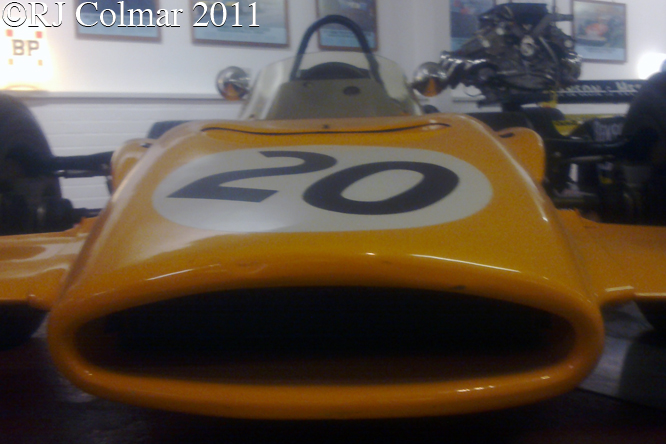
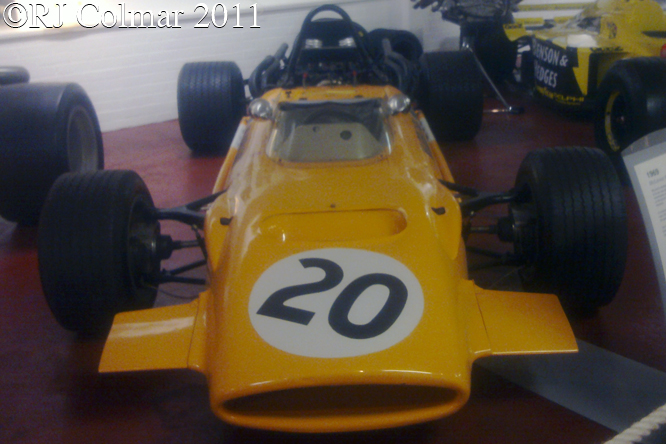
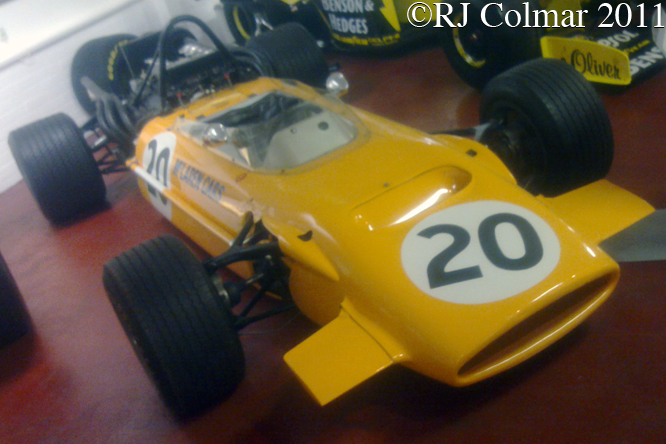
By 1969 four teams were ready to try all wheel drive again despite BRM’s Tony Rudd telling anyone who would listen that the system would not work in Formula One. One of those teams was led by Bruce McLaren who helped Swiss designer Jo Marquart with the Ford Cosworth powered M9A.

McLaren Ford M9A, Donington Park Museum

The car was tested and entered into the 1969 British Grand Prix for Derek ‘Dinger’ Bell to drive. Derek qualified 15th, of seventeen, and retired having completed just 5 laps when the rear suspension failed.

McLaren Ford M9A, Donington Park Museum

For McLaren this was enough to confirm what BRM had realised, that all wheel drive was not for Formula One, by 1969 improvements in aerodynamics and tyres which by now were much wider than when the Ferguson P99 first appeared had reduced the necessity for drive to the front wheels.

Thanks for joining me on this “Dinger’s All Wheel Drive” edition of “Gettin’ a li’l psycho on tyres” I hope you will join me again tomorrow. Don’t forget to come back now !

Share