Tag Archives: Silverstone

Weight Distirbution – Lancia Ferrari D50 Replicas

Keen to project a successful image through participation in Formula one with it’s new 2.5 litre / 152 cui engine regulations Lancia commissioned Vitorrio Jano to design a new challenger in 1953.
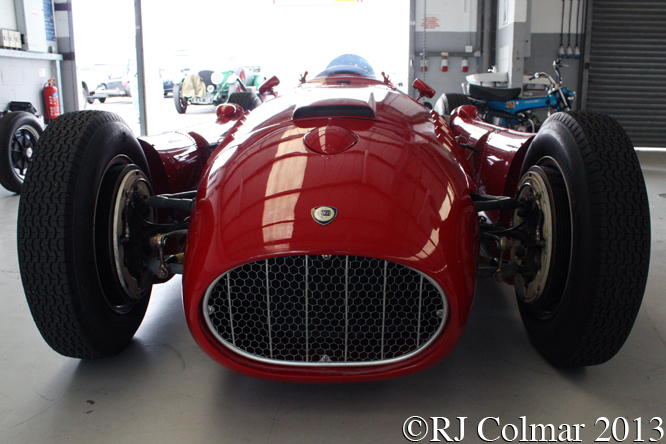
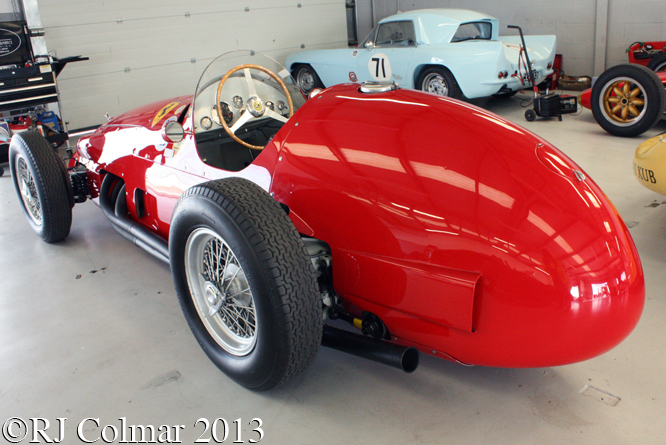
Lancia D50 Replica, HGPCA Test day, Silverstone

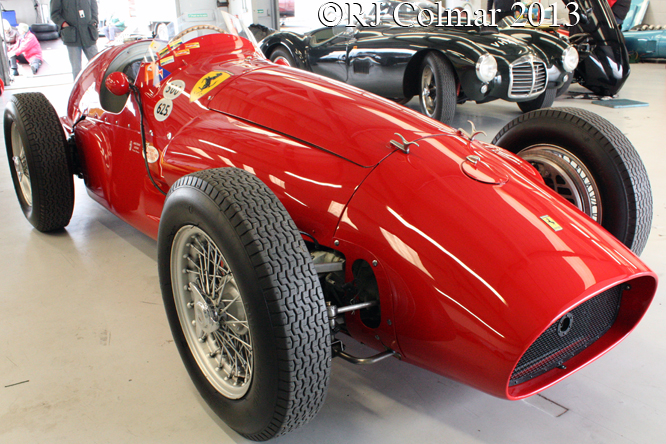
Over the development period of the car several different noses were used above is the original short nose.
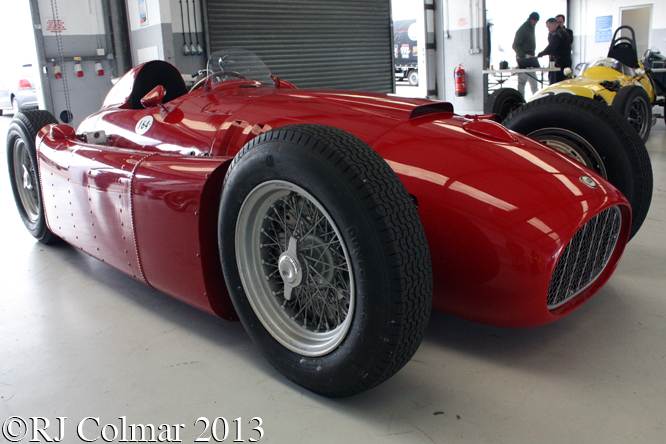
Lancia D50 Replica, HGPCA Test day, Silverstone

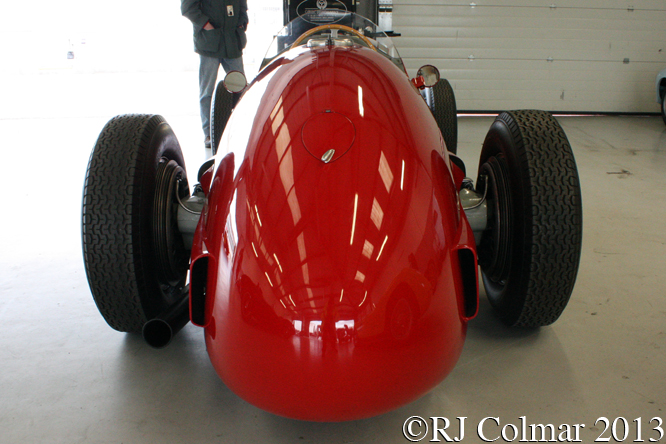
Jano paid a lot of attention to how the weight was to be distributed in his new design which led to the D50’s most distinctive the pannier tanks between the wheels that did away with the need for a rear fuel tank which was de rigueur for contemporary formula one cars.
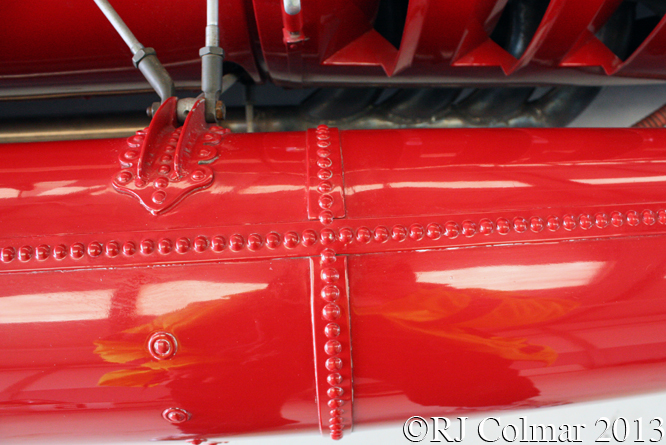
Lancia D50 Replica, HGPCA Test day, Silverstone

Jano selected a compact 90° V8 motor configuration that was offset 12° from front right to rear left. The motor featured twin plugs per cylinder produced around 260 hp. Unusually for the time the motor also functioned as an integral stressed member of the space frame chassis.
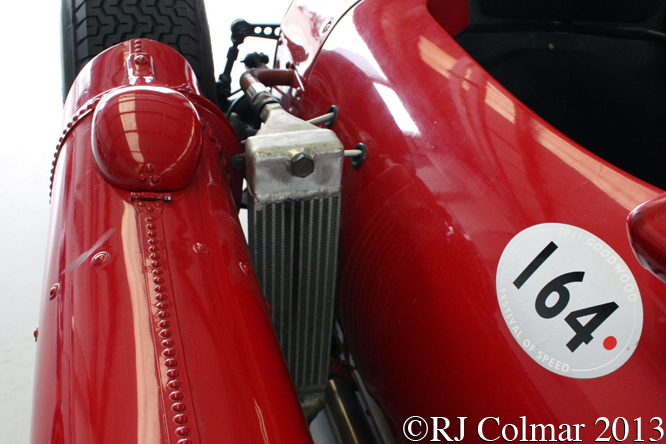
Lancia D50 Replica, HGPCA Test day, Silverstone

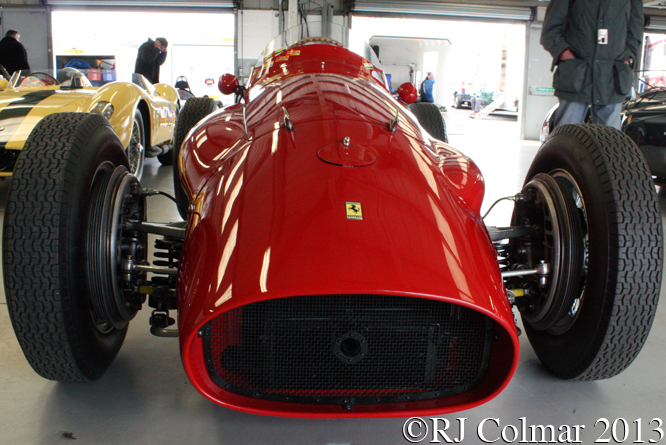
The car also featured a gearbox that was transversely mounted into the rear axle. The cooler for the transmission unit is seen just ahead of the rear axle between the panier tank and the rest of the chassis.
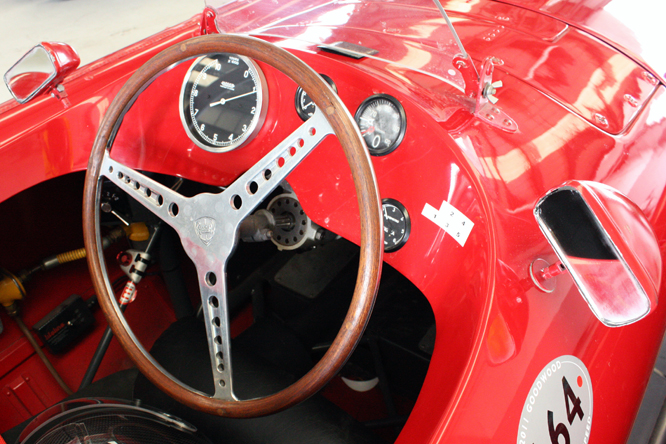
Lancia D50 Replica, HGPCA Test day, Silverstone

1952 and 1953 double World Champion Alberto Ascari and Italy Luigi Villoresi drove the D50’s on their first appearance in the World Championship in the last race of the 1954 season at the Spanish Grand Prix held on the Pedralbes street circuit in Barcelona. After qualifying 1st Ascari led for three laps before retiring with clutch problems on lap 10, Villoresi started 5th and retired after two laps with brake issues.
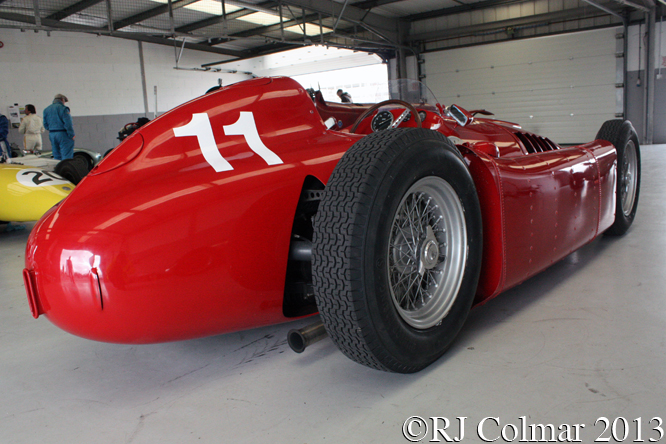
Lancia D50 Replica, HGPCA Test day, Silverstone

Lancia entered three cars in the 1955 Argentinian Grand Prix for Ascari who started from second and retired after an accident on lap 22, Villoresi qualified 11th and again only lasted for two laps before his car retired with a fuel leak. Villoresi replaced Eugenio Castellotti who had started 12th only to be involved in an accident on lap 35 from which the 3rd Lancia did not recover.
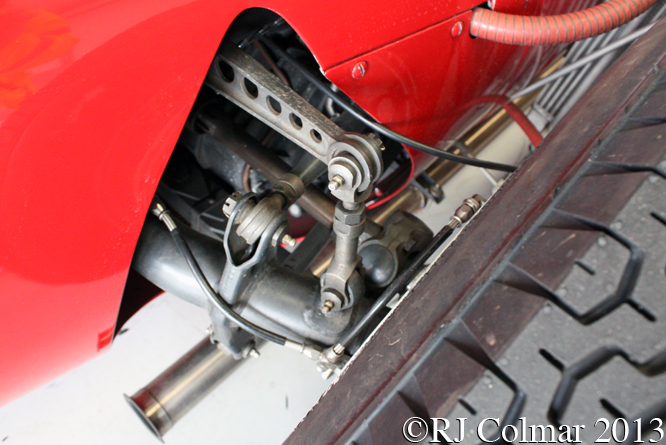
Lancia D50 Replica, HGPCA Test day, Silverstone

At Monaco Ascari again qualified 2nd but his car famously ended up in the harbour on the 81st lap which he survived, only to die the following week testing a Ferrari. Castellotti qualified 4th and finished 2nd, to Maurice Trintignant in the Ferrari 625A I looked at last week, while Villoresi qualified 7th and finished 5th one lap down. Monaqasque Louis Chiron drove a forth D50 Lancia from 19th on the grid to 6th 5 laps down.
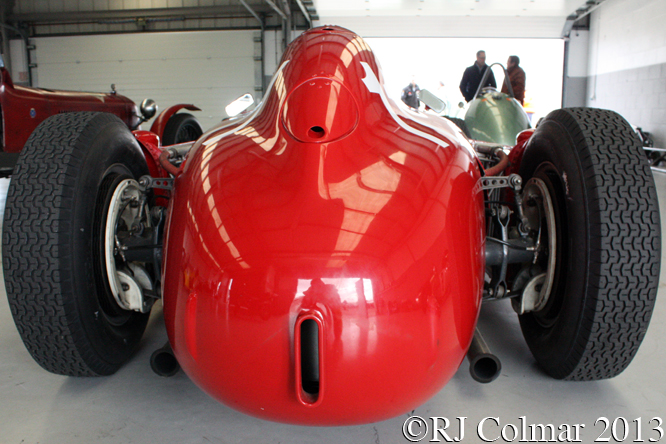
Lancia D50 Replica, HGPCA Test day, Silverstone

Castellotti started on pole in Belgian Grand Prix but retired on lap 16 with gearbox problems on the Scuderia Lancia teams final appearance. At this point Lancia ran into financial difficulties and the company ended up in the hands of the Pesenti family while Gianni Lancia handed over the racing cars to Enzo Ferrari who was not having a lot of joy against the might of Mercedes Benz with his Squalo and Super Squalo models.
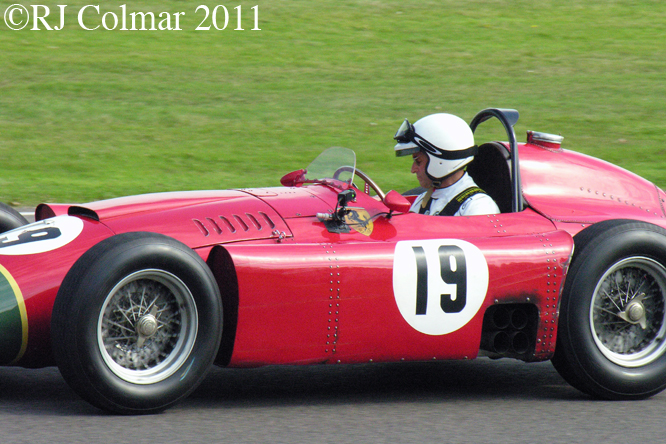
de, Cadenet, Lancia Ferrari D50 Replica, Goodwood Revival

The D50’s next appeared at the 1955 Italian Grand Prix where they were entered by Ferrari for Giuseppe Farina who qualified 5th and Villoresi who qualified 8th. However Farina crashed on the Monza banking when a tyre failed and Enzo chose to withdraw the D50’s. Over the off season Ferrari developed the cars for his new signing reigning world champion Juan Manuel Fangio.
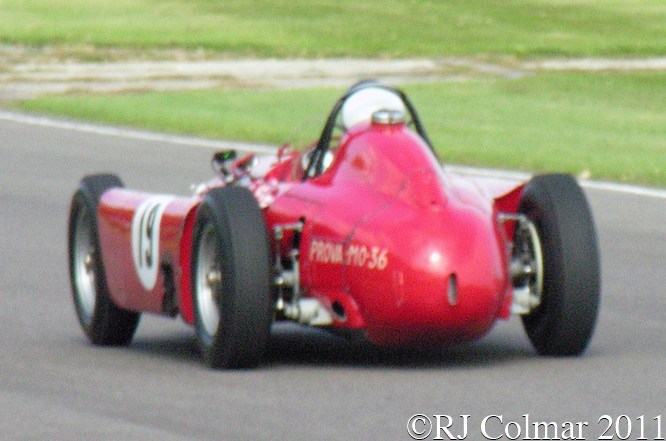
Lancia D50 Replica, HGPCA Test day, Silverstone

Fangio won first time out in the D50 at the 1956 Argentinian Grand Prix, but only after his car retired and he took over the car that started with Luigi Musso at the wheel, at Monaco Fangio finished 2nd again after retiring his own car and jumping in his team mate Peter Collins car.

Collins then won in Belgium and France with Fangio winning in Britain and Germany to give him an eight point lead over Collins going into the final race of the season at Monza. Fangio qualified on pole but a steering arm on his D50 broke, his team mate Musso refused to hand over his car and on learning this team mate Peter Collins did not hesitate to hand over his car, thus giving up the opportunity to win the championship which Fangio won after finishing second. Collins finished the ’56 Championship third in points behind Stirling Moss who drove for Maserati.

The following season Fangio went to Maserati with whom he won his fifth and final championship. Ferrari entered no fewer than seven D50’s for the first race of the 1957 season in Argentina which were lined up against seven Maserati 250F’s. Fangio won in his 250F the best D50 shared by Alfonso de Portago and José Froilán González which finished 5th and two laps down.

Mike Hawthorn was the last person to drive a D50 in a Championship race in the ’57 Monaco Grand Prix where 5th but retired after an accident on lap 5. Ferrari swithched it’s efforts to the Lancia V8 powered 801 for the remainder of the 1957 season.

All but two of the original D50’s were broken up, the cars seen here are both, so far as I know replica’s using some of the left over parts from the broken up cars. Six replica’s are known to have been built by Jim Stokes Workshops Ltd.

Thanks for joining me on this “Weight Distribution” edition of “Gettin a li’l psycho on tyres” I hope you will join me again tomorrow. Don’t forget to come back now !

Share

Just Waiting – Ferrari 500/625A/750 #3/2/0482

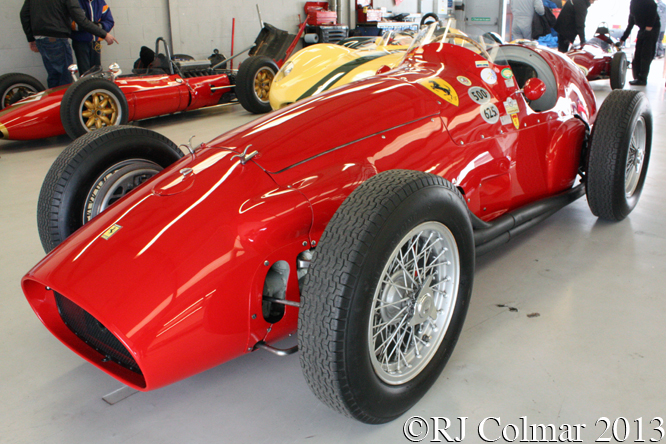
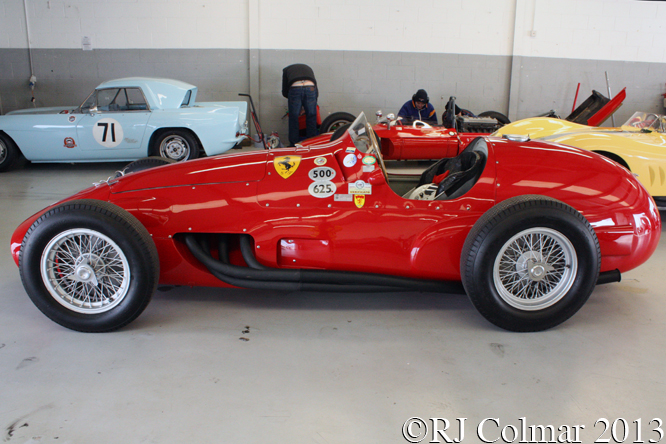
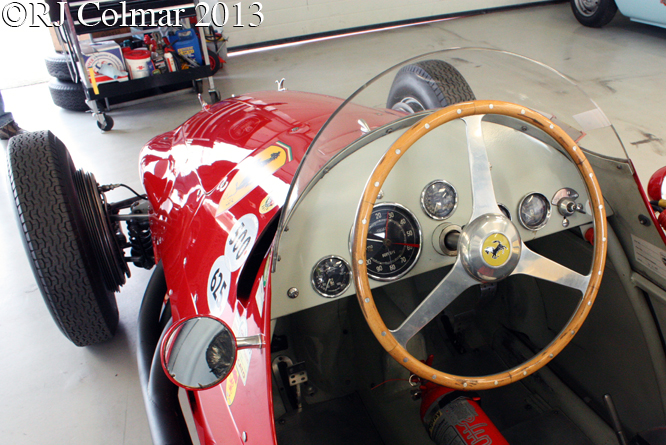
Wondering around the pits at Silverstone during an HGPCA test day a couple of months ago I was overwhelmed by the sheer number of cars just waiting for their stories to be told, one such was today’s featured Ferrari which was built in 1952 as a 4 cylinder 2 litre / 122 cui Ferrari 500 chassis #3 for the Formula 2 season which was also designated as the World Drivers Championship Formula.

Ferrari 500/625 A/750, HGPCA Test Day, Silverstone

This car is said to have raced alongside the sister chassis #005 raced by Alberto Ascari to two consecutive World Drivers Championships, though I have yet to discover who drove it or the results it achieved.

Ferrari 500/625 A/750, HGPCA Test Day, Silverstone

In 1954 new Formula One regulations were adopted for the World Drivers Championship mandating 2.5 litre / 152 cui motors and when Ferrari ran into problems with it’s intended ‘Squalo’ 553 challenger they converted some of the old Formula 2 cars to “625” specification with larger 2.5 litre / 152 cui 4 cylinder motor. This particular car then became a 625 with the chassis number 2.

Ferrari 500/625 A/750, HGPCA Test Day, Silverstone

With no progress on the Squalo and later 555 Super Squalo designs Ferrari updated this car further to 625A spec for the start of the 1955 season with a more aerodynamic tail, the chassis was lengthened by just under two inches, the additional length being inserted by cutting the chassis just ahead of the cockpit and the suspension was revised with coil springs replacing the transverse leaf spring at the front.

Ferrari 500/625 A/750, HGPCA Test Day, Silverstone

The cars first race of the 1955 World Drivers Championship season was in Argentina, which lent it’s initial to the 625 designation. Two 625A’s were entered and they finished second and third behind reigning champion Juan Manuel Fangio’s Mercedes Benz. Unusually the two 625A’s were each driven by three drivers coming in second were Gonzalez, Farina and Trintignant and third were Maglioli who shared with Trintignant and Farina !

Ferrari 500/625 A/750, HGPCA Test Day, Silverstone

The next race was at Monaco where Maurice Trintignant qualified today’s featured car 9th behind a pair of Mercedes Benz cars, three Lancia D50’s and three Maserati’s. During the race Trintignant, for whom everything outside racing was ‘just waiting’, guided his car to an unlikely victory as those ahead retired with mechanical issues while the Lancia driven by Ascari famously fell into the water which he survived only to be killed four days later testing a Ferrari sports car at Monza.

Ferrari 500/625 A/750, HGPCA Test Day, Silverstone

The 1955 Monaco victory was the first World Drivers Championship event to be won by a Frenchman since it’s inception in 1950, the first to be one on Englebert Tyres and Ferrari’s only victory in the 1955 Championship season. At the end of the year the car was fitted with a 4 cylinder 3 litre / 183 cui Ferrari 750 sportscar motor and sold to British wool merchant and amateur racer Peter Whitehead, with Peters old customer chassis number #0482 to compete in the unrestricted Formula Libre races being held in New Zealand in 1956. Peter won both the Lady Wigram Trophy and the Southland Road Race, note some sources incorrectly point to this car being driven by Peter Whitehead to two victories in New Zealand in 1957, by then he was actually drove and won both races with in a Ferrari Super Squallo 555 fitted with an 3.4 litre 860 Monza sports car motor.

Ferrari 500/625 A/750, HGPCA Test Day, Silverstone

Late in 1956 Froilan Gonzales bought the car and took it to Argentina where it appears to have remained until it resurfaced in the United States in the 1990’s. Current owner Alexander Boswell bought the car in 1999 and found the three chassis numbers which confirmed the cars identity and history welded one atop the other.

Mr Boswell had the car restored to the same 3 litre / 183 cui 625A/750 #0482 specification as it was when supplied to Peter Whitehead by Ferrari for his New Zealand adventure.

Thanks for joining me for this “Just Waiting” edition of “Gettin’ a li’l psycho on tyres” I hope you will join me again tomorrow. Don’t forget to come back now !
Share

Number 2 Drivers – British Grand Prix

Last Friday I popped along to Silverstone last Friday to see the first two practice sessions for the British Grand Prix. This was my first visit to Silverstone for Formula One action since 1981 when John Watson won the race for McLaren.

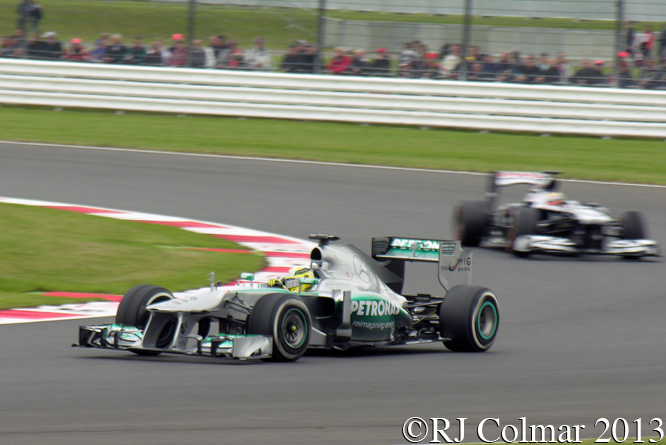
Rosberg, Mercedes Benz, F1 W04, British Grand Prix, P2, Silverstone

Today’s blog focuses on how the 11 teams number 2 drivers got on, above Nico Rosberg driving his Mercedes F1 W04 finished the opening day of practice at the top of the time sheets. Nico qualified second for the race and won after team mate Lewis Hamilton blew a tyre and then Sebastian Vettel retired with transmission problems. Despite having visiting pit row for the second time this season, twice more than his team mate Nico is still three seven points behind his team mate Lewis Hamilton, who has yet to win and fifty points behind Championship leader Lewis Hamilton.

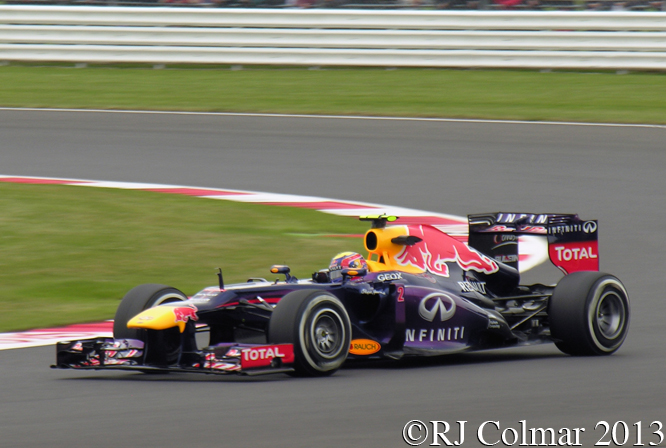
Webber , Red Bull Renault, RB9, British Grand Prix, P2, Silverstone

Last years British Grand Prix winner Mark Webber, seen driving his Red Bull Renault RB9 above, similarly set a faster time than his team mate Sebastian Vettel on the opening day of practice. Mark qualified 4th behind his team mate for the race and dropped to 15th after making contact with Romain Grosjean on the opening lap and recovered to finish in second place on his final British Grand Prix appearance. Mark announced at the British Grand Prix that he would be retiring from Formula One at the end of the season and joining Porsche’s Le Mans program for 2014.

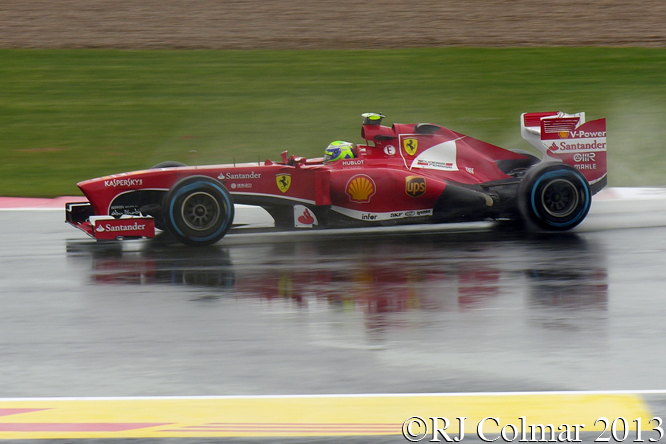
Massa , Ferrari, F138, British Grand Prix, P1, Silverstone

Ferrari’s Felipe Massa is seen driving his F138 in the first practice session he was slowest of the the eleven drivers to set a time in the morning and in the afternoon knocked a wheel of the front when he came off the drying track in the afternoon and again set the slowest time of the 22 drivers in the afternoon. Felipe could only qualify 12th for the race, but despite a high speed blow out did well to recover a sixth place finish by the end of the race.

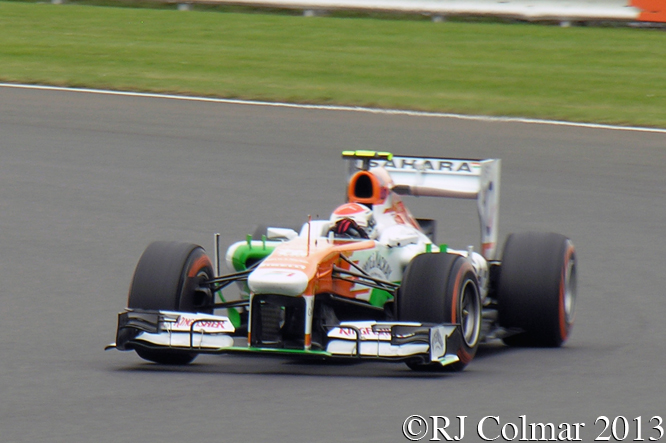
Sutil , Force India Mercedes, VJM06, British Grand Prix, P2, Silverstone

Adrian Sutil driving a Mercedes powered Force India VJM06 set 8th fastest time on day one, qualified 7th for the race and spent a long period running in third place behind Vettel and Rosberg but then got swamped at the end to finish 7th.

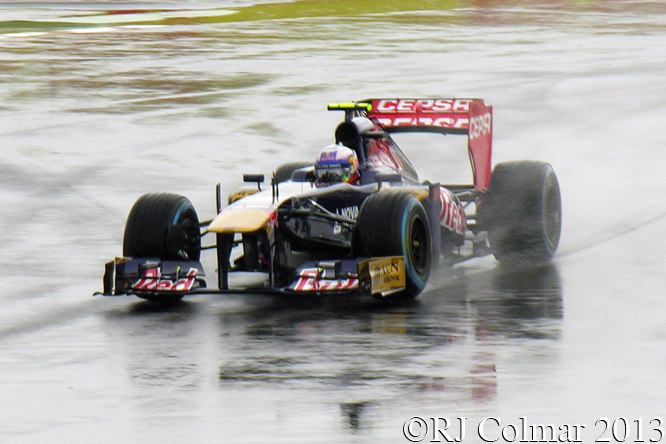
Ricciardo, Torro Rosso Ferrari, STR8, British Grand Prix, P1, Silverstone

Daniel Ricciardo one of several drivers in the frame to replace the retiring Mark Webber at Red Bull, finished the opening practice session at the top of the time sheets, he qualified his Ferrari powered Torro Rosso STR8 an impressive 6th, seven places ahead of his team mate Jean Eric Vergne. After running in 4th place for much of the race he too was swamped at the end to finish 8th.

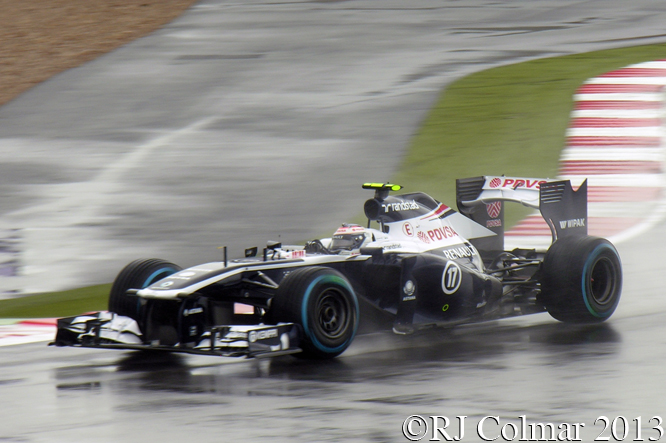
Bottas, Williams Renault, FW35, British Grand Prix, P1, Silverstone

Williams were celebrating the 600th Grand Pix at Silverstone unfortunately Valtteri Bottas driving his Renault powered FW35 could not repeat his fine Canadian 7th fastest qualifying performance. Starting 16th Valttteri came home 12th in the race.

Gutiérrez, Sauber Ferrari, C32, British Grand Prix, P1, Silverstone

Mexico’s Esteban Gutiérrez started the British Grand Prix from 17th place on the grid in his Ferrari powered Sauber C32 and climbed to 14th by the end of the race.

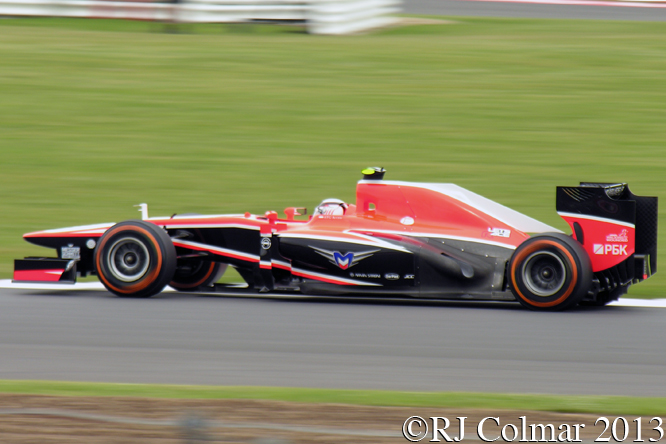
Chilton, Marussia Cosworth, MR02, British Grand Prix, P2, Silverstone

Max Chilton in the Cosworth powered Marrusia MR02 was the slowest qualifier but thanks to penalties for Paul di Resta and Giedo van der Garde he started his home Grand Prix from 20th and finished 17th.

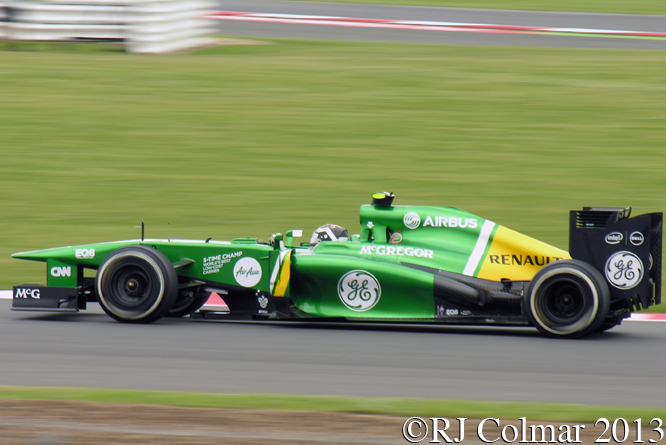
van der Garde, Caterham Renault, CT03, British Grand Prix, P2, Silverstone

van der Garde started the British Grand Prix from last place after ignoring blue flags, shown to signal that he was about to be lapped, in Canada and finished the race 18th and last unlapped runner.

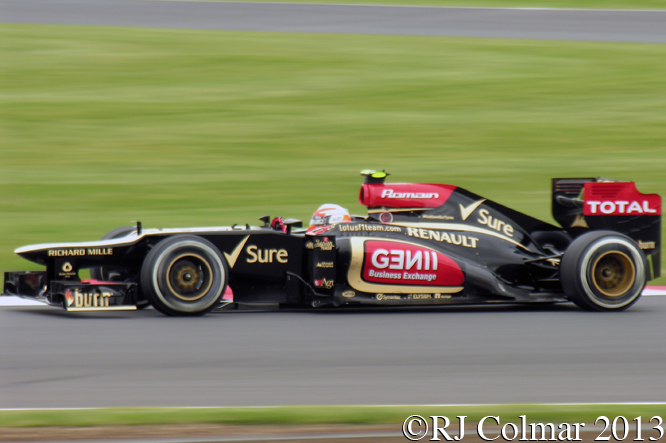
Grosjean, Lotus Renault, E21, British Grand Prix, P2, Silverstone

Driving his Renault powered Lotus E21 Romain Grosjean started the British Grand Prix from 7th on the grid but was involved in a collision with Mark Webber on the opening lap he finished the race 19th 1 lap down last car still running.

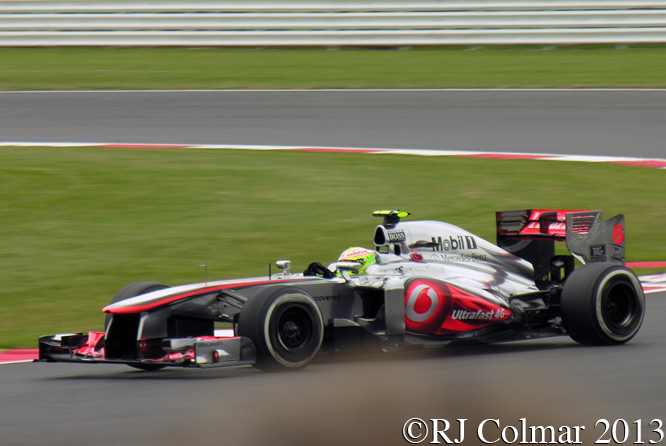
Perez, McLaren Mercedes, MP4-28, British Grand Prix, P2, Silverstone

Finally Sergio Pérez suffered a tyre failure during practice on the opening day that would be a portent for 4 similar failures on race day. Starting from 13th on the grid Sergio suffered a second puncture on race day that forced his retirement due to the damage to his Mercedes powered McLaren MP4-28 caused by the flailing remains of the tyre on lap on lap 46.

More on the British Grand Prix at Motorsports Unplugged.

Thanks for joining me on this “Number 2 Drivers” edition of “Gettin’ a li’l psycho on tyres” I hope you will join me again for an Independence Day edition tomorrow. Don’t for get to come back now !

Share

99 Le Mans Class Wins – Porsche 991 RSR

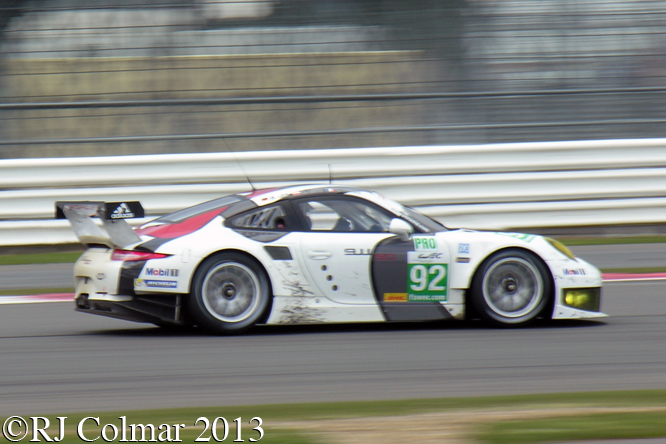
The Porsche 991 RSR is the latest Porsche GT2 racer which replaces the Porsche 997 GT3 RSR.

Lieb, Lietz, Dumas, Porsche, 991 RSR, 6 Hours of Silverstone

With the extensive use of carbon fiber for the quick release body work panels, polycarbonate windows and a lithium battery the center of gravity of the 991 RSR is considerably lower than on the 997 GT3 RSR.

Lieb, Lietz, Dumas, Porsche, 991 RSR, 6 Hours of Silverstone

The wheel base is a little longer than the older model thanks to a new six speed transmission operated from the steering wheel by paddle shift. The air restricted flat six 4 litre / 244 cui motor produces 460 hp which is comparable to both the Aston Martin V8 Vantage GTE and Ferrari 458 Italia GT2 cars against which it competes.

Lieb, Lietz, Dumas, Porsche, 991 RSR, 6 Hours of Silverstone

For 2013 Porsche AG have teamed up with 1990 Porsche Super Cup Champion Olaf Manthey who’s team Manthey Racing won it’s class first time out at Le Mans with a Porsche 911 GT3R in 1999.

Lieb, Lietz, Dumas, Porsche, 991 RSR, 6 Hours of Silverstone

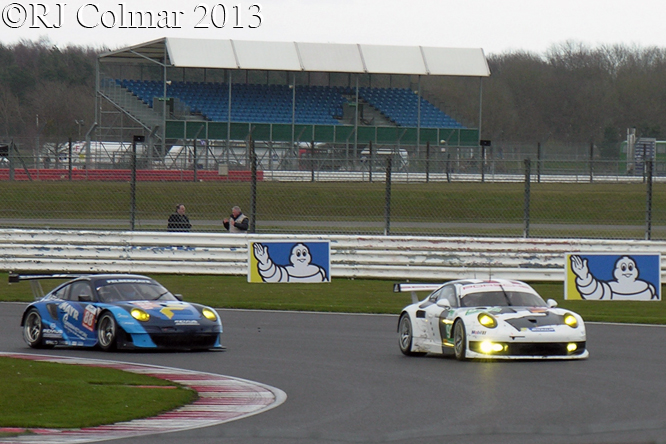
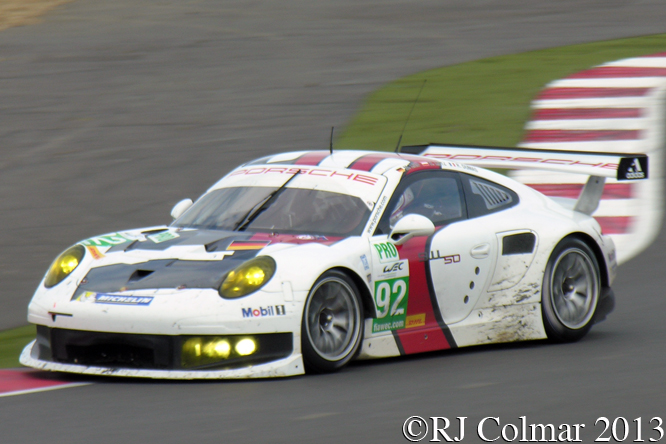
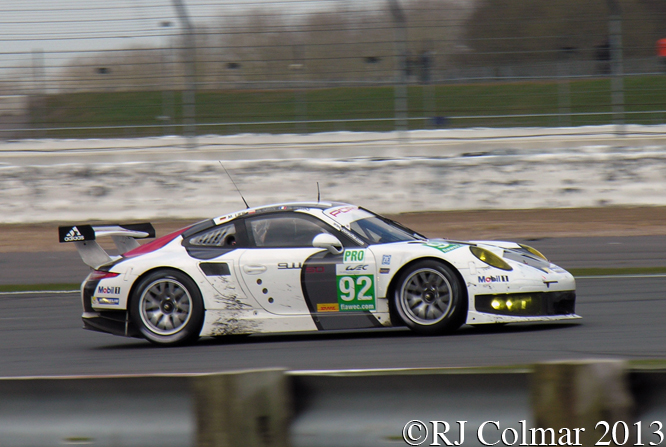
Jörg Bergmeister, Patrick Pilet and Timo Bernhard are the drivers of the #91 Porshe AG Team Manthey entry while, Marc Lieb, Richard Lietz and Romain Dumas drive the #92.

Lieb, Lietz, Dumas, Porsche, 991 RSR, 6 Hours of Silverstone

At Silverstone where the cars are seen here they finished 17 and 20th overall and 4th and 6th in the GTE Pro class in reverse order on their debut. At Spa the #92 finished 19th overall and 15th in class while the #91 retired.

Bergmeister, Pilet, Bernhard Porsche, 991 RSR, 6 Hours of Silverstone

At Le Mans Aston Martin out qualified both Porshe AG Team Manthey cars but in the race Marc Lieb, Richard Lietz and Romain Dumas finished 16th overall and first in class to secure Porsche’s 99th class win in the endurance classic. They were followed by the #91 which was on the same lap to make it a Porsche 1-2 in the GTE Pro class.

I hope you have enjoyed my potted history of Le Mans over the past month, I am intending to continue it next June. Tomorrow I’ll be starting a month long potted history of Formula One cars, thanks for joining me, liking and linking my blogs on fb and else where. I hope you will join me again tomorrow. Don’t forget to come back now !
Share

RIP – Allan Simonsen

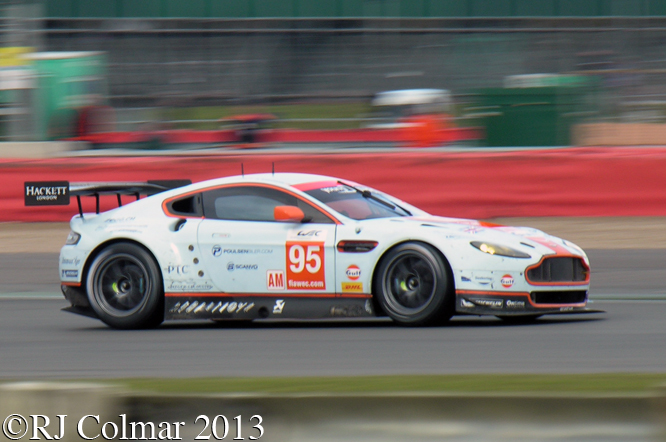
Simonsen, Poulsen, Nygaard. Aston Martin V8 Vantage GTE, 6 Hours of Silverstone

Allan Simonsen, who was born in Odense Denmark, won the Danish Formula Ford Championship in 1999. When the money for his open wheel aspirations ran out he found he was in demand as a driver of GT cars and ended up running in 30 to 40 events a year across the globe driving models from Ferrari, Porsche and more recently Aston Martin.

Such was his enthusiasm and the demand for his services that in 2007 by missing the last race Le Mans GT2 Series he gave up his chance to become champion in order to drive in the Australian GT Series which he won outright the same year with a pair of Mark Coffey Racing Ferraris.

Two years later Allan Simonsen won the 2009 Asian Le Mans GT2 series driving a Ferrari F430 for Team Farnbacher. Allan also competed in the Australian International V8 Supercar Championship and made seven starts at Le Mans with a best finish of second in class in a Farnbacher Ferrari.

Known as a ‘cheeky chappie’ Allan teamed up for a full season in LMGTE Am driving an Aston Martin V8 Vantage GTE with fellow Danes Christoffer Nygaard and Kristian Poulsen for 2013. Their car is seen winning the LMGTE Am class at Silverstone in April above.

Having qualified for LMGTE Am class pole at Le Mans and with a victory well within the teams grasp Allan lost his life while at the top of his game after an accident at Tetra Rouge on lap two of the 24 hour classic last Saturday.

His family bravely asked the Aston Martin team to race on in Allan’s memory when informed of the tragedy. A Danish flag flew at half mast for the remainder of the race while overall race winner and fellow Dane Tom Kristensen dedicated his victory to the memory of his fallen friend.

Condolences to Allan’s family and friends.

RIP Allan Simonsen 1978 – 2013.

Share

90 Hours and 500 Zip Ties – Ferrari 458 Italia GT2 #2844

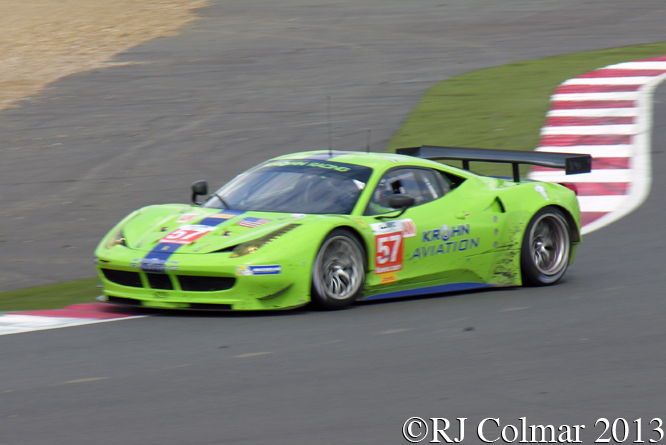
3 years after starting race car driving, in which the highlight was winning the 2005 Six Hours of the Glen with Niclas Jönsson in the Grand Am series, Tracey W Krohn founded his own Grand Am team in late 2005 and started competing in the at the 2006 Daytona 24 hours.

Ferrari 458 Italia GT2, 6 Hours of Silverstone

Success was immediate as Krohn team driver Jörg Bergmeister won the drivers championship and Krohn Racing finished second in the top DP division of the championship. Right from the start Krohn Racing also ran a parallel GT program mostly at Le Mans with Risi Competizione running Ferrari’s.

Krohn, Jönsson, Mediani, 6 Hours of Silverstone

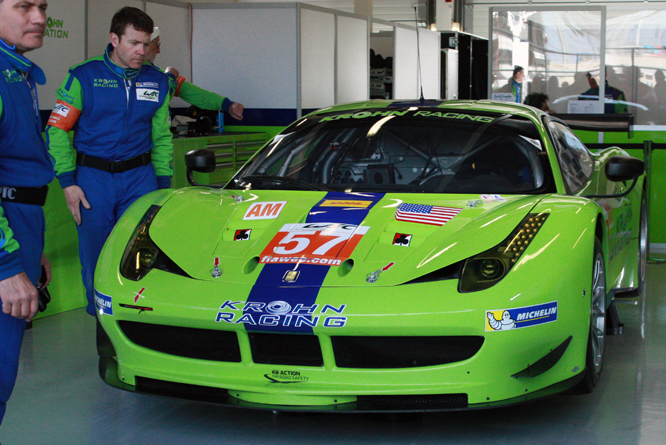
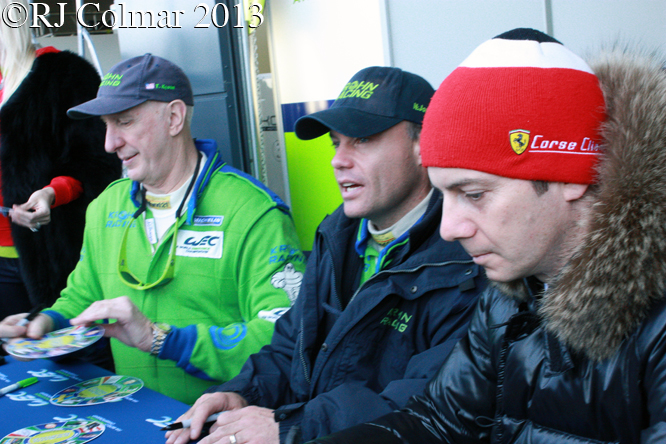
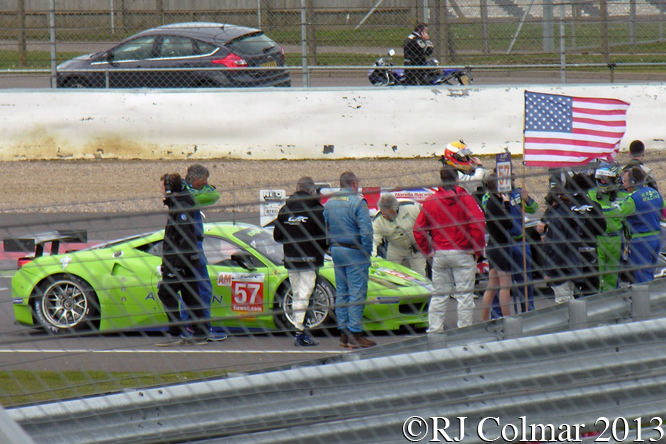
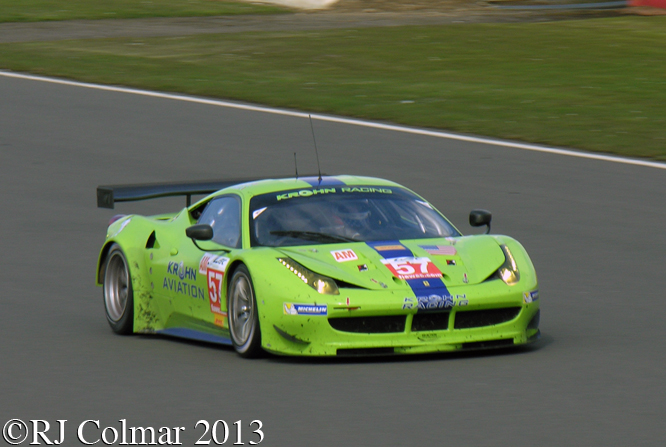
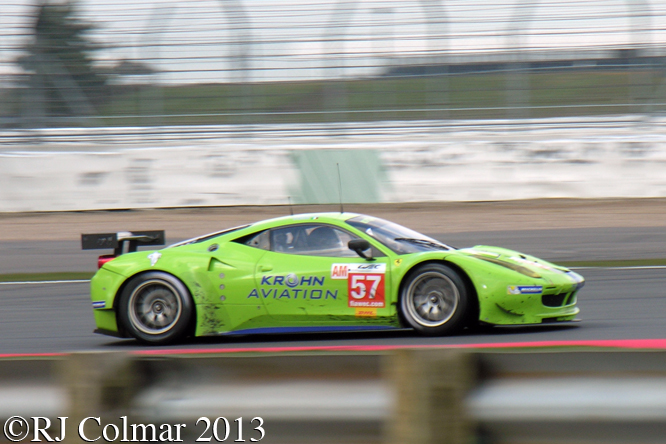
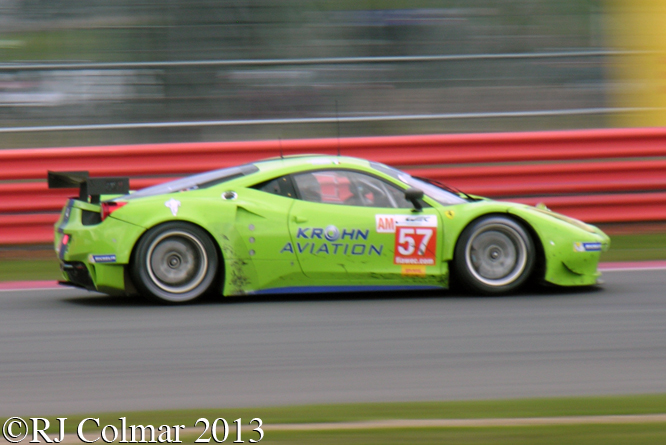
Since 2011 Krohn Racing has run it’s own GT programme to compete in the US and European Le Mans series, which in Europe last year became the FIA World Endurance Championship (WEC). Krohn Racing started competing in the GTE Am class of the WEC last year with today’s featured car the Ferrari 458 Italia GT2 chassis #2844 that this year has been driven by Tracey, Swede Niclas Jönsson with whom he won the Watkins Glen six hours and former Russian Formula 3 Open Wheel champion Maurizio Mediani.

Ferrari 458 Italia GT2, 6 Hours of Silverstone

There seems to be some confusion about the name of this model with various sources quoting it as a GTC others including Krohn Racing’s own website calling it an F458 GTE however the Ferrari website calls the model a GT2 which is good enough for me. If you know different chime in below.

Ferrari 458 Italia GT2, 6 Hours of Silverstone

Based on the stunning Ferrari 458 Italia road car the GT2 differs with it’s more aggressive aerodynamic aids, however like the road car it has power steering, air conditioning to keep the cockpit temperatures tolerable and perhaps most surprisingly electric mirrors.

Ferrari 458 Italia GT2, 6 Hours of Silverstone

Power from the 4.5 litre / 274.6 cui V8 is restricted by air intake restrictor plates that means the motor produces a maximum 465hp at 6,250 rpm down from 562hp at 9,000 rpm in the road car.

Ferrari 458 Italia GT2, 6 Hours of Silverstone

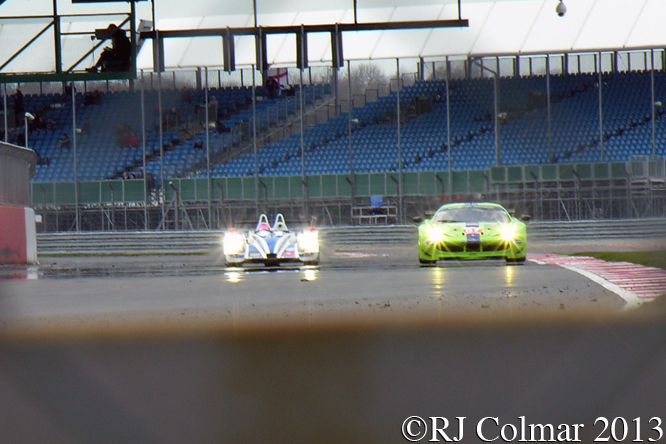
#2844 is seen here at the recent 6 Hours of Silverstone where the team came home 25th overall and 6th in class. Since then the car has competed at the Spa 6 Hours where the team came home 28th overall and 8th in class and at the Le Mans test where Will and Maurizio recorded 61st fastest time.

Ferrari 458 Italia GT2, 6 Hours of Silverstone

The chassis final appearance was at the Le Mans 24 hours where during the opening day of practice Will, as Tracey is known, skidded off the track in the Dunlop Curves and wrecked the €480,000 / US$ 628,000 car fortunately with out any injury to himself.

Ferrari 458 Italia GT2, 6 Hours of Silverstone

By 11pm that night Krohn Racing had concluded a deal with Edelcriss Racing in Northern Italy to lease a their racing 458 chassis. Only problem was it was a more powerful GT3 spec car and it was 1,100 miles away. The Edelcriss Racing transporter set off with the car for a 15 hour sprint to Le Mans.

Ferrari 458 Italia GT2, 6 Hours of Silverstone

When it arrived it was promptly stripped and refettled to GT2 spec using all of the salvageable parts from #2844 a task which took a team of ten technicians 9 hours and some 500 Zip (cable) ties.

The new car was ready to roll for the Thursday qualification session in which Le Mans rookie Maurizio had yet to complete 5 laps in order to qualify.

The car made it to the grid but had to retire at 1am after another accident at the Porsche Curves left the new car stranded out on the track.

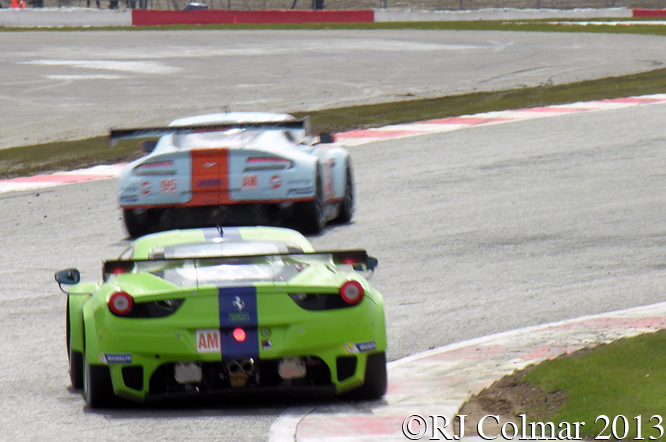
All of Krohn Racing troubles were put into perspective when they learned that fellow GTE Am competitor Allan Simonsen, seen above leading the Krohn Ferrari in the #95 Aston Martin, was killed in after a crash during the opening laps of the Le Mans 24 hours after he left the circuit at Tetre Rouge.

An appreciation of Allan’s life will be appearing in tomorrow’s blog.

Thanks for joining me on this ’90 Hours and 500 Zip Ties’ edition of “Gettin’ a li’l psycho on tyres”. I hope you will join me again tomorrow. Don’t forget to come back now !
Share

Acrylic Glass Bubble Top – Alpine A442 B #A442/3

The Alpine A442 B was the penultimate evolution of Alpines 1970’s sports car program that first came to light in 1973 when Renault sponsored the development of the 2 litre / 122 cui Renault Gordini CH1 V6 that sat in the back of the Alpine A440 sports car driven by Jean Pierre Jabouille at Magney Cours.

The following season the second evolution A441 swept the 1974 European Sportscar Championship scoring 9 wins from 9 races with Jabouille, Alain Cudini, Gérard Larrousse, and eventual champion Alain Serpaggi all wining races. over the winter of 1974/75 one of the A441’s was fitted with a turbocharged version of the CH1 V6 that had been designed by François Castaing and Jean-Pierre Boudy.

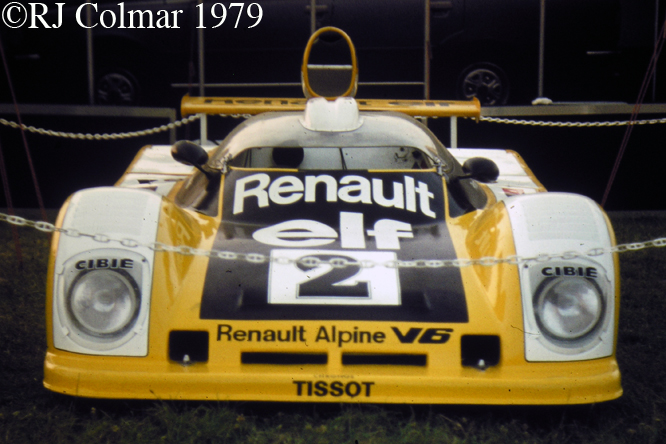
Alpine A442 B, British Grand Prix, Silverstone

At the second round of the 1975 World Sports Car Championship the turbocharged A441 made it’s debut and with Jabouille and Larrouse at the wheel became the unfancied winner beating the normally aspirated 3 litre / 183 cui Alfa Romeo and turbo charged Porsche 908 to become the first turbocharged prototype to win a World Championship. For the remainder of the 1975 season the newer Alpine A442 evolution was used but it was no match for the Championship winning Alfa Romeo.

1n 1976 Alpine continued using developing the A442 in the World Sportscar Championship but it was completely overshadowed by the new turbocharged Porsche 936 which won all seven races leaving the A442 with three second places as the best results and a distant second in the championship a position which it shared with Osella. Le Mans which was not part of the championship saw Jabouille, Patrick Tambay and Jose Dolhem qualify on pole but the single A442 entered but it retired with engine failure before half distance leaving the Porsche 936 to claim the first of three Le Mans victories.

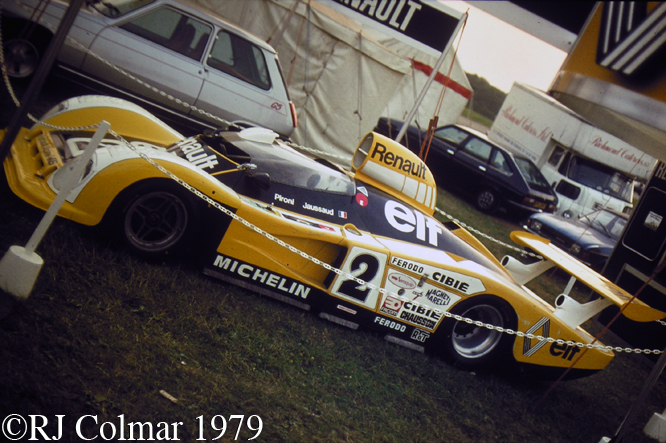
Alpine A442 B, British Grand Prix, Silverstone

Derek Bell and Jabouille were on pole for the 1977 Le Mans 24 hour race driving today’s featured chassis #A442/3 before it had been upgraded to B spec. However none of the four A442’s finished the race, which was won by the Porsche 936 #001 featured last week, but one of the Renault Gordini CH1 V6 turbo powered Mirages did finish a distant second 11 laps in arrears.

For 1978, by which time Renault and Alpine had been fully financially integrated, a new Alpine A443 had evolved with a longer wheel base, slightly larger motor and an acrylic glass bubble roof. Drivers Jabouille and Patrick Depailler had the roof, which added around 5 mph to the cars top speed, removed because they felt claustrophobic and there was too much heat building up inside the cockpit. Even so they still qualified fastest of the Alpines at Le Mans albeit on second place on the grid behind a works Porsche 936 chassis #003 which qualified with an average speed of 147 mph by Jackie ickx. 3rd on the grid was the monstrous Porsche 935/78 known as Moby Dick with another works Porsche 936 the ’77 winner #001 alongside.

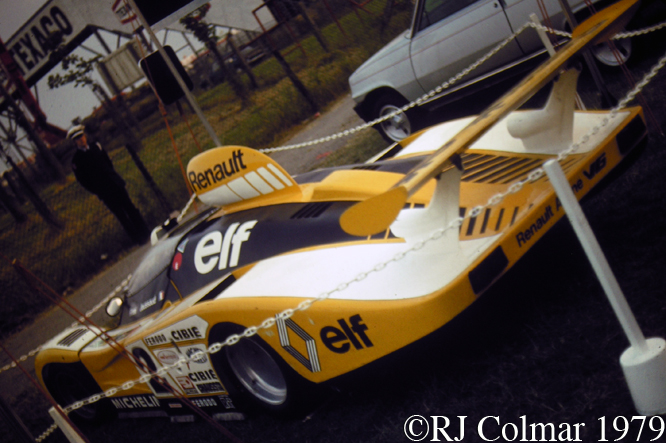
Alpine A442 B, British Grand Prix, Silverstone

Todays featured car now in B spec running with an acrylic glass roof and the standard 2 litre / 122 cui turbocharged V6 motor was 5th on the grid at Le Mans with Didier Pironi and Jean-Pierre Jaussaud sharing the driving. The A443 of Jabouille and Depailler led much of the first half of the race interrupted by a set of unbalanced front wheels until it retired with a broken motor leaving Pironi and Jassaud to take over a commanding lead which it held to the end. Pironi passed out in the heat of the cockpit after he crossed the finish line.

Two of Porsche 936’s required gearbox rebuilds after which one of them crashed and the other chassis #001 came second ahead of the third placed 936 chassis #002 which required a turbocharger replacement while the 935 Moby Dick suffered from overheating and persistent oil leaks to come home 8th.

Having accomplished what they set out to achieve with the CH1 V6 program, along with two Formula Two open wheel championships in 1975 and 1976, Renault retired the Alpines from Sports car racing to concentrated all of it’s efforts on Formula One where it ran the first turbo charged Formula One car in 1977.

In 1979 Renault would become the first team to win a Formula One race with a turbo charged 1.5 litre 91.5 cui Renault Gordini EF1 motor at the French Grand Prix, which by coincidence was the race before the British Grand Prix where today’s photo’s were taken of #A442/3 in the paddock at Silverstone.

My thanks to Tim Murray for helping to identify the winning chassis of the 1975 Mugello 1000kms race which was widely reported to have been an Alpine A442 in contemporary journals like Motoring News but which contemporary photographs show the A441 development car.

Thanks for joining me on this “Acrylic Glass Bubble Top” edition of “Gettin’ a li’l psycho on tyres” I hope you will join me again tomorrow. Don’t forget to come back now.

Share