Tag Archives: Speed

Wobbly Web Wheels – Lotus 12

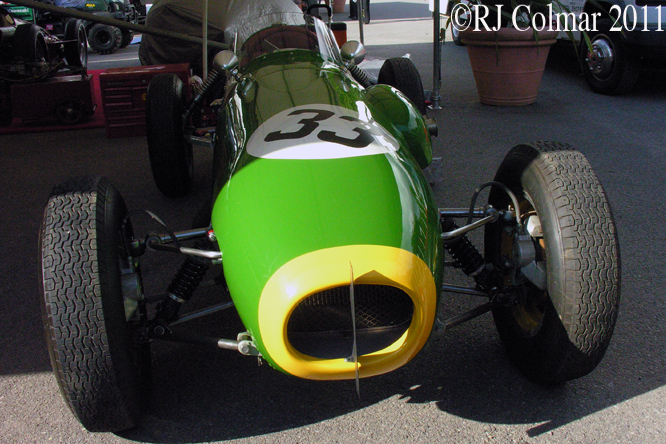
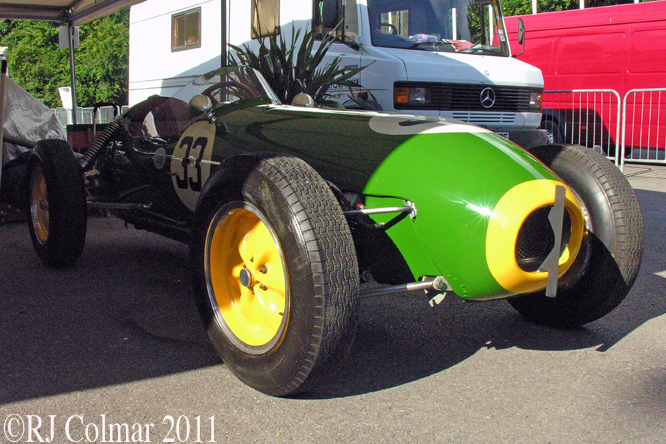
Despite only being fitted with mock up engine and all new rear transaxle made of wood the Lotus 12 with a chassis made of Reynolds 531 tubing looked sensational to the select members of the press lucky enough to it in the stable block at the back of a hotel in Hornsey in October 1956.
Lotus 12

Lotus 12, Goodwood Festival of Speed, June 2011

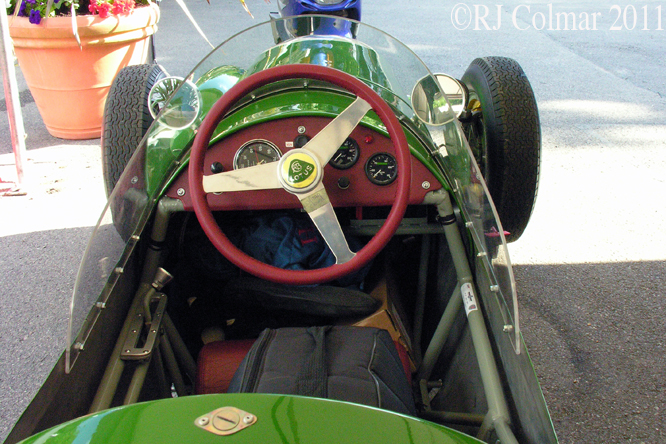
The space frame chassis had independent wishbone suspension on the front and was to be powered by a 4 cylinder Coventry Climax motor built to meet the then second tier Formula 2 regulations. The gearbox mounted to the rear transaxle was to feature a sequential shift as used on motor cycles.
Lotus 12

Lotus 12, Goodwood Festival of Speed, June 2011

Typical of designer Colin Chapmans maxim to add lightness the magnesium ‘wobbly web’ wheels, inspired by a design Colin had seen on a US military aircraft, were fitted with six wheel nuts instead of the more common central knock off nut because Formula 2 races did not, as a general rule, require pit stops to change tyres and the six small wheel nuts weighed less than the one knock off nut.
Lotus 12

Lotus 12, Goodwood Festival of Speed, 2011

Colin Chapmans first foray into open wheel racing under his own Lotus banner while innovative was not as successful in 1957 as had been the Vanwall for which Colin had designed the chassis, but this did not prevent him from fitting the 12 with an oversize version of the Formula 2 Coventry Climax engine and running two examples at the Monaco Grand Prix in 1958 for Graham Hill and a second F2 spec car for Cliff Allinson to mark Lotus first entry into the top Formula One tier of the sport.
Lotus 12

Lotus 12, Goodwood Festival of Speed, 2011

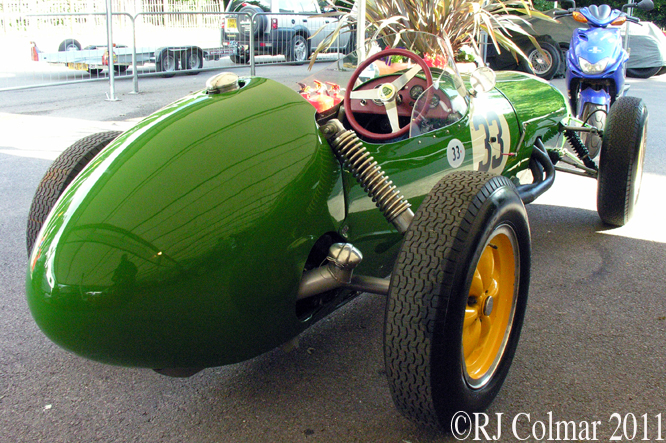
The first two Lotus 12’s featured de Dion suspension but Chapman refined his design by fitting his own version of the Macpherson struts fitted with universal joints that became known as the Chapman strut, a system also used on the Lotus Elise. In Formula One races the Lotus 12 scored some promising sixth place finishies and a remarkable 4th place in Belgium but the most important Colin Chapman was now playing on the big stage where he would leave an indelible mark right up until his untimely demise im 1982.

Thanks for joining me on this Wobbly Web edition of ‘Gettin’ a li’l psycho on tyres’ I hope you will join me again tomorrow when we will be looking at a big cat. Don’t forget to come back now !

Share

A Clockwork Orange – Adams Probe 16

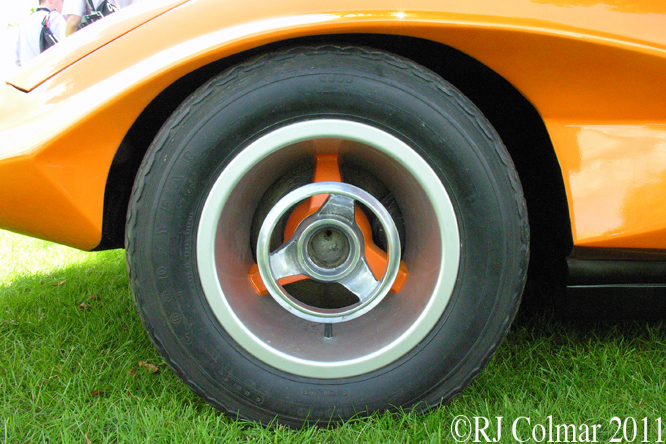
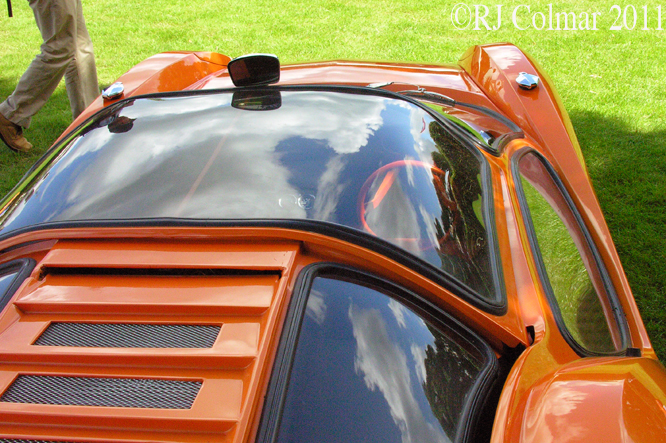
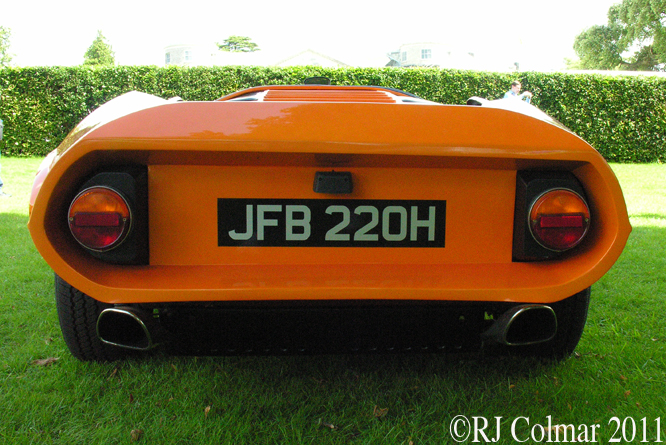
For anyone, like me, who was a kid during the fierce competition to conquer space through the 1960’s part of the vision for the future included mandatory white jump suits, jet packs and incredibly cool cars like the Adams Probe 16 seen here at the Goodwood Festival of Speed earlier this year.

Adams Probe 16, Goodwood Festival of Speed

This design came about as a result of an investigation into the extremes of styling by Dennis and Peter Adams who are credited as having introducing a number of modifications to the Marcos GT which became the Marcos Fastback GT.

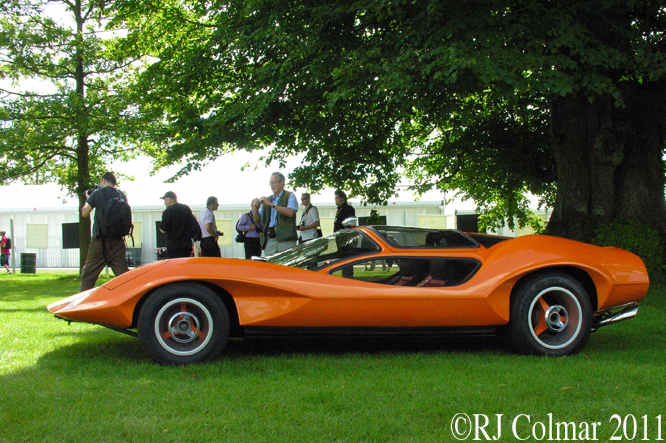
Adams Probe 16, Goodwood Festival of Speed

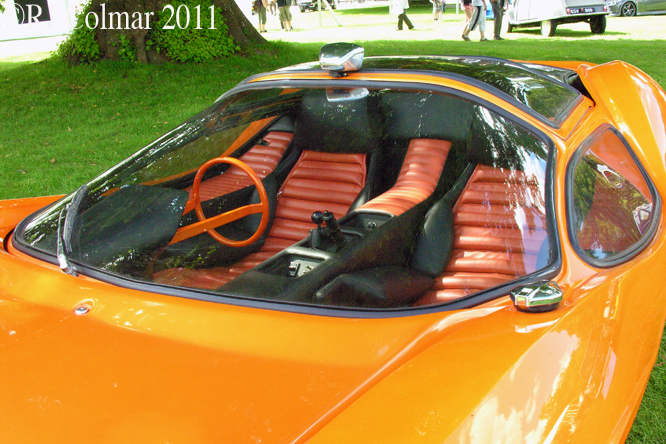
With a roof line at just 34″ above the ground, that is a full 6″ shorter than the Le Mans winning Ford GT 40 which took it’s name from it’s 40″ height, access to the Probe 16 is effected through a slide back glass roof panel.

Adams Probe 16, Goodwood Festival of Speed

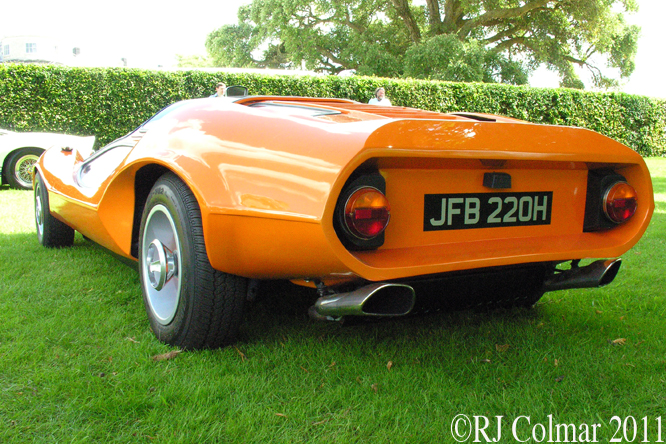
It would appear that the three Probe 16’s were manufactured at the the old Marcos factory at Bradford on Avon in Wiltshire, power came from a mid mounted 4 cylinder motor sourced from, an at the time very common, front wheel drive Austin 1800.

Adams Probe 16, Goodwood Festival of Speed

Winning the award for the best British Styling Exercise at the London Motor Show in 1969 did not raise the public profile of this vehicle enough for it to go into volume production. Though four similar Probe 2001’s were manufactured by the Probe Motor Company and WT Nugent Engineering between 1970 and 1972. Up to 48 further vehicles which used some of the Probe 16 body moulds are thought to have been built under the Centaur brand.

Adams Probe 16, Goodwood Festival of Speed

Of the three original Probe 16’s one went to Wichita Lineman singer song writer Jim Webb, by way of complete contrast another Probe 16 went to Sunshine Of Your Love singer song writer Jack Bruce. Jack passed his Probe 16 on to Mountain drummer on the Nantucket Sleigh Ride Cody Laing.

Adams Probe 16, Goodwood Festival of Speed

However AB/4 seen here is arguably the most famous of the trio of Probe 16’s having played the role of Durango 95 in the Stanley Kubric ultra violence shock flic A Clockwork Orange. After its flirtation with the silver screen AB/4 spent many years in the Pollock Auto Showcase.

Adams Probe 16, Goodwood Festival of Speed

AB/4 still painted it’s original yellow, was repatriated in 1987 and featured in the pseudo comedy television series Top Gear at the beginning of the century.

More detailed information about all of the Probe 16 related cars can be found on the probe2001.com website, on the linked page some photos of AB/4 can be seen of the car being driven around Brands Hatch. Thanks to The Nostalgia Forum reader MCS the driver of the car at Brands Hatch has been identified as most likely being Ray Allen who immortalised his place in the annals of motor racing history for winning the worlds very first Formula Ford race.

My thanks to MCS and everyone else who contributed to the Adams Probe 16 thread at The Nostalgia Forum.

Thanks for joining me on this A Clockwork Orange edition of ‘Gettin’ a li’l psycho on tyres’, I hope you will join me again tomorrow. Don’t forget to come back now !
Share

For A Few £’s More – Jensen S-V8

After the owner of WJ Smiths & Sons a body works passed away in 1934 two employees, the brothers Richard and Alan Jensen bought the assets and founded Jensen as a coachbuilding firm. Building customised bodies for proprietary chassis supplied by Morris, Singer, Standard and Wolseley. One of their early commissions was for a car based on a Ford V8 for Hollywood legend Clark Gable, this highly acclaimed car facilitated a deal with Ford to produce a limited edition of Jensen Fords.

Jensen S-V8, Goodwood Festival of Speed

The following year Jensen launched the Jensen S type also powered by a Ford V8. Jensen diversified into light commercial vehicles marketed under the JNSN brand and during the war were engaged to make tank turrets and specialised vehicles, ambulances and fire engines.

Jensen S-V8, Goodwood Festival of Speed

After the 2nd World War Jensen produced the Jen Tug light truck for hauling trailers around goods yards and won a number of contracts to produce bodies for among others the military all wheel drive Austin Gipsy, the Austin A40 Sports, Austin-Healey 100, Volvo P1800 and Sunbeam Tiger.

Jensen S-V8, Goodwood Festival of Speed

Concurrently Jensen built an Austin parts bin based Interceptor, and fibreglass bodied 541 Coupé. Perhaps their best known model is the Chrysler powered Interceptor introduced in 1966 with a steel body designed by Carrozzeria Touring and built by Vignale.

Jensen S-V8, Goodwood Festival of Speed

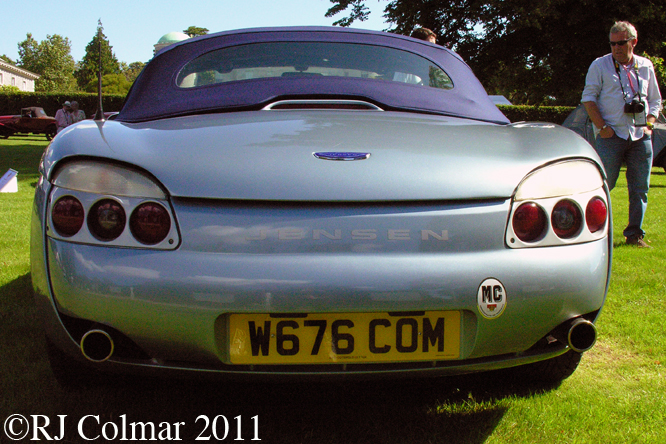
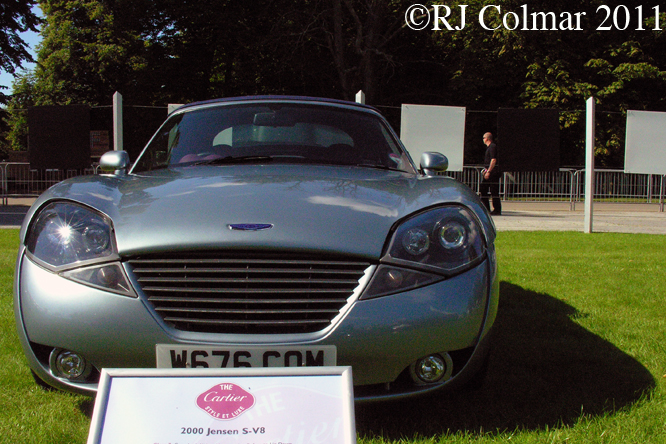
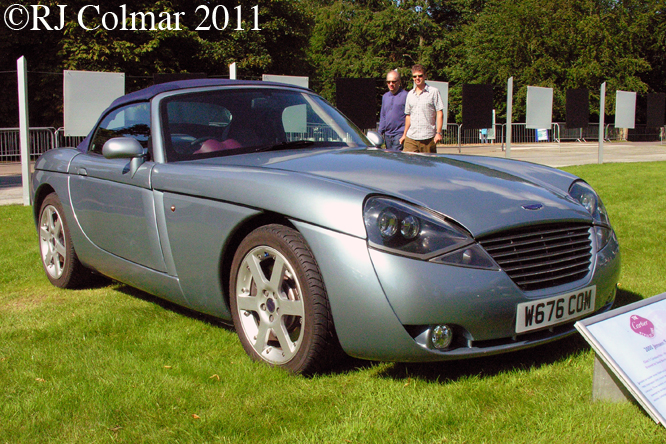
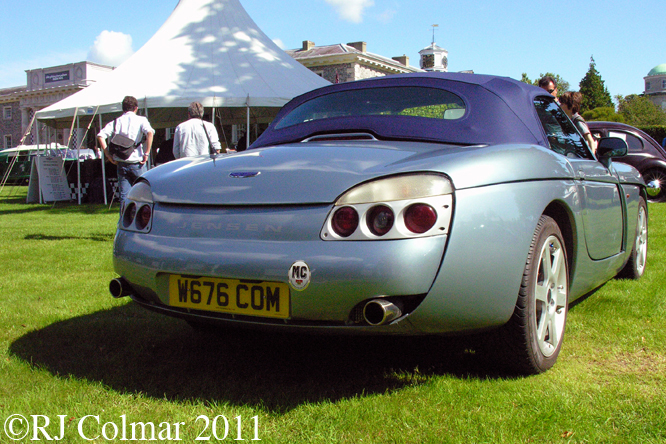
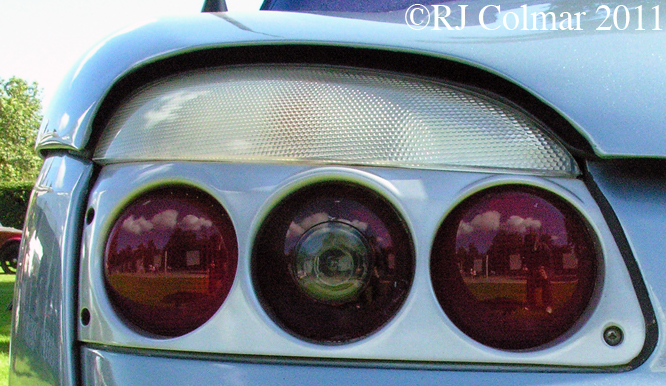
The Interceptor remained in production until the company folded in 1976, several attempts were made to revive production one resulting in 11 MK4 Interceptors being built. In 1998 the Ford Mustang Cobra V8 powered aluminium bodied Jensen S-V8, harking back to the 50’s and 60’s 541 and CV8 models was shown to the public and 300 orders were taken to build the car at a new £9 million facility at Speke in Liverpool.

Jensen S-V8, Goodwood Festival of Speed

Unfortunately quality problems including the manufacture of the aluminium body panels slowed the expected production rate and only 20 vehicles were produced, including the one seen here at Goodwood Festival of Speed, before the company again went under in 2002. The Oselli company purchased a licence to complete a further 12 cars, all with heavier easier to manufacture steel bodies, and retained the parts from a further 6 vehicles for spares.

Since production of the 20 original £40,000 cars has ceased at an average unit cost to investors of £450,000 it has been claimed that Jensen went under for the want of just £500,000 to see them through.

Thanks for joining me on this underfunded edition of ‘Gettin’ a lil’ psycho on tyres’ I hope you will join me again tomorrow. Don’t forget to come back now !
Share

Goodwood Revival #2 – Rover 2000TC

Welcome to the 365th edition of ‘Gettin’ a lil’ psycho on tyres’ when I started this blog one year ago I thought I might struggle to make it last a week, I can’t quite believe that my enthusiasm now is stronger than it was then, this is in no small part due to every one of the 44,000 plus hits that I have had from over 20,000 views.

I’d like to thank every one who has popped by, all those who have left comments and especially all those who have generously given, tickets, invitations, time and effort donating photographs details on the vehicles and stories for me to publish. Over the next couple of weeks I will be powering up a dedicated GALPOT website for these blogs, all of the existing blogs will be kept on line, you will receive timely updates as the new website progresses.

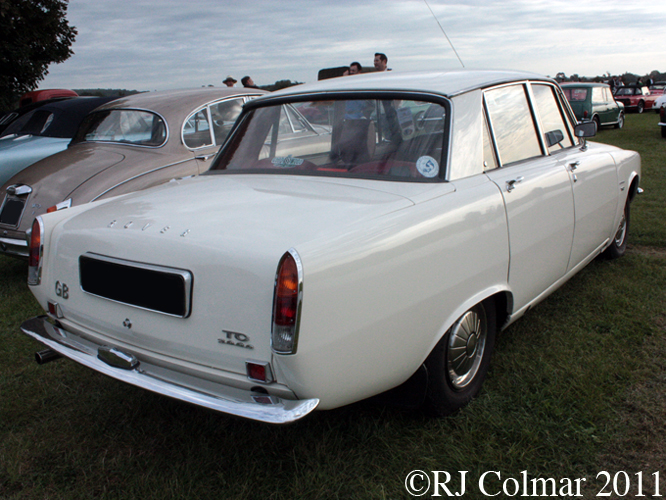
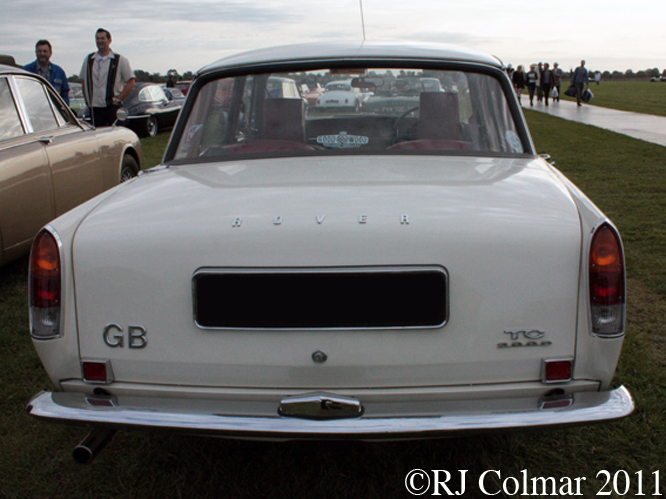
Today’s car the Rover 2000TC is a personal favourite, identical to a little Corgi model I had that featured jewel head lights, a sky roof and golden jacks so that I could swap the wheels. I must have driven that toy Rover 2000TC several hundred thousand miles on my hands and knees and changed the wheels several thousand times too.

Rover 2000 TC, Goodwood Revival

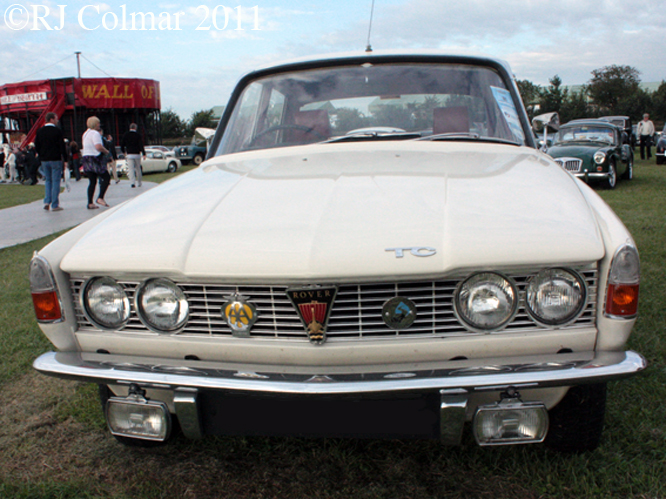
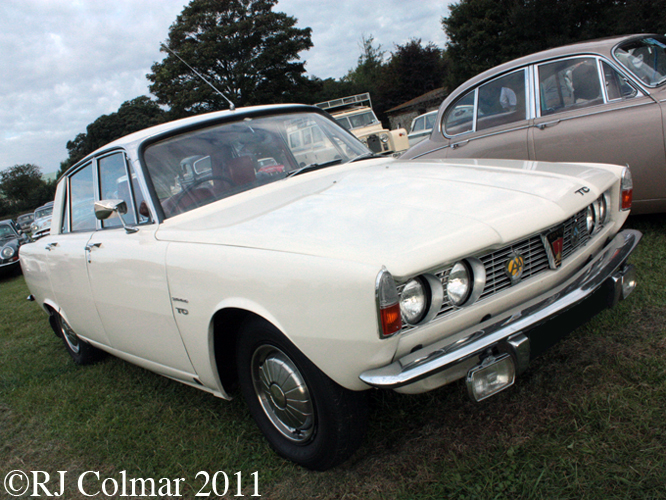
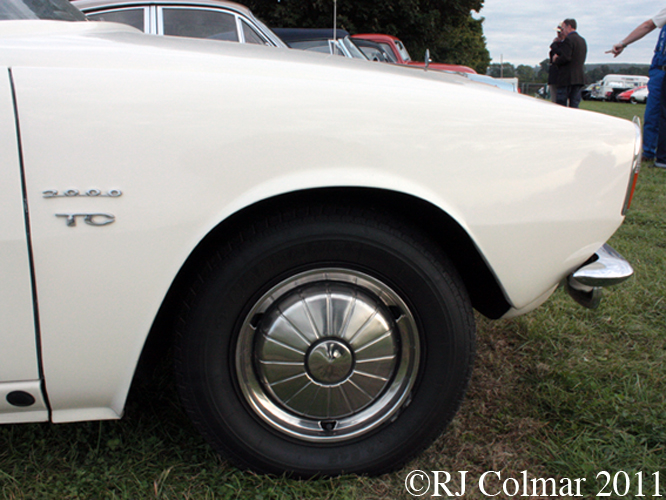
Launched in 1963 the Rover 2000 was originally supplied with 104 hp single carburettor 4 cylinder motor, by 1966 Rover launched an export model with a more powerful 124 hp Twin Carburettor (TC) motor.

Rover 2000 TC, Goodwood Revival

Initially the 2000TC was only made available to export markets, officially because the twin carb manifolds were in short supply and because of a 70 mph speed limit introduced in the UK in 1965.

Rover 2000 TC, Goodwood Revival

Six months after the 2000 TC was launched supply of twin carburettor inlet manifolds improved and the 2000 TC was made available in Britain.

Rover 2000 TC, Goodwood Revival

Unlike rivals like the Citroen DS and Triumph 2000 the heavily sculpted rear seats of the P6 meant only two passengers could be carried in the back.

Rover 2000 TC, Goodwood Revival

The de Dion rear suspension used in the construction of the P6 limited the amount of space in the boot and many P6’s used to carry a spare tyre wrapped in a purpose made vinyl bag, on top of the boot lid.

Additional P6 blogs can be found on the following links, P6 Cabriolet, P6 2200SC, P6 Estoura.

Thanks for joining me on this 1st anniversary edition of ‘Gettin’ a lil’ psycho on tyres’, I hope you will join me again for the 366th edition tomorrow. Don’t forget to come back now !
Share

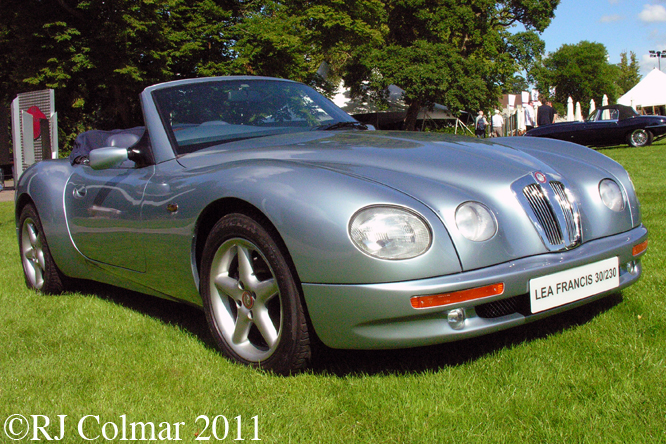
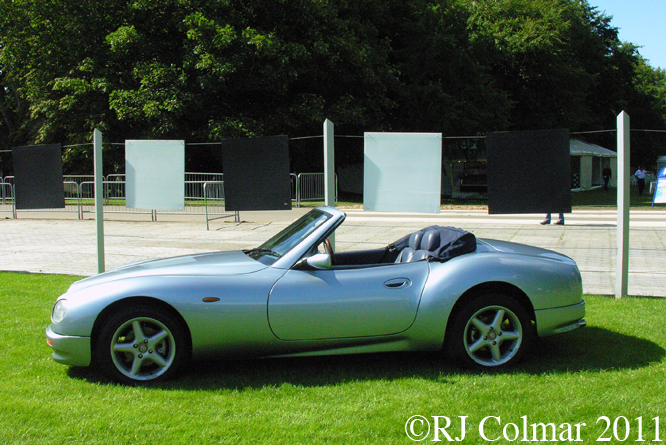
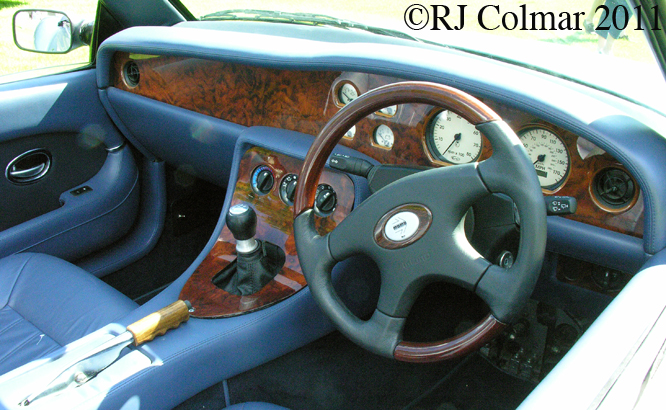
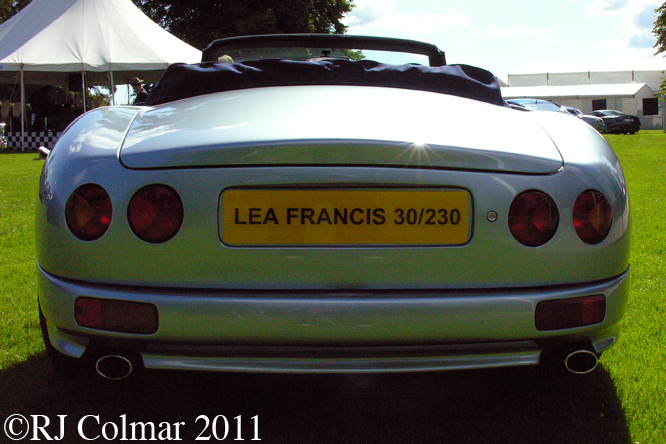
Jig Free – Lea Francis 30/230

In August 1895 Richard Lea and Graham Francis entered into a partnership to manufacture bicycles, like the another cycle turned motor manufacturer Rover, Lea Francis was based in Coventry. In 1903 Lea Francis manufactured three unconventional vehicles with complex three cylinder motors that were not a success and from 1912 to 1924 the company manufactured motor cycles.

Lea Francis 30/230, Goodwood Festival of Speed

Lea Francis entered motor car manufacture again in 1919 with vehicles using popular Meadows engines, Lea Francis became the first marque to offer a supercharged production car, the Hyper in 1927 and the following year a Hyper won the Tourist Trophy.

Lea Francis 30/230, Goodwood Festival of Speed

The company went bankrupt in the early 1930’s and was revived in 1937 to produce a fresh vehicle designed by former Riley engineer Hugh Rose, the successors to this car proved popular after the second world war in saloon and sports car forms.

Lea Francis 30/230, Goodwood Festival of Speed

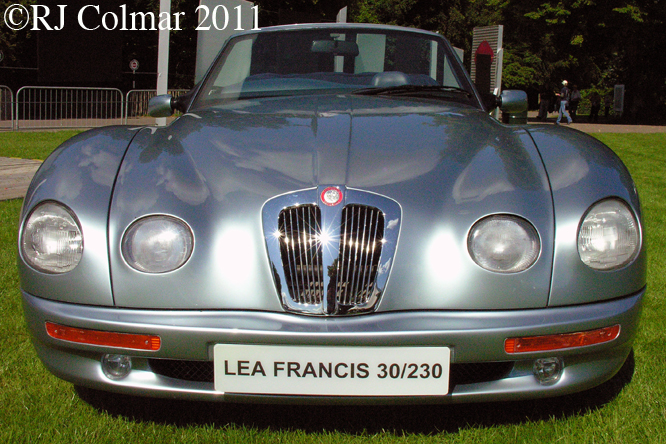
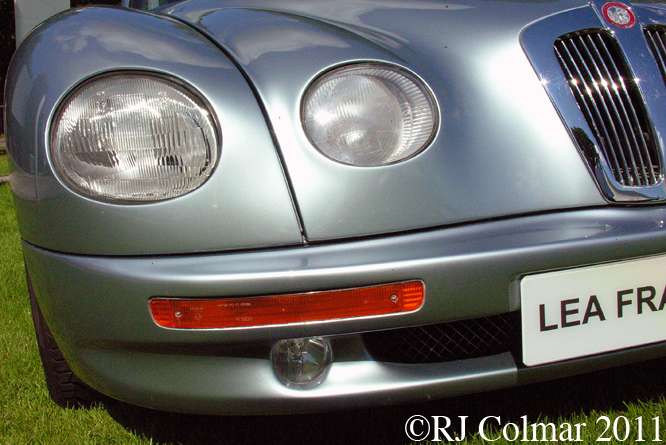
Car production ceased again in 1962 since when the company was kept alive by Barrie Price who provided spares and restoration services and occasional new low volume cars. In 1996 father of the Jaguar XJ220 Professor Jim Randle was engaged to design the 30/230 seen here at Goodwood Festival of Speed.

Lea Francis 30/230, Goodwood Festival of Speed

The aluminium bodied car was to be powered by a 235 hp 3 litlre / 183 cui V6 Vauxhall (UK GM) motor.

Lea Francis 30/230, Goodwood Festival of Speed

Among the novel features the chassis was made by riveting laser cut aluminium panels, a process that requires no conventional jigs, and a patented active suspension system.

Lea Francis 30/230, Goodwood Festival of Speed

Unfortunately, like the planed Lea Francis Limousine which aimed to fill the niche left by the Daimler DS240, the 30/230 did not go into production.

Thanks for joining me on this Lea Francis edition of ‘Gettin’ a lil’ psycho on tyres’. I hope you will join me again tomorrow when I’ll be reviewing some of the event’s at this weekend’s Goodwood Revival. Don’t forget to come back now !
Share

Automobiles, Planes, Trains and a Giraffe – The Bugatti Trust

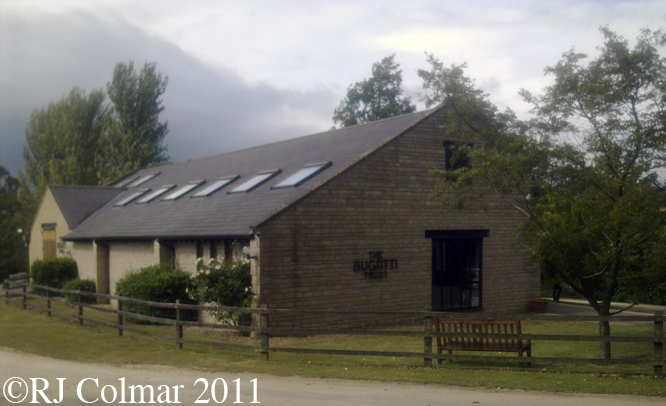
On our way back from Mallory Park, Tim and I dropped by the Bugatti Trust which is housed next to the site of the Prescott Speed Hill Climb venue.

Bugatti Trust, Prescott

The Trust’s raison d’etre is to encourage research into Bugatti’s works, by experts and novices alike, an aim facilitated by a large archive of photographs, drawings, letters and articles accumulated by the father of the Trusts current chairman Hugh Conway.

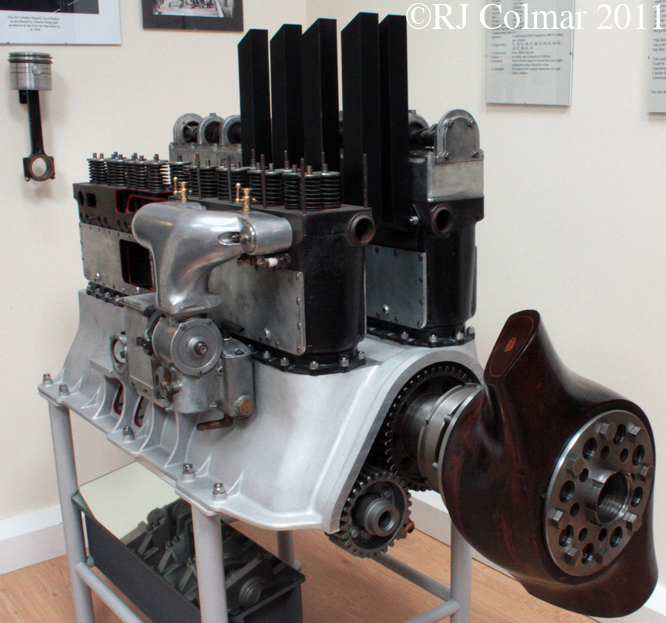
 Bugatti King Aero engine

The trust also houses a fascinating collection of Bugatti artifacts including this vertical 16 Bugatti King Aero engine designed by Ettore in 1916 and further modified for production by Charles King at Duesenberg Motors. This 500 hp 24.3 litre / 1482 cui leviathan featured two pairs of four cylinder blocks mounted side by side with two crankshafts geared to a central propellor shaft.

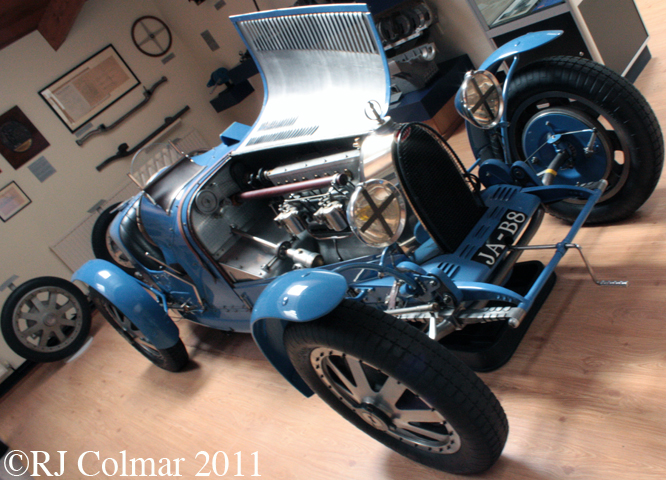
Bugatti T35,

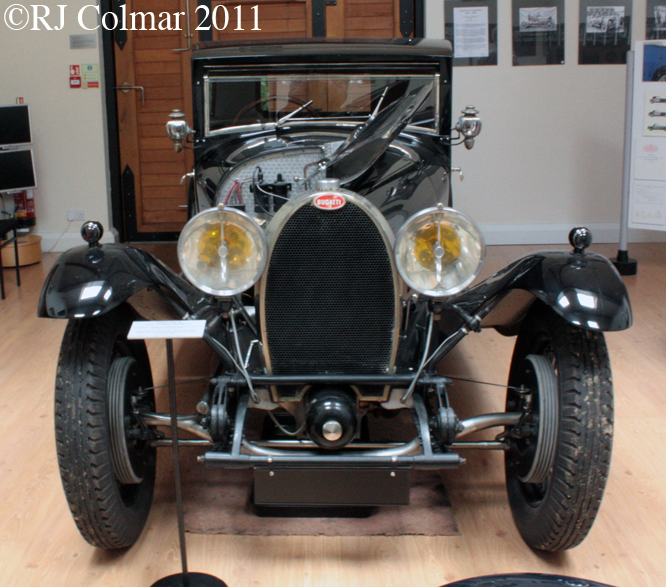
A small rotating selection of top quality cars is on loan to the Trust from Bugatti Owners Club members, this T35, which was built up from an assortment of pieces from a variety of T35’s, belongs to the well known drummer Nicholas Berkeley Mason who’s vehicles have featured in previous GALPOT blogs. Apparently, like all of his other vehicles, this car can be hired for film, television, and the media from Ten Tenth’s.

Bugatti T37A, Bugatti Trust

T37A, chassis #37282, on loan from Charles Trevelyan, was delivered to Omnia-Kraftfahrzeug-Handels GmbH of Munich in September 1927 for 48,930 FF.

Bugatti T37A, Bugatti Trust

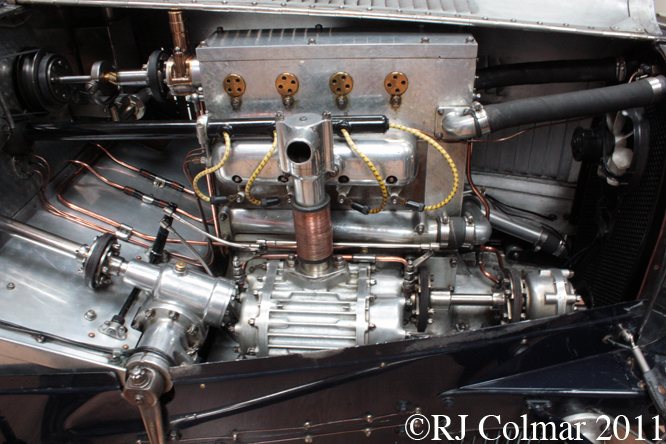
Details in this photo of the T37A’s 1496 cc / 91 cui motor include the camshaft drive, top left at the rear of the motor, which is connected to both the dash board mounted magneto and the revolution counter which is driven by the pulley and rubber belt that can be seen on the left of the photograph.

The supercharger, lubricated by a drip feed, for the 4 cylinder motor can be seen beneath the vertical copper coiled pipe, the carburettor that mixes the air and fuel is mounted beneath the supercharger.

Bugatti T38, Bugatti Trust

Contemporary to both the racing T35 and T37 is this T38 2 litre / 122 cui 8 cylinder touring car, unfortunately I did not get any clear shots of the detachable trunk at the back but it is a real work of art the finish of which I have only seen a copy of on The Pet MINI.

Bugatti Record Car, Bugatti Trust

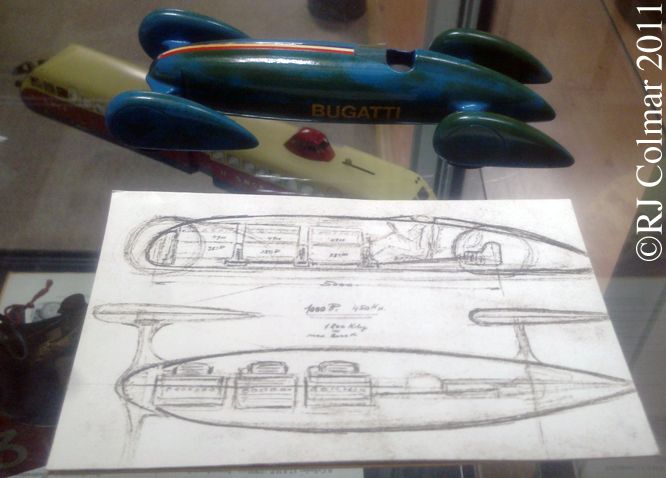
Rising to the challenge of beating Mercedes Benz and Auto Union Jean Bugatti sketched out the vehicle seen here with no less than three supercharged straight 8 motors with which to attack the speed record for vehicles driven on public roads in 1935. His still born car would have had around 1000 hp and should have been capable of around 250 mph.

Below the speed record vehicle is a model of Ettore Bugatti’s successful motorised railcar.

Bugatti T59 Wheel, Bugatti Trust

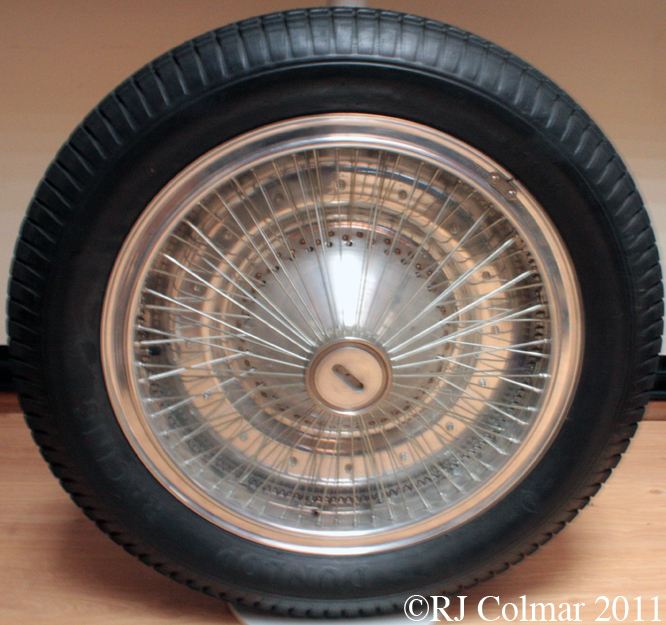
I am not entirely sure what the thinking was behind the T59 piano wire wheels first seen in 1933, it seems the wire spokes handled the cornering loads while the teeth of the outer wheel rim meshed with the teeth of the brake drum to transmit the power from the drive shaft to the tyres. How this was advantageous over the regular alloy wheels Bugatti had used up until this date I am not sure.

Rembrandt Bugatti,  Bugatti Trust

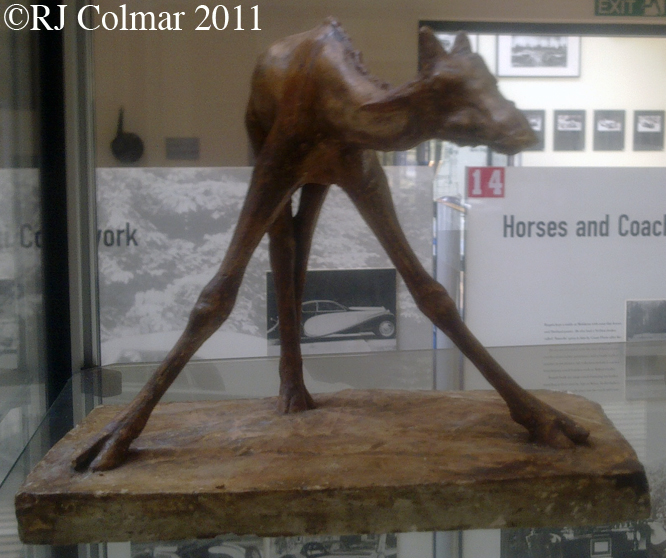
While most of the Bugatti Trust collection focuses of Ettore and Jean’s work there are some interesting pieces of work by other Bugatti family members including this sculpted giraffe by Ettore’s brother, Rembrandt Bugatti.

I really can’t recommend a visit to the Bugatti Trust highly enough and can’t wait to go back with a raft of new questions for the friendly and helpful members of the trust who make a visit such a delight.

Hope you have enjoyed this Bugatti Trust edition of ‘Gettin’ a lil’ psycho on tyres’ and that you will join me again for Ferrari Friday tomorrow. Don’t forget to come back now !
Share

Woodland For The Tenacious – Spyker Silvestris V8 Prototype

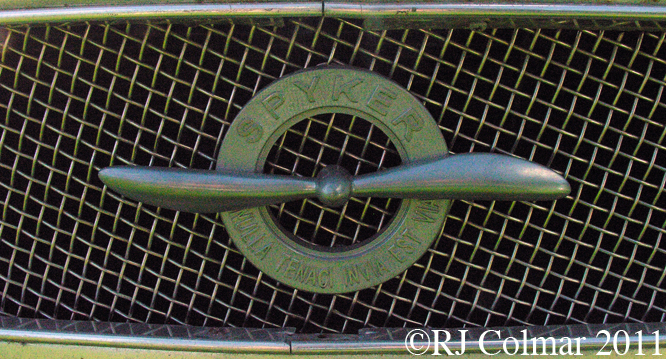
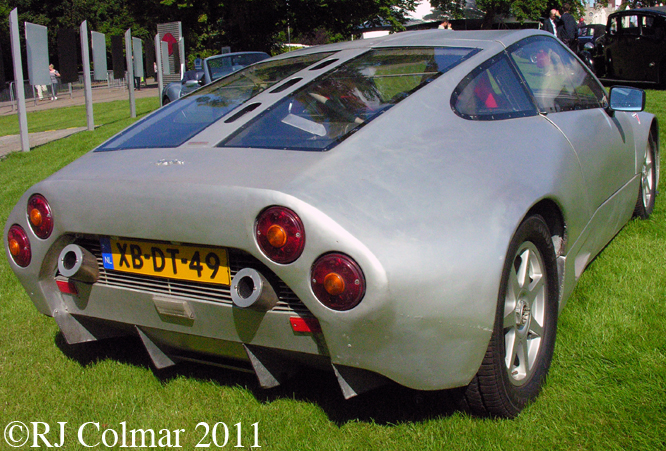
If innovation were enough to guarantee success everybody would know the name Spyker and quite a few of us would probably be driving one, given that in 1903 Spyker launched a 60 hp racer that was the first motor car with a six cylinder engine, four wheel drive AND four wheel brakes.

Spyker, Goodwood FoS

The company motto “Nulla tenaci invia est via” translates as “For the tenacious, no road is impassable”, to which might be added “even if the way is blocked for 70 years”, for despite building the royal horse drawn ‘Golden’ carriage for the Dutch royal family in 1898, which is still in use today and introducing 6 cylinder powered vehicles, four wheel drive and four wheel braking systems, Spyker went under in 1929.

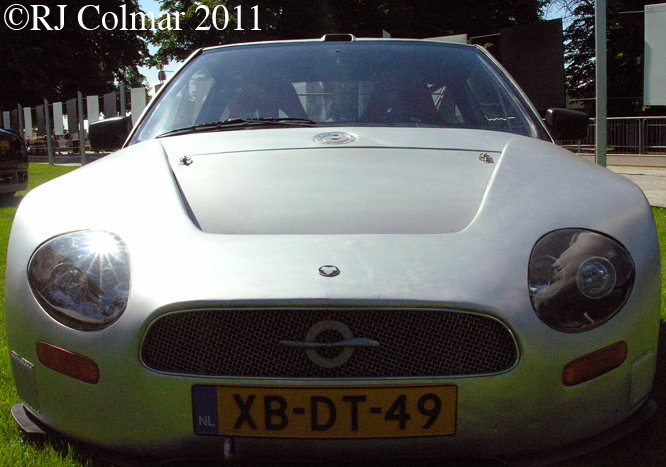
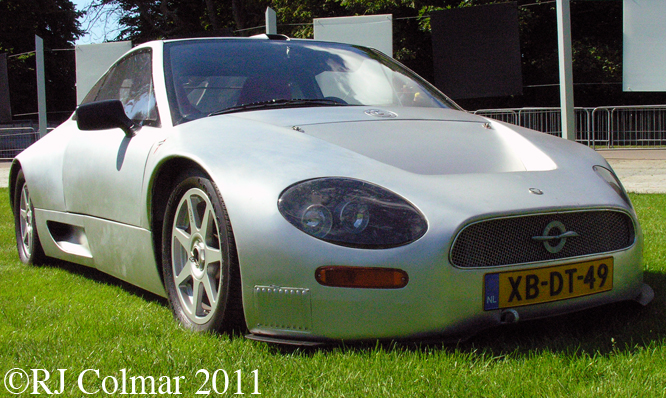
Spyker Silvestris, Goodwood FoS

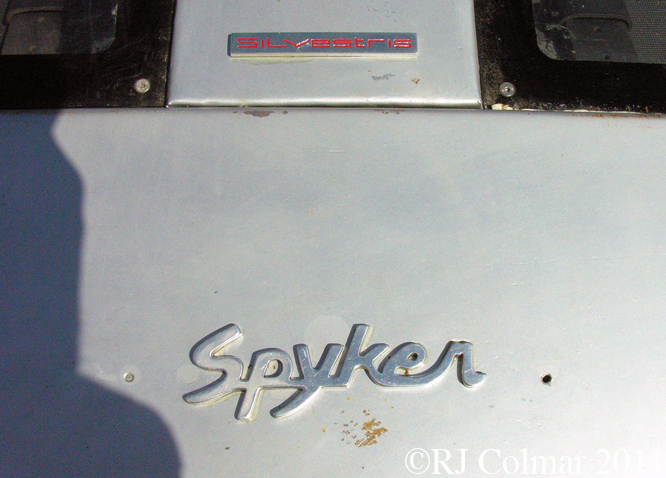
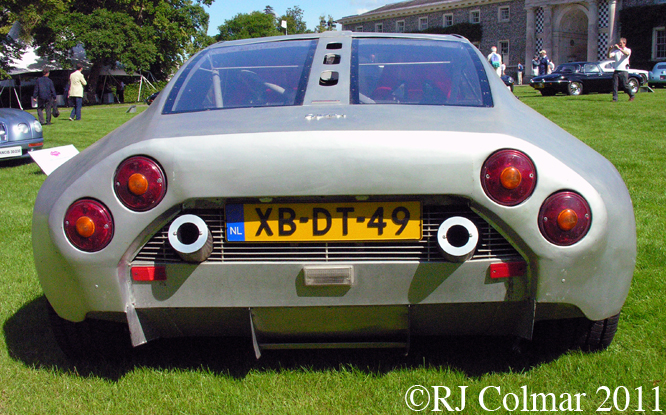
Between 1990 and 1996 Maarten de Bruijn hand built the Silvestris (translation ‘Woodland’) V8, seen here at Goodwood, Festival of Speed, with which he and Victor Muller would revive the Spyker brand.

Spyker Silvestris, Goodwood FoS

Many of the design features of the Spyker C8 model which went into production in 2000 can be seen in the Silvestre which has smaller overall dimensions than the production C8.

Spyker Silvestris, Goodwood FoS

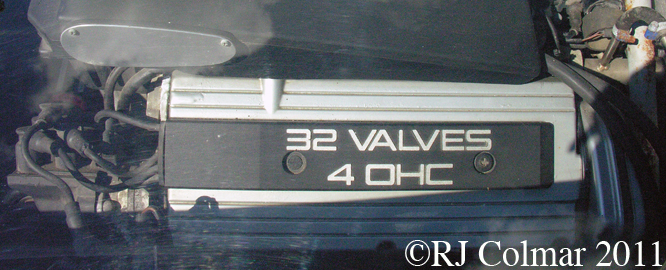
Power for the prototype Spyker came from a 265 hp quad cam (dohc) Audi V8 attached to a similarly sourced gearbox.

Spyker Silvestris, Goodwood FoS

The Silvestris weighing just 960 kgs 2,116 lbs is thought to be capable of 0 – 62 mph in 4.5 secs.

Spyker Silvestris, Goodwood FoS

Builder Maarten de Bruijn still owns the Silvestris which won it’s class in the Cartier Concours at Goodwood this year.

Spyker Silvestris, Goodwood FoS

In 2005 Maarten left Spyker to start a new venture Silvestris Aquamotive which builds aluminium space frame speed boats.

Thanks for joining me on today’s Woodland edition of ‘Gettin’ a lil’ psycho on tyres’ I hope you will join me again tomorrow. Don’t forget to come back now !
Share