Tag Archives: Speed

Cubic Inches – Bentley Speed Six #HM2689

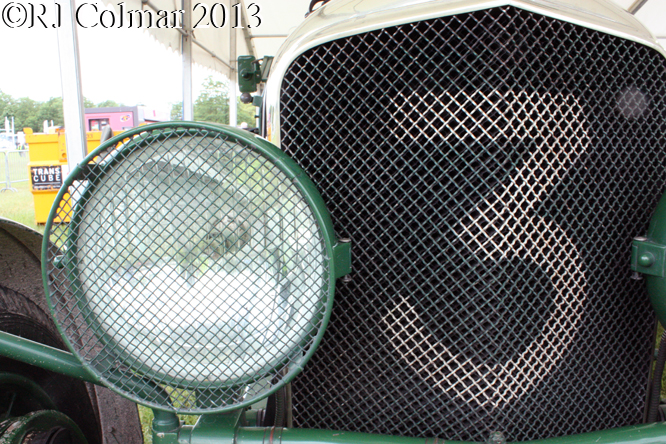
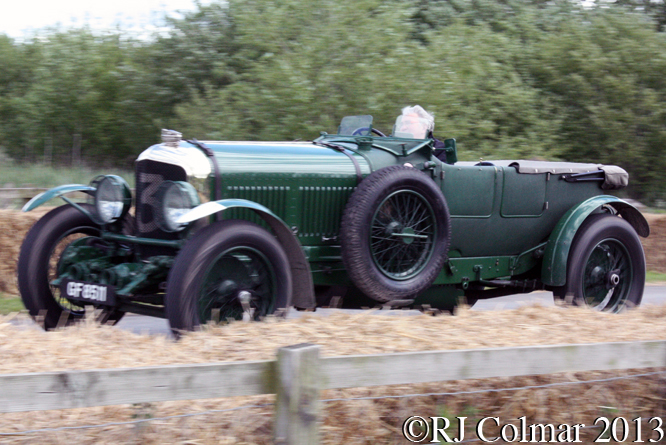
At the weekend I popped up to the Cholmondeley Pageant of Power where several Bentley’s were present that have taken part in Le Mans 24 hour races including today’s featured example chassis #HM2869 which was driven by Sammy Davis and Clive Dunfee in the 1930 race.
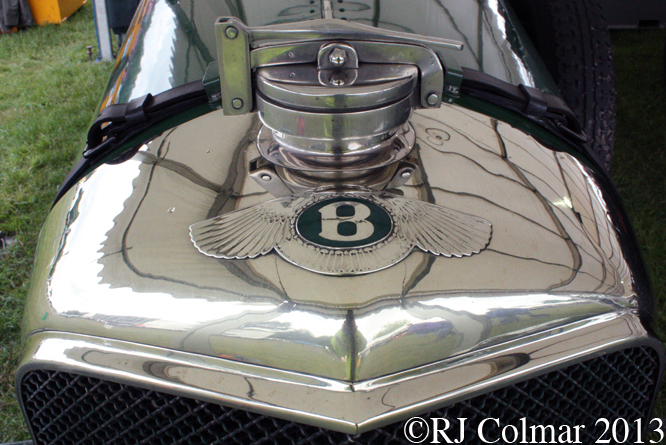
Bentley Speed Six, Cholomondeley Pageant Of Power

The Bentley Speed Six was the high performance version of the Bentley 6 1/2 litre first seen in 1926. The 6 1/2 litre was conceived to challenge the Rolls Royce Phantom as a preeminent limousine.
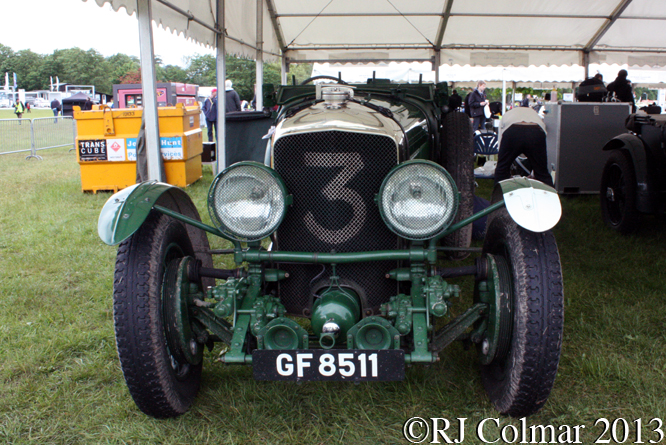
Bentley Speed Six, Cholomondeley Pageant Of Power

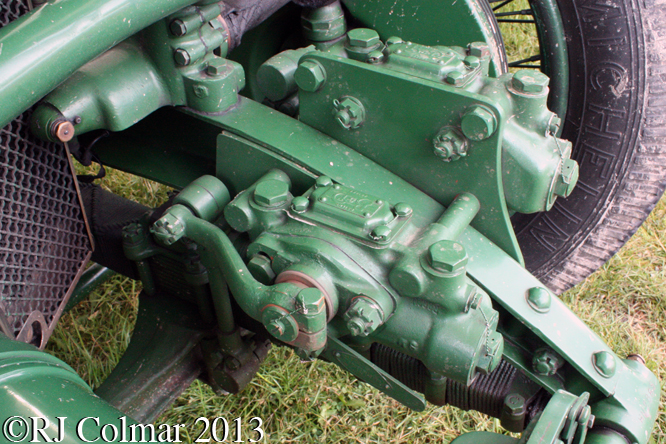
Launched in 1928 the Speed Six used the same 24 valve twin cam, twin spark 6,597 cc / 402.6 cui six cylinder motor as the Bentley 6 1/2 litre but tuned to give 160 – 180 hp, up from the standard 147 hp. This motor was considered the jewel in the crown of W.O. Bentley’s portfolio.
Bentley Speed Six, Cholomondeley Pageant Of Power

The Speed Six of Woolf Barnato “Old Number One” is one of a handful of cars to have won the Le Mans 24 hour race twice. In 1929 Barnato shared the driving with “Tim” Birkin leading home three Bentley 4 1/2 litre cars. The following year Baranto and Glen Kidston led home a Speed Six one-two finish with Frank Clement and Richard Watney at the wheel of the second placed car.
Bentley Speed Six, Cholomondeley Pageant Of Power

Driving a Mulliner Saloon bodied Speed Six Barnato also won a bet with his pals that he could arrive at his club in London faster than Le Train Bleu could cover the distance between Cannes on the French Riviera and the cross channel port of Calais in Northern France. With his secretary Dale Burn as relief driver he won the bet of £100 by four mins, but was heavily fined by French authorities for racing on public roads.
Bentley Speed Six, Cholomondeley Pageant Of Power

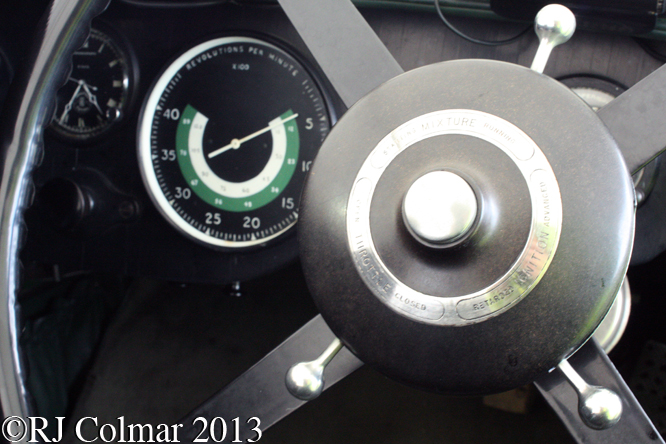
The Mulliner Saloon Speed Six with which Barnato won the bet is often incorrectly depicted and confused with a Gurney Nutting Sportsman Coupé Speed Six which Barnato named the Blue Train Special to commemorate his feat. The Mulliner Saloon body on the car Barnato and Burn drove the 570 miles from Cannes to London has recently been restored to the original chassis by it’s current owners Bruce and Jolene McCaw, who also own the Barnato’s Gurney Nutting Coupé.
Bentley Speed Six, Cholomondeley Pageant Of Power

Despite proving W.O’s maxim “that there is no substitute for cubic inches” over the 4 1/2 litre super charged Blower Bentley it is the faster but less reliable latter car that is the better known instantly recognisable “icon” of it’s day.

Clive Dunfee crashed #HM2689 out of the 1930 Le Mans 24 hours on laps 22, the month before Le Mans race Clive and Sammy drove the car car to a 2nd place finish in the Brooklands Double Twelve. “Tim” Birkin and Jack Barclay shared #HM2689 at the Brooklands Double Twelve in 1931 but retired with engine failure.

#HM2689 has been owned by Peter Neumark for the last twenty years and he assured me “it is not going anywhere” in the future when I spoke to him on Saturday.

Thanks for joining me on this “Cubic Inches” edition of “Gettin’ a li’l psycho on tyres” I hope you will join me again tomorrow when I’ll be looking at the 1978 Le Mans winner. Don’t forget to come back now !

Share

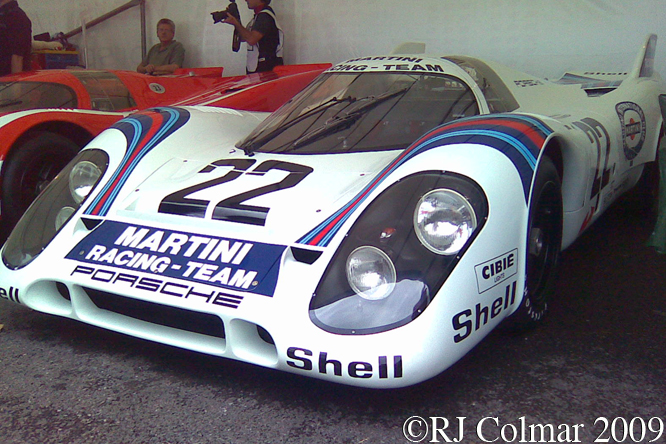
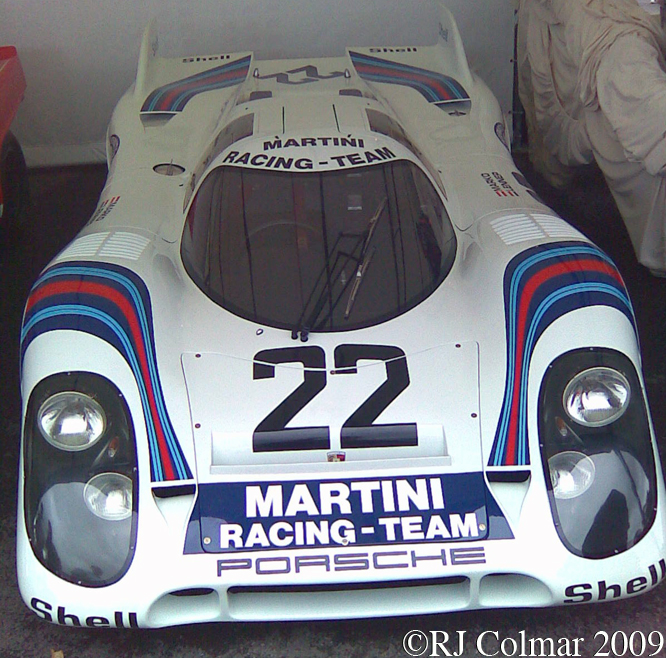
Ultimate Cars Ultimate Race – Porsche 917K #053

If there is one race I’d love to be able to turn the clock back for in order to attend it would be the 1971 Le Mans 24 hours which for my money was the ultimate road race with the ultimate cars.

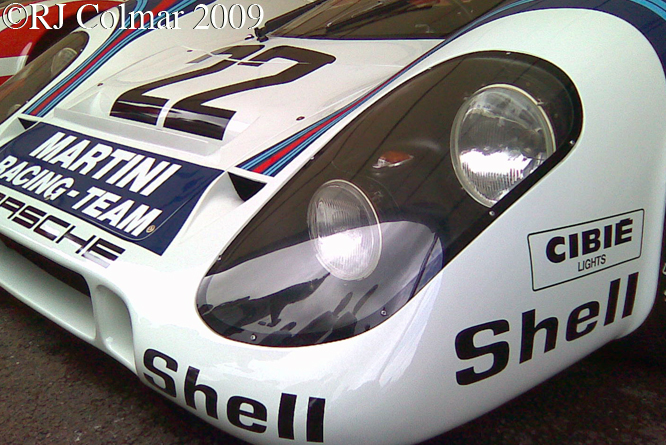
Porsche 917K, Goodwood Festival Of Speed

Lined up on the grid were seven Porsche 917’s with a variety of body configurations against 9 Ferrari 512s in both closed M spec, earlier open S Spec and two unique 512’s one from the Penske team which had a large rear wing and the F spec car of Scuderia Filipinetti that had a narrow cockpit built around a Porsche 917 windscreen.

Porsche 917K, Goodwood Festival Of Speed

The race was an uneven contest between the Porsches as the Ferraris suffered from inferior reliability and top speeds were down on the Porsche’s 230 mph plus capabilities. However it was the fastest to be run at the circuit until 2010.

Porsche 917K, Goodwood Festival Of Speed

The winning car chassis #056 seen here at Goodwood Festival of Speed featured a special lightweight magnesium chassis built only for the works supported Porsche Salzburg team much to the annoyance of Porsche’s other works supported team run by John Wyer who’s employees had developed the Porsche body work in short (K Kurz) and long (LH Lang heck) tail forms and shared them freely with all the other teams running 917’s.

Porsche 917K, Goodwood Festival Of Speed

Gils van Lennep and Helmut Marko shared the winning 600 hp 4.9 litre 299 cui aircooled flat 12 powered #22 car which traveled 3,107.7 miles in 24 hours covering 397 laps at an average speed of 138.6 mph the equivalent to five consecutive Coke 600’s !

They beat the next car driven by Richard Attwood, Herbert Muller and Brian Redman in a Gulf Porsche 917 by two laps, 16 miles, and the third finisher the Ferrari of Sam Posey and Tony Adamowicz by 31 laps.

After the race chassis #053 was immediately retired and so has a 100% winning record.

Thanks for joining me on this “Ultimate Cars Ultimate Race” edition of “Gettin’ a li’l psycho on tyres”, I hope you will join me again tomorrow when I’ll be looking at a 1925 3 litre / 183 cui Bentley. Don’t forget to come back now !
Share

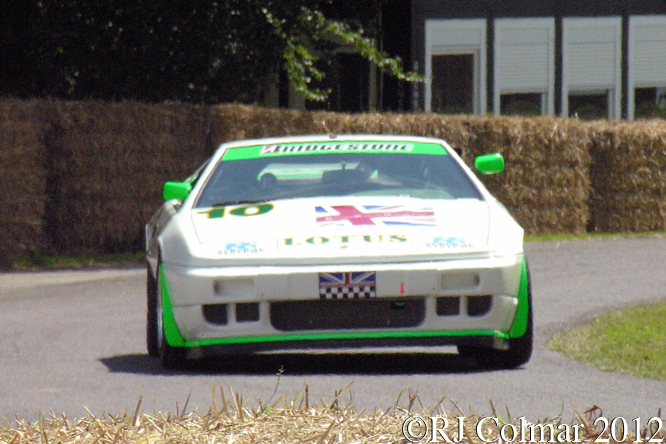
Which Type ? – Lotus Esprit X180R

In 1990 Lotus built 2 racing cars based on the Peter Stevens designed Esprit Turbo SE X180 which became known as the X180R and everyone appears to agree that the car was given the Lotus Type 105 number. These cars were built to be raced in the Sports Car Club of America (SCCA) Escort World Challenge by Doc Bundy and Scott Lagasse and won 4 times in 8 races.

Lotus  Esprit X180R, Goodwood Festival of Speed

Flush with success Lotus then built three new 300hp versions of the X180R’s the following season for the IMSA Bridgestone Super Car Championship in 1991 which Doc Bundy duly won in 1992.

There is some disagreement amongst internet sources about the type numbers of the 3 cars built in 1991 which some sources suggest were given the Type 106 number while others have it that all five race cars built in 1990 and 1991 are Type 105’s and that 20 road going versions of the X180R racer were given the Lotus Type 106 type number. Other sources suggest the 20 road going versions of the X180R are actually Type 105’s.

To confuse the identification issue further it would appear the 2 1990 race cars were updated to 1991 spec so technically these might be Type 105/106’s.

If you are a Lotus historian and can definitively put the record straight on the type 105’s and 106’s please do not hesitate to chime in below. I’d be most grateful.

The car seen above driven by Doc Bundy at Goodwood Festival of Speed carries the later 1991 spec body work differentiated by the splitter (green) that runs into extended lower front wheel arches (also green)

Thanks for joining me on this “Which Type ?’ edition of “Getting a li’l psycho on tyres” I hope you will join me again tomorrow. Don’t forget to come back now.

Share

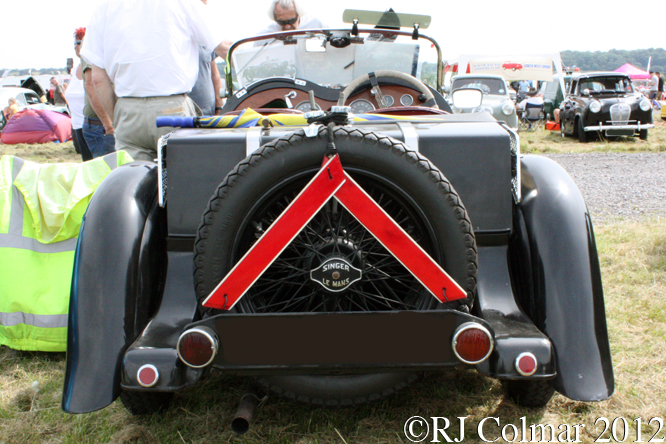
Last On Sunday – Singer 9 Special Speed

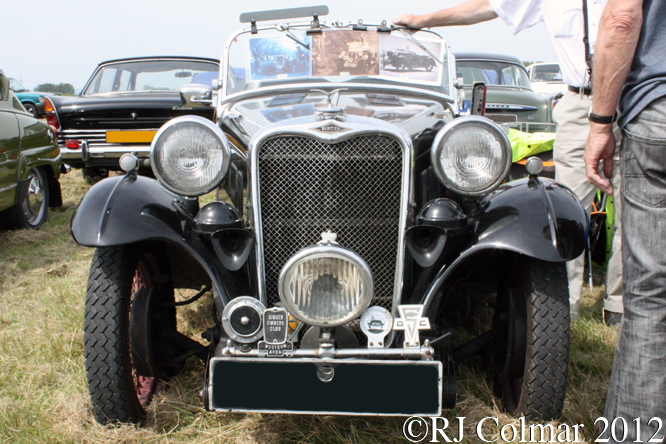
At the very first Le Mans 24 Hours race in 1923 Maurice Boutmy and France Jérôme Marcandanti covered 89 laps to finish 18th to become the first 1 litre / 61 cui normally aspirated car to finish the race in an Amilcar CV. Remarkably it was not until 1933 that Singer Competition Manager FS Barnes and Alf Langley were to finish the classic endurance race in a similar sized British built car a Singer 9 Sports which completed 140 laps came 13th and last overall and second in class 21 laps behind a French built Tracta driven by Félix Quinault and Pierre Padrault.

Singer 9 Special Speed, Summer Classics, Easter Compton

The achievement of simply finishing the 1933 Le Mans 24 Hour race at an average speed of 49.4 miles per hour was enough to encourage Singer to build a two seat version of the Singer 9 Sports, nominally the Singer 9 Sports was a 4 seater however the car used at Le Mans had a large fuel tank that occupied the space for the rear seats, called the Singer Le Mans. In 1934 Norman Black and J.R.H. Baker finish fifteenth overall 7th in class in a Singer Le Mans covering 163 laps.

Singer 9 Special Speed, Summer Classics, Easter Compton

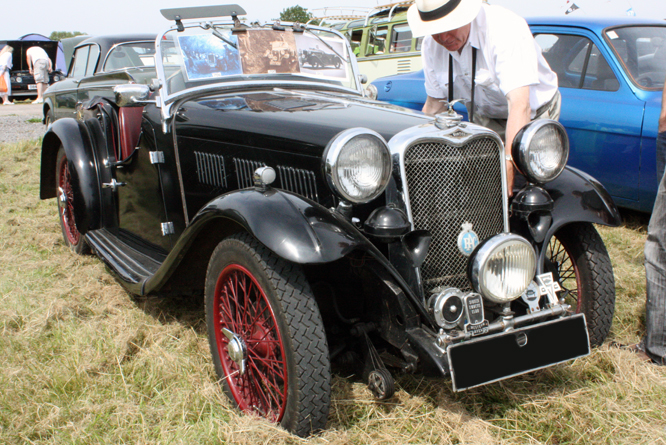
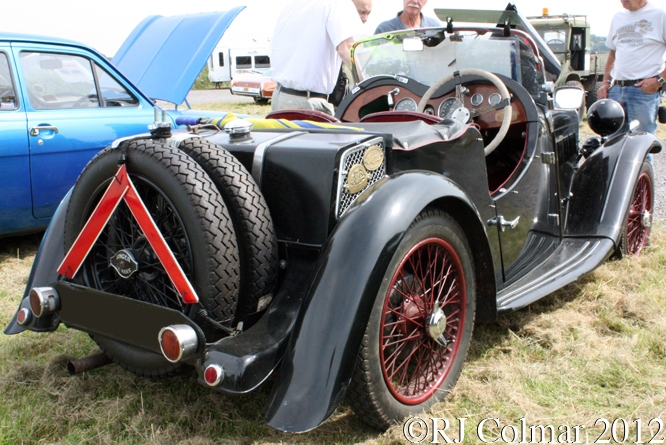
The popular Singer Le Mans is not to be confused with either the six cylinder 1 1/2 litre Singer Le Mans, or the four Singer Le Mans Replica’s built in 1939 which were out and out 2 seat racing cars. In 1935 a Special Speed version of the Singer Le Mans was introduced, distinguished by the running boards between the front and rear wings and it is this model that is seen here at last years Summer Classics Meeting at Easter Compton.

Singer 9 Special Speed, Summer Classics, Easter Compton

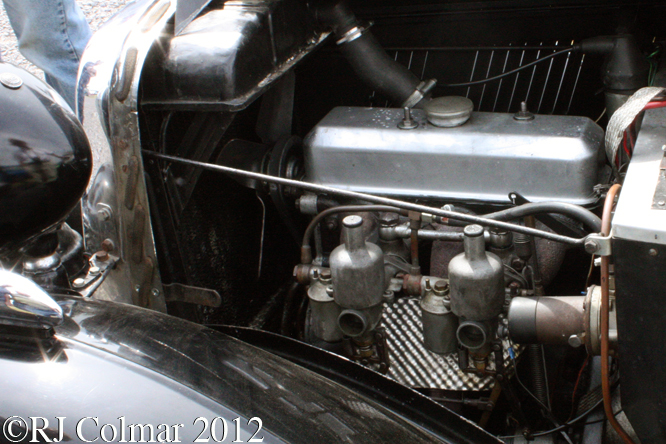
Power for the Singer Super Speed comes from a 38 hp 972 cc / 59 cui 4 cylinder overhead cam motor still running on a two bearing crank as did the Singer 8 I looked at last week.

Singer 9 Special Speed, Summer Classics, Easter Compton

This particular car was delivered in December 1935 to HD Acres who a few weeks later used it to compete on the Exeter Trials in January 1936. Acres car can be seen being helped out of a little difficulty on the Simms test by those very nice men from the Automobile Association on this link.

Singer 9 Special Speed, Summer Classics, Easter Compton

By 1939 this Singer 9 Special Speed had passed into the ownership of RJW Appleton who is known to have driven the car on the Lands End Trial the same year. RJW Appleton was responsible for building the Riley powered Maserati called the Appleton Special which achieved and 1100cc / 67 cui standing mile record of 91.3 mph in 1937.

Singer 9 Special Speed, Summer Classics, Easter Compton

The current owner of today’s featured car acquired it as a large box of ‘bits’ and has spent many years returning it to it’s present condition.

Thanks for joining me on this “Last On Sunday” edition of “Gettin’ a li’l psycho on tyres” I hope you will join me again tomorrow. Don’t forget to come back now !
Share

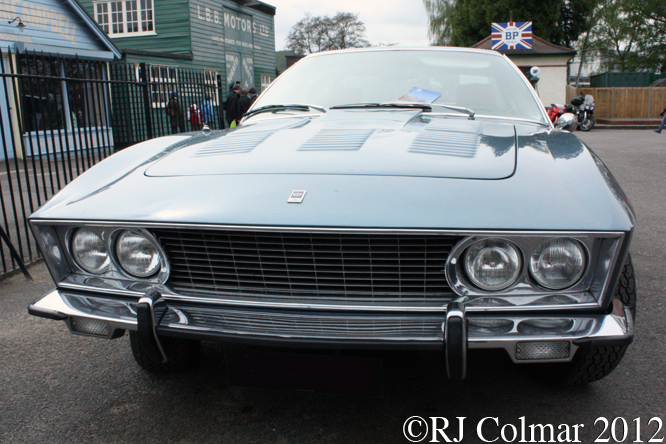
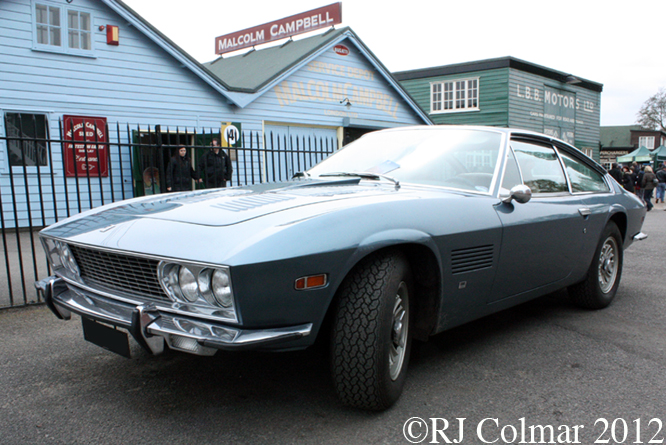
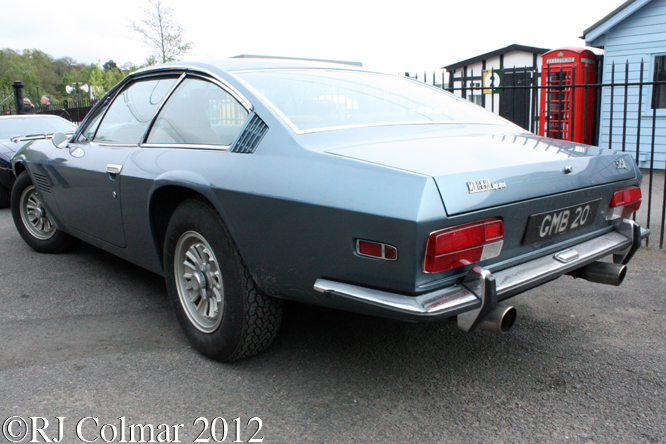
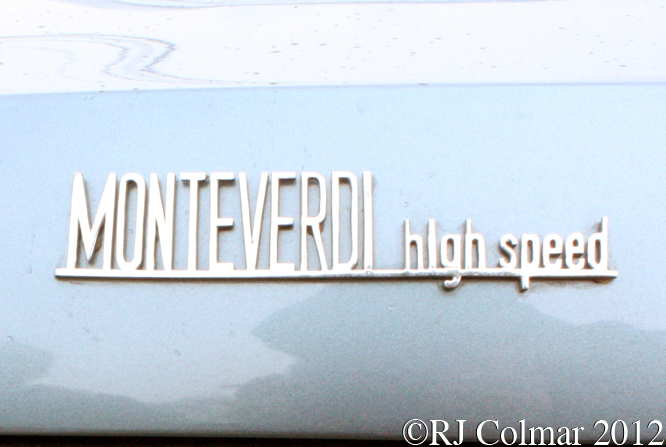
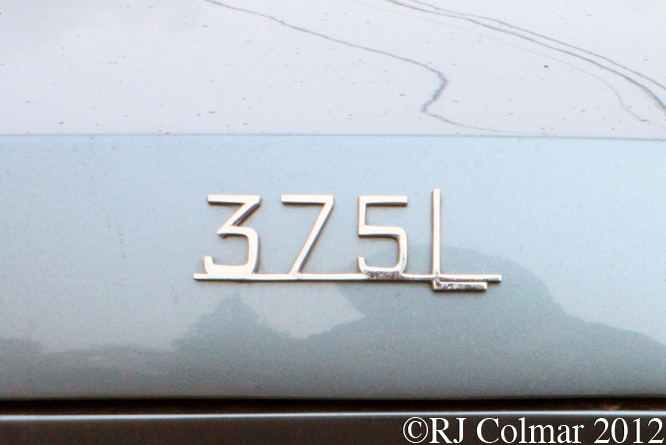
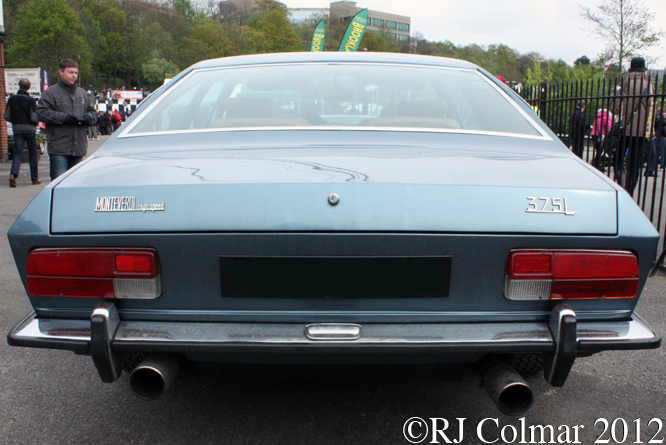
Designed By Fura Built By Fissore – Monteverdi High Speed 375L

At the end of the 1960’s and beginning of the 1970’s there was no shortage of choice in the Luxury 2+2 automobile market segment from the UK alone came the Chrysler powered Bristol 411, for the traditionalist, the similarly powered Jensen Interceptor for the futurist and the Aston Martin DBS for the international man of mystery.

Monteverdi High Speed 375L, Auto Italia, Brooklands

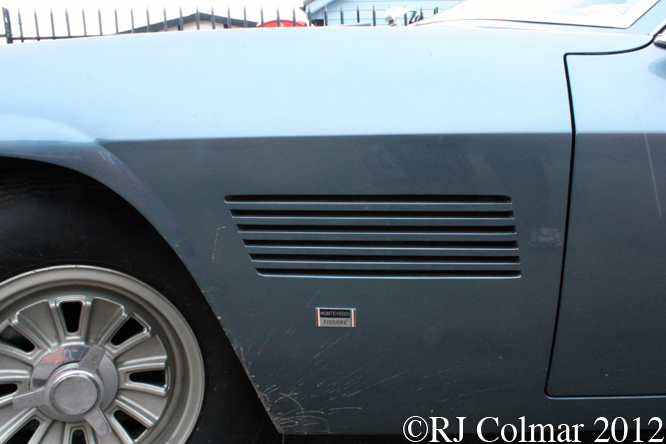
Contemporary to the desirable vehicles mentioned above was the Monteverdi High Speed 375L a 2+2 Coupé designed originally by Fura who built two examples before an acrimonious split left Monteverdi taking his business to Fissori.

Monteverdi High Speed 375L, Auto Italia, Brooklands

Fissori redesigned coupé and delivered complete bodies to Monteverdi in Basel in Switzerland for final assembly.

Monteverdi High Speed 375L, Auto Italia, Brooklands

Power for the Monteverdi High Speed 375L was provided by a 375hp 7120cc / 440 cui Chrsyler Magnum similar to those being used for the Britol 411 and the Jensen Interceptor.

Monteverdi High Speed 375L, Auto Italia, Brooklands

Peter Monteverdi designed his first car, a special, when he was just sixteen and had it ready to roll in time for his eighteenth birthday when he was allowed to drive it.

Monteverdi High Speed 375L, Auto Italia, Brooklands

There were three versions of the 375, 375L like the coupé seen here, 375 S a short wheel base 2 seater and 375 C a short wheelbase drop head also known as the “Palm Beach”.

Monteverdi High Speed 375L, Auto Italia, Brooklands

Around 30 375 4 door saloon / sedans were also built.

Monteverdi High Speed 375L, Auto Italia, Brooklands

The 375 L was continuously upgraded from 1967 to 1976 when Monteverdi stopped making luxury cars and started making “boutique” using proprietary motors and chassis around which to build his creations. The vehicle seen here at last years Auto Italia at Brooklands was built in 1972.

Thanks for joining me on this “Designed By Fura Built By Fissore” edition of “Gettin’ a li’l psycho on tyres”, I hope you will join me again tomorrow. Don’t forget to come back now !
Share

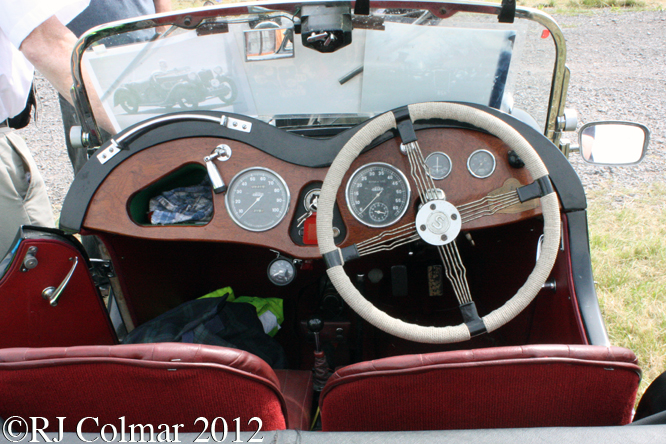
Hands Up ! – MG KN Univesity Motors Speed Model Magnette #KN 0440

Every once in a while I learn something quite shocking, namely how easy it is to deceive myself into thinking I know something only to find with hind sight that I know nothing at all. Today I am sticking both hands up high in the air and admitting I was wrong, quite wrong and I hope you will accept my humble apologies for any confusion caused.

MG KN University Motors Speed Model, Brooklands Double Twelve

The instance occurred a couple of days ago when I was trying to identify some MG’s I found that a vehicle I thought was a K Type was actually an Type NA, then to my horror I found out that a Type NA that I wrote a blog about some months ago turns out to be one of 200 type KN’s and a University Motors Speed Model Magnette to boot, that is the car I am featuring today which I incorrectly identified in a September blog as a Type NA.

MG KN University Motors Speed Model, Brooklands Double Twelve

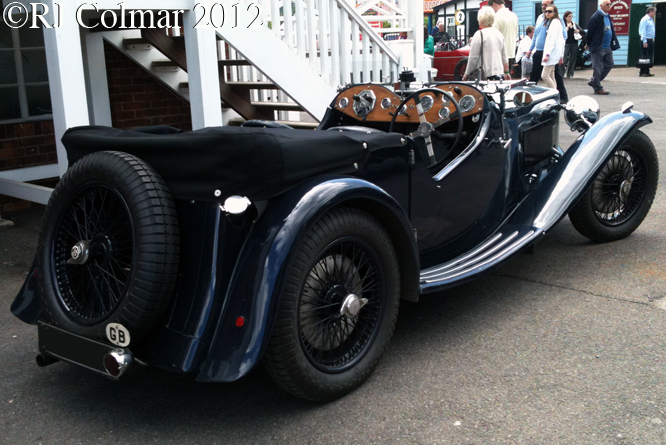
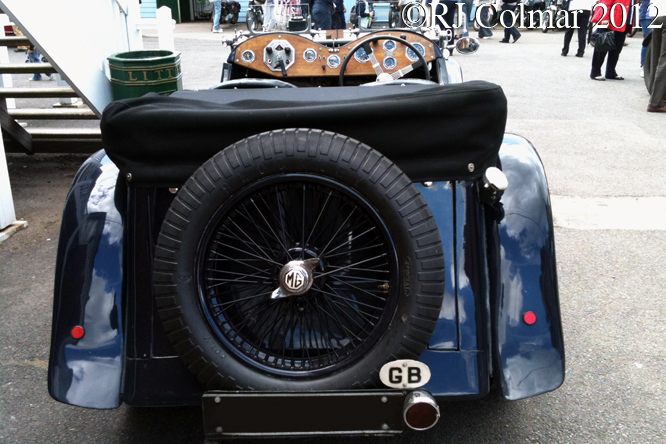
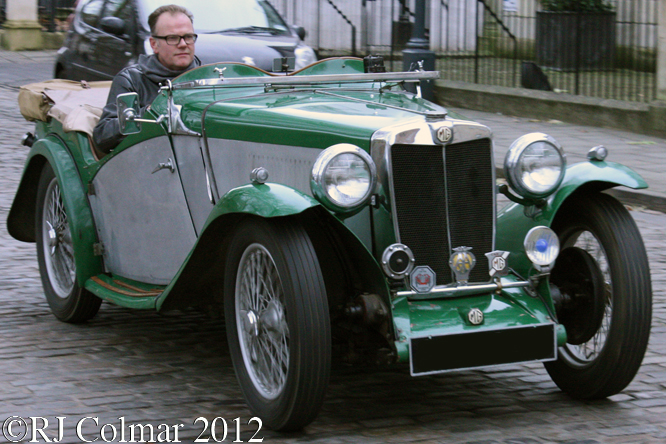
The MG KN was a factory built car featuring a K type saloon body and chassis but with a larger 1271 cc motor from the later MG N type.

MG KN University Motors Speed Model, Brooklands Double Twelve

Today’s featured car which was seen at Brooklands last year is a variation of the factory built saloon featuring the K type chassis and K1 4 seat tourer body.

MG KN University Motors Speed Model, Brooklands Double Twelve

These cars were assembled and sold by Univesity Motors, the main dealer in South East England as the University Motors Speed Model Magnette.

MG KN University Motors Speed Model, Brooklands Double Twelve

The enlarged motor aside there are few differences between the original K1 tourer and the University Motors Speed Model Magnette apart from the headlight mountings and some interior trim details.

MG KN University Motors Speed Model, Brooklands Double Twelve

In all 171 K1 saloon and four seat tourers were built while 201 KN Saloon’s and University Motors Speed Model Magnettes were built between 1934 and 1936.

Apologies again for any confusion caused.

Thanks for joining me on this “Hands Up” edition of “Gettin a li’l psycho on tyres” I hope you will join me again tomorrow. Don’t forget to come back now !
Share

Field Filler – Ferrari 512 S #1006

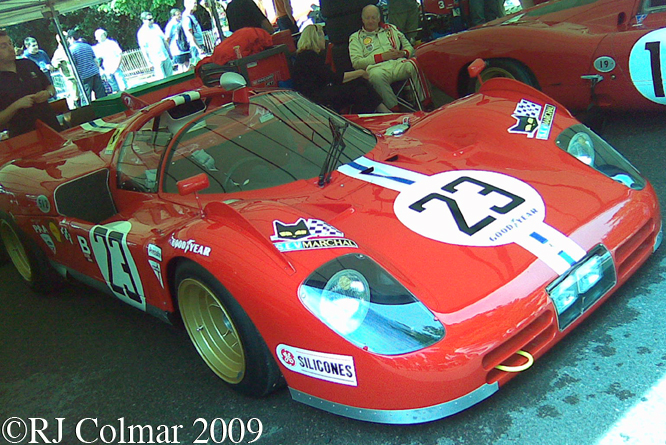
17 Ferrari 512 S’s and parts for 8 others were built in late 1969 in response to the 25 917’s Porsche had built in early 1969 in order to be allowed to race in the World Sports Car Championship which allowed up to 5 litre / 305 cui engines. These rules were introduced so that a few old Ford GT 40’s could continue racing, it was never imagined that Porsche and then Ferrari would build 25 cars each to take part in the series which was intended to be for new 3 litre / 183 cui cars like the Ferrari 312P and Porsche 908.

Unlike Porsche who planned on using private works supported teams to run and develop the 917’s on it’s behalf, Ferrari planned on using a single works team to build and develop the 512 S, supplying the rest of the 512 S models to private entrants to whom Ferrari gave little by way of support effectively treating it’s privateer teams as little more than field fillers.

Ferrari 512 S, Goodwood Festival of Speed

Ferrari had to sell his road car operation to FIAT in order finance the production to the 512 S model, and as it turned out Porsche’s private partners had snapped up most of the best drivers.

Nonetheless Ferrari took the fight to Porsche with a single championship victory at the 1970 Sebring 12 hours courtesy of Mario Andretti, Nino Vaccarella and Ignazio Guinti driving a 512 S who beat Peter Revson and actor Steve McQueen in their Porsche 908 after Mario famously drove the last 90 mins of the race and chased down an exhausted Peter Revson in what Mario once described as the race of his life.

For most of the rest of the 1970 season the Ferrari 512 S was out classed every where, except at the non championship race run at Kyalami in South Africa, by the Porsche 917’s, particularly those of the JW Automotive team. Ferrari had difficulty selling all of it’s 512 S models, where as Porsche had to build a second run of 25 917’s to meet demand.

Ferrari 512 S, Goodwood Festival of Speed

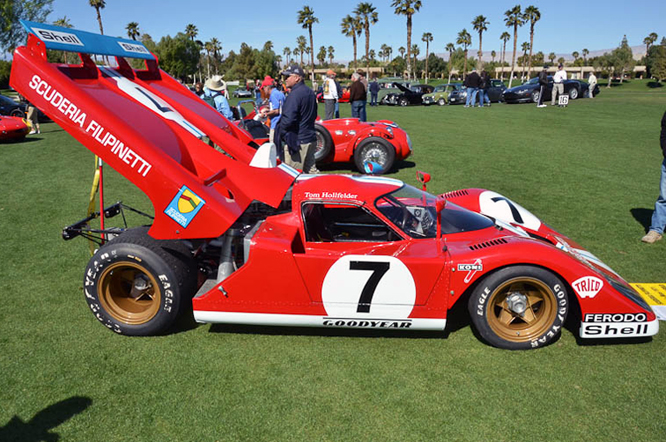
This 512 S spyder, chassis #1006, was developed in order to save 25 kgs by the factory and sold to Luigi Chinetti’s N.A.R.T. team. Ronnie Buchnum and Tony Adamowicz drove it into second place at the 1971 24 hours of Daytona.

#1006 had to have both front and rear bodywork replaced during the course of the race, the body work is as it appeared on #1006 when it started the 1971 Daytona 24 hours with aerodynamic lips on the nose, which were not on the second nose fitted when it finished the race.

Thanks for joining me on this “Field Filler” edition of “Gettin a li’l psycho on tyres” I hope you will join me again tomorrow for a look at a one off Formula One Lotus that never raced. Don’t forget to come back now.

Share