Tag Archives: Sports

93″ Wide – March Chevrolet 707 #707/2 and #707/3

For 1970 the ambitious March Cars embarked on a programme to build customer racing cars for every major open wheel category from Formula One to Formula Ford and included a 93″ wide two seat closed wheel Group 7 Can Am car for good measure.
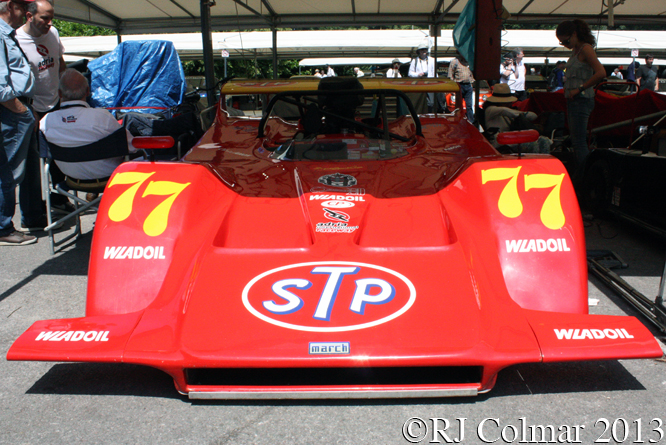
March 707, Goodwood Festival Of Speed

Two March 707’s were completed one was run in the 1970 Can Am Challenge by the factory with sponsorship from STP for New Zealander Chris Amon, while the first of the two completed chassis was sold to German Helmut Kelleners who was sponsored by the Deutsche Auto Zeitung periodical in the inaugural Interserie Championship.
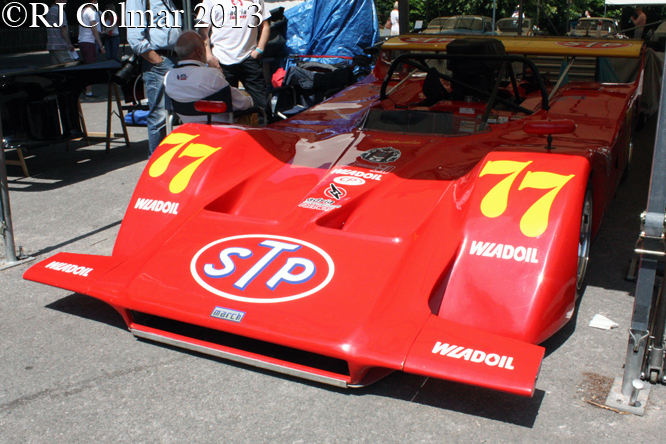
March 707, Goodwood Festival Of Speed

Of the two drivers Kelleners had the most success winning Intersiere races at Croft and Hockenheimring, any championship challenge was however halted by a couple of clutch failures and a disqualification from the first Hockenheim race after missing a chicane. Helmut won three non further non championship races in 1970 before he had March #707/1 upgraded to 717 spec for 1971, with new bodywork and the chassis number #717/1 being the most obvious difference.
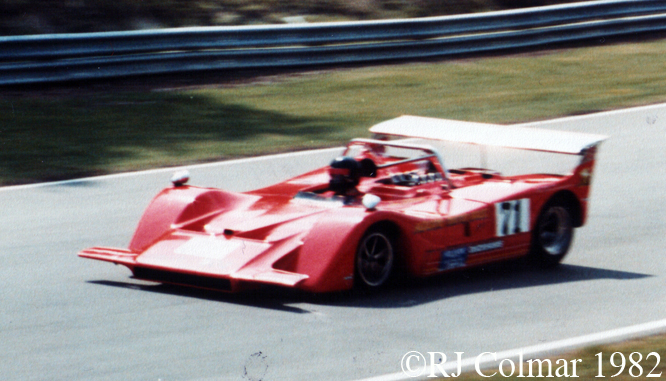
Williams, March 707, Brands Hatch

The revised car was not so competitive and still having transmission problems winning no races in 1971.Austrian Stefan Skelnar bought the car in 1972 and raced #717/1 without any success until at least 1974 eventually refitting the original 707 type bodywork.
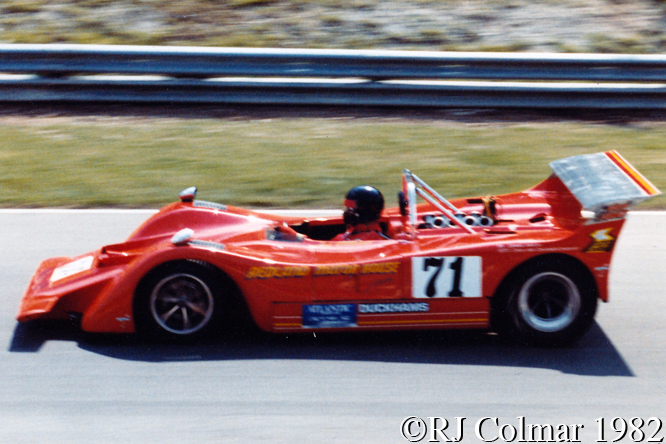
Williams, March 707, Brands Hatch

The works #707/2 built for Chris Amon was not ready for the opening races of the 1970 Can Am Challenge but qualified a respectable third on it’s debut at Donnybrooke, where Chris finished 5th. At Laguna Seca and Riverside Chris qualified 5th and finished 4th. There after there is no evidence of the car taking part in contemporary events.
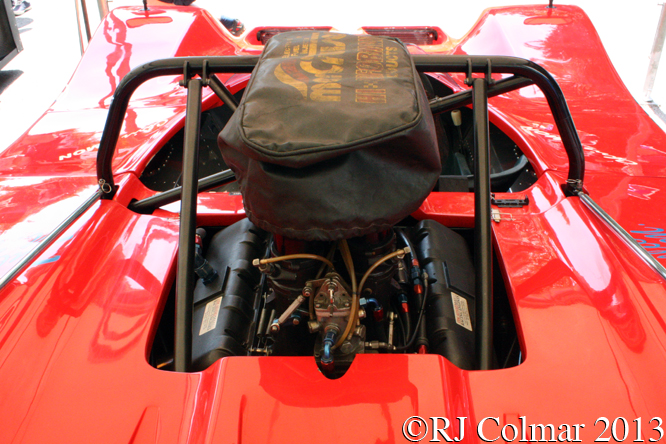
March 707, Goodwood Festival Of Speed

March built a spare chassis tub #707/3 and it would appear to have been purchased by Canadian Gordon Dewar and raced in 5 events in the 1971 Can Am challenge after 4 retirements due to transmission and fuel pump issues Gordon is listed as retiring from the fifth due to illness.

In the early 1980’s Ted Williams acquired #707/3 and he is seen driving the car at Brands Hatch where he experienced handling problems due to a low ride height in qualifying and then low fuel pressure during the race. Later in the 80’s Ted survived a chassis shortening accident in #707/3/.

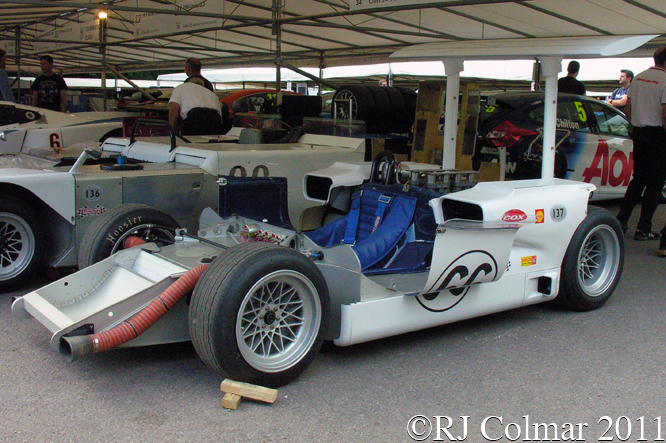
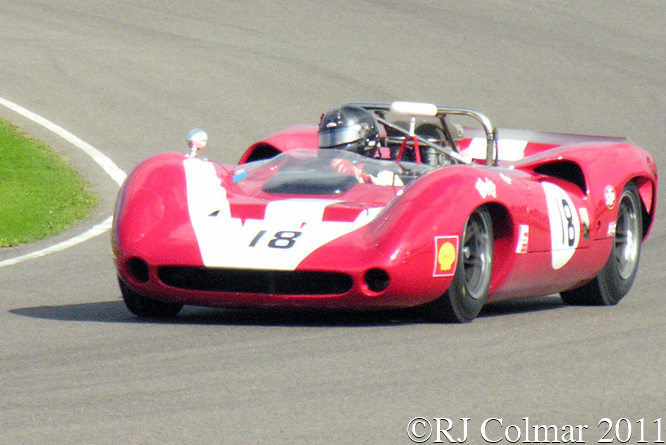
The #77 is so far as I have been able to ascertain Chris Amon’s chassis #707/2 which was being run at the recent Goodwood Festival of Speed for Matteo Maria Tullio.

My thanks to Alan Raine, Simon Lewis and Tim Murray at The Nostalgia Forum for help identifying the #71 chassis number, driver and providing race reports.

Thanks for joining me on this “93” Wide” edition of “Gettin’ a li’l psycho on tyres” I hope you’ll join me again tomorrow when I’ll be looking at a Can Am McLaren. Don’t forget to come back now !

Share

Non Stop Runner – Ferrari 250 Europa GT Pininfarina #0373GT

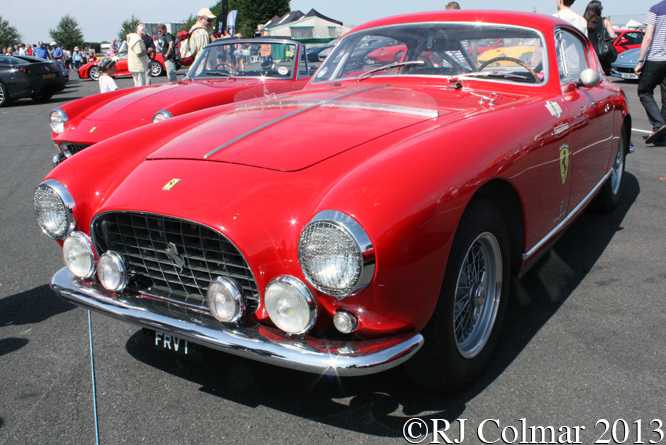
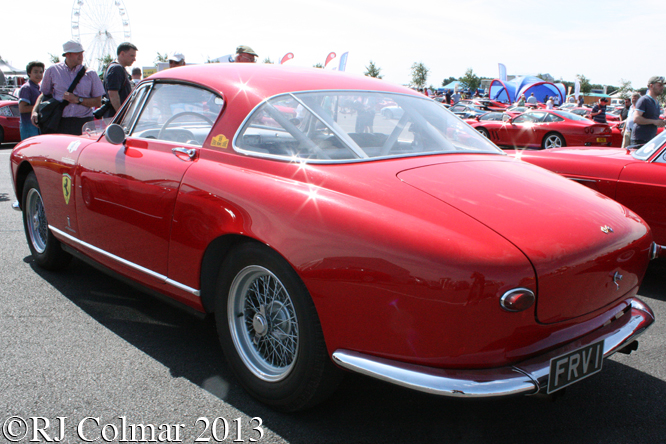
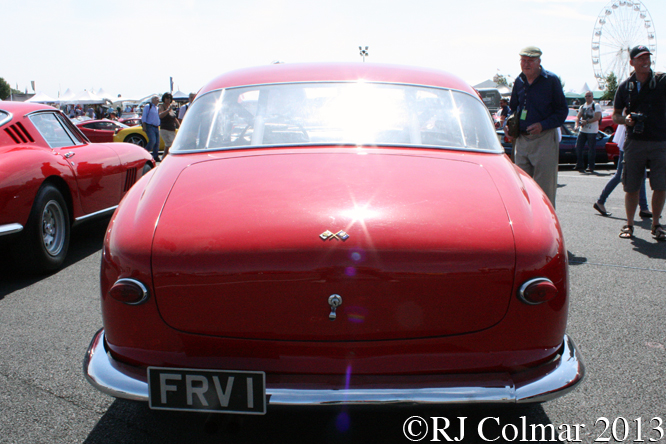
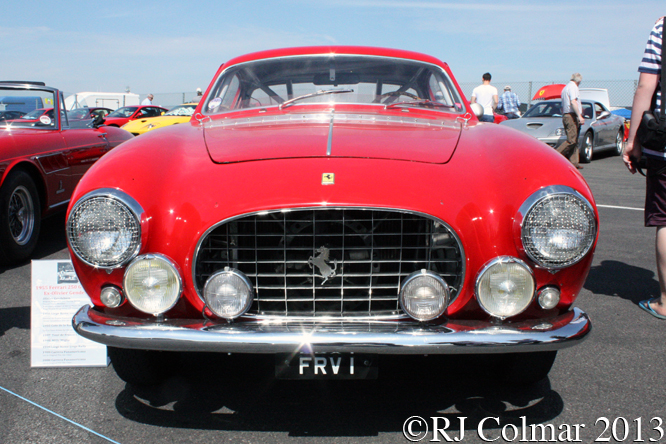
Last week I looked at a 1953 Ferrari 250 Europa Coupé. This week features one of just 28 slightly later Ferrari 250 Europa GT chassis #0373GT built in November 1954.

Ferrari 250GT Europa, Silverstone Classic

#0373GT was delivered to Jacques Swaters dealership Garage Francorchamps and sold to Belgian Jacques Washer in 1955. Washer entered the car in at least two events for his cousin Olivier Gendebien in 1956.

Ferrari 250GT Europa, Silverstone Classic

Oliver finished second in class on the Cote de la Roche Hillclimb in the Ardennes, before taking part in the 1956 Liege Rome Liege rally across Europe. Oliver and his co driver Pierre Stasse finished the non stop 2000 mile event 3rd overall.

Ferrari 250GT Europa, Silverstone Classic

In the 1990’s the car was fitted with a Ferrari 250 GT/E motor and differential, along with a gearbox from a Ferrari 412. The motor was tuned to give 300hp and more recently the car has been fitted with ‘modern’ brakes.

Ferrari 250GT Europa, Silverstone Classic

#0373GT has taken part in numerous classic events including the 1999 re run of the Rome Liege Rome Rally. The same year #0373GT won it’s class on the La Carrera Panamericana repeating the feat in 2000, on the second occasion fitted with period correct Halibrand alloy wheels.

The car is seen in these photo’s at the recent Silverstone Classic.

Thanks for joining me on this “Non Stop Runner” edition of “Gettin’ a li’l psycho on tyres” I hope you will join me when I be looking at a Can Am March. Don’t forget to come back now.

PS Some thoughts on what to watch out for at the Belgian GP at Motorsports Unplugged.

Share

Burgandy & Cream – Ferrari 250 Europa Coupé Pininfarina #0305EU

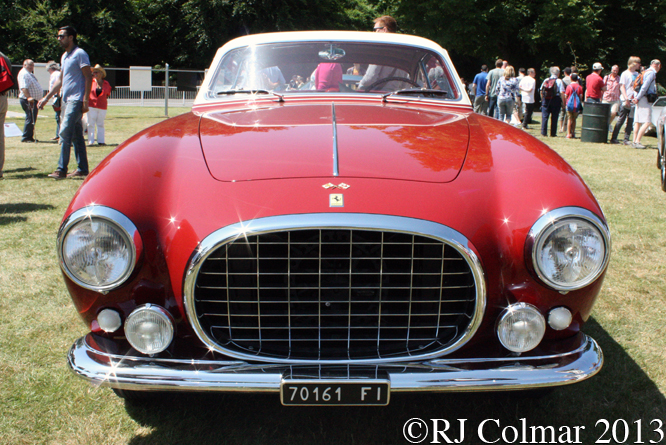
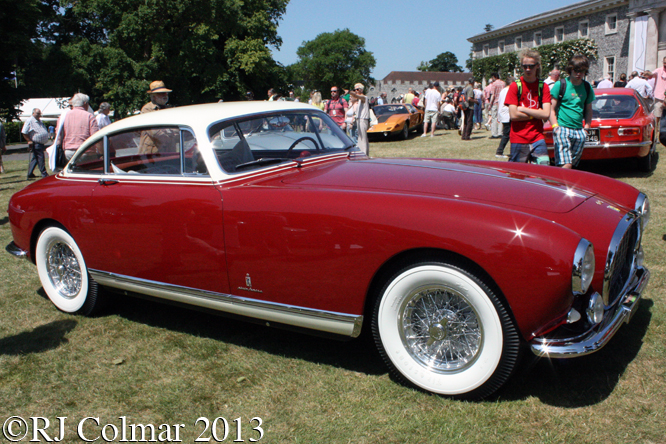
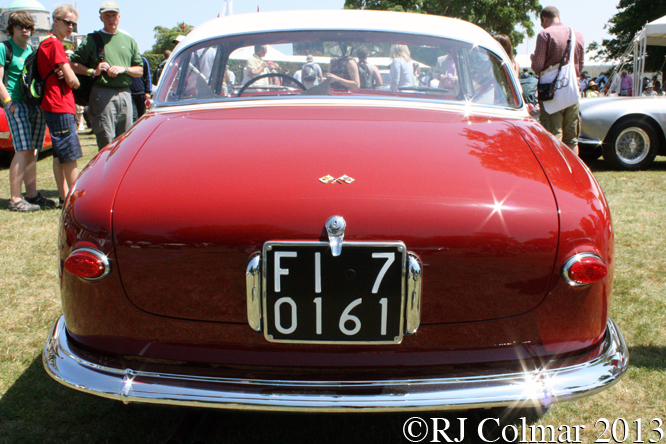
After a meeting between Batista Farina, in 1961 to become Batista Pininfarina, and Enzo Ferrari at a restaurant in Tortona, a small town halfway between Turin and Modena, Batista drove home an told his son Sergio “From now on you’ll be looking after Ferrari, from A to Z. Design, engineering, technology, construction—the lot!”. Sergia says he was over the moon with happiness and one of the fruits of that conversation is today’s featured Ferrari 250 Europa Coupé chassis #0305EU delivered in late September 1953.

Ferrari 250 PF Europa Coupé, Goodwood Festival Of Speed

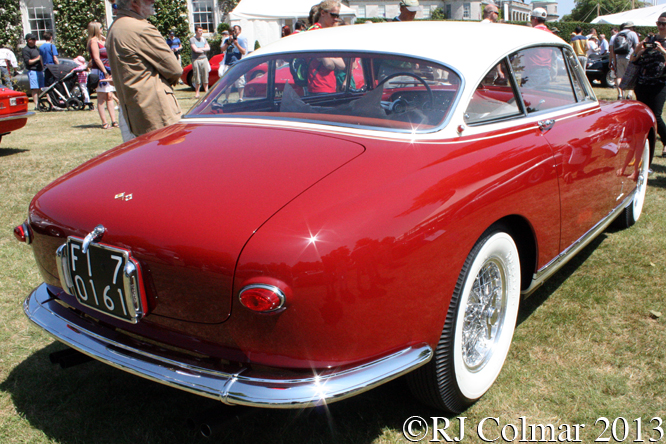
According to the blurb about this car seen at Goodwood, #0305EU was originally commissioned by a friend of Batista Farina called Latino Magnolfi, given the PF job number 12531 chassis #0305EU features unique to the 250 Europa Coupé model 3/4 windows a shorter windscreen and larger grill than the other 250 Europa’s. Magnolfi used to enter the car in Concours d’Elegance events before he sold the car.

Ferrari 250 PF Europa Coupé, Goodwood Festival Of Speed

The exact history of the #0305EU after the sale is not known to me but it ended up in the USA and after the repair of the 3 litre / 183 cui V12 motor became uneconomic the motor and gearbox was swapped for a Chevrolet V8 and and associated transmission.

Ferrari 250 PF Europa Coupé, Goodwood Festival Of Speed

In 2006 current owner Jan de Reu acquired the car which has been fully restored to its white wall tyre two tone Burgundy and Cream splendor, with a correct Colombo designed Ferrari V12 motor, by Ferrari Classiche.

Ferrari 250 PF Europa Coupé, Goodwood Festival Of Speed

As some of my regular readers may remember the Ferrari 250 Europa is closely related to the Ferrari 375 America, the later of which is powered by a larger 4.5 litre 274 cui Aurelio Lambredi designed long block V12.

Thanks for joining me on this “Burgandy & Cream” edition of “Gettin’ a li’l psycho on tyres” I hope you will join me again tomorrow when I be looking at Dan Gurney’s Can Am McLeagle. Don’t forget to come back now !
Share

The Surtees Hill Lola – Lola Chevrolet T70 Mk II Spyder SL71/43

Team Surtees started running Lola T70’s in sports car races in 1965, for 1966 the teams proprietor, 1964 World Champion, John Surtees ran a Chevrolet Mk II spyder variant, chassis #SL71/17, in the Canadian American (Can Am) Challenge winning the inaugural Can Am race at St Jovite from pole with the car.

Surtees retired from the next couple of Can Am races with a broken oil pipe and then after a start line accident at Bridgehampton and Mosport respectively. At Laguna Seca the team had a new chassis #SL71/43, today’s featured car, which he qualified 7th but retired for a third time after 92 laps with suspension damage.

Knapfield, Lola T70, Goodwood Revival

John Surtees returned to chassis #SL71/17 at Riverside where he qualified second and won, 1962 World Champion and 1966 Indy 500 Winner Graham Hill was drafted into chassis #SL71/43 and came home third from 5th on the grid in the cars final appearance for Team Surtees.

Knapfield, Lola T70, Goodwood Revival

Surtees went into the final round of the 1966 Can Am Challenge at Stardust International Raceway in Las Vegas sharing the series lead with 1961 World Champion Phil Hill who was driving a Chaparral 2E.

Despite qualifying 4th behind Jim Hall on pole with his Chaparral team mate Phil Hill beside him and Chris Amon in a McLaren Elva in third, John Surtees forced his way through to the lead on the opening lap. John did not relinquish that lead for the entire 70 lap race and so secured the inaugural Can Am Championship.

Chassis SL71/43 was acquired by George Ralph for 1968 his best results with the car were two 11th place finishes one in the USRRC Championnat Nord-Americain race held at Mont-Tremblant from 17th on the grid and the other in the Road America Can Am race from 21st on the grid.

Current owner Paul Knapfield is seen driving the car at the 2011 Goodwood revival in these photo’s.

My thanks to Tom RA Announcer Schultz for kindly visiting his den to dig out the chassis details of today’s featured car from his copy of Lola T70 – The Design, Development & Racing History Hardcover – December 1, 2012 by John Starkey and Franco Varani.

Thanks for joining me on this “The Surtees Hill Lola” edition of “Gettin’ a li’l psycho on tyres” I hope you will join me again tomorrow. Don’t for get to come back now !

Share

Jim’s Favourite – Chaparral Chevrolet 2E

To celebrate the 40th anniversary of my introduction to the wonders of The Canadian American Challenge Cup in something approximating real time mediated through the pages of ‘Motor Sport’ magazine, for the remainder of the month I’ll be featuring a selection of Group 7 race cars; on Saturday’s, Sunday’s, Mondays and the last two Thursdays of the types used in the Can Am Championships run from 1966 to 1973 or European “Intersiere” races run from 1970.

Chaparral 2E, Goodwood Festival Of Speed

The inaugural 1966 “Can Am” Challenge race was run at St.Jovite on 11th September 1966 and won by 1965 World Drivers Champion John Surtees driving a Team Surtees Lola T 70 Spyder.

Chaparral 2E, Goodwood Festival Of Speed

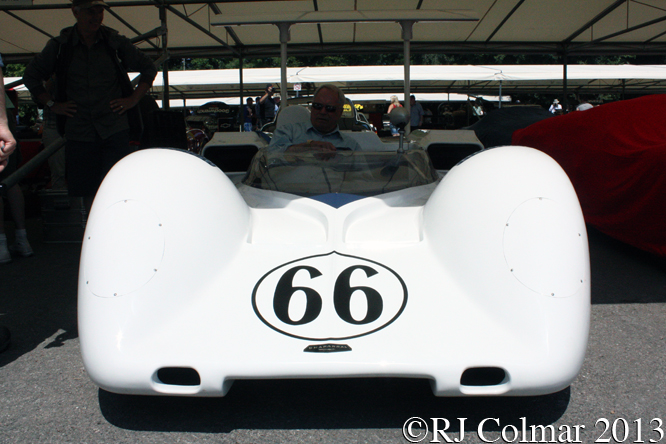
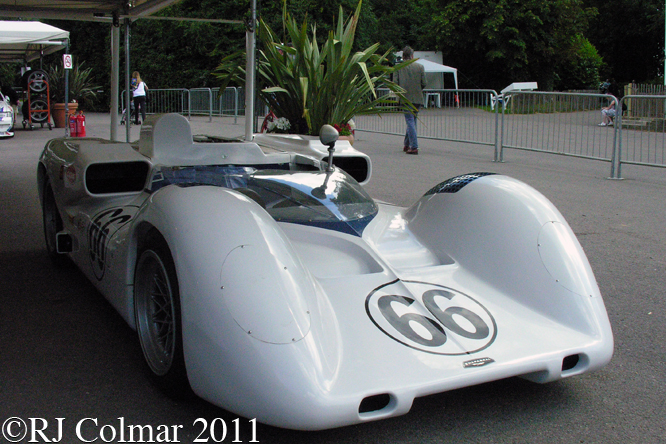
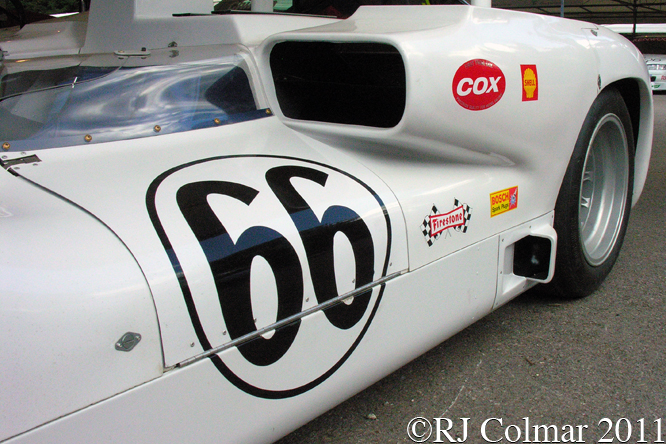
Texas Oilman and innovative engineer Jim Hall and his Chaparral team made their debut in the Series at Bridgehampton the following week where Hall was to drive the #66 Chaparral 2E chassis #2E001 with 1961 World Champion Phil Hill in the identical sister #65 chassis #2E002.

Chaparral 2E, Goodwood Festival Of Speed

Come the start of the event it was Phil Hill who found himself at the seat of chassis #2E001 starting fourth, after Hill’s intended car developed chassis problems during practice and Jim handed the world champion Phil his own car.

Chaparral 2E, Goodwood Festival Of Speed

Phil finished the race in 4th place behind the Lola Ford T70 of Dan Gurney, the McLaren Elva Mark II Chevrolet driven by Chris Amon and the Mark IIb McLaren Elva Chevrolet driven by Bruce McLaren.

Chaparral 2E, Goodwood Festival Of Speed

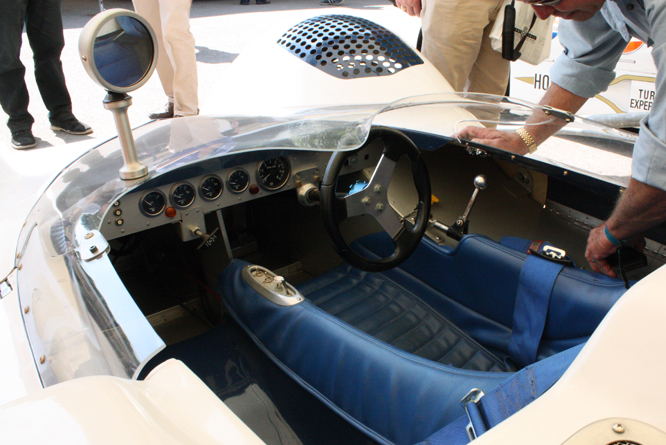
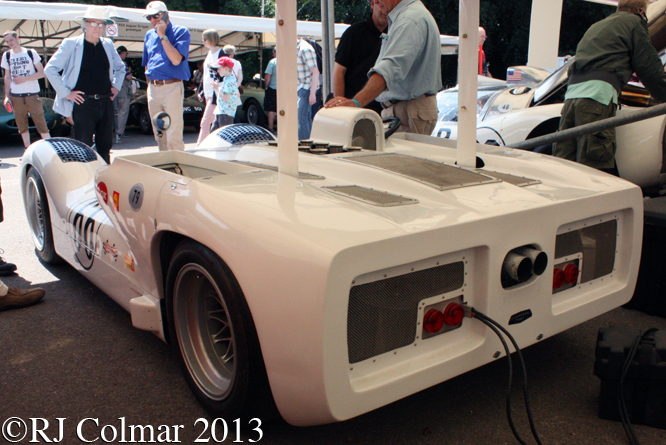
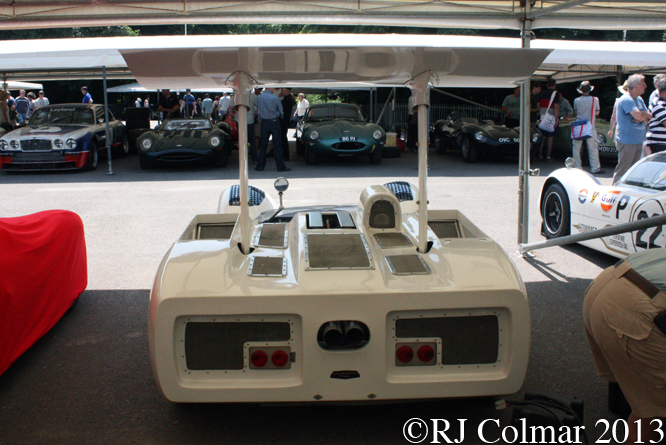
Like most vehicles of the time the Chaparral 2E featured three pedals, unlike most, the pedals operated the accelerator and brakes while the third operated a front spoiler beneath the nose and rear wing to adjust the amount of drag created to maximise the vehicles performance around the corners and along the straights of a circuit.

Chaparral 2E, Goodwood Festival Of Speed

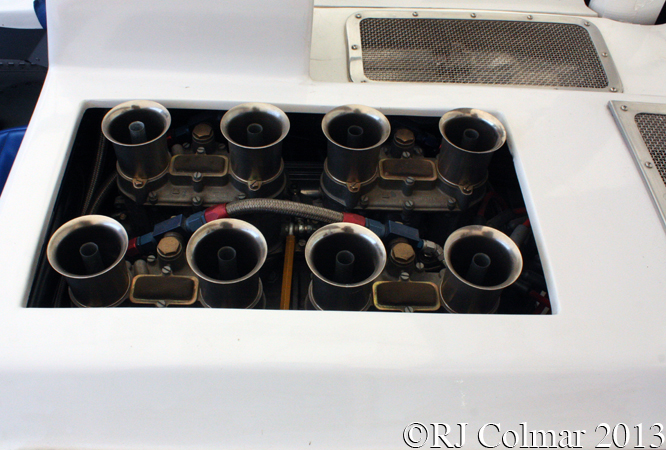
Two unusual features of the drive train were, first the 450 hp aluminium alloy block 5.4 litre / 327 cui Chevrolet V8 chosen in favour of the more powerful and heavier 5.9 litre iron block Chevrolet Motor used by John Surtees in the Lola, and second the Chaparrals were uniquely equipped automatic transmissions.

Chaparral 2E, Goodwood Festival Of Speed

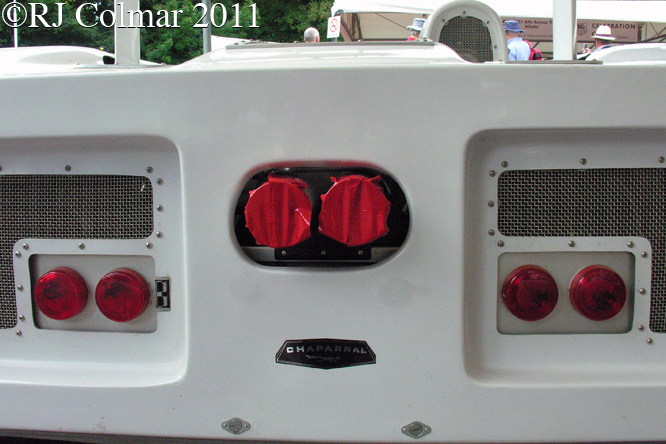
Although similar aerodynamic devices had been attached to competition vehicles before, notably by Mercedes Benz who attached a wing to the roof of their 300 SL during practice for Le Mans in 1952 and by Fritz von Opel who attached wings to the sides of his 1928 solid rocket fueled Opel RAK 2, when activated to give down force at the expense of increased drag and decreased forward speed the Chaparral 2E’s aerofoil shaped wing transmitted down force directly through the rear suspension, while a spoiler under the nose acted similarly to increase down force on the front suspension, which together improved the handling in the corners.

Chaparral 2E, Goodwood Festival Of Speed

The Challenge returned to Canada one week later again on September 24th 1966 for the ‘6th Canadian Grand Prix for the Pepsi-Cola Trophy’ run Mosport Park. Hall qualified 9th and Hill 11th with Hill finishing second to Mark Donohue in a Penske run Lola Chevrolet T70. Jim retired at 1/3 rd distance with an engine problem.

Chaparral 2E, Goodwood Festival Of Speed

Nearly a month later on October 16th 1968 Jim Hall started the Monterey Grand Prix run at Laguna Seca from pole position in his #66 2E and alongside him on the grid was Phil Hill in the #65. After 2 hours at the wheel during which he covered 106 laps Phil Hill crossed the line first ahead of team owner Jim Hall to score a remakable team 1-2 finish.

Chaparral 2E, Goodwood Festival Of Speed

Jim qualified 3rd behind, John Surtees in the Lola, at Riverside in California. John and Jim both moved up a place after pole sitter Bruce McLaren retired with an ignition problem. Phil Hill could only qualify 8th and retired after seven laps with fuel pressure issues.

Going into the final round of the Challenge Phil Hill was tied on points with John Surtees with 5 other drivers including Jim Hall capable of winning the championship depending on a variety of finishing scenarios. Jim qualified on pole for the final round at Las Vegas but after a few laps his wing started flapping uncontrollably due to fatigue failure in the control mechanism causing his retirement from second after Surtees took a dominant lead from the start. Hill damaged his car and ran much of the race scraping over 4th place until his wing also failed. Surtees easily won the race and the Inaugural Can Am title ahead of Mark Donohue with Hill finishing out of the points his championnship chances were shot.

A Chaparral 2E chassis 2E002 was entered in three events at the 13th Bahamas National Speed Weeks for Jim Halls Chaparral Cars Inc partner Hap Sharp. Hap won the Governor’s Trophy & Nassau Tourist Trophy from pole, finished 5th in the Nassau Classic Race and a non running 4th, again from pole in the Nassau Trophy Race in which Hap had an accident.

In 2005 Jim Hall teamed up with Jim Musser, who had contributed to the design of the 2E, known to be Hall’s favourite, to build a ‘limited number’ of continuation Chaparral 2E’s for use by classic racers. More on the continuation cars can be seen on this link to the Chaparral Official Website.

My thanks to Kayemod Rob, Tony 2F-001 Pashley, Supersox and Allen Brown Duc-man and mariner at The Nostalgia Forum for helping me to conclude that the car featured today maybe the surviving original 2E but is most likely one of two continuation models.

Thanks for joining me on this Jim’s Favourite edition of “Gettin a li’l psycho on tyres”, I hope you will join me again tomorrow when I’ll be looking at a Can Am Lola T70 Spyder. Don’t forget to come back now !
Share

Musical Spares – Porsche 962C #006

The Porsche 962 was built in two specs, the original was the 1984 IMSA GTP spec which was a variation of the dominant Group C Porsche 956 sports car first seen in 1982. The 962 differed in two important aspects from it’s Group C cousin. First the 962 had a longer wheel base so that the drivers feet were behind the center line of the front axle and second IMSA mandated a single turbo while the Group C 956 ran more powerful twin turbo’s.

Porsche 962C, Le Mans, France

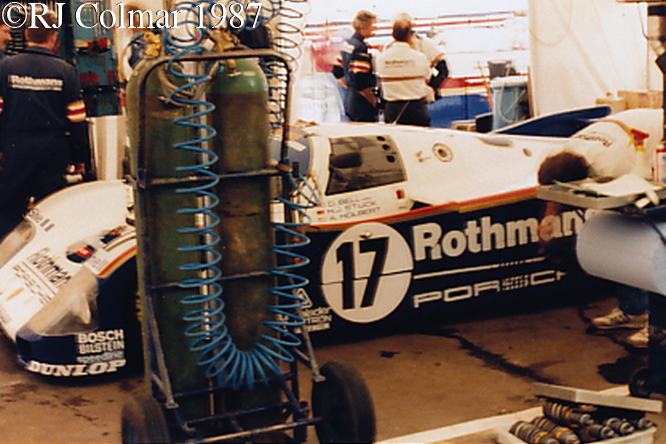
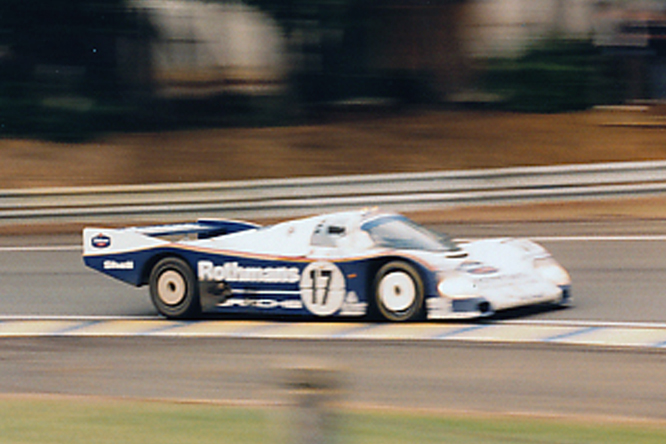
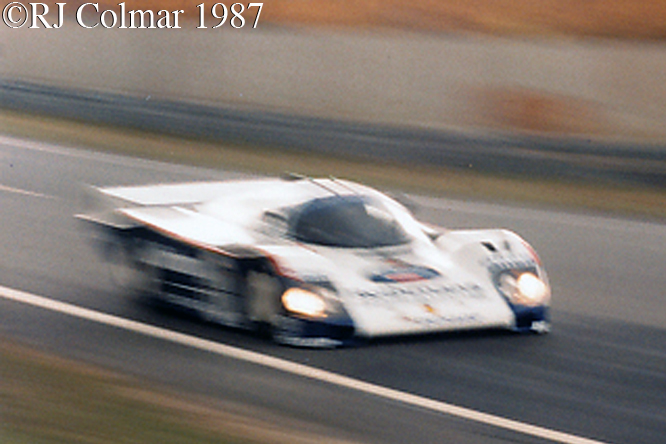
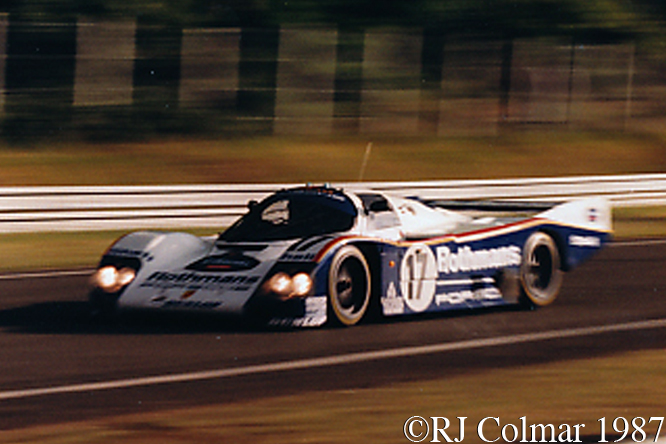
For 1986 the FIA mandated that Group C cars should follow the lead set by IMSA and have the drivers feet behind the the center line of the front axle line while making no changes to the engine regulations so the more powerful Porsche 962C came into being sweeping all before it much as the 956 and 956B had done. Derek Bell became the first driver to successfully defend his World Sports Car Drivers Championship won driving a 956B in ’85 and 962C in ’86. In 1986 Derek also won the Le Mans 24 hours for the forth time sharing his 962C with Hans Joachim Stuck and Al Holbert, Derek was also awarded the MBE for services to motorsport, a Royal honour which even Porsche AG noted on the door of Dereks #17 car as seen above at Le Mans in 1987.

Porsche 962C, Le Mans, France

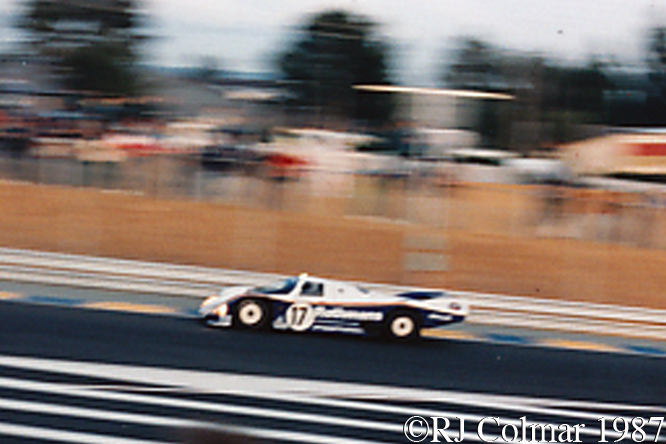
Going into Le Mans 1987 Derek Bell and Al Holbert were on a roll of three consecutive 24 hour race wins going back to Daytona ’86 where they shared an IMSA GTP 962 with Al Unser Jr. As mentioned above Bell and Holbert followed that up at Le Mans winning with Hans Stuck and made it a three peat of 24 hour victories at Daytona sharing Holberts Löwenbrau Porsche 962 with Unser Jr and Chip Robinson. Only a complete idiot would have bet against Bell, Stuck and Holbert claiming victory at Le Mans in 1987. The #17 chassis #006 seen in the rain above qualified 2nd on the grid by Hans Stuck next to the #18 chassis #008 which Bob Wollek qualified on pole.

Derek Bell, Hans Joachim Stuck, Le Mans, France

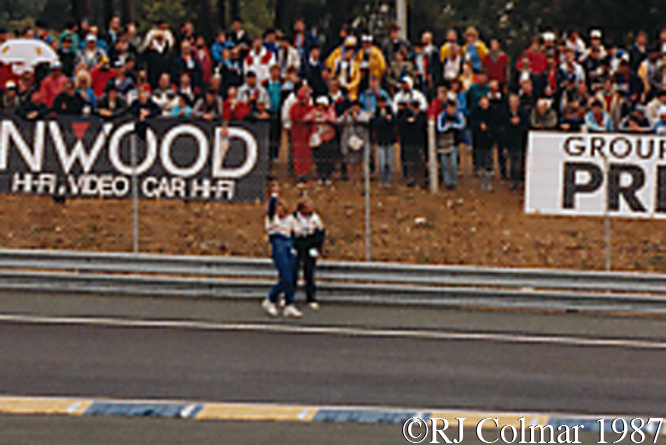
But the fourpeat of consecutive 24 hour victories very nearly did not happen, things started to go wrong for the works Porsche team a week before the race when Hans Stuck tested all the Le Mans cars at Porsche’s Weisach test facility. Stuck experienced a puncture while driving the car designated for his team mates Jochen Mass and Brilliant Bob Wollek. As a consequence Mass and Wollek were given the car designated as the race car for Stuck, Bell and Holbert chassis #008 while the ’86 winning trio took over the car designated for Vern Schuppan, Kees Nierop and Price Cobb chassis #006, today’s featured car, and the Schuppan, Nierop, Cobb combination were given the older chassis #002 which had been designated as a spare. Bell and Stuck are seen above returning from the new chicane an hour before the start of the race.

Porsche 962C, Le Mans, France

The next problem for the Porsche team occurred in practice when Price Cobb had an accident which wrote chassis #002 off during the first day of practice so that there were now only two works entered cars to challenge for the win, but as designer Norbert Singer observed ‘only one of them can win’. Schuppan, Nierop and Cobb all found rides in other cars.

Porsche 962C, Le Mans, France

An hour into the 1987 race it looked as if Jaguar who were at least 3 seconds slower than the lead Porsche in practice might pull off a remarkable win as they held first third and fifth. The Porsche cars were falling like a chain of domino’s with engine failures, something in the fuel was causing the latest in Bosch (ECU) electronic management systems to run the Porsche engines much too lean which resulted in engine failures for the pole sitting works car; 2 Joest Porsche 962C’s and a Kremer 962C.

Porsche 962C, Le Mans, France

Fortunately the #17 had managed to get into the pits to change to an older ECU before any permanent damage was done and 2nd placed Bell, Stuck and Holbert proceeded to pursue the lead Jaguar at break neck speed until midnight when it took the lead for the final time as the four 7 litre / 427 cui V12 Jaguar XJR 8LM’s started to fall by the wayside with a puncture, an accident, a cracked cylinder head and a missed gear change respectively.

Porsche 962C, Le Mans, France

The punctured #5 Jaguar driven by Win Percy had required an 80 minuet safety car period to clear up the debris in the dead of night as the Jaguar had been pitched at 200 mph into the barriers of the Mulasanne straight ripping off the gearbox and engine, Win Percy unlike his helmet was completely unscratched. The relentless pace at which the #17 Porsche had been chasing the Jaguars meant that Bell, Stuck and Holbert were way over their fuel allowance as the safety car period started but right back on schedule once the mess created by the Jaguar had been cleaned up.

By the end of the race Bell, Stuck and Holbert were 20 laps to the good; from the private Primagaz Competition 962C of Juergen Lässig, Pierre Yver and Bernard de Dryver; as they recorded their fifth, second and third Le Mans wins respectively, their second consecutively as a winning Le Mans trio and Bell and Holberts 4th consecutive 24 Hour race win. Porsche also recorded their seventh consecutive Le Mans win in 1987.

The following year things would not be so easy as Jaguar, who won the 1987 World Sports Car Championship and who’s driver Raul Bosel won the 1987 World Sports Car Drivers Championship took the fight even more convincingly to Porsche at Le Mans.

Chassis #006 was driven at Spa in 1986 by Jochen Mass and Bob Wollek on it’s debut where it was qualified third and finished 7th it’s only other race start was at Fuji where Holbert and Pescarolo started from 12th and retired with transmission problems. Prior to the Le Mans 24 hours #006 had primarily been used as a spare car at Jarama, Jerez, Monza and Silverstone in 1987. #006 was driven by Bob Wollek and Canadian Kees Nierop for the ’87 Le Mans test weekend where carrying the #17 it recorded the 2nd fastest time. After the 24 hour win in ’87 #006 returned to Le Mans in 1988 as a spare that was briefly used by Micheal Andretti in practice before it was retired for good.

Thanks for joining me on this “Musical Spares” edition of “Gettin’ a li’l psycho on tyres” I hope you will join me again tomorrow. Don’t forget to come back now !
Share

Fiberglass Body – Ferrari 250 LM #8165

This November sees the 50th anniversary of the unveiling of the Ferrari 250 LM which to date was the last Ferrari to cross the finishing line first at Le Mans in 1965.

Today’s featured car chassis #8165, the last 250 LM to be built, was sold new to Scuderia Filipentti and entered by them in the 1966 1000kms race at the Nurburgring for Willy Mairesse and Herbert Mueller who finished 9th.

Ferrari 250LM, Goodwood Revival

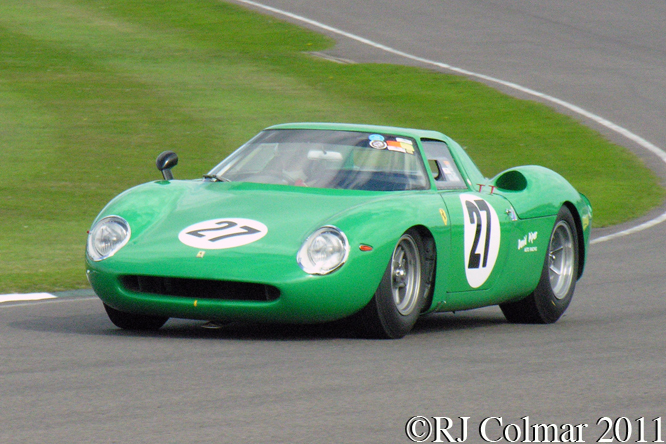
The car was then sold to David Piper and in June 1966 David fitted fiber glass body panels front and rear and painted #8165 BP Green. Subsequently David is known to have driven the car to victories at Brands Hatch, Oulton Park and the 1000kms Paris at Monthlery in 1966 sharing the car with Mike Parkes in the latter.

In 1967 David won at Silverstone and entered the #8165 for Hugh Dibley and Roy Pierpoint for the 1000kms at Brands Hatch where they finished 10th overall and first in class. At Monthlery Richard Attwood and Brian Redman came 6th overall and first in class.

Ferrari 250LM, Goodwood Revival

In 1968 Pedro Rodriguez joined Roy Pierpoint in #8165 for the 1000 kms at Brands Hatch where they finished 5th but only 3rd in class. #8165’s last ‘in period’ appearance was in the 1968 Le Mans 24 hours where Piper and Attwood qualified 28th and came through to a seventh place finish.

David Piper is seen driving #8165 in these photo’s in practice for the Whitsun Trophy at the Goodwood Revival a couple of years ago. David finished the race in 27th place.

My thanks to Athanase and Miurasv for clarifying the early ownership of this car over at FerrariChat.com.

Thanks for joining me on this “Fiberglass Body” edition of “Gettin’ a li’l psycho on tyres” I hope you will join me again tomorrow. Don’t forget to come back now !
Share