Tag Archives: Sports

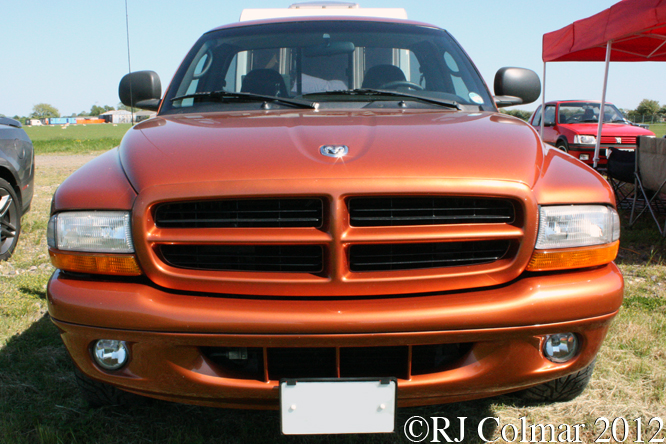
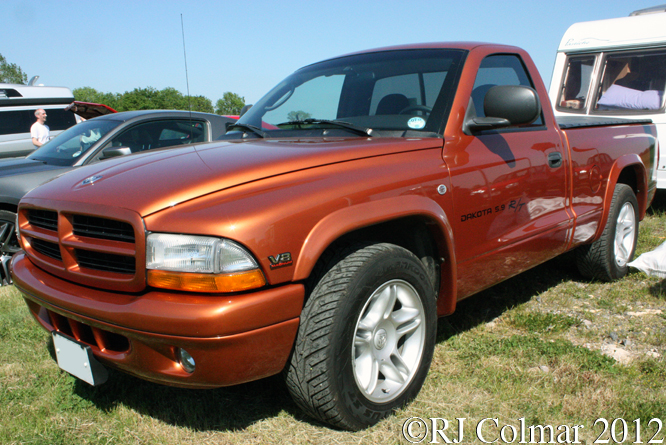
Third Generation Friend – Dodge Dakota R/T

The original Dodge Dakota (Sioux for friend) was a mid size pickup truck, less than half ton, launched in 1987, an upgraded second generation was launched in 1991.

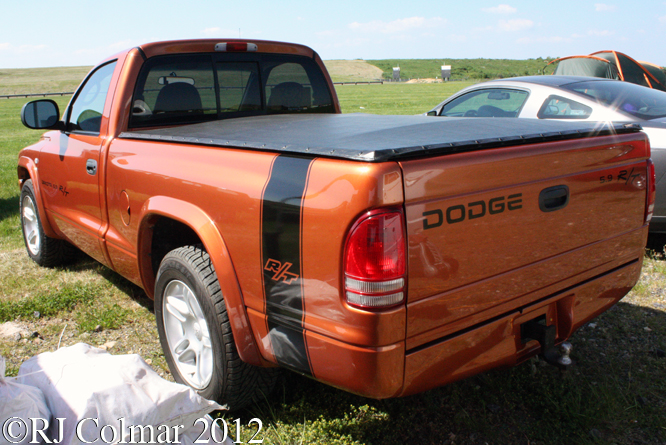
Dodge Dakota R/T, Yanks Picnic, Shakespeare, County, Raceway,

The third generation Dakota’s were launched in in 1997 drawing heavily on the big rig look of the full size Dodge Ram styling first seen in 1994.

Dodge Dakota R/T, Yanks Picnic, Shakespeare, County, Raceway,

In 1998 a sports orientated R/T version of the Dakota was announced with a 250hp 5.9 litre / 360 cui Magnum V8 which was coupled with a heavy duty 46RE 4 speed automatic transmission. Additional R/T goodies included performance axle, cast aluminum wheels, limited slip differential, sport suspension and steering, uprated brakes, performance exhaust, monotone paint and bucket seats in the cab.

Dodge Dakota R/T, Yanks Picnic, Shakespeare, County, Raceway,

In 2000, the year the vehicle seen here at Shakespeare County Raceway was built, the Dodge Dakota was nominated for the North American Truck of the Year award coming in second. The 4th generation Ram Dakota was launched in 2009 and the model was subsequently completely discontinued in 2011.

Thanks for joining me on this “Third Generation Friend” edition of “Gettin’ a li’l psycho on tyres” I hope you will join me again tomorrow. Don’t forget to come back now !

Share

Excelsior Twin Carb – Berkeley Sports SE328 Deluxe

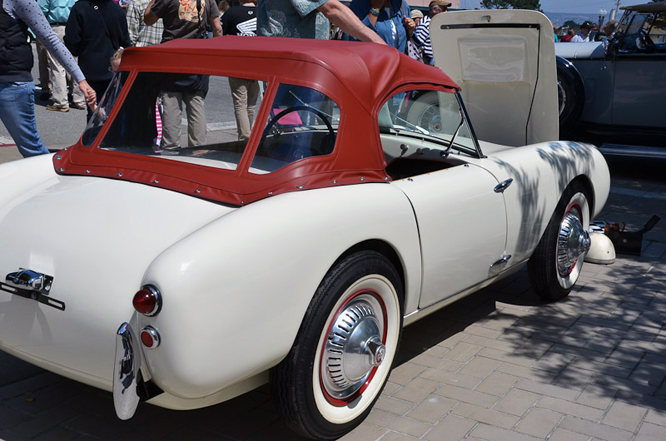
Berkeley was Europe’s leading manufacturer of fiber glass caravans when it diversified into car manufacture in 1956 to fill seasonal gaps in it’s manufacturing capacity.

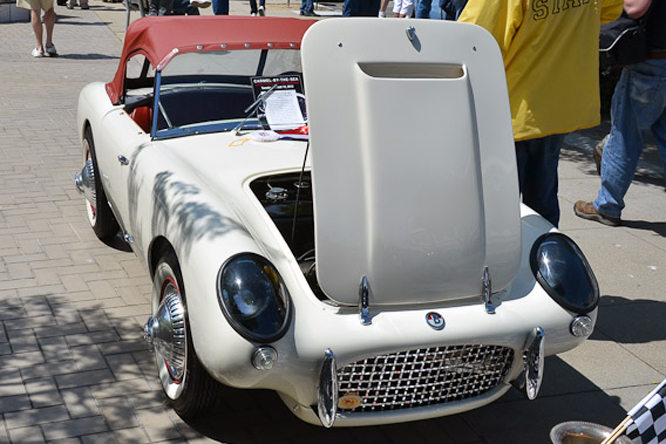
Berkeley SE328, Carmel By The Sea, Concours On The Avenue

The first Berkeley sports car was the SA322 designed by Lawrence “Lawrie” Bond featured an all fiber glass shell and body beating the Lotus Elite which used similar technology to market by a full year.

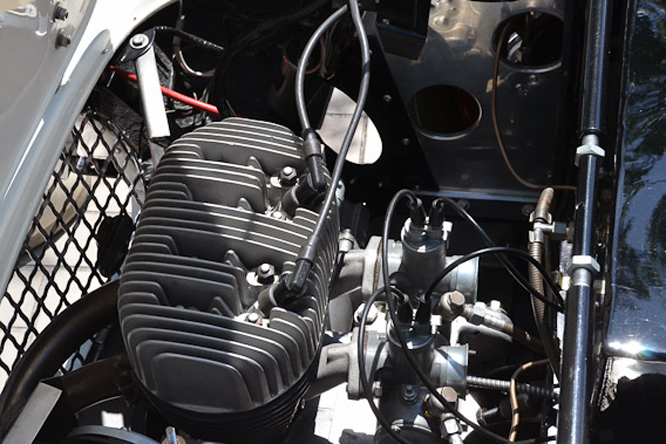
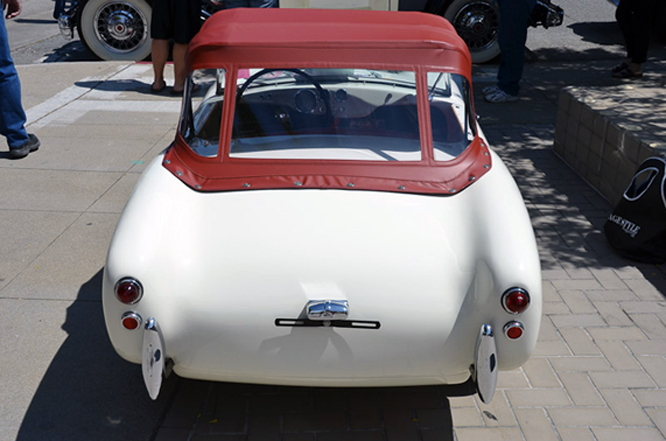
Berkeley SE328, Carmel By The Sea, Concours On The Avenue

After 163 SA322’s had been built the original 11 hp 322cc/19.65 British Anzani motorcycle engine was replaced by a 18hp 328cc / 20 cui Excelsior motorcycle engine of the type seen above. Today’s featured car is a Delux version distinguished by the twin carburetors. The two stroke motor is started with the aid of a Dynastart electric motor that also served to charge the battery once the 2 stroke motor was set in motion.

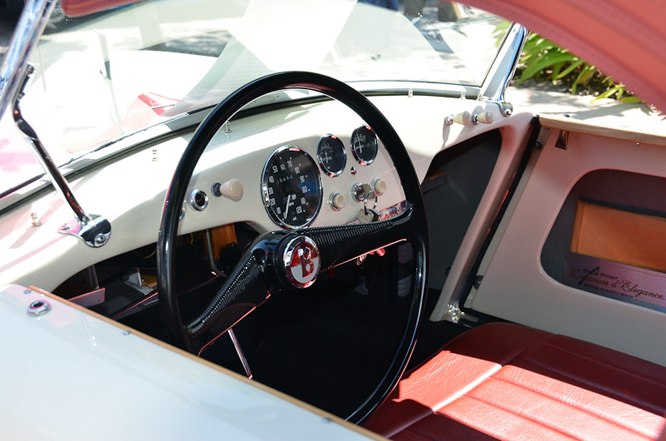
Berkeley SE328, Carmel By The Sea, Concours On The Avenue

Fuel gauges were optional extra’s on Berkeley sports cars however the Deluxe models were fitted with tachometers and a fuel gauges as standard. Early Berkeleys were fitted with a column shift for the chain driven three speed gearbox that drives the front wheels.

Berkeley SE328, Carmel By The Sea, Concours On The Avenue

Stirling Moss’s sister Pat drove a Berkeley Sports SE328 in the 1958 Liége-Brescia-Liége Rally as part of a six car works team and was leading as far Slovinia before the heat on the Italian hills took it’s toll and resulted in her being towed by another team car.

Berkeley SE328, Carmel By The Sea, Concours On The Avenue

The diminutive chrome hub caps fitted with ‘spinners’ were another standard feature of the SE328 Deluxe. In all around 1259 SE 328’s that were capable of 70 mph accelerating from rest to 50 mph in just over 30 seconds while achieving over 50 mpg are thought to have been built.

My thanks to Geoffrey Horton for sharing today’s photographs that were taken at last years Concours on the Avenue at Carmel by the Sea.

Thanks for joining me on this “Excelsior Twin Carb” edition of ‘Gettin’ a li’l psycho on tyres” I hope you will join me again tomorrow. Don’t forget to come back now !

Share

Steel Shell Camelion – Ferrari 250 GT SWB #3087

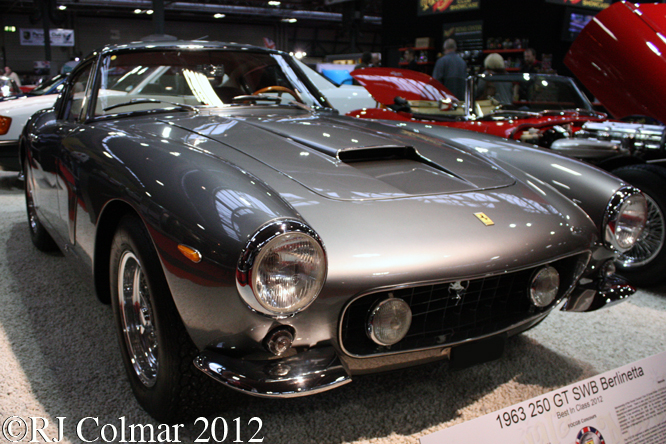
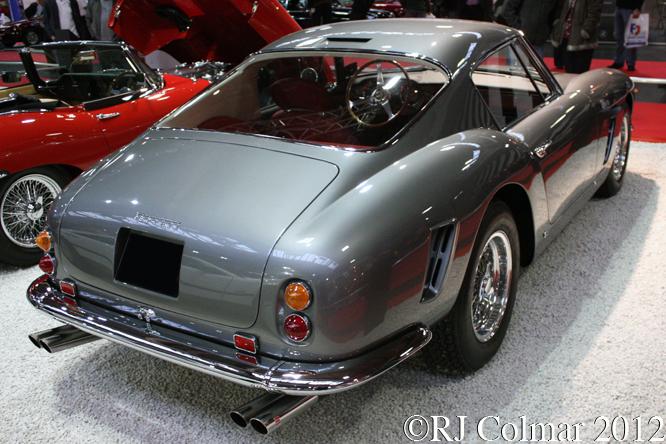
According to the best records at my disposal today’s steel shelled Ferrari 250 GT SWB chassis #3087 was originally supplied painted midnight blue with a tan interior to Otello Feretti of Bologna in December 1961.

Ferrari 250 GT SWB, Classic Motor Show, NEC, Birmingham

Later in the 1960’s the car was sold and sent to the USA and by the 1970’s it had been painted silver by 1974, been used in competition for the first time at Laguna Seca in 1975, and changed hands at auction in 1976 for US$ 22,000.

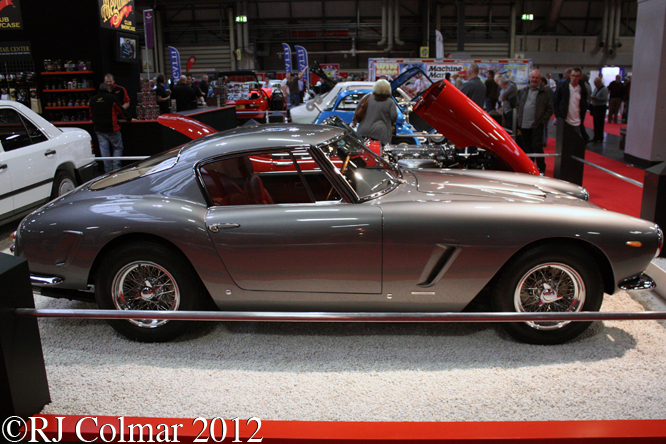
Ferrari 250 GT SWB, Classic Motor Show, NEC, Birmingham

In 1983 the chassis #3087 was offered for sale at US$ 115,000 and in 1989 it was restored.

Ferrari 250 GT SWB, Classic Motor Show, NEC, Birmingham

During the 1990’s the car won it’s class at the VI. Cavallino Classic and was offered for sale at US$ 700,000 in 1998.

Ferrari 250 GT SWB, Classic Motor Show, NEC, Birmingham

A decade later, now painted red, #3087 changed hands at RM Auctions in Monterey for over $4 million and found it’s in the UK. Ferrari Classiche fitted an authentic exhaust before #3087 was resprayed Silver and the interior fitted with Connoly Rosso hide.

The superb detailing of the car seen here at last years Classic Motor Show, NEC, Birmingham is credited to Ashley Moran.

Thanks for joining me on this “Steel Shell Camelion” edition of “Gettin’ a li’l psycho on tyres” I hope you will join me again tomorrow. Don’t forget to come back now !

Share

Racer and Runabout – Arnott Sports #AT112

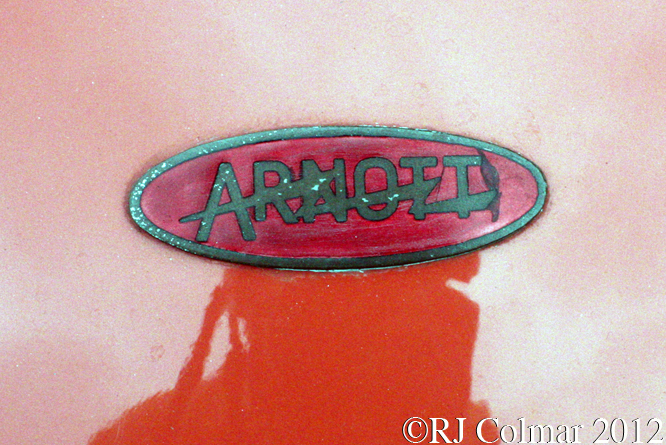
Daphne Arnott was born into a mechanical world in 1926, her Grandfather appears to have been captain and secretary of the Bath Road Club and ‘in control of’ MMC built Werner Motorcylces and her father was responsible for the Arnott Superchargers sold through Carburetors Ltd in North West London.

Daphne spent many childhood hours spectating at Brooklands and in her early teens she became competent mechanic. During the ’39-’45 war she was employed by the Hawker Aircraft company.
Arnott Climax Sports, Goodwood Revival

In 1948 Daphne joined the family business Carburetors Ltd and by 1951 she had created a department within it to design and manufacture 500 cc / 45.5 cui Formula 3 cars with assistance from the works manager George Thornton.

After Bob Brown of Bromley won first time out in the Arnott, Daphne built 8 copies, one of which became a streamliner in which John Brise set 500km average speed record of 108mph at Montlhery in 1953 which still stands.
Arnott Climax Sports, Goodwood Revival

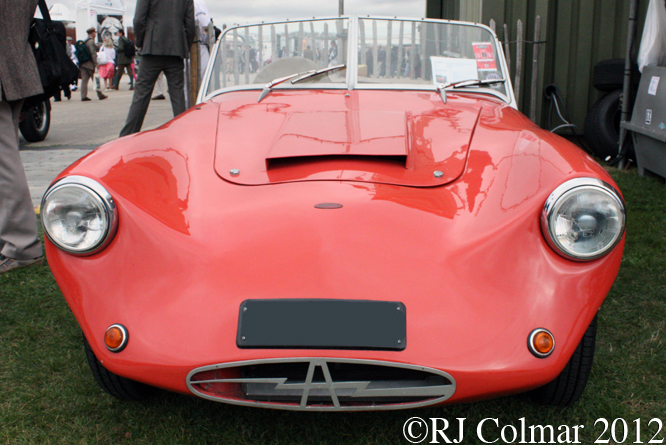
For 1955 Daphne came up with the 1100 Sports model seen here, complete with wishbone independent suspension, which was entered into the Le Mans 24 hours.

It is a measure of the esteem in which she was held that her Arnott, one Lotus and one Kieft were each given a new Coventry Climax motor with which to compete in the 24 hour classic.
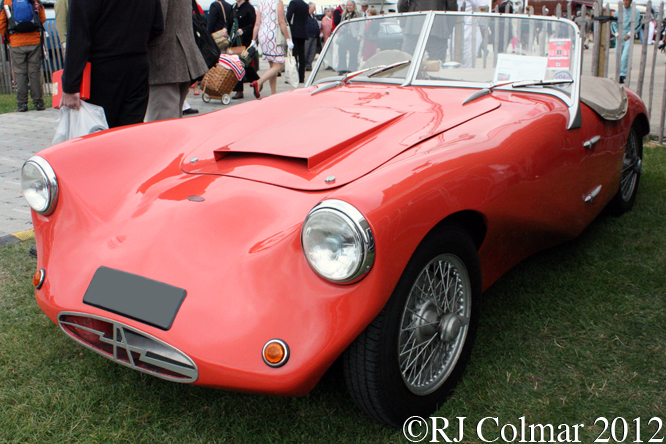
Arnott Climax Sports, Goodwood Revival

Jim Russell, of racing school fame and Peter Taylor were the drivers but they crashed during practice after which Daphene had an Arnott supercharger fitted and used the car as her daily driver for 20 years.

A second attempt was made at Le Mans with another Coventry Climax powered Arnott Sports in 1957, this time Jim Russell and Peter Taylor qualified but retired with ignition problems after completing 46 laps and that seems to be the end of the Arnott story as a manufacturer.
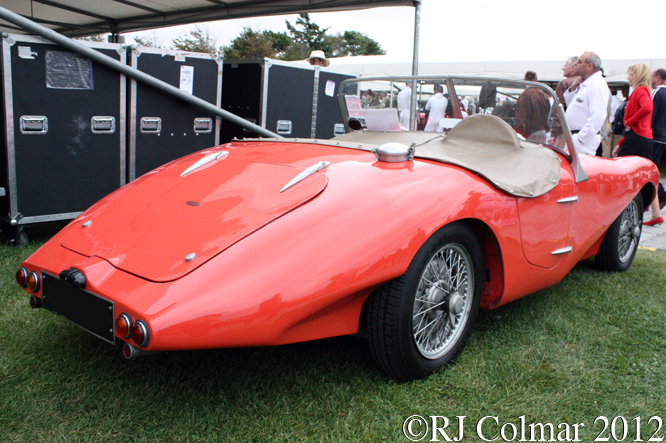
Arnott Climax Sports, Goodwood Revival

In all 25 Arnott Sports are thought to have been built with fibre glass bodies. The current owner bought today’s featured vehicle from Daphne Arnott after it had spent some time disintegrating in a barn in 1998.
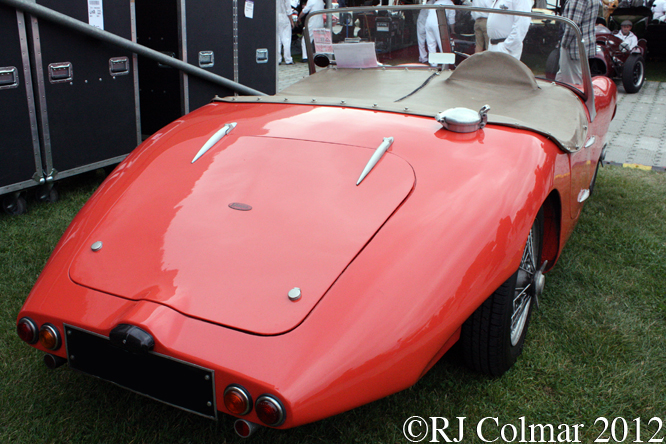
Arnott Climax Sports, Goodwood Revival

In 2003 this Arnott Sports still fitted with it’s original Coventry Climax motor #FWA400/3.6264, Arnott supercharger, MG TC gearbox and ENV back axle was given a £30,000 plus overhall by Sigma Engineering in Dorset.

When I saw this remarkable testimony to the grit and courage of a little remembered British entrepreneur Daphne Arnott at Goodwood Revival last year it was being offered for sale, if you are interested I have contact details for the owner. Usual disclaimers apply.

Thanks for joining me on this “Racer and Runabout” edition of “Gettin’ a li’l psycho on tyres” I hope you will join me again tomorrow. Don’t forget to come back now !
Share

Jewel In The Crown – Daimler Majestic Major DQ450

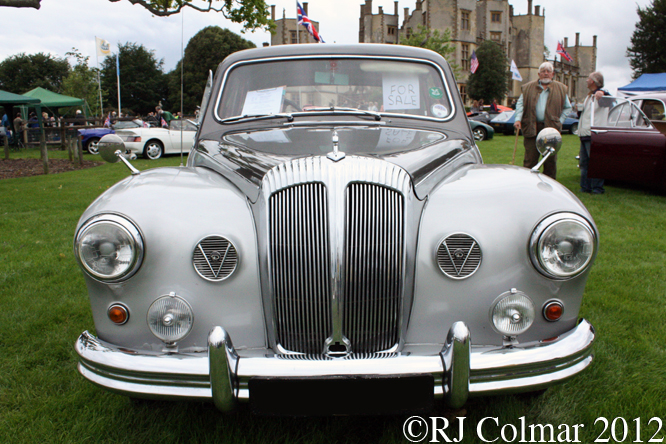
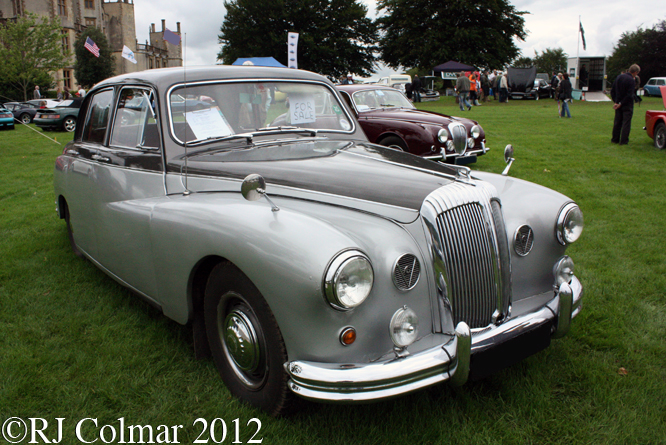
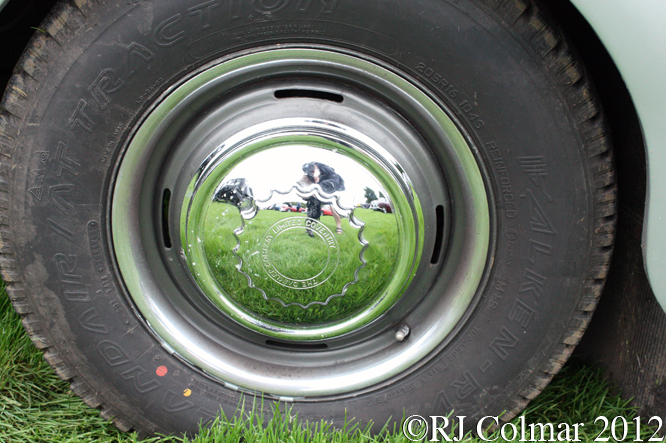
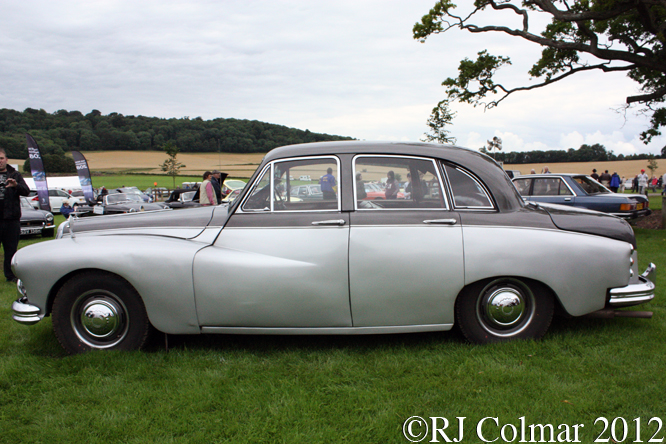
In 1958 Daimler introduced it Majestic saloon with a six cylinder engine, three speed Borg Warner automatic transmission, power steering, and the first use of vacuum servo assisted disc brakes on a saloon car. However the by now antiquated separate chassis and bodywork construction meant that for all the cutting edge technology the car did not perform to the highest order.

Daimler Majestic Major, Classics at the Castle, Sherbourne

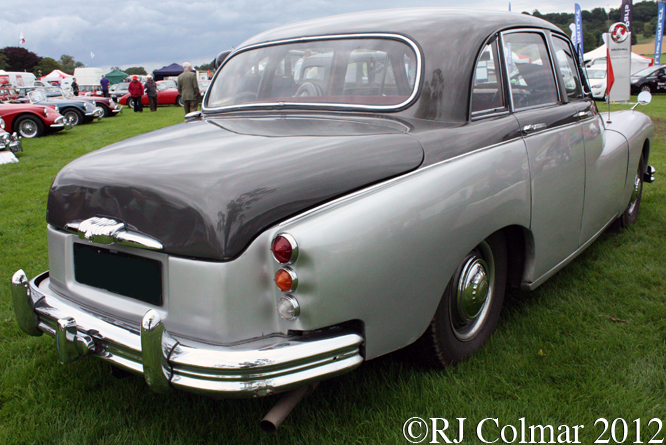
In 1959 Daimler announced an addition to the range in the form of the Majestic Major which featured a 220 hp version Edward Turners V8 that first saw the light of day in the Daimler SP250 earlier in 1959 and a larger boot / trunk area than the standard Majestic.

Daimler Majestic Major, Classics at the Castle, Sherbourne

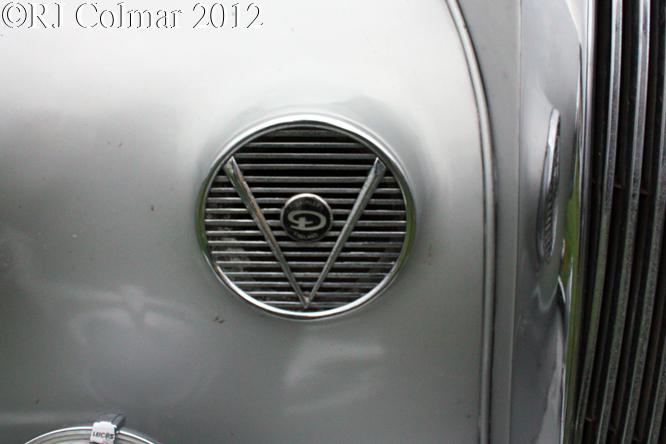
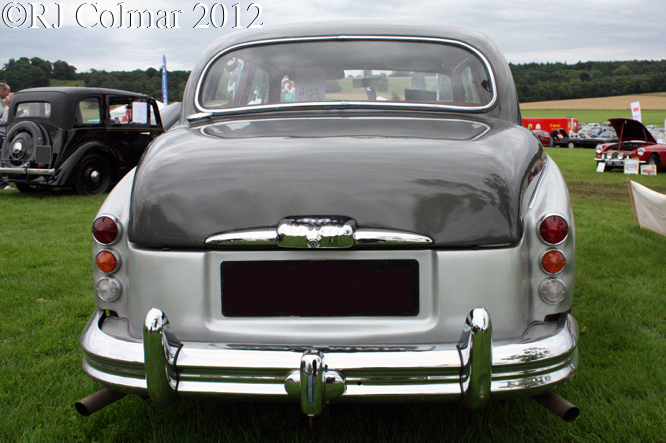
The new motor raised the top speed from 112 mph to a for the time sizzling 120 mph plus, there was no maximum speed restriction in force at the time, and acceleration from rest to 60 mph was achieved in just 9.7 seconds. Note the V in the air intake chrome trim differentiates a Majestic from a Majestic Major.

Daimler Majestic Major, Classics at the Castle, Sherbourne

In 1960 Jaguar took over Daimler and Jaguar founder William Lyons had one of the Majestic Major compact V8’s fitted to a forthcoming Jaguar Mk X and his ego was dissapointed to discover that the Daimler powered Mark X raised the cars top speed from 120 mph to 130 mph. Most might have turned this to their advantage but Sir William Lyons decided to let the jewel in the crown of the Jaguar Daimler empire wither away over the next nine years.

Daimler Majestic Major, Classics at the Castle, Sherbourne

Like it’s lesser Majestic sibling the Majestic Major was equipped with disc brakes on all four wheels, it also had a 42′ turning circle, power steering was initially only optional.

Daimler Majestic Major, Classics at the Castle, Sherbourne

The Majestic Major bodies were built by hand by Carbodies with old school cellulose paints covering the zinc phosphate protected steel panels which were supplied by Park Sheet Metal. The zinc phosphate protection proved to be less successful than anticipated.

Daimler Majestic Major, Classics at the Castle, Sherbourne

According to the owner of the model seen here at last years Classics at the Castle in Sherbourne in the Owners Manual specifies three different tyre pressures for normal motoring, over 90 mph and (unrestricted) Autobahn.

Daimler Majestic Major, Classics at the Castle, Sherbourne

Between 1960 and 1968 1187 Daimler Majestic Majors are thought to have been manufactured of which 30 are thought to still exist outside private collections and museums.

Thanks for joining me on this “Jewel In The Crown” edition of “Gettin’ a li’l psycho on tyres”, I hope you will join me again tomorrow. Don’t for get to come back now !

Share

Cruise Control & Central Locking – Lotus Type 89 Excel s.e.

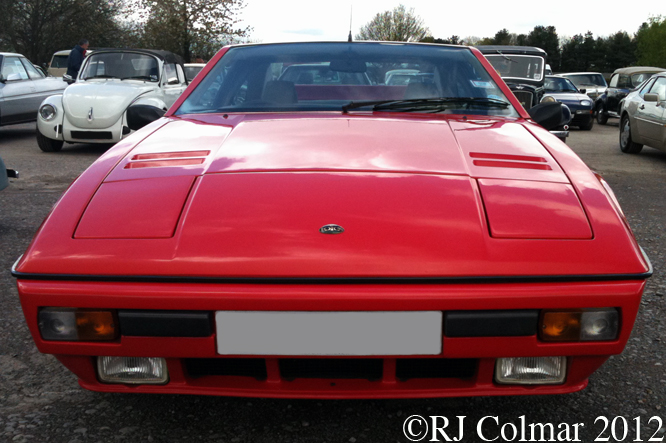
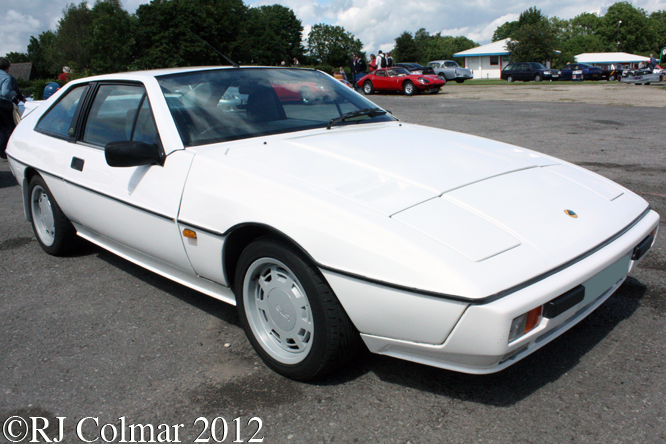
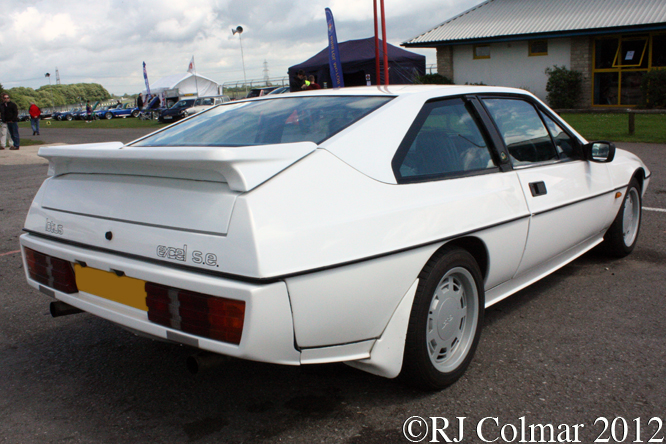
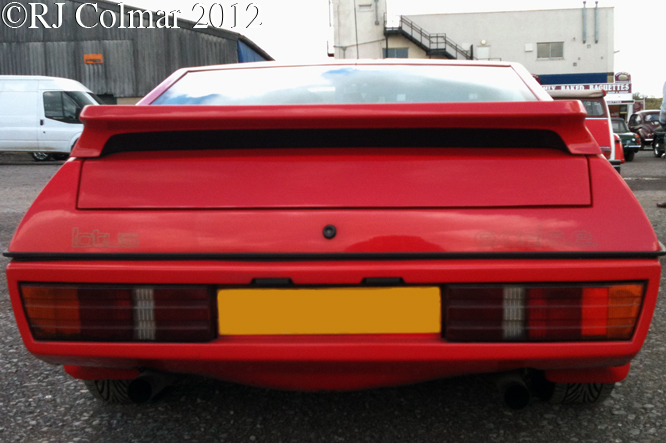
Last Saturday I looked at the prototype 1982 Lotus Excel today I’m looking at a couple of Lotus Excel s.e. models built with in months of each other.

Lotus Excel s. e., Bristol Classic Car Show, Shepton Mallet

Between 1982 and 1987 numerous modifications were carried out which included the introduction of a louvred bonnet with body shell coloured bumpers and rear spoiler in 1984.

Lotus Excel s. e., Family Clubs Day, Castle Combe

In 1985 the wider wheel arch profiles, larger boot aperture, VDO intrumentation, front fog lights were introduced with a 15 inch road wheel option were introduced.

Lotus Excel s. e., Bristol Classic Car Show, Shepton Mallet

For 1986 the s.e. option with raised engine compression and an adjustable steering column was announced.

Lotus Excel s. e., Family Clubs Day, Castle Combe

The S A Automatic option was launched for the 1987 model year with cruise control, central locking.

Lotus Excel s. e., Bristol Classic Car Show, Shepton Mallet

Of the 400 plus Excels known to be in the UK, only one was ever built to US specification, more than half are no longer on the road.

Thanks for joining me on this “Cruise Control & Central Locking” edition of “Gettin’ a li’l psycho on tyres”, I hope you will join me again tomorrow. Don’t forget to come back now !
Share

Field Filler – Ferrari 512 S #1006

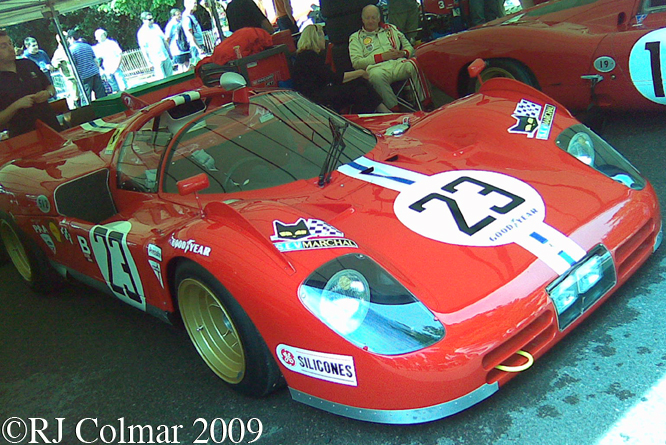
17 Ferrari 512 S’s and parts for 8 others were built in late 1969 in response to the 25 917’s Porsche had built in early 1969 in order to be allowed to race in the World Sports Car Championship which allowed up to 5 litre / 305 cui engines. These rules were introduced so that a few old Ford GT 40’s could continue racing, it was never imagined that Porsche and then Ferrari would build 25 cars each to take part in the series which was intended to be for new 3 litre / 183 cui cars like the Ferrari 312P and Porsche 908.

Unlike Porsche who planned on using private works supported teams to run and develop the 917’s on it’s behalf, Ferrari planned on using a single works team to build and develop the 512 S, supplying the rest of the 512 S models to private entrants to whom Ferrari gave little by way of support effectively treating it’s privateer teams as little more than field fillers.

Ferrari 512 S, Goodwood Festival of Speed

Ferrari had to sell his road car operation to FIAT in order finance the production to the 512 S model, and as it turned out Porsche’s private partners had snapped up most of the best drivers.

Nonetheless Ferrari took the fight to Porsche with a single championship victory at the 1970 Sebring 12 hours courtesy of Mario Andretti, Nino Vaccarella and Ignazio Guinti driving a 512 S who beat Peter Revson and actor Steve McQueen in their Porsche 908 after Mario famously drove the last 90 mins of the race and chased down an exhausted Peter Revson in what Mario once described as the race of his life.

For most of the rest of the 1970 season the Ferrari 512 S was out classed every where, except at the non championship race run at Kyalami in South Africa, by the Porsche 917’s, particularly those of the JW Automotive team. Ferrari had difficulty selling all of it’s 512 S models, where as Porsche had to build a second run of 25 917’s to meet demand.

Ferrari 512 S, Goodwood Festival of Speed

This 512 S spyder, chassis #1006, was developed in order to save 25 kgs by the factory and sold to Luigi Chinetti’s N.A.R.T. team. Ronnie Buchnum and Tony Adamowicz drove it into second place at the 1971 24 hours of Daytona.

#1006 had to have both front and rear bodywork replaced during the course of the race, the body work is as it appeared on #1006 when it started the 1971 Daytona 24 hours with aerodynamic lips on the nose, which were not on the second nose fitted when it finished the race.

Thanks for joining me on this “Field Filler” edition of “Gettin a li’l psycho on tyres” I hope you will join me again tomorrow for a look at a one off Formula One Lotus that never raced. Don’t forget to come back now.

Share