Tag Archives: Sports

Improving The Breed ? – Lotus Elite Type 75

A couple of weeks ago I went to a Q&A session hosted by the voice of British motor sport Murray Walker with Formula One designers Frank Dernie and Niel Oatley, one of the questions was about the carry over of Formula One technology to road car production and both vigorously nodded in the negative. However that does not mean if you win on Sunday you will not sell on Monday anymore than winning on Sunday will guarantee selling on Monday either. If there is any benefit to manufacturers racing on Sunday it is in the commodity of Brand awareness. Similarly by the 1970’s road car manufacturers like Lotus and Ferrari had found that road car manufacture was never going to meet all the expenses of racing in the sports top table, though Enzo Ferrari did his best to keep the toothpaste manufacturers off his cars for as long as possible while Colin Chapman bit the commercial sponsorship bullet at the earliest opportunity in 1968.
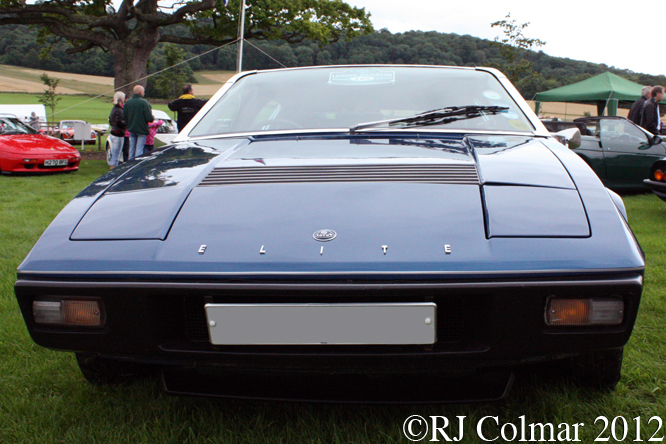
Lotus Elite Type 75, Classics at the Castle, Sherbourne

Either way in 1974 Lotus launched it’s new 2+2 Lotus Elite, it is not recorded how or if Ronnie Peterson’s three wins in the ageing Lotus 72 during 1974 aided sales or not. The 907 aluminium bloc motor for the new car was partly developed on the track by the noisy 1969 Lotus 62 sports car which I looked at a couple of months ago.
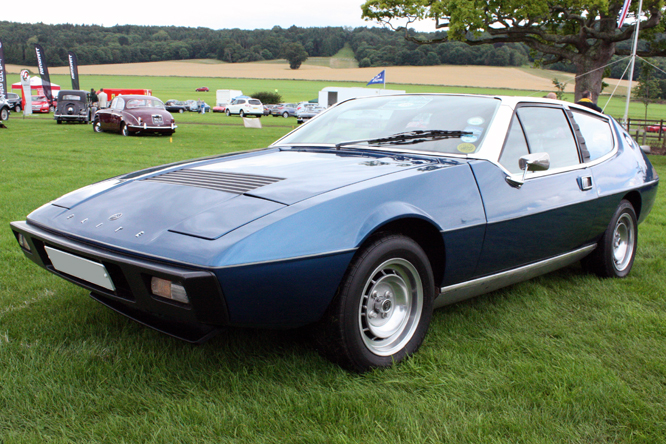
Lotus Elite Type 75, Classics at the Castle, Sherbourne

The chassis of the Type 75 Elite was the latest development of the back bone type first seen in the Lotus Elan in 1962 with independent suspension front and rear.

Lotus Elite Type 75, Classics at the Castle, Sherbourne

The only time I have come close to speaking to Mario Andretti was in 1979 while I was ambling along from the pits at Silverstone to the campsite on a beautiful summers evening with a large crowd of people during the 1979 British Grand Prix meeting. Behind me I felt something touch my leg, when I looked round to see what it was there was a blue Lotus Elite and at the wheel was none other than reigning World Champion Mario Andretti at the wheel, I was speechless as I stood aside to let him pass.
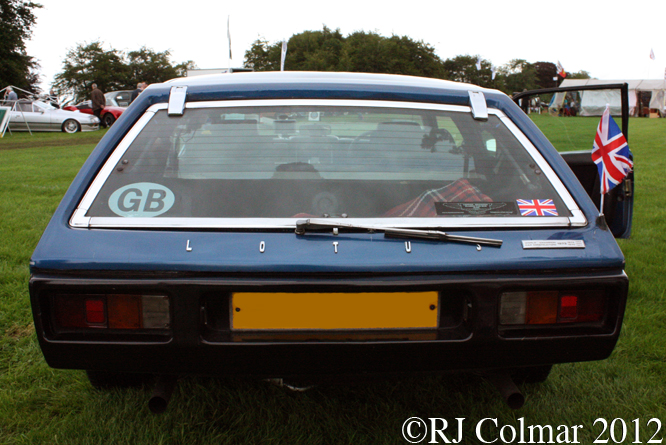
Lotus Elite Type 75, Classics at the Castle, Sherbourne

The Lotus Elite Type 75 was phased out in 1982 with 2,820 units built. A second variation, Elite Type 83, was built between 1980 and 1983 with just 153 units built. It is thought that less than 100 Elite type 75’s like this 1976 example are to be found on British roads today.

Thanks for joining me on this “Improving The Breed ?” edition of “Gettin’ a li’l psycho on tyres” I hope you will join me again tomorrow. Don’t forget to come back now !

Share

Needs Must – Ferrari 375 America Vignale Coupé #0327AL

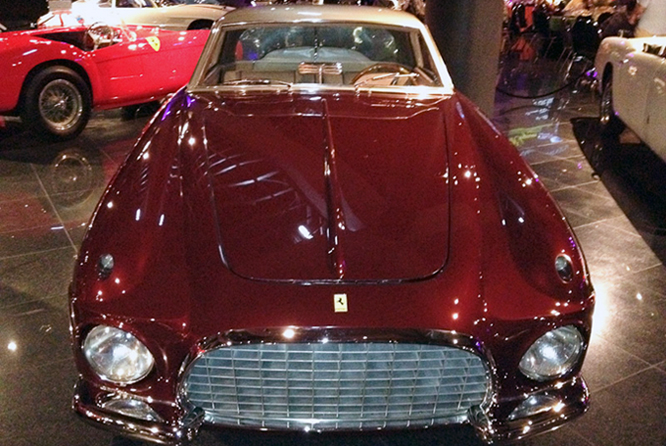
Never wildly keen on selling road cars Enzo Ferrari was persuaded to build a few, which not only helped him defray the costs of developing new technology for his racing programme but also satisfied a demand for his products at near exclusive prices.

Ferrari 375 America Coupé, Danville Concours d'Elegance

The 1953 375 America was his second series of road cars following the 342 America of which only twenty three were built. The 375 was powered by a 300 hp 4522 cc / 275 cui long block V12 similar to that used in the 4.5 litre V12 Ferrari 375 Formula One Car and slightly longer Ferrari 375 Indy Car.

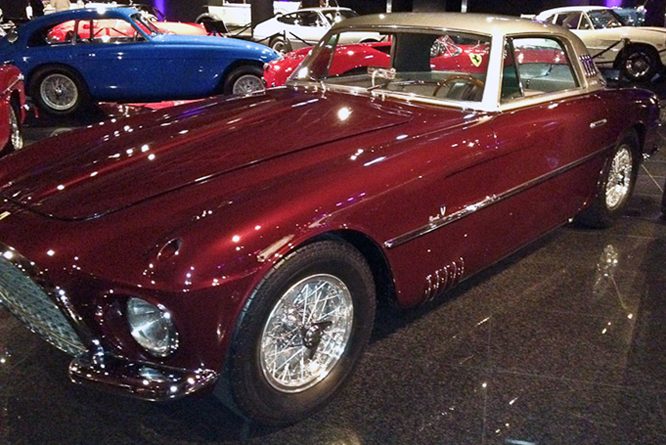
Ferrari 375 America Coupé, Danville Concours d'Elegance

Only 11 Ferrari 375 America’s were built, with a 12th one being converted from 250 Europa spec to 375 America spec by the Ferrari factory in 1955. Regular readers may remember that a Pininfarina bodied 375 America chassis #0319AL was the subject of a GALPOT blog in May last year.

Ferrari 375 America Coupé, Danville Concours d'Elegance

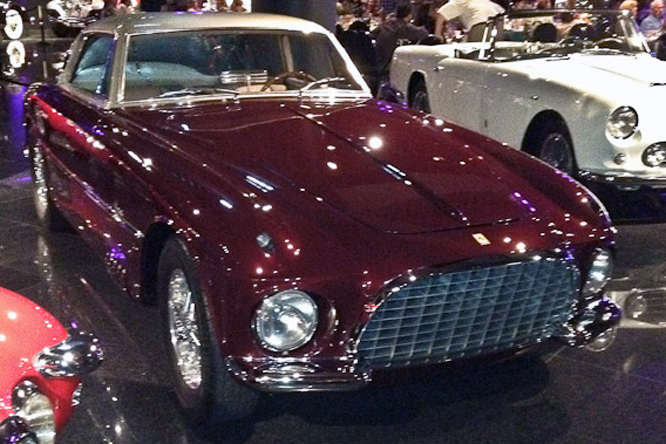
This particular chassis #0372AL is one of just three cars built with Vignale bodies, each of the Vignale bodies has unique features making this one easy to recognise, due to it’s low bumper and recessed headlights, as the second of the three built. This car was displayed at the Geneva and New York automotive shows in 1954 and then sold to Robert C. Wilke, of Milwaukee, WI, USA – President of Leader Cards Inc.

Thanks for joining me on this “Needs Must” edition of “Gettin a li’l psycho on tyres”. I hope you will join me again tomorrow when I’ll be looking at a Lotus 72E. Don’t forget to come back now !

Share

Finest, Fiercest Yet – Chevrolet Corvette C1

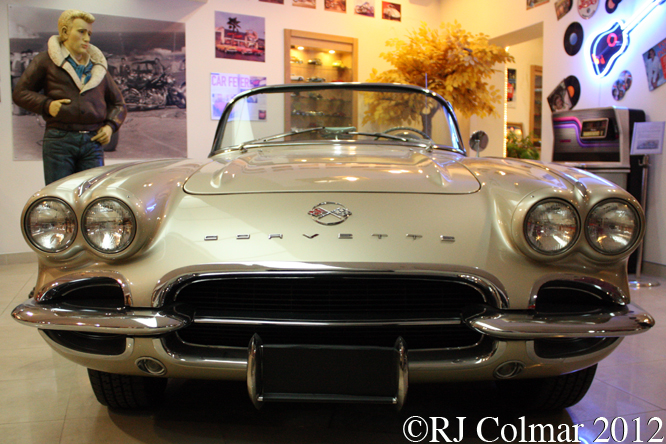
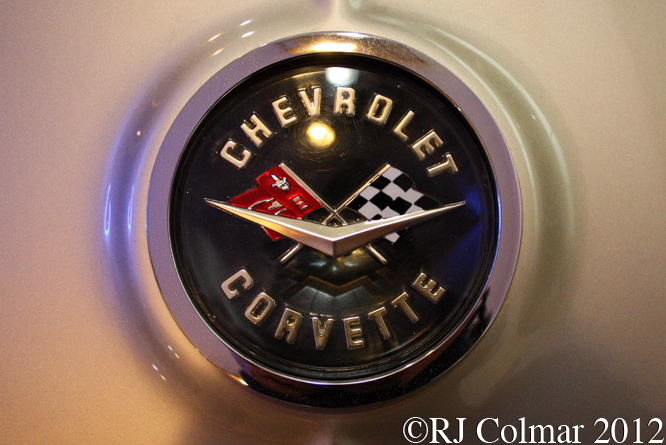
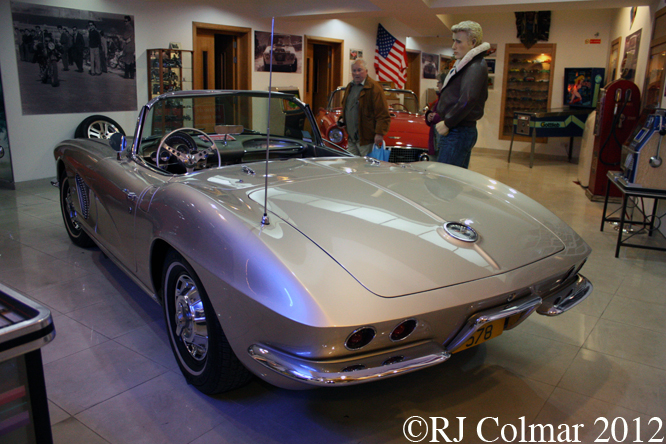
The 1962 Chevrolet Corvette, like this one seen in the Malta Classic Car Collection in Qwara was the last of four variations known collectively as the C1 models and was advertised with the strap line ” Finest, Fiercest Yet – ’62 Corvette by Chevrolet“.

Chevrolet Corvette C1, Malta Classic Car Collection, Qwara

The front end styling was similar to that first seen in 1958 with four head lights, however the trade mark baroque tooth grill which had been a feature of Corvettes since their inception in 1953 was removed in 1961.

Chevrolet Corvette C1, Malta Classic Car Collection, Qwara

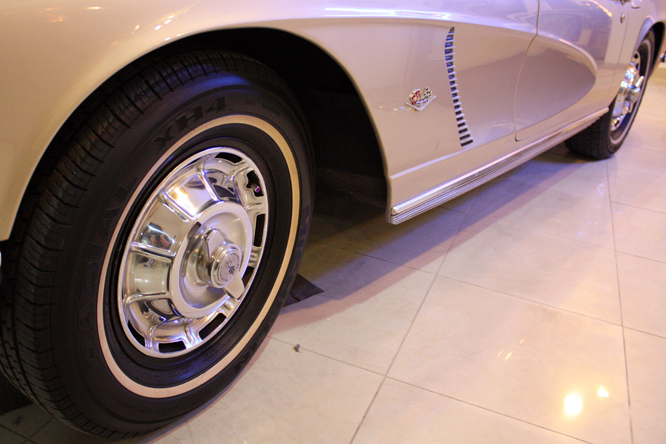
The engine displacement was increased from 4.6 litres / 283 cui to 5.4 litres / 327 cui which gave from 250 hp to 340 dependent of the carburetors and lifters specified or 360 hp when fitted with fuel injection. Two tone paintwork was no longer an option in 1962.

Chevrolet Corvette C1, Malta Classic Car Collection, Qwara

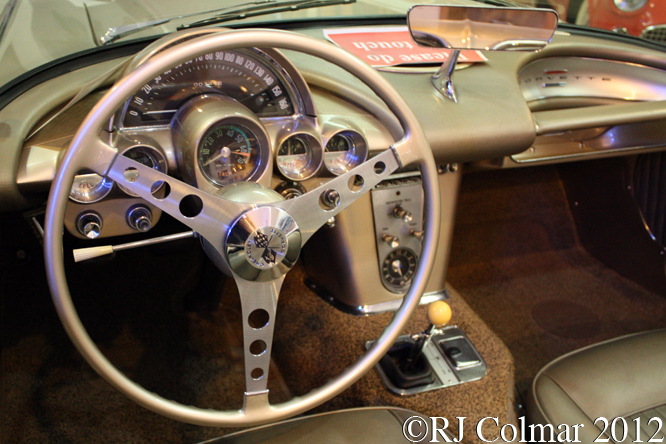
The instrumentation of the ’62 ‘vette remained largely unchanged from 1959 when the engine revolution counter first appeared in the centre of the drivers view below the outsize speedometer.

Chevrolet Corvette C1, Malta Classic Car Collection, Qwara

Among the rosta of winners driving ’62 Corvettes out on the race track were Dick Thompson, Delmo Thompson, Joe Freitas , Dave MacDonald, Everett Hatch, Mack Yates, Bob Moore, Dan McMahnon, Tom Robinson, Don Meline, Bob Paul, Joe Weiter, Jerry Grant, David Stanley, Martin Krinner, Paul Reinhart, Norman Namerow, Ralph Salyer, Nate Karras, Scott Briley, Mike Gammino, Lew Draper, Bob Brown, Roy Kumnick, Red Faris, Jim Collipriest, Roy Tuerke, Hank Mergner, John McVeigh and Mike Stephens.

Chevrolet Corvette C1, Malta Classic Car Collection, Qwara

The 120 mph 250 hp ’62 Corvette seen here was restored over a period of three years and has won numerous awards at classic car shows.

Thanks for joining me on this “Finest, Fiercest Yet” edition of “Gettin’ a li’l psycho on tyres” I hope you will join me again, for Ferrari Friday, tomorrow. Don’t for get to come back now !

Share

10,000 RHD’s Only – MG TC Midget

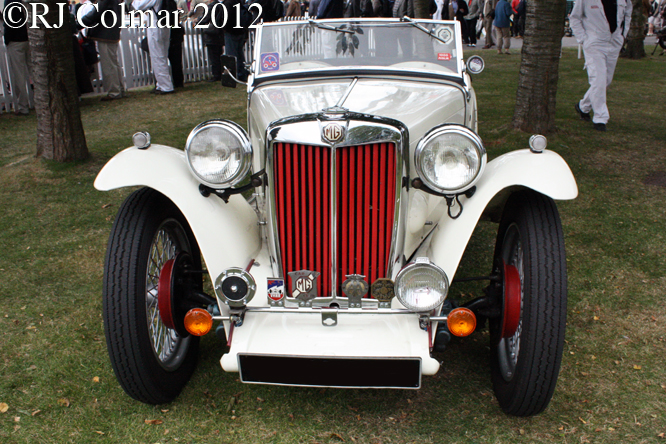
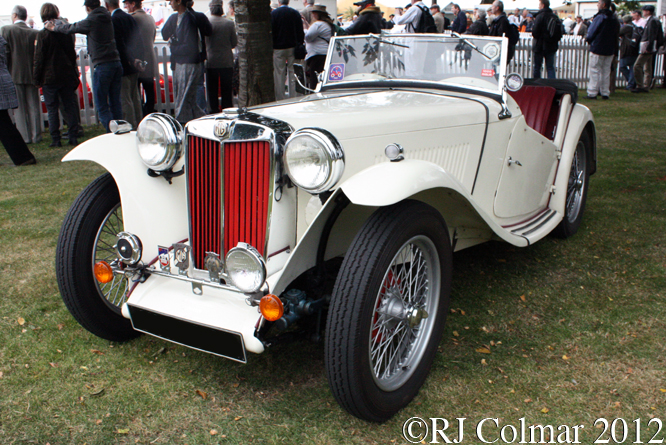
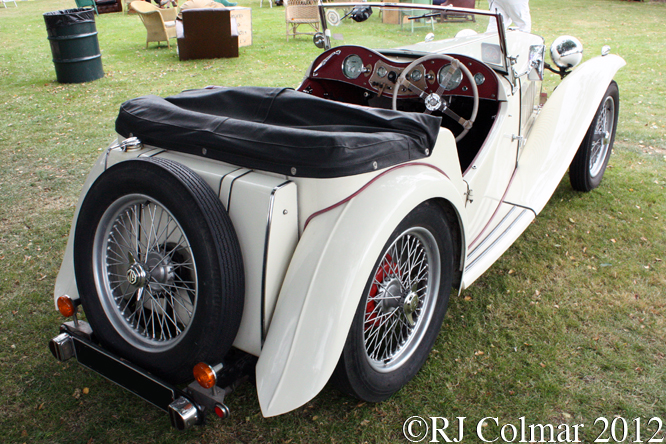
A development of the pre-war 1939 MG TB, of which only 379 were built, the MG TC was launched in 1945. and experienced comparatively huge popularity thanks to large numbers of US service men who served in the UK during the 1939 – ’45 war who fell for the cute li’l pre war MG’s that were still in evidence on the roads during the hostilities.

MG TC, Goodwood Revival

The MG TC experienced comparatively huge popularity thanks to large numbers of US service men who served in the UK during the 1939 – ’45 war who fell for the cute li’l pre war MG’s that were still in evidence on the roads during the hostilities.

MG TC, Goodwood Revival

Powered by a high compression version of the M TB 1250 cc / 76 cui 4 cylinder motor which produced 54 hp in standard trim, the motors could be supplied in different states of tune for specific, competition, purposes.

MG TC, Goodwood Revival

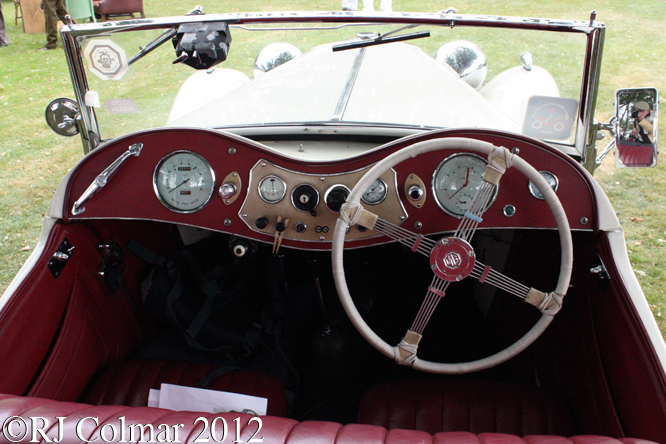
The TC’s cockpit was wider than that of the TB and featured a tachometer mounted directly in front of the driver, particularly useful for competition purposes.

MG TC, Goodwood Revival

TC’s were raced extensively in Europe, Australasia and North America recording many outright and class wins, both Carroll Shelby and Phil Hill raced and won driving MG TC’s, in their early careers, on their way to becoming stars on the world motorsports stage. Bill Bradley is known to have won his, HP, Class in an SCCA sanctioned event at Opelousas as late as July 1963.

MG TC, Goodwood Revival

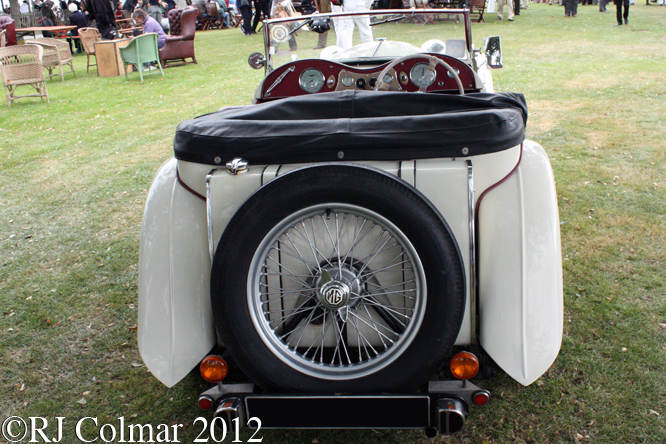
All of 10,000 MG TC’s built between 1945 and 1949 were right hand drive, despite most of them being exported to Left Hand Drive countries particularly the United States.

Share

One Step Back, Two Steps Forwards – MG TA

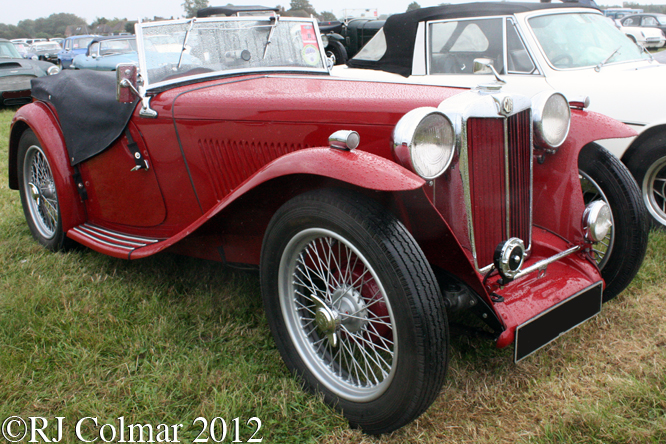
The MG TA Midget replaced the MG PB Midget in 1936 with many, of it’s parent company, Morris components. The TA and following T series variants opened up the appeal of sports cars in general to a huge new market that had remained hitherto untapped thanks to the reputation sports cars had for being temperamental if not plain difficult to drive.

MG TA, Goodwood Revival

Built with a 7″ longer and 3″ wider chassis the TA’s motor was technically a retrograde step from it’s PB predecessor which had an over head cam motor. The Morris 10 based TA motor ‘only’ featured pushrod operated over head valves, but with 2 carburetors this still produced 50 hp with the benefit that the valve clearances were much easier to maintain.

If the motor was a technological retrograde step both the synchromesh gearbox, making changing gear much easier and the hydraulic brakes, which needed much less maintenance, were both technological steps forwards that made the TA a much easier car to drive and maintain, than it’s predecessor and added to the durability of the whole TA package.

Top speed of the TA was around 80 mph with a rest to 60 mph acceleration time of just over 23 seconds. 3,000 TA Midgets were manufactured between 1936 and 1939.

Thanks for joining me on this “One Step Back, Two Steps Forwards” edition of “Gettin’ a li’l psycho on tyres”, I hope you will join me again tomorrow when I’ll be looking at an unusual tribute car. Don’t forget to come back now !

Share

Single Year Production – MG PB

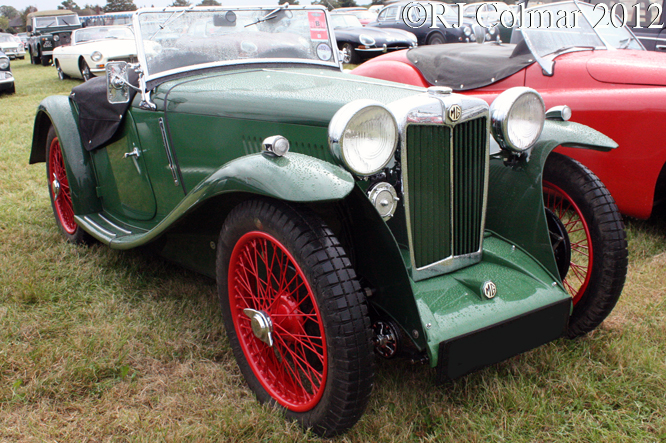
Introduced in 1935 the MG PB was an upgrade of the MG PA featuring a larger 939 cc / 57 cui over head cam motor that produced 43 hp and drove the wheels through a non synchromesh gearbox.

Externally the PA and PB are differentiated only by the radiator grill which features a honeycomb pattern on the PA and vertical slats on the PB, the latter pattern would remain an MG feature right the way through until the early 1960’s.

MG PB’s were entered in the Le Mans 24 hours in 1935, ’37 and ’38 scoring a best 12th place finish in 1938 with Claude Bonneau from Belgium and Mme Anne Itier from France at the wheel of the formers car. Ernest Harewood won handicap events at Goodwood with his PB chassis #PB0528 in 1952 and 1953.

526 MG PB’s were manufactured from 1935 to 1936 when the model was replaced by the easier to drive and maintain MG TA.

Thanks for joining me on this “Single Year Production” edition of “Gettin’ a li’l psycho on tyres” I hope you will join me again tomorrow. Don’t forget to come back now !
Share

Aim Sure – MG PA Supercharged Sports #P 0522

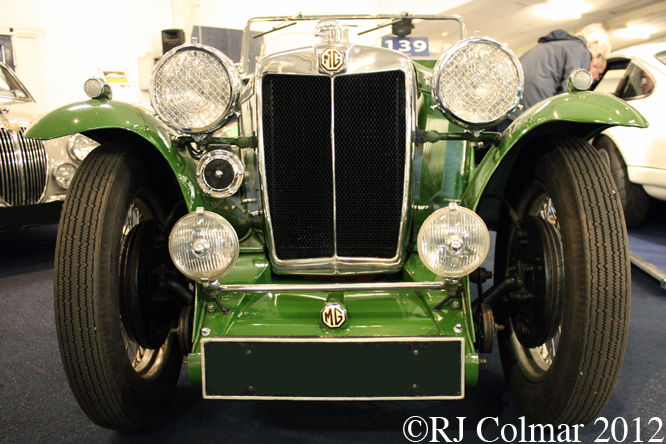
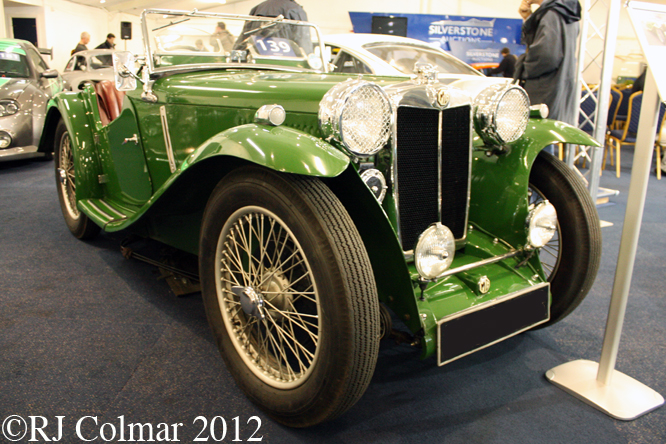
Len Miller an aviator who lied his way into the RAF in 1942 by telling them he was a plumber, rather than reserved occupation marine engineer, purchased today’s featured MG PA, after meeting Guy Gibson, leader of the ‘dam busters’, in 1943 who drove an MG J2.

MG PA, Race Retro

Len used to ferry his six crew mates, one on each corner one on the bonnet and one in the passenger seat across the airfield out to his 15 Squadron, motto “Aim Sure”, Lancaster Bomber during the 1939 – ’45 war.

MG PA, Race Retro

In 1944 Len had to eject from his Lancaster at 20,000 ft, he lost and regained consciousness in time to open his parachute and landed well behind enemy lines in Germany.

MG PA, Race Retro

His one man escape through Germany, occupied France into neural Switzerland is documented in the book “Bomber Squadron, the men who flew with 15 Squadron”.

MG PA, Race Retro

Many years later this car was damaged after a roof collapsed across the radiator and bonnet during the Great Storm of 1987 on the night of the 15th/16th October 1987.

MG PA, Race Retro

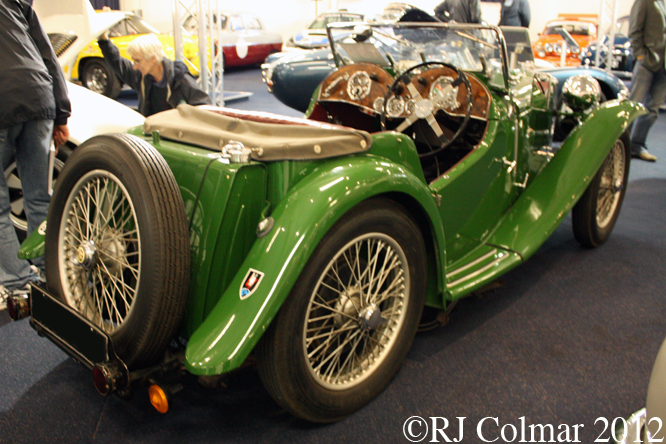
Repairs started a restoration which included replacing the cracked engine block, and the original seats with the Collingburn seats.

MG PA, Race Retro

Soon after the restoration was completed the motor was fitted with a side mounted Arnott supercharger.

MG PA, Race Retro

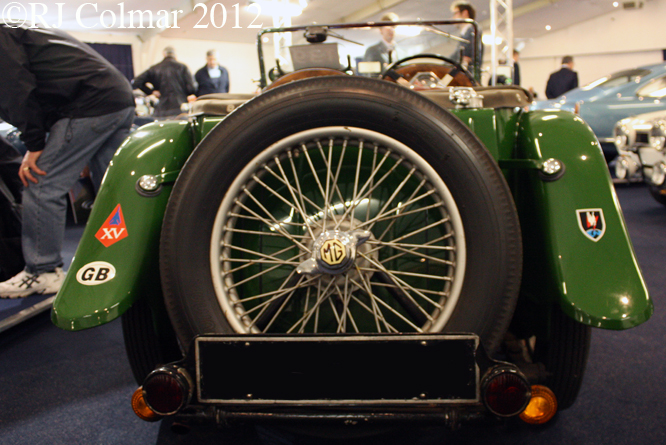
Len kept today’s featured car, which still bears 15 Squadron decals on the rear mudguards / fenders, for 59 years until his death in 2002. It fetched £36,500 at the Race Retro Silverstone Auction soon after it was photographed for this blog.

Thanks for joining me on the “Aim Sure” edition of “Gettin’ a li’l psycho on tyres”. I hope you will join me again tomorrow. Don’t forget to come back now !
Share