Tag Archives: Surtees

Wings & Wheels – Dunsfold Aerodrome

Last Monday I went to Dunsfold Aerodrome for a bit of a school reunion organised by my friend David. The last time I attended an event similar to Wings & Wheels was at Biggin Hill in 1972 when as a thirteen year old I was impressed by both the motor vehicles on display and the aircraft.

Folland Gnat, BAE Hawk, Wings and Wheels, Dunsfold Aerodrome

While I was looking for David after arriving I stumbled across the old and new faces of the Red Arrow’s the little Folland Gnat which was used by the display team from 1965 until they were replaced by the larger BAe Hawk in 1979.
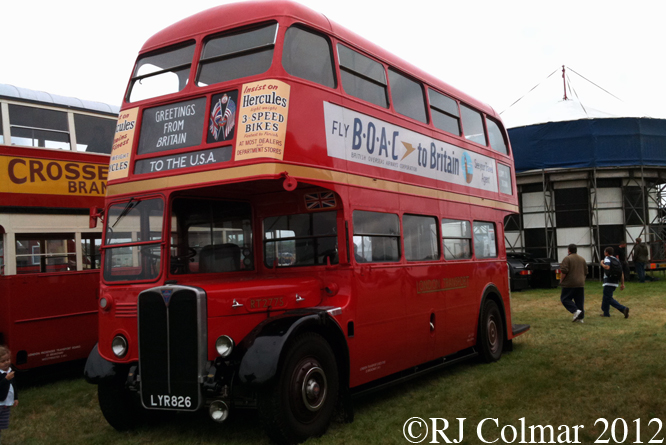
AEC Regent III, Wings and Wheels, Dunsfold Aerodrome

The AEC Regent double deck bus, predecessor of the much loved Routemaster, was developed in 1939. RT2775 seen here is one of three that were selected to represent the British Travel and Holidays Association and London Transport on a tour of the USA and Canada to promote travel to Britain and the purchase of British products in 1952. Because of it’s special status as an ambassador abroad it unusually kept it’s identity through out it’s working life when it returned to the streets of in 1953 where it remained in service until 1977 after which it became part of the Cobham Bus Museum which is now housed at Brooklands.
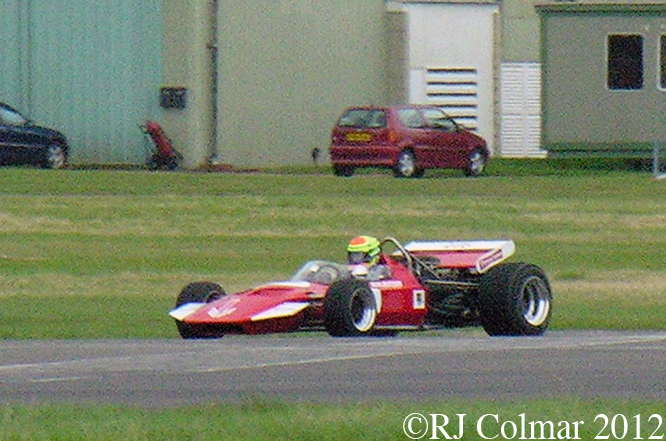
Surtees Ford TS7, Wings and Wheels, Dunsfold Aerodrome

One of several pleasant surprises at Duxford was seeing this 1970 Surtees Ford TS7 designed in part by Peter Connew who regular GALPOT readers will remember went on to design and build his own eponymous Grand Prix car after his work on the TS7 was completed.
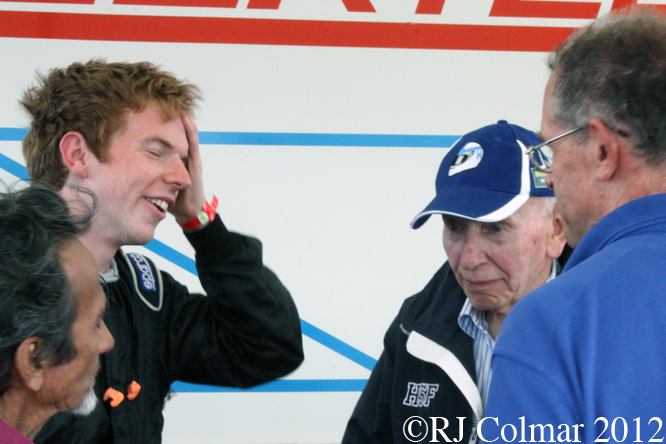
Sahab Ahmed, Oliver Turvey, John Surtees, Wings and Wheels, Dunsfold Aerodrome

Sahab Ahmed with whom Peter worked on the design of the TS7 can be seen on the left of McLaren test driver Oliver Turvey and John Surtees, the only man to win World Championships on two and four wheels in the photo above.
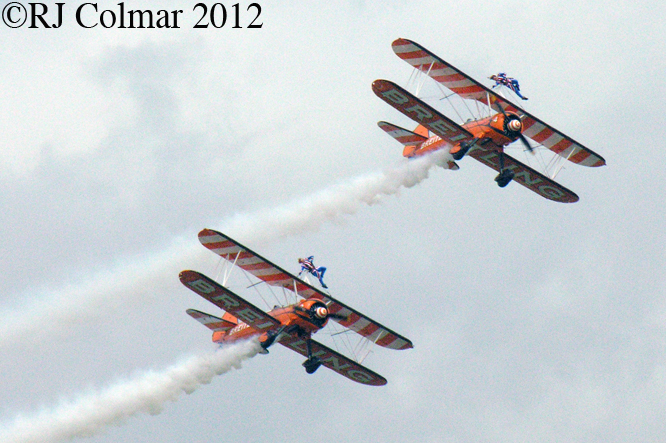
Boeing Stearman, Wings and Wheels, Dunsfold Aerodrome

As someone prone two vertigo by the time I get to the third rung on a ladder I found the Breitling Wing Walkers a genuinely mind boggling sight. A team of six pilots share the flying duties of the pair of 1940’s era Boeing Stearmans, while a team of six very brave women share the wing walking duties while traveling at 150 mph and experiencing up to 4G !
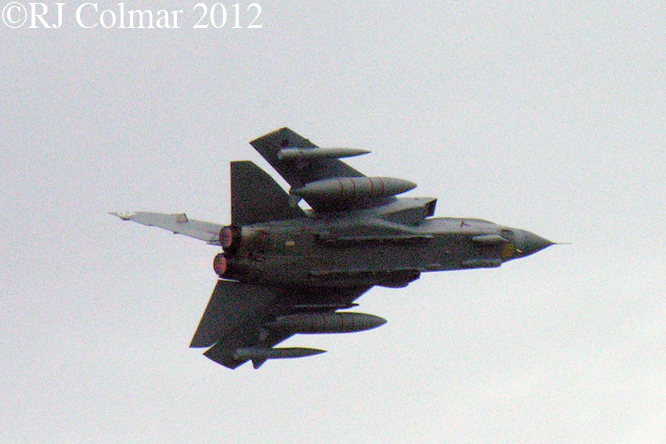
Panavia Tornado GR4, Wings and Wheels, Dunsfold Aerodrome

A couple of huge explosions on the ground which scared the brown stuff out of me as I had my back to the airfield at the time preempted the arrival of a pair of swing wing Panavia Tornado GR4’s and a simulated ground attack demonstration. These aircraft which have been operation for the last 20 years were deployed last year in the liberation of Libya and are currently deployed as part of the allied forces in Afghanistan. With two Rolls Royce conceived RB199 jet engines fitted with afterburners this multirole platform can reach speeds of Mach 2.
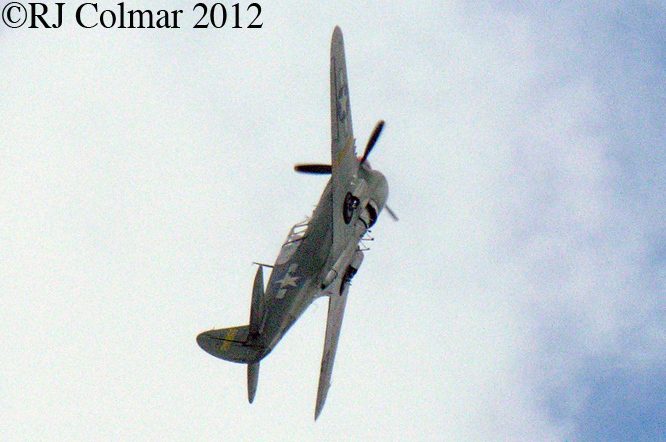
Curtis Kittyhawk, Wings and Wheels, Dunsfold Aerodrome

Manufactured in Buffalo New York the 1943 Curtis P40M Kittyhawk / Warhawk fighter seen above served in the Royal Canadian Airforce amassing just 732 flying hours before it was retired in 1950 when it became an instructional aircraft at Oregon State University. In the early 80’s after a long period of storage she was restored to full airworthiness in California. More recently she was flown to Prague where she stared in the film Red Tails released earlier this year.
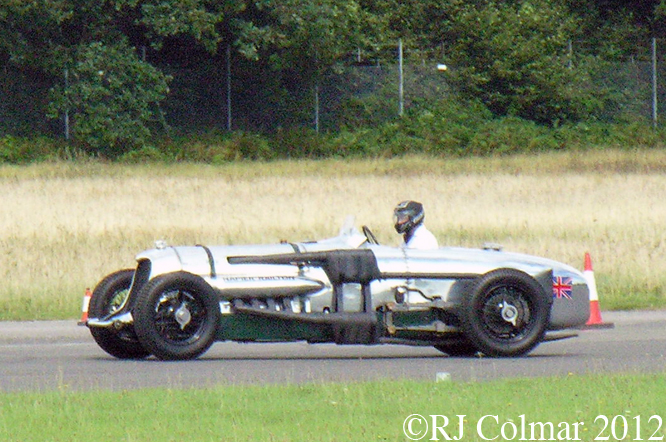
Napier Railton, Wings and Wheels, Dunsfold Aerodrome

The Napier Railton seen above not only holds the Brooklands lap record in perpetuity but after the ’39-’45 war it was fitted with heftey aircraft style Dunlop rear disc brakes and used to test experimental aircraft braking parachutes on this very same runway by the GQ Parachute Company which was based at Dunsfold Aerodrome.
Some of the backdrops in today’s photographs may also be familiar to avid fans of the Top Gear television show which operates from a studio on the site.
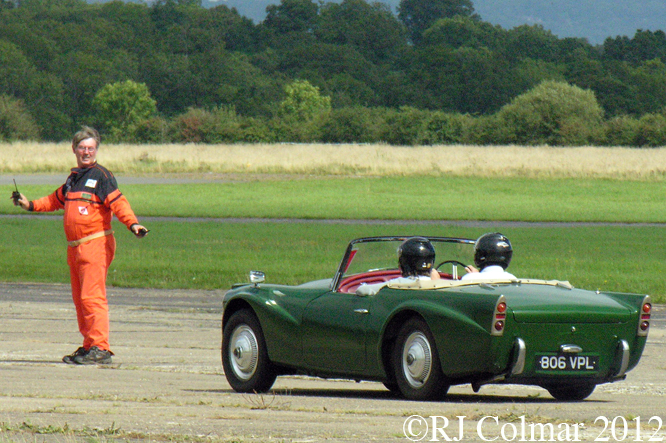
Daimler SP 250, Wings and Wheels, Dunsfold Aerodrome

Among the many vehicles demonstrated on the runway was this 1961 Daimler SP250 which I post a picture of especially for one of GALPOT’s most loyal readers Ryan also known as Racer 187.
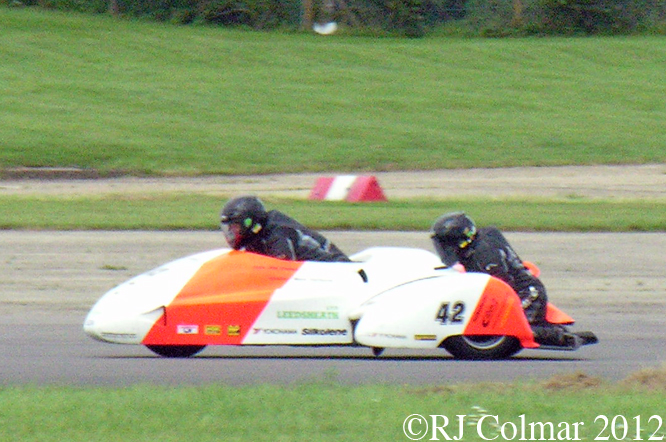
Honda Sidecar, Wings and Wheels, Dunsfold Aerodrome

I can’t vouch for the accuracy of the programme which tells me that the side car combination above is a 1972 Honda, but I am reasonably certain the person at the helm is the remarkable Neil Trundle who has spent over 40 years in motorsport working with the likes of Jack Brabham, setting up shop with Ron Dennis building the famous six wheel Tyrrell P3/4’s then joining Dennis again at Project 4 Motorsport which took over McLaren. If you know what type of combination Neil is riding please do not hesitate to chime in below.
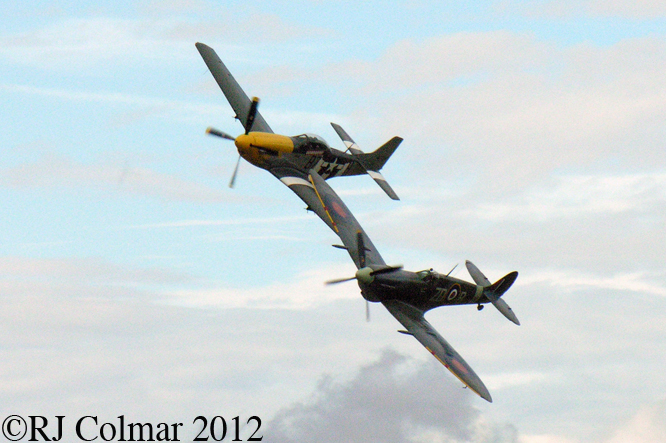
North American P51-D Mustang, Supermarine Spitfire Mk IXB, Wings and Wheels, Dunsfold Aerodrome

As the day came to an the 1945 North American P51-D Mustang, above on the left and 1943 Supermarine Spitfire IXB gave us a more than welcome double dose of, respectively, Packard and Rolls Royce built Merlin music as they waltzed the sky.
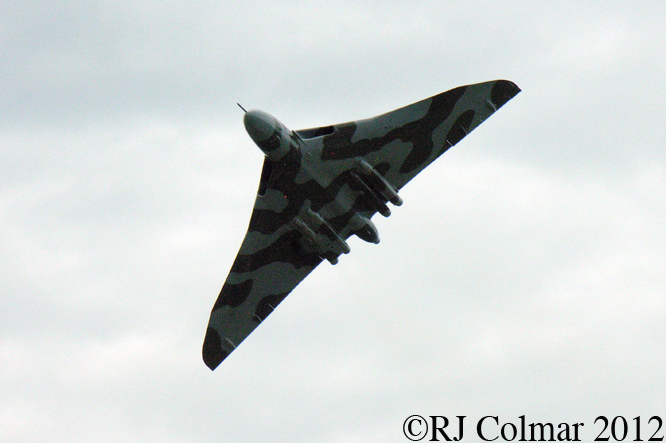
Avro Vulcan B.2, Wings and Wheels, Dunsfold Aerodrome

Just before I said good bye to my school friends and left the last flying Avro Vulcan caressed the sky and if nothing else showed that if it had ever been used as originally intended, to deliver a nuclear payload, it would have wasted the world in mutually assured destruction with elegance and grace. As it was after the Vulcan’s nuclear defense capabilities were deemed surplus to requirements several of them were converted for low level conventional bombing roles. A single Vulcan delivered twenty one 1,000lbs on Port Stanley airport in 1981, though it is debatable how effective the worlds longest range bombing sortie was as Argentinian forces, which had invaded the Falklands Islands, were able to repair the damage to the runway. The invaders were subsequently dispatched by the yomping British ground forces. The Vulcans were eventually replaced by the Panavia Tornado’s seen at Dunsfold earlier in the day.

This Vulcan has been restored to airworthy condition by The Vulcan To The Sky trust thanks to over £7 million raised from public subscription, if you are interested in helping to keep it in the air please visit the Vulcan to the sky site linked here.

Thanks for joining me on this “Wings & Wheels” edition of “Gettin’ a li’l psycho on tyres” I hope you will join me again tomorrow when I will be breaking from the usual Tuesday MG edition to celebrate an unusual 45th Anniversary. Don’t forget to come back now !

Share

Big John’s Return – Ferrari 512M

Today’s featured Ferrari is a 512M replica of the type that I looked at last June.

Ferrari 512M, Siverstone Classic

My research indicates this car appears to be one of at least 2 replica’s built by Bob Houghton in the UK around 1990.

While I was looking into the history of todays featured car I was surprised to learn that 1964 World Champion ‘Big’ John Surtess drove a Ferrari 512S, chassis #1038, in a little remembered return to the Ferrari fold, with Jacky Ickx to finish 2nd in 1970 Spa 1000 kms behind the Porsche 917 driven by Jo Siffert and Brian Redman.

Surtees who became World Champion, driving for Ferrari in 1964, walked out on the team at Le Mans in 1966 after a disagreement over driver arrangements for the 24 hour classic. In the process Surtees threw away a good shot at the 1966 World Championship in which he eventually finished 2nd despite driving an unfancied and unreliable Cooper Maserati for the balance of the 1966 season which had started well with a win for Ferrari in the 1966 Belgian Grand Prix.

Jacky Ickx again drove chassis #1038 on it’s second and final outing at Le Mans in 1970 sharing with Peter Schetty. A single accident in the rain had eliminated four other Ferrari 512S’s and a fifth had dropped out soon after the start. Ickx was in 6th place four hours after the start of the race and climbed all the way up to second around midnight before skidding off at the Ford Chicane killing one marshal injuring a second and writing off the car which was never to be seen again.

Thanks for joining me on this “Big John’s Return” edition of “Gettin’ a li’l psycho on tyres” I hope you will join me again tomorrow. Don’t forget to come back now !

PS 18 08 12 Thanks to Tim Murray for pointing out that John Surtees won the Belgian Grand Prix driving a Ferrari 1966 not the Monaco Grand Prix as originally stated.

Share

Sweet dreams are made of this – Connew PC1 02

Imagine a recently graduated 24 year old industrial designer, who knows nothing about motor sport, but with a passing interest in large American chromed land yachts sitting in an office designing record players in East London, i pods if your not sure of what a record player is, and the phone rings. His friends are calling to see if he would like to join them on holiday with the intention of taking in the 1969 Italian Grand Prix.

When his boss tells our hero that it is not okay to take the time of work to go on holiday our hero offers his resignation, and joins his friends anyway.

At the Italian GP our hero falls in love with the sound of V12 engines as they accelerate between the corners of the Monza track.

Upon returning to England he finds out about a vacancy in the drawing office of a newly established Grand Prix team owned by a former multiple World Motor Cycle champion and one time World Grand Prix champion.

Our hero’s attitude ‘that there was no problem in this world that common sense and application with half an ounce of intelligence can not overcome’ wins him the job, starting out knowing absolutely zero about the design of racing cars within months he is working on the design of a Grand Prix car.

When our hero sees the red car his new design is going to replace wheeled out into the sunshine for the first time, in that very instant he decides he is going to build a Grand Prix vehicle of his very own.

Our hero starts working from home, his parents home that is, on his own Grand Prix challenger, a friend tells our hero he may use a spare bedroom and lock up to start building his car, other friends chip in with time, suppliers ‘lend’ him various bits and pieces to be getting on with. As the design our hero is paid for near completion he then takes a job with an engineering company where he uses his and colleagues lunch hours to fabricate parts he cannot otherwise afford for his own Grand Prix challenger.

12 months after deciding to build his very own Grand Prix car our hero completes his chassis and he shows it to his cousin, a wood work teacher, who agrees to to join the team to make the bodywork using materials he has never used before.

Using only our heros own wages, friends time, goodwill and what can be scrounged including a dummy engine, once used by Jochen Rindt to win the 1969 US Grand Prix, gearbox and wheels our heros team push their improbably completed Grand Prix car one Sunday night out of it’s lock up, down the London Rd in Chadwell Heath to the only place with enough light to take a photo of their pride and joy, the forecourt of their local petrol station.

If this story sounds incredible then I’d like to welcome you to the incredible story of Peter Connew who in 36 months made the transition from record player designer to Formula One designer and constructor of the Connew PC1 02 Grand Prix car seen here in late 1971. To be continued….

With thanks to Peters cousin Barry Boor for the photographs if you’d like to read the whole story of how the Connew team came together over a period of two years and it’s trials and tribulations the year after please read Barry’s account of his part in this ‘Boys Own‘ adventure here.

Hope you enjoyed part one of my all time favourate Formula One story which will be continued at some future date, and that you’ll join me tomorrow for a look at some teutonic efficiency at ‘Gettin’ a lil’ psycho on tyres’. Don’t forget to come back now !

Share