Tag Archives: VSCC

Get Smart – Ferrari 250 GT Cabriolet Series 2 #2943GT

It’s been a couple of years since I looked at a Pininfarina bodied Ferrari 250 GT Cabriolet Series 2 in any detail, since then I have found out one such car was used by Maxwell Smart in the pilot episode of the Get Smart television comedy.
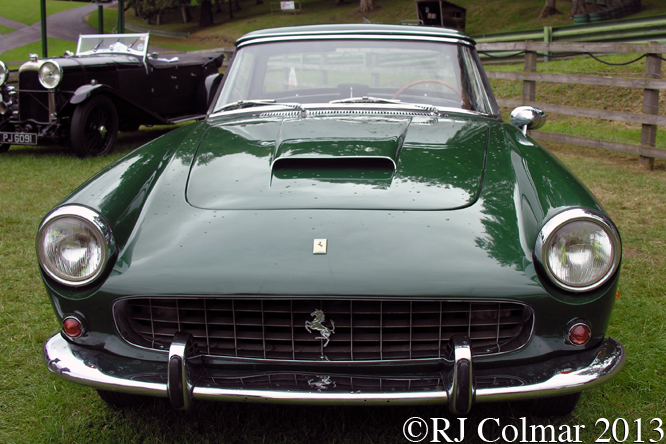
Ferrari 250 GT PF S2 Cabriolet, VSCC, Prescott

Chassis #2943GT was built in October 1961 the 148th of 204, painted red with a black interior. After spending it’s first couple of years in Italy #2943 was acquired by Prince Joackim Zu Furstenberg who kept it at Schloss Donaueschingen in Southern Germany until 1972.
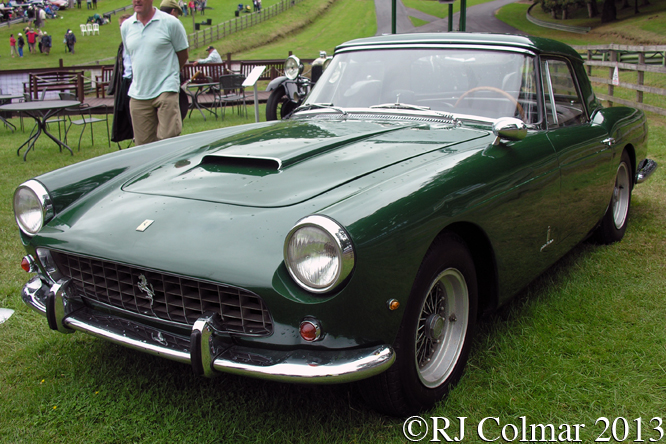
Ferrari 250 GT PF S2 Cabriolet, VSCC, Prescott

The current Norwegian owner bought the car from Germany’s preeminent Ferrari dealer Auto Becker in 1972 and exported it to Norway where it remained, until it was offered for sale at the upcoming Bonhams auction at the Goodwood Revival next week.
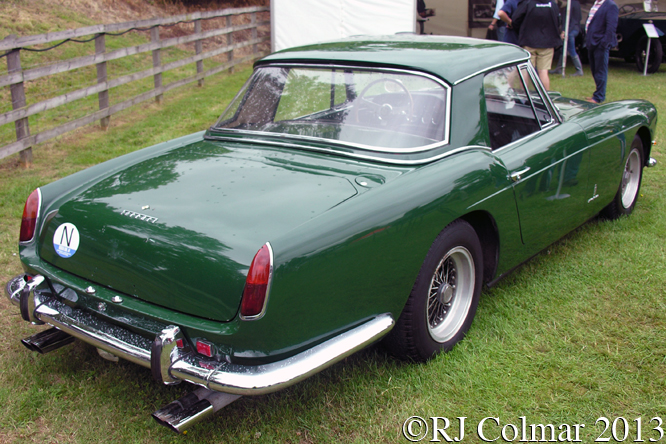
Ferrari 250 GT PF S2 Cabriolet, VSCC, Prescott

The car, seen here at last month’s Prescott’s VSCC meeting, is said to have approximately 38,500 miles on the clock, an average of just 745 miles a year over it’s entire life and is estimated to fetch up to £500,000.
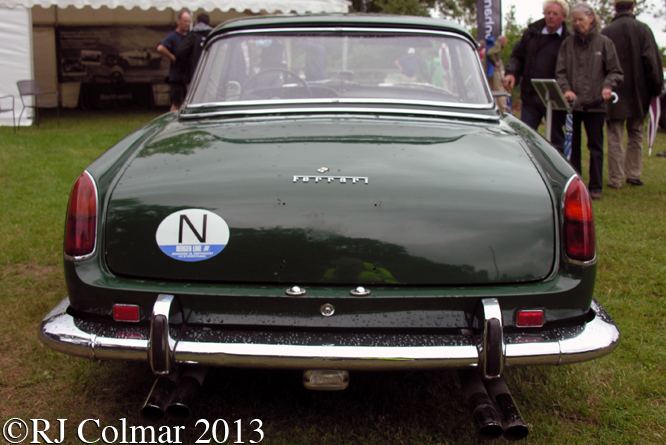
Ferrari 250 GT PF S2 Cabriolet, VSCC, Prescott

The downside is that the 3 litre / 183 cui Colombo Tipo 125 V12 motor has not been started for 4 or 5 years and is said to have a problem with the fuel pump, so some expense will be incurred to recommission the car.

Thanks for joining me on this “Get Smart” edition of “Gettin’ a li’l psychoontyres”, I hope you will join me again tomorrow. Don’t forget to come back now !

Share

To Turbocharge Or Supercharge – Halford Special / Aston Martin #1916

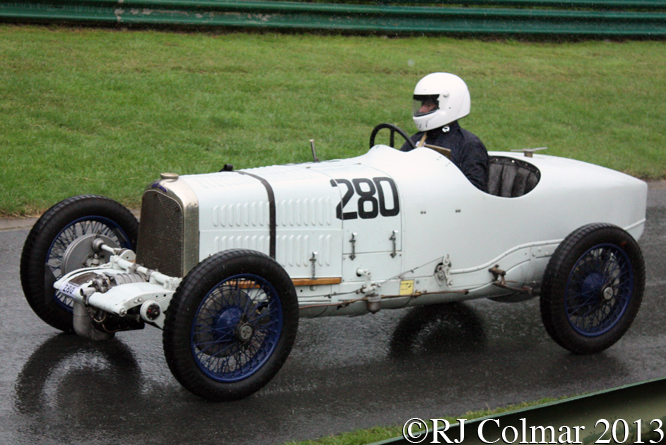
In 1922 Bamford & Martin built 2 cars to compete in the French Grand Prix, the spare engine for this project was fitted to Razor Blade in 1923.

Cheyne, Halford Special, VSCC, Prescott

Bamford & Martin also built a number of vehicles for customers to race and the Halford Special carrying the chassis number #1916 and the registration number OR 1 was one of these. In 1923 W G Barlow is known to have competed with #1916 at the Aston Clinton Hill Climb, from which Bamford & Martin adopted the “Aston” and merged it with “Martin” to arrive at the ‘Aston Martin’ Marque name, and at Brooklands where he finished 4th in the JCC Spring meeting.

Cheyne, Halford Special, VSCC, Prescott

Captain G E T Eyston, later of Thunderbolt Land Speed Record Fame, drove #1916 in a Voiturette, (up to 1.5 litre / 91.5cui) race at Boulogne where he crashed. Major Frank Halford, who along with Eyston had competed with Razor Blade bought the wreck and replaced the 55hp four cylinder motor with a new 1.5 litre / 91.5 / cui twin plug, twin overhead cam, 12 valve, six cylinder motor of his own design. The Major fitted the motor with a turbocharger, probably the first to fit such a device to a racing car, but it proved unreliable in testing and so he reverted to using Roots type super charger driven off the crankshaft to produce 95 hp.

Cheyne, Halford Special, VSCC, Prescott

Fitted with a new two seater body #1916 the Major raced the car in 1925 only to find the radiator was too small. After it was replaced with a larger one, a second 120 hp motor fitted with a Berk supercharger was also used in the car which was renamed Halford Special. In 1926 the Major drove his Halford Special to 3 victories at Brooklands on the long and short tracks and “podiumed” on at least half a dozen further occasions.

Cheyne, Halford Special, VSCC, Prescott

Captain Eyston bought the Halford Special in 1927 and won another race at Brooklands before finishing 4th in the French Grand Prix run at Monthléry. During the 1930’s Viscount Ridley dismantled the Halford Special fitting one of the motors to his Bugatti Type 35 and the other into a speed boat which sank to the bottom of a lake, where it remained for two years.

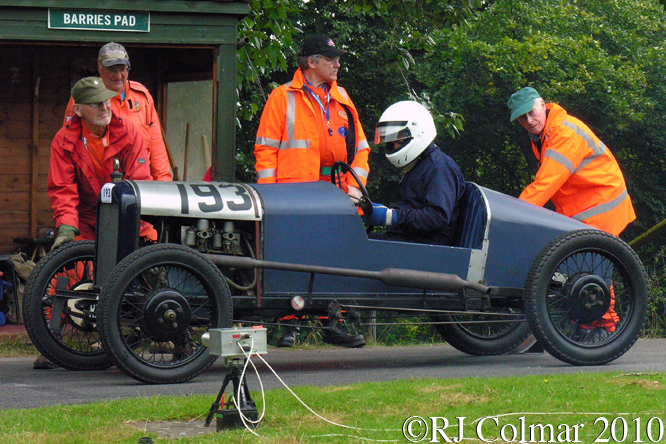
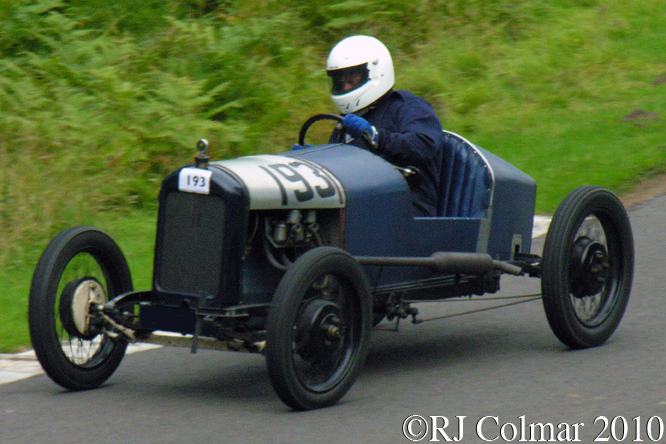
James Cheyne, seen at the wheel of the Halford Special at Prescott, collected all the pieces and rebuilt the Halford Special in the 1970’s, since when it survived an accident at Silverstone in 2008.

Turbocharging eventually started making an impact on racing, first in the Cummins Diesel Special at Indy, in 1952 and ’53.

Thanks for joining me on this “To Turbocharge of Supercharge” edition of “Gettin’ a li’l psychoontyres”, I hope you will join me again tomorrow. Don’t forget to come back now !
Share

VSCC University – VSCC Prescott Speed Hillclimb

Apologies to all for the absence of any blogs over the last week, unfortunately this was unavoidable after a moment of absent mindedness. Over the weekend I popped over to Prescott with regular GALPOT contributer Tim for the VSCC Speed Hillclimb.

Ceirano S, VSCC Prescott

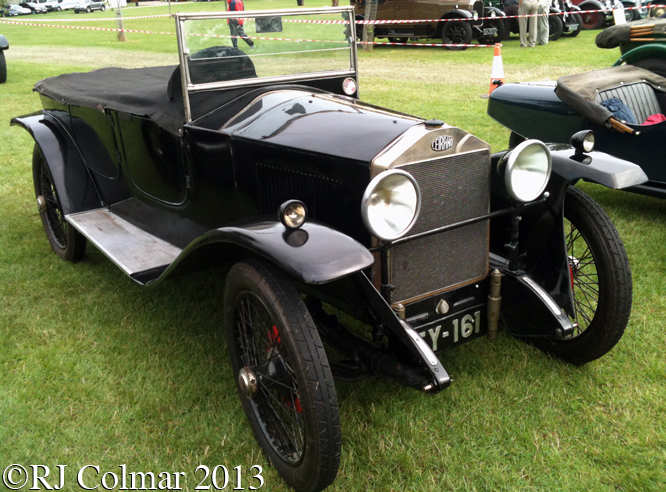
As ever the days education started in the car park where among several manufacturers, brands and models I’d not heard of before was this 1925 Ceirano built in Turin by SCAT (Societa Ceirano Automobili Torino) some years after founder Giovanni Ceirano, a prime mover behind the formation of FIAT in 1903, had died. Ceirano cars are best known for winning back to back victories in the Mille Miglia in 1911 and 1912.

Vauxhall Prince Henry, VSCC Prescott

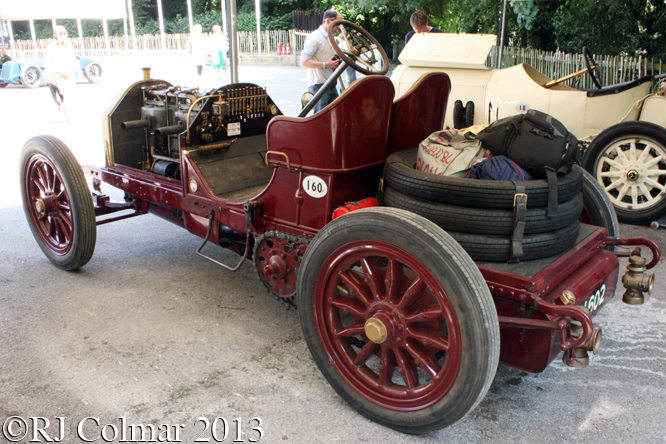
The paddock was of course equally full of unusual delights above the nose of a Roland Duce’s 1913 Vauxhall Prince Henry.

Lees, Vauxhall Viper Special, VSCC Prescott

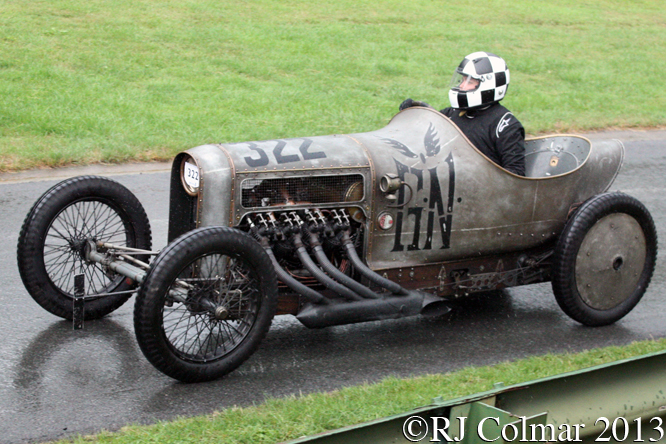
Another 1913 Vauxhall was Tony Lees Vauxhall Viper Special powered by a 200hp, 12 litre/732 cui Wolseley Viper aircraft motor of the type more usually found in late versions of the Royal Aircraft Factory SE5a and Avro 522.

Scaldwell, GN/JAP Grand Prix, VSCC Prescott

Among the fastest ladies present was Anne Scaldwell driving the GN JAP Grand Prix which was featured on this blog a couple of years ago.

Collings, Mercedes Simplex 60 HP, VSCC Prescott

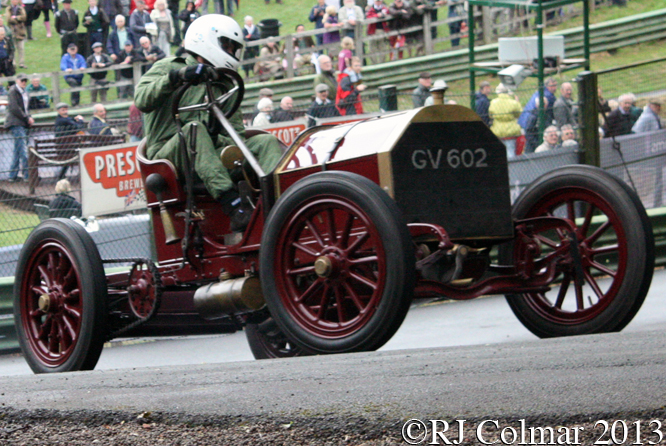
Another familiar car was Ben Collings 1903 Mercedes Simplex 60hp.

Martin, Morgan Special, VSCC Prescott

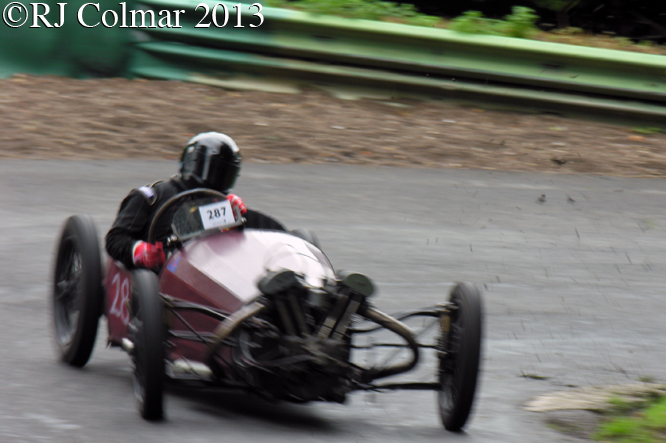
Displaying maximum attack skills on the hill, what ever the conditions, was Charlie Martin in the fabric bodied Morgan Special entered by CJ Maeers.

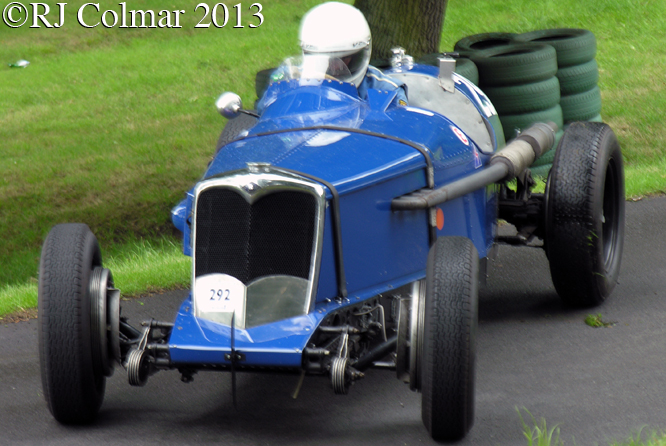
Cobden, Riley Falcon Special, VSCC Prescott

Robert Cobden seen above driving the Riley Falcon Special did well to keep his car on the road after executing an unintentional 180° spin coming out of the Pardon hairpin.

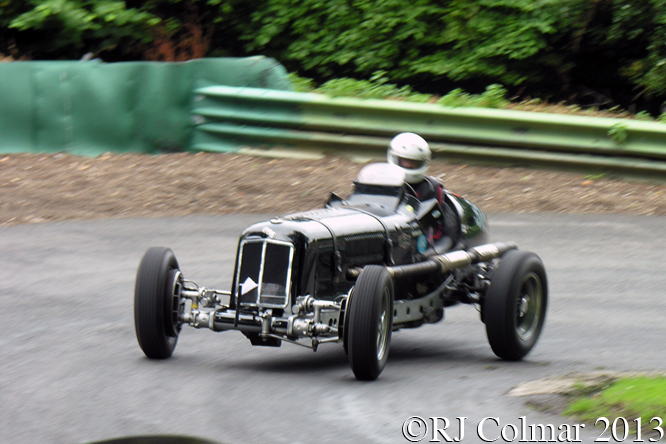
Hulbert, ERA 4D, VSCC Prescott

Fastest time of the day was keenly contested with Mac Hulbert taking the honours and The Mays-Berthon Trophy 0.36 seconds from James Baxter, both driving ERA’s. Mac is seen in the 1938 ERA R4D which appropriately enough way not only conceived by Raymond Mays and Peter Peter Berthon but also driven to many post war hill climb victories by Mays.

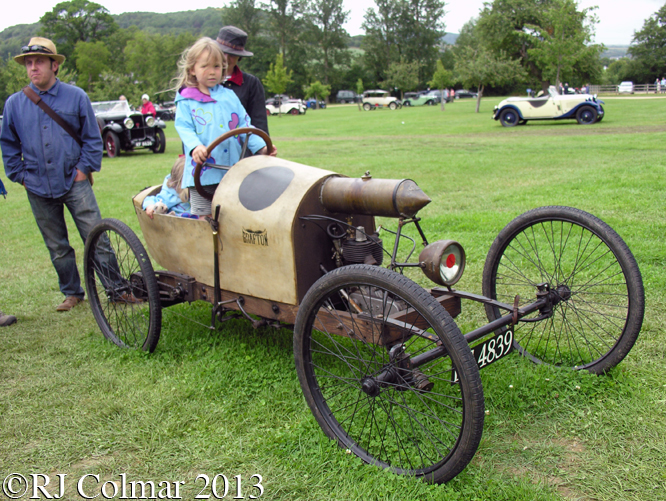
Grafton, VSCC Prescott

On the way back through the car park we stumbled across the JAP powered Grafton cycle car, the vehicle was built by Tim Gunn, seen on the left, of the Gunn Cyclecar Co in 2001 using a timber frame and an assortment of vintage parts.

Thanks for joining me on this “VSCC University” edition of “Gettin’ a li’l psycho on tyres” I hope you will join me again tomorrow for Americana Thursday. Don’t forget to come back now !

Share

Morris Centenary – Morris Oxford

2013 marks the centenary of the production of the first Morris Car and every Tuesday for the month of April I’ll be featuring a Morris model.

If you are new to GALPOT you may be wondering why no Morris Minors will be featured this month, that is because I did a run of Morris Minor features not so long ago, here are the links for those who missed them; 1953 Morris Minor Series II 4 door, Morris Minor Tourer and 1967 Morris 1000 Traveller.

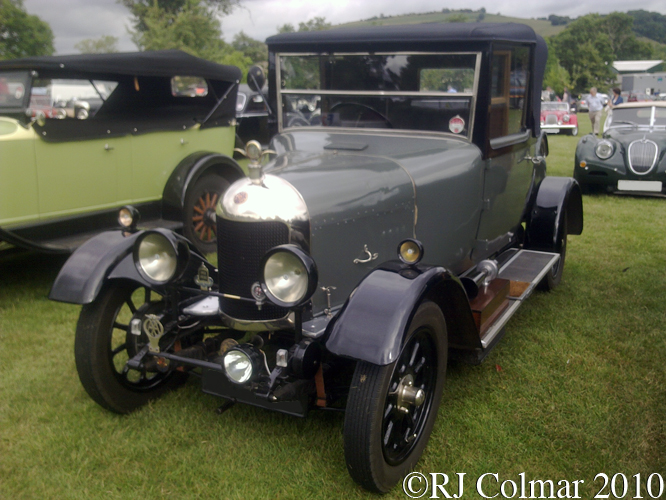
Morris Oxford, VSCC, Prescott

The first Morris car was a Morris Oxford which was assembled around a pressed steel chassis using many proprietary parts including a White & Poppe motor which sat behind a distinctive ‘Bullnose’ radiator not unlike the one seen on toady’s featured car.

Production of the original Bullnose Morris Oxford was halted by hostilities in 1914 and in 1919 a new Oxford model was launched featuring a larger Bullnose radiator and a Continental Red Seal motor built by the French Company Hotchkiss et Cie at their works in Coventry.

Today’s featured car was built in 1925 the first year the model was available with optional 12 inch front brakes one of which can be seen behind the AA badge in the photo.

A longer wheel base 4 seat version of the 1925 Morris Oxford went on to become the basis of the first MG 14/28 Super Sports model.

Production of the Bullnose Morris Oxfords came to an end in 1926 when it was replaced by the flat nosed Morris Oxford.

Thanks for joining me on this Morris Centenary edition of “Gettin’ a li’l psycho on tyres” I hope you will join me again tomorrow. Don’t forget to come back now !
Share

Jumpin’ Motorcycles – Singer 8 Junior Sports

Today’s featured 1928 Singer 8 Junior Sports is essentially mechanically identical to the 4 seat Coachbuilt saloon I looked at last week. The two cars were first registered a couple of months apart.

Singer 8 Junior Sports, VSCC, Loton Park

The boat tailed wire wheeled sports, originally fitted with cycle wings, running board, lights and a windscreen became known as the Porllock Sports after an unusual reliability record was set in 1930 by a Singer Sports on the famous 1 in 4 Porlock Hill in Devon where officials from Royal Automobile Club observed one being driven up and down the hill one hundred times in the space of 15 hours.

Singer 8 Junior Sports, VSCC, Loton Park

Singer Sports also had a multitude of other uses the Royal Signals Corps used one with a driver crouched in the cockpit as a hurdle for its motorcycle AND horse jumping display team.

The stripped car seen here at Loton Park is being driven by Ed Swain at Loton Park.

Thanks for joining me on this ‘Jumpin’ Motorcycles’ edition, of “Gettin’ a li’l psycho on tyres” I hope you will join me again tomorrow. Don’t forget to come back now !
Share

Brotherly love – Riley 9

The chassis of the Riley 9 was designed by Stanley Riley while the hemi head 1087 cc 66 cui was designed by his brother Percy. Riley 9s were produced from 1926 – 1938 with a variety of body styles.

The twin cam engine with short push rods operating the 45 degree inclined valves proved particularly suitable for tuning and Riley 9s were raced with great success into the mid 1950’s. This version, seen at Prescott top and Loton Park bottom, is owned by B Wildsmith and driven in VSCC events by Tim Hopkinson is a Special dating from 1929/34.

Hope you have enjoyed today’s brotherly love edition of Getting a lil’ psycho on tyres and that you’ll join me tomorrow for a look at another quintessentially British motor car. Don’t forget to come back now !
Share

Airways to Highways – GN JAP Grand Prix

A cycle car was a vehicle that weighed between 150 kg / 331 lbs and 350 kgs / 772lbs powered by an engine no larger than 1.1 litres / 67 cui that often qualified for reduced taxation. GN made such cars between 1910 and 1920 with proper wooden chassis.

On August 6th 1910 Britain’s first qualified aviator E T Willows became the first man to fly across the Bristol channel in his dirigible airship the 30 HP JAP V8 powered ‘Willow’s No.2‘ on the way from his home town Cardiff to London. He accidentally dropped his packed lunch over Bristol. Willow’s No 2 was rebuilt into Willow’s No.3 ‘City of Cardiff’ and became the first airship to cross the English Channel on it’s way from London to Paris. Willow’s celebrated his achievement on new years eve 1910/11 by flying his JAP powered airship round the Eifel Tower.

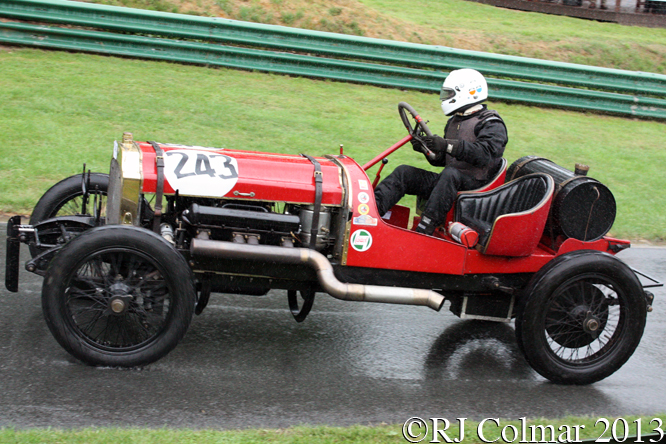
Richard Scaldwell brought together a 1919 wooden GN cyclecar chassis and E T Willows 1908 5112cc / 3111 cui JAP V8 to create the GN JAP Grand Prix special which he races in the Pre 1941 racing car class at VSCC events.

Amazingly after a days fun on the track Richard then drives his road legal racer home !

With thanks to Martin Squires for back ground information.

Hope you have enjoyed today’s high flying edition of Getting a lil’ psycho on tyres and will join me tomorrow for a look at a 200 hp Land Speed Record Breaker. Don’t forget to come back now !
Share