Author Archives: psychoontyres

Lynley mystery – Bristol 410

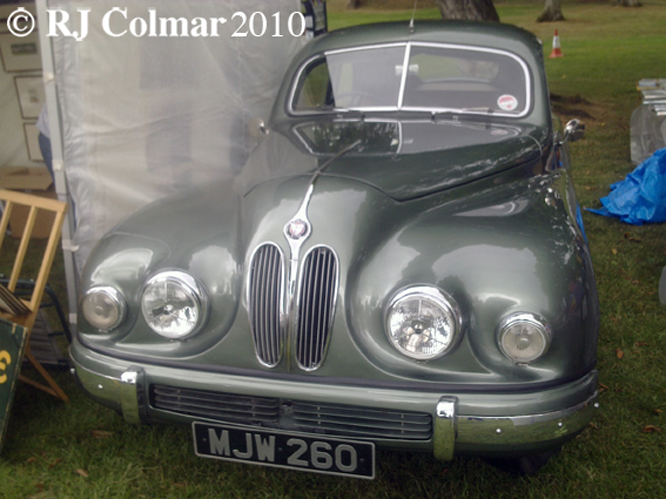
The Bristol 410 was the fourth Bristol model to use the chassis architecture laid out for the 407 model.

Using the A block Chrysler engine now with a swept volume of 5211 cc / 318 cui for the last time before switching to the larger Chrysler B block for subsequent models the 410 marked a return to a floor mounted shift for the Torqueflight gearbox after US legislation had outlawed the previous push button system.

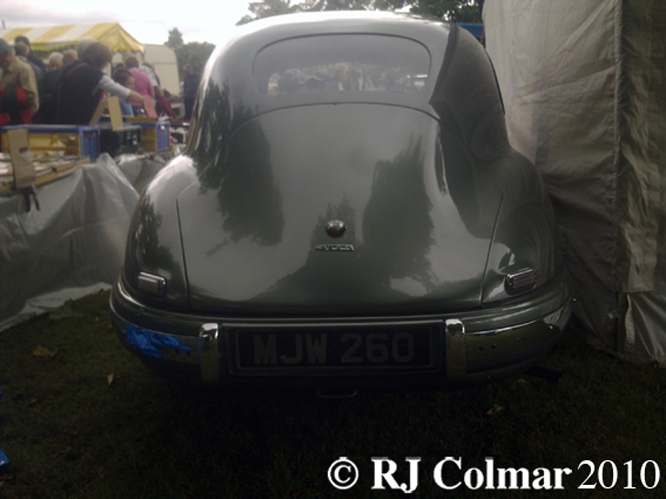
A Bristol 410 has two chrome strips running the length of the vehicle a feature unique to this Bristol model.

Fitted with ZF power steering as standard the 410 had a lower centre of gravity than the yet to be blogged 409 thanks to smaller 15″ diameter wheels down from 16″ on the previous model.

The 410 was the first Bristol fitted with separate front and rear brake circuits the servo’s. The servo’s were housed in a compartment between the front of the drivers door and the rear of the front wheel arch, the top hinge of which can just be distinguished below the badge in the photo above.

Some of you may recognise this as the model that Inspector Lynley drives in some episodes of the television series The Inspector Lynley Mysteries, mysteriously in the novels by Elizabeth George on which some of the episodes are based Lynley is actually described as driving a Bentley.

As ever exclusivity is the watch word for this manufacturer with just 79 Bristol 410’s being built between 1968 and 1969.

With thanks to the PistonHead who kindly brought this car to the recent Sunday Service at the BMW Plant at Cowley and to Cristopher Balfour who’s book ‘Bristol Cars a very British story‘ provided many of the insights in today’s blog.

Hope you have enjoyed today’s TV detective edition of ‘Gettin’ a lil’ psycho on tyres’ and that you will join me again for Ferrari Friday tomorrow. Don’t forget to come back now !

Share

Going it alone – Bristol 407

Just 88 Bristol 407’s were built between 1961 and 1963.

The 407 was the first Bristol model launched after ownership of the Bristol Car Company had been taken over by the Bristol Aeroplane Company founders grandson Sir George White 3rd Bt in partnership with Bristol’s preeminent retailer Tony Crook in September 1960.

The exterior of the Bristol 407 is distinguished from its predecessor the 406, which I have yet to write a blog about, by a horizontal bar across the radiator grill at the front and twin exhaust pipes at the rear.

Underneath the car could not be more different, the 407 is powered by a Canadian built 5130 cc / 313 cui Chrysler V8 connected to a push button operated Torqueflight transmission, a combination which first came to the attention of of Sir Reginald Verdon Smith the Bristol Aeroplane Company director in the 1950’s on a private visit to Canada.

Bristol attempted to develop it’s own aluminium block V8 in the 1950’s but, insufficient experience casting aluminium and lack of capital thanks to the spiralling cost of aircraft development elsewhere in the Bristol group of companies meant that the V8 never got beyond an underdeveloped prototype stage at which crankshaft main bearing housing distortion presented an obstacle to production.

Changing to the Canadian V8 from the hitherto BMW inspired straight 6 necessitated replacing the former transverse leaf front suspension with a pair of coil springs and replacing the highly praised rack and pinion steering with Marles worm driven steering.

The chassis was fitted with Dunlop disc brakes all round and the aluminium body production was moved from Jones Brothers to Park Royal Vehicles in London.

The 407 chassis set out the basic architectural features for all Bristol’s with many incremental modifications right through to the introduction of the Bristol Fighter in 2004.

This particular model photographed at a Loton Park VSCC meeting is registered in Sweden, notice that it is a Right Hand Drive model, Sweden switched to Left Hand Drive in September 1967 to bring it into line with it’s Scandinavian neighbours.

My thanks to Christopher Balfour who’s book ‘Bristol Cars a very British story‘ provided many of the insights in today’s blog.

Hope you have enjoyed today’s Marles worm driven steering edition of ‘Getting a lil’ psycho on tyres and that you’ll join me again tomorrow for a look at the even rarer Bristol 410. Don’t forget to come back now !

Share

Fit for a Sheikh – Bristol 405 Drophead

The Bristol 405 introduced in 1953 was the first Bristol to dispense with the BMW inspired grill and is unusual for having a single fog light placed in the middle.

There were two versions of the 405 this Drophead of which 43 were built and an imposing 4 door saloon of which 308 were built until production ended in 1958.

A 1971 cc / 120 cui straight six motor was exclusively tuned to produce 125 hp for the Drophead, the Saloon was given a 105 hp version of this engine. One blogger described the sound of this motor as being like ‘a squadron of Lancasters‘.

The first two 405 D’s were strictly two seaters with fully retracting roofs, however all bar one of the remaining Dropheads had roofs that rested on the rear body work making space for rear seats. A one off 405 D was produced for Sheikh Yusuf Mohammed Al Tawil and shipped to Jeddah in 1955 painted gold with silver wheels, white wall tyres and an electro-hydraulic operated roof.

The slick action four speed gearbox of all 405’s were fitted with a Laycock overdrive for high speed cruising operated by the large toggle switch to the right of the steering wheel.

The first 18 to 20 Bristol 405 Drophead chassis were sent to Abbots of Farnham where the bodywork was crafted. Abbots landed a large contract to build estate / station wagon version of the Ford Zephyr and Zodiac models and the remaining 405 D’s were sent to Tickford, in Newport Pagnell, for body work to be built according to the Abbots of Farnham drawings. I am not sufficiently drenched in Bristol Cars lore to tell you where this particular body was crafted… yet.

I suspect I could get used to fresh air motoring in a vehicle fit for a Sheik that sounds like a ‘squadron of Lancasters‘ how about you ?

Thanks to the owner of this fabulous vehicle for bringing it to the Sunday Service at the BMW Plant a couple of weeks ago.

Hope you have enjoyed today’s fit for a Sheikh edition of ‘Gettin’ a lil’ psycho on tyres and that you will join me again tomorrow for a Swedish tease. Don’t forget to come back now !

Share

Under The Skin – Bristol 403

Continuing the Centenary Celebrations of the Bristol Aeroplane Company which for my part went horribly wrong when I originally identified the car in today’s photographs as a Bristol 401.

Image0856sc

With that error thankfully corrected I am now armed with a Bristol Owners Club Membership and Car List and a Christmas treat to myself recommended by Teb Marius, the excellent ‘Bristol Cars, a very British story‘ by Christopher Balfour to help correctly identify the various Bristol models in future.

Apart from the badging differences and chromed bumper of the 403 detailed in my Bristol 401 blog there is little externally to help tell a 401 apart from a 403.

Image0857sc

Internally however there were many changes between the two models, the 403’s engine ran with larger valves in the cylinder head and larger crankshaft bearings which helped boost the power of the BMW derived engine by 15 hp up to 100 hp. Coupled with improved ‘Alfin’ brakes and an antiroll bar on the front suspension the 403’s performance was much crisper loosing 3 seconds from the standstill to 60 mph acceleration test to record a time of 13.4 seconds.

Just 287 104 mph Bristol 403’s were produced from 1953 to 1955 when the process of separating the Bristol Car Company from the Bristol Aeroplane Company, it’s parent, was getting underway.

Hope you have enjoyed to days ‘Alfin’ arrested edition of ‘Gettin’ a lil’ psycho on tyres’ and that you’ll join me again tomorrow for a look at a fabulous drop head Bristol with tail fins. Don’t forget to come back now !

Share

Hotel California – VW California

Continuing the California theme started yesterday today we are looking at a VW California.

Production of the Volkswagen T5 Transporter began in 2003, this one is fitted with a 170 hp turbo diesel engine.

In 2001 Mercedes Benz bought out VW’s preferred camper van outfitter Westfalia leading VW to decide to design it’s own camper around the popular Transporter platform. VW call their camper the ‘California’ a name that was first used by Westfalia in connection with a VW camper in 1988.

launched in 2005 the California comes with an electro-hydraulic operated elevating roof, space for two beds, kitchen sink two burner gas hob, fridge and two kitchen cupboards with integrated drawers. Among a long list of options is the VW 4 motion all wheel drive system.

With Ford knocking on Ferrari’s lawyers doors with respect to the use of the F 150 name I wonder if Ferrari will ever be knocking on the VW’s lawyers doors with respect to the California name ?

Unfortunately thanks to a US ‘chicken tax’ on imported light trucks, which the already expensive T5 is classed as, you are not ever likely to see a VW California in the State from which it takes it’s name, the California is so expensive, £40,000 / $64,000 that only around 300 a year are thought to be imported into the UK.

Fancy seeing why the VW T5 is so highly rated in the UK ? Check out these two advert free clips of the T5 going head to head with the A Team van and over a timed run against the a much more powerful 204 hp Brabus (!) Mercedes Vito Sport X.

Hope you have enjoyed a couple of days in the California Sunshine wishing all readers of ‘Gettin’ a lil’ psycho on tyres’ a relaxing weekend, don’t forget to come back now !

Share

California Dreaming – Ferrari California 2+2 Convertible

A couple of years ago I was at an airport and I noticed in the duty free area there was a Ferrari on a turntable that was a raffle prize.

I’d never seen one like it before turns out that it was a California, at £25 / $40 a pop for a ticket I passed on what may well have been my only opportunity to own a Ferrari without regret.

Allegedly the California was originally conceived as Maserati, however the economics of the project dictated that only a Ferrari badge offered any hope of a financial return on the vehicle.

Researching this blog I was surprised to find the California introduced in 2008, shares it’s engine design with both ALFA Romeo and Maserati models.

Over 1,000 hours are said to have been spent in a wind tunnel perfecting the aerodynamics of the California so that it’s drag coefficient is 0.32 the lowest ever achieved for any Ferrari.

I have to confess it was not until I had run a registration check on these vehicles that I had any idea of exactly which models they were and indeed they were both the same type, I thought the red one was a 612 Scaglietti !

Allegedly there is room on the back seats for two adults in a Ferrari 612 Scaglietti something at 6′ 2″ I’d love to put to the test.

Even if I had known it comes with a front mounted 450 hp 4.3 litre 260 cui V8 engine I doubt I would have been tempted to buy a raffle ticket….

because for all the attention to detail …

beautiful craftsmanship ….

seven speed dual clutch transmission …

and promise of the joys of open air motoring …

alone price of the road tax on the Ferrari California is enough to keep me on the road for a whole year in my 20 year old jalopy … but that does not stop me from dreaming 🙂

With thanks to the PistonHeads responsible for bringing these dream machines to the Sunday Service at the BMW Plant in Cowley a couple of weeks ago.

Hope you have enjoyed to days California dreaming edition of ‘Gettin a lil’ psycho on tyres’ and that you’ll join me again tomorrow for a look at another vehicle bearing the California name. Don’t forget to come back now !

PS Should I have failed to quench your thirst for Ferrari’s take a look at the new Ferrari FF with Michele Rahal over on The Drive Channel.

Share