Category Archives: Uncategorized

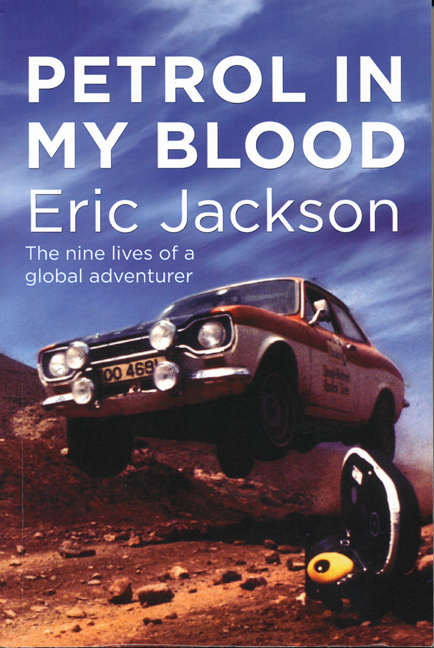
Petrol In My Blood – Eric Jackson

Petrol In My Blood, Eric Jackson

When I was a kid I was lucky to be taken by my parents on several epic road journeys including Athens to London in an Austin A40 Countryman and Durban to Mufulira, I’ll let you look it up, in a Ford Escort Estate.

These were sedate trips compared to those made by Eric Jackson and Ken Chambers who drove a Ford Cortina GT to set a new record for driving from London to Capetown in 13 days 8 hours and 48 mins, 14 mins faster than the previous record. Jackson and Chambers record stood for 47 years until the record was lowered to 11 days 14 hours and 11 mins in 2010 by Mac & Steve Mackenney with Chris Rawlings driving a Land Rover Discovery

“Petrol In My Blood” by Eric Jackson retells his life story from humble beginnings in Barnsley where he was the son of a traveler to becoming one of the country’s leading Ford dealers.

The gripping story covers many other tales including; racing the RMS Windsor Castle from Cape Town to Southamptonand driving a Ford Consul around the world in 43 days.

Erics adventures in a Ford Zodiac Mk 4 which included a Monte Carlo Rally and a 100 mph average speed record for seven days and nights set at Monza with Ken Chambers, John Beckhart, Michael Bowler and John Maclean all sharing the driving are also included.

In between the records Eric also won the RAC Rally Championship and narrowly missed out on becoming a shipping tycoon. Petrol In My Blood could hardly fail to be an interesting read and a further taster of the books contents can be found on the Damn Long Way website linked here.

The book is self published and available from lulu.com in hardback £27.07 or paper back £12.09 my soft back came through in a couple of days.

Thanks for joining me on this “Petrol In My Blood Edition” of “Gettin’ a li’l psycho on tyres” I hope you will join me again tomorrow. Don’t forget to come back now !

Share

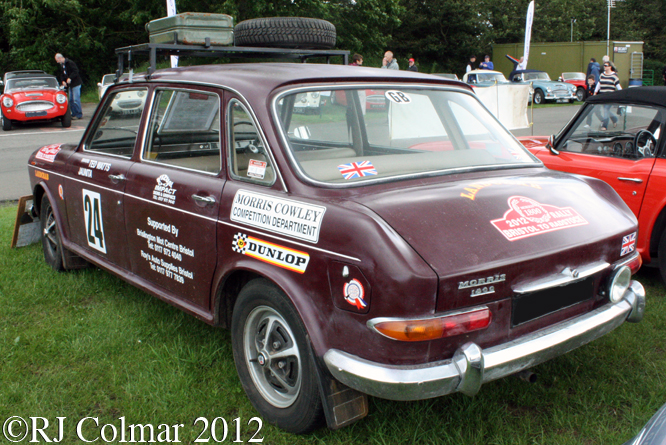
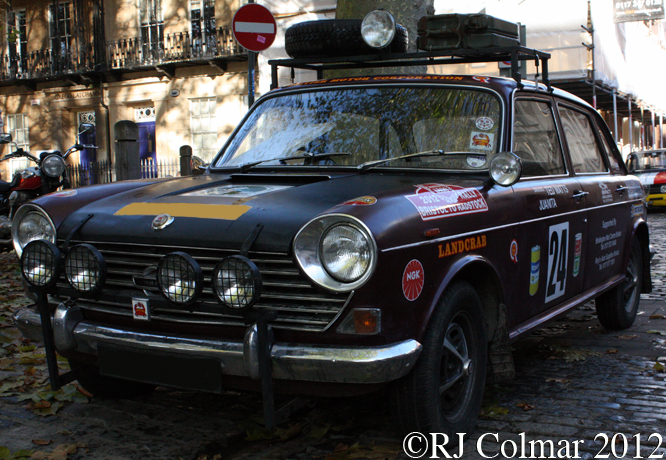
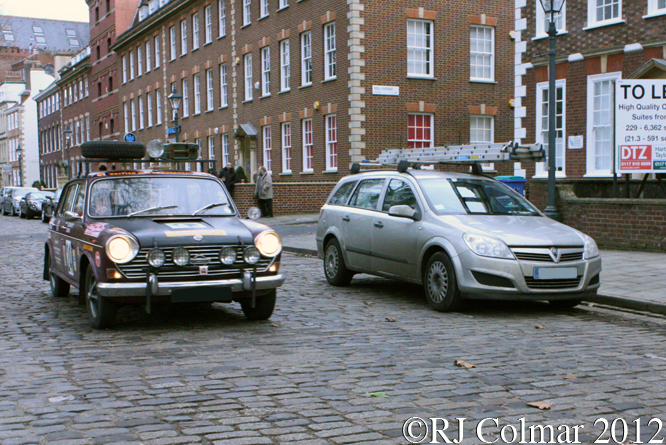
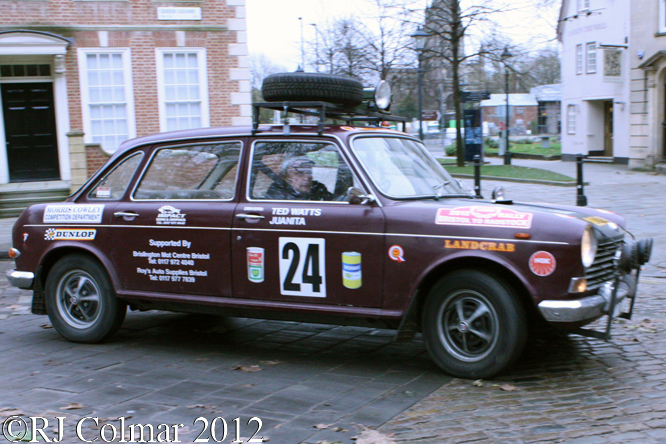
Rally Landcrab Recreation – Morris 1800 (ADO 17)

1964 saw the launch of the third in range of Alec Issigonis practical front wheel drive British Motor Corporation (BMC) models that started with the Mini variations in 1959 progressed to the ADO16 1100 and 1300 variations first seen in 1962 and had grown to the ADO 17 1800 variations for 1964 with the launch of the Austin 1800 that was followed two years later by the Morris 1800 of the type featured today.

01 IMG_4857sc

Prior to the current owner of this 1966 model purchasing it for £200 on the 28th of February 2011 the car had spent 17 years in a barn and a further two years rotting in a garden because the clutch had failed in 1992.

Morris 1800, Avenue Drivers Club, Queen Square, Bristol.

Since 2011 the owner has replaced the clutch, rebuilt and refurbished the braking system scraped, cleaned, etch primed and coated the under side in bitumen under seal and carried out a few welding repairs to the wings / fenders around the headlights.

Morris 1800, Classic and Sports Car Action Day, Castle Combe

By May 2012 the Morris had passed it MOT and was back in use as a daily driver. Since then the owner, a member of the Norton Radstock Classic Vehicle Club has attempted to use the vehicle as a starting point to recreate a period works rally car of the type that was used in the 1968 London to Sydney and 1970 London to Mexico World Cup Rally marathons where Landcrabs finished 2nd and 9th respectively.

Morris 1800, Avenue Drivers Club, Queen Square, Bristol.

The AD0 17’s in Austin, Morris and Wolseley guises, all affectionately known as land crabs were extremely roomy and rugged vehicles but ultimately even in up market Wolseley guise a touch to pragmatic for owners of vehicles of this size and consequently did not perform in the market as expected. The ADO 17’s were eventually produced in three different series being joined by six cylinder 2200 variations in the third series from 1972. Production of the Morris 1800/2200 variants totaled 95,271 between 1966 and 1975 when the model was replaced by the new wedge shaped ADO 71 Morris 1800 and 2200 which soon after became known as the Princess.

Thanks for joining me on this Morris 1800 (ADO 17) edition of “Gettin’ a li’l psycho on tyres”, I hope you will join me again tomorrow. Don’t forget to come back now !

Share

Jet Pods – Chevrolet Apache 31 Fleetside

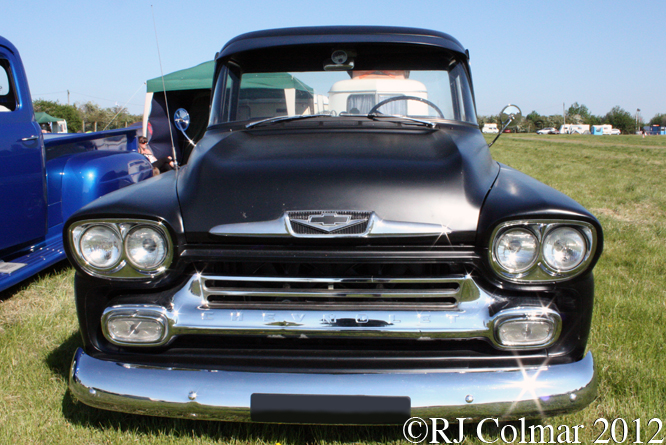
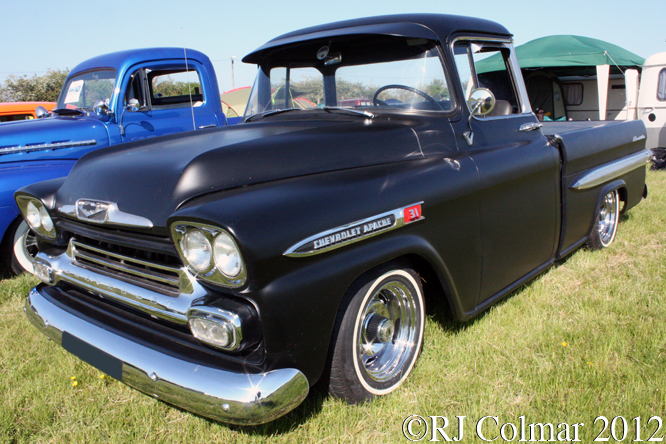
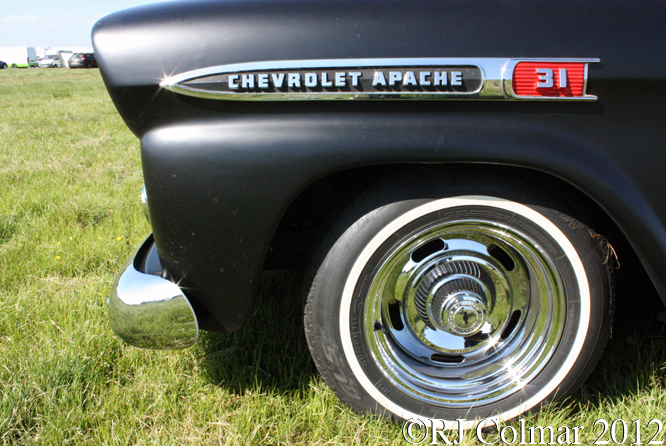
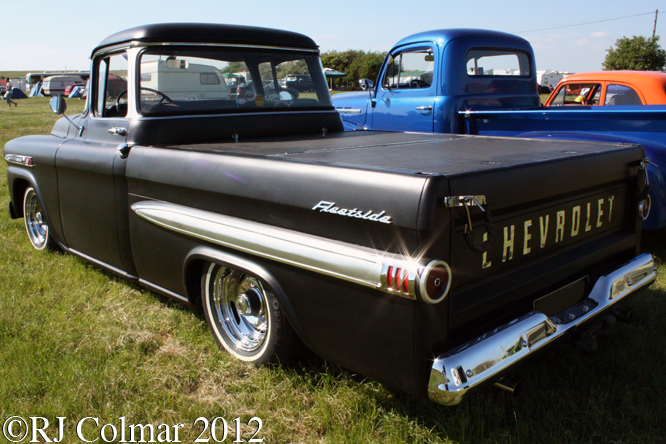
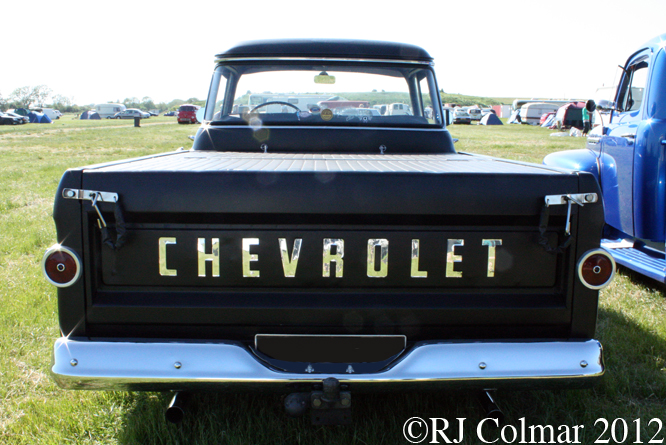
Today’s featured pickup is a 1959 Chevrolet Apache 31 Fleetside which replaced the Chevrolet Cameo Carrier as GM’s sporty pick up.

Chevrolet Apache 31 Fleetside, Yanks Picnic, Shakespeare, County, Raceway,

Like all ’59 Task Force models this Apache 31 Fleetside features subtly updated four head lamp styling featuring a narrower bonnet/hood badge to the ’58 Task Force models. The Apache Fleetside pickups were marketed with the strap line, “These are the best-looking truck cabs that ever came down the road!”

Chevrolet Apache 31 Fleetside, Yanks Picnic, Shakespeare, County, Raceway,

Like the ’58 Apache’s power came for either a 3.9 litre / 235 cui Thriftmaster in-line six or 4.6 litre / 283 cui Taskmaster V8, this particular example is officially registered with a 6 litre / 366 cui motor of yet to be determined origin.

Chevrolet Apache 31 Fleetside, Yanks Picnic, Shakespeare, County, Raceway,

Styling queues on ’59 Apache reflect mans technological advance into the space age following the launch of Sputnik the worlds first satellite in October 1957. Regular GALPOT readers might remember the front wing / fender Apache logo on the ’58 Apache featured last week resembled a jet plane, for ’59 the Apache logo resembles a rocket emitting red flames.

Chevrolet Apache 31 Fleetside, Yanks Picnic, Shakespeare, County, Raceway,

The big styling feature that differentiated the ’58 Cameo Carrier from the ’59 Apache Fleetside was the rocket shaped “Jet Pods” incorporated into the cab width bodywork which ran into the round tail lights.

Chevrolet Apache 31 Fleetside, Yanks Picnic, Shakespeare, County, Raceway,

Like the narrow width cargo box Apache 31 the Fleetside was built on a 114 inch wheel base chassis with a six and a half foot cargo box.

Thanks for joining me on this “Jet Pods” edition of “Gettin’ a li’l psycho on tyres” I hope you will join me again tomorrow. Don’t forget to come back now !

Share

The Kiwi Bear Corrections – McLaren Offy M15

Firstly a big thanks to racer Jerry Entin who kindly corrected a blog I posted a couple of years ago about Denis Hulme’s participation in the 1970 Indy 500 and has kindly sent some additional photo’s from the IMS Archive to complete the story.
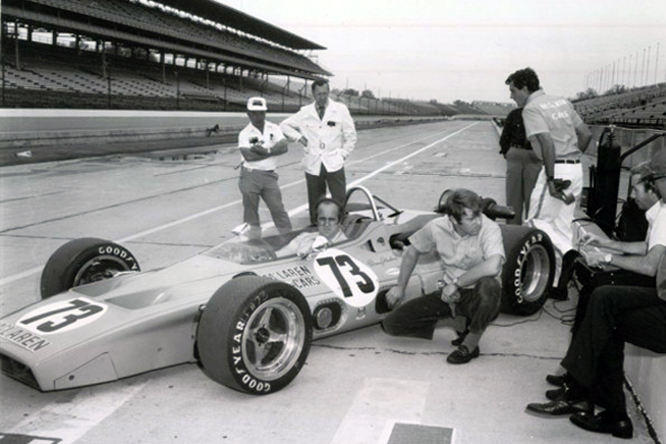
McLaren Offy M15, Indy 500

Photo Courtesy Jerry Entin and IMS Archive 1970

For 1970 Bruce McLaren had Gordon Coppock design the first McLaren Indy 500 challenger, above the #73 McLaren Offy M15 is seen in the Indy pit lane with Denny at the wheel, Tyler Alexander crouched beside him and Teddy Mayer with clip board on the pit wall. Jerry tells me the little guy in the back ground is Chickie Hirashima a well known crew chief and Offy engine builder.
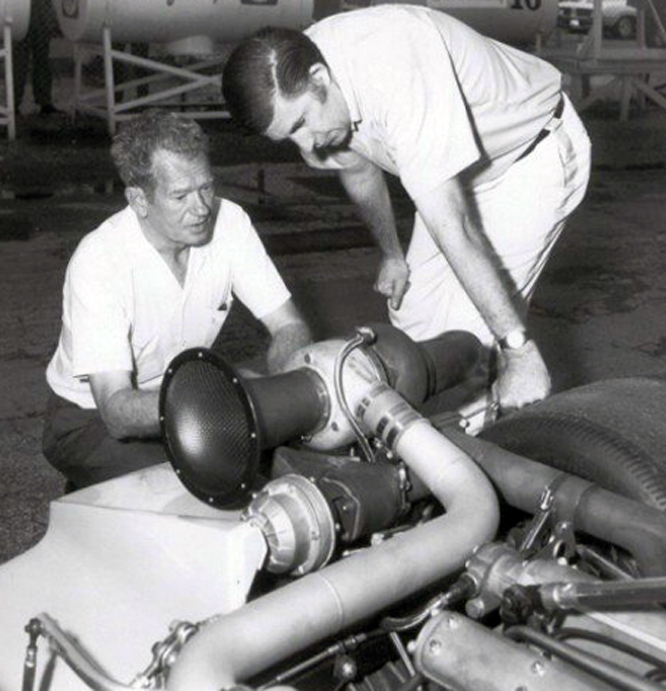
McLaren Offy M15, Indy 500

Photo Courtesy Jerry Entin and IMS Archive 1970

The turbocharged Offenhauser’s that McLaren used were prepared by George Bolthoff (R) with help from the legendary Herb “Herbie Horsepower” Porter (L) of Speedway Engines.
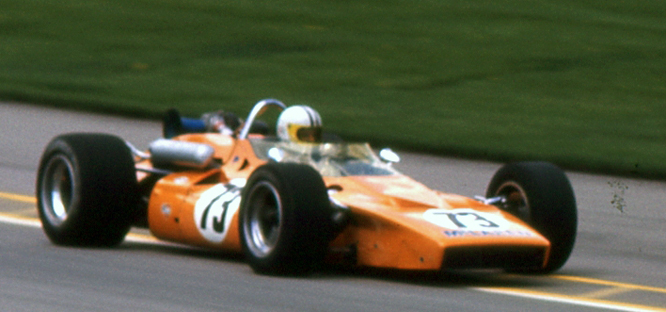
McLaren Offy M15, Indy 500

Photo Courtesy Steve Arnaudin Copyright Ed Arnaudin 1970

Ed Arnaudin’s photo above show’s New Zealander Denny taking part in practice,
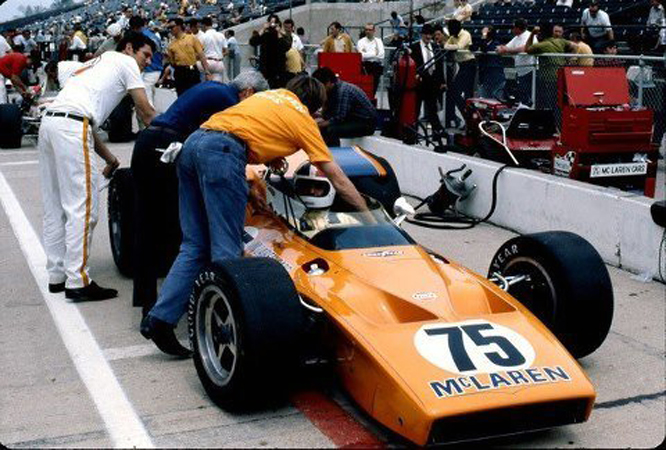
McLaren Offy M15, Indy 500

Photo Courtesy Jerry Entin and IMS Archive 1970

his team mate in the #75 McLaren Offy M15 was to have been fellow New Zealander Chris Amon with whom team owner Bruce McLaren had won the 1966 Le Mans 24 Hours driving a Ford GT40.
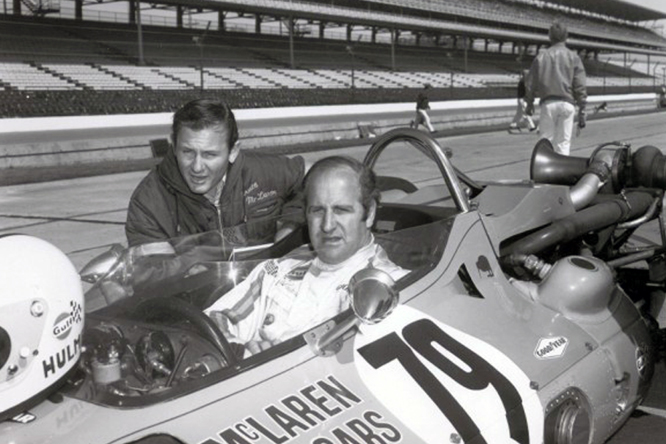
McLaren Offy M15, Indy 500

Photo Courtesy Jerry Entin and IMS Archive 1970

Team owner Bruce McLaren, seen above squatting next to Denny, had tested the #79 M15 making a big impression driving in convoy with his #73 and #75 entries on the opening day of practice for the 1970 Indy 500 and Denny was to shake down the #79 back up car to cover all eventualities.
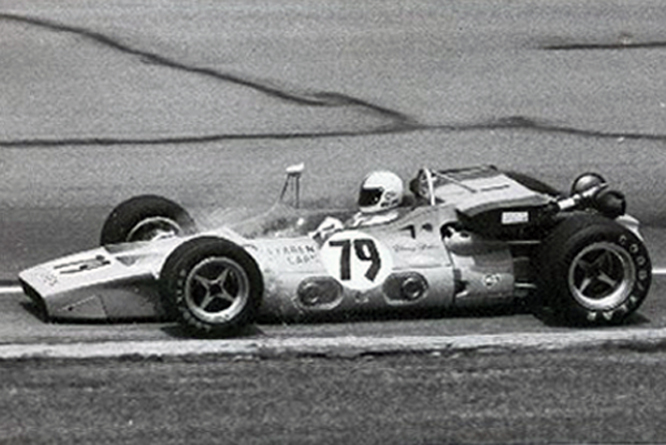
McLaren Offy M15, Indy 500

Photo Courtesy Jerry Entin and IMS Archive 1970

However the #79 developed a methanol fuel leak,
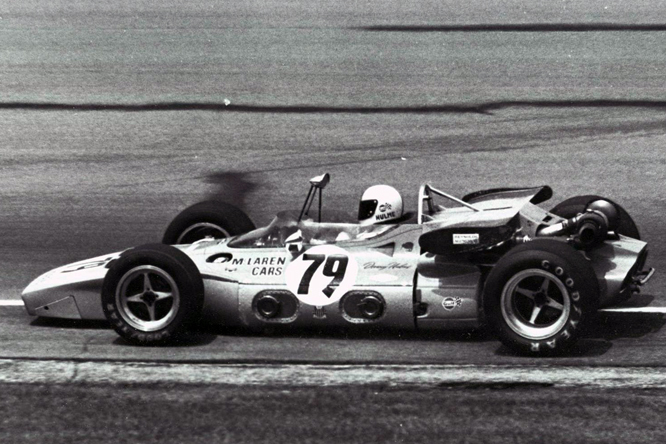
McLaren Offy M15, Indy 500

Photo Courtesy Jerry Entin and IMS Archive 1970

which caught fire, the only evidence of the fire in the photo above is the clearly visible heat haze above the far front wheel as Denny prepares to jump and roll away from his car which was still traveling at 70 mph.
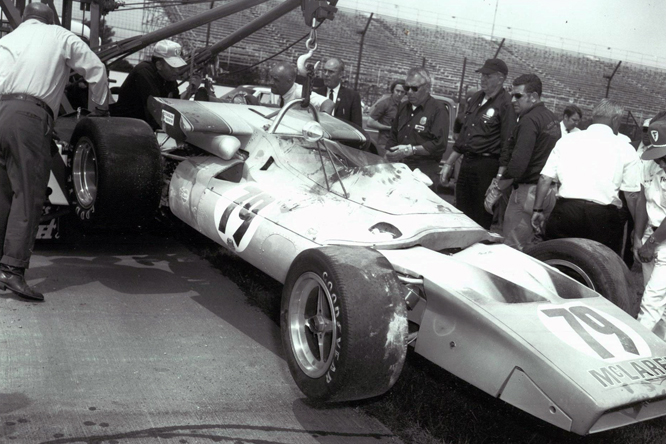
McLaren Offy M15, Indy 500

Photo Courtesy Jerry Entin and IMS Archive 1970

Denny received severe burns to his hands which forced him to miss the Indy 500 and the next two Grand Prix however within a month he was back behind of the wheel of his McLaren Chevrolet M8D Can Am car winning the series with six race victories, a string of three third place finishes also helped Denny secure 4th place in the world drivers championship all while his hands were still healing.
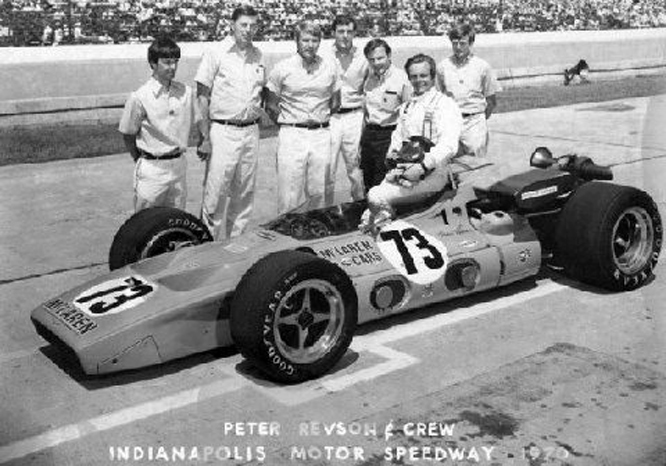
McLaren Offy M15, Indy 500

Photo Courtesy Jerry Entin and IMS Archive 1970

Teddy Mayer engaged Peter Revson to replace Denny in the #73 for the Indy 500, Peter qualified 16th but retired and was classified 22nd.
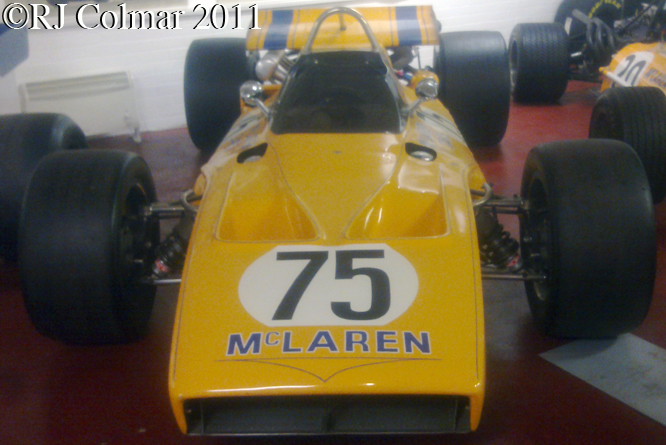
McLaren Offy M15, Donington Park Museum

On seeing the extent of his countryman Denny’s injuries Chris Amon was not impressed with the Indy safety facilities and withdrew from the race.
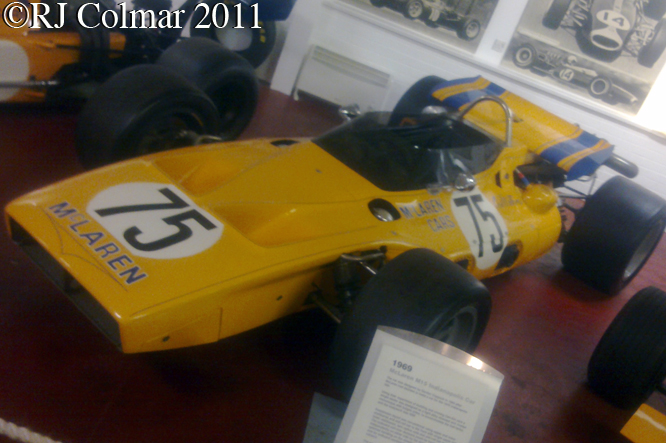
McLaren Offy M15, Donington Park Museum

Chris’s place in the #75 was taken by Carl Williams who qualified 19th and brought the car home 8th to record McLaren’s first finish in the Indy 500. The teams next design the M16 would become the class of the field in early 1970’s taking wins with Mark Donohue driving in 1972 and Johnny Rutherford in 1974 and 1976.
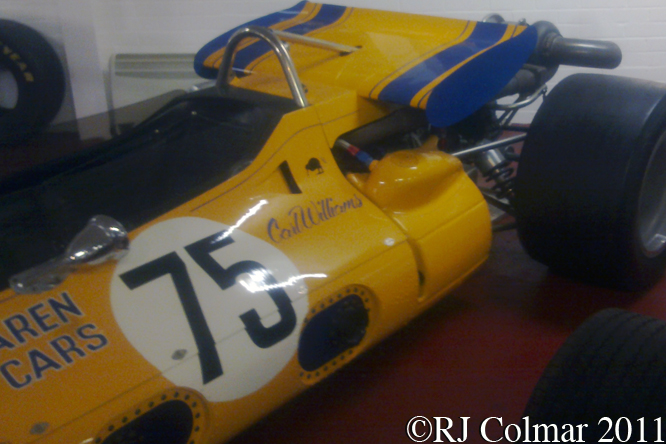
McLaren Offy M15, Donington Park Museum

However team owner Bruce McLaren would not see any of these success he was killed a couple of days after the 1970 Indy 500 testing a McLaren Chevrolet M8D Can Am car at Goodwood. Team manager Teddy Mayer took over the running of the Bruce’s legacy which is now the second oldest team in Grand Prix racing behind Ferrari.

My thanks to Jerry Entin, IMS Archive, Ed and Steve Arnaudin who made today’s blog possible and apologies for any confusion caused by getting the car Denny was driving when he got injured wrong in the original post.

Thanks for joining me on this “The Kiwi Bear Corrections” edition of “Gettin’ a li’l psycho on tyres” I hope you will join me again tomorrow. Don’t forget to come back now !
Share

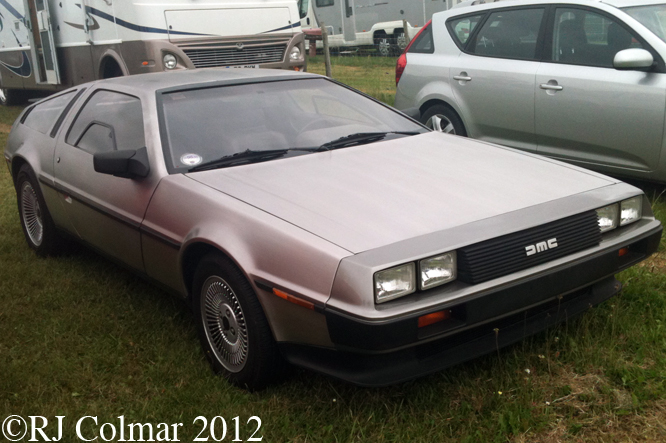
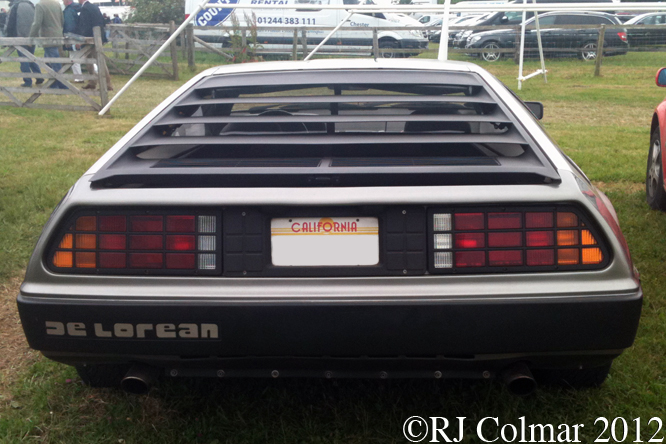
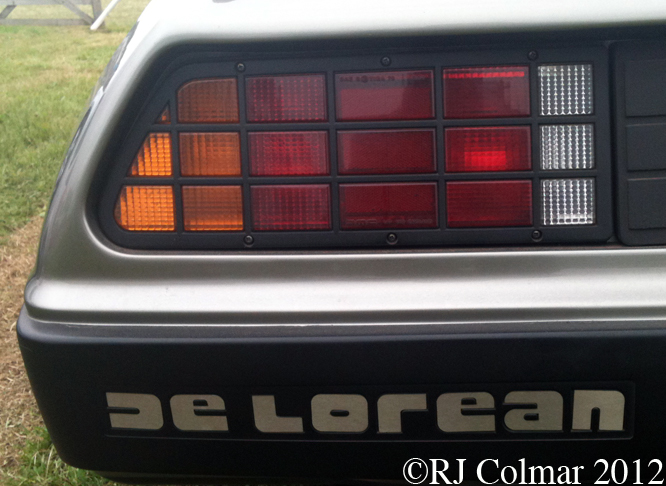
Time Machine – DeLorean DMC-12

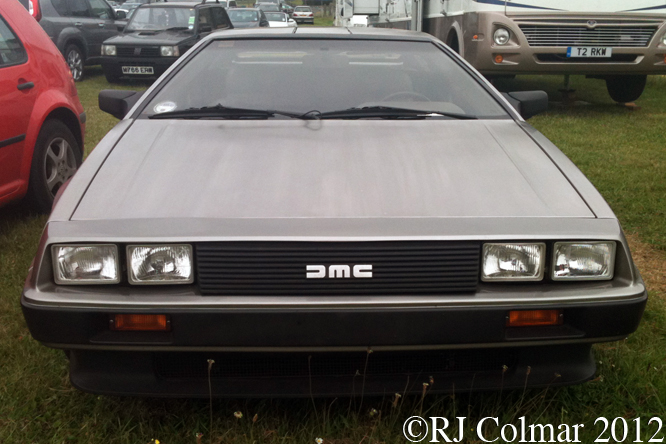
John DeLorean was an experienced auto industry executive with time spent at Packard and General Motors where he was responsible for overseeing the introduction of the Pontiac GTO and Firebird muscle cars amongst other models in the GM range when he decided he could do it all better himself in 1973 and founded the DeLorean Motor Company with a vision to build a US$12,000 2 seat sports car.

DeLorean DMC-12, Goodwood Festival Of Speed

In 1976 the prototype DeLorean appeared with a body designed Giorgetto Giugiaro featuring gull wing doors and bare metal finish panels clothing a fibre glass body. A centrally mounted Citroen / NSU wankel motor mounted on a revolutionary Elastic Resevoir Moulded (ERM) chassis had been envisaged at this stage.

DeLorean DMC-12, Goodwood Festival Of Speed

As the dead line approached for manufacturing to begin it became apparent that neither the wankel motor or the ERM chassis was not up to job and Colin Chapman’s Lotus was given the task of re engineering the car which included using a steel back bone chassis and suspension similar to that used in the Lotus Esprit but with a Peugeot/Renault/Volvo aluminium block V6 (PRV V6) mounted behind the rear axle.

DeLorean DMC-12, Goodwood Festival Of Speed

By 1981 DeLorean had secured $120m of funding to build a factory in the suburbs of Belfast, Northern Ireland and Renault had met it’s contractual obligations to build the facility. Quality issues had not been fully ironed out as production got underway in January 1981 with a largely inexperienced workforce earning premium wages.

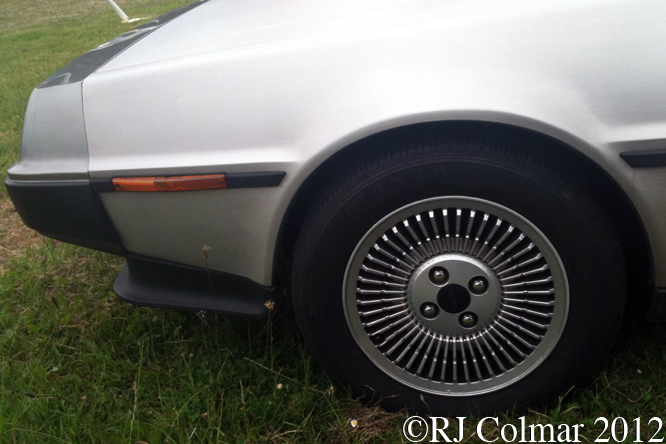
DeLorean DMC-12, Goodwood Festival Of Speed

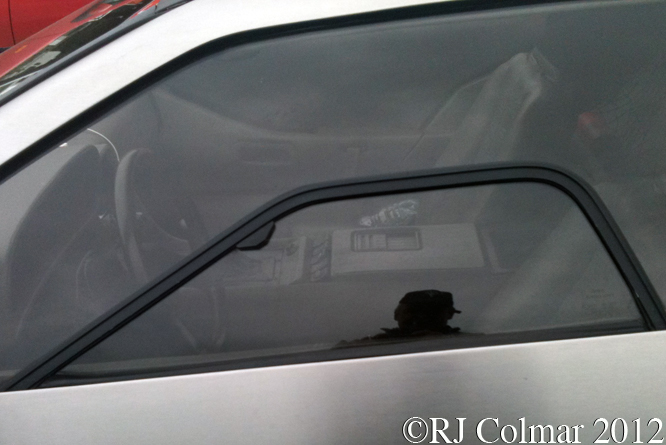
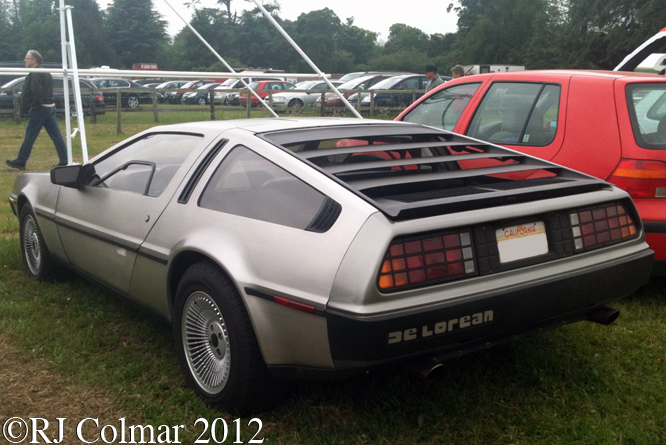
All DMC-12’s were built with left hand drive as standard, two batches of cars totaling less than 30 vehicles in all were converted by Wooler-Hodec Ltd to RHD specification, today’s featured car seen at last years Goodwood Festival of Speed is not one of them.

DeLorean DMC-12, Goodwood Festival Of Speed

Clothed in SS304 brushed stainless steel panels which by design were nearly impossible to paint and repair, most damaged panels having to simply be replaced, the only options on the DMC-12 were manual or automatic transmission and black or grey interior.

DeLorean DMC-12, Goodwood Festival Of Speed

Although big enough to comfortably seat John DeLoreans 6′ 4″ frame the DMC-12 was not particularly well received by the press, it’s US spec 130hp failed to give the kind of performance expected from a car with a US$25,000 dollar sticker price. Road & Track recorded a 0-60moh time of 10.1 seconds with a US spec car while the European Spec DMC-12 with 150 hp managed a more respectable time of 8.8 seconds.

DeLorean DMC-12, Goodwood Festival Of Speed

It is thought that 9000 DMC’s were built up until the end of production when the UK Government pulled the plug on the project, at the time US agencies appear to have been involved in entrapping John DeLorean into a drug deal as he attempted to find the funds to save his company. John was arrested but successfully defended himself with a government entrapment plea.

In 1985 a DMC-12 became the star in the first of the Back to the Future film Trilogy. In 2008 DMC-12 production restarted in Humble, Texas on a build to order basis using many original parts that were in stock when the original factory was closed. There are even plans for an electric DMC-12 to enter production this year.

Thanks for joining me on this “Time Machine” edition of “Gettin’ a li’l psycho on tyres” I hope you will join me again tomorrow. Don’t forget to come back now !

Share

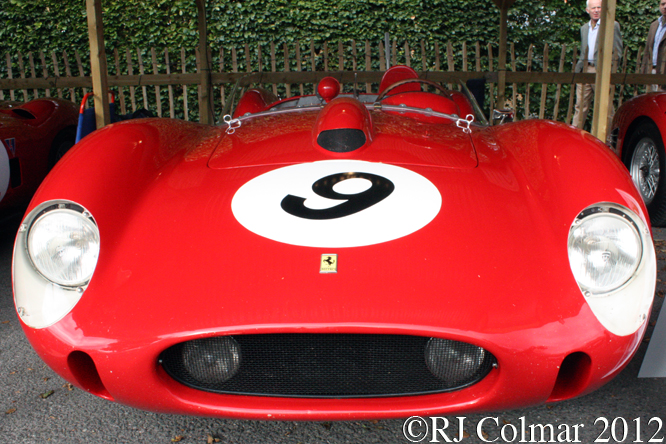
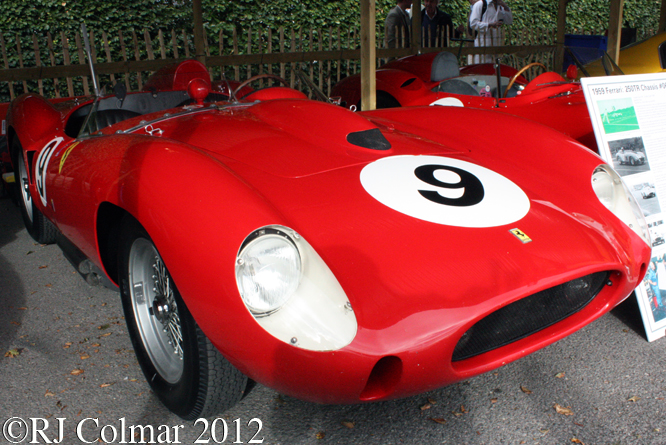
Mistaken Identity – Ferrari 290MM #0606

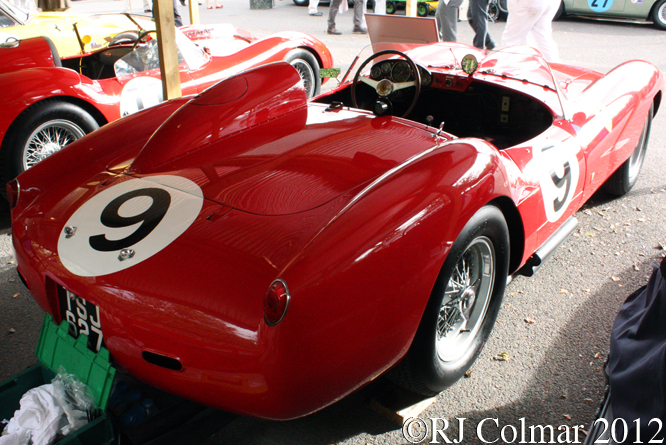
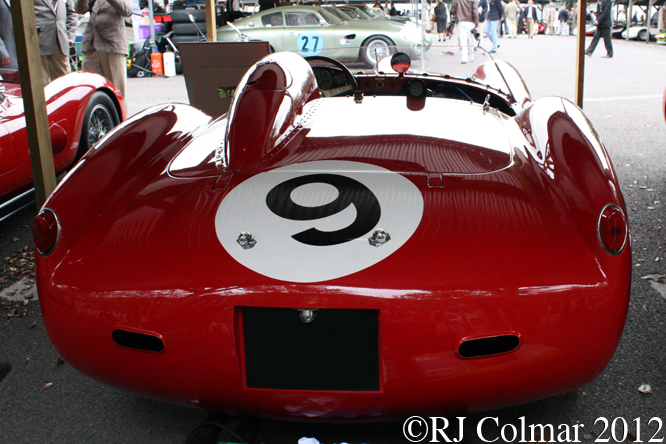
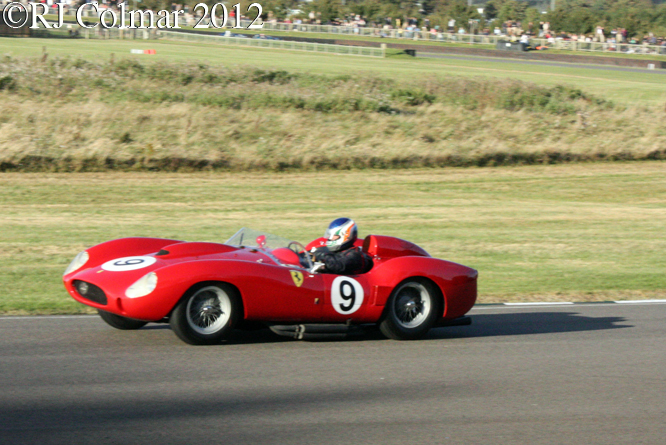
In April 1956 Luigi Musso was given a brand new Right Hand Drive Ferrari 290 MM chassis #0606 by the factory team to drive in the Giro di Sicilia he did not finish but the next occupants Phil Hill and Maurice Trintignant did win the Swedish Grand Prix, for sports cars, on the cars second appearance in August 1956.

Ferrari, 290 MM, Goodwood Revival

In 1957 the car was variously entered under the Ecurie Francochamps and Equipe Nationale Belge banners with Willy Mairesse winning pole for a 2 hour race held at St Etienne in France and Alain de Changy finishing 4th in Monsanto, Portugal being the cars most notable race performances.

Ferrari, 290 MM, Goodwood Revival

After the car was returned to the factory it was driven by Austrian Gotfried Koechert in August 1958. His best result being 3rd overall and 1st in class in the Großer Bergpreis von Oesterreich, hillclimb at the Gaisbergrennen in Austria.

Ferrari, 290 MM, Goodwood Revival

In September 1959 the car was converted to 250 TR specs with a TR motor and sold to Brazilian Jean Luis Lacerda who appears to have won at least two races at Interlagos and Brasilia with #0606 during 1960.

Late in 1960 ownership of #0606 was transferred to Aguinaldo Goes who scored a second place finish in a 500 km race at Intelagos in Spetember of that year.

In 1962 Fernando Mafra Moriera borrowed the car to make up the numbers for a race at Interlagos with strict instructions to park it at the end of lap 1, unfortunately Fernando who raced under the name Rio Negro did not do as he was asked with fatal consequences as he ended up hitting a eucalyptus tree with the unfamiliar right hand drive and equally unfamiliar central throttle pedal thought to have played a role in the tragedy.

The engine and front of the car was separated from the gear box and the back of the car which remained embedded in the tree.

Ferrari, 290 MM, Goodwood Revival

What remained of the car was given by goes to Camilo Christofaro who used the fuel tank and de Dion rear suspension in a fearsome Corvette engined special called Carrettera 18 in March 1965 Christofaro and Goes drove the car to a 3rd place finish, 1st in class, in a 1600 km race at Interlagos.

The TR motor that had been installed in #0606 when it went to Brazil went into another Brazilian racing car the Furia Ferrari owned by Toni Bianco and later still it replaced a blown up motor in a street Ferrari.

Ferrari, 290 MM, Goodwood Revival

In 1986 Paolo Sebastiani bought some Ferrari parts including part of a type 520 Ferrari 290MM chassis frame from Camilo Christofaro and allegedly mistook them for parts from a type 525 Ferrari 250 TR chassis frame which he thought came from chassis #0726TR which had also been involved in a fatal crash and abandoned in Cuba in 1960.

Sebastiani had Ferrari chassis builder Viccari “guide” him in the construction of a Left Hand Drive type 525 250TR chassis using the salvaged parts he had acquired from Brazil. The car was given a new body by Len Pritchard and sold to John Godfrey who upon further inspection realised that the parts Sebastiani had found in Brazil were actually from the Right Hand Drive #0606 290MM.

The car is seen here at last years Goodwood Revival by Mike Malone.

Thanks for joining me on this “Mistaken Identity” edition of “Gettin’ a li’l psycho on tyres” I hope you will join me again tomorrow. Don’t forget to come back now !
Share

Rolls Royce Grill On A Thunderbird – Lincoln Continental Mark III

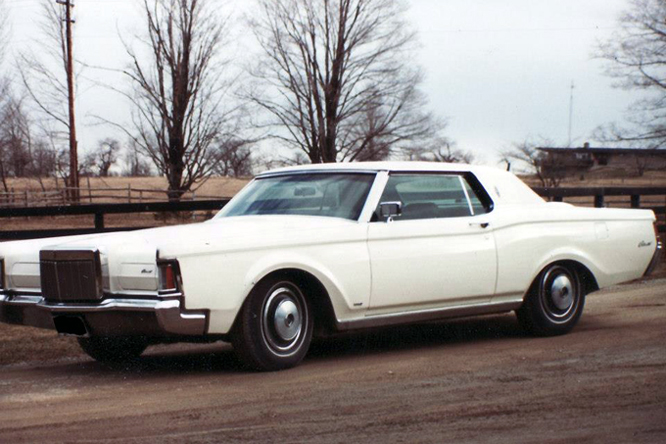
After coming a cropper and loosing US$1000 on each of the 3000 odd ultra luxurious ’56 and ’57 Continental Mark II’s the Continental name reverted to model name under the Lincoln brand and it was not until 1969 that the Lincoln Continental Mark III would see the light of day, although there had been a 1959 Continental III that retrospectively became known as the Lincoln Continental Mark III just to confuse the issue.

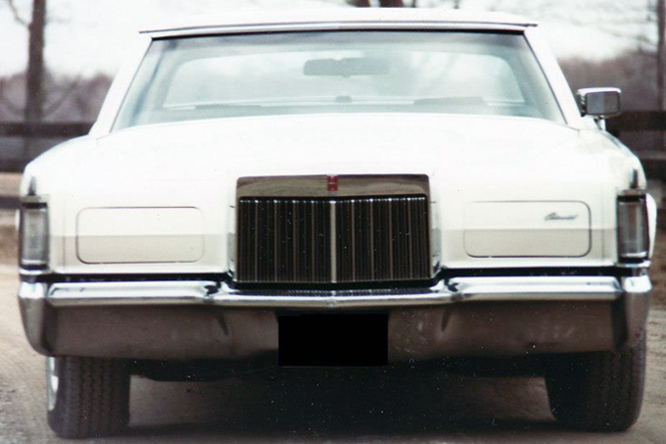
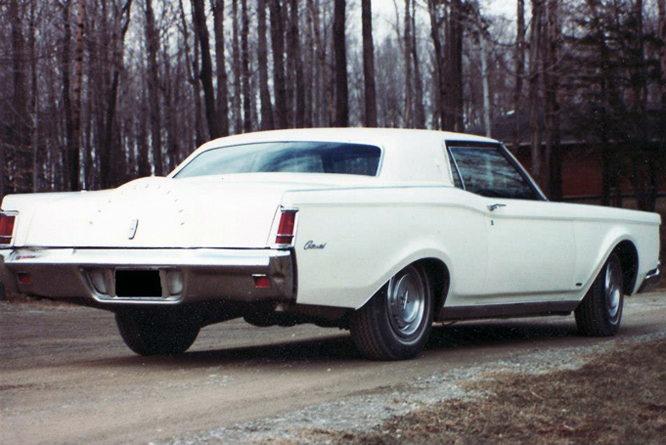
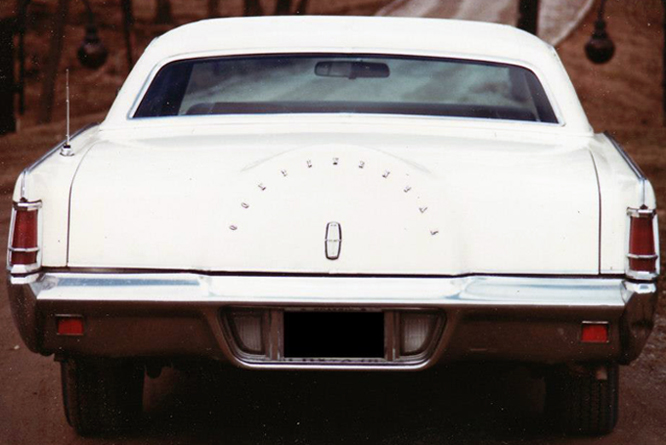
Lincoln Continental Mark III

When the 1967 fifth generation Ford Thunderbird started under performing in the market place Ford President Lee Iacocca decided the best way to recoup the companies investment was to use to use the 4 door Thunderbird’s floor plan for the new Lincoln Mark III. Allegedly Iacocca instructed Ford Design Vice President Gene Bordinat to ‘put a Rolls Royce grill on a Thunderbird’ in September 1965.

Lincoln Continental Mark III

The Continental Mark III’s 2 door body worked out 300 lbs / 140 kg heavier than the 4 door Thunderbird but it was powered by a larger more powerful 365 hp 7.5 litre / 460 cui V8 motor than the 345 hp available to Thunderbird owners.

Lincoln Continental Mark III

Interior trim included leather and real wood on the dash which kept the cars press rating above the nearest nylon cloth trimmed Cadillac Eldorado competitor as late as the Mark IIIs final year 1971, with a Cartier branded clock becoming standard soon after the cars launch in 1968.

Lincoln Continental Mark III

Sales of the Mark III never bettered the lesser trimmed Eldordo but were over 20,000 a year for 1969/70 they rose to a high of 27,091 in 1971 which coincidentally marked Lincoln’s Golden Jubilee Year.

Lincoln Continental Mark III

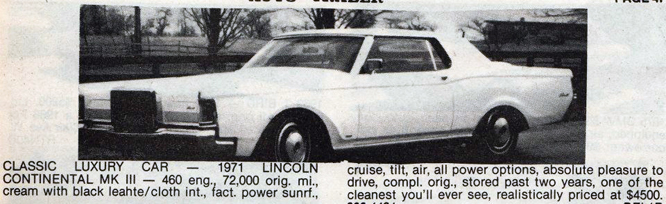
Today’s featured 1971 model belonged to my facebook acquaintance Lori Munro in the 1980’s when the photo’s were taken. Lori, who co founded Race Talk Radio, says that her Mark III “was great …. when fuel was just US$0.60 a gallon”, but decided to sell it after it had been in storage for a couple of years.

My thanks to Lori Munro for sharing her photographs and story, please drop by Race Talk Radio’s facebook page and “Like” to show your appreciation.

Thanks for joining me on this “Rolls Royce Grill On A Thunderbird” edition of “Gettin’ a li’l psycho on tyres” I hope you will join me again tomorrow. Don’t forget to come back now !
Share