Category Archives: Uncategorized

Nelson Rowes to Double – HSCC Thruxton Revival Easter Sunday

Sunday finally brought months of waiting to an end for this race fan as I headed to Thruxton after teaching my Mum how to use her cruise control very early on Sunday morning.
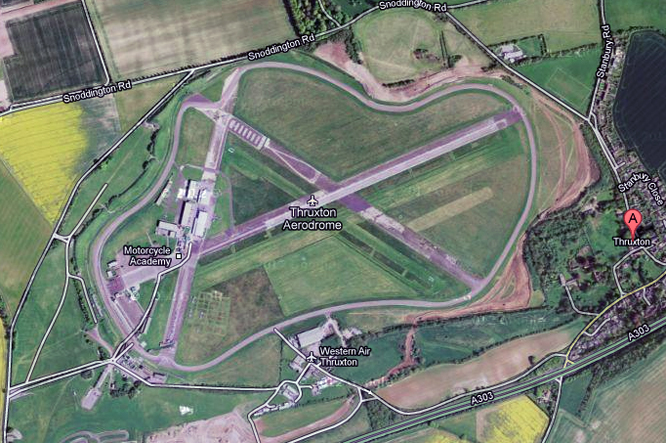
Thruxton Circuit, Hampshire, UK

Thruxton Circuit in Hampshire like many British race tracks began life as a military air base during the 1939 – 45 war, it opened in 1940 and served as a base for the RAF and USAF troop carrying aircraft and gliders notably used for the D-Day landings on June 6th 1944 and many subsequent operations requiring large numbers of air borne troops. The first race meetings were held on a circuit using the perimeter roads in the 1950’s but the track was considered too bumpy and it was not until the British Automobile Racing Club, BARC, needed a new home following the closure of the Goodwood circuit in 1966 the Thruxton was reactivated more or less in the form we know it today.
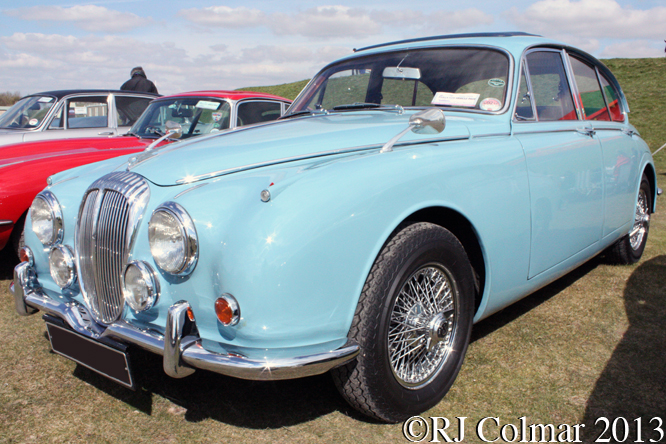
Daimler V8-250, Thruxton Easter Revival

Last time I was at Thruxton well known Grand Prix pundit and 13 time Grand Prix winner David Coultard was still driving in Formula Ford in 1989, my first visit to Thruxton a couple of years earlier was notable for a win by my school pal Sven driving his Alfa Romeo Alfasud for whom I was acting as gofer. Consequently I got to drive his car round the track at snails pace following Sven as he stood in the back of the victory parade lap car. The entrance to the circuit on Sunday was flanked by a variety of Mini’s, Triumphs and Jaguars, in amongst the Jaguar Enthusiasts Club vehicles was this 1969 Daimler V8 250.
HSCC Classic Racing Cars, Thruxton Easter Revival

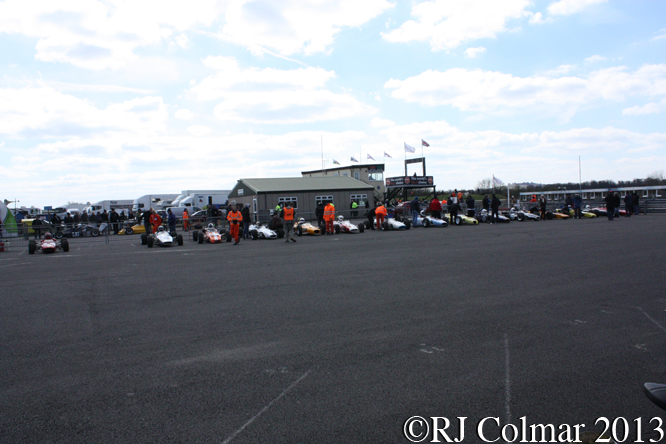
I got to the track just as the last practice was about to begin above the HSCC Classic Racing Cars, comprising Formula 2,3,B and Ford open wheelers dating from 1963 to 1970 line up in the holding area prior to the start of their practice session.
Austin A105, Thruxton Easter Revival

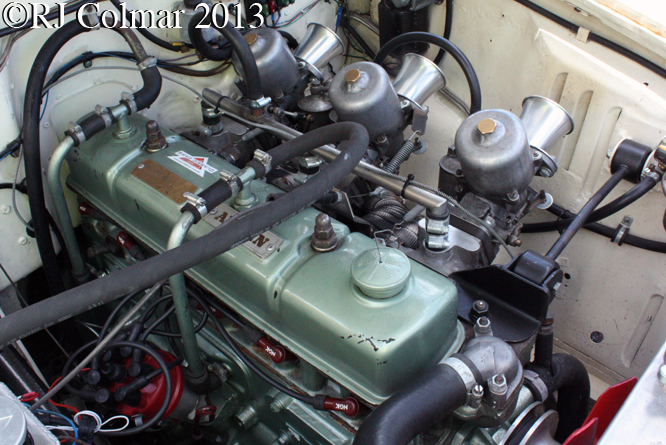
The paddock was full of delights like this 1958 six cylinder Austin A105 of the type that Jack Sears used to win the very first British Saloon Car Championship in 1958. Thruxton has a great mix of corners from tight 90 degrees to long sweepers meaning this A105 driven by Andrew Davenall found it’s self in a race long scrap with the much better handling Mini Cooper of David Dunnell which went in favour of the former towards the back of the HSCC Historic Touring Car field.
Kvanti Mk I, Thruxton Easter Revival

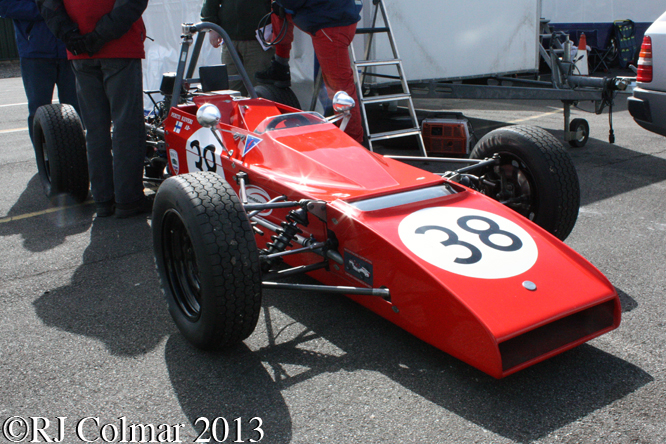
Making a welcome appearance from Finland in the Historic Formula Ford race was this 1971 Kvanti Mk I driven by Pertti Kilveri.
Ford Boss 302 Mustang, Thruxton Easter Revival

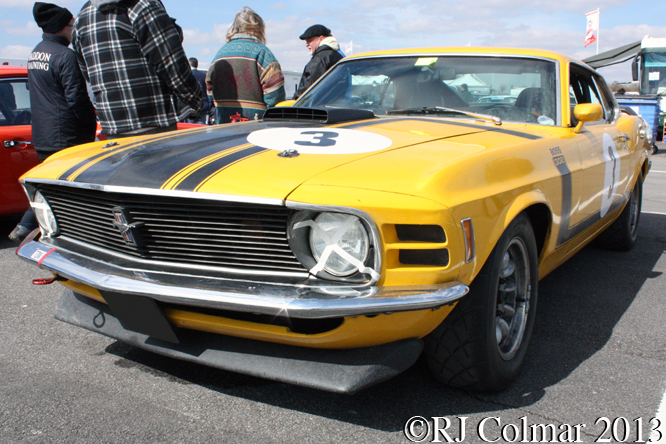
Another car that was to find it’s self in the midst of a mid field scrap was this 1969 Boss Mustang driven by Martin Edridge which managed to edge out the 1969 Camaro driven by Nick Savage both of whom were miles behind the better handling Lotus Elan’s that took the top three spots in the HSCC Historic Road Sports Championship.

Osella BMW PA4, Thruxton Easter Revival

There were two races for racing cars powered by 2 litre 92 cui motors at Thruxton on Sunday the Martini Trophy Race featured 2 litre Group 6 cars like the BMW powered 1976 Osella PA4 driven by Italian Cosimo Turizio unfortunately Cosimo retired shortly before the end of the race handing Ray Mallock driving a 1976 Mallock Mk18 in the invitational class a second place finish.
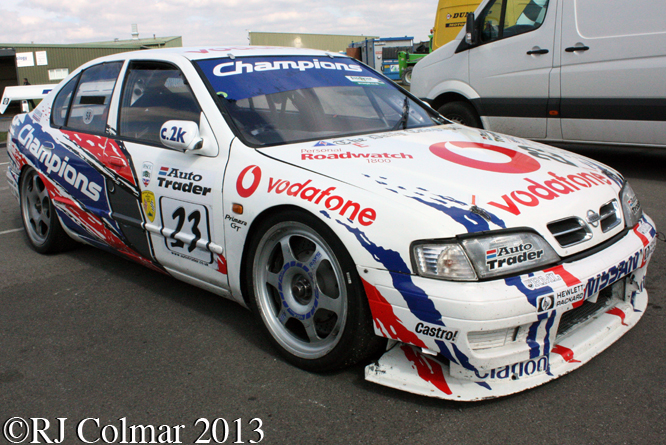
Nissan Primera GT, Thruxton Easter Revival

The Super Touring Car Race featured Derek Palmer’s 1999 Nissan Primera GT, which was originally built and prepared by Ray Mallock Limited (RML) for Laurent Aiello who became the first Frenchman to win the British Touring Car Championship.
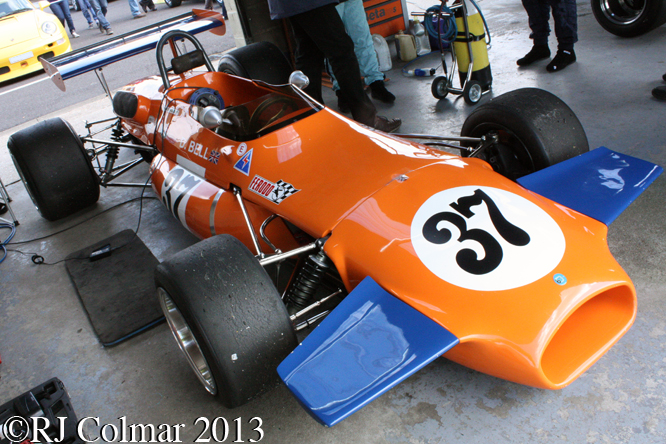
Brabham BT30, Thruxton Easter Revival

Ted Walker was in the pits time keeping for Lincoln Small who was driving the Brabham BT30 in the featured Jochen Rindt Trophy race. Lincoln’s Brabham is the same one that Derek Bell drove for Tom Wheatcroft to a second place finish in the 1970 European Formula 2 Championship.
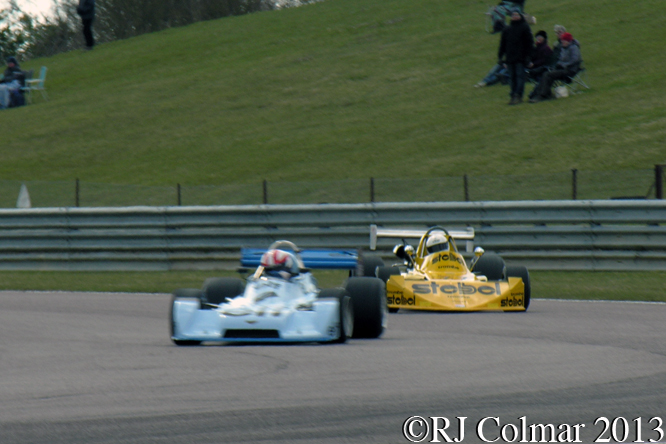
Jochen Rindt Trophy Race, Thruxton Easter Revival

The Jochen Rindt Trophy race on Sunday was won by Martin O’Connell driving a 1977 Chevron B40 that looks as though it might be the same won as Alain Prost drove for Fred Opert prior to becoming a four time World Champion. Martin is seen above leading Andrew Smith’s March 742 car at Campbell Corner on the opening lap. Andrew finished second but only after loosing a couple of places in the opening laps and regaining them.
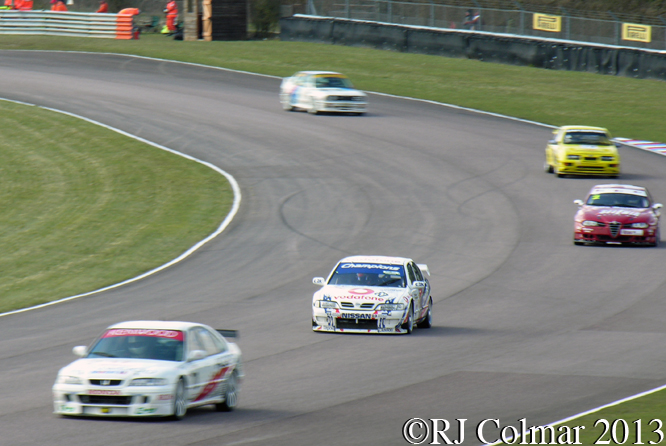
Super Touring Car Race, Thruxton Easter Revival

There was not a huge entry for the Super Touring Car Race on Sunday, partly because some of the entries were lost after the race for these cars held the day before. However Derek Palmer in the Nissan was always ready to take any advantage of Stewart Whyte’s 1996 Honda Accord although he did not have the speed to challenge Stewart for the top spot on the podium.
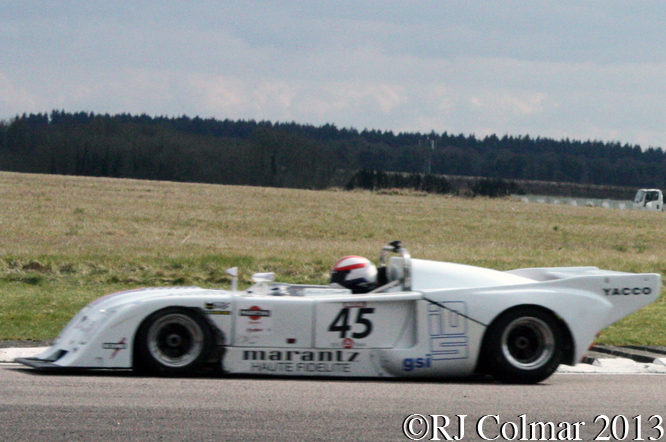
Chevron B36, Thruxton Easter Revival

Martin O’Connel came close to scoring a second comfortable win on Sunday with his Chevron B36 above in the Martini Trophy Race however he suffered a puncture which handed the lead to the similar car of Nick Flemimg.

HSCC Historic Road Sports Race, Thruxton Easter Revival

The HSCC Historic Road Sports Race was as mentioned earlier a Lotus Elan benefit, but not before Andrew Sheppard, driving a nimble 1962 Lotus Seven S2, had found a way past the #9 1963 Elan of eventual winner Roger Waite. Andrew unfortunately was soon to retire out on the circuit.
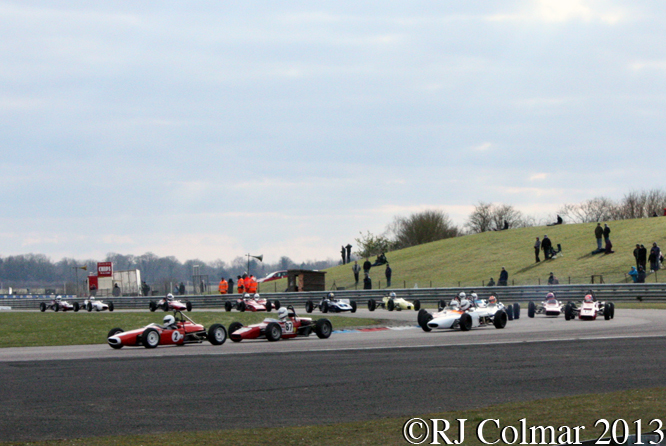
HSCC Historic Formula Ford Race, Thruxton Easter Revival

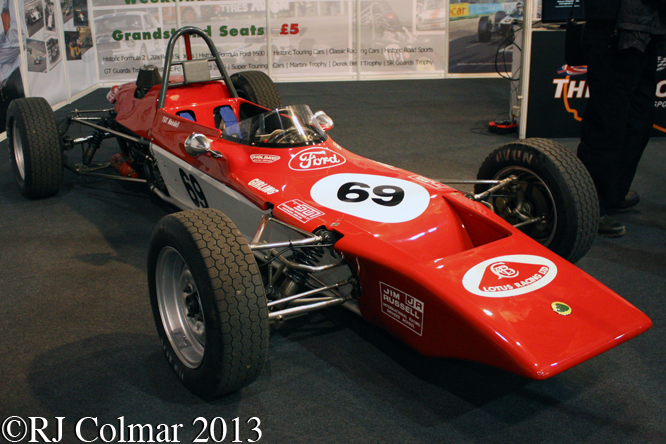
The full grid of Formula Ford cars was thinned out after a contretemps on the opening lap after the first attempted start. Bristol Veterinarian Nelson Rowe, driving the #87 1971 Crosslé 20F, made a great start from the first attempt but was beaten by Benn Simms driving the #2 1968 Jmr 7 Jomo on the second start as seen above. Nelson quickly found away past Benn and drove to his first victory of the day having only to worry if he had enough petrol to make it to the finish after the additional start and pace lap. Former Grand Prix driver Tiff Needell seen above in 7th place second from right was thrilled to find away to a third place finish in his 1971 Lotus 69 and was heard talking about appearance money before committing to making any further appearances in the series.
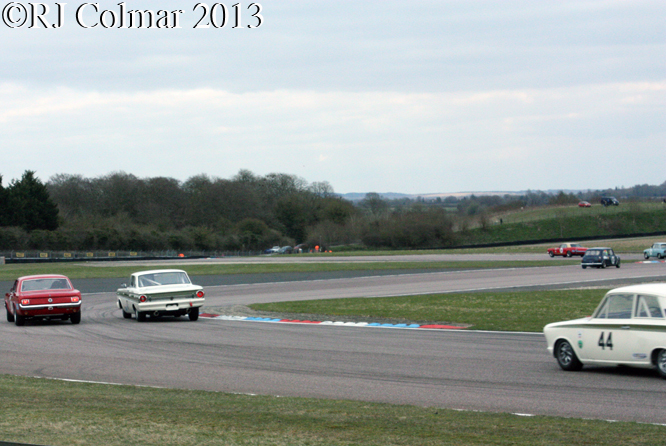
HSCC Historic Touring Car  Race, Thruxton Easter Revival

The HSCC Historic Touring Car Race also had to be stopped after Neil Brown went bouncing into what looked like at least 3 barrel rolls at nobel. Amazingly Neil released himself and appeared completely unharmed from the incident. Richard Dutton made a second clean start and headed for a comfortable win in his read and gold 1965 Mustang which can be seen leading some back markers above but it was Mike Gardiner driving a 1964 Ford Falcon who took the restart from the back of the grid who provided most of the entertainment. Mike is seen above relieving the ’65 Mustang driven by Warren Biggs of second place going into Campbell.
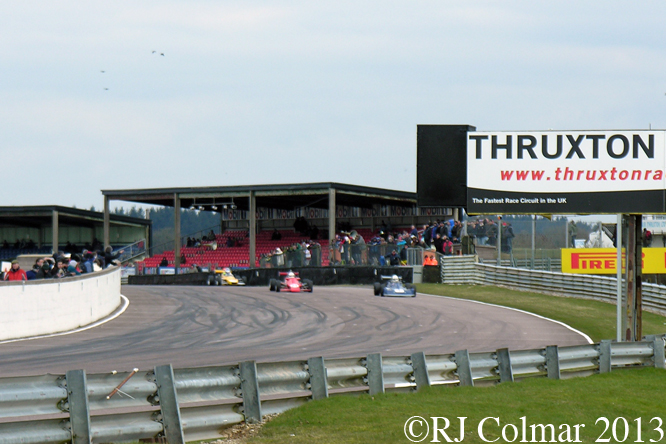
Historic Formula Ford 2000  Race, Thruxton Easter Revival

Nelson Rowe driving the #1 1979 Reynard SF79 was in command of the Pinto powered Historic Formula Ford 2000 race through out all though teenager Callum Grant did his best to earn a beer driving a 1978 Delta T78 to a commendable second place finish.
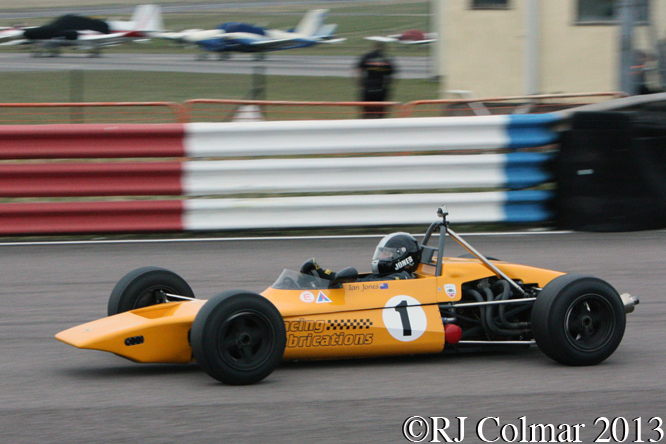
Lotus 59, Thruxton Easter Revival

The final race of the day for HSCC Classic Racing Cars was a Ian Jones benefit, he was never headed from poll driving the #1 1969 Lotus 59 seen above in Formula B spec. Again despite the absence of a memorable duel for the lead there were some great scraps going on behind Ian. All in all I got my 12 quids worth on a day where the temperatures were marginally above freezing and a good supply of affordable track side snacks and hot drinks kept my sense of humour from running for the cover of the nearest duvet or three.

Thanks for joining me on this “Nelson Rowes to Double” edition of “Gettin’ a li’l psycho on tyres” I hope you will join me again tomorrow. Don’t forget to come back now !

Share

Morris Centenary – Morris Oxford

2013 marks the centenary of the production of the first Morris Car and every Tuesday for the month of April I’ll be featuring a Morris model.

If you are new to GALPOT you may be wondering why no Morris Minors will be featured this month, that is because I did a run of Morris Minor features not so long ago, here are the links for those who missed them; 1953 Morris Minor Series II 4 door, Morris Minor Tourer and 1967 Morris 1000 Traveller.

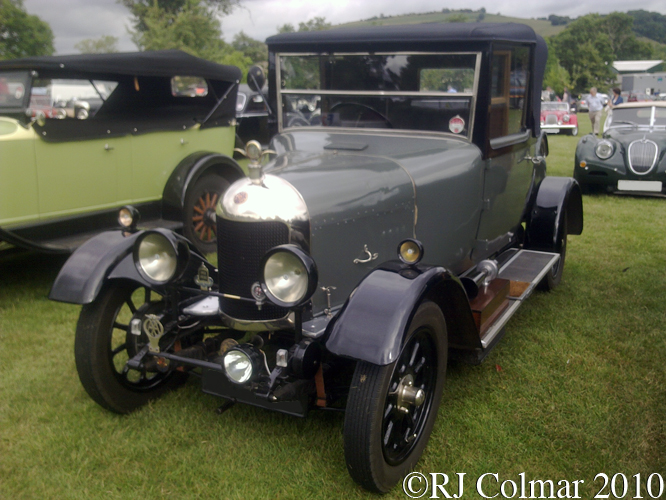
Morris Oxford, VSCC, Prescott

The first Morris car was a Morris Oxford which was assembled around a pressed steel chassis using many proprietary parts including a White & Poppe motor which sat behind a distinctive ‘Bullnose’ radiator not unlike the one seen on toady’s featured car.

Production of the original Bullnose Morris Oxford was halted by hostilities in 1914 and in 1919 a new Oxford model was launched featuring a larger Bullnose radiator and a Continental Red Seal motor built by the French Company Hotchkiss et Cie at their works in Coventry.

Today’s featured car was built in 1925 the first year the model was available with optional 12 inch front brakes one of which can be seen behind the AA badge in the photo.

A longer wheel base 4 seat version of the 1925 Morris Oxford went on to become the basis of the first MG 14/28 Super Sports model.

Production of the Bullnose Morris Oxfords came to an end in 1926 when it was replaced by the flat nosed Morris Oxford.

Thanks for joining me on this Morris Centenary edition of “Gettin’ a li’l psycho on tyres” I hope you will join me again tomorrow. Don’t forget to come back now !
Share

Anti Rattle Fastening – Chevrolet AK Pickup

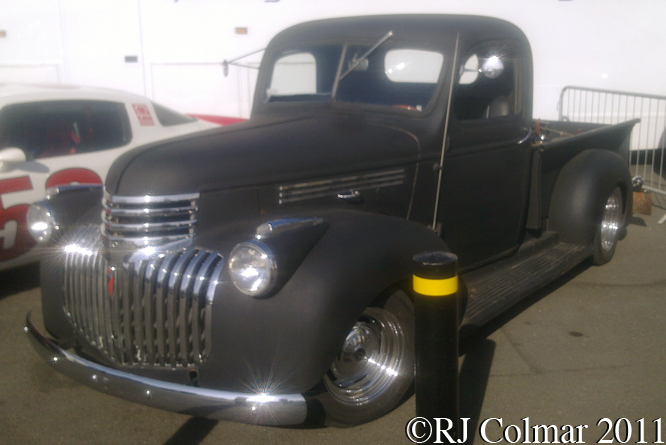
In 1941 Chevrolet introduced the AK series pickups to compete with the likes of the Prow Front Fords and Job Related Dodges.

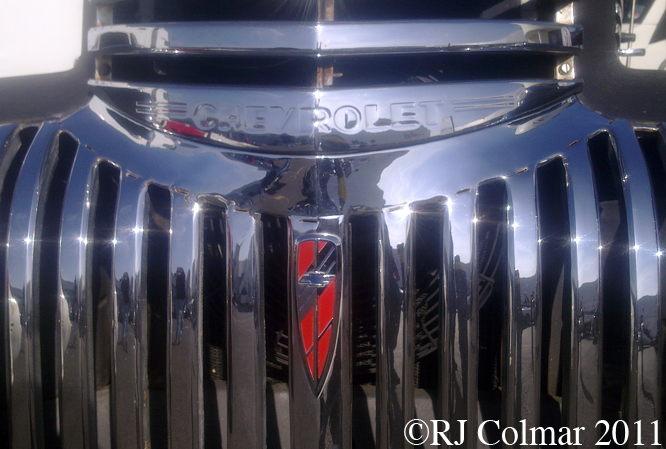
Chevolet AK Pickup, Silverstone Classic

AK series trucks were related to but more substantial than the Chevrolet AG series sedan delivery and pickup vehicles sharing a 90 hp 216 cui straight 6 engine option.

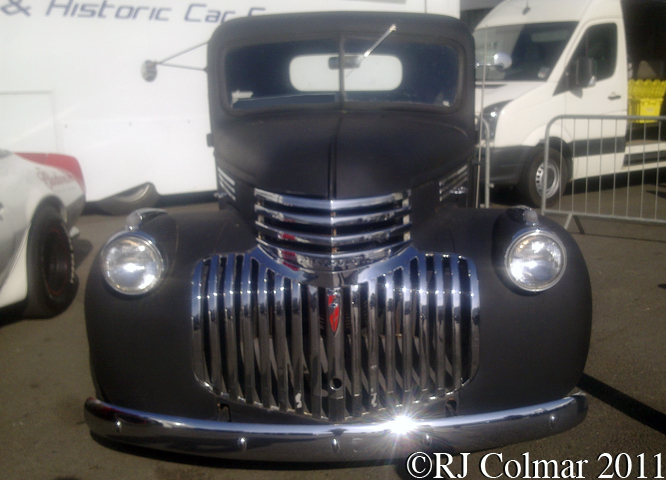
Chevolet AK Pickup, Silverstone Classic

The AK was also offered with a Load Master six cylinder 93 hp 235 cui motor that offered substantially more torque.

Chevolet AK Pickup, Silverstone Classic

The windscreen on the AK model could be cranked open and ordered with an optional second windscreen wiper, the only other option was a heater.

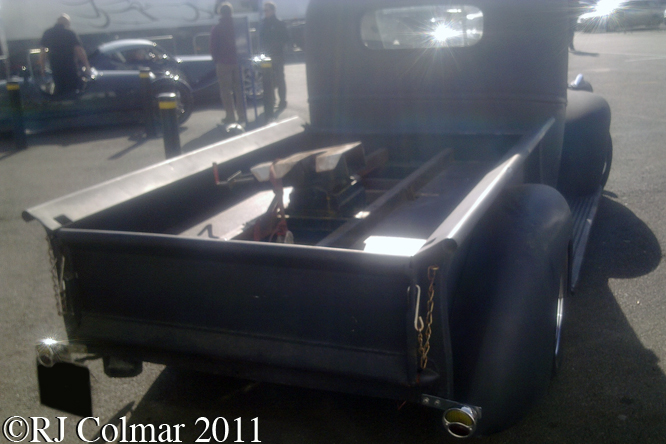
Chevolet AK Pickup, Silverstone Classic.

Sales literature noted that the AK’s heavily reinforced all steel tailgate was fitted with an “anti rattle fastening”. The AK series was built between 1941 and 1947, there are no official details available on the age of the vehicle see here at the time of writing.

Thanks for joining me on this “Anti Rattle Fastening” edition of “Gettin’ a li’l psycho on tyres” I hope you will join me again tomorrow. Don’t forget to come back now !
Share

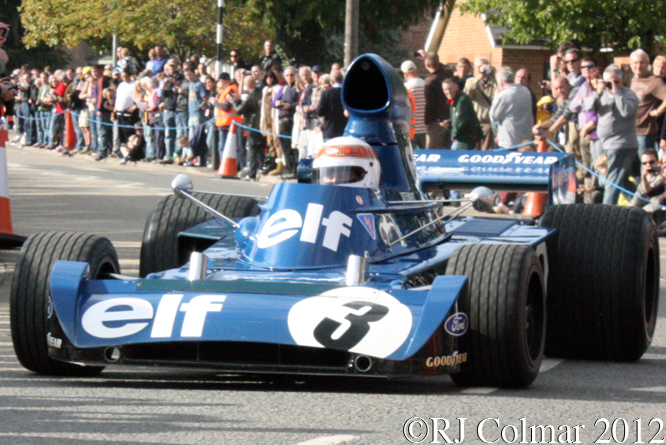
Championship Foundation – Tyrrell Ford #006

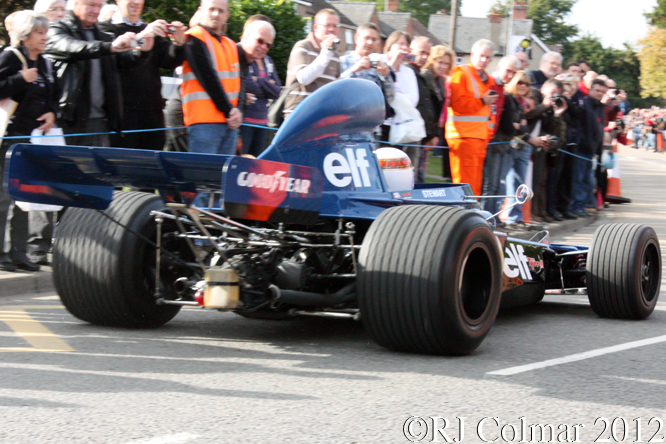
In 1970 Jackie Stewart and Ken Tyrrell were convinced that it was better to stick with the Ford Cosworth DFV power and seek a new chassis than move to the Matra powered car of their hitherto chassis supplier Matra. Ken Tyrrell bought a couple of new March chassis to tide the team over until Derek Gardener was ready to introduce the new Tyrrell 001 chassis late in 1970.

Tyrrell Ford 006, BRM Day, Bourne

Tyrrell 001 was followed by the similar 002, 003 and 004 chassis in 1971 with Jackie Stewart driving #003 to championship success in 1971. At the 1972 French Grand Prix Gardners all new slab sided Tyrrell #005 was introduced and Jackie Stewart finished the 1972 season with two convincing wins at the season ending Canadian and US Grand Prix, albeit too late to overhaul the advantage built up by Emerson Fittipaldi driving a Lotus Ford 72.

Tyrrell Ford 006, BRM Day, Bourne

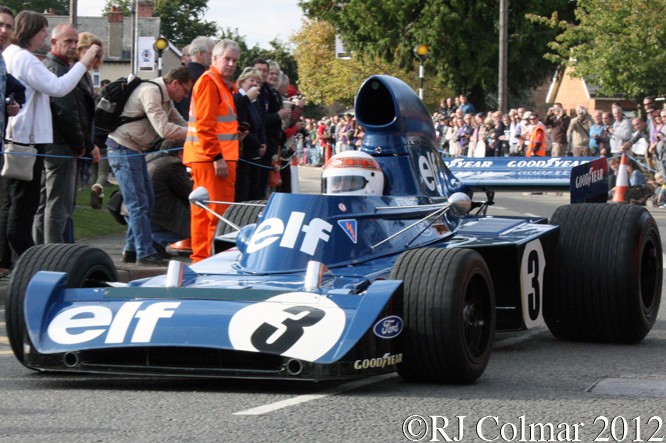
Stewart’s team mate Francois Cevert was given today’s featured car Tyrrell chassis #006 to drive at the two 1972 season ending races he retired with gearbox problems after qualifying 8th in Canada and finished 2nd to team mate Jackie from 4th on the grid in US Grand Prix. Chassis #006 was essentially to the same design as #005.

Tyrrell Ford 006, BRM Day, Bourne

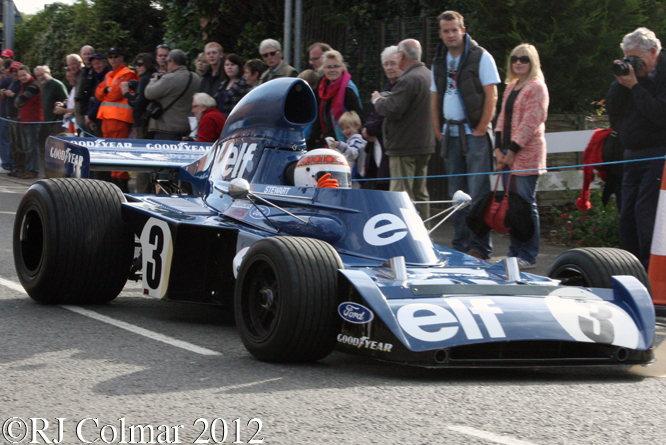
In 1973 Jackie started the season of with #005 scoring a third place finish in Argentina and 2nd place in Brazil with Cevert finishing 2nd in Argentina but only 10th in Brazil in the #006 chassis. At the third race of the 1973 season the South African Grand Prix Jackie crashed #005 on the first day of practice and immediately took over Cevert’s 006 car running with Ceverts name and #4 race number. Note the second link showing Stewart driving the #4 is incorrectly labelled as chassis #005.

Tyrrell Ford 006, BRM Day, Bourne

#005 was repaired for Cevert to drive in South African Grand Prix, he started 25th and last having failed to set a time and was unclassified at the races end 13 laps behind the leaders, Stewart meanwhile qualified 16th and came through to score the first of five wins in his third and final championship season. Three of those wins would be 1-2 finishes with team mate Francois following closely behind. Note Stewart ran chassis #006 with his #3 race number in the 1973 race and lost a piece of his rear wing end plate as seen in this linked photo.

Tyrrell Ford 006, BRM Day, Bourne

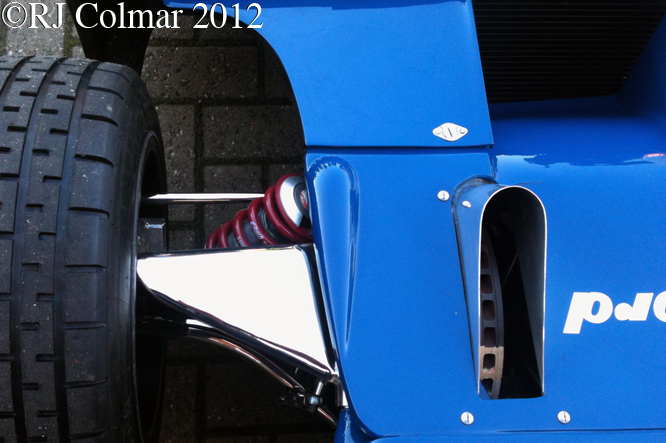
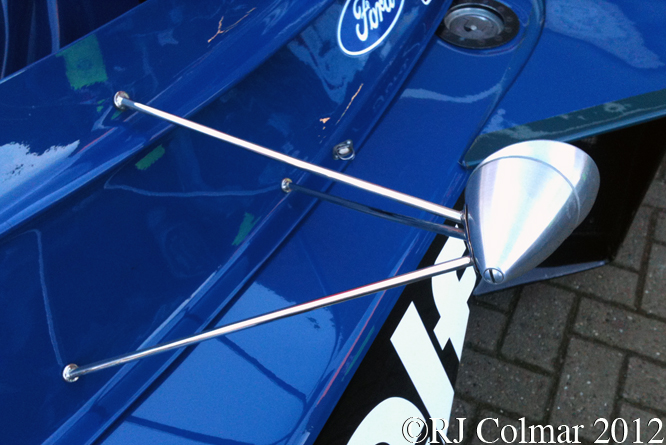
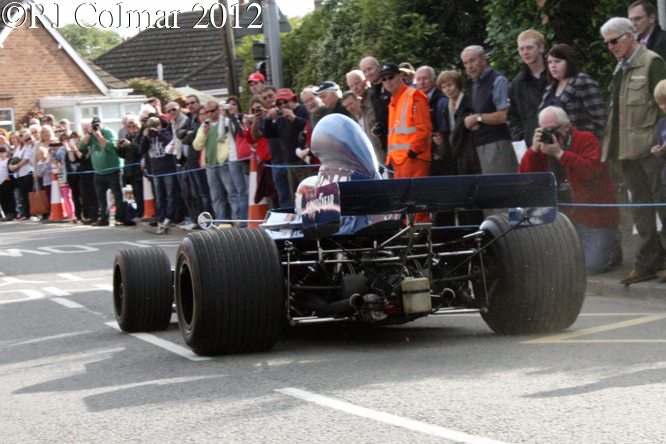
For the 1973 Spanish Grand Prix Stewart was given a new chassis #006/2 to race that, like #006 which reverted to Cevert, had been fitted with the distinctive angular deformable structure on the sides that were required by new regulations that came into force. At this race both Cevert and Stewart ran with the oblong end plates as seen on #006 in today’s blog driven by Sir Jackie at last years BRM Day.

Tyrrell Ford 006, BRM Day, Bourne

Cevert finished 2nd in the 1973 Spanish Grand Prix as he did in the following Belgian GP where he followed Stewart home in a Tyrrell one-two finish. Still driving #006 Francois finished 2nd at his home French Grand Prix.

Tyrrell Ford 006, BRM Day, Bourne

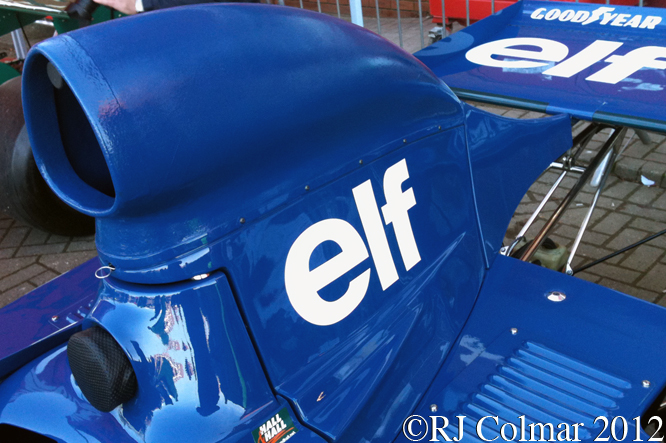
Airboxes went through many interesting stages of development in the 1972 and 1973 seasons, the Tyrrell 005/006 airbox seen here was a second development the first having resembled the airboxes seen on the earlier Tyrrell 002 and 004 cars, Derek Gardner is quoted as having been influenced by the design of the central engine intake of the Hawker Siddley Trident having gained access to Hawker Siddeleys Test and Development research on the shape of the inlet. The top piece of the trident airbox as seen here and in period has a buff appearance because it appears to have been made inside out with the rough side of the fibre glass on the outside of moulding rather than on the inside as one might normally expect.

Tyrrell Ford 006, BRM Day, Bourne

At the British Grand Prix #006/2 used by Stewart and #006 for Cevert both appeared with older tear drop shape rear wing end plates, but sans the aerodynamic appendage hitherto mounted to the back of the airbox and sans bodywork covering the Ford DFV cam covers and rear suspension. Despite qualifying 4th and 7th Stewart and Cevert could only finish the British Grand Prix 10th one down and 5th respectively.

Tyrrell Ford 006, BRM Day, Bourne

Next up came two one two finishes in the Dutch and German Grand Prix with Cevert in #006 behind Stewart in #006/2, at the Austrian Grand Prix Stewart finished second and clinched the World Championship with a 4th place finish ahead of Cevert at the 1973 Italian Grand Prix after a tremendous recovery from a puncture.

Tyrrell Ford 006, BRM Day, Bourne

#006 with Francois at the wheel was damaged in a collision with Jody Scheckter on 36th lap of the 1973 Canadian Grand Prix and parts of #006 were salvaged to build up #006/3 in time for the following US Grand Prix. Francois was killed in the new car during practice for that race and the Tyrrell team withdrew from what should have been Stewart’s swan song and last Grand Prix before retirement.

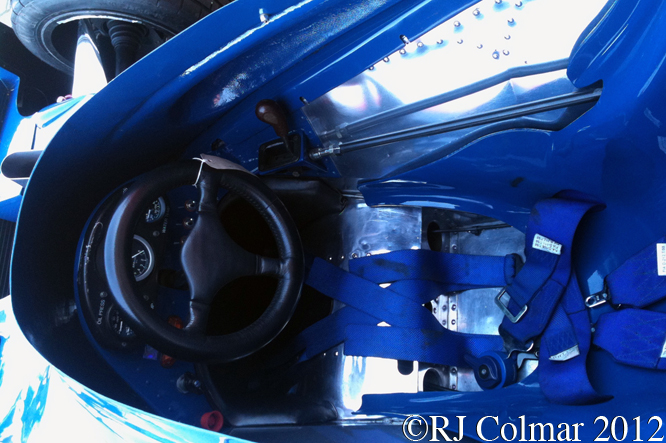
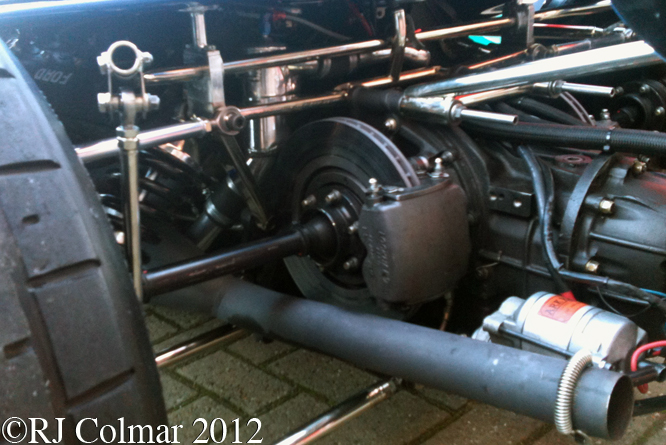
The current owner had #006 restored by Hall and Hall to 1973 Spanish to French Grand Prix spec, from 17 Grand Prix starts, along with winning the 1973 South African Grand Prix in the hands of Stewart, #006 was driven to seven 2nd place finishes by Francois Cevert in the 1972 and 1973 seasons.

Sadly first Gerry Birrell and then Roger Williamson, who were successively chosen to have replace Jackie Stewart, died during the 1973 season and eventually Jackie and Francois were replaced by Jody Scheckter and Patrick Depailler.

1973 was the last year in which a variety of numbering methods were used for Grand Prix cars, the Tyrrells ran with the #6 and #8 in Argentina, the #3 and #4 from Brazil through to Spain and then for no obvious reason the #5 and #6 for the remainder of the season.

My thanks to all those who contributed to the Airboxes the Good the Bad and the Ugly along with the Tyrrell 006 threads including Tim Murray who highlighted the absence of any logic to the Formula One numbering system at The Nostalgia Forum.

Thanks for joining me on this Championship Foundation edition of “Gettin’ a li’l psycho on tyres” I hope you will join me again tomorrow. Don’t forget to come back now.

Share

Basic Instinct Pretty Woman – Lotus X180 Esprit Turbo

Having been taken over by General Motors in 1986 the future of Lotus Cars was more secure than at almost anytime in the manufacturers history. Prior to the take over Peter Stevens had been employed to revamp the sharp edged Giugiaro styled Lotus Esprit, which had been in production since since 1975, around the chassis of the existing Series 3 Esprit under the project name X180.

Lotus Esprit Turbo, Classic and Sports Car Action Day, Castle Combe

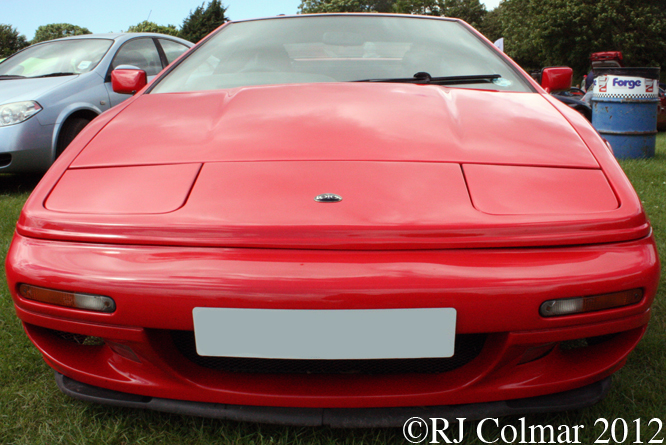
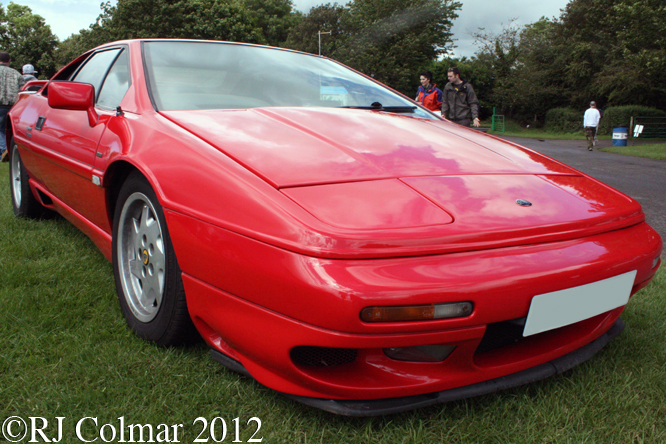
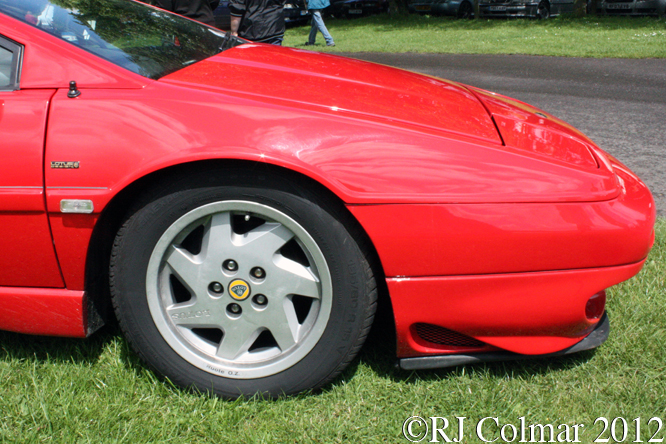
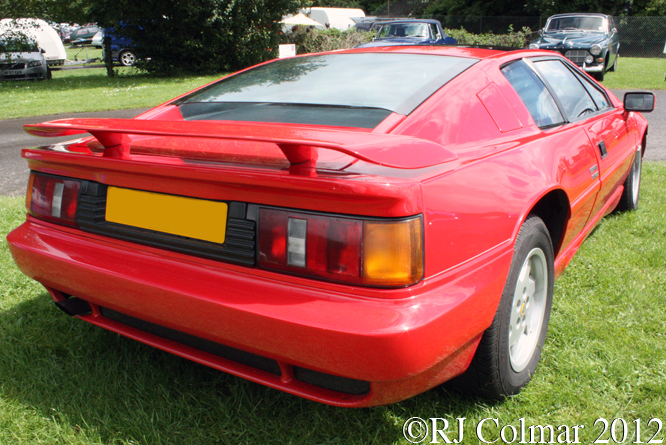
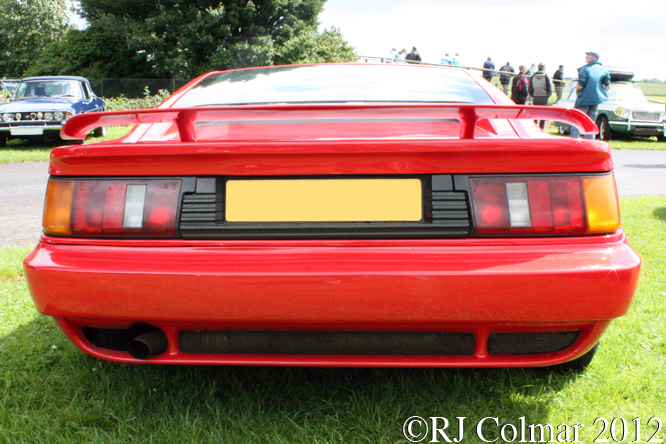
Despite the new body not varying by more than an inch in any dimension from the old one Stevens managed to transform the look of the Esprit by using rounded lines. Ironically despite the smoother shape the new X180 is has a marginally higher aerodynamic co efficient than it’s straight edged predecessor.

Lotus Esprit Turbo, Classic and Sports Car Action Day, Castle Combe

15 months after Stevens started work on the X180 it was ready to be launched in October 1987 with the new body work being manufactured with the Lotus patended vacuum-assisted resin-injection (VARI) process.

Lotus Esprit Turbo, Classic and Sports Car Action Day, Castle Combe

Despite the similarity of the old and new bodies they could be easily distinguished by the new alloy wheels cast to a Lotus design by OZ. Esprit aficionados will notice that the front bumper / spoiler on this particular 1988 Esprit Turbo seen at last years Classic and Sports Car Action Day at Castle Combe dates from the final S4 Esprit incarnation which was restyled by Julian Thompson in 1993.

Lotus Esprit Turbo, Classic and Sports Car Action Day, Castle Combe

The X180 Esprit was powered by the same type 910 normally aspirated or turbocharged motors as it’s Esprit predecessors, with the 215 hp turbo motor the zero to 60 mph time was marginally reduced to 5.4 seconds from the previous 5.6 seconds and top speed was over 150 mph. The X180’s handling benefited from the improved torsional rigidity of the new body.

Lotus Esprit Turbo, Classic and Sports Car Action Day, Castle Combe

Record Esprit sales of 1058 units in 1988 would not be bettered despite the cars appearance in high profile films that included Pretty Woman 1990 and Basic Instinct 1992, and a sting of lesser films including The Rookie 1990, Taking Care Of Business 1990 and the Bond spoof If Looks Could Kill / Teen Agent 1991.

Thanks for joining me on this “Basic Instinct Pretty Woman” edition of “Gettin’ a li’l psycho on tyres” I hope you will join me again tomorrow. Don’t forget to come back now !
Share

Tour de France Winner – Ferrari 250 GTO #4153GT

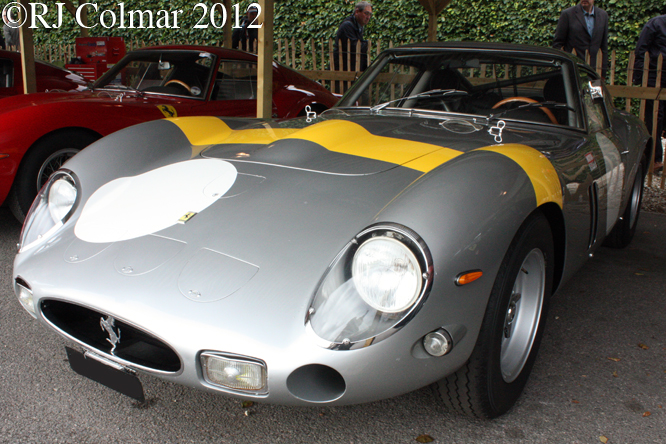
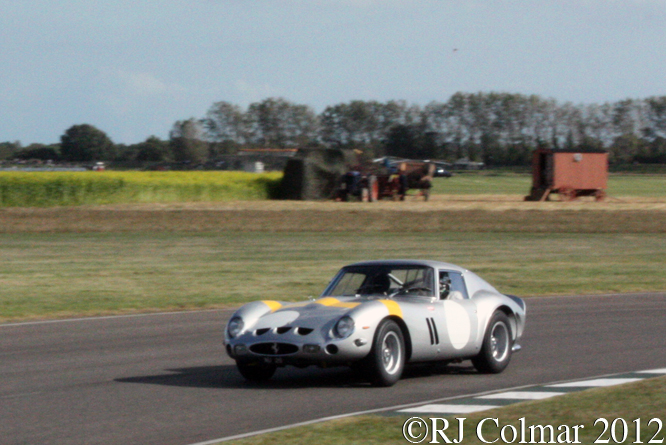
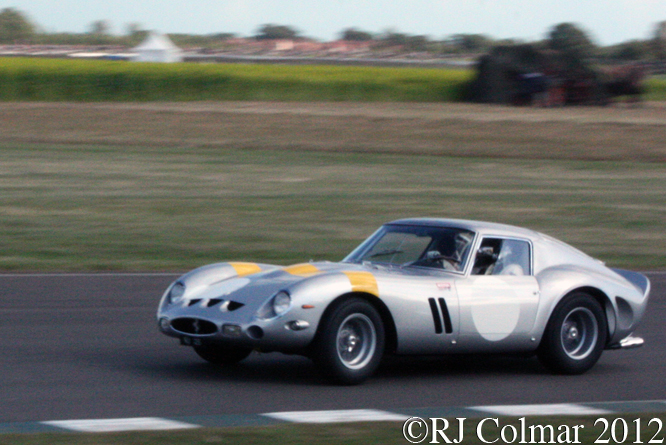
On June 2nd 1963 Frenchman Pierre Dumay took delivery of a silver Ferrari 250 GTO chassis #4153 and two weeks later it was entered under the Ecurie Francochamps banner in the 1963 Le Mans 24 Hours for himself and Belgian Léon “Elde” Dernier in which they finished 4th overall and second in class. Dernier means ‘last’ and Léon prefered to race under a pseudonym of the pronunciation of his initials LD. By the following week it appears that ownership of the car had been transferred to Ecurie Francochamps and entered in race for first Dernier and then Dumay at Zolder and Reims where 2nd overall and 3rd in class finishes were recorded respectively.

Ferrari 250 GTO, Goodwood Revival

The following season it appears that the Marquis Philippe de Montaigu bought #4135 but continued to enter it in numerous events from 1964 through 1965 under the Ecurie Francochamps banner for the likes of; Georges Berger, Lucien Bianchi, Pierre Dumay, “Gauvin”, Gustave Gosselin, “Lagae”, “Lambrecht”, Francis van Lysbeth, Willy Mairesse, Gerard Langlois van Ophem

Ferrari 250 GTO, Goodwood Revival

#4153’s biggest win was when Lucian Bianchi and and Georges Berger won the 1964 Tour de France. In 1965 chassis #4153 was entered into the first Marathon de la Route, an 82 hour race held at the Nurburgring that replaced the Liege Rome Liege Rally, but Bianchi, Berger and Jean Blaton failed to finish. Since then the car has remained in Europe with the current German owner acquiring it in 2003.

Ferrari 250 GTO, Goodwood Revival

Seen at the wheel of chassis #4153GT during a 250 GTO demonstration at last years Goodwood Revival meeting is Daniela Ellerbrock.

Thanks for joining me on this “Tour de France Winner” edition of “Gettin’ a li’l psycho on tyres” I hope you will join me again for a look at a Lotus tomorrow. Don’t forget to come back now !

Share

Hatched In Germany – Cadillac Catera

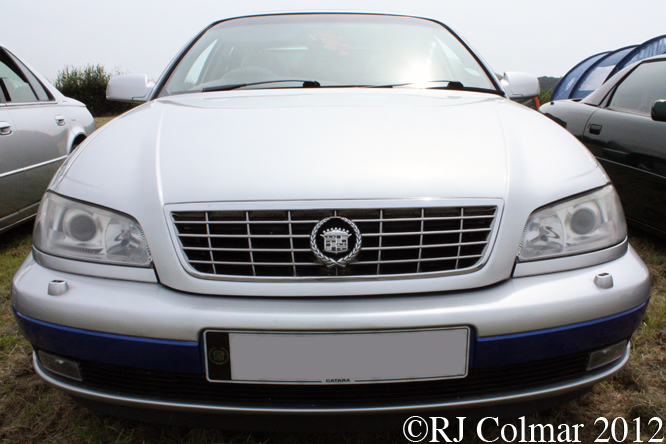
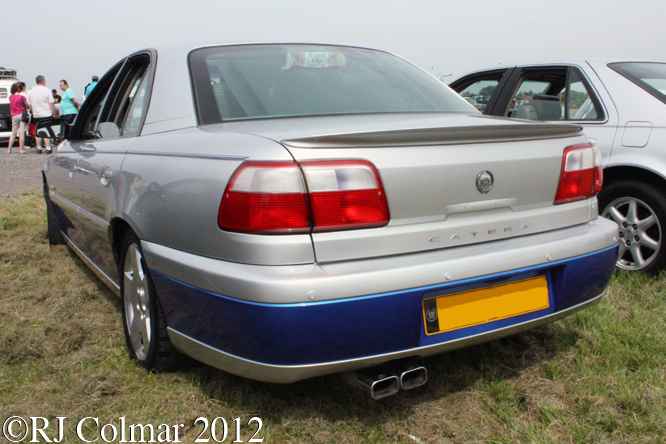
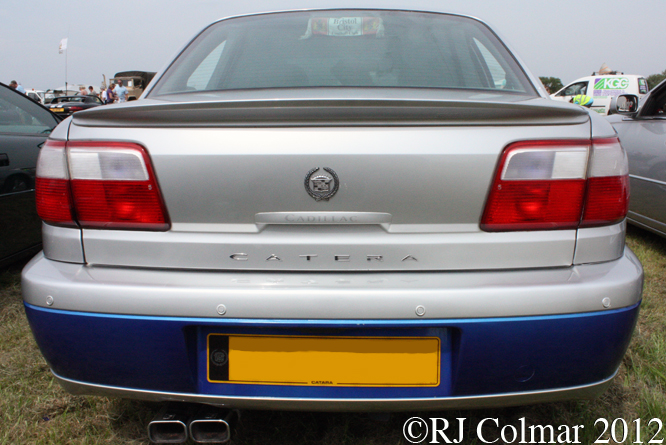
In 1994 Opel launched a new Omega ‘B’ model that replaced the Omega ‘A’ model that had served as the basis of the Vauxhall Lotus Carlton which I looked at on Saturday. The Omega B was still rear wheel drive but had a much smoother body that formed the basis on the Vauxhall Omega in the UK and was launched with the aid of Cindy Crawford in the USA as the Cadillac Catera.

Cadillac Catera, Summer Classics, Easter Compton

Cadillac Cateras were powered by a 200hp V6 motor with pistons angled at an unusual 54 degrees, the motors gained a reputation for expensive cam belt tensioner bearing failures.

Cadillac Catera, Summer Classics, Easter Compton

Sales of the Catera peaked at around 25,000 in 1997 and 1998 but tailed off thereafter and the model was discontinued from the Cadillac range in 2001

Cadillac Catera, Summer Classics, Easter Compton

Today’s featured vehicle seen ar last summers “Summer Classics” gathering at Easter Compton is registered officially as a top of the range Vauxhall Omega Elite and has most likely had the Cadillac exterior identifications including the grill fitted post production.

Thanks for joining me on this “Hatched In Germany Edition” of “Gettin’ a li’l psycho on tyres” I hope you will join me again tomorrow. Don’t forget to come back now !
Share