Category Archives: Uncategorized

Mad Snow & Englishman – Great Western Sprint

It’s only five years since the last time it was so cold at this time of year and it must be a sign I wear double thickness rose tinted lenses that I cannot remember it, however at 5:45 am my alarm clock went off on Saturday and about an hour later I stumbled out of the house and made my way to Castle Combe where I had volunteered to marshal at the Great Western Sprint sponsored by Williams Automobiles and organised by the Bristol Motor Club for the day.
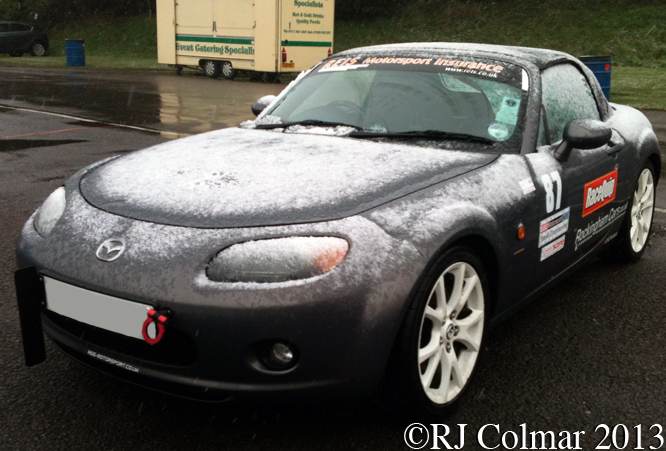
Mazda MX5, Great Western Sprint, Castle Combe

Between signing on at the Strawford Centre and breakfast at the Tavern Club House Tony Thomas was defrosting his MX5 in the paddock.
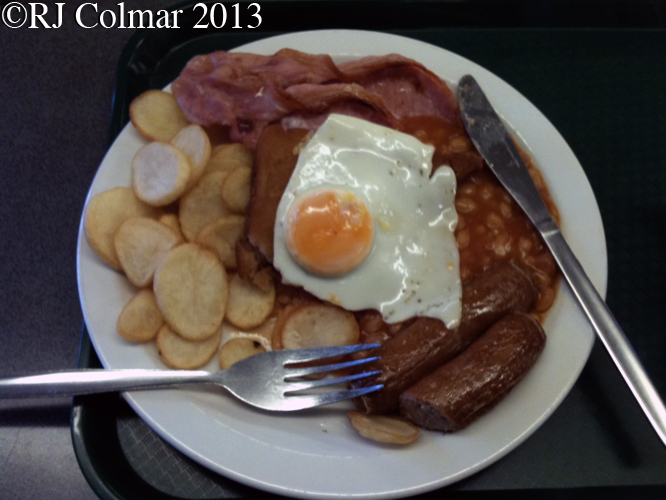
Big Boys Breakfast, Tavern Club House, Great Western Sprint, Castle Combe

They say an army marches on it’s stomach and with the inclement weather I decided a Big Boys Breakfast looked like a bargain at £6.95.
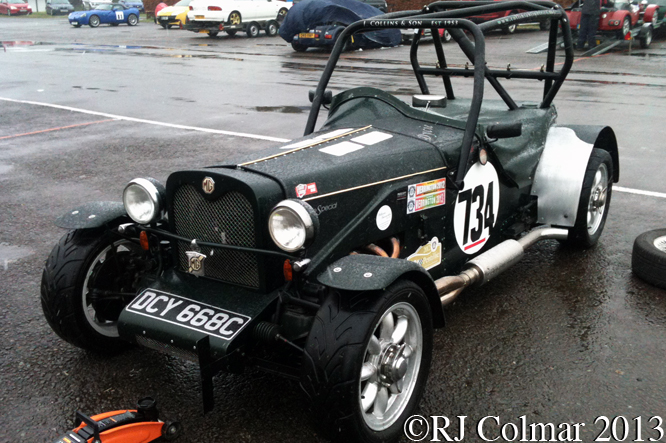
Kayne Special III, Great Western Sprint, Castle Combe

After my hearty breakfast I had just enough time to scoot around the paddock where John & Jonathon Biggs were preparing to fit the familiar Kayne Special III with road tyres to cope with the slippery conditions.
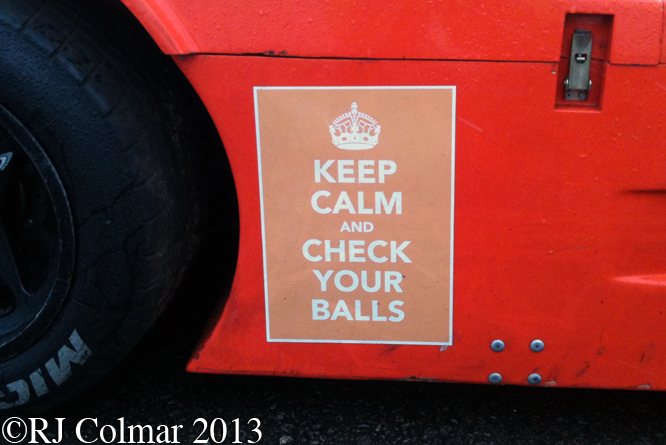
ADR Sport 2, Great Western Sprint, Castle Combe

Andy Lawrence ADR Sport 2 displayed a welcome sense of humour which may have helped him to a class win in the under 1800 cc Sports Libre Class.
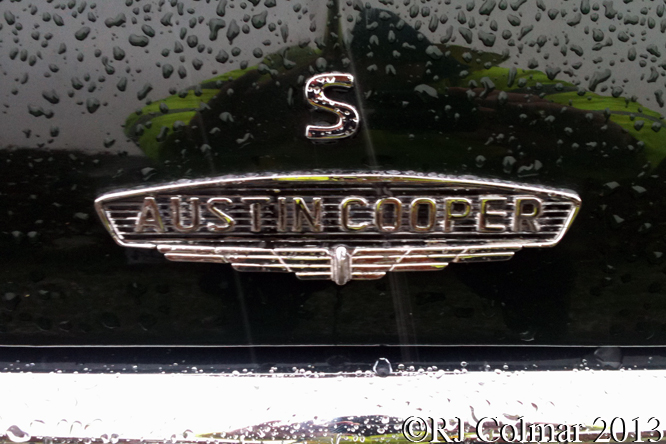
Austin Cooper S, Great Western Sprint, Castle Combe

Looking pristine despite the conditions was Mark Whitchurch’s Austin Cooper S.
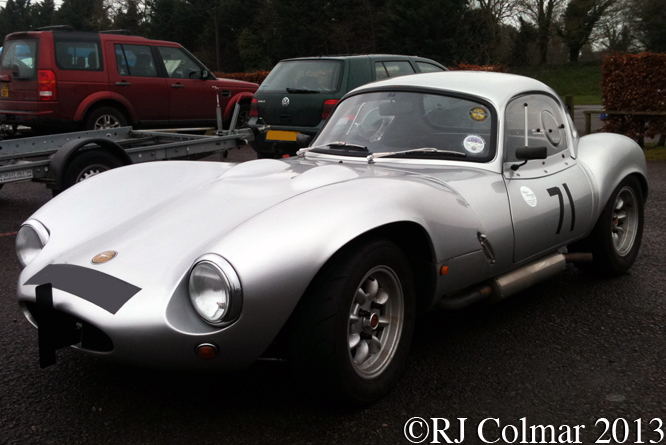
Ginetta G4, Great Western Sprint, Castle Combe

According to official records Roger Coote’s Ginetta G4 dates back to 2000 despite wearing a circa 1966 license plate more in keeping with the design era of the car.
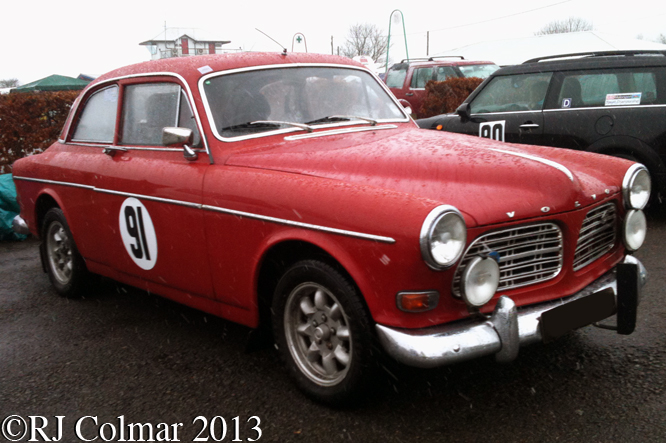
Volvo Amazon, Great Western Sprint, Castle Combe

Sleet was falling as David Jamesons prepared his 1968 Volvo Amazon for a practice run.
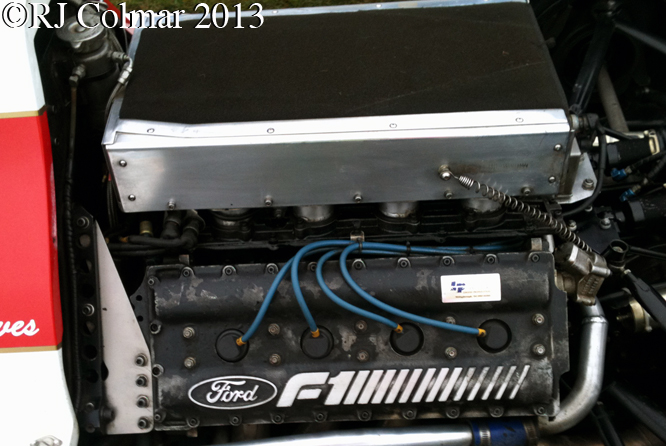
Ford Cosworth DFR, Great Western Sprint, Castle Combe

The 1988 Formula One season saw teams choose between two engine options 1.5 litre turbo or 3.5 litre atmospheric induction, Ford chose to abandon it’s turbo and supplied the Benetton team with a normally inducted Ford Cosworth DFR V8, like the one seen here in the back of Terry Graves Gould GR37, Benetton managed to finish 3rd in the manufacturer’s championship behind the Turbo powered McLaren Honda and Ferrari teams and ahead of the Lotus Honda and Arrows Megatron (BMW) turbo teams.
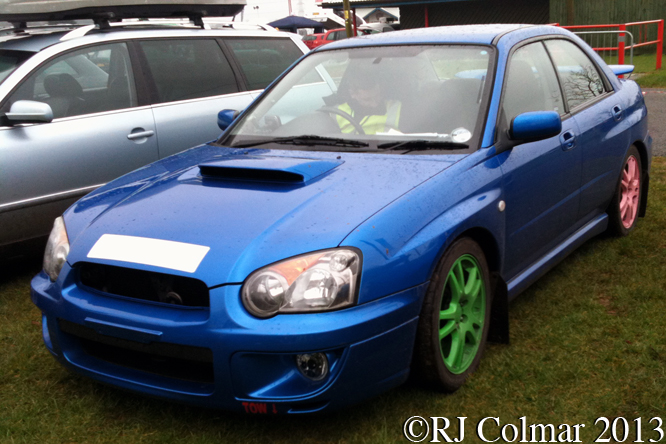
Subaru Impreza, Great Western Sprint, Castle Combe

My partner for marshaling duties on the inside of the track at Westway for the day was Carl, who drove us from the marshals meeting to the circuit gate opposite our post in his 2006 Sabaru Impreza fitted with natty Warholesque green and pink wheels.
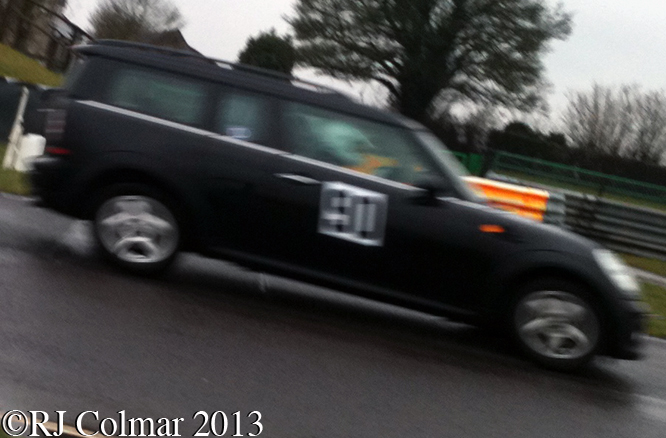
Mini Cooper, Great Western Sprint, Castle Combe

Apart from reporting the odd miscreant competitor who missed the Bobbies chicane our duties were not particularly taxing. Our post also served as the finishing line for the 1 3/4 lap sprint. I grabbed the following snaps on my i-phone while stood down during tea breaks. Above James Pile crosses the finishing line in his MINI Cooper Traveller.
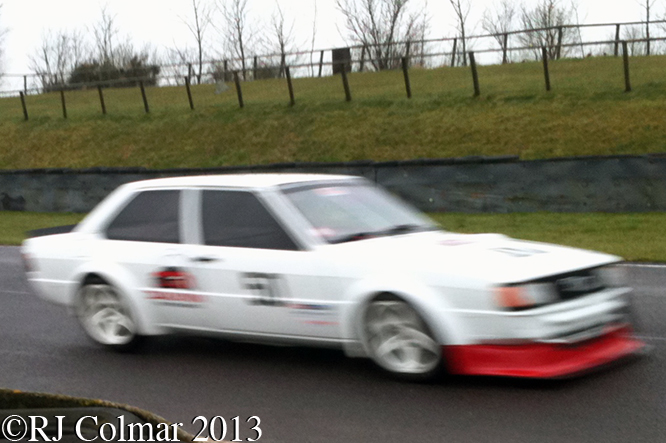
Audi 80 Quattro, Great Western Sprint, Castle Combe

Last time I recall seeing an Audi 80 on a race track was in 1980 when Sir Stirling Moss drove one in the British Saloon Car Championship, car of the day for me was undoubtedly Keith Murray’s Audi 80 quattro fitted with a turbocharged motor the car not only looked and sounded great but went like a rocket easily winning the Harkness Tyres Modified Production class beating Andy Trayner driving an Audi Quattro Coupé.
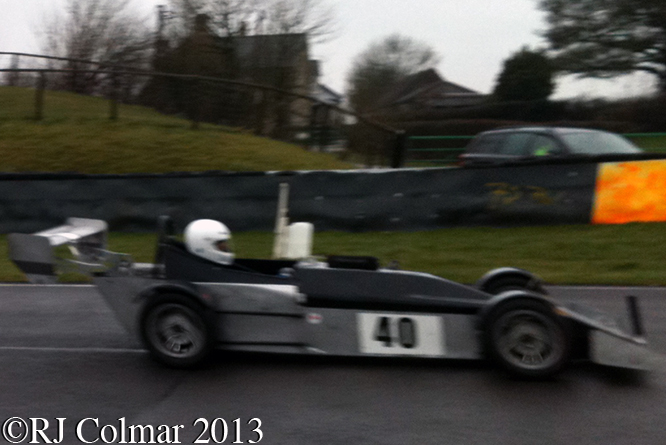
Mallock Mk 18b, Great Western Sprint, Castle Combe

Luke Trotman’s Mallock Mk18b broke a drive shaft in practice and then failed the first timed run, as did the two other competitors in the Sports Libre under 1800 cc class and ended up finishing second in the final run. It was around this time that I spotted something dayglo on the track and called a temporary halt to the proceeding for what turned out to be a ball of dayglo masking tape, shades of calling a NASCAR style ‘Jr caution’ there ! Doh !
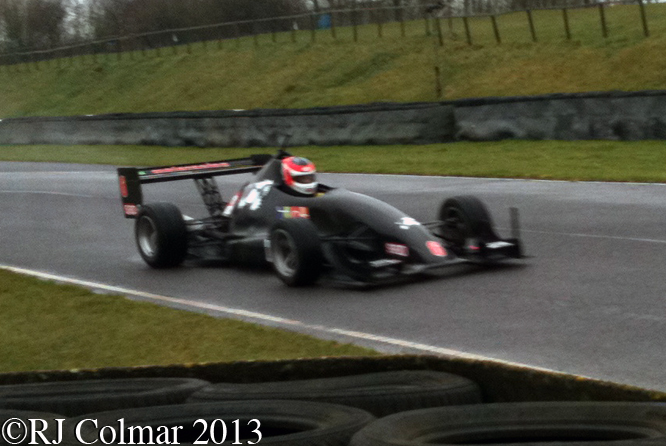
Van Diemen RF 96, Great Western Sprint, Castle Combe

Van Diemen was founded by the father of the only Australian to win a NASCAR Race Marcos Ambrose and Ralph Fairman father of one time Formula One driver Ralph Fairman Jr in 1973. Steve Miles is seen above driving his 1996 Van Diemen RF 96 which would have started life a Formula Ford 2000 spec car to a fifth place in the top 12 Run Offs.
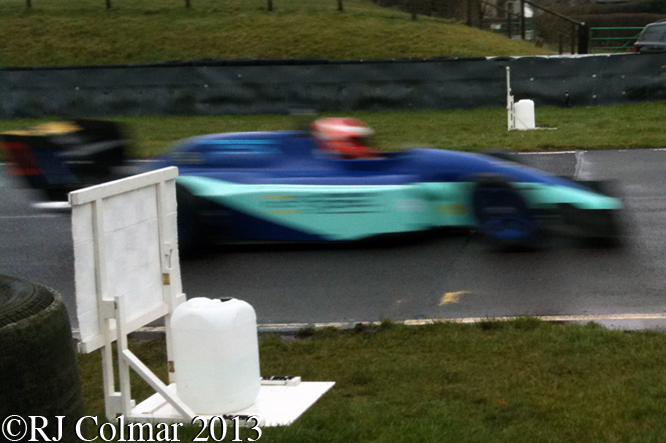
Lola Tegra Judd T90, Great Western Sprint, Castle Combe

The event overall was one by Terry Holmes in his Lola Tegra Judd T90 who only needed one run in the top twelve to set fastest time, and generously decided not to take a second run saving us marshals from standing a around in the freezing for an additional couple of minuets.

At mid day proceedings had been stopped for a welcome lunch break during which I refuelled on delicious beef madras curry with rice AND chips but by the end of the day my sense of humour was beginning to slip and I was ready to get home and jump into a hot bath to defrost.

Thanks for joining me on this “Mad Snow & Englishman” edition of “Gettin a li’l psycho on tyres” I hope you will join me again tomorrow. Don’t forget to come back now.

Share

Restructuring Fallout – Singer B37 Sports

In 1934 Singer built a 48 hp six cylinder 1 1/2 litre / 91 cui version of the Singer Le Mans with the aim of challenging the big hitters in the class, Aston Martin and Riley at Le Mans. The two team cars came home 7th and 8th overall behind the class winning Rileys which finished 2nd and 3rd overall and ahead of the Aston Martin’s which finished 10th and 11th.

01 DSCN9599sc

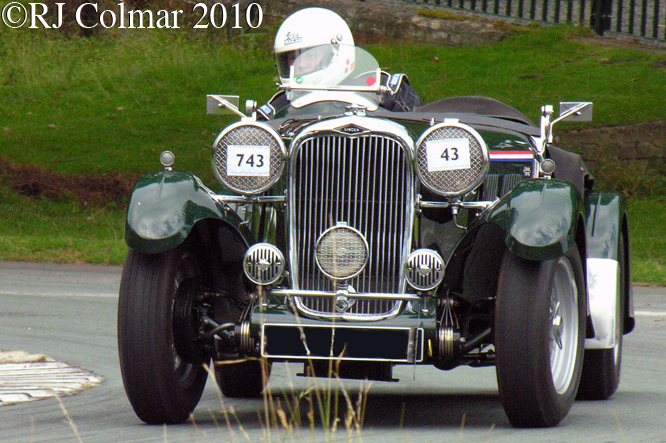
71 six cylinder Le Mans cars were built and they proved competitive especially in trials where they were noted for their restart capabilities on steep slippery surfaces. In 1937 a new six cylinder model known as the B37 was introduced powered by a 59 hp motor.

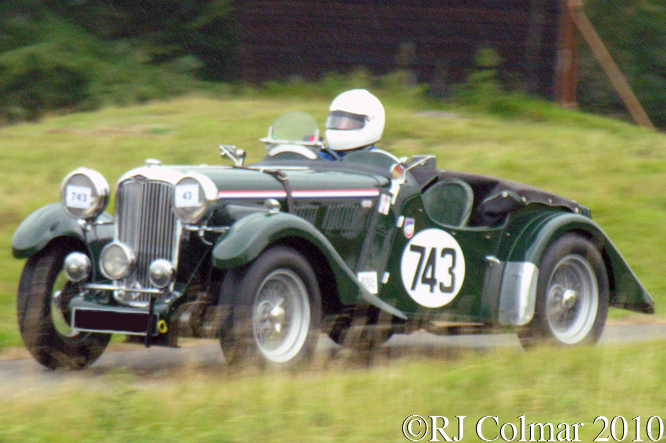
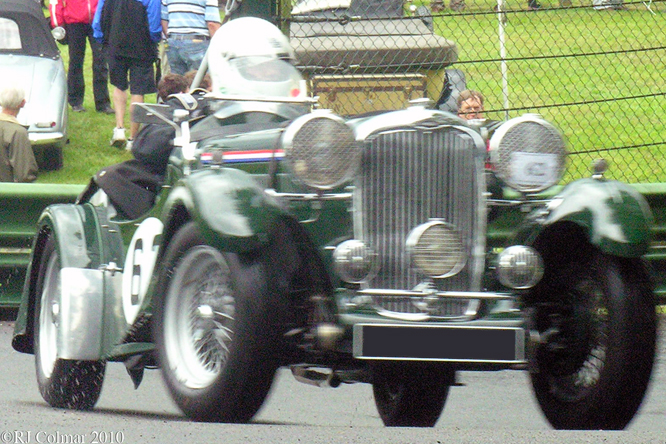
Singer B37, VSCC, Loton Park

The B37 was built on a new chassis and fitted with a competition “fly off” handbrake; twin spare wheels, offering added traction in trials events and a “Hill Holder” grab handle for passengers to hang onto when bouncing the car up slippery trials hills.

Singer B37, VSCC, Prescott

Thanks to the financial restructuring going on at Singer the B37 was cut from the Singer range after just 12 cars had been built. The car belonging to John Gibson seen at Loton Park, top two and Prescott Hill Climbs is one of three that are thought to have survived.

Thanks for joining me on this “Restructuring Fallout” edition of “Gettin’ a li’l psycho on tyres” I hope you will join me again tomorrow. Don’t forget to come back now !

Share

Bonus Built Facelift – Ford F1 Pickup

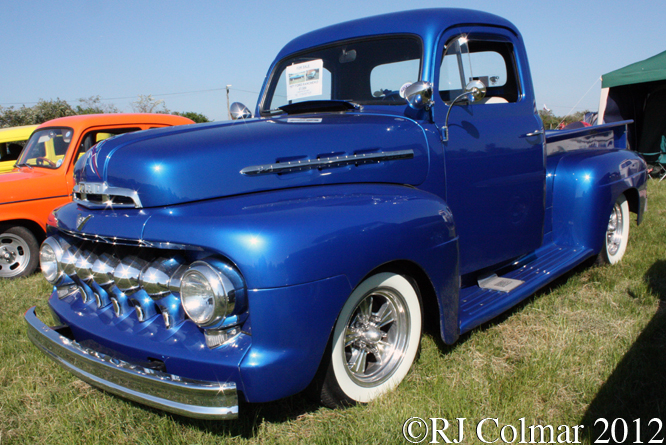
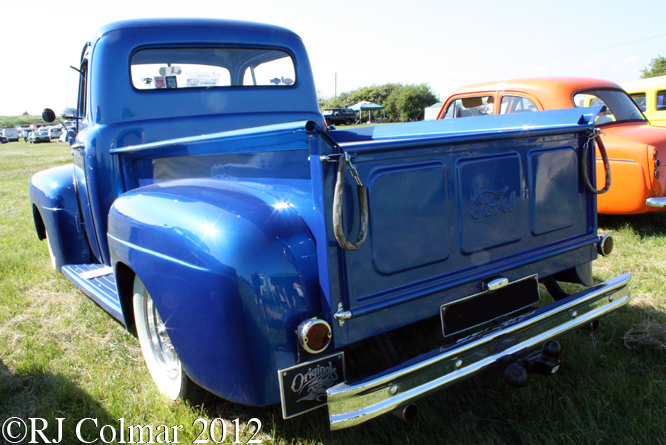
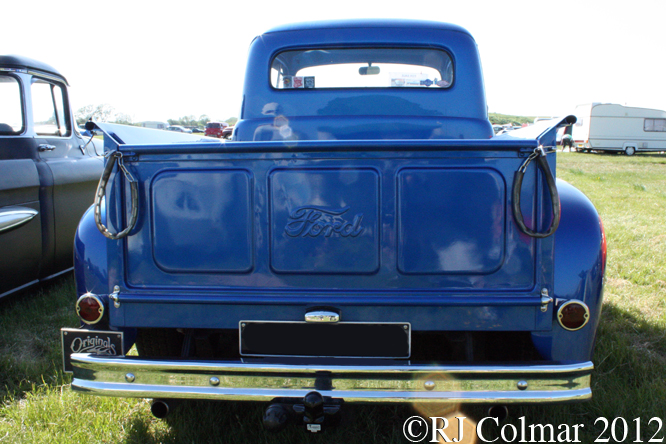
Last week week I looked at a 1949 Bonus Built Ford F1 this weeks pick up is the face lifted version first seen in 1951.

Ford F1 Pickup, Yanks Picnic Shakespeare County Raceway

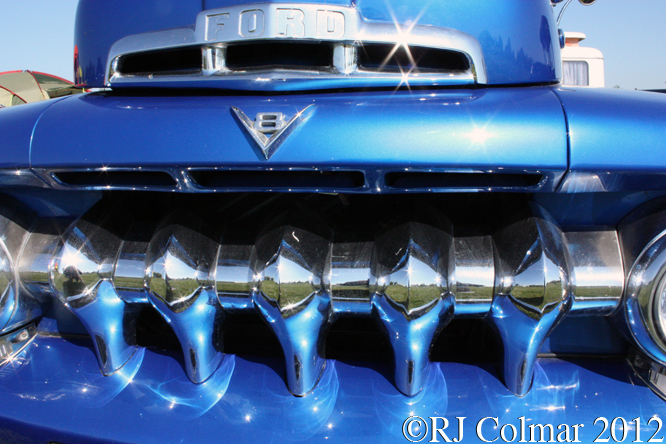
So far as I have been able to discern the grill would originally have only been fitted with three teeth, customisers seem to like adding additional teeth on the grill to fill in the gaps.

Ford F1 Pickup, Yanks Picnic Shakespeare County Raceway

All first Generation F1′s were powered either by a 95 hp flathead straight 6 or 100 hp flathead V8, the 4.8 litre / 292 cui quoted for today’s featured pickup suggests something more contemporary than a regular flathead is installed under the bonnet / hood.

Ford F1 Pickup, Yanks Picnic Shakespeare County Raceway

The new dashboard of the face lifted 1951 F1 featured an ashtray and glovebox. Twin windscreen wipers and the foot operated windscreen washer were still optional.

Ford F1 Pickup, Yanks Picnic Shakespeare County Raceway

The rear cab window was enlarged in 1951 for better reward visibility.

Ford F1 Pickup, Yanks Picnic Shakespeare County Raceway

Finally the steel panels on the 6 1/2 foot cargo bed were replaced with hard wood items which are much easier to repair and replace.

Thanks for joining me on this “Bonus Built Facelift” edition of “Gettin a li’l psycho on tyres” I hope you will join me again tomorrow. Don’t forget to come back now !

Share

Murray’s Triangular Monocoque – Brabham Cosworth BT42 #BT42/6

After winning three World Drivers Championships two with Cooper in 1959 and 1960 and one with his own Brabham Team in 1966 Jack Brabham decided he was going to sell up and retire at the end of 1969. He got as far as selling the team to his partner the Australian designer/engineer Ron Tauranac in 1969 but after Jochen Rindt elected to stay with the Lotus team for 1970 Jack Brabham drove for the team in 1970 before hanging up his helmet with his team placed 4th in the constructors championship.

Brabham BT42, Goodwood Festival of Speed,

The following season Ron ran the Brabham team with Graham Hill and Tim Schenken scoring a non championship race win with Graham Hill and a few points in the championship. Ron decided that he needed a business partner to continue and ended up selling the team to a former racer sometime team owner and driver manager called Bernie Ecclestone. It soon become clear that both Ecclestone and Tauranac liked things done their was and so Ron left early in 1972.

Brabham BT42, Goodwood Festival of Speed,

For the 1972 season Graham Hill was still the number one driver with Argentinian Carlos Reutemann and Wilson Fittipaldi, brother of 1972 World Champion Emerson, driving second and third string entries.For the second year running Brabham finished 9th in the constructors championship last of the point’s scorers.

Brabham BT42, Goodwood Festival of Speed,

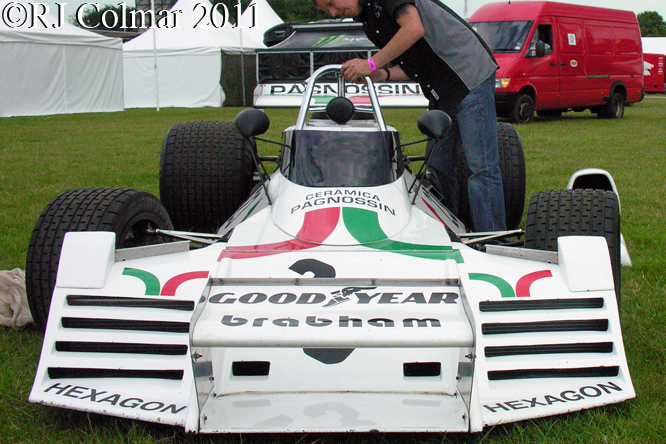
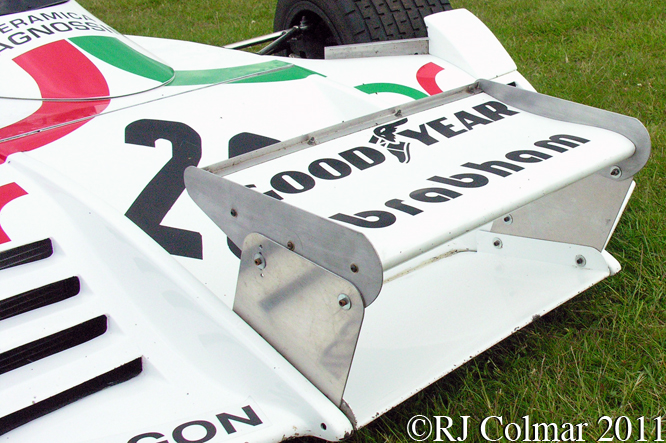
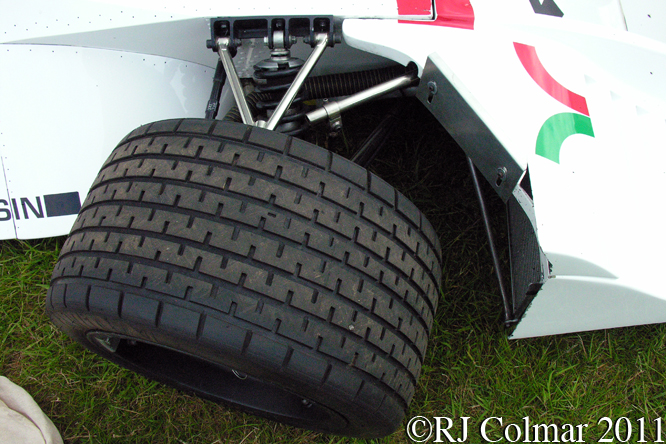
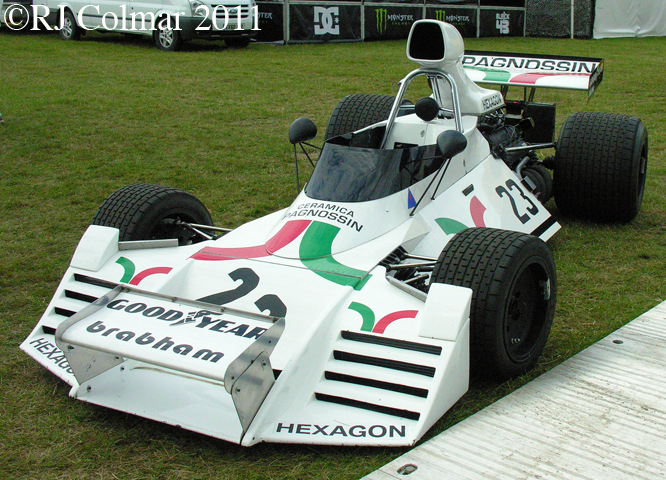
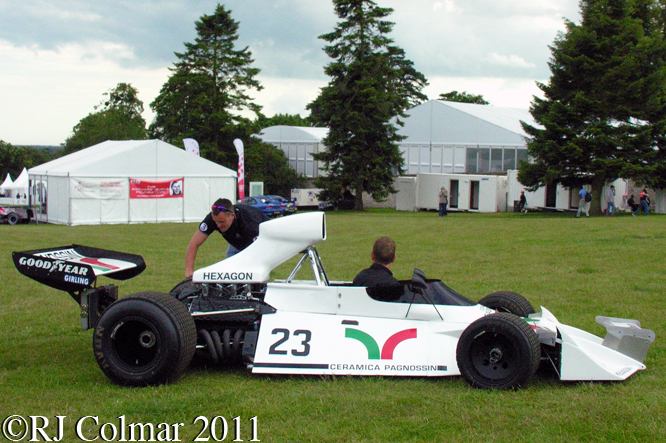
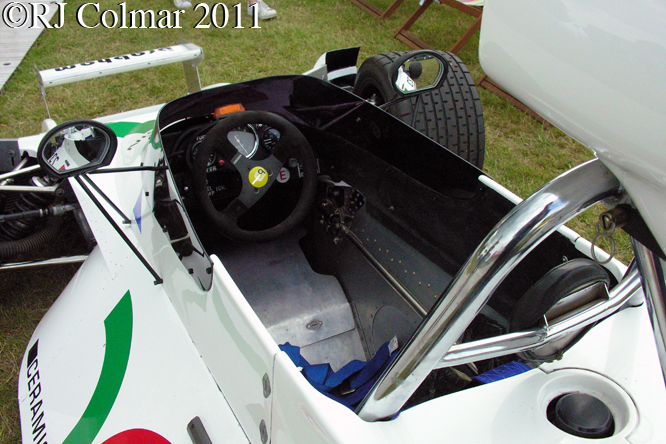
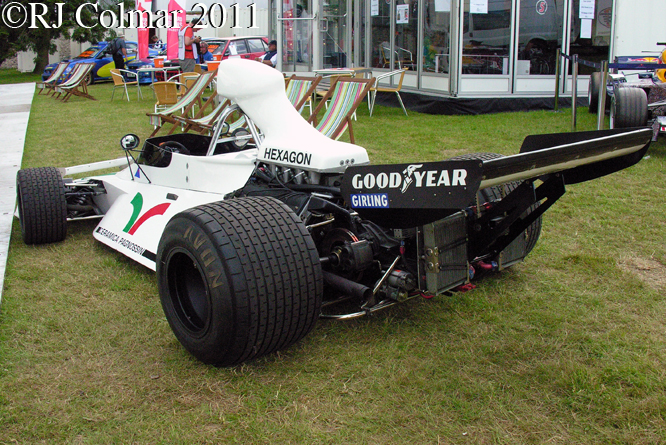
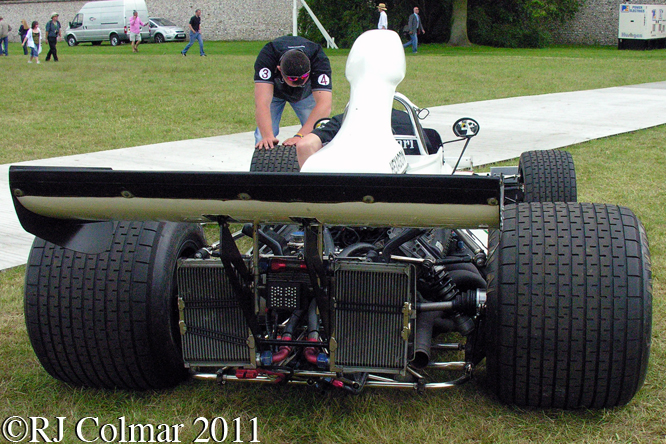
For 1973 South African Gordon Murray was given the responsibility of coming up with the Brabham team’s new challenger and he came up with the Brabham BT42 built around a monocoque that unusually, for the time, featured a triangular cross section as seen seen in these photographs.

Brabham BT42, Goodwood Festival of Speed,

Carlos Reutemann and and Wilson Fittipaldi were the teams front line drivers being joined on occasion by Andrea de Adamich until he broke his legs in an accident on the opening lap of the British Grand Prix, Andrea was replaced by Rolf Stommelen and then John Watson in the final Grand Prix of the season at Watkins Glen.

Brabham BT42, Goodwood Festival of Speed,

Reutemann managed six points paying finishes with the best being two thirds in the 1973 French and US Grand Prix while Andrea, in an older 1972 Brabham BT37, and Wilson added another 6 points between them all of which moved Brabham back up to 4th in the World Constructors championship.

Brabham BT42, Goodwood Festival of Speed,

This particular chassis is the sixth and final Brabham BT42 built it first appeared in the 1973 Austrian Grand Prix as a replacement for the chassis damaged in the accident at the 1973 British GP. Rolf Stommelen drove the car three times qualifying a best 12th in Italy and finishing a best 12th in Italy and Canada. John Watson qualified the car 24th for the US Grand Prix but the engine did not go the race distance.

Brabham BT42, Goodwood Festival of Speed,

Bernie Ecclestone sold chassis #BT42/6 and BT42/5 to Martino Finotto for the 1974 season, Finotto a seasoned sports car racer realised he was out of his depth in Formula One and so arranged for fellow sportscar racers Swiss Silvio Moser, 1973 and ’74 Le Mans winner Gérard Larrousse, Austrian Helmut Koenigg and Italian Carlo Facetti to drive the cars in several European Grand Prix.

Brabham BT42, Goodwood Festival of Speed,

In the end only Gérard Larrousse made a start in the car, having qualified 28th for the 1974 Belgian Grand Prix he retired with tyre issues. When Gérard unsuccessfully tried to qualify the car at the 1974 French Grand Prix it carried a particularly hideous airbox as can be seen in this linked image.

Thanks for joining me on this “Murray’s Triangular Monocoque” edition of “Gettin’ a li’l psycho on tyres” I hope you will join me again tomorrow. Don’t forget to come back now !

Share

Imperial Green – Lotus T104 Vauxhall Lotus Carlton

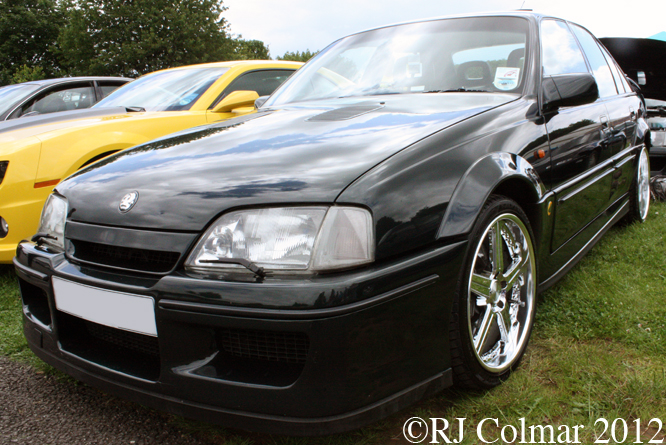
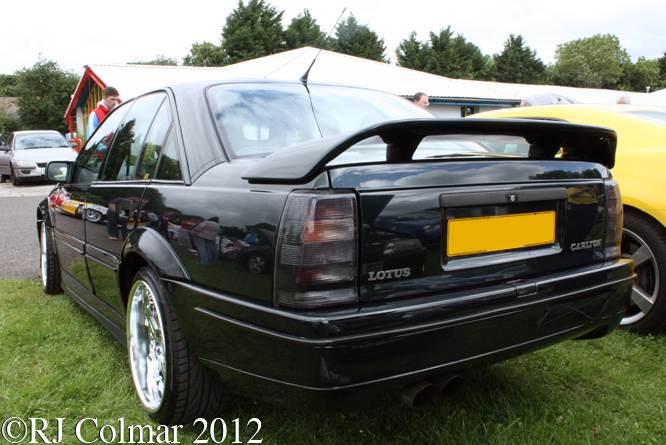
In 1990 Britain and Germany’s GM divisions launched a new Q car that could blow the contemporary Ford Sierra RS Cosworth 4×4 performance model into the weeds. The new vehicle was known as the Vauxhall Lotus Carlton in the UK and Lotus Omega in the rest of Europe.

Vauxhall Lotus Carlton, Classic and Sports Car Action Day, Castle Combe

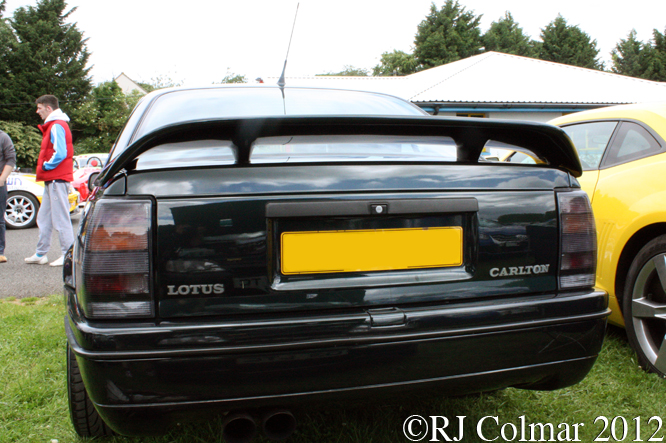
Lotus project Type 104 was responsible for turning the 3 litre / 183 cui executive saloon, into a barnstormer which included a body kit that fed more air into the engine and two small louvered out lets on the bonnet hood.

Vauxhall Lotus Carlton, Classic and Sports Car Action Day, Castle Combe

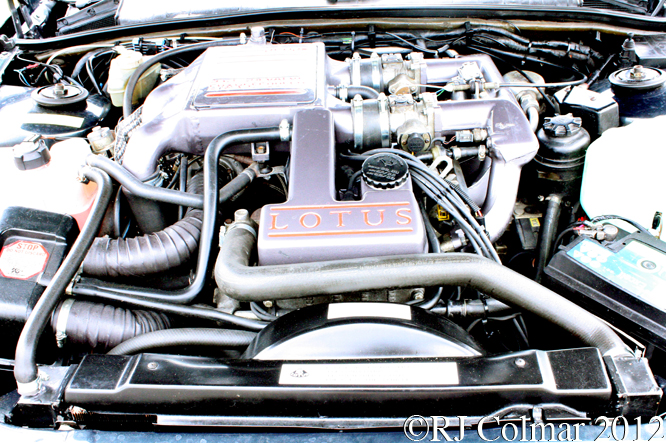
The six cylinder motor was comprehensively revised; the swept volume was increased to 3.6 litres / 219 cui and twin Garret T25 turbochargers with a Behr water to air inter cooler were fitted to take the power up to 377 hp at 5200 rpm. Transmission came courtesy of the contemporary Chevrolet Corvette ZR1 and the limited slip differential from the Australian Holden Commodore.

Vauxhall Lotus Carlton, Classic and Sports Car Action Day, Castle Combe

The performance figures included rest to 60 mph in 5.1 seconds with 100 mph being reached in 11.1 seconds and a controversial top speed of 176 mph, which made the car the worlds fastest four door saloon. There had been, unheeded, calls for GM to follow the lead of BMW and others to restrict the top speed to 155 mph.

Vauxhall Lotus Carlton, Classic and Sports Car Action Day, Castle Combe

The suspension was also suitably modified for improved stability and handling to match the straight line performance of the car, standard Carlton / Omega Servotronic power assistance for the worm and roller steering was used as space and budgets precluded the development of rack and pinion steering.

Vauxhall Lotus Carlton, Classic and Sports Car Action Day, Castle Combe

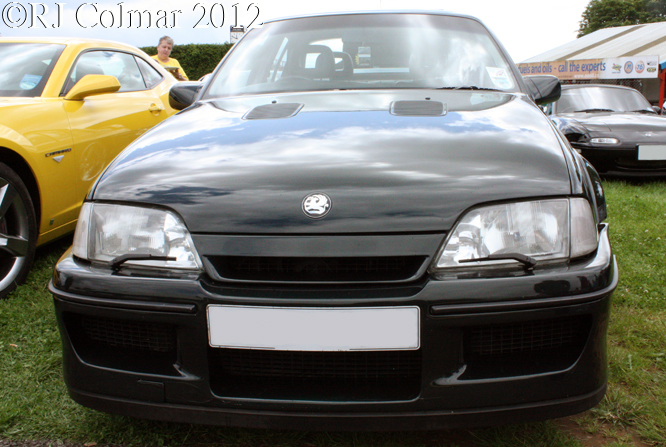
You could have your £48,000 Vauxhall Lotus Carlton or Lotus Omega any colour you liked so long as it was imperial green, which as can be seen looks black in any light other than direct sun light. Just 320 Vauxhall Lotus Carlton’s were built and 630 Lotus Omega’s.

Thanks for joining me on this “Imperial Green” edition of “Gettin’ a li’l psycho on tyres” I hope you will join me again tomorrow. Don’t forget to come back now !

Share

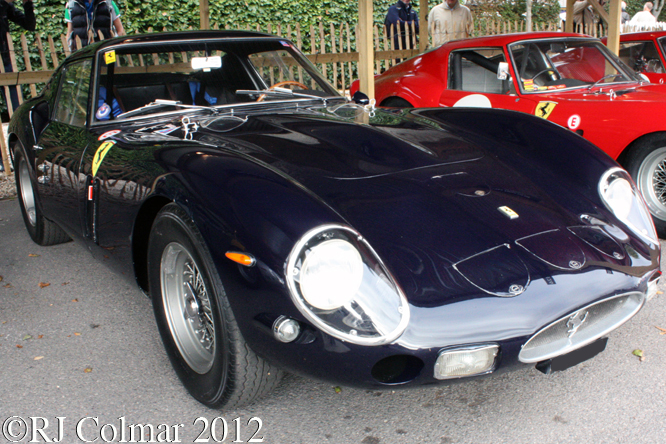
Fast Cars and Fast Love – Ferrari 250 GTO #4219

Motor racing is littered with generous patrons but I venture to suggest that her wealth aside none has been quite so extraordinary as the 20 year old heiress from Asheville North Carolina known as Mamie Spears Reynolds.

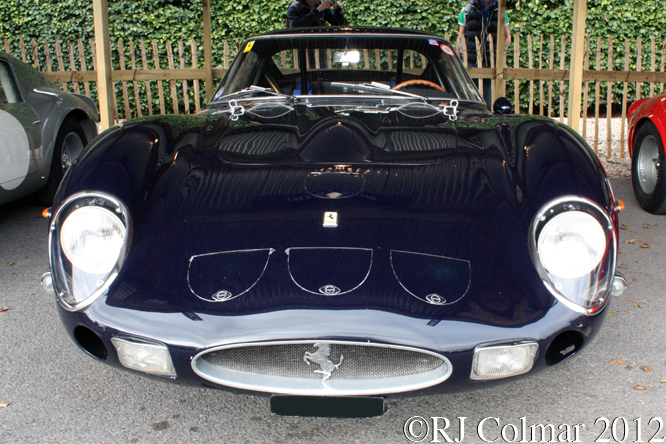
In early 1963 she went to New York to see Luigi Chinetti with the intention of buying a Ferrari to enter in the Daytona Continental. She ended up buying today’s featured Ferrari 250 GTO chassis #4219 and finding love in the form of Luigi Chinetti’s son Luigi Chinetti Jr whom she married in July 1963.

Ferrari 250 GTO, Goodwood Revival

Mamie, heir to tobacco and mining fortunes along with the “Hope Diamond” had Luigi Chinetti’s North American Racing Team (NART) enter #4219 into the Daytona Continental for Pedro Rodriguez to drive and he promptly won the race. NART entered the car at the following Sebring 12 Hours for Joakim Bonnier and John Cannon in which they came home 13th overall.

In May 1963 Mamie sold #4219 to Beverly Spencer in California for US $14,000, Beverly entered the car in numerous events through ’63 and ’64 primarily for Frank Crane who’s best results were a 2nd overall at Laguna Seca and a class win at Candlestick Park Raceway.

Ferrari 250 GTO, Goodwood Revival

At the end of 1964 Spencer sold the car to George Dyer for US $12,166. George had the now white #4219 painted dark blue and kept it until January 1993 when he sold the car to Brandon Wang the present owner for an estimated US$ 3 – 3.5 million.

By October 1965 Mamie and Chinetti jr were not getting on and after a private phone call to J Edgar Hoover she was liberated by “agents” and promptly divorced Chinetti jr and remarried a dog breeder the same day with whom she appears to have settled down for good.

Thanks for joining me on this “Fast Cars and Fast Love” edition of “Gettin’ a li’l psycho on tyres” I hope you will join me again tomorrow. Don’t forget to come back now !

Share

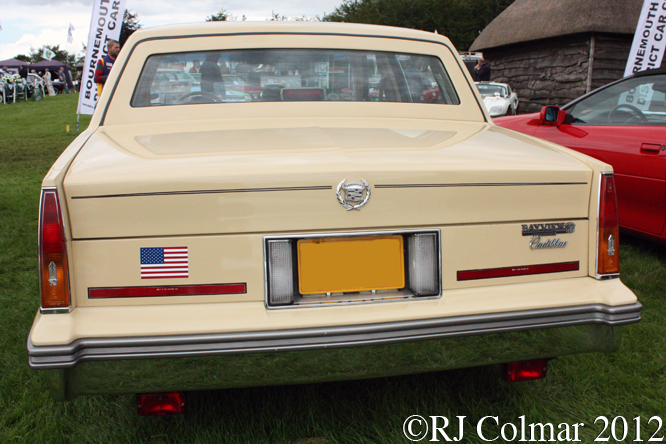
Cadillac of Tomorrow – Cadillac Sedan de Ville

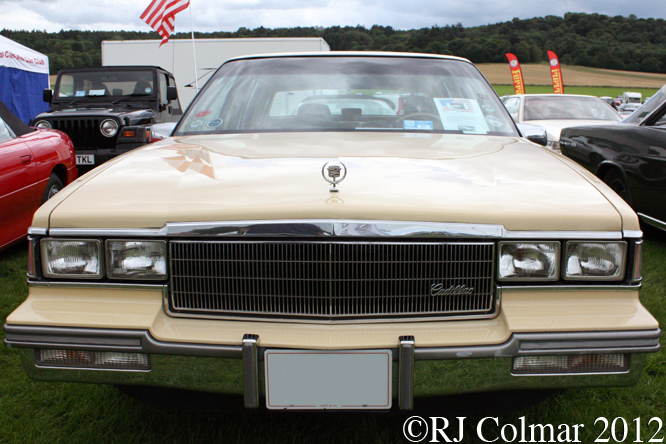
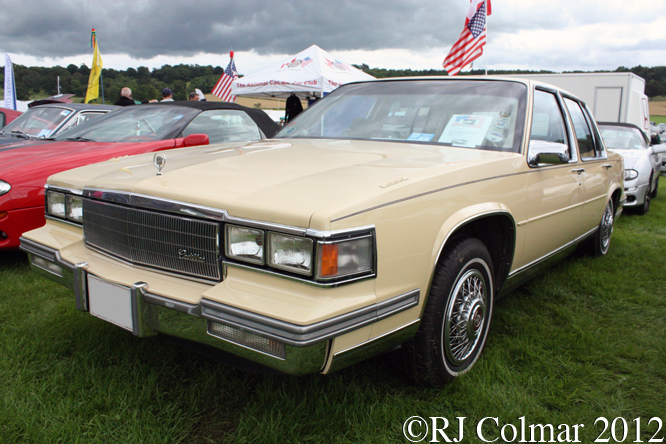
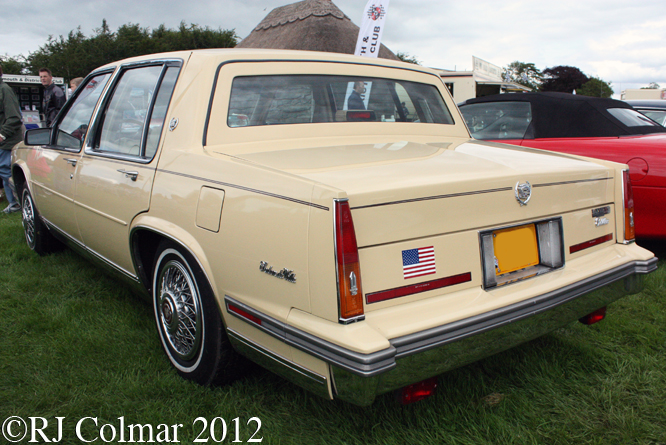
In 1985 Cadillac launched it’s downsized sixth generation Sedan de Ville model with the strap line “Cadillac of Tomorrow“.

Cadillac Sedan de Ville, Classics at the Castle, Sherborne Castle

The sixth generation Sedan de Ville was a radical departure from the previous models bearing the same name featuring the old V8 engine and gearbox but both were now transversely mounted because they were driving the front wheels instead of the rear.

Cadillac Sedan de Ville, Classics at the Castle, Sherborne Castle

Despite the reduction in external dimensions interior dimension remained similar to the fifth Sedan de Ville model.

Cadillac Sedan de Ville, Classics at the Castle, Sherborne Castle

From the any angle the Sedan de Ville does not look that different to the Volvo 760 first seen in 1982.

Cadillac Sedan de Ville, Classics at the Castle, Sherborne Castle

Due to an extended model year that started in April 1984 over 200,000 1985 Sedan de Villes were built, the sixth Generation model continued in production until 1993.

Thanks for joining me on this “Cadillac of Tomorrow” edition of “Gettin’ a li’l psycho on tyres” I hope you will join me again tomorrow. Don’t forget to come back now !

Share