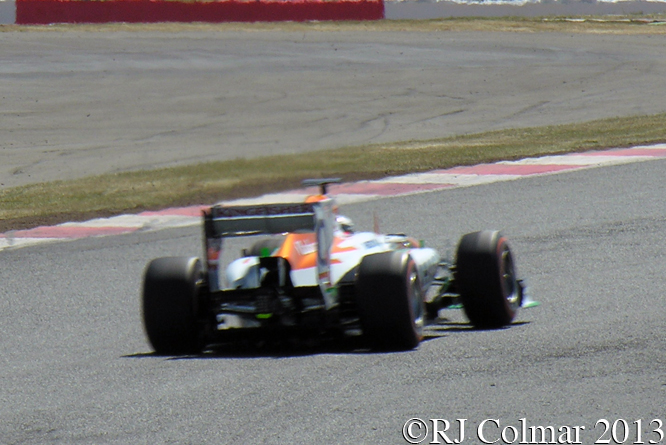
The Tax Man Has Taken All My Bugs – Bugatti Type 15 #366

Milanese Ettore Bugatti was working for, the company founded by Nicolas Otto that became, Deutz Gasmotoren Fabrik in Cologne, Germany where he designed his Type 8 and Type 9 between 1907 and 1909 when he decided to build his own car in his basement.

Upon completion of the project, known as the Type 10, in 1909 Ettore packed his possessions and family into his new creation and headed for Alsace to found Automobiles E. Bugatti and look for a factory in which to build more cars of his own design.
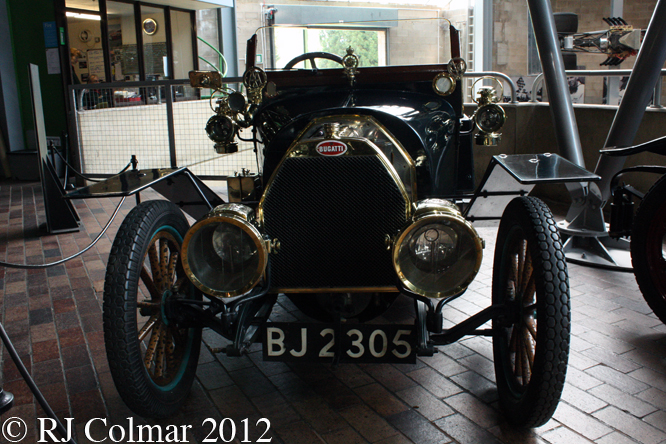
Bugatti Type 15, National Motor Museum, Beaulieu

Settling in Molsheim, Alsace Ettore set about building the Type 13 which like the Type 10 featured advanced, for the period in which chain drive was the norm, shaft drive, a larger 1368cc /83 cui version of the 4 cylinder Type 10 motor and for racing variants only cutting edge of technology 4 valve heads.

Unlike the Type 10 which only had leaf springs at the front and an unsprung rear axle the Type 13 featured leaf springs all round.
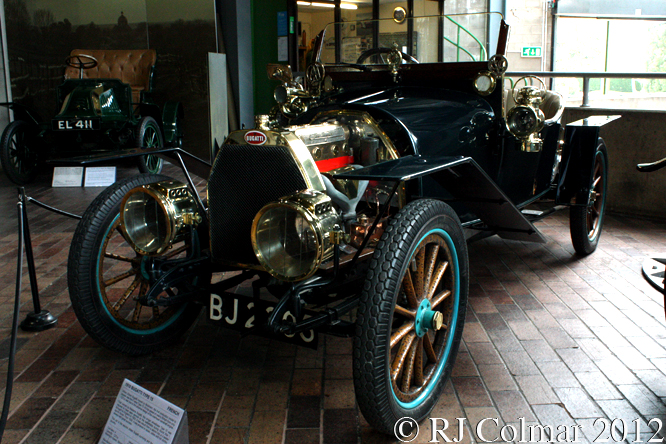
Bugatti Type 15, National Motor Museum, Beaulieu

The 16 valve Type 13 produced around 30 hp at 4,500 rpm an extraordinary high output for such a small motor thanks to the 4 valve heads, bearing in mind that the slightly earlier 35/45 hp Itala required a 7.4 litre / 453 cui motor to produce only 5 – 15hp more.

Automobiles E. Bugatti produced 5 Type 13’s in 1910 and in 1911 Ernest Friderich drove one of them in the 7 hour marathon French Grand Prix in which he finished 2nd, albeit 2 laps down, to the winning 10 litre / 589 cui 4 cylinder FIAT S61 driven by Victor Hemery.
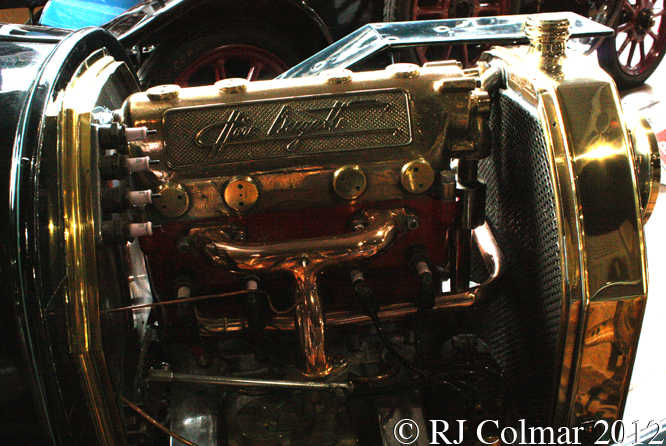
Bugatti Type 15, National Motor Museum, Beaulieu

Today’s featured 1910 Type 15 is similar to the Type 13, except that it was built with a longer chassis, 14 inch longer wheel base and is fitted with a 15hp 8 valve motor number #16.

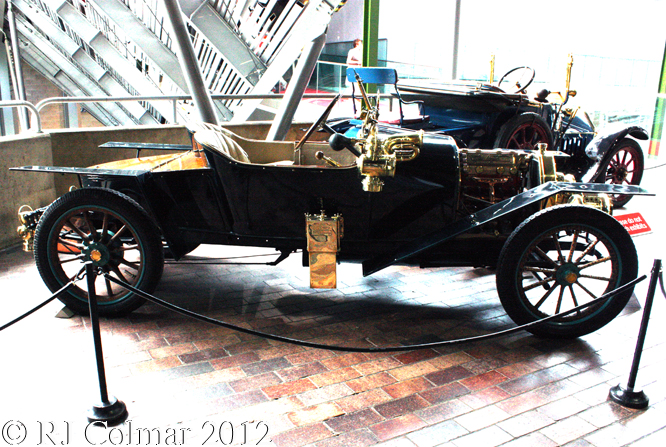
This car, seen at the National Motor Museum at Beaulieu was first owned by Ettore’s wife Mdme Barbra Bugatti and fitted with a saloon / sedan body. Before being registered in the UK by Col. Dowson in 1921, #366 is said to have been of service on the battlefields of the 1914 – 18 war.
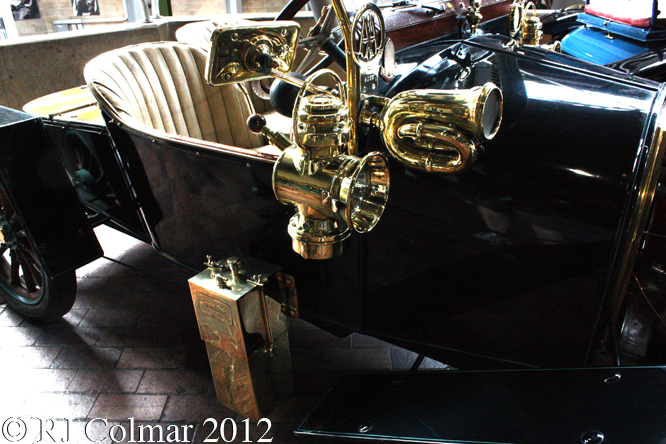
Bugatti Type 15, National Motor Museum, Beaulieu

The next known owner of #366 was Bugatti enthusiast CWP ‘Peter’ Hampton, the head of an international firm of land agents who lived in Effingham Common, Surrey and later Bolney, Sussex where he tended his collection reported to include Rolls-Royces, Mercedes Benz of all ages, at least one Hispano Suiza and 25 Bugattis, one of which was ‘recovered’ from Czechoslovakia in what has been described as a James Bond style operation when the country was still heavily under Soviet influence behind the Iron Curtain.

Peter replaced the original saloon / sedan body on #366 for the 2 seat sports tourer seen today in the 1930’s and used to compete with it regularly at Prescott along with four of his other competition Bugatti’s which included a Type 13, Type 18, Type 30, and Type 57C of which the Type 15 was unsurprisingly the slowest having achieved a best time of 80.7 seconds.
Bugatti Type 15, National Motor Museum, Beaulieu

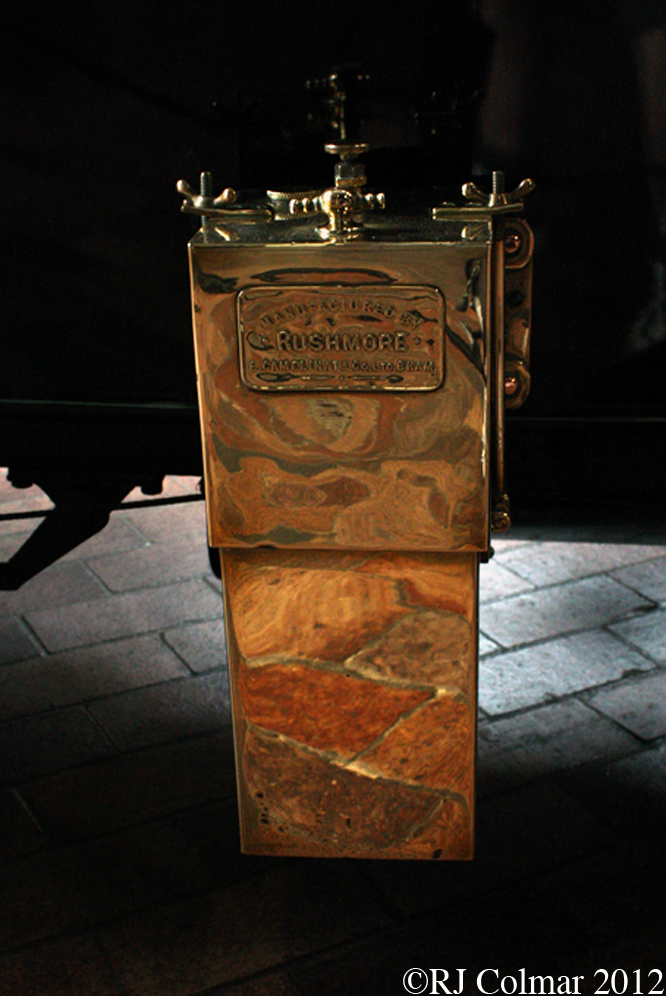
The highly polished brass box above is an acetylene gas generator, for the gas powered headlights, which featured a Patented Automatic Shaking Grate Generator manufactured by Rushmore Dynamo Works at Plainfields N.J., U.S.A between 1905 and 1914 when the company was bought for $750,000 cash by Bosch Magneto Co.

During the ’39 – ’45 war, Peter served as a War Substantive Lieutenant in the 4th/7th Royal Dragoon Guards, Royal Armoured Corps and was in the first wave to land at Gold Beach in the D-Day landings at Normandy in support of the infantry regiments.
 Bugatti Type 15, National Motor Museum, Beaulieu

Five of the 4th/7th’s tanks were lost before making shore despite being dropped off 200 yards from the beach, instead of the planned two miles, because of the unexpectedly high seas.

During the landings Peter received a permanent shrapnel injury to his left arm which was henceforth completely unusable, after relinquishing his commission due to his injuries Peter returned to Suffolk where his cars had been kept in working condition by farmer Stanley Sears, father of two time British Saloon / Sedan champion Jack.
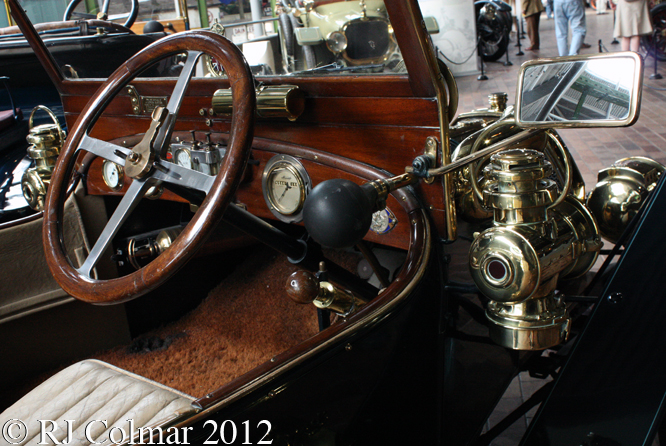
Bugatti Type 15, National Motor Museum, Beaulieu

To over come the problem of his left arm Peter had Stanley convert all of his vehicles to right hand gear change and Peter kept competing at Prescott and other events with #366 until 1952.

#366 is the oldest example of the marque in the UK and thought to be the second oldest Bugatti in the world and it along with the rest of the cars in Peter’s collection were dispersed after his death in the 1980’s.
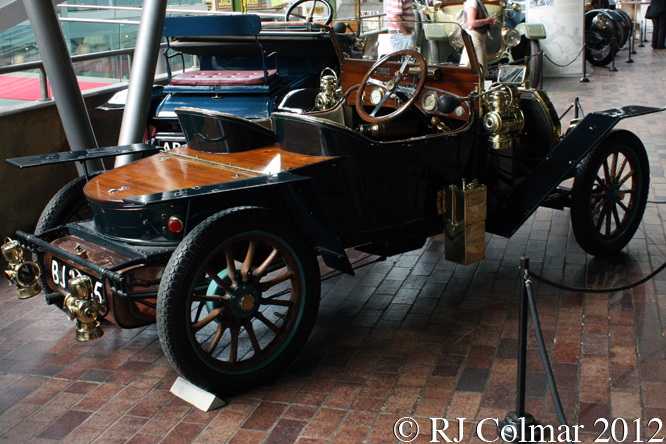
Bugatti Type 15, National Motor Museum, Beaulieu

Although #366 is road fund licence exempt it has not been issued with a valid tax exempt disc since 1985, though ironically, the vehicle actually belongs to Her Majesties Government who acquired it from Peter Hampton’s estate in lieu of inheritance tax.

My thanks to Allan Lupton for enlightening me about the Rushmore Dynamo Works Patented Automatic Shaking Grate Acetylene Generator, to Doug Nye, Roger Lund, John Winfield, Vitesse2, Carl R.S. and Hipperson who all contributed to the ‘C.W.P. ‘Peter’ Hampton; racing driver and collector’ at The Nostalgia Forum and likewise to everyone who contributed to the ‘great bugatti collectors’ thread at Bugattibuilder.com forum.

Thanks for joining me on this “The Tax Man Has Taken All My Bugs” edition of “Gettin’ a li’l psycho on tyres” I hope you will join me again tomorrow when I’ll be looking at McLaren’s 50th Anniversary efforts in the 2013 Formula One season. Don’t forget to come back now !

Share

Motorised Goat – Farmobil

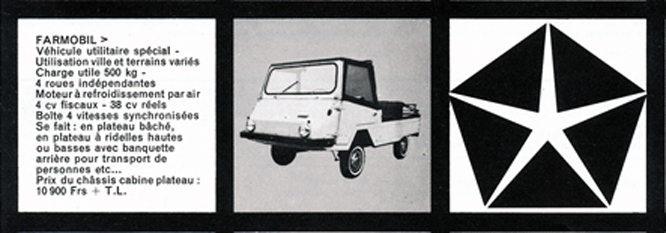
A couple of months ago I started clearing some stuff out through my e-bay account, including a collection of French Adverts from a magazine called Connaissance des arts.

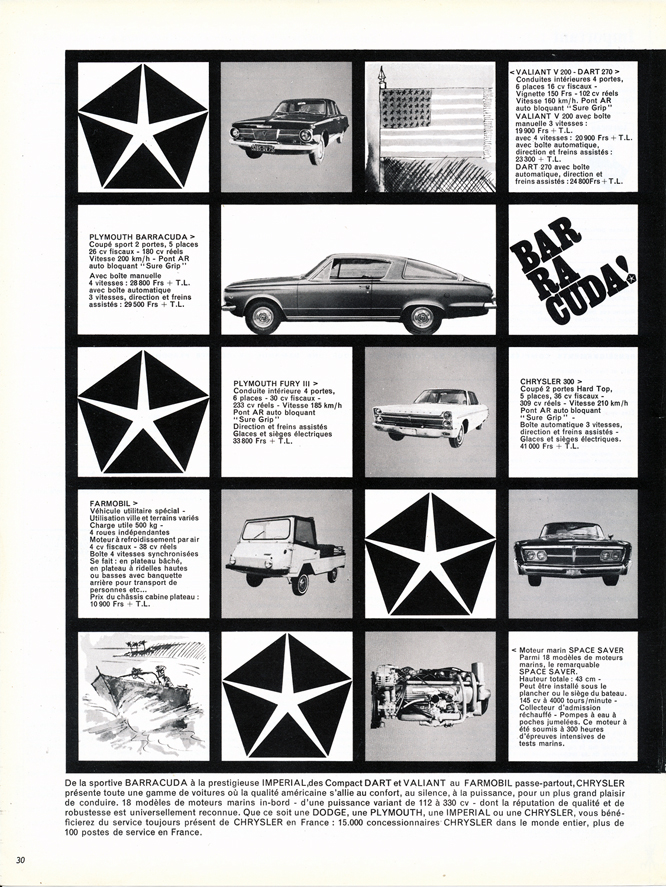
Chrysler, Advertisement, Connaissance des arts

One item that really triggered my curiosity was featured on the undated Chrysler ad above was the cute l’il utility vehicle referred to as the Farmobil below.

Farmobile Chrysler, Advertisement, Connaissance des arts

Last thing I imagined was that this item would sell to a Farmobil owner…. living in Perth Australia !
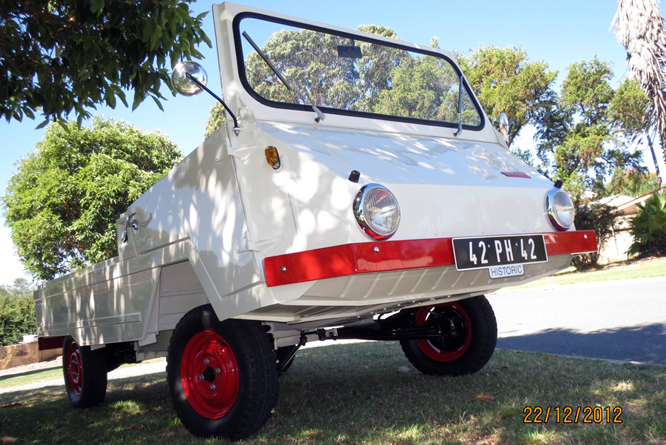
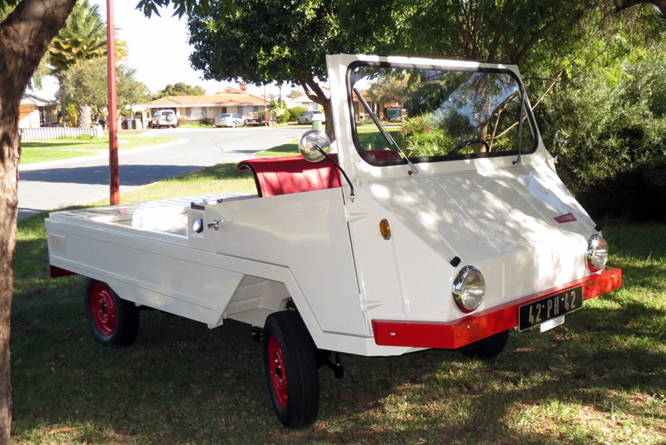
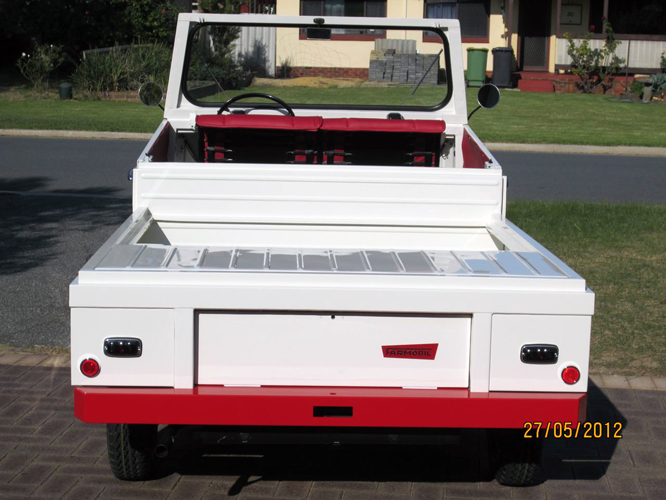
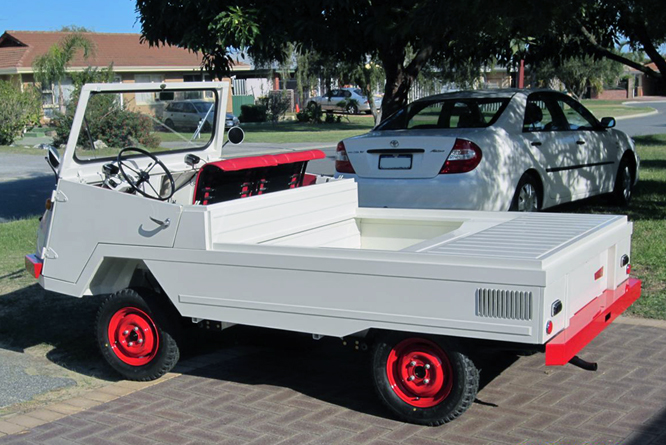
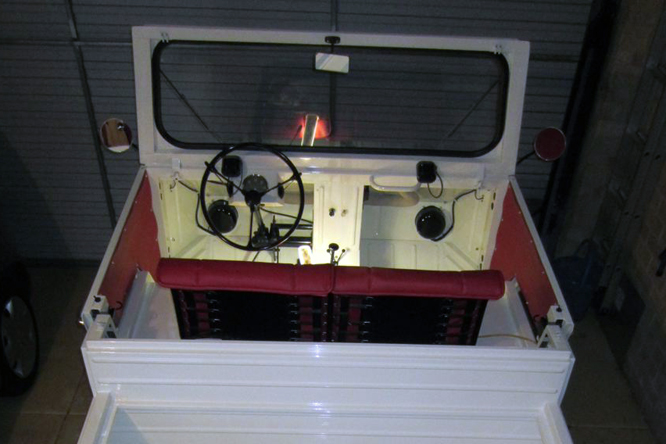
Mark Bird owner of today’s featured Farmobil kindly sent me some photo’s of his vehicle and some information about it to share.

Farmobile

The Farmobil story begins in a small town on the southern border of Germany with Switzerland in Gottmadingen where the former Fahr factory occupied 4,000 employees in the production of agricultural machinery and equipment with metal castings a speciality.

Farmobile

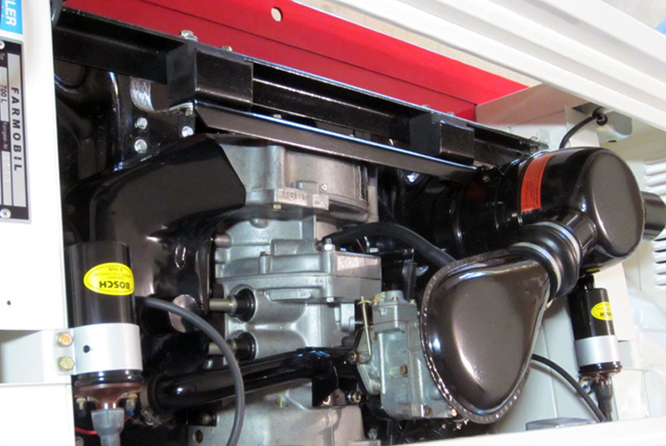
One of the products they designed in co operation with BMW is the Farmobil a light utility truck with all round independent suspension and a drive train including, 4 speed synchromesh gearbox, 2 cylinder BMW 700 cc / 42.7 cui motor, stick shift, brakes and wheels lifted more or less straight out of a BMW 700 LS.

Farmobile

To maximise flexibility the windscreen could be folded down and the doors removed and for inclement weather the Farmobil was provided with a canvass roof, it had a power take off for farm implements and could even be converted into a six seat passenger vehicle.

Farmobile

The 32 hp air cooled horizontally opposed motor was originally developed for BMW motorcycles, but this is not the same single cylinder unit as used in the BMW Isetta bubble car or R60 flat twin as used in the BMW 600 Bubble Car.

Assembley of Farmobils was put out to tender which was won by Greek low volume manufacturer Peter Kondorgouris who founded Farco to build the Farmobil in Thessalonika, Greece, from 1962 to 1966.

Farmobile

During this time Chrysler was looking for away into the European markets and acquired Farco as a first step towards establishing a European base. However shortly after the acquisition Ford sold it’s share in the French Simca concern and Chrysler bought it giving them an entrance into the French and German markets while the Farmobil manufactured in Greece, outside the European Economic Union (EEC) at the time, attracted prohibitive taxes.

Farmobile

In Greece, where the Farmobil was never officially distributed, it was known as the ‘motorised goat’. Chrysler distributed it through it’s network within the EEC however by 1966 production came to an end after efforts to move production to Rotterdam, and the UK where two vehicles fitted with Hillman Imp motors from the Rootes Group, soon to become part of the Chrysler empire all failed to secure a future for the versatile machine of which just under 1000 were built between 1962 and 1966.

Farmobile

Mark, a member of the “Special Interest Vehicle Association” (SIVA) found his 1966 example needing a full restoration in France in 1999 and took it back to Australia where he spent 12 years locating all the correct parts to restore it back to the as new showroom condition seen here.

Farmobile

He says that “It is a completely unknown vehicle in Australia so it’s a bit difficult to share it with others” outside the the Special Interest Vehicles Association whose members own a diverse range of vehicles including Hino Contessa, Messerschmitt KR 200 & 201, NSU Prinz and Ro80, Autobianchi Bianchina, Trojan 200, Nissan S-Cargo, Honda s600″s , Coupe 7″s & 9″s as well as N360 and TN360 to name a few.

My thanks to Mark for sharing today’s photographs of his stout little Farmobile about which he contributed to a fuller description which can be seen on the allpar.com website linked here.

Thanks for joining me on this “Mechanised Goat” edition of “Gettin’ a li’l psycho on tyres” I hope you’ll join me again tomorrow for a few of the many stories behind the oldest Bugatti in Britain. Don’t forget to come back now !
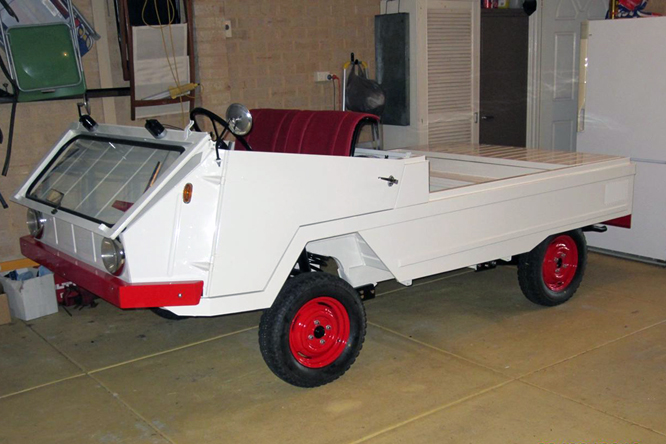
18/02/14 Errata in the original post of this blog I incorrectly spelled Farmobil, it has no ‘e’ and stated; that the Farmobil’s transmission was a Porsche design which it was not, that the motor was shared with the BMW Isetta Bubble car which was also incorrect.

Apologies for the confusion and thanks to Mark Bird for pointing out the inaccuracies. Mark also tells me that the Farmobil is not to be confused with the similar but completely unrelated Steyer Puch Haflinger made in Austria.

Share

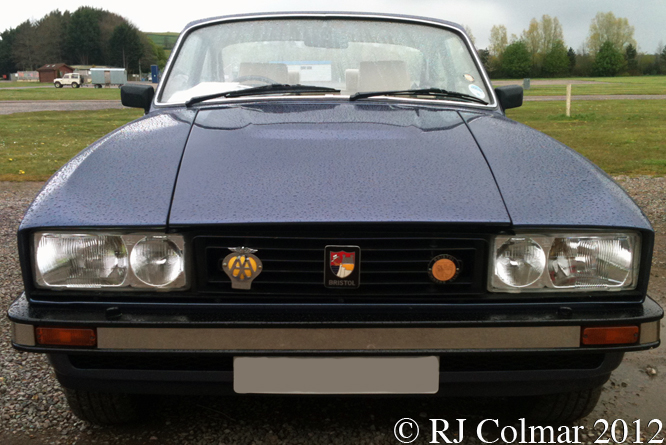
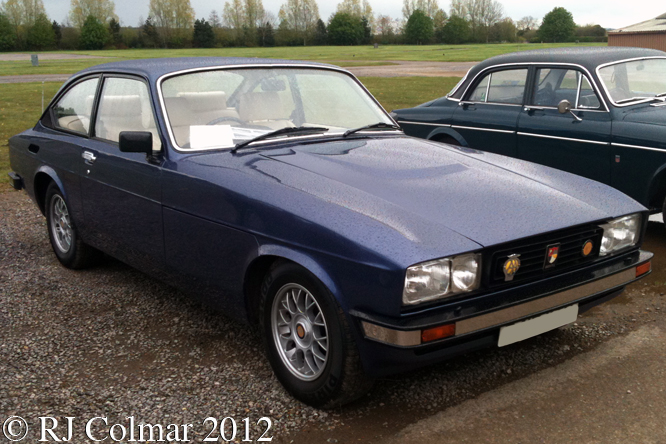
Turbo Mopar Under The Hood – Bristol Brigand

By the early 1980’s the temporary austerity enforced on the global economy by the oil crisis ten years earlier was giving way to a new era of prosperity that would be characterised in the immortalisation of Gordon Gecko in “Wall Street“.

Bristol Brigand, Bristol Classic Car Show, Shepton Mallet

Likewise in the motor trade cars were becoming seemingly exponentially faster thanks to widespread use of turbochargers which had the benefit of boosting horsepower of small motors without the cost of having to develop new large motors, additionally turbochargers could give executives a powerful model with a small motor typically 2 litres / 122 cui without the tax liabilities and inefficiencies of a 3 litre model.

Bristol Brigand, Bristol Classic Car Show, Shepton Mallet

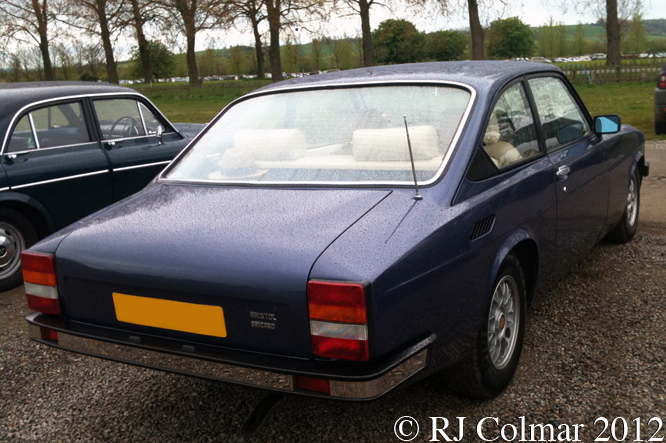
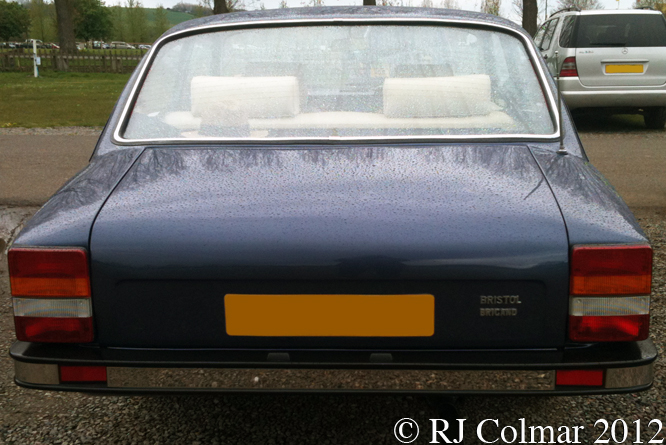
Many manufacturers like Lotus naturally made sure everybody new your car was fitted with a turbocharger, though later a more discrete approach was introduced by some like Volvo. Amongst the Créme de la Créme unsurprisingly Bristol chose to take the more discreet approach with the turbocharged variant of it’s 603 model which was differentiated from it’s less powerful brethren by; standard alloy wheels, a visually inconsequential power bulge in the bonnet / hood and the “Brigand” name on the boot / trunk lid.

Bristol Brigand, Bristol Classic Car Show, Shepton Mallet

The series 3 603’s introduced in 1982 were among the first to be given names used by Bristol’s early owners the Bristol Aeroplane Company, the normally aspirated 603 Series 3 is known as the Britannia after a turbo prop airliner with the Brigand named after a ground attack bomber. The Brigand equipped with a 5.9 litre / 360 cui Chrysler V8 and a Rotormaster Turbocharger was said to be capable of reaching 60 mph from rest in 6.1 seconds and a top speed of 150 mph.

Bristol Brigand, Bristol Classic Car Show, Shepton Mallet

Brigands like today’s 1985 example, seen at the Bristol Classic Motor Show at Shepton Mallet a couple of years ago, were manufactured from 1982 to 1994 with minor exterior revisions, no production numbers for these cars was ever released some believe there may be 16 left while How Many Left.com shows only an extremely conservative 2 as taxed for use in the UK !

If you think the tail lights look familiar that probably show’s that at some point in your life you have sat behind a Bedford Commercial CF2 van.

Thanks for joining me on this “Turbo Mopar Under The Hood” edition of “Gettin’ a li’l psycho on tyres” I hope you will join me again tomorrow when I’ll be looking at an agricultural BMW powered Mopar. Don’t forget to come back now !

Share

No Enthusiast Should Miss – Ginetta G.15 Coupé

For trade stand No. 157 at the Earls Court Motor Show in 1967 Ginetta prepared a vehicle that they said “No enthusiast should miss”, the new Ginetta G.15 was billed as being capable of 100 mph and achieving 40 mpg with ‘fantastic’ road holding and all for the low price of just £849 in kit form.

Ginetta G15, Prescott

However Ginetta had over sold them selves since they had not sorted out their supply chain out sufficiently to start production until 1968. However once they got going according to Ginetta’s engineer Ivor Walkett “we could not build them fast enough” for a while Ginetta moved into a new factory to cope with the demand which eventually was just short of 800 units.

Ginetta G15, Prescott

Built around a steel space frame with glass fibre pannels the G.15 used proprietary Triumph Spitfire front suspension and like the later Clan proprietary rear mounted engine and suspension from the Hillman Imp. Ginetta also had the car type approved for turn key sales.

Ginetta G15, Russell, Prescott

The G.15 was a big hit on the tracks and hills, Chrysler engineer Brian Tavender used his in sprints with is own specially prepared motor and gearbox, until an accident at Castle Combe in 1975 Barry Wood was successful running a works backed car in the modified sportscar (Modsport) class while 3 years after production had ended in 1974 David Beams became 1977 Production Sports (Prodsports) Champion with his G.15. Two years later Alison Davis repeated the Prodsports feat to become the first woman to win an overall circuit racing championship.

Ginetta G15, Prescott

The end of G.15 production in 1974 was brought about by the usual suspects for the period, dreaded Value Added Tax (VAT), a three day working week due to fuel shortages, with the additional threat of the end of supply of the Hillman Imp motor. Several G.15s were built for the US market with Volkswagen motors and Ginetta considered using a Skoda motor to replace the Hillman unit before cutting their losses and calling it a day for the model. Subsequently Ginetta moved back to their original factory.

Today’s featured G.15 belonging to Andrew Russell was seen at Prescott a couple of years ago.

Thanks for joining me on this “No Enthusiast Should Miss” edition of “Gettin’ a li’l psycho on tyres”, I hope you will join me tomorrow when I’ll be looking at an early turbocharged Bristol. Don’t forget to come back now !
Share

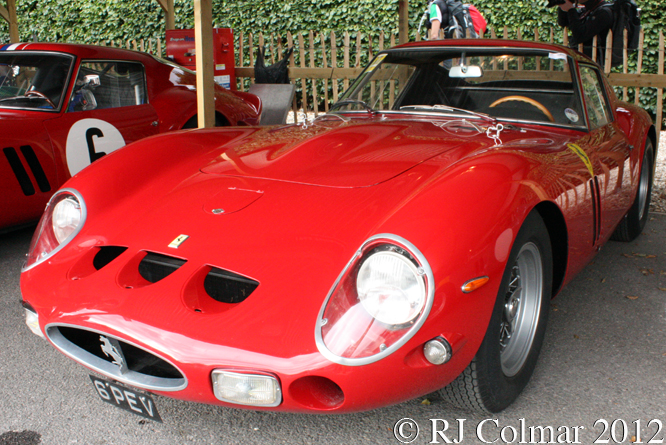
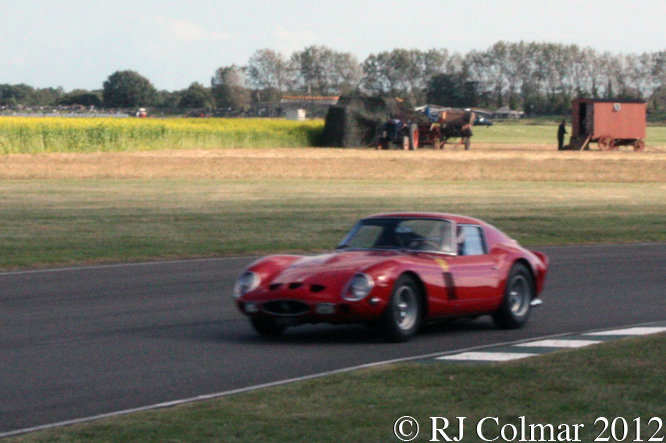
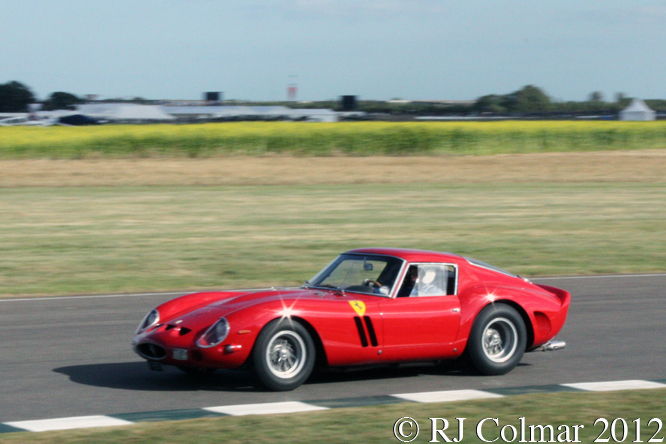
Hermann’s GTO – Ferrari 250 GTO #4115GT

In 1961 23 year old Hermann Cordes visited the Porsche factory with the intention of buying a couple of Porsche’s to race but found the atmoshpere less than friendly and left with out spending so much as a phennig. On his way home the dissapointed would be racing driver went to Frankfurt where serendipidously the Frankfurt Motor Show was happening.

At the show Hermann spoted a light blue Ferrari 250 GT SWB Berlinetta similar, so he thought, to the vehicle that had won it class in the 1000kms at the Nurburgring earlier in the year and purchased it along with a Ferrari 250 GTE 2+2 for a little more than the price of four of the Porsche’s he had set out to buy.

Ferrari 250 GTO, Goodwood Revival

According to legend on the 15th of April 1962 Hermann inadvertently parked his Ferrari 250 GT SWB in the competitors car park at the Eberbach hillclimb and before he knew it the steel bodied car had been given a racing number and Hermann a provisional competition licence and his career got underway. A couple ofweeks later he raced the car at Achum where he finished 3rd.

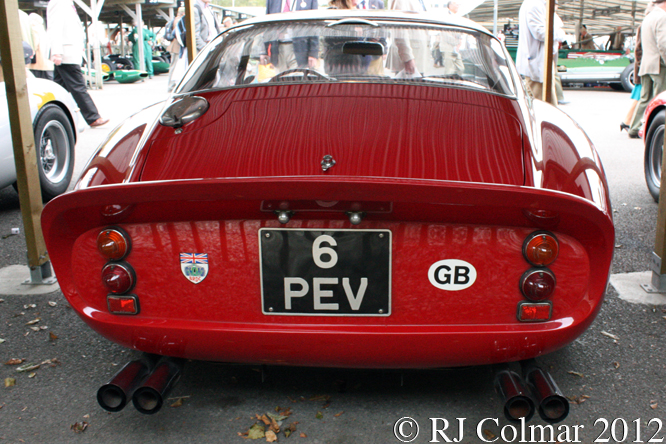
On the 1st of May Hermann’s 250 GT SWB came into contact with a deer on a public road and the SWB ended up backed into a tree an insurance write off. Hermann escaped more or less unharmed and with the insurance money ordered today’s featured Ferrari 250 GTO chassis #4115GT, which turned out to be the only 250 GTO ever sold new to a German customer.

Ferrari 250 GTO, Vestey, Goodwood Revival

While he was waiting for delivery of #4115GT and before going down to Maranello and then Scalietti’s factory on Modena verify it’s existence and identity, Hermann took the bumpers off his 250 GTE and competed with that. In December 1962 Hermann took delivery of the Grigio metallic 250 GTO chassis #4115GT, before selling his 250 GTE in February 1963 to Guenter Seifert.

In 1963 Hermann competed with #4115GT in the hills and on the track winning his class on the Bad Neuenahr hillclimb and winning overall in a GT race at Hockenheim. Hermann’s last recorded race was at Avus where he finished 2nd.

Ferrari 250 GTO, Vestey, Goodwood Revival

In 1964 Manfred Ramminger bought the car, to which Hermann had added black, gold and red stripes. Manfred shared #4115GT with Herbert Schander at the Nurburgring 1000kms where they finished 20th overall and 5th in class, and driving 4115GT solo Manfred won at Mainz Finthen and Avus before selling the car on to Werner Lindermann for the 1965 season.

Werner won a GT race at the Nurburgring before returning with the previous owner Manfred for the 1000kms where they came home 23rd overall, but this time second in class. Werner then drove 4115GT to it’s second victory at Avus, a second victory at Mainz Finthen and a win at Trier. At the end of 1965 Werner offered the #4115GT, now painted signal red, for sale at around half of it’s original cost.

Ferrari 250 GTO, Vestey, Goodwood Revival

H. P. Burkhardt of Switzerland bought the car in 1966 and in 1967 it was driven Peter Ettmueller to a final class victory on the Ollon-Villars hillclimb. In 1972 #4115GT moved to the UK under the ownership of T.A. Bob Roberts who had it displayed in the Midland Motor Museum, Stanmore Hall, GB.

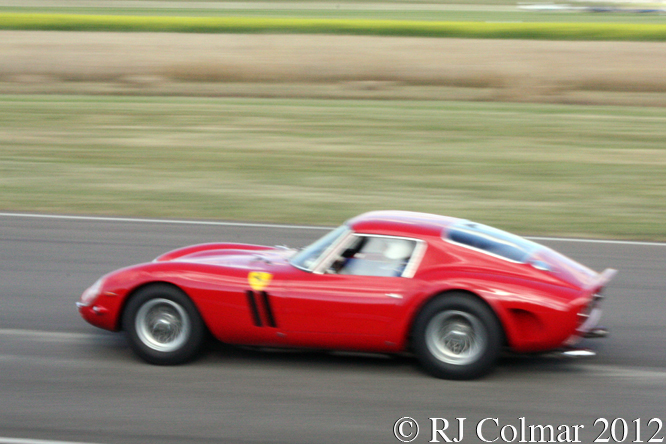
Present owner Paul Vesty, now Sir, bought #4115GT in 1981 and he is seen demonstrating the car during the 250 GTO 50th Anniversary Tour at Goodwood Revival in 2012.

Ferrari 250 GTO, Goodwood Revival

My thanks to Michael “Tuboscocca” at The Nostalgia Forum directing me to an article by Gregor Schulz that appeared in Old Timer markt regarding Herman Cordes in April 2006.

Thanks for joining me on this “Hermann’s GTO” edition of “Gettin’ a li’l psycho on tyres” I hope you will join me again tomorrow when I’ll be looking at a Ginetta no enthusiast should miss. Don’t forget to come back now !
Share

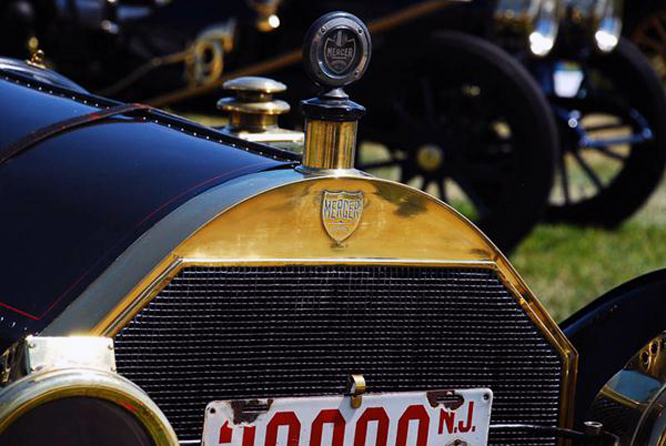
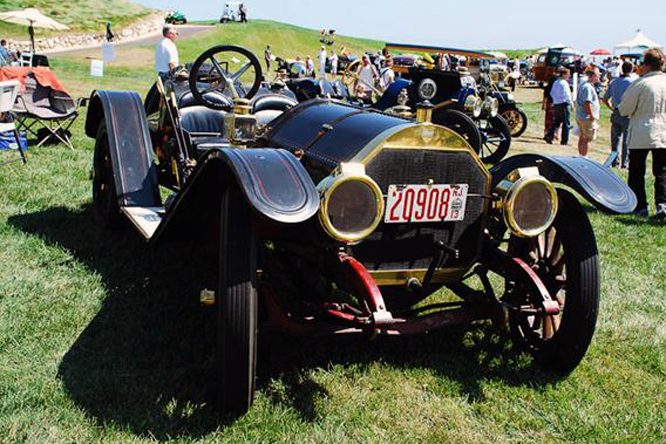
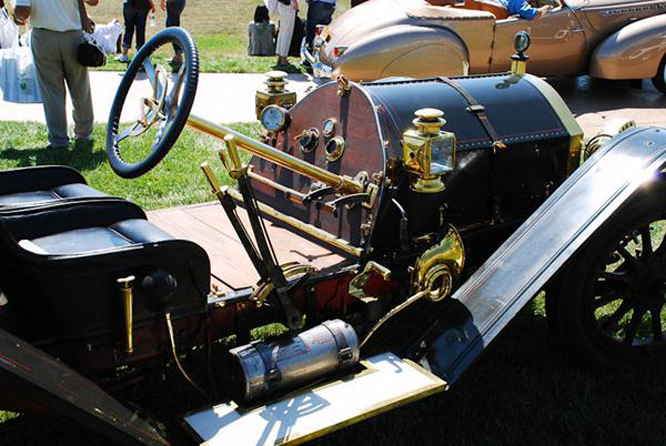
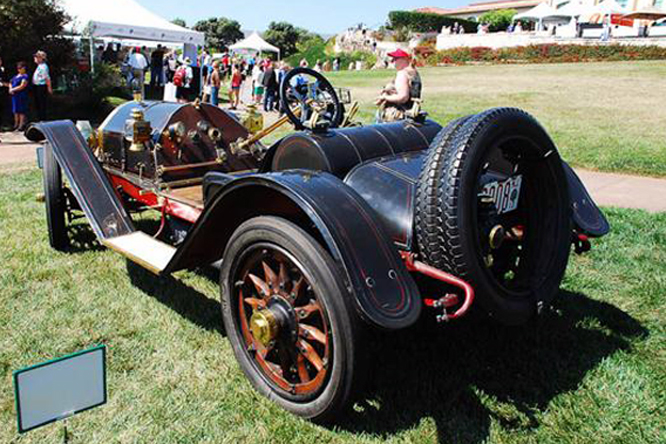
“55 hp at 1,650 rpm” – Mercer Type 35 Series J Raceabout #996

Today’s story begins with John A. Roebling who designed the Brooklyn Bridge amongst many others. John had a son Ferdinand Roebling who together with his cousin John’s nephew Washington A. Roebling II and Kuser Borthers John L, Frederick and Antony, tycoons from the world of banking, bottling and brewing bought out a vehicle manufacturing business from Washington’s friend William Walter in a foreclosure sale in 1909.

Mercer Type 35 J, Palo Verdes, Concours d'Elegance

The new investors renamed the company Mercer after Mercer County, New Jersey where the factory had been located since 1906 in a former brewery owned by the Kusers. They set about building a vehicle which would establish the brand in competition and the result was the 1910 Type 35 J Raceabout.

Mercer Type 35 J, Palo Verdes, Concours d'Elegance

Powered by a 4 cylinder 4.8 litre / 293 cui motor producing 55 hp at 1,650 rpm the Type 35 Series J was designed to safely and consistently be driven at over 70 mph. With a top speed of over 90 mph a Type 53 Series J won five out of the six events into which it was entered in 1911, only missing out to the Marmon Wasp in the inaugural Indy 500.

Mercer Type 35 J, Palo Verdes, Concours d'Elegance

The history of today’s featured 1913 Type 35 Series J chassis #996 goes back to 1935 when founder of the VMCCA and founder director of the Wolfden Antique Auto Museum of Southborough, MA, Mr. Cameron Bradley, bought the car from a used car dealer for $100.

Mercer Type 35J, Palo Verdes, Concours d'Elegance

In 1977 Mr Bradley sold 996 on to present owners Ken and Sharon Gooding, parents of the Gooding and Co Auction House President David Gooding.

My thanks to Geoffrey Horton who took these photographs a couple of years ago at the Palo Verdes Concours d’Elegance.

Thanks for joining me on this “55 hp at 1,650 rpm” edition of “Gettin’ a li’l psycho on tyres” I hope you will join me again tomorrow for Ferrari Friday. Don’t forget to come back now !
Share

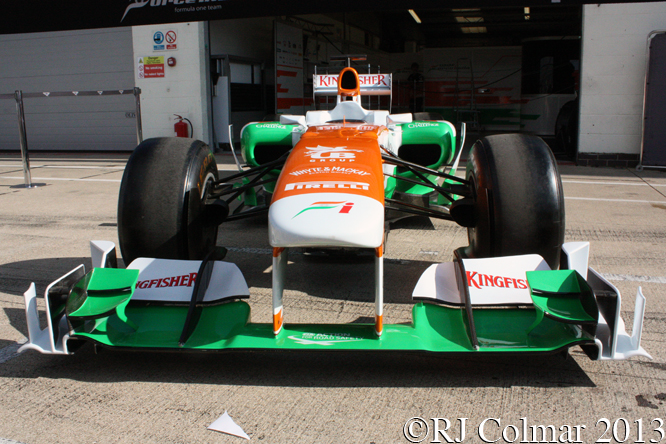
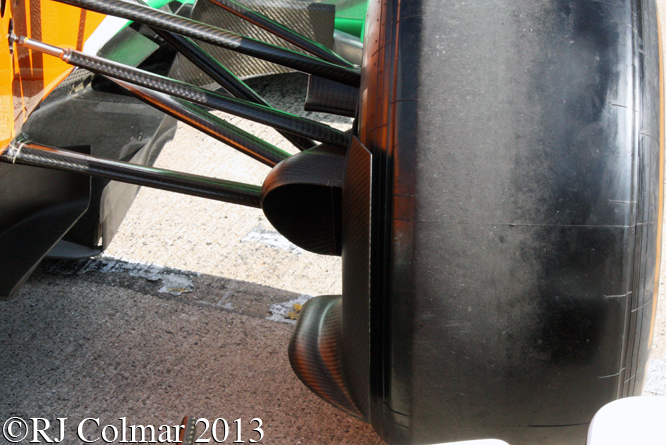
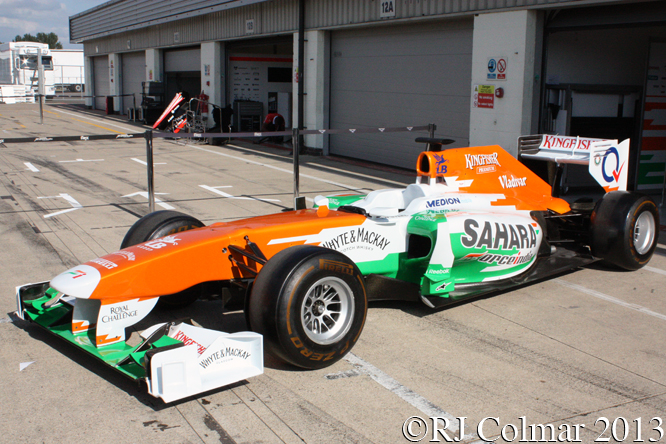
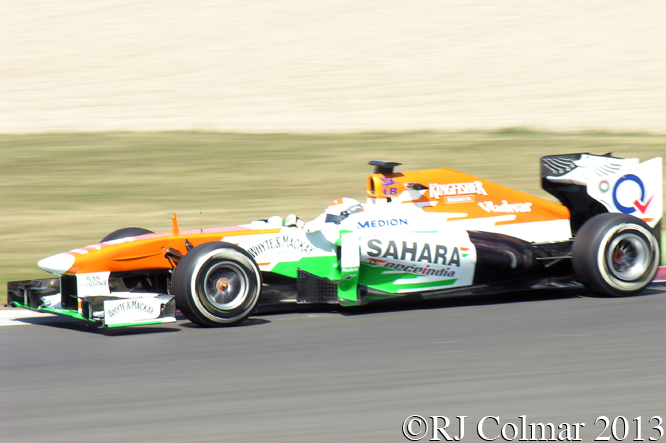
Equalled Best Season – Force India Mercedes VJM06

Force India’s story begins with a plucky Irishman called Eddie Jordan who 1991 burst on to the Formula One scene with one of the most attractive Formula One cars ever built, a fist full of Pepsi Co sponsorship dollars to fly the 7 Up flag and an Italian called Andrea de Cesaris, who had a reputation for crashing and under achieving, as their lead driver.

Force India Mercedes VJM06, Young Driver Test, Silverstone

Against the odds Jordan finished a highly creditable 6th in their first season of competition. When Jordan’s second driver, Bertrand Gachot, was incarcerated for an incident involving pepper spray and a cab driver in London, Eddie introduced Micheal Schumacher to Formula one at the 1991 Belgian Grand Prix, but failed to keep him beyond his debut race, from which retired with clutch failure on the first lap, for which he qualified an impressive seventh.

Force India Mercedes VJM06, Young Driver Test, Silverstone

Jordan’s highlight season came in 1999 when with cast off Mugnen tuned Honda V10 motors the team finsihed 3rd in the constructors championship behind only Ferrari and McLaren Mercedes. Jordan’s lead driver Heinz-Harald Frentzen also came third in the World Drivers Championship with 2 victories.

Force India Mercedes VJM06, Sutil, British Grand Prix, P2, Silverstone

In 2005 Eddie sold out to Alex Shnaider who rebranded the team Midland F1 which became the first F1 entry. Midland F1 achieved nothing in 2006, unless you count two top ten non points paying finishes, and Alex sold the team on to late season Dutch sponsor Spyker before the 2006 season had ended.

Force India Mercedes VJM06, Sutil, British Grand Prix, P2, Silverstone

Spyker F1, like Midland F1, only lasted for a single season during which Adrian Sutil scored a single world championship point for an 8th place finish in the Japanese Grand Prix. Before the 2007 season has ended Spyker F1 was sold to a consortium led by Vijay Mallya an was rebranded Force India for the 2008 season.

Force India Mercedes VJM06, Sutil, Young Driver Test, Silverstone

With the aid of some financial stability the team progressed from scoring no points with their Ferrari powered car in 2008 to becoming 6th place finishers in the 2011 constructors championship.

Force India Mercedes VJM06, di Resta, British Grand Prix, P2, Silverstone

During that time Giancarlo Fisichella, who scored Jordan’s last Formula One win in 2002, scored Force India best ever result a 2nd place in the 2009 Belgian Grand Prix with the now Mercedes powered VJM02, a result that led Giancarlo to join Ferrari as a replacement for the injured Felipe Massa for the remainder of 2009.

Force India Mercedes VJM06, Sutil, Young Driver Test, Silverstone

In 2012 Adrian Sutil sat out the season to focus on a legal issue and Paul di Resta was joined by another German Nico Hülkenberg at Force India. Both drivers scored season high 4th place finishes but the team still only finished the season 7th in the constructors championship.

Force India Mercedes VJM06, Young Driver Test, Silverstone

With half an eye on a possible drive at Ferrari as an eventual replacement for Felipe Massa, Nico Hülkenberg Force India’s top scorer in 2012 left to join the Ferrari powered Sauber team for 2013 and Adrian Sutil rejoined Force India.

Force India Mercedes VJM06, Sutil, Young Driver Test, Silverstone

The design of the VJM 06 featured today was over seen by Technical Director Andrew Green, the all new carbon fibre chassis is powered by a 2.4 litre / 146 cui Mercedes Benz FO 108F motor with a mandated maximum 18,000 rpm limit and a Mercedes AMG Kinetic Energy Recovery System (KERS). The transmission is 7 speed semi automatic built by McLaren Racing.

Force India Mercedes VJM06, di Resta, British Grand Prix, P2, Silverstone

Paul di Resta seen above managed 9 points paying finishes in 2013 with a season high 4th in Bahrain to finish 12th in the Drivers Championship. His services will not be retained in 2014 when Paul is expected to return to the German DTM Touring Car championship.

Force India Mercedes VJM06, Sutil, Young Driver Test, Silverstone

Adrian Sutil, seen above, managed eight points scoring finishes but with a season high of ‘only’ 5th in Monaco on his way to finishing 13th in the drivers championship. With Ferrari opting to re employ Kimi Raikkönen Nico Hülkenberg decided to leave Sauber and rejoin Force India for 2014 while Adrian move the other way to join Esteban Gutiérrez at Sauber.

After equaling their best Constructors Championship finish with another 6th place finish in 2013 Nico will be joined at Force India by Mexican hot shot Sergio Pérez for 2014 when the teams VJM07 cars will be again be powered by Mercedes.

You can follow Force India’s progress on their website linked here, Facebook page linked here and Twitter feed linked here.

Thanks for joining me on this “Equalled Best Season” edition of “Gettin a li’l psycho on tyres”, I hope you will join me again tomorrow when I’ll be looking at an Edwardian Mercer Raceacout. Don’t forget to come back now !river

Share