60th Anniversary – Oulton Park Gold Cup

On Bank Holiday Monday a couple of weeks ago I picked up GALPOT contributor Tim Murray and headed 175 miles north to Oulton Park for the second day of the Gold Cup meeting which marked the circuits 60th Anniversay. When we got there we met friends Simon and Phil from The Nostalgia Forum who directed us toward the control Tower where Steve Jones invited us to a cup of coffee and we met Alan Cox who also puts in a regular appearance on these pages.
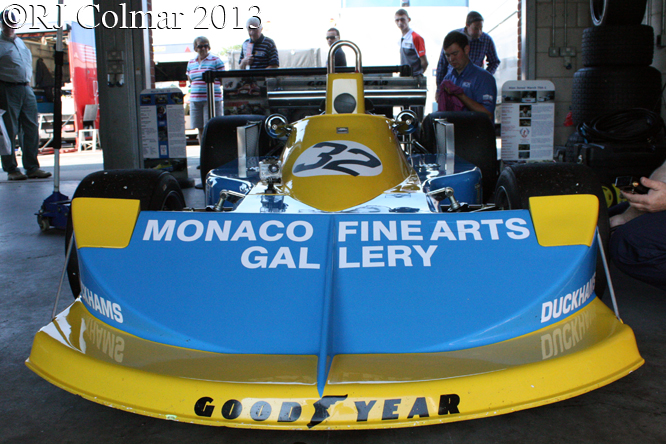
March 761, Gold Cup, Oulton Park

Afterwards Tim and I had a wonder around the paddock where we found Greg Thornton’s Formula One March 761 resplendent in the colours of Sweden as would have been seen in the hands of Ronnie Peterson. Greg was declared the winner of the opening Derek Bell Trophy race of the day after Micheal Lyons experienced a pinion failure in his Lola T400 Formula 5000 car and an accident in which no one was hurt blocked the track.
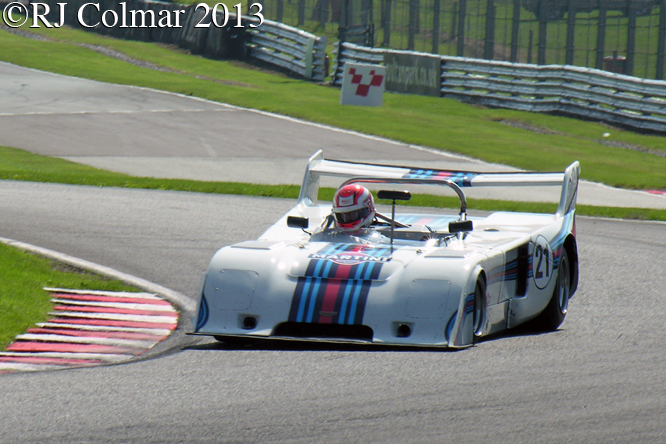
Dodd, Chevron B31, Gold Cup, Oulton Park

Despite a sagging rear wing James Dodd driving his, non period, Martini liveried 1976 Chevron B36 appropriately won the Martini Trophy for 2 litre / 122 cui sports cars.
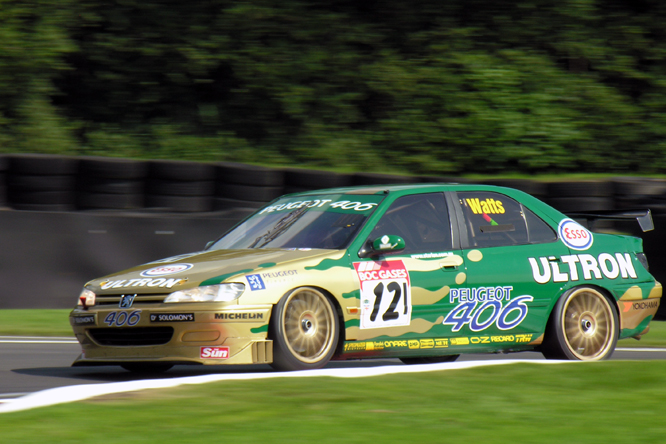
Watts, Peugeot 406, Gold Cup, Oulton Park

I only ever saw Patrick Watts 1998 British Touring Car Championship Peugeot 406 racing on the television but I spent many hundreds of happy hours driving one just like it in a Play Station game called TOCA 2, Patrick found his old car in Australia. Unfortunately he did not finish the Super Touring Trophy which was won by the versatile James Dodd who didn’t have time to celebrate his Martini Trophy win in the Chevron B36 before jumping into his Honda Accord.
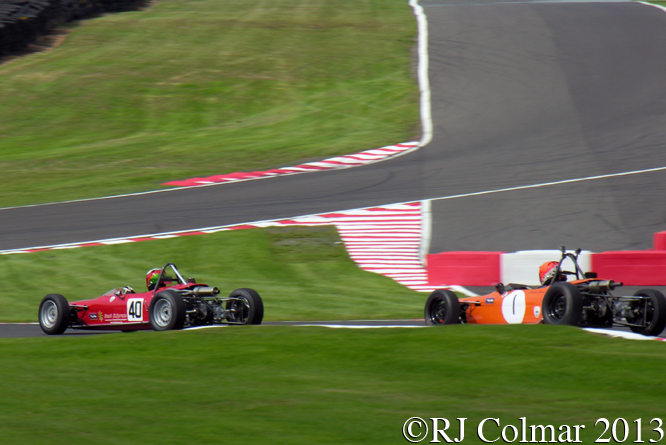
Mitchell, Merlin Mk20, Grant, Merlyn Mk20a, Gold Cup, Oulton Park

The Historic Formula Fords can always be relied on to provide entertaining racing, Sam Mitchell and Callum Grant in their #40 and #1 Merlyn MK 20’s were never much further apart than this through out the 20 min race. Callum eventually got the better of Sam to take the chequered flag.
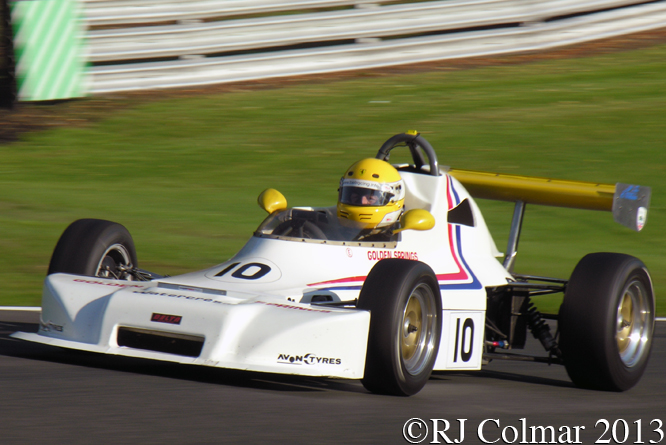
Smith, Delta T81, Gold Cup, Oulton Park

Nelson Rowe won the Amitstead Barnett Financial Services Formula Ford 2000 race and sowed up the Historic Formula Ford 2000 championship with a fine win in his Reynard SF79, the #10 Delta T81 of Derek Smith above has a chassis design going back to 1978 which was penned by none other than Patrick Head went on to form a formidable partnership with Frank Williams.
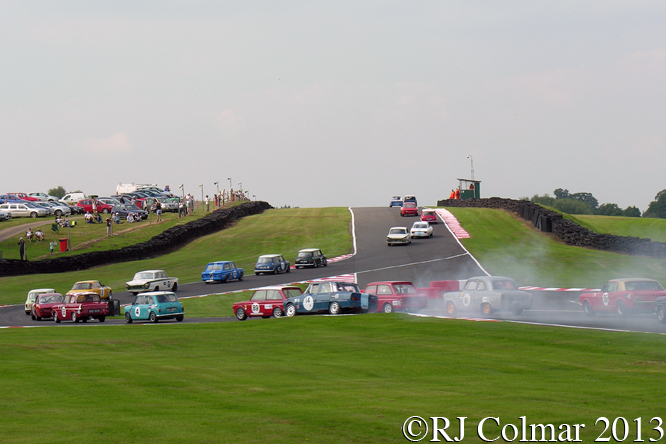
Historic Touring Cars, Gold Cup, Oulton Park

The Historic Touring Cars also provided a hugely entertaining spectacle above the #14 Alfa Romeo Giulia Super of Bob Schukburgh takes the bumpy route as he tries to pass a couple Hillman Imps, the #4 Mini was driven by British Olympic Cycling legend Sir Chris Hoy. Richard Dutton in the red and gold #35 Ford Mustang worked his way up from the back of the grid to 5th place in the race which was won by Mark Jones in a Ford Lotus Cortina.

Oosterbaan, Alton Holden AR2 , Gold Cup, Oulton Park

A welcome Antipodean novelty in the Libre race for Classic Racing Cars was the Alton AR2 powered by a Holden straight six driven by Henry Ooterbaan, the race was won by Andy Jones driving his father Ian’s Lotus 59.
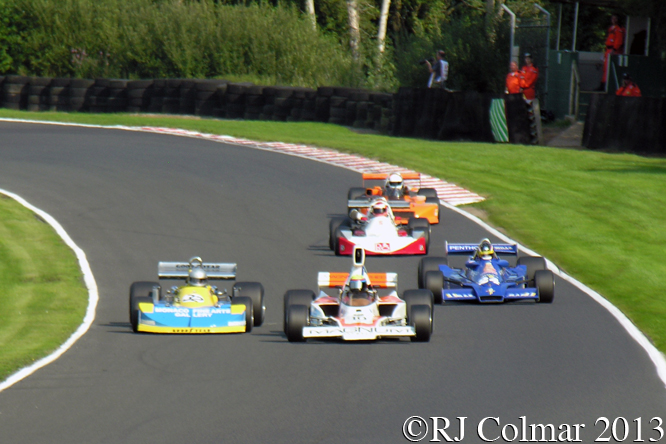
Thornton, March, Glover, Lola, Lyons, Hesketh, Gold Cup, Oulton Park

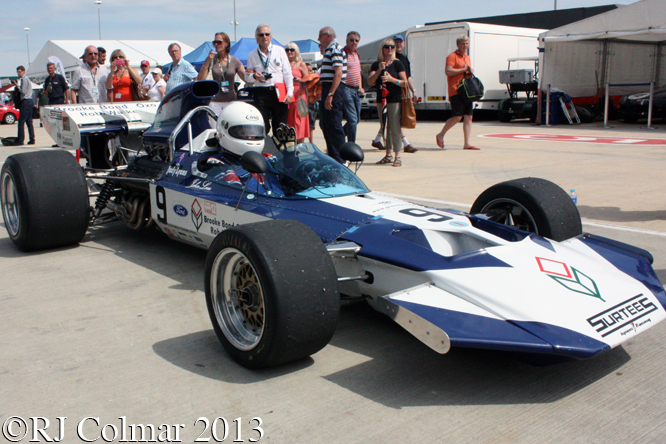
If the first Derek Bell Trophy race disappointed because of it’s premature end, the second made up for it by the bucket load. With Micheal Lyons Lola rendered hors d’combat by it’s gearbox Micheal’s father Frank stepped aside to let his son race the family Hesketh 308E with which he started from the back of the grid. For the first 5 laps Neil Glover driving the #10 Lola T300/332 kept Greg Thornton in the #32 March 761 at bay by which time Micheal Lyons joined the fun. Greg on the left is seen above about to over take Neil in the Lola while Micheal on the right is about to pass on the outside on lap six. On the following lap Micheal got past Greg to take a comfortable win. Afterwards I was left wondering what Micheal might have achieved in his Mum Judy’s Surtees TS9.
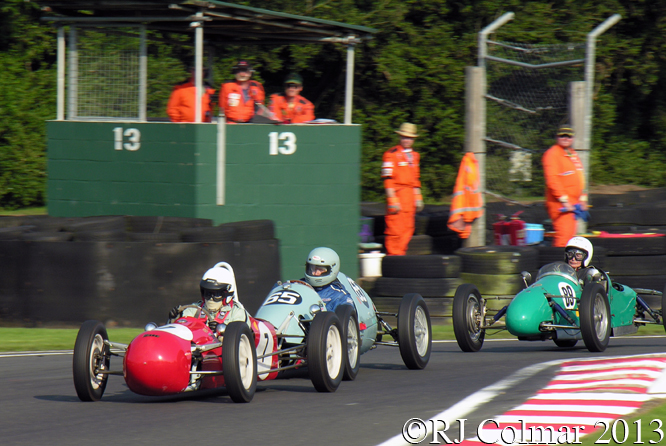
Challis, Petty, de la Roche, Smith Buckler, Monro, Cooper, Gold Cup, Oulton Park

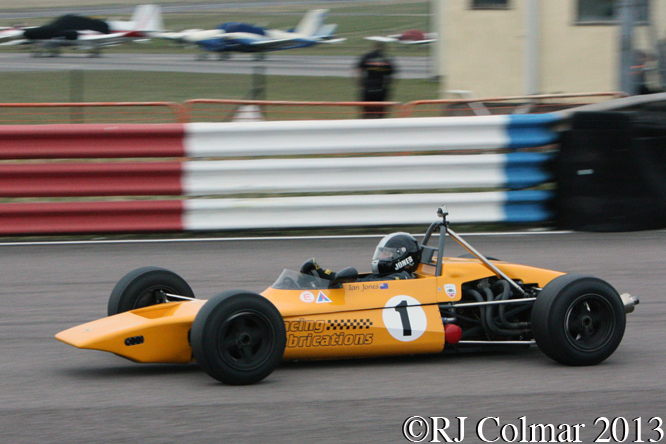
Steve Jones won the 500cc / 30.5 cui Formula 3 race in his Cooper, above the #7 Petty of Nigel Challis leads the #65 Smith Buckler of Richard de la Roche and #89 Cooper Mk 4 of Shirley Monro in the squable for 10th place, Challis finished the race ahead of Monro and de la Roche.
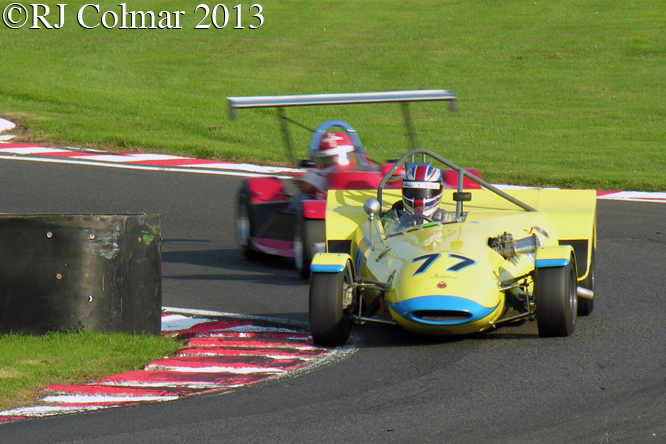
Yarwood Ladybird Mk6B,  Gold Cup, Oulton Park

John Harrison led the Classic Clubmans race from lights to flag, above the #77 Ladybird Mk6B driven by Bob Yarwood was built by Oulton Park legend Derek Walker, who is credited with winning more races than anyone else at Oulton Park. Derek received a special award for his achievement during the meeting.
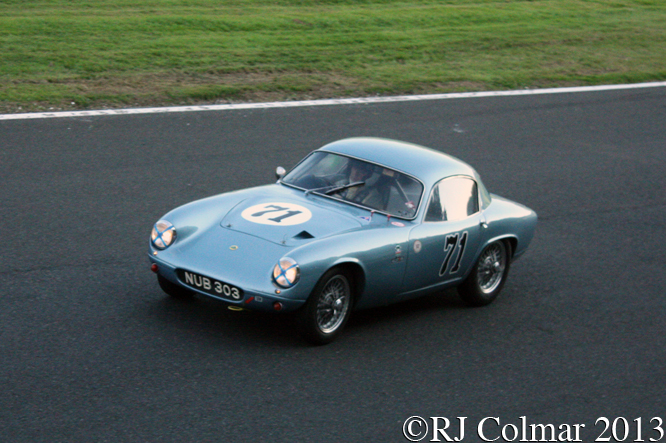
Arculus, Lotus Elite, Gold Cup, Oulton Park

As the sun atarted to set the final race of the day was FISCAR Team Handicap race for sports cars built in the 1950’s was won by Brian Arculus in the #71 Lotus Elite.

After a quick sausage and chips washed down by a strong cup of tea it was time to head the 175 miles into the evening with the heavy bank holiday weekend traffic listening to Radio 2 which was celebrating the 40th Anniversary of the release of Dark Side Of The Moon.

Thanks for joining me on this “60th Anniversary” edition of “Gettin’ a li’l psycho on tyres”, I hope you will join me again for Americana Thursday tomorrow when I’ll be looking at a 1958 racing Corvette. Don’t forget to come back now !

Share

Heads and Tails Triumph – GALPOT Automobilia

A couple of weeks ago I had a bit of a clear out whilst reorganising my library and the time has come to dispose of a number of items which may be of interest through my lightpress account on e-bay.

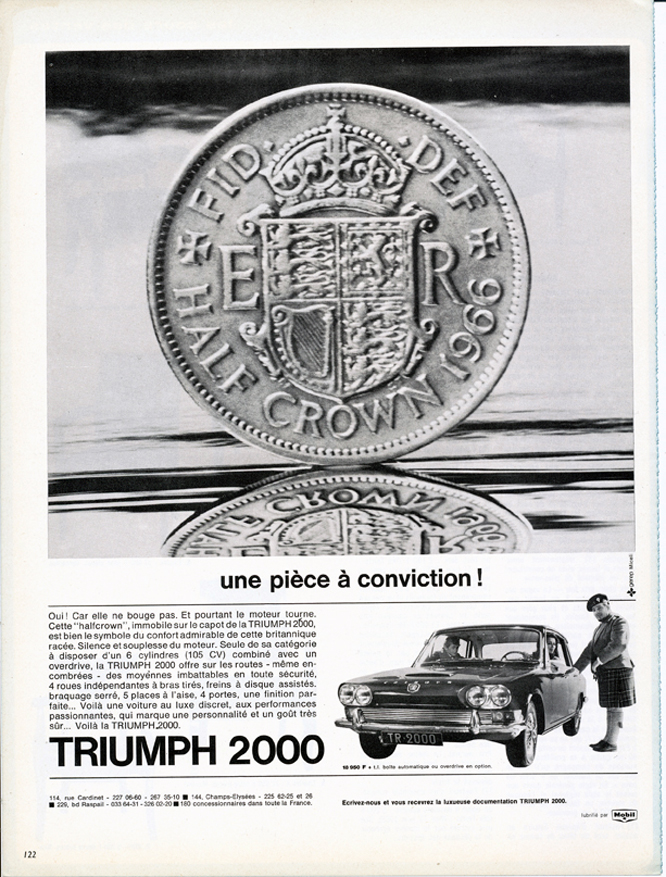
Triumph 2000, Advertisement, Connaissance des arts

From this weeks collection of advertisements appearing in Connaissance des arts Magazine that I posted this week is this Triumph 2000 ad from 1966 featuring a long since obsolete half crown coin balanced on the bonnet hood of a car alluding to the smoothness of the 2 litre / 122 cui straight six motor. The strap line approximately translates as “a piece (of) conviction!.”

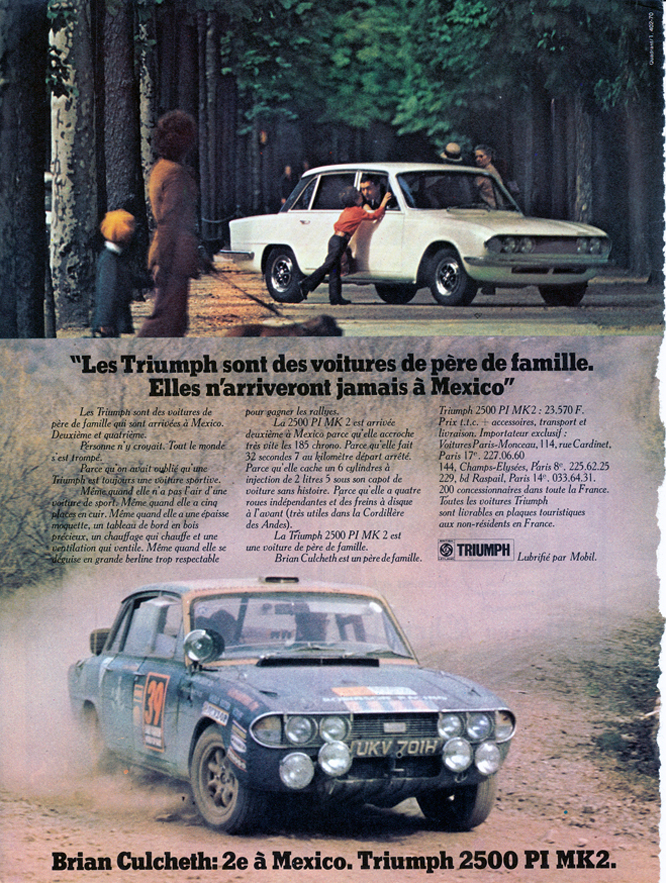
Triumph 2500 PI MK2, Advertisement, Connaissance des arts

Four years later a Mark 2 version of the big Triumph was available know as the 2500 PI MK2 which had a Lucas fuel injected 2.5 litre 142.4 cui motor. Brian Culcheth and Johnstone Syer drove won to second place in the 1970 London to Mexico World Cup Rally, which GLAPOT regulars may remember was won by Hannu Mikkola and Gunnar Palm driving a Ford Escort. The strap line to the ad approximately translates as “Triumph are cars (for the) father (of the) family. They will never reach Mexico. ”

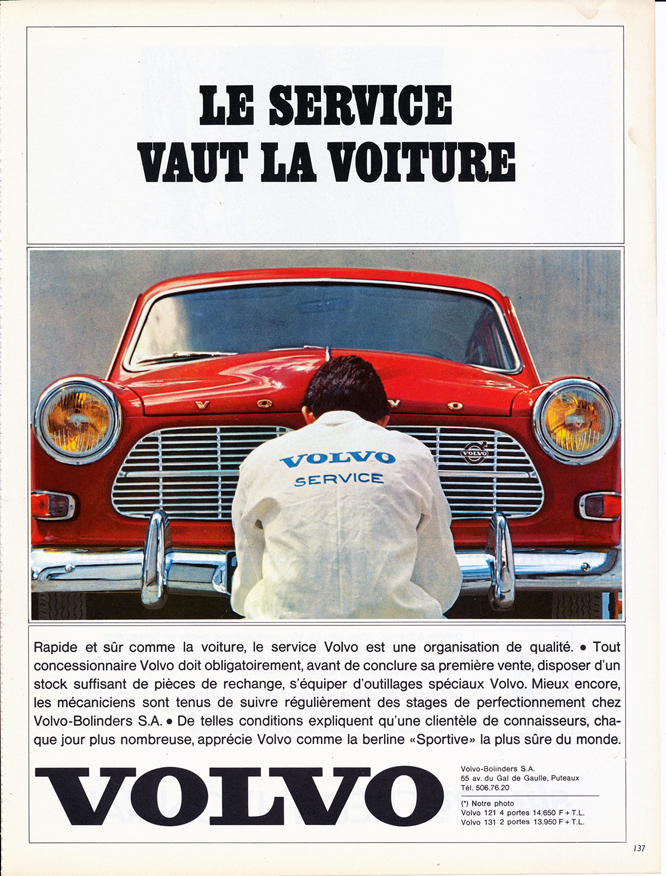
Volvo Amazon, Advertisement, Connaissance des arts

I don’t believe there has ever been any questioning of the solidity of a Volvo built to withstand harsh Scandinavian winters and rough summer time roads, the strap line for this ad featuring a 1965 Volvo Amazon reads “The service is the car”.

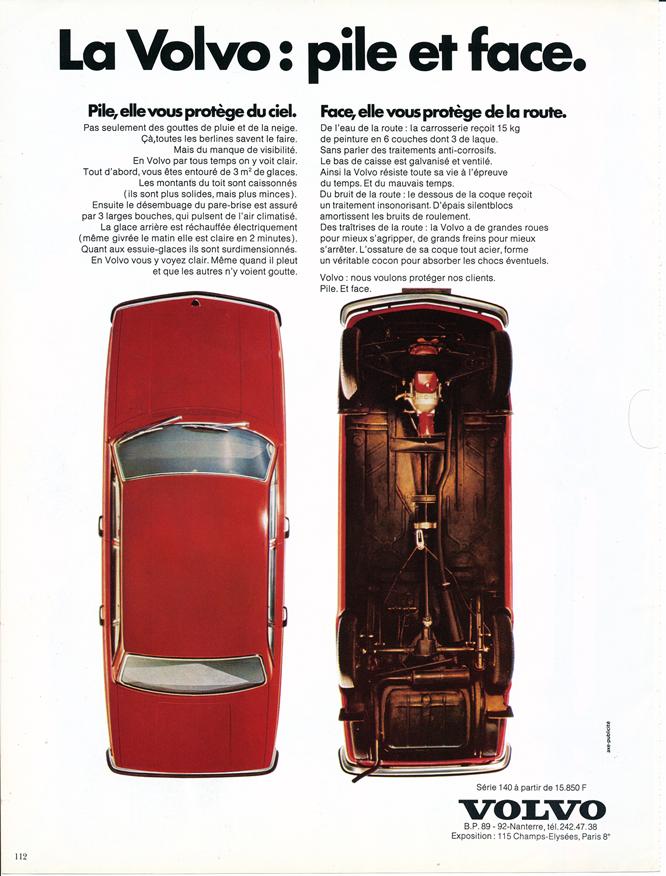
Volvo 144, Advertisement, Connaissance des arts

While working for a Volvo dealer in London I acquired a fair number of clapped out Volvo 140’s and enjoyed running them into the ground before sending them to the scrap dealer, the strap line for this ad translates as “Volvo: heads and tails”.

Thanks for joining me on this Heads and Tails Triumph addition of “Gettin’ a li’l psycho on tyres” I hope you will join me again tomorrow. Don’t forget to come back now !
Share

Claudes Concept – Aston Martin Atom

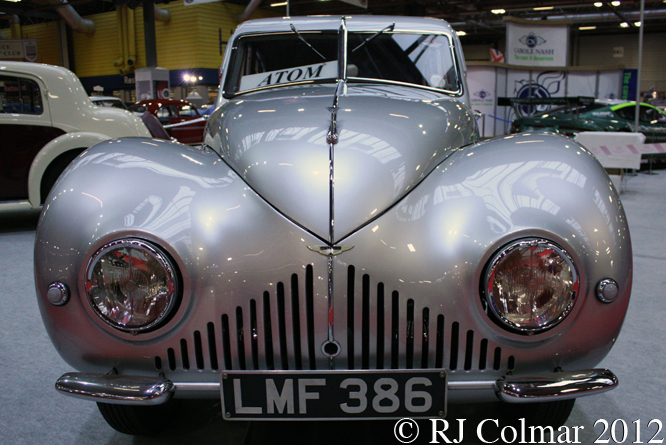
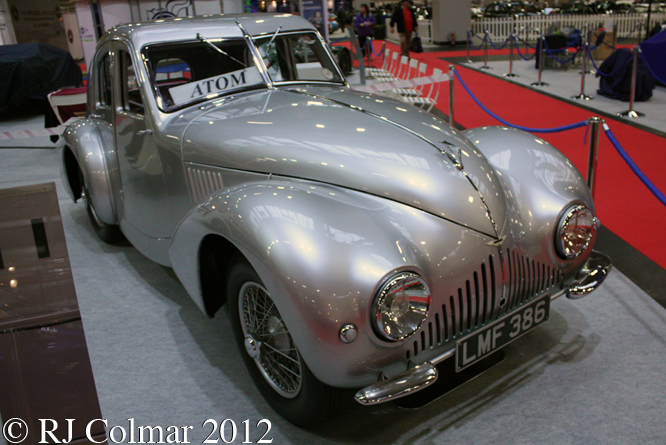
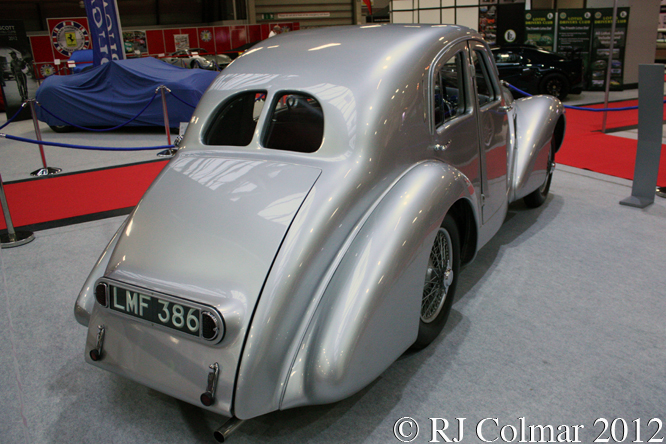
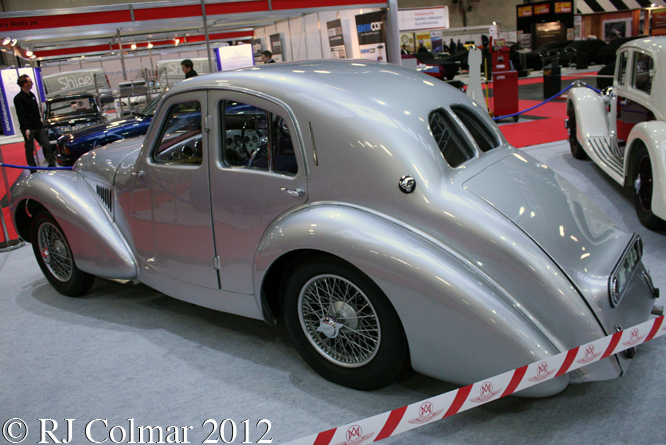
In 1939 Aston Martin constructed a working concept called the Atom designed by Claude Hill which is seen here at last years Classic Motor Show at the National Exhibition Centre in Birmingham.

Aston Martin, Atom, Classic Motor Show, NEC Birmingham

The car was built around a spaceframe superstructure of square section tubes with an aluminium paneled body.

Aston Martin, Atom, Classic Motor Show, NEC Birmingham

The Atom was originally powered by a 15/98 2 litre motor, but in 1944 this was replaced by a new 2 litre pushrod motor designed by Hill.

Aston Martin, Atom, Classic Motor Show, NEC Birmingham

Apparently the futuristic Atom was tested extensively during the course of the war, the chassis formed the basis of most subsequent Aston Martins up to the DB Mark III in 1957.

Aston Martin, Atom, Classic Motor Show, NEC Birmingham

When Sir Arthur Sutherland offered his “High Class Motor Business” for sale in 1947 the companies future owner, David Brown tested the Atom and afterwards decided to purchase Aston Martin which would remain in his hands until 1972.

Thanks for joining me on this “Claudes Concept” edition of “Gettin’ a li’l psycho on tyres” I hope you will join me again tomorrow. Don’t forget to come back now !
Share

“Post Production Nose” – Aston Martin 15/98

After the Aston Martin’s commercial and on track success with the 1 1/2 litre International, Le Mans and Ulster models the company launched new models, in 1936, that featuring 2 litre / 122 cui motors known as 15/98’s denoting the RAC taxable 15 hp rating and the actual 98 hp rating.

Dubsky, Aston Martin, 15-98, VSCC, Castle, Combe

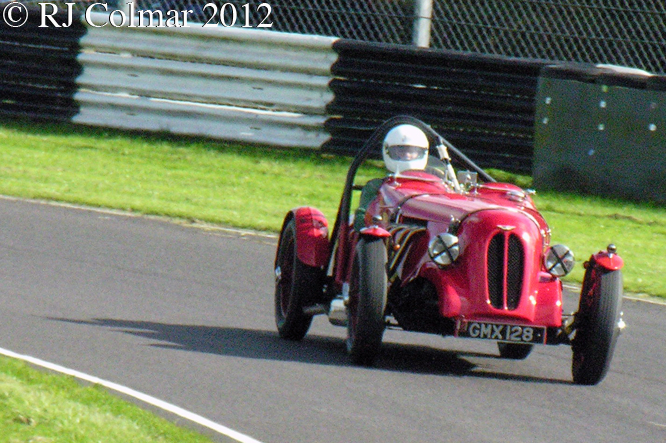
The 15/98 was built with long wheel base (LWB) chassis with Sedan or Coupé bodies by E Bertelli Ltd and short wheel base (SWB) Speed Models with roadster bodies mostly by Abbey Coachworks in London.

Dubsky, Aston Martin, 15-98, VSCC, Castle, Combe

Today’s featured car, seen at Castle Combe with Austrian owner Peter Dubsky at the wheel is a 1937 SWB roadster with what appears to be a post production nose reminiscent of that seen on the unraced 1939 Aston Martin 2 litre Speed Model Monoposto which was built to set records at Brooklands.

My thanks to Alam Cox at The Nostalgia Forum who’s evidence suggests that today’s featured car has no “in period” competition history.

Thanking you for joining me on this “Post Production Nose” edition of “Gettin’ a li’l psycho on tyres”, I hope you will join me again tomorrow. Don’t forget to come back now !
Share

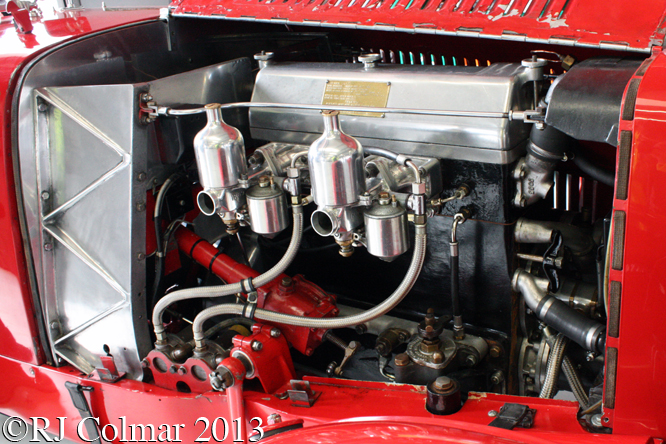
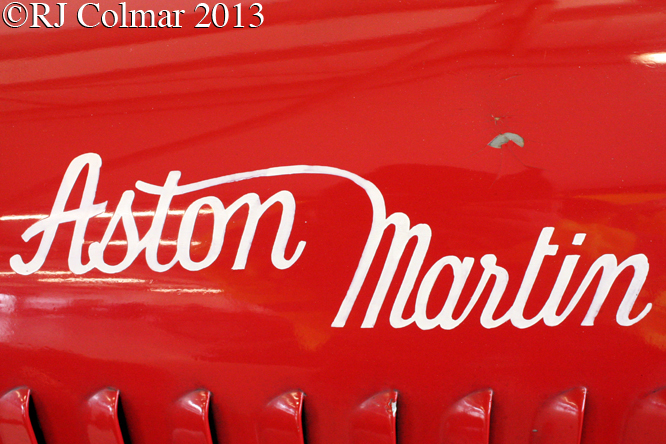
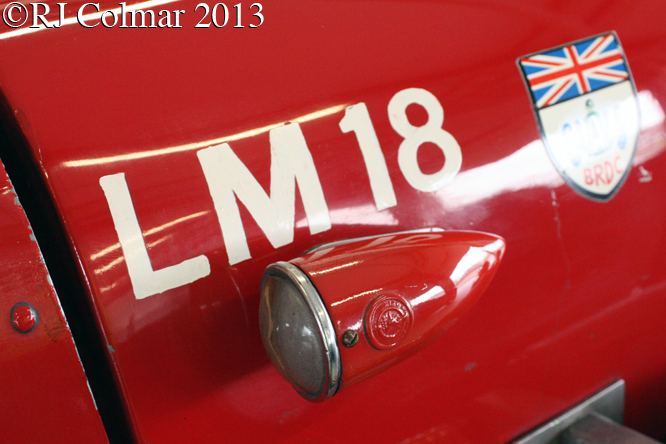
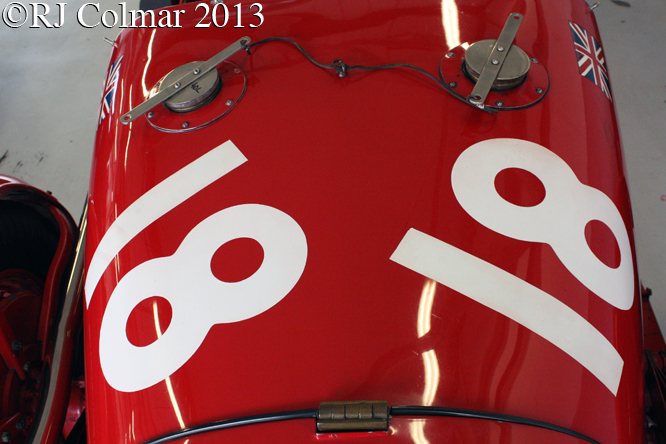
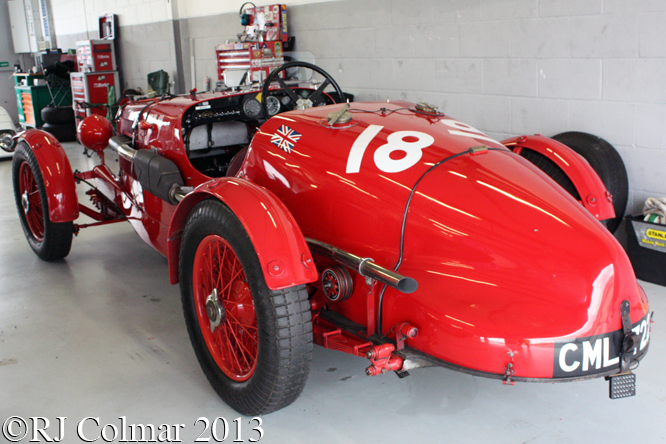
White Mouse Mystery – Aston Martin Ulster #LM18

Aston Martin Motors Ltd was formed in 1926 by the Charnwood family from the remnants of Bamford & Martin who had originally created the Aston Martin marque. The new company moved to Feltham on the outskirts of London and under the direction of A C Bertelli a new 1.5 litre / 91 cui single overhead cam motor was developed that would be the foundation stone of a great deal of track success.

Aston Martin Ulster LM 18, Silverstone

The new company moved to Feltham on the outskirts of London and under the direction of well known racing driver A C Bertelli a new 1.5 litre / 91 cui single overhead cam motor was developed that would be the foundation stone of a great deal of track success.

Aston Martin Ulster LM 18, Silverstone

From 1928 to 1936 Aston Martin built a series of 21 1.5 litre / 91.5 cui racing cars with light weight aluminium bodies on production based Mk II chassis for use by the works team with the chassis numbers LM1 trough 21, all bar one of of these cars still exist and are known by various different names according to when they were built.

Aston Martin Ulster LM 18, Silverstone

In 1931 AC Bertelli and Maurice Harvey shared a 1.5 litre / 91.5 cui Aston Martin at Le Mans and won their class driving #LM7, when the model was known as an International. Sammy Newsome and Henk Widengren repeated the feat in 1932 with the “Le Mans” model chassis #LM10 equaling the 5th place overall of Bertelli and Harvey, amazingly in 1933 Aston Martin’s Pat Driscroll and Clifton Penn – Hughes also finished a class winning 5th overall, all though this time the finished one spot behind a Riley in the 1.1 litre / 61.6 cui class.

Aston Martin Ulster LM 18, Silverstone

Despite completing the same 188 laps as in 1933 the best Aston Martin, the now privately entered chassis #LM10 driven by Reggie Tounge and Maurice Faulkner could only finish tenth in 1934, behind four Riley’s, two of them from the smaller class, a smaller class winning MG K3 and two 1.5 litre / 91.5 cui Singers.

Aston Martin Ulster LM 18, Silverstone

After the debacle Bertelli, who was born in Italy but only lived their until he was four, ordered the works team cars to be painted red to change their luck.
At the Tourist Trophy run over the Ards closed road course outside Belfast Ulster the three red team cars; LM16 driven by Thomas Fotheringham-Parker, LM15 driven by Pat Driscoll and LM17 driven by Clifton Penn Hughes finised 3rd, 6th and 7th respectively and won the team prize after which the LM series subsequently took their name.

Aston Martin Ulster LM 18, Silverstone

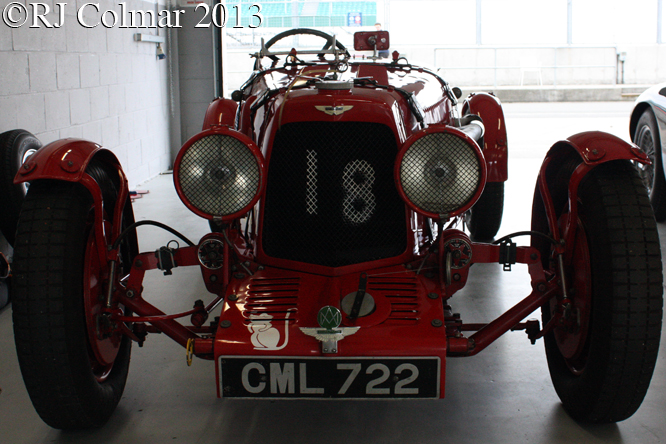
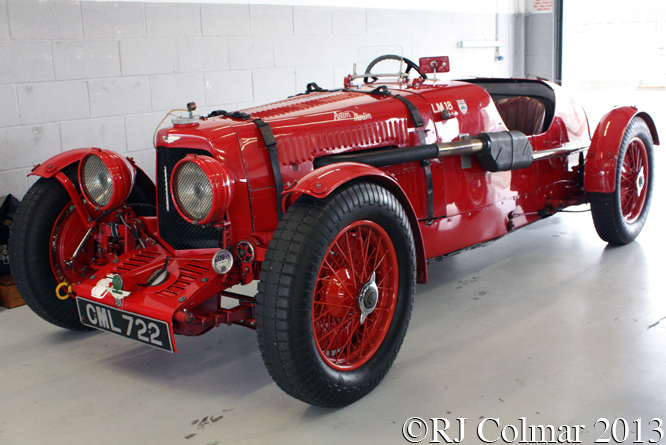
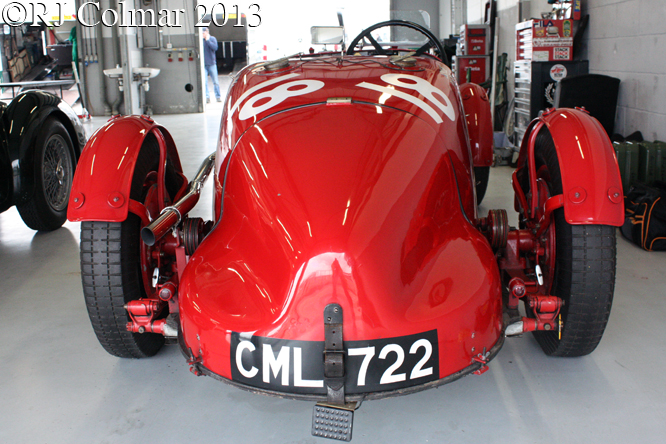
Today’s featured car LM18 was built for the 1935 season an was driven at Le Mans by Jim Elwes and Mortimer Morris-Goodall to a distant 12th place finish overall. Charles Martin and Charles Brackenbury in the sister LM 20 finished 3rd overall to reclaim the 1.5 litre / 91.5 cui class award for Aston Martin.

Aston Martin Ulster LM 18, Silverstone

Four team cars appeared at the 1935 Tourist Trophy three of which finished 4th, 5th and 11th to again claim the team prize, Clifton Penn-Hughes drove LM18 to 5th 1 second behind Charles Brackenbury driving LM20.

Aston Martin Ulster LM 18, Silverstone

Aston Martin switched it’s attention to racing new 2 litre models in 1936, with the works cars continuing to be given LM chassis numbers, Le Mans was cancelled due to nationwide workers strikes, but the new cars were raced elsewhere alongside privately entered 1 1/2 litre Ulsters.

Aston Martin Ulster LM 18, Silverstone

Frenchman Victor Polledry had acquired LM18 by 1937 and continued to race it up until the out break of war in 1939, scoring a known best 3rd place overall, 1st in class, in the Bol d’Or run at Montlhéry outside Paris in June 1938.

Aston Martin Ulster LM 18, Silverstone

Victor raced the car on at least one occasion after the ’39 – ’45 war recording a 15th place finish and class victory, driving solo, in the Paris 12 Hours run at Montlhéry in July 1950.

Aston Martin Ulster LM 18, Silverstone

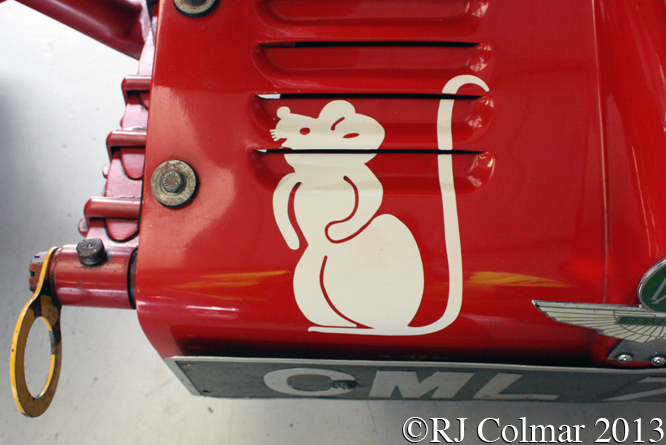
Some of you may have noticed the white mouse painted on the front of LM18, when I saw it I, incorrectly, assumed it signified some in period connection with Prince Bira and his patron HRH Prince Chula of Siam who ran the White Mouse Stable. It turns out that HRH Prince Chula of Siam did buy a factory built replica 1 1/2 litre Aston Martin Ulster, chassis #G5/588/U, for Prince Bira to race in the 1935 RAC TT where he retired with a broken oil pipe.

Thanks to Tim Murray, Roy C and Alan Cox at The Nostalgia Forum it transpires that the reason that LM 18 carries The White Mouse is most likely because LM 18 now owned by Nick Mason’s family has occasionally been teamed up with the original #G5/588/U owned and raced by Hubert Fabri for relay races at vintage meetings.

My thanks to Tim, Roy and Alan for their help in solving the White Mouse Mystery.

Thanks for joining me on this “White Mouse Mystery” edition of “Gettin’ a li’l psycho on tyres”, I hope you will join me again for a look at another Aston Martin tomorrow. Don’t forget to look back now !

Share

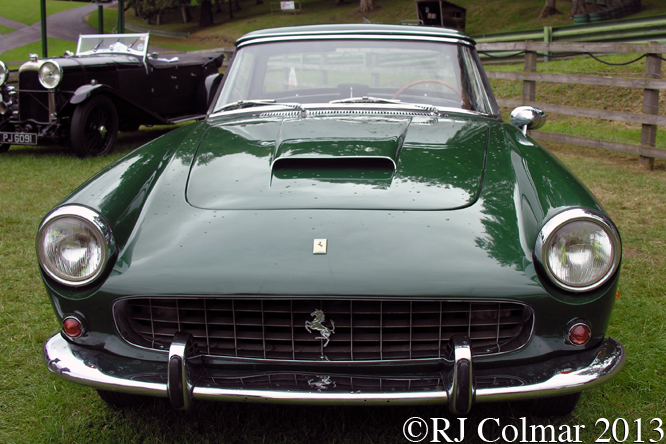
Get Smart – Ferrari 250 GT Cabriolet Series 2 #2943GT

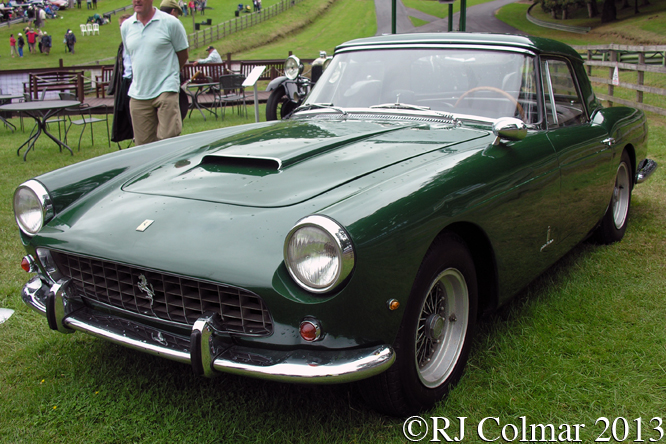
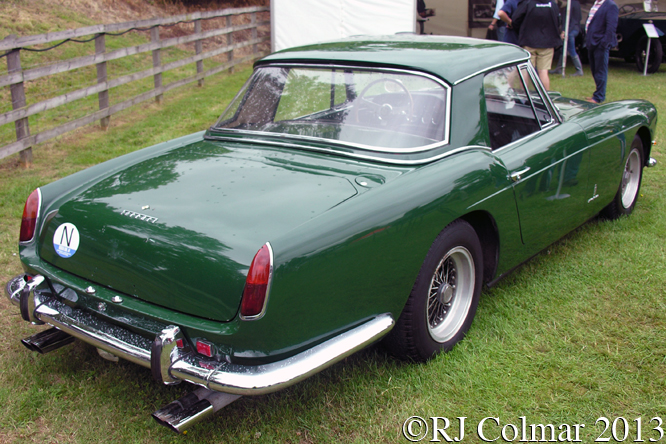
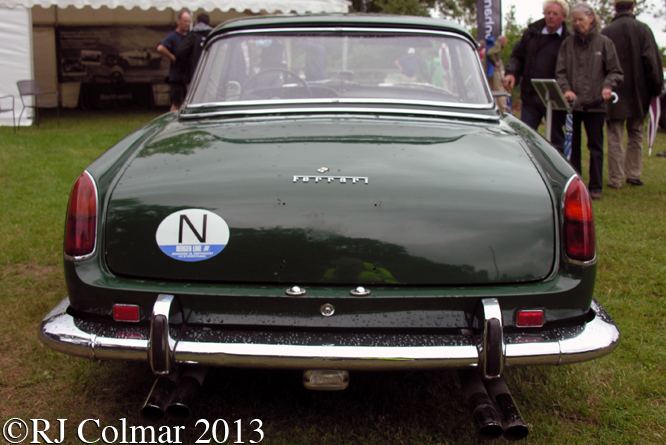
It’s been a couple of years since I looked at a Pininfarina bodied Ferrari 250 GT Cabriolet Series 2 in any detail, since then I have found out one such car was used by Maxwell Smart in the pilot episode of the Get Smart television comedy.

Ferrari 250 GT PF S2 Cabriolet, VSCC, Prescott

Chassis #2943GT was built in October 1961 the 148th of 204, painted red with a black interior. After spending it’s first couple of years in Italy #2943 was acquired by Prince Joackim Zu Furstenberg who kept it at Schloss Donaueschingen in Southern Germany until 1972.

Ferrari 250 GT PF S2 Cabriolet, VSCC, Prescott

The current Norwegian owner bought the car from Germany’s preeminent Ferrari dealer Auto Becker in 1972 and exported it to Norway where it remained, until it was offered for sale at the upcoming Bonhams auction at the Goodwood Revival next week.

Ferrari 250 GT PF S2 Cabriolet, VSCC, Prescott

The car, seen here at last month’s Prescott’s VSCC meeting, is said to have approximately 38,500 miles on the clock, an average of just 745 miles a year over it’s entire life and is estimated to fetch up to £500,000.

Ferrari 250 GT PF S2 Cabriolet, VSCC, Prescott

The downside is that the 3 litre / 183 cui Colombo Tipo 125 V12 motor has not been started for 4 or 5 years and is said to have a problem with the fuel pump, so some expense will be incurred to recommission the car.

Thanks for joining me on this “Get Smart” edition of “Gettin’ a li’l psychoontyres”, I hope you will join me again tomorrow. Don’t forget to come back now !
Share

SCORAD Demonstrator – Chevrolet Corvette #1399 Tribute

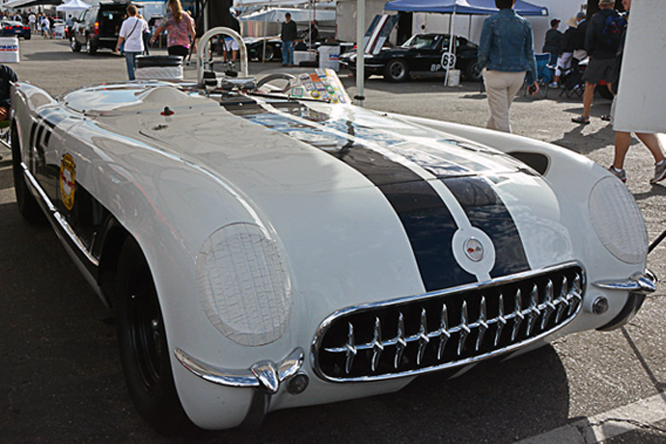
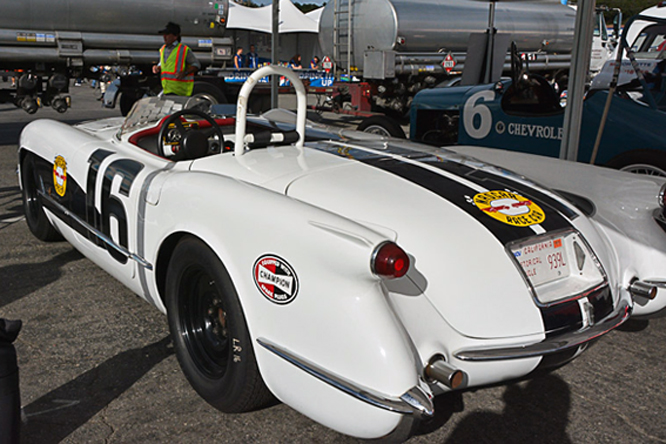
When I set out to find out about the car in today’s photographs taken at the Rolex Reunion at Mazda Raceway, Laguna Seca by Geoffry Horton I mistakenly thought it couldn’t be that difficult to find out about a 1st generation Corvette C1 carrying a big #16 and a couple of NASCAR stickers. Boy was I proved wrong, but the upside is I have found out not only what it is, but also found out about a race series I am not sure ever got off the ground !

Chevrolet Corvette SCORAD Tribute, Rolex Reunion, Mazda Raceway, Laguna Seca

An internet search soon led me to the owner / driver Noel Park and several descriptions of the car being a tribute to the 1955 Corvette better known as X87/5951 in which Zora Arkus- Duntov set a new flying-mile record of 150.583 mph at Daytona Beach in 1956. However that car had a 1956 body and two other ’56 Corvettes Chevrolet took along to Daytona Beach for John Fitch and Betty Skelton did not feature the distinctive #16 on the side although at least one photo caption on the net, subsequently shown to be wrong suggested otherwise.

Chevrolet Corvette SCORAD Tribute, Rolex Reunion, Mazda Raceway, Laguna Seca

My break came when I found a second identical copy image of the #16 at Daytona Beach making reference to chassis #399, although again no driver was mentioned. A search for Corvettes with the number #399 led me to discovering that along with the three Corvette’s Chevrolet took along to the 1956 Daytona Speed Weeks for competition, two further Corvettes were supplied to NASCAR for promotional purposes and one of them was chassis #E55S001399 a 1955 model, described as a well used up former race car. The vehicle was rebuilt with a stock 4.6 litre 265 cui small block V8 and the body taken from another ’55 ‘Vette by Chevrolet Engineering in January 1956 with a “NASCAR” kit comprising aero screen and fiberglass torneau over the passenger area.

Chevrolet Corvette SCORAD Tribute, Rolex Reunion, Mazda Raceway, Laguna Seca

Jack Hawkins and Bill France Jr are among those NASCAR individuals known to have demonstrated, but not competed in, the #16 at the 1956 Daytona Speed Weeks. It has also emerged thanks to Loren Lundberg over at The Nostalgia Forum that the #16 and an similarly upgraded ’53 Corvette which appeared carrying the #27 were to be used in NASCAR’s SCORAD ( Sports Car Owners and Drivers ) dirt track series. At the time of writing I’m not sure if this series ever got underway or not, if you know anything at all about SCORAD at all please do not hesitate to chip in below since there is zero but the name that appears about the series on the net as of now.

After the speed weeks #1399 spent two years under the direction of NASCAR’s Alvin Hawkin at various tracks primarily in North Carolina before being passed into private hands that included a spell as a donation with the Bible Broadcasting Church. As of 2009 #1399 was reported to be with the Lingenfelter Collection all though when I checked their website no mention was made of it.

I’m not too sure how or why Noel Parks cool tribute to the #1399 came to be made, but it has been an absolute blast getting to the bottom of the story of the #16 that ran at Daytona Beach in 1956.

My thanks to Geoffrey Horton for sharing his photo’s from the Rolex Reunion and to Loren Lundberg at The Nostalgia Forum and of the Registry of Corvette Race Cars for his help in clarifying the story of the #16.

Thanks for joining me on this “SCORAD Demonstrator” edition of “Gettin’ a li’l psycho on tyres”, I hope you will join me again tomorrow. Don’t for get to come back now !

PS Opinions and predictions on Formula One and the Italian Grand Prix linked here at Motorsports Unplugged.

Share