A Motorsports Gathering – The Quail

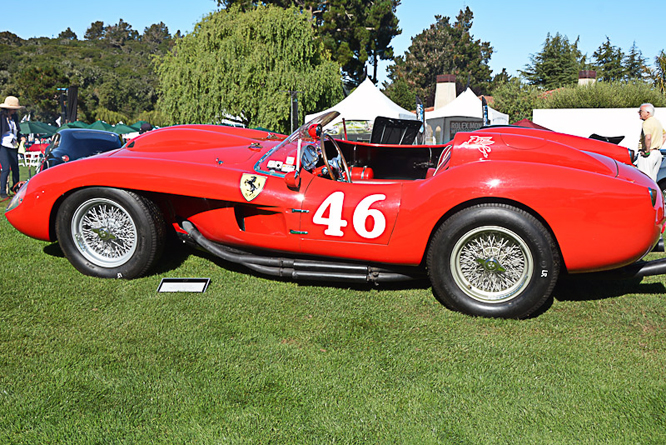
On Friday I had a look at some of the Great Ferrari’s at The Quail Concours d’Elegance, some of the other vehicles present are featured today.

Wales, La Bestioni Beast, The Quail

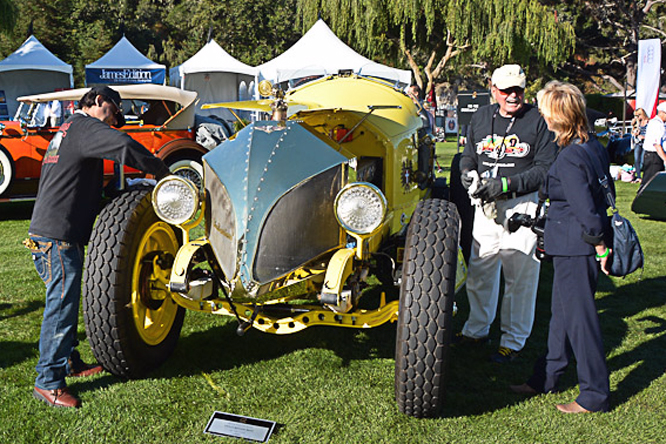
Towards the end of last year I looked at one of a matching pair of matching Rolls Royce Boattail Speedsters by Gary L Wales, Gary is seen above right standing next to one of his latest Retro Design creations La Bestioni Beast a 1919 LaFrance Speedster.

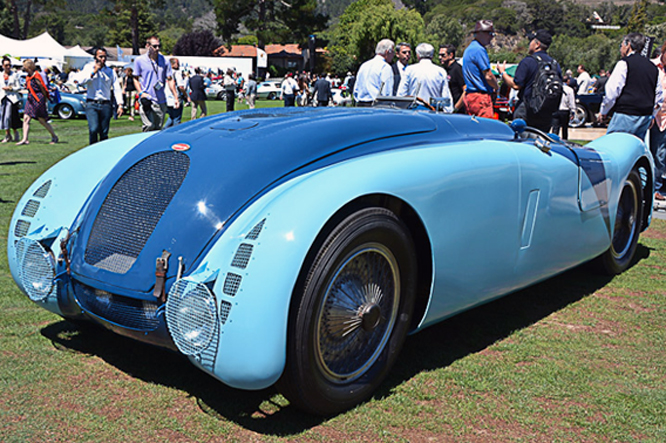
Bugatti Type 57G, The Quail

Going straight to the top 3 museums to visit in the USA is the Simeone Automotive Museum in Philadelphia who own this Bugatti T57G the car driven by Jean-Pierre Wimille and Robert Benoist to victory by 7 laps at Le Mans in 1937.

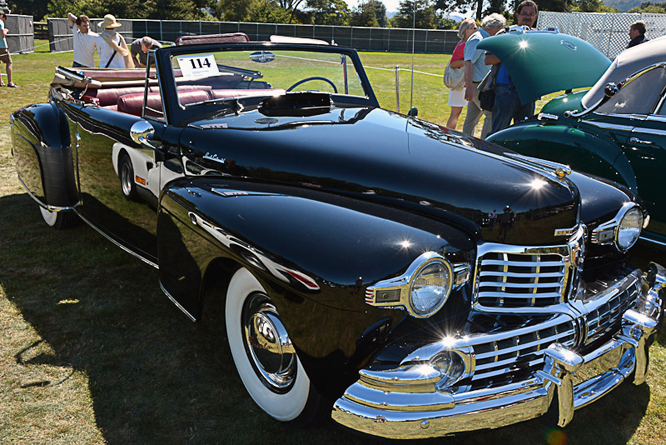
Lincoln Continental Cabriolet, The Quail

The 1948 Lincoln Continental like the Cabriolet above was the last US production model ever built with a V12 motor.

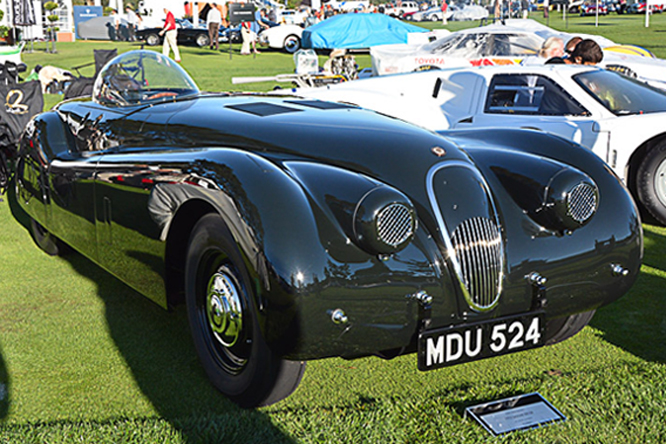
Jaguar XK 120, The Quail

On the May 30th 1949 the bubble top on this prototype Jaguar XK 120 was bolted over the head of Norman Dewis who proceeded to record a two way timed average run of 132.6 mph on an empty stretch of motorway twixt Ostend and Jabbeke in Belgium.

Aston Martin DB2 Coupe, The Quail

The Aston Martin DB2 Coupé above was originally sold as a right hand drive vehicle to a Swedish customer Sölve Relve in 1951, it has also belonged to Swedish racing driver Sture Nottorp. In 1960 Yngve Eriksson bought the car and had the body work face lifted with a larger grill, fared headlights larger rear window and had the steering moved from the right to the left.

Bosley GT, The Quail

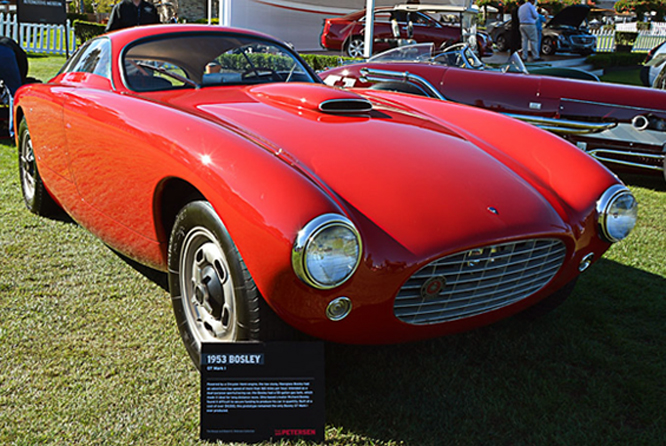
Of all the cars featured today the story of the 1953 Bosley GT is perhaps the most remarkable of all, aged just 21 Robert Bosley a horticultural farmer from Mentor Ohio, was dissatisfied with his XK 120 and Oldsmobile Rocket 88 and so he set out to build a dream machine in 1952. Robert had no design experience and taught himself self how to build the car including the fibre glass body as he went along using auto parts that dated back to the 1930’s. The motor he chose was a six carb Chrysler Hemi which gave the striking unique car a claimed top speed of 160 mph !

Alfa Romeo 1900C SS Ghia, The Quail

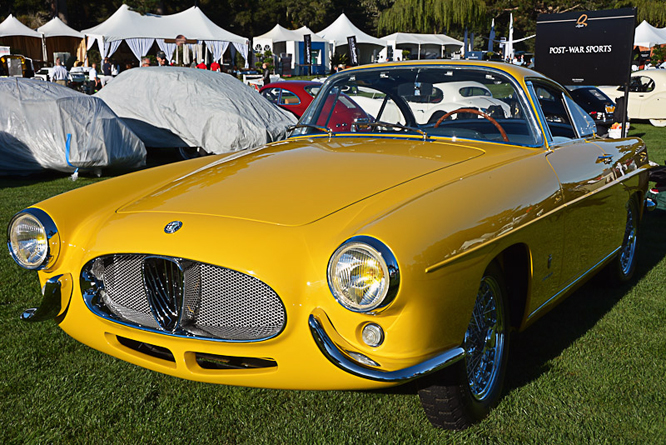
So far as I have been able to discern the Alfa Romeo above is ‘the’ unique 1953 1900C SS Coupé with coachwork by GHIA, if you know different please do not hesitate to chime in below or on the GALPOT FB page.

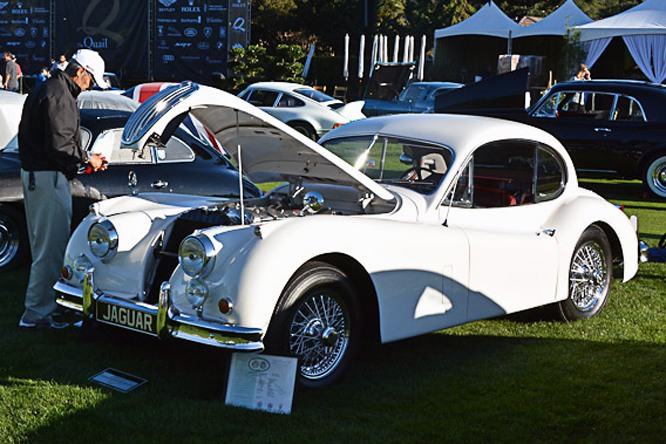
Jaguar XK 140, The Quail

GALPOT contributor Geoffrey Horton’s immaculate 1955 Jaguar XK 140 FHC SE/MC is seen above keeping some exotic company.

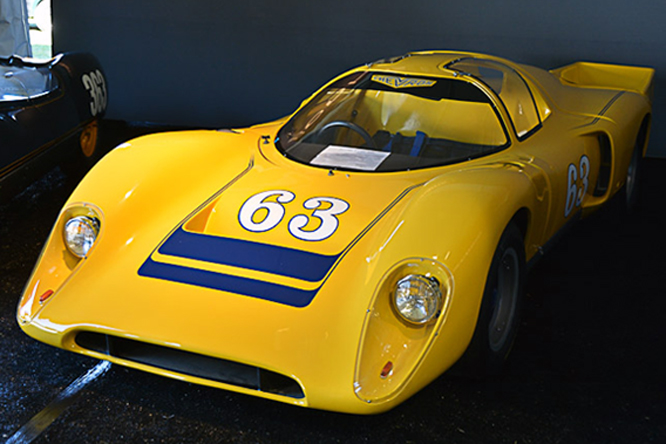
Chevron B16, The Quail

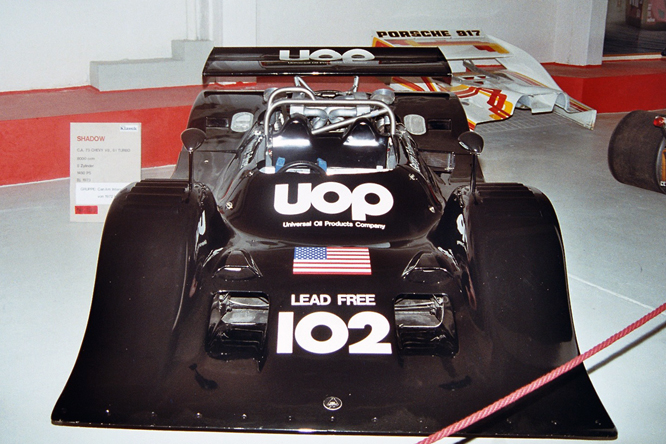
The Chevron B16 above appears to have been built in 1970, no other information is available on the car which appears to have been withdrawn from the Bonham’s Auction, if you know why please do not hesitate to chime in below.

My thanks to Geoffrey Horton for taking and sharing today’s photographs.

Thanks for joining me on this “A Motorsports Gathering” edition of “Gettin’ a li’l psycho on tyres”, I hope you will join me again tomorrow. Don’t forget to come back now !

Share

Swedish Daihatsu ? – GALPOT Automobilia

A couple of weeks ago I had a bit of a clear out whilst reorganising my library and the time has come to dispose of a number of items which may be of interest through my lightpress account on e-bay.

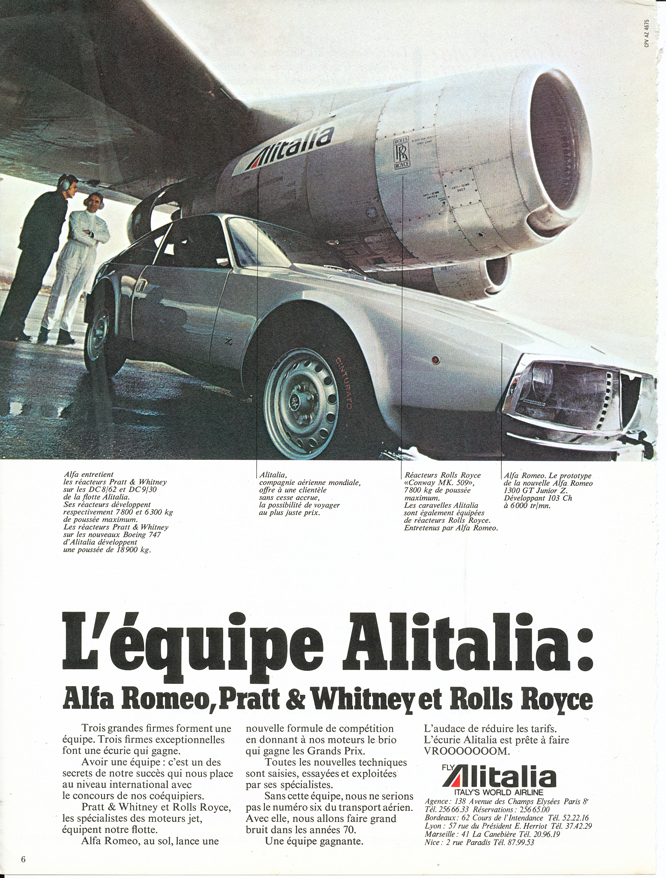
ALFA Romeo 1300 GT Z, Advertisement, Connaissance des arts

Among the ads from the French Connaissance des arts I’ve posted this week is this Alitalia airlines ad featuring an ALFA Romeo 1300 GT Z and a Rolls Royce Conway Turbofan engine of the type used to power the Alitalia McDonnell Douglas DC8. While my folks were living in Africa I spent many hours traveling back and forth to school in England on Alitalia DC8’s. Confusingly the strap line for the ad reads “Team Alitalia: Alfa Romeo, Pratt & Whitney and Rolls Royce” making reference to both jet engine manufacturers used to power Alitalia aircraft.

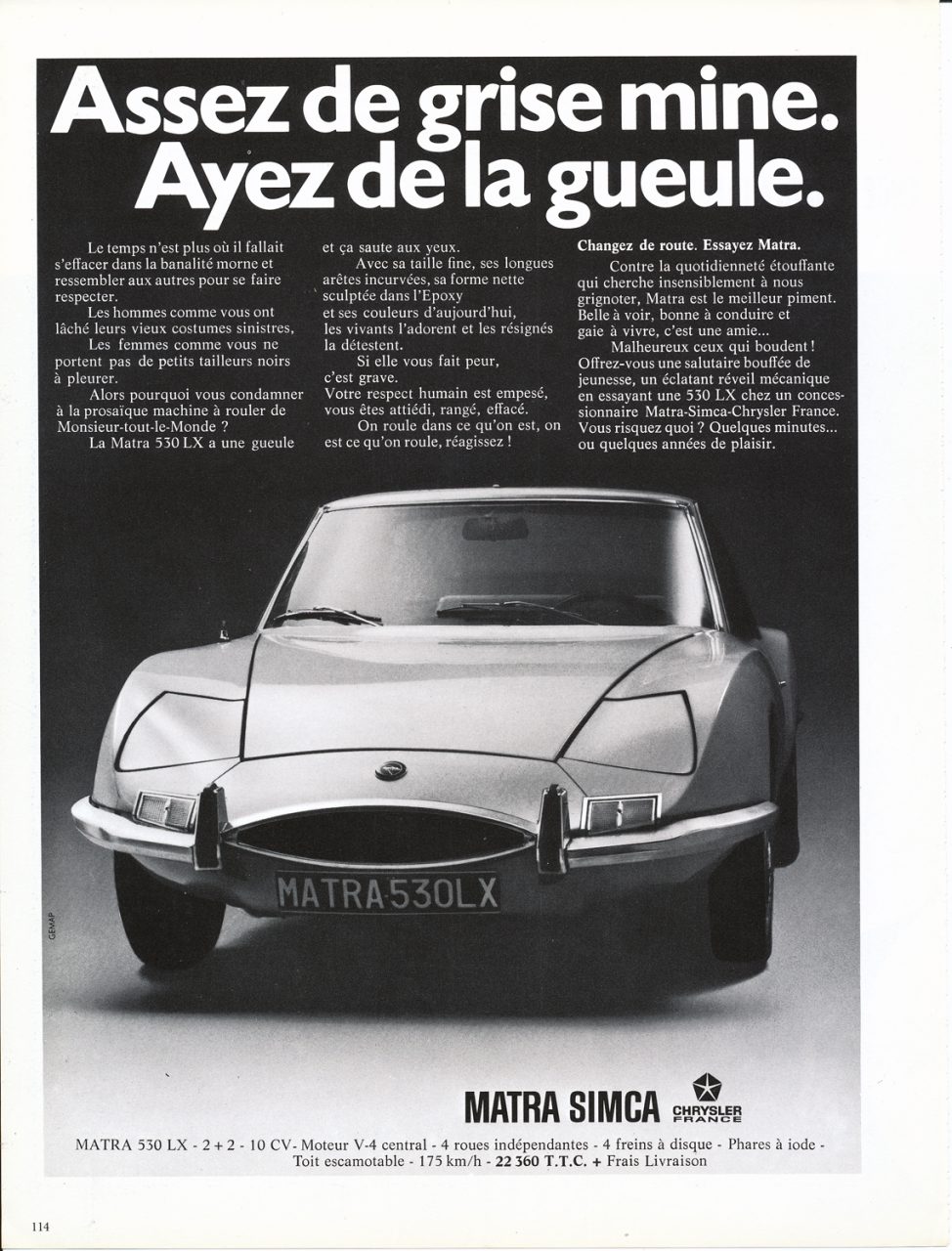
MATRA 530 LX, Advertisement, Connaissance des arts

The MATRA M530 was desined by Philippe Guédon 1965 to replace the René Bonnet designed MATRA Djet. Named after the MATRA 530R air to air missile and launched in 1967 with a Ford Taunus V4 the M530 was given a mild facelift by Michelotti in 1970 and called the MATRA 530 LX.

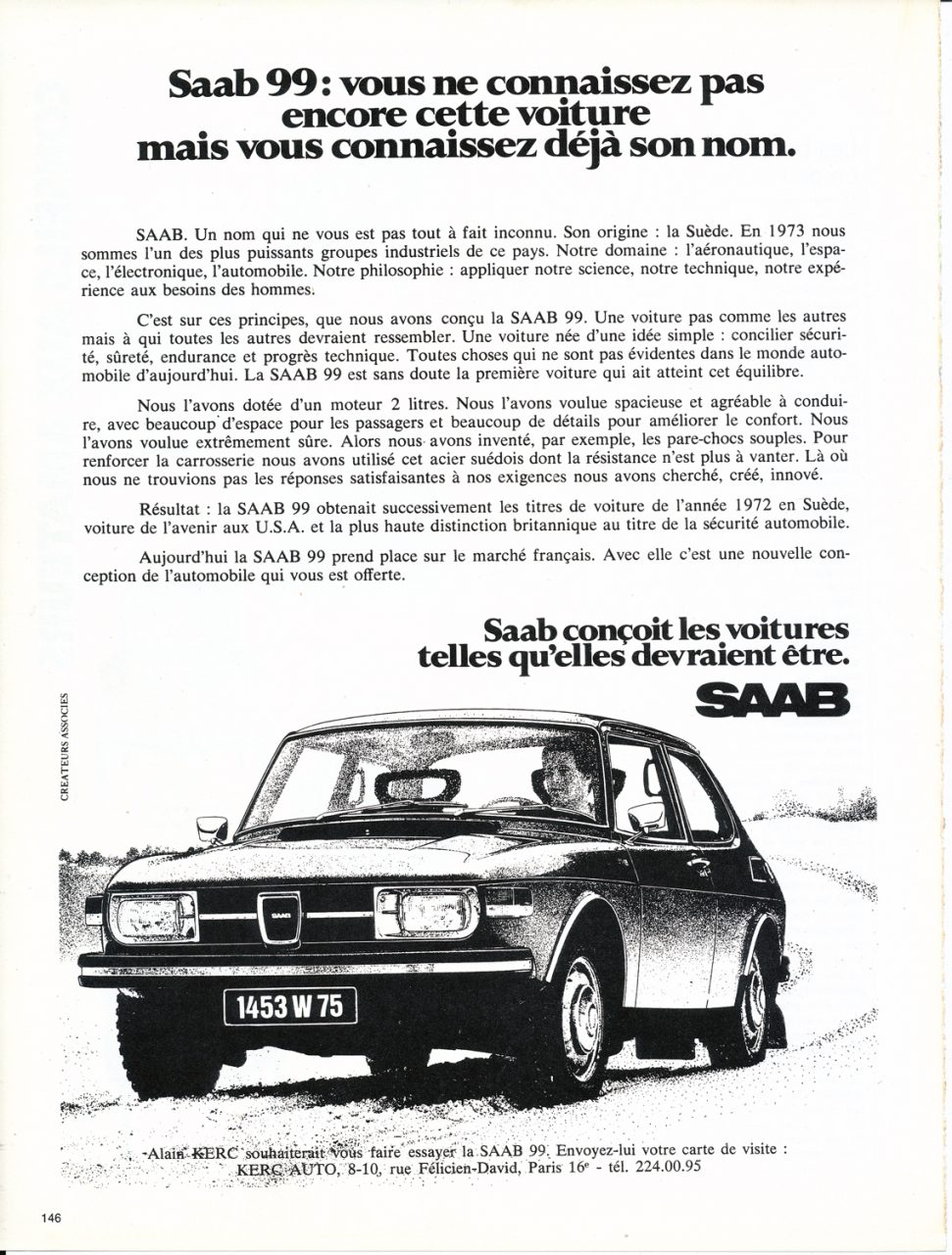
Saab 99, Advertisement, Connaissance des arts

Looking for information about the SAAB 99 I was fascinated to discover that an early prototype of the model had a “daihatsu” badge on the bonnet/hood in an effort to disguise the true identity of the car from prying journalists. The strap line on this ad reads “Saab 99: You do not know this car, but you already know his name”

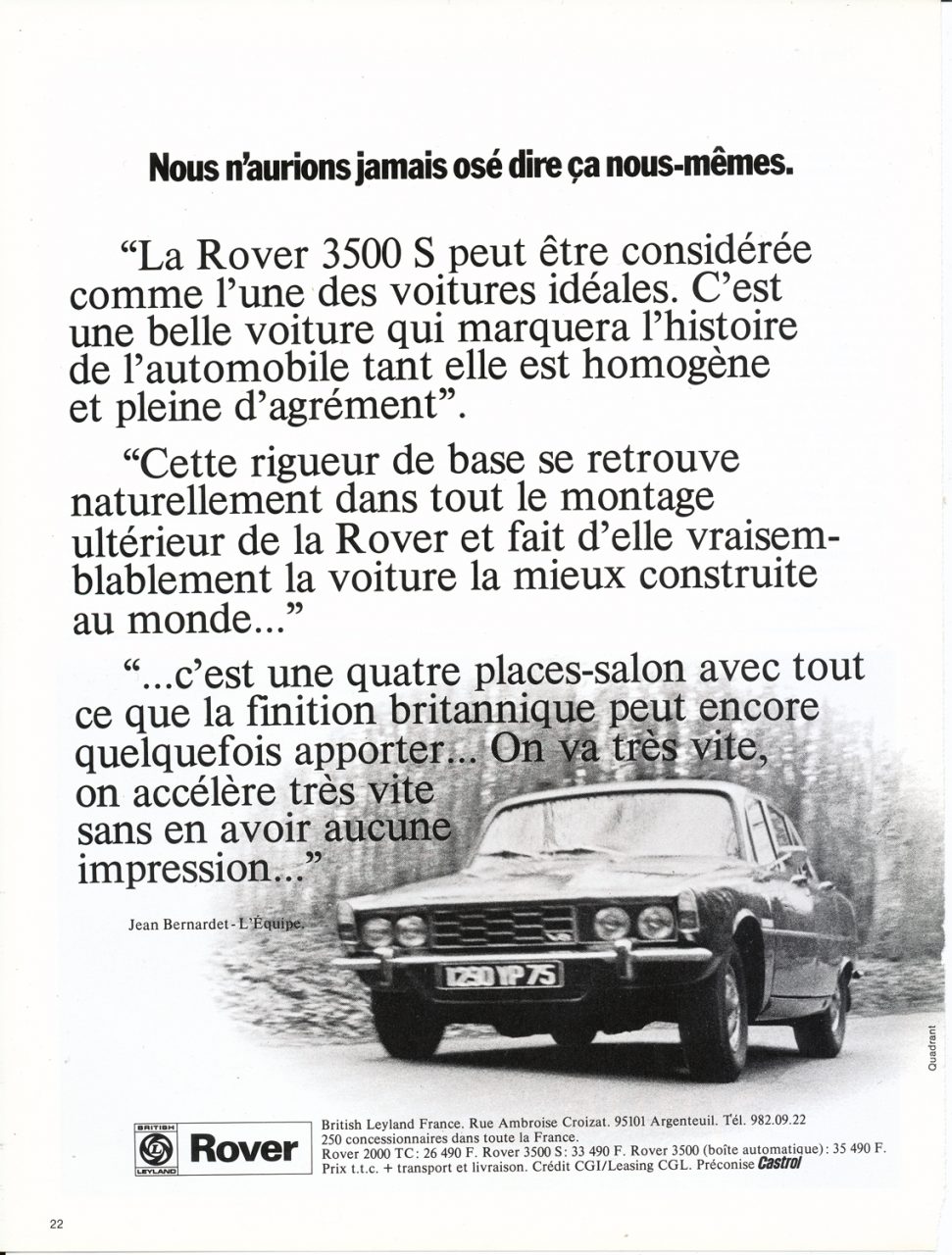
Rover 3500S, Advertisement, Connaissance des arts

Finally in 1971 Rover introduced a four speed manual gearbox option for the hitherto automatic transmission only Rover 3500, all vehicles with this option are known as Rover 3500 S models, with the S denoting “Synchromesh”. The strap line for the ad reads “We would never have dared to say it ourselves” before going on to quote Jean Bernardet presumably from an article that appeared in L’Equipe on the model.

Thanks for joining me on this “Swedish Daihatsu ?” edition of “Gettin’ a li’l psycho on tyres”, I hope you will join me again tomorrow. Don’t forget to come back now !

Share

To Turbocharge Or Supercharge – Halford Special / Aston Martin #1916

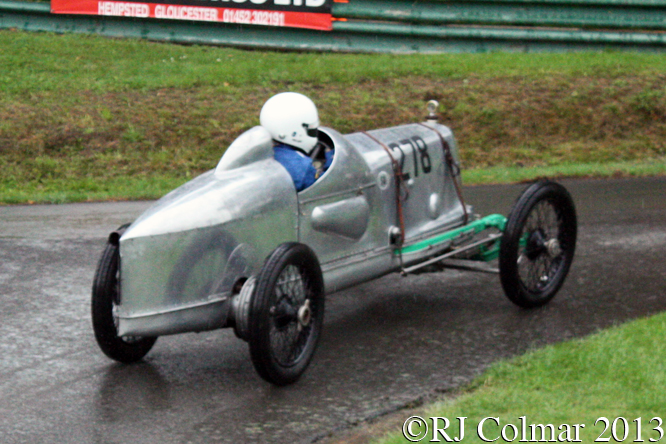
In 1922 Bamford & Martin built 2 cars to compete in the French Grand Prix, the spare engine for this project was fitted to Razor Blade in 1923.

Cheyne, Halford Special, VSCC, Prescott

Bamford & Martin also built a number of vehicles for customers to race and the Halford Special carrying the chassis number #1916 and the registration number OR 1 was one of these. In 1923 W G Barlow is known to have competed with #1916 at the Aston Clinton Hill Climb, from which Bamford & Martin adopted the “Aston” and merged it with “Martin” to arrive at the ‘Aston Martin’ Marque name, and at Brooklands where he finished 4th in the JCC Spring meeting.

Cheyne, Halford Special, VSCC, Prescott

Captain G E T Eyston, later of Thunderbolt Land Speed Record Fame, drove #1916 in a Voiturette, (up to 1.5 litre / 91.5cui) race at Boulogne where he crashed. Major Frank Halford, who along with Eyston had competed with Razor Blade bought the wreck and replaced the 55hp four cylinder motor with a new 1.5 litre / 91.5 / cui twin plug, twin overhead cam, 12 valve, six cylinder motor of his own design. The Major fitted the motor with a turbocharger, probably the first to fit such a device to a racing car, but it proved unreliable in testing and so he reverted to using Roots type super charger driven off the crankshaft to produce 95 hp.

Cheyne, Halford Special, VSCC, Prescott

Fitted with a new two seater body #1916 the Major raced the car in 1925 only to find the radiator was too small. After it was replaced with a larger one, a second 120 hp motor fitted with a Berk supercharger was also used in the car which was renamed Halford Special. In 1926 the Major drove his Halford Special to 3 victories at Brooklands on the long and short tracks and “podiumed” on at least half a dozen further occasions.

Cheyne, Halford Special, VSCC, Prescott

Captain Eyston bought the Halford Special in 1927 and won another race at Brooklands before finishing 4th in the French Grand Prix run at Monthléry. During the 1930’s Viscount Ridley dismantled the Halford Special fitting one of the motors to his Bugatti Type 35 and the other into a speed boat which sank to the bottom of a lake, where it remained for two years.

James Cheyne, seen at the wheel of the Halford Special at Prescott, collected all the pieces and rebuilt the Halford Special in the 1970’s, since when it survived an accident at Silverstone in 2008.

Turbocharging eventually started making an impact on racing, first in the Cummins Diesel Special at Indy, in 1952 and ’53.

Thanks for joining me on this “To Turbocharge of Supercharge” edition of “Gettin’ a li’l psychoontyres”, I hope you will join me again tomorrow. Don’t forget to come back now !

Share

Poetry and Motion – Aston Martin Razor Blade

During the course of the coming month “Gettin’ a li’l psycho on tyres” will be celebrating the centenary of Aston Martin with posts featuring the marque on Saturdays, Sundays and Mondays and on Thursdays I’ll be celebrating the 60th Anniversary of the Corvette, Friday’s will be devoted to Ferrari’s and Tuesdays to Automobilia.

Aston Martin, Razor Blade, Prescott

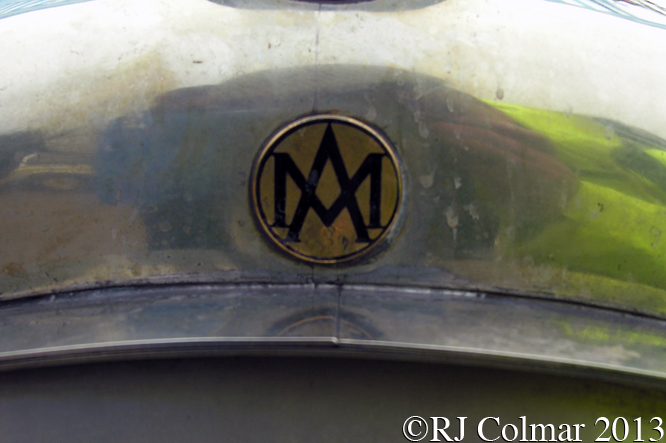
Lionel Martin and Robert Bamford founded Bamford & Martin in 1913 to sell Singer cars. The first car built by Bamford and Martin was given the marque name Aston Martin in 1915, but because of the Great War of 1914 – 1918 it did not go into production. The Aston name was adopted from the Aston Hill near Aston Compton where Robert Bamford and Lionel Martin were regular successful competitors.

Shaw, Aston Martin, Razor Blade, Prescott

During a period of post war financial turmoil and several bankruptcies up until 1926 Bamford & Martin built 55 cars for sale along with ‘Razor Blade’ which was built for in an attempt to become the first car to record an average speed of 100mph over one hour in a light car at Brooklands, however AC Cars pipped Martin & Bamford to the post recording 101.39 mph (163.17 km/h).

Shaw, Aston Martin, Razor Blade, Prescott

The chassis was specially made, but many of the remaining parts were standard Aston Martin items. The 55 hp 1.5 litre / 91 cui four cylinder motor, based on half a 1921 Ballot 3 litre / 183 cui 8 cylinder motor, was a spare Aston Martin had built for their 1922 French Grand Prix car.

Shaw, Aston Martin, Razor Blade, Prescott

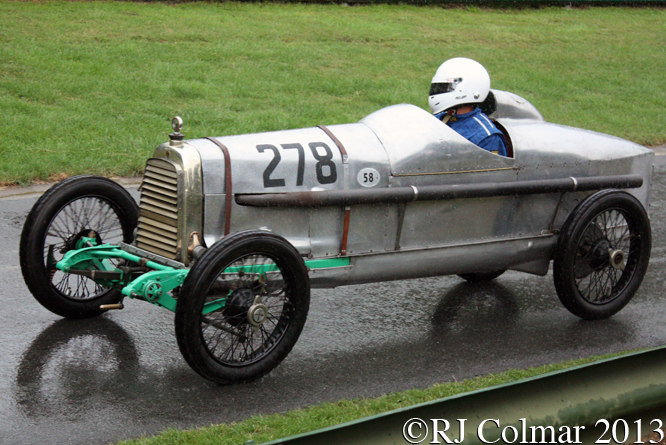
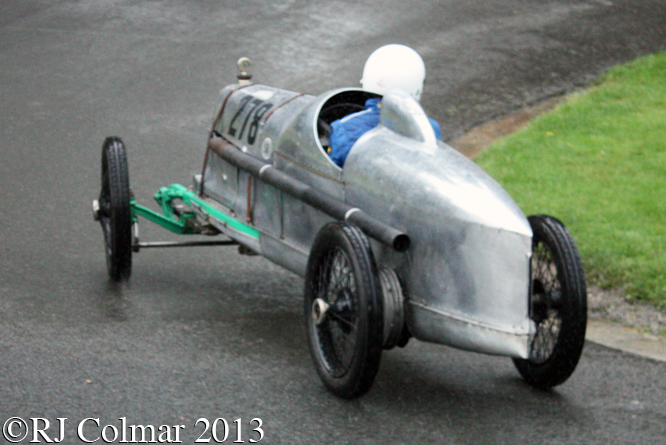
The body work, built by the De Havilland Aircraft Company, is just 18 1/2″ wide at it’s widest point making it one of the, if not the, narrowest racing cars ever built. Originally an aerodynamic bubble was fitted on top of the cockpit and the car was temporarily known as “The Oyster”, but Lionel Martin could not find drivers diminutive enough to fit inside. SCH Davis managed to lap Brooklands consistently between 103 mph and 104 mph, faster than the one hour record set by AC Cars, but had to give up their record attempt because the front offside tyres repeatedly came off.

Shaw, Aston Martin, Razor Blade, Prescott

Major F.B. Halford was the first driver to race Razor Blade, crossing the line first in a handicap race, 5th on handicap, during the B.A.R.C. August Meeting at Brooklands and the following month the following poem appeared in the The Light Car and Cyclecar magazine :-

Major F. B. Halford
(The intrepid driver of the “razor blade” Aston-Martin racer)
With razor blades we’re all acquainted;
Some are good, others painted.
Halford Smiles; he’s found a winner;
Diet follows – make him thinner.

Later in 1923 the Major set a standing kilometer class record of 66.54 mph, while Herbert Kensington-Moir drove Razor Blade to a standing mile class record of 74.12 mph.

Halford Special, Aston Martin, Razor Blade, Prescott

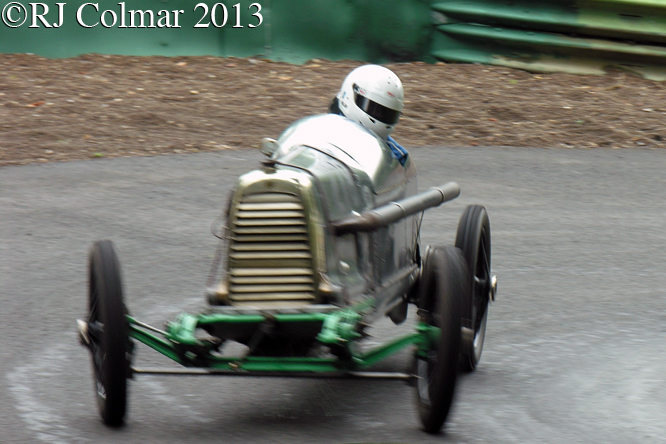
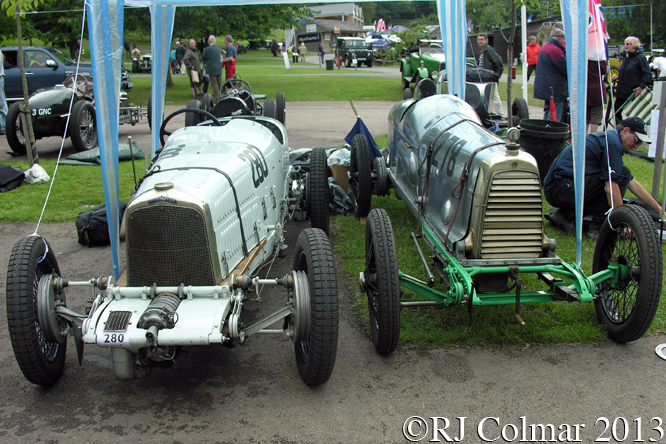
Razor Blade is seen in these photographs at Prescott Hill Climb with Colin Shaw at the wheel, above Razor Blade is seen next to the Halford Special built by Major F. B. Halford on an Aston Martin chassis which I’ll be looking at in greater detail tomorrow.

Thanks for joining me on this “Poetry and Motion” edition of “Gettin’ a li’l psycho on tyres”. I hope you will join me again tomorrow. Don’t forget to come back now.

Share

Unlimited Perfection – Porsche 917/30 #002

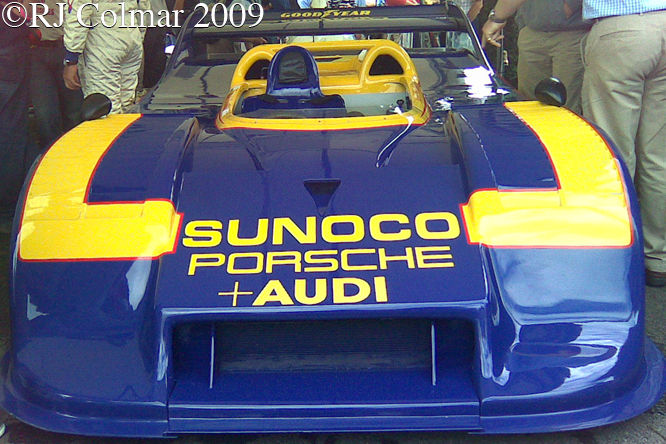
There are some cars that stand head and shoulders above all others in terms of their achievements in their particular fields of endeavour even though their period of dominance is short lived. One such is the Porsche 917/30 as perfected into the ultimate race car for the 1973 Can Am Challenge for Group 7 unlimited sportscars by Porsche AG, Roger Penske and his driver Mark Donohue.
Porsche 917/30, Goodwood Festival of Speed

The origins of the space frame chassis and flat 12 motor that power this model lie in the Porsche 917 Endurance Sports Car programme that got underway after an unexpected change in sports car regulations designed to prolong the competitive viability of the Ford GT40’s and Lola T70 Coupé’s powered by 5 litre / 302 cui motors. The change in the regulations mandating vehicles of which at least 25 examples had been built with up to 5 litre / 302 cui motors were seen as an open opportunity by the engineers at Porsche to build a car with a competitive life limited to just three seasons of endurance racing from 1969 to to 1971. In that time Porsche and it’s preferred teams transformed the 917 from an initial limp biscuit into a preeminent sports car that conquered almost every race in which it took part laying the foundation of Porsche’s endurance racing reputation that was unrivaled until sister company Audi took up the mantel at the beginning of the 21st century. The Porsche 917’s achievements included back to back Le Mans wins in 1970 and 1971, back to back World Sports Car Championships in the same years and celluloid immortalisation by none other than the undisputed celluloid King of Cool Steve McQueen thanks to his film Le Mans.
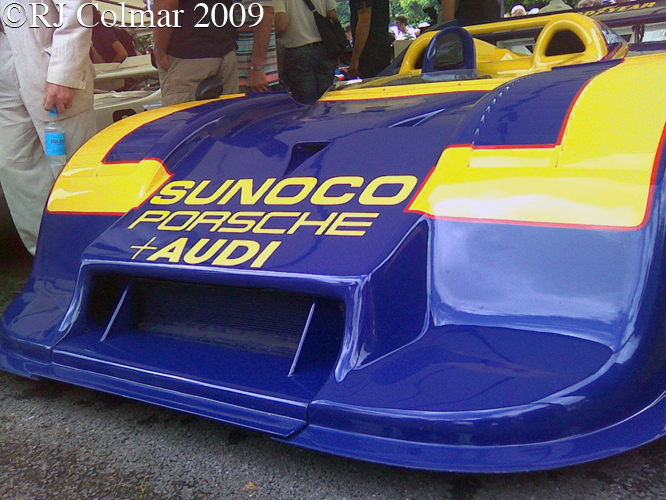
Porsche 917/30, Goodwood Festival of Speed

Porsche’s first foray into the world of unlimited Can Am racing came in 1970 with a couple of 917 predecessors in the form of the 3 litre / 183 cui flat 8 powered 908 Spyders for Swiss driver Jo Siffert and Britain’s Tony Dean. Siffert was soon given a Porsche 917 PA Spyder fitted with a 4.5 litre / 274 cui flat 12 motor with which he finished a season high 3rd for the marque at Bridgehampton on his way to 4th place in the 1969 Can Am Challenge. The following season Tony Dean in his 908 was the only regular Porsche representative and he took an unlikely but popular win at Road Atlanta on his way to 6th in the 1970 Can Am Challenge standings.
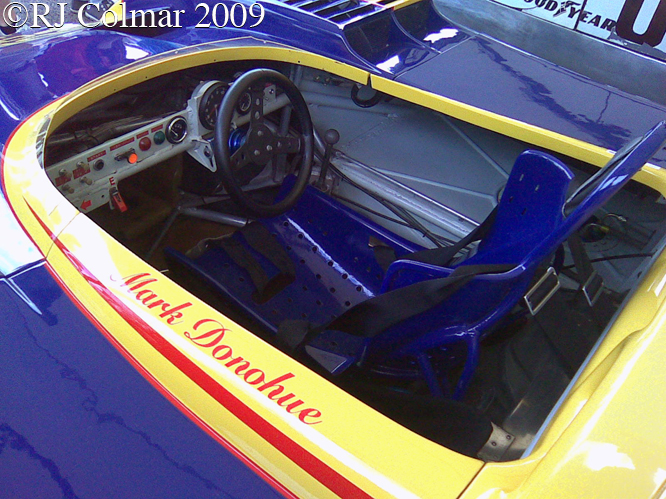
Porsche 917/30, Goodwood Festival of Speed

Several of the closed cockpit 917K’s taking part in the 1970 Watkins Glen 6 hour race took part in the following days Can Am race at the same circuit and Siffert with a 5 litre / 302 cui flat 12 motor finished second to Denny Hulme’s Chevy 7 litre / 427 cui powered McLaren M8D.
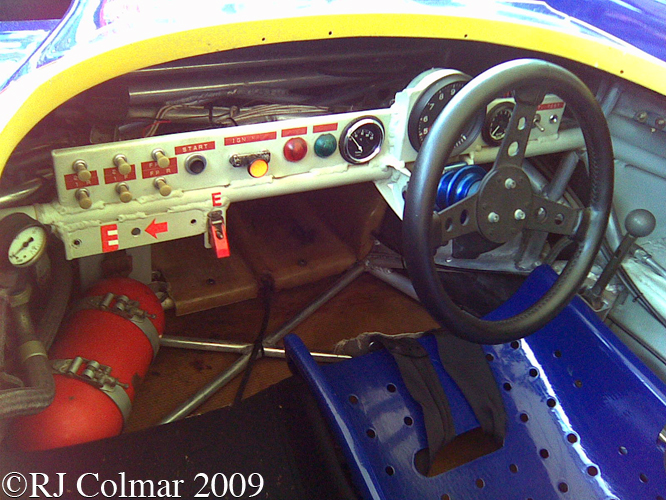
Porsche 917/30, Goodwood Festival of Speed

Vasek Polak Racing acquired Siffert’s 917 PA for Milt Minter in 1971 while Siffert had a new 917/10 with updated bodywork that included a large rear wing but was still running a 5 litre / 302 cui normally aspirated motor. Siffert scored two season high second places and finished 4th in the 1971 Can Am Challenge two spots ahead of Minter.
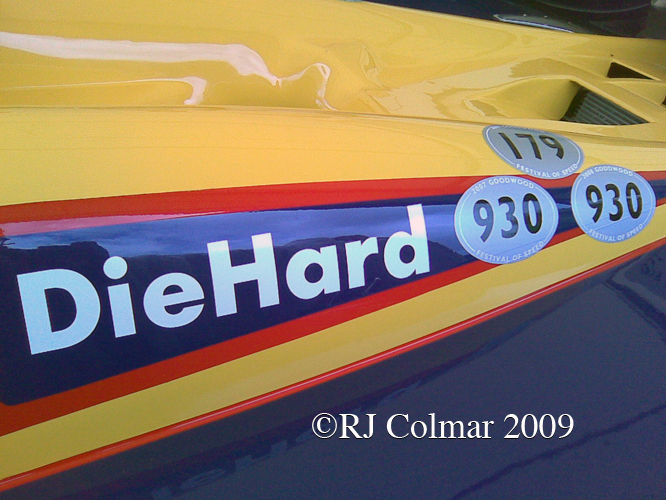
Porsche 917/30, Goodwood Festival of Speed

In 1972 Roger Penske became the works Porsche representative in Can Am with a pair of Porsche 917/10’s, now fitted with turbocharged 5 litre / 302 cui flat 12 motor’s Donohue finished 2nd in the opening round at Mosport but then broke a leg in a testing accident at Road Atlanta where George Follmer was hired at short notice to replace Mark. George won the race and four more that season to clinch the 1972 Can Am Challenge. Mark recovered to win a single race upon his return at the end of the season to finish 4th in the Challenge, behind Milt Minter who still had the old 917 PA fitted with the latest 917/10 body work and a variety of turbocharged and normally aspirated engines during the course of the season.
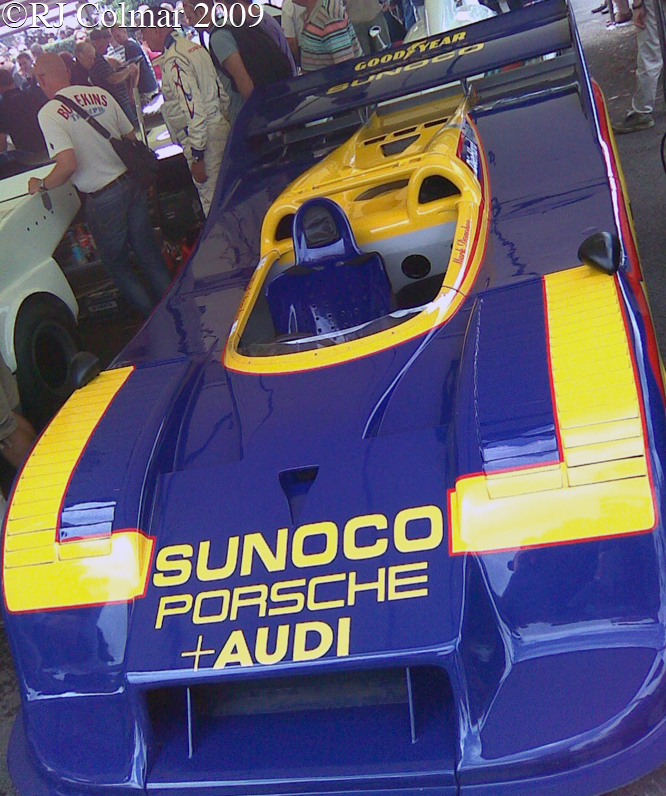
Porsche 917/30, Goodwood Festival of Speed

For 1973 Porsche, Penske and Mark worked on the definitive ultimate 917, today’s featured 917/30, which featured a longer wheel base and a turbocharged 5.4 litre / 329 cui flat twelve fitted with 2 spark plugs per cylinder that produced a conservative 1100hp, or up to 1500hp in qualifying trim with 39 psi / 2.7 bar of boost from the twin turbochargers.

Mark qualified on pole for all 8 races in the 1973 Can Am Challenge. In the first race at Mosport he finished a season low seventh, after tripping over a back maker which allowed Charlie Kemp to win driving the previous years Penske 917/10 model for Rinzler Racing. At Road Atlanta Mark experienced a fuel filler leak while leading forcing him to pit for the leak to be fixed. Mark rejoined the race to finish second to the other Rinzler Racing ex Penske 917/10 being driven by George Follmer.

Thereafter Mark won the remaining six races as he pleased to become the first Can Am Challenge winner to score points in all the challenge races. In 1974 the hitherto unlimited Group 7 cars were given their first restriction when the SCCA mandated a 3 miles per gallon fuel limit, this did not outlaw the 917/30 as is widely believed, in fact Roger Penske entered one of the 917/30’s for Brian Redman to drive at Mid Ohio.

Under strict instructions to use only the top three, of four, gears in order to minimise fuel consumption Brian qualified on pole and came home second, behind Jackie Oliver driving a Shadow DN4, after understeering, pushing, off the circuit during the race.

In 1975 Mark Donohue returned to the cockpit of a CAM2 sponsored 917/30 now fitted with twin inter coolers to raise the world closed circuit lap record from the 217 mph set by AJ Foyt, in his open wheel USAC Coyote, to 221 mph at Talladega Superspeedway. The record which was set in less than optimal dry conditions stood for two decades.

Today’s featured car seen at Goodwood Festival of Speed a couple of years ago is chassis 917/30 #002 which appears to have served primarily served as Mark Donohue’s spare for the 1973 season. Contemporary reports in Motor Sport suggest it was only raced at Watkins Glen after a suspension failure on Marks regular chassis #003 required #002 to be wheeled out for race duty, which included winning pole and leading from flag to flag to secure a 42 second victory over David Hobbs Carling Black Label Roy Woods Racing 1972 Mclaren Chevrolet M20.

917/30 #002, one of six 917/30’s built of which only three saw in period competition, now belongs to the Porsche Museum.

Thanks for joining me on this “Ultimate Perfection” edition of “Gettin’ a li’l psycho on tyres” I hope you will join me again tomorrow. Don’t forget to come back now !
Share

The Great Ferraris – The Quail, A Motorsports Gathering

A couple of weeks ago Geoffrey Horton took part in The Quail, A Motorsports Gathering Concours d’Elegance, here are a few pictures of The Great Ferraris Geoffrey has kindly shared with us.

Ferrari 166 Inter, The Great Ferraris, The Quail

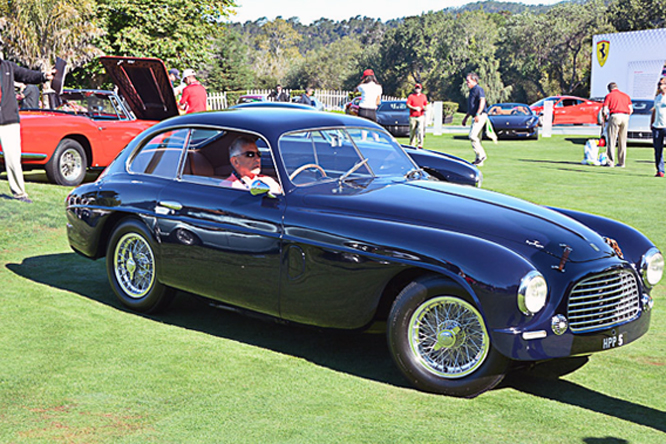
Among the oldest of the Ferraris present was chassis #043S a 1950 Ferrari 166 Inter Touring Coupé of which 37 were built between 1948 and 1951.

Ferrari 212 Inter, Pininfarina Convertible, The Great Ferraris, The Quail

The Ferrari 212 Inter Pininfarina Convertible above is one of two built for Ferrari to show in the 1952 Auto Salons, chassis #0235EU, above, is left hand drive while the other is right hand drive. Among it’s owners this car counts Tony Parravano and the film director Roberto Rossellini who entered the car in the 1953 Nurburgring sports car race where it finished ninth driven by journalist Maurice Gatsonides and Ricardo Vignolo.

Ferrari 250 Europa Vignale Coupé, The Great Ferraris, The Quail

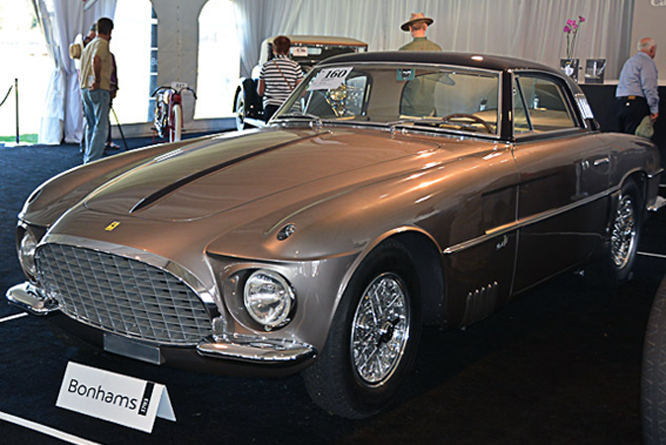
Up for auction was the 1953 Ferrari 250 Europa Vignale chassis #0313EU which appeared at the 1954 New York Auto Show. The car fetched US$ 2.8 million / £1.8, possibly a bargain for what many consider one of the most attractive Ferrari’s ever built.

Ferrari 250 Testa Rosa, The Great Ferraris, The Quail

Dick Morgensen bought this Ferrari 250 TR chassis #0756 TR in late 1958 and raced it to victory lane on at least eight occasions between 1959 and 1960. The car has been owned by it’s present owner Chris Cox from North Carolina since 2008.

Ferrari Enzo, The Great Ferraris, The Quail

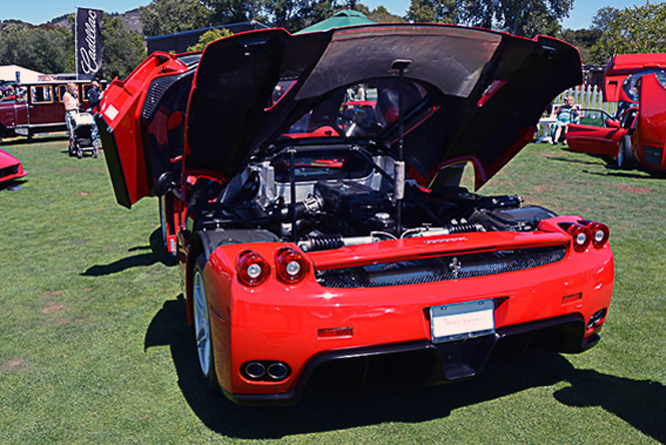
Jumping forward to the start of the millenium above is one of 401 Ferrari Enzos built between 2002 and 2004.

Ferrari P 4/5, The Great Ferraris, The Quail

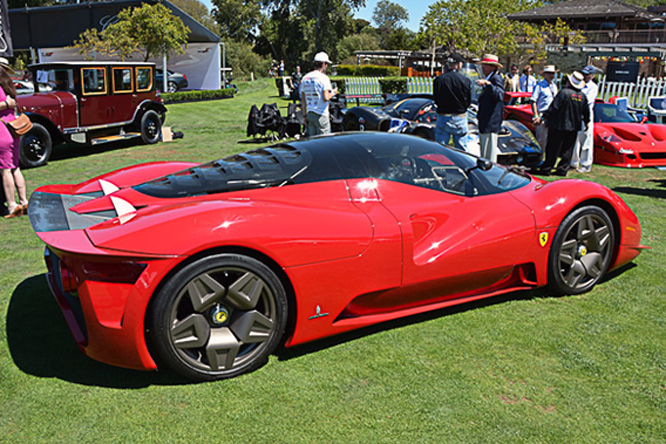
Costing a cool US$ 4 million to build is the one off Ferrari P4/5 by Pinninfarina which was built around the last Ferrari Enzo to be produced for James Glickenhaus. Upon taking delivery of the restyled car the owner said “I feel they gave me more than I expected”.

Ferrari F12berlinetta, The Great Ferraris, The Quail

The Ferrari F12berlinetta replaced the Ferrari 599 series last year, it’s 6.2 litre / 382 cui V12 produces 730 hp the same as a 1970 Can Am car !

My thanks to Geoffrey Horton for sharing his photo’s of of which will be seen next Wednesday.

Thanks for joining me on this “The Great Ferraris edition of “Gettin’ a li’l psycho on tyres”, I hope you will join me again tomorrow for a look at possibly the greatest Can Am car of all time. Don’t forget to come back now !
Share

Twelve Hundred Horsepower – Shadow Chevrolet DN2 #DN2-2A

Despite the loss of it’s sponsor Johnson’s Wax, the number of events being cut back to eight, down from eleven in 1970 and the number of entrants falling to an all time low, just 15 at Edmonton, the 1973 Can Am Challenge was still a huge draw for spectators who wanted to see the worlds hitherto most powerful racing cars competing on road courses. According to contemporary reports attendances at all of the races in the 1973 Can Am Challenge were up.

Shadow Chevrolet DN2,  Rosso Bianco Collection,

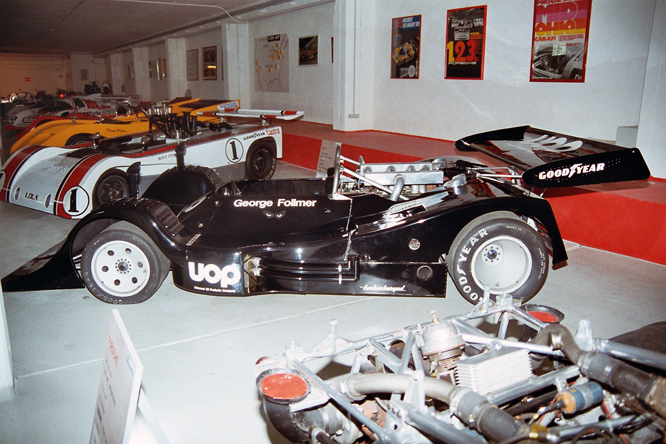
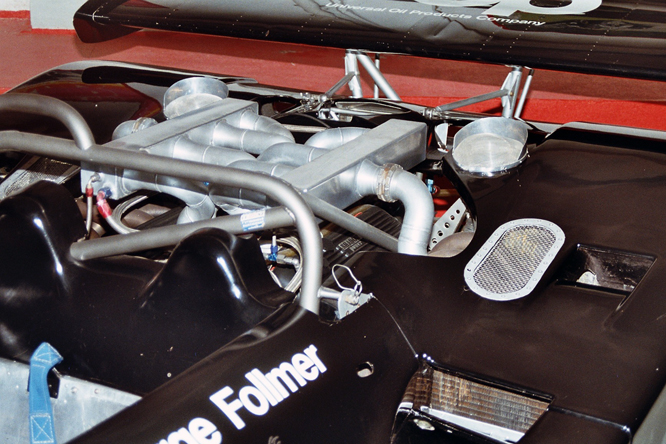
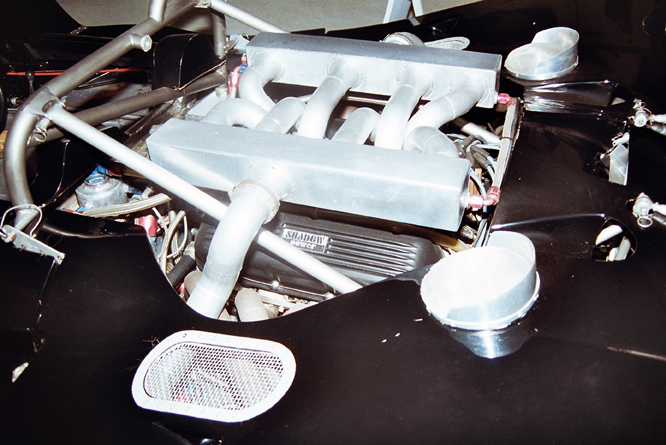
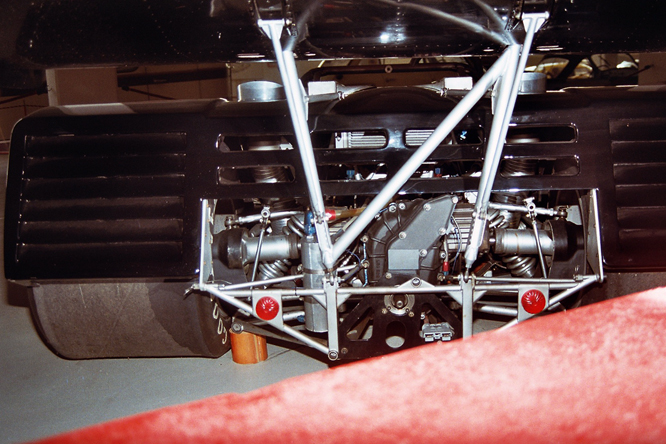
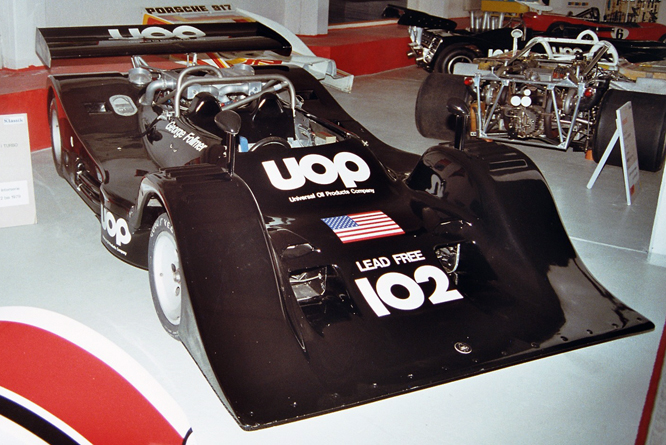
Only two teams prepared new cars for the 1973 one of them was Shadow who built two DN2’s designed by Tony Southgate, one of those cars ran a regular 730 hp 8.1 litre / 494 cui Chevrolet V8, while the second car, featured today ran with a turbocharged version of the motor.

Shadow Chevrolet DN2,  Rosso Bianco Collection,

Both DN2’s were completed too late to undergo any testing prior to the start of the season and so presented little challenge to the teutonically prepared Porsche 917/30 driven by Mark Donohue for the Penske team. Jackie Oliver retired the normally aspirated DN2-1A from the opening two rounds of the 1973 Can Am Challenge run at Mosport and Road Atlanta with gearbox and suspension failures respectively.

Shadow Chevrolet DN2,  Rosso Bianco Collection,

Shadow team owner Don Nichols was entered to debut today’s featured car, seen at the Rosso Bianco Collection by Frank ‘Duc-man’ Christmann in Germany several years ago, at Watkins Glen in July 1973 but the car did not show. When #DN2-2A did show up at the next round at Mid-Ohio it was kept as a spare. Jackie Oliver scored a 3rd in the final at Mid Ohio which translated to a final 8th place overall having finished 12th in the heat.

Shadow Chevrolet DN2,  Rosso Bianco Collection,

James Hunt took over the normally aspirated DN2 at Road America while Jackie Oliver tried the turbocharged DN2-2A, they qualified 14th and 21st respectively. James did not start thanks to recalcitrant fuel metering unit while Jackie who had not set a time in qualifying lasted just 3 laps before the 1200 hp motor failed.

Shadow Chevrolet DN2,  Rosso Bianco Collection,

At Edmonton the Shadow team ran just DN2-1A and Jackie recorded a third place finish from seventh on the grid, driving the same car at Laguna Seca Jackie went one better finishing second from 5th on the grid, while Vic Elford tried the turbo charged DN2-2A which he qualified 18th but retired with brake failure after completing 22 of the 66 scheduled laps.

Shadow Chevrolet DN2,  Rosso Bianco Collection,

At the season ending race run at Riverside Jackie qualified 9th in DN2-1A, while Vic was 14th on the grid, however neither car lasted more than a handful of laps, Jackie retired with bodywork damage on lap three while Vic retired with a broken throttle linkage after the opening lap.

Shadow Chevrolet DN2,  Rosso Bianco Collection,

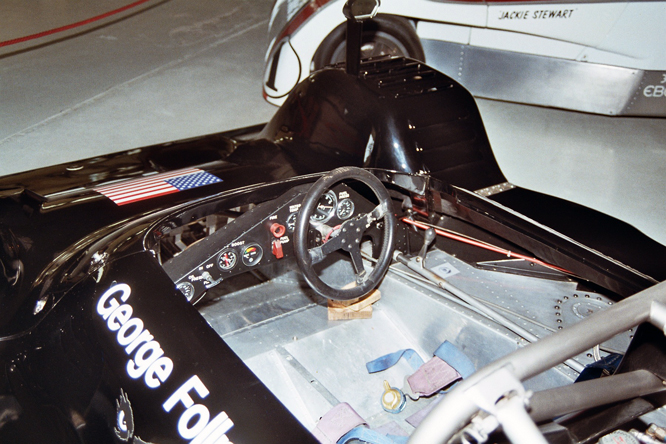
The Shadow DN2’s, which bear a passing resemblance to the 1972 Lola T310, were not seen again in period. It should be noted George Follmer never raced a Shadow DN2 although he did join the Shadow team for the Can Am Challenge in 1974, it remains a mystery as to why George’s name should appear on the side of the car.

I hope you will join me in thanking Frank “Duc-man” Christmann for sharing today’s photographs.

Thanks for joining me on this “Twelve Hundred Horsepower” edition of “Gettin’ a li’l psycho on tyres” I hope you will join me again tomorrow when I shall be visiting Quail Councours d’Elegance for Ferrari Friday. Don’t forget to come back now !
Share