Rolex Monterey Motorsports Reunion – Mazda Raceway Laguna Seca

A couple of weeks ago Geoffrey Horton visited the Rolex Monterey Motorsports Reunion at Mazda Raceway Laguna Seca and kindly sent me today’s photographs to share.
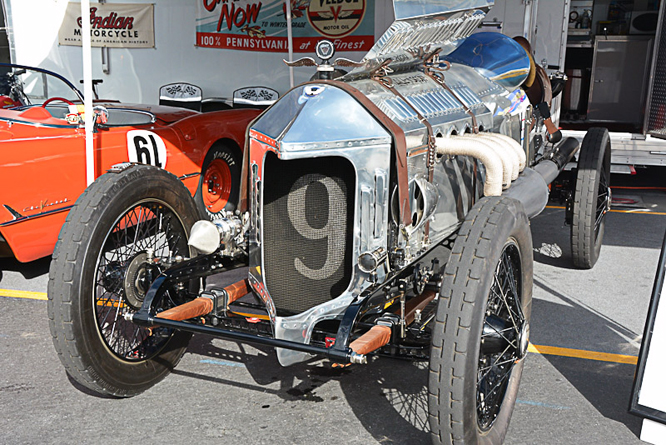
Hall Scott The Four, Rolex Monterey Reunion, Laguna Seca

The Hall Scott Four was built in San Francisco for the 1917 Vanderbuilt Cup it used an Reo Model M frame and was powered by a 110 hp Hall Scott aircraft 9.9 litre 605 cc motor that produces the same torque as a modern day Chrysler V10 Viper motor. This car was reconstructed for Dick Deluna by Tom Batchelor in Reno Nevada and Denis Webb in Anaheim California amongst many others.
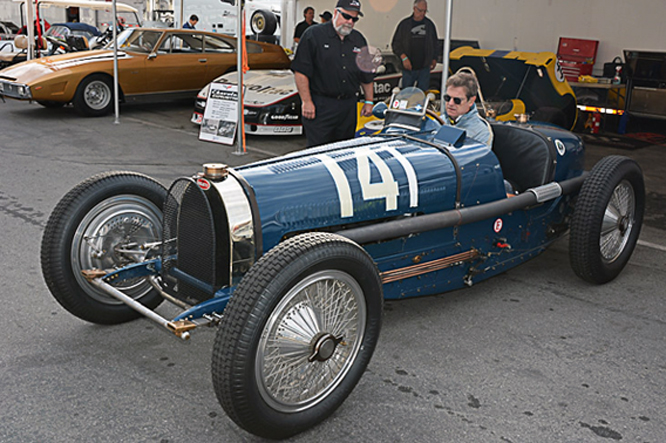
McCabe, Bugatti, Type 59, Rolex Monterey Reunion, Laguna Seca

Charles McAbe is seen warming up his 1934 Bugatti Type 59 with it’s distinctive wire and alloy wheels.
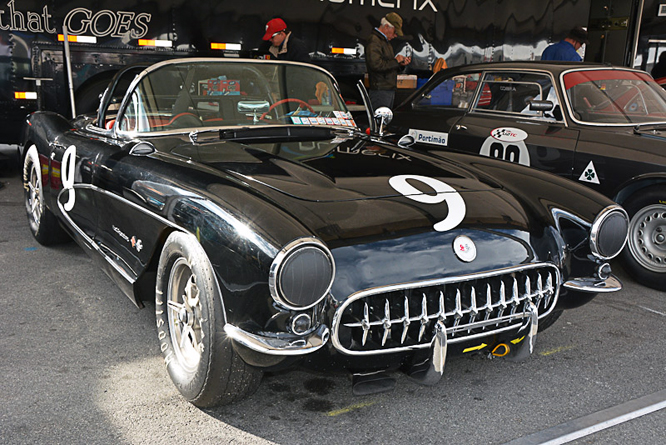
Chevrolet Corvette C1, Rolex Monterey Reunion, Laguna Seca

Looking particularly purposeful in black above is Bob Patterson’s 1957 second generation Chevrolet Corvette C1, a very successful sports car and racer in it’s day that sold with the strap line “FI = 1 H.P. per CU. IN. x 283″.
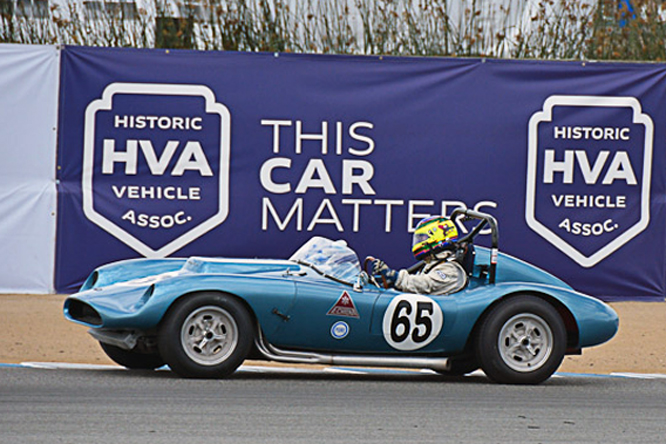
Knoop, Echidna, Rolex Monterey Reunion, Laguna Seca

John Staver, Ed Grierson and Bill Larson based their Echidna race cars on highly modified Corvette frames and mechanical running gear. The cars clothed in bodywork by by Bill Devlin won 8 races outright from 35 races and took 17 class victories. The Bob Hardison’s 1959 example seen here is driven by IMSA Endurance racer Rick Knoop.
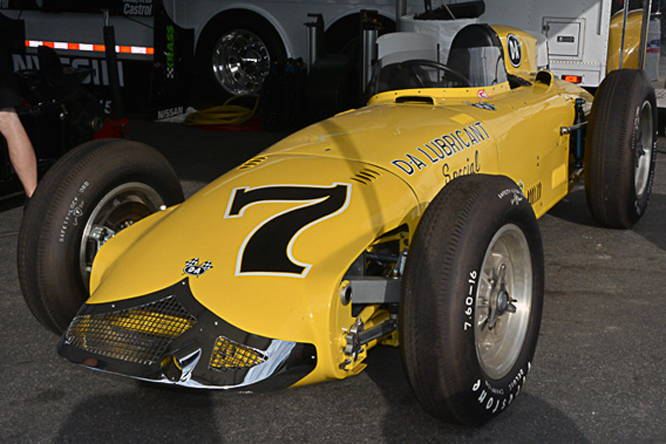
Kurtis KK500-H, Rolex Monterey Reunion, Laguna Seca

Frank Kurtis built just one new car for the 1958 Indy 500 the Kurtis KK500-H seen above which featured novel, for the period at Indy, independent rear suspension. It’s best finish was 7th with Duane Carter at the wheel in 1959, running with a more conventional tub rear axle installed by new owner Smokey Yunnick.
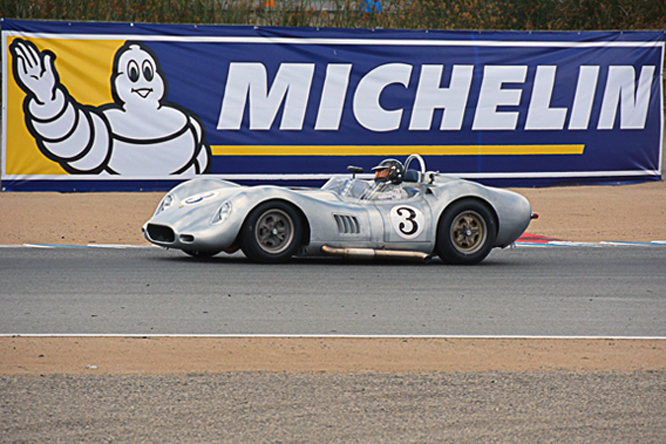
Arcerio, Lister, Rolex Monterey Reunion, Laguna Seca

Al Arcerio is seen at the wheel of his 1958 Knobbly Lister above.
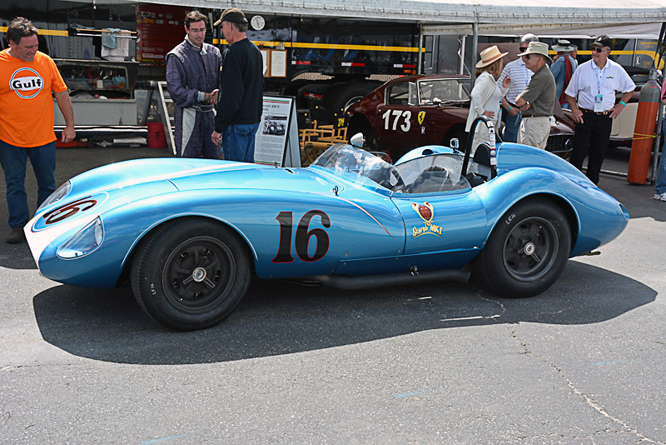
Scarab, Mk 1, Rolex Monterey Reunion, Laguna Seca

After seeing first hand the apparent chaos that ruled in the factories of several top European racing car manufacturers Lance Reventlow returned to the United States determined that he could do far better. The first product of his determination was the 1958 Scarab Mk 1 with which Lance won 9 races in 1958. Only two Mk 1’s were built, I believe the example above, owned by Rob Walton, is the first of the two.
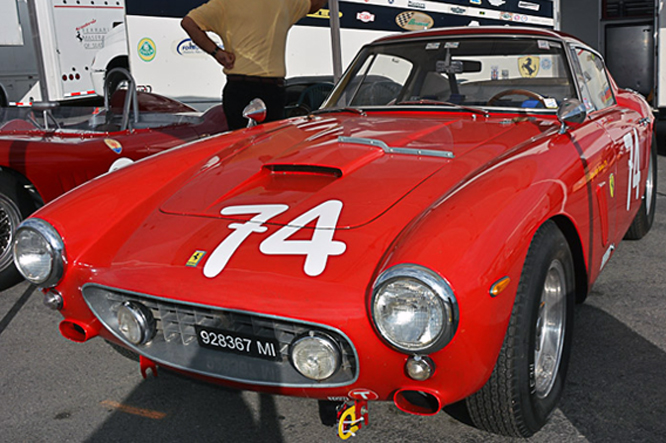
Ferrari 250 GT SWB, Rolex Monterey Reunion, Laguna Seca

The Ferrari 250 GT SWB Berlinetta Competizione chassis #2701 GT was crashed on it’s debut at the Le Mans test weekend after setting the 6th fastest time, fastest in class, in 1961. It was rebuilt and bought for a paltry DM 6,000 in February 1967 by Egon Hofer who won his class with it in a couple of hillclimbs before tackling the Taga Florio with Anatoly Arutunoff where carrying the #74 it failed to finish. Ned Spieker has owned the car since 2004.
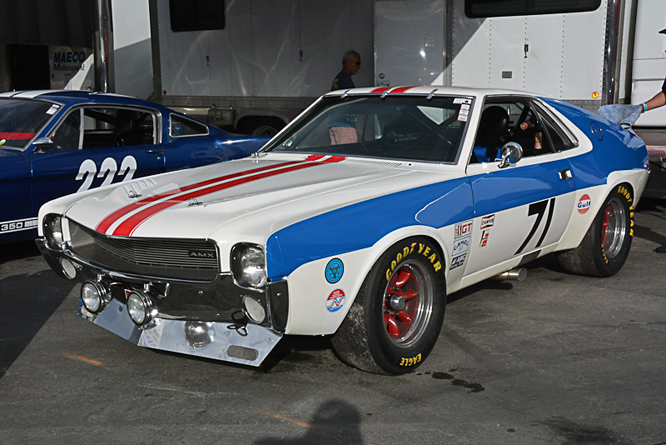
American Motors AMX, Rolex Monterey Reunion, Laguna Seca

Dwight Matheson’s 1969 AMC AMX is seen above in the Bruce Morehead Racing colours as raced by Bruce in 1970 in the Sebring 12 hour race where the car failed to finish. Bruce is known to have scored at least one class victory in an SCCA regional race run at Sebastian towards the end of 1970.

My thanks to Geoffrey Horton for sharing today’s photos, please spare a thought for him last I heard the the Rim Fire was causing Geoffrey and his neighbours some concern.

Thanks for joining me on this “Rolex Monterey Motorsports Reunion” edition of “Gettin’ a li’l psycho on tyres” I hope you will join me again tomorrow. Don’t forget to come back now !

PS Thoughts and opinions on the weekends Belgian Grand Prix can be found here at Motorsports Unplugged.

Share

Nobility & Speed – GALPOT Automobilia

I’ve been having a bit of a clear out whilst reorganising my library and the time has come to dispose of a number of items which may be of interest through my lightpress account on e-bay.

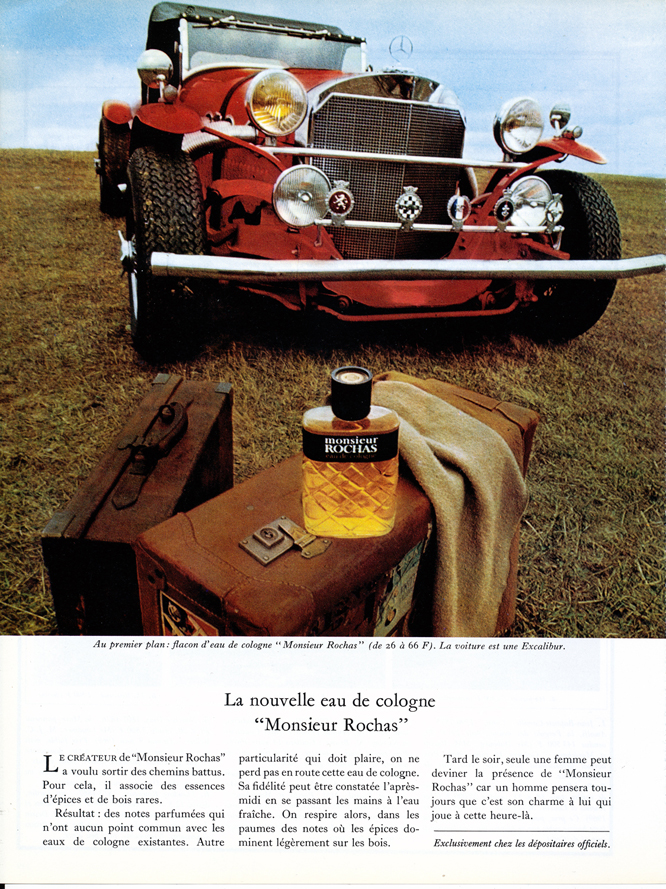
Excalibur, Monsieur Rochas, Advertisement, Connaissance des arts

This week among the ads posted is this Monsieur Rochas cologne ad featuring a 1969 Series 1 Excalibur Roadster built in Milwaulkee, which was the brainchild of former Studebaker designer Brooks Stevens. Expect to see more retro vehicles like the Corvette powered Excalibur about as the Steam Punk movement moves towards the mainstream.

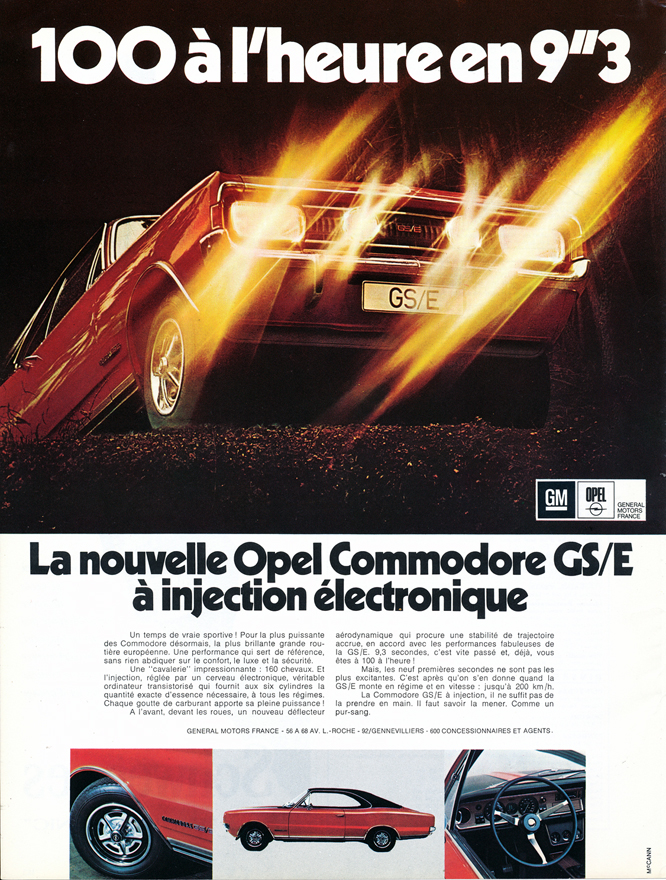
Opel, Commodore, GS/E, Advertisement, Connaissance des arts

The global McCann Erickson ad agency appear to have responsible for this 123 mph fuel injected 1970 Opel Commodore GS/E. Unfortunately the photographer responsible for the blurry image that I found influential in my own work as an artist is not credited.

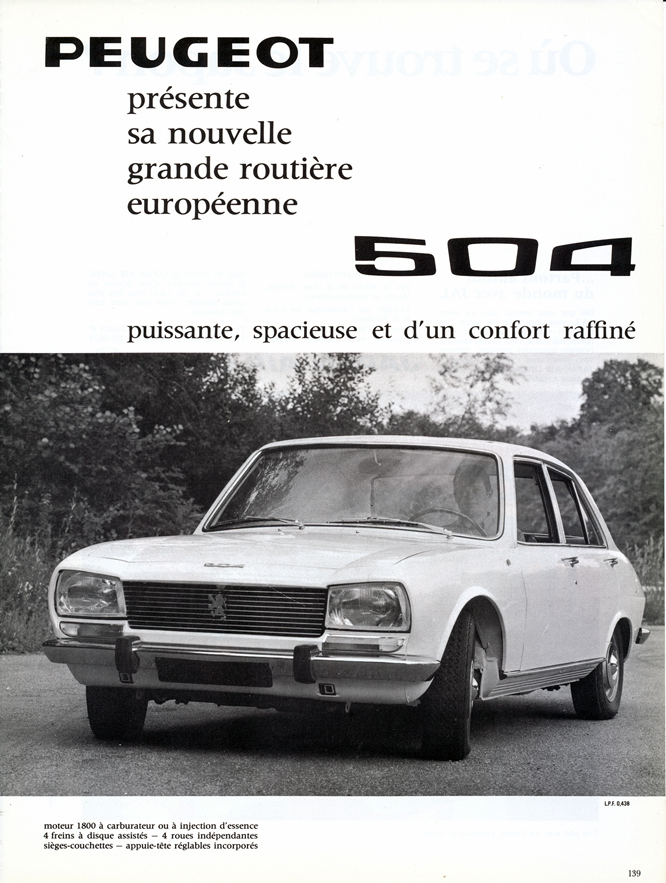
Peugeot, 504, Advertisement, Connaissance des arts

As I am sure anyone who has been to Africa will agree, life on the continent without the ubiquitous Peugeot 504 would be almost unimaginable, a good portion of the continents hard driven taxi’s were /are Peugeot 504’s the last of which was appropriately manufactured in Nigeria in 2005. The Peugeot 504 advertisement above was published soon after the models delayed launch in 1968.

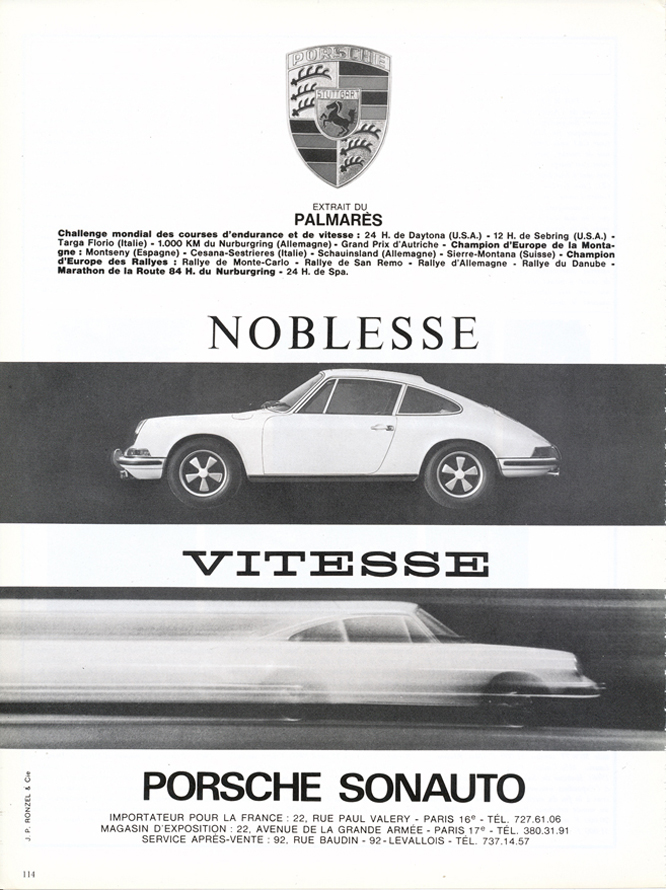
Porsche, 911, Advertisement, Connaissance des arts

J.P. Ronzel & Cie was responsible French Importer Sonauto’s Porsche advertising in 1969 featuring another cool blurry shot, which I replicated a couple of months ago and the strap line Nobility and Speed.

Thanks for joining me on this “Nobility and Speed” edition of “Gettin’ a li’l psycho on tyres” I hope you will join me again tomorrow. Don’t forget to come back now !

Share

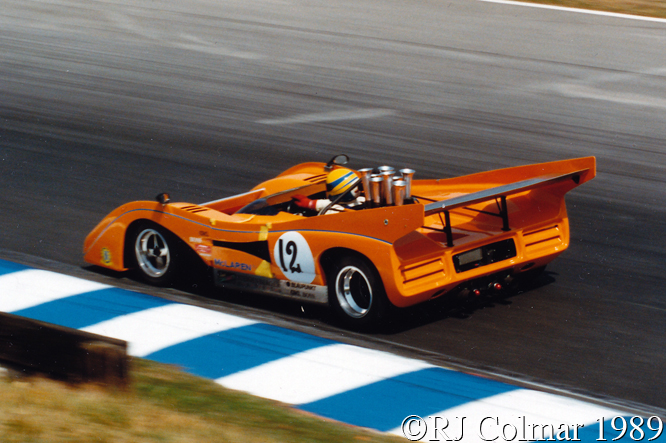
Wheelbase Balance – McLaren Chevrolet M8F #10-72

There were three race winners in the 1971 Can Am Challenge Jackie Stewart won two races in his L&M Lola T260 while the rest all fell to Denny Hulme who won three races and eventual champion Peter Revson who won the remaining five in the fifth and final year of domination by the Traffic Yellow McLaren M8F cars.

The McLaren M8F was similar to the M8D raced in 1970 but had been upgraded by Gordon Coppuck with a 3″ longer wheel base, wider track, inboard rear brakes, sturdier gearbox to improve the handling and balance of the cars which had a choice of either 740hp 8.1 litre / 494 cui or just under 800 hp 8.4 litre / 512 cui Gary Knutson tuned alloy Chevrolet V8’s.

Agg, McLaren Chevrolet M8F, Brands Hatch

For 1972 the works McLaren team moved onto the M20 and sold on it’s M8F’s to the Young American Racing Team, one of which was driven to victory at Donnybrooke by rising French star François Cevert, while Trojan built up a number of M8F spec cars known as M8FP’s for customers to run.

The most successful M8FP customer in the 1972 Can Am Challenge was German Hans Weidmer who finished 8th from 21st on the grid at Edmonton driving chassis #07-72.

Agg, McLaren Chevrolet M8F, Brands Hatch

Helmut Kelleners sold his March 707/717 and raced a Trojan built M8FP #02-72 in various events through 1972 winning the Martini International at Mainz Finthen. In December ’72 Georg Loos won the Copa Brasil at Interlagos driving chassis #03-72.

By 1975 Peter Hoffmann had acquired #07-72 for racing in Europe and in 1976 returned the car to victory lane at Kassel Calden, Mainz Finthen and Ulm. Peter drove the car to three more victories at the Nurburgring in 1979 and 1981 and Hockenheim in 1980.

Today’s featured car #10-72 is seen with Charlie Agg at the wheel during practice for a classic race at Brands Hatch, #10-72 was never raced in period. Charlie Agg is the son of Peter Agg who revived the fortunes of Trojan and then Elva in the 1960’s.

Thanks for joining me on this “Wheelbase Balance” edition of “Gettin’ a li’l psycho on tyres” I hope you will join me again tomorrow. Don’t forget to come back now !

Share

The Chuck Parsons Myth – Lola Chevrolet T222 #T222 HU7

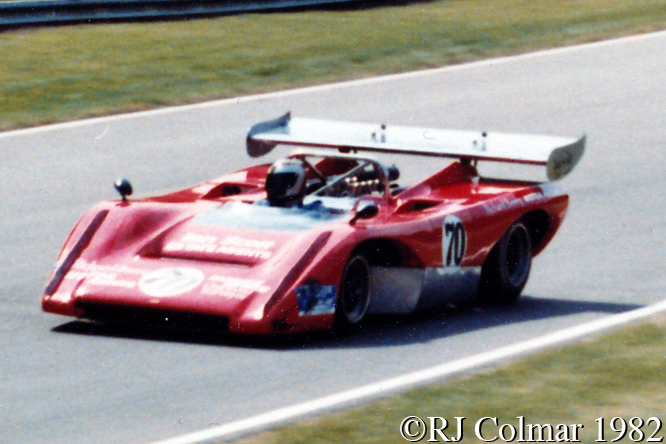
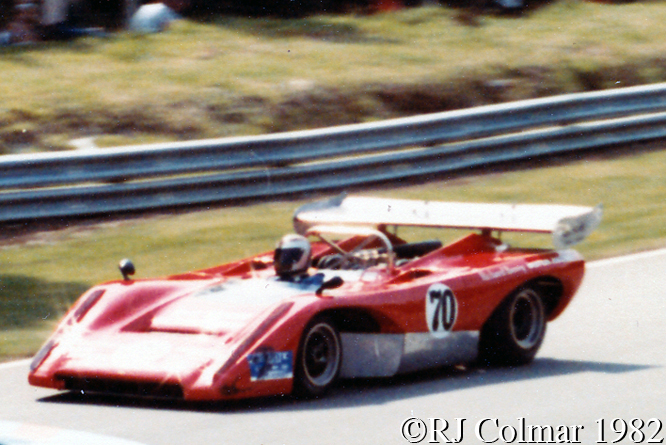
Today’s featured car is a 1971 Chevrolet powered Lola T222, it is seen being driven with by of Britain’s most accomplished club drivers never to sit in a contemporary Formula Car by the name of Gerry Marshall at Brands Hatch in 1982. In both the contemporary programme notes and post race press reports the car is described as being “ex Chuck Parsons” and owned by Noel Gibbs an apparent novice to the motor racing scene.

In 1970 Lola Cars moved from it Slough premises west of London to Huntingdon, Cambridgeshire north east of London. All Lola cars built in Slough were given an SL prefix in their chassis numbers all Lola cars built in Huntingdon received an HU prefix in their chassis numbers.

The Lola T222 was a development, built for customers, of the 1970 Lola T220 with which Peter Revson had competed for Carl Hass (later to become Newman/Hass Indy Car fame) Racing. The T222 differed from the earlier model primarily by having a 10″ lange wheel base than the 1970 model.

01 Untitled-3sc

It is thought that nine vehicles were issued with a T222 chassis number which ran HU2 through HU9. The exact history of all 8 cars is not known, T222 HU1 may never have been issued because that number was thought of as the prototype T222 namely T220 SL/1. Now it get’s complicated.

T220 SL/1, the car driven by Peter Revson in 1970, crashed at Road America after it suffered a puncture. Two weeks later a new car appeared for Peter Revson with the chassis number T220 SL/2, but T220 SL/1 differed in one crucial respect, the front axle of SL/2 was ten inches further forward of the rear bulkhead than on SL/1.

It is believed that one of the early T222 chassis originally built in Huntingdon was hastily built up to replace the damaged SL/1 and shipped to Donnybrooke for Revson to race with the Slough chassis number T220 SL/02. It is also believed SL/2 might have become either T222 HU02 or perversely T222 HU/09 had it not been unexpectedly pressed into service in 1970.

The 1971 T222 models all shared the same wheel base as T220 SL/2 but there are some minor variations in the bodywork.

02 Untitled-1asc

T222 HU7, today’s featured car, was delivered to Bob Nagel who drove the car with blue bodywork in the 1971 Can Am Challenge his season best qualifying and race performances came at Donnybrooke where he finished 10th from 16th on the grid. The rest of his races apart from an 11th at Mount Tremblant were dogged by mechanical unreliability.

In 1972 Bob campaigned the HU7 again swapping the 7 litre / 427 cui Chevrolet V8 for first a 7620cc / 465 cui and later an 8095 cc / 494 cui unit. The larger motors contributed to three 8th places finishes which along with 2 10th’s an 14th place in the final 1971 Challenge standings 4 spots behind Charlie Kemp in the Bobby Rinzler T222 HU8.

Bob topped his 1972 season with a third place finish from 2nd on the grid in an ASR race run at Road Atlanta at the seasons end.

Gene Fisher bought HU7 for the 1973 season and appears to have started just one event at Road Atlanta with a Chaparral built 427 motor. Gene retired in the 1st heat from 21st on the grid and did not start Heat 2.

Despite apparently having lost a wheel during the course of the opening meeting for the 1974 Can Am Challenge at Mosport Gene started 11th and finished a season high 6th driving HU7 now in it’s forth year of competition. Engine and gearbox failures accounted for the cars three remaining races.

In 1981 Chuck Haines sold HU7 to Noel Gibb and the following year Noel did a deal with Gerry Marshall to lend him the car free of charge while Gerry tried to sell the car on Noel’s behalf, the car was not to be sold before the British Grand Prix meeting where Gerry is seen at the wheel here.

The throttle on Gerry’s car broke before he set a qualifying time so he started the Atlantic Trophy Race from the back of the grid. He worked his way up to 4th before easing off when his door came undone. After passing through the hands of three further owners T222 HU7 was purchased by I believe the current owner David Edwards.

While reading up on the Lola T222 I learned that Chuck Parsons never drove a Lola T222 in period and that the widespread myth that HU7 was ever driven by him possibly originated in the Brands Hatch publicity office with some incorrect programme notes.

My thanks to everyone who contributed to the Lola T222 thread at the Ten Tenths Forum particularly Gregor Marshall who’s post confirmed the identity of today’s featured car, Jeremy Jackson and David Edwards who posted details of the believed chain of ownership of T222 HU7, along with Tim Murray who kindly furnished me with the contemporary race reports from Autosport.

Thanks for joining me on this “The Chuck Parsons Myth” edition of “Gettin’ a li’l psycho on tyres”, I hope you will join me again tomorrow. Don’t forget to come back now !

Share

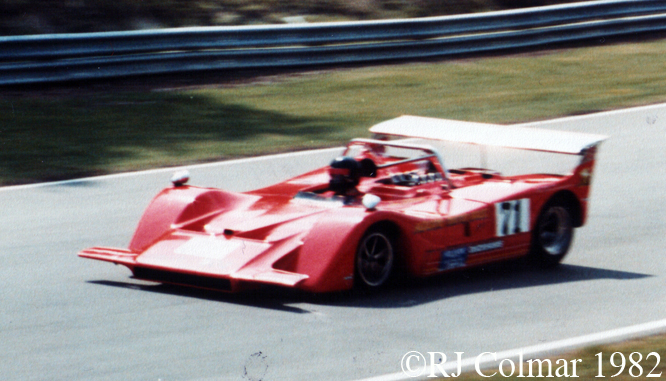
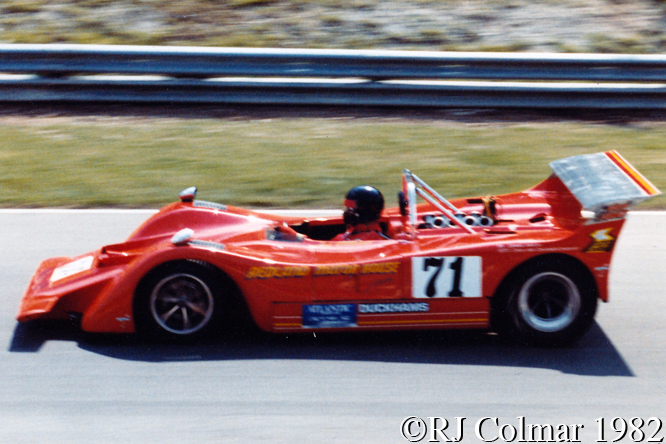
93″ Wide – March Chevrolet 707 #707/2 and #707/3

For 1970 the ambitious March Cars embarked on a programme to build customer racing cars for every major open wheel category from Formula One to Formula Ford and included a 93″ wide two seat closed wheel Group 7 Can Am car for good measure.

March 707, Goodwood Festival Of Speed

Two March 707’s were completed one was run in the 1970 Can Am Challenge by the factory with sponsorship from STP for New Zealander Chris Amon, while the first of the two completed chassis was sold to German Helmut Kelleners who was sponsored by the Deutsche Auto Zeitung periodical in the inaugural Interserie Championship.

March 707, Goodwood Festival Of Speed

Of the two drivers Kelleners had the most success winning Intersiere races at Croft and Hockenheimring, any championship challenge was however halted by a couple of clutch failures and a disqualification from the first Hockenheim race after missing a chicane. Helmut won three non further non championship races in 1970 before he had March #707/1 upgraded to 717 spec for 1971, with new bodywork and the chassis number #717/1 being the most obvious difference.

Williams, March 707, Brands Hatch

The revised car was not so competitive and still having transmission problems winning no races in 1971.Austrian Stefan Skelnar bought the car in 1972 and raced #717/1 without any success until at least 1974 eventually refitting the original 707 type bodywork.

Williams, March 707, Brands Hatch

The works #707/2 built for Chris Amon was not ready for the opening races of the 1970 Can Am Challenge but qualified a respectable third on it’s debut at Donnybrooke, where Chris finished 5th. At Laguna Seca and Riverside Chris qualified 5th and finished 4th. There after there is no evidence of the car taking part in contemporary events.

March 707, Goodwood Festival Of Speed

March built a spare chassis tub #707/3 and it would appear to have been purchased by Canadian Gordon Dewar and raced in 5 events in the 1971 Can Am challenge after 4 retirements due to transmission and fuel pump issues Gordon is listed as retiring from the fifth due to illness.

In the early 1980’s Ted Williams acquired #707/3 and he is seen driving the car at Brands Hatch where he experienced handling problems due to a low ride height in qualifying and then low fuel pressure during the race. Later in the 80’s Ted survived a chassis shortening accident in #707/3/.

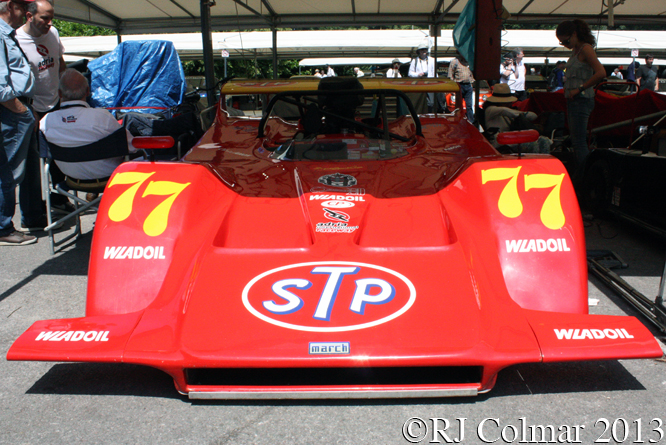
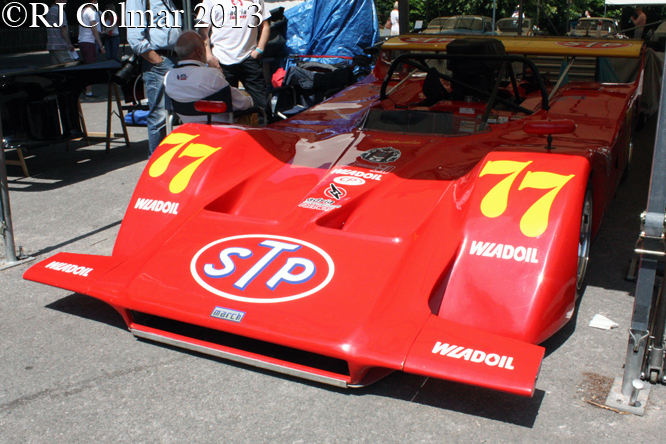
The #77 is so far as I have been able to ascertain Chris Amon’s chassis #707/2 which was being run at the recent Goodwood Festival of Speed for Matteo Maria Tullio.

My thanks to Alan Raine, Simon Lewis and Tim Murray at The Nostalgia Forum for help identifying the #71 chassis number, driver and providing race reports.

Thanks for joining me on this “93” Wide” edition of “Gettin’ a li’l psycho on tyres” I hope you’ll join me again tomorrow when I’ll be looking at a Can Am McLaren. Don’t forget to come back now !

Share

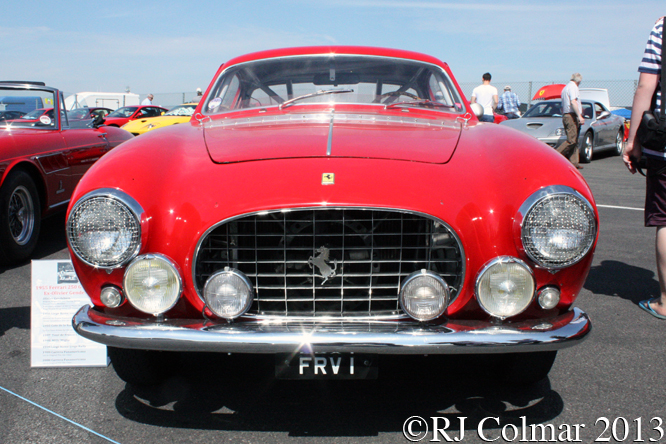
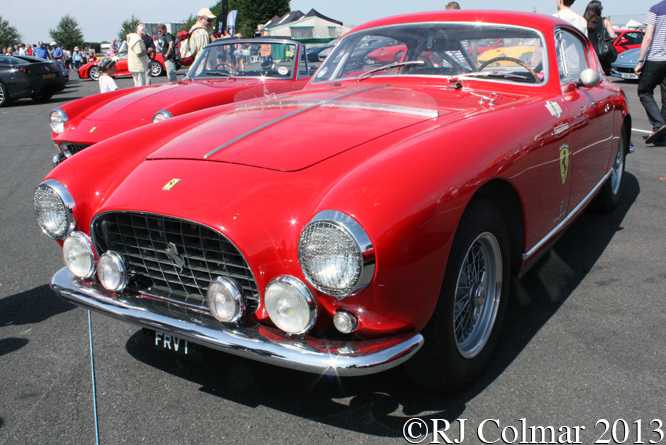
Non Stop Runner – Ferrari 250 Europa GT Pininfarina #0373GT

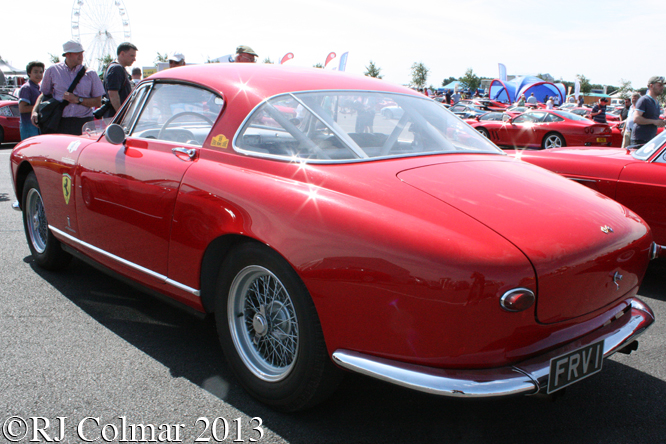
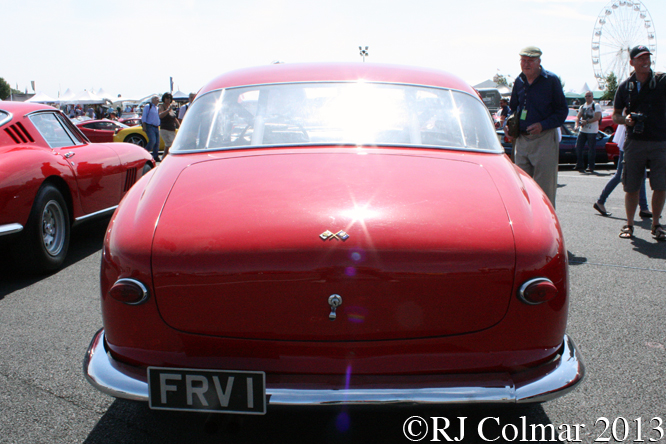
Last week I looked at a 1953 Ferrari 250 Europa Coupé. This week features one of just 28 slightly later Ferrari 250 Europa GT chassis #0373GT built in November 1954.

Ferrari 250GT Europa, Silverstone Classic

#0373GT was delivered to Jacques Swaters dealership Garage Francorchamps and sold to Belgian Jacques Washer in 1955. Washer entered the car in at least two events for his cousin Olivier Gendebien in 1956.

Ferrari 250GT Europa, Silverstone Classic

Oliver finished second in class on the Cote de la Roche Hillclimb in the Ardennes, before taking part in the 1956 Liege Rome Liege rally across Europe. Oliver and his co driver Pierre Stasse finished the non stop 2000 mile event 3rd overall.

Ferrari 250GT Europa, Silverstone Classic

In the 1990’s the car was fitted with a Ferrari 250 GT/E motor and differential, along with a gearbox from a Ferrari 412. The motor was tuned to give 300hp and more recently the car has been fitted with ‘modern’ brakes.

Ferrari 250GT Europa, Silverstone Classic

#0373GT has taken part in numerous classic events including the 1999 re run of the Rome Liege Rome Rally. The same year #0373GT won it’s class on the La Carrera Panamericana repeating the feat in 2000, on the second occasion fitted with period correct Halibrand alloy wheels.

The car is seen in these photo’s at the recent Silverstone Classic.

Thanks for joining me on this “Non Stop Runner” edition of “Gettin’ a li’l psycho on tyres” I hope you will join me when I be looking at a Can Am March. Don’t forget to come back now.

PS Some thoughts on what to watch out for at the Belgian GP at Motorsports Unplugged.
Share

The Sucker Car – Chaparral Chevrolet 2J #2J001

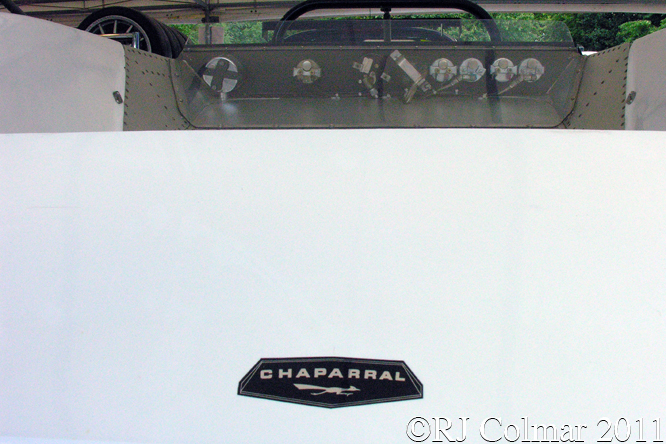
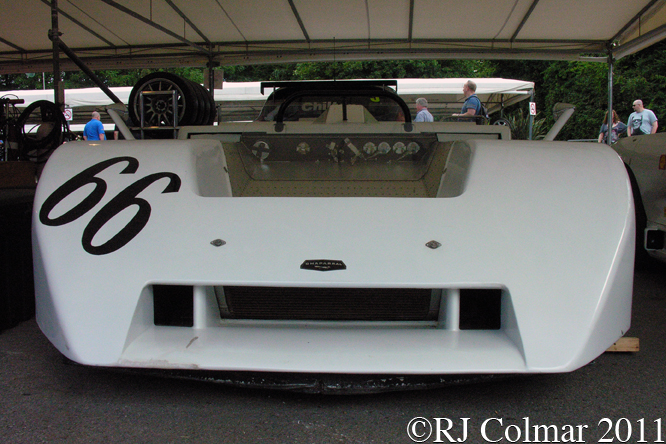
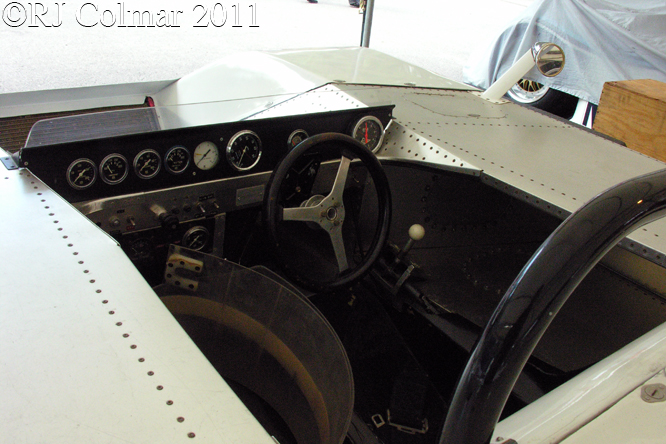
The Chaparral 2J powered by a conventional 680hp aluminium block V8 with an unconventional, but race proven automatic transmission is one of the most fabled in all of motor racing, despite the fact that from just four starts it recorded just one sixth place finish at Road America with Vic Elford at the wheel in September 1970.

Chaparral Chevrolet 2J, Goodwood Festival Of Speed

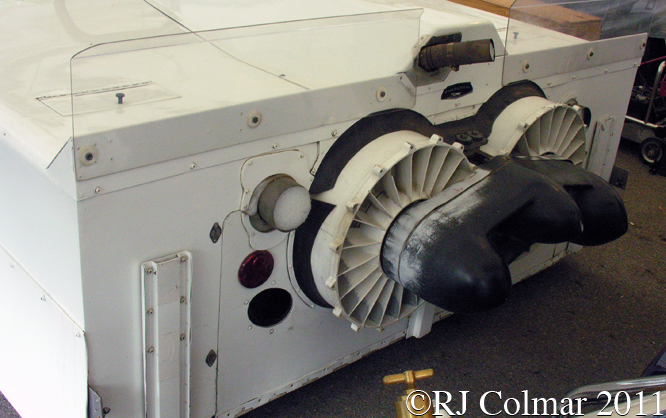
The reason the Chaparral 2J, even today, draws so much attention is that it’s only point of reference is a hover craft, unlike a hover craft, which floats on a cushion of air, the 2J’s aerodynamics are configured to suck it to the ground. All though I do not believe it was ever put to the test, it is said that the 2000lb 2J, when stationary can generate enough down force that it could, in theory, stick it’s self to the ceiling.

Chaparral Chevrolet 2J, Goodwood Festival Of Speed

The first person to race the 2J in 1970 was none other than 1969 World Champion Jackie Stewart who qualified 3rd for the Watkins Glen Can Am race, but retired with brake failure. The team skipped the next couple of races and then turned up at Road America where Vic Elford qualified on pole and scored the cars only finish 6th place.

Chaparral Chevrolet 2J, Goodwood Festival Of Speed

Missing a couple of more races Vic then qualified on pole at Laguna Seca where the engine broke during the warm up causing a non start. Then at Riverside Vic qualified on pole again but the key to the cars aerodynamics the 55hp two cylinder two stroke Rockwell motor broke so that the pair of fans it drove, which sucked the air out from beneath the car to improve the road handling, were no longer operative causing Vic to retire from the race.

Chaparral Chevrolet 2J, Goodwood Festival Of Speed

The Chaparrals clever aerodynamics were a full six to eight years ahead of anything seen in Formula One, often considered the very apex of the engineering envelope. Unfortunately the 2J’s days were numbered thanks to a number of high profile wing failures in Formula One which had led the governing body of the sport, the FIA in Paris, banning all ‘movable aerodynamic’ devices.

It was clear despite Jim Hall’s Chaparral partner Hap Sharp insisting “If I can come up with a better mousetrap that is within the regulations, I ought to be allowed to use it”, that the fans on the back of the car were aerodynamic devices which permanently sucked the car to the ground, so long as the Rockwell motor was working, and so the concept behind the 2J was duly outlawed at the end of 1970 with it’s full potential completely unrealised.

Thanks for joining me on this “The Sucker Car” edition of “Gettin’ a li’l psycho on tyres” I hope you will join me again for Ferrari Friday tomorrow. Don’t forget to come back now !

Share