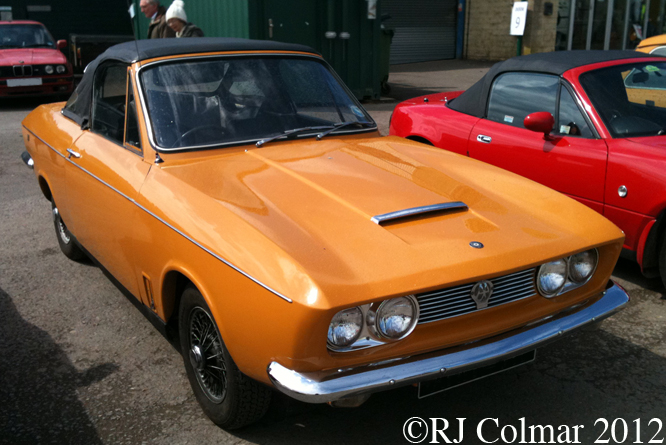
Power & Roadholding – Bond Equipe 2 Litre Convertible

In 1967 Bond expanded it’s range of four wheel vehicles from the hitherto single Triumph Herald based Equipe 4S to include a Triumph Vitesse based Equipe 2 Litre GT.
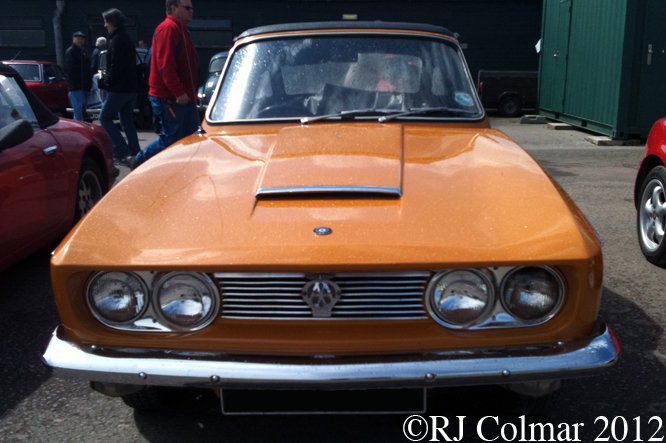
Bond Equipe Convertible, Bristol Classic Car Show

The following year the chassis was upgraded to the new Mk II Vitesse type which featured improved power and rear suspension leading to the marketing strap line “The New Bond is great on power, great on road holding.

Bond Equipe Convertible, Bristol Classic Car Show

1968 also saw the launch of the Convertible version of the six cylinder Equipe 2 litre which was marketed like all Equipe’s through Standard Triumph dealerships.

Bond Equipe Convertible, Bristol Classic Car Show

With an envious eye on Bond’s distribution agreement with Standard Triumph, Reliant, manufacturers of Scimitar cars, purchased Bond in 1969 with a view to expanding the distribution of it’s own vehicles. However these plans came to nought in the wake of Triumphs merger into the British Leyland conglomerate which rationalised that the sales of Bond’s alongside Triumphs own products was superfluous.

Bond Equipe Convertible, Bristol Classic Car Show

The 1969 model seen here is one of just 841 convertibles built between 1968 and 1970 when production of all Bond’s in Preston was wound down and the manufacturing facilities closed by their new owners Reliant.

Thanks for joining me on this “Power & Roadholding” edition of “Gettin’ a li’l psycho on tyres” I hope you will join me again tomorrow. Don’t forget to come back now !

Share

Fourth Season Swan Song – Lotus 49C #R6/2 & #R10

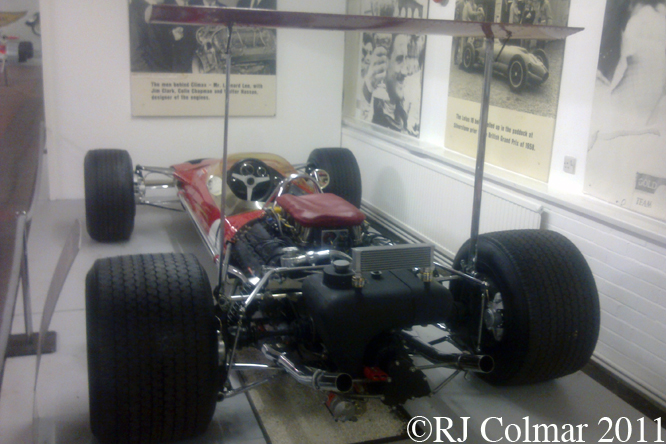
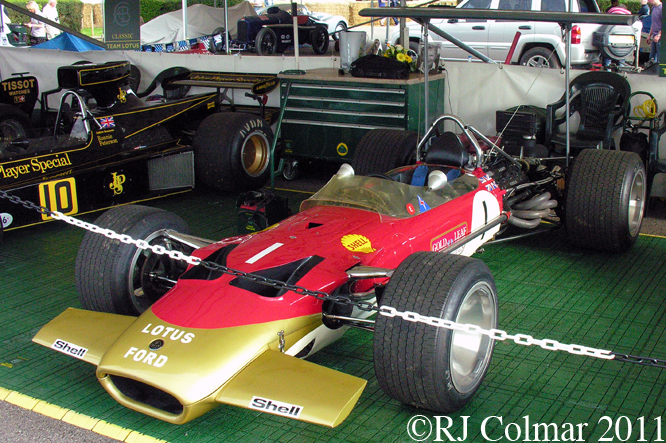
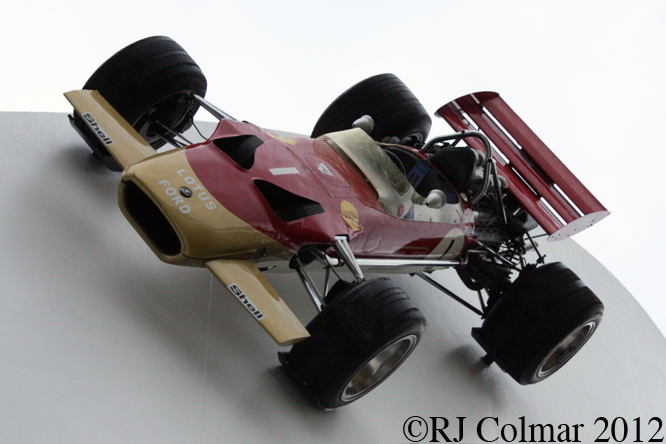
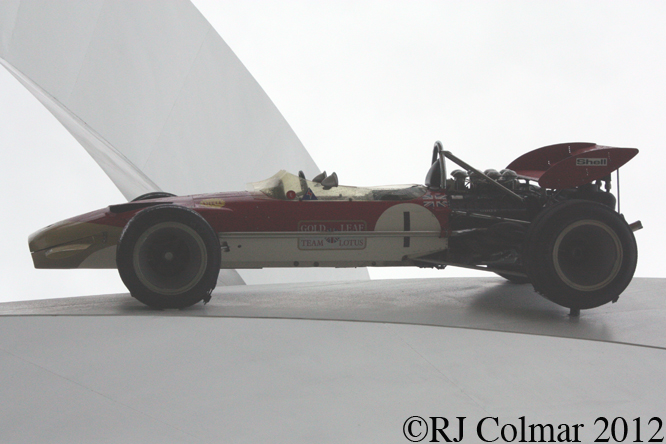
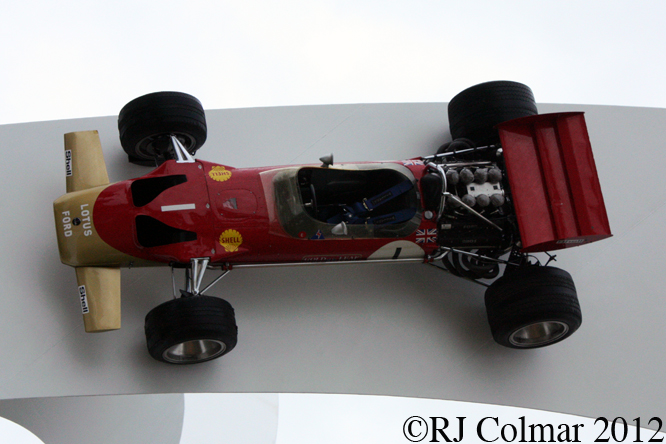
For 1970 Lotus had planned to have the 4 Wheel Drive Lotus 63 ready to challenge for championship honours however even Mario Andretti could not capitalise on any of the cars supposed advantages during 1969 and so the Lotus 49 was updated for a fourth season of competition with 13 inch front wheels to make use of the latest Firestone Tyres as a stop gap while the design and build of the Lotus 72 was finalised.

Lotus 49C, Goodwood Festival Of Speed

The car seen above is Lotus #R6/2 the second car to carry the #R6 chassis plate. The first incarnation of #R6 was the first 49 to be built to ‘B’ spec. Unfortunately it was written off by Jackie Oliver during practice for the 1968 French Grand Prix, and in order to make use of existing travel documents the eighth Lotus 49 to be built was given the #R6 chassis plate and is known as #R6/2. Some parts of #R6/1 damaged beyond repair by Oliver are thought to have been used in the replacement #R6/2 seen here, Rob Walkers privately entered 49 #R7, and the #R12 show car built for Ford which was donated to the Donington Museum.

In it’s second incarnation #R6/2 still in high wing ‘B’ spec was used by Graham Hill to win the 1968 Mexican Grand Prix which clinched the 1968 World Championships for Graham and Team Lotus. Graham continued to use #R6/2 in 1969 before the car was given to Jochen Rindt to drive. Jochen scored his first two Grand Prix victories with R6/2 the 1968 US Grand Prix with the car in ‘B’ spec and the 1970 Monaco Grand Prix with the car ‘C’ spec with the low triple plane rear wing that was designed for the Lotus 72. Jochens win at Monaco would be the third consecutive win in the Principality and also the 12th and final Grand Prix win for the Lotus 49 type.

Lotus 49C, Goodwood Festival Of Speed

The second Lotus 49C featured today appears to be chassis #R10 which has given me a bit of a mental run around. This car appeared at Goodwood last year in high wing ‘B’ spec.

Lotus 49C, Goodwood Festival Of Speed

As you can see from my heavily revised Lotus 49B blog the car started life as Lotus 49 #R5 and for reasons that are not clear the car was renumbered #R10 and sent to the Antipodes for Jochen Rindt to use in the Tasman Series.

Lotus 49C, Goodwood Festival Of Speed

Graham Hill used #R10 to win the 1969 Monaco Grand Prix as he had done in 1968 when the car carried the chassis #R5. In 1970 Graham drove #R10 in the 1970 Monaco Grand Prix to fifth place when it was loaned out to the Rob Walker team for whom he was driving.

Emerson Fittipaldi made his first three Grand Prix starts in #R10 towards the end of 1970 scoring a best 4th place finish second time out in the 1970 German Grand Prix at Hockenheim.

Thanks for joining me on this “Forth Season Swan Song” edition of “Gettin’ a li’l psycho on tyres” I hope you will join me again tomorrow. Don’t forget to come back now !
Share

Le Mans & Targa Class Winner – Ferrari 500 TRC #0682MDTR

The Ferrari 500 TRC was the last of a line of 4 cylinder sports racing cars built by Ferrari between 1953 and 1957.

Ferrari 500TRC, Silverstone Classic

Today’s featured 500 TRC chassis #0682MDTR, seen above at the recent Silverstone Classic where it was driven by David and James Cottingham, was built for Belgian entrant Jaques Swatters in 1957.

The high light of Swatters “Ecurie Francochamps” 1957 season was the class win, 7th overall, recorded at Le Mans with Lucien Bianchi and Georges Harris at the wheel of #0682MDTR.

The following season Gaetano Starraba acquired the car and with Franco Cortese finished 7th overall, 1st in class, in the 1958 Targa Florio.

Starrabba returned to the Targa the following year with Domenico Lo Coco however the car was wrecked in accident which ended it’s ‘in period history’.

Present owner David Cottingham next appeared with the car in Classic and Sportscar in 1991 and he has raced this most famous of TRC’s regularly ever since.

Thanks for joining me on this “Le Mans & Targa Class Winner” edition of “Gettin’ a li’l psycho on tyres” I hope you will join me again tomorrow. Don’t forget to come back now !
Share

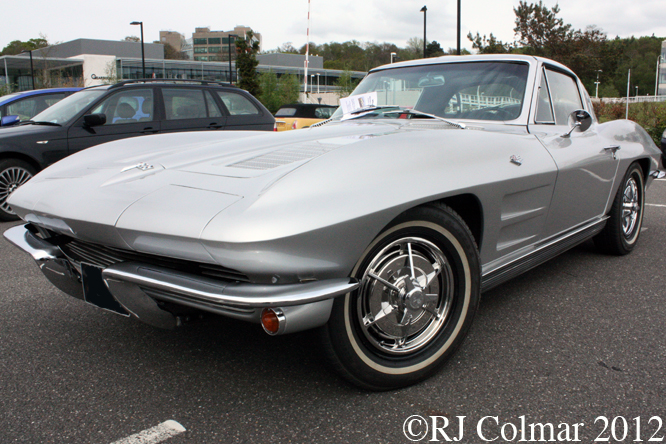
Inspirational Fish – Chevrolet Corvette Sting Ray Coupé

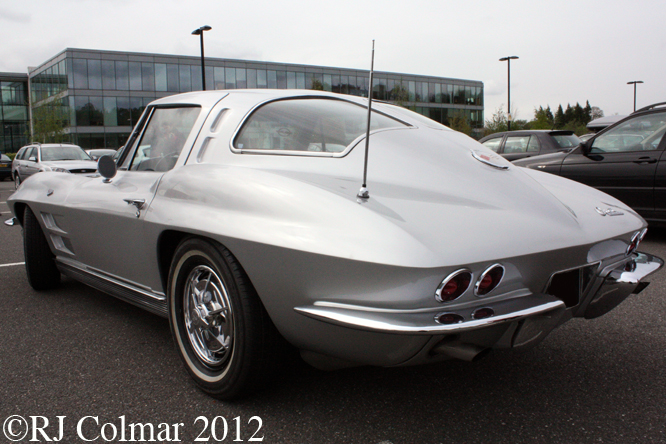
Larry Shinoda was responsible for the design of the second generation (C2) Corvette which took styling cues from the 1959 (Bill Mitchell) Stingray Concept Car.

Chevrolet Corvette Stingray Coupé, Brooklands Auto Italia

Bill Mitchell is also credited with catching a Marko Shark which is said to have provided further inspiration for the C2’s design details.

Chevrolet Corvette Stingray Coupé, Brooklands Auto Italia

Production of the C2 ran from 1963 to 1967 with numerous detail changes introduced during the run. This one is powered by a 360 hp 5.3 litre / 327 cui V8.

Chevrolet Corvette Stingray Coupé, Brooklands Auto Italia

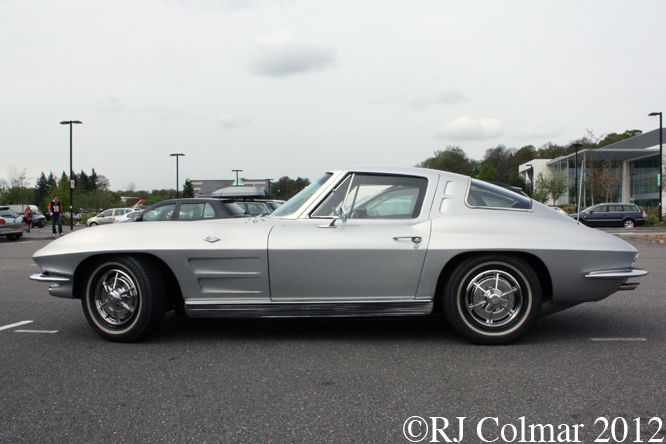
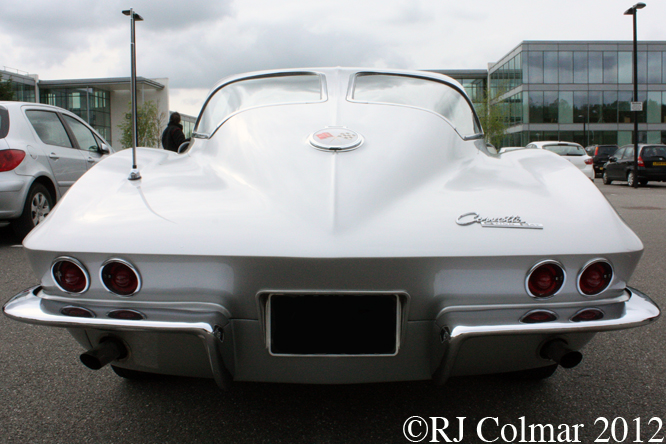
Featured here is a 1963 model distinguished by the twin horizontal air vents behind the front wheel.

Chevrolet Corvette Stingray Coupé, Brooklands Auto Italia

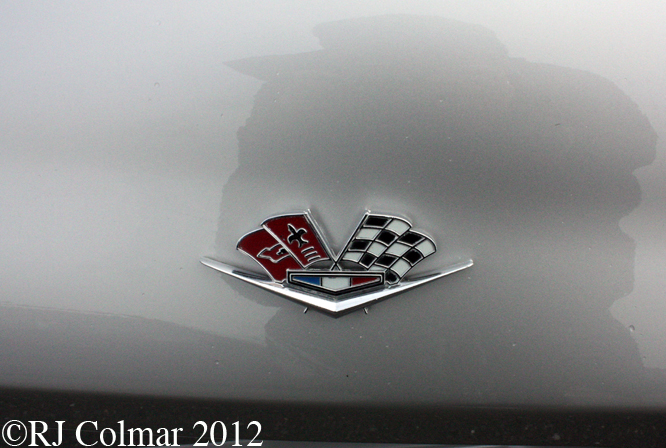
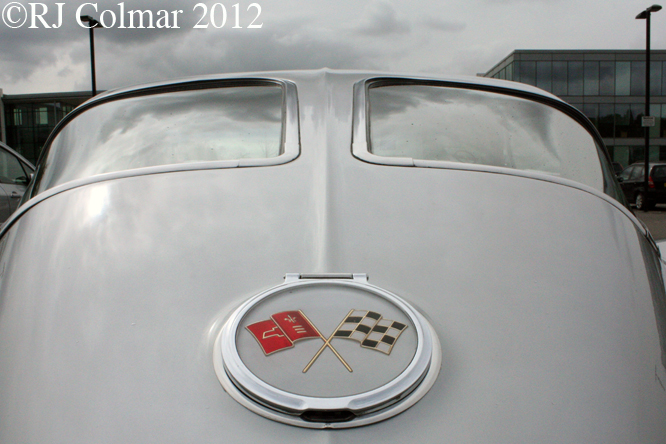
The very first 1953 Corvette Logo was going to include the US flag on the left, however this plan was deemed an illegal use of the flag on a commercial product so the flag was replaced by one bearing the GM bow tie and Frances fleur-de-lyes which symbolizes peace and purity.

Chevrolet Corvette Stingray Coupé, Brooklands Auto Italia

The bobtail on the 1963 Coupé would be reprised on the back of the 1971 Buick Riviera.

Chevrolet Corvette Stingray Coupé, Brooklands Auto Italia

Independent rear suspension replaced the solid axles used in the original (C1) Corvettes.

Chevrolet Corvette Stingray Coupé, Brooklands Auto Italia

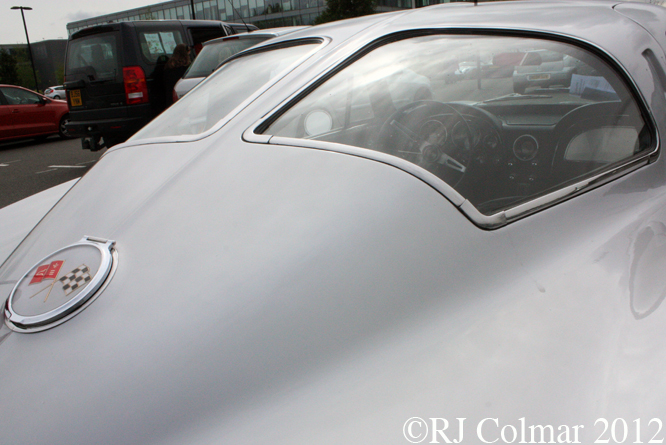
The split rear screen was replaced in 1964 for a single screen.

Chevrolet Corvette Stingray Coupé, Brooklands Auto Italia

Farther of the Corvette, program, Zora Arkus Duntov is said not to have been impressed by the split screen while his boss Bill Mitchell overruled him.

Chevrolet Corvette Stingray Coupé, Brooklands Auto Italia

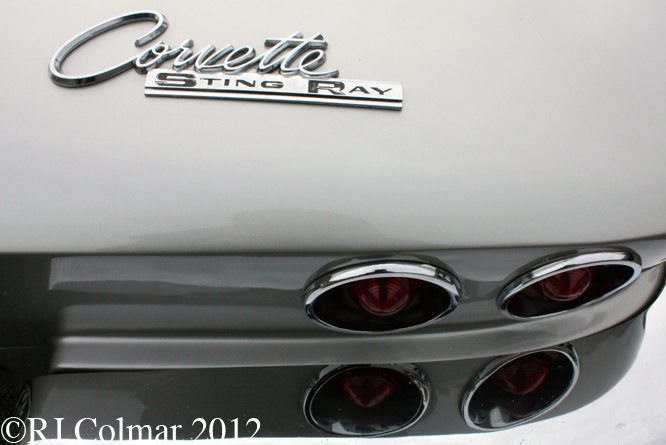
“Sting Ray” and “Stingray” logo’s were only applied to the C2 and C3 Corvettes from 1963 – 1982 except in 1968.

Chevrolet Corvette Stingray Coupé, Brooklands Auto Italia

The most valuable Sting Ray’s are five light weight examples built in response to the Shelby Cobra project, all five are in private hands.

Thanks for joining me on this “Inspirational Fish” edition of “Gettin’ a li’l psycho on tyres” I hope you will join me again tomorrow. Don’t forget to come back now !
Share

Metricated Austin 7 – BMW “Dixi” DA2 3/15 #14187

Fahrzeugfabrik Eisenach was founded in in 1896 to manufacture motorcycles and motorcars under the Wartburg brand. The Wartburg brand was discontinued in 1904 and replaced with the Dixi brand.

BMW Dixi DA2 3/15, Silverstone Classic

In 1927 Fabrik Eisenach bought a license to manufacture a Left Hand Drive version of the Austin 7.

The following year BMW wishing to enter the motor manufacture bought Fahrzeugfabrik Eisenach which was experiencing financial difficulties.

Over the ensuing years the car was metricated and the engine was updated and upgraded by BMW, the Austin 7 motor’s ancestry can be traced through a range of BMW and later still Bristol six cylinder motor’s.

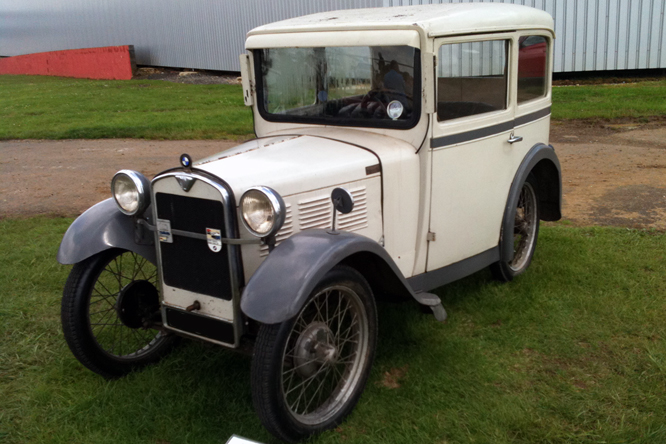
The 1929 model, seen here at Silverstone Classic, has an all steel body built by Ambi-Budd of Berlin.

This car spent most of it’s life in East Germany near the Polish border and had been off the road for 15 years before a restoration was started with the replacement of the kingpins, starter ring gear, wiring, fan pulleys, belt and blades, brake shoes, propshaft coupling, battery, windscreen and tyres.

Thanks for joining me on this “Metricated Austin 7” edition of “Gettin’ a li’l psycho on tyres”, I hope you will join me again tomorrow. Don’t forget to come back now !
Share

Aim Sure – MG PA Supercharged Sports #P 0522

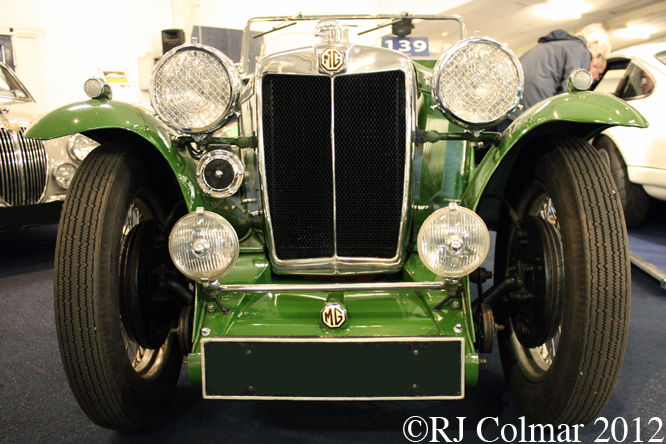
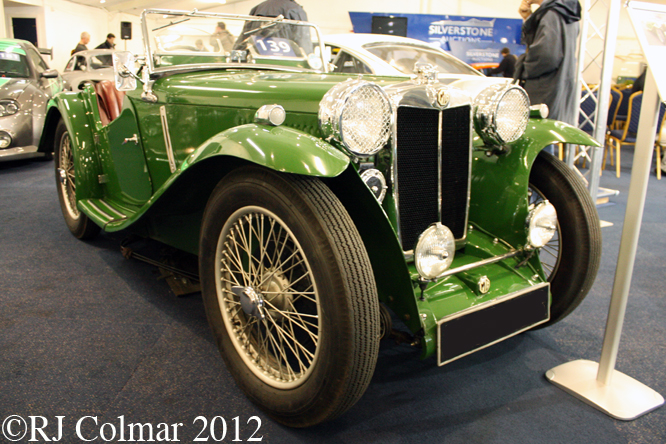
Len Miller an aviator who lied his way into the RAF in 1942 by telling them he was a plumber, rather than reserved occupation marine engineer, purchased today’s featured MG PA, after meeting Guy Gibson, leader of the ‘dam busters’, in 1943 who drove an MG J2.

MG PA, Race Retro

Len used to ferry his six crew mates, one on each corner one on the bonnet and one in the passenger seat across the airfield out to his 15 Squadron, motto “Aim Sure”, Lancaster Bomber during the 1939 – ’45 war.

MG PA, Race Retro

In 1944 Len had to eject from his Lancaster at 20,000 ft, he lost and regained consciousness in time to open his parachute and landed well behind enemy lines in Germany.

MG PA, Race Retro

His one man escape through Germany, occupied France into neural Switzerland is documented in the book “Bomber Squadron, the men who flew with 15 Squadron”.

MG PA, Race Retro

Many years later this car was damaged after a roof collapsed across the radiator and bonnet during the Great Storm of 1987 on the night of the 15th/16th October 1987.

MG PA, Race Retro

Repairs started a restoration which included replacing the cracked engine block, and the original seats with the Collingburn seats.

MG PA, Race Retro

Soon after the restoration was completed the motor was fitted with a side mounted Arnott supercharger.

MG PA, Race Retro

Len kept today’s featured car, which still bears 15 Squadron decals on the rear mudguards / fenders, for 59 years until his death in 2002. It fetched £36,500 at the Race Retro Silverstone Auction soon after it was photographed for this blog.

Thanks for joining me on the “Aim Sure” edition of “Gettin’ a li’l psycho on tyres”. I hope you will join me again tomorrow. Don’t forget to come back now !
Share

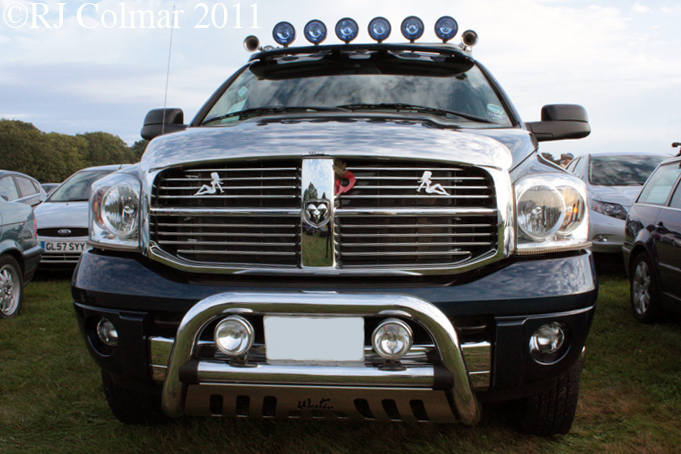
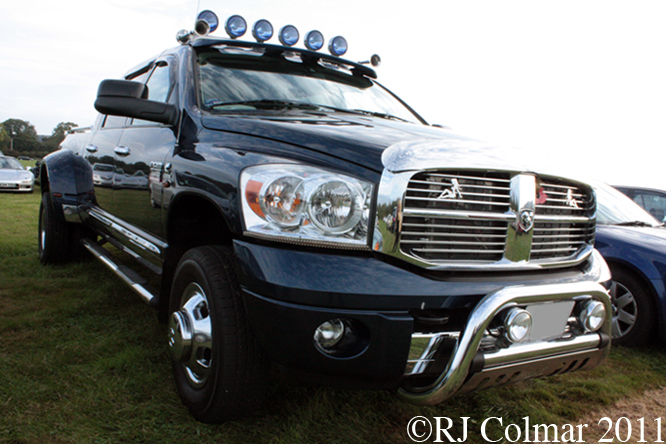
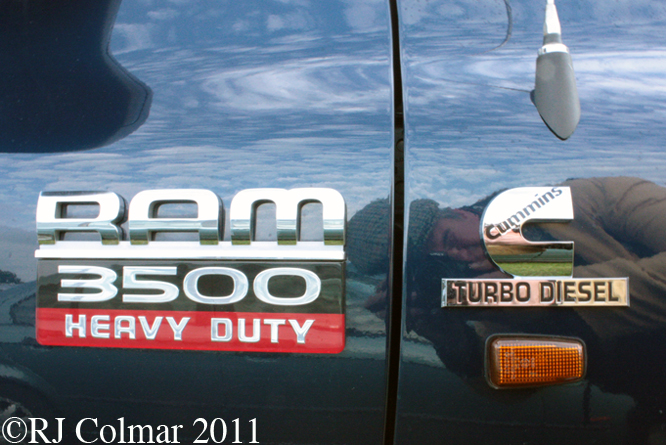
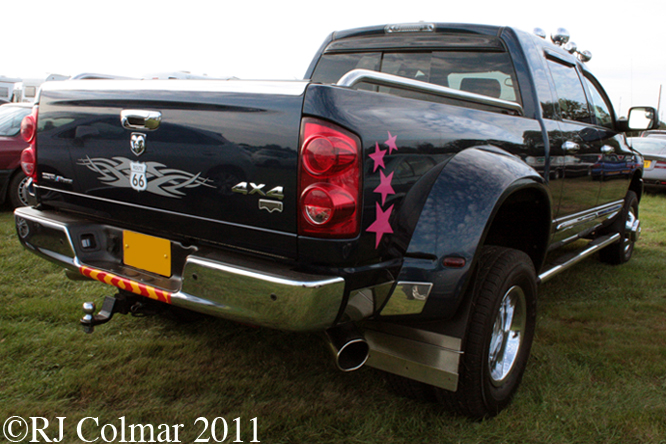
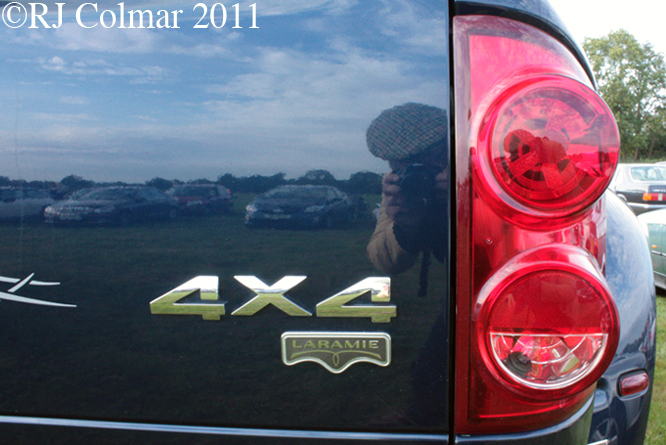
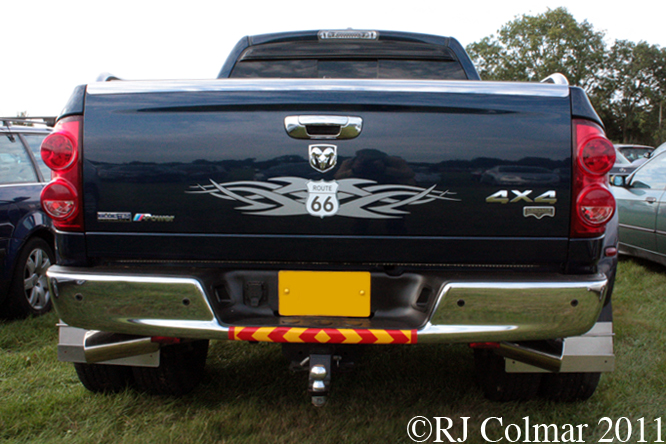
More, More, More – Dodge Ram Mega Cab 3500 4X4 Larimie

When the Dodge Ram Mega Cab hit the market in late 2007 it was all about more, isn’t it always when anything new hits the market ?

Dodge Mega Cab 3500 4X4 Larimie, Goodwood Revival

The 2008 Mega Cab offered more space, more comfort and more practicality setting new standards in the ‘room with a view’ pick up market.

Dodge Mega Cab 3500 4X4 Larimie, Goodwood Revival

Mega Cab featured the largest ever cab with 143 cubic feet of interior space, room for six which included reclining seats for passengers in the back.

Dodge Mega Cab 3500 4X4 Larimie, Goodwood Revival

This particular model is powered by a 350 hp 6.7 litre / 408 cui straight six Cummins turbo diesel motor which can deliver class leading 650lb/ft torque.

Dodge Mega Cab 3500 4X4 Larimie, Goodwood Revival

Payload capacity for the Mega Cab was given as 3,150 lbs, that’s a little more than what a first generation generation Ford Thunderbird would weigh.

Dodge Mega Cab 3500 4X4 Larimie, Goodwood Revival

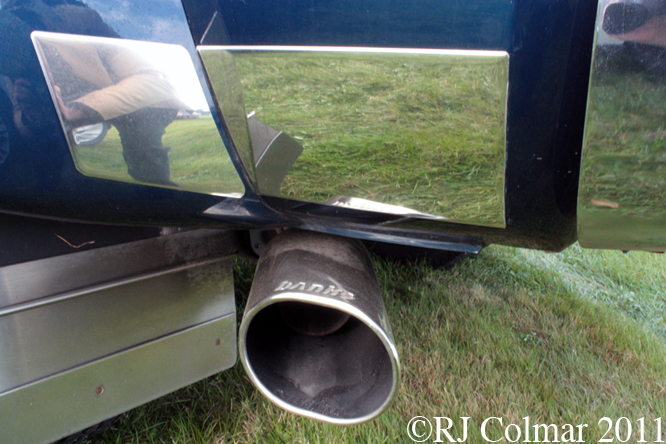
The emissions system of the Cummins diesel is Government certified 120,000 miles, that’s about 10 years for the average British motorist.

Dodge Mega Cab 3500 4X4 Larimie, Goodwood Revival

Unique features to the 2008 Larimie Spec Mega Cab include Dual Zone Climate Control, steering wheel mounted audio controls security alarm and Sentry Key® engine immobiliser.

Dodge Mega Cab 3500 4X4 Larimie, Goodwood Revival

Towing capacity for the 2008 3500 version of the Mega Cab is 16,000 lbs to give a gross combined weight rating of 24,000 lbs which was up 1000lbs from the 2007 model.

Thanks for joining me on this ‘More, More, More’ edition of “Gettin a li’l psycho on tyres’, I hope you will join me again tomorrow. Don’t forget to come back now !
Share