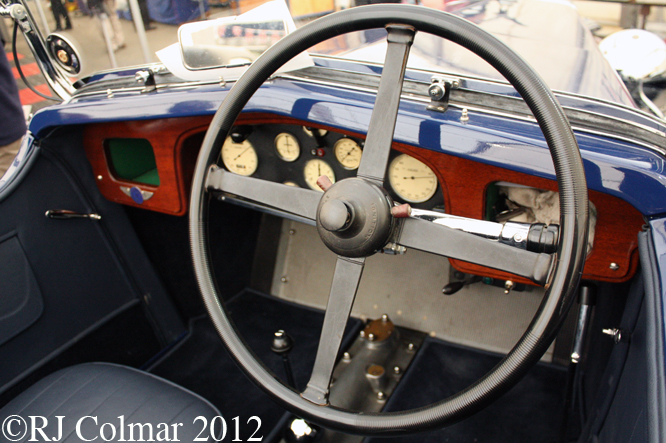
Family Affair – GSM Delta

In 1957 John Scott met South African Bob Van-Niekerk who had plans to build a sports car in South Africa. John told Bob that if he one of his cars won a race in Britain he would arrange to manufacture them in the UK.

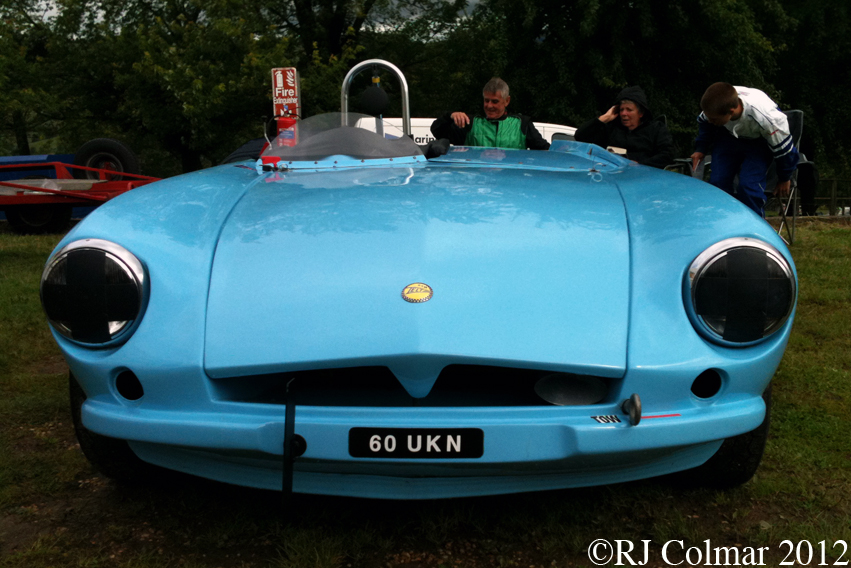
GSM Delta, Prescott

Bob with fellow South African’s Willie Meissner and Verster de Wit who was responsible for the body styling produced a mould in the UK and sold the first body built in the UK in order to pay the cost of shipping the moulds to South Africa.

GSM Delta, Prescott

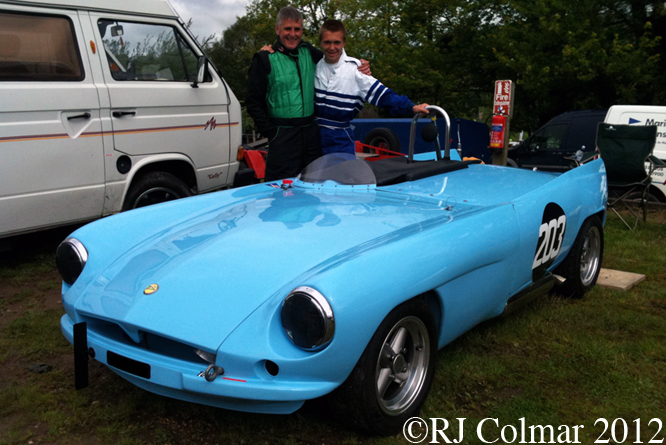
Above John Scott’s son Clive is seen standing next to his grand son, John’s great grandson, Ben behind the 1962 GSM Delta Clive purchased in 2009.

Bob went back to South Africa and set up GSM (Glass Sport Motors) with Willie Meissner and started production of their first vehicle which carried the Dart name.

GSM Delta, Prescott

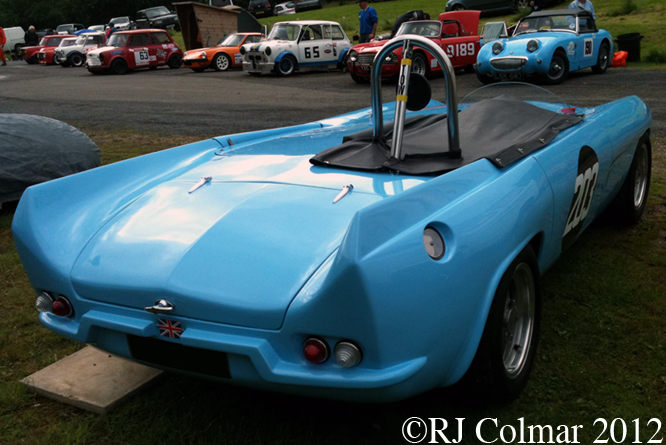
Immediately competitive in South Africa, scoring 1-2 victory on it’s debut in a 4 hour race in Cape Town in 1958, by 1960 one of the GSM Dart’s found it’s way to the UK in 1960 and won first time out at Brands Hatch. True to his word John started a second production shop for the GSM in West Malling, Kent renaming the car Delta, as Daimler had already found out the Dart name was the property of Chrysler in the USA.

GSM Delta, Prescott

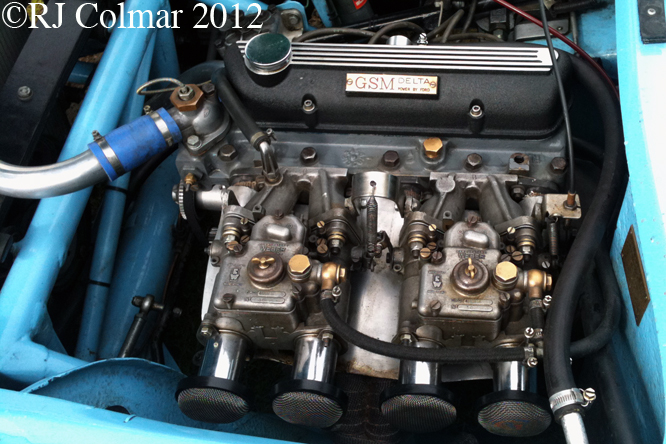
Power for the GSM Delta came from off the shelf Ford’s from 1 litre / 61 cui to 1.5 litres / 92 cui in size, the motor seen here is one of the larger pre crossflow Ford unit’s. Ford components were also used for the steering, brakes, gearbox and rear axle.

GSM Delta, Prescott

When Clive bought this car in 2009 he was surprised to find that he recognised his mothers handwriting in the log book.

GSM Delta, Prescott

Among the winners in the British built GSM Delta’s between 1960 and 1965 was Dutchman Jan van Niekerk, Jeff Uren, 1959 British Saloon Car Champion who is also known as the man behind the “Savage Cartina’s“, John Glyde Walker, Joe Krupwicz Americans Bob Clift, Bill Osband, Dave Johnson and Don Grohs.

GSM Delta, Prescott

Figures vary as to how many GSM Delta’s were built between 1960 and 1961, Clive puts the number at “approximately 40” of which he believes fewer than 10 remain. The car that Clive owns won the 2001 Paul Matty Challenge in 2001 and the 2006 Aldon / HSA Championship.

My thanks to Clive for his help with today’s blog.

Thanks for joining me on this “Family Affair” edition of “Gettin’ a li’l psycho on tyres”, I hope you will join me again tomorrow. Don’t forget to come back now !

Share

What’s In A Tooth ? – Lotus Ford 49 #R2 & #R3

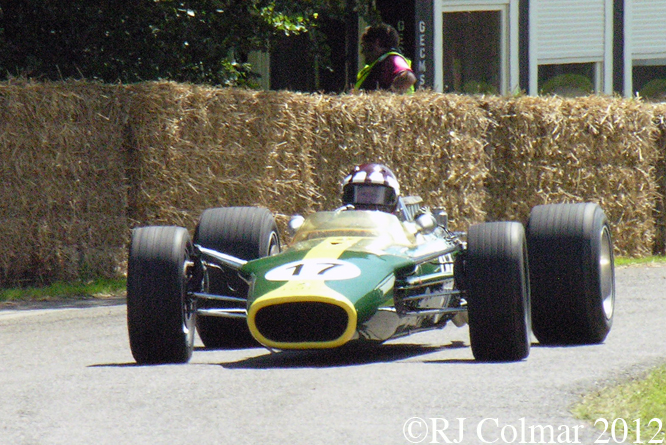
The Lotus 49 consolidated the principle of using the motor that as an integral structural component of the design that was first seen on the BRM P83 and Lotus 43 which were both powered by the novel BRM H16 motor in 1966. The 49, designed by Maurice Phillipe however was powered by the then brand new, and much simpler Ford sponsored 3 litre / 183 cui 8 cylinder Cosworth DFV that was the brainchild of Keith Duckworth and Mike Costin.

Lotus 49, Goodwood Festival of Speed

Despite many faults that would surface and be ironed out over the ensuing seasons the Lotus 49’s made a dream debut at Zandvoort for the 1967 Dutch Grand Prix with Graham Hill qualifying on pole and Jim Clark who had never so much as sat in the car before the first practice qualifying 8th. During the race Clark driving chassis #R2, seen above with Jackie Oliver at the wheel at Goodwood, used his legendary speed and mechanical sympathy to well judged victory while Hill experienced timing gear failure with two teeth next to each other on the timing gear breaking. After the race it was discovered Clark’s car had experienced a similar failure however a single tooth remained between the two broken teeth on Clarks timing gear ensuring just enough drive to make it to the finish.

Clark used Chassis #R2 to win both the 1967 British and US Grand Prix before being converted to 49T spec for the Tasman Series of races in Australasia which required an engine capacity of 2.5 litres / 152.5 cui which was achieved by fitting a different crankshaft with a shorter stroke to the DFV motors making them DFW spec. Jim won 4 races in the 8 race Series with the 49T spec chassis #R2 which combined with a couple of points paying places was enough to win the Championship from Chris Amon in his Ferrari 246 Dino.

Chassis #R2 was then loaned to Rob Walker racing during 1968 to replace chassis #R4 which driver Jo Siffert had crashed on his debut in a non championship race at Brands Hatch. Although #R4 was not damaged beyond repair by that accident it was subsequently destroyed in a workshop fire at Rob Walkers premises necessitating the loan of #R2. Once Walkers team had built up a new car, chassis #R7 now in B spec with the tall rear wing, which Siffert used to win the 1968 British GP.

Once chassis #R2 was returned by Rob Walker to Lotus it was immediately pressed into service again after Jackie Oliver had a comprehensive accident in #R6 at the 1968 French GP. For the British Grand Prix #R2 was repainted in Gold Leaf Team Lotus colours and fitted with the winged 49B spec nose cone and high rear wing. The car received further B spec upgrades for the German Grand Prix. Oliver would use chassis #R2 for the remainder of the 1968 season scoring a best 3rd place finish at the season finale in Mexico.

Lotus 49, National Motor Museum Beaulieu

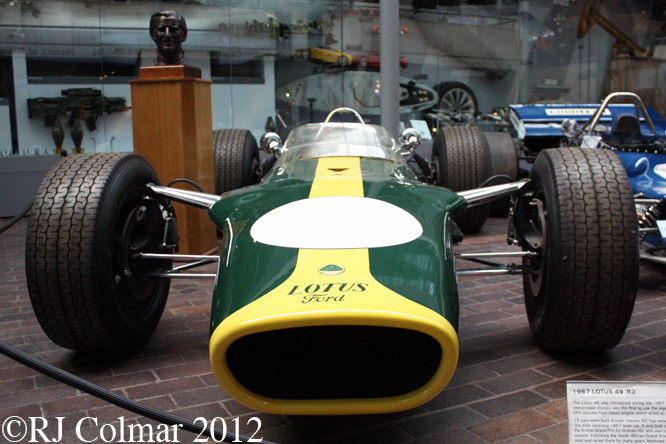
The car seen above at Beaulieu National Motor Museum is chassis #R3 which featured subtle differences to chassis #R1 and #R2 to aid the distribution of loads under braking at the front and to aid access to the brake balance adjuster which had previously only been possible by two mechanics picking up a third smaller mechanic and lowering him into the cockpit upside down ! Note the sculpture of Graham Hill on the plinth to the left of the car in this photo.

Lotus 49, National Motor Museum Beaulieu

Chassis #R3 first appeared at the 1967 British Grand Prix with Graham Hill at the wheel, he qualified 2nd behind Clark but while leading the race first an allen screw dropped off the rear suspension and after it was replaced the engine failed while he was making up good time. Chassis #R3 has the second longest track record of the 12 Lotus 49’s built.

After Hill scored a season best 2nd place in the 1967 US Grand Prix, behind Clark, and opened his championship winning 1968 season with another second place, again behind Clark at Kyalami chassis #R3 was sold to Rhodesian John Love who used the car to win the last two of six consecutive South African Formula One titles in 1968 and 1969, his successor Dave Carlton won the 1970 South African Championship driving the Lotus 49 chassis #R8 which was built to the final C spec.

Lotus 49, National Motor Museum Beaulieu

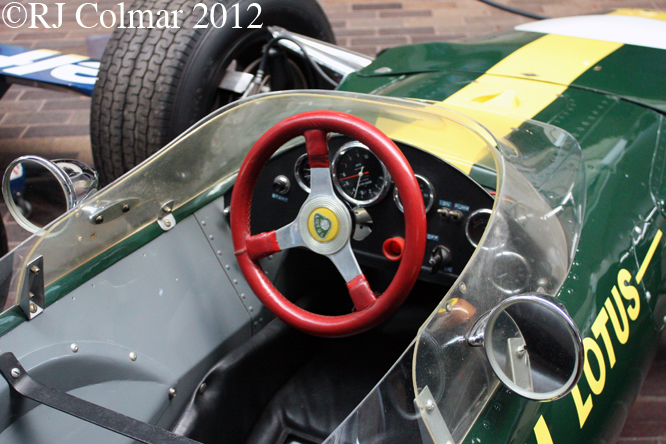
The 400 hp Ford Cosworth DFV was to become the mainstay of Formula One right through the 1970’s, it was far in advance of the Lotus 49 chassis and would only be toppled by the hugely more expensive turbocharged motors in the early 1980’s after 155 Grand Prix Victories. One of the triangular aluminium top engine mountings can be seen bolted with three bolts on the leading edge of the cam cover tapering into the back of the monocoque to which it was attached by a single bolt. Three further such mountings were all that were required to integrate the motor into the structure of the car.

Lotus 49, National Motor Museum Beaulieu

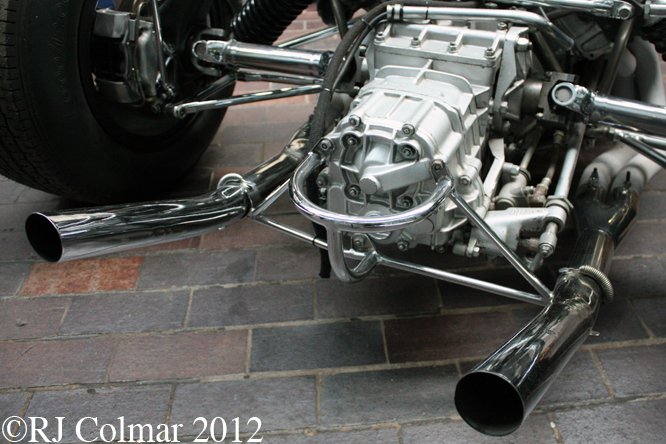
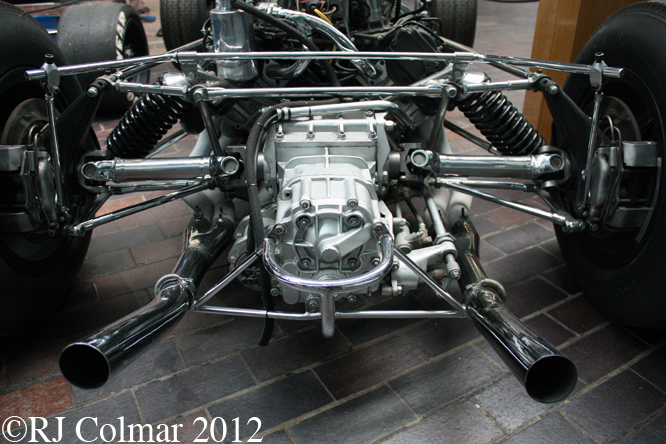
The rear suspension and drive shafts and gearbox would repeatedly prove trouble some for team Lotus as they got to grips with having such a powerful motor. The ZF gearbox in it’s original form was not strong enough and required additional strengthening which can be seen in the form of the thick vertical plate into which the drive shaft disappears. The ZF gearboxes were replaced on the 1968 B spec cars with Hewland units which were much easier to maintain trackside.

Lotus 49, National Motor Museum Beaulieu

The vestigal nudge bar was added to the back of the ZF gearboxes after the 1967 Dutch Grand Prix win in order to comply with a regulation about the dimensions between the end of the exhaust pipe and the back of the car. In other words when Jim Clark won the 1967 Dutch Grand Prix his Lotus 49 did not comply fully to the letter of the existing regulations.

Chassis #R3 is the only one of the Lotus 49’s never to run in B or C spec. Since it has been in the care of the National Motor Museum it has been involved in two serious accidents. The first, on a demonstration run, involved a tree in the Beaulieu grounds where it is kept in 1999 further details of the accident damage can be seen on this link. The second accident with the same driver occurred at a Silverstone Press Day in 2009 fortunately the damage was restricted ‘only’ to the left side suspension as can be seen in these linked photo’s.

Thanks for joining me on this “What Is In A Tooth ?” edition of “Gettin’ a li’l psycho on tyres”, I hope you will join me again tomorrow when I will be looking at a GSM Delta. Don’t forget to come back now !

Share

Enzo’s Big Banger – Ferrari 712 #1010

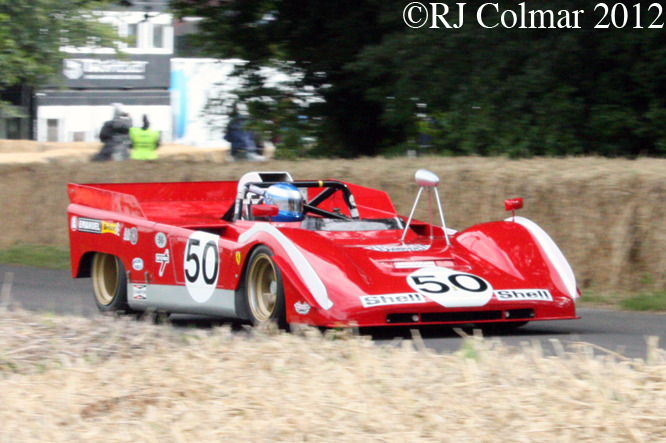
Today’s featured Ferrari began life as a Ferrari 512S chassis #1010 which was qualified on pole for it’s first race by Mario Andretti at the 1970 Sebring 12 hours. Andretti and co driver Art Mezario retired from the race leaving Andretti free to jump into the sister car, chassis #1026, which up to that point had been driven by Ignazio Giunti / Nino Vaccarella, from seventh on the grid. Andretti famously chased down the Solar Productions Porsche 908 which was driven primarily by Peter Revson and shared with Steve McQueen to win the race.

During the remainder of the 1970 season #1010 was driven by the likes of Jackie Oliver, Peter Schetty and Jackie Ickx who teamed up with Giunti won the season finale 1970 Kayalami 9 Hours.

Ferrari 712, Goodwood Festival of Speed

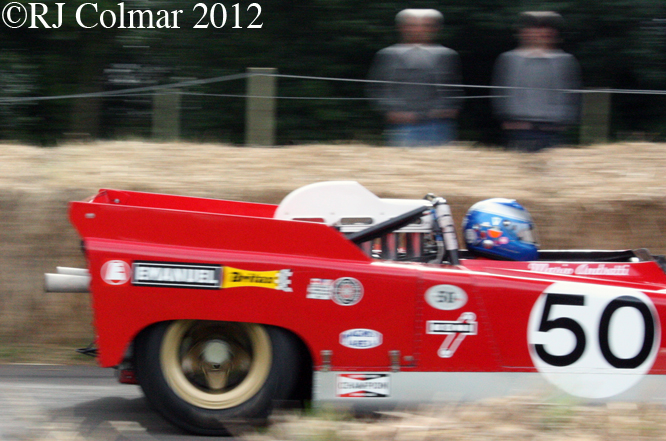
For 1971 a larger 6.3 litre / 384 cui V12 replaced the original 5 litre / 305 cui motor and Art Mezario used it to win the Interserie (Unlimitied Can Am style) race at Imola under the watchful of eye of Enzo Ferrari himself. Later in 1971 #1010 appeared at Watkins Glen with new open body work and now with a 6.86 litre / 418 cui V12 for Mario Andretti to drive in the Can Am Series. Despite a lack of development Andretti managed to qualify 5th and finish 4th only for the car to disappear for the remainder of the season.

Ferrari 712, Goodwood Festival of Speed

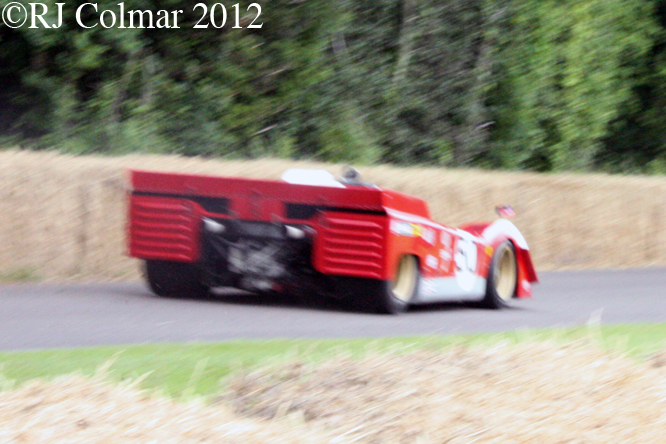
For 1972 Luigi Chinetti acquired the largest Ferrari V12 engine ever built along with chassis #1010 in which to run it and entered Jean-Pierre Jarier in for two more Can Am races, he finished 4th from 10th on the grid at Road America where it had become obvious the by now turbo charged Porsche 917’s were in a completely different class from the Ferrari 712 and indeed the rest of the field.

Ferrari 712, Goodwood Festival of Speed

Brian Redman had the honour of driving the car for the last time in the 1974 in the Watkins Glen Can Am round, which almost eliminated all non turbocharged vehicles with a maximum permitted fuel limit, he qualified 19th and retired with broken rear suspension. Today Enzo’s Big Banger chassis #1010 is run by Paul Knapfield and is seen here at the recent Goodwood Festival of Speed.

Thanks for joining me on this “Enzo’s Big Banger” edition of “Gettin’ a li’l psycho on tyres”. I hope you will join me again tomorrow when I shall be looking at the original version of the Lotus 49 that revolutionised Grand Prix Racing in 1967. Don’t forget to come back now !

Share

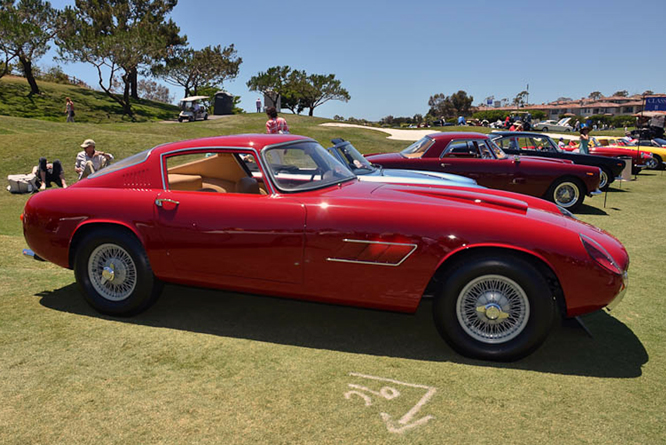
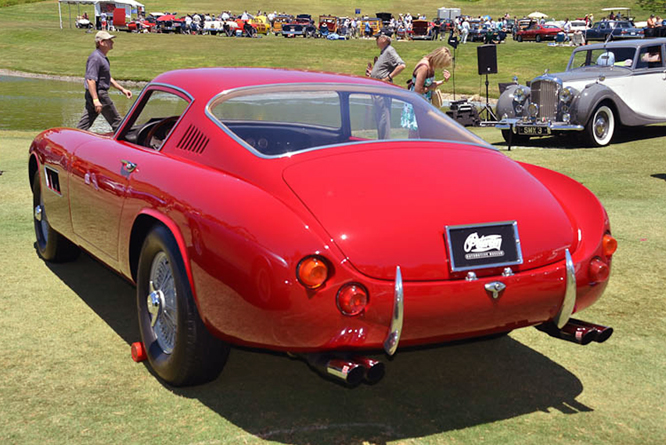
Don’t Tell Enzo – Chevrolet Corvette Italia by Scaglietti

The idea for having an Italian coach builder make a stylish body for a reliable American Corvette germinated in the mind of Chevrolet Dealer Gary Laughlin when he was horrified by the repair bills accruing to his Ferrari Monza in particular the crankshaft.

Chevrolette Corvette Italia, Dana Point Concours d’Elegance

Teaming up with racers Jim Hall and Carroll Shelby, Gary approached Chevrolet’s General Manager Ed Cole and secured three complete Corvette rolling chassis and shipped them to Scaglietti who at the time was responsible for building the 250 “Tour de France” Berlinetta’s for Ferrari. Wanting to keep his American connection away from the prying eyes of Enzo Ferrari it was 18 months before Gary received today’s featured car back with a continental look.

Chevrolette Corvette Italia, Dana Point Concours d’Elegance

Laughlin is said to have been unimpressed with the fit and finish of the car he received and the two remaining cars were sent back with aluminium bodies and unfinished interiors. Chevrolet also pulled the plug on the project by declining the ad hoc supply of rolling chassis in the long term.

Chevrolette Corvette Italia, Dana Point Concours d’Elegance

The car seen here, courtesy of Geoffrey Horton at the recent Dana Point Concours d’Elegance, now belongs to the Peterson Museum and is the only one of the three with a manual transmission. The other two cars all have further detail differences, the one in this linked photo has no bumperette / overiders front or rear, while the third has no intake on the bonnet / hood no vents in the front wings / fenders but it does have quarter bumpers on the front, full rear bumper and a Chevrolet like grill decoration in the nose as can be seen in this linked photograph.

My thanks to Geoffrey Horton for sharing today’s images from Dana Point Concours d’Elegance.

Thanks for joining me on this “Don’t Tell Enzo” edition of “Gettin’ a li’l psycho on tyres” I hope you will join me again for Ferrari Friday tomorrow when I’ll be looking at the Ferrari with the largest V12 ever built at Maranello. Don’t forget to come back now !

Share

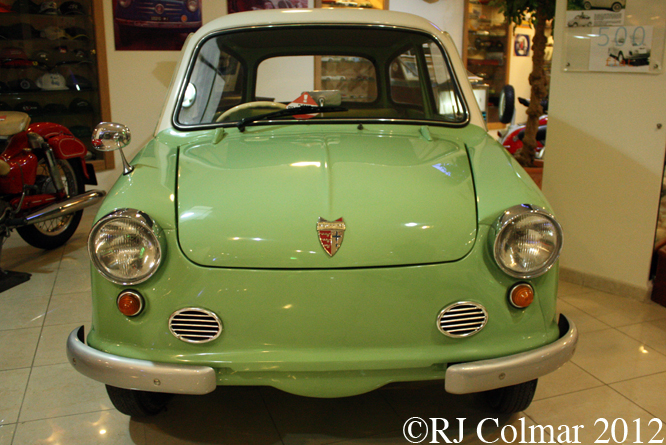
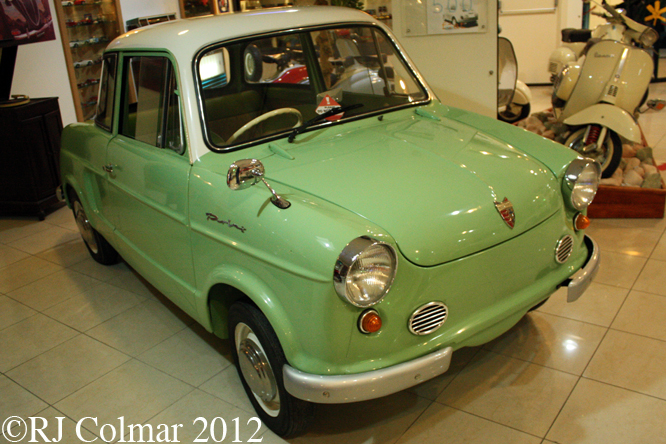
On Prince’s And Pharoh’s – NSU Prinz 30

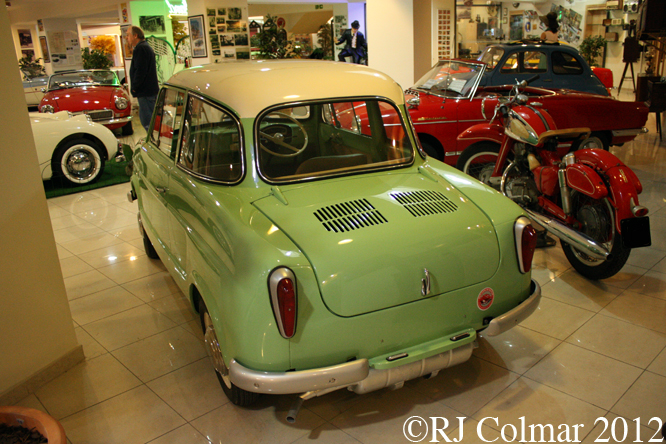
NSU was founded as a knitting machine manufacturer in 1873, moving into bicycle manufacture in 1886 and motorcycle manufacture in 1901 by which time it had ceased making knitting machines. In 1905 NSU began manufacturing motor cars of their own design before production was given over to the manufacture of FIAT cars under license in 1929. The production of FIAT’s under the NSU-FIAT brand continued until 1967. Thereafter FIAT cars were manufactured at the same factory under license but marketed under the FIAT brand until 1973.

NSU Prinz, Malta Classic Car Collection

Capitalising on the goodwill and reputation of it’s motorcycle business, the first motorcycle to reach 200 mph was an NSU in 1955, the company moved back into manufacture of a car of it’s own design in 1957 with the NSU Prinz 30.

NSU Prinz, Malta Classic Car Collection

Although billed as a Wunder Buy! full four seater in reality the rear seats were only suitable for small children.

NSU Prinz, Malta Classic Car Collection

In order to keep the maintenance to a minimum the rear mounted 20 hp 583 cc / 35.6 cui air cooled two cylinder, motor cycle derived, engine, gearbox and transaxle were contained in a single casting meaning that the lubricating oil level could be maintained from a single filler, the only other lubrication required was for the king pins on either side of the front suspension.

Production of the Prinz 30 lasted until 1962 by which time models were also being built in Australia, the Prinz 30 floor pan and drive was also used to launch Egypt’s entry into motor vehicle manufacture for various NSU Ramses vehicles including the Utilica and Gamila the latter featuring a Vignale styled cabriolet body.

Thanks for joining me on this “On Prince’s And Pharoh’s” edition of “Gettin’ a li’l psycho on tyres” I hope you will join me again tomorrow for Americana Thursday when I’ll be looking at an Italian Styled Chevrolet. Don’t forget to come back now !

Share

Four Wheel Handbrake – MG 18/80 Sports Six Mk II Tourer

Built in August 1930 with a fixed head coupé (FHC) body today’s featured 18/80 Sports Six sat around for three whole before it was first registered in October 1933.

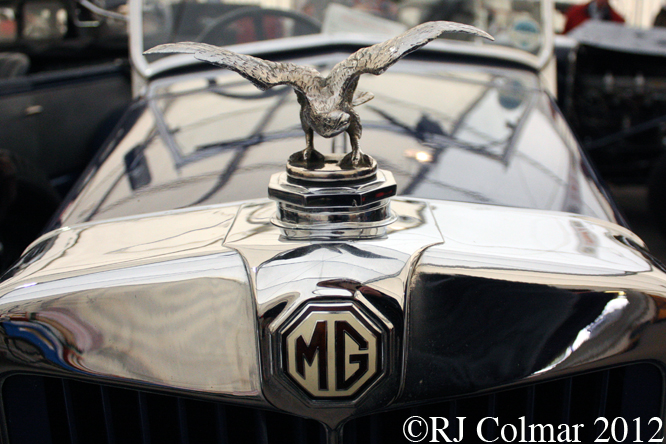
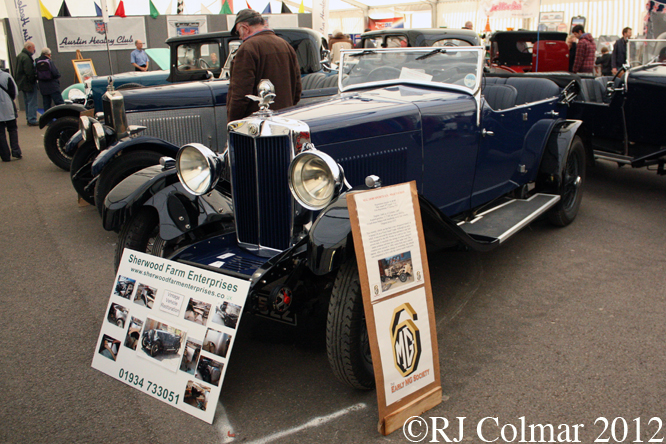
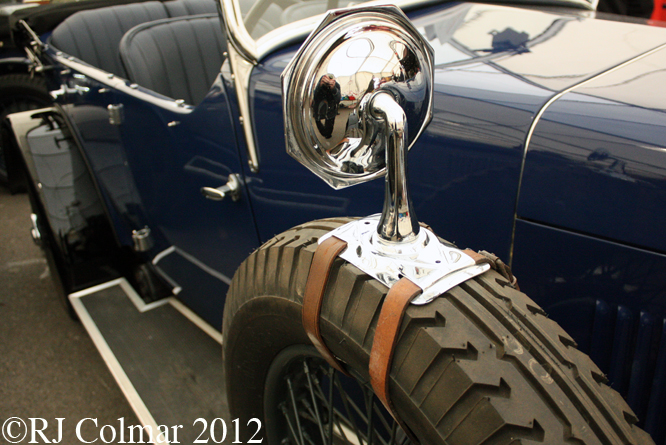
MG 18/80 Super Sports Mk II Tourer, Bristol Classic Car Show

This car was then damaged a year later by the MG Works on a service run.

MG 18/80 Super Sports Mk II Tourer, Bristol Classic Car Show

After being stored in first a barn and later a coal cellar this car was rescued in 1984 minus body.

MG 18/80 Super Sports Mk II Tourer, Bristol Classic Car Show

Restoration complete with a cable operated handbrake operating on all four 14 inch drum brakes took 27 years during which time the car also changed ownership.

MG 18/80 Super Sports Mk II Tourer, Bristol Classic Car Show

With a 17.7 hp six cylinder motor driving a four speed gearbox a top speed of 74 mph was quoted for this vehicle which cost £525 when new.

Thanks for joining me on this “Four Wheel Handbrake” edition of “Gettin’ a li’l psycho on tyres” I hope you will join me again for a Continental Curiosity tomorrow when I’ll be looking at an NSU Prinz. Don’t forget to come back now !

Share

Hard Day’s Night – Silverstone Classic

On Saturday I got up at 5am in order to get to the start of proceedings for at the Silverstone Classic meeting. After a scenic drive through Gloucestershire with a little early morning fog along the A40 I arrived in good time.

Cooper T59, Silverstone Classic

Jon Milicevic, driving a Cooper T59 comfortably won the days opening Formula Junior race, for cars built between 1959 and 1963, from another Cooper T59 driven by Sam Wilson.
Trojan T101, Silverstone Classic

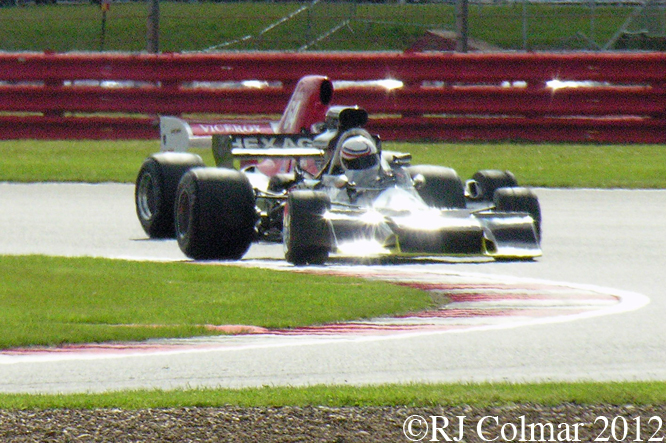
Simon Hadfield and Micheal Lyons provided the early entertainment in the Peter Gethin Trophy race for stock block open wheelers, Simon’s F5000 Trojan T101 set up for good performance through the corners can be seen being hounded by Micheal Lyons F5000 Lola T400 which was set up for better straight line performance. Unfortunately Simon who started from third lost it after 6 laps handing pole man Micheal a narrow victory over Mark Stretton driving a much smaller capacity Formula 2 March. Simon recovered to take third.
F5000 Thunder, Silverstone Classic

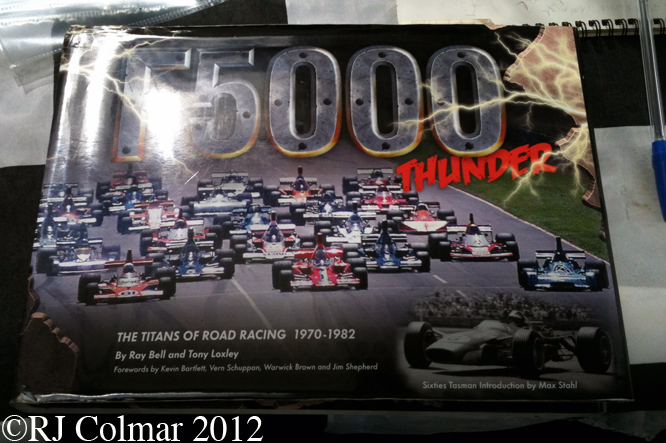
During the lunch break I caught up with several members of the TNF Forum including John who makes the annual pilgrimage from Australia, on this occasion he brought a pre production copy of F5000 Thunder the Titans of Australian Road Racing 1970 – 1982 co authored by Ray Bell and Tony Loxley, if your a fan of Formula 5000 I guarantee you will enjoy the many stories in this 406 page book with over 800 photographs which ever part of the world you happen to live in.
BMW 1800 TiSA, Silverstone Classic

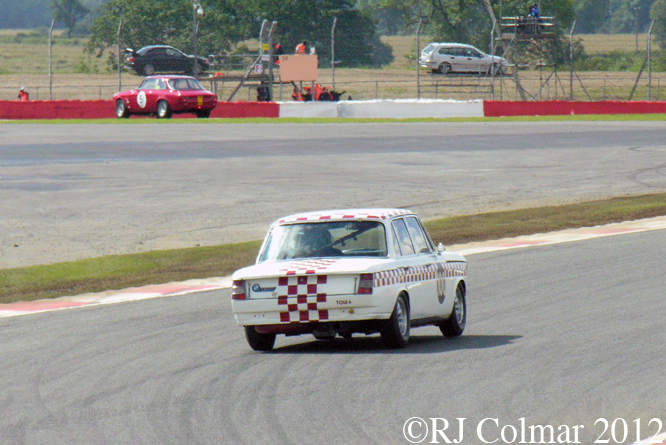
The Alan Mann Trophy for under 2 litre / 122 cui touring cars looked to be a walk over for the #51 ALFA Romeo driven by Alex Furiani despite the best efforts of Jackie Oliver, who will be celebrating his seventieth birthday in a couple of weeks, driving the #100 BMW 1800 TiSA seen here sliding through Maggotts in third place. An incident requiring the safety car disrupted the event which was won by Sean McInerney driving the #67 Lotus Cortina who started from 38th on the grid ! Simon Hadfield did well to recover from a stop go penalty to bag second place on the last lap to finish less than two seconds behind McIerney in the #1 Lotus Cortina co driven by Leo Voyazides which had started on pole.
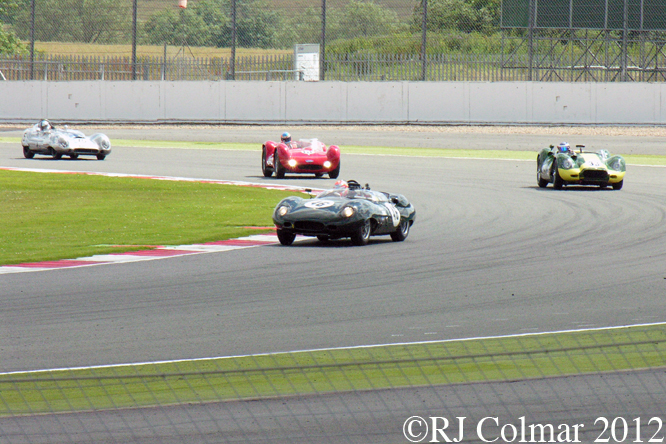
Pre '61 Sportscars, Silverstone Classic

Alex Buncombe made the most of pole position in the Stirling Moss Trophy driving the #46 Costin bodied Lister Jaguar he was sharing with Andrew Smith which was never lost it’s lead on it’s way to victory. Second place was initially disputed by the #33 Knobbly Lister Jaguar, of Jon Minshaw and Martin Stretton which made a great start from 6th on the grid, the #61 Birdcage Maserati of Jason Minshaw and the McIntyres #15 Lotus seen above. The #33 Lister failed to finish while the McIntyre Lotus 15 and Jason’s Birdcage finished 3rd and 4th respectively behind the Dodds Cooper Monaco T49.
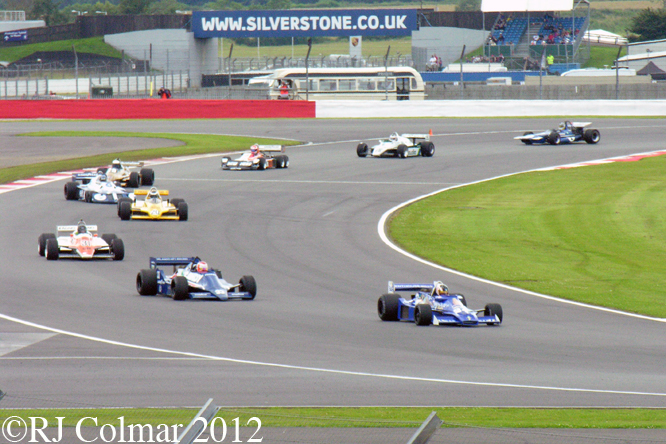
Grand Prix Masters, Silverstone Classic

Two races for Formula One cars were next up after lunch, The Daily Express Trophy for 1970 to 1983 cars was led by Micheal Lyons in the #24 Hesketh 308E who unfortunately could not get his car to complete lap nine after slowing for an incident between two cars which were stopped on the track. A lucky victory therefore
handed to Bill Coombs in the #33 Tyrrell 009 when the race was called early to clear up the mess. Steve Hartley in the #31 Arrows A4 was classified 2nd with Micheal Fitzgerald seen above in 8th place came through to claim 3rd in his #28 Williams FW08.

The pre ’66 rear engined Grand Prix cars race was won by Jason Minshaw from John Harper both driving Brabham BT4’s above 8th place Roger Willis, driving his #48 Cooper T51, is seen leading a pack through the ‘Arena’.
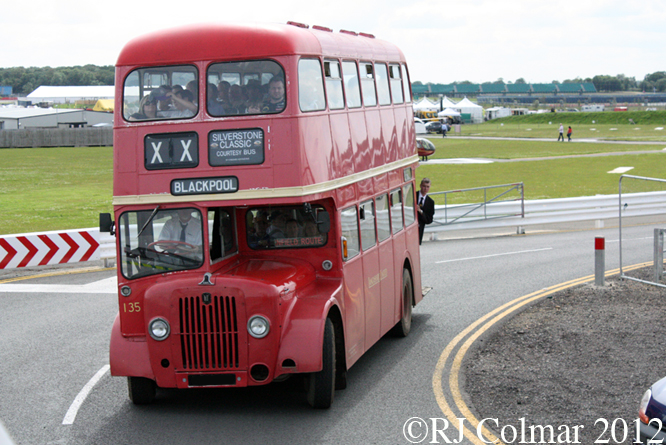
GUY Arab Mk 5, Silverstone Classic

As the Gentleman Drivers Pre ’66 bus got underway I made my way over to the “Wing” pits complex on an open top Leyland Bus, coming the other way we encountered this 1963 GUY Arab Mk 5. Soon after the Mk 5 was built GUY was taken over by Jaguar.
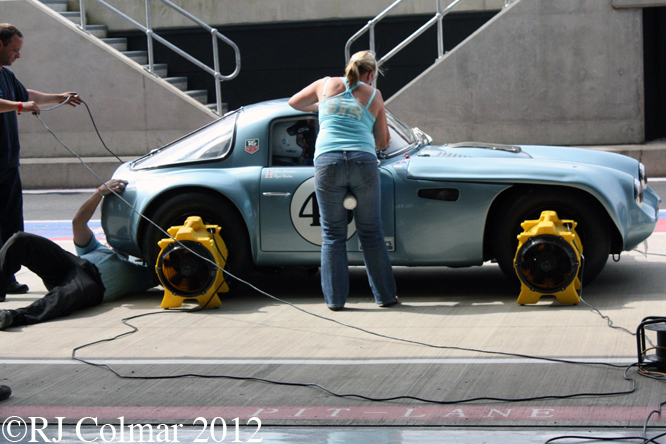
TVR Griffith, Silverstone Classic

During the Silverstone Classic meeting pits access is unrestricted as evidenced by this photo of Mike Whitaker Snr’s pit stop. I am sure back in the day brake coolers were not ‘de rigueur’ when his 1965 4.7 litre / 286 cui V8 powered TVR Griffith was built. Mike retired shortly after this photo was taken, the race was won by Jon Minshaw and Mike Stretton driving an E-Type Jaguar.
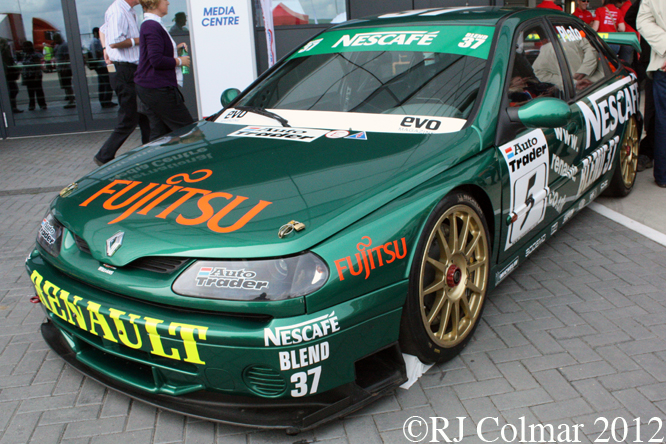
Renault Williams Laguna, Silverstone Classic

This mid 1990’s Renault Williams Laguna Touring Car is probably legible, for but was not entered in the Fujifilm Touring Car Trophy, it reminded me of the time in late 1998 when I seriously under estimated the power of Play Station and found myself engrossed in a game called TOCA 2 featuring a similar Laguna and seven other vehicles from the same era.
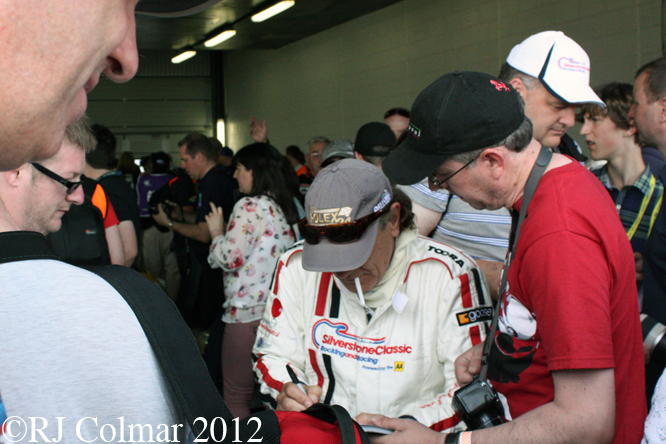
Brian Johnson, Silverstone Classic

As I got to the end of my pits walkabout, which included a spell on the pit wall during the Gentleman’s race, I stumbled across a hive of activity as the Morgan ‘celebrity” drivers prepared to qualify for their race. Above well known racer and AC/DC vocalist Brian Johnson signs an autograph before qualifying third ahead of fellow musician Jay Kaye. Qualifying and the race was won by TV star Kelvin Fletcher who regular readers may remember I saw a couple of months ago driving a #17 Mini at Castle Combe. Brian and Jay came second and third respectively in the race.
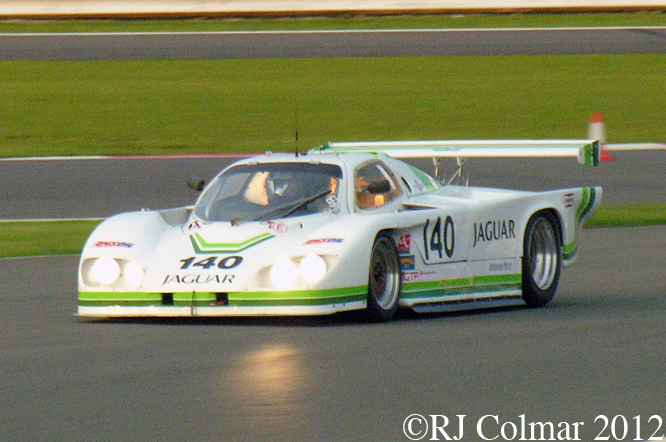
Jaguar XJR 5, Silverstone Classic

I returned to the car after my pit visit for a cat nap which lasted a little longer than intended so I unintentionally missed a couple of races however fortunately I woke up in time to catch the finale of the day for Group C Endurance cars, Gareth Evans won the race despite a late spin relatively easily from Roger Willis in his Lancia LC2. Above the race was not the most entertaining but for my money seeing the Group C cars race in the early evening was worth the price of entry on it’s own. Above one car I did not get to see race in period was the 6 litre / 366 cui IMSA GTP Jaguar XJR 5 seen here with Don Miles at the wheel, after qualifying last from 21 Don finished 12th from 16 finishers. Absolutely cream crackered after a Hard Day’s Night I got home just after midnight and slept like a log.

Thanks for joining on this “Hard Day’s Night” edition of “Gettin’ a li’l psycho on tyres”, I hope you will join me again tomorrow. Don’t forget to come back now !
Share