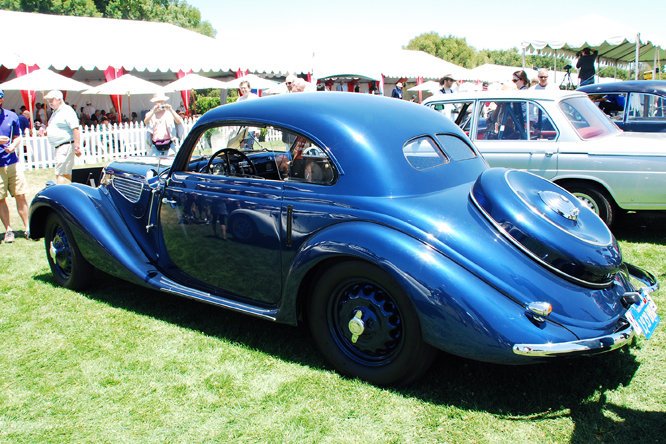
Pillarless Coupé – BMW 327/28

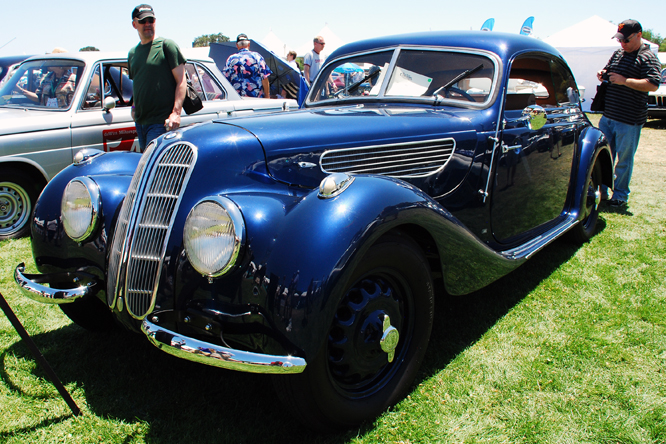
The BMW 327 was a short chassis version of the BMW 326 manufactured originally in cabriolet form in 1937 and from 1938 it was also available as a Coupé.

BMW 327/28, Palo Alto

The 327 built with either a standard 55 hp 6 cylinder motor as used in the BMW 326 or with the 80 hp from the higher state of tune 6 cylinder found in the BMW 328. Cars supplied with 80 hp motors like the one in Geoffrey Horton’s photographs taken at Palo Alto are known as BMW 327/28 models.

BMW 327/28, Palo Alto

This pillarless coupé is one of just two known to have been built from more than 560 cars built with pillars until 1940. It was acquired by a US serviceman in Germany in 1958 who shipped it to NY and then drove it to California where it has remained, changing ownership just once since then.

My thanks to Geoffrey Horton for the fabulous photo’s.

Wishing all GALPOT contributors and readers in the USA a Happy Thanksgiving.

Thanks for joining me on this pillarless edition of ‘Gettin’ a li’l psycho on tyres’. I hope you will join me again tomorrow. Don’t forget to come back now !

Share

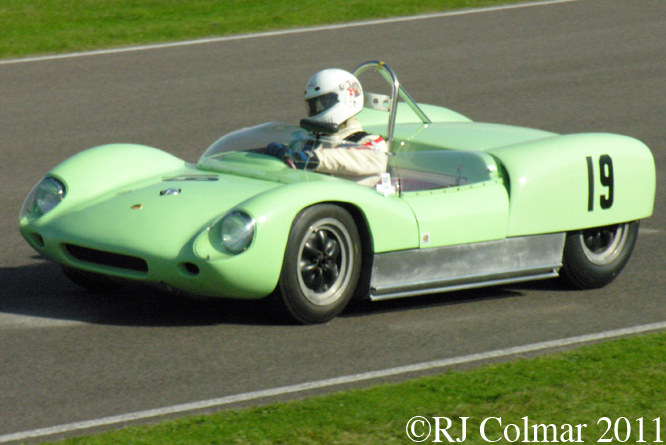
A tale of two chassis frames – Lotus Climax 19 Monte Carlo #952

The Lotus 19 was a two seat version of the Lotus 18 mid engine Formula One car that Stirling Moss drove to an unexpected first marque Grand Prix victory for Lotus at Monaco in 1960.

In a case of history repeating itself, two years earlier in 1958 Moss had driven a Cooper to record that marques first Grand Prix victory and Cooper dubbed their 1958 sports car the Cooper Monaco, Colin Chapman dubbed the 19 the Lotus Monte Carlo in honour of Stirling’s achievement.

Lotus 19, Goodwood Revival

The Lotus 19 chassis #952 was originally purchased along with two others, #950 & #953, by the British Racing Partnership (BRP) team #952 & #953 were both acquired in 1961 and #950 in 1960.

BRP, co founded by Stirling’s Dad and Stirling’s ex manager entered the car under sponsors UDT-Laystall banner. The exact racing history of #952 from 1960 to 1962 is not known to me but by 1962 it was acquired by the Rosebud Racing Team in the USA and was successfully raced in the USA by Marsten Gregory and Innes Ireland.

By the end of 1963 the Rosebud Racing Team had managed to attach a 3 litre Ferrari V12 to #952 in place of the usual Coventry Climax 4 cylinder.

Innes Ireland sustained severe injuries when he crashed the now Ferrari powered #952 during practice at Pacific Raceways, Washington for the Pacific Northest GP.

Rescue workers had to cut Innes, who had a broken leg and hip, out of the wreck while he was still fully conscious on account of his morphine allergy.

Rosebud Racing replaced the chassis on their Ferrari powered racer while retaining the #952 chassis number, see second photo in this link and Innes Ireland bravely stepped in to drive it again.

Many years later, after ownership of #952 along with a Ferrari 250 GTO (!) was transferred to Victoria High School in Texas, #952 eventually ended up back in England with the Higgins brothers who rebuilt #952 in the 1980’s replacing the Ferrari V12 motor with a 2 litre / 122 cui 4 cylinder Coventry Climax.

The second chassis frame incarnation of chassis #952 is seen above driven by the Danish Baron Otto Reedtz-Thott at the Goodwood Revival.

Footnote this car should not be confused with a Lotus 21 Grand Prix car belonging to Alex Morton that carries the chassis number 939/952, apparently after 939 was damaged a replacement Lotus 21 chassis with the number 952 was sent to repair 939 and the frame has carried the 939/952 number ever since.

My unreserved thanks and congratulations to the many contributors on the Case history: Lotus 19 Monte Carlo thread on The Nostalgia Forum which has been attempting since 2004 to piece together the histories of all 17 of the Lotus 19 Monte Carlo’s that left the factory. Particular thanks to Micheal Oliver, David Birchall and David McKinley who kindly answered specific questions.

Thanks for joining me on this Carceaology Edition of ‘Gettin’ a li’l psycho on tyres’, I hope you’ll join me again tomorrow. Don’t forget to come back now !

Share

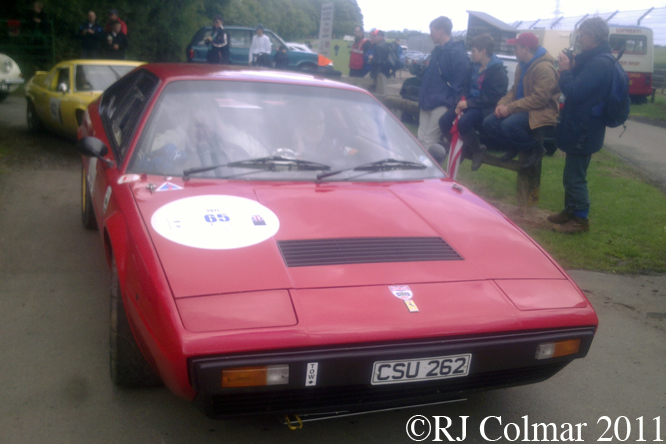
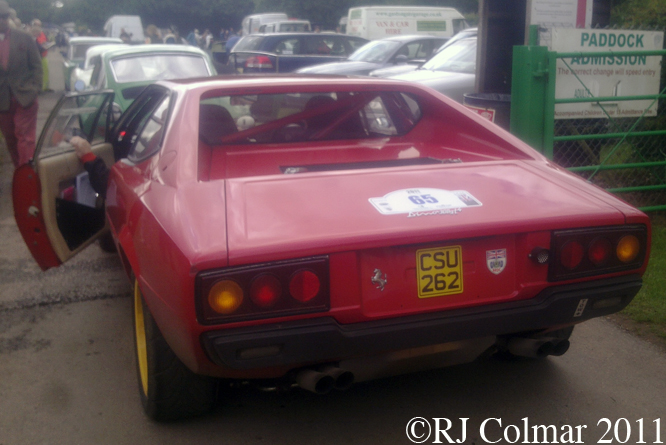
Bertones Ferrari – Dino 308 GT 4

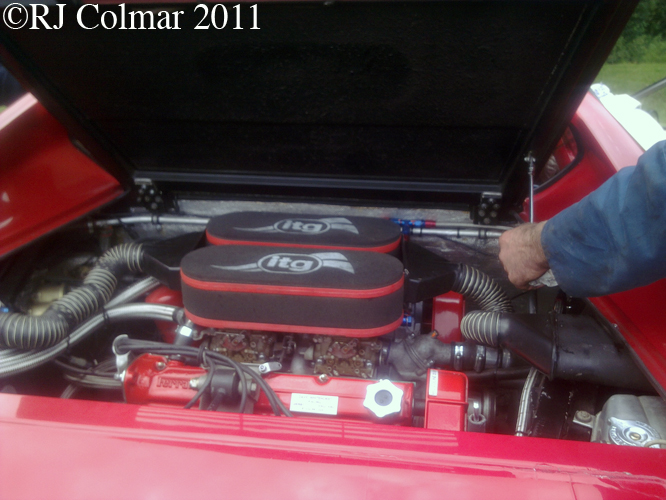
The mid engine 2+2 Dino 308 GT 4 stands out in the history of Ferrari for being the only Ferrari that was designed by Bertone, and this possibly only after pressure from Ferrari’s parent company FIAT had been applied.

Dino 308 GT 4, Tour Britannia, Castle Combe

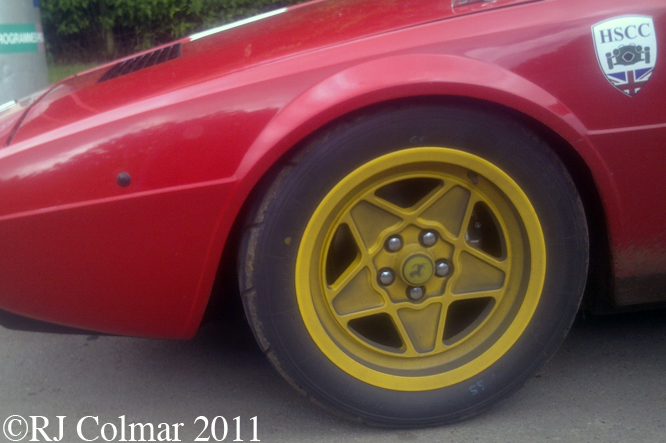
Launched with Dino badges in 1973 to differentiate it from its V12 siblings the Dino was the first Ferrari to be powered by a V8. The Dino badges disappeared from the model in 1976.

Dino 308 GT 4, Tour Britannia, Castle Combe

The chassis was developed from the Dino 246 stretched to provide a 100.4 inch wheel base to provide accommodation for 4 and the transversely mounted engine.

Dino 308 GT 4, Tour Britannia, Castle Combe

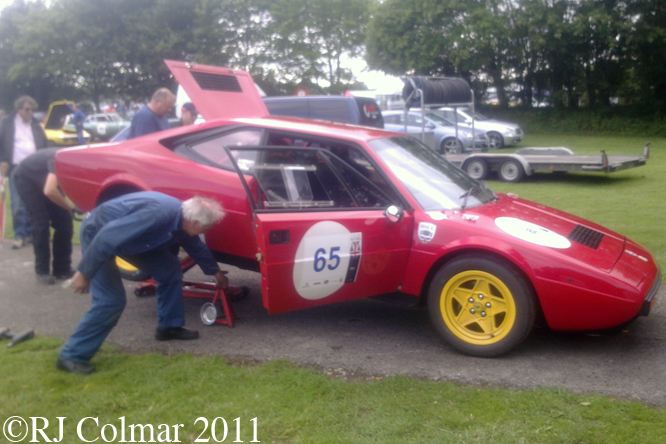
The Dino 308 GT4 seen above at Castle Combe was driven by Andrew McAlpine and Ali Procter to a 20th place finish and class 8 victory in this years Tour Britannia.

Dino 308 GT 4, Tour Britannia, Castle Combe

While 308’s are not an uncommon sight in club motorsports only one 308 GT4 was prepared for international racing, chassis #08020 was entered by the North American Racing Team at Le Mans in 1974 where Giancarlo Gagliardi and Jean Louise Lafosse retired with clutch failure and in 1975 Cagliardi and Harley Cluxton failed to qualify eventually causing Luigi Chinetti to withdraw his whole team from the event just 80 minutes before the start of the race.

Dino 308 GT 4, Tour Britannia, Castle Combe

Between 1973 and 1980 2,826 308 GT4’s were produced, there was also an Italian spec 2 litre / 122 cui 208 GT4 built to take advantage of tax regulations. At around £20,000 pounds for a roadworthy example the 308 GT4 is probably the cheapest way of becoming a Ferrari owner today, though maintaining one might prove expensive as the motor needs to be removed for many maintenance tasks and it is not mounted on a sub frame as on some of the later Ferrari V8 models.

Thanks for joining me on this Bertone edition of ‘Gettin’ a li’l psycho on tyres’, I hope you will join me again tomorrow. Don’t forget to come back now !

Share

Small MPV – Dodge Sierra

Since I started blogging my love of acres of Detroit sheet metal has grown in no small part due to the the California Streets blogs of Jay Wollenweber.
Dodge Sierra, Goodwood Revival

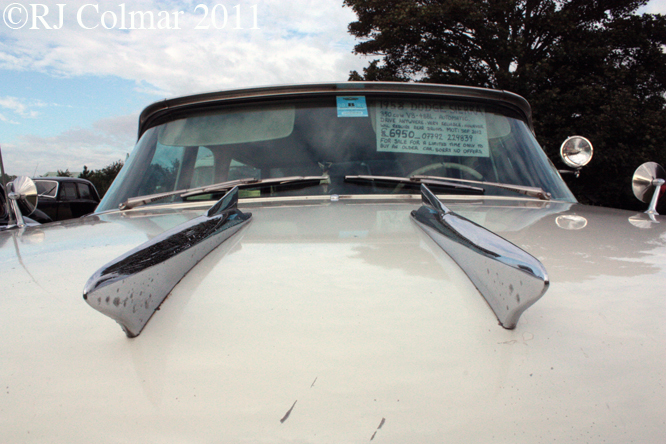
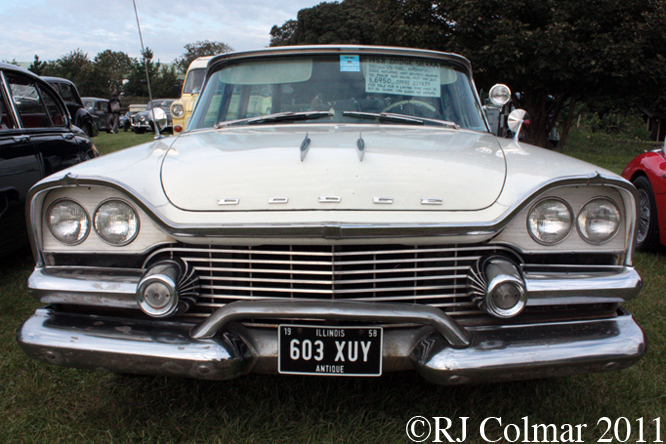
So it is with a little trepidation that I offer today’s blog on a vehicle probably better suited to his patch than mine and one that he will probably be able to tell me a lot more about than me, namely the the nine seat 1958 Dodge Sierra.
Dodge Sierra, Goodwood Revival

The Sierra name in the UK is usually associated with a 1980’s 4 door Ford that bore a striking resemblance to a jelly mould, that only gained any credibility after Cosworth had dumped it’s finest 200 hp turbocharged twin cam 4 cylinder motor under the bonnet and Ford gave it an outsize tea tray rear spoiler.

Dodge Sierra, Goodwood Revival

I digress, from what I have been able to work out the Dodge Sierra seen here was the Estate / Station Wagon version of the Dodge Royal which sat in the middle of a Dodge model mix that included the Coronet at the lower end, the Custom Royal at the upper end with a short lived Regal Lancer at the very top.
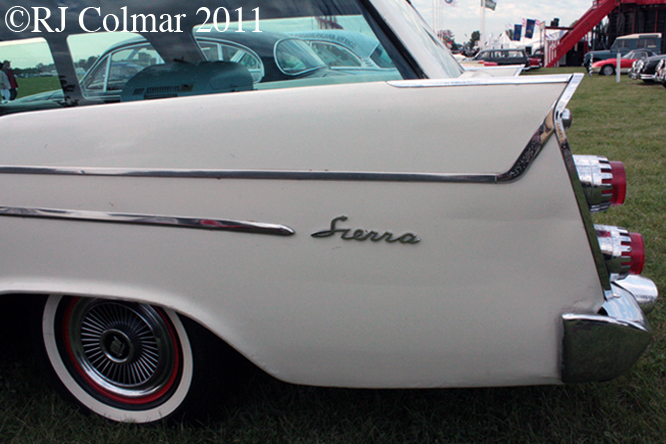
Dodge Sierra, Goodwood Revival

It would appear that Virgil Exner was responsible for the design of both the first, introduced in 1955, and second, introduced in 1957, generation Dodges, that were marketed under these model names which featured the same body shells and running gear but different motors and trim levels.
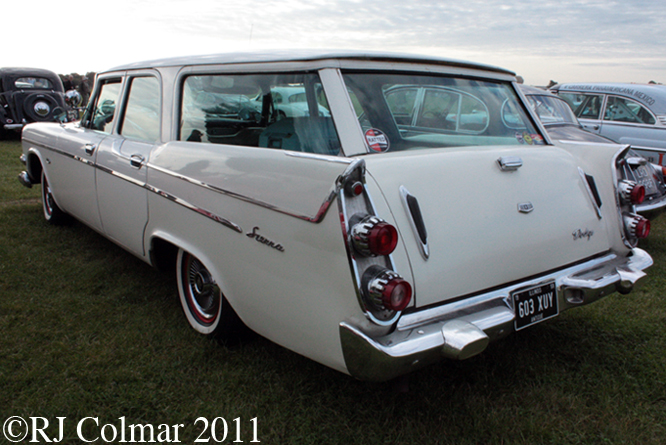
Dodge Sierra, Goodwood Revival

To further confuse matters in 1958 the lower priced Plymouth and higher priced De Soto ranges appear to have used the same basic Dodge body panels for their models as well.
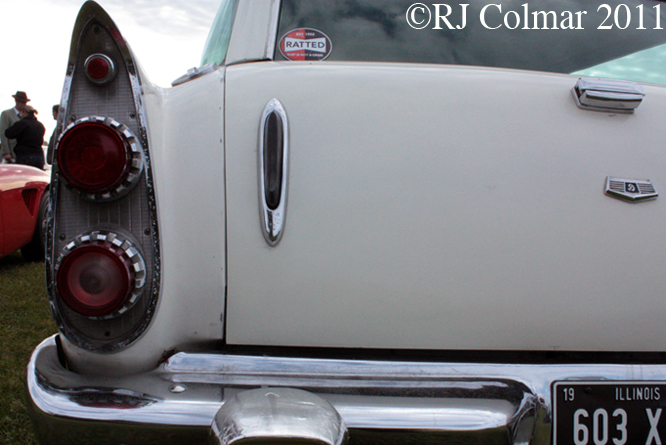
Dodge Sierra, Goodwood Revival

Among the options I have seen available for the Sierra, not necessarily the ’58 model year, are swivel seat, 3 speed transmission, power steering, power brakes, power rear window, wire wheels, full tinted glass, rear view mirrors (!) AM radio and a Kleenex dispenser.
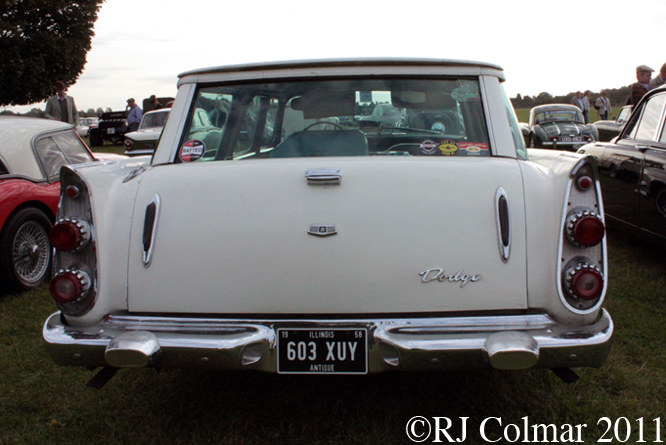
Dodge Sierra, Goodwood Revival

I have no idea if the asking price of £7,000 seen on the windscreen of this car at Goodwood Revival represents good value for a vehicle with a 5.7 litre / 350 cui Super Red Ram Hemi V8 with 4 barrel carb which is in need of a pair of rear drums for the brakes, but I suspect if I was looking to make that California Trip along Route 66 with a vehicle that was not 100 point Concours Condition this might be a fun vehicle in which to take a 2000 mile ride.

Apologies if I have made any obvious blunders on this blog, please do not hesitate to log in and chime in with any corrections below.

Thanks for joining me on this Hemi edition of ‘Gettin’ a lil psycho on tyres’, I hope you will join me again tomorrow for Ferrari Friday. Don’t forget to come back now !
Share

Abbotts Body – Ford Zephyr 6 Farnham

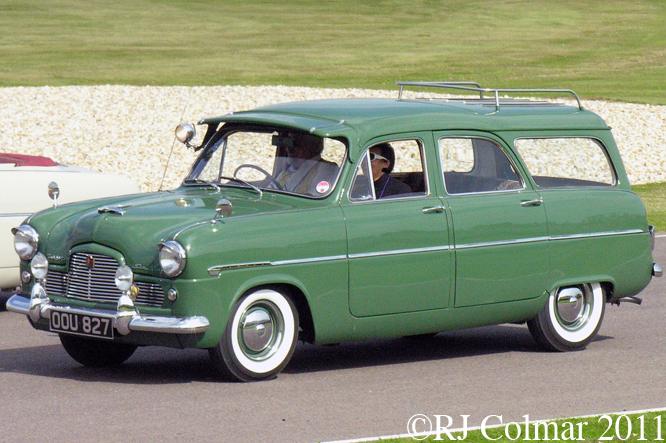
Last week I had a look at the remains of the 1953 Ford Zephyr 6 that won the 1953 Monte Carlo Rally, today’s car is a 1957 Zephyr 6 with estate / station wagon coach work by Abbots of Farnham, seen here at the Goodwood Revival.

Ford Zephyr 6 Farnham, Goodwood Revival

Between 1951 and 1956 148,629 Zephyr 6 saloon /sedan models were built along with 4048 convertibles with body work made by Carbodies these days called London Taxis International a company best known for making most of London’s black cabs.

To satisfy the demand for Zephyr 6 customers wanting an estate or station wagon Ford did a deal with Abbots of Farnham who converted saloons supplied by Ford into estates which were sold as Farnhams.

It is not known how many Zephyr 6 Farnhams were built but production at the Abbotts works was sufficient for Bristol to move the relatively low volume production of the 405 drop head bodies from Abbotts to Tickfords in Newport Pagnell.

Thanks for joining me on this Farnham edition of ‘Gettin’ a li’l psycho on tyres’ I hope you will join me again tomorrow. Don’t forget to come back now !
Share

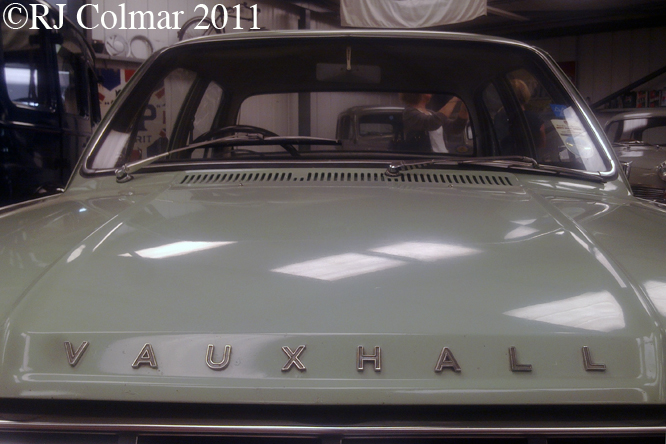
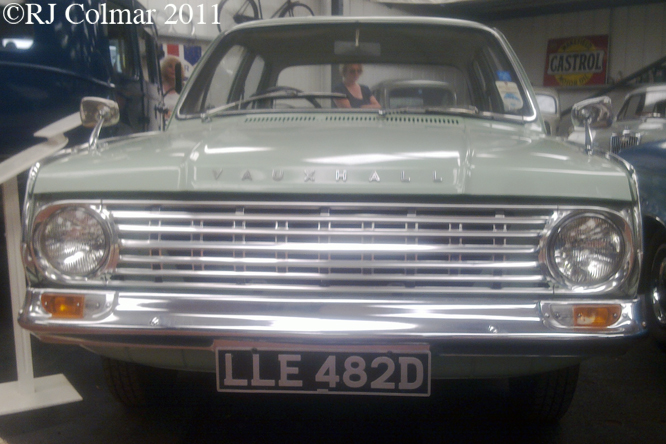
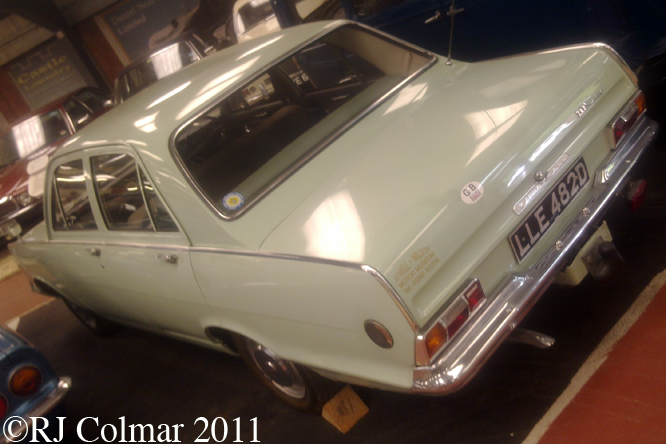
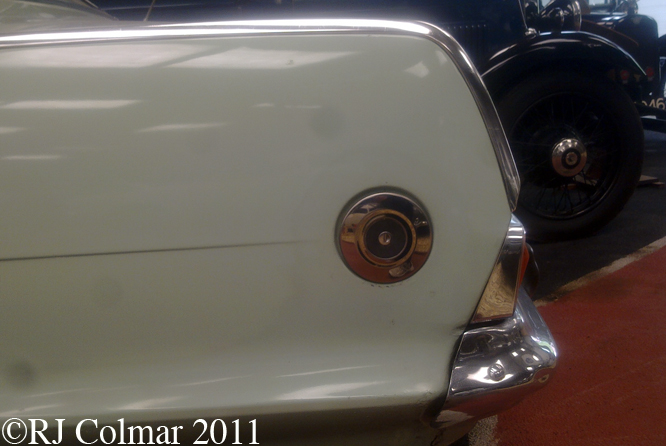
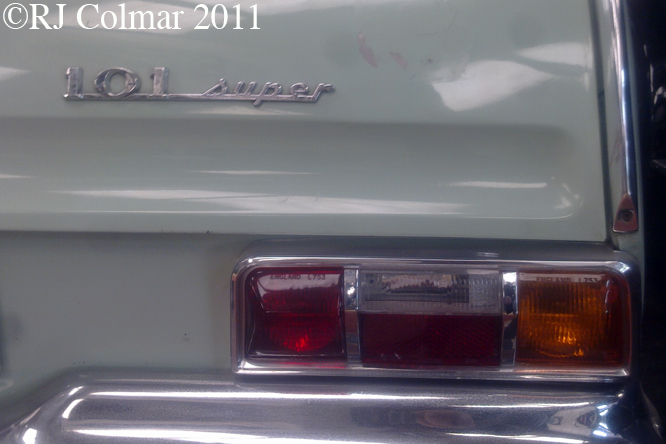
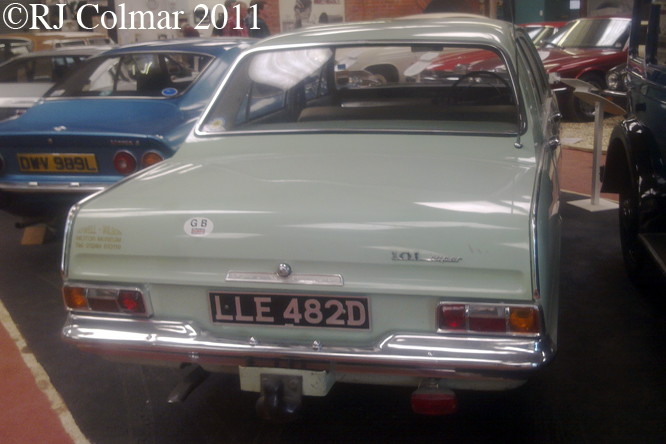
Baby Continental – Vauxhall 101 Super

The Vauxhall 101 was the third generation Vauxhall Victor given the 101 badge because it had 101 improvements over it’s predecessor the Victor FB.

Vauxhall 101 Super, Atwell Wilson MM

Like the contemporary fourth generation Lincoln Continental the 101 Super carried bright work on the leading edge of the front wings that ran from the top of the front bumper around the top edge of the front wings along the mid rift to the top of the rear wings and around to the top of the rear wings.

Vauxhall 101 Super, Atwell Wilson MM

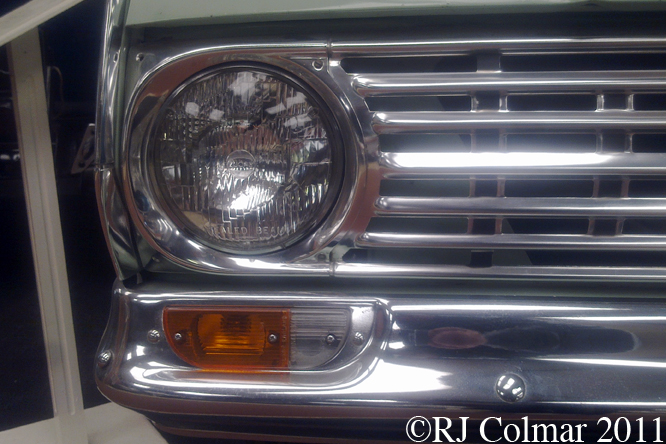
Imitating another feature that had been seen in the USA for some time the 101 was among the first British designs to incorporate the side light and indicator clusters into the front bumper.

Vauxhall 101 Super, Atwell Wilson MM

The 101 was the last of the Victor models to feature an engine with rocker operated overhead valves. The 1595 cc / 97 cui 4 cylinder motor produced 66 hp.

Vauxhall 101 Super, Atwell Wilson MM

There was a choice of transmissions standard column shifted 3 speed, 4 speed floor shifted or Powerglide Automatic.

Vauxhall 101 Super, Atwell Wilson MM

Contemporary reports noted that the low gearing gave the car class leading acceleration, 0 to 60 in 20.4 seconds, but made the fuel consumption, 23.1 miles per gallon, worst in class by a full 10%.

Vauxhall 101 Super, Atwell Wilson MM

Front servo assisted brake discs were options along with a radio that was integrated into the dash.

Vauxhall 101 Super, Atwell Wilson MM

Between 1964 and 1967 219,814 101 Victor FC models were built along with an additional 13,499 VX 4/90 performance models using the same body. The 1966 model featured today was seen at the Atwell Wilson Motor Museum.

Thanks for loining me on this 101 edition of ‘Gettin’ a li’l psycho on tyres I hope you will join me again tomorrow. Don’t forget to come back now !
Share

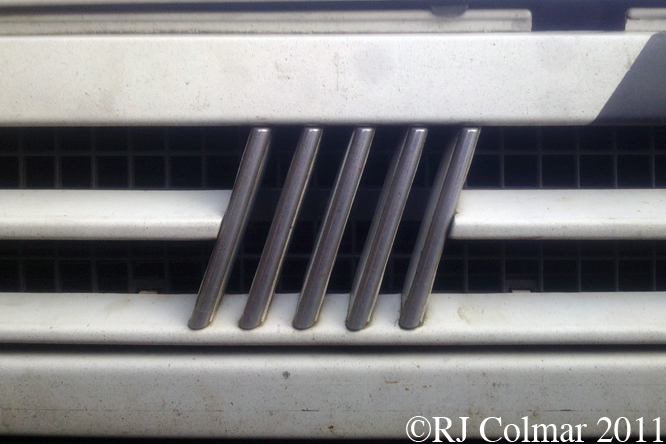
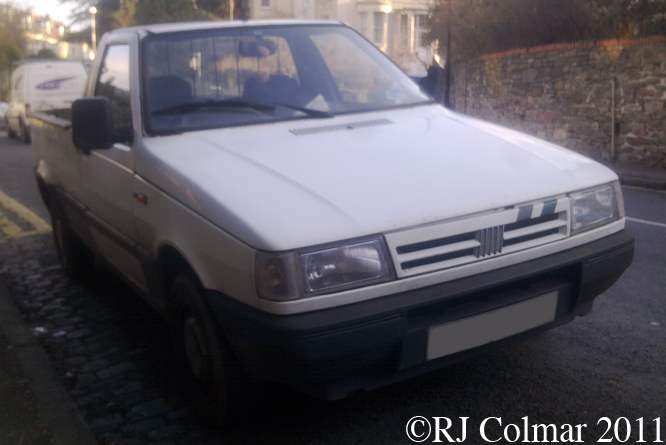
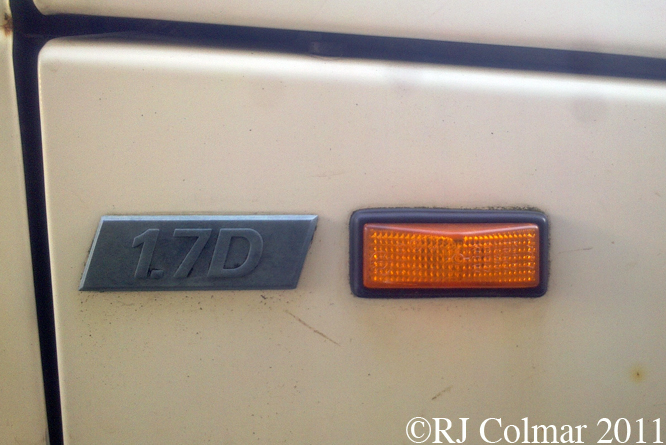
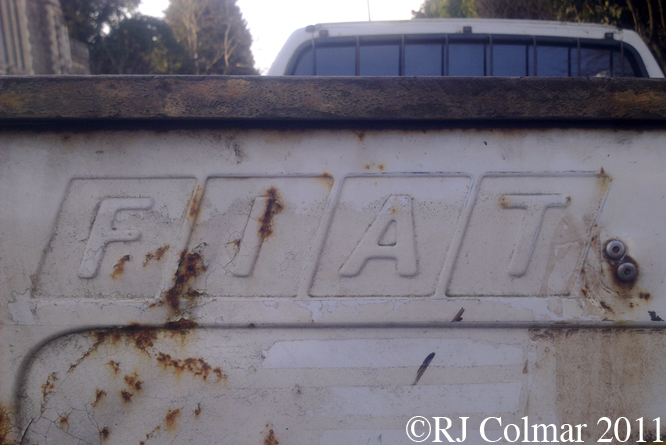
FIAT Fiorino

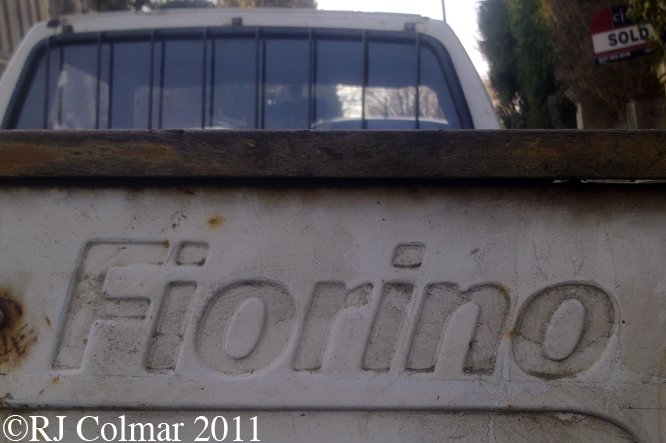
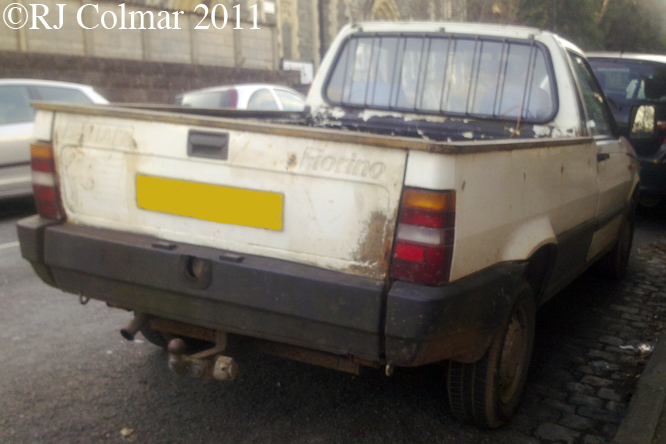
Continuing an occasional series on pick up trucks today’s vehicle is a FIAT Fiorino.

FIAT Fiorino

The history of the Fiorino is long and complicated by the fact that at any one time up to 3 different versions of the Fiorino appear to have been in production in plants across Europe, South America and China.

FIAT Fiorino

Today’s 1996 model appears to be a second generation model with the first face lift introduced in 1992 that continued in production in Italy until 1996.

FIAT Fiorino

The cab and bonnet appear to share some panels with the FIAT Tipo passenger car that was manufactured from 1988 to 1995.

FIAT Fiorino

It would appear the platform is a re engineered version of the Brazilian FIAT Uno passenger car which can trace its ancestry back to the FIAT 127 passenger car that was in production from 1971 to 1983.

FIAT Fiorino

One advantage of using such a platform would be that the spare wheel was stowed under the bonnet / hood, the added weight of the spare wheel over the front axle would marginally aid traction of this front wheel drive pick up when fully loaded with 500 kgs / 1,100lbs of cargo.

FIAT Fiorino

Fiorino, translated Florin, was the currency introduced to Tuscany by Duke Leopold II after the Napoleonic Wars in 1824 to replace the Tuscan Pound at a rate of 1.66 Tuscan Pounds to 1 Florin. In 1859 the Florin was replaced by the Italian Lira at the rate of 1 Florin to 1.4 Italian Lira.

Thanks for joining me on this Tuscan Currency edition of ‘Gettin’ a li’l psycho on tyres’ I hope you will join me again tomorrow. Don’t forget to come back now !
Share