Molto Bello – ALFA Romeo 33 Stradale

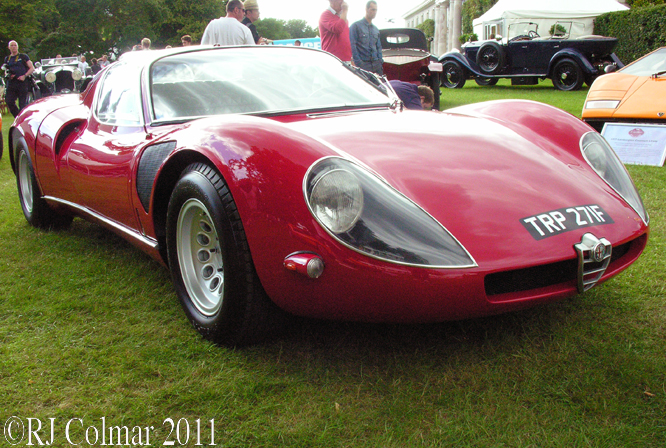
In 1967 ALFA Romeo developed the T33 ‘Periscope’ for racing in the 2 litre / 122 cui sports car category, while the V8 engine designed by Orazio Satta and Giuseppe Bosso was extremely powerful the cars were badly prepared and lethal suffering many reliability issues, though one did win an insignificant hill climb in Belgium on it’s debut and another won an equally unimportant sports car race at Vallengua.
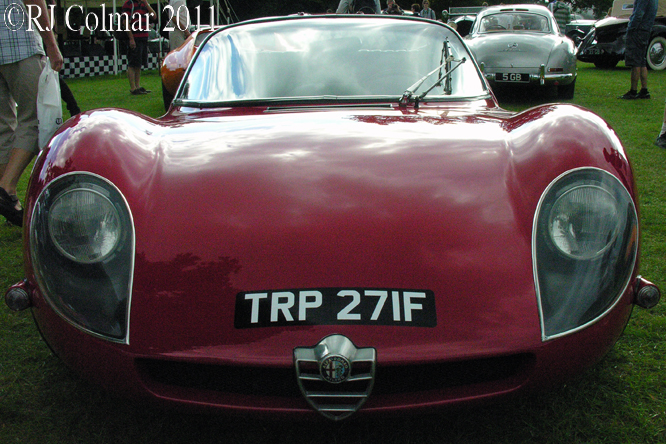
ALFA Romeo 33 Stradale, Goodwood FoS

Despite the lack of any significant international success and the deaths of Jean Rolland and Leo Cella in testing accidents ALFA Romeo decided to defray the costs of their competition efforts by building a road car based on the T33.
ALFA Romeo 33 Stradale, Goodwood FoS

The resulting Tipo 33 Stradale road car with a wheel base 6 inches longer than the racer is one of the most alluring vehicles ever seen, featuring unusual dihedral opening butterfly doors.

ALFA Romeo 33 Stradale, Goodwood FoS

The racing pedigree of the 33 Stradale is patently obvious in every every sinuous detail and the car has the performance to match the looks, from test the car reaches 60 mph in 5.5 seconds when required and a top speed of 160 mph should be possible.

ALFA Romeo 33 Stradale, Goodwood FoS

All of this technology came with a $17,000 price tag making the 33 Stradale the most expensive car on the market in 1968. Only 18 of these cars were built along with the one off 33.2, Iguana, Carabo and Navajo concept cars.

Thanks for joining me on the lawn at Goodwood House, I hope you will join me again tomorrow. Don’t forget to come back now !

Share

Leased Winner – Lotus 18

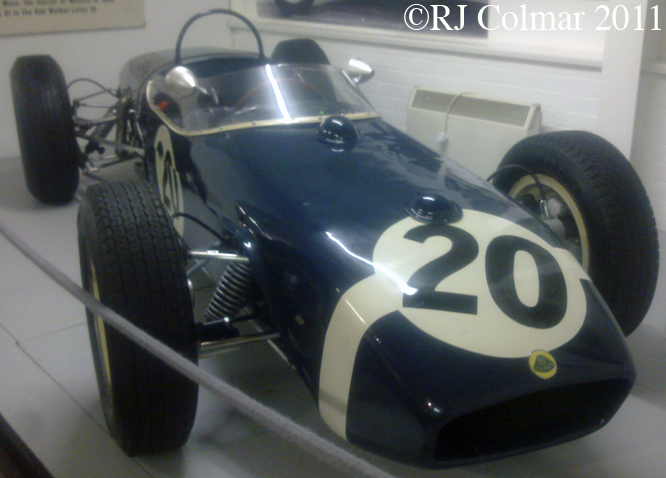
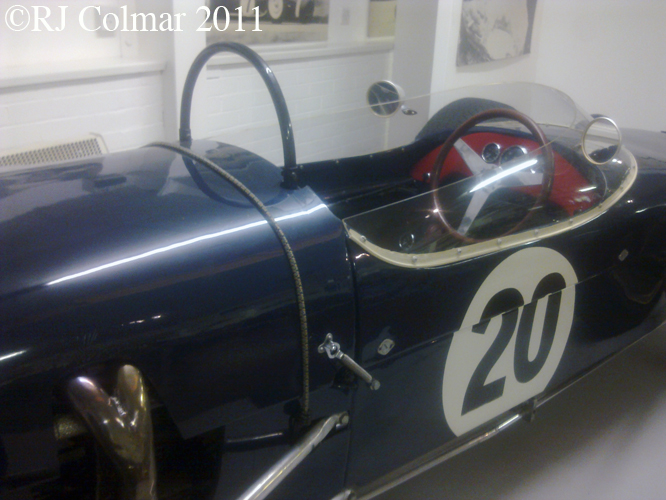
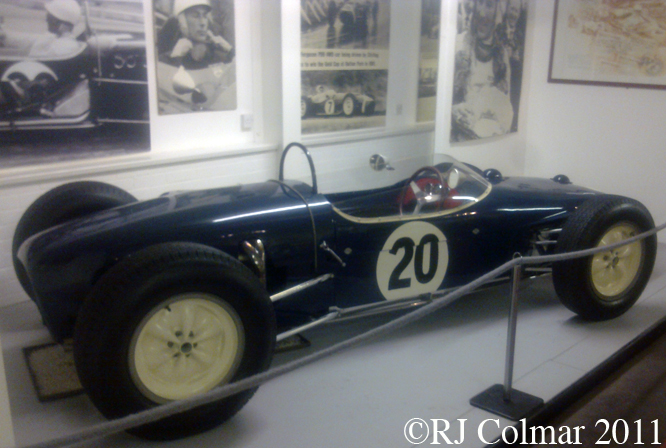
Following the lead set by Cooper Cars winners of the 1959 World Manufacturers Championship for Formula One cars Colin Chapman took the rear engine plunge and built the Lotus 18 open wheeler that could be entered with the correct engine spec in to either Formula Junior, Two or One races.

Lotus 18, Donington Museum

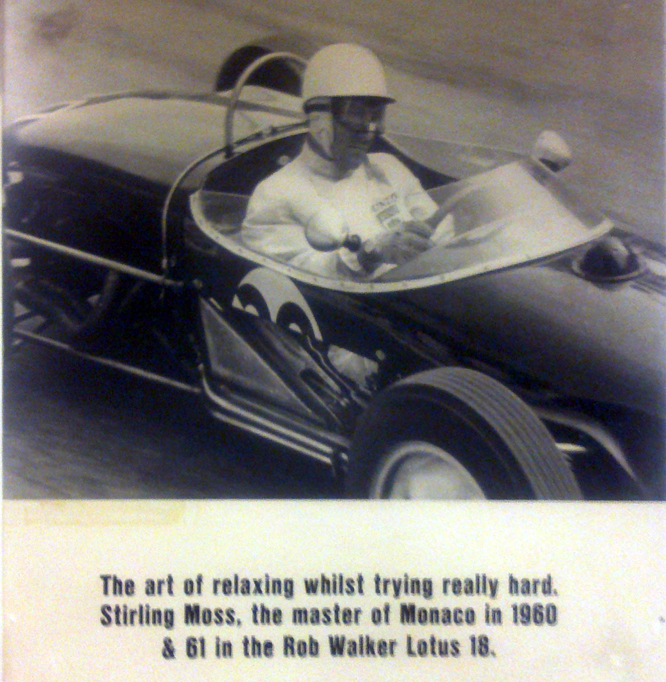
Rob Walker, heir to the whiskey family of the same name, leased a Lotus 18 with a Coventry Climax motor for Stirling Moss to drive in the 1960 Grand Prix season. On the cars debut, in Monaco, Stirling qualified on pole and eventually won the race, giving Lotus their first Formula One victory after both Jo Bonnier in a BRM and Jack Brabham driving a Cooper Cliax had spent time leading the intermittently wet race.

http://www.youtube.com/watch?v=0yH9fiJX1_s

An accident at Spa interrupted Stirling’s 1960 season but he bounced back with a win at the season ending US Grand Prix again driving this Lotus 18 for entrant Rob Walker. The following season a smaller Coventry Climax motor was fitted to this chassis, seen here at Donington Park Museum, as required by the new regulations for the 1961 season.

Stirling Moss, Lotus 18, Monaco 1961

(Copyright holder unknown image will be removed or credited upon request)

Amazingly Stirling Moss managed to not only win pole at Monaco in 1961 ahead of three more powerful shark nose Ferrari’s but then, after dicing with Richie Ginther in his Ferrari, proceeded to win the race, a then record setting third Monaco Grand Prix victory.

Lotus 18, Donington Museum

Later in the season Stirling Moss would take his final Formula One victory driving the Lotus 18, fitted with newer Lotus 21 bodywork, at the German GP at the Nurburgring. At the start of the 1962 season Moss was lucky to escape with his life from a career ending accident at Goodwood before the Grand Prix season got under way.

Thanks for joining me on this Stirling Moss edition, of ‘Gettin’ a li’l psycho on tyres’, I hope you will join me again tomorrow. Don’t forget to come back now !
Share

Awful In Everyway ? – Ferrari 400i

Allegedly an oafish TV presenter of a well known pseudo comedy motoring program who probably couldn’t tell you the difference between a gear knob and a knob of butter once described the Ferrari 400 as ‘awful in everyway’.

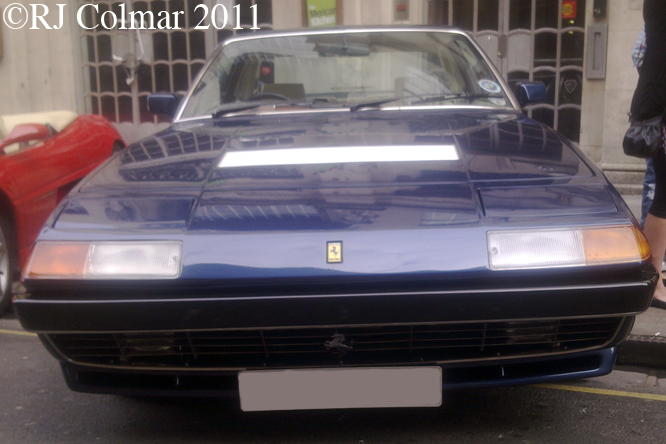
Ferrari 400i, Bristol IAMF

Personally I don’t see how any car with a chassis that owes it’s heritage to the Ferrari Daytona and with a Ferrari V12 engine, no matter how strangled to meet emissions regulations, can be awful in any way.

Ferrari 400i, Bristol IAMF

Certainly the 400i body, designed by Pininfarina, is not as appealing as the GTC and Daytona models that preceeded it but IMHO it’s seventies boxiness is a good deal less retro and a good deal more appealing than the mindset of the oaf described in the opening paragraph.

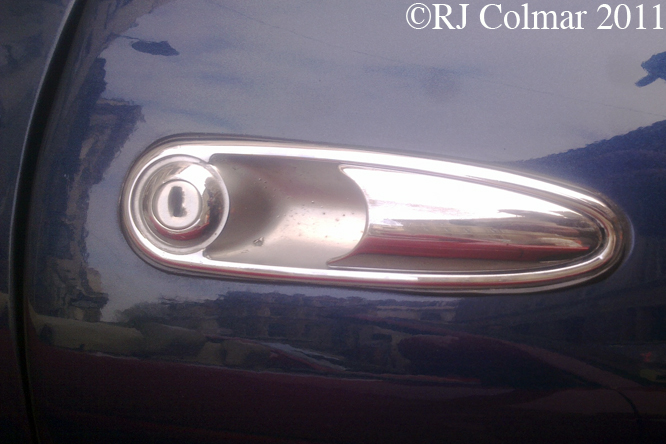
Ferrari 400i, Bristol IAMF

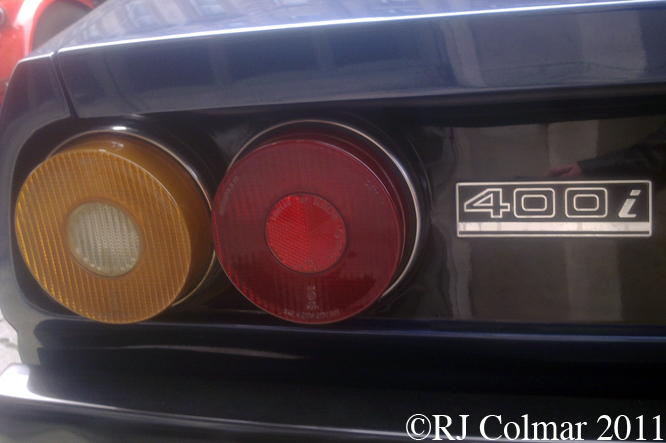
The coupé was first launched as the 365 GT 2+2 in 1972, by 1976 that model was re badged the 400 which became the 400i in 1979, when this particular car seen at Bristols Italian Auto Moto Festival was built. The ‘i’ denotes fuel injection which was fitted in place of the previous carburetors.

Ferrari 400i, Bristol IAMF

Although compliant with US regulations, unlike the 365 GT4 Berlinetta Boxer, none of the 422 manual GT or 883 Automatic 400i variations, or indeed any Ferrari 400 models were officially imported into the United States, doubly surprising since the 400 was the first Ferrari to be offered with automatic transmission.

Thanks for joining me on this fuel injected edition of ‘Gettin’ a li’l psycho on tyres’, I hope you’ll join me again tomorrow. Don’t forget to come back now !
Share

Entirely New ? – Chevrolet Bel Air

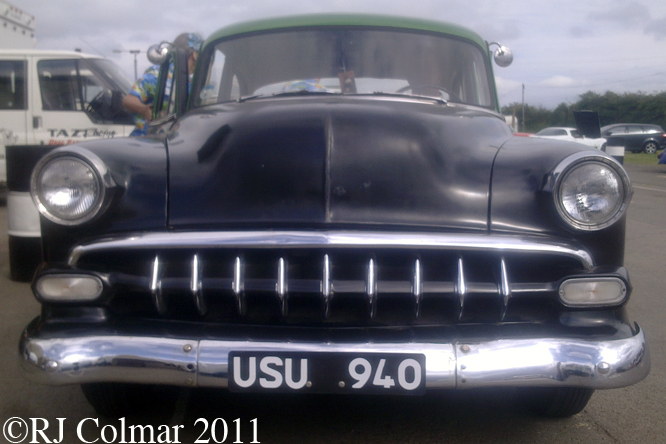
Back in the 1950’s it would appear manufacturers could not keep up with demand for new innovations and so would resort to upgrading older chassis with restyled body panels and selling them as entirely new, such was the case with the 1953 Chevrolet Bel Air which was advertised with the strap line ‘Entirely new through and through’ which actually shared its chassis and running gear with the Bel Air built from 1950 to 1952.

Chevrolet Bel Air, Shakespeare CR

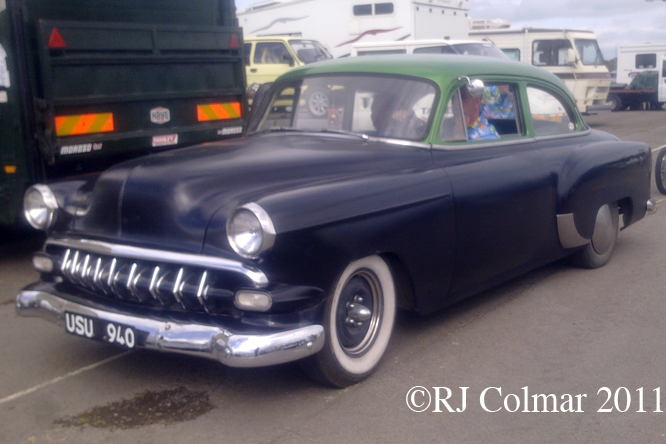
Today’s featured car appears to have been built in 1954, the last year in which the first generation Bel Air’s were built.

Chevrolet Bel Air, Shakespeare CR

During the last years production all of the 3,345 lb Bel Airs are said to have been fitted with a 125 hp 3.9 liter / 235.5 cui straight six ‘Blue Flame’ motor.

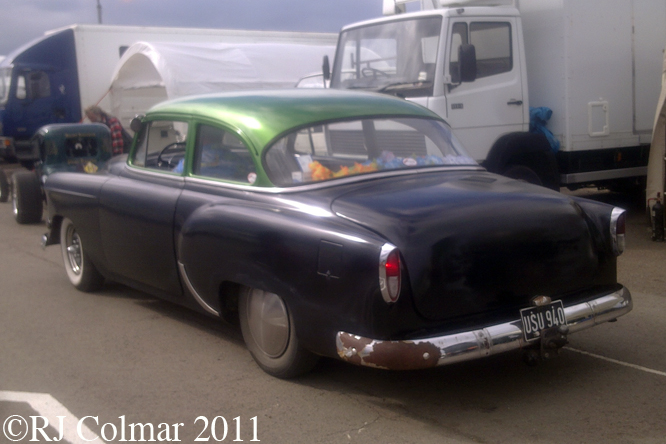
Chevrolet Bel Air, Shakespeare CR

The original concept for the Bel Air was to style a hard top vehicle to look like a convertible, to confuse the issue Bel Air’s were originally available as either 2 door hard top coupé, 4 door sedan, 2 door convertible or 4 door Station Wagon / Estate.

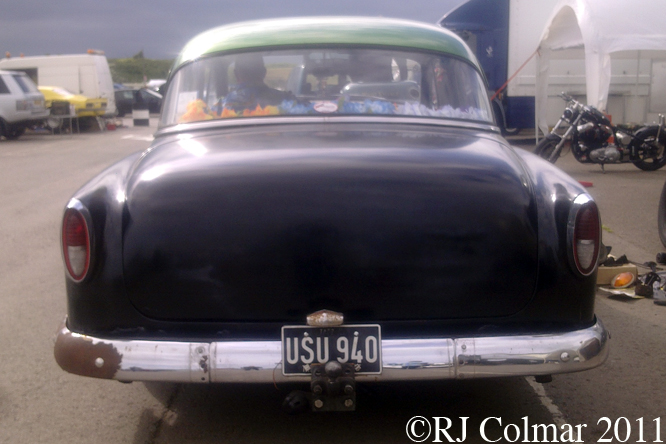
Chevrolet Bel Air, Shakespeare CR

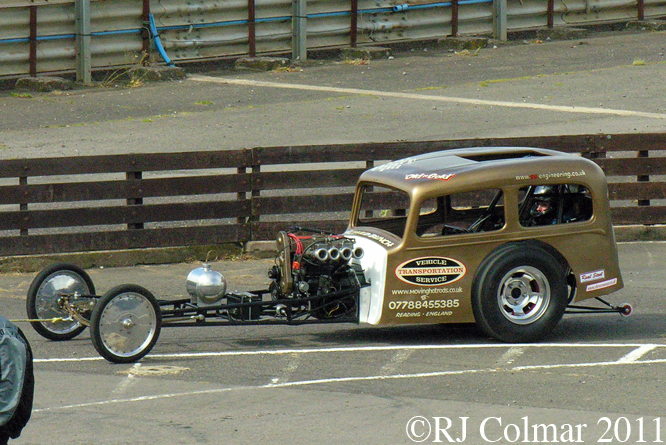
This particular Bel Air is used as a support vehicle by the Gas Racing drag team who run the Pinto powered slingshot coupé Old ‘n’ Gold for drivers Scottie ‘Dog’ Durrant and Gina ‘Hot Rod’ Rumble.

Tiki Munki Old 'n' Gold, Shakespeare CR

According to Facebook Gina was recently recorded a 12.95 ET run in Old’n’Gold.

Thanks for joining me on this ‘Entirely new through and through’ edition of ‘Gettin’ a li’l psycho on tyres’, I hope you will join me again for Ferrari Friday tomorrow. Don’t forget to come back now !
Share

Gatso’s Monte Carlo – Ford Zephyr 6

The largest British Fords from 1950 to 1972 were marketed as the Zephyr and Zodiac models. The first Zephyrs, built between 1951 and 1956, were a longer version of the 4 cylinder Ford Consul fitted with a 70 hp straight six motor.

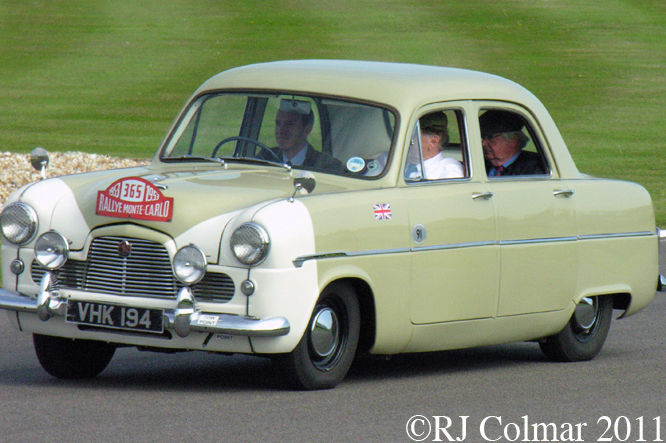
Ford Zephyr 6, Goodwood Revival

The Zephyr 6 above, seen at the Goodwood Revival, is the reshelled remains of the car that Maurice ‘Maus’ Gatsonides and Peter Worledge drove to victory in the 1953 Monte Carlo Rally.

Many drivers may well have heard of the Gatso speed camera, this was developed by Gatsonides originally so that he could measure and improve his cornering speeds in competition.

When ‘Maus’ drove ‘VHK 194’ to his Monte victory it was a Left Hand Drive car that was reshelled into a Right Hand Drive model after sustaining comprehensive damage in an accident.

Richard Dredge drove VHK 194 a couple of years ago. In his amusing report Richard stated the motor has good torque, but not much top end and that the ergonomics appeared to be an after thought, describing the bench seat as giving ‘all the support of a water bed.’

In 1955 Vic Preston Sr and DP Marwaha drove a similar Ford Zephyr 6 to victory on the East African Safari Rally.

Thanks for joining me on this ‘Gatso’ edition of ‘Gettin’ a li’l psycho on tyres’, I hope you will join me again tomorrow. Don’t forget to come back now !
Share

Dream Car – Vauxhall Cresta PA

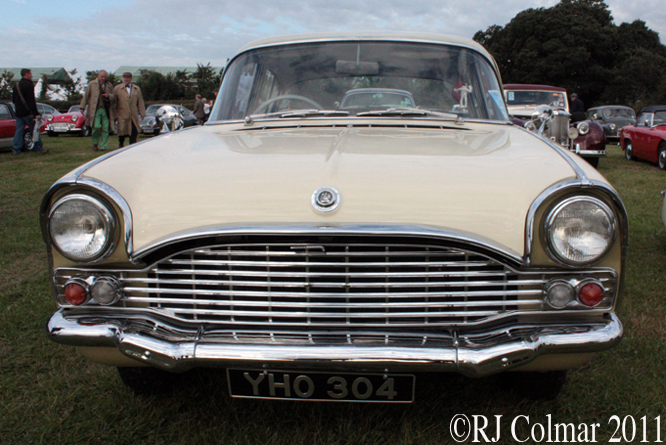
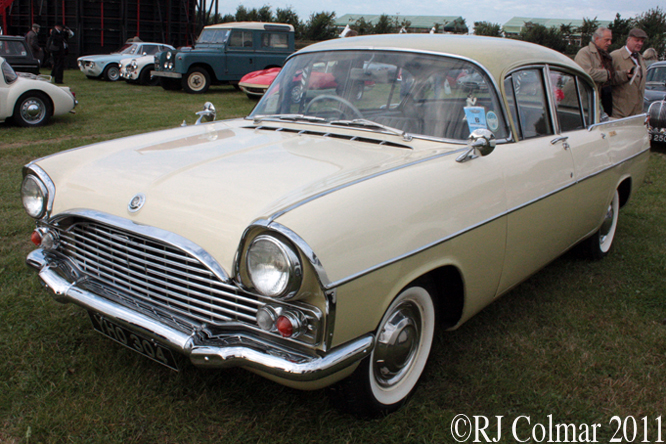
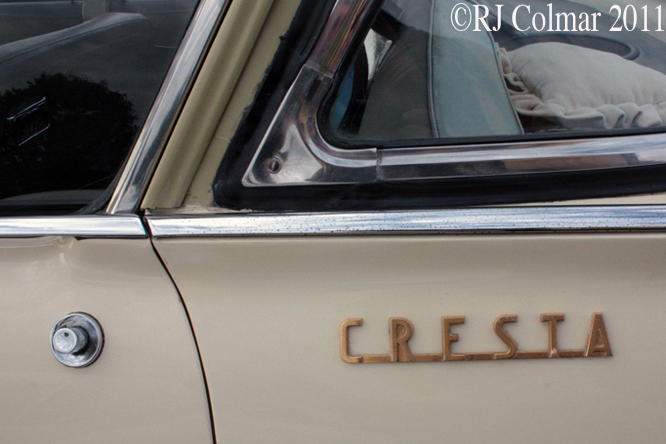
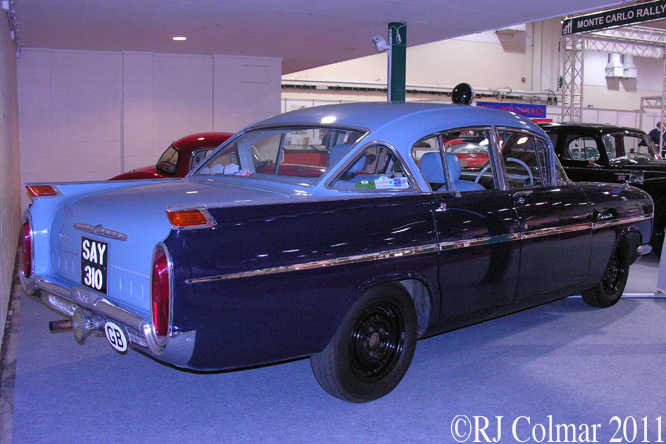
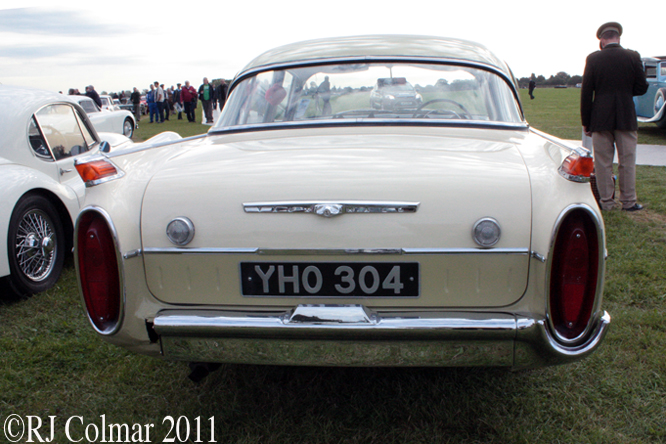
I don’t believe it is any exaggeration to say that no other British mass production vehicle quite captured the spirit of the US Dream Car concepts of the 1950’s quite like the second iteration of the Vauxhall Cresta known as the PA.

1958 Vauxhall Cresta, Race Retro

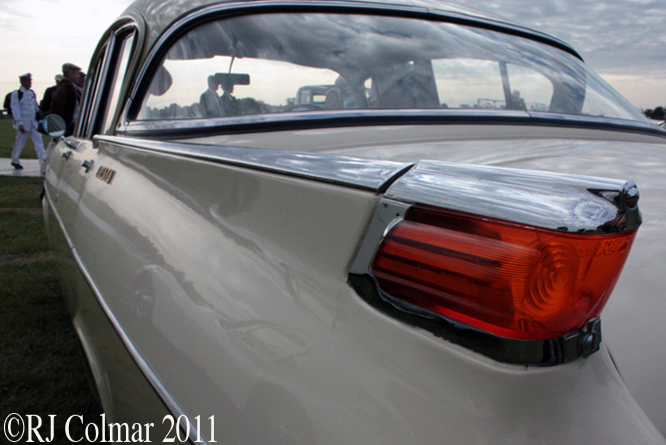
With unadulterated optimistic styling that mimics both the Packard Caribbean production car and Lincoln Futurama Concept car of 1955 the Cresta PA personifies the Rock’n’Roll era of the 1950’s in much the same way as the 1957 Cadillac Series 62.

1958 Vauxhall Cresta, Goodwood Revival

The Cresta PA could seat six with a three abreast bench seat up front, which thanks to a column shift for its three speed gearbox and dashboard mounted handbrake facilitated easy smooching twixt driver and companion.

1958 Vauxhall Cresta, Goodwood Revival

Both of the cars featured in today’s post were powered by a 2262 cc / 138 cui straight 6 cylinder motor that delivered 70 hp enough for the Cresta to reach 60 mph from rest in 16.8 seconds and a top speed of 89 mph.

1958 Vauxhall Cresta, Race Retro

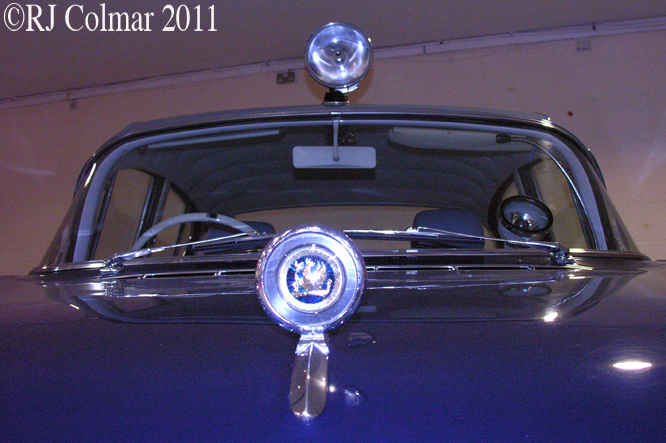
This two tone blue example appears to be a 1958 model, it was used by John Walker and Frank Dimblebee in the 1960 Monte Carlo Rally.

1958 Vauxhall Cresta, Goodwood Revival

Seats covered in leather and nylon, fitted woven carpets and a heater came fitted as standard for the 1960 model above.

1958 Vauxhall Cresta, Goodwood Revival

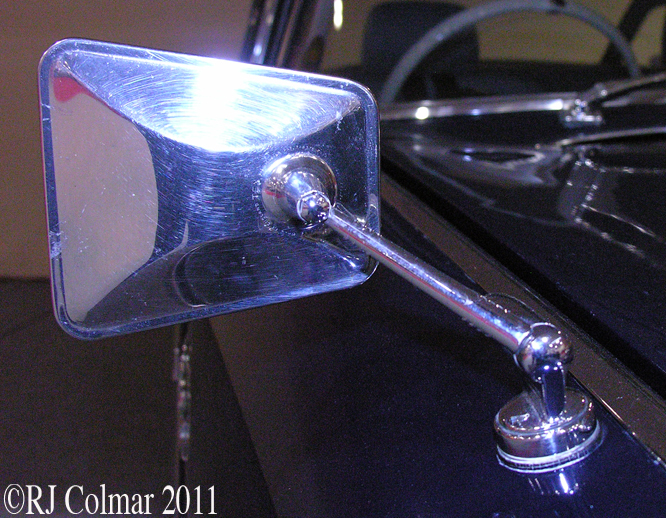
Options included radio, fog lights, reversing lights, locking filler cap and external mirrors.

1958 Vauxhall Cresta, Race Retro

The asking price for one of these classics in good condition today is around £10,000 which reflects the fact that few of the 81,841 PA’s built between 1957 and 1962 have survived.

1960 Vauxhall Cresta, Goodwood Revival

Fans of British ska band The Specials may remember a Cresta PA featured in the video for their seminal hit ‘Ghost Town‘, that was a 1962 model fitted with a larger 104 hp 2651 cc / 162 cui straight six.

Hope you have enjoyed this British Dream Car edition of ‘Gettin’ a li’l psycho on tyres’ and that you will join me again tomorrow. Don’t forget to come back now !
Share

MEBEA MIA ! – Reliant Fox

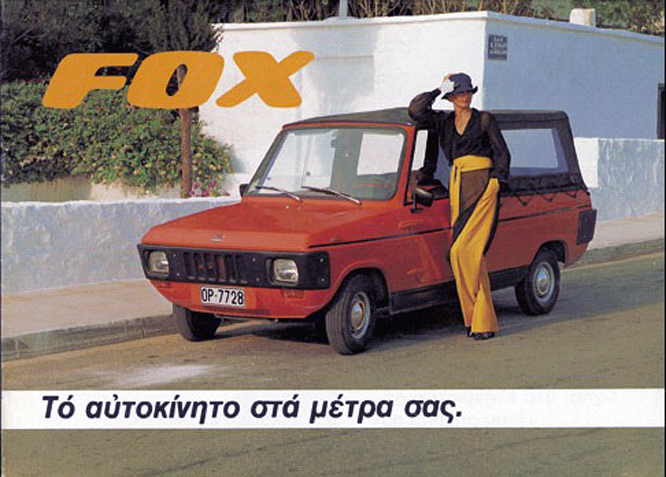
The story of today’s pickup starts in 1960 when two Greek motorcycle assembly operations merged to form Μεσογειακαί Επιχειρήσεις Βιομηχανίας, Εμπορίου και Αντιπροσωπειών which translates to Mediterranean Enterprises for Industry, Commerce and Representations, known as MEBEA. MEBEA manufactured a variety of vehicles using mostly Zundapp motorcycle engines.

MEBEA Fox

Copyright holder unknown image will be removed or credited upon request.

During the 1970’s MEBEA also manufactured glass fiber bodied Reliant vehicles under license. In 1979 the company developed its own pick up the Fox based on the Reliant Kitten chassis and running gear. In order to get the vehicle type approved for the Greek market it was deemed easier and possibly cheaper for Reliant to get the Fox type approved in the United Kingdom first.

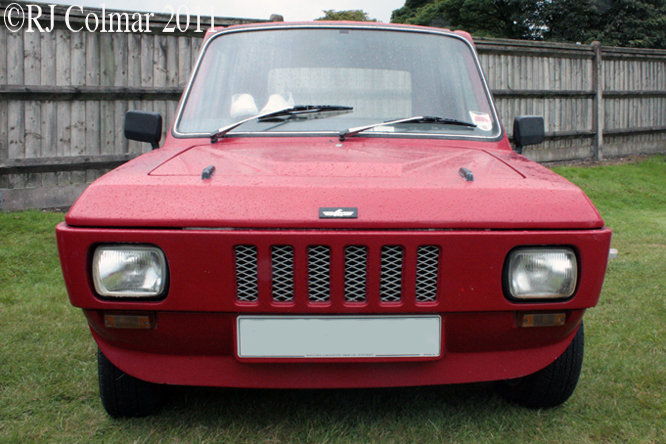
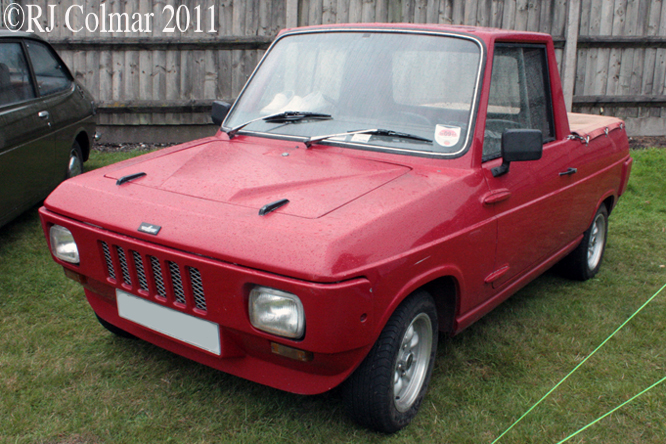
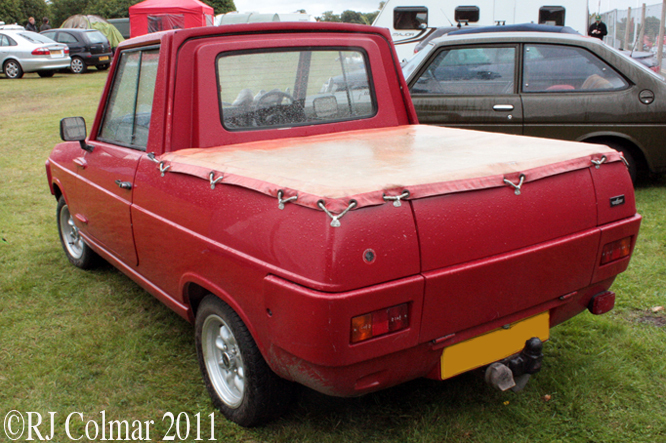
Reliant Fox, Oulton Park

It is thought around 3000 MEBEA Foxes were manufactured between 1979 and 1983 when changes in Greek laws stopped favoring vehicles like the Fox.

Reliant Fox, Oulton Park

However that was not the end of Fox production, no sooner had MEBEA ceased production of the Fox in Greece than Reliant started to produce the Fox, powered by an all aluminium 848 cc / 52 cui 4 cylinder motor, for the British market.

Reliant Fox

This 1984 Fox, seen above at Oulton Park, is one of around 600 built between 1983 and 1990.

My thanks to L.S. Skartsis and G.A. Avramidis who’s excellent book “Made in Greece” Typorama, Patras, 2003 proved an invaluable reference source.

Thanks for joining me on this Greek odyssey edition of ‘Gettin’ a li’l psycho on tyres’, I hope you will join me again tomorrow. Don’t forget to come back now !
Share