Tag Archives: Auto

Grand Prix City – Donington Park Museum

Donington Park Museum

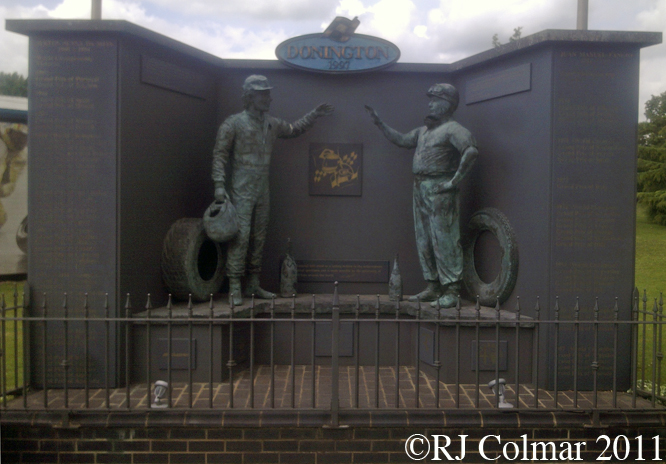
(Ayrton Senna & Juan Manuel Fangio)

A couple of weeks ago I had the opportunity to drop in to the Donington Park Museum, home to the Donington Park Grand Prix Collection. Donington Park dates back to at least the Doomesday Book compiled in 1086 and is one of the longest established deer parks in the UK.
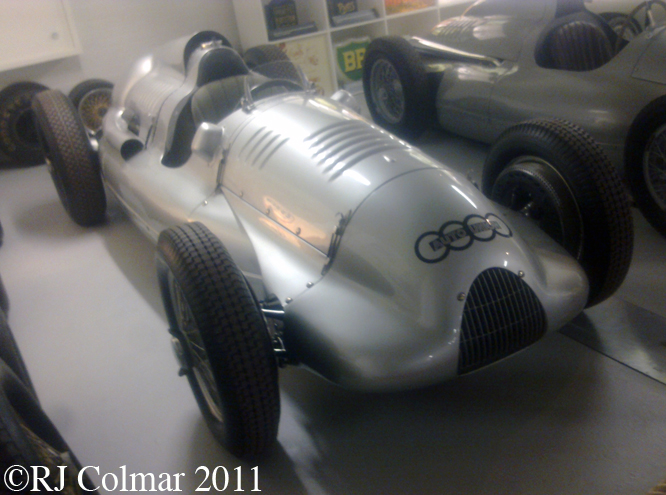
Auto Union Type D, Donington Park Museum

(1939 Auto Union Type D)

After serving as a Prisoner Of War camp for German officers in World War 1, a race track was built in 1931 for £12,000. The track played host to Grand Prix races featuring the Mercedes and Auto Union ‘Silver Arrows’ Grand Prix cars, Tazio Nuvolari driving an Auto Union during practice for the 1938 British Grand Prix fatally struck a stray deer.
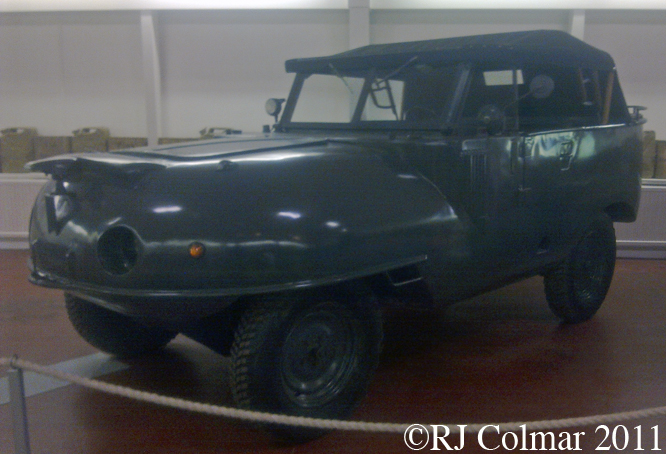
Trippel SG6, Donington Park Museum

(1942 Trippel SG 6)

During World War 2 Donington Park became home to 50,000 vehicles as the largest military transport depot in Europe. In 1971 local building magnate Tom Wheatcroft took over the Donington Park circuit and 8 years later racing was resumed after a nearly 40 year break. The highlight of the resumption of racing at Donington was almost certainly the 1993 European Grand Prix.
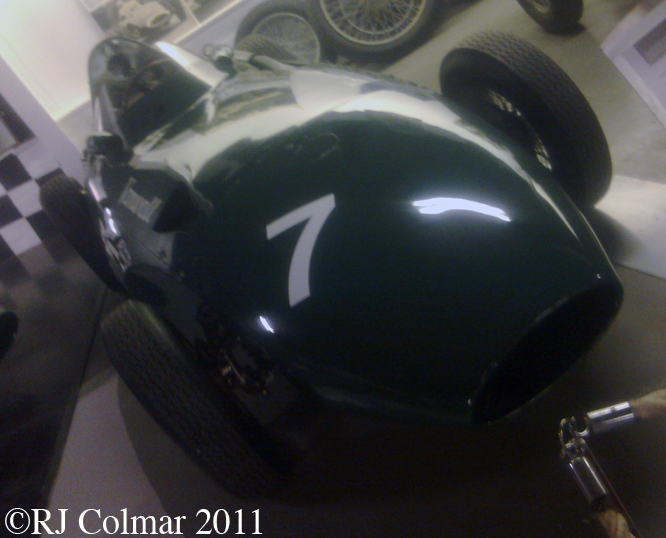
Vanwall VW9, Donington Park Museum

(1958 Vanwall VW9)

Tom Wheatcroft alongside his property developing business had a passion for racing, collecting vehicles associated with the circuits pre war history, vehicles used in WW2, during which Tom served in a tank regiment and British built Grand Prix cars.

March BMW 732, Donington Park Museum

(1973 March BMW 732)

He also sponsored and entered talented drivers, including Derek Bell, Richard Morgan and in particular Roger Williamson whom Wheatcroft financed in Formula 3 and 2 and an ill fated Grand Prix drive in which Roger met his untimely demise in a horrific accident during the 1973 Dutch Grand Prix.
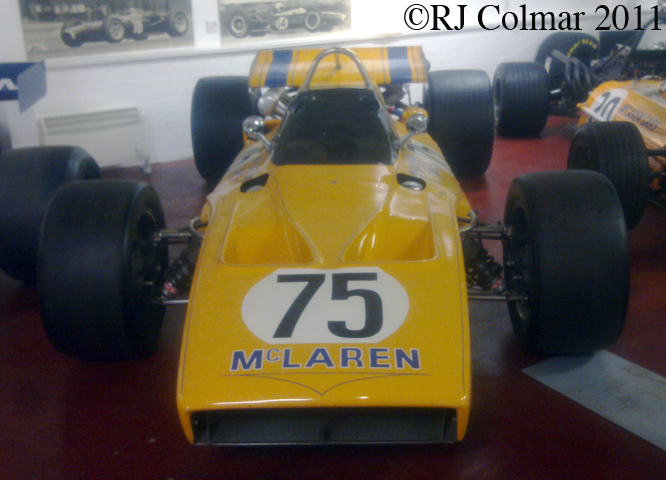
McLaren M15, Donington Park Museum

(1970 McLaren Offy M15)

The Donington Park Museum houses the largest collection of McLaren
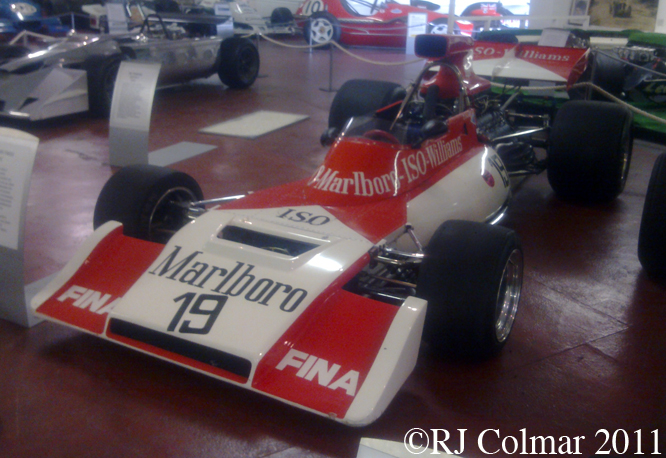
Williams FW02, Donington Park Museum

(1973 Williams – Cosworth FX3B)

and Williams vehicles outside of these two prestigious manufacturers own collections.
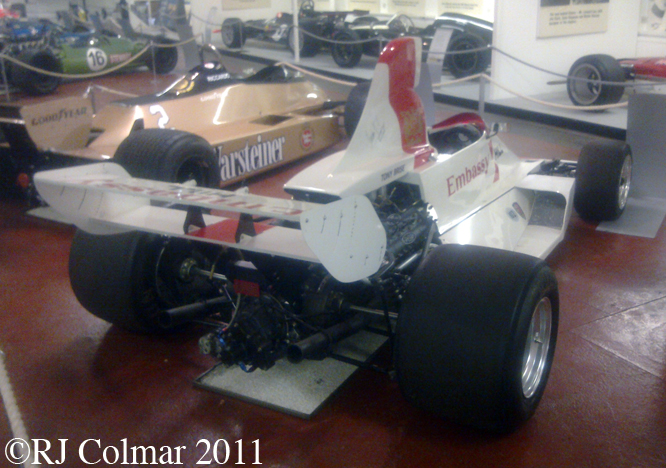
Hill GH2, Donington Park Museum

(1975 Hill – Ford GH2)

I spent several memorable hours going round the museum housing a veritable feast of some of the highs and low’s of British Grand Prix endeavour. Situated just of the M1 near Nottingham, at just £8 a visit, I’ll look forward to dropping in again when the opportunity next presents it’s self.

Slightly off topic, wishing all GALPOT readers in the USA and US readers abroad Happy Independence day.

Thanks for dropping today’s Donington Park edition of ‘Gettin’ a lil psycho on tyres’ i hope you’ll join me again tomorrow for a look an Independence day cruise in the UK. Don’t forget to come back now !

Share

When Colleen’s away …. – Allard J2 – 1513

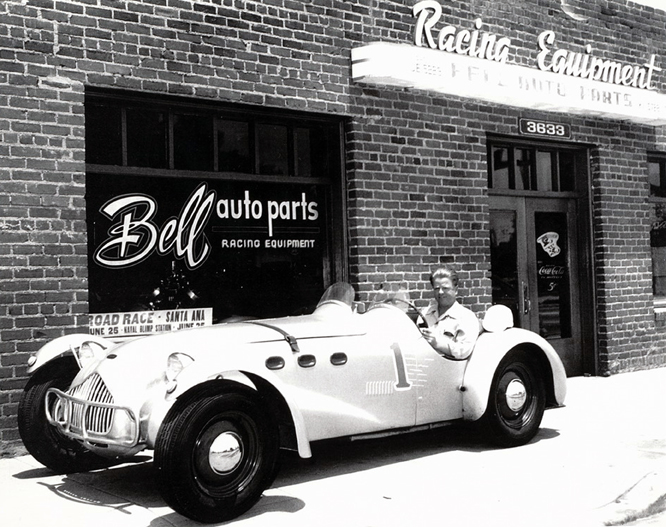
Today’s story begins in the sun fried podunk called Bell on the west side of an arid ditch called Los Angeles River in California, where ‘Okie’ George Wright drifted in 1919 and started a wrecking business that transformed over time to become the world first speed shop called Bells Auto Parts for competitors running Model T’s.

Just before the second world war a lanky redheaded kid called Roy Richter from Maywood California, a perfectionist with a genius for pattern making and fabrication started building a reputation at Cragar, a company owned by George White , manufacturing Leo Goosen designed cylinder heads and at Bell Auto Parts where Roy built his first Saxon midget, then raced it successfully.

Roy moved to Detroit where he continued to manufacture dirt track cars, but in 1938 after a racing tour of New Zealand, Roy settled again in California where he built an extremely successful Offenhauser powered midget for Sam Hanks, the eventual 1957 Indy 500 winner aboard the Belond Exhaust Special.

During the war Roy worked in the aircraft industry and his former employer George Wright of Bell Auto Parts passed away, Roy took the opportunity to lease Bell Auto Parts, raising the money by selling his Model T.

After the war a huge demand for racing equipment was unlocked as hundreds of thousands former forces personnel who had built up an enthusiasm for all things mechanical during the war now had the time and disposable income to explore their curiosity to go faster and further.

Allard J2

(Photo Courtesy Bernard Dervieux)

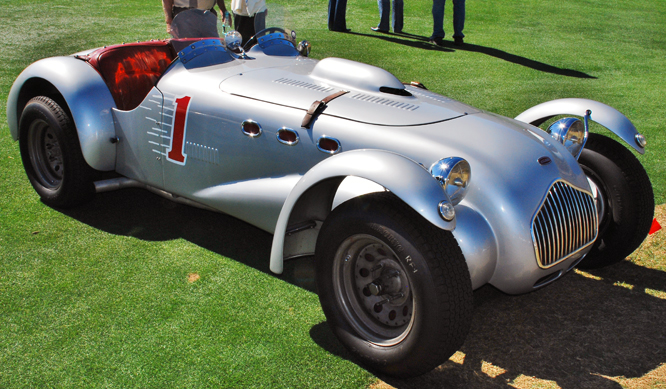
Bell Auto Parts took full advantage of it’s position as a distributor of performance parts and diversified with a mail order catalogue. Roy with an eclectic taste in vehicles midgets, desert streamliners and sports cars became the California distributor for Allard cars and imported this vehicle the 3rd J2 built and the 8th ever imported to the USA.

Allard J2

(Photo Courtesy Bernard Dervieux)

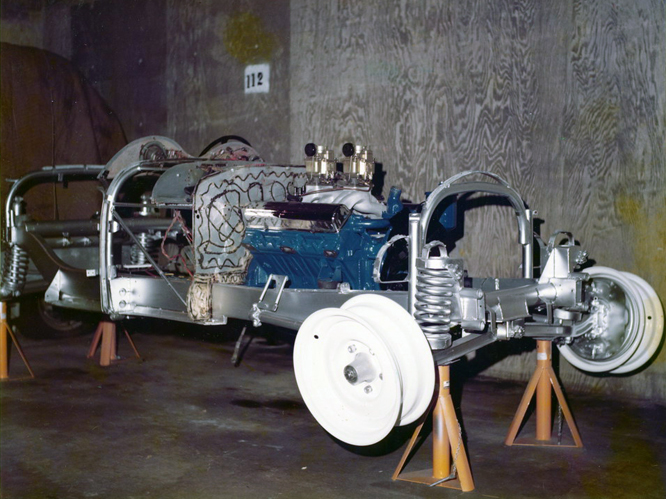
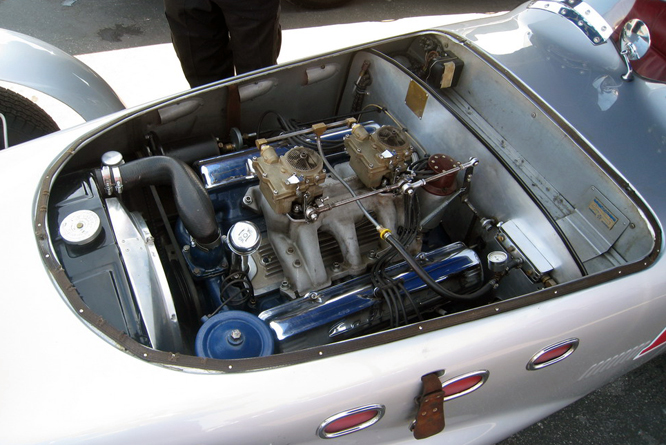
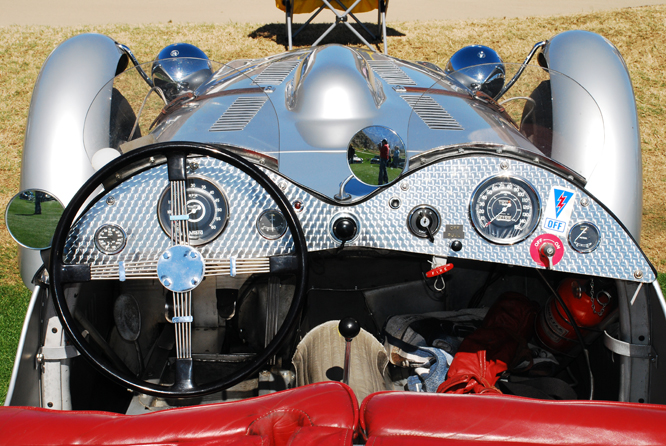
Allard J2 1513 was shipped to the USA without a motor, as was customary, and Roy installed a Cadillac 331 cui V8.

Allard J2

(Photo Courtesy Bernard Dervieux)

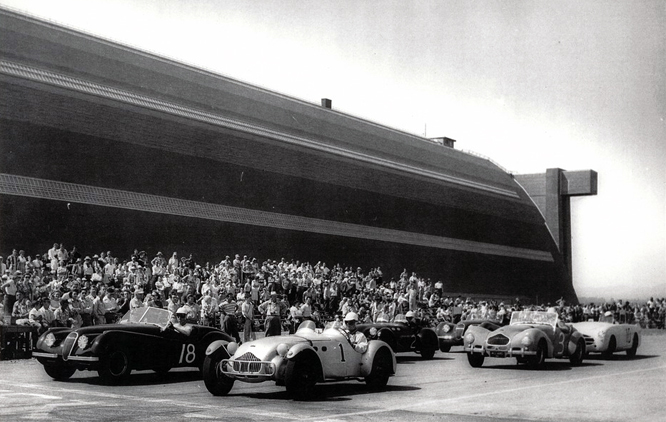
On one occasion when Roy’s wife Colleen was away he took his #1 Allard J2 down to the US Navy airship base at Santa Ana and entered a race with amongst others a couple of XK120’s driven by Phil Hill (#18), and Jack McAfee (last row), Tom Frisbey (#3) Allard K2, Basil Panzer (#2) Allard J2, and Sterling Edwards (#10) Edwards R26.

Roy won the race and when his wife came home he is said to have confessed all and promised never to race again.

In 1953 Richter diversified his interests into the manufacture of safety helmets hoping to capture the market occupied by English Cromwell leather head gear which he distributed. The success of the Bell 500 was followed by the first helmet to meet Snell standards the Bell 500 TX helmet in 1957.

Roy followed the diversification into safety equipment with a response to the ‘strength and style deficiency’ in after market performance wheel market sold under the Crager brand name he had acquired from the White estate.

Allard J2

(Photo Courtesy Bernard Dervieux)

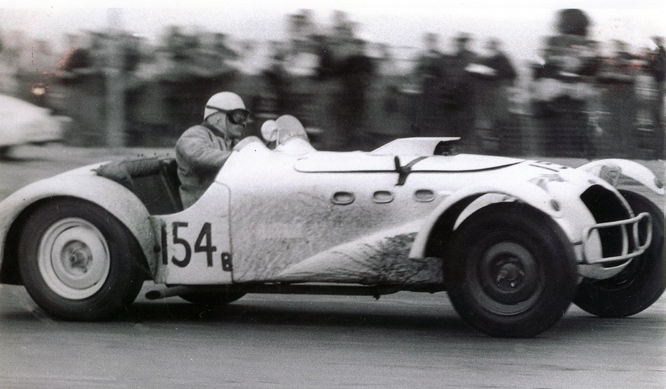
In 1954 William ‘Bill’ Leach acquired Roy’s J2, now painted white, from a third party, Bill raced the car without much success and sold it in 1956 to pursue his interest in horse racing.

Allard J2

(Photo Colin Warnes)

Bernard Dervieux, acquired Roy Richter’s J2 1513 in 2000,

Allard J2

(Photo Colin Warnes)

it is still fitted with its Cadillac motor

Allard J2

(Photo Colin Warnes)

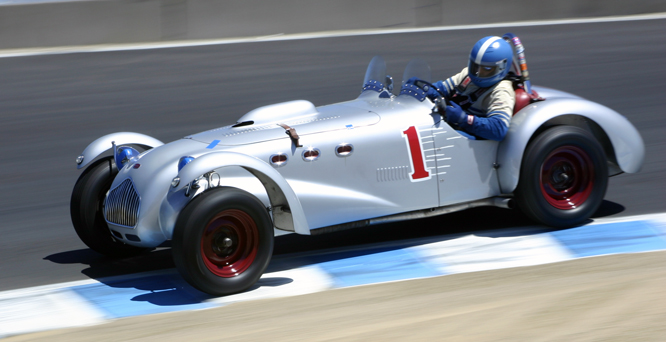
powerful enough to provide plenty of excitement 60 years after it’s debut win.

Allard J2, Desert Classic C d'E

(Photo Geoffrey Horton)

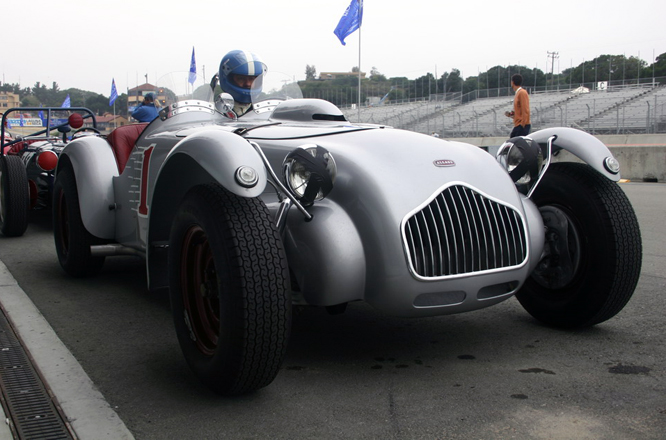
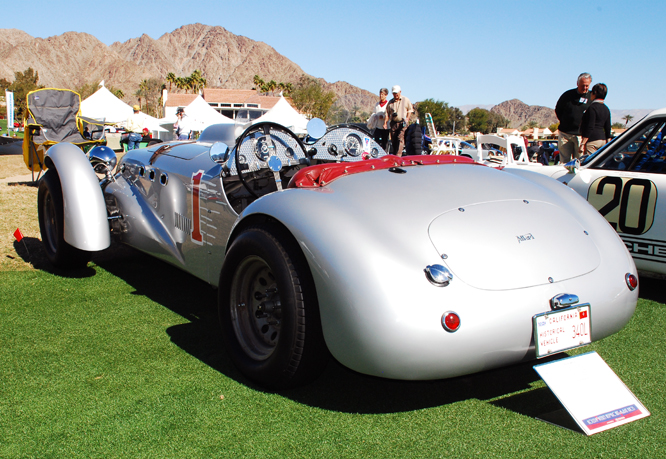
Earlier this year the #1 J2 -1513 was seen at the Dessert Classic, apart from its non period yet apt Cragar wheels,

Allard J2, Desert Classic C d'E

(Photo Geoffrey Horton)

the car is in original immaculate shape,

Allard J2, Desert Classic C d'E

(Photo Geoffrey Horton)

a fitting testament to the extraordinary figure who first owned her Roy Richter.

My thanks to Geoffrey Horton, who initiated today’s blog, Colin Warnes, of The Allard Register, and Bernard Dervieux, the owner, for sharing their photos.

Further thanks to Frank, Woody and David at The Nostalgia Forum, to Mr Holland at The Cadillac Forum and Brock Yates of Car & Driver for background information.

Hope you have enjoyed this ‘Roy will play’ edition of ‘Gettin’ a lil psycho on tyres’ and that you will join me again tomorrow for a trip to the Atwell Wilson Museum. Don’t forget to come back now !
Share

He who is first will later be last – Auto Gymkhana

BPMC, Auto Gymkhana

Flush with success after my first production car trial, last weekend I joined members of The Bristol Pegasus Motor Club and took part in an Auto Gymkhana for the first time at Sheepcot Farm not far from Chepstow.

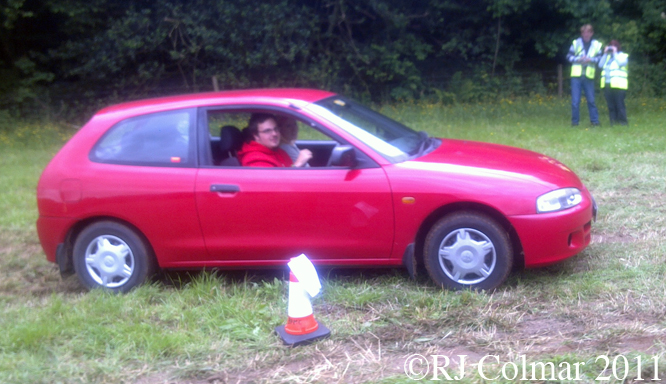
Mitsubishi Colt, BPMC, Auto Gymkhana

(Ben in his Mitsubishi Colt finished 6th Overall)

There were 12 entries 11 of which stayed for the full 24 stages of the competition which centred on variations of 4 basic tests.

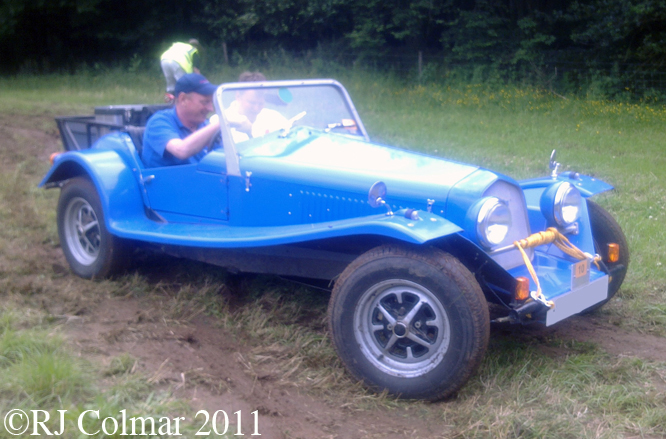
Marlin, BPMC, Auto Gymkhana

(Nick and Andy shared Andy’s Marlin, Andy finished 2nd and Nick 8th)

The first group of tests focused on parking skills in forward and reverse alongside a plank of wood. Not such a difficult task but when done competitively in one manoeuvre surprisingly difficult to get the wheels as close to the plank as possible without touching the plank. The competitor who parked with the front wheel closest to the plank won. There were further parking tests to see who could park closest to a cone.

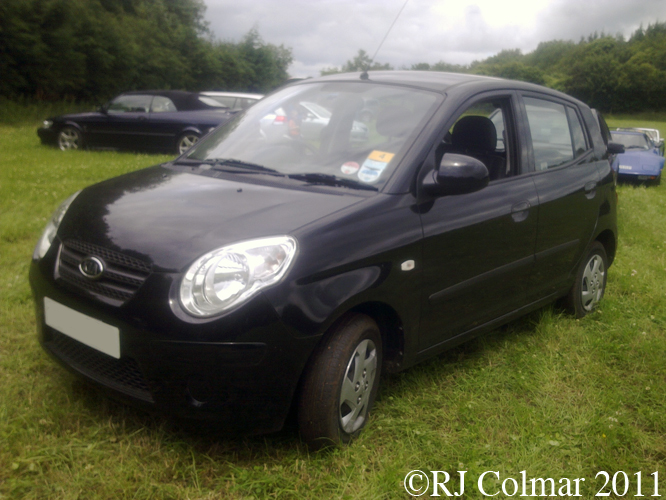
Kia Picante, BPMC, Auto Gymkhana

(Kia Picante in which I came 10th)

Next came a timed slalom first time round I got the gates a bit mixed up at the end which meant I somehow contrived to travel a longer distance than necessary. Driving my landladies mothers Kia Picante I was woeful on this test deciding that discretion was the better part of valour I aimed to improve my times through each timed run and tried to avoid scratching the car by running too close to the markers.

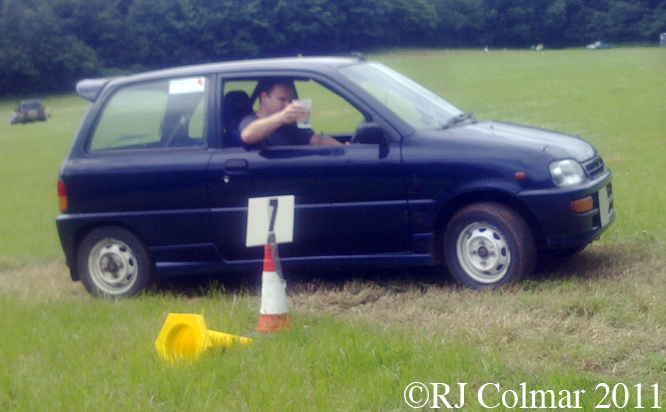
Daihatsu Curore, BPMC, Auto Gymkhana

(Daihatsu Curore shared by Chris and Coralie who finished 3rd and 4th.

I did much better when it came to driving round the slalom holding a pint of water in my own time spilling less water than most I finished in the top 3 each on each of the 3 occasions this test was run.

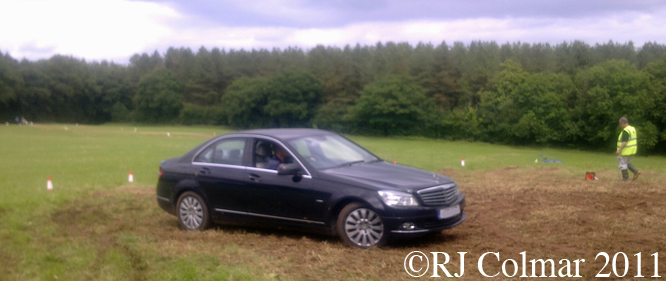
Mercedes 220 CDi, BPMC, Auto Gymkhana

(Ken in the Mercedes C220 CDi with the amazing turning circle finished 11th)

The hillclimb proved relatively simple for everyone except for Ken in his Mercedes C220 CDi which could handle the turns but had no weight over the rear axle to afford the necessary traction over the final incline which got progressively more slippery.

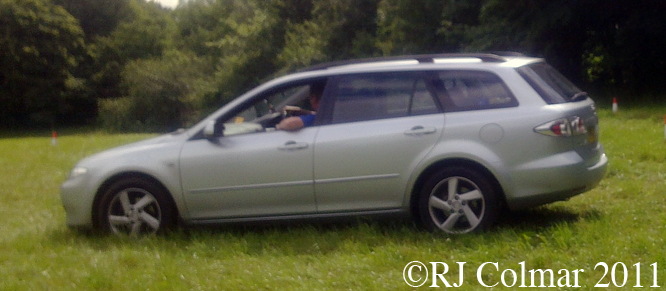
Mazda 626, BPMC, Auto Gymkhana

(Nick soon came to the conclusion that his Mazda 626 did not have a good enough turning circle)

Finally there was an autotest which involved driving round a course of tight circles parking in garages and some reversing. Nick dropped his Mazda 626 out of the competition immediately when it became apparent his car simply did not have anything like enough steering lock to compete. He ended up sharing Andy’s Marlin instead.

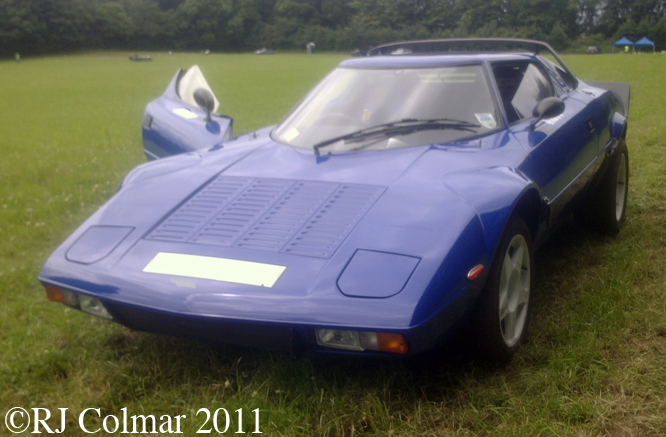
Hawk HF3000, BPMC, Auto Gymkhana

(Alan brought his Hawk HF3000 in 9th.)

Alan driving a Hawk HF 3000 Lancia Stratos replica powered by a 3 litre ALFA Romeo V6 needed a co-driver on the autotest in order to open the passenger door and make calls on the positions of the cones when reversing ! I jumped in to help Alan on a couple of occasions and was struck by the heat coming off the radiator in front of the footwell and the engine mounted directly behind the seats. A fabulous car to sit in for the slalom though.

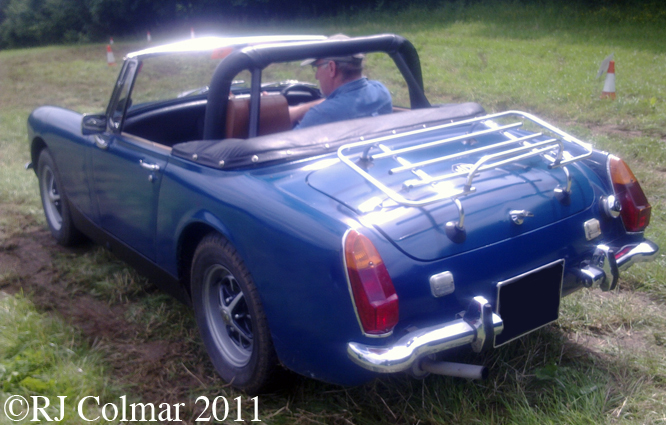
MG Midget, BPMC, Auto Gymkhana

(Mal in his all conquering MG Midget Mk3 )

Clear winner of the event was Mal in his MG Midget Mk3 which he bought for just £250 many years ago.

My thanks to Martin and team of marshals who ran a wonderful days competition, to Tim who kept score of the days activities to Alan for the the ride in the HF 3000 and congratulations to Mal.

Hope you have enjoyed today’s Auto Gymkhana edition of ‘Gettin’ a lil’ psycho on tyres, and that you will join me again tomorrow. Don’t forget to come back now !
Share

Pininfarina Renaissance – FIAT 130 Coupé

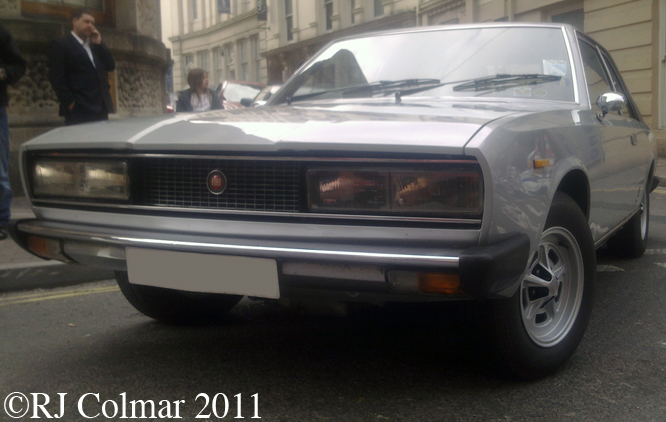
Returning to the Bristol Italian Auto Moto Festival back in April today’s car is the stylish sharp edged FIAT 130.

FIAT 130, BIAMF

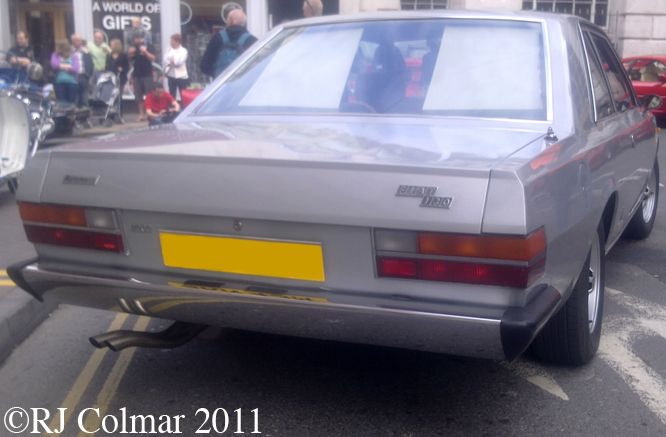
Launched to much acclaim at the 1971 Geneva Motor show the FIAT 130 Coupé was designed by Paolo Martin at Pininfarina and won a design prize which marked a renaissance for a company that had fallen from favour since it’s heyday designing the Fiat 1800 Peugeot 404 and Austin A55 and A60 concepts for large volume producers in the late 50’s and early 60’s.

This smart new vehicle was powered by a 165 hp 3235 cc / 197 cui twin over head cam V6 designed by Aurelio Lamperdi designer of the original 4 cylinder Testa Rossa engine.

FIAT 130, BIAMF

Just 4,294 examples of the FIAT 130 Coupé were produced from 1971 to 1977, this marked the end of FIAT’s presence in the Executive end of the automotive market, future vehicles for this market segment were handled by the Lancia marque which was also owned by the FIAT conglomerate.

Thanks for popping in to today’s Paolo Martin styled edition of ‘Gettin’ a lil’ psycho on tyres’, I hope you will join me again tomorrow. Don’t forget to come back now !
Share

Springbok Special – ALFA Romeo GTV6 3.0

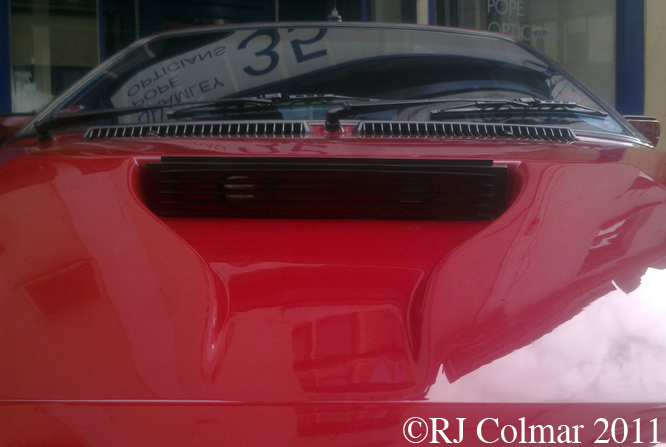
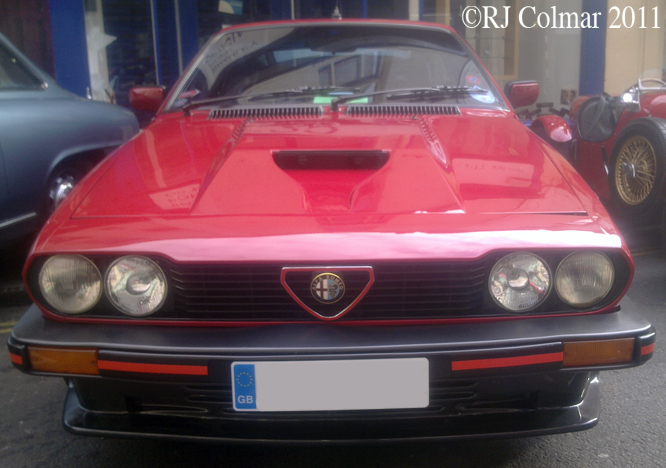
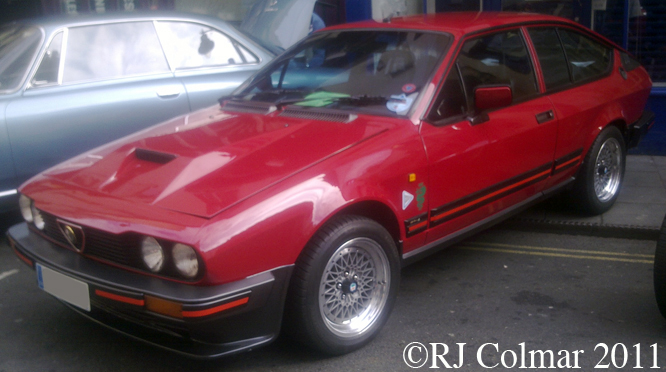
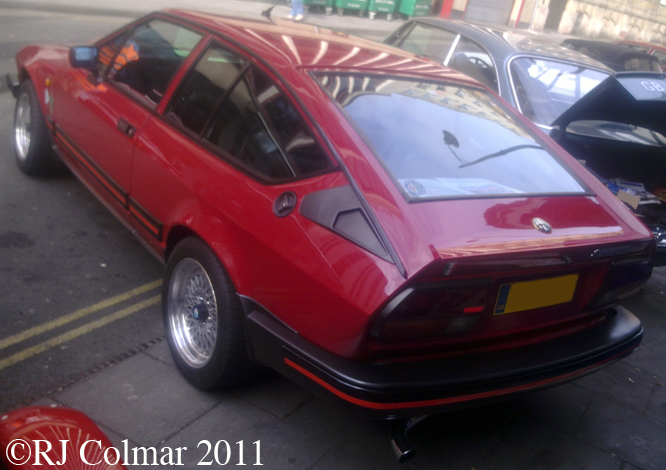
The ALFA Romeo GTV 2.5 was in production from 1980 to 1987 it featured a a fuel injected 156 hp 2,492 cc / 152 cui V6 motor from the Alfa 6 model, a rear mounted gearbox to optimise weight distribution just like the Porsche 924/944/968 and an attractive Giorgetto Giugiaro body with a bulge in the bonnet / hood to accommodate the V6 engine.

ALFA Romeo GTV6 3.0, BIAMF

These vehicles won four consecutive European Touring (stock) Car titles, however out in South Africa the touring cars were running to different regulations with a 3.5 litre / 213 cui class cut off as opposed to the 2.5 litre 152 cui class cut off as used in much of the rest of the world.

ALFA Romeo GTV6 3.0, BIAMF

In order to race competitively against BMW which ran 3.5 litre engines in South African Touring Car Races ALFA Romeo in South Africa approached Autodelta the competition arm of ALFA Romeo who obliged by supplying enough parts developed for a rally programme to build around 220 2934 cc / 179 cui carbureted V6 engines which were assembled and tuned in South Africa.

ALFA Romeo GTV6 3.0, BIAMF

The outcome was a vehicle that in 1983 beat BMW to win the South African Touring Car Championship and in mid 1984 was declared the fastest South African assembled vehicle with a top speed of 139 mph / 224 kph.

ALFA Romeo GTV6 3.0, BIAMF

With that ALFA Romeo Montreal inspired NACA duct in the bonnet and deep spoiler this 3 litre GTV6, belonging to Richard an acquaintance from ‘The Nostalgia Forum‘, is quite easy to distinguish from its 2.5 litre brethren.

My thanks to Richard for bringing his pride and joy to the Bristol Italian Auto Moto Festival.

Hope you have enjoyed todays Springbok edition of ‘Gettin’ a lil’ psycho on tyres’ and that you will join me again tomorrow. Don’t forget to come back now !
Share

Too Dangerous To Race – Ferrari GTO

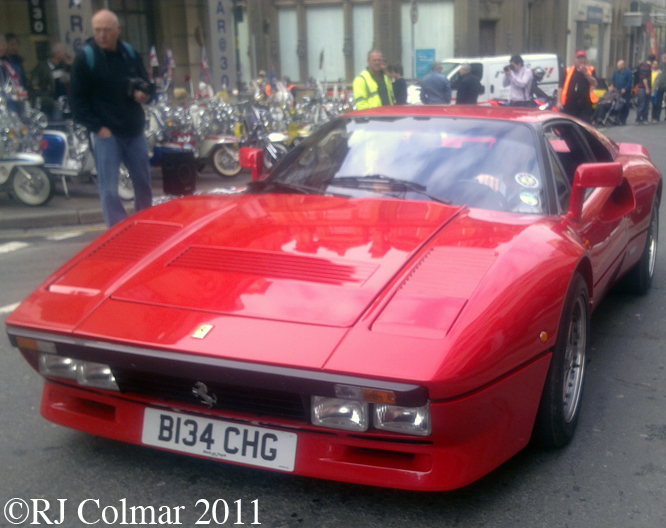
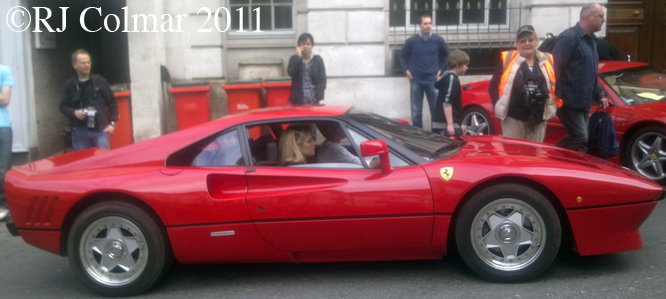
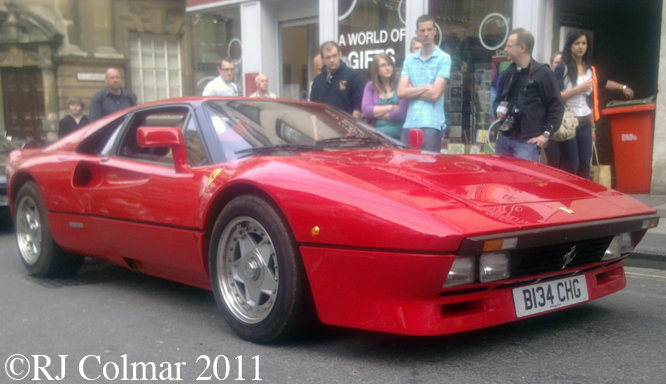
The Ferrari (288) GTO was designed to meet the 4 litre Group B regulations for rallying and racing sports cars which came into effect in 1982 .

01 Image3256sc

To be homologated, granted approval, to compete in the liberal loose Group B classes of rallys and races 200 identical examples of a model had to be manufactured.

02 Image3257sc

From 1984 – 1986 272 examples of the Ferrari 288 GTO were manufactured with a view to competing against the similar, albeit fitted with 4 wheel drive, Porsche 959/961.

04 Image3285sc

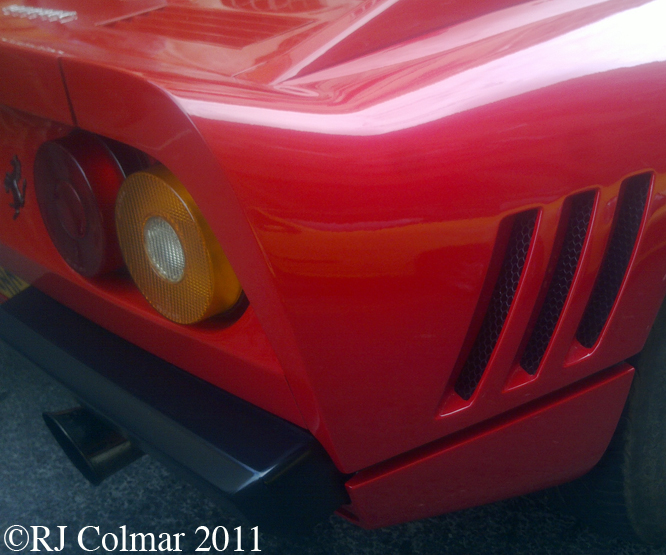
The 288 GTO was loosely based on the Ferrari 308 GTB though the rear bodywork was extended to incorporate the engine which was now longitudinally mounted rather than transversely mounted as in the 308 GTB.

05 Image3263sc

Pininfarina designed body panels for the 288 GTO were manufactured from a combination of fibreglass, aluminium and F1 technology Kevlar however in the interests of safety the door panels were made of steel.

06 Image3262sc

With four hundred horsepower available, in road trim, from the twin turbo charged 2855 cc / 174 cui V8 it is regrettable that the 288 GTO never saw any competitive action as a result of the Group B regulations being deemed to dangerous for competition after a number of fatalities in Group B rally events during 1986. By 1987 the Group B regulations and even more lax Group S regulations had been suspended in the interests of safety.

This 1985 model, known officially as a Ferrari GTO but often called 288 GTO to distinguish it from other Ferrari GTO models, is seen at the recent Italian Auto Moto Festival in Bristol.

Hope you have enjoyed today’s homologation edition of ‘Gettin’ a lil psycho on tyres’ and that you will join me again tomorrow. Don’t forget to come back now !
Share

Eye popping variety – Bristol Italian Auto Moto Festival

Yesterday was a long day due to a variety of pleasurable commitments which meant I got up at 7 am so that I could go down to watch the Bristol Italian Auto Moto Festival being set up.

01 Image3274sc

Getting up so early was not in the least disappointing , seeing my home city centre full of Ferrari’s, Maserati’s, a couple of De Tomaso’s and a familiar Lamborghini amongst many others, some models of which I saw close up for the very first time.

It was a particular joy to briefly meet David who’s Special ALFA Romeo Lenham Healey was featured on this blog some month’s ago and Richard Harman who’s extremely rare South African Autodelta 3 litre / 183 cui ALFA Romeo GTV6 will be feature on this blog in the not to distant future.

02 Image3312sc

As the name suggests this Festival is a veneration of all modes of Italian powered personal transport including a stunning array of motor bikes, Benelli, Laverda, Ducatti, Moto Guzzi and MV Agusta among them, many worthy of inclusion in this blog and indeed one will also appear on this blog in the near future.

03 Image3273sc

Finally mention should be made of the many ‘Mods’ who turned up on their Lambretta’s and provided a welcome Quadrophenia inspired sound system to their area of the Festival.

I’d like to thank the organisers for arranging a memorable day out in my adopted home town and thank all those who took the time and trouble to bring their bella machina’s from far and wide, I look forward to sharing more detailed images and stories of some of the 50 vehicles I photographed during my all too brief two hour visit.

Compared to last years excellent Festival the organisers excelled themselves and cranked up the level of expectation for next year up another notch.

Hope you have enjoyed todays Italian edition of ‘Gettin a lil’ psycho on tyres’ and that you’ll join me again tomorrow when God willing I’ll be reporting on my competition debut in the discipline of Production Car Car Trial’s. Please keep your fingers crossed for me and don’t forget to come back now !
Share