Tag Archives: Colmar

Room For Two – Maserati 8CTF #3030

In 1937 the Maserati brothers harvested a reputation for building unprofitable but successful racing cars by agreeing a deal Adolfo Orsi in which Orsi took financial control of Maserati in return for the brothers commitment to work for the company that bore their name for at least ten years.
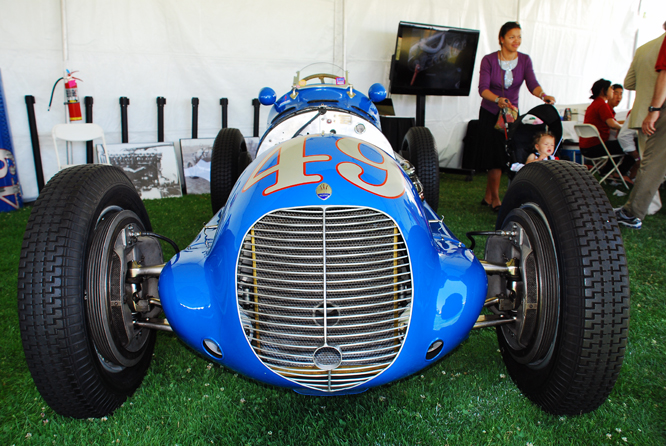
Maserati 8CTF, Palo Alto Concours d'Elegance

For 1938 new rules were introduced for the top echelon of European open wheel racing that had been dominated by Auto Union and Mercedes Benz since 1934. The new rules introduced for the first time a minimum weight depending on engine displacement of either 3 litres / 183 cui supercharged or 4.5 litres / 274 cui normally aspirated.
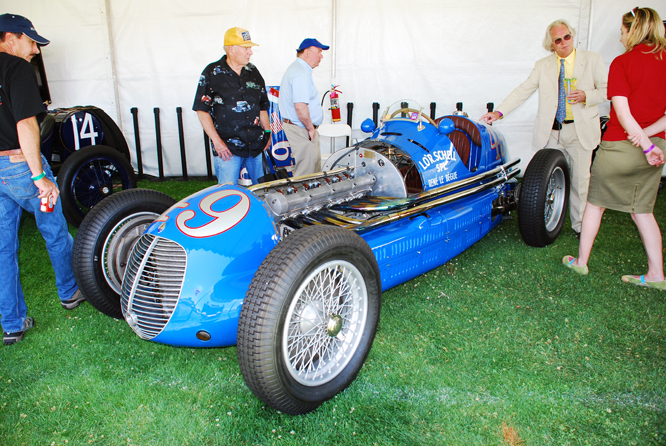
Maserati 8CTF, Palo Alto Concours d'Elegance

The Maserati brothers decided to go the supercharged route with a 3 litre / 183 cui in line 8 cylinder motor that featured a fixed ‘testa fissa” cylinder head that did away with the need for leaky cylinder head gaskets and allowed the motor to run with high supercharger pressure which was provided by two Roots type superchargers. in all 4 8CTF twin cam two valve motors were built that produced 365 hp. Well down on the 470 plus quoted for the contemporary V12 Auto Union D-type and Mercedes Benz W154.
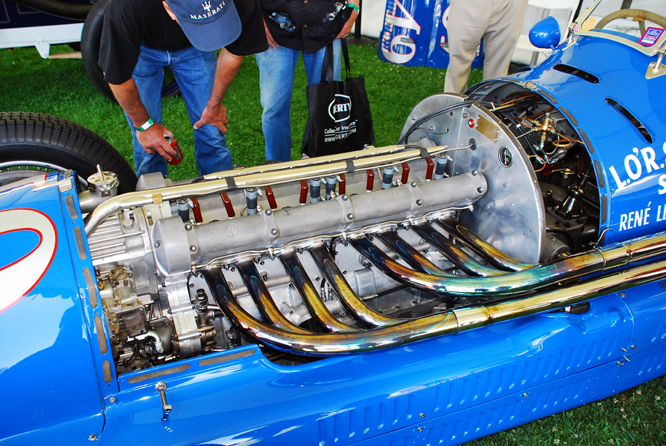
Maserati 8CTF, Palo Alto Concours d'Elegance

Along with the 4 motors Maserati built 3 8CTF chassis numbers #3030, #3031 and #3032 all of which were entered for races in Europe with the greatest success being recorded by Paul Pietsch who led the 1939 German Grand Prix before six pit stops ensured a best 3rd place finish 1 lap down behind the winning W154 of Rudolf Carraciola and 2nd place D-Type of Hermann Paul Müller.
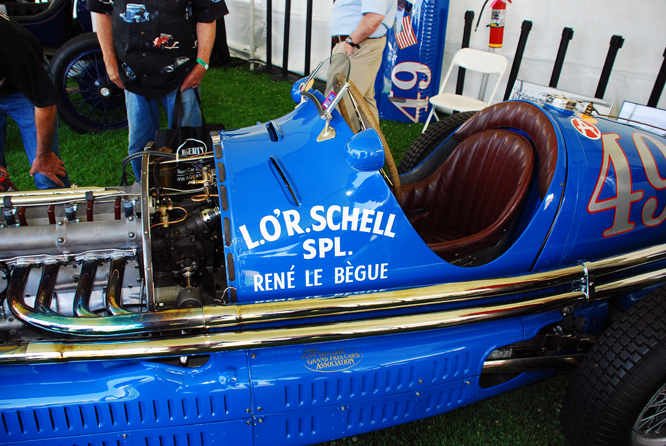
Maserati 8CTF, Palo Alto Concours d'Elegance

By the time of the 1939 German Grand Prix 8CTF chassis #3032 had been sold to Chicago Electricians Unionist Michael J. “Umbrella Mike” Boyle who had fielded the winning Boyle Products Special/Miller Indianapolis 500 entry for “Wild Bill” Cummings in 1934 eight years after his first entry in the Greatest Race On Earth. For the ’39 Indy 500 the Maserati was prepared by Crew Cheif Harry “Cotton” Henning and renamed “Boyle Special” that driven to Victory Lane by Wilbur Shaw who the following year using the same car became the first back to back repeat Indy 500 winner.
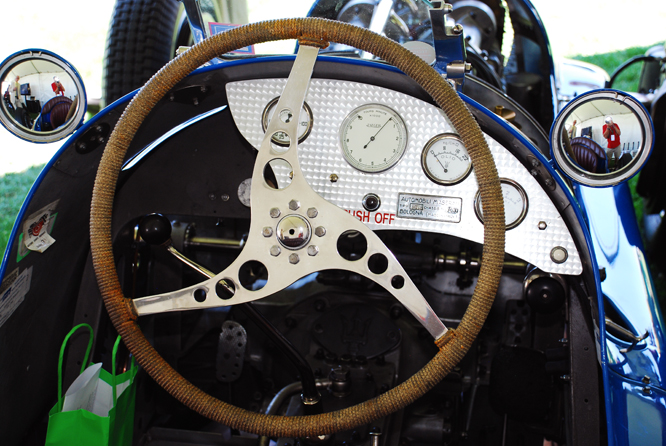
Maserati 8CTF, Palo Alto Concours d'Elegance

Today’s featured chassis #3030, seen in photographs by Geoffrey Horton at the 2011 Palo Alto Concours d’Elegance, was acquired by owner Lucy O’Reilly Schell along with the sister #3031 chassis who entered both cars in the 1939 Swiss Grand Prix for René Dreyfus and Comte Georges Raphael Bethenod de Montbressieux also known in racing circles as “Raph”. Dreyfus driving #3030 finished 8th in the second heat run in the rain 2 laps down while “Raph” appears not to have taken the start in the sister car.
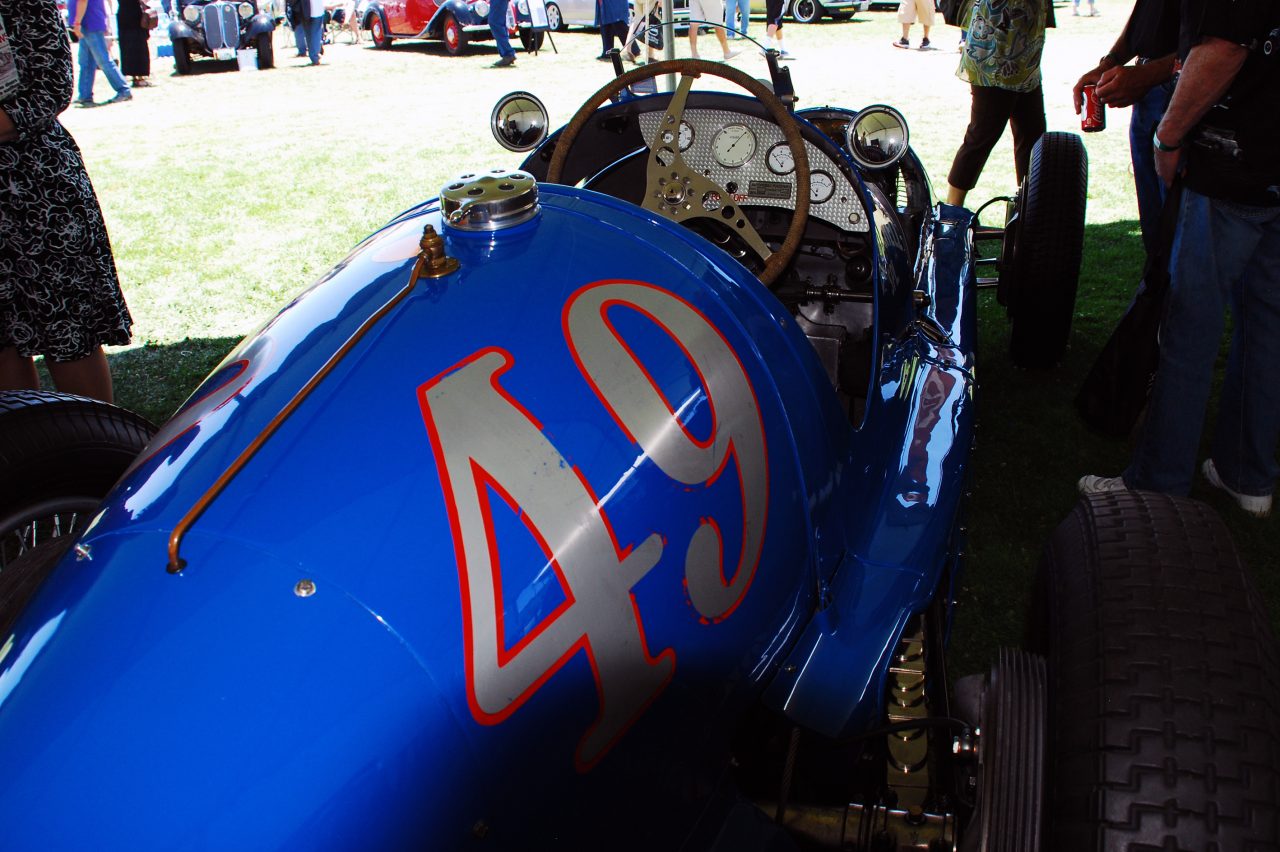
Maserati 8CTF, Palo Alto Concours d'Elegance

In 1940 all three 8CTF’s were entered in the Indy 500 with the Écurie Lucy O’Reilly Schell chassis #3030 for René Le Bègue and #3031 for Dreyfus joining Wilbur Shaw in the #3032 Boyle Special entry. Unfortunately the Écurie Lucy O’Reilly Schell team did not understand the bump day rules during qualifying so although Dreyfus qualified in the #22 entry on speed this did not exclude him from being bumped off the grid. Despite the protestations of the likes of ’39 winner Shaw. Dreyfus accepted his fate, sportingly Le Bègue offered to share the driving of the #49 chassis 3030 in the race.
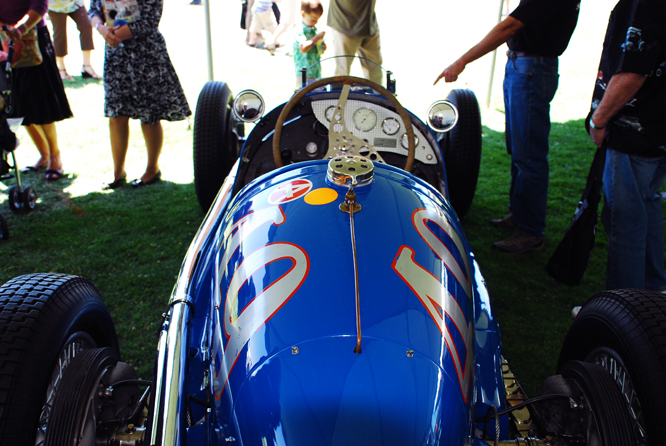
Maserati 8CTF, Palo Alto Concours d'Elegance

While familiarising himself with today’s featured #3030 chassis the engine blew, after Dreyfeus had improved on the lap times recorded with his bumped chassis, with the result that the #49 chassis #3030 went to the grid for the 1940 Indy 500 with the engine from chassis #3031 fitted. Le Bègue started the race and handed over to Dreyfus as agreed with the car classified 10th on 192 laps at the races end.

Thanks to the research skills of Michael Ferner, who from contemporary reports has identified at least 21 possibly 23 Maserati’s entered for The Greatest Spectacle In Racing between 1930 and 1957, we know #3030 appeared as an entry at the Indy 500 in ’41, ’46 and ’48 through to ’53 recording a best finish of 4th in ’46 with Emil Andres at the wheel of what was now known as the Elgin Piston Pin one place behind Ted Horn in the Boyle entered #3032 chassis. The car’s last Indy start was in 1948 when Harry McQuinn completed just 1 lap from 26th on the grid to be classified 33rd and last.

Perhaps #3030’s greatest achievement was a 2nd place finish at Pikes Peak with Louis Unser at the wheel in 1949, two years earlier Unser won the Pikes Peak Hillclimb outright in the sister #3031 chassis.

My thanks to Michael Ferner, Alan Cox, David McKinney, VWV, Vitesse2 and fbarratt at The Nostalgia Forum who in one way or another all contributed to my understanding of the history of the Maserati 8CTF’s, finally thanks to Geoffrey Horton without whom today’s blog would be about something else.

Thanks for joining me on this “Room For Two” edition of “Gettin’ a li’l psycho on tyres” I hope you will join me again tomorrow. Don’t forget to come back now !

Share

Podiumed In Class – Cross Trophy

Ten days ago I had a rare Spring Sunday lie in and arose in time to meet Chris Clarke at the Shell garage on the A38 just outside Bristol from whence we proceeded to Duncan Pittaway’s farm in Dundry for the 2013 edition of the Bristol Pegasus Motor Club‘s Cross Trophy Production Car Trial.

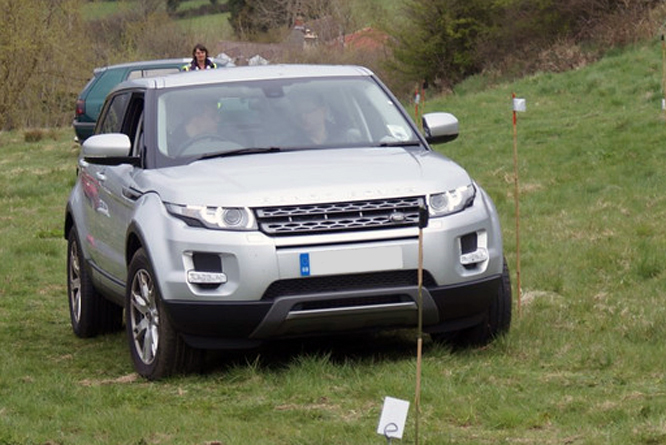
Land Rover Evoque, Cross Trophy, Dundry

Photo Courtesy Andy Moss / BPMC Archive

Among the entries were the father and son Robsons using Mum’s 2 wheel drive Range Rover Evoque,

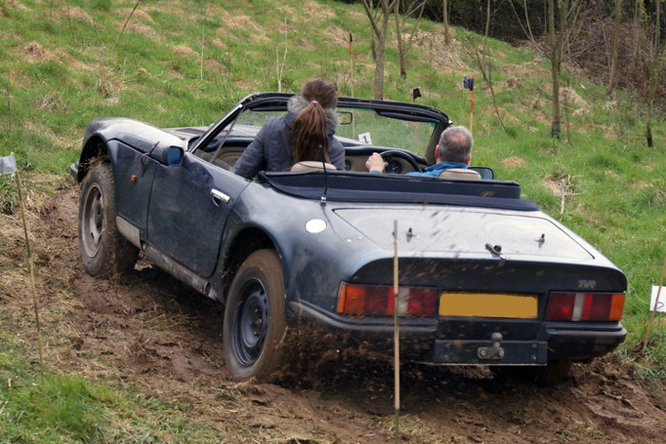
TVR 280S, Cross Trophy, Dundry

Photo Courtesy Andy Moss / BPMC Archive

the most powerful vehicle taking part was Duncan Pittaway’s 1989 TVR 280S,

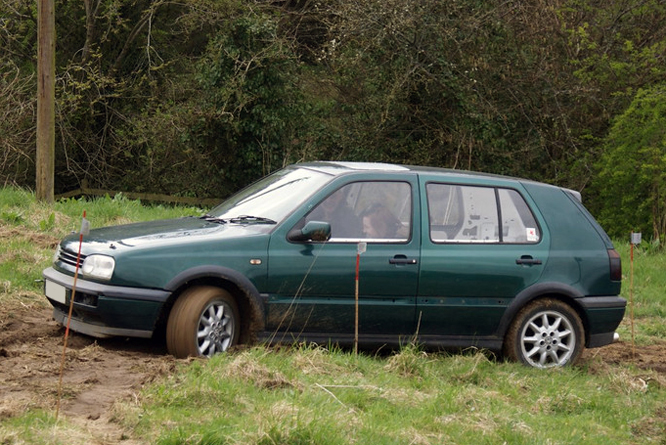
Volkswagen Golf III, Cross Trophy, Dundry

Photo Courtesy Andy Moss / BPMC Archive

Newcomers to the event were the Firks brothers who were sharing this stripped track day prepared Golf III.

Firks & Firks, Cross Trophy, Dundry

The Firks brothers Keith and Andrew were not the first novice winners to win the Clubsport Class 1 front wheel drive honours but they are the first to have achieved the same score behind the wheel.

Citroen AX, Cross Trophy, Dundry

Photo Courtesy Andy Moss / BPMC Archive

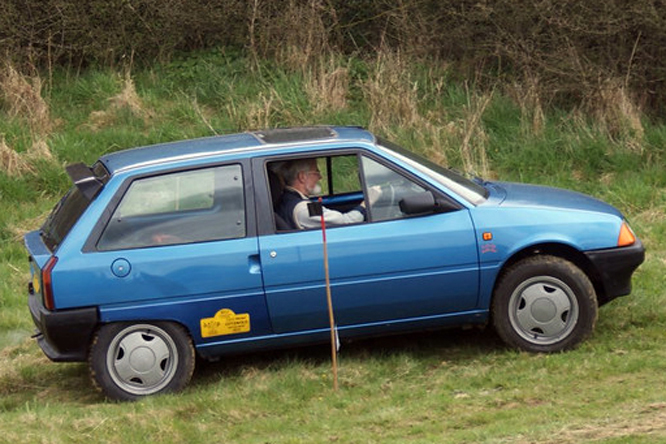
Class 1 honours in the National B event went to Ray Jacobs in a keenly fought battle of Citroen AX’s with Colin Francis and Chris Buckle.

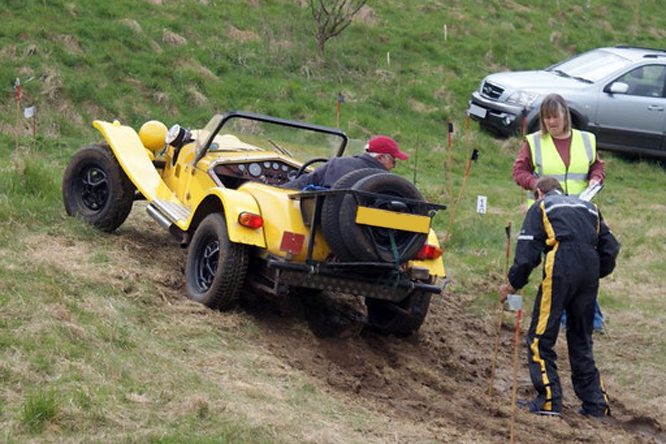
Marlin Roadster, Cross Trophy, Dundry

Photo Courtesy Andy Moss / BPMC Archive

Roland Panes won Class 2 rear wheel drive honours in his yellow Marlin Roadster.

Parsons, Cross Trophy, Dundry

Photo Courtesy Andy Moss / BPMC Archive

Making a welcome return to competition after his recent illness was Alan Spencer who recorded the lowest (best) score of the day with Cherry Robinson in the passenger seat.

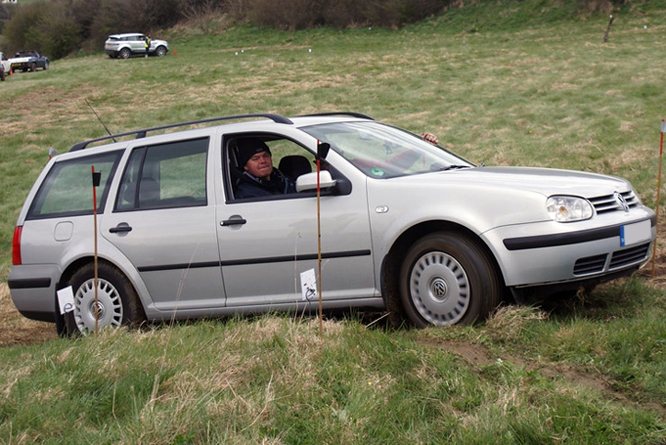
Volkswagen Golf IV, Cross Trophy, Dundry

Photo Courtesy Andy Moss / BPMC Archive

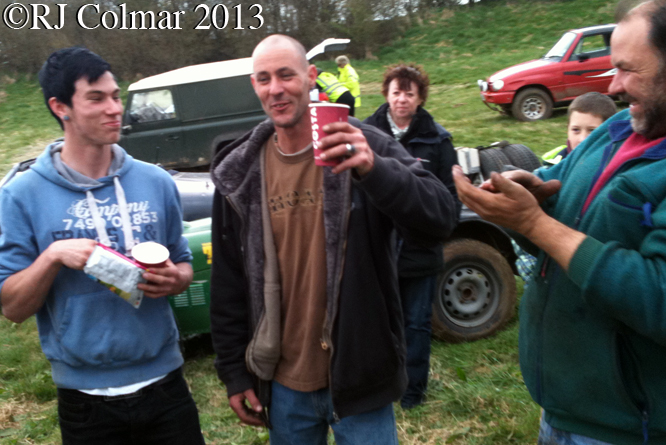
With the Firks brothers sharing top honours in Class 1 Chris Clarke calmly guided me to a third place finish in class which translated to a 7th place overall in a field of 14 competitors who finished the Clubsport event. I’ve made my mind up to acquire a second set of wheels and far more aggressively patterned tyres and to remove various bit’s of plastic from the front wings and below the motor for my next production car trials outing.

My thanks to Mal who set the courses, Tim who kept the scores and Peter who checked the vehicles taking part for the Bristol Pegasus Motor Club, to marshals, Donny, Liz and Carlie to Andy Moss for sharing today’s photographs and last but not least Chris Clarke who sat alongside me on this event.

Thanks for joining me on this “Podiumned In Class” edition of “Gettin’ a li’l psycho on tyres” I hope you will join me again tomorrow. Don’t forget to come back now !
Share

Auctioneers Commercial – Austin 12 Pick Up

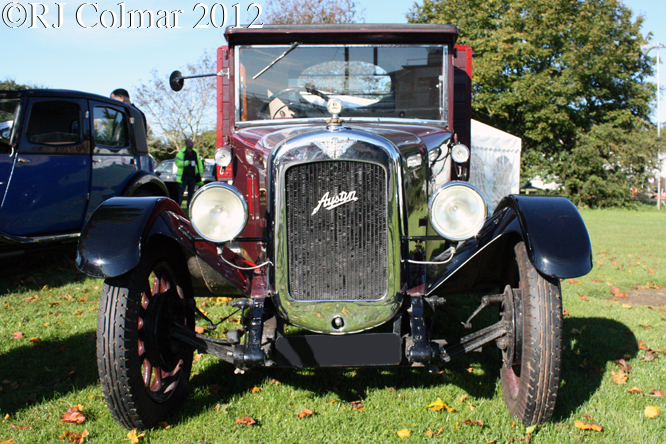
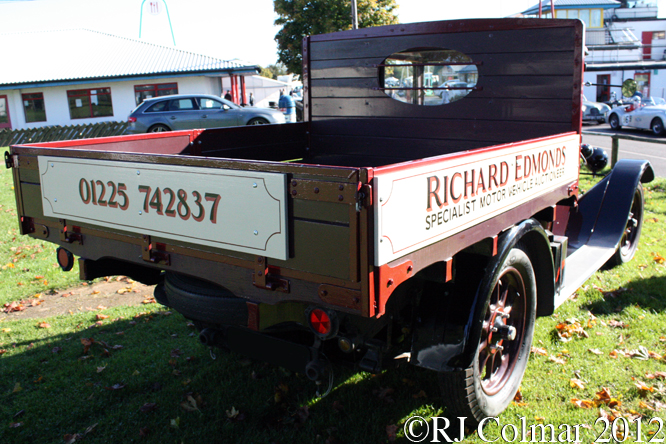
Austin 12 Pick Up, Castle Combe

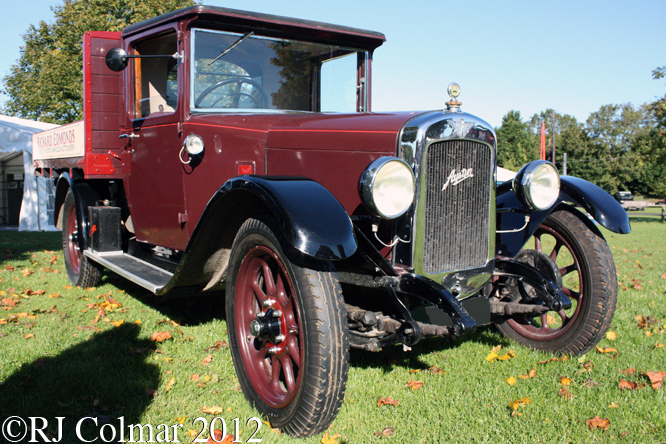
Today’s featured 1928 Austin 12 Pick Up is a regular visitor to the Castle Combe race circuit.

Austin 12 Pick Up, Castle Combe

This vehicle is powered by a 1861 cc / 113.5 cui 4 cylinder motor, the same as the Austin 12, later known as Heavy 12, motor cars.

Austin 12 Pick Up, Castle Combe

Austin 12’s were manufactured from 1921 to 1939 with a variety of body styles, the taxi version being the last and only version available from 1935 to 1939.

Austin 12 Pick Up, Castle Combe

In the late 1960’s an Austin 12 entered Children’s popular culture thanks to the Hungarian born writer and illustrator Val Biro’s illustrated Gumdrop books fictional stories based on the real Austin 12 that he owns.

Thanks for joining me on this “Auctioneers Commercial” edition of ‘Gettin’ a li’l psycho on tyres’, I hope you will join me again tomorrow. Don’t forget to come back now !

Share

Winds Of Change – Volkswagen Golf GTi

In 1964 Volkswagen acquired Auto Union from Daimler Benz and in so doing sowed the seeds for the survival the thriving of both companies well into the 1980’s. Back in ’64 Volkswagen was thriving on a market mix of rather primitive if well built aircooled rear wheel drive vehicles that were developed initially by Dr Ferdinand Porsche, at the same time Auto Union were developing 4 stroke watercooled motors with front wheel drive trains to replace the 2 stroke vehicles that they had been manufacturing since before the 1939-45 war.

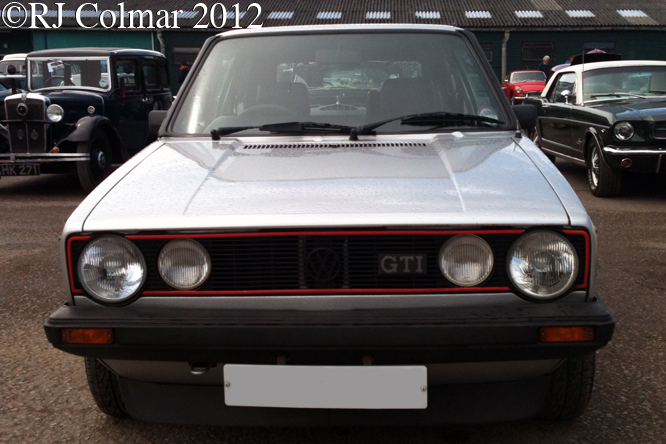
Volkswagen Golf GTi, Bristol Classic Car Show, Sheppton Mallet,

The first new all Auto Union became the Audi F103, curiously at the time of it’s launch Volkswagen was intending to simply use the Auto Union productution facilities to build additional Beetles and forbade Auto Union from carrying out any further developments however when a team of Audi engineers showed the Volkswagen management their ideas for the Audi 100 that had been developed in secret Volkswagen was persuaded to change it’s mind and eventually ended up embracing Audi new 4 stroke water cooled front wheel drive technology when sales of the Beetle started to show signs of weakness.

Volkswagen Golf GTi, Bristol Classic Car Show, Sheppton Mallet,

The first water cooled front drive Volkswagen’s were the relatively low volume Passat’s launched in 1973 these were followed by another water cooled front wheel drive car named after a wind, the Golf (translated into English Gulf). The 1974 Volkswagen Golf featured a two box hatch back shape with a hatch back door to the rear which was to be often copied by the likes of Ford, Vauxhall/Opel, British Leyland, Chevrolet and Dodge, to name a few, in the wake of the Golf’s overnight success, though the FIAT 128 based Zastava 101 featured a proper hatch back that predated the Golf by three years.

Volkswagen Golf GTi, Bristol Classic Car Show, Sheppton Mallet,

In 1975 the first Golf GTi was launched featuring a 110 hp fuel injected motor and suddenly any car without ‘i’ in the initialing became suspect as did any car without red piping that was pioneered by the new sports model. Neither communist built Yugo 45s nor US built GMC Syclones were immune to these little red fashion fads which started with Volkswagen’s little hot hatch which had a zero to 60 mph acceleration time of 9 seconds.

Volkswagen Golf GTi, Bristol Classic Car Show, Sheppton Mallet,

It was not long before a third of all Golf’s built were the performance GTi variants which worked wonders for Volkswagen’s finances having come close to going under completely in the early 1970’s. The Golf was mildly face lifted in 1980 without altering any of the crisp lines originally styled by Giorgetto Giugiaro.

Volkswagen Golf GTi, Bristol Classic Car Show, Sheppton Mallet,

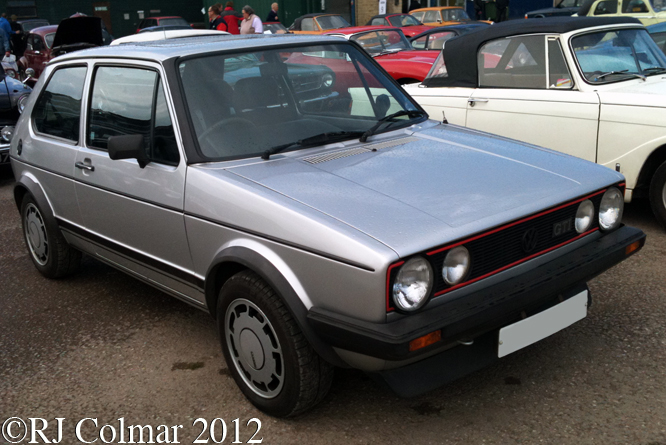
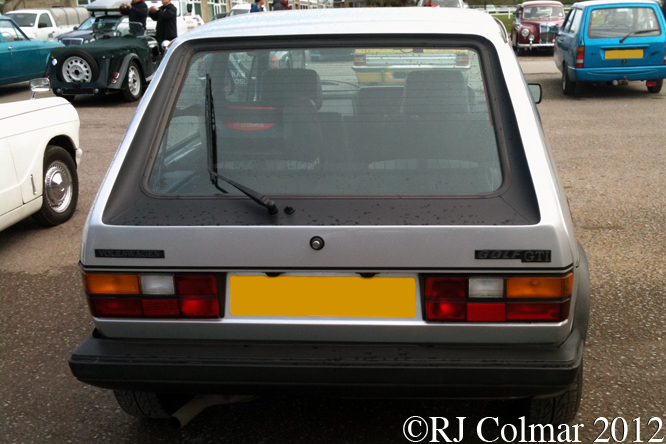
The vehicle seen here at last years Bristol Classic Car Show is one the last post face lift models built in 1983, most obviously distinguished by the large rectangular rear lights.

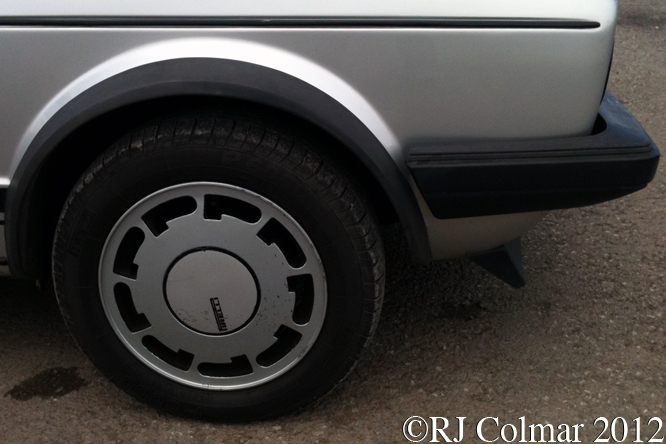
The car seen here is fitted with a factory sunroof and tinted window’s which along with the Pirelli wheels, that were fitted with horrendously expensive Pirelli P6 low profile tyres, point to the car possibly being what is known a a Campaign Model, though some Mk 1 Golfs have been built up to look like Campaign models but with the heavier load bearing Pirelli wheels from the Mark II Golf GTi which had 10mm gaps between the P’s on the 14 inch alloy wheels instead of the original 7mm gaps between the P’s.

Share

The Power Of Dreams – Guglielmi Motorsport Lotus Exige

The Lotus Exige Series 1 coupé was launched in 2000, curiously just as production of the Lotus Elise Series 1 soft top on which it was based was about to be phased out in favour of the sharper styled Elise Series 2.

Guglielmi Motorsport, Lotus Exige, Britcar, Castle Combe

Like the Elise the Exige was powered by a Rover K series motor which all though not particularly powerful was enough to turn the lightweight Elise into a performance car with particular appeal to those who enjoy track days.

Guglielmi Motorsport, Lotus Exige, Britcar, Castle Combe

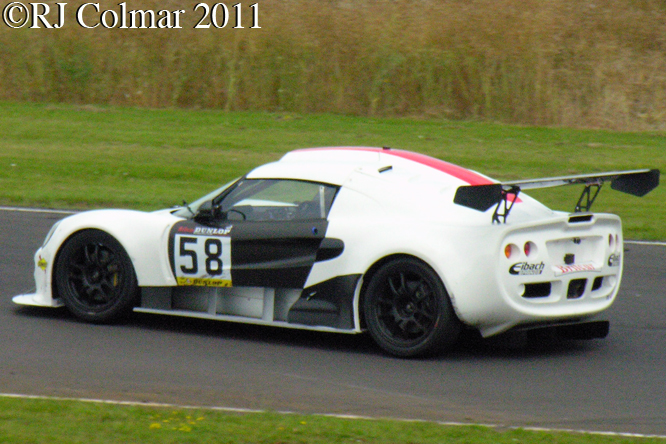
Today’s featured Exige was prepared by Guglielmi Motorsport who’s proprietor Steve Guglielmi was the 2001/2 double TVR Tuscan Challenge Champion. The Guglielmi Motorsport website suggests Steve retired from racing, although not from all competition, as of 2002 when he set up his Guglielmi Motorsport business to prepare road & track vehicles.

Ginetta G50, Lotus Exige, Britcar, Castle Combe

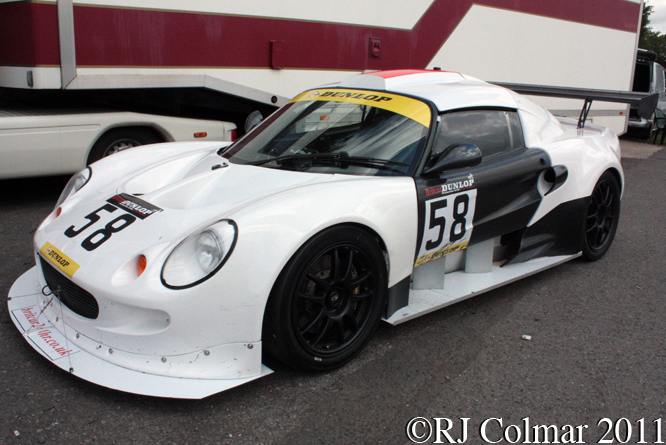
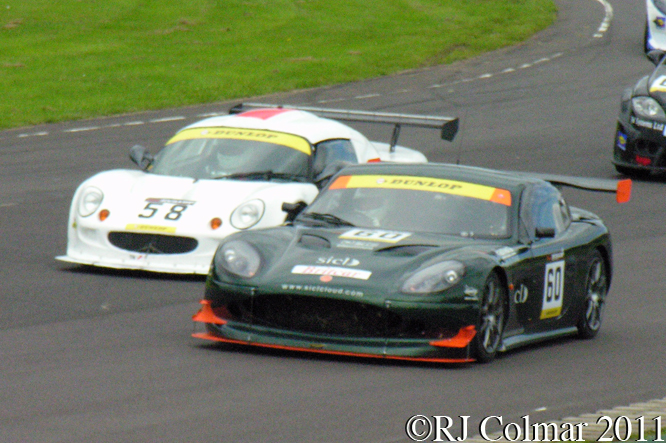
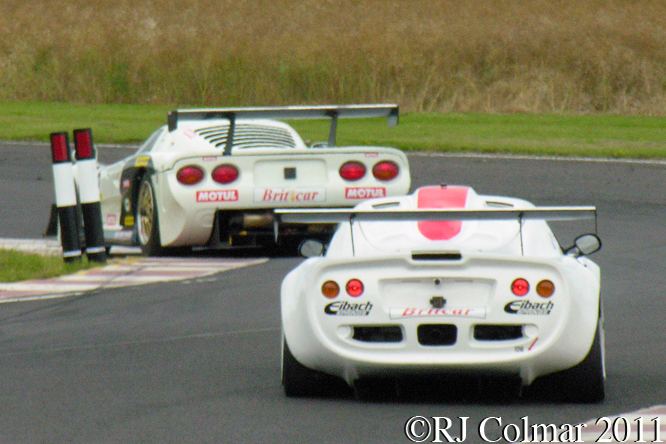
In 2011 Steve prepared this Exige which he shares with Jeff Mileman for the Britcar series. Above the #58 Guglielmi Exige is seen passing the #60 Ginetta G50 G4 coming out of Old Paddock Bend during the 2 hour Britcar race held at Castle Combe in 2011.

Mileham, Guglielmi, Lotus Exige, Britcar, Castle Combe

The #58 built is around an Elise 135R chassis with 220 hp Honda K 20 Civic Type R motor, which has since been upgraded to produce 250 hp and a Series 1 Exige body.

Mosler MT900 R, Lotus Exige, Britcar, Castle Combe

Steve plans to compete in this years Lotus Cup UK series this season, still sharing the Guglielmi Motorsport Lotus Exige with John Mileham, with whom he came 4th Overall and 1st Open Class in the opening round at Snetterton in April.

My thanks to Steve Guglielmi for sharing the details about his car.

Thanks for joining me on this “Power Of Dreams” edition of “Gettin’ a li’l psycho on tyres” I hope you will join me again tomorrow. Don’t forget to come back now !
Share

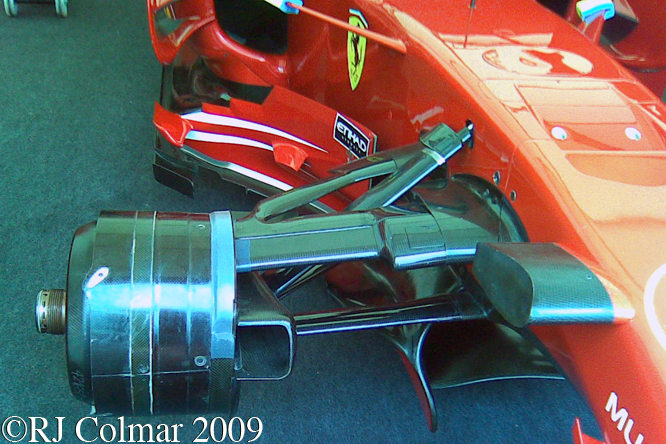
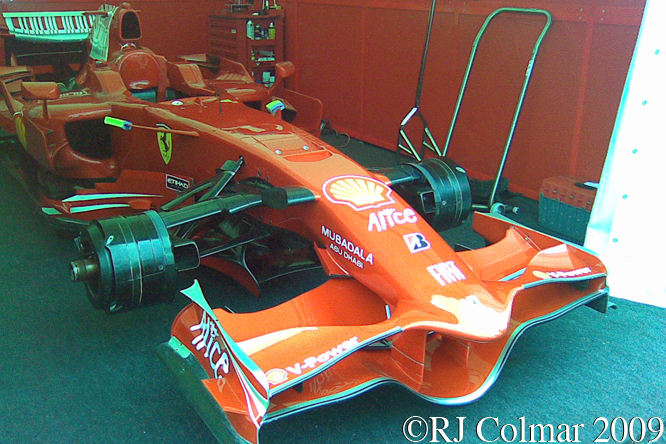
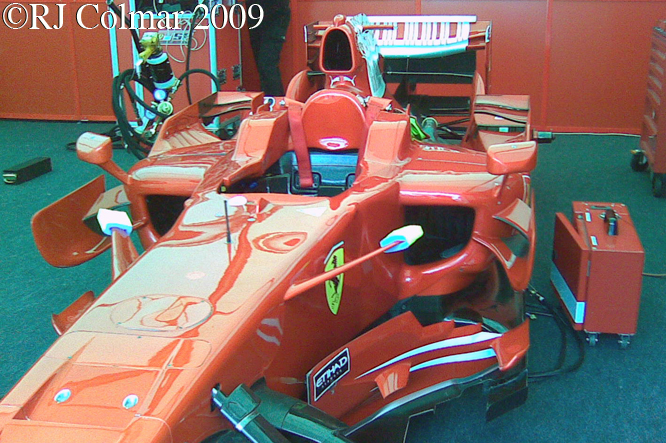
38.907 sec Champion – Ferrari F2008

After an acrimonious 2007 season in which a Ferrari employee had been caught passing sensitive Ferrari documents to a McLaren employee after the McLaren Employees wife was dobbed in by a photocopy shop the 2008 season was relatively calm. The big story of 2008 being the on track battle between sophomore sensation Lewis Hamilton driving for McLaren and Ferrari’s de facto number two driver Felipe Massa who unexpectedly stepped up to the plate while his team mate reigning Champion Kimi Räikönnen experienced a post championship slump that saw him get bought out of a very expensive contract by the seasons end.

Ferrari F2008, Goodwood Festival Of Speed

Designed by an international team that included Italians Mario Almondo and Aldo Costa, Frenchman Giles Simon and Greek Nicolas Tombazis the F2008 ran with a 2.4 litre 146 cui V8 motor that was restricted, by a newly mandated McLaren Electronic Control Unit (ECU), to a maximum of 19,000 revolutions per minute (rpm).

Ferrari F2008, Goodwood Festival Of Speed

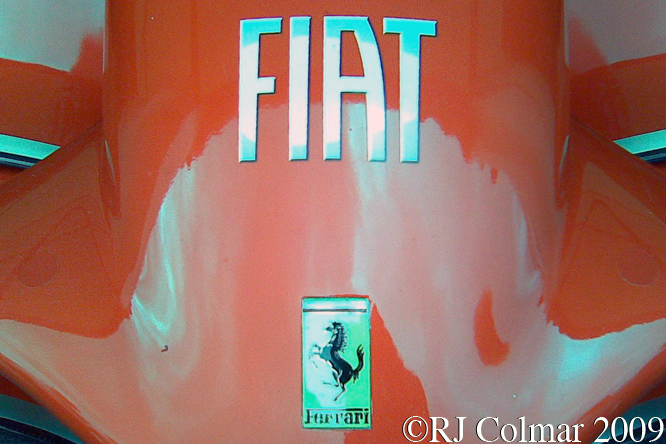
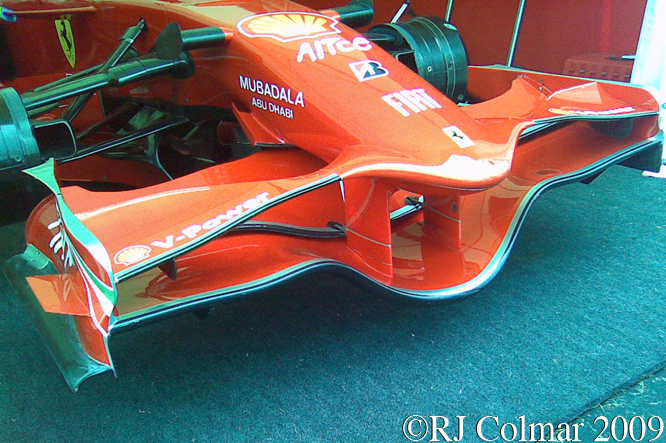
The curious front wing shape was partly a result of regulations demanding certain parts of the wing needing to be a minimum of 5 inches of the ground.

Ferrari F2008, Goodwood Festival Of Speed

This was the last season for which grooved tyres which had been mandated since 1998 to keep cornering speeds in check had been mandated. At the time Ferrari and one or two other well funded teams were running multiple wind tunnels simultaneously 24/7 to seek out the tiniest of aerodynamic advantages.

Ferrari F2008, Goodwood Festival Of Speed

Going into the Brazilian Grand Prix, last race of the season, Lewis Hamilton had five wins and led the championship with 94 points, while Felipe Massa had also scored 5 wins but only had 87 points due to his inferior placings, so there were multiple possibilities for Lewis to claim the championship but Felipe had to win with Hamilton finishing sixth or lower to claim the championship. Felipe started well by claiming his sixth pole position of the year, to Hamilton’s seven pole starts, and led the race which was delayed by rain and run in slippery conditions to cross the line first.

Ferrari F2008, Goodwood Festival Of Speed

Hamilton meanwhile had started from third on the grid was involved in a battle for 4th position with the Ferrari powered Torro Rosso of Sebastion Vettel going into the final pitstops, during which the dry shod Toyota of Timo Glock overtook the pair of them. Lewis and Sebastian both opted for intermediate tyres. Vettel was the first to catch and pass Glock to reclaim 4th place for good. Hamilton meanwhile only managed to pass Glock who’s dry tyres were struggling for grip on the damp track going into the very last corner of the very last lap to claim the necessary fifth spot crossing the finish line 38.907 secs behind Felipe Lewis relived the Ferrari driver of the World Drivers Championship title. Ferrai did however have the consolation of winning the Constructors World Championship for a record 16th time.

Thanks for joining me on this “38.907 sec Champion” edition of “Gettin’ a li’l psycho on tyres” I hope you will join me again tomorrow. Don’t forget to come back now !
Share

Baby Hemi – Peugeot EX4/L3

May used to be the month where US open wheel racing was centered entirely on the story coming out of Indianapolis Motor Speedway, this month the iZod Indy Car Series breaks with tradition and will also be visiting Sao Paolo on May 6th, however GALPOT will be dedicating the next 5 Americana Thursday Posts to The Greatest Spectacle in Racing in years long gone by thanks to Geoffrey Horton who over the last two years has sent me numerous photo’s of Indy Cars from the Concours d’Elegance scene in California.

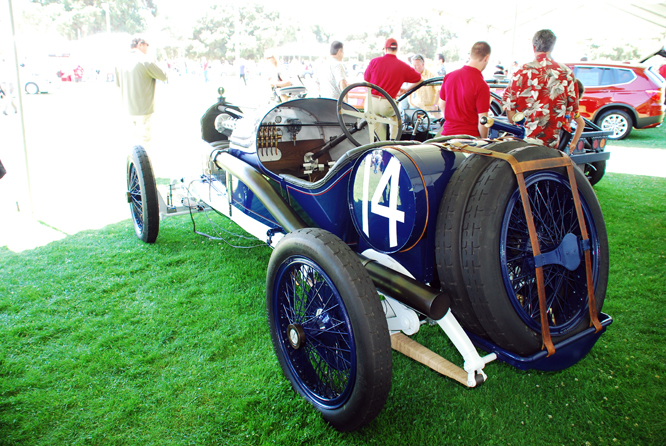
Peugeot EX4/L3, Palo Alto, 2011

This months five part potted history of the Indy 500 returns to 1914 when, as I found out two years ago, rookie René Thomas went to victory lane driving Delage Y, I forgot to mention René was accompanied by riding mechanic Robert Laly.

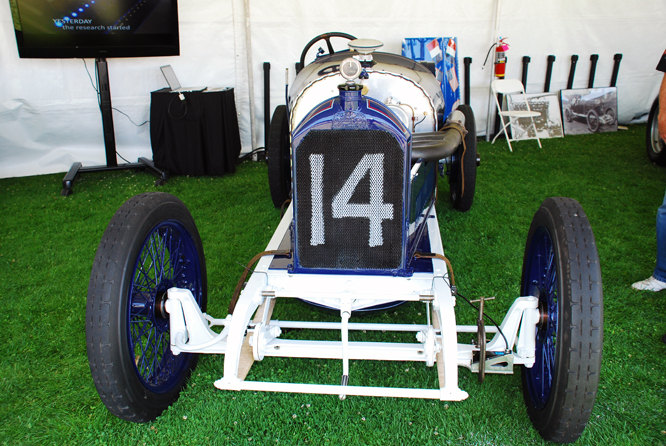
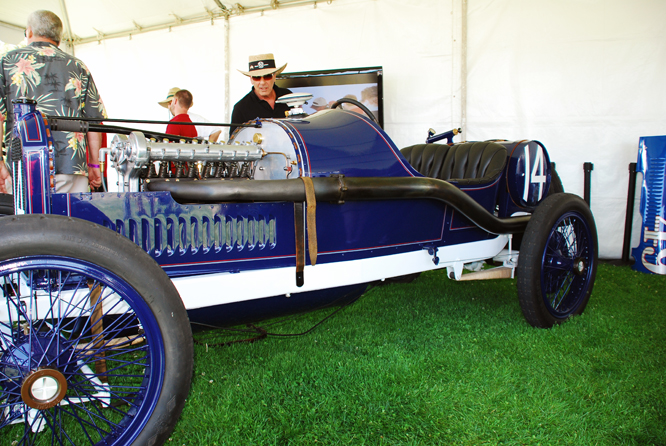
Today’s featured car the #14 Peugeot EX4/L3 was also entered in the 4th running of the Indy 500 for another rookie called Arthur Duray and US riding mechanician Henry Mattheys by Jacques Menier a member of the French Menier Chocolatier dynasty.

Peugeot EX4/L3, Palo Alto, 2011

In 1914 qualification for the 500 was slightly different procedure from what we are familiar with today, in the first two editions of the Indy 500 qualification was by date the entries were received providing a minimum speed had been achieved over a measure mile of the circuit in 1911 and a full flying lap in 1912. For 1913 and 14 with the arrival of foreign competitors a qualifying lap with a minimum speed was compulsory but the grid positions were determined by blind draw.

Peugeot EX/4 L3, Palo Alto, 2011

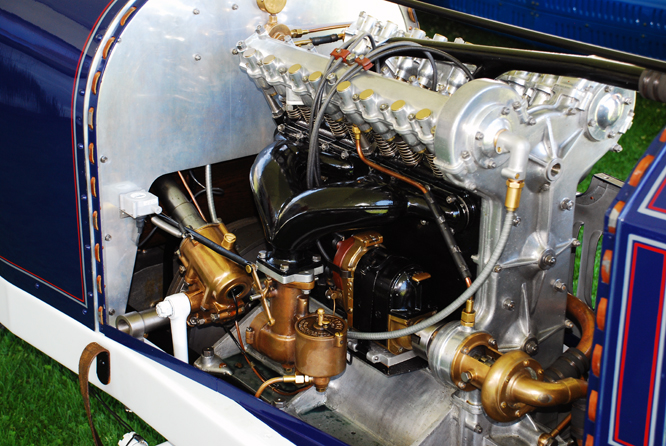
The Peugeot EX4/L3 that Jaques Menier bought featured an ‘L3’ 4 cylinder 3 litre / 183 cui version of the giant killing 7.6 litre / 463.78 L76 Motor that had successfully seen off the 15 litre / 915 cui FIAT’s in the 1912 French Grand Prix. Having proved with success the benefits of technical innovations that included twin gear driven overhead cams operating 4 valves per cylinder, which also featured the original hemi heads, designer Ernst Henry, aided by his driver engineers collectively known as “Les Charlatans”, proceeded to produce three further evolutions of of the motor with sizes of 5.6 litre / 341 cui, as used by Georges Boillot and riding mechanic Prévost to win their second consecutive French Grand Prix in 1913, 4.5 litre / 274 cui and the smallest of the family 3 litre / 183 cui L3 seen here.

For those interested in the minutiae of veteran era production methods there is a fascinating story regarding this particular motor whose block was found to have inconsistent longitudinal bore center lines on this thread on The Nostalgia Forum led by distinguished historian Doug Nye linked here.

Peugeot EX4/L3, Palo Alto, 2011

Alongside the winning two car Delage team Arthur Duray faced two EX3/L56 powered Peugeots of Georges Boillot with a riding mechaninc M. Brevot who ‘might’ have been Boillot’s regular mechanic Prévost with 1913 rookie winners Jules Goux partnered by Emil Begin. Boillot set the fastest time in practice of 99.860 mph but the draw by ballot for grid slots saw Jean Chassagne’s Sunbeam start from pole.

Peugeot EX4/L3, Palo Alto, 2011

Boillot was in a comfortable position to win the 1914 Indy 500 until repeated tyre failures led to a 14th place finish while Goux in the second large Peugeot finished 4th with Duray coming home second to the Delage of René Thomas.

Peugeot EX4/L3, Palo Alto, 2011

Arthur Duray who set three land speed records between 1903 and 1904 carried on racing until the 1930’s for manufacturers that included Hispano-Suiza, Ariès, B.N.C and Amilcar. At the 1921 French Grand Prix he was a spectator when running in second place Albert Guyot’s riding mechanic got hit on the head by a rock, Guyot pulled his Duesenberg up in the pits and it became apparent that his mechanic was too dazed to continue. On seeing this Arthur Duray is said to have vaulted the spectator fence pushed the mechanic aside cranked the Dusenbergs motor to life and jumped into the mechanics seat alongside Guyot who went on to record a sixth place finish.

The aforementioned Mr Nye has kindly informed me courtesy of Scott George at the Collier Collection, current owners of the vehicle, that “After its Indy days there is some suggestion it (today’s featured car) returned to France, plus a parallel suggestion that it stayed in the US. Sold to Harry Harkness who ran it a little in the north-eastern area, then sold to Kaufman, himself a New York Peugeot agent and team owner. The engine might have been “swapped out” of the chassis at some stage. Car then found at Benny Brandfon’s yard for old race cars and exotics in NY…”

Esteemed Indy historian Michael Ferner has expanded on what may have become of the car while in the care of Peugeot Dealer Alphonse Kaufman “The (#14) Meunier/Duray car, on the other hand, is a possible candidate for having served as the basis for the 1916 “Peusun Special”, apparently a Peugeot chassis with a Sunbeam engine and a Delage radiator!” If today’s featured EX4/L3 did form part of the Peusun Special this may tie up with Doug’s suggestion that the engine “might have been ‘swapped out’.”

Michael suggests James O’Keefes forthcoming book ‘Peugeot Racing In America (pre-WW II)’ should be a worthwhile read on the subject.

Harry Miller who had maintained and rebuilt a Peugeot L series motor copied the basic twin over head cam 4 valves per cylinder hemi head architecture for his own Miller motors that would come to dominate the Indy 500 in the 1920’s and 1930’s which would in turn be succeeded by “Offy” engines that former Miller employee Fred Offenhauser developed having bought the rights to the Miller motors when Miller went bust. The Offenhausers would remain competitive in ultimate turbocharged form at Indy until the mid 1970’s.

Of the 900 odd blogs I have posted to date this has without question proved one of the more challenging and I hope I have given an accurate summary of our knowledge of the car to date, my thanks to Doug Nye, Michael Ferner and Tim Murray, at The Nostalgia Forum and Scott George at the Collier Collection for their contributions to my understanding of the fascinating history of today’s featured Peugeot EX4/L3. Finally thanks to Geoffrey Horton without whose photographs their would have been no Peugeot EX4/L3 to blog about.

Thanks for joining me on this “Baby Hemi” edition of “Gettin’ a li’l psycho on tyres” I hope you will join me again tomorrow. Don’t forget to come back now !
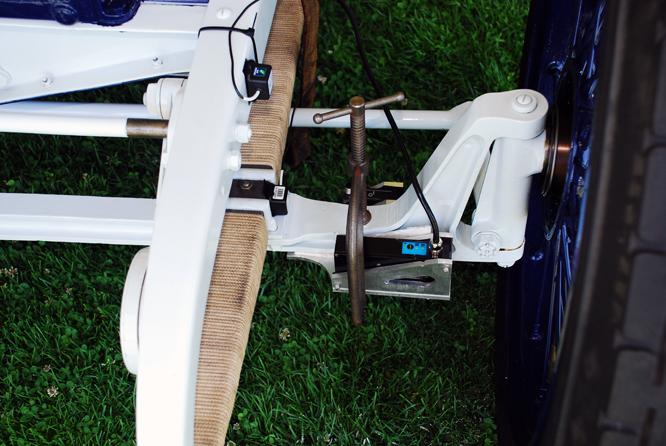
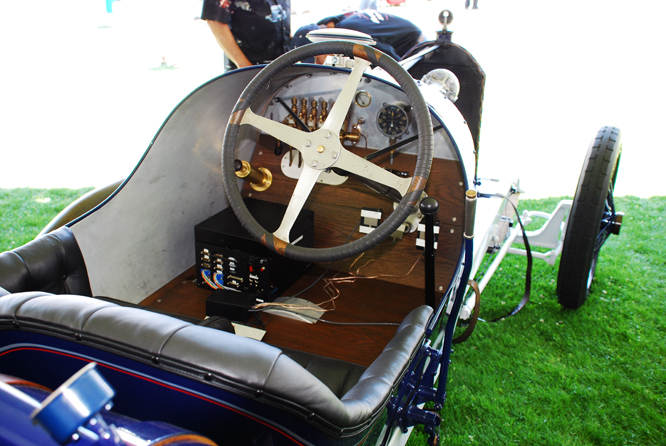
03/05/13 PS Geoffrey has informed me the electrical equipment attached to the front axle was a sensor connected to a computer seen in the cockpit by students of the Revs Programme at Stanford University to examine the Peugeot’s dynamics in motion.

Share