Tag Archives: Colmar

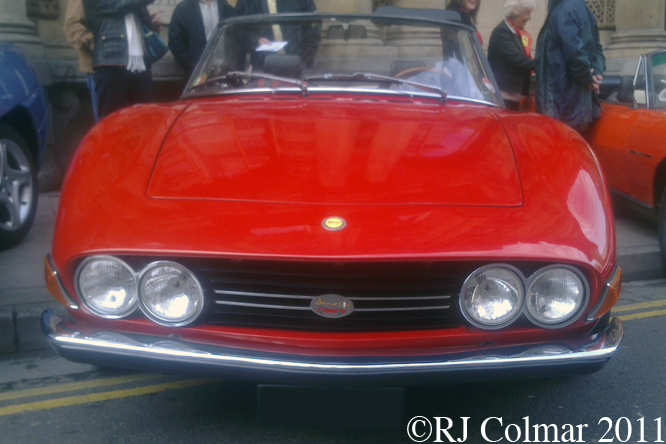
When Is A FIAT A Ferrari ? – FIAT Dino 2.4 Spider

With sales volumes falling production of the FIAT Dino Coupé and Spider was moved from FIAT’s production facilities in Turin to Ferrari’s at Maranello in 1969.

FIAT Dino 2.4 Spider, Bristol Italian Auto Moto Festival

Amongst the changes to the specifications of the Maranello built FIAT Dino’s was an engine upgrade to the larger 178 hp 2.4 litre / 146 cui version of the Dino V6.

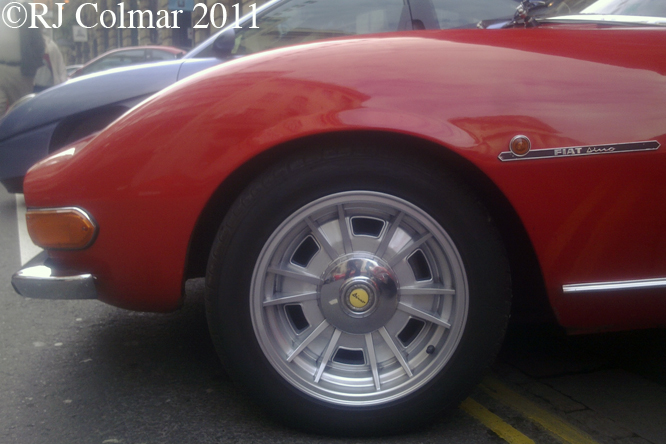
FIAT Dino 2.4 Spider, Bristol Italian Auto Moto Festival

An iron block replaced the aluminium block of the smaller motor but aluminium heads were retained. Curiously although the FIAT and Ferrari, as used in the mid engined Dino 206 & 246 GT’s, motors all came from the same production line in Turin Ferrari always liked to quote higher hp figures for ‘his’ motors than FIAT.

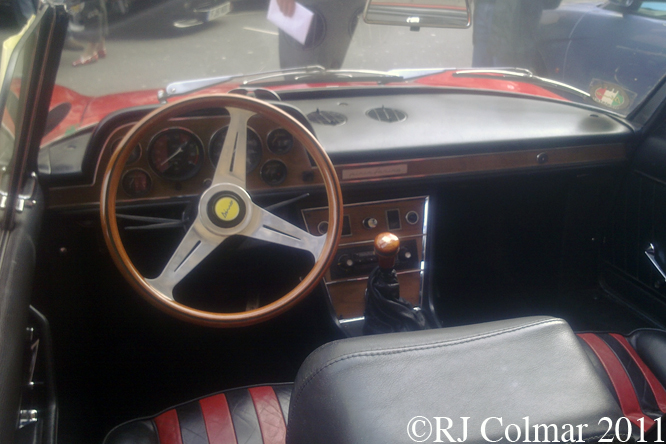
FIAT Dino 2.4 Spider, Bristol Italian Auto Moto Festival

The FIAT Dino’s Girling disc brakes are said to be interchangeable with those fitted to the de Tomaso Pantera and Lamboughini Miura.

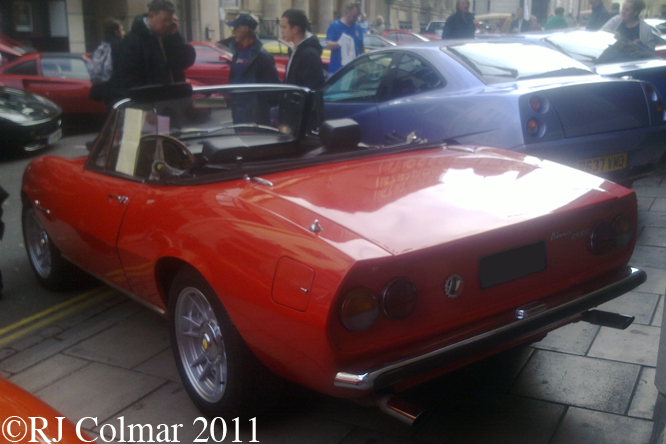
FIAT Dino 2.4 Spider, Bristol Italian Auto Moto Festival

With the Pininfarina bodied FIAT Spider being built along side the Pininfarina bodied 246 GTS there was not much to tell the two vehicles apart for anyone except the FIAT marketing department. Of the two models the FIAT Dino Spider with only 424 examples built is the rarer against 1,274 Ferrari Dino GT Spiders.

FIAT Dino 2.4 Spider, Bristol Italian Auto Moto Festival

When production of the FIAT Dino Spider moved to Maranello the original live axle and leaf spring rear suspension was replaced with a coil sprung independent rear suspension which shares much in common with the FIAT 130.

Today’s featured 1970 model, seen at last years Bristol Italian Auto Moto Festival was acquired as a non runner in 1987 and has been gradually restored ever since.

Thanks for joining me on this “When Is A FIAT A Ferrari” edition of “Gettin’ a li’l psycho on tyres, I hope you will join me again tomorrow. Don’t forget to come back now !

Share

Formula One Wheels – Shadow Mk II

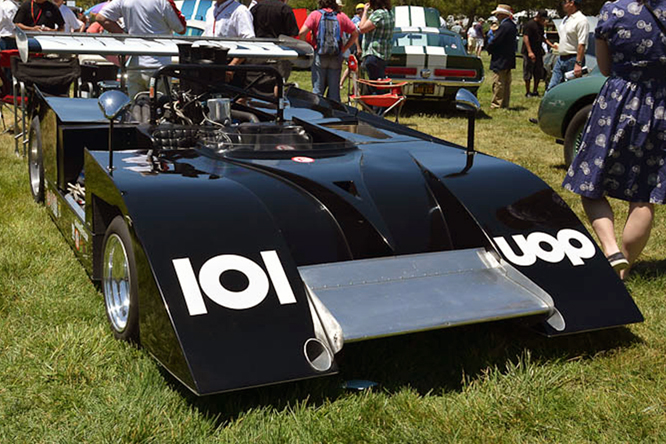
A couple of weeks ago I was delighted to receive today’s featured photo’s from Geoffrey Horton of a Shadow Mk II , a vehicle that had been built for Jackie Oliver to drive in the 1971 Can Am Series.

Shadow Chevrolet Mk II, Marin Sanoma Concours d’ Elegance

The story of the Shadow racing team begins with an orphan Don Nichols who as a child was influenced by The Shadow radio series, after service in the ’39 – ’45 war and a career in military intelligence Don appears to have gravitated to the world of motor racing supplying American tyres to the Japanese racing fraternity during the 1960’s.

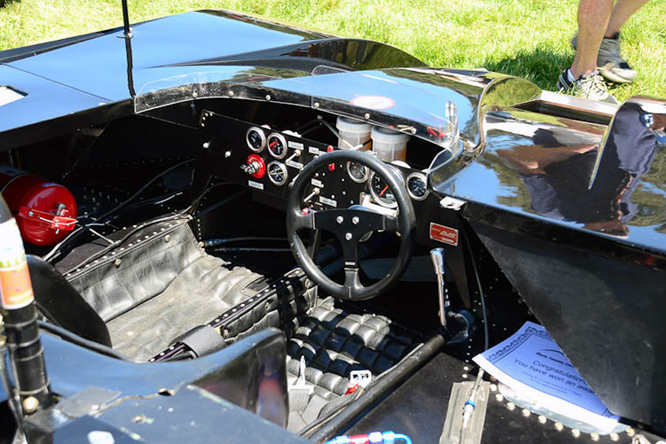
Shadow Chevrolet Mk II, Marin Sanoma Concours d’ Elegance

In 1970 Don founded Advanced Vehicle Systems which built a red vehicle notorious for it’s tiny size and wheels designed by Trevor Harris called the Shadow Mk I. The car qualified well with first George Folmer and then Vic Elford at the wheel, but was hampered with a 100% unreliability record not finishing any races.

in 1969 Peter Bryant had designed and entered his titanium chassised Ti 22 Can Am car which Jackie Oliver had been qualifying even better, than the Shadow, ever since it was first seen and managed two 2nd place finishes in 1970.

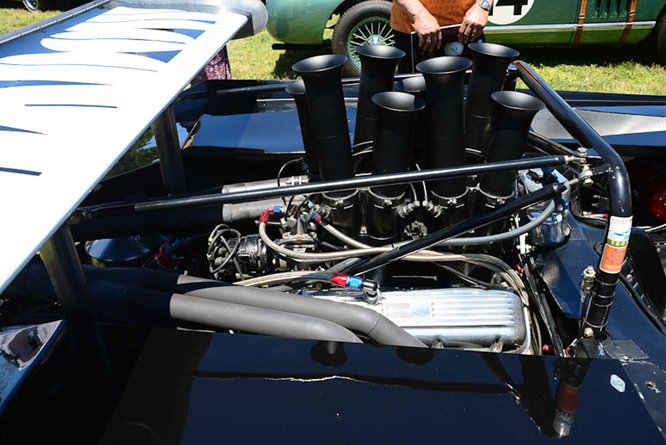
Shadow Chevrolet Mk II, Marin Sanoma Concours d’ Elegance

Bryant ran out of funds for the Ti 22 and both he and Jackie Oliver joined Don Nichols for the 1971 season. Don was keen that Peter keep the frontal area of the Shadow Mark II to a minimum and so the Mk II was designed around Formula One size wheels and tyres which were smaller than those ordinarily found in Can Am.

Powered by a 8.1 litre / 494 cui Chaparral prepared Chevrolet V8 Jackie scored a best third place finish at Edmonton when the car appeared painted white with black lettering on all the upward facing surfaces except the rear wing. Jackie used chassis Mk II #1 through out the 1971 season.

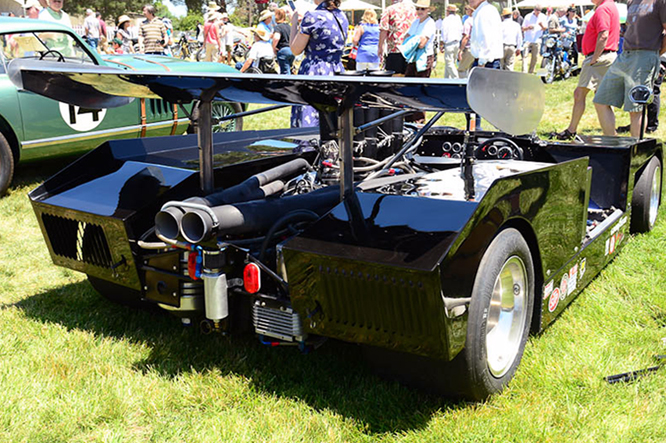
Shadow Chevrolet Mk II, Marin Sanoma Concours d’ Elegance

As we shall see next week Peter Bryant was responsible for designing the 1972 Shadow MK III and Jackie for driving it. What I did not know until recently was that Advanced Vehicle Systems built three Mk II monocoque tubs and that all three were used to build the Shadow Mk III which ran on full size Can Am tyres.

In 2009 Don Nichols sold off the chassis, seen here at Marin Sanoma Concours d’Elegance where it won it’s class, which is actually the third chassis that was only ever raced in Mk III specification. Mr Losher the owner decided, that as the first two chassis are still in 1972 Mk III spec, he would build his up to the older 1971 Mk II Formula One wheel spec.

My thanks to Geoffrey Horton for sending me these photographs.

Thanks for joining me on this “Formula One Wheels” edition of “Gettin’ a li’l psycho” on tyres”, next week I’ll be looking at the Shadow Mk III on Americana Thursday, meantime I hope you will join me for another edition of Ferrari Friday tomorrow. Don’t forget to come back now !

Share

Derelict & Abandoned In Pennsylvania – DB Panhard HBR 5 #1004

It’s hard to believe that nothing is known about this DB (Deutsch Bonnet) HBR 5, seen at Brooklands a few weeks ago, between it’s export from France to the USA in 1959 until it’s discovery derelict and abandoned in Pennsylvania in 1982.

DB Panhard HBR 5, Brooklands Double Twelve

After restoration to racing spec in 1985 it was shown and raced regularly until 1991 and then stored until 1999.

DB Panhard HBR 5, Brooklands Double Twelve

The current owner acquired it in 2001 and restored it to European road legal condition by 2005.

DB Panhard HBR 5, Brooklands Double Twelve

HBR 5’s were manufactured between 1954 and and 1961. The 850 cc / 51.8 cui 2 cylinder Panhard motors sourced from the Panhard Dyna Z was upgraded from 42 hp to 58 hp spec by René Bonnet.

DB Panhard HBR 5, Brooklands Double Twelve

The upgraded Panhard motor which could be taken up to 6500 rpm when combined with the slippery Charles Deutsch designed body produced a vehicle capable of 140 mph though acceleration was rather leisurely with a rest to 62 mph time of 21.5 seconds.

DB Panhard HBR 5, Brooklands Double Twelve

Available as Coupé’s, Convertibles or outright racers the DB HBR 5 had a long competition career winning it’s class in the Mille Miglia, Le Mans and Sebring multiple times.

Thanks for joining me on this “Derelict & Abandoned In Pennsylvania” edition of “Gettin’ a li’l psycho on tyres” I hope you will join me again tomorrow when I’ll be looking into the shadow’s on Americana Thursday. Don’t forget to come back now !

Share

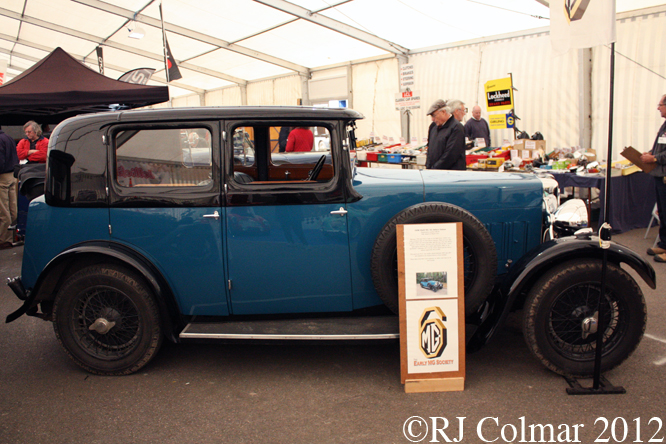
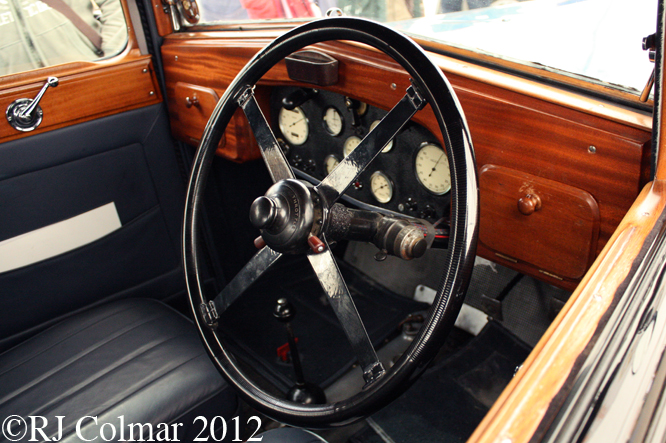
Last Known Survivor – MG 18/80 Six deluxe Saloon MkII

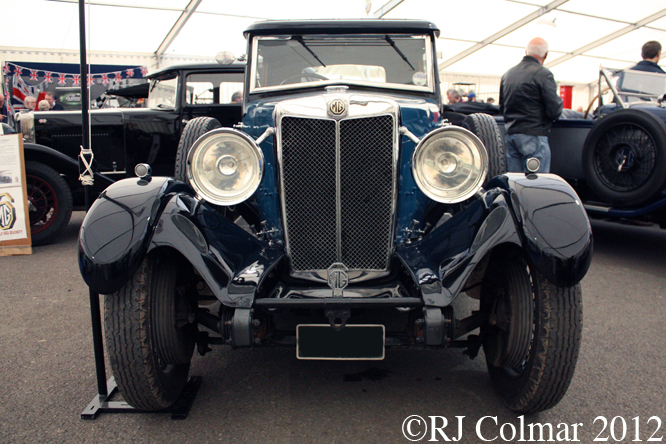
Between 1930 and 1932 MG built 236 18/80 Mk II’s with heavier frames and softer springs than the earlier Mk I’s which eventually replaced the Mk I which had been manufactured between 1928 and 1931.

MG 18/80 Six deluxe Saloon Mk II, Bristol Classic Car Show

Of those 236 Mk II’s 50 were deluxe Saloons.

MG 18/80 Six deluxe Saloon Mk II, Bristol Classic Car Show

Only 25 18/80 Six Mk II’s are known to exist, one of them is the prototype featured here a couple of weeks ago which now has a later Tigress style body, and another is the Six Saloon featured last week.

MG 18/80 Six deluxe Saloon Mk II, Bristol Classic Car Show

Today’s featured 1931 model is the only known top of the range 18/80 Six deluxe Saloon Mk II known to exist.

MG 18/80 Six deluxe Saloon Mk II, Bristol Classic Car Show

It was completely rebuilt between 2005 and 2007 and restored to it’s original factory colour scheme.

MG 18/80 Six deluxe Saloon Mk II, Bristol Classic Car Show

Since restoration it has been regularly used on rallies and tours of Europe.

Thanks for joining me on this “Last Known Survivor” edition of “Gettin’ a li’l psycho on tyres”, next week I’ll be rounding out the recent Tuesday features on early MG’s with a look at the oldest MG known to exist, meantime I hope you will join me for a continental curiosity tomorrow. Don’t forget to come back now !

Share

43rd Wedding Anniversary – Dana Point Concours d’Elegance

Such is the inclement weather here at GALPOT Towers that when my landlady asked for a theme for her 50th Birthday Party I had no hesitation when I suggested having a Diving Suit Party, dry wit after all is an Englishman’s stock in trade, so it’s always a pleasure to receive photo’s from Geoffrey Horton’s adventures in the sunny world of the California Concours d’Elegance scene.

Dana Point, California

Above is Dana Point where Geoffrey and his wife Gayle spent the weekend celebrating their 43rd Anniversary a couple of weeks ago.

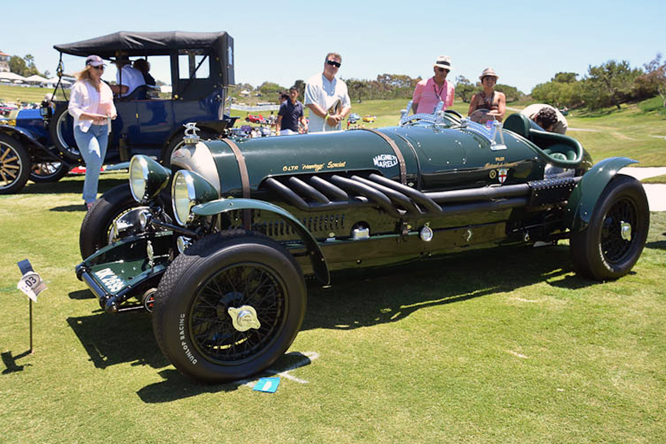
Bentley Hawkeye Special, Dana Point Concours d'Elegance

During their stay they entered their Jaguar XK140 FHC SE in the Concours d’Elegance in which this 8 litre / 488 cui 1924 Bentley Hawkeye Special was also taking part.

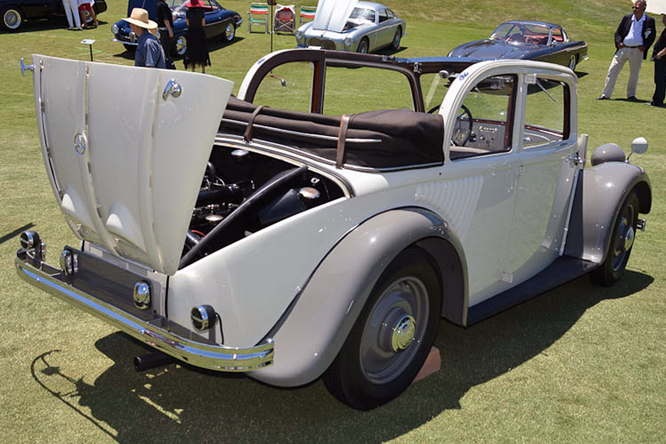
Mercedes Benz 130 Cabrio Limosine, Dana Point Concours d'Elegance

Among the Mercedes Benz vehicles entered was this 25 hp rear engined 1935 130 H Cabrio,

Mercedes Benz 540 K, Dana Point Concours d'Elegance

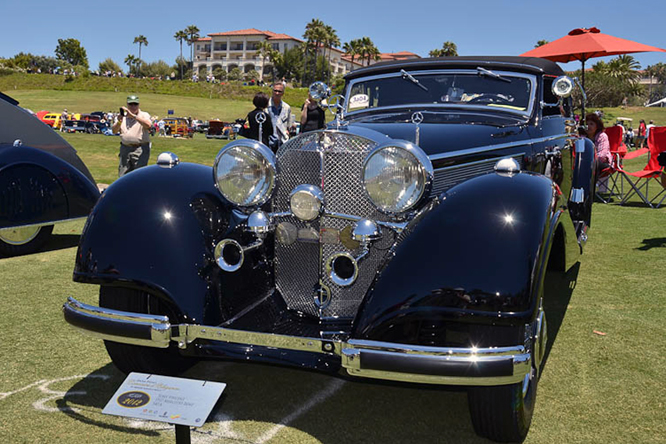
and class winning 1937 540K W24 Roadster with up to 180 supercharged hp capable of reaching 110 mph.

Mercedes Benz 320 Cabriolet B, Dana Point Concours d'Elegance

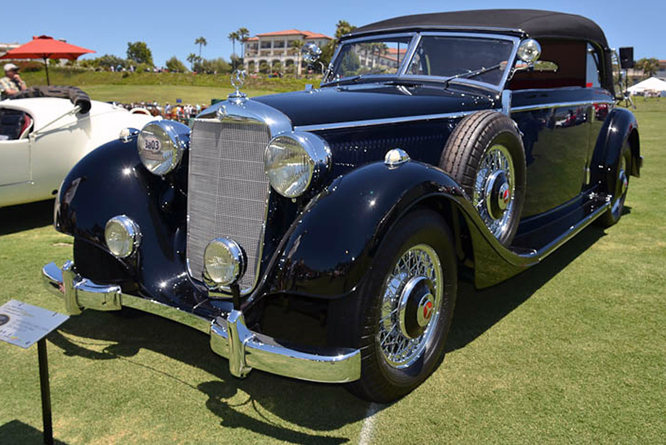
Marginally more modest from 1937 was this 320 Cabriolet B W124 similar to the four door type used as German military staff cars in films including The Great Escape, The Longest Day, The Train and Schindler’s List.

Mercedes Benz 230 S / W153, Dana Point Concours d'Elegance

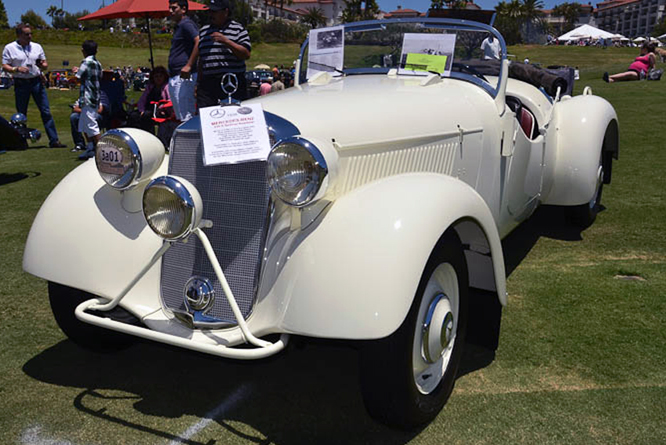
The Mercedes Benz 230S W153 above was developed for taking part in trials and rallies, hence the unusual bumpers which feature front and rear designed for co drivers to stand on should a redistribution of weight be required to aid traction or steering. Only 52 of these cars were ever built.

Kurtis 500M Roadster, Dana Point Concours d'Elegance

Leaping into the post ’39-’45 War era I believe this 1953 Kurtis 500M has appeared in a previous GALPOT post, I find it’s chunky styling even more appealing from the rear.

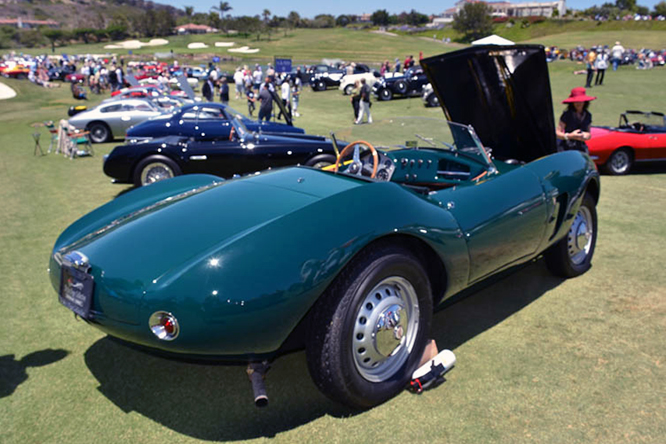
Arnolt Bristol, Dana Point Concours d'Elegance

Like wise an Arnolt Bristol has appeared on these pages before, the green example above is from the final 1959 year of production which totaled just 200.

Chevrolet Corvette Italia by Scaglietti, Dana Point Concours d'Elegance

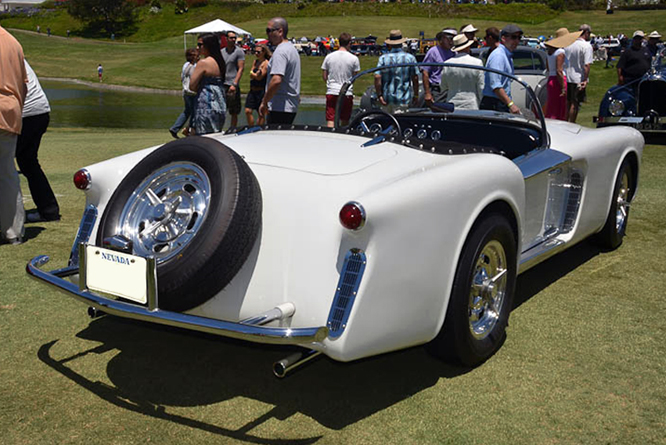
Only three Chevrolet Corvette Italia’s were built in 1959 with coachwork by Scaglietti in Italy. The idea for the car was born out an expensive to replace Ferrari crankshaft required by Gary Laughlin who turned to Jim Hall and Carroll Shelby to help in realise an exotic hand built car with affordable and reliable mechanical components. The example, above, owned by the Peterson Automotive Museum is the only one of the three built with a manual transmission.

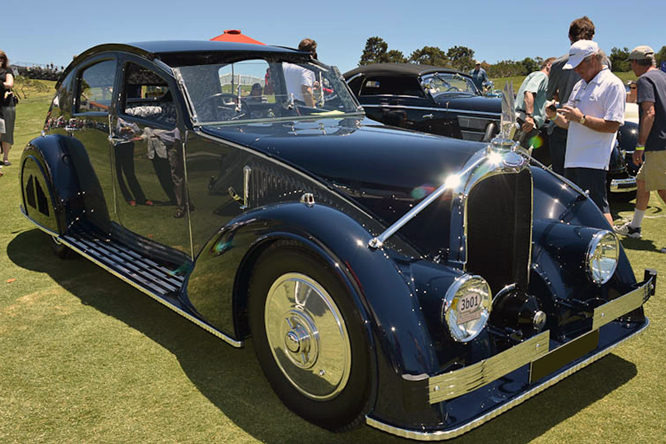
Voisin C-25 Aerodyne, Dana Point Concours d'Elegance

Not for the first time this 1934 Voisin C-25 Aerodyne, from the Mullin Automotive Museum, won the best in show award, it won at Pebble Beach last year too ! Among it’s novel features are a radial engine as used more commonly in aircraft, and a pneumatically operated retractable roof.

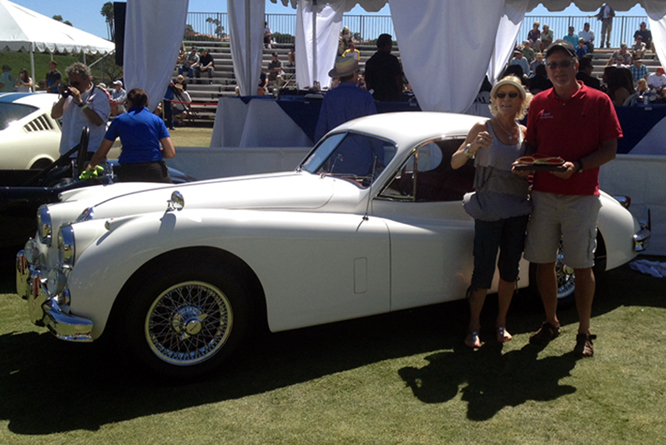
Jaguar XK140 FHC SE, Dana Point Concours d'Elegance

Finally I hope you will join me in congratulating Geoffrey and Gayle not only on their 43rd wedding anniversary but also on winning their class at the Dana Point Concours d’Elegance with the faithful Jaguar XK140 FHC SE that has been a part of their lives for 26 years.

My thanks to Geoffrey for his photographs.

Thanks for joining me on this “43rd Wedding Anniversary” edition of “Gettin’ a li’l psycho on tyres” I hope you will join me again tomorrow. Don’t forget to come back now !

Share

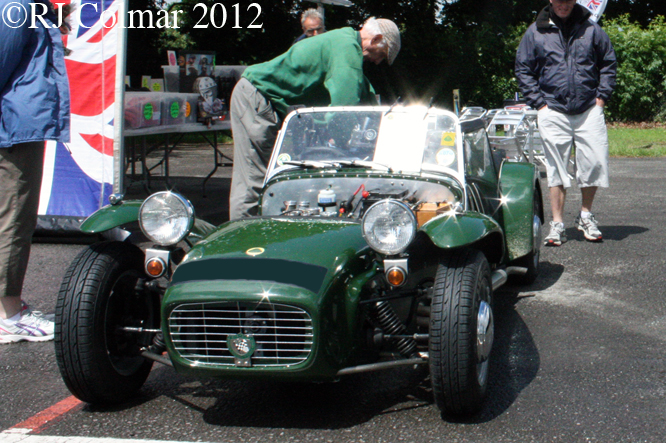
I Am Not A Number – Lotus Super Seven 1500 Cosworth #SB1688

Series 2 Lotus Sevens were introduced in June 1960 and remained in production until August 1968, they could be ordered either ready made or as complete knockdown kits (CKD’s). In order not to attract purchase tax the CKD’s were not allowed to be sold with instruction manuals on how to assemble the car. Ever the genius Colin Chapman sold his CKD’s with instructions on how to ‘disassemble’ his CKD’s.

Lotus Super Seven 1500 Cosworth, Castle Combe C&SCAD

The Super Severn 1500 Cosworth variation of the Lotus Seven S2 was first seen in 1961 featuring 1498 cc / 91.4 cui pre coss flow Ford Motor that was more commonly found in the Ford Consul Classic, it’s two door sibling the Consul Capri and later the Ford Cortina.

Lotus Super Seven 1500 Cosworth, Castle Combe C&SCAD

Alongside the fast bits like the Cosworth camshaft and close ratio gearbox, came a Standard 10 rear axle with drum brakes, a Triumph Herald steering rack, front hubs, fitted with 9″ Girling disc brakes and on this particular car fetching optional wheels with hubcaps from the Lotus Elan.

Lotus Super Seven 1500 Cosworth, Castle Combe C&SCAD

Television buffs will recognise the Lotus Super Seven as the vehicle Patrick McGoohan selected as “A symbol of all The Prisoner was to represent; standing out from the crowd, quickness and agaility, independence and a touch of the rebel” for his character in ‘The Prisoner’ TV series.

This 1963 model, one of 1310 Series 2 cars built, is thought to have originally been sold to a Clubmans racing driver and was found and restored by the current owner eighteen years ago.

Thanks for joining me on this “I Am Not A Number” edition of ‘Gettin a li’l psycho on tyres’, I hope you will join me again tomorrow. Don’t forget to come back now !

Share

Three Continent Veteran – Ferrari Dino 166/246 #0004

Last week I looked at a FIAT Dino Spider that was part of a programme to homologate (legitimise) Ferrari’s V6 Dino engine, which had impressed many when fitted to the 166 P sportscar in 1965, for the second tier European Formula 2 Championship which mandated 1.6 litre / 97.6 cui motors with a maximum of 6 cylinders based on production blocks of which at least 5000 examples had been cast.

Ferrari, Dino, 166/246, Donington Museum

Today’s featured car is the second of seven Ferrari Dino 166’s, that were built to compete in the European Formula 2 Championships from 1967 to 1969. It was first raced in 1967 by Chris Amon at the Hockenheimring in a Formula 2 race in which it did not finish. #0004 was then used by Chris in the Tasman series run in Australia, New Zealand and Tasmania where engines of up to 2.5 litres / 152 cui were mandated.
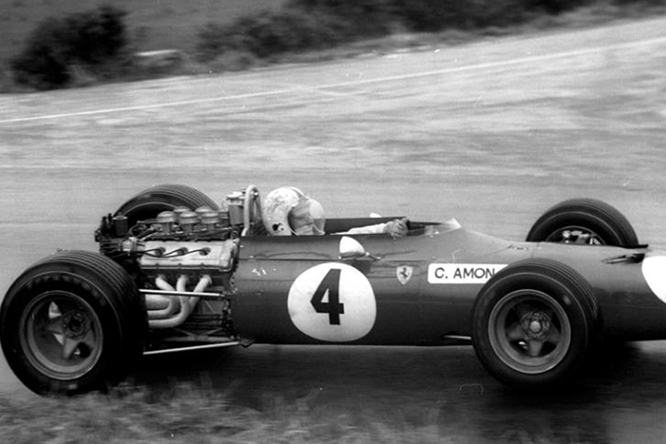
Chris Amon, Ferrari, Dino, 166/246, Longford, Tasmania

(Chris Amon, Ferrari 166/246 #0004, Longford, Tasmania, March 4th, 1968, Copyright Rod Mackenzie 1968)

Ferrari sent two motors ‘down under’ one a 2.4 litre / 146 cui V6 with three valves per cylinder and the second with 4 valves per cylinder. Amon won the first two races of the 1968 Tasman series in New Zealand and scored two further second place and two 4th place finishes to be in with a mathematical shot at the championship going into the final round but Jim Clark was not to be denied and Amon finished second to the Scotsman in the final championship standings. Chris is seen in Rod Mackenzie’s photo above driving to a 7th place finish in the last race of the season at Longford, Tasmania. Without doubt this photo represents the furthest point south in a photograph ever published on ‘Gettin’ a li’l psycho on tyres’.
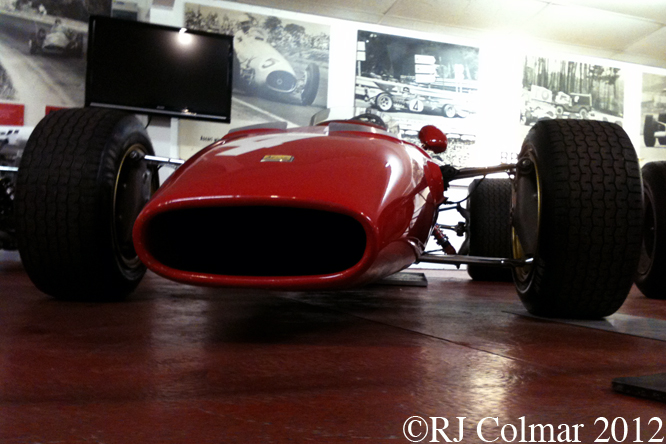
Ferrari, Dino, 166/246, Donington Museum

Back in Europe #0004 was returned to Formula 2 specification with a longer wheel base and an upgraded 225 hp 1.6 litre / 97.6 cui motor with four valves per cylinder in place of the original F2 spec 3 valves per cylinder. On October 13th 1968 Ernesto “Tino” Brambilla scored a memorable victory, from an 8th place start, at the Hockenheimring by putting all four wheels on the grass as he overtook his team mate Derek Bell and Henri Pescarolo driving a Matra on the last lap. Brambilla’s greatest moment was also Ferrari’s first Formula 2 victory since Wolfgang “Taffy” von Trips class win in the 1960 Italian Grand Prix.
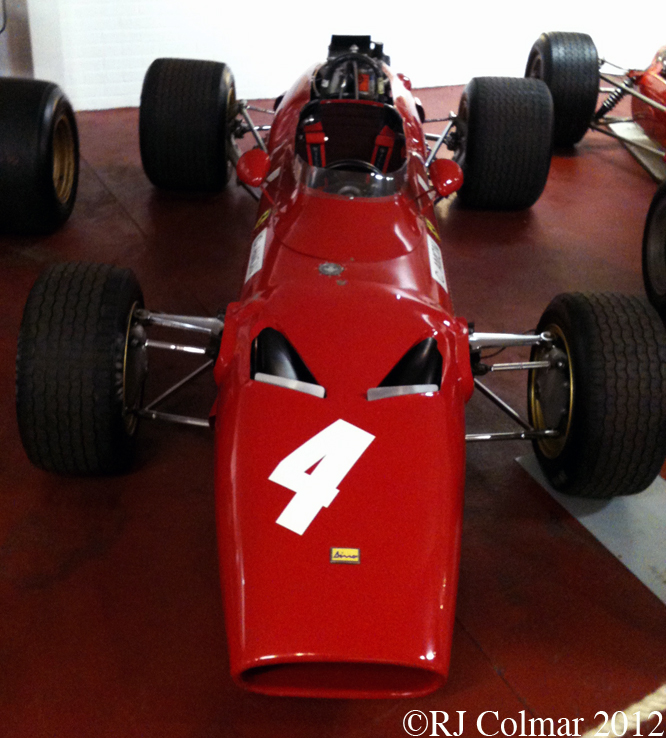
Ferrari, Dino, 166/246, Donington Museum

Brambilla then drove chassis #0004 to two further consecutive victories at Vallelaguna in Italy and Buenos Aires, Argentina where the #0004 was being used in the South American Temporada F2 series. Andrea de Adimich driving another Dino 166 took three victories in the remaining ’68 Temporada Series races to win the Championship while Tino recorded three DNF’s (Did Not Finish). Tino drove the car four more times in Europe in 1969 recording a best 4th place at Jarama in Spain.
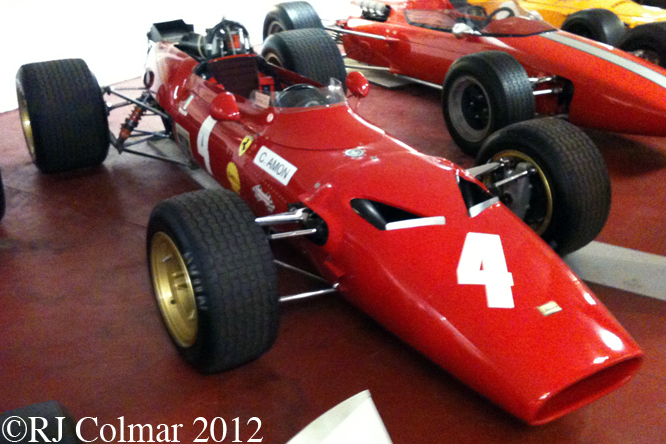
Ferrari, Dino, 166/246, Donington Museum

Chris Amon often considered by everybody except himself to be the unluckiest man in Grand Prix racing went back to compete in the Tasman championship with 166/346 chassis #0008 in 1969. Taking five wins from ten races along with four podium finishes Chris sealed the deal with the Dino at the second time of asking. Fellow New Zealander Graeme Lawrence repeated the Tasman Championship winning feat in 1970 using the same #0008 chassis Chris had used the year before.
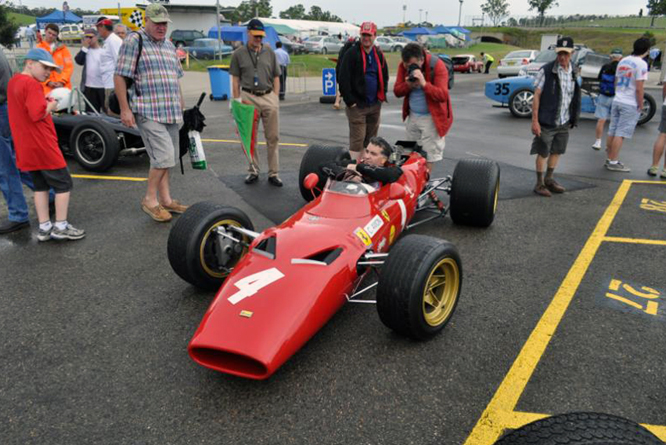
Rob Hall, Ferrari, Dino, 166/246, Tasman Revival, Eastern Creek Internaltional Racway

(Rob Hall, Ferrari 166/246 #0004, Eastern Creek International Raceway November 2010, Copyright Rod Mackenzie 2010)

Everett Anton Singer owned #0004 from the mid 1980’s to the late 1990’s during which time the car won it’s class twice in Concours d’Elegance events at Atlanta (’89) and Watkins Glen (’90). #0004, now owned by Graham Adleman has revisited the Antipodes twice since it’s heyday. With Rob Hall drove #0004 to win the 2008 Tasman Revival meeting at Eastern Creek International Raceway just outside Sydney Australia and just getting pipped by a a 3 litre 183 cui Lotus 49 in 2010 Tasman Revival meeting at the same venue. The Tasman Revival will be taking place again this year further details of the event can be found on this link.

My thanks to Rod Mackenzie for the use of his photographs and to everyone who contributed to the “1968 Ferrari Tipo 166 Dino Formula II” thread at The Nostalgia Forum where more photo’s of #0004 have been posted, particular thanks to Alan Cox for identifying #0004 and ellrosso of the OldRacePhoto.com website which gives viewers a fascinating insight into racing down under over a period spanning several decades.

Thanks for joining me on this “Three Continent Veteran” edition of “Gettin a li’l psycho on tyres”, I hope you will join me again tomorrow. Don’t forget to come back now !

Share