Tag Archives: GALPOT

Goodwood Revival 2012 – #1 Track Action

I planned to get up at 4am on Friday and head to Goodwood at 5 prompt, the first part of the plan worked well but by the time I’d corrected a false start and gone back home to collect my ticket it was 5:30 am before I hit the road in earnest.
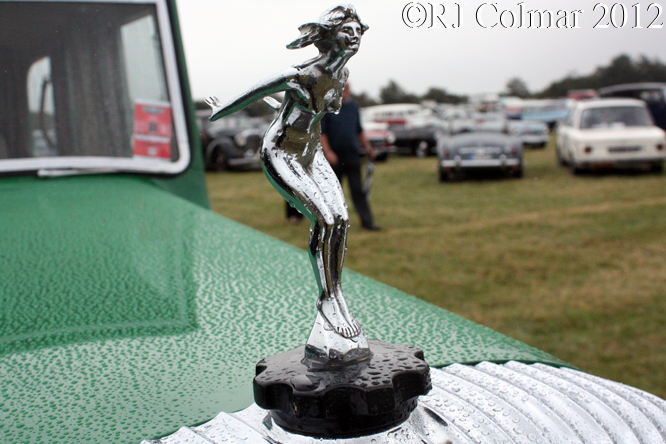
Daimler LQ20, Goodwood Revival

As I arrived at Goodwood the 8 O’clock news headline on the radio was about a controversy surrounding pictures of naked Royalty that had been published in France. I switched the radio off before the whole story had been told and headed off into a car park full of classic and cars where I found this mascot on a Daimler LQ20.
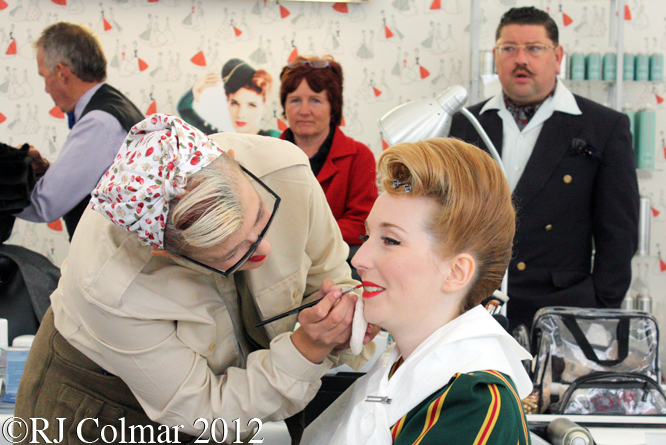
Make Up, Goodwood Revival

As I approached the bridge that acted as an entrance into the circuit I observed a tent full of people being transformed from 21st Century to mid 20th Century citizens for what is one of the worlds biggest, if not the biggest, three day Fancy Dress Nostalgia events.
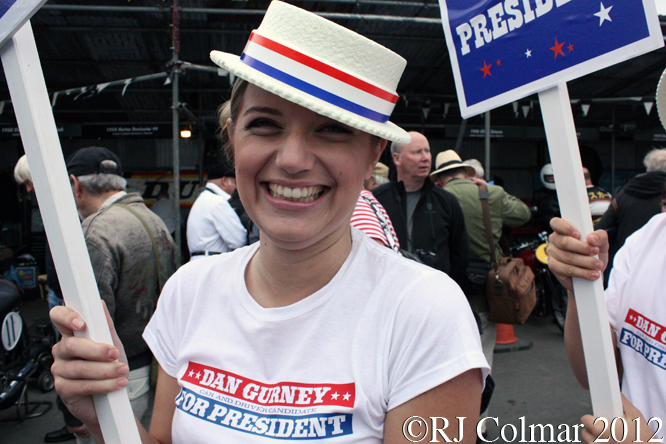
Gurney For President, Goodwood Revival

Once inside evidence of the Dan Gurney for President campaign was hard to ignore, I bet the guy I would vote for is faster than any other presidential candidate that ever lived.
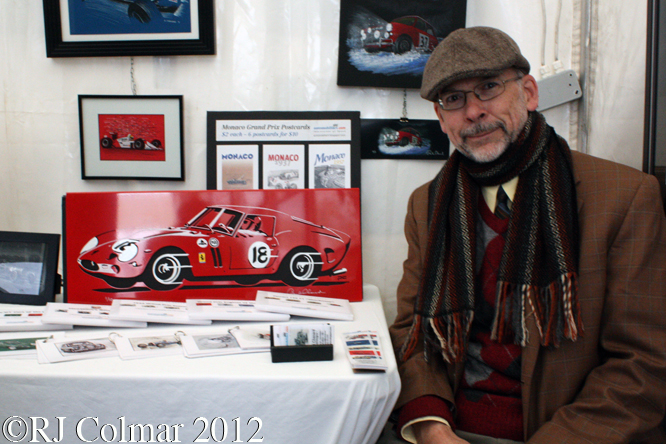
Paul Chenard, Goodwood Revival

On my way to the pits I popped by to say hi to Paul Chenard from Nova Scotia in Canada, Paul is seen above with one of the ten limited edition laser cut in steel Ferrari GTO’s he has recently been working on. Given that there were 15 250 GTO’s present to celebrate the 50th Anniversary of the model which these day’s are conservatively valued at $20 million dependent on provenance I imagine Paul did not have to take too many of these cool pieces home with him.
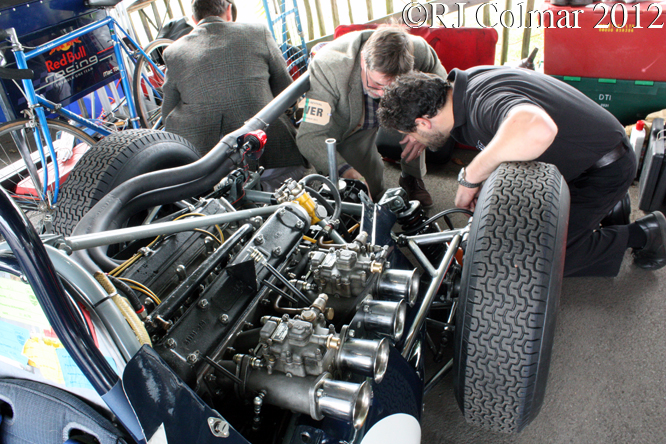
Walker Climax Tec Mec 10, Goodwood Revival

Thanks to an armband kindly lent to me by the owner of the Porsche in this linked photo, I was able to get into the pits to see and hear some of the cars as they were being fettled ready for qualifying for the Goodwood Revival invitation races. Above the Walker Climax Tec Mec Tipo 10 apparently was commissioned by Rob Walker for Stirling Moss in 1960 but was never raced in period.
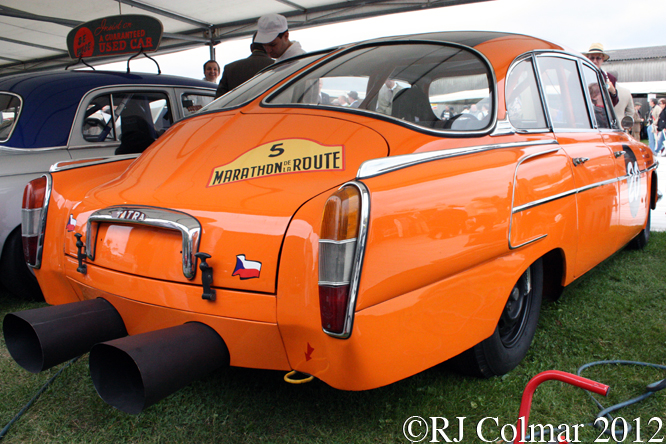
Tatra T603, Goodwood Revival

The Tartra T603 from the former Czechoslovakia easily won the unofficial biggest exhaust pipes in the pits competition, they are attached to an air cooled V8. The car qualified a respectable 8th for both rounds of the St Mary’s Trophy with John Haugland and Arne Berg driving in the first and second races respectively.
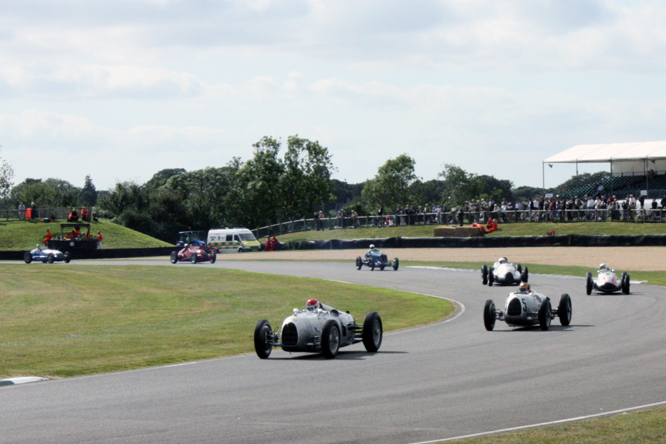
Siver Arrows, Goodwood Revival

After a short break for lunch, during which I caught up with acquaintances from The Nostalgia Forum, I started an anticlockwise walk of the circuit as Kenny Brack was securing pole for the Shelby Cup in a Shelby Daytona Coupé. I got to the Lavant Corners in time to see a demonstration of pre 1939 Grand Prix Cars which included V12 and V16 Auto Unions, Mercedes Benz silver arrows models running together for what is thought to be the first time since 1939. Unfortunately the poor commentators had no idea who was driving what and the programme notes are no help either. Above two V16 Auto Unions lead a Mercedes Benz, the V12 Auto Union an ERA and a pair of 8 cylinder Maserati’s.
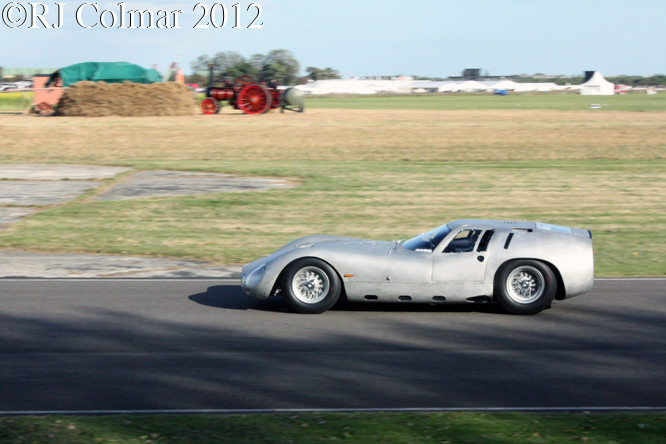
Maserati 151/3, Goodwood Revival

As the autumnal afternoon unfolded a seemingly endless stream of storied automobiles passed by including this recreation of a 39 inch tall prototype Maserati 151/3 driven by Jochen Mass and owner Barrie Baxter, which was invited to join the GT cars in the TT Celebration race.
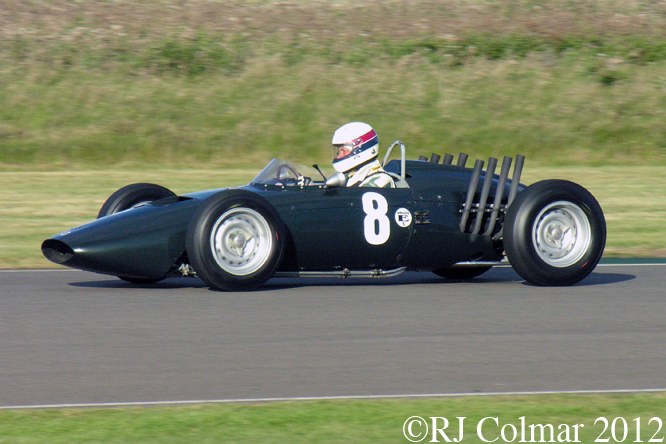
BRM P57, Goodwood Revival

After the many trials and all to few tribulations of BRM with it’s V16 P15 built in 1950 the team eventually evolved into Grand Prix and World Championship contenders winning the 1962 World Manufacturers and Drivers Championships with Graham Hill at the wheel of a V8 powered BRM P57, with 8 neat exhaust stacks, similar to the one above driven by David Clark in the Glover Trophy.
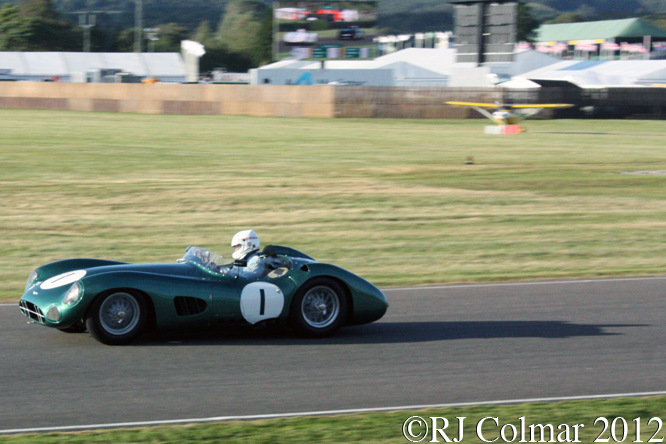
Aston Martin DBR 1, Goodwood Revival

The last time I remember seeing Brian Redman at the wheel of an Aston Martin was at Donington Park in 1989 when he was driving the brutal Aston Martin AMR 1 Group C car. Here Brian is driving a 1957 DBR 1 of the type which, unlike the AMR 1, won at Le Mans in 1959 with Carol Shelby and Roy Salvadori at the wheel. Brian is seen above on his way to 18th on the grid for the Sussex Trophy race.
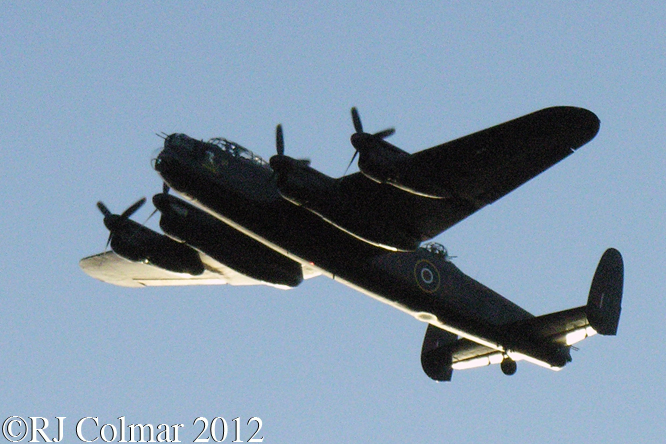
Avro Lancaster PA474, Goodwood Revival

Having started the morning in the fog bound Channel Islands one of only two remaining Avro Lancaster PA474 bombers, powered by four Rolls Royce Merlin V12’s made a flyover of the track just before the day’s only scheduled race started.
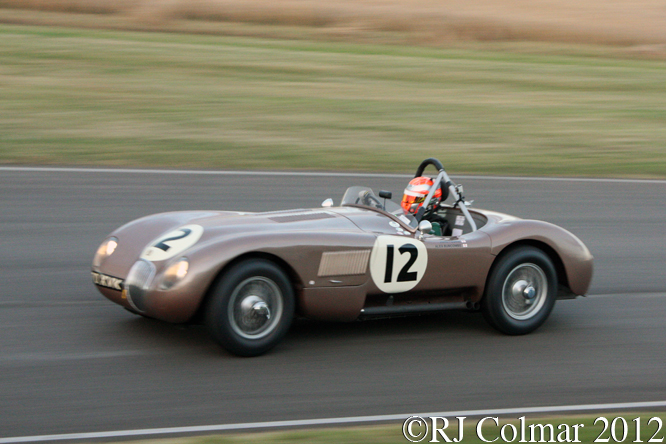
Jaguar C-type, Goodwood Revival

Anthony Reid stormed off into what looked like an invincible lead for the 90 minuet Freddie March Memorial Trophy race as the evening drew to dusk. However a gear box fault meant that when owner Nigel Webb took over there was only one gear available, 4th and so the #24 C-type fell back to an eventual twelfth place. This meant that all Alex Buncombe had to do was keep his #12 Jaguar Heritage Racing C-Type,which had started with John Young at the wheel, on the road to keep the lead. Alex did take the win but only after a lawn mowing incident at St Mary’s corner which resulted in Alex loosing his head lights for a good half an our before remembering where the switch was.

Thanks for joining me on this Goodwood Revival 2012 – #1 Track Action edition of “Gettin’ a li’l psycho on tyres” I hope you will join me again tomorrow when I’ll be taking a look at some of the MG’s at Goodwood. Don’t forget to come back now !

Share

Coffee, Croissant & Cars #4 – Avenue Drivers Club

Last Sundays Avenue Drivers Club meeting filled Queen Square with another staggering selection of motor vehicles.

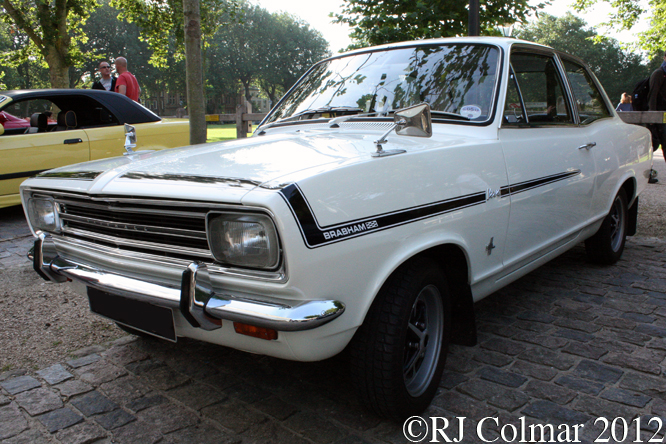
Vauxhall Viva SL, Avenue Drivers Club, Queen Square, Bristol

This 1968 Vauxhall Viva SL 90 has some go faster stripes, but not just any go faster stripes, these are replica’s of those that were originally supplied as part of the over the counter Brabham tuning kits that were available from 1968 to 1971 when the HB Viva was in production.

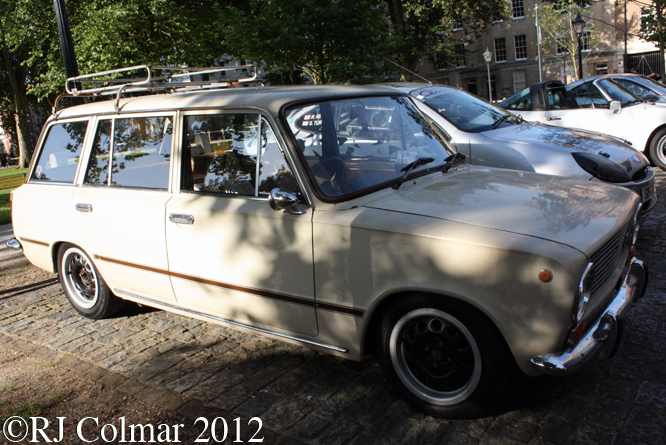
Lada 1200, Avenue Drivers Club, Queen Square, Bristol

Like so many popular cars you do not notice them until they are almost all gone. This 1983 Lada is one of a fast disappearing breed, first time I have seen one slammed, modified with extreme lowered suspension.

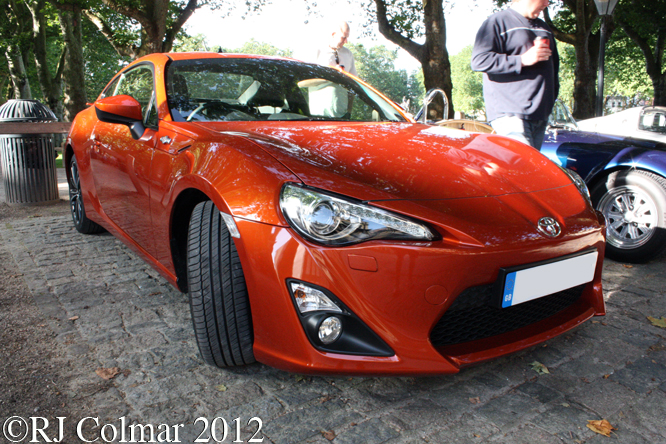
Toyota GT86, Avenue Drivers Club, Queen Square, Bristol

This is certainly the first Toyota GT 86 I have ever seen on the road, it comes with rear wheel drive and even more unusually a 4 cylinder boxer engine !

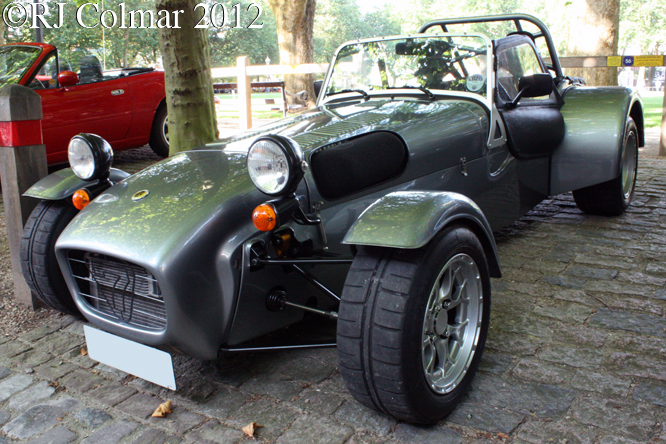
Caterham Seven, Avenue Drivers Club, Queen Square, Bristol

Continuing the sports theme was this 2007 Caterham 7 with a 50th Anniversary Paint option.

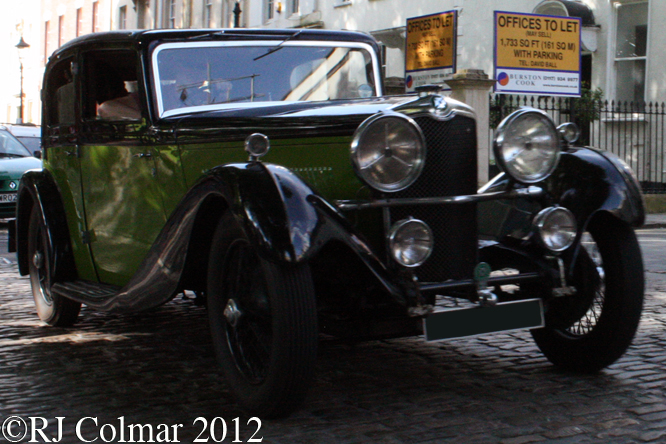
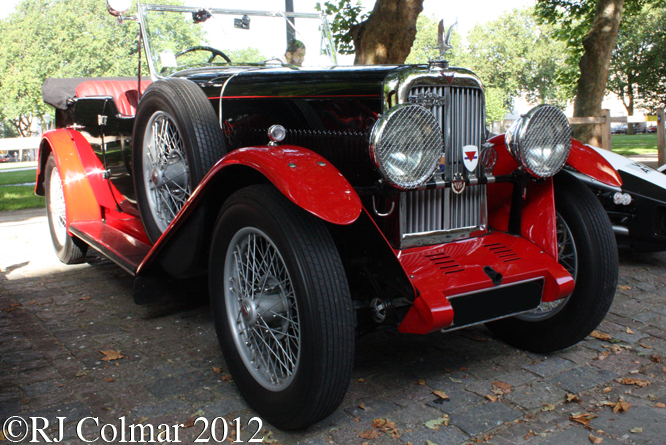
Alvis Silver Eagle, Avenue Drivers Club, Queen Square, Bristol

Among the vintage vehicles present this 1931 Alvis Silver Eagle sold with the strap line “The Freedom of the air comes to the road with the Silver Eagle”

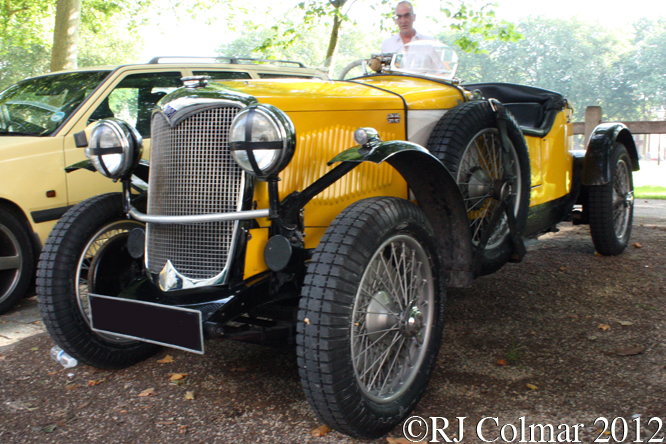
Riley Nine Falcon Special, Avenue Drivers Club, Queen Square, Bristol

Staying with an ornithological theme further round the block I found this 1936 Riley Nine Falcon Special.

Crossley 2 litre Sports Saloon, Avenue Drivers Club, Queen Square, Bristol

Only 25 Crossley 2 Litre Sports Saloons were built this one, chassis and engine #16/103 was the third built in 1934, and is thought to be the only one that is still road worthy.

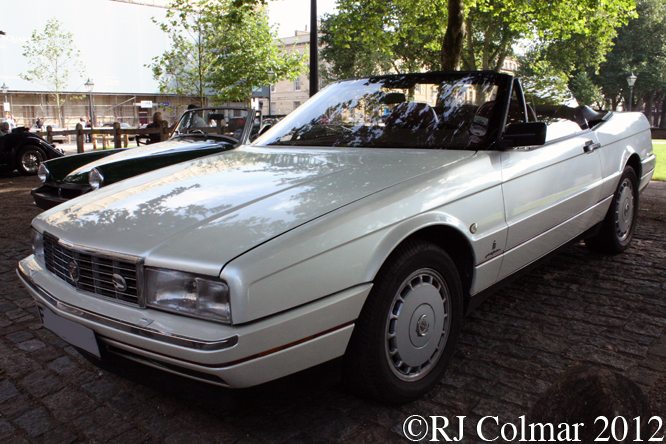
Cadillac Allanté, Avenue Drivers Club, Queen Square, Bristol

Cadillacs are rarities in Britain what ever the age this is a Pininfarina designed 1988 Allanté Roadster, the only option available for it when new was a ‘cellular phone’.

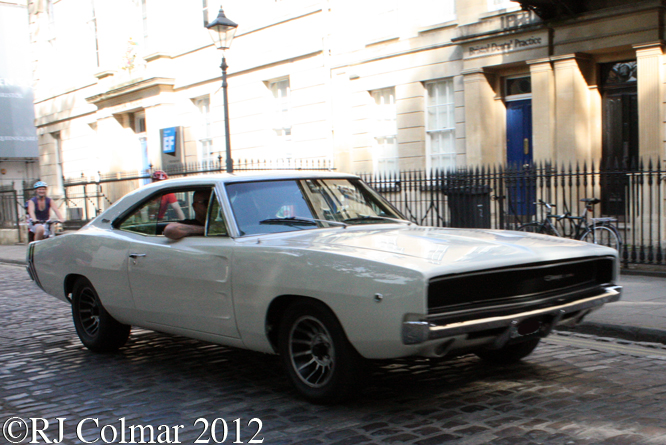
Dodge Charger, Avenue Drivers Club, Queen Square, Bristol

Harking back to the zenith of the Muscle Car Era was this 1968 Dodge Charger, about the only option missing was Miss Daisey Duke !

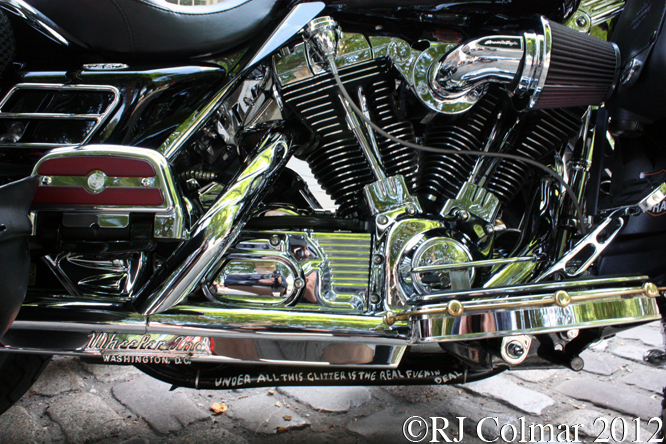
Harley Davidson Road King, Avenue Drivers Club, Queen Square, Bristol

A little humour from the owner of this Harley Davidson Road King.

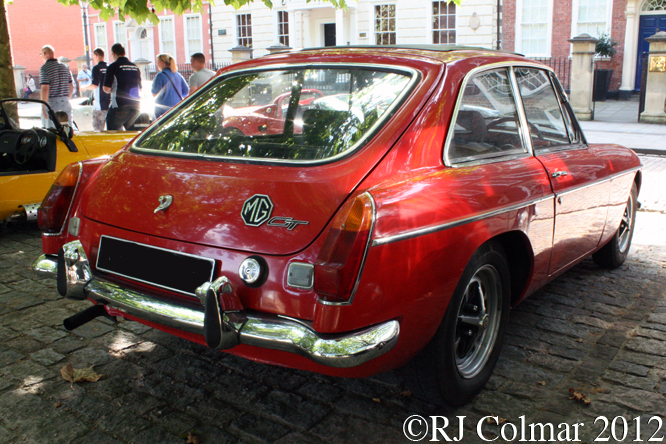
MGB GT, Avenue Drivers Club, Queen Square, Bristol

A couple of months ago I met Rich and Matt and related their tale of an adventure going to fetch a left hand drive Volvo 121 from Sweden, this is one of Matt’s cars a tidy 1971 MGB GT.

Bristol 412, Avenue Drivers Club, Queen Square, Bristol

Finally as it was time to head home this 1977, Chrysler powered, Bristol 412 came purring past.

Thanks for joining me on this “Coffee, Croissant & Cars #4” edition of “Gettin’ a li’l psycho on tyres”. I hope you will join me again tomorrow with the first of my Goodwood Revival 2012 posts. Don’t forget to come back now !

Share

Loud Engine Test Bed – Lotus 62

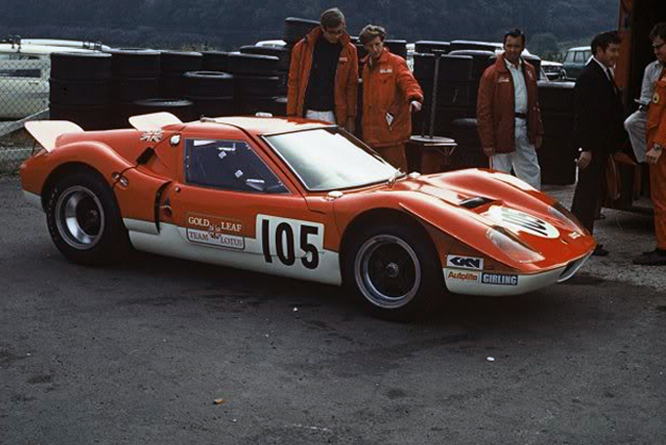
Today’s post comes courtesy of Jon Bawden and his Dad RJ Bawden who took this photograph of the Lotus 62 at the Bank Holiday Monday Guards International run at Brands Hatch in September 1969 when Jon was only 3 !

Lotus 62, BOAC 500, Brands Hatch

For 1969 Lotus produced two prototype racing cars, designed by Martin Waide, that were to replace the Lotus 47 and act as test beds for the 4 cylinder Vauxhall LV220 motors Lotus would develop into the Type 904 motors that would be used in the Lotus Elite, Eclat and Esprit road cars that Lotus introduced between 1974 and 1976.

While the outside shape of the 62 bears a passing resemblance to the Lotus 47 racing cars underneath the fiber glass body a space frame chassis replaced the back bone chassis of the Type 47.

The 220 hp 1992 cc / 121.5 cui Vauxhall LV 220 based motor was modified by Lotus and featured an alloy cylinder block and cylinder head, twin overhead camshafts and Tecalemit – Jackson fuel injection. By all accounts the Lotus 62 was amongst the noisiest motors in prototype racing despite it’s modest size.

John Miles and Brian Muir were the drivers of the car at the BOAC 500, during practice the handling problems became apparent but the car qualified 16th and came in 13th overall, 1st in class. The car was run with a an additional aerodynamic aid above the nose as a temporary remedy to the handling issues as can be seen in this linked photograph.

During the remainder of the season John Miles managed another class win with a fourth place finish in the Trophy of the Dunes held at Zandvoort in The Netherlands and an overall win in the Guards International for cars up to 2 litres / 122 cui.

American Roy Pyke deputising for an other wise indisposed Brian Muir drove the #105, as seen above, to third place behind his team mate in the Guards Trophy. Peter Darley at The Nostalgia Forum has identified those standing behind the Lotus 62 as, left to right, Nigel Bennett (Firestone), Gordon Huckle (Lotus), Mike Brett (Firestone), Bruce Hare (Firestone).

Roy deputising for John Miles won a minor Motoring News GT Championship race at Thruxton in October 1969.

The second of the Lotus 62’s ended up in Portugal where Enesto Neves drove it to at least three victories between 1971 and 1973, while the first one ended up with jazz trombonist Chris Barber’s team who had David Brodie drive it.

My thanks again to RJ and Jon Bawden for their kind permission to use their photograph.

Thanks for joining me on this “Loud Engine Test Bed” edition of “Gettin’ a li’ psycho on tyres” I hope you will join me again tomorrow. Don’t forget to come back now !

Share

Manifattura Tessile Cotoniera, Milano – Ferrari 166MM #0022M

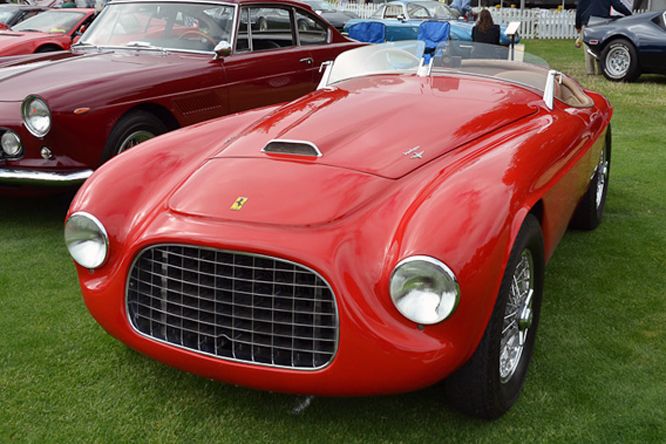
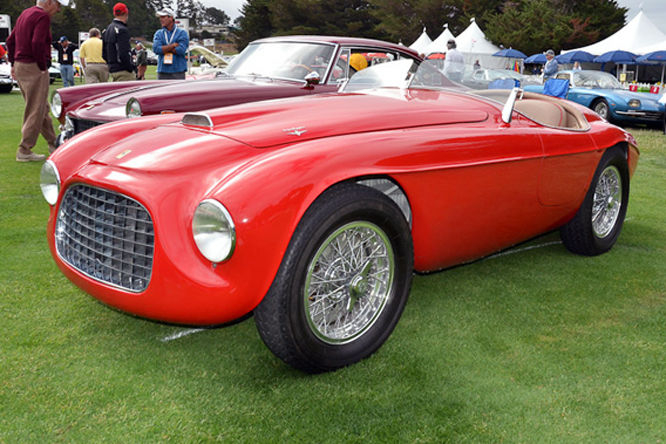
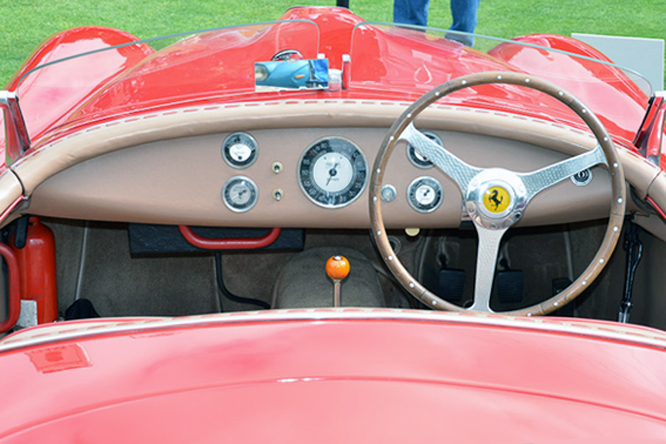
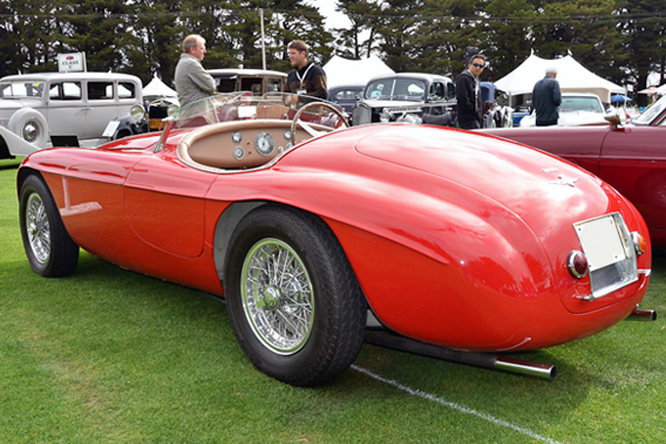
A couple of weeks ago I looked at the Ferrari 166MM #0040M, thanks to Geoffrey Horton today’s featured car is the Ferrari 166MM #0022M which was seen at the recent Hillsborough Concours d’Elegance.

Ferrari 166MM, Hillsborough, Concours d'Elegance

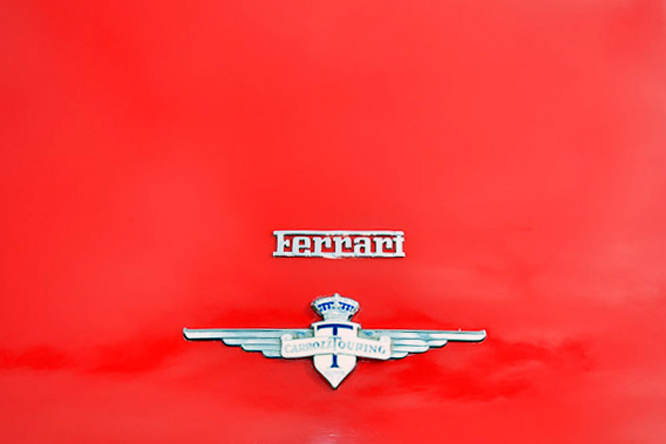
Using only the internet as a source the history of this car is a little more difficult to pin down, it is certain that this is the twelfth of the 25 166MMs built with a body by Touring.

Ferrari 166MM, Hillsborough, Concours d'Elegance

One source gives the delivery date as 27th July 1949 to Manifattura Tessile Cotoniera, Milano which is thought to have belonged to Giannino Marzotto.

Ferrari 166MM, Hillsborough, Concours d'Elegance

The same source indicates that Giannino won the Coppa Gallenga hillclimb in this car on 16th October 1949. While another source indicates that Franco Cornacchia drove #0022M in at least two events prior to this in August 1949 which included winning a race at Circuito de Senigallia on 21st August 1949.

Ferrari 166MM, Hillsborough, Concours d'Elegance

Both sources agree that the long distance expert and multi time Mille Miglia and Targa Florio winner Clemente Biondetti drove this chassis to a sixth place finish in a sports car race in Monaco on June 1st 1952.

Ferrari 166MM, Hillsborough, Concours d'Elegance

Since 1973 #0022M appears to have had just three owners, all in the United States.

My thanks to Geoffrey Horton for today’s photographs.

Thanks for joining me on this “Manifattura Tessile Cotoniera, Milano” edition of “Gettin’ a li’l psycho on tyres” I hope you will join me again tomorrow, when I’ll be visiting the 1969 Bank Holiday Monday Guards International at Brands Hatch. Don’t forget to come back now !

Share

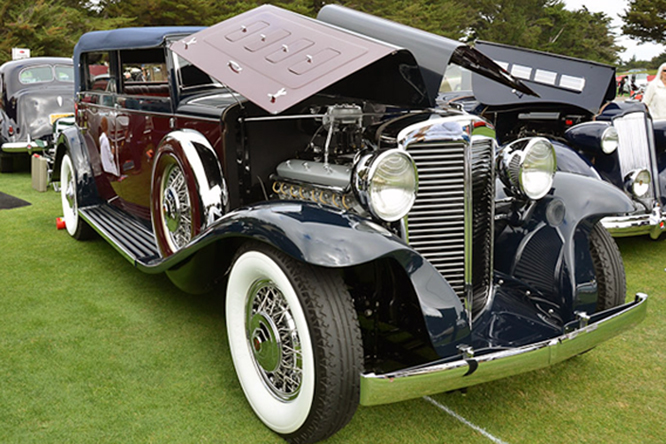
The Worlds Most Advanced Car – Marmon Sixteen

The transformation of flour mill machinery manufacturers Nordyke and Marmon, est 1851, into the manufacturers of the Worlds most advanced car started with 23 year old University of California at Berkeley graduate Howard Marmon returned to Indianapolis and built his first car, powered by an aircooled V twin featuring a pressurised lubrication system and overhead valves in 1902.

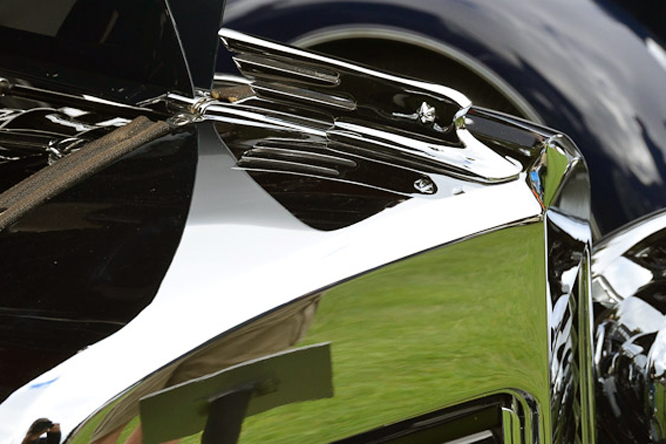
Morman Sixteen, Hillsborough Concours d'Elegance

Howard’s second design was powered by an aircooled V4 and a couple of years later Marmon sold it’s first six cars, allegedly mostly to friends. Nine years after designing his first car Howard’s Marmon Wasp won the very first Indianapolis 500 in 1911 with Ray Harroun averaging 75 mph for the 6 hours, 42 minutes it took to complete the distance. The Wasp is said to be the first car ever to feature a rear view mirror.

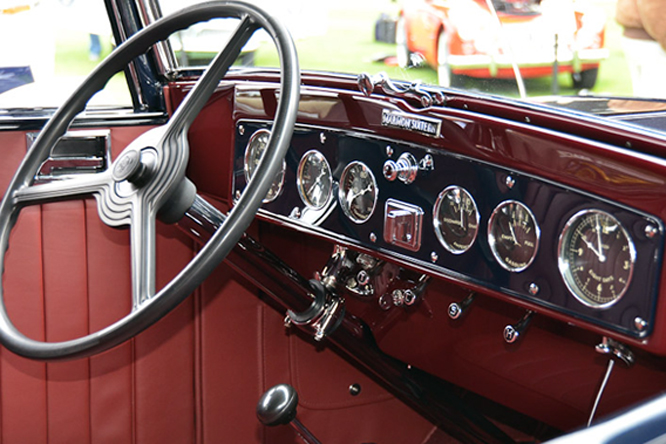
Marmon Sixteen, Hillsborough Concours d'Elegance

After full fulfilling a contract to build 5,000 Liberty motors for use in the 1914/18 war Marmon had the financial stability to continue innovating especially with the use of aluminium in automobile manufacture and with motor configurations until in 1927 Marmon began the design of the highly advanced V16.

Marmon Sixteen, Hillsborough Concours d'Elegance

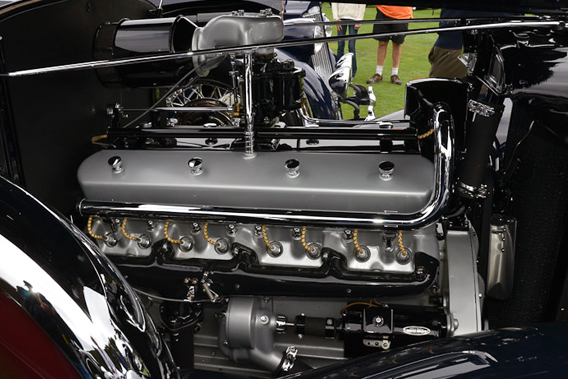
The 8.1 litre / 491 cui V16 motor is a work of art featuring a ‘Y’ shaped block with a 45 degree V for the two banks of eight cylinders made from a single aluminium casting that includes the crank case. The excellent design of the engine was recognised by the Society of Automotive Engineers who’s annual design award was given to Howard Marmon.

Marmon Sixteen, Hillsborough Concours d'Elegance

With overhead valves operated by pushrods from a single cam shaft the motor produced 200 hp and weighed much less than the smaller V16 that Cadillac had pushed through to production in less time than Marmon with the help of an ex Marmon employee.

Marmon Sixteen, Hillsborough Concours d'Elegance

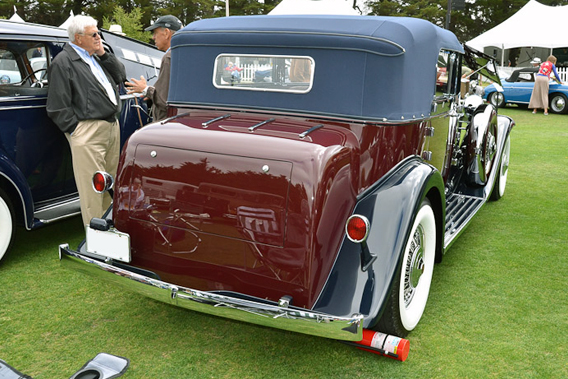
Most of the 390 Marmon Sixteens had bodywork by LeBaron with the design credited officially to Walter Dorwin Teague, Sr though much of the work was done by his son W.D. Teague, Jr an MIT student.

With a superior power to weight ratio, thanks to the extensive use of aluminium, to almost everything else on the road, all Marmon Sixteens were certified has having achieved 100 mph on the fabled Indianapolis Circuit. Unfortunately the The Worlds Most Advanced Car, as the Sixteen was marketed, came at absolutely the worst time when the market for $5,000 automobiles was at an all time low and so Marmon left the car manufacturing business when it went in to receivership in 1933.

My thanks to Geoffrey Horton for kindly sharing today’s photographs taken at the recent Hillsborough Concours d’Elegance.

Thanks for joining me on this “The Worlds Most Advanced Car” edition of “Gettin’ a li’l psycho on tyres”.
I hope you will join me again for Ferrari Friday tomorrow. Don’t forget to come back now !

Share

Record In Perpetuity – Napier Railton

Last week I looked at the Birkin Bentley with which Tim Birkin set the outright Brooklands circuit record from John Cobb driving a V12 Delage at 137.58 mph in 1932.

Napier Railton, Brooklands Double Twelve

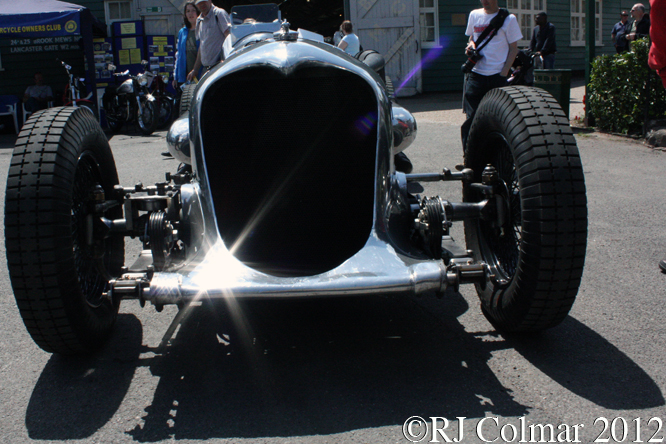
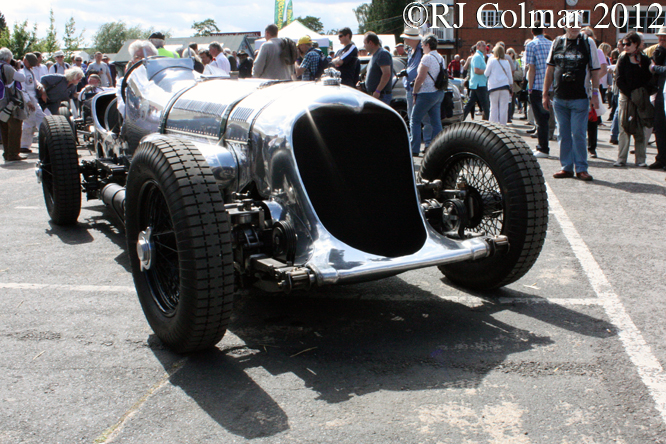
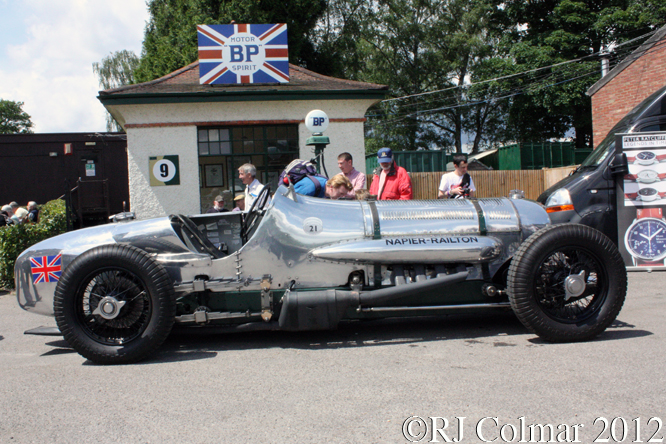
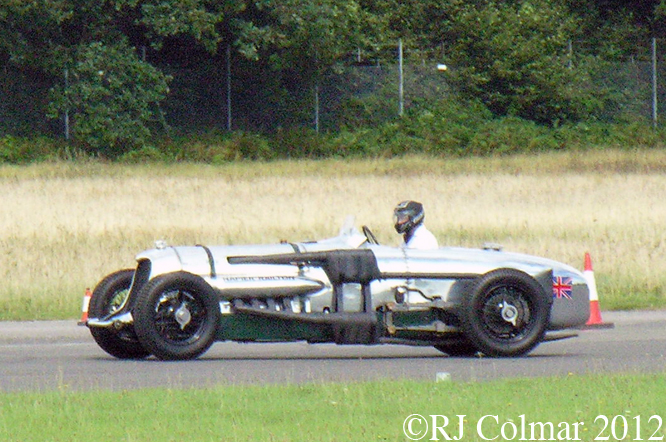
In order to regain the Brooklands outer circuit record John Cobb commissioned Thomson & Taylor to build a racing car to replace his 1923 Delage. Ried A Railton was given the task of developing what has become known as the Napier Railton around a 24 litre / 14,627 cui 12 cylinder Napier Lion motor that started life as a design for aviation applications in 1917.

Napier Railton, Brooklands Double Twelve

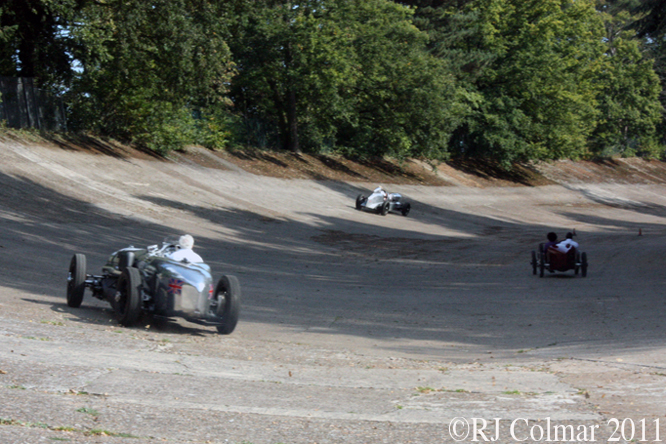
The extremely rough nature of the 2.75 mile Brooklands outer circuit meant that no single detail of the new challenger could be anything less than rock solid to withstand the pounding punishment of the concrete track which would regularly pitch cars into the air at speeds in excess of 120 mph.

Napier Railton, Brooklands Double Twelve

Weighing in at two tons the Napier Railton had a theoretical top speed of over 160 mph, despite this it was only fitted with 16 inch rear drum brakes to save weight.

Napier Railton, Brooklands Double Twelve

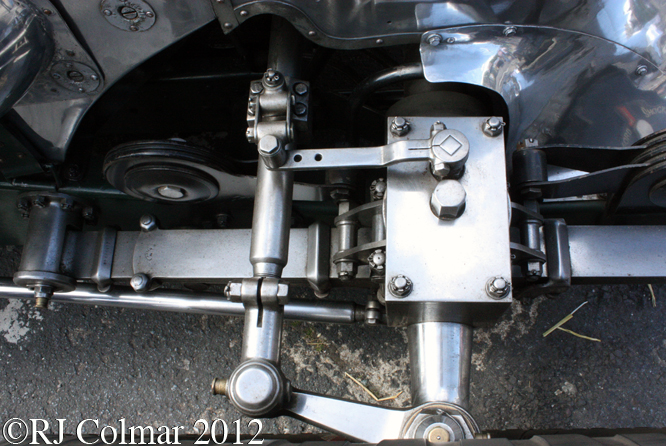
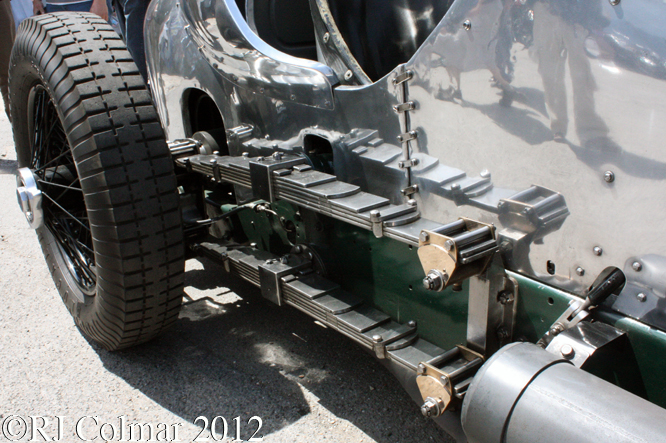
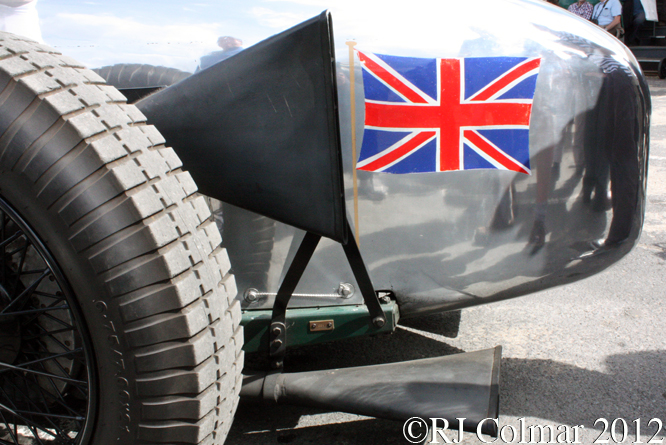
Equipped with beam axles, front and rear, the front one was suspended by a pair of semi-elliptic leaf springs and four friction dampers.

Napier Railton, Brooklands Double Twelve

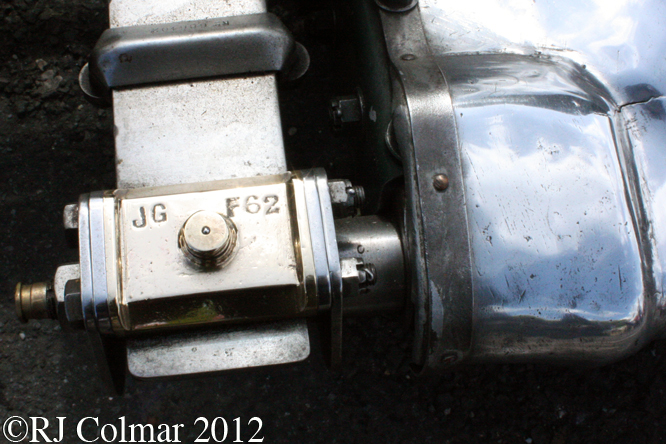
Where ever the eye falls on the Napier Railton there is an overwhelming sense of strength, above the front leaf spring, on the right is the beam axle ahead of the steering arm on the left.

Napier Railton, Brooklands Double Twelve

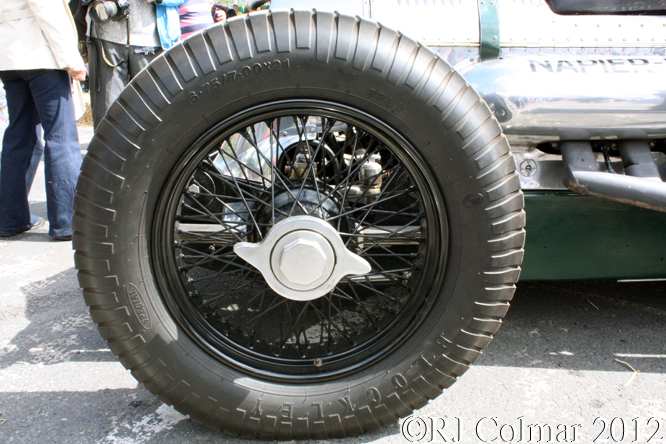
During it’s first tests the Dunlop tyres proved wholly inadequate, but this problem was overcome by the time Cobb made his first appearance in the car at Brooklands in 1933.

Napier Railton, Brooklands Double Twelve

Despite it’s large capacity the Napier Lion motor with it’s three banks of four cylinders each with twim overhead cam shafts was relatively compact, compared to a similar capacity V12 with two row’s of six cylinders for example.

Napier Railton, Brooklands Double Twelve

However in order to keep the machine stable over the bumps at speed the Napier Railton has a 130 inch wheel base with a 60 inch track front and rear.

Napier Railton, Brooklands Double Twelve

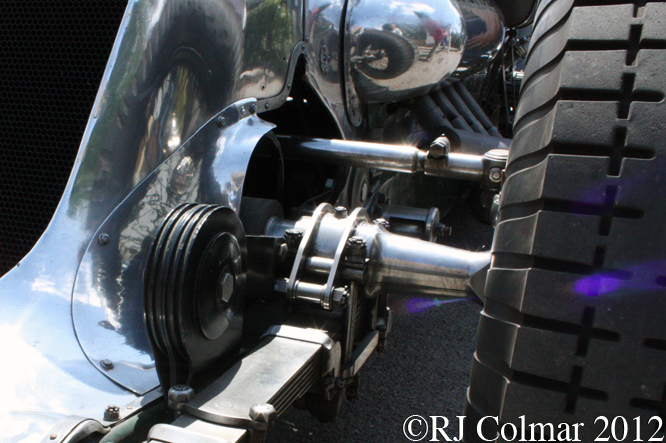
The mounting points for the twin rear leaf spring sets is alongside the cockpit.

Napier Railton, Brooklands Double Twelve

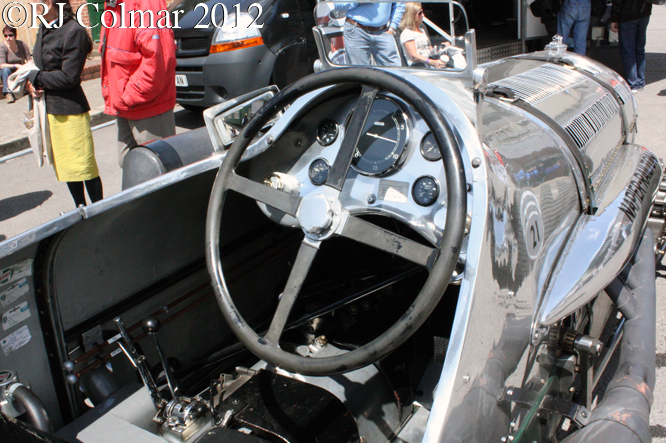
The huge revolution counter did not have to work particularly hard the Napier Lion produced over 500 hp at just 2,200 revolutions per minuet. The gear box had three forward gears and no reverse.

Napier Railton, Brooklands Double Twelve

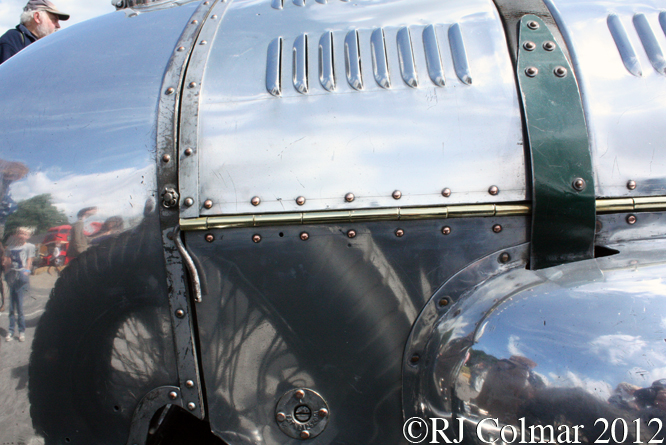
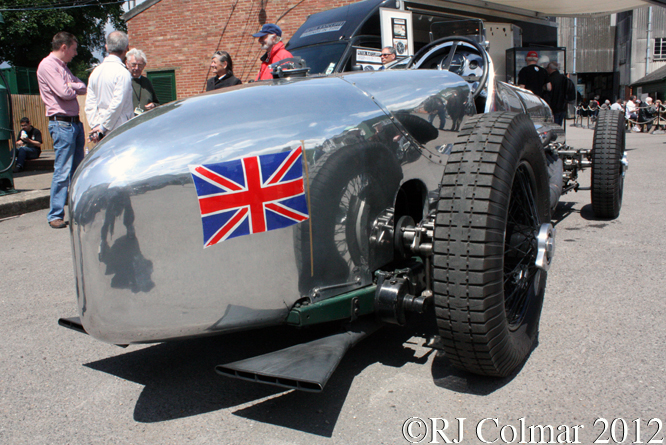
The bare aluminium bodywork is credited as being by Gurney Nutting.

Napier Railton, Brooklands Double Twelve

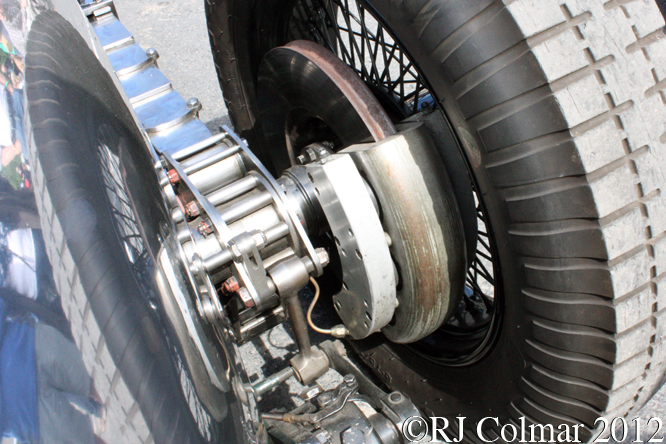
After it’s success on the track pre 1939 and after an appearance in the film Pandora and the Flying Dutchman alongside James Mason and Ava Gardner released in 1951, the rear drum brakes were replaced with these aircraft style disc brakes so that the car could be used to test aircraft braking parachutes by the GQ Parachute Company at Dunsfold Aerodrome in the early 1950’s.

Napier Railton, Brooklands Double Twelve

After John Cobb set the outright Brooklands circuit record at 143.44 mph, thanks to the subsequent break up of the circuit a record that will stand in perpetuity, Cobb took the Napier Railton to Bonneville Salt Flats where he set a world 24 hour record at 150.6 mph.

Napier Railton, Brooklands WB Memorial

John Cobb and Reid A Railton would work together again on the Railton Special featuring two Napier Lion engines, one driving each axle. The Railton Special became the first car to exceed 350 mph in 1939 and renamed the Railton Mobil Special it became the first car timed over 400 mph in 1947 when Cobb left the Land Speed Record at a two way average of 394.19 mph. Cobb was killed making an attempt on the water speed record in his jet powered boat Crusader in 1953.

Napier Railton, Wings and Wheels, Dunsfold Aerodrome

In 1997 the Brooklands Museum acquired the car after it had been repatriated from a collection in Leipzig.

When not in view at the Brooklands Museum or on what remains of the Brooklands track the Napier Railton can be seen doing what it does best at events like Wings and Wheels at Dunsfold Aerodrome.

Share

International Favorite – MG Magnette ZB

There are six MG’s models in three model groups which have had been marketed with Magnette name :- the K and N types built from 1932 to 1936, the Wolseley based ZA and ZB types built from 1953 to 1958 and the BMC Farina bodied Mark III and Mark IV built from 1959 to 1968.

MG Magnette, Bristol Classic Car Show, Shepton Mallet

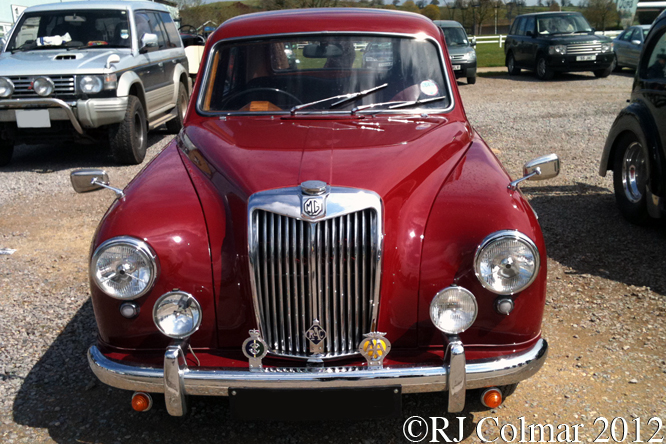
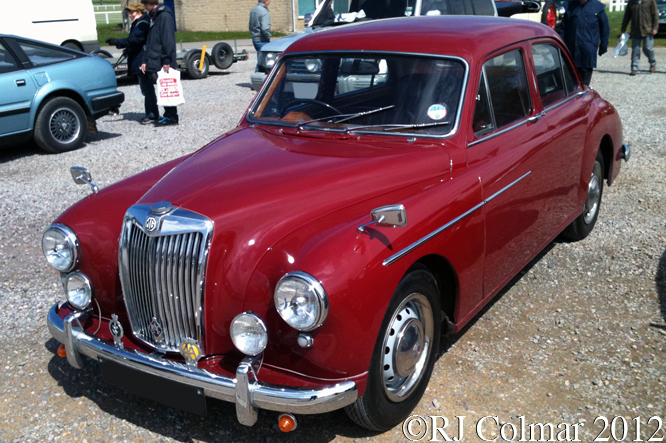
Today’s 1957 Magnette ZB, seen earlier this year at the 33rd Bristol Classic Car Show, is the fourth iteration based on the Wolseley 15/50 built from 1956 to 1958.

MG Magnette, Bristol Classic Car Show, Shepton Mallet

The Magnette ZA was launched in 1953 with a cut down body similar to the Wolseley 14/40 launched earlier the same year. The only interchangeable panels between the two models, and those of the later ZB, launched in 1956 and Wolseley 15/50 are the front doors, roof and boot lid.

MG Magnette, Bristol Classic Car Show, Shepton Mallet

Gerald Palmer was responsible for the detail differences between the ZA and Wolseley 14/40. The ZA would became the first unitary monocoque constructed MG without a separate chassis.

MG Magnette, Bristol Classic Car Show, Shepton Mallet

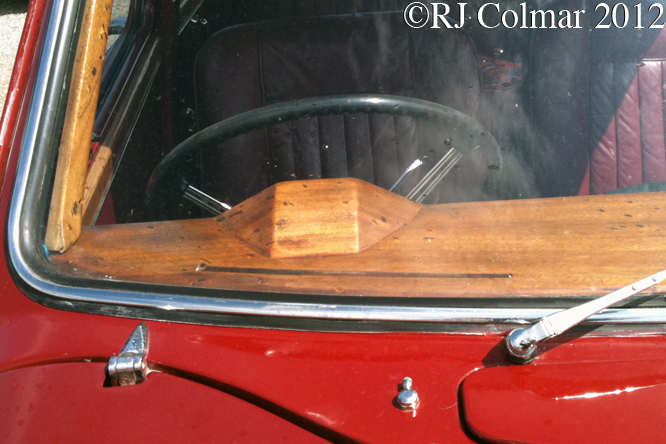
The ZB, seen here, features a 64 hp motor, up from 60 hp on the ZA, with a bigger carburetor and higher compression ratio than the original British Motor Corporation (BMC) B- Series motor used for the ZA, was capable of 86 mph with a rest to 60 mph time of 18.5 seconds.

MG Magnette, Bristol Classic Car Show, Shepton Mallet

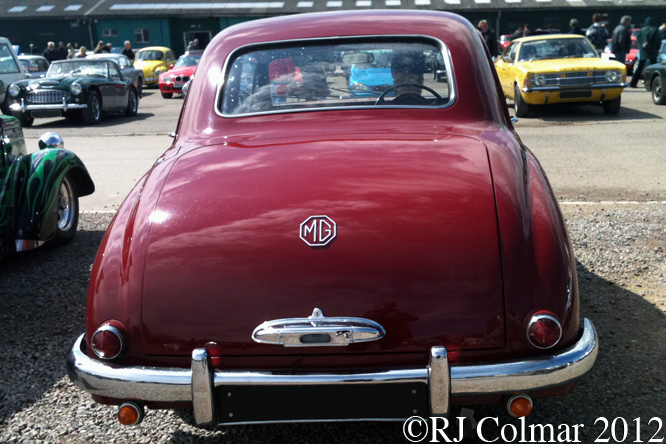
With advertising advertising benefits like “Spots-car Performance, Family-car Comfort, Small-car Economy” and a strap line that ran “Style and luxury combined with the nimble roadability that has made the MG and international favorite” the low slung ZB outsold the Wolseley 15/50 BMC stable mate by 3 to 2 with 18,524 being built from 1956 to 1958.

Thanks for joining me on this “International Favorite” edition of “Gettin’ a li’l psycho on tyres” I hope you will join me again tomorrow for a look at a Brooklands legend. Don’t forget to come back now !
Share