Tag Archives: Goodwood

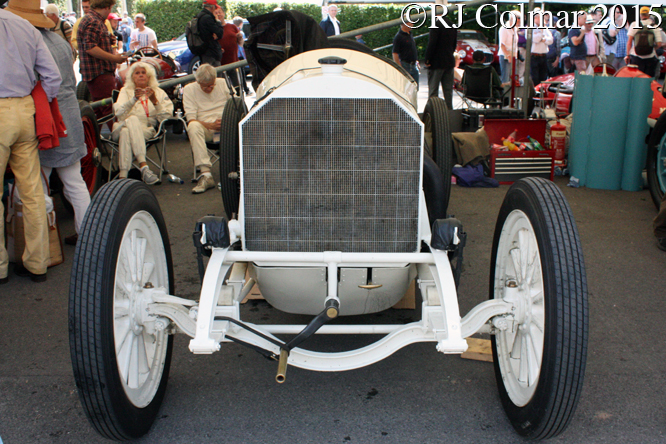
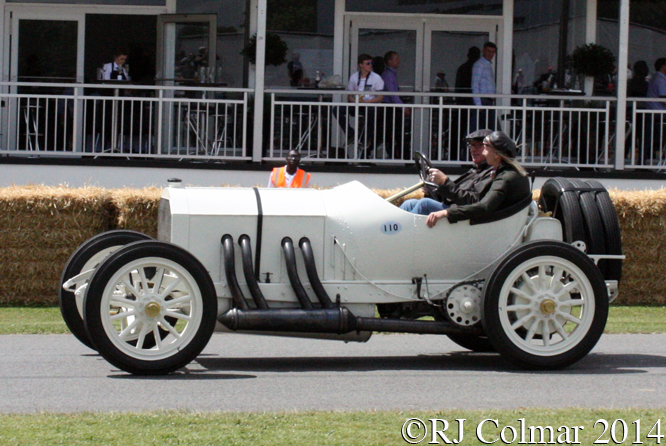
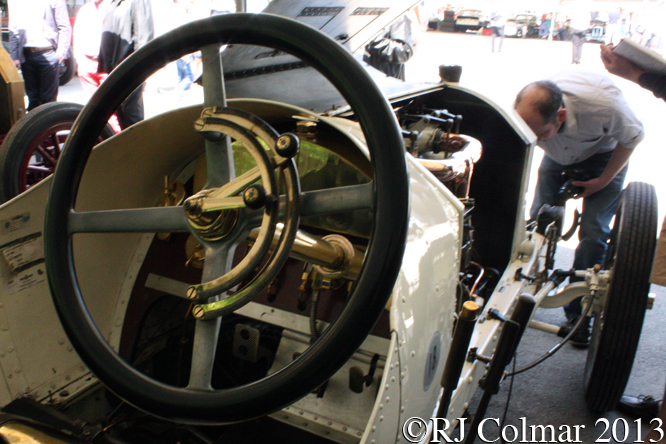
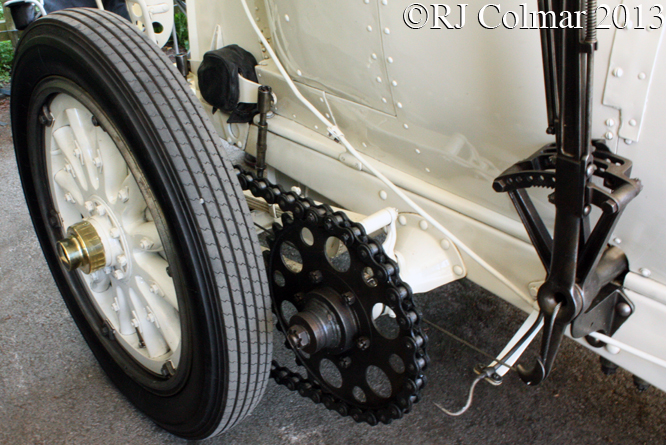
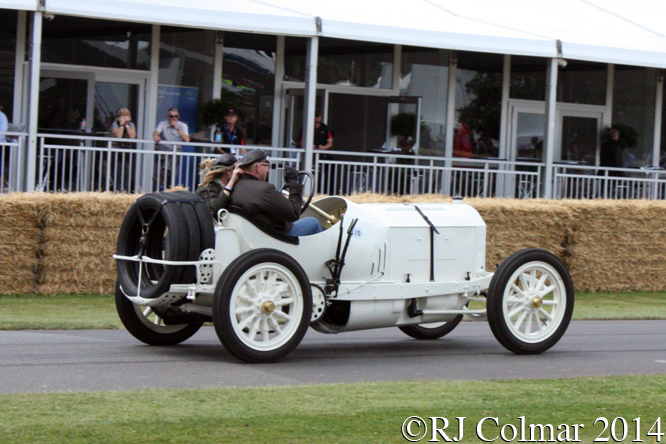
Mors Ianua Vitae – Mors Grand Prix

Émile Mors was born in 1859 into a family whose father Louis was a pioneering electrical engineer who founded an electrical equipment manufacturing business bearing the family name.
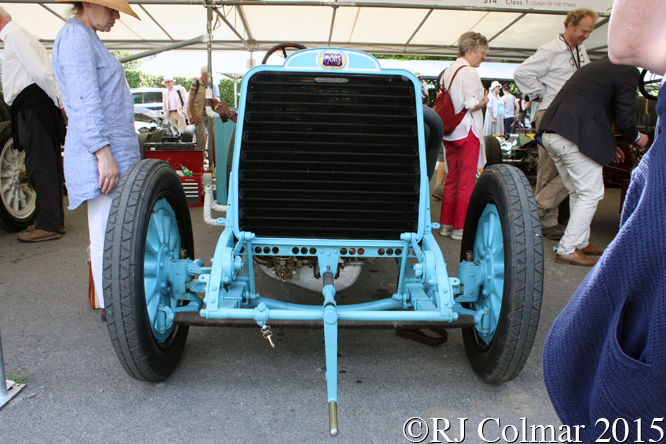
Mors Grand Prix, Goodwood, Festival of Speed,

In 1895 Émile founded his own company bearing the family name to make motor cars, an early strap line for the company appears to have been “Mors ianua vitae” is a double entendre “Mors is the gateway to life” or the more sinister “Death is the gateway to life”.
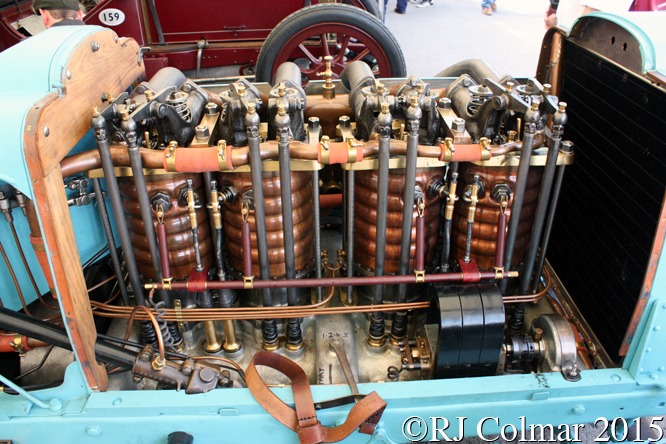
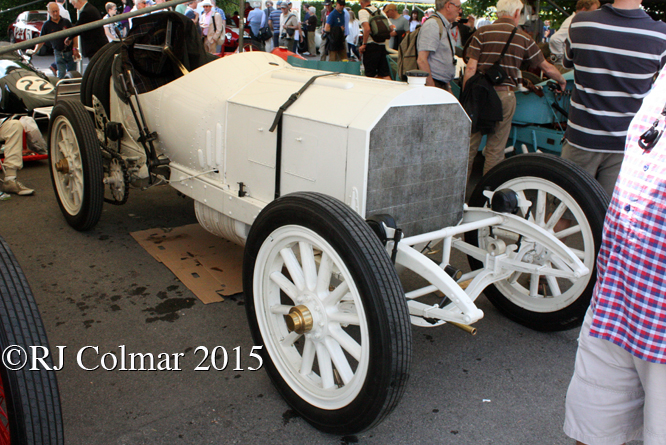
Mors Grand Prix, Goodwood, Festival of Speed,

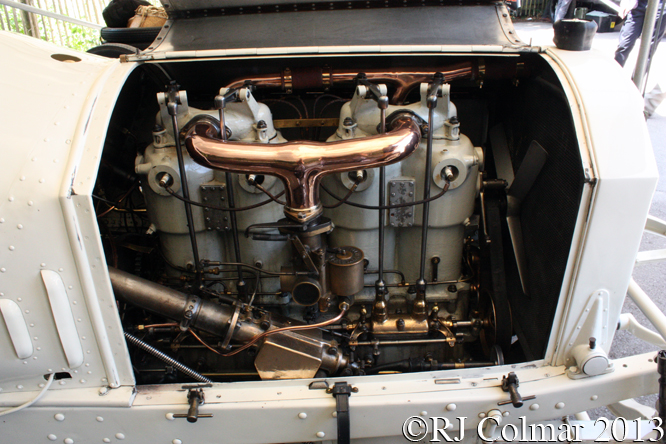
A great believer in competing against the best in 1901 Mors built a 10 litre / 610 cui V4 engine with side valves and dry sump lubrication that at 950 rpm produced 60 hp for the car that Henri Fournier drove 527 km to win both the 1901 Paris Bordeaux trial by half an hour and 1105 km’s Paris to Berlin race which he by over an hour from Panhard et Levassoir drivers on each occasion.
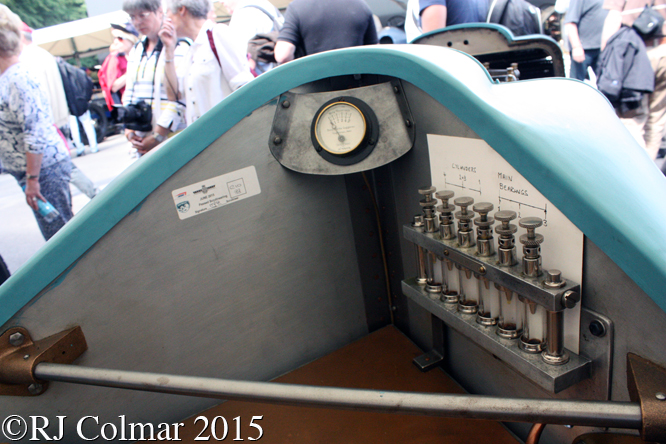
Mors Grand Prix, Goodwood, Festival of Speed,

Despite customers that included the Honorable Charles Stewart Rolls (before making the acquaintance of Henry Royce) and William K. Vanderbilt Jr, Émile’s business fell victim to fall out from the failure by F. Augustus Heinze’s United Copper Company to corner the copper market in New York and he had to sell to André Citroën who became chairman of the company in 1908.
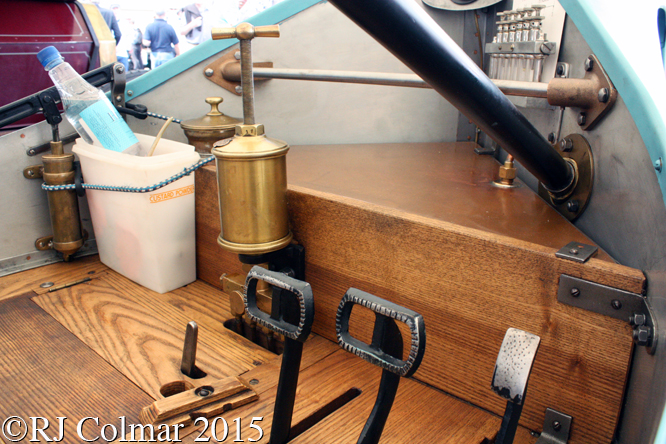
Mors Grand Prix, Goodwood, Festival of Speed,

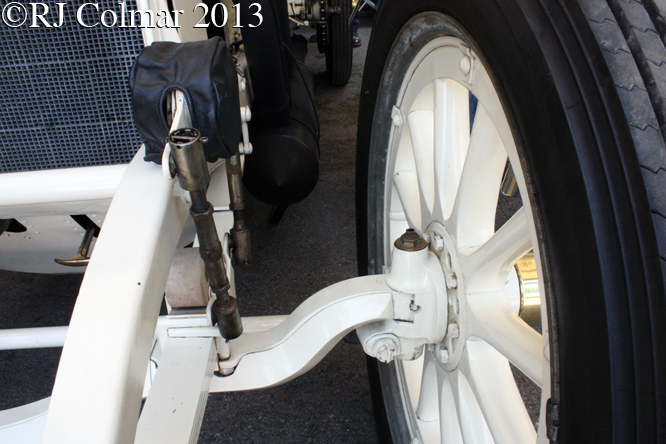
André decided to try and revive the companies fortunes by building three cars powered by 100hp 12.5 liter / 775 cui motors with overhead push rod actuated valves and minimal brakes for the 1908 French Grand Prix.
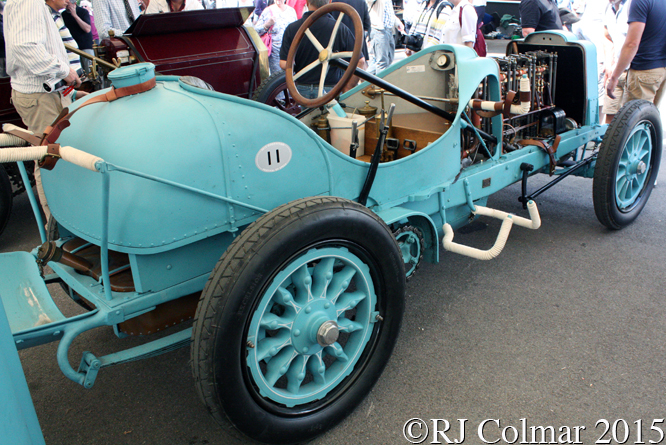
Mors Grand Prix, Goodwood, Festival of Speed,

As often is the case more haste meant less speed and one of the under powered cars failed to start while the other two finished 17th and 16th almost 90 mins behind the winning Mercedes driven by Christian Lautenschlager.

I believe the example seen here at Goodwood last year owned by The Revs Institute was the one driven to the 16th place finish by the bearded Belgian Camille “Le Diable Rouge” Jenatzy ahead of his team mate known only as Landon, on what proved to be Mors final Grand Prix appearance, by 1925 André dropped the Mors name entirely in favour of his own.

Thanks for joining me on this “Mors Ianua Vitae” edition of “Gettin’ a li’l psycho on tyres” I hope you will join me again tomorrow for a spot of Banger racing. Don’t forget to came back now !

Share

Fastest Machine In The World – Benz 200hp Reconstruction

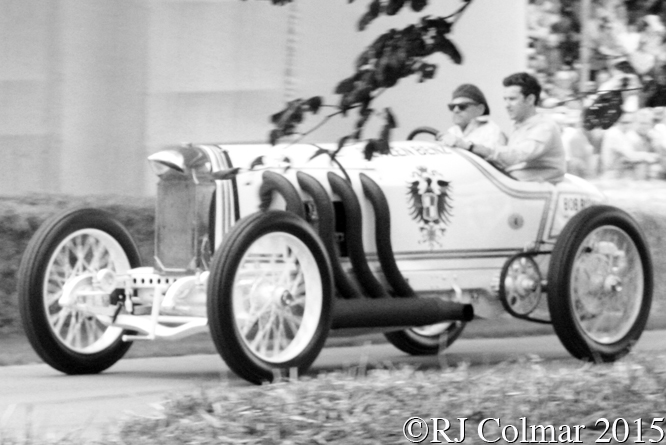
Despite the fact that Carl Benz was of the opinion that motor racing did not add anything of value to the production of motor cars, in 1909 he was persuaded to build a 200hp Benz racing car by fellow Benz & Cie board member Julius Ganss argument that there was one thing above all to be gained from the proposed car, which was to be built with the aim of becoming the first internal combustion powered machine in the World to travel at 200 km/h / 124 mph, publicity.

The Benz engineers based the new 200hp model on their 150hp 1908 Grand Prix challenger but enlarged the four cylinder bores so that the capacity was increased from 15.1 litres / 921 cui to 21.5 litres 1312 cui, making the largest engines that were ever fitted into a car by either Benz or their later partners with whom they would merge Daimler.

Benz employee Fritz Erle is credited with the 200hp models first success when he won the Grand Duchess of Hesse prize after recording a speed of 159.3 km/h / 98.98 mph over a flying kilometer at Frankfurt am Main in August 1909.

Benz 200hp Reconstruction, Bill Evans, Goodwood, Festival Of Speed,

The concrete had barely dried at Brooklands when Victor Héméry driving the same car with it’s original 1908 Grand Prix style body arrived in November 1909 and promptly raised the internal combustion powered World Speed Record recorded over a flying kilometer to 202.7 km/h / 125.95 mph.

Meantime a second 200hp machine No.2 was being prepared with a slimmer body, similar to the one on today’s featured car, better suited to Land Speed Record braking, and with venues in Europe struggling for space to accommodate the speeds being achieved it was sent to the Benz US agent Jesse Froehlich for George Robertson to drive in a head to head race against Ralph de Palma.

However it appears Barney Oldfield’s manager found out about the 200hp cars presence in the USA and wishing to protect his client’s position Ernie Moross made an offer to swap the new machine for his older 150hp Benz plus $6,000 which was accepted.

Benz 200hp Reconstruction, Bill Evans, Goodwood, Festival Of Speed,

In March 1910 Barney Oldfield drove the car, dubbed “Lightening Benz” by Ernie, to a new one way, unofficial in Europe, record of 211.97 km/h / 131.71 mph, beating the times set by Fred Marriot aboard the steam powered Stanley Rocket in 1906.

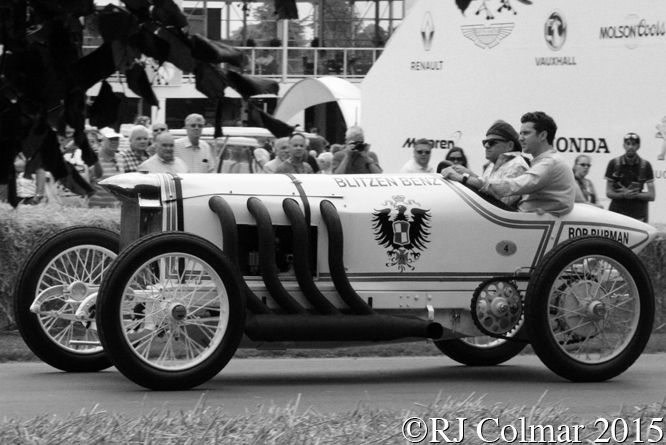
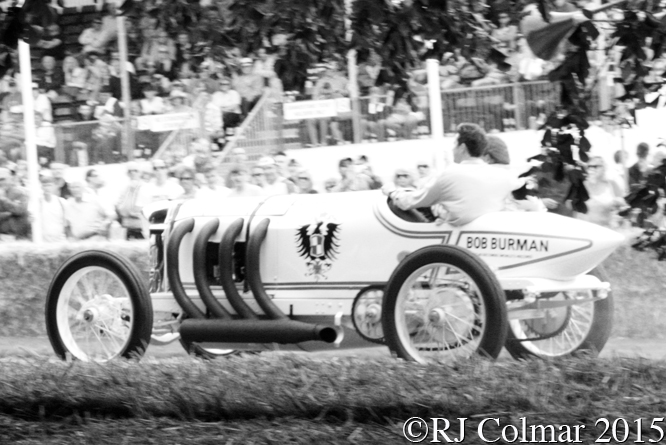
Barney was barred from AAA sanctioned events for participating in unsanctioned Barnstorming events in April 1911 when Bob Burman set a one way record, unrecognised in Europe, of 225.65 km/h / 140.21 mph over the flying mile and 228.1 km/h / 141.73 mph over the flying kilometer at Daytona driving Ernie’s Blitzen Benz.

By 1913 the UK Benz agent L. G. “Cupid” Hornsted acquired the 200hp No.3, for which he had specified a number of modifications, this car became known as “Schlanker Joseph” or “Lean Joseph” with which he set the first two way record at Brooklands over the flying mile leaving it at 199.70 km/h / 124.09 mph in June 1914.

Benz 200hp Reconstruction, Bill Evans, Goodwood, Festival Of Speed,

The history of the six 200hp Benz racing cars is a little clouded, not least because there was only one Blitzen Benz built, 200hp No.2, but almost all of the 200hp car’s are referred to by that name.

Today’s featured Reconstruction of the car Bob Burman drove at Daytona in April 1911 was commissioned and built regardless of cost by Bob Burman enthusiast Bill Evans, who is seen at the wheel in these photographs taken at Goodwood.

The motor #9141 comes from Benz 200hp No.3 that L. G. “Cupid” Hornsted drove at Brooklands in 1914, Captain John Duff and his passenger survived after No.3 swerved off the banking at Brooklands in September 1922 and the remains of the car were returned to Benz at Manheim.

Daimler Benz lent Bill their own 200hp model, which was reconstructed for 50th anniversary of the founding of Benz in 1935 using some parts from No.3 believed to include the radiator and central body, in order to help him reconstruct the rest of his car.

Thanks for joining me on this “Fastest Machine In The World” edition of “Gettin’ a li’l psycho on tyres, I hope you will join me again for Mors. Don’t forget to come back now !
Share

Main Battle Tank Logistics – MAN LKW 10 t mil gl KAT I (8×8)

In 1962 the German federal agency for defence technology and procurement (Bundesamt für Wehrtechnik und Beschaffung, BWB) suggested the bidding companies for a new range of amphibious 2,3 and 4 axle vehicles with a 4 – 10 ton payload form a common development bureau to spread the huge development costs of the project.

Under the leadership of MAN (Maschinenfabrik Augsburg-Nürnberg) it’s partners that included Klöckner-Humboldt-Deutz (KHD), Büssing, Krupp and Henschel formed the “Common Bureau of the German Utility Vehicle Industry” (Gemeinschaftsbüro der Deutchen Nutzfahrzeugindustrie) in 1964 to meet the demands of the project.

LKW 10 t mil gl KAT I (8x8), Ben Gott, Charlie Sincock, Goodwood Festival of Speed

By 1976 when the first KAT 1 was delivered the requirements for the vehicles whose primary role was Main Battle Tank (MBT) Logistics, keeping up with them off road to supply them with ammunition and fuel, had altered ditching the amphibious requirement, but keeping the off road requirement meaning the vehicles needed a 1.2 m / 4′ fording capability like the main battle tanks they were intended to supply.

To date 3 generations of MAN KAT 1s have been built with payloads capacities of 5 tons for the 4×4 up to 15 tons for the Long Wheel Base 8×8 developed for the German Air Force, an example of the latter was used by Porsche as one of their support vehicles on their Dakar team in the 1980’s.

LKW 10 t mil gl KAT I (8x8), Ben Gott, Charlie Sincock, Goodwood Festival of Speed

One of the more interesting aspects of the Dakar Rally which I believe is unique to the event is that all support vehicles for the car and motorcycle entrants are competitors in a support vehicle category.

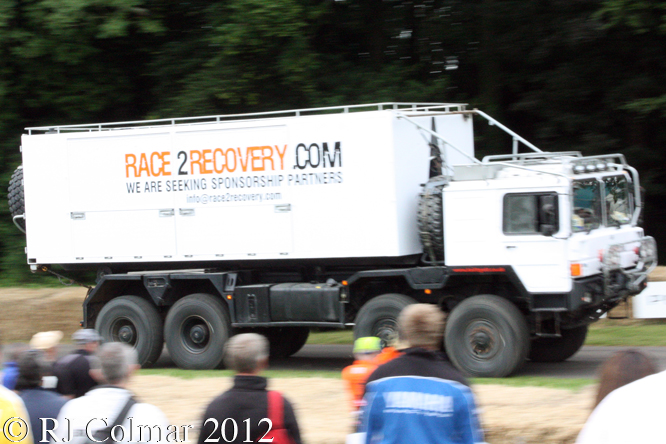
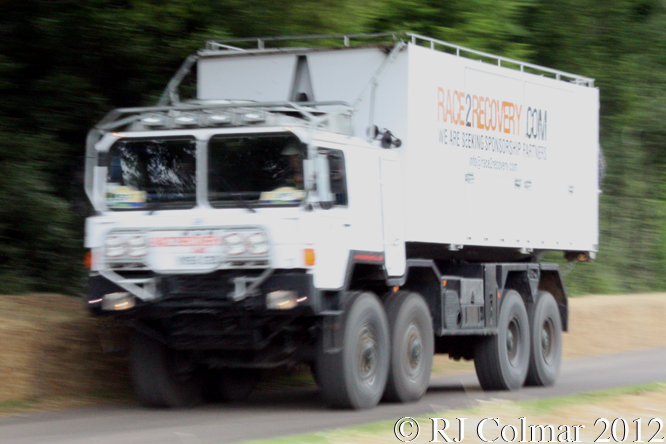
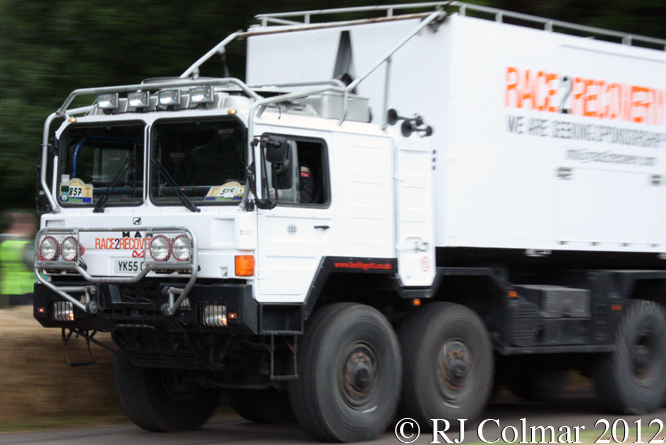
The Race2Recovery team used the short wheel base MAN LKW (Lastkraftwagen) 10 t mil gl (militarisiert geländegängig – military, cross country) KAT I ( seen in these photographs crewed by Ben Gott and Charlie Sincock at Goodwood Festival of Speed, in their successful 2013 attempt on the Dakar.

LKW 10 t mil gl KAT I (8x8), Ben Gott, Charlie Sincock, Goodwood Festival of Speed

First registered in the UK on the 19th of December 2005 I believe this example, the largest vehicle ever seen on the Goodwood hillclimb, is powered by a turbocharged 12 litre / 732 cui Deutz V8 producing 320 hp that drives all eight wheels with an automatic 16 speed gearbox up to a theoretical top speed of 80 mph.

On the 22nd of February 2010 a merger between the military division of MAN Nutzfahrzeuge AG and Corporate Sector Defence of Rheinmetall AG was rubber stamped by Bundeskartellamt (German Government Mergers Dept) with a new entity Rheinmetall MAN Military Vehicles GmbH, or RMMV, that is now responsible for building the latest version of the LKW 10 t mil gl KAT I (8×8) which is known as the HX range.

Thanks for joining me on this “Main Battle Tank Logisitics” edition of “Gettin’ a li’l psycho on tyres” I hope you will join me again tomorrow. Don’t forget to come back now !
Share

Ground Effect Silhouette – Porsche 935 JLP-4

Born Hans Johan to Dutch parents who settled in Muncie, Indiana John Lee Paul won a Harvard Scholarship before making his fortune managing mutual funds.

From the early 60’s until 1976 John raced sporadically and showed a good turn of speed by taking several class victories driving a Porsche 550 RS and there after a Chevrolet Corvette.

Porsche 935 JLP-4, Goodwood Festival of Speed,

In 1977 John competed in the IMSA GTO class with a Porsche 911 Careera RS and a Dekon built Chevrolet Monza, the following season he moved up to competing in the IMSA GTX class with a Protofab built Corvette and later his first Porsche 935 which became JLP-1.

The of the highlights of his 1978 season was winning the Daytona Six Hour race for production cars driving a Mazda RX2 shared with Jim Downing another was a class win with Dick Barbour and Brian Redman at Le Mans in Dicks Porsche 935.

Porsche 935 JLP-4, John Fitzpatrick, Goodwood Festival of Speed,

For 1979 John ran the ever more modified JLP-1 in both the IMSA and SCCA Trans=Am series winning 6 races in the latter.

The following year he split his time between, running in Preston Henn’s Porsche 935 K3 in the States and his own modified K3 which became JLP-2 in Europe, until after the Le Mans 24 Hours where he Guy Edwards and son John Paul Jnr finished 9th.

Porsche 935 JLP-4, Goodwood Festival of Speed,

JLP-2 then returned to the States for the remainder of the 1980 season where father and son recorded a win at Road America.

For 1982 JLP racing ran a new Gaaco built 935 JLP-3, in which Jnr won at Potland and Daytona at the season’s end, and a Chevy powered Lola T600 which finished only once, 3rd at Sears Point, from six starts.

Porsche 935 JLP-4, Goodwood Festival of Speed,

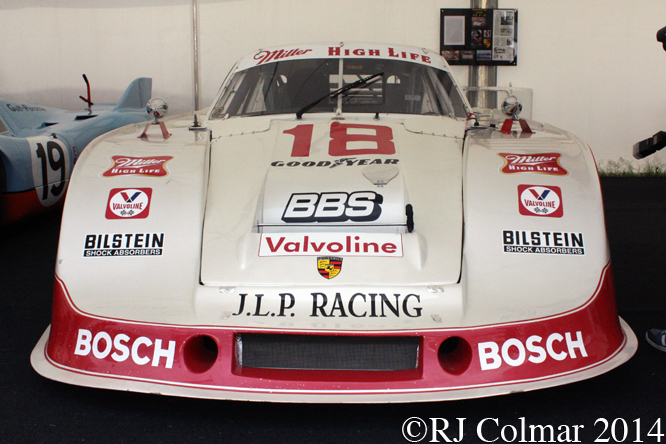
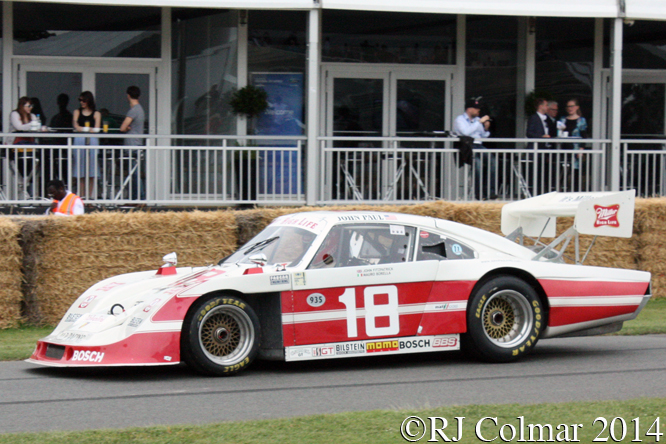
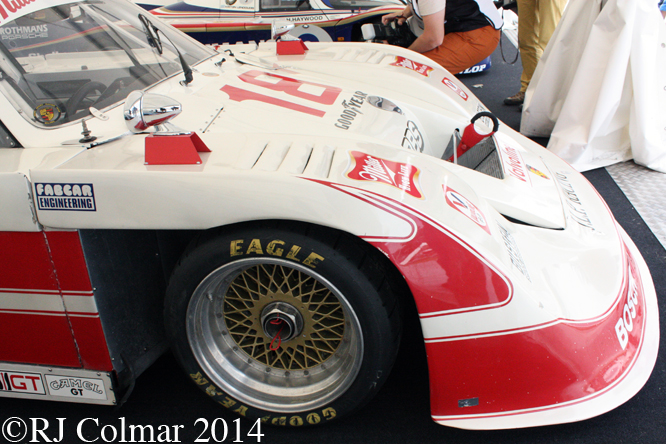
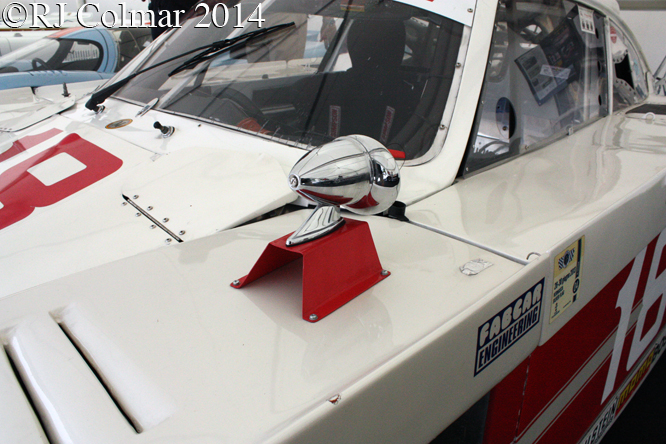
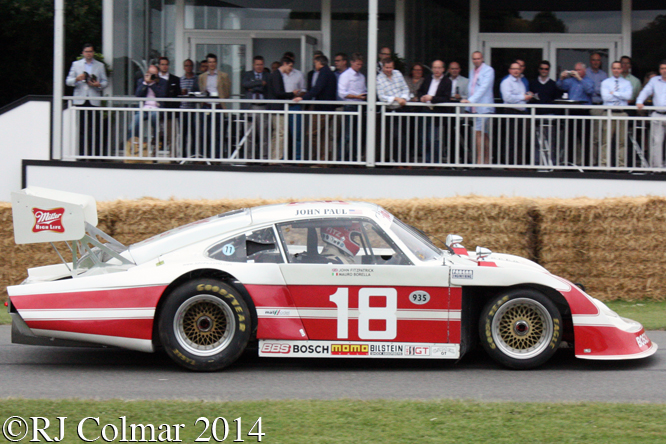
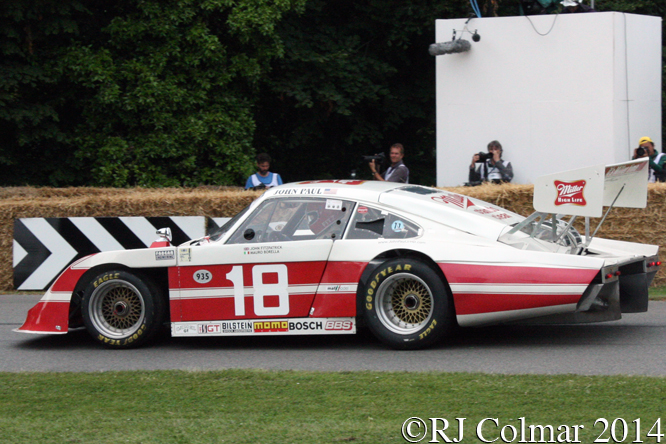
By now John Paul Snr had commissioned Lee Dykstra to design and Fabcar to build the ultimate no expense spared Porsche 935 silhouette race car seen in these photograph’s at Goodwood Festival of Speed with John Fitzpatrick at the wheel.

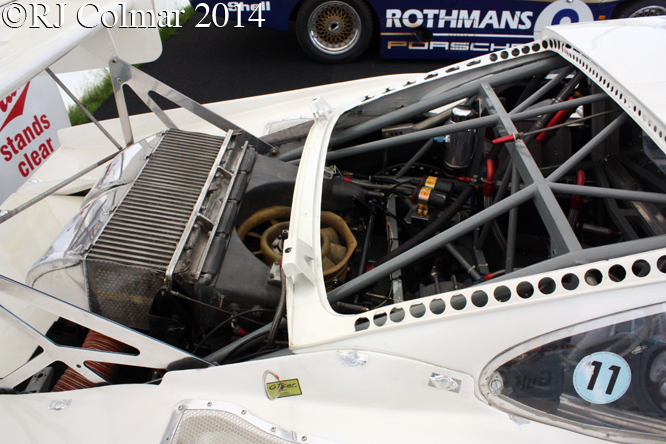
JLP-4, unlike all other Porsche 935’s, was built with a monocoque chassis and a subframe to hold the 840 hp twin turbo 3.2 litre / 195 cui flat six motor.

Porsche 935 JLP-4, John Fitzpatrick, Goodwood Festival of Speed,

Lee Dykstra with the aid of the Lockheed wind tunnels managed to incorporate aerodynamic venturi into the chassis as first seen in a racing application on Colin Chapman’s 1978 Lotus 79.

Rolf Stommelen joined the Pauls in JPL-3 to win the 1982 Daytona 24 hour race before Jnr and Snr shared the same car to win the 12 Hour Sebring race.

Porsche 935 JLP-4, Goodwood Festival of Speed,

Jnr then drove to a solo victory in JLP-3 at Road Atlanta, another in the T600 at Laguna Secca before jumping back into JLP-3 to share a victory with his Dad at Charlotte.

The $750,000 (US Dollars Seven Hundred and Fifty Thousand) JLP-4 was ready for it’s debut at Brainerd and after qualifying 2nd Jnr came home first, 17 seconds ahead of Danny Ongias who was followed by team patron Ted Field both driving a Lola T600’s.

Porsche 935 JLP-4, John Fitzpatrick, Goodwood Festival of Speed,

At Portland, the cars second appearance, Jnr qualified on pole and won by 37 seconds from Ted Field, this turned out to be the last victory for the car which was damaged in testing.

The Pauls meanwhile notched up 2 more victories in JLP-3 in the 6 hour race at Watkins Glen and at Road Atlanta.

Porsche 935 JLP-4, Goodwood Festival of Speed,

At end of the season Jnr’s eight wins and his seasons other placings were enough for John Paul Jnr aged 22 to be crowned the youngest ever IMSA champion.

JLP-4 appeared twice in 1983 at Daytona for the 24 hours where Jnr and Phil Currin qualified 41st but withdrew and at Road Atlanta where Jnr shared the driving with Rene Rodriguez to come home 6th from 6th on the grid.

By now John Paul Snr was a wanted man, on the run in Switzerland, for shooting a federal drug informant, after serving six months in Switzerland for traveling with false documents he was extradited to the USA where he pleaded guilty to attempted murder for which he served 13 years, while on parole after being questioned about the disappearance of his girl friend John Paul Snr went on the run again, neither he or his girl friend have been seen since.

John Paul Jnr continued racing with some success until he too was imprisoned; for admitting to racketeering, preparing a boat to smuggle drugs from Colombia to Louisiana, three years later he was released and continued racing, winning an IRL race at Texas before being diagnosed with Parkinson’s disease.

Thanks for joining me on this “Ground Effect Silhouette” edition of “Gettin’ a li’l psycho on tyres” I hope you will join me again tomorrow for Ferrari Friday. Don’t forget to come back now !
Share

Minimum Weight Restricted Bore- 1908 Mercedes Grand Prix

The very first Grand Prix de l’Automobile Club de France run at Le Mans in 1906 was run to a maximum weight of 1000 kgs / 2204 lbs and maxiumum fuel consumption formula which encouraged manufacturers to put large engines into flimsy chassis, the winning car was a 90hp 13 litre / 793 cui Renault with shaft drive to the rear wheels driven by Ferencsz Sziz.

Mercedes Grand Prix, Goodwood Festival of Speed,

For the 1907 Grand Prix de l’Automobile Club de France run at Dieppe the maximum permissible weight restriction was abandoned but the 9.4 miles per gallon maximum fuel consumption was retained, this much shorter race run over a single day was won by 1906 second place finisher Felice Nazzaro aboard a chain driven 16.5 litre / 1006 cui FIAT ahead of the 1906 winner Ferencsz who was again driving a Renault.

Mercedes Grand Prix, Goodwood Festival of Speed,

In 1908 the Automobile Club de France ran it’s Grand Prix on the same course at Dieppe but for vehicles that weighed a minimum of 1100 kgs and a maximum cylinder bore of 155 milimeters / 6.1 inches for 4 cylinder motors or 127 mm / 5 inches for 6 cylinder motors, no one built a six cylinder car for the race.

Mercedes Grand Prix, Goodwood Festival of Speed,

Mercedes turned to Paul Daimler to conceive it’s 1908 Grand Prix challenger in the absence of William Maybach who conceived the 1907 Daimler Grand Prix challenger before leaving Daimler to form his own company with his son Karl.

Mercedes Grand Prix, Goodwood Festival of Speed,

Paul did not stray far from William Maybach’s idea’s, but did build a much lower car which improved the the handling.

Mercedes Grand Prix, Martin Viessmann, Goodwood Festival of Speed,

The car had a 2.7 meter / 106″ wheel base with a 1.4 meter / 55″ track, it was powered by a 12.8 litre / 780 cui motor that produced 135hp at just 1400 rpm, the rear wheels were driven through a 4 speed gearbox chain drive, despite a top speed in excess of 100 mph the foot and hand brakes operated only on the rear wheels.

Mercedes Grand Prix, Goodwood Festival of Speed,

Three cars were built for the 1908 French Grand that were to be crewed by Willy Pöge, Otto Salzer, Christian Lautenschlager and their respective mechanics.

Mercedes Grand Prix, Goodwood Festival of Speed,

Otto set fastest lap of the race at over 78 mph but retired on the third lap with a broken wheel, Willy came home 5th over 36 mins behind the winner Christian who on his last set of 100psi Michelin tyres came home over 8 mins ahead of a pair of 150hp Benz’s that finished 2nd and 3rd.

Mercedes Grand Prix, Martin Viessmann, Goodwood Festival of Speed,

All three cars were sold after the 1908 Grand Prix de l’Automobile Club de France, one of them was tuned to produce 180hp and recorded a speed of over 107mph over the flying kilometer during the Ostend Speed week with the bearded Belgian Camille “Le Diable Rouge” Jenatzy at the wheel.

President and CEO of the family German Heating System company bearing his name, and former sponsor of Niki Lauda’s hat, Martin Viessmann is seen at the wheel of one of the Mercedes Grand Prix cars that is the sister to the one driven to victory by Christian in the 1908 Grand Prix de l’Automobile Club de France.

Thanks for joining me on this “Minimum Weight Restricted Bore” edition of “Gettin’ a li’l psycho on tyres” I hope you will join me again tomorrow when I will be looking at a Zeppelin powered Belgian car. Don’t forget to come back now !
Share

34mm Turbo Restrictor – Mitsubishi Pajero T3 Prototype

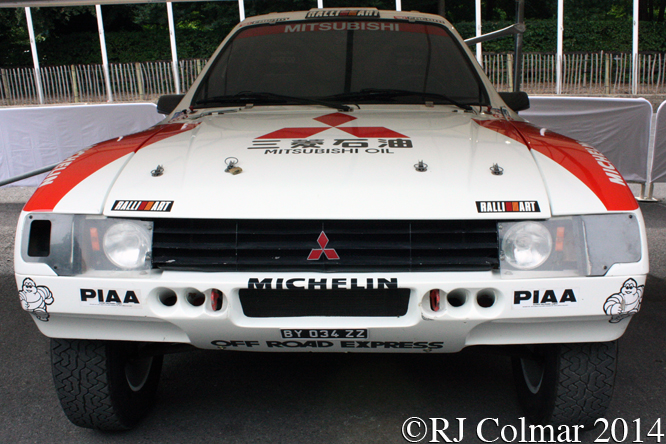
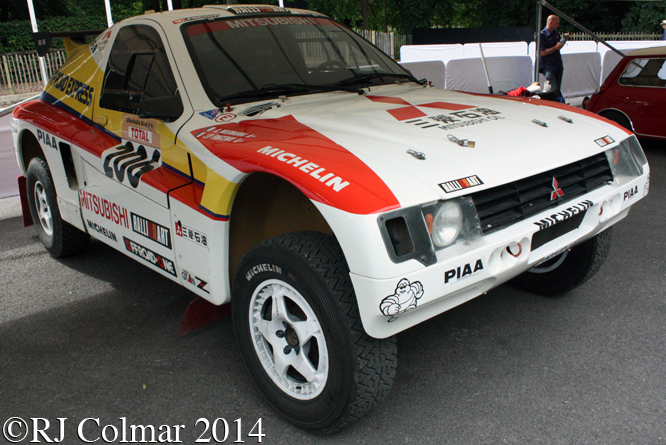
The second generation Mitsubishi Pajero / Montero was built between 1991 and 1999, today’s featured 1996 T3 Prototype was built to compete in the Granada Dakar Desert Rally and aside from the name and a few components shares little in common with it’s commercial namesake.

Going into the 1996 Granada Dakar Rally Mitsubishi were looking to win their 4th Dakar Rally 4 wheel title outright, their first since 1993, as were ’91, ’94 and ’95 winners Citroen.

Mitsubishi Pajero T3 Prototype, Goodwood Festival of Speed,

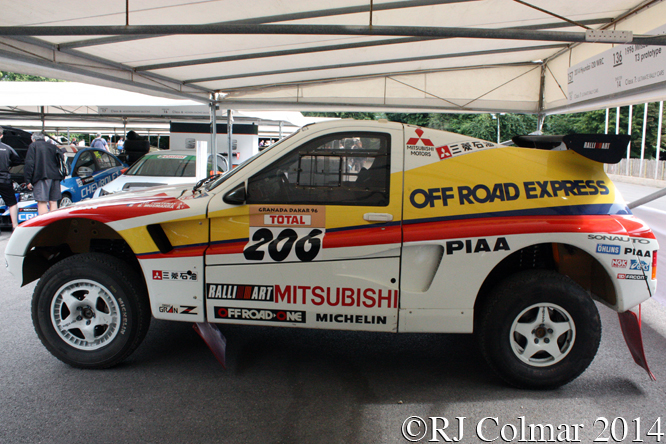
The T3 Prototype was built on a space frame competition chassis featuring double wishbone and coil spring suspension all round, the tad over 2m / 6’6″ wide, with a 3m wheel base chassis was covered with a 4m carbon fibre and Kevlar body.

Weighing only 1410 kgs / 3100 lbs the vehicle was powered by a 2.4 litre / 147 cui 4 cylinder 16 valve 4G64 motor fitted with an inter cooled Turbocharger and a new for ’96 mandated 34mm air restrictor that kept the power output down to a claimed 300hp.

Mitsubishi Pajero T3 Prototype, Goodwood Festival of Speed,

Thee T3 Prototypes were entered for crews; Bruno Saby/Dominique Serieys who won in 1993, Kenjiro Shinozuka/Henri Magne and Jean-Pierre Fontenay/Bruno Musmarr.

A fourth T3 Prototype with RVR Space Runner bodywork was entered for Hiroshi Masuoka / Andreas Schulz and the whole team was backed up with 9 trucks and 76 personnel led by Ullrich Bremer who were also mandated by the regulations to compete.

Mitsubishi Pajero T3 Prototype, Goodwood Festival of Speed,

Pierre Lartigue and Michel Perin completed a hat trick of wins in their Citroën ZX Rallye Raid Evo 5, a car which traces it’s origins back to the Peugeot 205 T16, while Jean-Pierre Fontenay and Bruno Musmarr came home in 3rd, driving today’s featured #206 seen at Goodwood Festival of Speed, ahead of the sister car of Bruno Saby and Dominique Serieys which finished 7th and 17th place Kenjiro Shinozuka and Henri Magne.

Kenjiro and Henri went on to win the event in 1997, Jean-Pierre with Giles Picard won in ’98, Hiroshi and Andreas won in 2003 the year after Hiroshi won the event for the first time with Pascal Maimon, all of these victories counting towards the 12 Dakar overall 4 wheel victories Mitsubishi have won to date.

Thanks for joining me on this “34mm Turbo Restrictor” edition of “Gettin’ a li’l psycho on tyres” I hope you will join me again tomorrow for Mercedes Monday. Don’t forget to come back now !
Share

Electric Love – Renault DeZir

In 2010 Renault announced that the direction of their next series of concept cars would reflect six stages of life; falling in love, discovering the world, starting a family, working, having fun and becoming wise that a Renault customer might encounter.

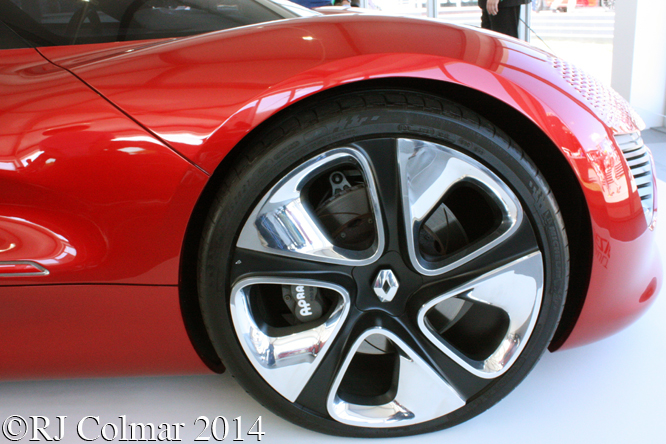
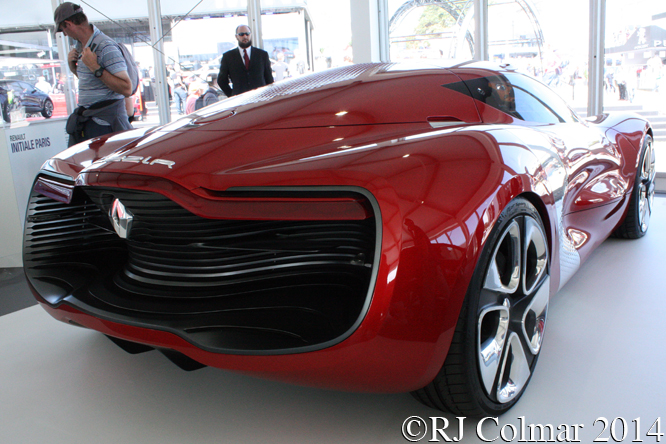
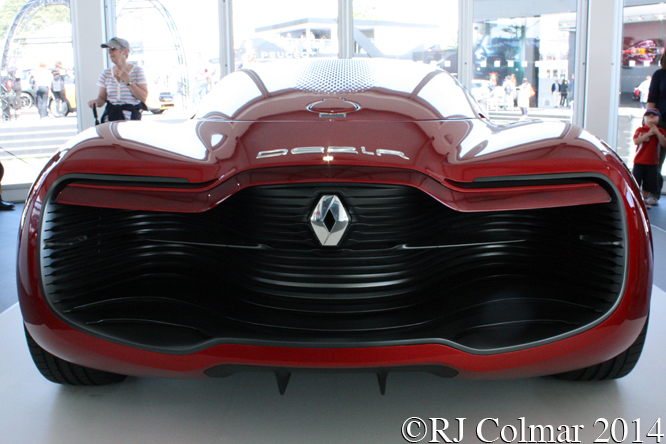
Renault DeZir , Goodwood Festival of Speed

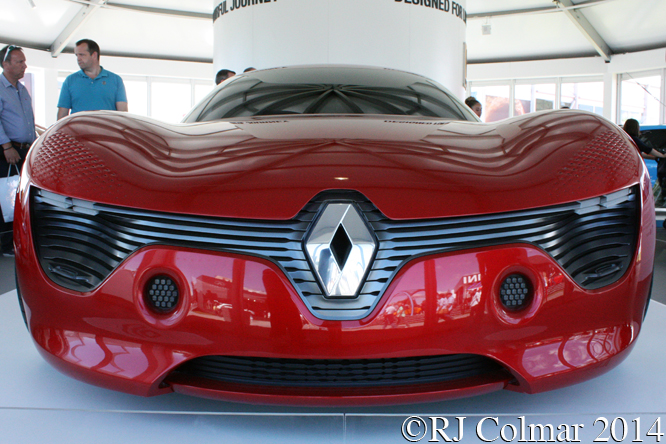
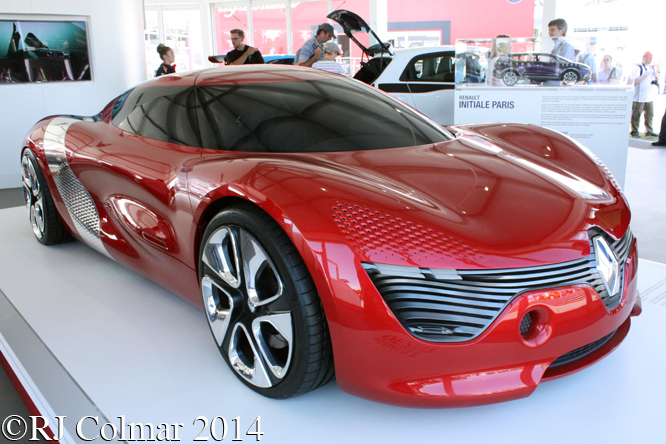
The Renault DeZir first shown at the 2010 Paris Motor Show reflects the falling in love stage.

Renault DeZir , Goodwood Festival of Speed

It’s sensual coupé body with red leather interior is fitted with a pair of butterfly doors, the drivers opening to the rear with the passengers opening to the front.

Renault DeZir , Goodwood Festival of Speed

Power comes from a 148hp mid mounted electric motor that gives rest to 60 mph in five seconds performance and a top speed of 112 mph.

Renault DeZir , Goodwood Festival of Speed

While no plans have been announced for the DeZir to go into production the design of 500hp twin turbo V6 Renault Sport R.S. 01, which will compete for the Renault Sport Trophy, took the Dezir Concept as the starting point for it’s body.

Renault DeZir , Goodwood Festival of Speed

Since the 2010 DeZir Renault has shown concept cars representing; discovering the world – 2011 Captur, starting a family – 2011 R-Space and working – 2011 Frendzy, but there has been no sign of any concepts representing the having fun or becoming wise stages.

Thanks for joining me on this “Electric Love” edition of “Gettin’ a li’l psycho on tyres” I hope you will join me again tomorrow for wagon Wednesday. Don’t forget to come back now !

Share