Tag Archives: Lotus

Active Suspension – Lotus Ford T92 92/5

For 1983 the Formula One regulations changed mandating flat bottoms between the front and rear axles, the intention was to outlaw ground effects which Lotus had successfully pioneered with it’s Lotus 79 and less successfully with it’s Lotus 80, 86 and 88 models, all the other teams on the Grand Prix grid had followed the Lotus teams lead with the result that cars were driving around corners so fast they were making the tracks they were driven on obsolete in terms of safety.
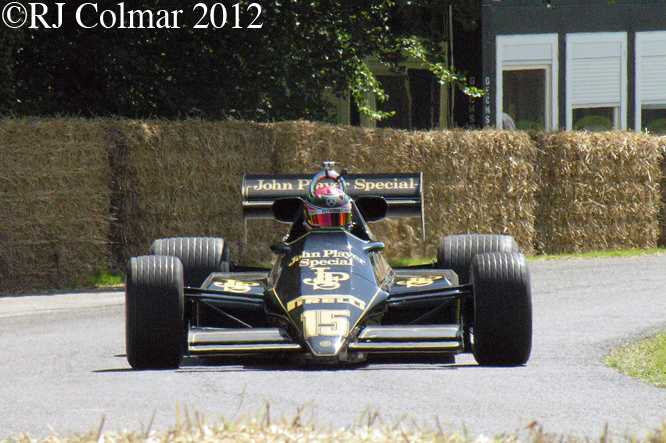
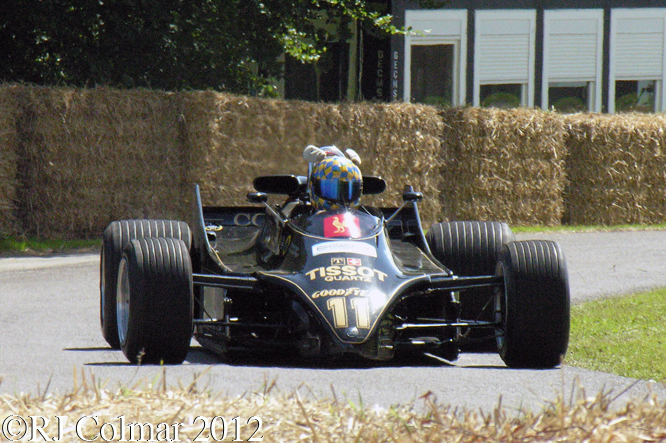
Lotus Ford 92, Goodwood FoS

Lotus managed to secure a supply of Renault Tubocharged V6 engines, for 1983, to replace the Ford Cosworth V8’s that the team had been using since the 1967 Dutch Grand Prix. These Renault motors were more powerful but also more fragile than the Cosworth’s, they were also in extremely short supply with Renault being able to supply only enough to keep Elio de Angelis on the grid for the first half of the 1983 season in a Lotus Renault Type 93T. Team mate Nigel Mansell had to make do with an interim the Ford Cosworth powered Lotus 92 featured today for the first half of 1983.
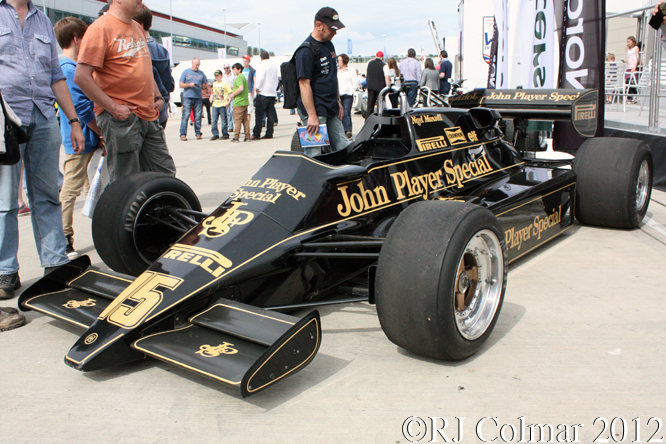
Lotus Ford 92, Silverstone Classic

The Lotus Renault 92 was devised by Colin Chapman and Martin Ogilvie, however Colin Chapman died in December 1982 and so never saw the car completed, 2 Type 92’s were built using the chassis tubs of the previous Lotus Type 91 featured last week. As well as being the last Ford Cosworth DFV powered Lotus design the Lotus 92 was also the first Formula One car to be fitted with computer managed hydraulic ‘active’ suspension. Nigel Mansell tested the system but did not like it so the idea was shelved pending further development. In 1992 Nigel won his only world championship with Williams in an actively suspended car.
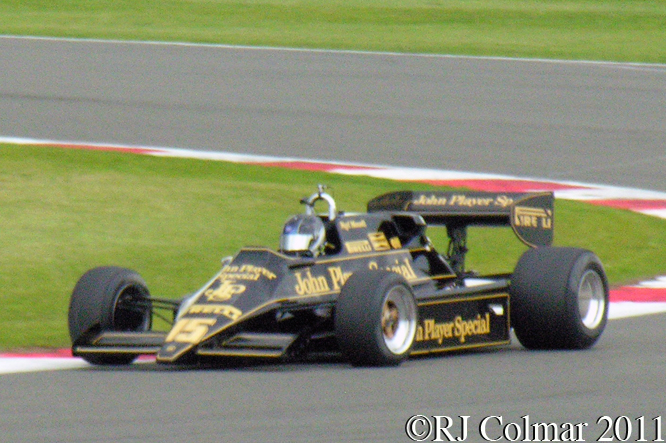
Lotus Ford 92, Silverstone Classic

Perhaps unsurprisingly without their energetic leader Lotus floundered in 1983 the Renault powered Lotus 93T recorded a best 9th place with Elio at the wheel and Nigel managed a best 6th place finish at the 1983 Detroit Grand Prix in the Cosworth powered Lotus 92. A decision was taken in June 1983 to employ the recently sacked ALFA Romeo designer Gerard Ducarouge to design a third all new car for 1983.
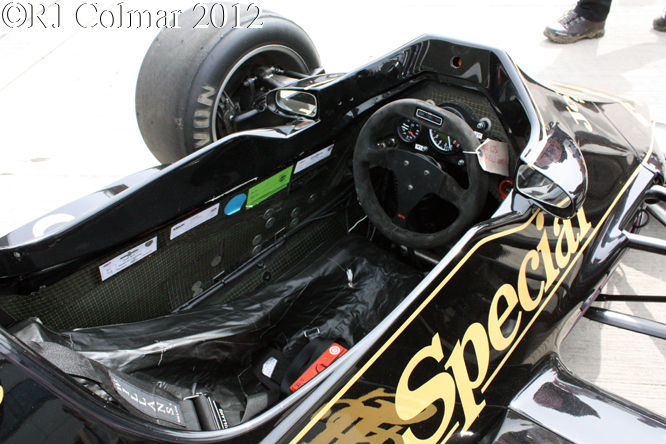
Lotus Ford 92, Silverstone Classic

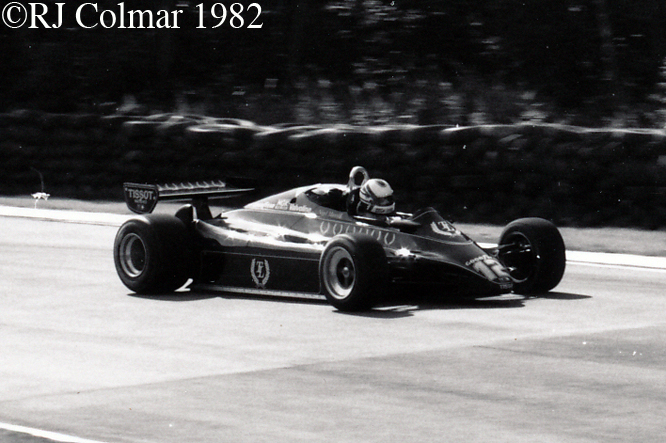
In six weeks Ducarouge managed to design and deliver two new Lotus Renault T94’s and set in motion a return to winning ways for Team Lotus. The Lotus T92 recorded just 9 starts one for de Angelis in Brazil at the beginning of the season where he was disqualified for starting the race in the Cosworth powered car in which he had not set a qualifying time, after his Renault powered 93T broke down on the warm up lap and 8 starts for Mansell who along side his 6th place finish in Detroit recorded three 12th place finishes and four retirements, which was three more finishes than the Lotus Renault 93 T managed.
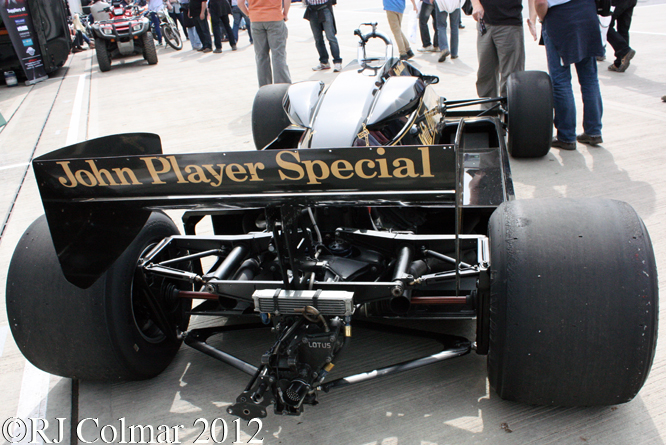
Lotus Ford 92, Silverstone Classic

The first photo show’s Mercedes Benz GP reserve driver Brendon Hartley at last years Goodwood Festival of Speed and the third show’s 92/5’s previous owner Kiwi Roger Wills at the wheel during the 2011 Silverstone Classic meeting.

My thanks to Roger for clarifying Brendon Hartley’s identity.

Thanks for joining me on this “Active Suspension” edition of “Gettin’ a li’l psycho on tyres”, I hope you will join me again tomorrow. Don’t forget to come back now !

Share

Broken Wrist – Lotus Ford T 91 91/7

After the controversy of the 1981 season with the twin chassis Lotus 88 the Lotus team upgraded it’s conventional single chassis Lotus 87 for the 1982 season giving it the Lotus T 91 tag. Still powered by the by now venerable Ford Cosworth V8 the Lotus 91 was one of the more attractive entries on the grid.

Lotus Ford 91, British Grand Prix, Brands Hatch

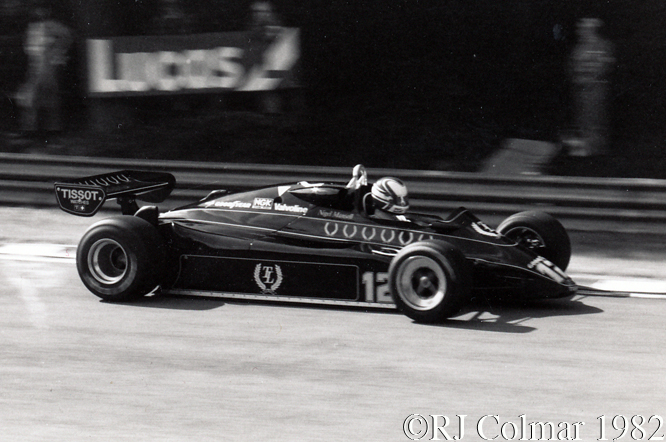
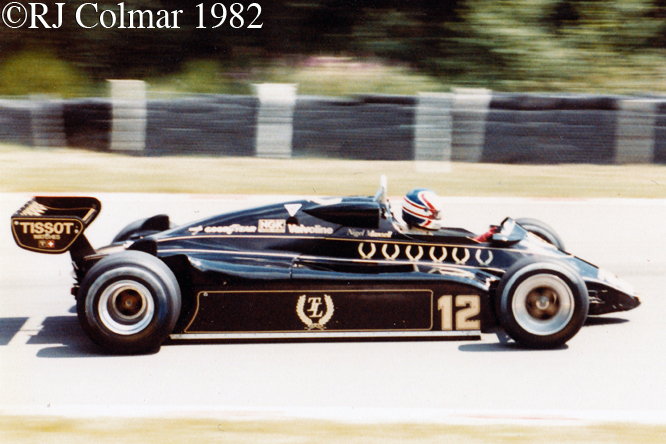
The 91 was a modest improvement on the Lotus 87 Nigel Mansell scoring a seasons best 3rd place finish on his debut in the model in the Brasilian Grand Prix. At the Canadian Grand Prix Nigel Mansell broke his wrist in an accident and after sitting out the Dutch Grand Prix where he was replaced by Roberto Moreno who failed to qualify. Nigel came back for the British Grand Prix at Brands Hatch where he is seen in today’s photographs.

Lotus Ford 91, British Grand Prix, Brands Hatch

Unfortunately Nigel was not fully recovered and he could only qualify 23rd on the grid in chassis #91/7 before retiring from the race due to the discomfort from his wrist. While waiting for his wrist to recover properly Nigel missed the following French Grand Prix where Geoff Lees stood in and finished 12th.

Lotus Ford 91, British Grand Prix, Brands Hatch

Team mate Elio de Angelis scored a famous victory with his Lotus 91 at the 1982 Austrian Grand Prix where he held off, eventual 1982 champion, Keke Rosberg and his Williams to win by just half a cars length. The 1982 Austrian Grand Prix was the first, of two, for de Angelis, the last for a Ford Cosworth powered Lotus and the last for Colin Chapman who succumbed to a heart attack in December 1982.

Thanks for joining me on this “Broken Wrist” edition of “Gettin a li’l psycho on tyres” I hope you will join me again tomorrow. Don’t forget to come back now !

Share

Cruise Control & Central Locking – Lotus Type 89 Excel s.e.

Last Saturday I looked at the prototype 1982 Lotus Excel today I’m looking at a couple of Lotus Excel s.e. models built with in months of each other.

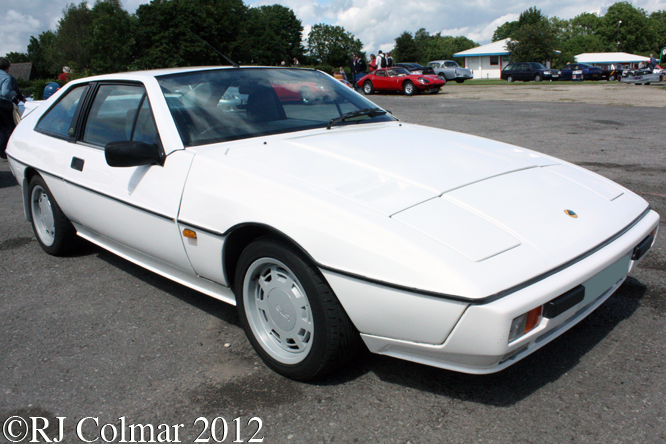
Lotus Excel s. e., Bristol Classic Car Show, Shepton Mallet

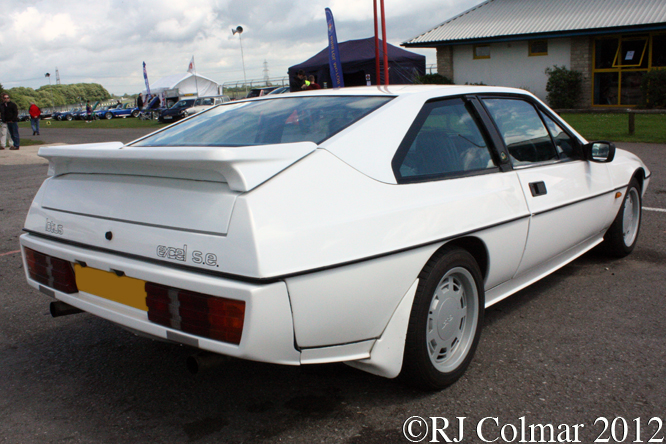
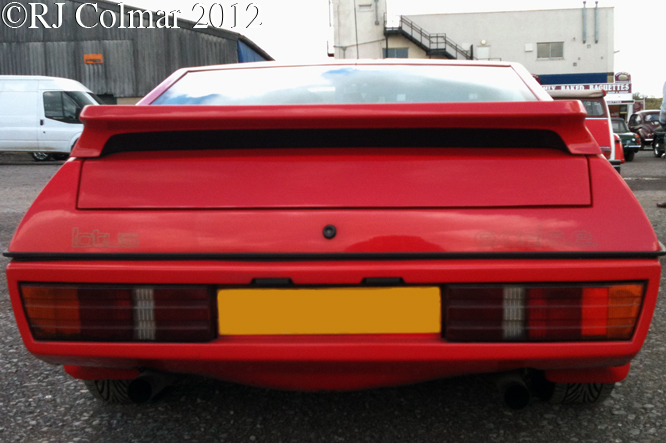
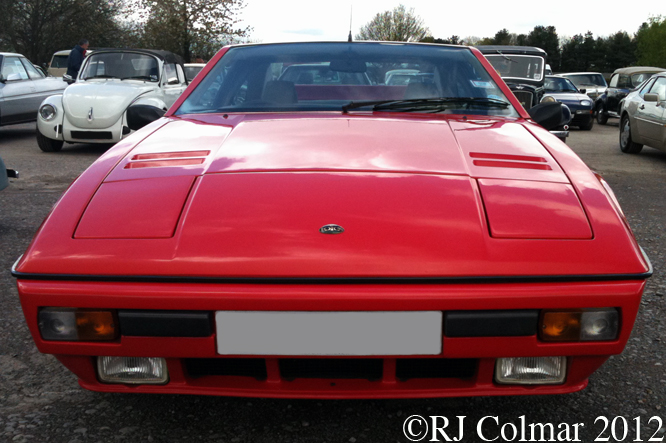
Between 1982 and 1987 numerous modifications were carried out which included the introduction of a louvred bonnet with body shell coloured bumpers and rear spoiler in 1984.

Lotus Excel s. e., Family Clubs Day, Castle Combe

In 1985 the wider wheel arch profiles, larger boot aperture, VDO intrumentation, front fog lights were introduced with a 15 inch road wheel option were introduced.

Lotus Excel s. e., Bristol Classic Car Show, Shepton Mallet

For 1986 the s.e. option with raised engine compression and an adjustable steering column was announced.

Lotus Excel s. e., Family Clubs Day, Castle Combe

The S A Automatic option was launched for the 1987 model year with cruise control, central locking.

Lotus Excel s. e., Bristol Classic Car Show, Shepton Mallet

Of the 400 plus Excels known to be in the UK, only one was ever built to US specification, more than half are no longer on the road.

Thanks for joining me on this “Cruise Control & Central Locking” edition of “Gettin’ a li’l psycho on tyres”, I hope you will join me again tomorrow. Don’t forget to come back now !
Share

Excel Protoype – Lotus Eclat/Excel Type 84/89 #1144

The Lotus Eclat, Type 76 but not to be confused with the Lotus Ford 76 Grand Prix car, was a fastback version of the Lotus Elite, Type 75 shooting brake, first seen in 1975 sharing the same back bone chassis and motor and running gear as the Type 75 Lotus Elite.

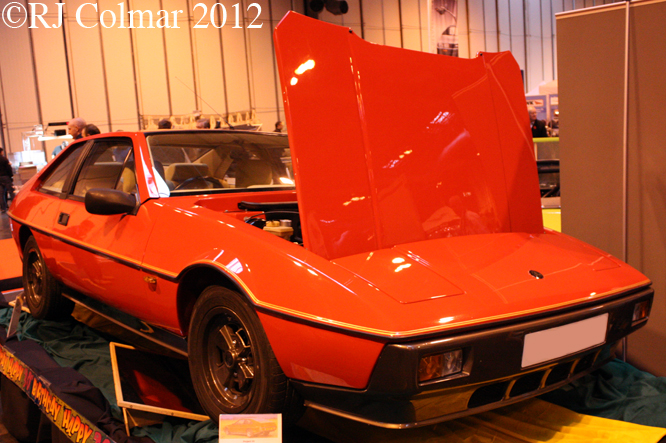
Lotus Eclat Excel, Classic Motor Show, NEC, Birmingham

The Eclat was updated in 1980 known as the Eclat S2 the updated car was given the Type 84 designation. 1757 original sepcification Eclats were built between 1975 and 1982 and a further 223 Eclat S2’s were built between 1980 and 1982.

Lotus Eclat Excel, Classic Motor Show, NEC, Birmingham

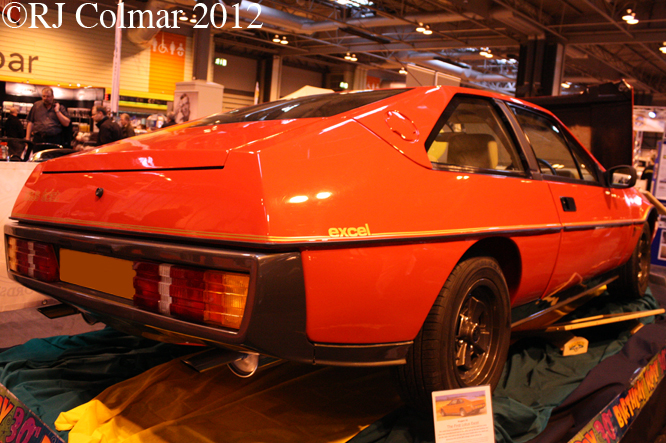
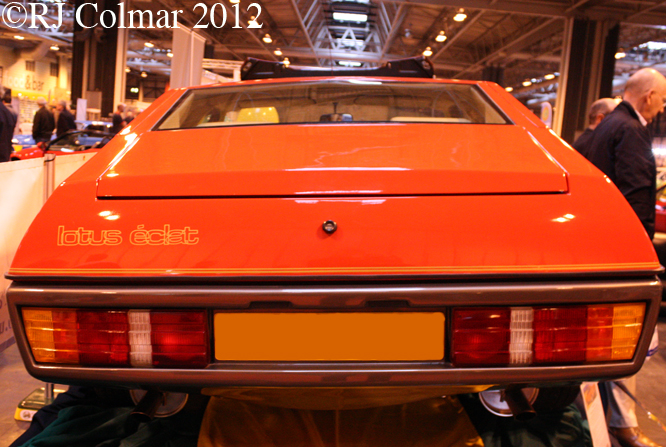
In 1982 Lotus renamed the Eclat as the Excel with further upgrades and designated the Excel as Type 89. The car seen here is registered in the log book as a Lotus Eclat, a Type 84, but has all the signs of being the prototype Excel, a type 89 which was also known by the M55 code name at the Lotus factory.

Lotus Eclat Excel, Classic Motor Show, NEC, Birmingham

Amongst the prototype clues are a cut and shut gearbox with the then new Toyota sourced gearbox welded onto the older original type bell housing, M55 marks on the body panels indicating the car was the first off the jig, not to mention the Excel badging on the sides and Eclat badging on the rear of the car. The car was probably registered as an Eclat prior to the necessary type approval being received for the later Excel.

Lotus Eclat Excel, Classic Motor Show, NEC, Birmingham

354 Excel’s were manufactured between 1982 and 1984 when production was discontinued. The current owner of this prototype Excel, Brian Swankie, bought the car at the NEC Classic Motor Show in Birmingham several years ago and has been restoring it ever since.

Thanks for joining me on this “Excel Prototype” edition of “Gettin’ a li’l psycho on tyres” I hope you will join me again tomorrow. Don’t forget to come back now !
Share

The Spy Who Loved Me – Wet Nellie

The Spy Who Loved Me is a 1977 action thriller staring Roger Moore as British Agent James Bond alias 007 and Barbra Bach as Anya Amasova, alias Agent Triple X from the KGB, who investigate the disappearance of British and Russian nuclear armed submarines.

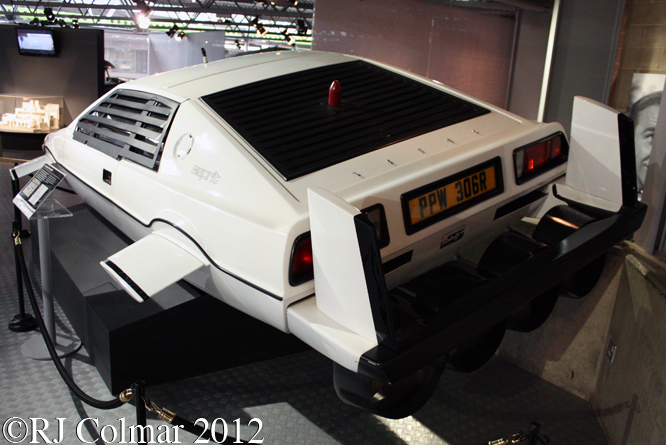
Lotus Esprit 007 Wet Nellie

James and Anya find themselves pursuing the reclusive megalomaniac Karl Stromberg played by Curd Jürgens in a film that was shot on location in Egypt, Italy and the Bahamas.

Lotus Esprit 007 Wet Nellie

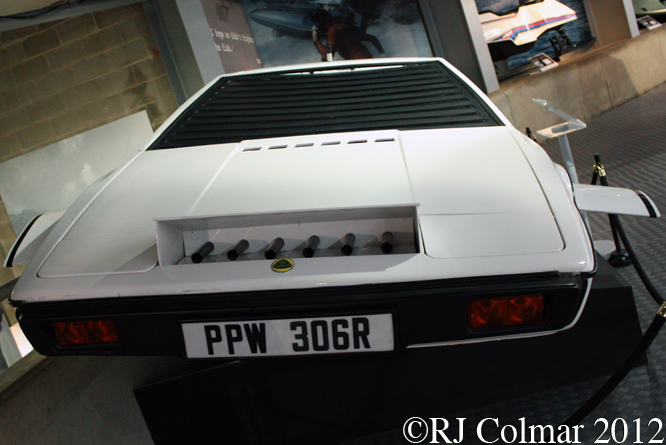
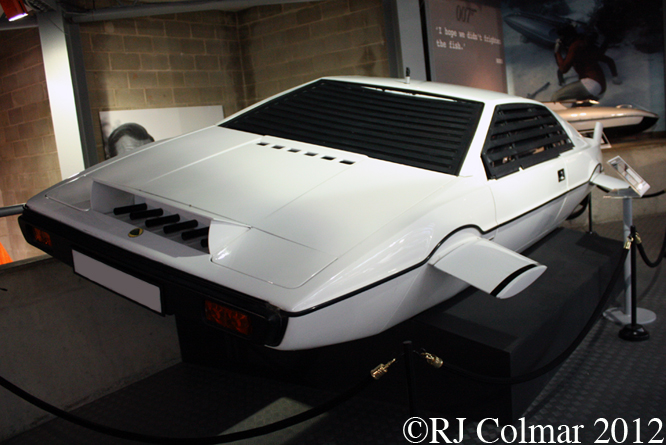
For this film Q the man with the unenviable of task of supplying toys to help 007 keep an edge on his dastardly rivals kits out a Lotus Esprit Series I, without the ears, with a myriad of gadgets and capabilities that include missiles, cement dispensers and submersible capabilities as required by the plot.

Lotus Esprit 007 Wet Nellie

The submersible Esprit seen in The Spy Who Loved Me was known as Wet Nellie and was built by midget sub specialist Perry Submarines in Florida. It was capable of 15 knots but for some reason the motors were not reversible which made controlling the vehicle somewhat precarious.

Thanks for joining me on this “The Spy Who Loved Me” edition of “Getting’ a li’l psycho on tyres” I hope you will join me again tomorrow. Don’t forget to come back now !
Share

Chassis or Aerodynamic Aid – Lotus Ford 88

The Lotus 88 was a development from the ideas tested with the twin chassis Lotus 86. It differed, and was developed, in two crucial respects from the Lotus 86 it was designed to run with out skirts to seal the flow of air and would meet the 6 cm minimum ride height mandated by rules around late in 1980 for the 1981 season.

By having a secondary independently sprung chassis Lotus hoped to avoid the need to run their car with solid suspension which aided the road holding of ground effects pioneered by the Lotus Ford 79 which were sucked to the road surface as they moved through the air.

Lotus Ford 88B, Goodwood Festival of Speed

Gordon Murray designer at Brabham also came up with a solution to the 6 cm ride height rule which involved using hydraulic rams to raise the car above the minimum ride height in the pits, the only place the measurement could be checked, and lowering the ride height out once out on the track. This left the Brabham running effectively solid suspension once out of pit road.

All of the teams protested that the second Lotus chassis was in fact an independently aerodynamic aid and eventually the ruling body changed it’s mind having accepted the idea of a twin chassis car before the season started.

Lotus Ford 88B, Goodwood Festival of Speed

As a consequence after being protested during practice for the the United States West, Brazilian and British Grand Prix Lotus withdrew the 88 bodies with out ever having raced and used the more conventional Lotus 87 which used inner Lotus 88 chassis but with conventional side pods to generate ground effect and a similar hydraulic ram system for the suspension as used by Brabham.

Colin Chapman is said to have been disappointed that the twin chassis Formula One cars developed with Peter Wright, Tony Rudd and Martin Ogilvie were never allowed to compete believing that Formula One was supposed to be a proving ground for new innovation.

Thanks for joining me on this “Chassis or Aerodynamic Aid” edition of “Gettin’ a li’l psycho on tyres”, I hope you will join me again tomorrow. Don’t for get to come back now !

Share

Torrey Canyon – Lotus Ford T86

On March 18th 1967 Shipmaster Pastrengo Rugiati elected to take his charge the 974 ft Torrey Canyon carrying 120,000 tons of crude oil on a disastrous short cut between the Scilly Isles and the Cornish mainland on his way to Milford Haven and ended up causing the worlds largest ship wreck when the boat grounded on the Seven Stones Reef. As the consequent environmental disaster unfolded the ship was bombed sending it 98ft below and the oil spill was repeatedly bombed in a vain effort to keep the oil off the beached of England, France and surrounding islands.

In 1969 Peter Wright was working on the ground breaking BRM P142 which would have introduced aerodynamically induced ground effects to racing car design when John Surtees joined BRM and insisted on opting for a conservative approach and developing the existing BRM P138 and P139 chassis with which Big John scored a season best 3rd place driving the P 139 at the 1969 US Grand Prix before quitting BRM to start his own team.

Peter left BRM and some years later started work for Technocraft to develop a vacuum assisted resin injection composite process which was to be used for the manufacture of body shells for the Lotus Elite, Eclat and Esprit road cars and Colin Chapman’s boat companies.

After the failure of the Lotus 76 in 1975 Colin Chapman asked another ex BRM employee Tony Rudd, now group engineering director at Lotus, to re-think how a Formula One car might be made to make proper use of the front tyres.

Rudd drafted his former colleague Peter Wright in to run the wind tunnel “in his spare time” after his commitments at Technocraft. The fruit of this collaboration was the successful Lotus 78 and world championship winning Lotus 79.

Lotus Ford 86, Goodwood Festival of Speed

The team were not so lucky with the Lotus 80, from which they took a step back with the Lotus 81 before regrouping with their next innovation the twin chassis Lotus 86 seen here.

What Peter had found out was that the Lotus 80 and to a lesser extent the Lotus 81 were suffering from aero flutter causing the cars to porpoise as a result of having springs that were too soft for the aerodynamic loads being put through the wheels and suspension.

By having a twin chassis Peter hoped to use a conventional monocoque chassis in which the driver sat and a separate independently sprung ground effect chassis attached to the first at the outboard ends of the lower suspension. The suspension for the outer ground effect chassis was much stiffer than for the inner monocoque chassis and as a result in theory should not be quite so sensitive to flutter or likely to porpoise.

In order for the car to work not only would the science have to be proven but the rule book scrutinised to ensure the car remained legal. By having the outer ground effect chassis suspended from the bottom suspension links using very stiff rubber bump stops the criteria for having all parts of the car with an aerodynamic influence entirely sprung, was met.

To check the science the team took a 1980 Lotus 81 added a spacer between the engine and the fuel tank through which the central cross member of the outer chassis would pass, made provision for the front cross member of the outer chassis to pass under the driver legs and had had the third rear cross member of the outer chassis pass over the gearbox.

The weight of the outer chassis was kept low using the in house developed carbon fibre process that Peter had been developing for the Lotus road cars and Champman’s boats.

Lotus Ford 86, Goodwood Festival of Speed

Amid much secrecy the Lotus 86 was built and then taken to Jarama for a private test, thanks to the motors heavily revised oil pumps, that were required by the second chassis, a lot of oil was spilled, hence the Torrey Canyon nick name for the car.

Once the leaks had been fixed the Lotus 86 proved that the aerodynamic outer chassis worked providing plenty of down force while the inner monocoque chassis, in which the driver sat, remained free of the porpoising effect that made the car difficult to control.

Upon completion of the test the Lotus 86 which was never subsequently raced was put aside and work started on the Lotus 88 using the same principles.

Thanks for joining me on this “Torry Canyon” edition of “Gettin’ a li’l psycho on tyres” I hope you will join me again tomorrow for a look at an old Rolls Royce. Don’t forget to come back now !
Share