Tag Archives: Motor

The Sure Bet – Lotus 22 #22-J-17

In 1962 Lotus built one of their more significant models, the Lotus 22, for competition in the 2nd tier open wheel Formula Junior in 1962. The 22 was an upgraded version of the Lotus 20 but now featuring disc brakes all round.
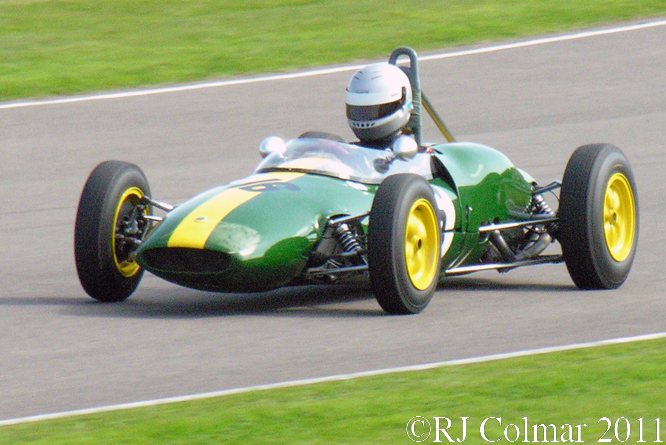
Cristoph Burckhardt, Lotus 22, Goodwood, Revival

The Lotus 22 dominated Formula Junior in 1962 with Peter Arundell and Alan Rees at the wheel of the works cars which dominated the European Junior scene.

Arundell won 75 % of his races including the Monza Loteria and was crowned British Junior Champion. Moises Solana won FJ races in Mexico.

The design of the 22 was also used as the basis of the two seat the Lotus 23 sports racer, which I’ll be looking at next week, the 22 design was given a second lease of life with the emergence of the third tier open wheel Formula 3 in 1964 which mandated single seat vehicles with space frame chassis like the 22 which was upgraded to Lotus 31 spec in F3 guise though the chassis numbers for Lotus 31 curiously ran 22-F3-xx. The 22 design had yet another lease of life when Jim Russel converted a couple of 22’s and 31’s into Ford Kent powered racing cars and inadvertently invented Formula Ford leading to yet another run of cars being built to the basic Lotus 22 design now upgraded to Lotus 51 spec.

It is thought 77 Lotus 22’s were built in their original Formula Junior spec between 1962 and 1963.

Formula Junior was open to cars weighing a minimum 400 kgs / 880lbs fitted with 1100 cc / 67 cui motors or 350 kgs vehicles weighing a minimum of 350 kgs / 770 lbs with 1000 cc / 61 cui.

Chritoph Burckhardt’s car, thought to be chassis 22-J-17 seen above at Goodwood Revival, like most FJ cars in 1962 is the heavier 400 kgs type with 90 hp Cosworth tuned Ford 4 cylinder engine with a mandated production based block, this one canted over at 30 degrees to lower the centre of gravity and minimise the frontal area of the car.

Other FJ engine options included a BMC and DKW two stroke motor as used successfully by a German Gerhard Mitter in his Lotus 22.

At this point I’d usually wrap up this post in the usual way but I’d be doing the model a grave injustice since the Lotus 22 is the stuff of legend that ultimately brought down hitherto respected Porsche racing driver Richard von Frakenberg who survived flying literally of the Avus track to become an equally respected journalist for Auto Motor und Sport one of Germany’s most successful motoring publications.

On Sept 30th 1962 there was a German Formula Junior Championship race on the short 5 mile Südschleife track at the Nurburgring. There was much rumor and gossip in the paddock that weekend about a simple way to increase the engine capacity of the stock block Ford Formula Junior motors by changing the Ford Anglia crankshaft for a crankshaft sourced from the larger capacity Ford Consul that used the same block with the same diameter cylinders but increased the combined swept volume of the blog by having a longer stroke.

The race was notable because the championship title was to be decided between two drivers, the aforementioned Mitter in his DKW powered Lotus 22 and reigning champion Kurt Ahrens jr driving a Cooper T59 with a Cosworth prepared Ford motor of the type which could be easily oversized.

To secure the title all Ahrens Jr needed to do was finish ahead of Mitter, if he finished just one place behind Mitter the two would share the title. bizzarely the latter is exactly what happened Ahrens trundled around behind Mitter’s DKW powered Lotus until the DKW lost one of it’s three cylinders when Mitter pitted Ahrens Jr drove as far as the Müllenbach corner at the back of circuit and promptly stopped his perfectly good car and waited for Mitter to affect his repairs and come past and then followed Mitter across the line to ensure a tie in the Championship.

Richard von Frankenberg absorbed some of the rumors, which should probably have been taken with a pinch of salt in the first place, from the meeting and the following week published a story full of scandalous accusations under the Title “The Biggest Disgrace in International Motorsport”.

In his exposé Richard pointed out that during the Formula Junior season none of the motors had been checked to measure their capacity during scrutineering either before or after races and alleged that some teams had taken advantage of the situation.

Specifically Frankenberg accused reigning champion Kurt Ahrens jr & Austrian Kurt Bardi-Barry winner of the race of running with an oversize engines on September 30th.

He also accused Alan Rees who was running in a work Lotus 22 with a Cosworth Ford motor of running in practice with an oversize motor during which he crashed and eliminated himself from the race.

Frankenberg then went on to report Alan had openly declared that his team (Lotus) had been running oversize motors through out the season.

Finally Frankenberg challenged Colin Chapman to send two cars to Monza to rerun the Lotteria race distance at the same average speed that the cars had achieved in June and then have the motors legality checked.

In the aftermath of the publication Kurt Ahrens Jr and Kurt Bardi Barry won civil actions against von Frankenberg and Auto Motor & Sport both presented motors which passed inspection well after the event but it was concluded that hear say in the paddock was not sufficient proof that either driver had cheated.

The ONS, governing body of motorsport took Ahrens Jr, Bardi-Brady and Mitter to task about events on the September 30th 1962 and concluded that the hear say evidence of Mitter was not proof positive that Ahrens or Bardi-Brady had cheated but they did find Mitter and Ahrens Jr guilty of conspiring to fix the race results for which they both had their licenses suspended for six months.

Colin Chapman accepted von Frankenbergs suggestion, offering to run one Lotus 22 Formula Junior car at Monza over the 30 lap distance of the Lotteria held in June and made a bet of £1000 that his car would not only achieve the same or better speed at Monza over the 30 race distance and be proved perfectly legal. In the event von Frakenberg and Auto Motor und Sport lost the bet they would pay Chapman £1,000 and publish a retraction of the accusations against the team.

All parties duly deposited their stakes and convened at Monza on December 1st 1962. Peter Arundell did some slow warm up laps and blew his engine, it was agreed this should be repaired for a second attempt the next day.

On December 2nd a new attempt was made after cement had been strewn across patches of ice found under the trees at the first Lesmo Corner. Despite another slow start Peter Arundell soon started lapping ahead of the target time eventually crossing the line for the 30th time 52 seconds faster than he had in June.

On completion of the race distance he did one final blinding flying lap and lowered his lap record of 1’50.9′ in June to 1’49.8′ in December.

It was noted at the time the cooler conditions gave Peter an advantage, as much as 4% extra horse power by my calculations, but his times by my calculations are only 1.5% quicker for the race and and 1% quicker for fastest lap.

Once Peter returned to the pits the car was meticulously weighed, the engine dimensions were measured, as 1092 cc / 66.6 cui, and so the car was declared fully compliant with the Formula Junior regulations to the satisfaction of all concerned.

Immediately after the technical inspection the “Monaza Lion” as the car became known was sold for £2,000 to a Sig. Motta, thereafter Richard von Frankenberg shook Colin Chapman’s hand and formally apologized in front of all those present and an apology with full retraction of the false statements was printed in the following issue Auto Motor und Sport.

Peter Arundell won a second consecutive British Formula Junior Championship in 1963 and looked to have a promising future until an accident in 1964 saw him thrown out of his car. Colin Chapman kept a seat for Peter until his return in 1966, however Peter showed none of his earlier promise during his comeback season and retired from the sport completely in 1969, after selling his Garage Business from which he and his family were lucky to escape from a serious fire he moved to Florida where he founded the notorious adult software gaming company Mystique.

Colin Chapman went from strength to strength his Lotus team wining the first of six World Drivers and seven World Constructors Championships in 1963.

Kurt Ahrens jr regained his German Formula Jr title in 1963 but never quite broke into the big time he did however win the 1969 Austrian and 1970 Nurburgring 1000kms races driving with Jo Siffert and Vic Elford respectively, the 1968 Austrian event was the first ever to be won by a Porsche 917, he also took two consecutive pole positions at Le Mans for the 24 hour races in 1969 and 1970 both in works Porsche 917’s. He retired in 1970 to look after his family’s car dealership and scrap metal business and still takes an interest in the historic racing scene.

Gerhard Mitter drove in seven Grand Prix but like Ahrens Jr never secured a permanent seat on the Grand Prix circuit, he won the 1969 Targa Florio driving a Porsche 908 with Udo Schutz. Gerhard was kiiled during practice for the 1969 German Grand Prix after either suspension or steering failure caused him to crash.

Soon after he lost the Monza bet von Frakenberg left his staff position at Auto Motor und Sport. He was killed in a road accident in 1973 aged 52.

My thanks to every one on The Nostalgia Forum particularly, Doug Nye, Arese, r.atios, Ralf Pickle and Charlieman, on the L’affaire Lotus/von Frankenburg thread, RWB, Macca & Rob on the How many Lotus 22s? thread, finally but not least Cheapracer and saudoso on the Ambient air temperature and car performance thread.

Thanks for joining me on this bumper edition of ‘Gettin’ a li’l psycho on tyres I hope you will join me again tomorrow. Don’t forget to come back now !

PS Don’t forget …

Automobiliart GALPOT Seasonal Quiz
Automobiliart, Paul Chenard

December 26th – January 2nd

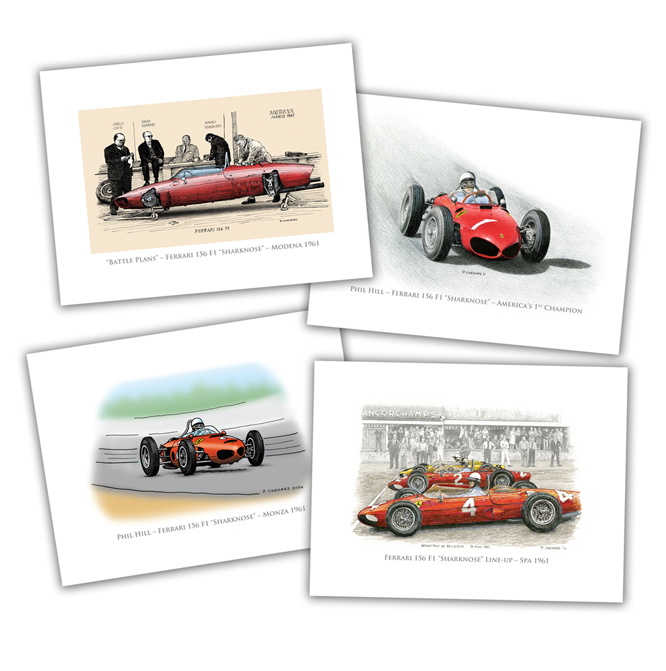
Win a set of Paul Chenard Greetings Cards
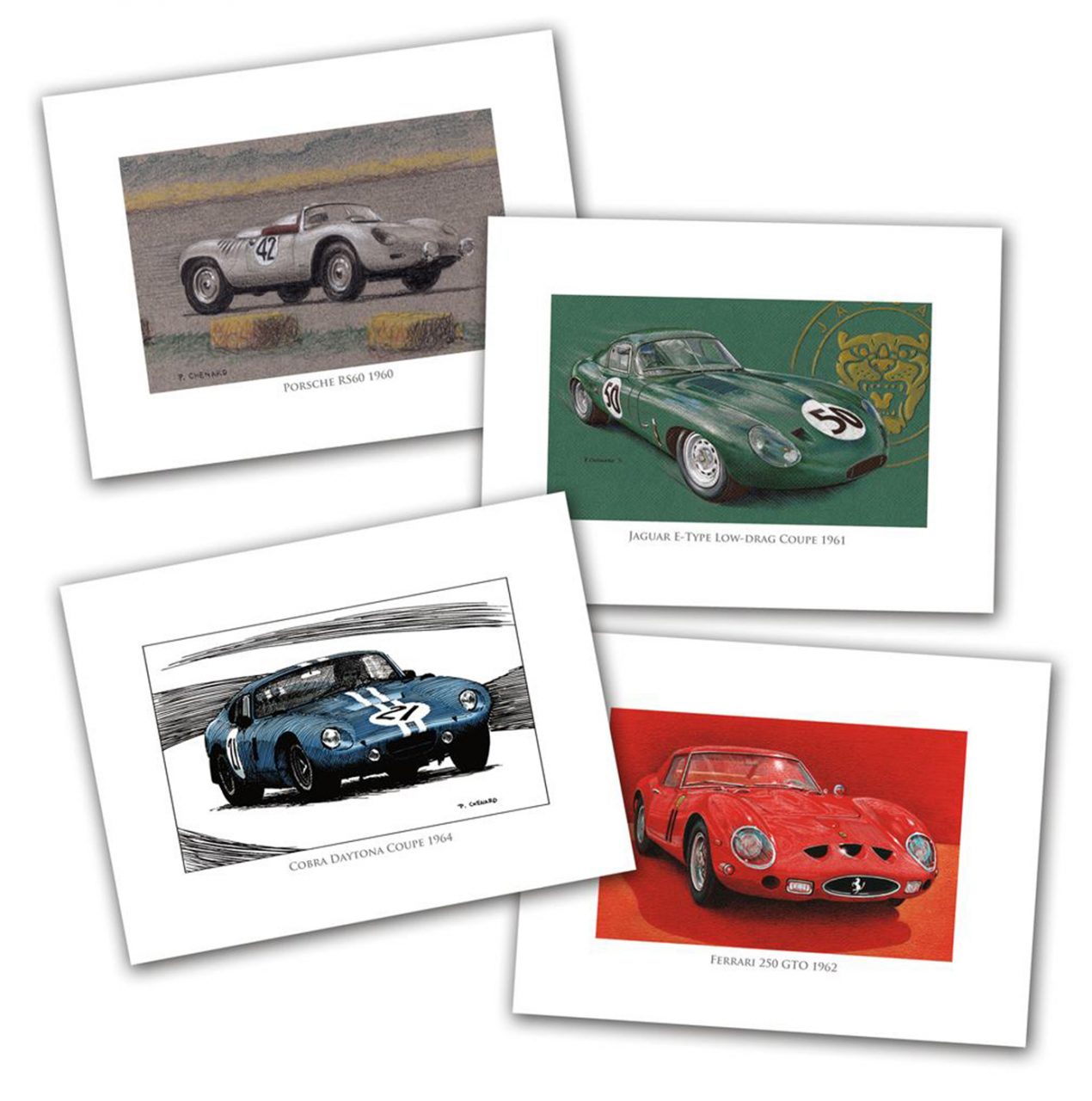
Sports-GT cars set, Paul Chenard

Set 1 Sports & GT Cars

Phil Hill, Sharknose Ferrari Set, Paul Chenard

Set 2 Phil Hill World Drivers Championship 50th Anniversary Edition
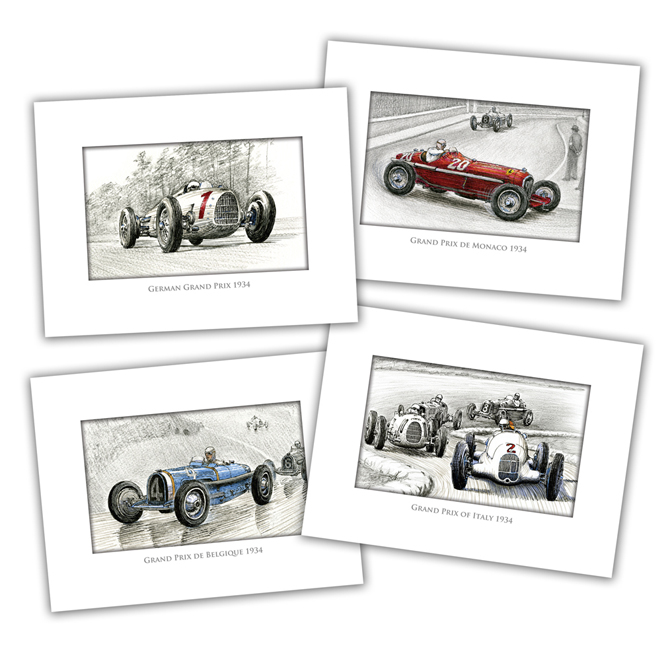
1934 GP Season Card set, Paul Chenard

Set 3 1934 Season

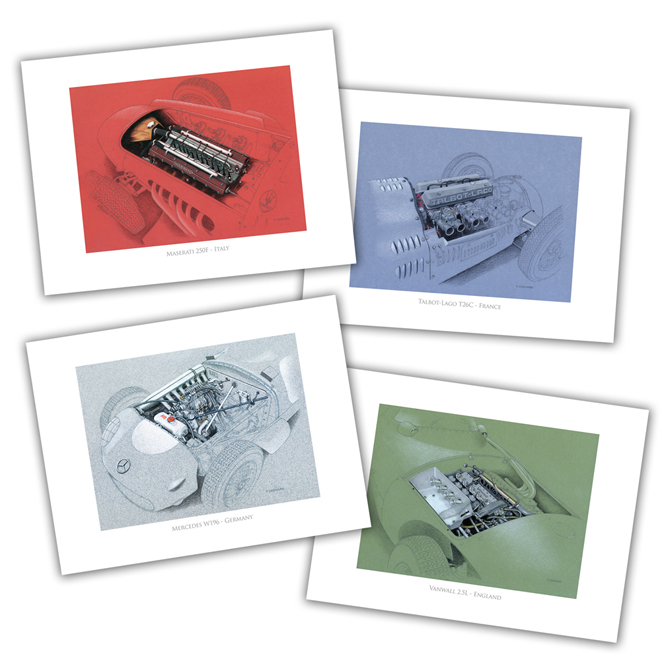
1950s Grand Prix Engines

Set 4 Grand Prix Engines of the 1950’s

or
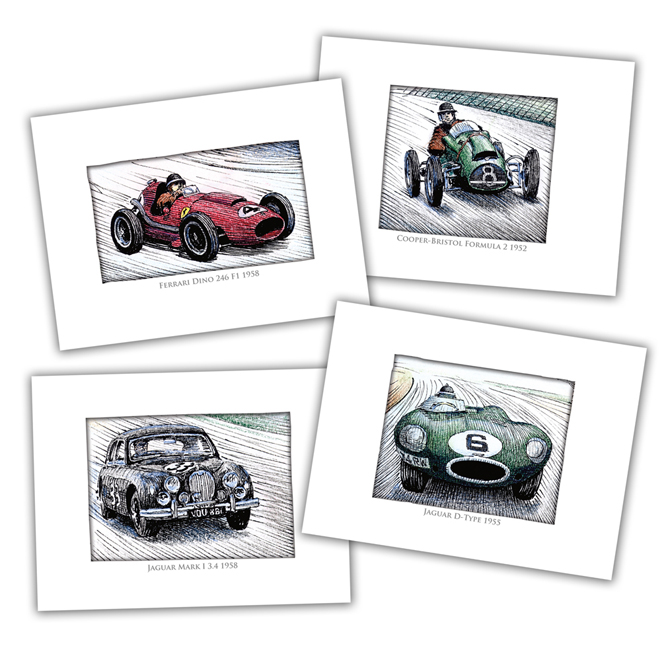
Mike Hawtorns racecars Card set, Paul Chenard

Set 5 Mike Hawthorn’s Race Cars

The Automobiliart GALPOT Seasonal Quiz will comprise 8 categories.

Overall winner chooses one set of Paul Chenard Greetings Cards from the five sets shown above.

The cards measure 15.24cm x 11.43cm, come in packs of 12 with 3 copies of 4 designs in each set, plus A6 envelopes.

Which set will you choose ?

The free to enter Automobiliart GALPOT Seasonal Quiz will run from December 26th – January 2nd Entries close January 8th 2012, Winner announced January 16th 2012.

Full details on December 26th at GALPOT.

Looking for Automotive Seasonal Gift Idea’s? Visit Automobiliart Now !

Share

Comic Discovery – Hudson Suburban Sedan

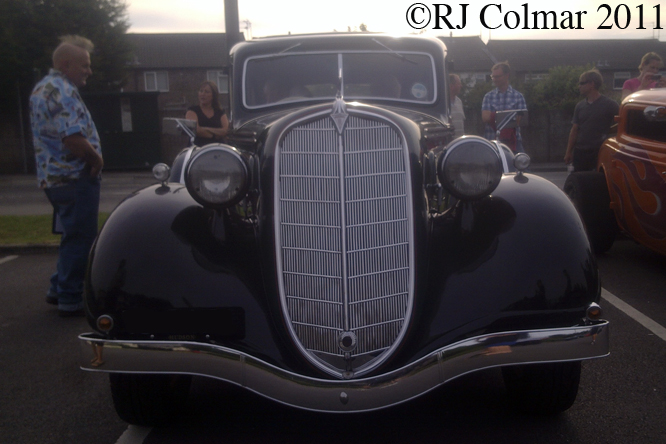
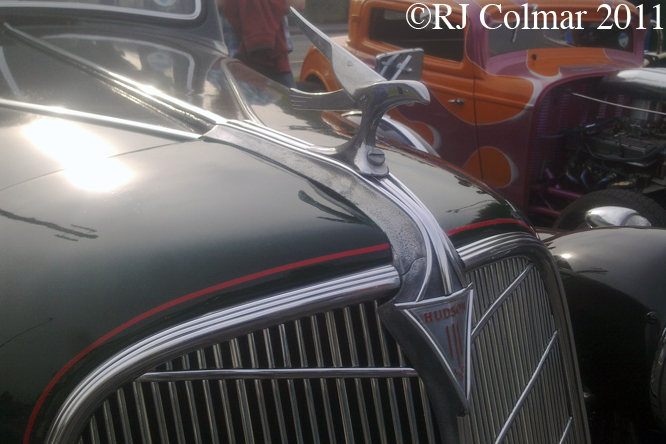
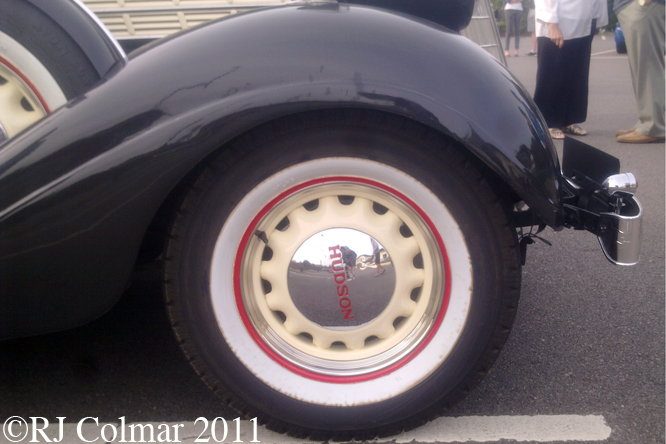
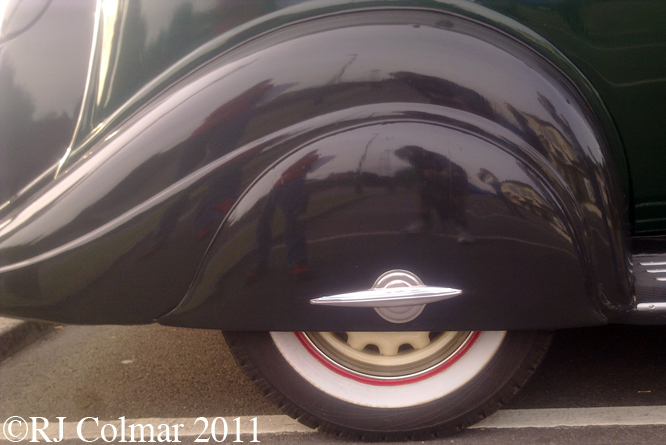
Back on Independence Day during the Rally organised by the Bristol Pegasus Motor Club I came across this delightful 1935 Hudson, unfortunately I did not get any details about the car from the owner at the time so I have had another carcaeology session to discover more.

Hudson Big Six, Model 53

This Hudson chassis #533370, with blue body work probably marketed as Surban Sedan model, was one of just four vehicles first registered in Dundee, where the strap line reads City of Discovery, on the 7th of May 1935.

Hudson Big Six, Model 35

The Hudson was registered to a Mr R D Low of Westleigh, Number 9 Nevill Street, Downfield, Dundee alongside a Morris Saloon, BSA Motorcycle and a 3 ton Commer Coal merchants truck.

Hudson Big Six, Model 35

Robert Duncan Low is known to have been a journalist to the Dundee City Archive, but as we know journalism can cover a multitude of sins and it would appear that Robert was no gum shoe rather he was employed by DC Thompson & Co in Dundee where he was responsible for launching a number of publications aimed at children including Adventure (1921) The Rover (1922) The Wizzard (1923) The Skipper (1930) and The Hotspur (1933).

Hudson Big Six, Model 35

In 1937 Robert became managing editor at DC Thompson and over saw the launch of The Dandy and the following year the Beano for which with artist Ken Reid he created Roger the Dodger in 1953, when he also oversaw the launch of The Topper. Earlier in his career Robert is also credited with co creating the Scottish vernacular comic strips Oor Wullie and The Broons with illustrator Dudley Dexter Watkins.

Hudson Big Six, Model 35

It is not at present known how long Robert Low kept this Hudson he died in 1980 aged 85. This car is reported to have been ‘knocking around the North West of England in the 1990’s’ before it was offered at auction in 2005 when the body was painted maroon and sold for £1,500. The history of the cars original ownership outlined above appears to have been unknown to the auctioneers at the time when the car was noted to have had 4 previous owners with 92,275 miles shown on the clock and the model name was given as Big Six Saloon, the chassis number indicated the car would have been known as a 53 model at the Hudson factory from whence it was probably sent as a knockdown kit for assembly in Brentford west of London.

Hudson Big Six, Model 35

According to the best source I have available 29,476 cars were shipped and it is thought that number included the knockdown kits.

My thanks to John MacDonald form ‘oldcarandtruckpictures.com‘, Jon B, Terraplane 33, Geoff C NZ, Alex ‘Hudsontech’ Burr, Old Fogey UK and Paul Butler over at Hudson Forum who helped me identify this car and finally to Richard Cullen at the Dundee City Archive who provided the final clue as to the original owners identity.

Thanks for joining me on this comic edition of “Gettin’ a li’l psycho on tyres” I hope you will join me again tomorrow. Don’t forget to come back now !
Share

Baby Continental – Vauxhall 101 Super

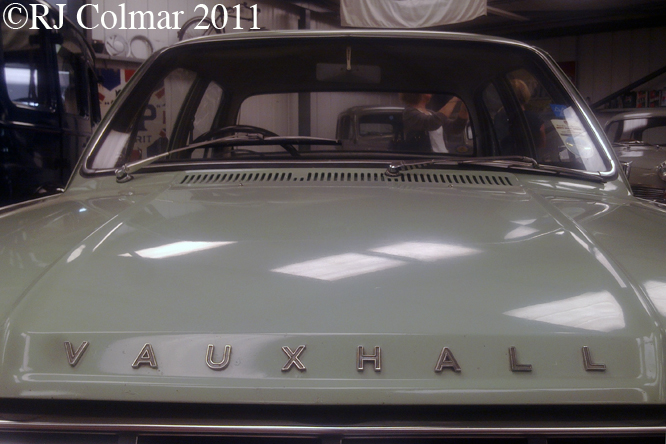
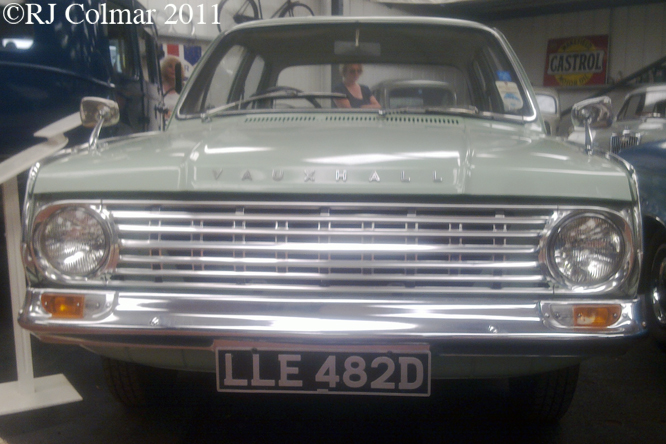
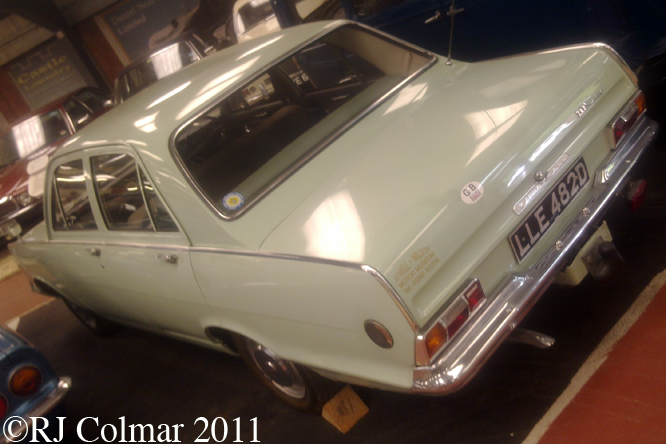
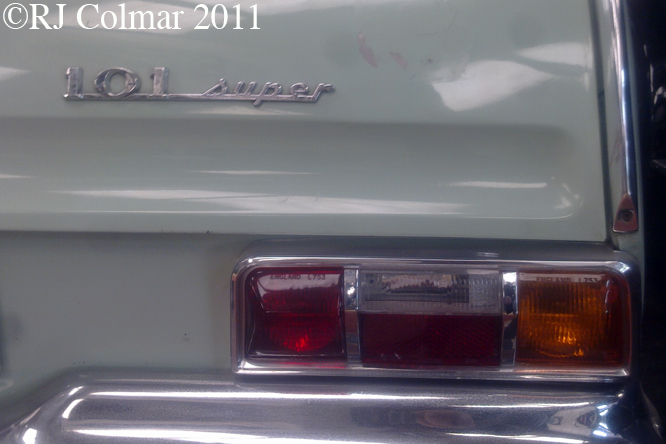
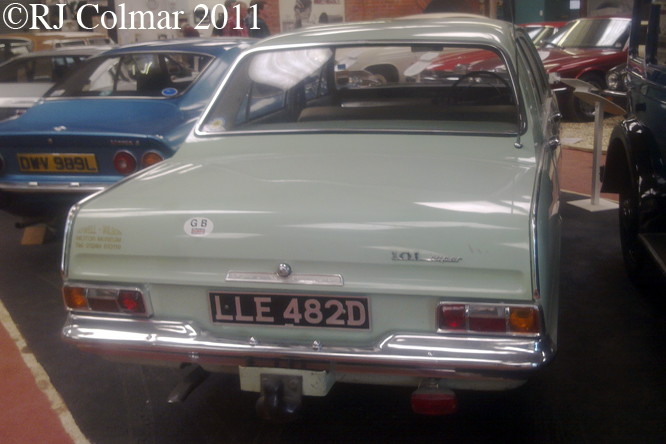
The Vauxhall 101 was the third generation Vauxhall Victor given the 101 badge because it had 101 improvements over it’s predecessor the Victor FB.

Vauxhall 101 Super, Atwell Wilson MM

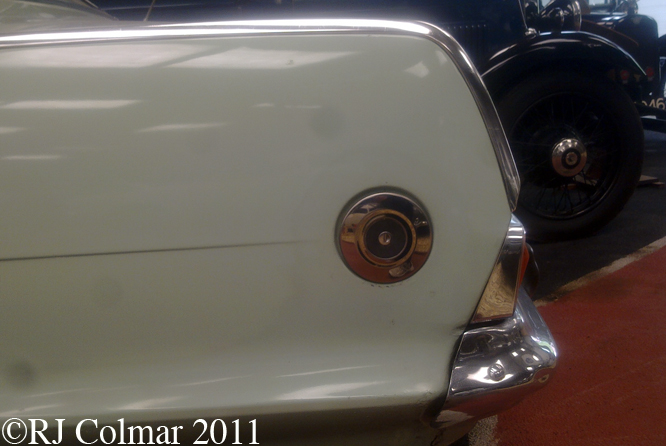
Like the contemporary fourth generation Lincoln Continental the 101 Super carried bright work on the leading edge of the front wings that ran from the top of the front bumper around the top edge of the front wings along the mid rift to the top of the rear wings and around to the top of the rear wings.

Vauxhall 101 Super, Atwell Wilson MM

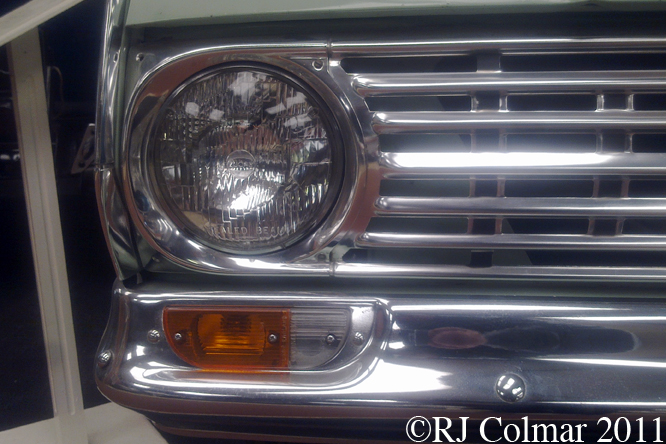
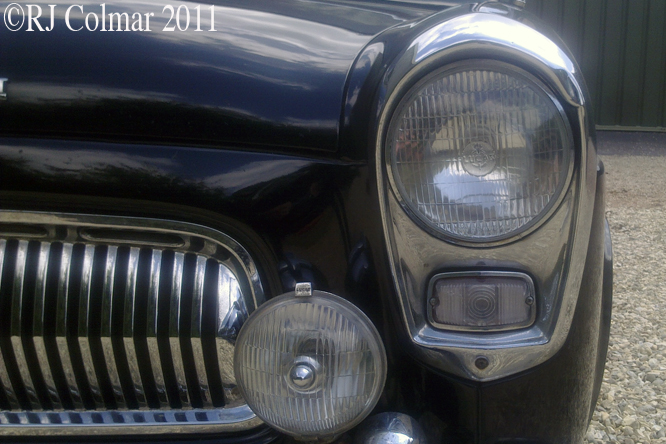
Imitating another feature that had been seen in the USA for some time the 101 was among the first British designs to incorporate the side light and indicator clusters into the front bumper.

Vauxhall 101 Super, Atwell Wilson MM

The 101 was the last of the Victor models to feature an engine with rocker operated overhead valves. The 1595 cc / 97 cui 4 cylinder motor produced 66 hp.

Vauxhall 101 Super, Atwell Wilson MM

There was a choice of transmissions standard column shifted 3 speed, 4 speed floor shifted or Powerglide Automatic.

Vauxhall 101 Super, Atwell Wilson MM

Contemporary reports noted that the low gearing gave the car class leading acceleration, 0 to 60 in 20.4 seconds, but made the fuel consumption, 23.1 miles per gallon, worst in class by a full 10%.

Vauxhall 101 Super, Atwell Wilson MM

Front servo assisted brake discs were options along with a radio that was integrated into the dash.

Vauxhall 101 Super, Atwell Wilson MM

Between 1964 and 1967 219,814 101 Victor FC models were built along with an additional 13,499 VX 4/90 performance models using the same body. The 1966 model featured today was seen at the Atwell Wilson Motor Museum.

Thanks for loining me on this 101 edition of ‘Gettin’ a li’l psycho on tyres I hope you will join me again tomorrow. Don’t forget to come back now !
Share

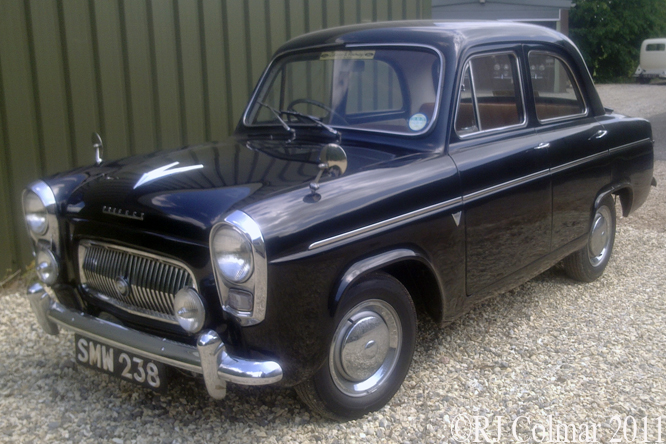
Hitchhikers Guide To Disambiguation – Ford Prefect

Many readers may think Ford Prefect is the character Ix from a small planet in the vicinity of Betelgeuse who disguised himself as an out of work actor after getting stuck on planet Earth for 15 years while visiting the Earth to update the Guide in either the radio comedy, tv series, book, radio adaption of the books or film ‘The Hitchhickers Guide to the Galaxy.

Ford Prefect

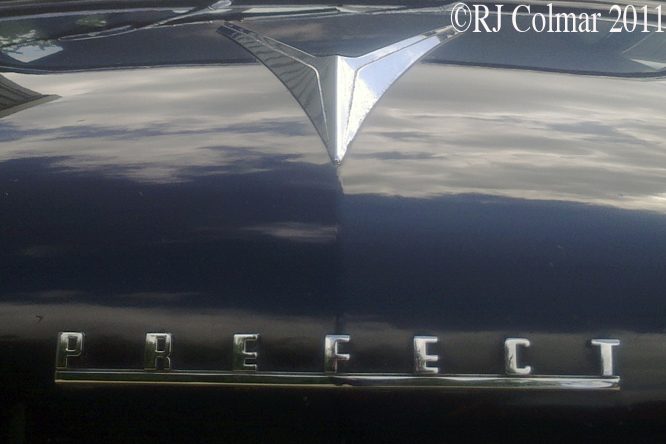
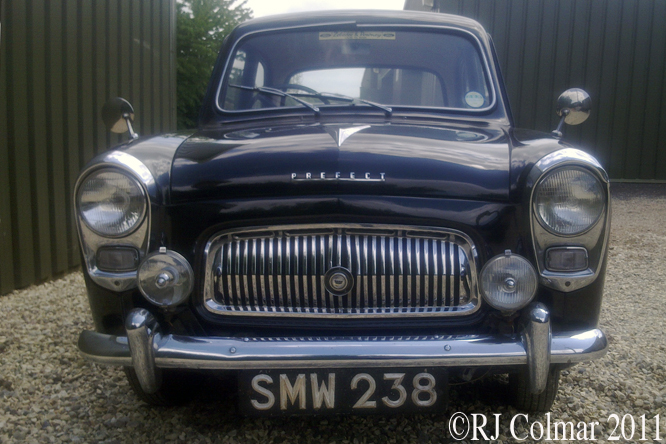
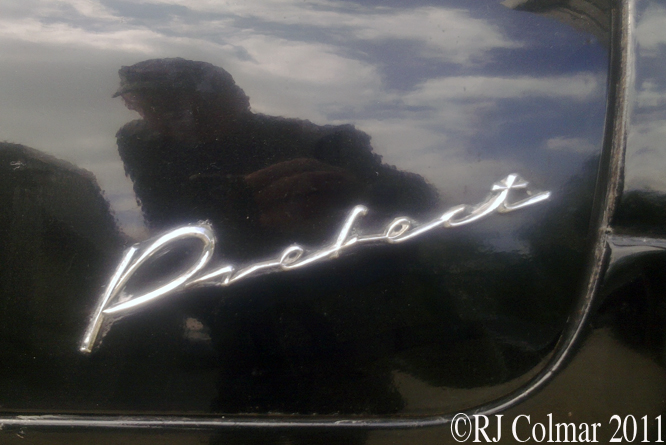
In fact a Ford Prefect, note not “PERFECT” as many have incorrectly read and or heard the second word, is a motor car which Ix mistook for a superior form of life when visiting earth in the Sci Fi comedy.

Ford Prefect, Atwell Wilson Motor Museum, 2011

The Ford Prefect was in production from 1938 to 1959 in four distinct evolutions.

Ford Prefect, Atwell Wilson Motor Museum, 2011

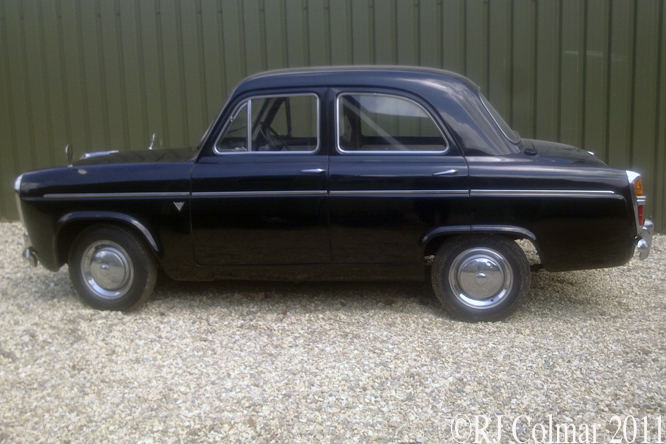
With the front wings incorporated into the overall 3 box design of the body we can say for sure this is a series 3 or 4 car.

Ford Prefect, Atwell Wilson Motor Museum, 2011

The absence of a rakish small chrome strip from the front of the existing chrome waste strip down to the wheel arch further suggests this is an earlier 100E Series 3 car which was in production from 1953 to 1959.

Ford Prefect, Atwell Wilson Motor Museum, 2011

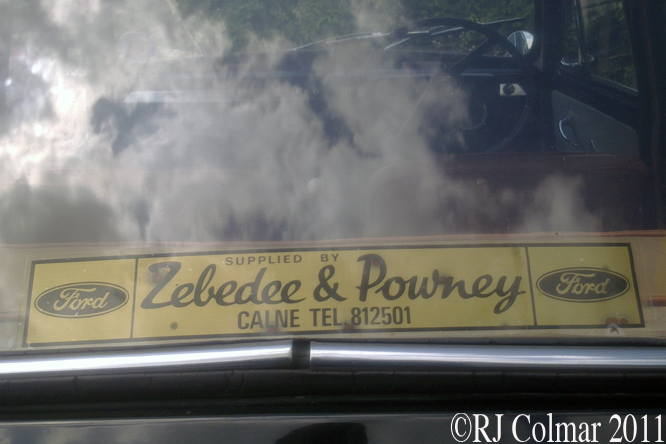
The tax disc in the front window of this car suggested that it had stopped being used as a daily driver in 1979 which seems strangely at odds with what looks like a vehicle that is more than capable of passing an MOT (a safety inspection required in the UK before a vehicle can be taxed) when I saw it at the Atwell Wilson Motor Museum where many of the cars are regular runners.

Powered by a 1172 cc / 71.5 cui 4 cylinder side valve engine mated to a 3 speed manual gearbox the Series 3 Prefect was tested as being capable of accelerating from rest to 60 mph in 32.2 seconds and having a top speed of 71 mph.

Ford Prefect, Atwell Wilson Motor Museum, 2011

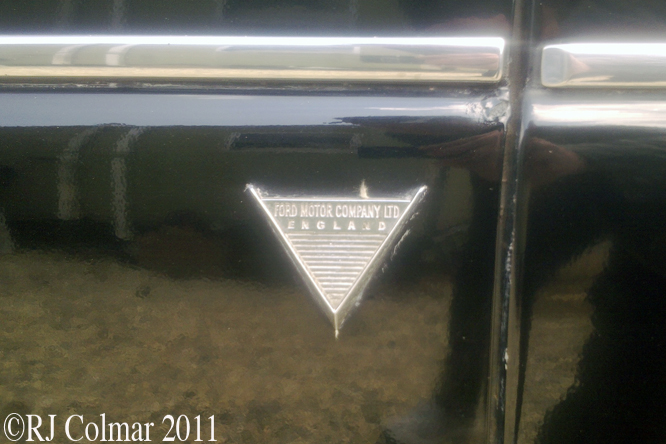
The four door version of the otherwise visually similar Ford Popular and Anglia models was also built under license in Latvia where it was sold as the Ford-Vairogs Junior.

Ford Prefect, Atwell Wilson Motor Museum, 2011

There was an estate / station wagon of the Ford Prefect known as the Squire while the estate / station wagon version of the similar Ford Anglia was know as the Ford Escort. For reasons long forgotten in the mists of time the French and Greek translations, among others, of Hitchhikers Guide to the Galaxy incorrectly give the name chosen by Ix while staying on earth as Ford Escort, though Ix probably chose that name for the same reasons as he chose Ford Prefect in the English version, and most other translations of the book, namely to an alien it probably looks like cars are the most intelligent species on the planet.

Thanks for joining me on this Hitchhikers Guide edition of ‘Gettin’ a li’l psycho on tyres’, I hope you’ll join me again tomorrow when I’ll be trading in Science Fiction for a big Voyager. Don’t forget to come back now !
Share

English T – Ford Model T

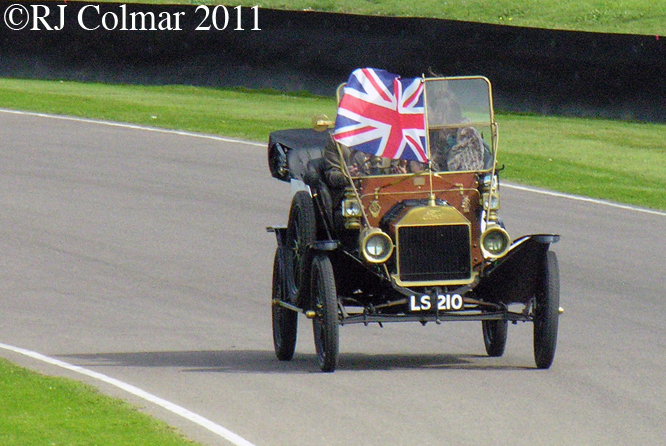
Ford Motor Company started manufacturing vehicles in 1903 and that same year three Model A’s were exported to Great Britian, by 1909 the Ford Motor Company (England) was established and began working from an Office in London on March 8th 1911.

Ford Model T, 1911, Goodwood Revival

Ford’s first overseas assembly plant was opened in 1911 at Trafford Park in Manchester where Ford Model T’s were assembled with imported chassis, mechanical parts and locally manufactured bodies. The 1911 Model T above has the distinction of being the first car to be driven up Ben Nevis.

22 year old Henry Alexander, on the instruction of his father the first Ford dealer in Scotland, spent six weeks preparing a route to the top Britains highest peak 4,409 ft / 1,344 m above sea level. It then took Mr Alexander 5 days to reach the summit along the precarious route he had prepared. Mr Alexander repeated the feat in 1928 and to mark Centenary of the Model T reaching the top of Ben Nevis, earlier this year a team of 71 volunteers carried a replica model T to the summit assembled it and then disassembled it and brought it back down again !
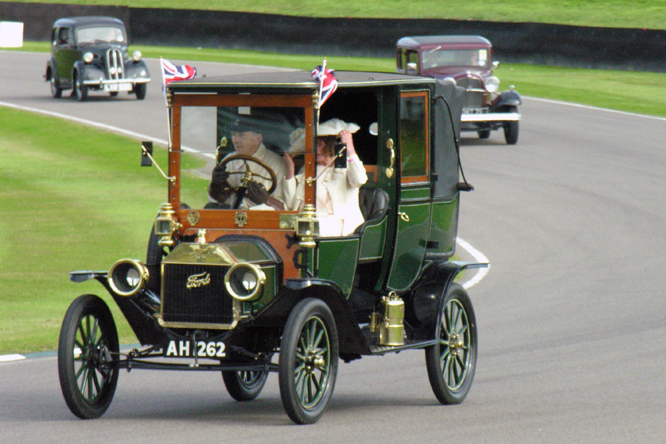
Ford Model T, Landaulet, 1912, Goodwood Revival

Although the three pedal system for operating motor cars as used in most cars to this day was familiar when the first Model T’s were built in 1908 the Model T relied on a hand throttle operated on the steering wheel a left pedal that when fully depressed engaged a low gear, when part depressed disengaged the gear box and when not depressed engaged a high gear. The centre pedal when depressed engaged reverse and the right pedal operated the brakes which were attached to the rear wheel only.

Above is a 1912 Landaulet offering minimal weather protection to the front seat occupants while giving the rear seat occupants a choice of protection thanks to a folding roof. The Landaulet body style was a hangover from the age of the horse drawn carriage and has largely disappeared only Maybach are known to offer a Landaulet option at the time of writing.

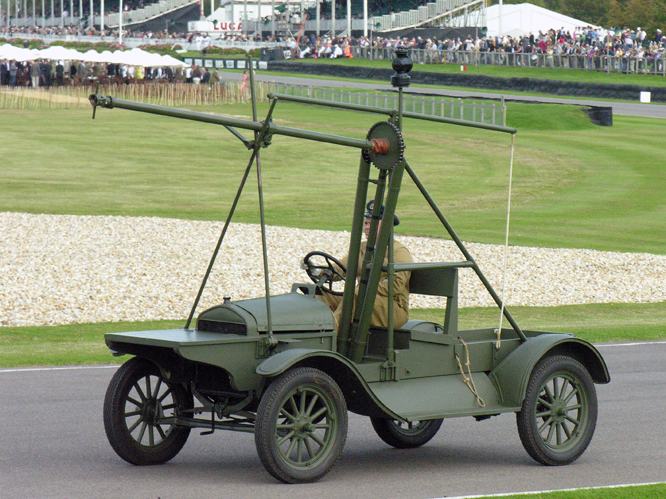
Ford Model T, Huck Starter, 1915, Goodwood Revival

When designing the Model T Henry Ford new that as well as a motor car he wanted his vehicle to be adaptable to the requirements of a great variety of users in agriculture and industry. Amongst the stranger applications of the Model T was the mobile aircraft starter version.

The long pole that extends beyond the front of this 1915 ‘Huck Starter’ Model T can be aligned with the propellor shaft of an aeroplane and then engaged with it. The chain to the left of the operator connects the aeroplane starter shaft to the drive of the Model T which when engaged will rotate the aircraft engine until it fires under its own power.

Ford Model T, Fire Engine, 1923, Goodwood Revival

When production of the Model T started it took around 12 and half hours to assemble one. By the outbreak of the Great War in 1914 production time had been slashed to just 93 minutes , at one time nearly half of all the worlds motor vehicles were thought to be Fords, in the UK in 1919 41% of all new cars registered for the road were Fords.

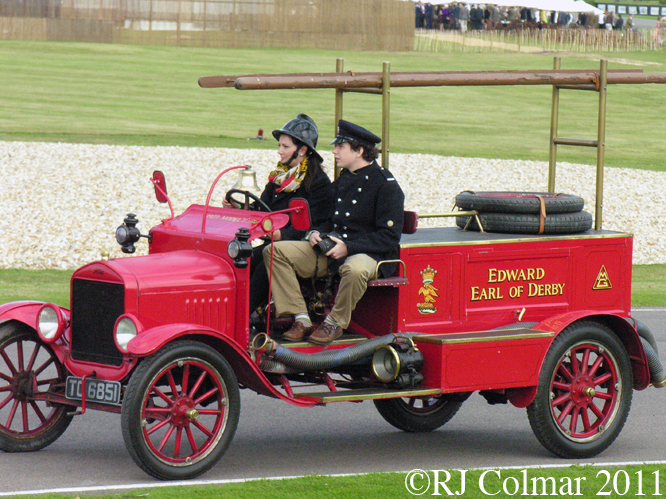
The Model T was easily adapted into trucks and buses above is a 1923 fire engine that served on the estate of the Earl of Derbyshire from 1924 to 1948.

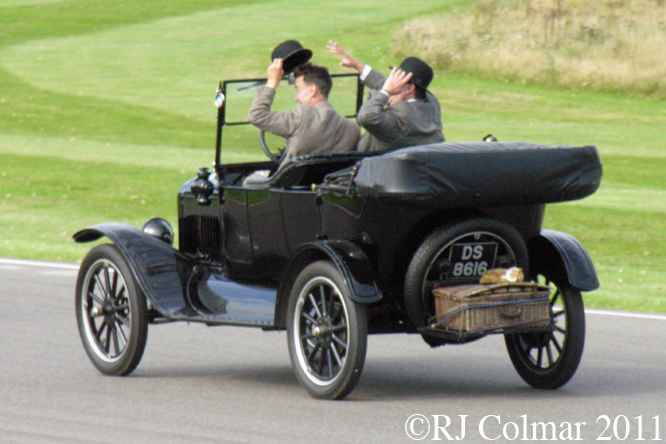
Ford Model T, 1924, Goodwood Revival

One of the great myths about the Model T was that one could have a Model T any colour one wanted so long as it was black. In fact this was only true after 1914, up until then Model’s T’s were not available in black at all, from 1912 to 1914 Model T’s were only available in Midnight Blue with black wings / fenders. After 1914 over 30 different black paints were developed to satisfy the various means of applying the paint to different parts of the cars.

The 1924 Model T above is little changed from the 1911 example seen at the top of the post.

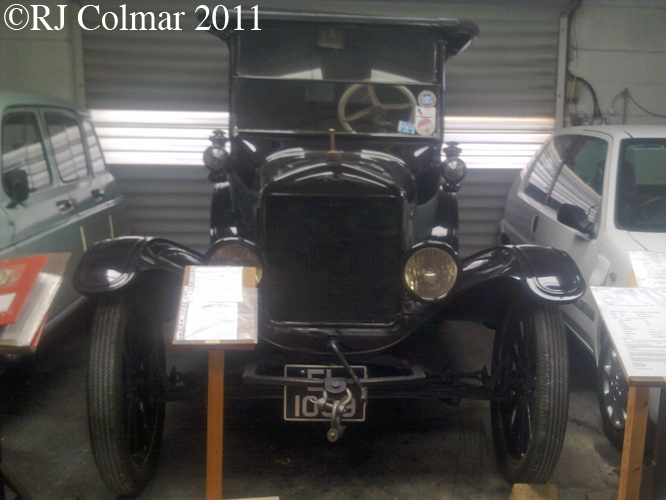
Ford Model T, 1924, Atwell Wilson Motor Museum

With over 15 million examples produced when production of the Model T ceased in 1927, the Model T held the title of the worlds most popular vehicle until 1972 when it was eclipsed by the VW Beetle, though it should be noted the Beetle had undergone many more changes in it’s life time than the Model T.

The 1924 example above can be seen at the Attwell Wilson Museum.

Thanks for joining me on this English T edition of ‘Getting a li’l pysycho on tyres’, I hope you will join me again tomorrow. Don’t forget to come back now !

Share

Forward Control Flathead – Fordson 7V

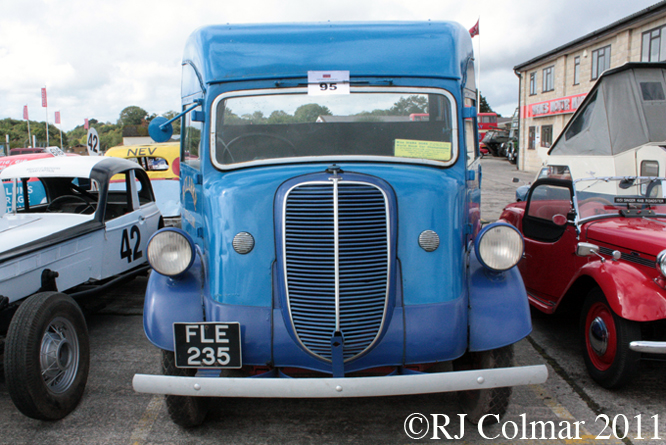
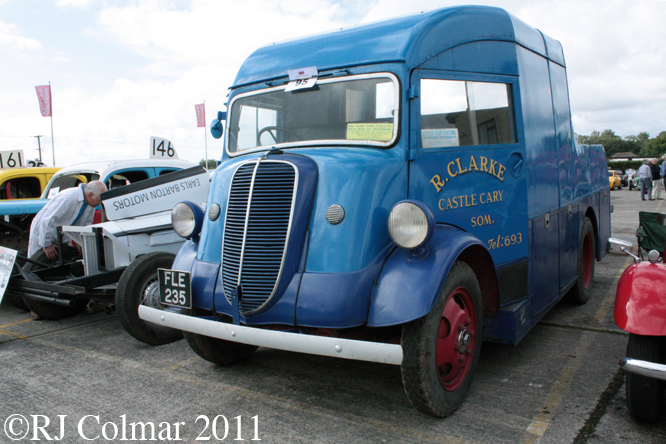
The Fordson 7V truck built in Britain from 1937 to 1948 had two enduring innovations.

Fordson 7V, Rare Breeds, Haynes International Motor Museum

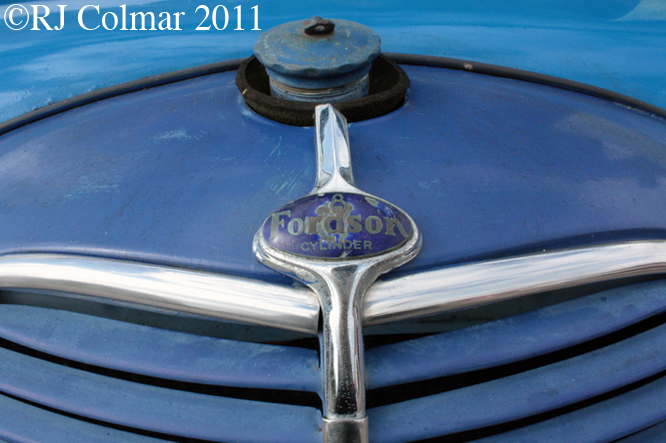
The first was it’s flathead V8 the first Ford V8 which was originally built in the USA in 1932. This motor in various guises from 136 CUI / 2.2 litre to 337 CUI 5.7 litre was in production until 1973 when German built trucks with a variation of this motor ceased production. This easy to maintain and upgrade motor was popular with hot rodders and racers alike, indeed Allard amongst other special builders also installed a variation this motor in some of its most successful competition models.

Fordson 7V, Rare Breeds, Haynes International Motor Museum

The second innovative feature of the Fordson 7V was the forward control cab which placed the driver alongside the motor which improved the drivers vision of the road and allowed for greater maneuverability in congested urban environments. This particular feature did not take off until the 1960’s Ford having taken a step back placing the driver in the traditional position behind the motor with it’s 1950’s Trader models. Note the cab also has an unusual for the period one piece windscreen.

Fordson 7V, Rare Breeds, Haynes International Motor Museum

Fordson 7V’s like this particular one were the vehicle of choice for Britain’s National Fire Service during the 2nd World War and painted grey they were an all to familiar sight during the Blitz Krieg. The Fordson 7V chassis was also adapted during the 2nd World War to build the armoured flathead V8 powered tracked Loyd Carrier.

Fordson 7V, Rare Breeds, Haynes International Motor Museum

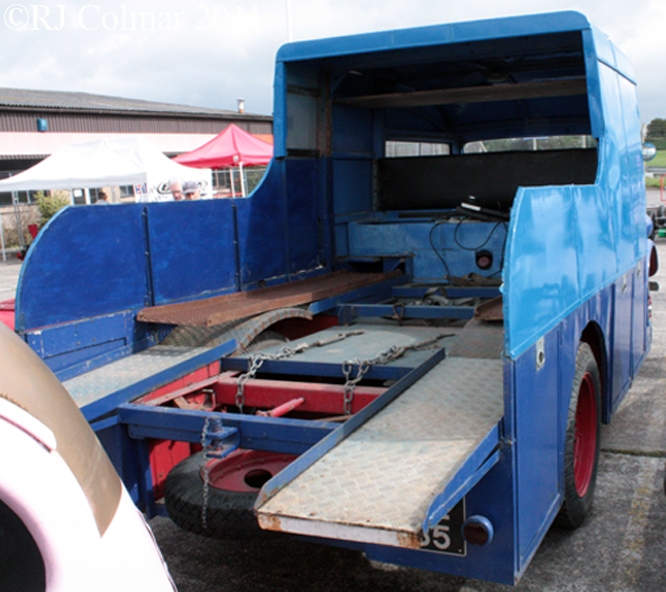
With the cessation of hostilities and the post war boom in motor racing Fordon 7V’s fitted with Flathead V8’s were much in demand for use as racing transporters giving many fire tenders a second lease of life.

Fordson 7V, Rare Breeds, Haynes International Motor Museum

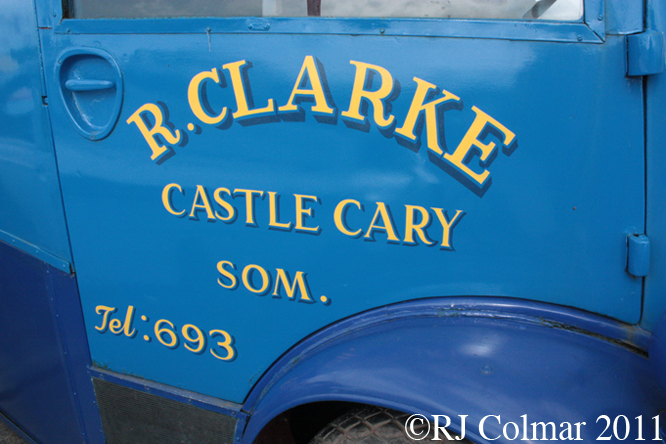
The Clarke family use this 1937 example, seen at the Rare Breeds Show, to transport their collection of replica Stock Cars as raced in the 1950’s.

Thanks for joining me on today’s transporter edition of ‘Gettin’ a li’l psycho on tyres’ I hope you will join me again tomorrow when I’ll be looking at British built variations of one of the worlds most popular cars. Don’t forget to come back now !

Share

Spirit of the 60’s – Dyrham Park

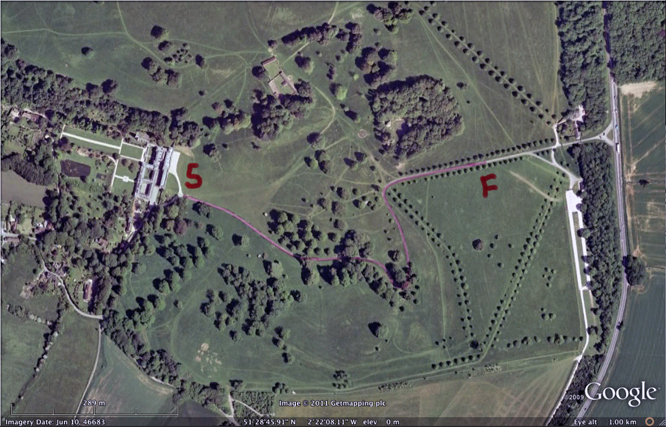
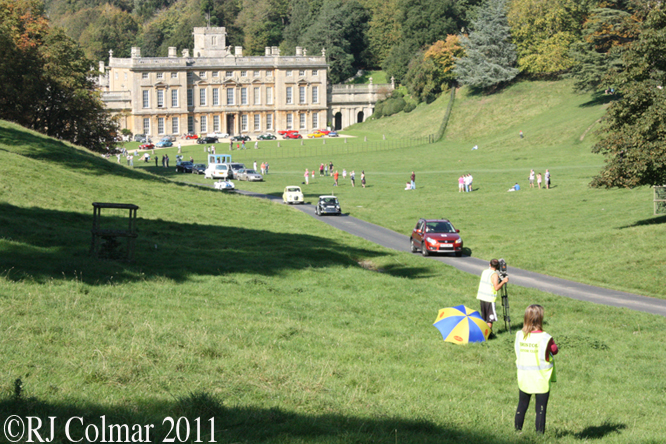
On Sunday I ambled through the back lanes of Gloucestershire with a couple of friends to visit Dyrham Park a Neo Classic country mansion, that was built for William III’s Secretary at War William Blathwayt, set in a 274 acre deer park.

Dyrham Park

The house was made over to the state in the late 1950’s and the National Trust subsequently took over the running of the estate in 1961. That same year the Bristol Motor Cycle & Light Car Club organised a hillclimb on an 800 yard course that started at the Mansion house and went up the winding front drive towards the main gates of the estate.

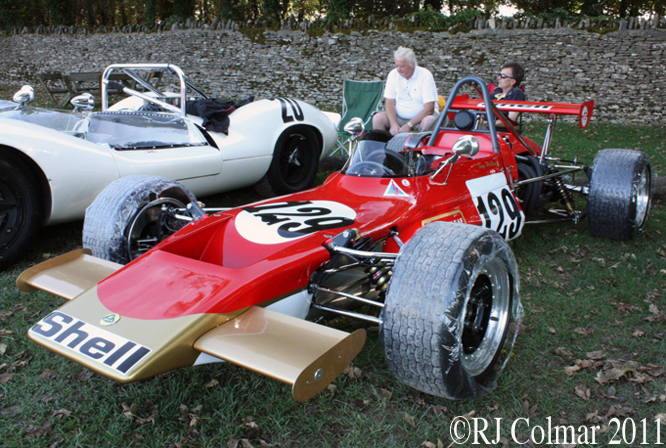
Lotus 69, Dyrham Park

To celebrate the centenary of what is now known as the Bristol Motor Club a Spirit of the 60’s demonstration was organised at Dyrham Park to mark the six events that were organised from 1961 – 1966. Not all the vehicles present on Sunday, like Tony Wallens 1971 Lotus 69 were strictly of the correct period but they all added to flavour on another Indian Summers day.

Brabham BT18 Buick V8, Chris Merrick, Dyrham Park

Making his way through the hairpin to the start line is Chris Merrick in a Brabham BT18 / Buick V8 that once belonged to Bryan Eccles who set, probably for all time, the course record of 30.05 secs in 1966.

Berkley B105, Neil Barber, Dyrham Park

Some of you may remember I stumbled across a Berkeley B105 earlier this year at the Silverstone Classic, this 1959 example heading for the assembly area belongs to Neil Barber.

Ford Mustang, 302, Steve Hillcox, Dyrham Park

Steve Hillcox in the 302 cui Mustang Fastback can is seen above preparing to leave the assembly area for his run up the narrow 800 yard course.

Dyrham Park

Following the Suzuki Pace Car heading for the sweeps on one of the demonstration runs are Jeffrey Allen in his 1967 Mini Cooper, Steve Dowling in his 1959 Austin A35 and David Valsler in his Turner which he found in Ohio.

Volkswagen, Notchback, John Robbins, Dyrham Park

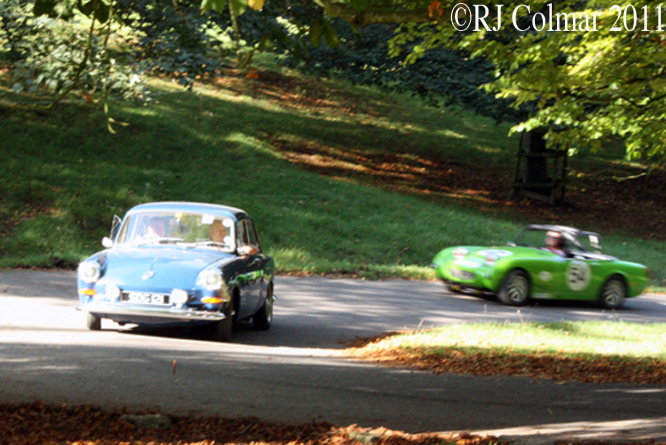
John Robbins above negotiates the hairpin in his 1967 VW Notchback ahead of Colin Gale in his 1966 Austin Healey Sprite.

Morgan Super Sport, Ron Clements, Dyrham Park

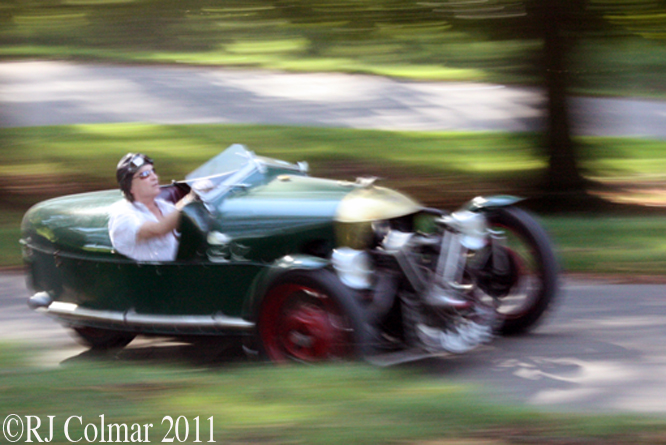
I believe this is Ron Clements in his 1933 Morgan Super Sport which bears a quote from two time Le Mans winner Sir Tim Birkin on the side “Better to die at full throttle than to live behind a desk.” Sir Tim died from as a result of burns sustained while racing a Maserati in the 1933 Tripoli Grand Prix.

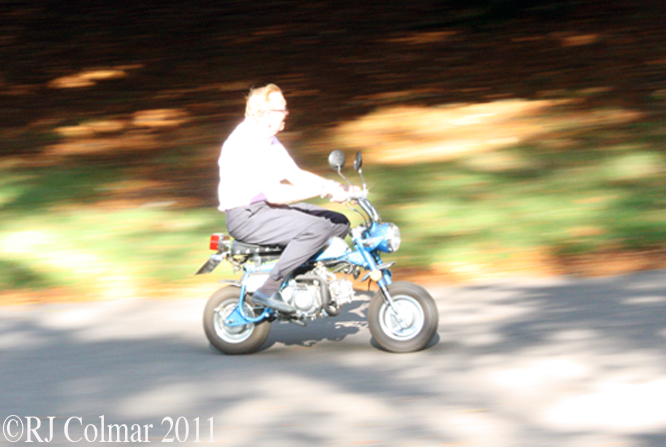
Monkey Bike, Vince Woodman, Dyrham Park

One of the slower passes up the hill had they been timed would possibly have gone to former British Saloon car stalwart Vince Woodman on this Honda monkey bike,

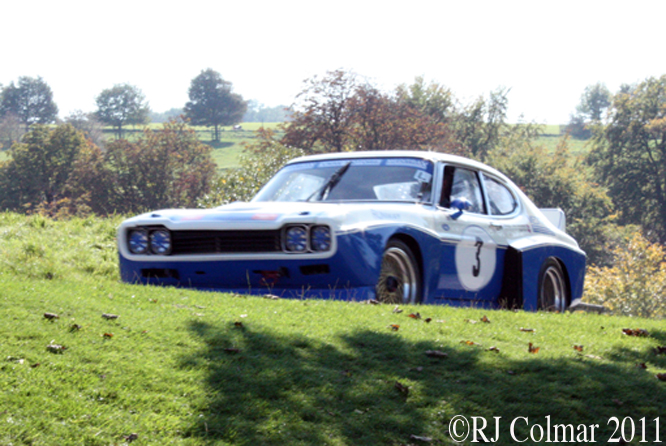
Ford Cologne Capri, Vince Woodman, Dyrham Park

though without doubt had the event been timed he would have been in the running for top tin top with his 3.4 litre 1973 Cologne Capri seen here rounding Neptune before the finish straight.

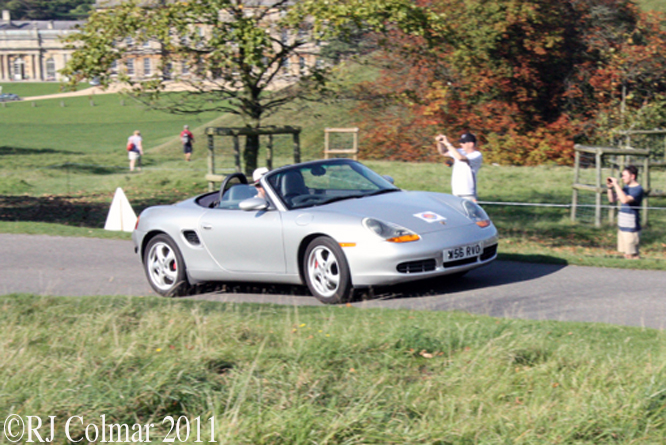
Porsche Boxter, Dyrham Park

Somewhere between 4-5000 spectators are thought to have been entertained by over one hundred cars that each made several runs up the hill, apparently at one point the gates had to be closed because the A46 Bath Road had become blocked. At 4 pm the course car passed for the last time bringing an entertaining day to an end.

Thanks for joining me on this Dyrham Park edition of ‘Gettin’ a li’l psycho on tyres’ I hope you will join me again tomorrow. Don’t forget to come back now !

Share