Tag Archives: Museum

Rare Breeds – Haynes International Motor Museum

Last Sunday I made a ‘little’ detour to the Rare Breeds Car Show at the Haynes International Motor Museum on the way to the airport to pick up some friends.
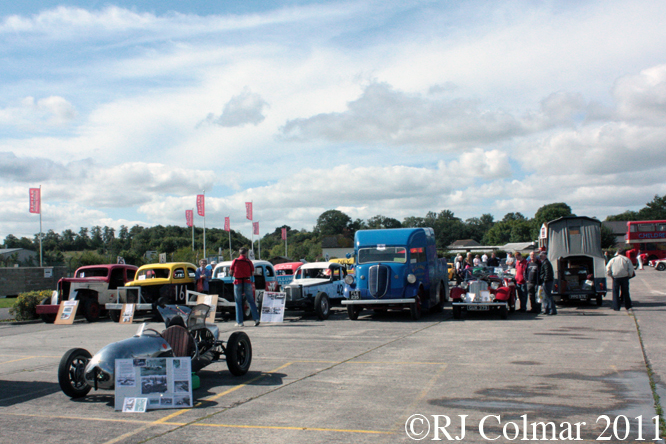
Rare Breeds, Haynes IMM

Among the 70 odd vehicles on display were half a dozen Formula 500’s some 50’s (UK) Stock Car replica’s, for those in the US these are more like 1/4 mile paved and dirt Late Sportsman race cars than NASCARs Stock Cars, and a number of interesting vehicles one is unlikely on an average everyday commute.
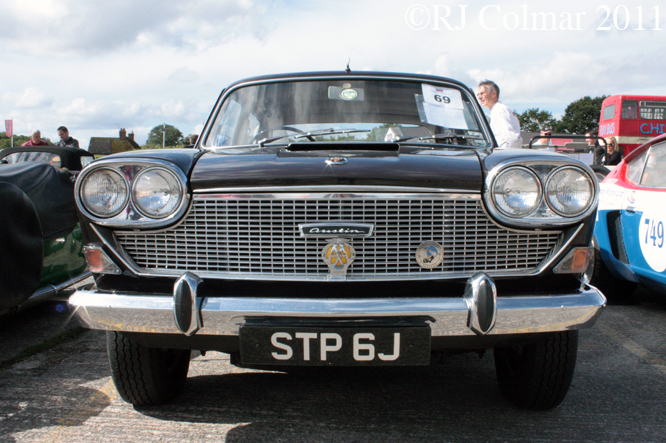
Austin 3 Litre, Rare Breeds, Haynes IMM

Around 10,000 Austin 3 litre vehicles nicknamed ‘Land Lobsters’ were built between 1968 and 1971 which though well appointed were no competition for the similarly sized Triumphs, Rovers and Jaguars which would soon all become merged into the same nationalised British Leyland conglomerate. There are thought to be around 60 of these vehicles left and this one has been in the Stephen’s family since new.
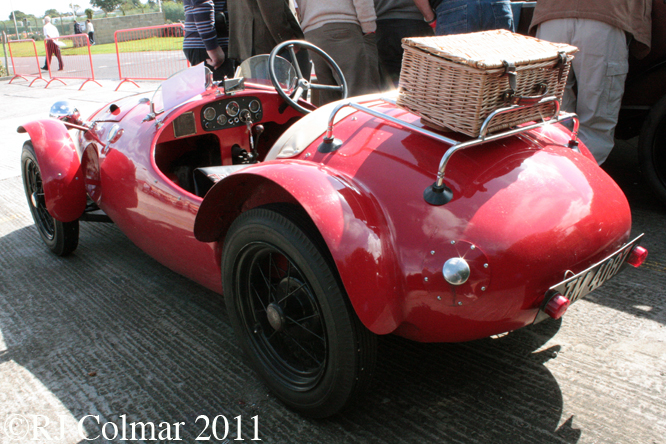
Austin 7 Hamblin 7 Cadet, Rare Breeds, Haynes IMM

Some of you may remember my blog on the wreck of a Bowden Super Two I wrote some months ago, this is an Austin 7 Hamblin Cadet with the smaller body that the Bowden Super Two bodywork was based on. At £34.10/- this was the cheapest bodywork on the market, it was made to fit pre war Austin 7’s. The owner of this car is the son of Sid Hamblin who founded the SE Hamblin company and personally built this car.
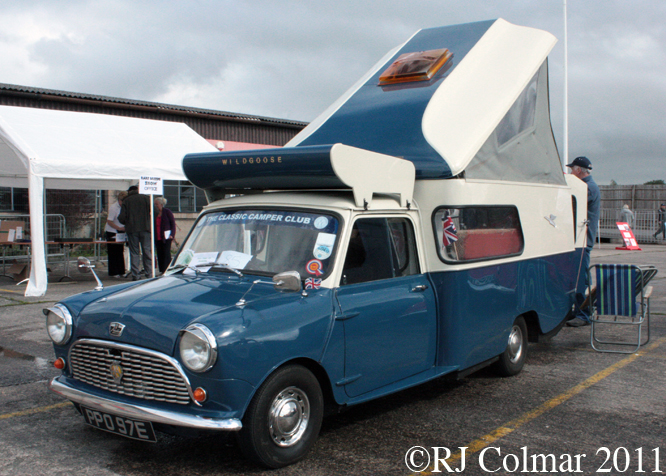
Austin Mini Wildgoose, Rare Breeds, Haynes IMM

The Austin Mini Wildgoose RV has also featured on GALPOT before, this is a 1967 model with larger wraparound cabin windows and a tilting roof incorporating canvas sides, looks a little less like an airport control tower than the original. This particular vehicle has had the original 850 cc / 51.8 cui motor replaced with a 1275 cc / 77 cui unit and gearing to match so that it can easily cruise above the minimum motorway speed limit of 50 mph.
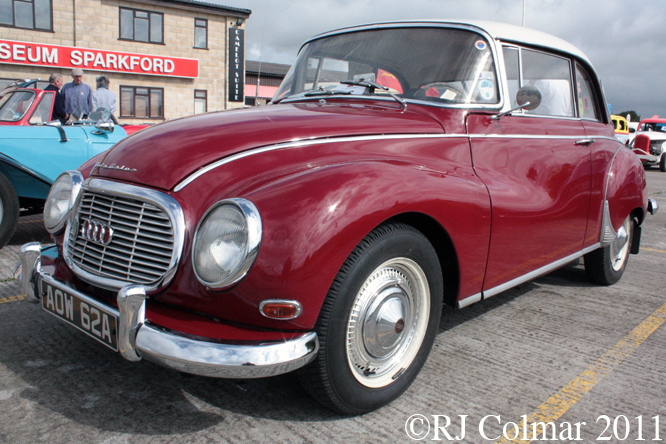
DKW 1000S

My Uncle in Germany had a DKW 1000S before he swapped it for a more versatile square back. These two stroke powered cars were relatively expensive in the UK so not many were in imported although Jim Clark made his racing debut driving a DKW before going on to win two World Championships and the Indy 500. This Left Hand Drive (LHD) model was imported from Sweden via Norway.
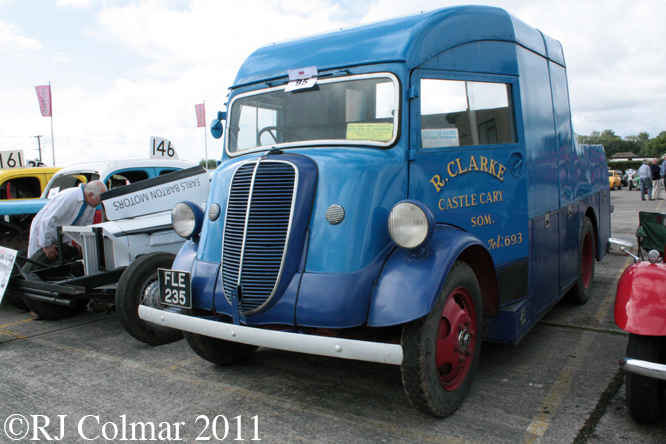
Fordson 7A, Rare Breeds, Haynes IMM

From 1933 – 1939 Ford commercial vehicles in the UK were badged Fordson. This Fordson 7V served as an auxiliary fire tender during World War 2. Because of it’s relatively powerful V8 motor 7V’s were much in demand for use as racing car transporters after hostilities ceased.
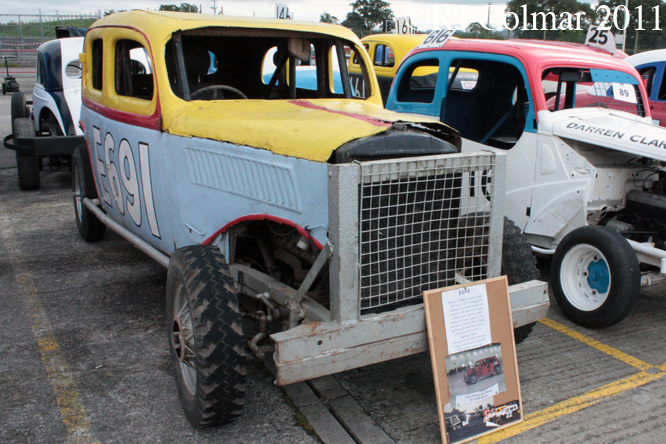
Model 48 Ford, Rare Breeds, Haynes IMM

E691 is a replica of Nev Hughes 1935 Model 48 Ford raced, in 1955, built by Keith Barber. Current owner Roy Clarke rescued it in 2006 and it recently featured, as did several of the vehicles seen in the back ground in an advertisement for the Audi R8 V10 Spyder. It can be seen painted black with red stripes under the ‘B9’ at 1m 01 secs in this clip.
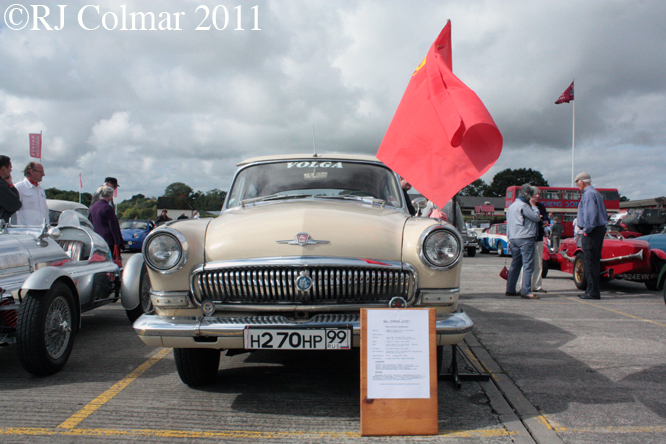
Gaz, M21 Volga, Rare Breeds, Haynes IMM

Also featured in an earlier post has been a GAZ M21 Volga, this 1962 model one of only two known to be in the UK is in considerably better condition than the one I featured on the former East German border in 2006.
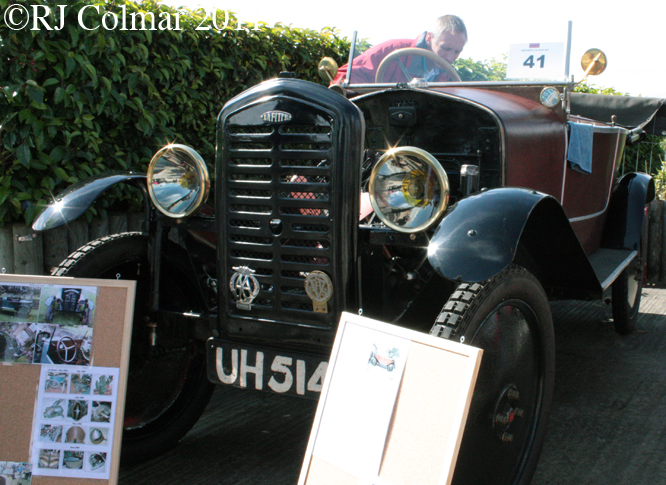
Lafitte 5CV, Rare Breeds, Haynes IMM

Described as very difficult to drive this RHD Lafitte 5CV Cycle Car is positively bristling with innovative technology starting with an inverted Y 3 cylinder air cooled radial engine that tilts with a hand mechanism in order alter to the friction driven gear ratio. The Lafitte has way ahead of it’s time independent front suspension but no foot brakes ! This car has recently been certified as roadworthy for the first time since 1964 but the owner thought discretion was the better part of valour and brought this amazing device to the show on a trailer.
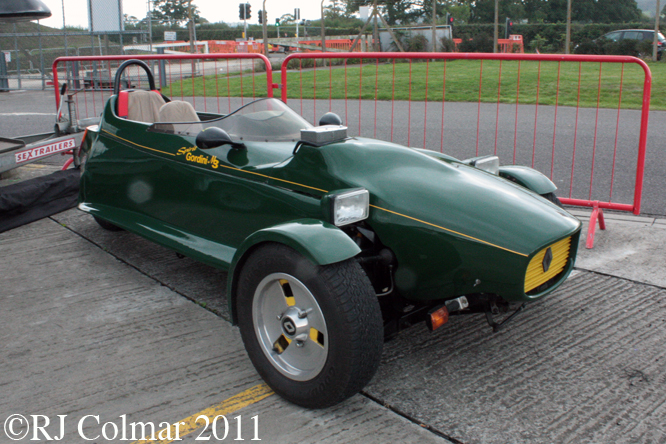
Spirit Gordini M3, Rare Breeds, Haynes IMM

There seems to be a lot of interest in triking at the moment stimulating no doubt Morgan’s recent return to the manufacture of trikes. For those who cannot afford Morgan’s starting price their are plenty of alternatives. The front wheel drive Spirit Gordini M3 started life as two separate front wheel drive Renault 5 / Le Car models one ’79 tother ’85.
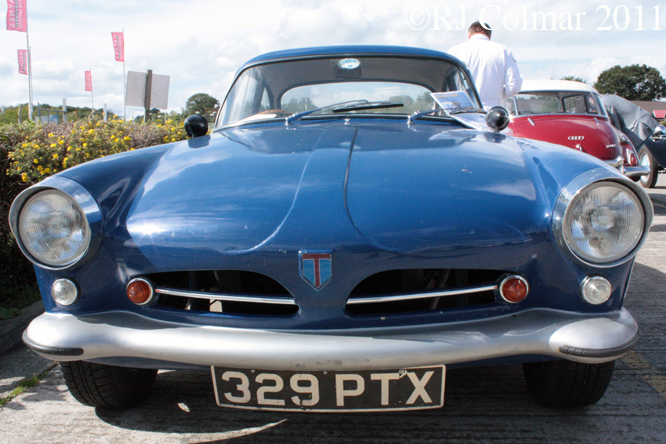
Tornado Talisman, Rare Breeds, Haynes IMM

Another new manufacturer to me is Tornado apparently founded in 1957 in Rickmansworth, Hertfordshire by Bill Woodhouse and Tony Bullen. Amazingly this car had lain awaiting restoration when it’s owner passed aeay and thanks to the Faithorpe Sports Car Club it was passed on to Bill Woodhouse who did not know what to do with it until two gap year students the Hillier brothers took it upon themselves to rebuild the car in order to gain engineering experience under the guidance of the current owner and founder of the company Mr Woodhouse. The Talisman is one of 186 Ford powered examples made.
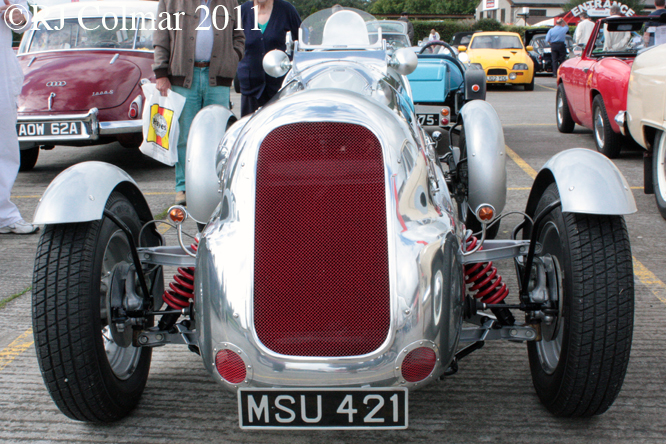
Triumph Spitfire Special, Rare Breeds, Haynes IMM

Finally my car of the day award goes to this Triumph Spitfire based Special made by Martin Harcourt using an English Wheel and alot of effort to make the polished aluminium panels on this unique single seater. When it’s complete Martin hopes to use his shiny special in sprints and hill climbs. I am sure he will have plenty of fun with it.

Thanks for joining me on this Rare Breeds edition of ‘Gettin’ a lil’ psycho on tyres’ I hope you will join me again tomorrow. Don’t forget to come back now !


Share

Battersea Dogs Car – Rover P6 3500 Series 1 Estoura

Thanks to a timely reminder from David Rootes I made it to the Rare Breeds Car Show at the Haynes International Motor Museum on Sunday.

Rover P6 3500 Estoura, Rare Breeds, Haynes IMM

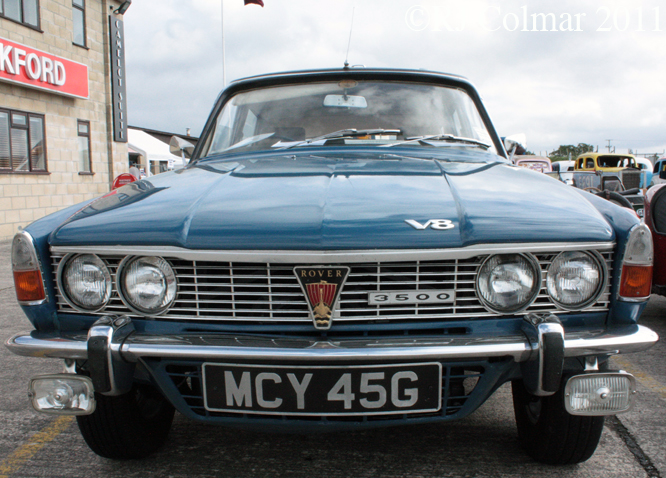
Amongst a variety of rare vehicles was this 1969 Series I Rover 3500 which preceded the Series II Rover 2200 SC I looked at last week. P6 models fitted with the aluminium 215 Buick derived V8 are easily distinguishable from their 4 cylinder siblings by the extra air intake below the bumper.

Rover P6 3500 Estoura, Rare Breeds, Haynes IMM

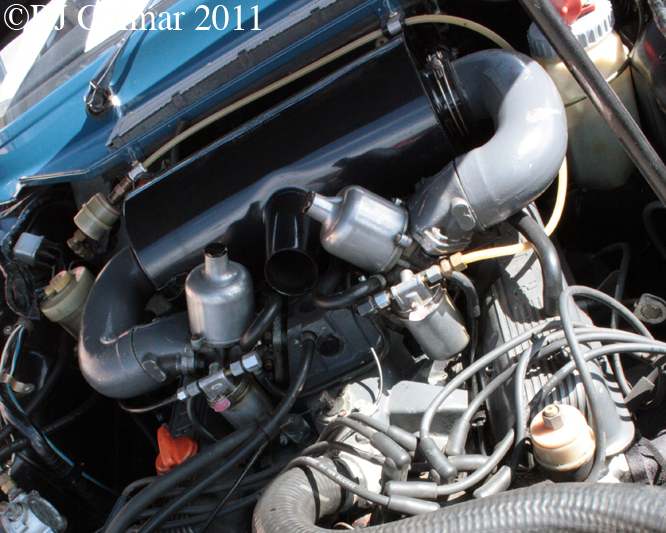
The engine compartment of the P6 was originally designed to accommodate a Rover gas turbine motor, but this option never came to fruition and instead the 158 hp twin carburettor V8 as had been fitted to the the Rover P5B was fitted to the top of the range P6 models.

Rover P6 3500 Estoura, Rare Breeds, Haynes IMM

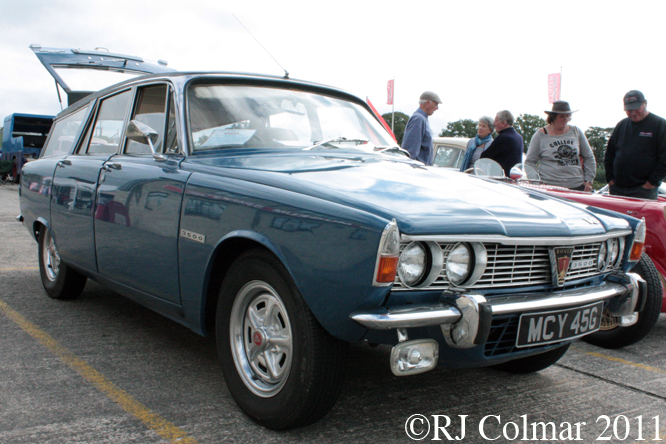
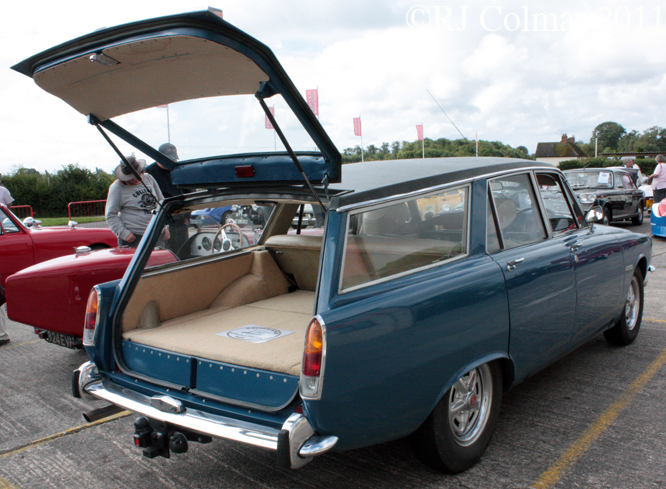
According to the owner of this Estoura variant only 157 P6 saloons were converted to estate / station wagon models between 1969 and 1976. This is the oldest of 4 Series 1 Estoura’s known to have survived.

Rover P6 3500 Estoura, Rare Breeds, Haynes IMM

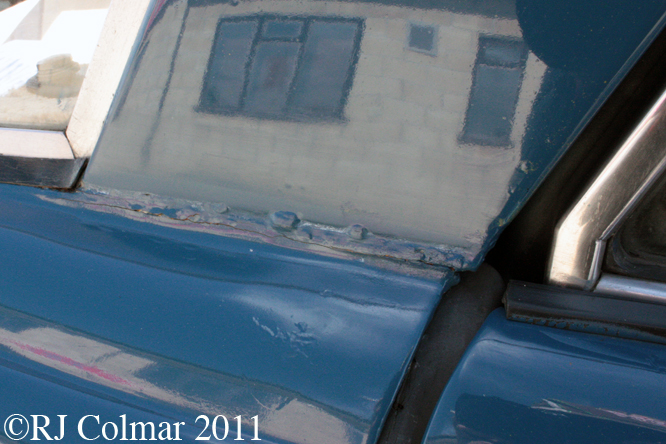
Conversion of the saloon P6 to Estoura spec included replacing the original roof and C pillars with a new pod, designed by Brian Roll, that was riveted and welded in by FLM Panelcraft of Battersea. Although the conversion was approved by Rover and did not affect warranties no rust protection was added to bare surfaces which were simply painted over with the out come that these cars are more prone to rot than standard P6’s.

Rover P6 3500 Estoura, Rare Breeds, Haynes IMM

Once FLM had converted the P6 shell the cars were sent to either Crayford, HR Owen or Hurst Park Motors where a variety of interior and exterior trims were fitted.

07 IMG 2459sc

The load space while significantly improved is not particularly deep or easy to access even for a canine compared to a modern day Estate / Station Wagon or MPV.

Thanks for joining me on this Estoura edition of ‘Gettin’ a lil’ psycho on tyres’, I hope you will join me again tomorrow. Don’t forget to come back now !
Share

Thinwall Special #4 – Ferrari 375 #010

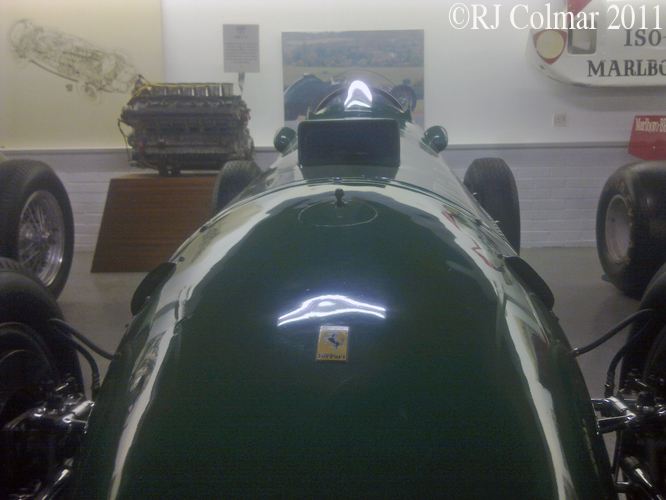
Having failed to become a regular Grand Prix contender with his first attempt at building the Ferrari 125 F1, Ferrari’s second attempt at building a Grand Prix car was based around a 4.5 litre / 274 cui normally aspirated V12 motor designed by Aurelio Lampredi.

Ferrari 375, Donington Collection

The 375 proved a more competitive proposition against the 1.5 litre / 91 cui supercharged pre war designs of Alfa Romeo that were the class of post WW2 Grand Prix fields. Jose Froilan Gonzalez was at the wheel of a 375 when he won the 1951 British Grand Prix, claiming the marques first victory in a World Championship Grand Prix Race.

Ferrari 375, Donington Collection

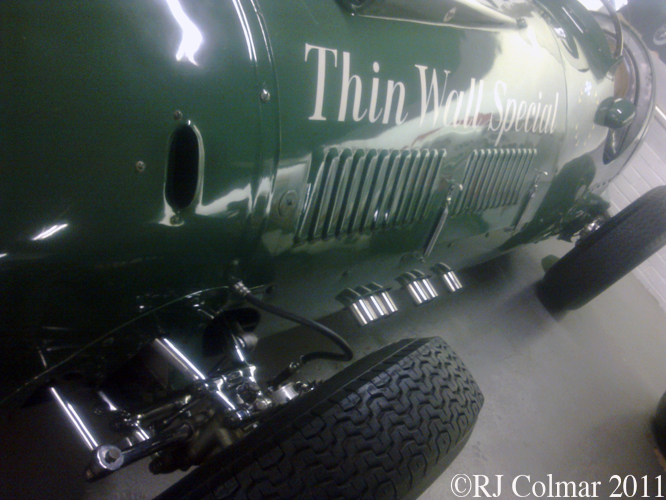
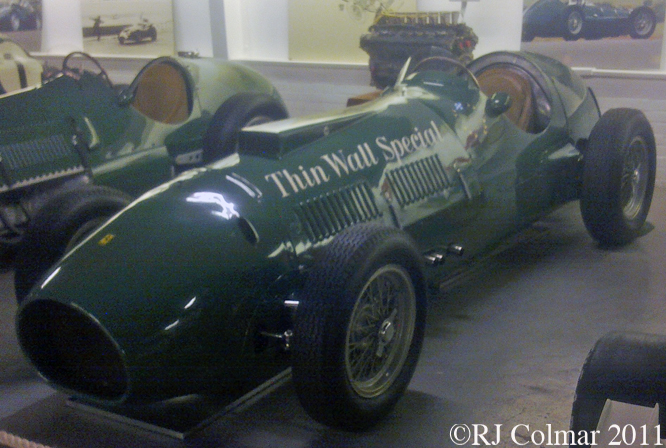
The fourth and final 1952 Thinwall Special seen here at the Donington Collection, shares the same, long Indianapolis chassis design as the Grant Piston Ring Special. This car should not be confused with the third Thinwall Special which comprised the Ferrari 125 chassis I looked at last week fitted with a 375 type motor that scored a famous victory in the rain shortened International Trophy at Silverstone in 1951.

Ferrari 375, Donington Collection

Piero Taruffi won the first and second of 8 victories recorded for this car at Dundrod and Silverstone in 1952. Mike Hawthorn and Nino Farina were also engaged to drive the car in 1952 and 1953. Peter Collins appears to have been the last driver to race this car, owned by Tony Vandervell, in 1954.

Many thanks to Don Capps for clarifying the distinctions between the four Thinwall Specials.

Thanks for joining me on this Ferrari Friday edition of ‘Gettin a lil’ psycho on tyres’ I hope you will join me again tomorrow for some banger racing. Don’t forget to come back now !

Share

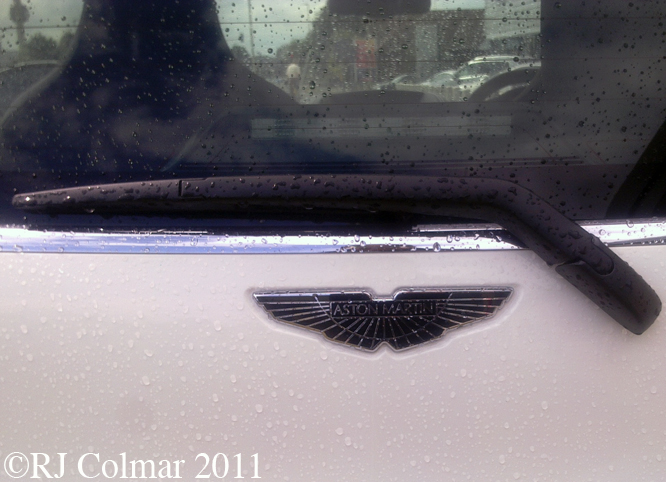
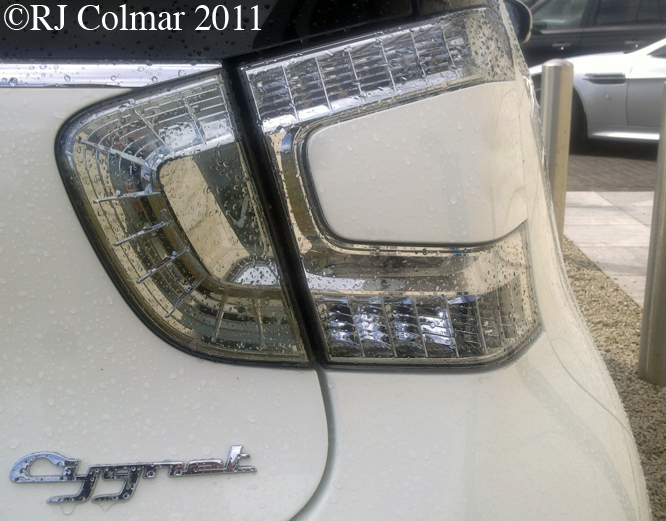
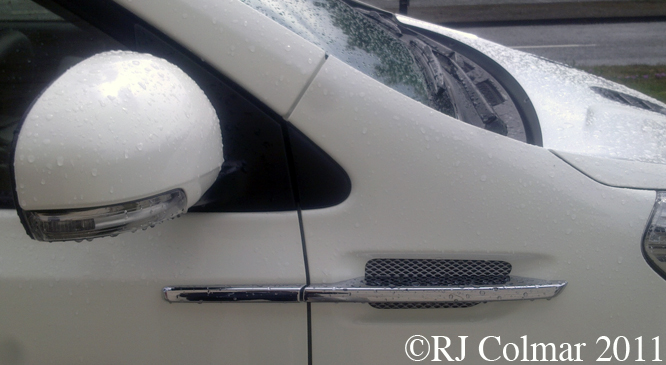
Bespoke Luxury Shopping Trolley – Aston Martin Cygnet

A couple of weeks ago, returning from a trip to the Cotswold Motoring Museum, I was playing I spy with an auto knowledgeable Italian 13 year old as we drove through Cheltenham looking at the back of this car it was my turn to say I spy something beginning with C, we dispensed with the manufacturers initials after only a coupe of rounds.

Aston Martin Cygnet, Chelmford

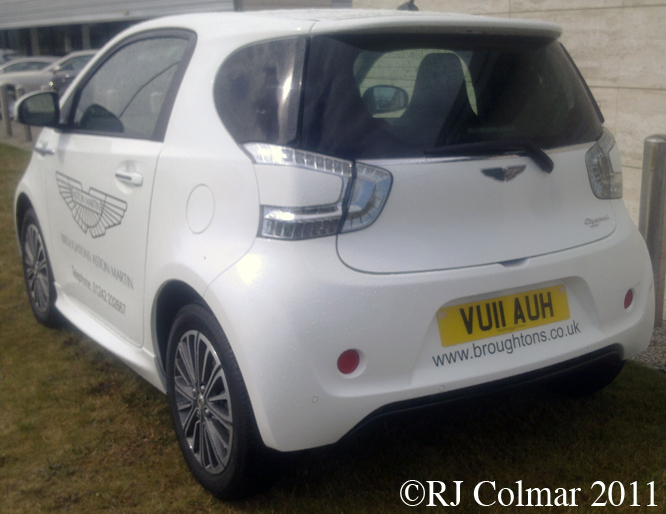
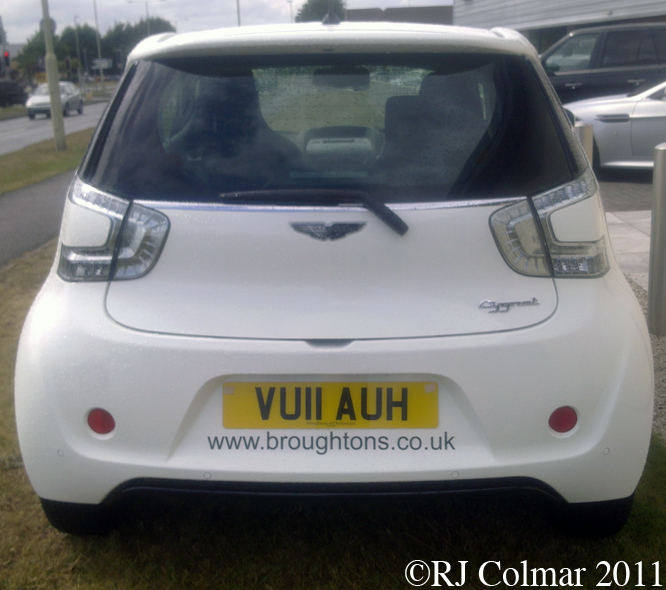
C-Max he said pointing to the Ford in front of us, no I replied, he gave up quickly and I pointed to the back of this Aston Martin and said ‘Cygnet’.

Aston Martin Cygnet, Chelmford

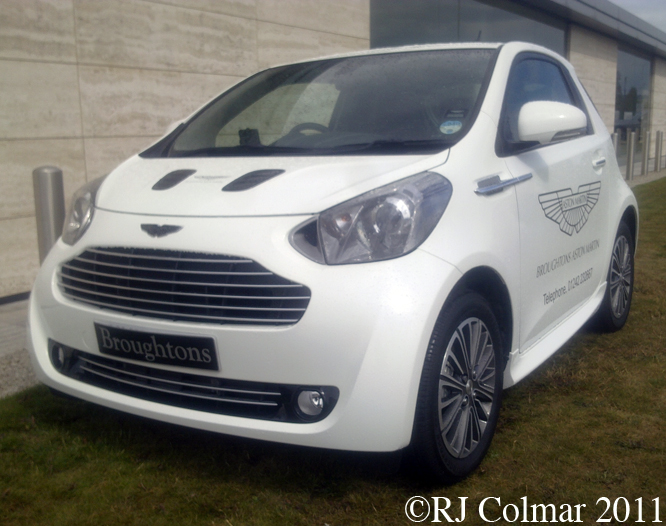
No no he appealed Toyota iQ just like my Auntie in Milan. I pulled over at the next junction parked the car and we went to have a look.

Aston Martin Cygnet, Chelmford

To stay ahead in the automotive industry just like in motor sport one has to think laterally, so when the European Union announced regulations that car manufacturers had to reduce the average fuel consumption across their fleet average Aston Martin wasted little time in finding a partner making low emissions vehicles.

Aston Martin Cygnet, Chelmford

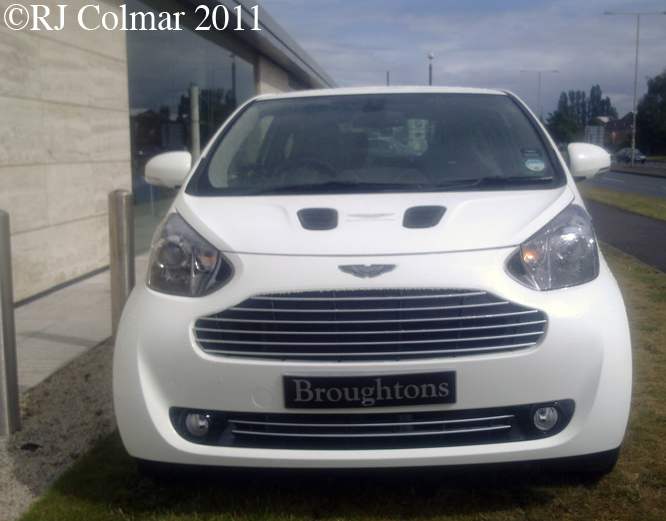
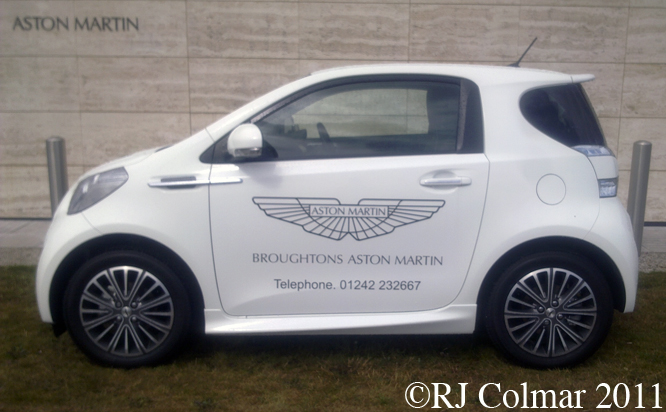
Settling on a partnership with Toyota to make a high end, at £30,000 that is the extremely exclusive high end, version of the Toyota iQ a vehicle that will cost as little as £10,000.

Aston Martin Cygnet, Chelmford

From the rear the two cars, apart from the badging and diffuser are identical, while the front gets the Aston Martin look with grills and trim that is without doubt not from the Toyota parts bin.

Aston Martin Cygnet, Chelmford

The interior is also bespoke Aston Martin customers choosing abundant stitched leather in a variety of two tone colour combinations.

Aston Martin Cygnet, Chelmford

Performance is quoted as 107 mph with the CVT (constant velocity transmission) automatic being 0.2 secs faster than the 6 speed manual in the 60 mph dash that takes 11.6 seconds.

Aston Martin Cygnet, Chelmford

Aston Martin hope to sell 4000 Cygnets, which went on sale in the UK earlier this year, annually.

Thanks for joining me on this I Spy edition of Gettin’ a lil’ psycho on tyres’, I hope you’ll join me again tomorrow. Don’t forget to come back now !
Share

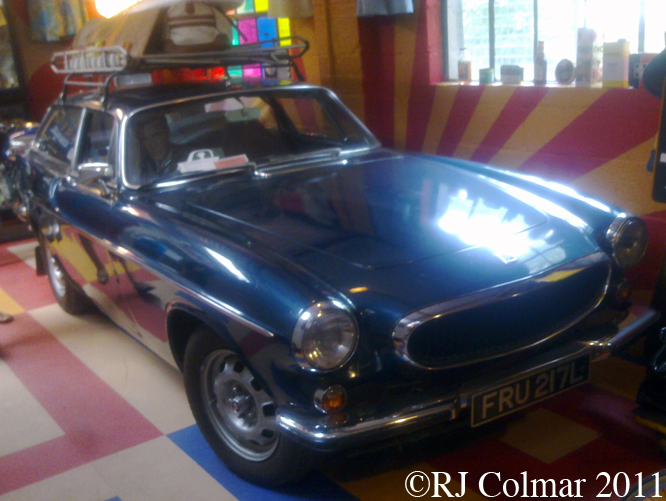
Swedish Tease – Volvo 1800 ES

In 1956 Volvo launched a sports car the P1900 a fibreglass bodied roadster, inspired by the Chevrolet Corvette, if you have never heard of it, or seen it, that is because the P1900 was a disaster so bad that after using one on a holiday weekend incoming Volvo President Gunnar Engellau cancelled further production after just 68 units had been produced.

Volvo 1800ES, Cotswolds MM

Volvo’s next attempt to crack the sports car market hinged on a design by Italian design house Pietro Frua called the P1800. In 2009 Volvo admitted that there Italian designed car was actually designed by a Swede working at Frua called Pelle Petterson who’s father had designed the Volvo PV444.

The P1800 was eventually launched in 1961, with the same engine as used in the Volvo Amazon series, making the model 50 years old this year along with the much cheaper Renault 4 and slightly cheaper E-Type Jaguar. Originally scheduled to be built by Karmann in Osnabruck Germany until Karmann’s biggest customer Volkswagen intervened with an emphatic ‘Nein’ the P1800 was initially produced under contract by Jensen. After quality issues emerged production transferred from the UK to Sweden with the introduction of P1800 S which featured a larger 118 hp motor.

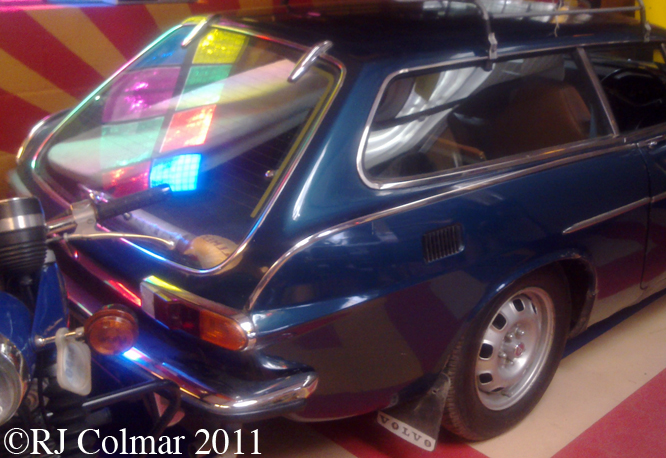
Volvo P1800ES, Cotswold MM

In 1970 the P 1800 E was introduced with fuel injection and in 1972 the last of the P1800 models, P1800 ES seen here, was launched with a novel one piece rear glass tailgate which transformed the coupé into a versatile eye catching shooting brake for which designer Jan Wilsgaard was responsible.

The P 1800 like many contemporary models was killed off my the 1974 US safety and emissions regulations, with some 39,407 Coupé and 8,077 Shooting Brakes built the P1800 was considered a far greater success than it’s predecessor. My overwhelmimg memory of driving P1800 models is that despite being 6′ tall I had the feeling I was sitting in a very deep bath tub and had a great deal of difficulty determining where the corners of the car were when shuffling these models through cramped garage space.

Hope you have enjoyed today’s one piece glass tailgate edition of ‘Gettin’ alil’ psycho on tyres’ and that you will join me again tomorrow. Don’t forget to come back now !
Share

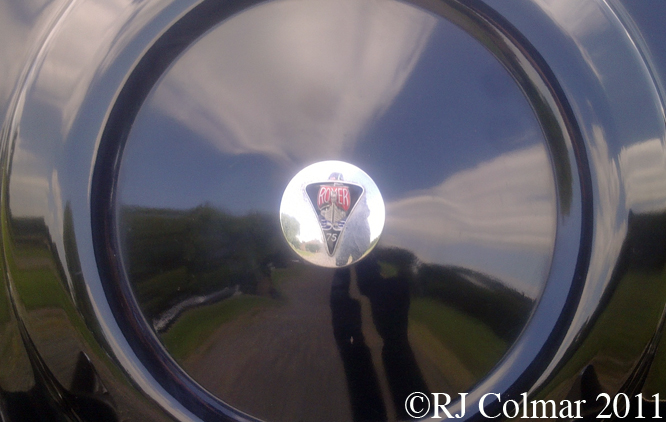
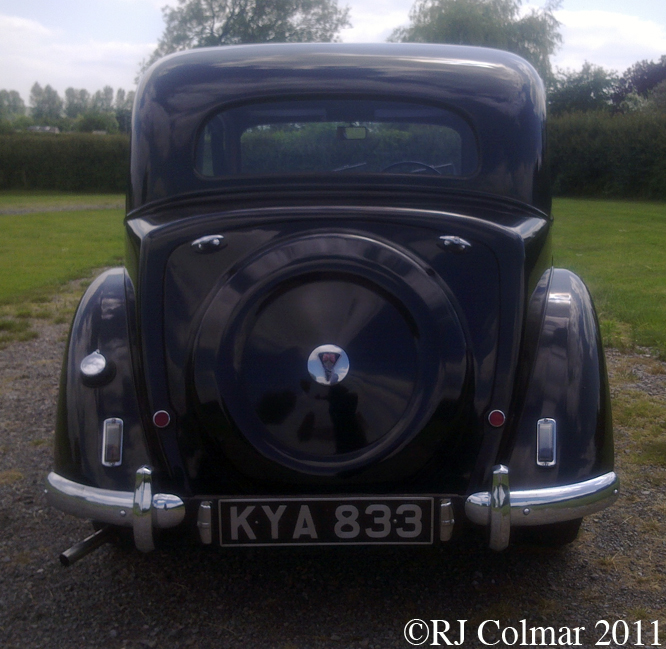
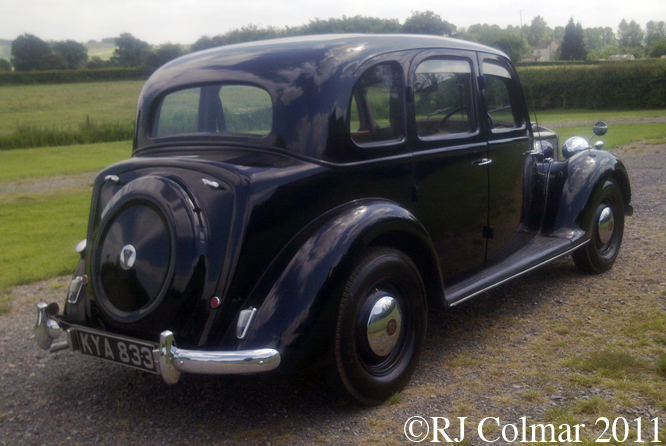
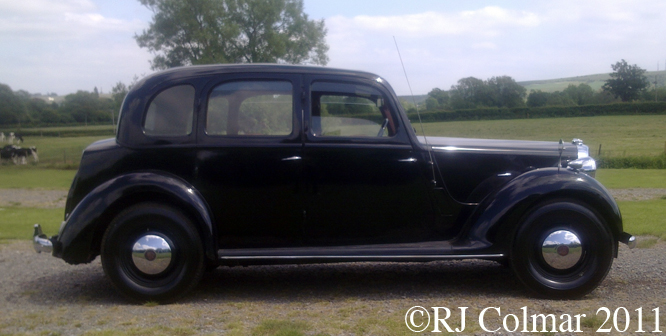
Interim Model – Rover 75 P3

In 1878 the Rover Company was founded as Starley & Sutton Co. of Coventry which by 1885 had developed the template for the modern bicycle in the form of the Rover Safety Bicycle.

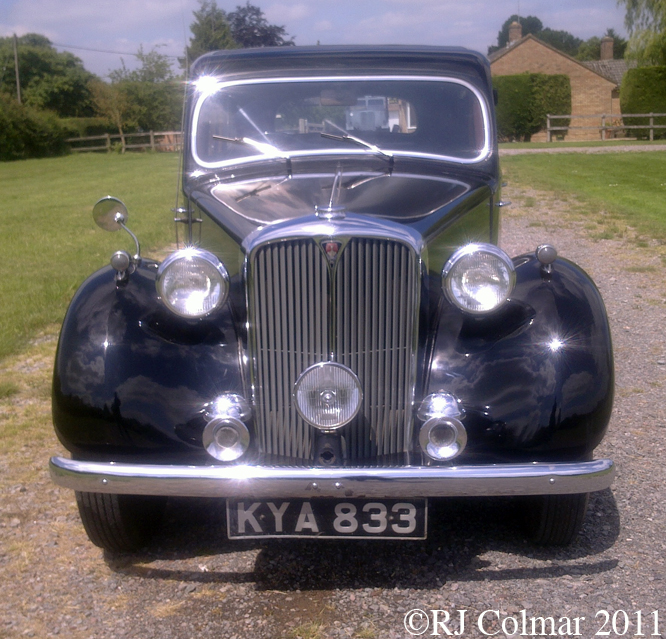
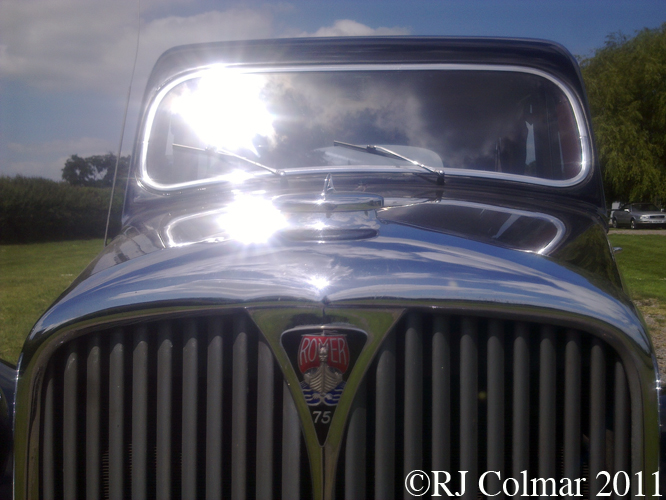
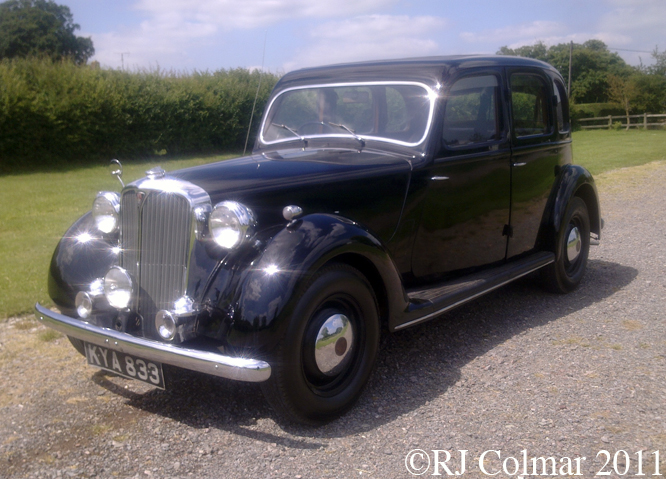
Rover 75 P3, Atwell Wilsom MM

From 1904 still using the Rover Marque brand the company started building motor cars and motorcycles.

Rover 75 P3, Atwell Wilsom MM

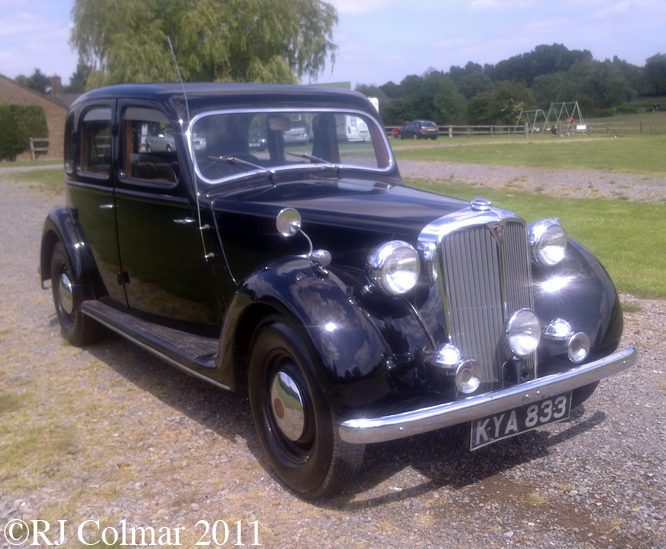
After World War 2 Rover moved to it’s Solihull factory where it had engaged in building aircraft for the war effort, since it’s car plant in Coventry had been wiped out by bombing during the hostilities. The interim P3, launched in 1948, was Rovers first post war model.

Rover 75 P3, Atwell Wilsom MM

The Rover 75 version of the P3 was powered by a novel new six cylinder motor that featured overhead inlet valves and side exhaust valves that had been developed prior to the commencement of hostilities in 1939.

Rover 75 P3, Atwell Wilsom MM

The styling combined elements of the pre war Rover 12 and 16 but only the Rover 12 wings and bonnet were carried over from the narrower earlier designs.

Rover 75 P3, Atwell Wilsom MM

The unitary monocoque design, requiring no independent chassis, featured independent front suspension and hybrid hydraulic / mechanical brakes.

Rover 75 P3, Atwell Wilsom MM

This the 75 body style seen here was known as a light six saloon and cost a relatively expensive £1106, £ 26 more than the similar 4 cylinder ‘Sports Saloon’ known as the Rover 60.

Rover 75 P3, Atwell Wilsom MM

From 1948 – 1949 7,837 Rover 75’s were produced before the all new P4 vehicle was introduced.

Rover 75 P3, Atwell Wilsom MM

The engine and gearbox of the P3 formed the basis of the very first agricultural all terrain ‘Land Rover’ conceived in 1947. Note the vehicle above built in times of material austerity features a cyclops third head light but only one wing mirror.

This particular P3 can be seen at the Atwell Wilson Motor Museum in Calne.

Thanks for joining me on this ‘overhead and side valve’ edition of ‘Gettin’ a lil psycho on tyres’, I hope you’ll join me again tomorrow. Don’t forget to come back now !
Share

Long Lost – Wolf 1979 Series

Wolf Racing was founded by Canadian Oil Magnet Walter Wolf in 1977 after an ill feted start made in partnership with Frank Williams in 1976.

Wolf / Fittipaldi, Cotwold MM

The Wolf team with Dr Harvey Postlethwaite designing the cars came flying right out of the box in Argentina 1977 scoring a debut win with Jody Scheckter at the wheel of the Wolf WR1. Scheckter impressed further by driving to two more wins in 1977. The 1977 series Wolf design ran WR1 – WR3 same as the chassis numbers.

During the following season the second series Wolf WR4 – WR6, with ground effects side pods that were all the rage in 1978, was less impressive and Jody, who had been courted by Ferrari well before his Wolf contract was up, left to join the red team from Maranello.

Wolf/Fittipaldi, Cotswold MM

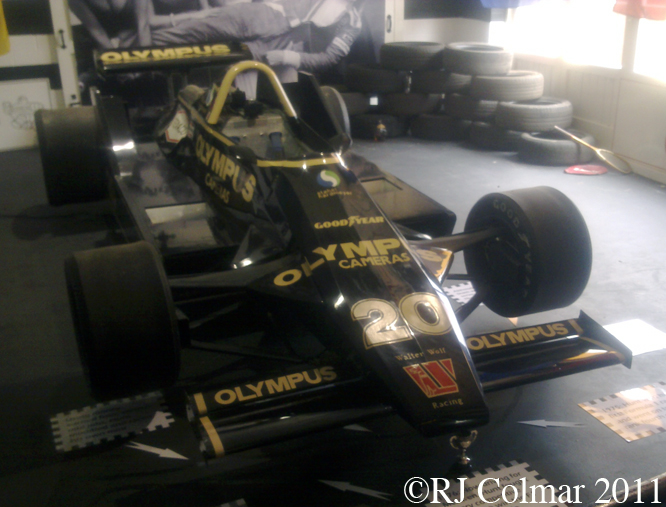
The third series Wolf, which ran WR7 to WR9, apparently seen here at The Cotswold Motoring Museum, was designed by Dr Harvey Postlethwaite who had been reunited with former Hesketh driver James Hunt for the 1979 season.

As ironic luck would have it former Wolf driver Jody Scheckter would go on to win the 1979 World Drivers Championship in his first season with Ferrari while ex World Champion James Hunt quit the Wolf Team after the Monaco Grand Prix having struggled to qualify better than 10th in seven races and scored one 8th place finish and six retirements.

Wolf / Fittipaldi, Cotwold MM

Keke Rosberg took over the driving duties for the rest of the year but with no improvement in the teams performance Walter Wolf sold his team onto the equally struggling Fittipaldi brothers at the end of 1979.

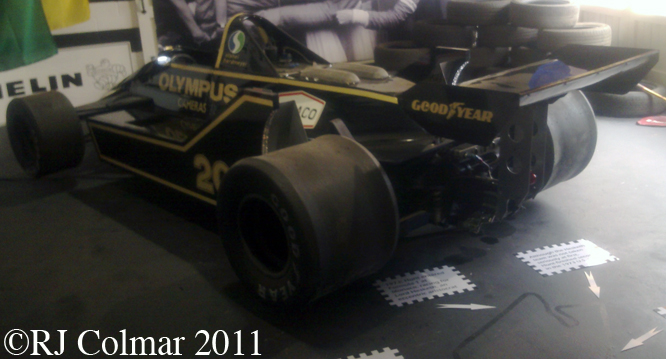
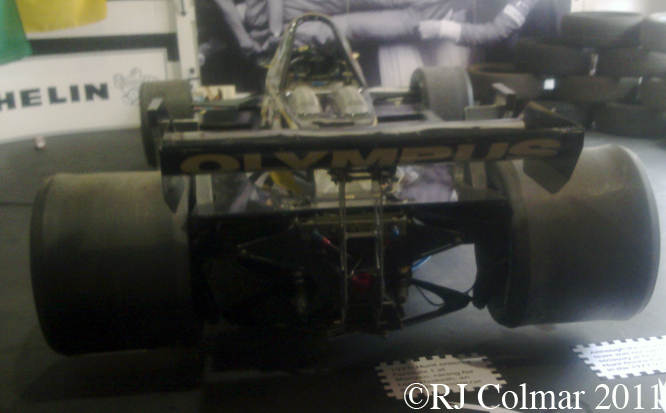
Walter Wolf kept one of the third series cars while Fittipaldi upgraded the remaining two cars into Fittipaldi F7 spec with a centre post rear wing and heavily revised side pods with out the rear flick ups and built a third F7 from scratch.

Wolf / Fittipaldi, Cotwold MM

The Fittipaldi F7 cars all but disappeared from public view in the early 80’s. According to the museum description provided by the cars owner Andrew Smith by 1982 the Fittipaldi Team was in administration and all of the teams assets were acquired by ADA Engineering.

Andrew a James Hunt fan, and former Mini racer, saw WR7 race, with Keke Rosberg driving, at Silverstone in 1979 and bought the car from ADA Engineering with a Cosworth DFV engine. Some of the third series Wolf style body work, and unique ’79 Monaco spec twin element front wings have been refitted to this chassis which still has F7 running gear, a Fittipaldi in Wolf clothing.

At this moment there are inconsistencies in the accounts as to which third series Wolf chassis became which Fittipaldi F7 chassis. Not having seen which, if any, chassis plate this particular vehicle, seen at the Cotswold Motoring Museum, is carrying I cannot be sure exactly which, of the two Wolf chassis or three Fittipaldi chassis this is.

If you have evidence as to which of the Wolf third series chassis were transformed into the Fittipaldi F7 series chassis please chime in below or send me an e-mail to the address which appears at the very bottom of the blog page.

My thanks to Steve Holter, and Norman Jones from The Nostalgia Forum for their contributions to today’s blog.

Hope you have enjoyed todays Wolf edition of ‘Gettin’ a lil’ psycho on tyres’ and that you will join me again tomorrow for a look at a world champions daily driver that is coming up for auction on Saturday. Don’t forget to come back now !
Share