Tag Archives: Psychoontyres

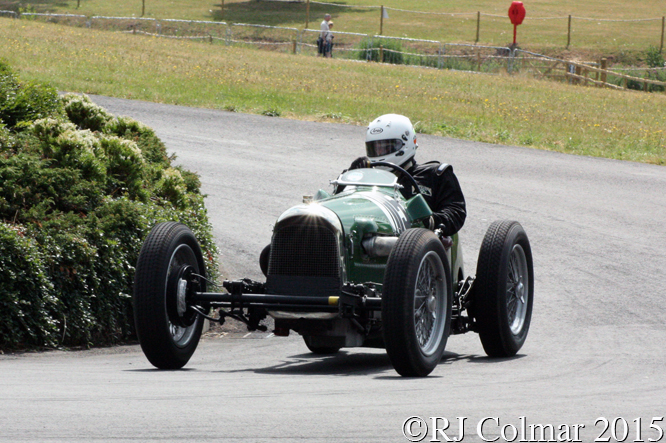
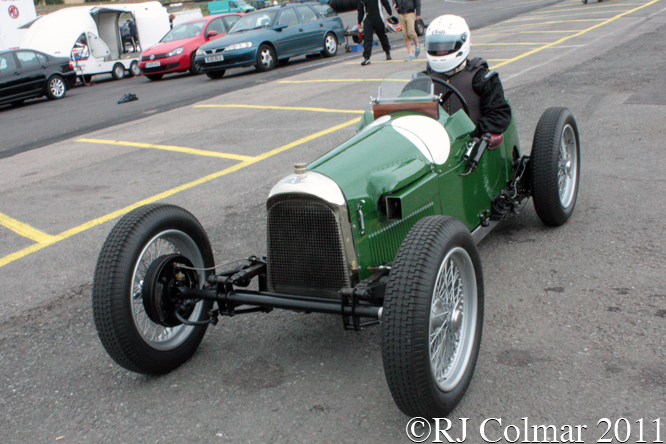
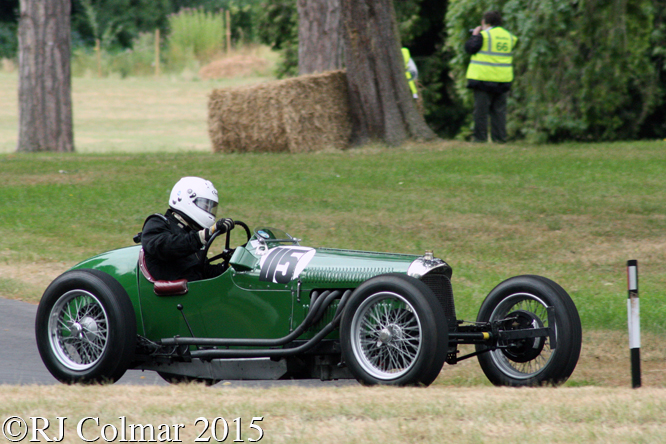
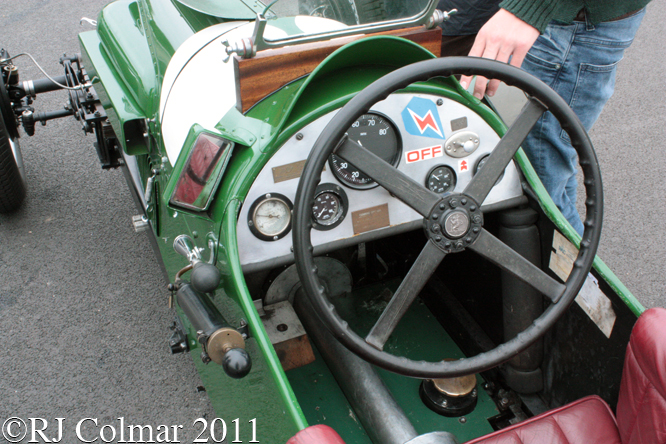
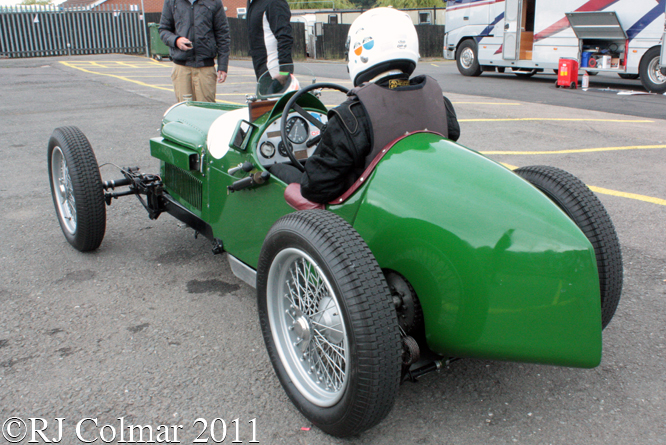
COhen GN & AC – COGNAC Frazer Nash Special

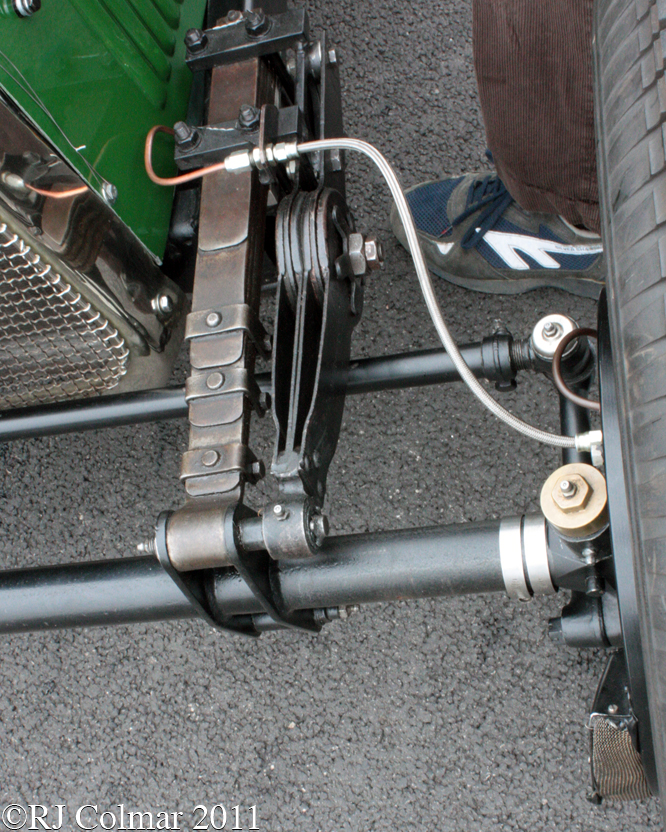
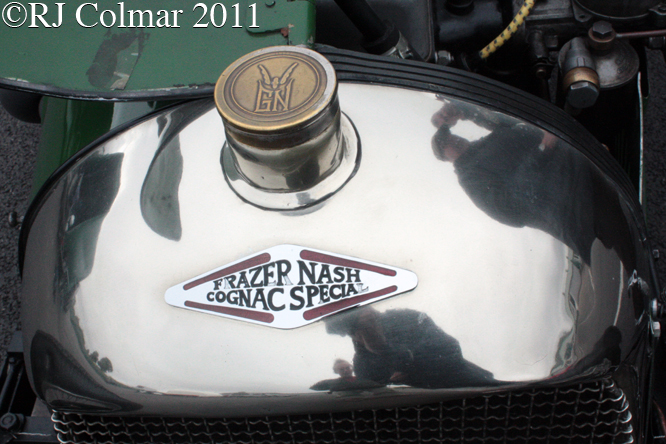
S.A. COhen was responsible for building the first iteration of today’s featured car using I believe a 1925 Frazer Nash chassis with a solid axle and chain drive as originally developed by GN.

COGNAC Frazer Nash Special, Mallory Park,

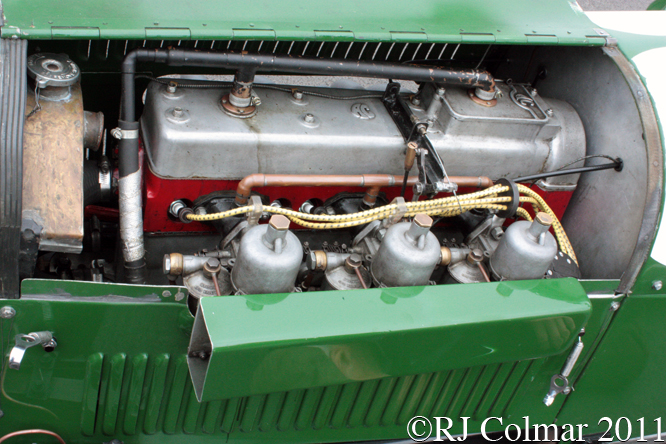
The triple carburetor 2 litre / 122 cui aluminium block iron head six cylinder AC motor, that lent it’s initials to the last two letters of the cars name, is of a design that dates back to 1919 and remained in production up until 1963.

COGNAC Frazer Nash Special, Tony Lees, Chateau Impney

My understanding is that COGNAC was originally fitted with a two seat body that originated from an Amilcar with the radiator coming from a Hampton of a type I have not yet identified, if you know which model Hampton is shown in this linked image please do not hesitate to chime in below. and that the tail was modified to fit a spare wheel across the back of the car.

COGNAC Frazer Nash Special, Mallory Park,

It appears that the tail of the Amilcar body was modified to fit a spare wheel across the back of the car.

COGNAC Frazer Nash Special, Tony Lees, Mallory Park,

I am not sure exactly when S.A. Cohen competed with the car, the only report I have found so far describes him suffering with a slipping clutch at the Lewes speed trials in the June 1937 issue of MotorSport.

COGNAC Frazer Nash Special, Mallory Park,

A chap called Duchy at the Nostalgia Forum recalls his father owned the COGNAC Frazer Nash Special and used it as a road car in the mid 1950’s and that it was not converted into the single seater form seen here until the 1970’s.

COGNAC Frazer Nash Special, Tony Lees, Chateau Impney

Ron Footitt is the man responsible for converting the COGNAC Frazer Nash Special into a single seater for vintage racing in the 1970’s.

COGNAC Frazer Nash Special, Mallory Park,

I have seen several accounts of the story that Ron wanted his ashes scattered onto a racing circuit upon his death and that COGNAC’s next owner Freddie Giles obliged at Oulton Park, after winning a race he is said to have scattered Ron’s ashes from a glove on his slowing down lap.

COGNAC Frazer Nash Special, Tony Lees, Mallory Park,

Current owner Tony Lees is seen testing COGNAC at Mallory Park soon after he bought it in 2013 and at last years Chateau Impney Hillclimb.

Thanks for joining me on this “COhen GN & AC” edition of “Gettin’ a li’l psycho on tyres” I hope you will join me again tomorrow far a look at the last in the current series of ERA’s. Don’t forget to come back now !

Share

Rebel With Out A Clue – FIAT 128 1100 2 Door Saloon

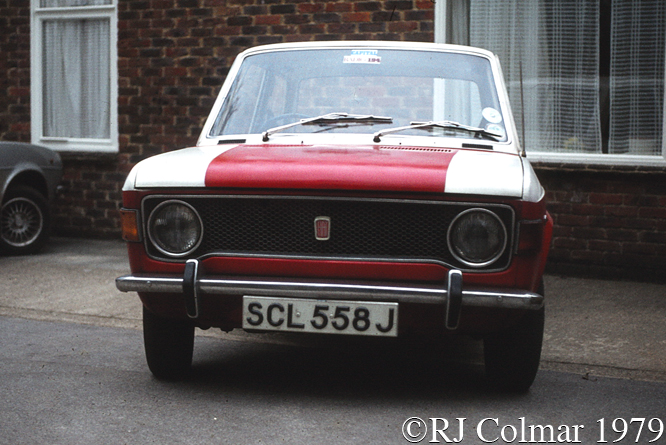
Today’s featured FIAT 128 1100 2 Door Saloon was first registered in the UK between 1st of August 1970 and the 31st of July 1971 we know this because of the ‘J’ suffix in the registration number, the 2nd and third letters CJ tell us that the car was first registered in the Norwich area about 100 miles North East of London.

In the Spring of 1978 my Grandmother came over to London from Germany and kindly gave me a small sum of cash to buy my first car.

My idea was to spend it on a cheap to run and insure Citroën 2CV which I knew from a friends experience had no go, but was great fun getting there all the same.

My civil engineer Dad had other idea’s, he did not want his one and only to be at risk driving a French tin can on wheels and promised to pay the insurance if I bought something a little more substantial.

I suggested a FIAT 124 like the one I had learned to drive in Zambia, but eventually settled for the front wheel drive 128 seen below which had made it’s way down from Norwich to Uxbridge.

FIAT 128, Haselmere,

The car was originally maroon, a scrape against a fence post was all the excuse I needed to invest heavily in body filler and spray paint to end up with the refrigerator white and bright red paint job seen above.

With hindsight it is amazing my lungs survived two days locked up in a tiny garage with 10 tins of spray paint and little if anything in the way of fume protection.

In case you are wondering I was trying to make the car look something like Niki Lauda’s 1976 Ferrari 312T2, with more time and perhaps a spot of green paint I am sure I would have got there… eventually !

All though the car had half an areal it did not come with a radio or speakers, so an old radio compact cassette combination system served as my ICE, in car entertainment.

Among the many excursions I made in the car I visited Silverstone for the 1978 USAC race won by AJ Foyt, 1979 Six Hour Race won by John Fitzpatrick, Hans Heyer and Brilliant Bob Wollek driving a Gelo Porsche 935 and the 1979 British Grand Prix won by Clay Regazzoni driving a Williams FW07.

Then there was Reading Rock ’79 where Mike and the mechanics with both Phil Collins and Peter Gabriel on stage, The Cure, Molly Hatchet, Motörhead, Scorpions, Eurythmics, the Police and DJ John Peel kept us entertained for my first weekend of unadulterated debauchery, it was so bad I could not remember my own phone number on the way home and finally Knebworth Park for the second of the two Led Zepplin gigs.

The following spring I was hoping to do more of the same, but although the car passed it’s MOT it started falling to bit’s after I gently parked it up a kerb outside a friends flat in Earls Court.

Later that evening I was visiting another friend down in Haselmere when strange noises started coming out of the front of the car, the suspension was collapsing.

I took it to a garage and they showed me that the frame to which the suspension arms were mounted was completely rotten and they advised me this was true on the other side and rather than bodge a repair I’d be better off spending the money on another car, reluctantly I agreed.

Thanks for joining me on this “Rebel Without A Clue” edition of “Gettin’ a li’l psycho on tyres” I hope you will join me again tomorrow when I’ll be looking at the last of the current Saturday series of GN Specials. Don’t forget to come back now !

Share

Frank’s Championship Winner – Chevrolet Camaro Z/28

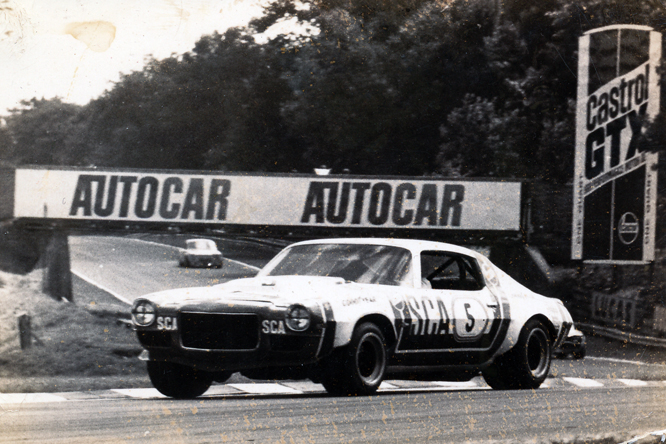
For 1972 Adrian Chambers Castrol SCA Freight team built a second generation Chevrolet Camaro with Mark Lesueur and Norman Lockwood to replace the ex-Bobby Brown first generation Camaro Z/28 it had been campaigning with Australian Frank Gardner at the wheel.

The car was initially fitted with a 5,736 cc / 350 cui motor and raced in the British Saloon Car Championship while the team saved the first generation Z/28 for selected appearances in the Deutsche Rennsport Meisterschaft.

During 1972 Frank won outright and by definition his class at Thruxton, Silverstone, Oulton Park, Mallory Park and no less than 3 times at Oulton Park to secure a class win in the championship but still had to give way in the overall championship to Bill McGovern driving a George Bevan Hillman Imp to a perfect 11 out of 11 class victories.

Chevrolet Camaro Z/28, Frank Gardner, Brands Hatch

Frank is seen driving the car above to victory at the 1972 British Grand Prix meeting at Brands Hatch in this photograph given to me by someone at school in the mid 1970’s.

The following season Frank drove today’s featured car, now fitted with a 7 litre / 427 V8 to six victories from 9 starts to secure his third British Saloon Car Championship and can be seen driving the car round Oulton Park that year in the clip below.

For 1974 the British Saloon car championship mandated a change to less radically modified Group 1 specification cars and Frank drove the SCA Group 2 spec Camaro with Australian compatriot Brian Muir in Europe where the car always qualified in the top six but frequently failed to start and when it did always failed to finish.

Frank retired to Australia at the end of 1974 where he continued racing into the the early 1980’s and running Australian Touring Car programmes with success for BMW.

Today’s featured car was then bought from Adrian Chambers by Stuart Graham with the intention to run it in Super Saloon races alongside his Group 1 Brut 33 Camaro British Saloon Car Championship program but the car proved to heavy to be a competitive super saloon.

Stuart sold the car onto Dutchman Rob Slotemaker who raced the car in Group 5 spec with a 7,443 cc 454 cui V8 up until his death at the wheel of his Group 1 spec 1974 Camaro at Zandvoort in 1979.

Rob bequeathed today’s featured car to current owner Bert Moritz and Bert’s son Patrick recently failed in an attempt to crowd fund an estimated US$200,000 restoration of the car.

Thanks for joining me on this “Frank’s Championship Winner” edition of “Gettin’ a li’l psycho on tyres” I hope you will join me again for FIAT Friday tomorrow. Don’t forget to come back now !

Share

Cambrian Rally – Conwy County

Cambria is the Latinised form of the Welsh name Cymru from Old Welsh combrog and Proto-Brythonic word kom-brogos, meaning fellow countryman or compatriot, known to much of the rest of the world as Wales.

After studying Welsh rock strata in 1835 Adam Sedgwick named the first geological period of the Paleozoic Era the Cambrian period which characterised by the rapid diversification of lifeforms, known as the Cambrian explosion, some of which have been well preserved in the sedimentary rocks exposed in Wales.
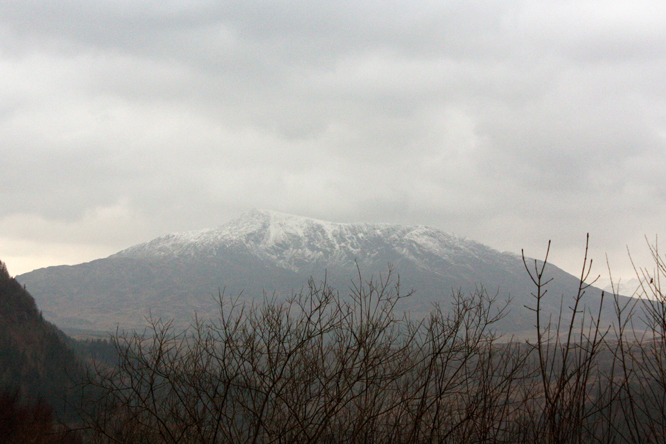
Snowdon, County Conwy

500 million years after the Cambrian explosion 266 of the direct descendants of some of those lifeforms gathered in County Conwy to take part in the 61st running of the annual Cambrian Rally organised by the North Wales Car Club on Saturday February 13th.

The Cambrian Rally has moved from being the concluding round of the MSA Welsh Rally, Ravenol BTRDA Rally, FMP and ANWCC Forest Rally Championships last year to being the season opener for them this year.
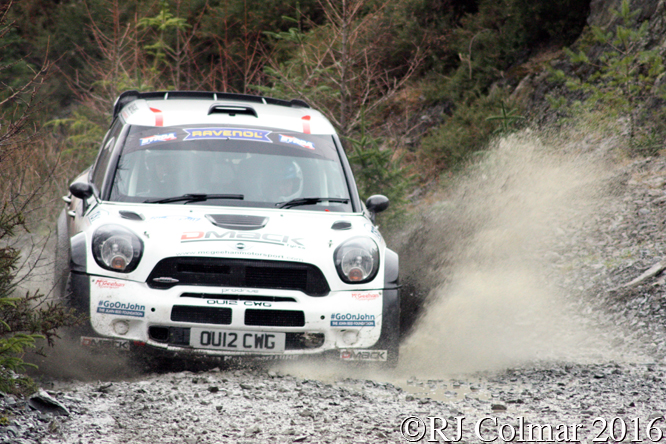
 Mini John Cooper Works WRC, Conner McCloskey, Damien Duffin, Penmachno, Cambrian Rally,

With the intention of making a 4am departure from Bristol to see the opening stage of the Cambrian Rally I left home promptly at 5.30 after being unexpectedly invited out for tapas and sing a long the night before.

The delay was fortuitous as I ended up not far from Snowdon on the third Penmachno stage of the rally which sent the cars around the perimeter of the quarry where the #7 2012 McGeehan Motorsport Mini John Cooper Works WRC crewed by Conner McCloskey and Damien Duffin, who finished the event 4th overall, are seen above.
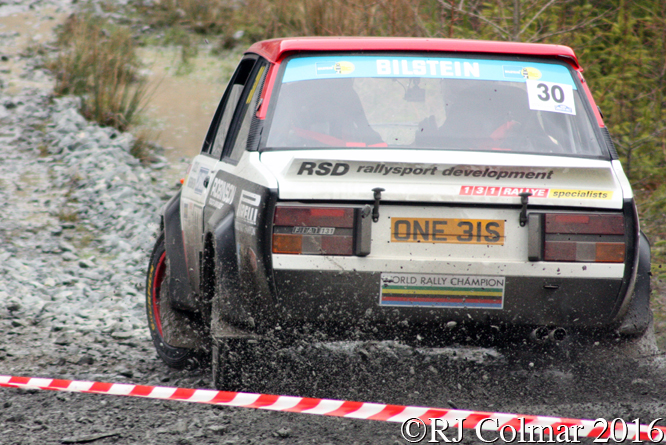
FIAT Abarth 131 Rally, Matthew Robinson, Sam Collins, Penmachno, Cambrian Rally,

Walter Rohrl, a hero in my youth drove a FIAT Abarth 131 Rally to claim his first World Rally Championship in 1980.

I believe the 1978 #30 FIAT Abarth 131 Rally seen above started as a more pedestrian brown model before being converted by RSD Rally Sport Development into a competition version, Matthew Robinson and Sam Collins retired the #30 from the event after exceeding the time limit before stage 6.
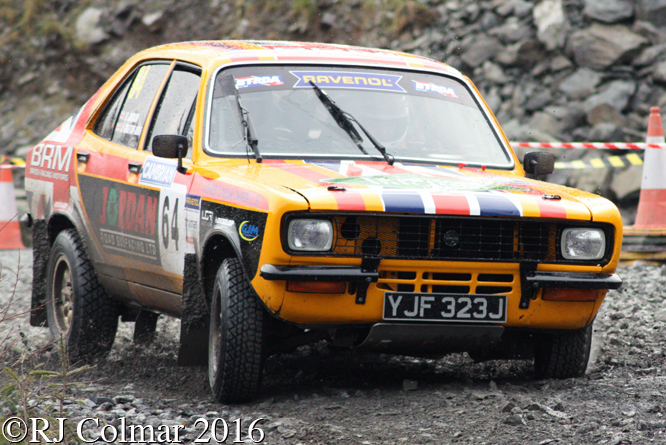
Hillman Avenger, Barry Jordan, James Gratton-Smith, Penmachno, Cambrian Rally,

In the 1970’s it would appear there were plans within the British product planning arm of the Chrysler Europe empire to produce an Avenger to compete with the Ford Mexico with a BRM developed 16 valve twin cam head.

It would appear a few heads got built and at least one was fitted to a car used by factory personnel but the project stumbled at this stage, I am not sure if the #64 1971 Hillman Avenger 1500 GL Luxe has one of the 16 valve twin cam BRM heads fitted but the BRM livery on the rear piqued my interest, the car driven by Barry Jordan and James Gratton-Smith unfortunately also retired, after Stage 3.
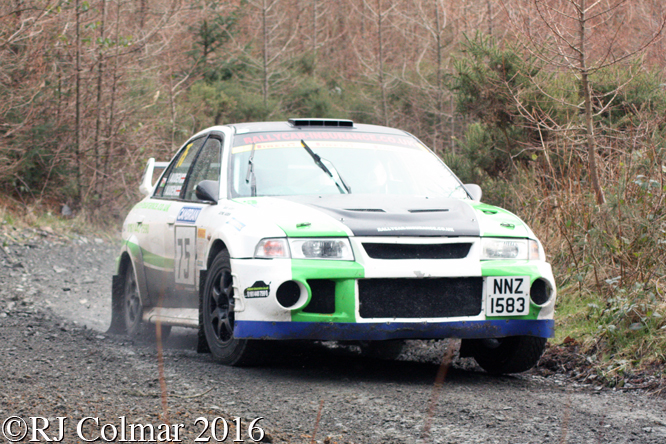
Mitsubishi Lancer Evo VI, Jayne Auden-Rowe, David Auden, Penmachno, Cambrian Rally,

The #75 1998 Mitsubishi Lancer Evo VI seen above crewed by Jayne Auden-Rowe and David Auden was classified 50th overall.
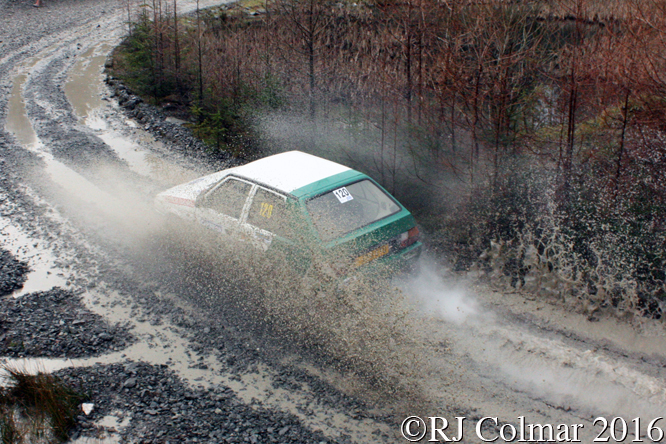
Skoda Favorit, Paul Ellis, Simon Jones, Penmachno, Cambrian Rally,

I could not resist going back to the puddle in the quarry as the final competitors went through Paul Ellis and Simon Jones make a splash in their way to a 70th place finish overall in their #120 1992 Skoda Favorit.
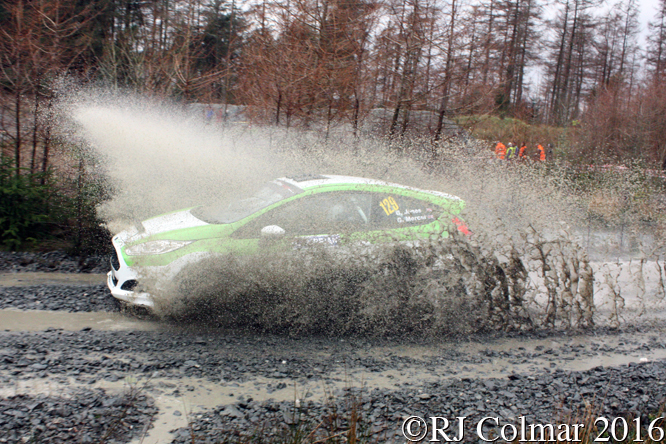
Ford Fiesta R200, Glynne Jones, Glenn Mercer, Penmachno, Cambrian Rally,

Similarly Glynne Jones and Glenn Mercer go temporarily amphibious in their Ford Fiesta R200 on their way to a 77th place finish overall.
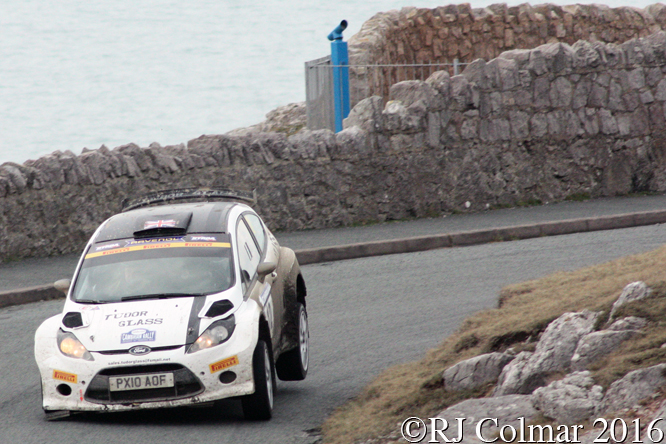
Ford Fiesta 2000, Stephen Simpson, Andrew Roughead, Great Orme, Cambrian Rally,

Andrew Roughead moved from co – driving Andrew Fenwicks 6th placed Proton S2000 the week before on the Legend Fires North West Stages to sit beside Stephen Simpson in his #12 2010 Ford Fiesta S2000 seen above lifting a rear wheel on the final Great Orme Stage on their way to 8th place overall.
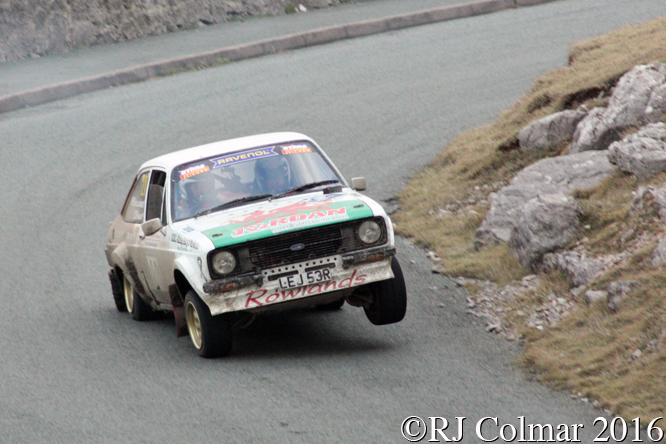
Ford Escort L, John Rowlands, Glenn Latham, Great Orme, Cambrian Rally,

Lifting a front wheel in classic Mk2 style is the #20 1976 2 litre Ford Escort L crewed by John Rowlands and Glenn Latham which came home 15th overall.
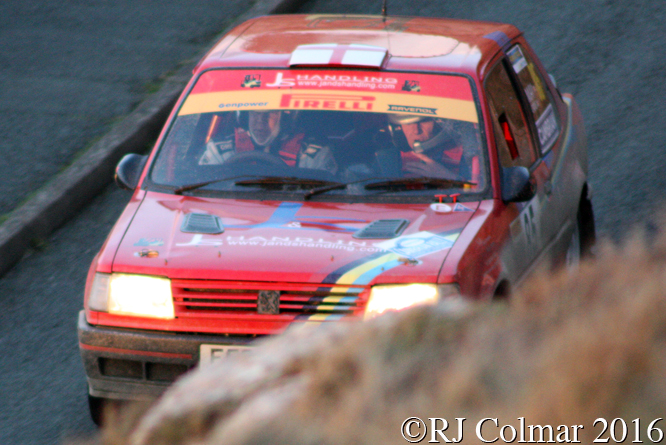
Peugeot 309 GTi, Tim Cains, Richard May, Great Orme, Cambrian Rally,

The sun came out for a short while and is seen above illuminating the faces of 36th place finishers Tim Cains and Richard May in their #85 1988 Peugeot 309 GTi.
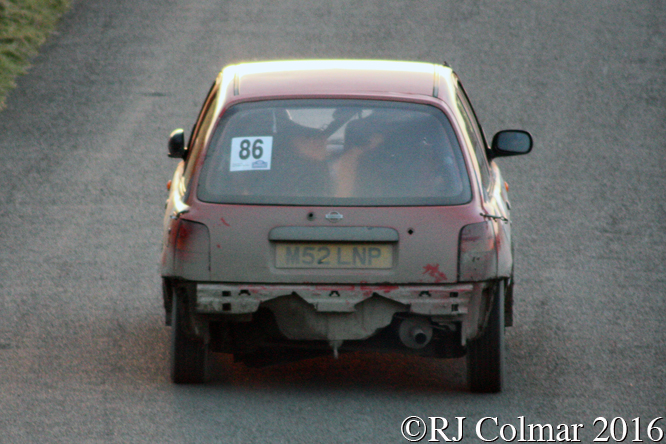
Nissan Micra Tropic, Niel Andrew, Dominic Adams, Great Orme, Cambrian Rally,

54th place finishers overall and 2nd in the 1400C class were Niel Andrew and Dominic Adams in the #86 1994 Nissan Micra Tropic seen above heading into the sunset sans rear bumper cover.
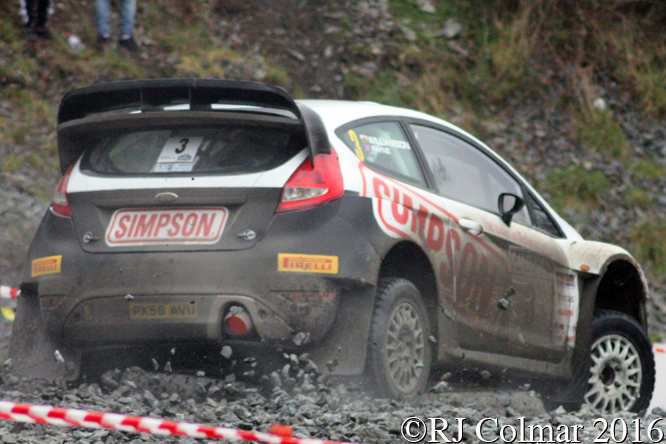
Ford Fiesta S2000, Charles Payne, Carl Williamson, Penmachno, Cambrian Rally,

After nearly 48 mins of competitive driving Charles Payne and Carl Williamson in their #3 2009 Ford Fiesta S2000 came home just 1 second behind the winners …
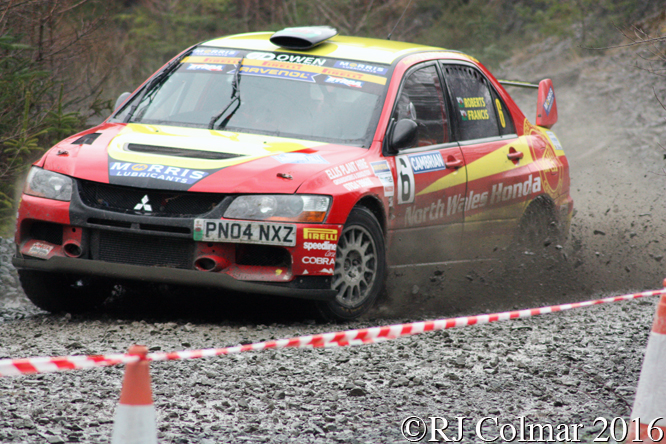
Mitsubishi Lancer Evo IX, Luke Francis, John H Roberts, Penmachno, Cambrian Rally,

… Luke Francis and John H Roberts in their #6 2004 Mitsubishi Lancer Evo IX who also won this event in 2012.
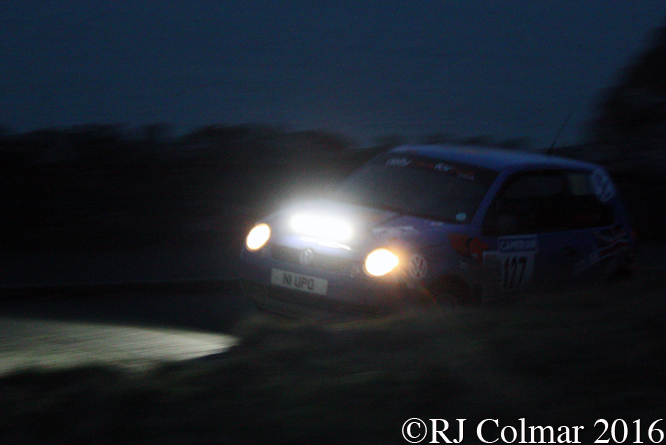
Volkswagen Lupo E, Paul Barbet, Chris Sheriden, Great Orme, Cambrian Rally,

Paul Barbet and Chris Sheriden above are heading to an evening 81st place finish overall in their #127 2001 Volkswagen Polo E.

As darkness rapidly fell after the action was over I managed to stumble back across Great Orme back to the car park after another great days entertainment.

Thanks for joining me on this Cambrian Rally edition of “Gettin’ a li’l psycho on tyres” I hope you will join me again tomorrow for a look at the last of this month’s featured Camaro’s. Don’t for get to come back now !
Share

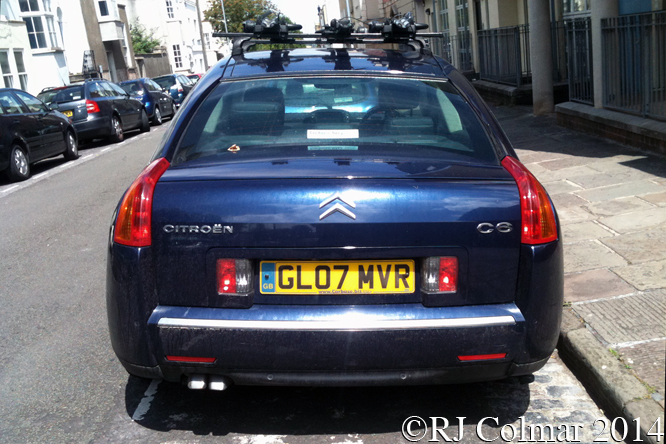
French Presidential Idiosyncrasy – Citroën C6 Lignage HDi Auto

Much to Peugeot’s credit since acquiring Citroën in 1974 it has allowed the company to pursue it’s own identity characterised by technological innovation and extreme, some might say idiosyncratic, aerodynamic styling when conservative badge engineering the brand around Peugeot models must have been a tempting option that might have offered some benefits of from the economies of scale.

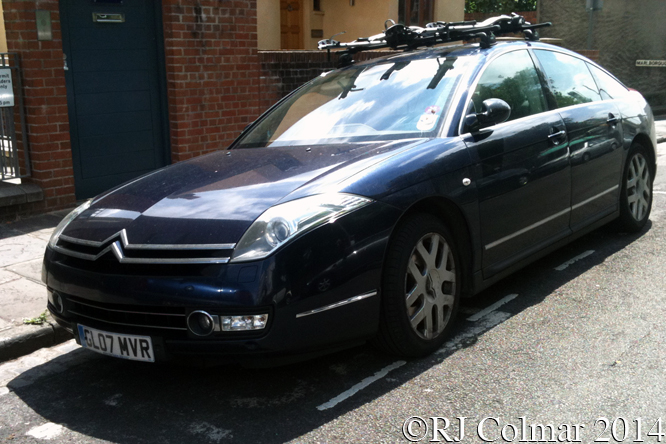
Citroën C6 HDi Auto Bristol,

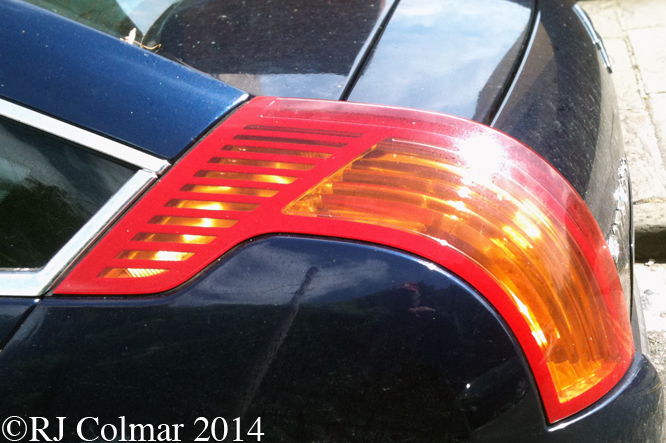
In 1999 Citroën took it’s Citroën C6 Lignage concept car featuring rear rear hinged suicide door to the Geneva show as a spoiler for the model it hoped would replace the XM in it’s range by 2000.

Citroën C6 HDi Auto, Bristol,

Not for the first time production of the new Citroen was delayed and the production C6 did not appear until 2005 now sans the suicide doors, while production of the XM had ceased in 1999.

Citroën C6 HDi Auto, Bristol,

Originally only two engine options were available either 208hp petrol 3 litre / 183 cui V6 or 201 hp turbo diesel 2.7 litre / 164 cui V6, these were joined by a 168hp twin turbo four cylinder 2.2 litre / 134 cui diesel in 2006 and the 2.7 V6 turbo diesel was replaced by the 237 hp 3 litre / 183 cui V6 turbo diesel in 2009.

Citroën C6 HDi Auto, Bristol,

As one would expect of a top of the range Citroën the model rides on hydropneumatic suspension, first seen on the DS, now known as Hydractive 3+ with electronic censors and a computer chip ensuring a ride so steady one would have no problem driving one across a field with a camera mounted on the roof to film a horse race for television.

Citroën C6 HDi Auto, Bristol,

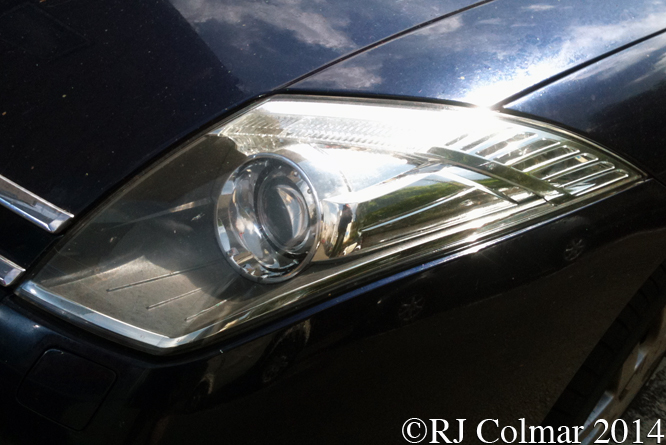
Other technical innovations carried by the C6 include a head-up instrument display, a lane departure warning system and the directional headlamps are now of the Xenon type.

Citroën C6 HDi Auto, Bristol,

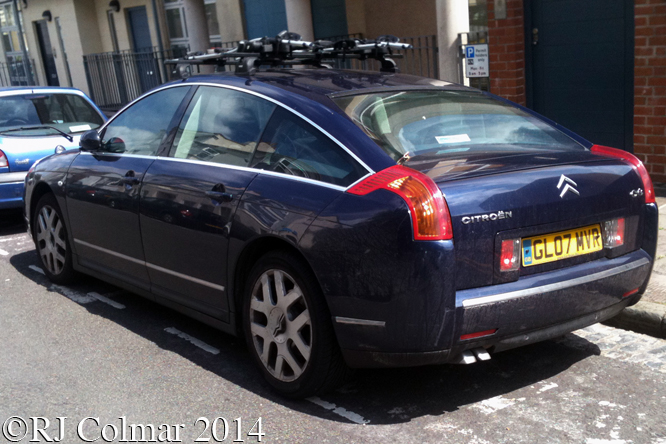
French Presidents Jacques Chirac & Nicolas Sarkozy both chose C6’s as their official cars of which 23,384 examples had been built when production of the model ceased on 19th December 2012.

The 2007 example seen in these photographs taken in Bristol is powered by the 201 hp turbo diesel 2.7 litre / 164 cui V6 engine and was first registered in the UK on the 30th July 2007.

Thanks for joining me on this “French Presidential Idiosyncrasy” edition of “Gettin’ a li’l psycho on tyres” I hope you will join me again tomorrow for a Cambrian adventure. Don’t forget to come back now !
Share

1922 Targa Entry – Mercedes 18/100

The 1922 Targa Florio differed from the French Grand Prix and Italian Grand Prix run that year because entries were not restricted to the 2 litre / 122 cui mandated for the Grand Prix and as a resulted it attracted no less than seven Mercedes entries running with three different engine sizes.

With hindsight the significance of the 1922 Targa Florio is further enhanced because it also attracted entries from Alfa Romeo and Austro-Daimler Sascha which pitted drivers Enzo Ferrari and future Mercedes Benz racing manager Alfred Neubauer together for the first time.

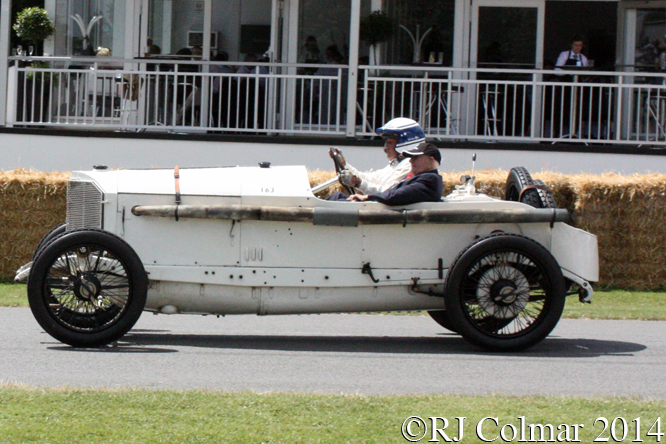
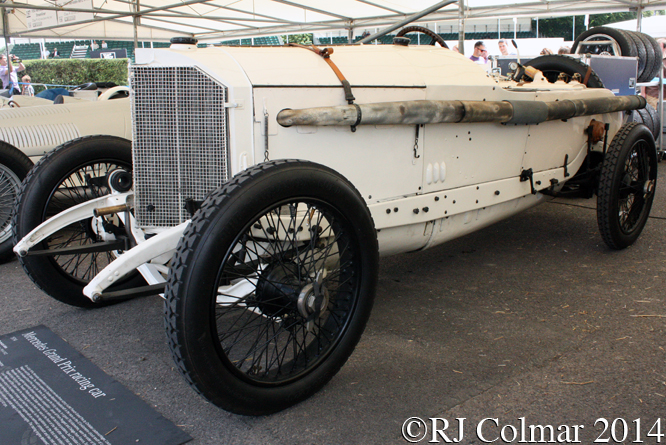
Mercedes 18/100, Goodwood Festival of Speed

Of the seven Mercedes entered for the 268 mile race Christian Werner drove a normally aspirated 7.2-litre six-cylinder 28/95 Mercedes, Max Saile a supercharged version.

Two supercharged 1.5 litre / 91.5 cui cars were raced by Italian Ferdinando Minoia and Mercedes employee Paul Scheef, finally two works 1914 designed 18/100’s driven by 1908 and 1914 French Grand Prix winner Christian Lautenschlager, who drove today’s featured car and Otto Salzer were joined by the privately entered 18/100 painted red driven by Count Giulio Masetti.

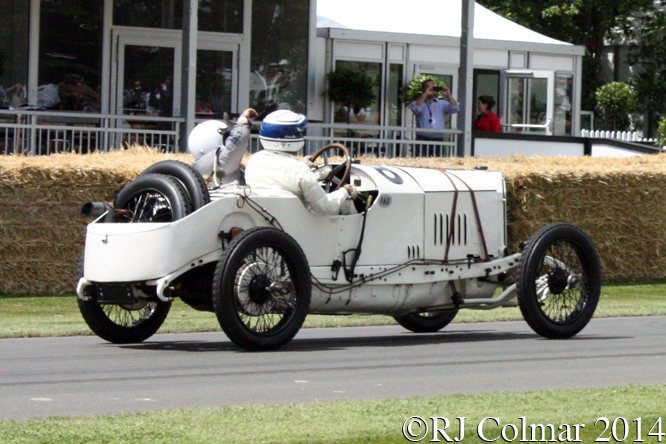
Mercedes 18/100, Jochen Mass, Goodwood Festival of Speed

Today’s featured 18/100 appears to have been built new in 1919, with front brakes, using the 115hp 4 1/2 litre / 274 cui 4 four cylinder engine that had been fitted to the fifth 1914 Mercedes French Grand Prix entry driven by Belgian Theodore Pilette that retired in the first hour.

Despite losing the near front and rear wings / fenders of his #42 car Christian Lautenschlager finished the 1922 Targa Florio in 10th place behind the two 28/95’s that finished 6th and 8th driven by Max and Christian Werner respectively and the winning 18/100 driven by Count Giulio Masetti.

Mercedes 18/100, Jochen Mass, Goodwood Festival of Speed

Otto Salzer brought his 18/100 home in 13th place also sans near side fenders, ahead of the only 1.5 litre / 91.5 cui supercharged to finish that was driven by Paul Scheef into 20th place.

On their first competitive meeting Enzo had the advantage and drove 67 hp Alfa Romeo 20/30 ES to a 16th place finish ahead of Alfred in the 50hp Austro Daimer Sascha, but Alfred who finished 19th overall, unlike Enzo claimed a 1,100 / 67 cui class victory.

Mercedes 18/100, Jochen Mass, Goodwood Festival of Speed

1989 Le Mans winner Jochen Mass is seen at the wheel of the Christian Lautenschlager Targa 18/100 at Goodwood Festival of Speed in these photograph’s, note the car has been prepared to 1914 French Grand Prix spec with out front brakes.

Thanks for joining me on this “1922 Targa Entry” edition of “Gettin’ a li’l psycho on tyres” I hope you will join me again tomorrow when I’ll be looking at another Citroën that had a longer than expected development period. Don’t forget to come back now !
Share

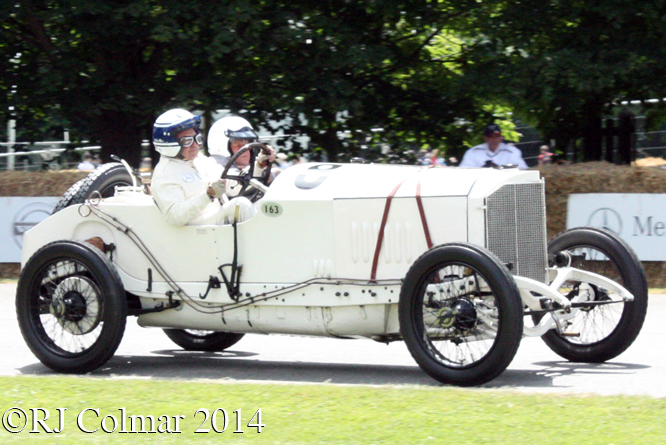
Shelsley Giant Killer – Spider

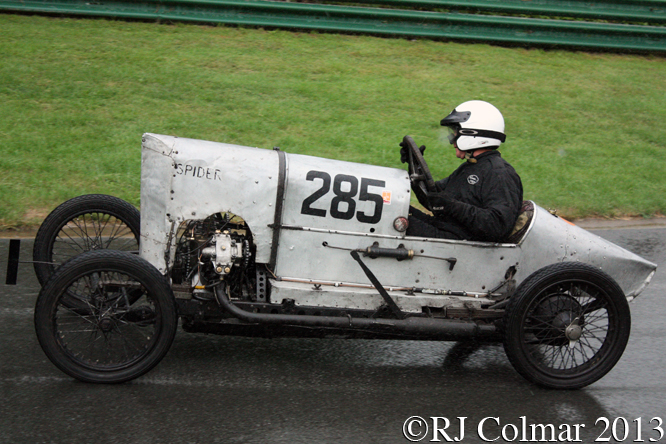
Today’s featured Spider was inspired by Capt. Archie Fraser Nash’s successful GN hill climber known a “Kim”.

Spider was built by Basil Davenport who bought a GN chassis from the Captain which he then shortened and converted to a single seater with central steering and fitted a Kim inspired body built from chalk drawings on his workshop floor in 1924.

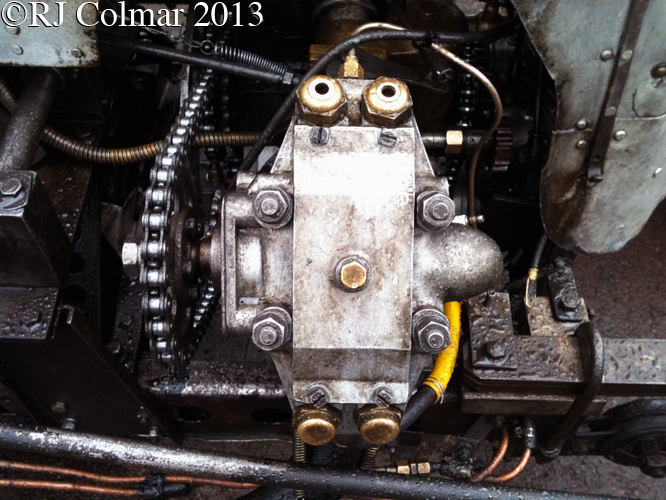
For 1925 Basil replaced the prototype GN Vitesse 1087cc / 66 cui V twin engine he had originally bought with the chassis for the unique 1500 cc / 91.5 cui V twin with four valve aluminium bronze heads and twin spark plugs from the works GN racer known at Mowgli that had lapped Brooklands at 92 mph.

Spider, Charlie Martin, Chateau Impney,

After fitting lighter pistons and stronger JAP connecting rods Basil turned up at Shelsley Walsh on September the 4th 1926 and became the first man to climb the hill in under 50 seconds.

Further modifications for 1927 including lighter valves and new cam shafts made the car quicker but the engine blew at Colwyn Bay leaving Basil just five weeks to build a new crankcase and motor before Shelsley.

The new crankcase allowed one cylinder to be mounted slightly ahead of the other for added reliability of the connecting rods and the engine compression was raised so the 40mm Solex Carburettors could now feed the engine with an alcohol fuel mixture.

Spider, David Leigh, VSCC, Prescott

At Shelsley in 1927 Basil knocked another second of his record, despite the rain !

The following season Basil left the Shelsley record at 46.4 seconds and it was not until 1929 that Raymond Mays driving a 3 litre / 183 cui supercharged Villiers relieved Basil of the Shelsley record.

In 1930 Basil proved to be quicker up Shelsley that none other than Rudolf Caracciola driving a supercharged 7 litre / 427 cui Mercedes Benz SSK.

Spider, VSCC, Prescott

At the same meeting his temporary 44.6 second record eventually fell to Hans Stuck who drove his 3.5 litre / 213 cui Austro Daimler to a new record of 42.8 seconds leaving Basil and the Spider in second place.

There after Basil fitted new heads to the car and even front wheel brakes, but these did not help make the car any quicker and he retired to look after his business interests in 1931.

In 1946 Basil brought Spider briefly out of retirement to set the best unsupercharged time at Shelsley but elected to cannibalise Spider particularly of it’s body, held on by six bolts and chain drive transmission for the 2 litre / 122 cui Big Spider.

Spider, Charlie Martin, Chateau Impney,

While still at school in 1979 David Leigh started helping Basil rebuild the original Spider.

After Basil’s death David bought bought Spider from Basil’s longstanding mechanic Ron Sant in 1994.

Three years later David managed to drive Spider up Shelsley in under 40 seconds which had been Basil’s dream since breaking the 50 second record in 1926.

Spider, David Leigh, VSCC, Prescott

David modestly credits the achievement to the improvements in the track surface and latest Avon GP motorcycle tyres which sit on period correct size 19 inch rims.

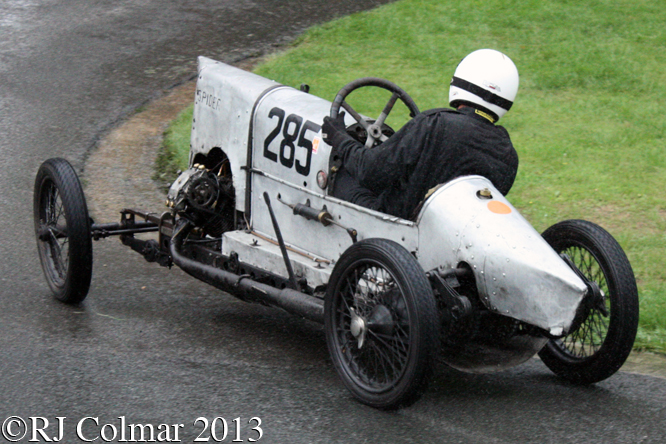
David Leigh is seen at the wheel, recovered from a Handley Page bomber, of Spider in the 2013 photographs taken at Prescott.

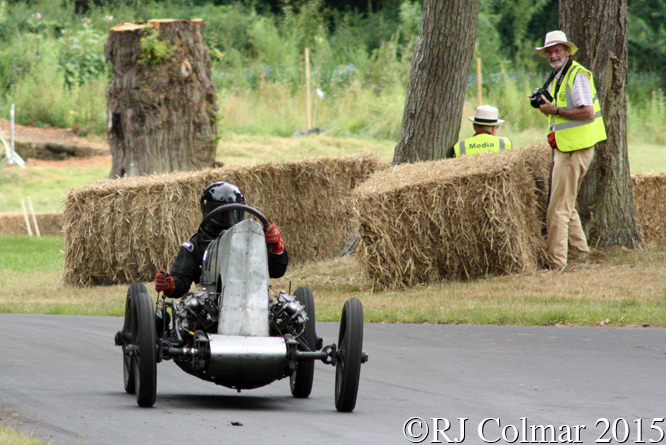
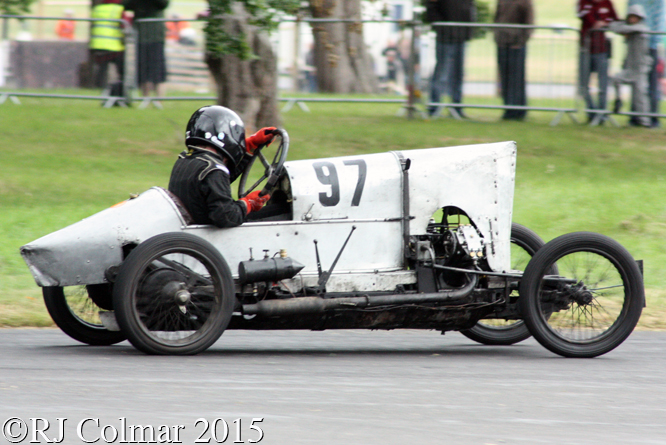
At Chateau Impeney Charlie Martin, better known for driving the Morgan RIP Special became only the third person to drive Spider as seen in the above 2015 dated photographs.

My thanks to Tim Murray for kindly lending me his copy of John Bolsters “Specials” 1971 edition with out which this blog would be very brief.

Thanks for joining me on this “Shelsley Giant Killer” edition of “Gettin’ a li’l psycho on tyres” I hope you will join me again tomorrow when I’ll be looking at another ERA. Don’t forget to come back now !
Share