Tag Archives: Renault

First Wooden Spoon – Caterham Renault CT03

In 2010 two budget Airline moguls entered Formula One teams for the first time, one was Malaysian Tony Fernandes who headed a consortium under the Lotus Racing banner with the blessing of Lotus owners Proton and the other was Richard Branson who entered his team under the Virgin Racing banner.

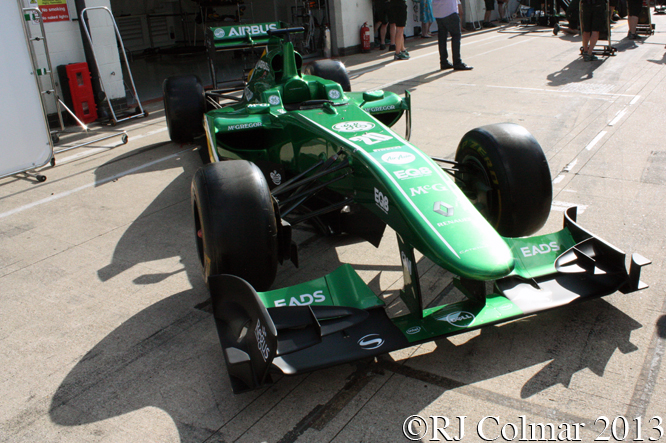
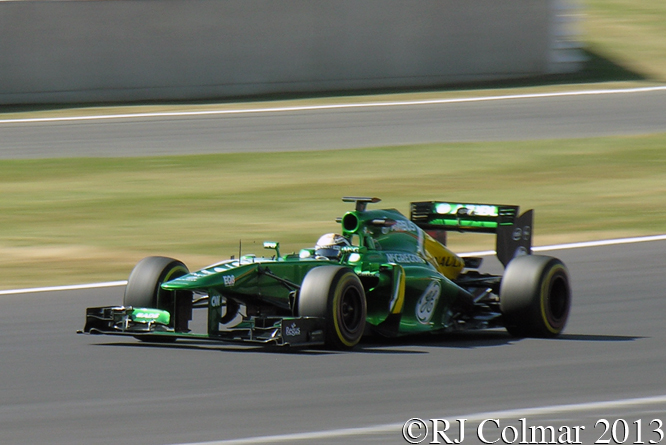
Caterham Renault CT03, Young Driver Test, Silverstone

At the beginning to the 2010 season Fernandes and Branson made a bet that which ever owner finished lowest in the Constructors Championship would join the aircrew of the others airline for a day dressed as a hostess. Richard lost the bet and last year finally got togged up as an Air Aisa Stewardess.

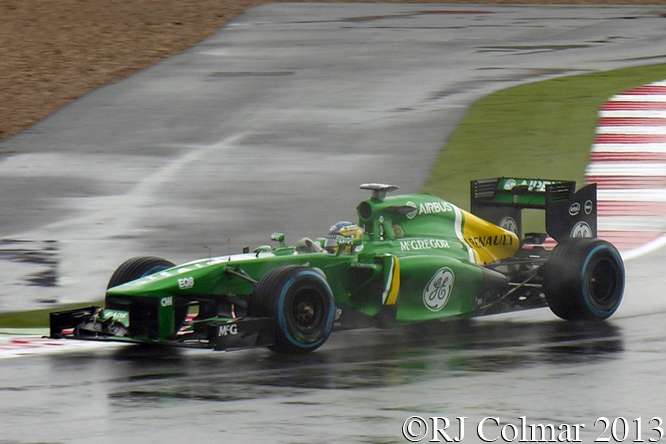
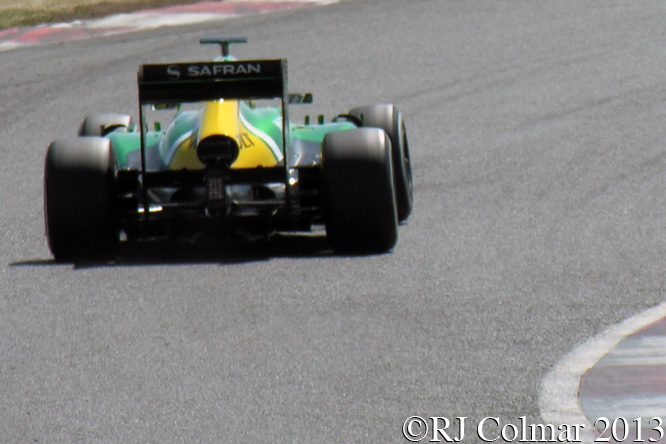
Pic, Caterham Renault CT03, British Grand Prix P1, Silverstone

Fast forward to 2013 and Fernandes team is still on the grid having changed it’s name to Team Lotus in 2011, and then to Caterham in 2012 after Fernandes bought the Caterham Cars company and Proton let the Genii Capital led consortium which runs the old Renault Team use the Lotus name.

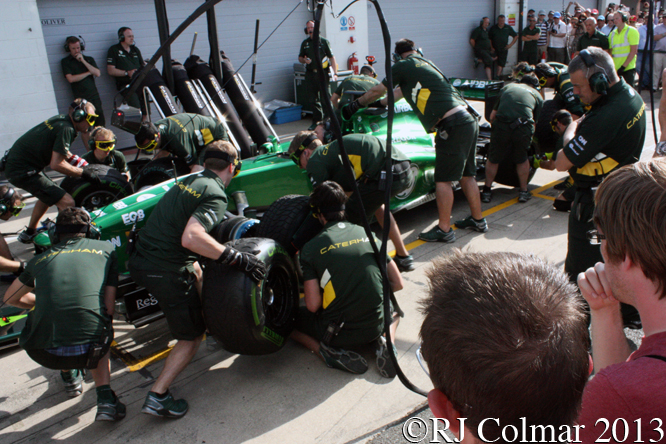
Caterham Renault CT03, Young Driver Test, Silverstone

In 2011 Tony’s team managed to secure a supply of Renault motors as used by Red Bull, and the following season Williams in favour of the Cosworth units they had used in their first season. However they finished both the 2011 and 2012 seasons 10th in the championship standings on best finishes, having failed to score a world championship point in their entire history.

van der Garde, Caterham Renault CT03, British Grand Prix P1, Silverstone

Mark Smith was responsible for the design of the Caterham Renault CT03 used by the team in 2013 which was not too dissimilar to the 2012 CT01 designed by Mike Gascoyne.

van der Garde, Caterham Renault CT03, Young Driver Test, Silverstone

Frenchman Charles Pic, see second photo, moved over to Caterham from Richard Branson’s old team, rebranded Marussia in 2012, to be joined by Dutchman Giedio van der Garde, seen above for the driving duties.

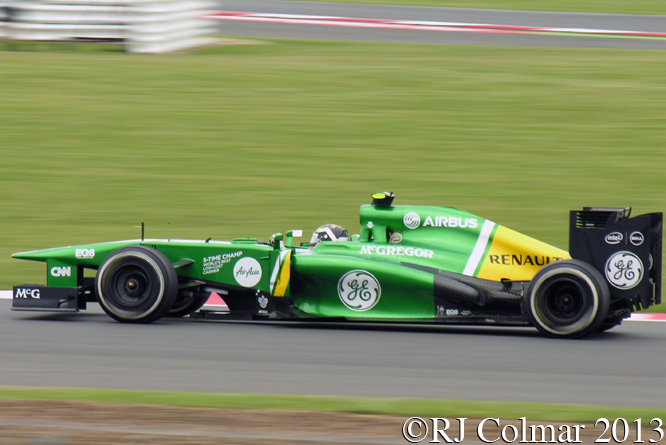
Caterham Renault CT03, Young Driver Test, Silverstone

The Caterham team’s highlights in 2013 season were two 14th place finishes at the Hungarian Grand Prix for Giedo and at the Korean Grand Prix for Charles.

Despite not having the slowest car, Giedo qualified a team best ever 14th in Belgium, the Caterham team could not better the 13th place finish recorded by Jules Bianchi driving a Marussia in the 2013 Malasian Grand Prix and so Caterham finished the 2013 season last in the constructors championship with their first wooden spoon.

For 2014 Caterham will again be relying on Renault for their turbocharged primary motors but have yet to make any announcement regarding their drivers at least one of whom is expected to be a well known “star”. You can stay abreast of developments at Caterham on their official website linked here.

Thanks for joining me on this “First Wooden Spoon” edition of “Gettin a li’l psycho on tyres”, I hope you will join me again tomorrow on the streets of Toronto. Don’t forget to came back now !

Share

Do You Like Our Calender ? – GALPOT Automobilia

A couple of weeks ago I had a bit of a clear out whilst reorganising my library and the time has come to dispose of a number of items which may be of interest through my lightpress account on e-bay.

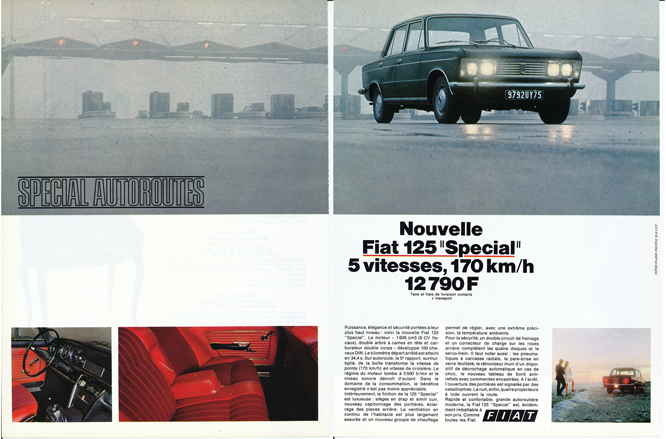
FIAT 125 'Special', Advertisement, Connaissance des arts

First up from this weeks advertisements taken from Connaissance des arts is this 1969 FIAT 125 “Special” ad. The FIAT 125 was launched in 1967, the following year a 100hp 5 speed Special was added to the range. Note some of the styling features were to be found on the smaller FIAT 124 based Zhiguli 2106. Note the influential grey shades of Claude Monet’s Waterloo Bridge in the fog paintings in the photography.

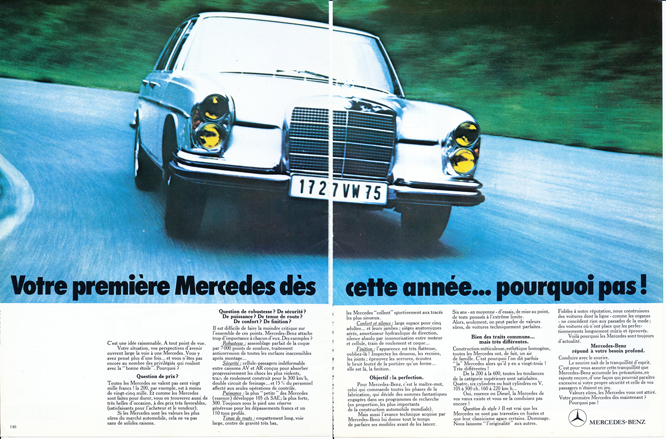
Mercedes Benz W108, Advertisement, Connaissance des arts

The Mercedes Benz advertisement above features a Mercedes Benz W108 with twinned yellow headlights as were mandatory in France until 1993. The strap line approximately translates as “Your first Mercedes dice this year … WHY not!”.

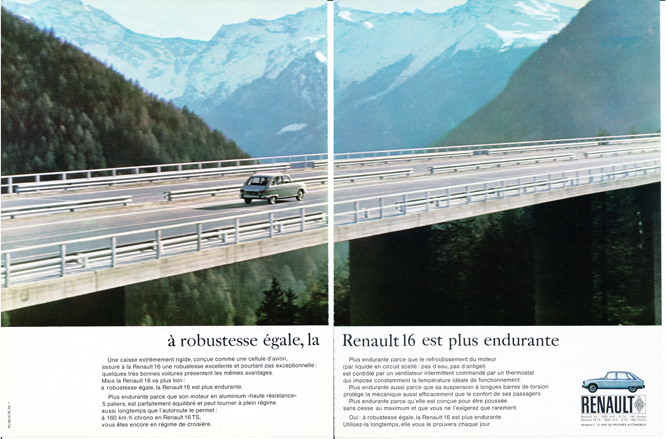
Renault 16, Advertisement, Connaissance des arts

Car adverts which appeal to the allure of the open road are always a hit, when I was travelling the controlled access highways or Autoroutes in France the ads actually lived up to the hype. Above a Renault 16 glides across a yet to be identified landscape in an undated ad from 1968 or later. The strap line approximately translates as “The smooth strength (of) the Renault 16 is more durable”

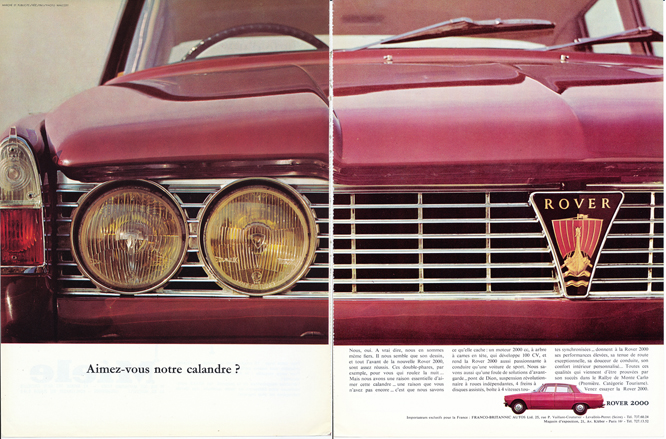
Rover 2000, Advertisement, Connaissance des arts

The copy of in the April 1965 Rover 2000 ad above makes mention of Rovers class winning performance in the 1965 Monte Carlo rally but makes no mention of Roger Clark the driver much less Jim Porter the co driver. The 104hp single carb Rover 2000 was not joined by the 124hp twin carb Rover 2000TC until 1966. The best I could manage with the translation of the strap line is the slightly surreal “Do you like our calender?” If you know better please do not hesitate to put me out of my surreal misery using the comments box below.

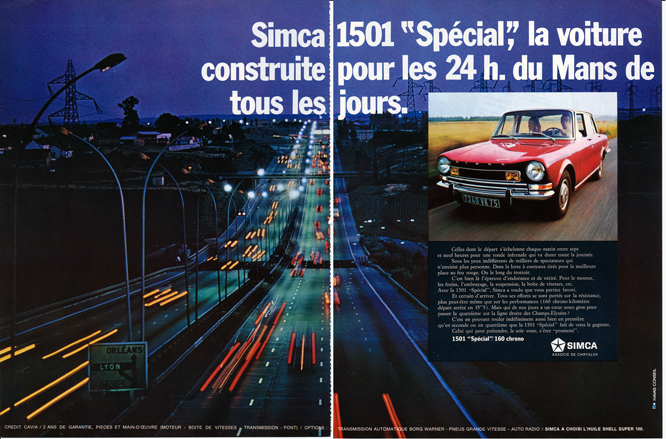
Simca 1501 "Special", Advertisement, Connaissance des arts

Finally another ad featuring low light boosted by artificial light, this Simca 1501 Special ad by the Havas Conceil agency dates from January 1969. The strap line approximately translates as “Simca 1501 Special, the for built for the Le Mans 24 hours (race) daily”

Share

20th Anniversary – Goodwood Festival Of Speed

Last weekend saw the 20th Anniversary celebrations of the Goodwood Festival of Speed. According to tea total journalist Doug Nye the event only got off the ground because he was present at a rather drunken evening at which Lord March and some friends were fantasising about an event which might attract a few thousand motor enthusiasts. Next morning when Doug reminded the Lord of what had been said they decided to act and so was born the Goodwood Festival Of Speed which has become one of the highlights of the British Motoring Season.
Goodwood, Festival Of Speed

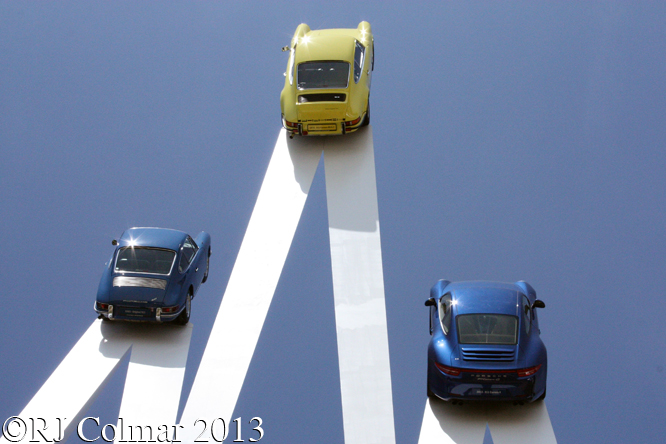
The event has become so big that it sells out on both the Saturday and Sunday and an extra day has been added on the Thursday, called the “Moving Motor Show” on which the hill climb track is turned over to corporate sponsors who entertain their guests with rides up the hill. It was on the Thursday that I went with my parents after my Dad found a free ticket offer in the “Daily Telegraph“. Many anniversaries besides Goodwood’s 20th were being celebrated, the three Porsche’s above formed the tip of a sculpture by Gerry Judah celebrating the 50th Anniversary of the Porsche 911 featuring a 1963 911 on the left, a ’73 Carrera RS in the middle and a 2013 Carrera 4 on the right.
Mercedes W196, Goodwood, Festival Of Speed

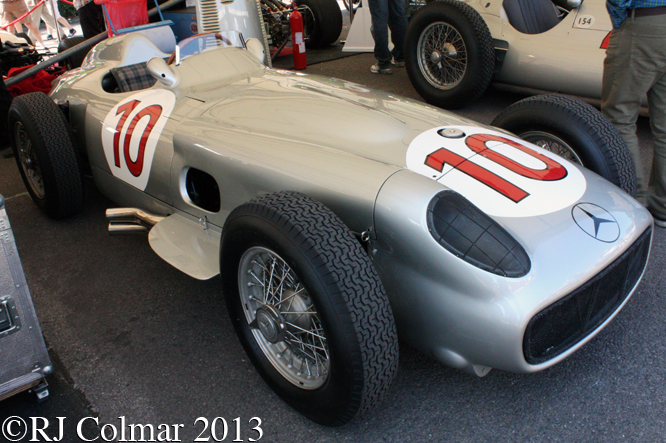
On the Friday a 1954 Mercedes Benz W196 similar to the one pictured here was sold at the Bonham’s Festival of Speed Auction for US$ 29.6 million to become the most expensive car ever sold at auction. John Lennon’s Blue ’64 Ferrari 330GT fetched US$ 543,750 setting a new record for the 330 GT 2+2 model.
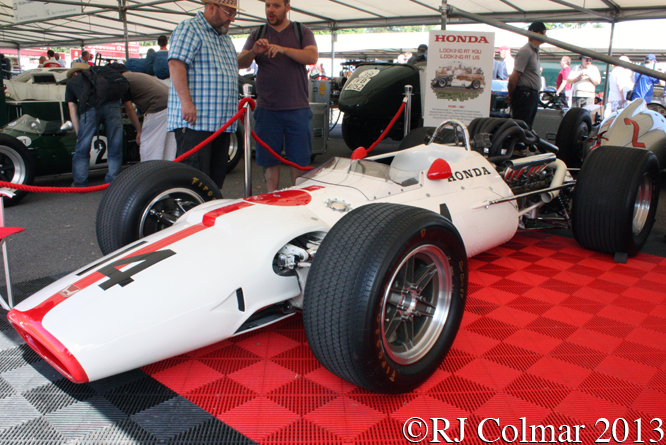
Honda RA300, Goodwood, Festival Of Speed

In the autumn of 1967 my folks purchased their first television, a black and white model, one of my earliest memories of it was a news cast featuring the 1967 Italian Grand Prix which was won by John Surtees driving this very V12 Honda RA300, a car that was very easy to distinguish from the rest of the field because it was white and all the others were various shades of grey.
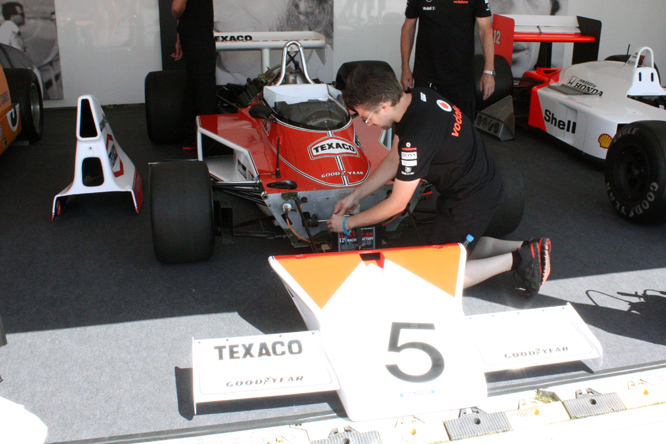
McLaren M23, Goodwood, Festival Of Speed

Emerson Fittipaldi moved from Lotus to join the McLaren team which had relieved BRM of Marlboro sponsorship and Lotus of Texaco sponsorship for the 1974 season. Emerson driving a Marlboro Team Texaco McLaren M23 ended up winning a very open World Drivers Championship by just 3 points from Clay Regazzoni driving a Ferrari 312 B3.
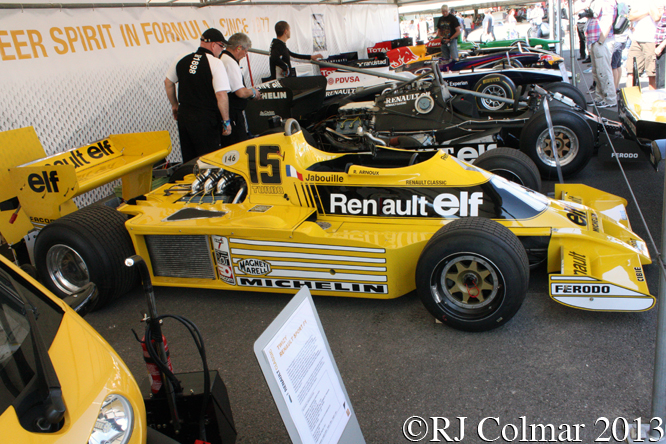
Renault RS01, Goodwood, Festival Of Speed

Having won Le Mans in 1978 Renault put all of it’s effort into winning the Formula One Drivers and Constructors championships with the first turbocharged Formula One car. Above is the 1978 RS01 which proved fast on occasion, particularly at altitude, but fragile.
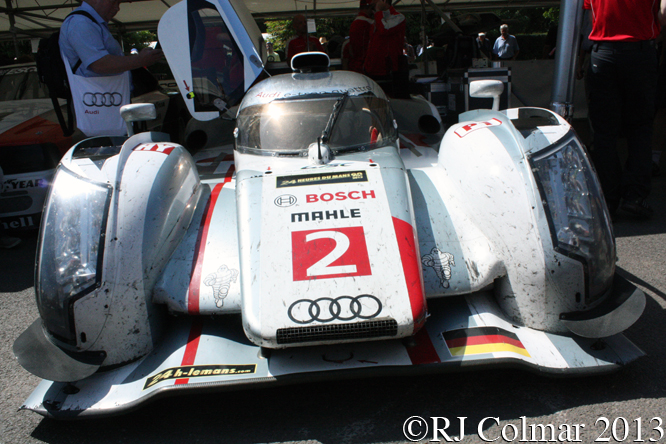
Audi R18 E-tron Quattro, Goodwood, Festival Of Speed

Fresh from victory lane, and looking several thousand miles the worse for wear, in the 90th Anniversary edition of the Le Mans 24 hours was the Audi R18 E-tron Quattro driven by Tom Kristensen, Alan McNish and Loic Duval.
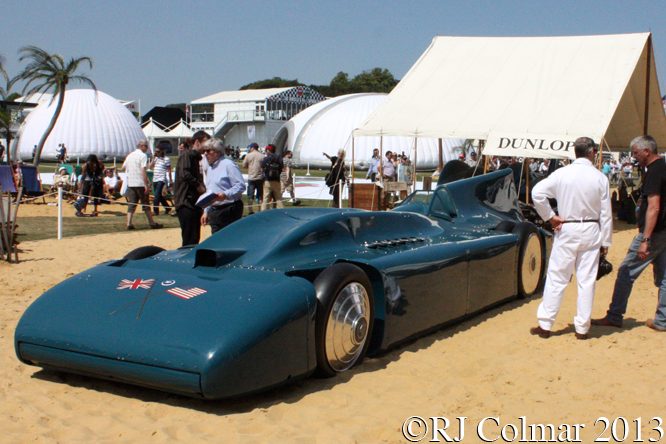
Campbell-Railton Blue Bird, Goodwood Festival Of Speed

Sir Malcom Campbell became the first man on four wheels to exceed 300 mph when he set a new Land Speed Record at Bonneville of 301mph on September 3rd 1935 when driving the 2300 hp supercharged Rolls Royce V12 powered Campbell-Railton Blue Bird. The piece of land on which Blue Bird was displayed normally serves as Lord Marches cricket pitch.
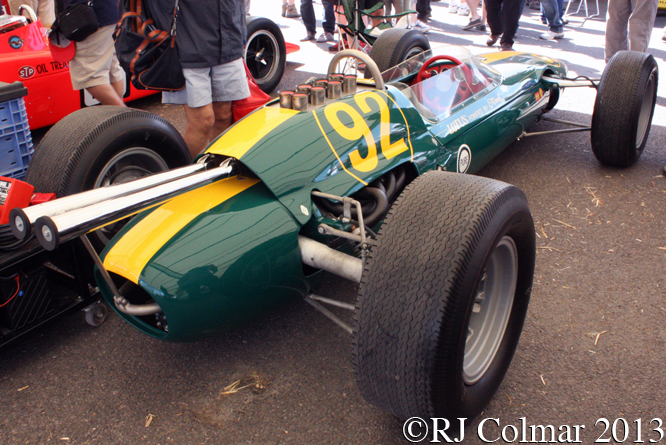
Lotus Ford 29, Goodwood Festival Of Speed

Regular readers will remember that the #92 Lotus Ford 29 driven by Jim Clark at Indianapolis in 1963 was destroyed in a fatal accident with Bobby Marshman at the wheel during a gruesome testing accident at Phoenix at the end of 1964. The car seen above is chassis #29/1 actually driven with a white and blue paint job by Dan Gurney to a seventh place finish at Indy in 1963. The car has been seen at the Indy Museum for many years (decades ?) bearing Jim Clark’s livery. The spare ’63 Lotus 29 chassis #29/2 currently carries the #91 white and blue livery used by Gurney.
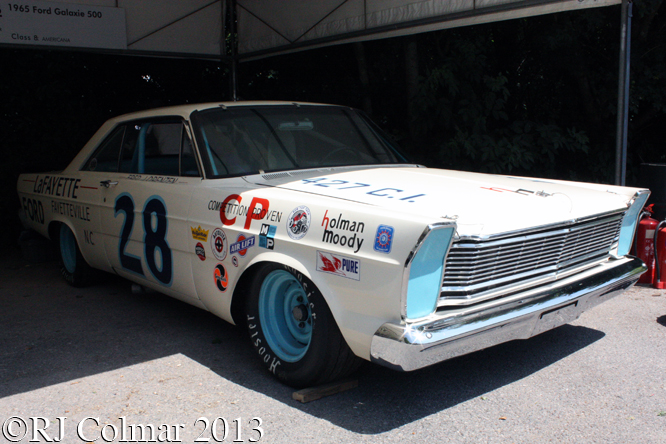
Ford Galaxie 500, Goodwood Festival Of Speed

“According to the programme” the Ford Galaxie 500 above was driven to victory in the 1965 Daytona 500 by Fred Lorenzen and then given a ’66 body for testing at Daytona the following year, however a search on the internet show’s that this might not be the only car sharing the story.
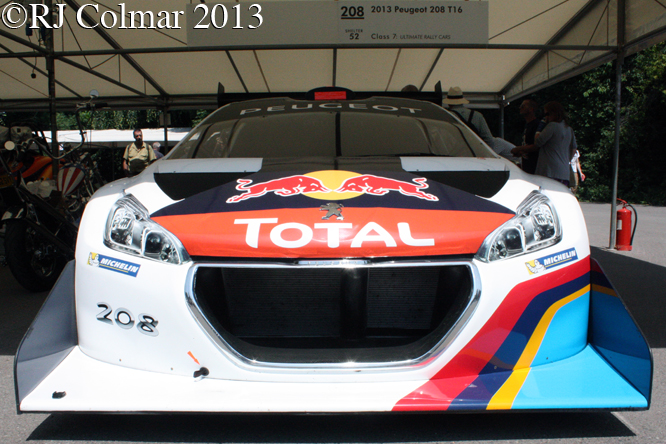
Peugeot 208 T16, Goodwood Festival Of Speed

Another car to arrive at Goodwood from victory lane was the 875 hp twin turbo V6 Peugeot 208 T16 with which Alsatian 9 (nine) time World Rally Champion Sebastian Loeb won this years Pikes Peak race to the clouds hill climb in a mind bending 8m 13.8 seconds an astonishing 95 seconds faster than Rhys Millens 2012 full 12.42 mile course record of 9m 46.1s. Tighten your reality belts to see how Mr Loeb set the record in the film linked here.
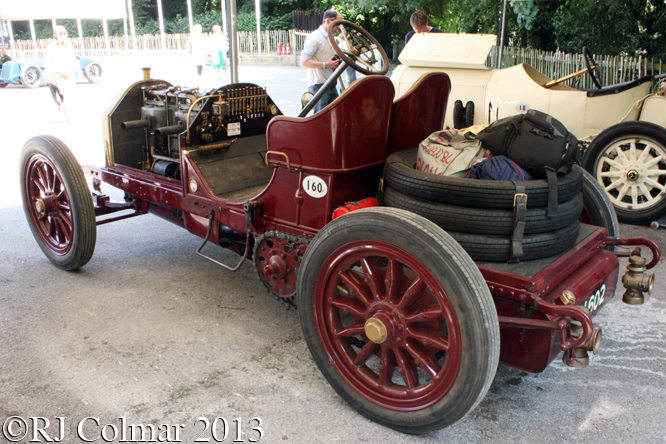
Mercedes 60hp, Goodwood Festival Of Speed

Any one who was reading GALPOT back in January might remember I spent a night and a day on the Exeter Trial being chased by a 4×4 Panda and following this 1903 Mercedes 60 hp Simplex crewed by Ben and Roger Collings, my appreciation of what these vehicles can do rose sharply as a result of the experience.
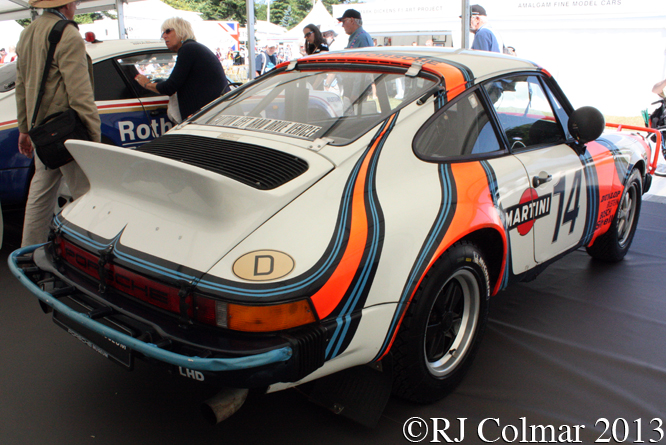
Porsche 911SC, Goodwood Festival Of Speed

Car of the show for me was this 1978 Porsche 911 SC driven by Kenyan Vic Preston Jnr with co driver John Lyall to second place in the 1978 Safari Rally. I always thought if I was going to have a 911 for the road I may as well have one that could survive the rigours of Africa where I learned to drive and this one has a particularly cool paint job.

Over the coming months some of these vehicles will be featured in more depth.

Thanks for joining me on this “20th Anniversary Festival Of Speed” edition of “Gettin’ a li’l psycho on tyres”, I hope you will join me again tomorrow. Don’t forget to come back now !

Check out the latest from the Formula One silly season at Motorsports Unplugged on this link.
Share

Acrylic Glass Bubble Top – Alpine A442 B #A442/3

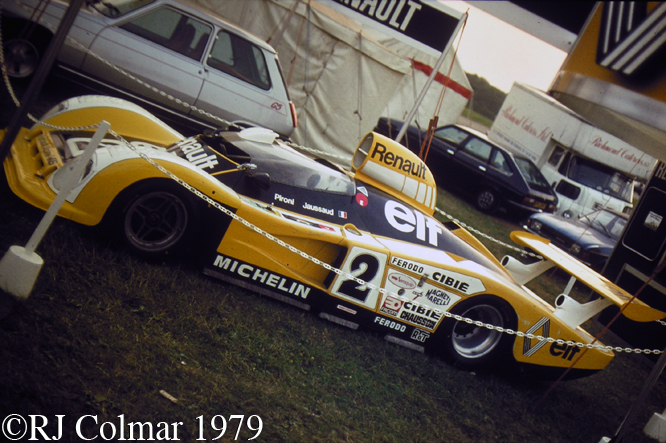
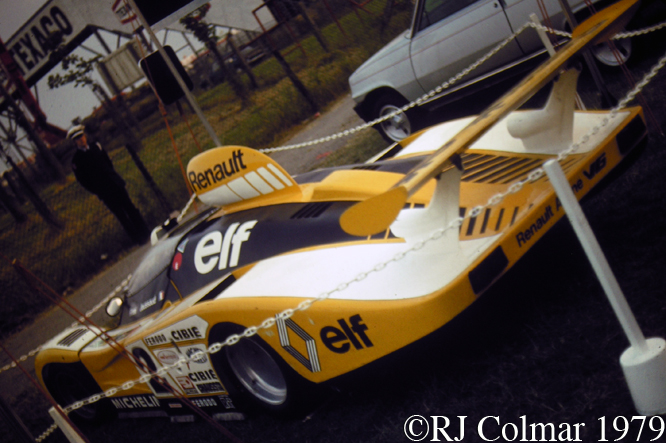
The Alpine A442 B was the penultimate evolution of Alpines 1970’s sports car program that first came to light in 1973 when Renault sponsored the development of the 2 litre / 122 cui Renault Gordini CH1 V6 that sat in the back of the Alpine A440 sports car driven by Jean Pierre Jabouille at Magney Cours.

The following season the second evolution A441 swept the 1974 European Sportscar Championship scoring 9 wins from 9 races with Jabouille, Alain Cudini, Gérard Larrousse, and eventual champion Alain Serpaggi all wining races. over the winter of 1974/75 one of the A441’s was fitted with a turbocharged version of the CH1 V6 that had been designed by François Castaing and Jean-Pierre Boudy.

Alpine A442 B, British Grand Prix, Silverstone

At the second round of the 1975 World Sports Car Championship the turbocharged A441 made it’s debut and with Jabouille and Larrouse at the wheel became the unfancied winner beating the normally aspirated 3 litre / 183 cui Alfa Romeo and turbo charged Porsche 908 to become the first turbocharged prototype to win a World Championship. For the remainder of the 1975 season the newer Alpine A442 evolution was used but it was no match for the Championship winning Alfa Romeo.

1n 1976 Alpine continued using developing the A442 in the World Sportscar Championship but it was completely overshadowed by the new turbocharged Porsche 936 which won all seven races leaving the A442 with three second places as the best results and a distant second in the championship a position which it shared with Osella. Le Mans which was not part of the championship saw Jabouille, Patrick Tambay and Jose Dolhem qualify on pole but the single A442 entered but it retired with engine failure before half distance leaving the Porsche 936 to claim the first of three Le Mans victories.

Alpine A442 B, British Grand Prix, Silverstone

Derek Bell and Jabouille were on pole for the 1977 Le Mans 24 hour race driving today’s featured chassis #A442/3 before it had been upgraded to B spec. However none of the four A442’s finished the race, which was won by the Porsche 936 #001 featured last week, but one of the Renault Gordini CH1 V6 turbo powered Mirages did finish a distant second 11 laps in arrears.

For 1978, by which time Renault and Alpine had been fully financially integrated, a new Alpine A443 had evolved with a longer wheel base, slightly larger motor and an acrylic glass bubble roof. Drivers Jabouille and Patrick Depailler had the roof, which added around 5 mph to the cars top speed, removed because they felt claustrophobic and there was too much heat building up inside the cockpit. Even so they still qualified fastest of the Alpines at Le Mans albeit on second place on the grid behind a works Porsche 936 chassis #003 which qualified with an average speed of 147 mph by Jackie ickx. 3rd on the grid was the monstrous Porsche 935/78 known as Moby Dick with another works Porsche 936 the ’77 winner #001 alongside.

Alpine A442 B, British Grand Prix, Silverstone

Todays featured car now in B spec running with an acrylic glass roof and the standard 2 litre / 122 cui turbocharged V6 motor was 5th on the grid at Le Mans with Didier Pironi and Jean-Pierre Jaussaud sharing the driving. The A443 of Jabouille and Depailler led much of the first half of the race interrupted by a set of unbalanced front wheels until it retired with a broken motor leaving Pironi and Jassaud to take over a commanding lead which it held to the end. Pironi passed out in the heat of the cockpit after he crossed the finish line.

Two of Porsche 936’s required gearbox rebuilds after which one of them crashed and the other chassis #001 came second ahead of the third placed 936 chassis #002 which required a turbocharger replacement while the 935 Moby Dick suffered from overheating and persistent oil leaks to come home 8th.

Having accomplished what they set out to achieve with the CH1 V6 program, along with two Formula Two open wheel championships in 1975 and 1976, Renault retired the Alpines from Sports car racing to concentrated all of it’s efforts on Formula One where it ran the first turbo charged Formula One car in 1977.

In 1979 Renault would become the first team to win a Formula One race with a turbo charged 1.5 litre 91.5 cui Renault Gordini EF1 motor at the French Grand Prix, which by coincidence was the race before the British Grand Prix where today’s photo’s were taken of #A442/3 in the paddock at Silverstone.

My thanks to Tim Murray for helping to identify the winning chassis of the 1975 Mugello 1000kms race which was widely reported to have been an Alpine A442 in contemporary journals like Motoring News but which contemporary photographs show the A441 development car.

Thanks for joining me on this “Acrylic Glass Bubble Top” edition of “Gettin’ a li’l psycho on tyres” I hope you will join me again tomorrow. Don’t forget to come back now.

Share

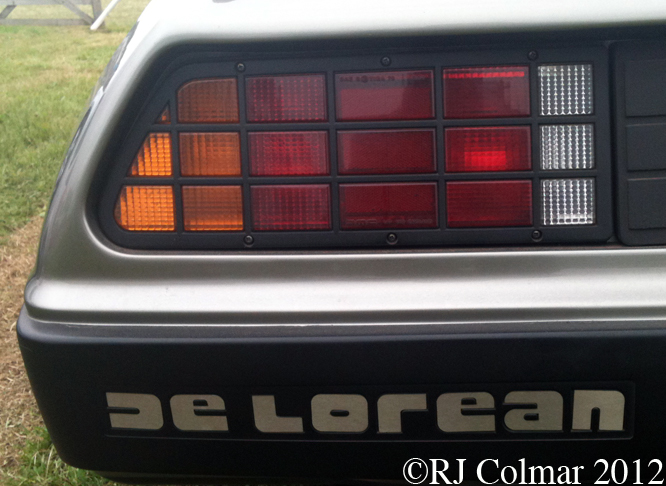
Time Machine – DeLorean DMC-12

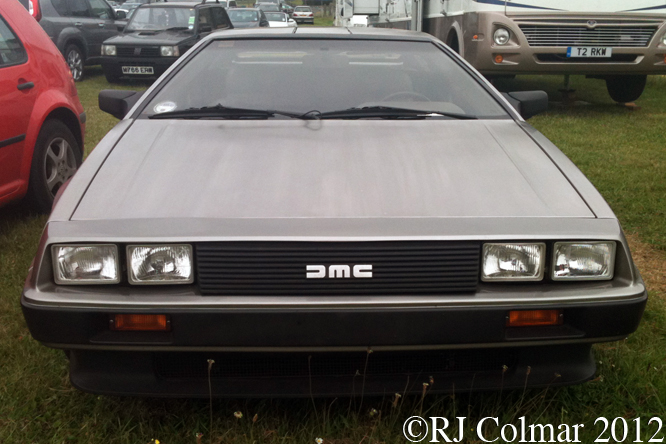
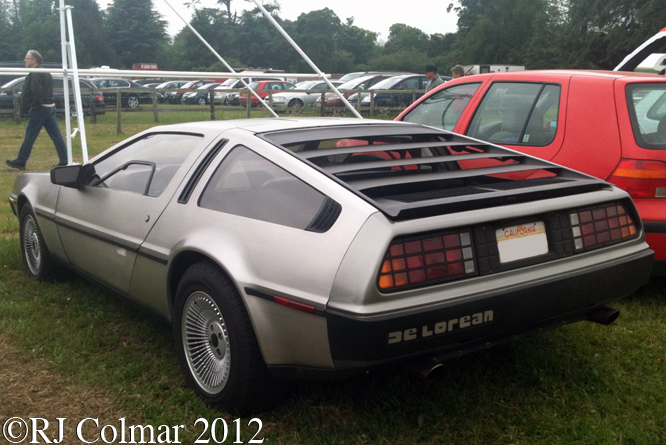
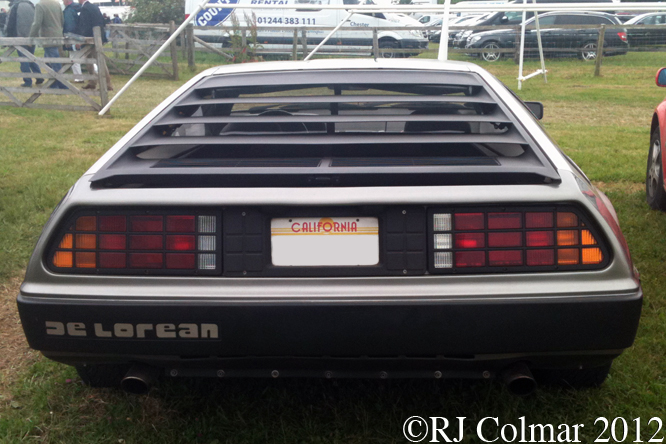
John DeLorean was an experienced auto industry executive with time spent at Packard and General Motors where he was responsible for overseeing the introduction of the Pontiac GTO and Firebird muscle cars amongst other models in the GM range when he decided he could do it all better himself in 1973 and founded the DeLorean Motor Company with a vision to build a US$12,000 2 seat sports car.

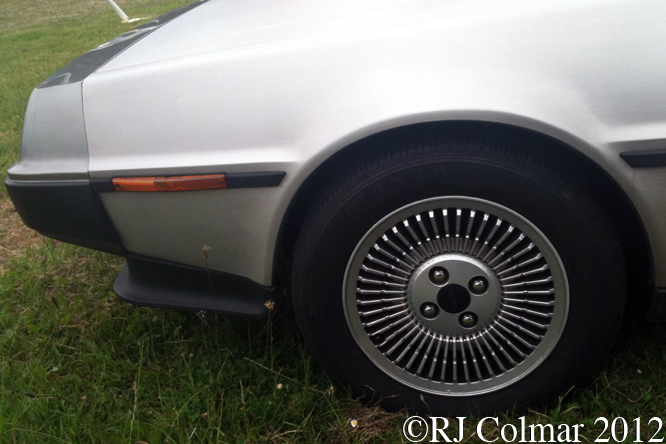
DeLorean DMC-12, Goodwood Festival Of Speed

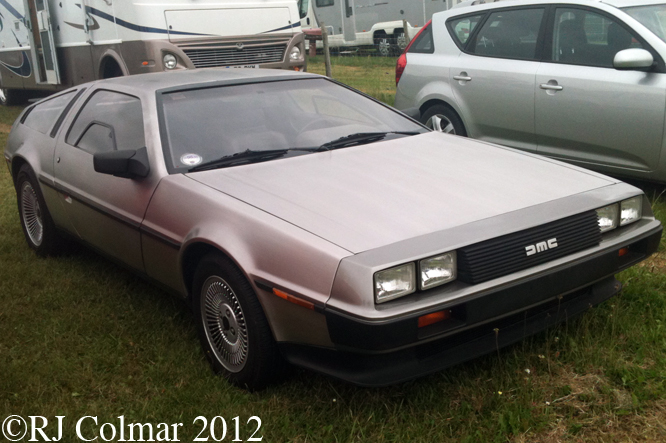
In 1976 the prototype DeLorean appeared with a body designed Giorgetto Giugiaro featuring gull wing doors and bare metal finish panels clothing a fibre glass body. A centrally mounted Citroen / NSU wankel motor mounted on a revolutionary Elastic Resevoir Moulded (ERM) chassis had been envisaged at this stage.

DeLorean DMC-12, Goodwood Festival Of Speed

As the dead line approached for manufacturing to begin it became apparent that neither the wankel motor or the ERM chassis was not up to job and Colin Chapman’s Lotus was given the task of re engineering the car which included using a steel back bone chassis and suspension similar to that used in the Lotus Esprit but with a Peugeot/Renault/Volvo aluminium block V6 (PRV V6) mounted behind the rear axle.

DeLorean DMC-12, Goodwood Festival Of Speed

By 1981 DeLorean had secured $120m of funding to build a factory in the suburbs of Belfast, Northern Ireland and Renault had met it’s contractual obligations to build the facility. Quality issues had not been fully ironed out as production got underway in January 1981 with a largely inexperienced workforce earning premium wages.

DeLorean DMC-12, Goodwood Festival Of Speed

All DMC-12’s were built with left hand drive as standard, two batches of cars totaling less than 30 vehicles in all were converted by Wooler-Hodec Ltd to RHD specification, today’s featured car seen at last years Goodwood Festival of Speed is not one of them.

DeLorean DMC-12, Goodwood Festival Of Speed

Clothed in SS304 brushed stainless steel panels which by design were nearly impossible to paint and repair, most damaged panels having to simply be replaced, the only options on the DMC-12 were manual or automatic transmission and black or grey interior.

DeLorean DMC-12, Goodwood Festival Of Speed

Although big enough to comfortably seat John DeLoreans 6′ 4″ frame the DMC-12 was not particularly well received by the press, it’s US spec 130hp failed to give the kind of performance expected from a car with a US$25,000 dollar sticker price. Road & Track recorded a 0-60moh time of 10.1 seconds with a US spec car while the European Spec DMC-12 with 150 hp managed a more respectable time of 8.8 seconds.

DeLorean DMC-12, Goodwood Festival Of Speed

It is thought that 9000 DMC’s were built up until the end of production when the UK Government pulled the plug on the project, at the time US agencies appear to have been involved in entrapping John DeLorean into a drug deal as he attempted to find the funds to save his company. John was arrested but successfully defended himself with a government entrapment plea.

In 1985 a DMC-12 became the star in the first of the Back to the Future film Trilogy. In 2008 DMC-12 production restarted in Humble, Texas on a build to order basis using many original parts that were in stock when the original factory was closed. There are even plans for an electric DMC-12 to enter production this year.

Thanks for joining me on this “Time Machine” edition of “Gettin’ a li’l psycho on tyres” I hope you will join me again tomorrow. Don’t forget to come back now !

Share

Limited Fuel Unlimited Boost – Lotus Renault 98T #004

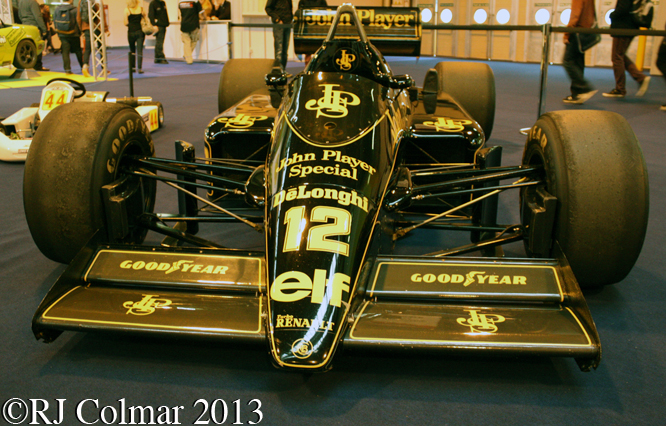
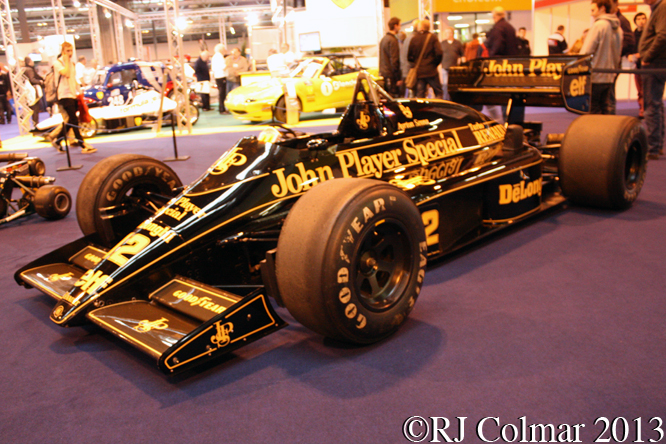
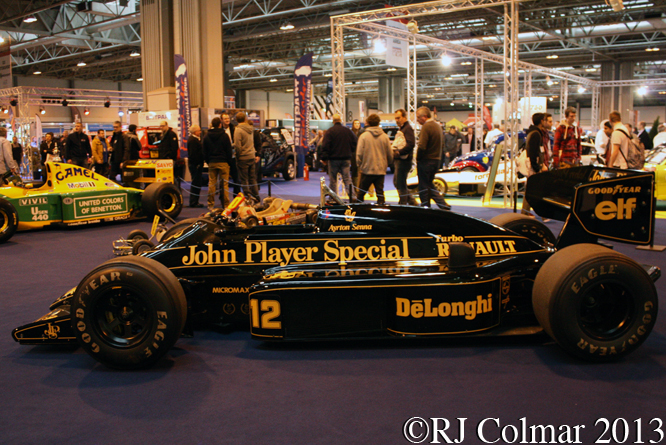
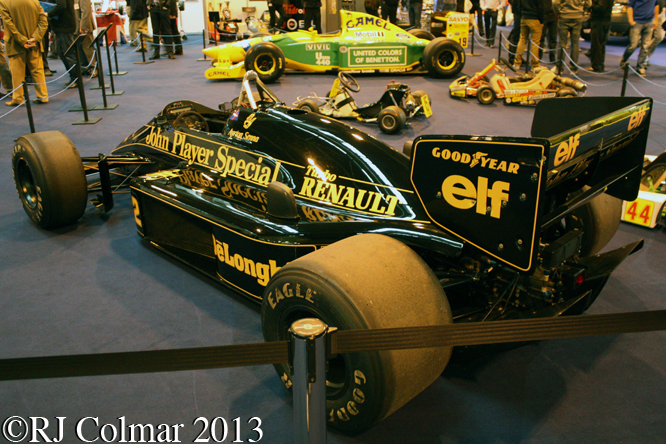
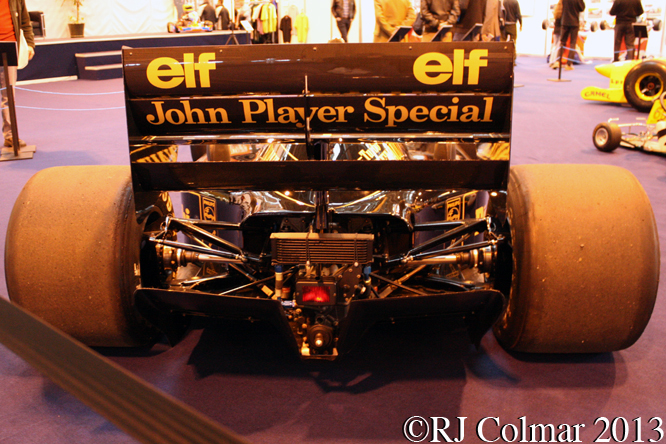
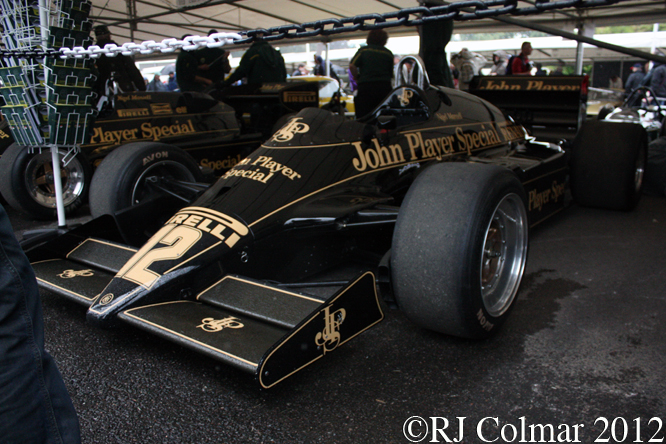
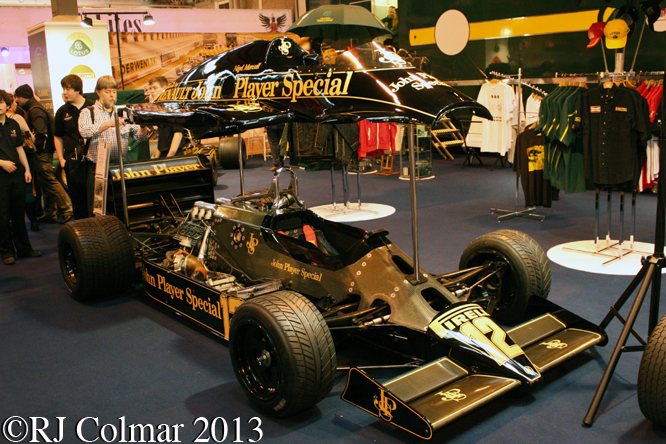
The Lotus Renault 98T was a development of the 1985 Lotus Renault 97T Grand Prix Car designed by Gerard Ducarouge and Martin Ogilvie for Ayrton Senna and Johnny Dumfries to drive in the 1986 Grand Prix season.

Lotus Renault 98T, Autsport International, NEC, Birmingham

Note the small vertical “barge boards” mounted on the front suspension, a feature carried over from the Lotus Renault 97T that are still in evidence on today’s contemporary Grand Prix cars albeit mounted much closer to the side pod intakes.

Lotus Renault 98T, Autsport International, NEC, Birmingham

The main difference between the 1984 and 1985 Lotus Formula One challengers was that the FIA had mandated a 195 litre maximum fuel capacity which meant the new car could be built with a smaller and lower fuel tank.

Lotus Renault 98T, Autsport International, NEC, Birmingham

Elio de Angelis who had won one race in 1985 for Lotus and had been eclipsed by new team mate Ayrton Senna who won two races, moved to the Brabham team for 1986. Elio was replaced at Senna’s discretion by Johnny Dumfries a rookie who had dominated the British Formula Three Championship a Grand Prix feeder series in 1985.

Lotus Renault 98T, Autsport International, NEC, Birmingham

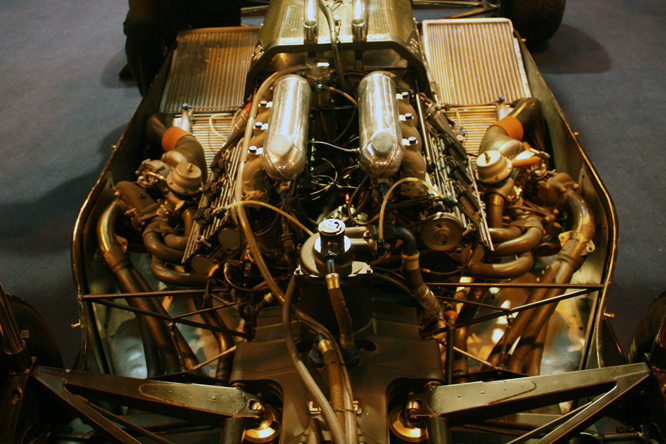
Despite running with a limited fuel allowance there were no limit’s on the amount of boost the turbo’s could run and after the introduction of pneumatic valve springs in the cylinder heads and a common rail injection system with water cooled intercoolers it was estimated that the Renault EF15 motors could produce upto 1300 hp at 5.5 bar boost for a qualifying run, though it transpires these figures could never be verified because there were no testing rigs that were calibrated for that kind of output.

Lotus Renault 98T, Autsport International, NEC, Birmingham

Other novel features of the Lotus 98T included two stage ride height adjustment and a six speed gearbox which was used exclusively by Dumfries.

Ayton Senna scored two more victories in Spain and Detroit along with 4 seconds and 2 thirds but although he scored 55 points 17 more than in 1985 he still finished 4th in the final championship as he had done the previous year. Johnny Dumfries meanwhile scored only 3 points and that heralded the end of his career as a Grand Prix Driver. He was replaced in by Satoru Nakajima backed by Honda who were to supply motor’s to Lotus for 1987. Despite scoring 13 points less in 1986 than they had in 1985 Lotus also finished 4th in the Constructors championship just as they had in 1985.

Thanks for joining me for this “Limited Fuel Unlimited” boost edition of “Gettin’ a li’l psycho on tyres” I hope you will join me again tomorrow. Don’t forget to come back now !

Share

42 Day Wonder – Lotus Renault 94T #94/2

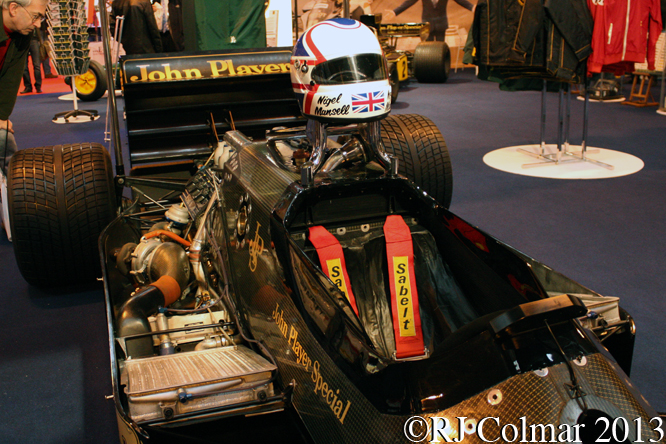
As the 1983 Grand Prix season approached the halfway mark Team Lotus who were running a Renault Turbo powered Lotus 93T for Elio De Angelis and a Ford Cosworth powered Lotus 92 for Nigel Mansell had scored but one point and many retirements.

Lotus Renault 94T, Goodwood Festival of Speed

Without there erstwhile genius Colin Chapman who had died in December 1982 Peter Warr who found himself in charge of Lotus Formula One team took a gamble and hired Gerard Ducarouge who had been fired from the Alfa Romeo team earlier in the season.

Lotus Renault 94T, Autosport International, NEC, Birmingham

Ducarouge who had penned winning designs for Ligier came up with the new Lotus 94T in just 42 days and Team Lotus turned up with two of the Renault powered cars at the British Grand Prix held at Silverstone.

Lotus Renault 94T, Autosport International, NEC, Birmingham

De Angelis qualified 4th and Mansell 18th but in the race it was Mansell who finished 4th while de Andelis retired on the 2nd lap with turbo failure. At the next race in Germany neither car qualified in the top 10, only de Angelis’s 94T made it to the start and he retired after 10 laps with engine failure.

At the Austrian Grand Prix Mansell qualified 3rd with de Angelis 12th, Mansell finished 5th while de Angelis retired after a collision on the opening lap. In Holland de Angelis qualified 3rd and Mansell 5th but both cars retired de Angelis with electrical problems and Mansell after a spin.

At de Angelis’s home track Monza he qualified 8th with Mansell back in 11th both cars finsihed for the the first time with de Angelis 5th and Mansell in 8th.

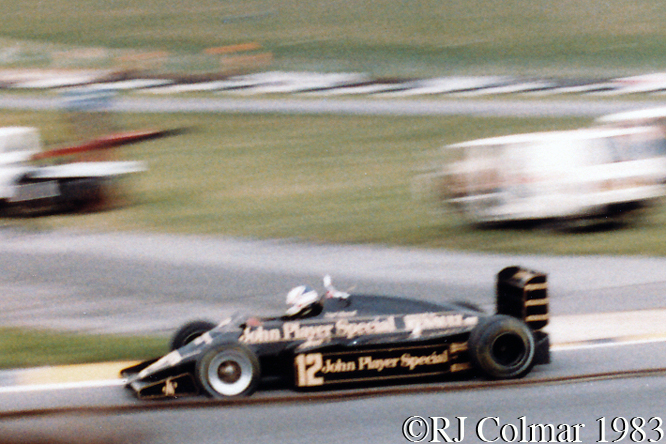
04 12 05 17 #12 EUGP 83sc

The 1983 European Grand Prix was held at Brands Hatch and de Angelis scored Lotus first post Chapman pole position with Mansell seen here on his way to 3rd on the grid. In the race de Angelis oil pump failed but Mansell came home third, recording the races fastest lap in the process.

Lotus Renault 94T, Autosport International, NEC, Birmingham

At the last race of the season in South Africa Mansell qualified 7th with de Angelis in 11, Elio retired with engine failure while Nigel was running but unclassified 9 laps behind at the end of the race.

Lotus Renault 94T, Autosport International, NEC, Birmingham

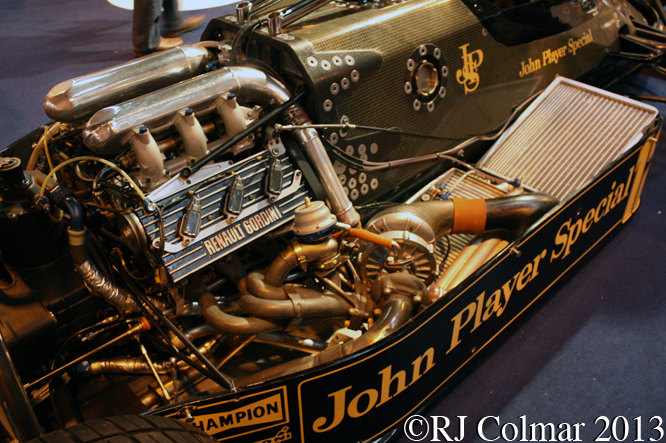
The Renault Gordini EF1 V6 Turbo was considered a bit of a joke when first seen at the British Grand Prix in 1977 but steady development had seen a rise in horsepower and reliability that forced first Ferrari and then BMW to take the turbo charged route to competitiveness at motor racing’s top table.

Lotus Renault 94T, Autosport International, NEC, Birmingham

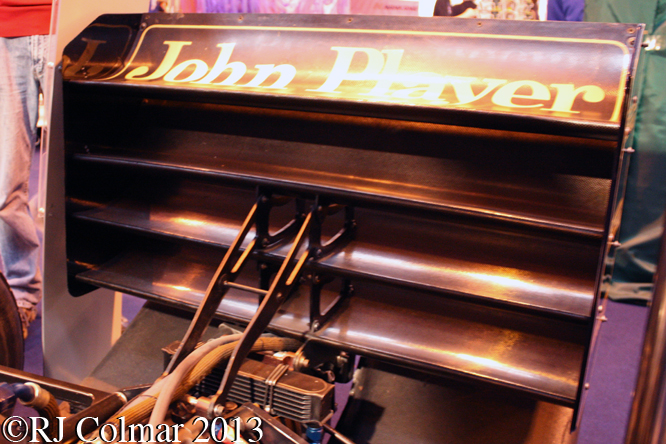
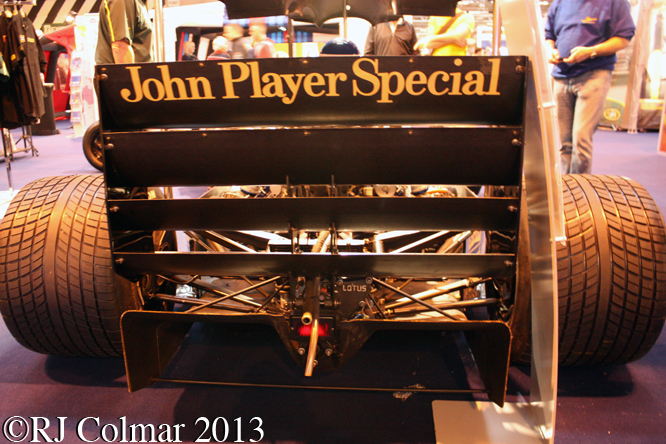
Lotus had first dabbled with a multi plane rear wing in 1974 with the type 76, Gerard Ducarouge was on his own in the Grand Prix paddock with the four plane rear wing seen here, it was not a feature that carried over into the following season.

Lotus Renault 94T, Autosport International, NEC, Birmingham

In 42 days Gerard Ducarouge had turned the fortunes of Lotus around they finished the season with 12 points 11 of which were claimed with the new car. Due to the immediate improvement in results John Player Special renewed their sponsorship of the team for the 1984 season.

The chassis seen in all of the photographs here is #94/2 driven exclusively by Nigel Mansell in the British, Austrian, Dutch, Italian, European and South African Grand Prix.

Thanks for joining me on this “42 Day Wonder” edition of “Gettin’ a li’l psycho on tyres” I hope you will join me again tomorrow. Don’t forget to come back now !

Share