Tag Archives: Silverstone

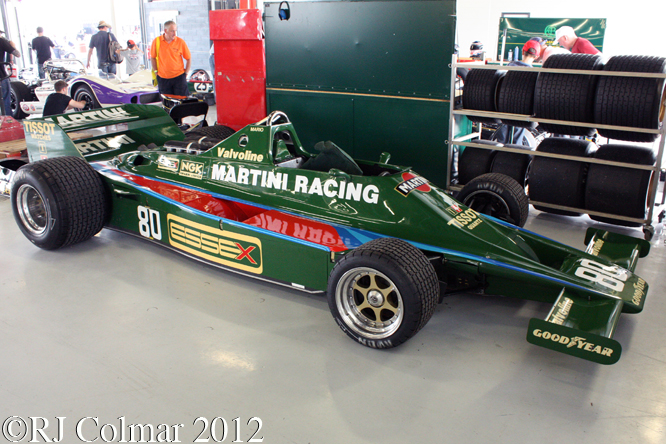
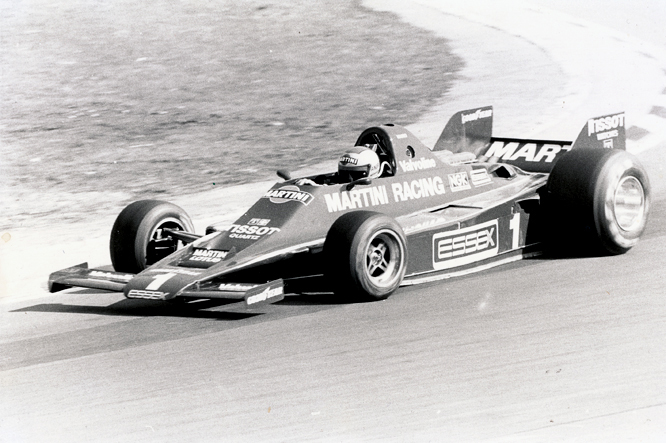
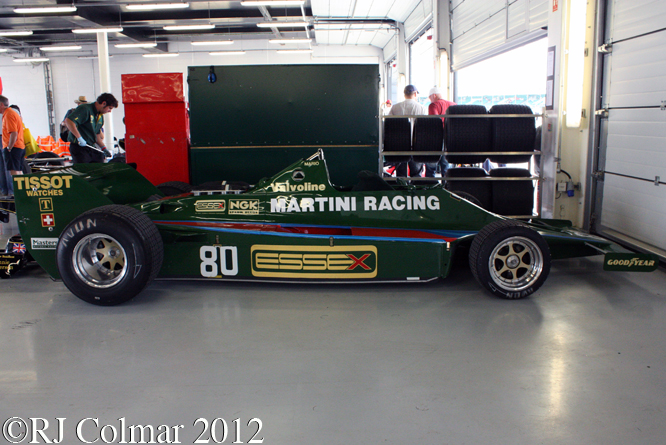
Definetly Not The Right One – Lotus Ford 80 #R1

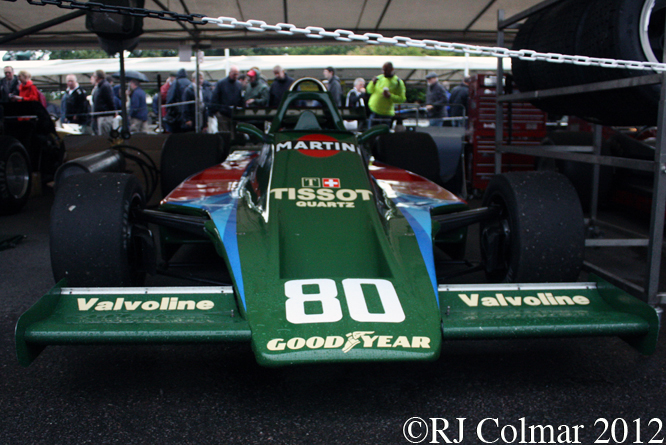
Colin Chapman described the Lotus Ford 80 at it’s launch in the Kentagon at Brands Hatch in 1979 as the best looking Lotus he had ever built. Reigning World Champion Mario Andretti said it would make the Lotus Ford 79 with which he won the 1978 World Championship look like a London Bus.

Lotus Ford 80, Goodwood Festival of Speed

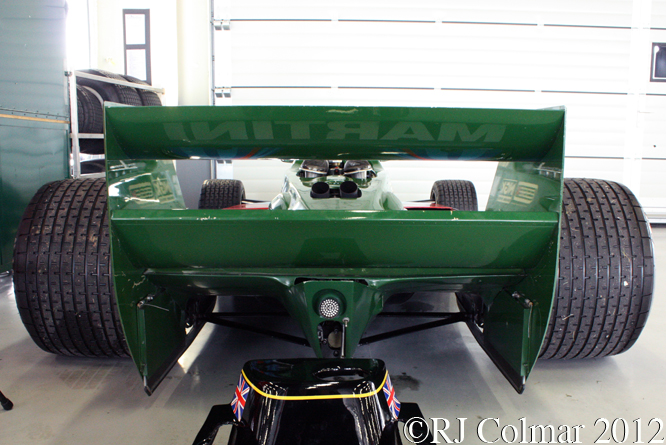
Unfortunately the car with the revolutionary venturi under the nose and a second under the rest of the body and with out the usual wings front and rear proved to be a bit of a handful with unpredictable handling once it started running on the track and it was only a matter of time before Colin Chapman and his engineers were removing the skirts that sealed the airflow beneath the nose and fitting conventional front wings to aid the aerodynamic poise and balance of the car.

Lotus Ford 80, Silverstone Classic

The whole point of the design was to make the Lotus 80 faster down the straights than the Lotus 79 by not having any wings fitted at all. However all was not lost at Brands Hatch, as seen in Sven Platts photo below, the car was only used as a spare, but in the next race the Spanish Grand Prix Mario Andretti qualified a respectable forth behind the two hitherto dominant Ligiers that were the most effective copies of the previous seasons Lotus 79 and the more powerful Ferrari 312 T4 of Gilles Villeneuve.

Lotus Ford 80, Race of Chapions, Brands Hatch

Patrick Depaillier won the Spanish Grand Prix in his Ligier from Carlos Reutemann, in the Lotus Teams older Lotus 79, who finished ahead of Mario in the Lotus 80. The Spanish Grand Prix turned out to be the highlight of the Lotus 80’s short life, at Monaco Mario could only qualify 13th and at the French GP where a heavily revised second Lotus 80 was tested Mario qualified 12th but he retired with suspension and brake issues from each of these races respectively.

Lotus Ford 80, Silverstone Classic

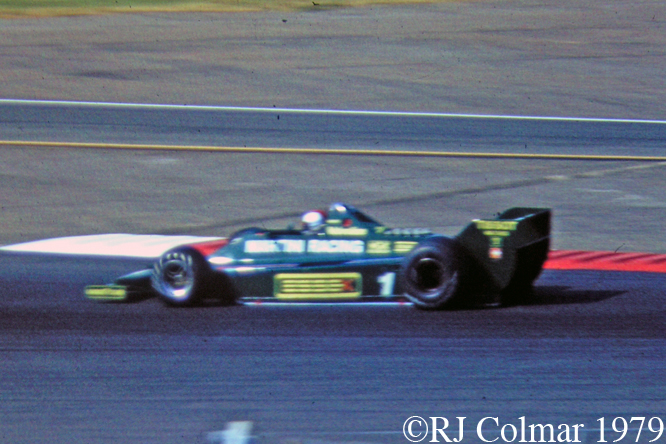
The final appearance of the Lotus 80 was at the British Grand Prix at Silvestone where I took the photograph below. Mario practised in the car but decided he was better off with his year old Lotus 79 which by now was swamped by new designs which emulated it and the more powerful, ultimately 1979 championship winning, Ferrari T4s.

Lotus Ford 80, British Grand Prix, Silverstone

I believe these photographs all show the same chassis namely Lotus Ford 80 R1 which today appears to be owned by Manfredo Rossi a member of the Martini Rossi family that sponsored team Lotus in 1979.

Lotus Ford 80, Silverstone Classic

Thanks for joining me on this “Definitely Not The Right One” edition of ‘Gettin’ a li’l psycho on tyres’ I hope you will join me again tomorrow. Don’t forget to come back now !

Share

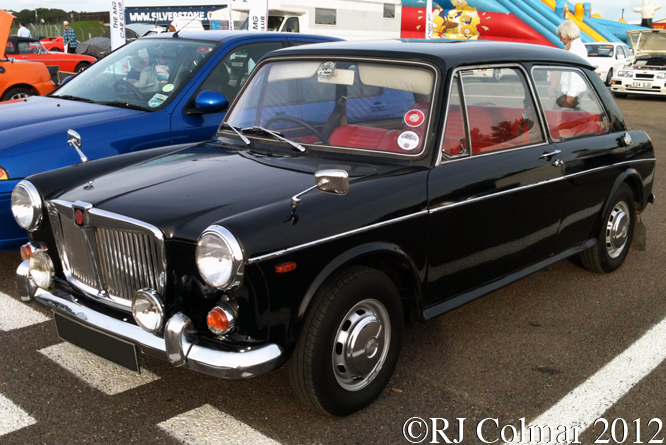
Twin Carburetor ADO16 – MG 1300 MkII

In 1962 at the same time as the launch of the, rather conventional, MG B the British Motor Corporation (BMC) launched a revolutionary new car the Morris 1100 which was technically like a grown up version of the Mini first seen in 1959 featuring a transverse front mounted engine driving the front wheels through a transverse mounted gearbox. This allowed for the monocoque body to sit low to the ground compared to its conventional contemporaries which need a prop (propeller) shaft to run from the gearbox at the front to the rear axle.

MG 1300 Mk II, Silverstone Classic

Like the Mini the Morris 1100, which had carried the code ADO16 through it’s development, was designed by Alec Issigonis and would become one of Britain’s consistently best sellers through the 1960’s until the more conventional Ford’s began to make an impact thanks to overwhelming competition success on the race track which translated into sexy marketing campaigns. The body work for the ADO16 was styled by BMCs Italian styling house of choice Pininfarina and was available eventually in two and four door variations.

MG 1300 Mk II, Silverstone Classic

BMC also launched badge engineered 1100’s in Austin, Wolseley, Riley, van den Plas and 55 hp twin carburetor MG variants, in the UK market, before offering larger 1275 cc / 77.8 cui variations which in twin carburetor MG form produced 70 hp. In 1962 soon after the launch of the MG 1100 Alan Foster and Andrew Hedges drove a R.W.Jacobs entered MG 1100 to a 12th place overall and 1st in the 1300 cc class in the 1962 The Motor 6 Hours held at Brands Hatch beating a Ford Anglia in class that finished on the same lap.

MG 1300 Mk II, Silverstone Classic

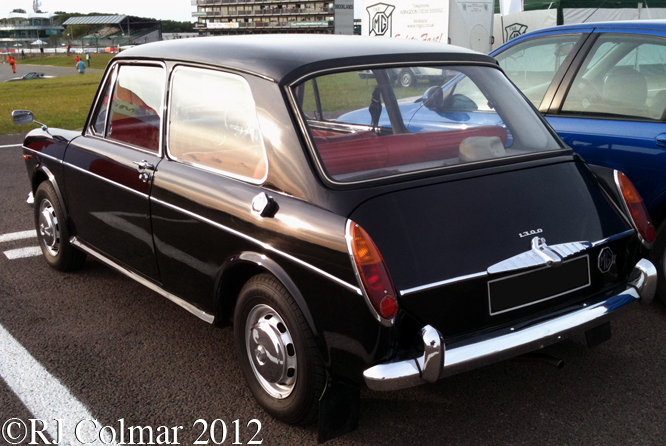
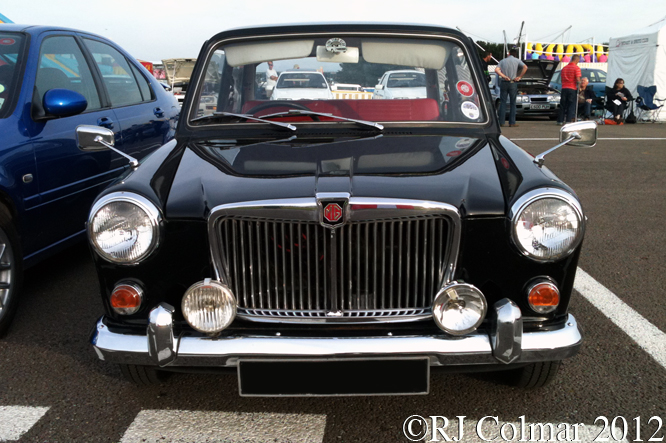
Mk II versions of all the ADO16’s were introduced in 1968 with the rounded rear light clusters and ventilated steel wheels as seen on the 1968 MG 1300 MkII above which also has a walnut dash housing additional revolution counter, water temperature and oil pressure gauges. The leather bound 3 spoke steering wheel completed the sporty look.

MG 1300 Mk II, Silverstone Classic

The options list for all ADO 16’s included reclining seats and heated rear window. MG ADO16’s were replaced in 1971 by Austin and Morris GT variations using the same twin carburetor, MG, motors. In all 26,240 MG variants of the ADO16 were built between 1962 and 1971. One curious thing about the ADO16 when looking at it with the benefit of several decades of hindsight, they never made one with a hatchback only a small boot / trunk. I guess success in this instance bred what would become terminal complacency.

My thanks to Roger Lund, Rod Hunt, Michael Hickey, Ray Bell, Rob Kayemod, David ‘Red Bill Racing’ Coulthard and Frank de Jong at The Nostalgia Forum for their observations regarding the R.W.Jacobs MG 1100.

Thanks for joining me on this “Twin Carburetor ADO16” edition of “Gettin’ a li’l psycho on tyres” I hope you will join me again tomorrow when I’ll be looking at a VW Microbus which I used back in my college days. Don’t forget to come back now !

Share

Silent Running – Silverstone 6 Hours WEC

Last Sunday I popped up to Silverstone for the 6 Hour race, the 4th round of the 8 race World Endurance Championship.

Silverstone Circuit, Northamptonshire

When I first visited Silverstone in 1978 the layout was still essentially an airfield perimeter track consisting of six straights joined by six fast corners with the main runway still in use on raceday’s. Since then the track configuration has changed several times, the runway is now long gone and there is a completely new infield section between the Club and Woodcote corners which was introduced last year.
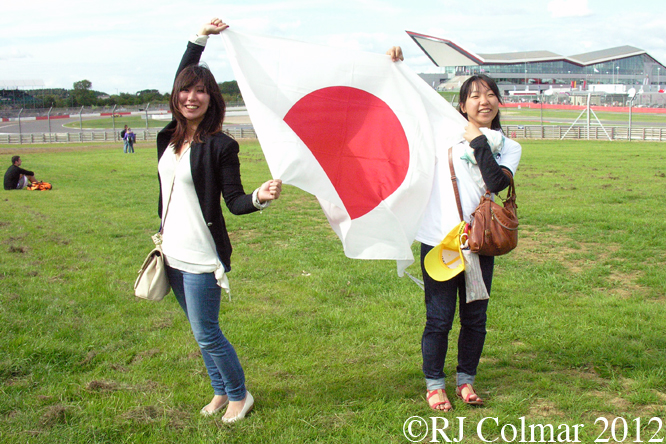
Japanese Fans, Silverstone 6 Hours WEC

When I arrived at the track I was heartend to find that endurance racing appeals to a younger audience who travelled from far and wide, though just as in 1978 in disappointingly small numbers.
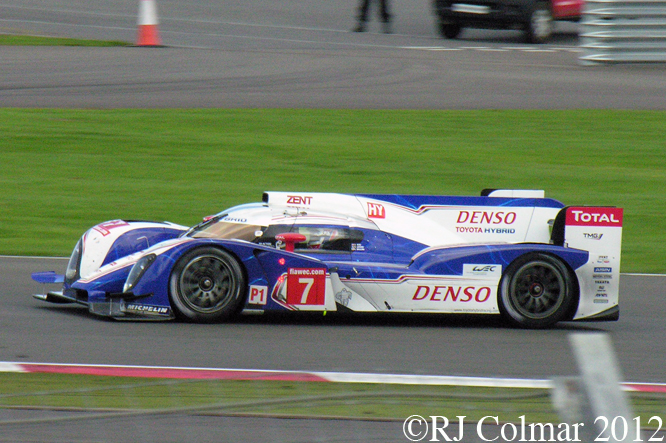
Toyota TS030 Hybrid, Silverstone 6 Hours WEC

Making it’s first appearance in the UK was the new for 2012 Toyota TS030 Hybrid which proved fast at the previous Le Mans 24 hours if ultimately unreliable, the car driven by Austrian Alexander Wurz, Frenchman Nicolas Lapierre and Japanese Kazuki Nakajima qualified 3rd behind the two Audi Sport Joest R18’s but after a dozen laps went into the lead, unfortunately it could not maintain it’s lead during the pit stops and so was always, entertainingly playing catch up to the Audi’s with their smaller, diesel filled, fuel tanks which proved ultimately more economical.

Lola- Nissan B12/80 Coupé, Silverstone 6 Hours WEC

Further Japanese interest in the race was provided by Keiko Ihara who was sharing her second tier LMP2 #29 Gulf Racing Middle East entered Lola Nissan B12/80 Coupé with Fenchman Fabien Giroix and Swiss Jean-Denis Delatraz, they qualified a distant 22nd and finished an equally distant 18th overall and 11th in class.
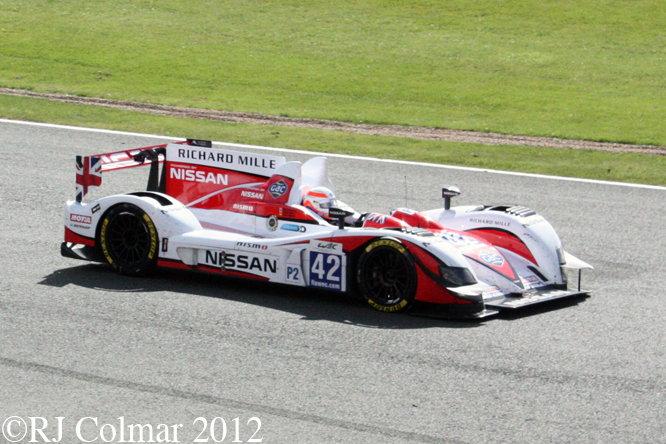
Zytek - Nissan Z11SN, Silverstone 6 Hours WEC

Also running in the LMP2 class was former Grand Prix Driver, 1990 Le Mans winner and Sky Sports Formula One presenter Martin Brundle who joined his son Alex and Spaniard Lucas Ordonez in the #42 Zytek Nissan Z11SN. The #42 qualified a respectable 8th overall 1st in class but could only finish 12th overall 5th in class.
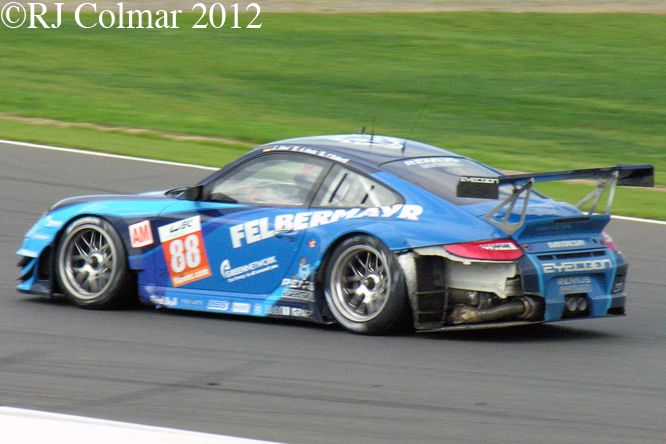
Porsche 911 RSR (997), Silverstone 6 Hours WEC

As well as the two LMP1 and LMP2 prototype classes additional classes catered for GT2 cars which are split into LMGTE Pro and LMGTE Am divisions. Amateurs Christian Ried from Germany with Italians Gianluca Roda and Parato Ruberti from Italy qualified the #88 Porsche 911 RSR (997) 27th overall and 2nd in class and finished 25th overall 2nd in class, seeing the slower GT drivers getting swamped by the faster prototypes on the corners is always interesting but only rarely leads to the kind of damage seen above.
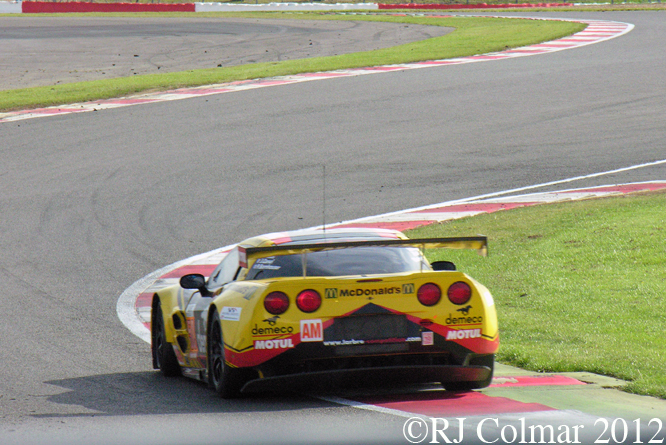
Chevrolet Corvette C6-ZR1, Silverstone 6 Hours WEC

The #50 Chevrolet Corvette C6-ZR1, seen above, shared by Brazilian Fernando Rees and Frenchmen Patrick Bornhauser and Julien Canal actually crossed the line 25th and 2nd in the LMGTE Am class but was disqualified after a “non-conforming safety device, namely the validity date of the car’s fire extinguisher” was discovered in post race scrutineering. Labre Competition Team manager Jack Leconte was suitably contrite after the discovery.
Oreca - Nissan 03, Silverstone 6 Hours WEC

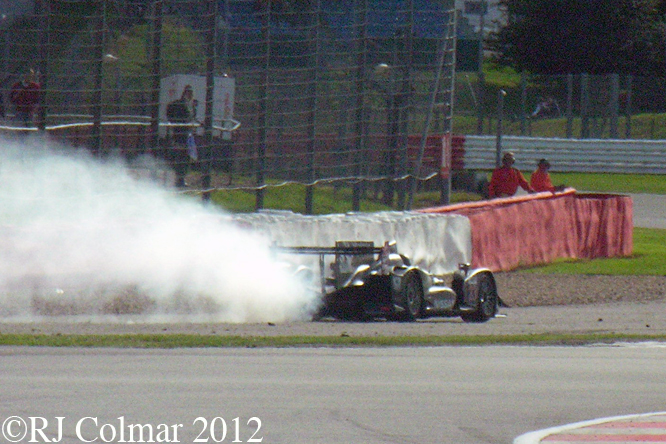
From 35 starters there were only four retirements the second of which was the #23 Signatech Oreca Nissan O3 of French trio Jordan Tresson, Franck Mailleux and Olivier Lombard. Approaching 3/4 distance. Tesson is seen here after a rear tyre exploded at Becketts coming out of the next corner Chapel his car turned sharp left and hit the wall. The ensuing safety car period played into the hands of the overall victor of the race.
Ferrari 458 Italia, Silverstone 6 Hours WEC

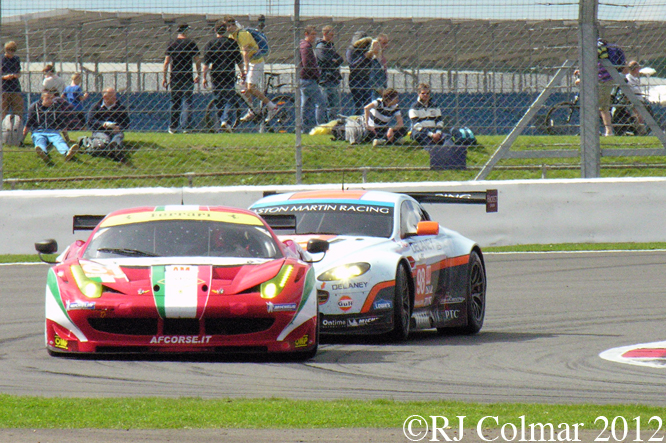
The #61 AF Course Waltrip, as in Micheal Waltrip Racing apparently, Ferrari 458 Italia of Italians Piergiuseppe Perazzzin, Marco Cioci and Irishman Matt Griffin qualified 30th overall / 3rd in LMGTE Am and came home winners in the class beating the #98 Aston Martin Vantage V8 of German Roald Goethe and Briy Stuart Hall, seen above, that finished 4th in class by 3 whole laps. Griffin said of his win “I’m not British but it’s still my home race so I’m really happy.”
Ferrari 458 Italia, Silverstone 6 Hours WEC

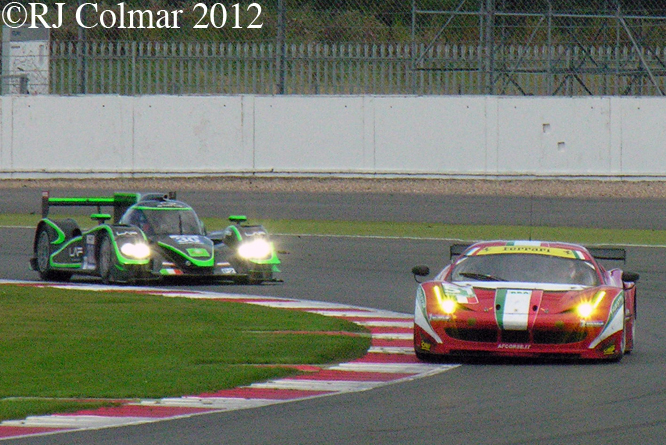
LMGTE Pro honours fell to the #51 AF Course Ferrari 458 Italia of Grand Prix Winner Giancarlo Fisichella and Gianmaria Bruni who beat another 458 Italia by two clear laps.
Oreca Nissan 03, Silverstone 6 Hours WEC

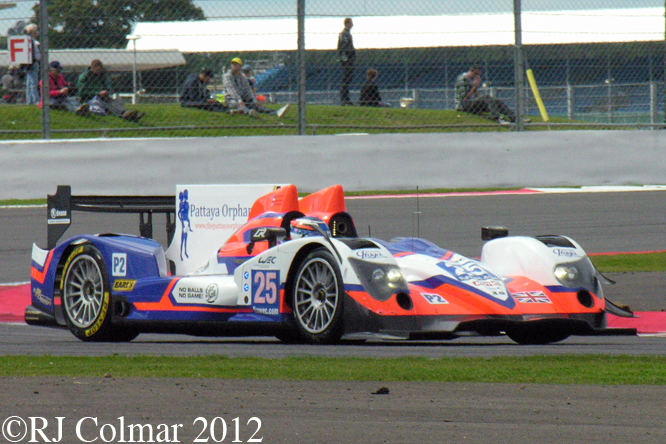
The #25 ADR-Delta team Oreca Nissan O3 of John Martin, Jan Charouz and Tor Garves edged the second Signatech team Oreca Nissan by just six seconds at the finish line but this was not the closest class victory of the day.
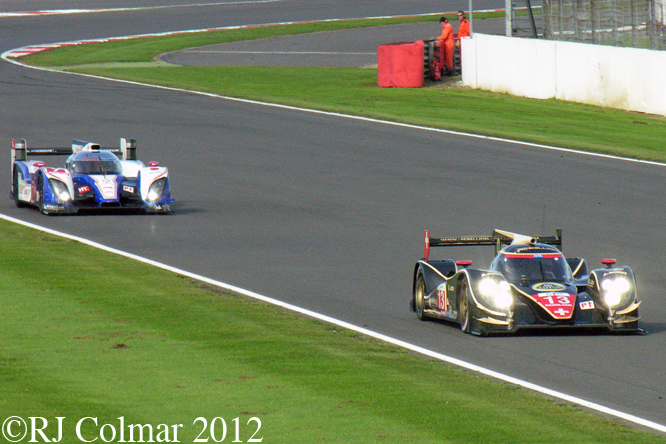
Lola Toyota B12/60 Coupé, Silverstone 6 Hours WEC

By securing the win in their Rebellion Racing Lola Toyota B12/60 Coupé 6th place starters and 4th place overall finishers Italian Andrea Belicchi and Swiss Harold Primat stretched the Rebellion Racing Teams lead in the Privateer LMP1 Championship. They finished 6 laps behind the third place #2 Audi and less than 1 second ahead of the 2nd place privateer LMP1 Honda powered HDP ARX 03a to take the closest class victory of the day.
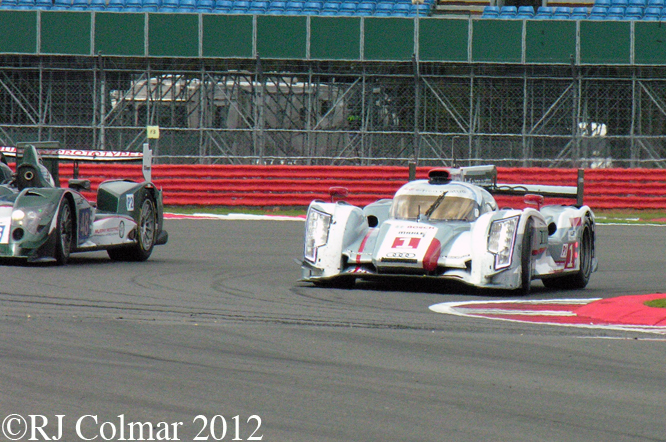
Audi e-tron quattro Hybrid, Silverstone 6 Hours WEC

With the best fuel economy and aided in a small way by several short safety car periods the Audi e-tron quattro Hybrid with a flywheel accumulator system developed by Williams Hybrid Power, to drive the front wheels only at mandated speeds in excess of 75 mph, silently, and I mean really quietly, out ran the Toyota TS030 Hybrid by less than a minute thanks to one less stop for diesel than it’s petrol powered competitor. By crossing the line first Audi secured this years World Endurance Constructors Championship at the half way point because it’s Le Mans win is the one race in the series that counts for double points.

Thanks for joining me on this “Silent Running” edition of “Gettin’ a li’l psycho on tyres”, I hope you will join me again tomorrow when I’ll be visiting Dunsfold Aerodrome. Don’t forget to come back now !
Share

Seven 4 The 70’s – Lotus 60 Seven Series IV #S4/2668

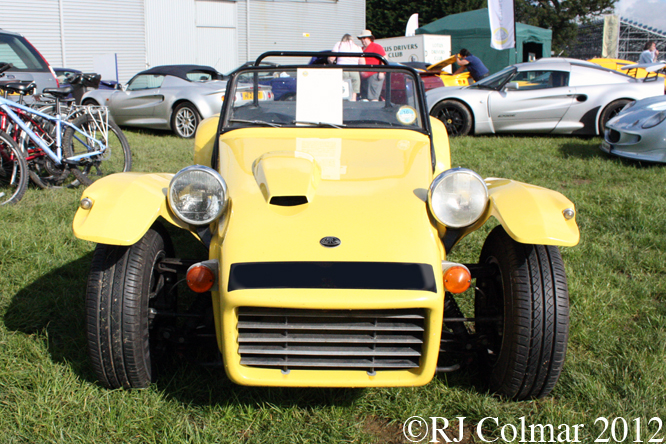
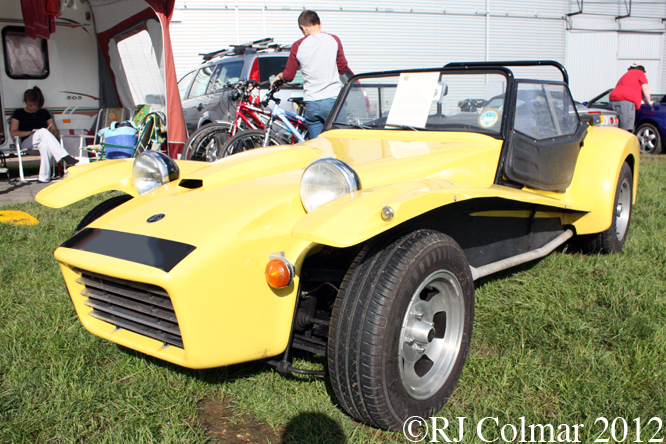
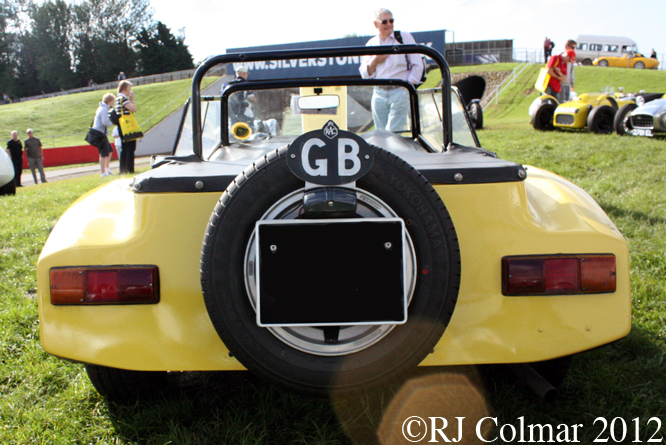
For 1970 Lotus introduced the Series IV version of it’s popular kit car the Lotus Seven with straight edge styled fiber glass body panels replacing the aluminium body work of the first three incarnations of the model which had evolved since 1957.

Lotus 60 Seven Series IV, Silverstone Classic

Three engine options were offered with the kits Ford 1300 GT, 1600 GT and Lotus big valve twin cam as used in the Lotus Europa Twin Cam, today’s featured car has the 1600cc / 97.6 cui motor which produces 85 hp more than double that of the 1957 Lotus Seven.

Lotus 60 Seven Series IV, Silverstone Classic

The Wolferace alloy wheels are not standard but were available in 1970 when this car was built.

Lotus 60 Seven Series IV, Silverstone Classic

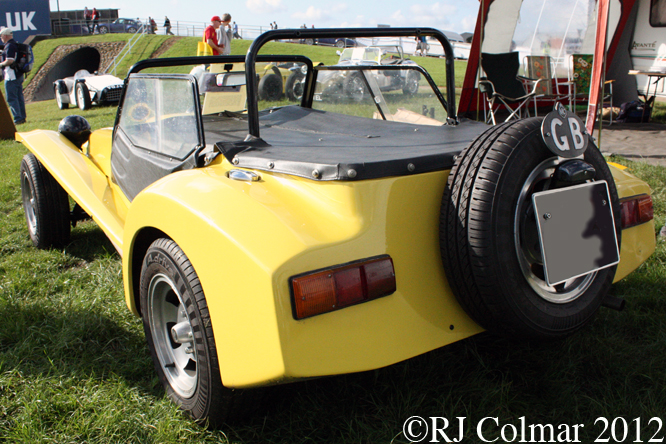
Amazingly this 42 year old car has only 68,000 miles on the clock from new.

Lotus 60 Seven Series IV, Silverstone Classic

Around 1,000 Series IV Sevens were built the last kits being supplied to Caterham’s in Kent,UK and Steel Brothers in Christchurch, New Zealand where the last kit was built. After Caterham ran out of Series IV kit’s, with the agreement of Lotus, they started developing versions of the older Lotus Seven Series III design, something which they still do to this day manufacturing vehicles for both road and track.

Thanks for joining me on this “Seven 4 The 70’s” edition of “Gettin’ a li’l psycho on tyres” I hope you will join me again tomorrow when I’ll be visiting Silverstone for a six hour endurance race. Don’t forget to come back now !
Share

Big John’s Return – Ferrari 512M

Today’s featured Ferrari is a 512M replica of the type that I looked at last June.

Ferrari 512M, Siverstone Classic

My research indicates this car appears to be one of at least 2 replica’s built by Bob Houghton in the UK around 1990.

While I was looking into the history of todays featured car I was surprised to learn that 1964 World Champion ‘Big’ John Surtess drove a Ferrari 512S, chassis #1038, in a little remembered return to the Ferrari fold, with Jacky Ickx to finish 2nd in 1970 Spa 1000 kms behind the Porsche 917 driven by Jo Siffert and Brian Redman.

Surtees who became World Champion, driving for Ferrari in 1964, walked out on the team at Le Mans in 1966 after a disagreement over driver arrangements for the 24 hour classic. In the process Surtees threw away a good shot at the 1966 World Championship in which he eventually finished 2nd despite driving an unfancied and unreliable Cooper Maserati for the balance of the 1966 season which had started well with a win for Ferrari in the 1966 Belgian Grand Prix.

Jacky Ickx again drove chassis #1038 on it’s second and final outing at Le Mans in 1970 sharing with Peter Schetty. A single accident in the rain had eliminated four other Ferrari 512S’s and a fifth had dropped out soon after the start. Ickx was in 6th place four hours after the start of the race and climbed all the way up to second around midnight before skidding off at the Ford Chicane killing one marshal injuring a second and writing off the car which was never to be seen again.

Thanks for joining me on this “Big John’s Return” edition of “Gettin’ a li’l psycho on tyres” I hope you will join me again tomorrow. Don’t forget to come back now !
PS 18 08 12 Thanks to Tim Murray for pointing out that John Surtees won the Belgian Grand Prix driving a Ferrari 1966 not the Monaco Grand Prix as originally stated.

Share

Camouflaged Origins – MG F-type Magna #F1013

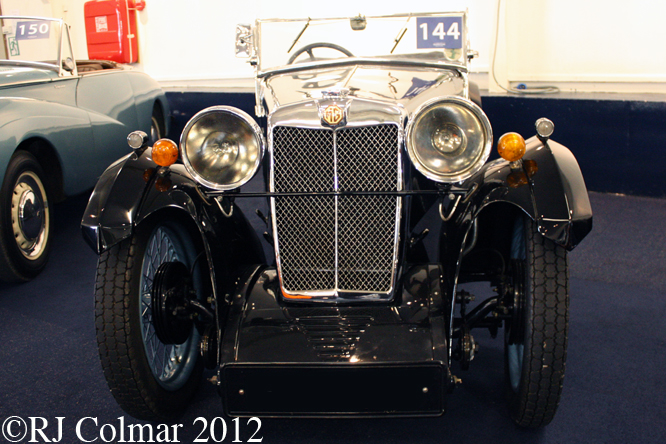
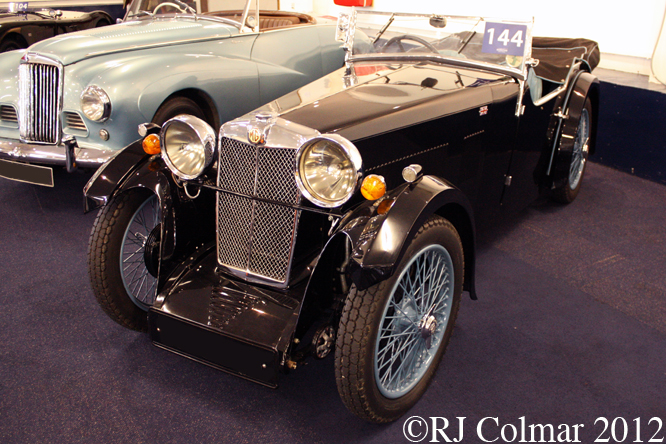
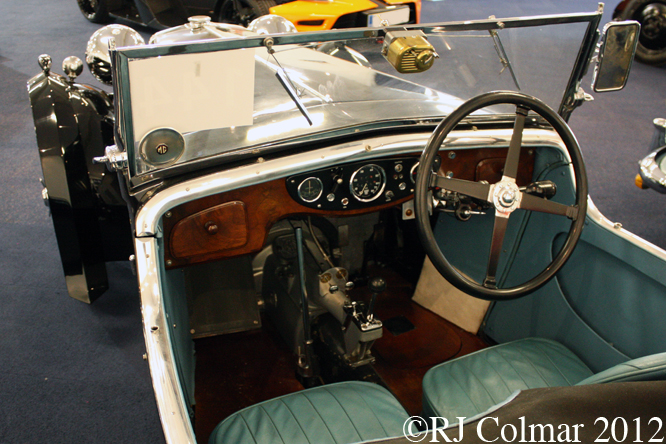
In 1931 MG introduced the the D-Type and F-Type the former with a four cylinder version of a motor which originated from the Wolseley Hornet. The F Type had a six cylinder engine that used the same four cylinder block with an extra two cylinders added.

MG F-type Magna, Silverstone Auctions, Race Retro

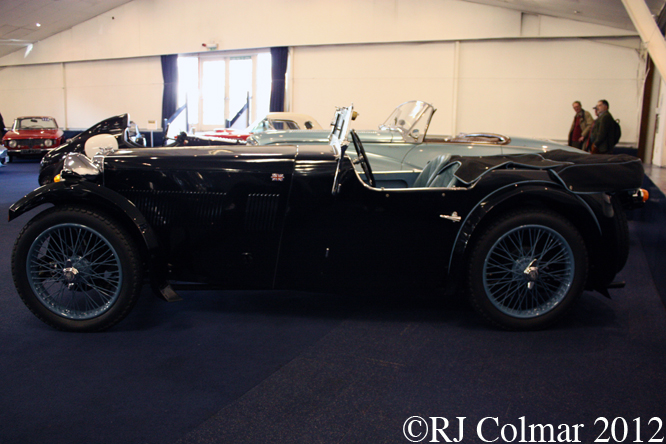
MG did it’s best to camouflage the Woleseley origins of the 37hp twin carburetor six cylinder motor with dummy side panels.

MG F-type Magna, Silverstone Auctions, Race Retro

Sitting in between the M-type Midget and the 18/80 Six models the 4 seat F-type was considered under powered and under braked when carrying three passengers along with the driver.

MG F-type Magna, Silverstone Auctions, Race Retro

This 1932 F-type Magna was taken of the road in 1955 and a ten year restoration was set in motion when a stunt actor acquired it in 1979. Allegedly the actor bought the car after driving an MG J2 while working on the film “Death On The Nile

MG F-type Magna, Silverstone Auctions, Race Retro

A two seater F2 version of the F-type was introduced in 1932 the body of which would be used on the aforementioned J2.

MG F-type Magna, Silverstone Auctions, Race Retro

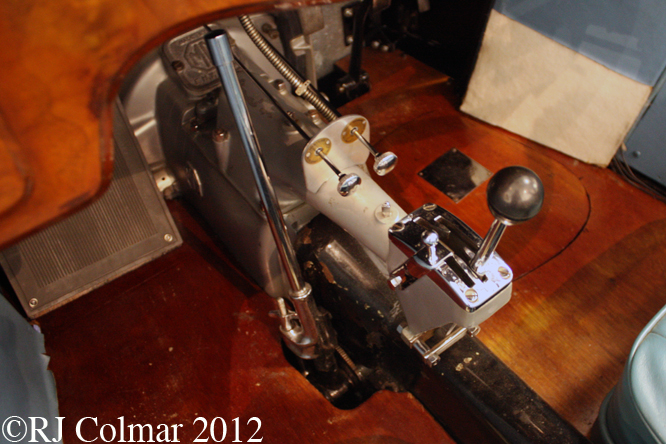
The F-type’s non-synchromesh four speed gearbox was manufactured by ENV. 1250 F-types were built from 1931 until 1932 when the model was replaced by the L-type Magna.

Thanks for joining me on this “Camouflaged Origins” edition of “Gettin’ a li’l psycho on tyres”, I hope you will join me again tomorrow. Don’t forget to come back now !

Share

Le Mans & Targa Class Winner – Ferrari 500 TRC #0682MDTR

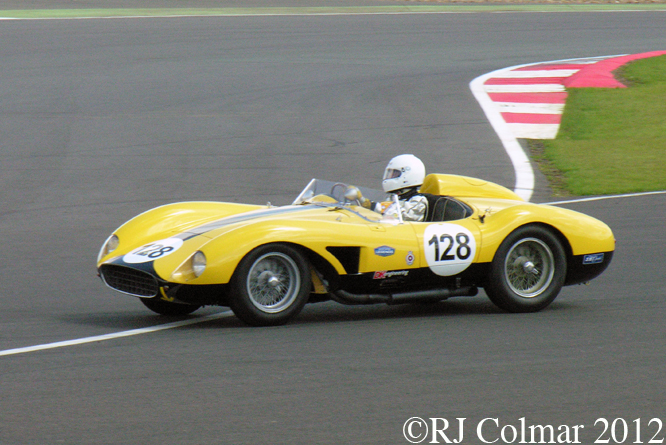
The Ferrari 500 TRC was the last of a line of 4 cylinder sports racing cars built by Ferrari between 1953 and 1957.

Ferrari 500TRC, Silverstone Classic

Today’s featured 500 TRC chassis #0682MDTR, seen above at the recent Silverstone Classic where it was driven by David and James Cottingham, was built for Belgian entrant Jaques Swatters in 1957.

The high light of Swatters “Ecurie Francochamps” 1957 season was the class win, 7th overall, recorded at Le Mans with Lucien Bianchi and Georges Harris at the wheel of #0682MDTR.

The following season Gaetano Starraba acquired the car and with Franco Cortese finished 7th overall, 1st in class, in the 1958 Targa Florio.

Starrabba returned to the Targa the following year with Domenico Lo Coco however the car was wrecked in accident which ended it’s ‘in period history’.

Present owner David Cottingham next appeared with the car in Classic and Sportscar in 1991 and he has raced this most famous of TRC’s regularly ever since.

Thanks for joining me on this “Le Mans & Targa Class Winner” edition of “Gettin’ a li’l psycho on tyres” I hope you will join me again tomorrow. Don’t forget to come back now !
Share