Tag Archives: Sports

Racing Transformer – McLaren Elva Mark I #M1A-20-15

In 1952 aged just 14 years old Bruce McLaren entered his first competition driving event a hillclimb in New Zealand with an Austin A7 Ulster which hois Dad Les had restored. by 1957 he was driving a Cooper Climax which he also modified sufficiently to become runnner up in the 1957 and 1958 New Zealand Formula 2 series.

By the end of 1958 Bruce made his Grand Prix debut in the German Grand Prix driving a works Formula 2 Cooper Climax where he finished fifth but was not awarded any World Championship points which were only awarded to drivers of Formula One cars. Bruce stayed with Cooper for seven years becoming the then youngest Grand Prix winner aged just 22 in the 1959 US Grand Prix at which his team mate Jack Brabham won his clinched his World Championship.

In 1963 Bruce founded Bruce McLaren Motor Racing Ltd and his first car was the Zerex Special a car that had been transformed from a 1.5 litre / 91.5 cui Cooper Climax single seater Formula one car to a two seater sports car powered by an Oldsmobile V8 featuring a tube frame of Bruces own devising, the rechassisied car painted garden gate green was distinguished by eight stub exhausts angled to the rear, won first time out at Mosport in Canada in 1964 and again at Brands Hatch the same year. This car was last seen in Venezuela at the end of the 20th Century.

For 1964 Bruce built 3 Oldsmobible powered M1A sports racing cars which were the first first to bear his name, of which the first Bruce raced, the second was used for testing and the third was a show car. Bruce entered into an agreement with Trojan who were also owners of Elva Cars to build a production run of customer M1A’s under license for the 1965 season.
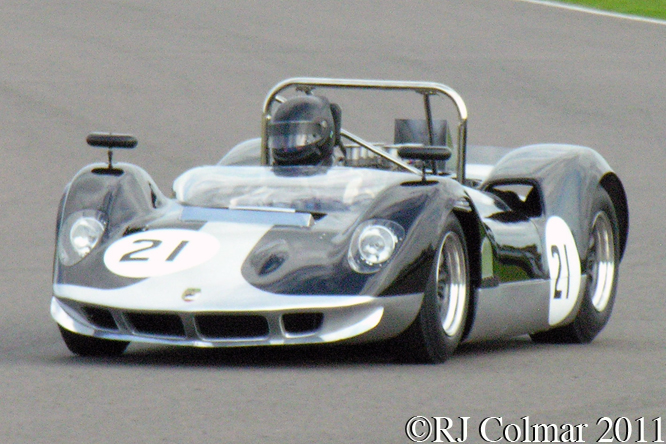
McLaren Elva Mark I, Goodwood Revival

Today’s featured car is one of the 24 M1A’s built under license and was marketed in the USA as the McLaren Elva Mark 1 which could be fitted with Chevrolet, Ford or Oldsmobile V8’s. This particular chassis #M1A-20-15 was originally supplied to Joe Starkey who is recorded as having won seven events in McLaren Elva Mark 1 chassis in 1965 and 1966, although at the time of writing these achievements have not been specifically ascribed to the chassis featured today. If you believe this car is the one Joe won those races in, as seen winning at Green Valley in 1966 in this linked photo by Jerry Melton please do not hesitate to chime in below.

In 1968 having failed to attract much interest in it’s 3 litre / 183 cui Formula A open wheel series the SCCA opened up it’s premier category to 5 litre / 302 cui stock block motors which over the ensuing 6 years proved extremely popular in the US, UK South Africa and particularly Australia where the F5000 series, as Formula A was known outside the USA, remained a premier category until 1982.

For the new 5 litre / 302 cui regulations Joe Starkey had his M1A transformed into an offset single seater open wheel car running a 500 cc / 30 cui undersized Oldsmobile motor. Starkey’s McLaren in open wheel form can be seen in this grainy linked photo. Joe was not alone converting a McLaren 2 seater into an open wheeler for Formula A.

Since the featured photograph of the car restored to it’s original closed wheel form was taken, with current owner John Bladon driving at Goodwood, the large chrome safety cage has been replaced with a black one of more modest proportions in time for a winter trip to Australia.

I’ll be celebrating McLaren’s first 50 years by featuring 3 more McLarens on Sunday’s for the rest of April.

My thanks to owner John Bladon, David McKinney and RA Historian from The Nostalgia Forum for their help identifying today’s featured car.

Thanks for joining me on this “Racing Transformer” edition of “Gettin’ a li’l psycho on tyres” I hope you will join me again tomorrow. Don’t forget to come back now !

Share

Which Type ? – Lotus Esprit X180R

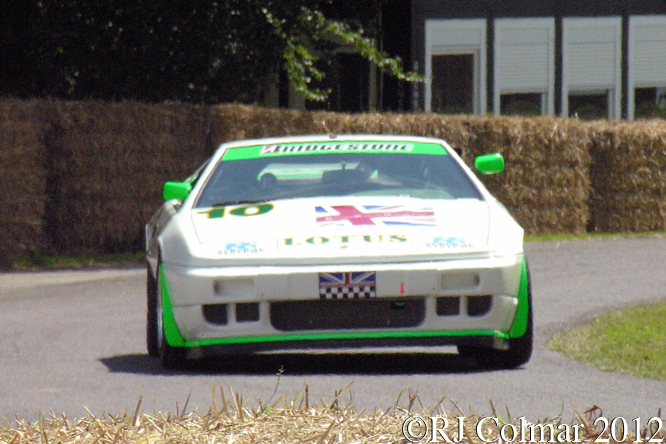
In 1990 Lotus built 2 racing cars based on the Peter Stevens designed Esprit Turbo SE X180 which became known as the X180R and everyone appears to agree that the car was given the Lotus Type 105 number. These cars were built to be raced in the Sports Car Club of America (SCCA) Escort World Challenge by Doc Bundy and Scott Lagasse and won 4 times in 8 races.

Lotus  Esprit X180R, Goodwood Festival of Speed

Flush with success Lotus then built three new 300hp versions of the X180R’s the following season for the IMSA Bridgestone Super Car Championship in 1991 which Doc Bundy duly won in 1992.

There is some disagreement amongst internet sources about the type numbers of the 3 cars built in 1991 which some sources suggest were given the Type 106 number while others have it that all five race cars built in 1990 and 1991 are Type 105’s and that 20 road going versions of the X180R racer were given the Lotus Type 106 type number. Other sources suggest the 20 road going versions of the X180R are actually Type 105’s.

To confuse the identification issue further it would appear the 2 1990 race cars were updated to 1991 spec so technically these might be Type 105/106’s.

If you are a Lotus historian and can definitively put the record straight on the type 105’s and 106’s please do not hesitate to chime in below. I’d be most grateful.

The car seen above driven by Doc Bundy at Goodwood Festival of Speed carries the later 1991 spec body work differentiated by the splitter (green) that runs into extended lower front wheel arches (also green)

Thanks for joining me on this “Which Type ?’ edition of “Getting a li’l psycho on tyres” I hope you will join me again tomorrow. Don’t forget to come back now.

Share

Ferrari For Hire – Ferrari 750 Monza Scaglietti Spider S1 #0504M

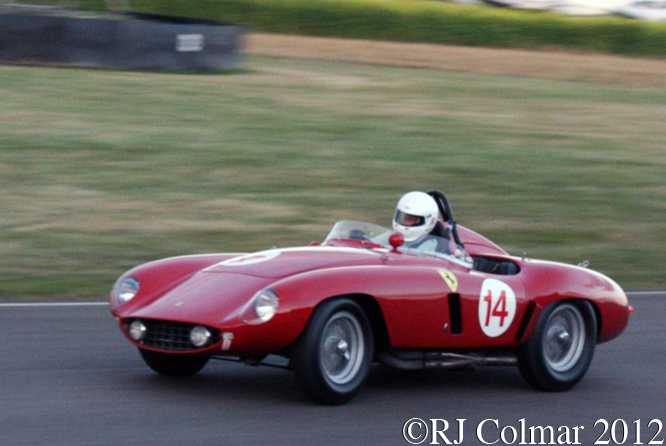
Today’s featured Ferrari 750 Monza chassis #0504M was purchased new in 1955 by S.A.I.P.A. Srl in Modena Italy in February 1955 and nine days latter it was rented out to Frenchman Michel Poberejsky who entered and won the Agadir Grand Prix for sport cars entered under the pseudonym “Mike Sparken”.

Ferrari 750 Monza, Goodwood Revival

After retiring, having started from pole, from the 1955 British Empire Trophy and then coming second, from pole again in the Easter meeting at Goodwood, Sparken was joined by Marsten Gregory at Le Mans where the pair retired with engine problems. Marsten Gregory then drove #0504M in two races in Portugal and one in Brazil scoring 2 2nd plce finished and a win at the Portuguese Monsanto track.

Ferrari 750 Monza, Goodwood Revival

The last known races for the car were in the United States with Donald Johnson driving to a 3rd and 2nd place finishes at Lawrenceville and Greenwood in 1963, Donaldson is credited with a final race appearance in 1964 at Mid America Raceway where he is believed to have started but his finishing result is unknown. Dudley Cunningham drove the car in the 1969 Mt Equinox Vintage hillclimb where he set a record time.

Ferrari 750 Monza, Goodwood Revival

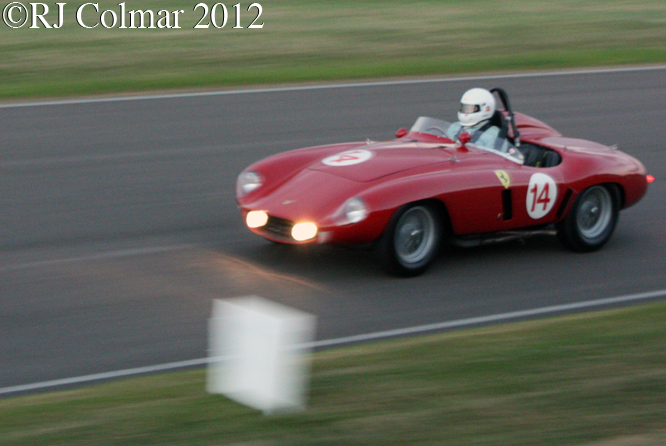
In 1970’s the car returned to Europe and has been with its current owner Richard Frankel since 2000, #0504M is seen in these photographs competing in the Freddie March Memorial Trophy at the Goodwood Revival meeting last year where it’s owner retired with less than half an hour to go.

Thanks for joining me on this “Ferrari For Hire” edition of ‘Gettin’ a li’l psycho on tyres’, I hope you will join me again tomorrow. Don’t forget to come back now !

Share

Tour de France Winner – Ferrari 250 GTO #4153GT

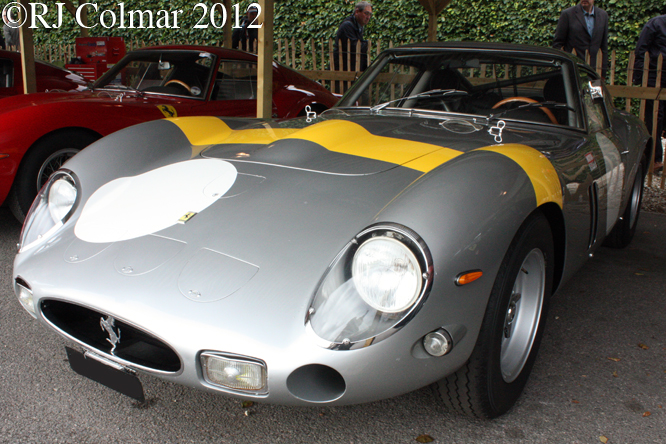
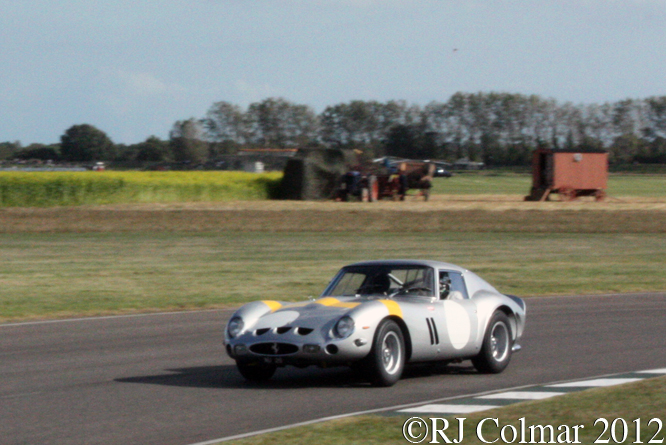
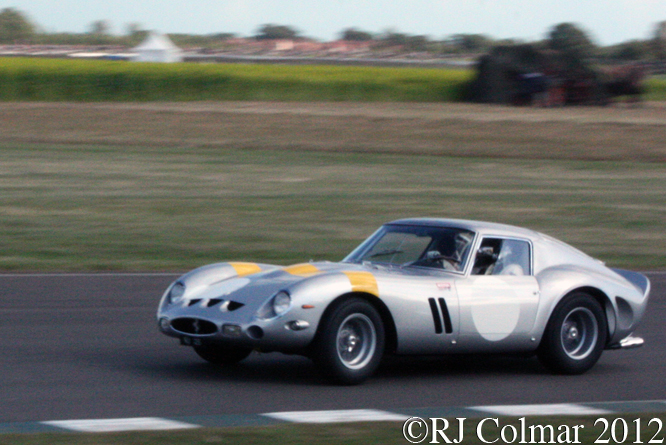
On June 2nd 1963 Frenchman Pierre Dumay took delivery of a silver Ferrari 250 GTO chassis #4153 and two weeks later it was entered under the Ecurie Francochamps banner in the 1963 Le Mans 24 Hours for himself and Belgian Léon “Elde” Dernier in which they finished 4th overall and second in class. Dernier means ‘last’ and Léon prefered to race under a pseudonym of the pronunciation of his initials LD. By the following week it appears that ownership of the car had been transferred to Ecurie Francochamps and entered in race for first Dernier and then Dumay at Zolder and Reims where 2nd overall and 3rd in class finishes were recorded respectively.

Ferrari 250 GTO, Goodwood Revival

The following season it appears that the Marquis Philippe de Montaigu bought #4135 but continued to enter it in numerous events from 1964 through 1965 under the Ecurie Francochamps banner for the likes of; Georges Berger, Lucien Bianchi, Pierre Dumay, “Gauvin”, Gustave Gosselin, “Lagae”, “Lambrecht”, Francis van Lysbeth, Willy Mairesse, Gerard Langlois van Ophem

Ferrari 250 GTO, Goodwood Revival

#4153’s biggest win was when Lucian Bianchi and and Georges Berger won the 1964 Tour de France. In 1965 chassis #4153 was entered into the first Marathon de la Route, an 82 hour race held at the Nurburgring that replaced the Liege Rome Liege Rally, but Bianchi, Berger and Jean Blaton failed to finish. Since then the car has remained in Europe with the current German owner acquiring it in 2003.

Ferrari 250 GTO, Goodwood Revival

Seen at the wheel of chassis #4153GT during a 250 GTO demonstration at last years Goodwood Revival meeting is Daniela Ellerbrock.

Thanks for joining me on this “Tour de France Winner” edition of “Gettin’ a li’l psycho on tyres” I hope you will join me again for a look at a Lotus tomorrow. Don’t forget to come back now !

Share

Restructuring Fallout – Singer B37 Sports

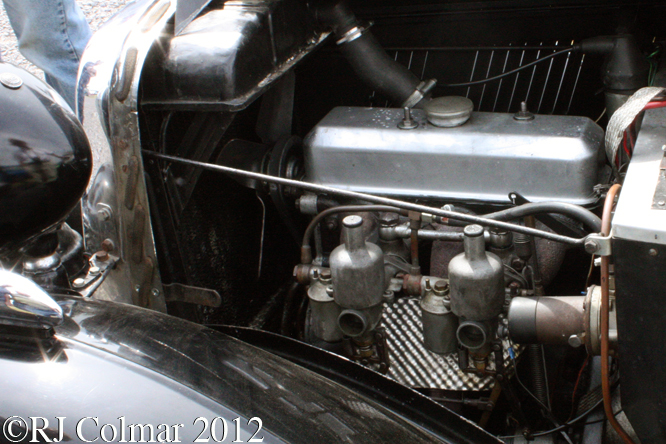
In 1934 Singer built a 48 hp six cylinder 1 1/2 litre / 91 cui version of the Singer Le Mans with the aim of challenging the big hitters in the class, Aston Martin and Riley at Le Mans. The two team cars came home 7th and 8th overall behind the class winning Rileys which finished 2nd and 3rd overall and ahead of the Aston Martin’s which finished 10th and 11th.

01 DSCN9599sc

71 six cylinder Le Mans cars were built and they proved competitive especially in trials where they were noted for their restart capabilities on steep slippery surfaces. In 1937 a new six cylinder model known as the B37 was introduced powered by a 59 hp motor.

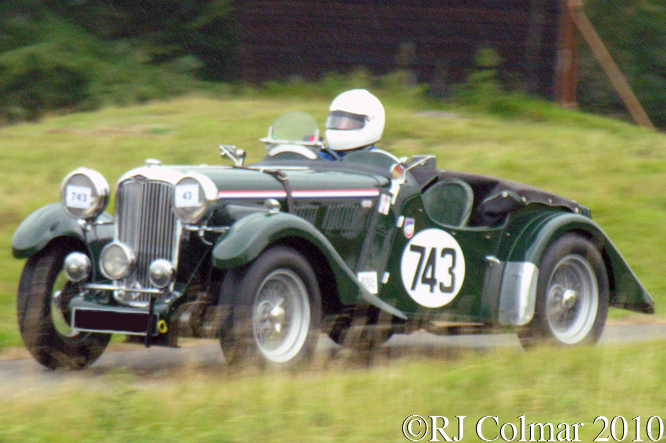
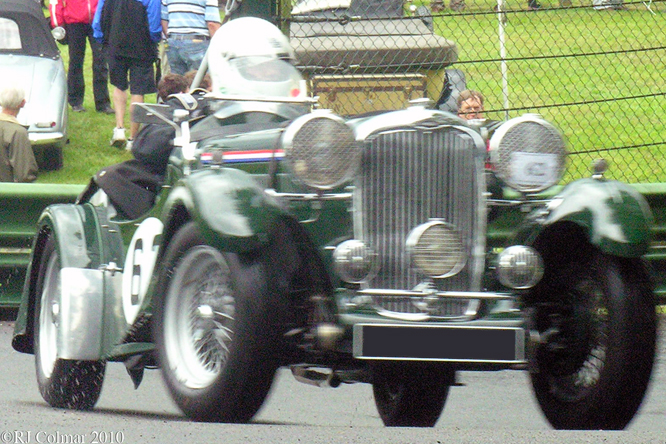
Singer B37, VSCC, Loton Park

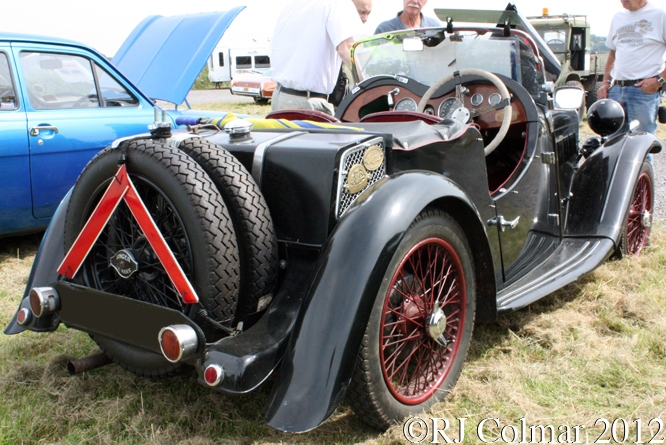
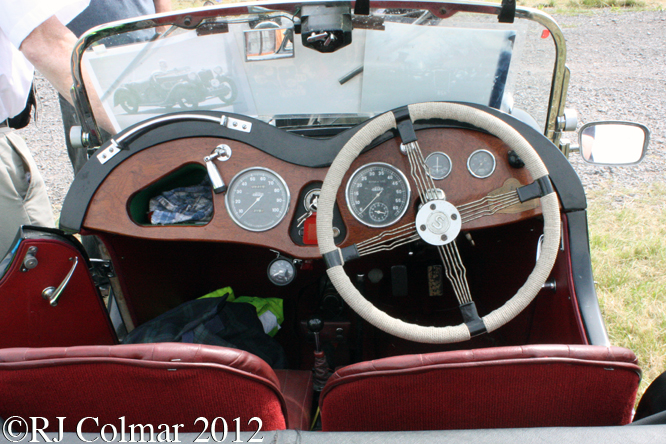
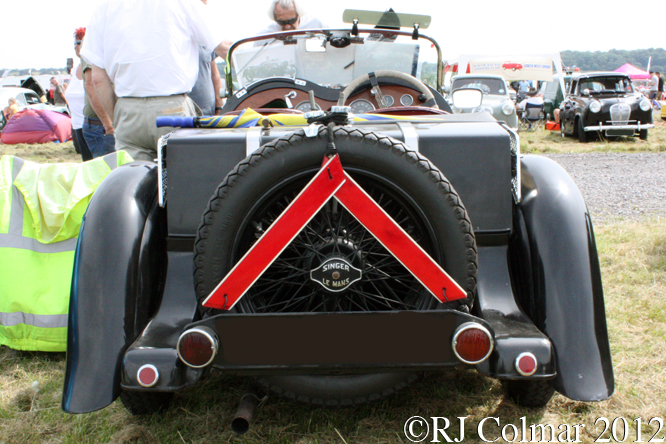
The B37 was built on a new chassis and fitted with a competition “fly off” handbrake; twin spare wheels, offering added traction in trials events and a “Hill Holder” grab handle for passengers to hang onto when bouncing the car up slippery trials hills.

Singer B37, VSCC, Prescott

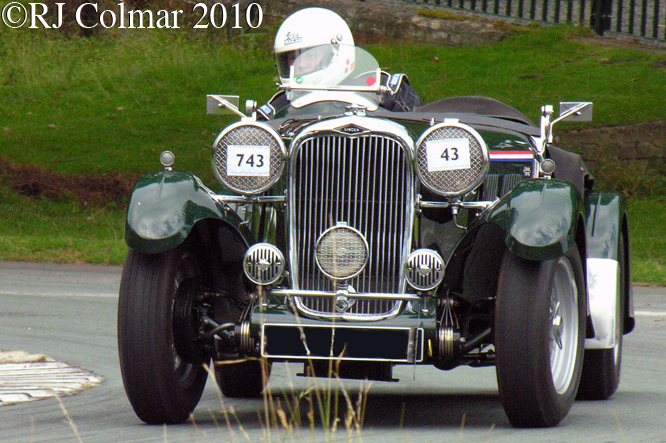
Thanks to the financial restructuring going on at Singer the B37 was cut from the Singer range after just 12 cars had been built. The car belonging to John Gibson seen at Loton Park, top two and Prescott Hill Climbs is one of three that are thought to have survived.

Thanks for joining me on this “Restructuring Fallout” edition of “Gettin’ a li’l psycho on tyres” I hope you will join me again tomorrow. Don’t forget to come back now !
Share

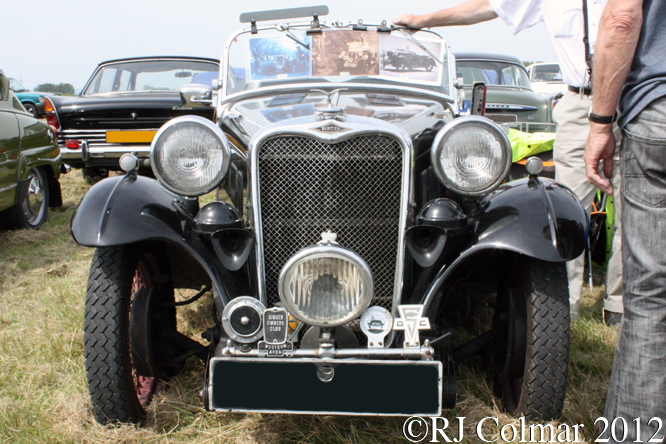
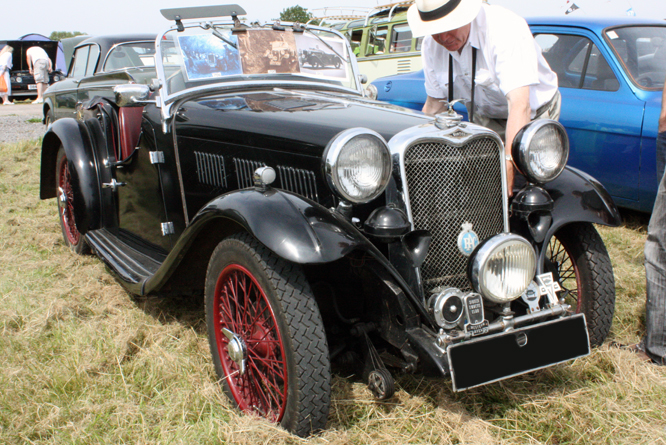
Last On Sunday – Singer 9 Special Speed

At the very first Le Mans 24 Hours race in 1923 Maurice Boutmy and France Jérôme Marcandanti covered 89 laps to finish 18th to become the first 1 litre / 61 cui normally aspirated car to finish the race in an Amilcar CV. Remarkably it was not until 1933 that Singer Competition Manager FS Barnes and Alf Langley were to finish the classic endurance race in a similar sized British built car a Singer 9 Sports which completed 140 laps came 13th and last overall and second in class 21 laps behind a French built Tracta driven by Félix Quinault and Pierre Padrault.

Singer 9 Special Speed, Summer Classics, Easter Compton

The achievement of simply finishing the 1933 Le Mans 24 Hour race at an average speed of 49.4 miles per hour was enough to encourage Singer to build a two seat version of the Singer 9 Sports, nominally the Singer 9 Sports was a 4 seater however the car used at Le Mans had a large fuel tank that occupied the space for the rear seats, called the Singer Le Mans. In 1934 Norman Black and J.R.H. Baker finish fifteenth overall 7th in class in a Singer Le Mans covering 163 laps.

Singer 9 Special Speed, Summer Classics, Easter Compton

The popular Singer Le Mans is not to be confused with either the six cylinder 1 1/2 litre Singer Le Mans, or the four Singer Le Mans Replica’s built in 1939 which were out and out 2 seat racing cars. In 1935 a Special Speed version of the Singer Le Mans was introduced, distinguished by the running boards between the front and rear wings and it is this model that is seen here at last years Summer Classics Meeting at Easter Compton.

Singer 9 Special Speed, Summer Classics, Easter Compton

Power for the Singer Super Speed comes from a 38 hp 972 cc / 59 cui 4 cylinder overhead cam motor still running on a two bearing crank as did the Singer 8 I looked at last week.

Singer 9 Special Speed, Summer Classics, Easter Compton

This particular car was delivered in December 1935 to HD Acres who a few weeks later used it to compete on the Exeter Trials in January 1936. Acres car can be seen being helped out of a little difficulty on the Simms test by those very nice men from the Automobile Association on this link.

Singer 9 Special Speed, Summer Classics, Easter Compton

By 1939 this Singer 9 Special Speed had passed into the ownership of RJW Appleton who is known to have driven the car on the Lands End Trial the same year. RJW Appleton was responsible for building the Riley powered Maserati called the Appleton Special which achieved and 1100cc / 67 cui standing mile record of 91.3 mph in 1937.

Singer 9 Special Speed, Summer Classics, Easter Compton

The current owner of today’s featured car acquired it as a large box of ‘bits’ and has spent many years returning it to it’s present condition.

Thanks for joining me on this “Last On Sunday” edition of “Gettin’ a li’l psycho on tyres” I hope you will join me again tomorrow. Don’t forget to come back now !
Share

Jumpin’ Motorcycles – Singer 8 Junior Sports

Today’s featured 1928 Singer 8 Junior Sports is essentially mechanically identical to the 4 seat Coachbuilt saloon I looked at last week. The two cars were first registered a couple of months apart.

Singer 8 Junior Sports, VSCC, Loton Park

The boat tailed wire wheeled sports, originally fitted with cycle wings, running board, lights and a windscreen became known as the Porllock Sports after an unusual reliability record was set in 1930 by a Singer Sports on the famous 1 in 4 Porlock Hill in Devon where officials from Royal Automobile Club observed one being driven up and down the hill one hundred times in the space of 15 hours.

Singer 8 Junior Sports, VSCC, Loton Park

Singer Sports also had a multitude of other uses the Royal Signals Corps used one with a driver crouched in the cockpit as a hurdle for its motorcycle AND horse jumping display team.

The stripped car seen here at Loton Park is being driven by Ed Swain at Loton Park.

Thanks for joining me on this ‘Jumpin’ Motorcycles’ edition, of “Gettin’ a li’l psycho on tyres” I hope you will join me again tomorrow. Don’t forget to come back now !
Share