Tag Archives: Volvo

Multi Purpose Vehicle – Volvo 240 Tørslanda

The Volvo 200 series launched in 1974 was a significant update of the 140 series which is outwardly easily identifiable by federal spec railway sleeper like low impact bumpers that gave the vehicle all the style, despite the best efforts of Jan Wilsgard, of a house brick.
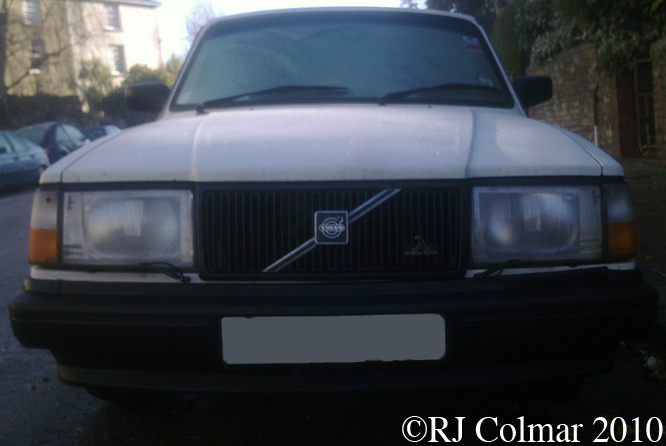
Volvo 240 Tørslanda

From 1974 – 1993 the 200 series came with a variety of straight 4 engines, some with turbo chargers, Peugeot Renault Volvo, PRV, aluminium V6’s and straight 5 cylinder or 6 cylinder diesels sourced from the Volkswagen.
Volvo 240 Tørslanda

Over the 19 year production run there were numerous stylistic updates which softened the more extreme features of the early 200 series, it was never considered a particularly good looking car but it’s robustness and average 19 year longevity did lend the 200 series a certain status cache somewhere between a Range Rover and a multi purpose vehicle, MPV, Mini Van, the latter which first appeared as the 200 series production was being wound up.
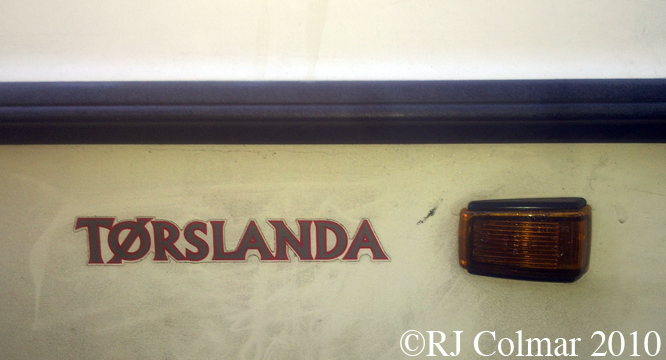
Volvo 240 Tørslanda

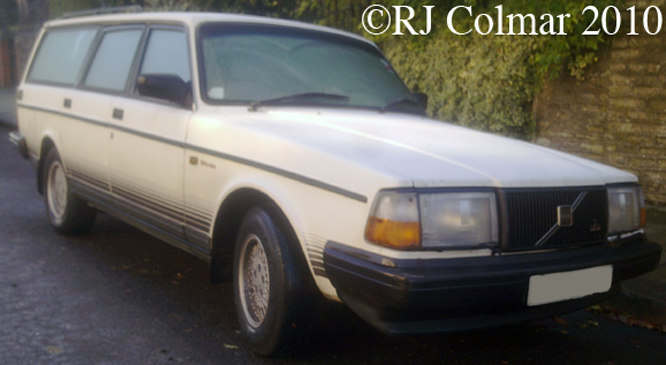
The 1993 Tørslanda special edition, named after the Swedish factory that built them, was a back to basics estate station wagon model, allegedly designed to cope with harsh Scandinavian winters.
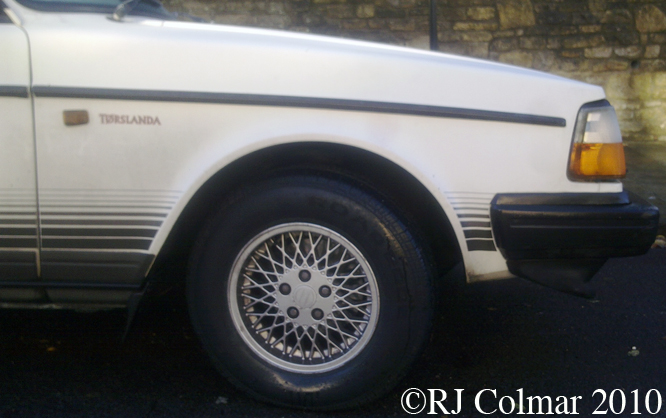
Volvo 240 Tørslanda

It featured, by then already retro, manual mirrors, door locks and windows front & rear, plastic trim in place of chrome which fairs badly in snow, heated seats, power steering, full length body stripes and BBS style alloy wheels.
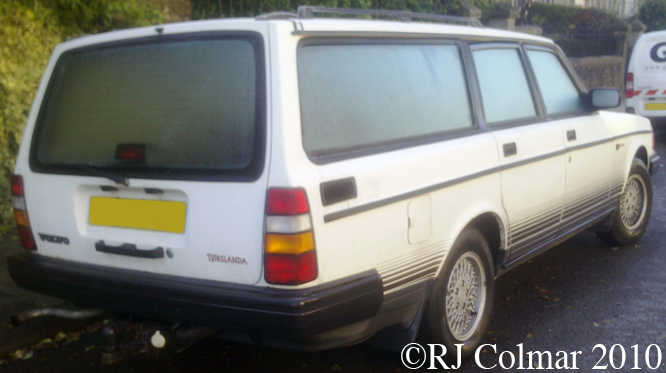
Volvo 240 Tørslanda

The 200 series estates / station wagons, which accounted for a third of the 2.8 million units produced in Sweden, Australia, Belgium, Canada, Italy and Malasia, were particularly popular with those needing a large cargo area, the 41 cubic feet cargo area could carry large pieces of furniture, cookers, fridges, washing machines or hay bales and was often supplied with dealer fitted rear facing seats that could accommodate two small children. These cars are still popular with trades people in Europe today.
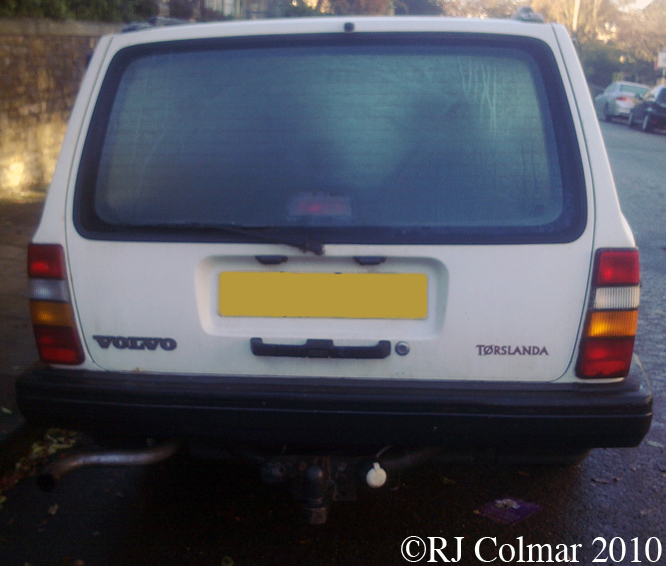
Volvo 240 Tørslanda

Whilst outright performance was rarely top of the list of a typical 200 series customers desires, Volvo did support the development of a turbocharged two door model that allowed Gianfranco Brancatelli and Thomas Lindström driving for the Eggenberger Motorsport team to share the 1985 European Touring Car Championship.

Thanks for joining me on this Tørslanda special edition of ‘Gettin’ a lil’ psycho on tyres’, I hope you will join me again tomorrow. Don’t forget to come back now !

Share

Halfway House – Volvo 144

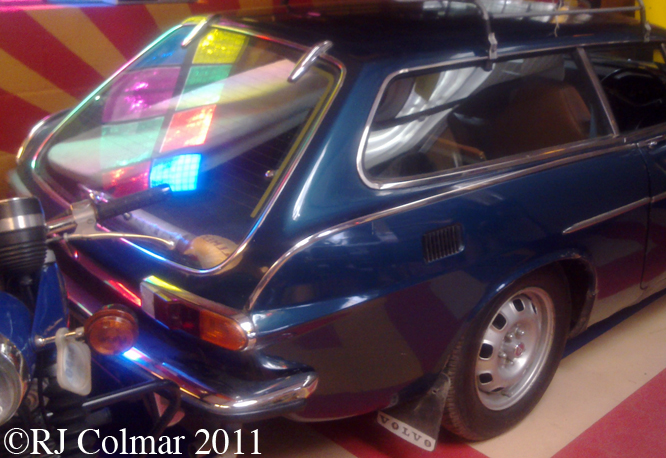
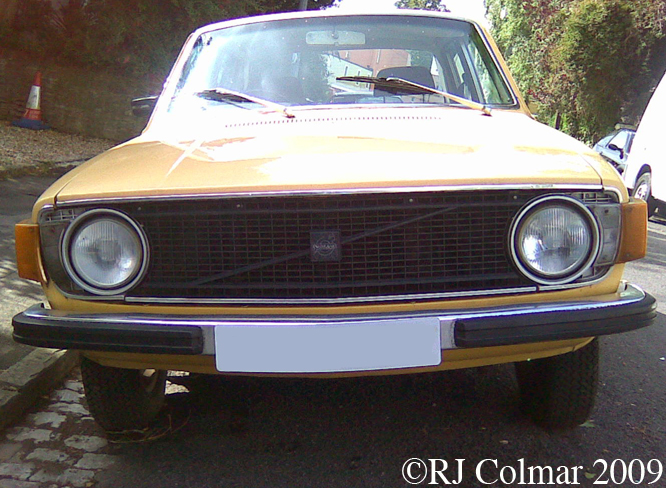
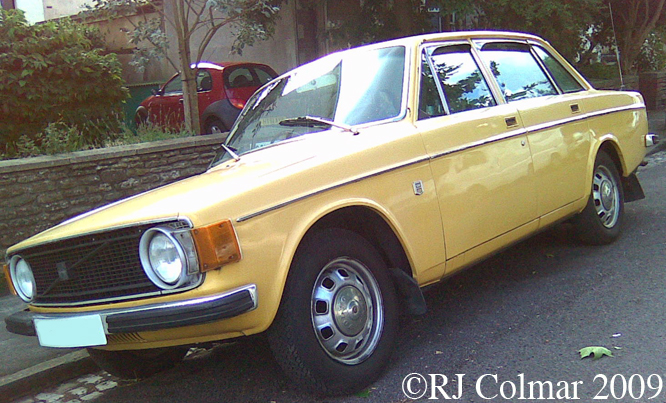
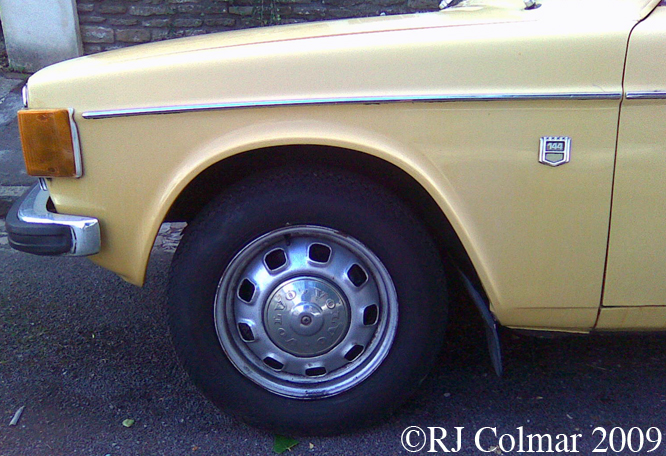
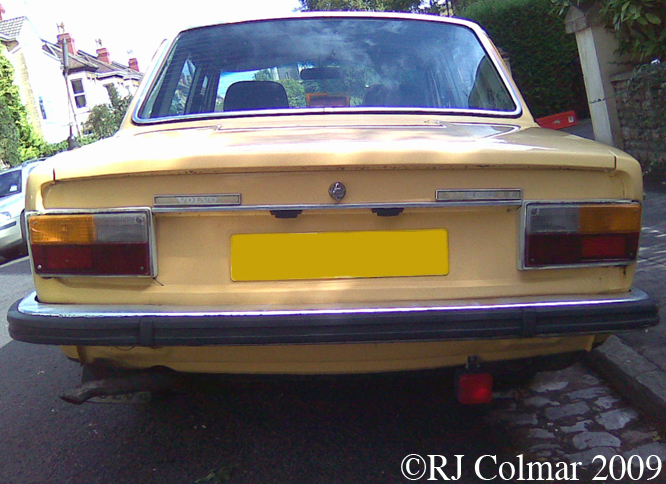
Volvo 144

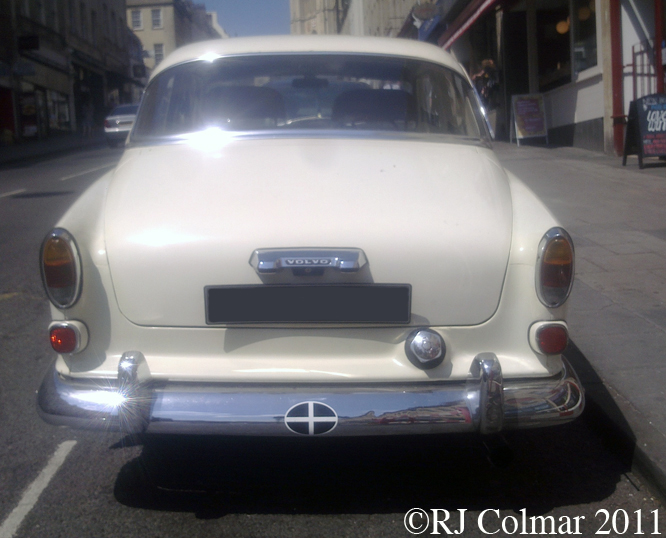
The Volvo 140 launched in 1966, which superseded the Volvo 120 Amazon series, was the seed design that stayed in production across two distinct series of models for thirty years until 1996. The 140 design was significantly updated in 1973 as a precursor to the 240 series launched in 1974.

Volvo 144

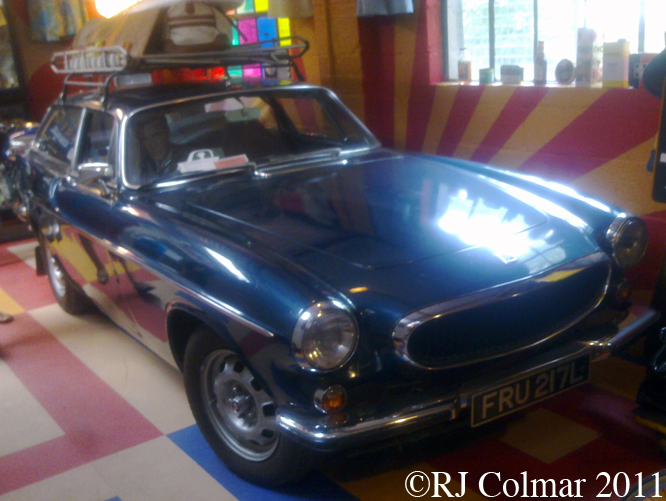
This 1973 140 model, a halfway house between the original 140 series and forthcoming 240 series, has many interior features familiar to early 240 owners including much of the entirely padded plastic faced dashboard, round, replacing the previous strip, instrumentation and rocker switch gear.

Volvo 144

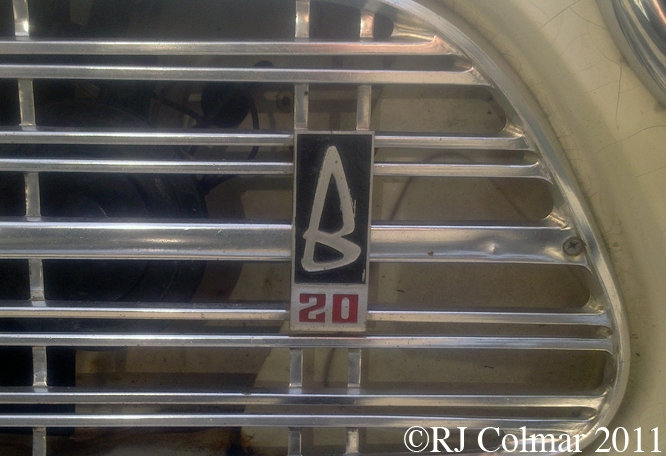
For 1973 power for the 140 series came from a 1986 cc / 121 cc straight 4 cylinder Over Head Valve B20 motor itself the last iteration of a design born out of the Volvo V8 B36 motor used in Volvo commercial vehicles.

Volvo 144

The tail of the 1973 and ’74 140’s is also identical to that on the early 240 series the only thing missing is the much larger energy absorbing bumpers of the latter model.

The 140 series was dropped in 1975 with final production of all 140 variants since 1966 totalling over one million units which were built at plants in Torslanda Sweden, Ghent Belgium, Halifax Nova Scotia Canada, Melbourne Victoria Australia and Shah Alam Malaysia.

Thanks for joining me on this Halfway House edition of ‘Gettin’ a lil psycho on tyres’, I hope you’ll join me again tomorrow. Don’t forget to come back now !
Share

Swedish Tease – Volvo 1800 ES

In 1956 Volvo launched a sports car the P1900 a fibreglass bodied roadster, inspired by the Chevrolet Corvette, if you have never heard of it, or seen it, that is because the P1900 was a disaster so bad that after using one on a holiday weekend incoming Volvo President Gunnar Engellau cancelled further production after just 68 units had been produced.

Volvo 1800ES, Cotswolds MM

Volvo’s next attempt to crack the sports car market hinged on a design by Italian design house Pietro Frua called the P1800. In 2009 Volvo admitted that there Italian designed car was actually designed by a Swede working at Frua called Pelle Petterson who’s father had designed the Volvo PV444.

The P1800 was eventually launched in 1961, with the same engine as used in the Volvo Amazon series, making the model 50 years old this year along with the much cheaper Renault 4 and slightly cheaper E-Type Jaguar. Originally scheduled to be built by Karmann in Osnabruck Germany until Karmann’s biggest customer Volkswagen intervened with an emphatic ‘Nein’ the P1800 was initially produced under contract by Jensen. After quality issues emerged production transferred from the UK to Sweden with the introduction of P1800 S which featured a larger 118 hp motor.

Volvo P1800ES, Cotswold MM

In 1970 the P 1800 E was introduced with fuel injection and in 1972 the last of the P1800 models, P1800 ES seen here, was launched with a novel one piece rear glass tailgate which transformed the coupé into a versatile eye catching shooting brake for which designer Jan Wilsgaard was responsible.

The P 1800 like many contemporary models was killed off my the 1974 US safety and emissions regulations, with some 39,407 Coupé and 8,077 Shooting Brakes built the P1800 was considered a far greater success than it’s predecessor. My overwhelmimg memory of driving P1800 models is that despite being 6′ tall I had the feeling I was sitting in a very deep bath tub and had a great deal of difficulty determining where the corners of the car were when shuffling these models through cramped garage space.

Hope you have enjoyed today’s one piece glass tailgate edition of ‘Gettin’ alil’ psycho on tyres’ and that you will join me again tomorrow. Don’t forget to come back now !
Share

Bi- Parting Tailgate – Volvo Amazon Estate / Station Wagon

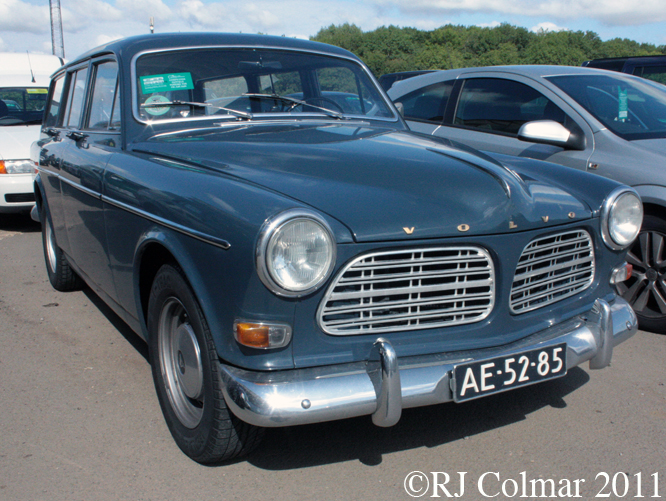
Last week I looked at the Volvo Amazon, no sooner had I written the blog than I came across this Estate / Station Wagon version with Dutch plates.

Volvo Amazon, Silverstone Classic

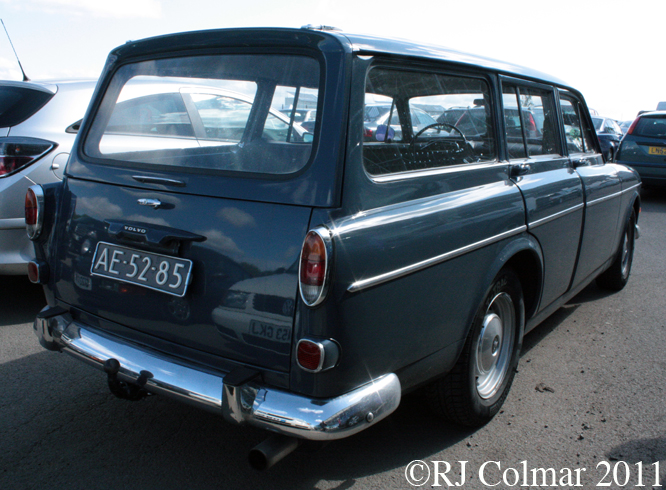
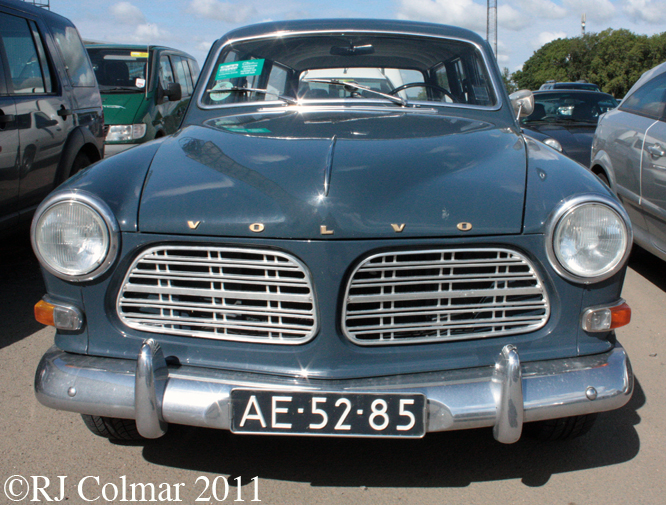
Unlike most modern vehicles of this type the Amazon had a two piece tailgate, the bottom half opens down to form a loading platform while the top half opens up a feature common to many US Estate Station wagons. Like the Mini introduced in 1959 the rear licence plate is conveniently hinged at the top so that one can carry longer loads with the tailgate down without attracting the ire of traffic law enforcement agencies.

Volvo Amazon, Silverstone Classic

The Amazon Estate / Station wagon was launched in 1962 seven years after the original Amazon Saloon / Sedan, and shared with it’s 3 box sibling body work made of phosphate treated steel to improve paint adhesion and heavy use of undercoat and anti corrosive oil treatment.

Volvo Amazon, Silverstone Classic

Between 1962 and 1969 Volvo manufactured 73,000 Amazon Estate / Station wagons.

Thanks for joining me on this bi-parting tailgate edition of ‘Gettin’ a lil’ psycho on tyres’ I hope you will join me again tomorrow. Don’t forget to come back now !
Share

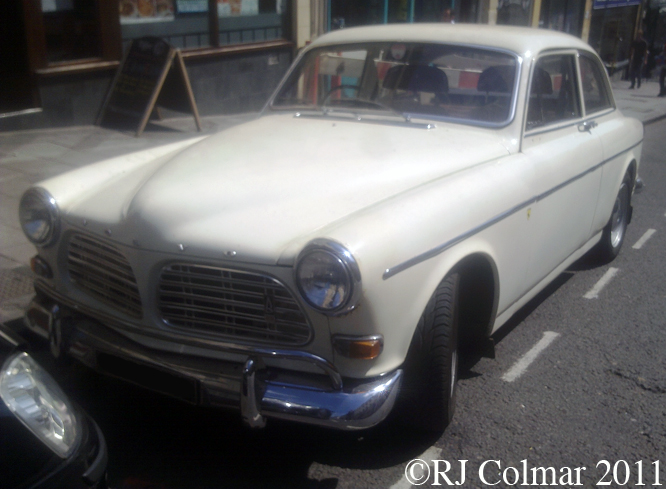
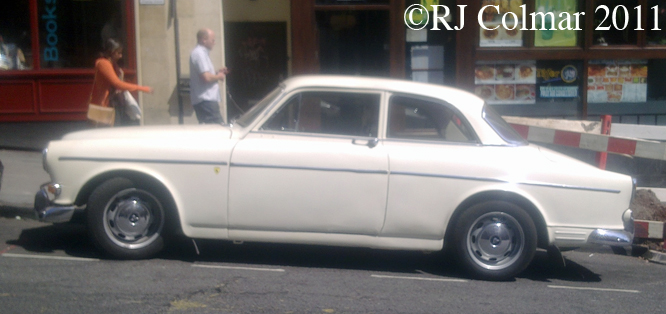
Design Mash Up – Volvo 120 Amazon (131)

Looking back it is a sobering thought that when my four grand parents were born at the turn of the 20th century the invention of motorcar was somewhere between 10 and 15 years old and of them neither of my grand mothers ever learned to drive and only one of my grandfathers ever owned a private car and that only for five years before he died aged 63.

Volvo 120 Amazon (131)

Nearly 60 years later I on the other hand was lucky enough to be born into the age of mass consumption by the time I was just four my parents not only had their first new car but all of their friends had new cars too !

Volvo 120 Amazon (131)

Of those friends my parents had I soon adopted two, Ted and Syd, as my Uncles, both drove brand new grey 2 door Volvo 120 Amazons which had a factory code 131 denoting 2 door single carb versions.

Volvo 120 Amazon (131)

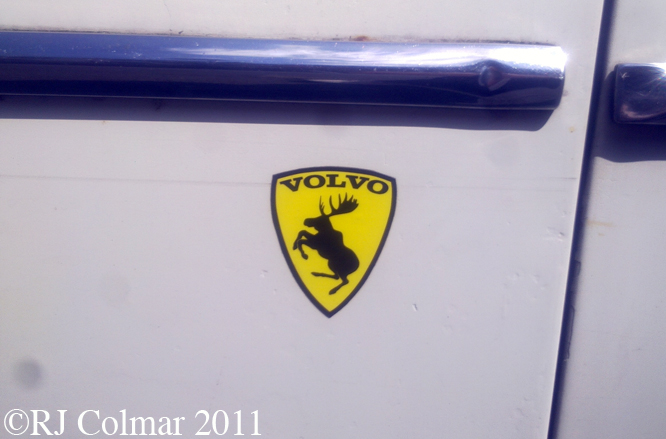
Volvo’s original intention was to call the model Amason, however manufacturers, of one of the most irritating sounding 2 strokes ever, Kreidler already had the Amason name registered and so the name Volvo Amason was restricted to Sweden by agreement.

Volvo 120 Amazon (131)

In today’s parlance the Amazon design would probably known as a design mash up with the bonnet lines seemingly inspired by the 2nd generation Chrysler New Yorker, the grill design seemingly from the 1955 Chrysler C-300 though designer Jan Wilsgaard claims he was inspired by a Kaiser Manhattan he saw in the docks in Gothenburg. Interesting strap line for the linked Kaiser advertisement in the light of Volvo’s reputation from 1959 until the late 1990’s.

Volvo 120 Amazon (131)

During a production run of over 600, 000 units produced in Sweden, Belgium, Canada, South Africa and Chile from 1956 to 1970, in 1959 the Amazon became the first car to be fitted with three point front seat belts as standard. The seat belts fitted in Uncle Ted & Syds cars encouraged my folks to get some after market seat belts for our more modest Austin A40 Countryman, an act that probably saved their lives a year or two later when we were involved in a 30 mph collision with the side of a truck.

Volvo 120 Amazon (131)

After 3 years of abuse at BBQ’s on the beaches of Larnica, Cyprus most Sundays and nearly 25 years further good service the last time I saw Uncle Syds Amazon it was rapidly deteriorating into a rust bubble in the mid 1980’s despite the fact that the engine was other wise mechanically sound. The 1970 model shown here seems to have faired considerably better.

Thanks for joining me on this Amason edition of ‘Gettin a lil’ psycho on tyres’ I hope you will join me again tomorrow. Don’t forget to come back now !
Share

The Spirit that never breaks down – Rolls Royce Silver Spirit.

The radiator grill design and tragic Spirit of Ecstasy mascot makes Rolls Royce one of the few instantly recognisable brands no matter what age or model. The mascot on this model instantly retracts if dislodged allegedly preventing injury to pedestrians and making the item much harder to collect by even the most determined fans of the Beasty Boys.

The Silver Spirit was a development of the Silver Shadow with a new body and suspension that brought RR into the 1980’s.

Sufficiently powered by a 6750cc / 411 cui V8 the Silver Spirit and slightly longer Silver Spur no longer featured the Citroen licensed self levelling suspension of the Silver Shadow but one using a Girling automatic hydraulic ride height control system riding on gas charged shock absorbers.

The Registration of this vehicle suggests that this might be a 1984 model but the alloy wheels to my not so well trained eye look to be of a more recent vintage. The Silver Spirit/Spur series is the twin of the Bentley Mulsanne / Eight series.

The Silver Spirit is the only Rolls Royce model that has ever come in to my hands, albeit briefly in my capacity as quality controller at a Volvo Garage, it certainly is an impressive machine to be seen driven around in, the ride quality is superb but the feel of the car with its spindly steering wheel and column shift left me feeling I was driving a very well appointed 1972 Volvo 144.

It should always be remembered that a Rolls Royce never ‘breaks down’, but if not looked after properly it might ‘fail to proceed’.

Erratum: in response to a question about the Citroen SM suspension on October 20th I stated that ‘Rolls Royce / Bentley took out licenses to use similar (Citroen hydropneumatic self levelling) systems on the Silver Shadow/T, Silver Spur/Mulsanne’ in fact as I have written above the Silver Spirit/Spur have a Girling self levelling systems. Apologies for any confusion that arose.

Hope you have enjoyed your stay, don’t forget to come back now !
Share