Customising Crocodiles – Bugatti Type 57SC Roadster #57593

In 1938 a British Colonel G.M. Giles bought a supercharged Bugatti Type 57 chassis #57593 sans body the unique design of which he entrusted to his brother Eric Giles and Jean Bugatti.

Bugatti Type 57SC, Giles Corsica Roadster, Hillsborough Concours d'Elegance

The Corsica Coachworks in London were entrusted with the realisation of the body which was painted light blue and trimmed with Connolly leather “imprinted with a crocodile texture”.
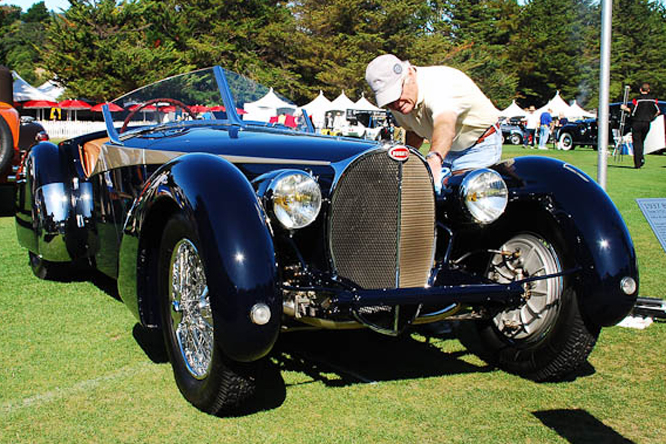
Bugatti Type 57SC, Giles Corsica Roadster, Hillsborough Concours d'Elegance

Colonel Giles kept the car until 1939 after which it’s history is well documented all the way to the present owner Californian Property Developer and founder of the Mozart Foundation Automobile Museum in Mountain View California, John Mozart.
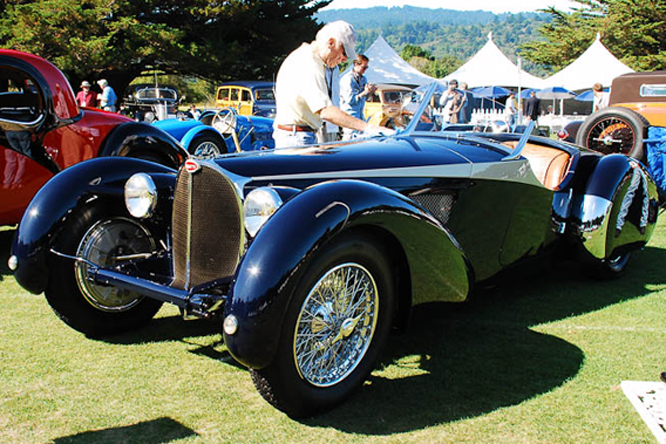
Bugatti Type 57SC, Giles Corsica Roadster, Hillsborough Concours d'Elegance

John drove the car for many miles before undertaking a restoration of the car which was completed in time to be awarded the best in show accolade at the 1998 Pebble Beach Concours d’Elegance.
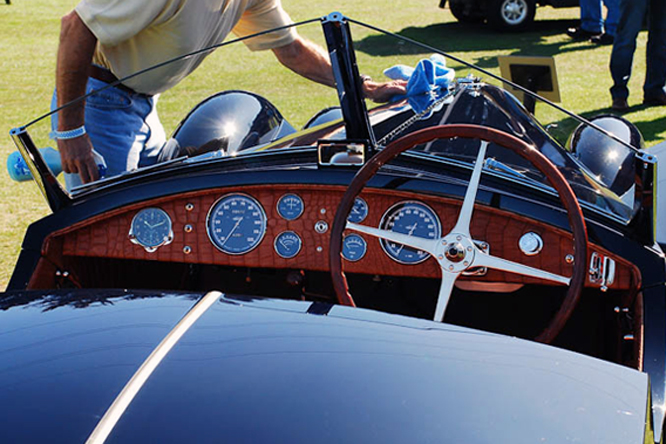
Bugatti Type 57SC, Giles Corsica Roadster, Hillsborough Concours d'Elegance

It would appear the restoration and subsequent award ruffled a few feathers causing one European hack to comment “Dismay has greeted news that a customized Bugatti was the shock ‘best of show’ winner of this year’s prestigious Pebble Beach Concourse d’Elegance…”
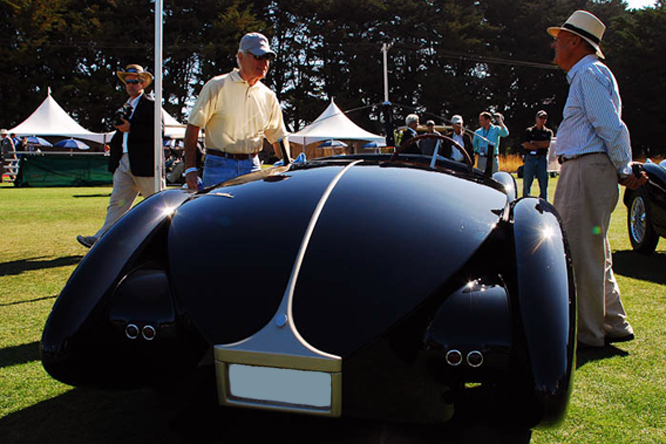
Bugatti Type 57SC, Giles Corsica Roadster, Hillsborough Concours d'Elegance

It would appear that a rather antagonistic and possibly xenophobic minority in the old car community took a disliking to John’s choice of colour for the vehicle, which discretely hides some of it’s clumsy finish, the use of chrome stone guards on the leading edges of the rear wings / fenders, which are a vast improvement on the original and unsightly black rubber items, or the use of real crocodile hide in place of the Connolly leather “imprinted with a crocodile texture”.

For my money John has done a great job improving on the original intention of the Giles brothers vision and certainly kept to the spirit of the vision, personally if I had the cash and the choice I’d much rather own the Corsica Roadster #57375, but a Bugatti is a Bugatti and I doubt Mr Mozarts example will be turning any fewer heads than my personal favourite.

My thanks to Geoffrey Horton for sharing his photographs which he took at Hillsborough Concours d’Elegance in 2011.

Thanks for joining me on this “Customising Crocodiles” edition of “Gettin’ a li’l psycho on tyres” I hope you will join me again tomorrow when I’ll be looking at what has been happening at the Avenue Drivers Club this year. Don’t forget to come back now !

Share

4 Pot Square Bore – Maserati 4CL #1566

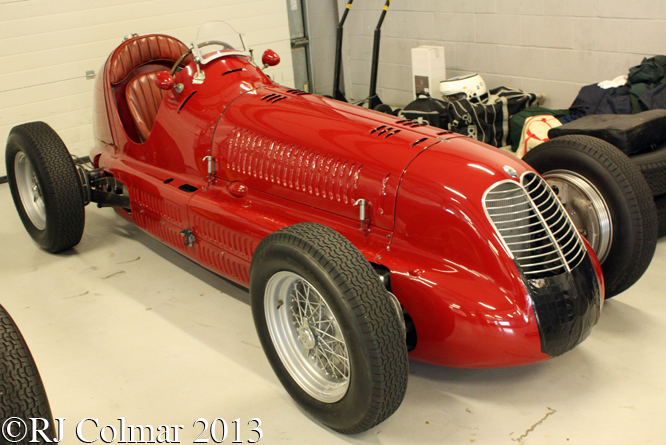
Fed up with the German Silver Arrow’s from Mercedes Benz and Auto Union stealing their thunder and pride the Italian Motorsports Authorities decided to cut Alfa Romeo and Maserati some slack by announcing that all of the Grand Prix run on Italian soil in 1939 would be for 1.5 litre / 91.5 cui Voiturettes which would exclude the German monsters that had been sweeping all before them in the top European open wheel series since 1935.

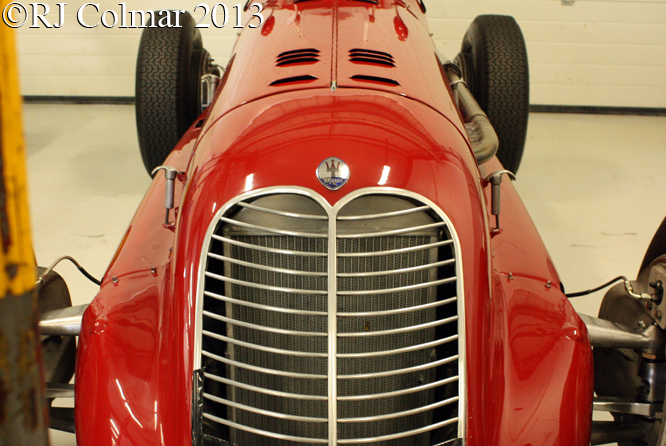
Maserati 4CL, HGPCA Test Day, Silverstone

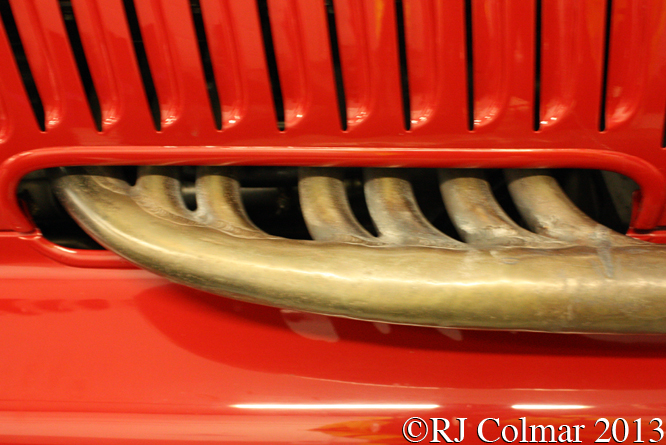
To take advantage of the new rules Ernesto Maserati designed a new 4 cylinder motor with bore and stroke dimensions roughly equal, known as square bore though the cylinders were of course round, and with four valves per cylinder to replace the 6 cylinder 12 valve motor fitted to the previous moderately successful 6CM.

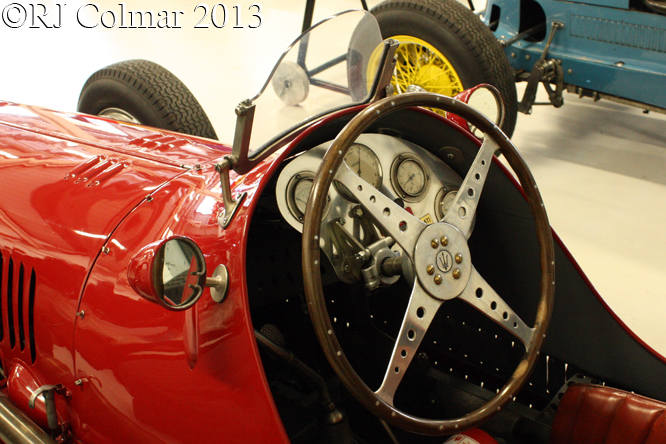
Maserati 4CL, HGPCA Test Day, Silverstone

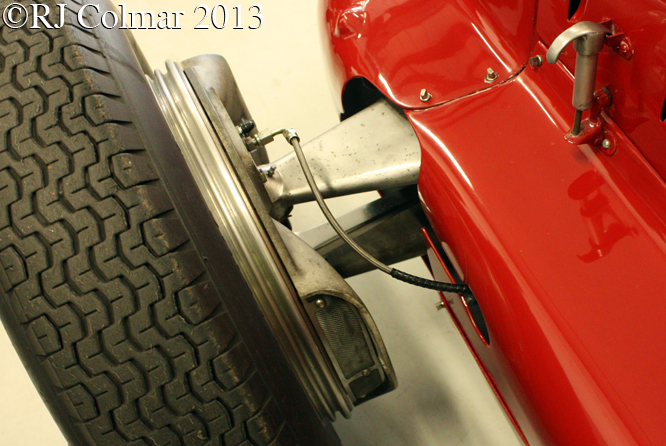
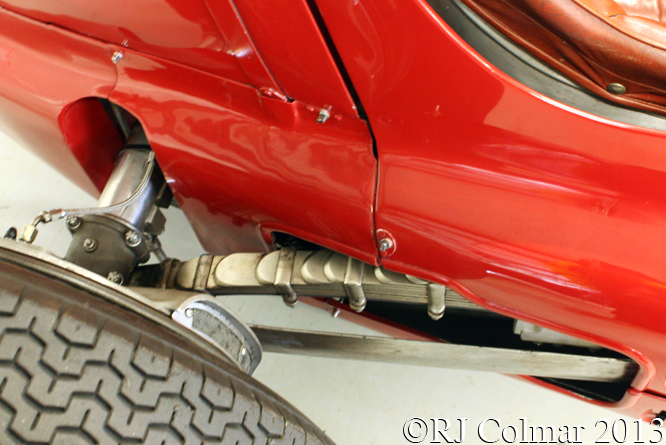
To handle the extra 30 hp of the new motor the 6 CM ladder chassis was moderately upgraded; with more use of aluminium, repositioned suspension to lower the chassis and the track was nearly 2″ wider.

Maserati 4CL, HGPCA Test Day, Silverstone

For the Tripoli Grand Prix, effectively on Italian soil since Lybia was an Italian colony at the time, Maserati produced one 4CL with a streamlined body for Luigi Villoresi to drive. Luigi qualified on pole in the race, generally regarded as having the finest field of voiturettes ever seen.

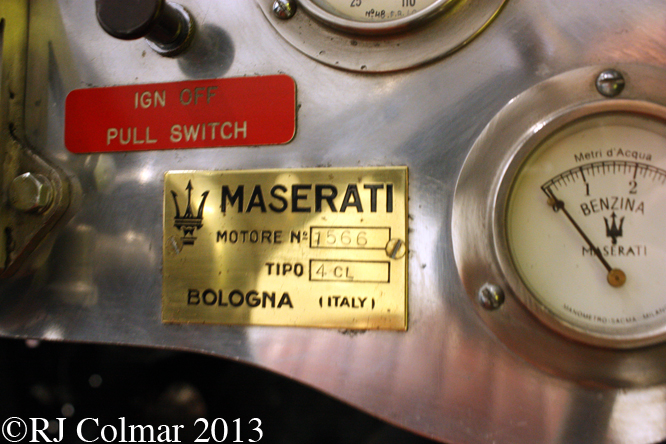
Maserati 4CL, HGPCA Test Day, Silverstone

However both Luigi and the other two 4 CL’s including #1566 seen here, driven in Tripoli by Giovanni Rocco retired leaving, Mercedes Benz to an uncontested victory with two W165 cars they had built in secret, much to the dismay of the Italians.

Maserati 4CL, HGPCA Test Day, Silverstone

Fortunately the W165’s, having made their point, were never to race again leaving Jonnie Wakefield in a private 4CL to score 3 victories to which the works team added 2 more before the outbreak of hostilities in the 1939/45 war. Luigi Villoresi driving a 4CL won at Targa Florio against opposition only from Axis aligned countries in 1940 and Giovanni Rooco driving #1566 finished third in the same race to record his best result in the car before the war.

Maserati 4CL, HGPCA Test Day, Silverstone

After the cessation of hostilities #1566 found it’s way to France where it was acquired by Robert Mazaud, a driver who set a lap record in the Le Mans 24 Hours, on his debut there, aboard a Delahaye in 1938. Robert would score his best result aboard #1566, 3rd at St Cloud in Belgium, a few weeks before being killed after an accident at the wheel of #1566 in the Nantes Grand Prix in France.

Maserati 4CL, HGPCA Test Day, Silverstone

Raymond Sommer, Tazio Nuvolari and Giorgio Pelassa all drove 4CL’s to victory in 1946, but it was 1947 when the 4CL really came on song with 10 victories to the models credit. Luigi Villoresi won 6 races with; Nello Pagani, Reg Parnell, Yves Giraud-Cabantous and Christian Kautz each winning one a piece.

Maserati 4CL, HGPCA Test Day, Silverstone

To the best of my knowledge Jean Judet entered #1566 in at least six events between 1946 and 1950 recording at least five retirements.

In all 15 4CL’s were built between 1939 and 1946, I believe #1566 seen in these photographs, at the HGPCA Test Day at Silverstone last year, has belonged to the family of the late Rodney Smith since 2004.

Thanks for joining me on this “4 Pot Square Bore” edition of “Gettin’ a li’l psycho on tyres”, I hope you will join me again tomorrow for a look at a Bugatti. Don’t forget to come back now !
Share

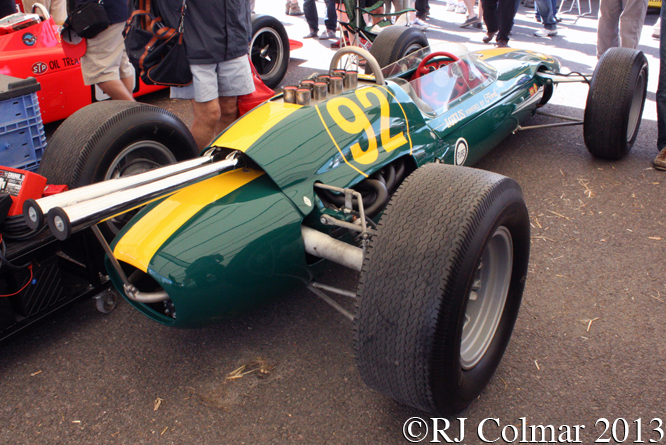
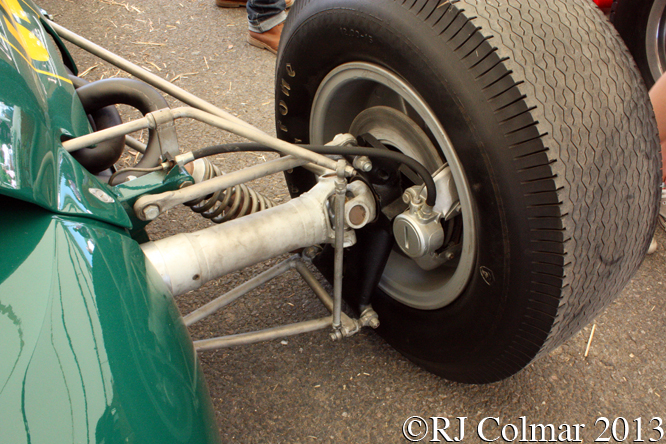
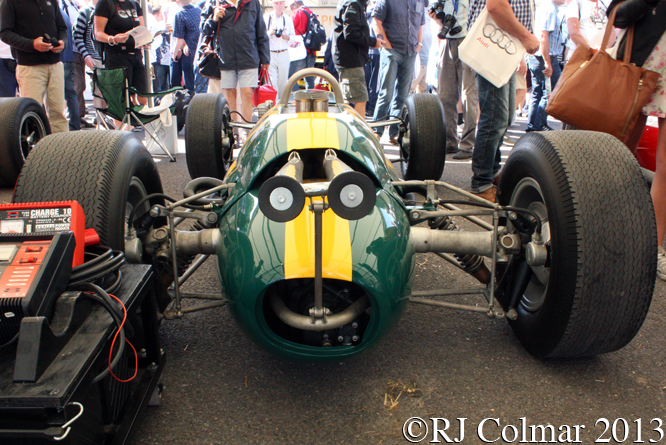
Dan’s 29’s – Lotus 29/2 & 29/1

A couple of years ago I wrote about the Lotus 29, #29/3, that Jim Clark drove in his first appearance in the Indy 500 in 1963. That car was wrecked at Phoenix at the end of 1964 in an accident that would claim the life of Bob Marshman.

Lotus Ford 29, Goodwood Revival

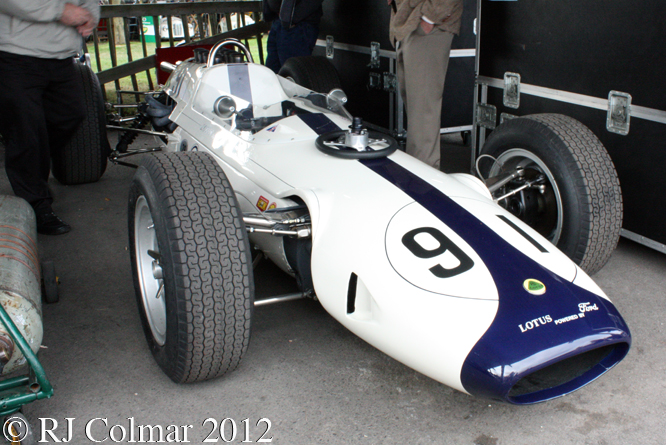
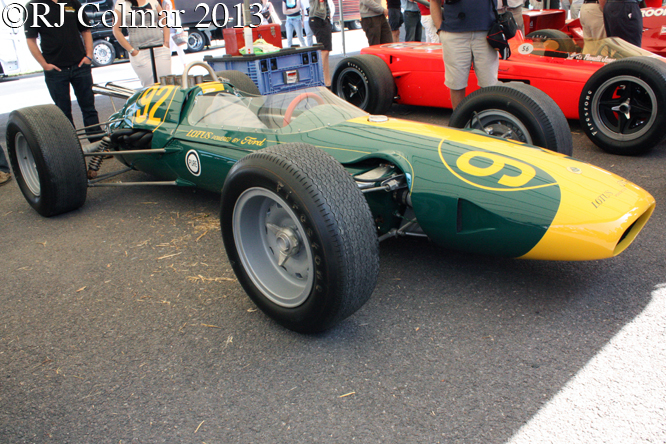
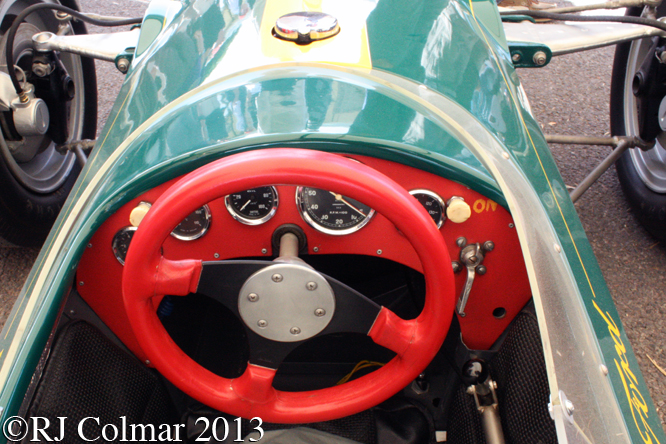
Today’s post features the other two Lotus 29’s #29/2 in white above and #29/1 in green below, which were both driven by Dan Gurney the driver who personally paid for Colin to visit the Indy 500 for the first time in 1962.

Lotus Ford 29, Goodwood Festival of Speed

Dan attempted to qualify the car painted white and seen carrying the #91 Indy 500 start number, but crashed it on Pole Day.

Lotus Ford 29, Goodwood Festival of Speed

Instead of repairing the car, chassis 29/2, the team put Dan in the original green #93 Lotus 29, chassis 29/1, which he qualified 12th. By race day the #93 29/1 was repainted white and Dan drove it to a 7th place finish.

Lotus Ford 29, Goodwood Festival of Speed

After the disappointment of loosing the ’63 Indy 500 on their debut Jim and Dan returned to take on the USAC Champ Car establishment at Milwaukee, with Jim in 29/3 and it would appear Dan drove 29/1 if one accepts that the race number #93 stayed with the chassis. Jim easily won the race from AJ Foyt whom he cleverly avoided lapping with Dan coming home third despite his car being fitted with over size carburetors.

Lotus Ford 29, Goodwood Festival of Speed

So far as I have been able to determine Bob Marshman was orginally given chassis 29/2, Gurney’s intended ’63 Indy 500 #91 race car, to drive in 1964 and it is this car which Bob qualified 2nd next to Jim Clark’s Lotus 34 at for the 1964 Indy 500.

Lotus Ford 29, Goodwood Festival of Speed

Bob appears to have crashed #29/2 at Milwaukee in ’64 and his owner Lindsey Hopkins bought #29/3 as a replacement apart from qualifying 2nd and 3rd at Indy and Trenton Bob had little luck in racing either of the Lotus 29’s never finishing in the top ten in either of them despite finishing 2nd three times in the Lindsey Hopkins Kuzma Offy that he was obliged to drive in the USAC Champ Car dirt track events.

These days the white #29/2 belongs to Skip Barber and when it is not on loan is to be found at his Barber Museum in Birmingham Alabama.

Lotus 29/1 with Jim Clark’s #92 on it belongs to the IMS Hall of Fame Museum and has often been confused with the car Jimmy drove at Indy and Milwaukee in ’63 that was crashed by Bob Marshman in ’64.

Thanks for joining me on this “Dan’s 29’s” edition of “Gettin’ a li’l psychoontyres” I hope you will join me again tomorrow for “Maserati Monday”. Don’t forget to come back now !
Share

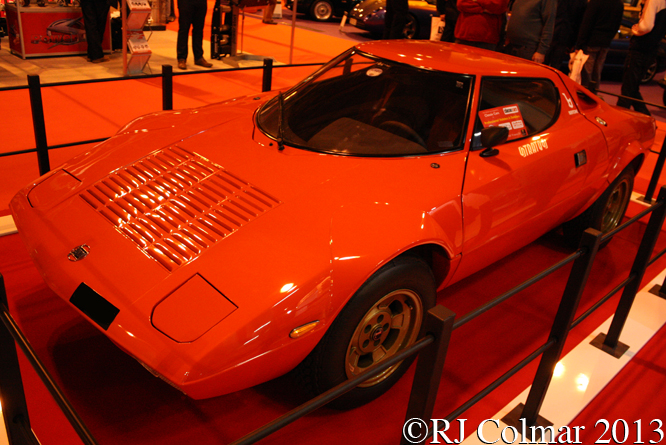
Fantastic Futurist – Lancia Stratos Stradale

In 1970 Bertone built a futuristic concept car called the Lancia Stratos Zero, the car was so low the windscreen also acted as ‘the’ door !

The following year Bertone showed the Lancia Stratos Prototype at the 1971 Turin Show, this car was a little more practical with two side doors and a mid mounted tranverse mounted V6 as per the Ferrari Dino from which it was sourced.

Lancia Stratos Stradale, Classic Motor Show, NEC, Birmingham

In all 492 of the road going Lancia Stratos Stradales like the 1974 example seen here at last years Classic Motor Show at the NEC in Birmingham were built between 1972 and 1974 when production of the V6 Dino GT also ceased.

HF competition versions of the Stradale proved particularly versatile in 1974 Gérard Larrousse and Amilcare Ballestrieri drove a Stratos to victory on the Targa Florio.

The Stratos is probably best remembered as a superb rally car, Sandro Munari and Mario Mannucci won the 1974 San Remo Rally on the Sratos World Rally Championship debut. By 1981, 4 years after the Stratos programe had been closed down by FIAT; Jean-Claude Andruet, Björn Waldegård, Bernard Darniche, Markku Alén, Tony Carello and Antonio “Tony” Fassina had all also helped contribute to a total of 18 World Rally Championship wins credited to the Stratos which included 3 consecutive wins for Munari on the Monte Carlo Rally, ’75 – ’77, and five victories each on the San Marino and Tour de Course Rallies.

Franz Wurz became 1976 European Rally Cross champion in a Stratos and sold his car, later fitted with a 3 liter / 183 cui motor V6 to Andy Bentza who won GT Rally Cross Championship in 1978.

In 1973 Sandro Munari and Mario Manucci won the mixed discipline Tour D’France, the following year Jean-Claude Andruet and “Biche” won the similar Giro di Italia with a similar bodied turbocharged example.

The final competition evolution of the Stratos was a turbocharged Group 5 long tail silhouette racer of the type that Carlo Facetti and P. Sodano drove to victory on the 1976 Giro di Italia.

Thanks for joining me on this “Fantastic Futurist” edition of “Gettin’ a li’l psycho on tyres”, I hope you will join me again tomorrow for a look at a couple of Lotus Indy Cars. Don’t forget to come back now !
Share

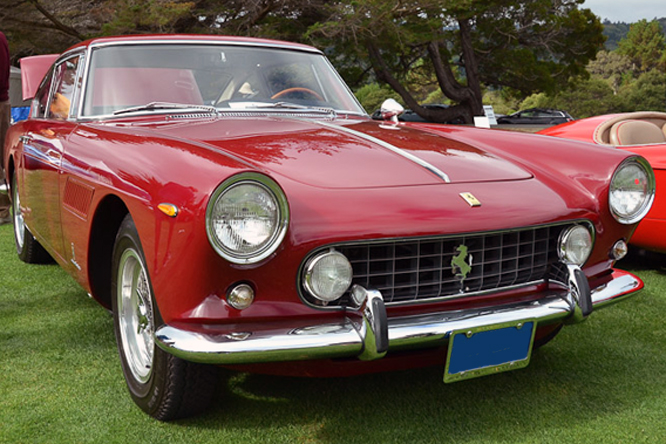
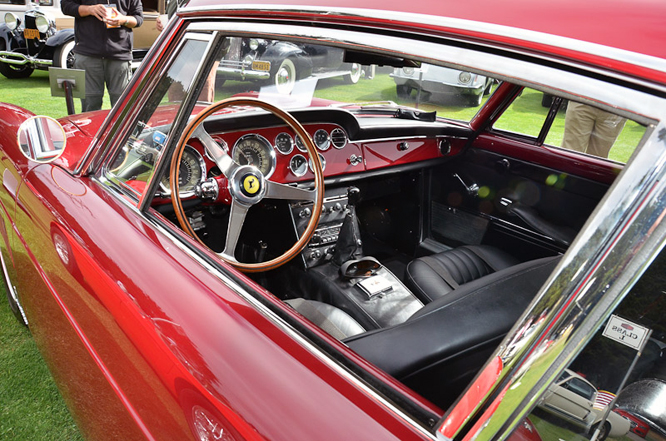
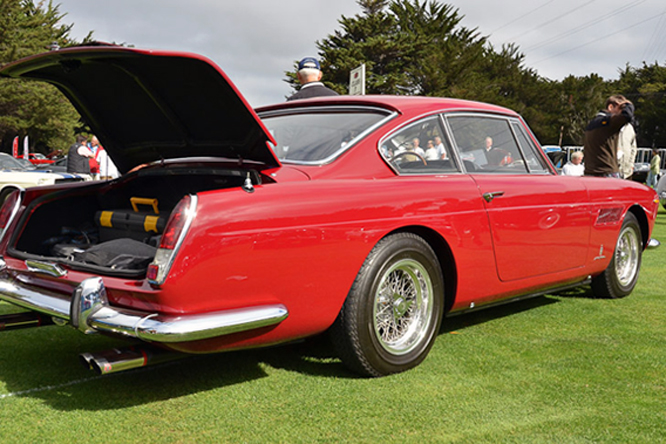
Finizione S2 – Ferrari 250 GT/E #4089GT

Last of the current series of Ferrari 250 GT/E blogs features coincidentally the last of the 348 Series 2 cars to be built chassis #4089GT.

Ferrari 250 GT/E, Hillsborough Concours d'Elegance

Not much is known about the history of the car other than it was the last S2, finizione, to be built, if you know anymore please do not hesitate to chime in below.

Ferrari 250 GT/E, Hillsborough Concours d'Elegance

The current owner has been showing this immaculate example of a 250 GT/E since at least 2009.

Ferrari 250 GT/E, Hillsborough Concours d'Elegance

The #4089GT is seen here at the 2012 Hillsborough Concours d’Elegance.

My thanks to Geoffrey Horton for sharing his photographs.

Thanks for joining me on this “Finizone S2” edition of “Gettin’ a li’l psycho on tyres” I hope you will join me tomorrow when I’ll be looking at another design from the house of Bertone. Don’t forget to come back now !
Share

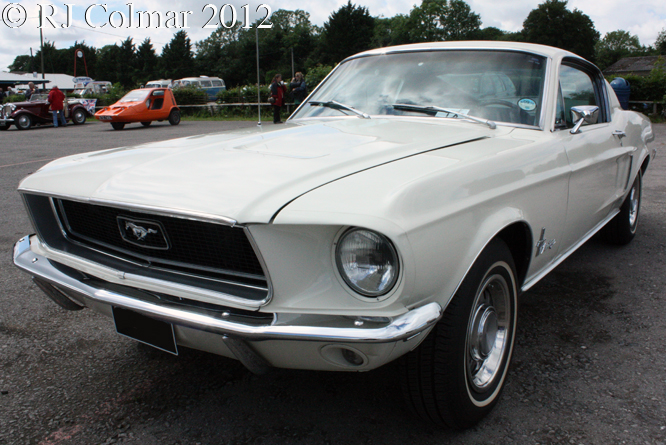
The PHD was TNT – Ford Mustang Fastback 302

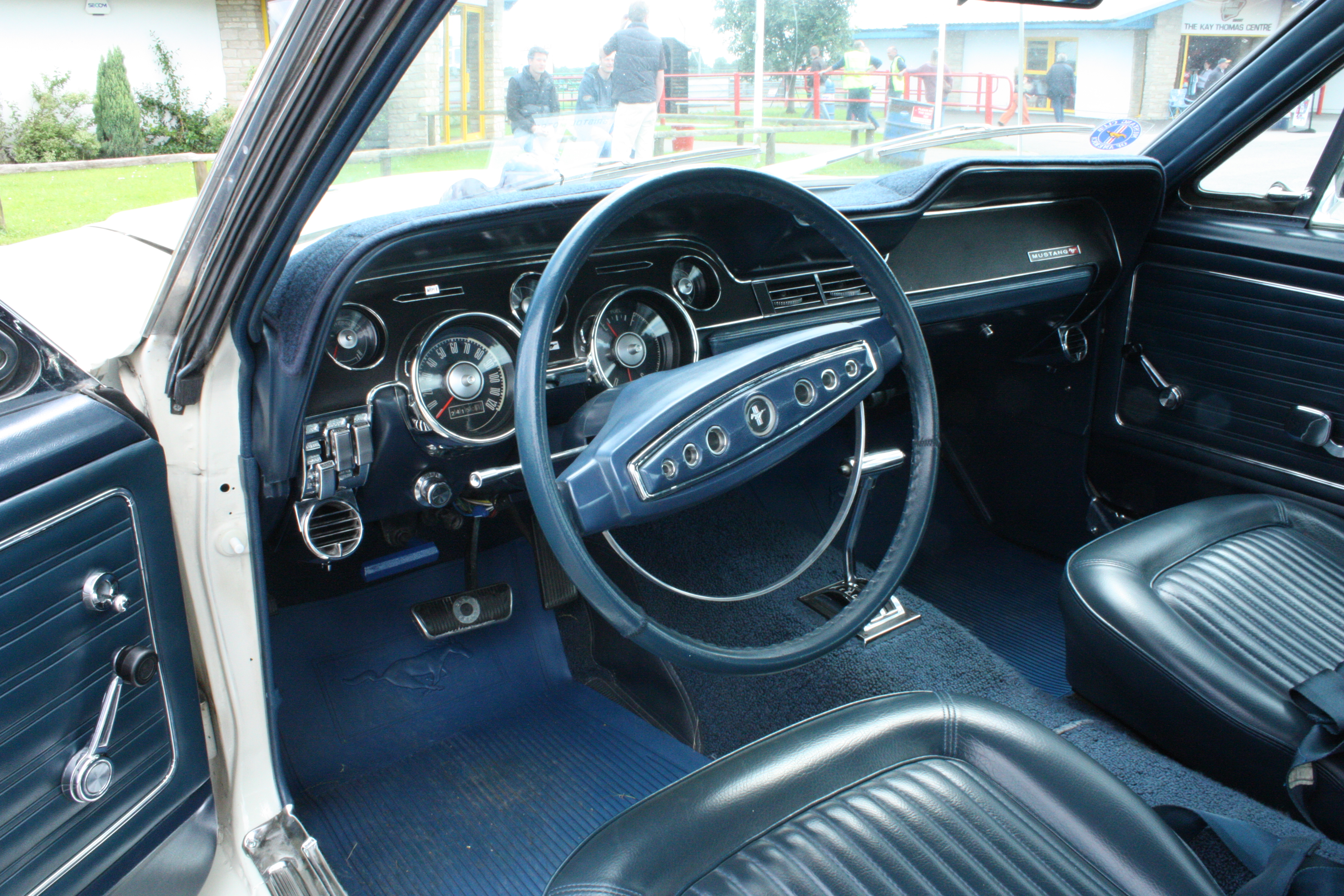
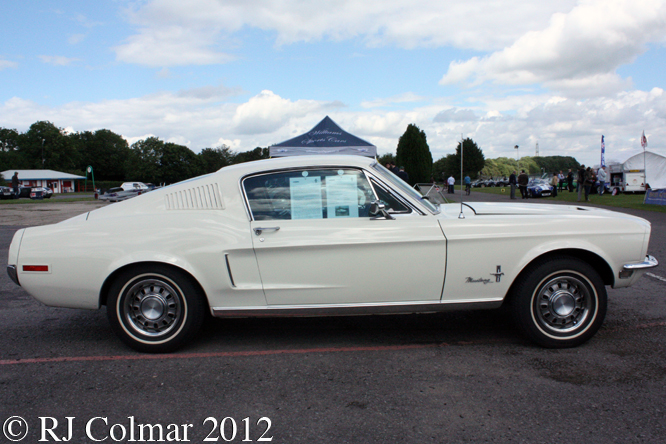
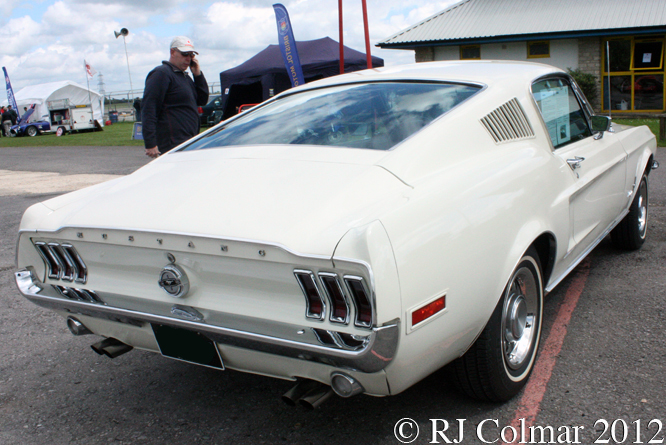
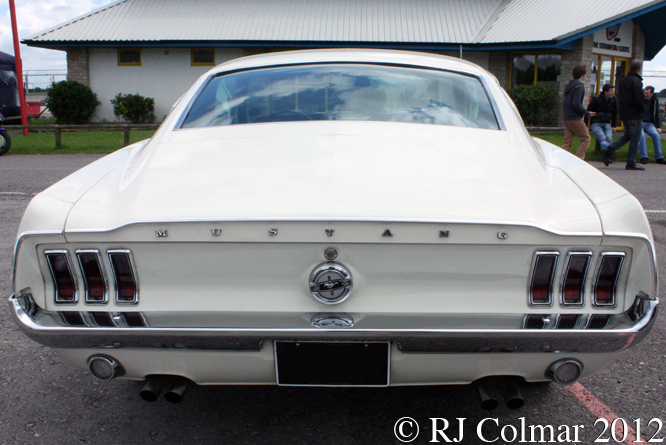
The first upgrade of the Ford Mustang in 1967 saw Ford deliver more interior space, exterior space and a larger range of motors from 3.3 litre / 200 cui six to to 7 litre / 428 cui V8.

Ford Mustang Fastback 302, Castle Combe

For their 1968 advertising campaign Ford was eschewing the value of PHD’s with the wonderful line the PHD was TNT in a ’68 Mustang !

Ford Mustang Fastback 302, Castle Combe

The example seen here at Castle Combe was the 8064th scheduled to be built at San Jose. Due to industrial action the car was six months behind schedule.

Ford Mustang Fastback 302, Castle Combe

The fist owner ordered a ’68 Windsor White 302 model with black interior, Cruise-o-matic transmission, Selectair conditioning and an AM radio, however because of the industrial action he was offered one in Acapulco Blue which he declined.

Ford Mustang Fastback 302, Castle Combe

When Ford offered to repaint the car in Windsor White the owner accepted and so the car was striped down repainted and rebuilt with a new VIN plate showing the correct combination paint code and interior trim. Ford ended up doing this 344 times with this particular non standard paint and interior trim combination.

Ford Mustang Fastback 302, Castle Combe

The car was delivered coincidentally, on the current owners Birthday, to north Hollywood, after a short spell in Seattle from 1995 to 1997 it arrived in the UK, the current owner bought it in 2004 without any evidence of ever having welding repairs.

Thanks for joining me on this “The PHD was TNT” edition of “Gettin’ a li’l psycho on tyres” I hope you will join me again tomorrow for Ferrari Friday. Don’t forget to come back now !
Share

2.2 Stroker – Mitsubishi Lancer Evolution VII RSII

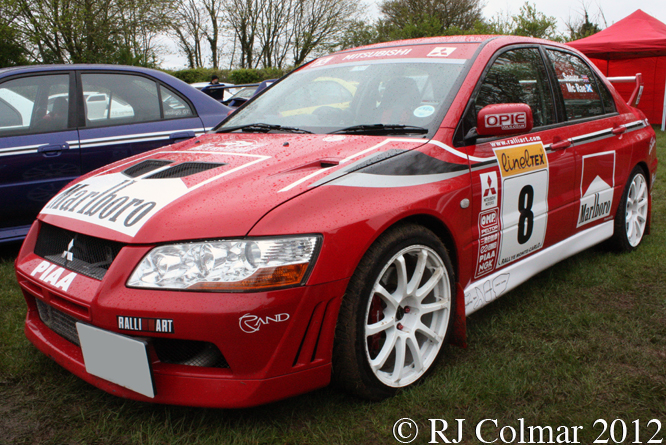
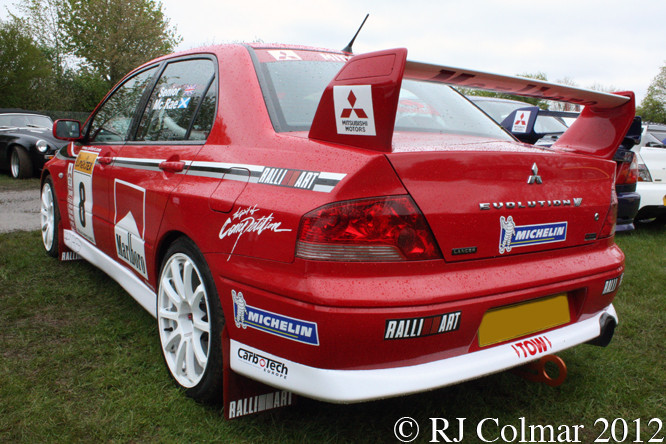
This weeks sticker car is a 2002 Mitsubishi Lancer Evolution VII RSII stickered up to look like the #8 vehicle Alistair McRae and Co driver David Senior drove to a 14th place on the Monte Carlo Rally, their debut with the team.

Mitsubishi Evolution VII RSII, Castle Combe

The highlight of Alistair and Davids year came at the following Swedish Rally where they finished fifth, after which it became obvious that the car was never going to hold it’s own against the Peugeot 206’s which would win their 2nd Championship on the trot. Just before the end of the season Alistair damaged his liver while training on a mountain bike forcing him to miss several events and by the end of the season Mitsubishi withdrew from the World Rally Championship completely.

Mitsubishi Evolution VII RSII, Castle Combe

The Evolution VII seen here at Castle Combe a couple of years ago was built on the larger Lancer Cedia platform than the Evolution VI. To compensate for the 150lb weight gain handling improvements were engineered by introducing an active center differential, more effective limited-slip differential and front helical limited-slip differential.

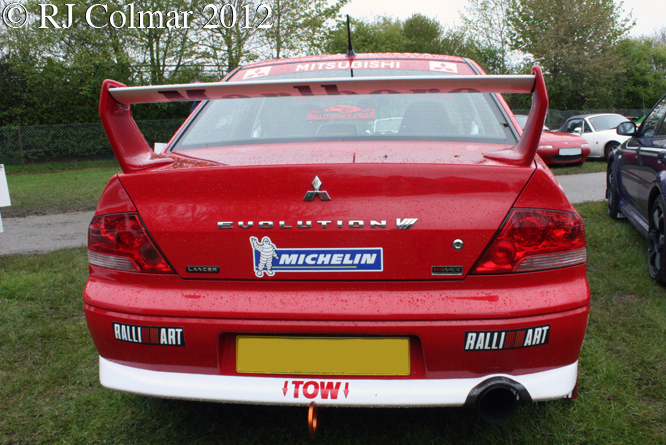
Mitsubishi Evolution VII RSII, Castle Combe

A standard Evolution VII was quoted by the factory as producing around 270hp though the actual figure believed by the contemporary press suggested over 295hp was more likely with acceleration from rest to 60 mph in less than 4.8 seconds and a quarter mile time below 13 seconds.

RS features included titanium alloy turbocharger while an option was close ratio five speed gearbox. This particular car has a long list of modifications to improve performance, handling safety and styling most significant of which include an enlarged 2.2 liter 134 cui Stroker Engine, up from the original 2 litre / 122 cui, Skunk S2 Cams, HKS GTII 7460R Turbo, Indigo-GT Club Intercooler, Hydra Nemisis ECU which together help bring the power up to 455 hp with over 500 ft/lbs of torque.

The car is fitted with a six speed gearbox, Exedy Twin Plate and Clutch and Evo IX differential to help transmit all of that power to the wheels which are Rota Grid 18″ x 8.5″.

The list goes mods goes on and on, save to say this car is well above factory spec and obviously gives the owner a lot of pleasure going on the considerable sums of money he has spent on it since buying it from a dealer in 2007.

Thanks for joining me on this “2.2 Stroker” edition of “Gettin’ a li’l psycho on tyres” I hope you will join me again tomorrow. Don’t forget to come back now !
Share