Mythological Hunting Virgin – Bugatti Type 57, Atalante Coupé, #57504

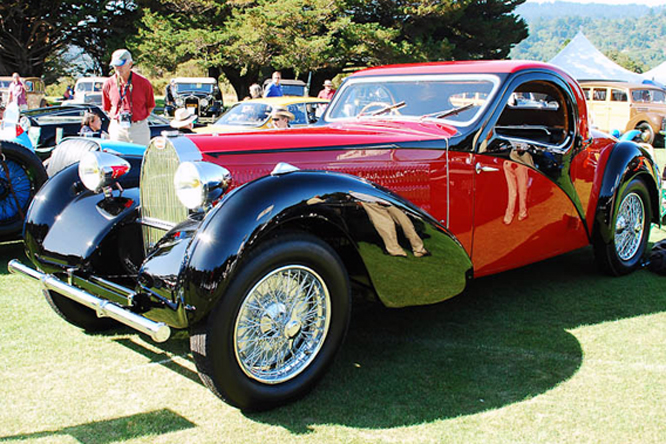
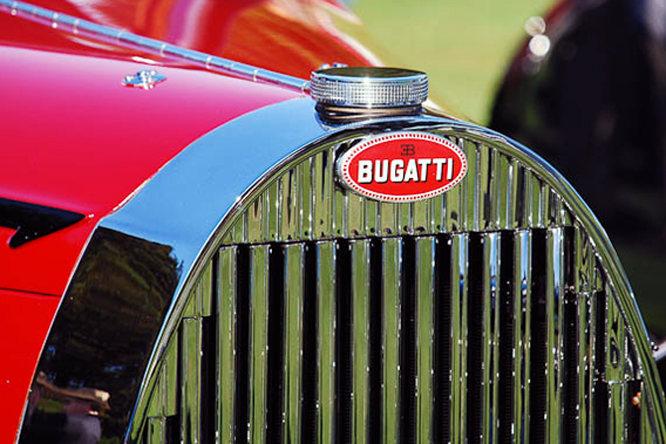
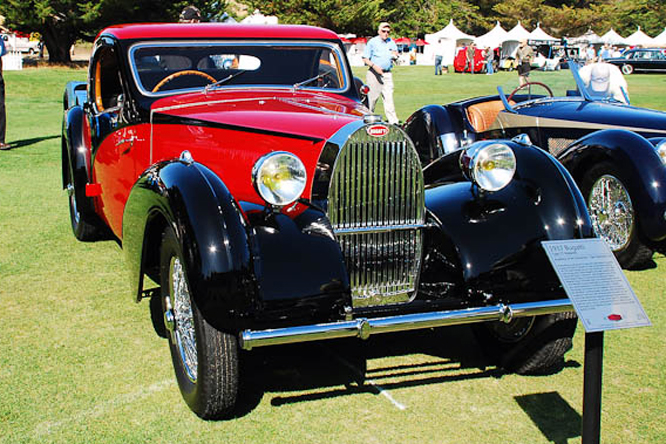
Of the 710 Bugatti Type 57’s built between 1934 and 1940 the single fast back Aerolithe, four fast back Atlantics an 17 Atalante Coupés, such as the one seen here, were fitted with the most radical bodies for the period.

Bugatti, Type 57, Atalante, Hillsborough Concours d'Elegance

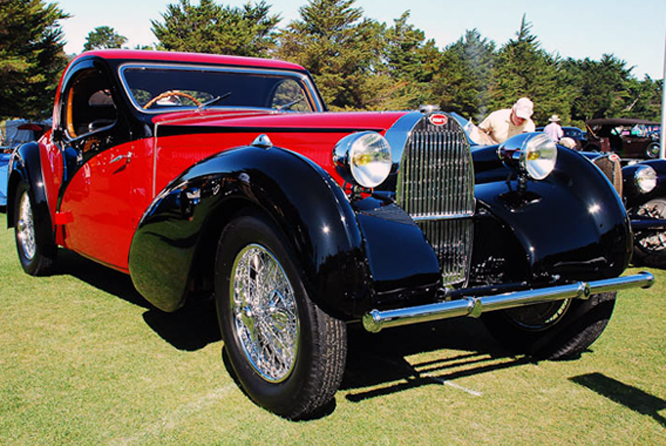
Named after a mythological Greek Goddess who was brought up by bears to become a happy but fierce hunter, sworn to virginity, the Atalante differs from the Atlantic having a single screen and none of the riveting seams for which the Atlantic and Aerolithe are best remembered for.

Bugatti, Type 57, Atalante, Hillsborough Concours d'Elegance

Unlike the Atlantic body which was only fitted on the lower Type 57 S chassis the Atalante Coupé was fitted to both original type 57 chassis with the axles below the chassis rails and the lower 57S chassis.

Bugatti, Type 57, Atalante, Hillsborough Bugatti, Type 57, Atalante, Hillsborough Concours d'Elegance d'Elegance

The Atalante body seen here by Geoffrey Horton at Hillsborough Concours d’Elegance a couple of years ago is fitted to an original Type 57 chassis as can be seen by the fact that the bonnet / hood stands well clear of the height of the front wings / fenders.

Bugatti, Type 57, Atalante, Hillsborough Concours d'Elegance

This particular Atalante was built in 1937 and is believed by the owners, the Academy of Art University® in San Francisco, to have been retained by the factory and used by Jean Bugatti who was responsible for the styling.

My thanks to Geoffrey Horton for sharing his photographs taken at Hillsborough Concours d’Elegance in 2011.

Thanks for joining me on this “Mythological Hunting Virgin” edition of “Gettin’ a li’l psycho on tyres”, I hope you will join me again tomorrow. Don’t forget to come back now !

Share

Raph’s ’38 Voiturette – Maserati 6CM #1556

With the State funded Mercedes Benz and Auto Union teams battling for major open wheel Grand Prix honours from the mid to late 1930’s with the occasional interruption only offered by Alfa Romeo many wealthy drivers were left with little alternative but to contest Grand Prix run for 1.5 litre / 91.5 cui voiturette open wheel single seater, monopost, racing cars.

Among the successful manufacturers of such Voiturettes were Bugatti with their 8 cylinder Type 39, ERA, English Racing Automobiles, which was founded to manufacture vehicles soley for Voiturette racing using a derivative of a Riley 6 cylinder motor, and today’s featured manufacturer Maserati who first fitted a 6 cylinder 1.5 liter motor to Tazio Nuvolari’s Maserati 8CM.
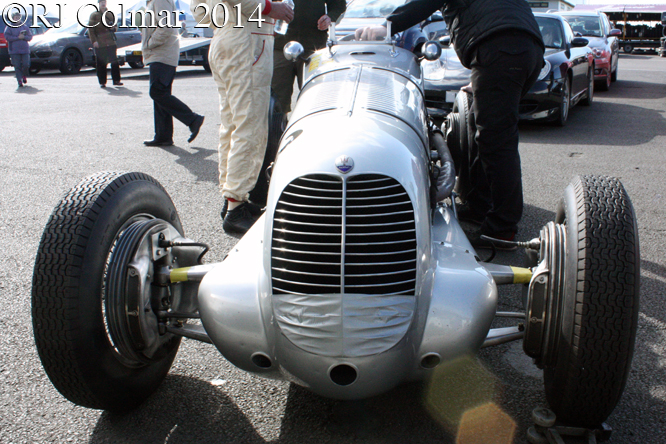
Maserati 6CM, VSCC Spring Start, Silverstone

Between 1936 and 1939 Maserati built a run of 27 6CM Voiturettes of which chassis #1556, fitted with motor #1555, seen here was the one that appears to have been delivered in April 1938 to driver known as “Raph”.

Otherwise known as Count George Raphaël Béthenod de Montbressieux, “Raph” was born in 1910 in Buenos Aires to a wealthy silk manufacturing family from Lyon with an Argentinian mother who was daughter of an Argentine Minister of Justice, he started racing in 1932.
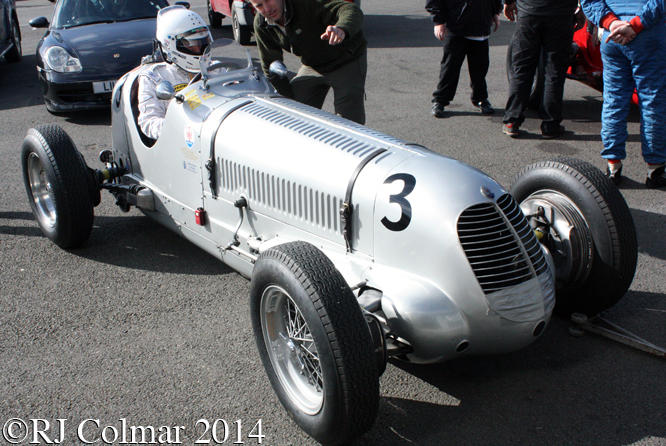
Maserati 6CM, Lockie, VSCC Spring Start, Silverstone

Prior to purchasing #1556 “Raph” had recovered from six months of paralysis to his legs after crashing his #7 Talbot-Lago on the 10th lap of the 1937 Le Mans 24 hours.

“Raph” is known to have raced for several teams during 1938, a few day’s after apparently taking delivery of his 6CM he was entered in the Grand Prix de Pau in a 6CM by Scuderia Torino where he finished, I have been unable to establish if the car “Raph” used in this race was today’s featured car.
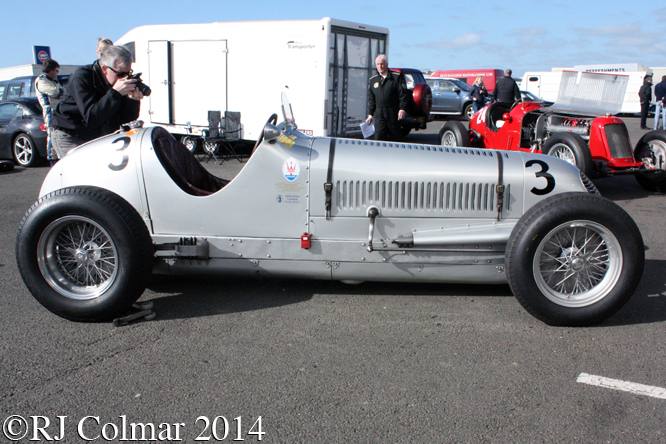
Maserati 6CM, VSCC Spring Start, Silverstone

After his drive at Pau “Raph” is known to have entered at least six further events in a 6CM under either his mothers name B de Las Casas or his own.

It would not appear unreasonable to assume #1556 was the vehicle “Raph” drove in these events recording one failure to start at Picardie, three non finishes at Albegois, Livorno and La Baul, an 11th at Piemonte and a seasons best 2nd at Targa Florio.
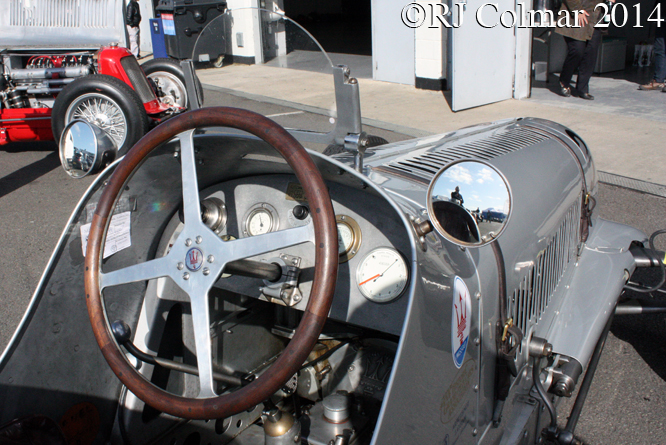
Maserati 6CM, VSCC Spring Start, Silverstone

Towards the end of 1938 “Raph” had two outings in top class open wheel races with Ecurie Bleu driving a Delahaye at Bermgarten and Donington where he finished 11th and retirement respectively.

In 1939 “Raph” drove a Delahaye twice for Ecurie Lucy O’Reilly finishing 9th at Reims Geuex and 5th at the Nurburgring. He then is recorded has having been entered at Bermgarten in an O’Reilly Maserati 8CTF (#3031) but does not appear to have taken part.
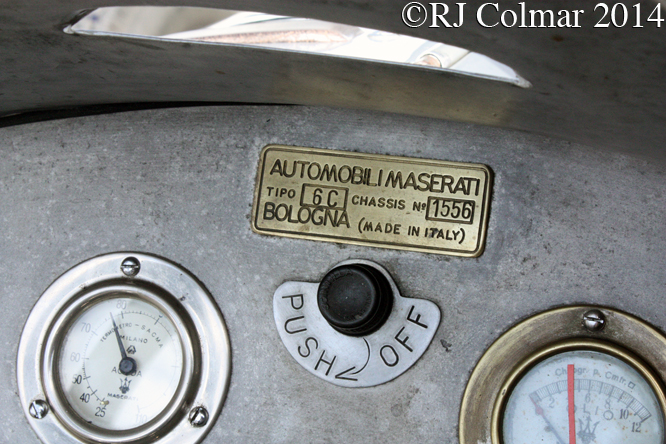
Maserati 6CM, VSCC Spring Start, Silverstone

In 1946 he resumed racing by 1946 recording a win in an indoor Midget race in Los Angeles the same year. Back in Europe Raph co founded Ecurie Naphtra Course managed by M.me Denise Depoix said to be the wife of an imprisoned collaborator.

It is unclear if “Raph” raced today’s featured car for the team or not, some sources suggest he may have done, while others suggest he raced a later Maserati 4CL.
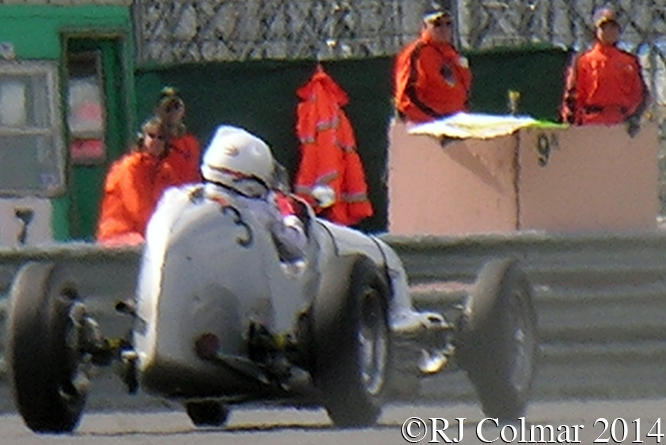
Maserati 6CM, Lockie, VSCC Spring Start, Silverstone

The highlight of “Raph”‘s career came when he won the 1946 Nantes Grand Prix aboard a Maserati which all at least appear to agree was a “voiturette”.

“Raph” continued racing until 1950 by which time was still recovering from a fractured skull after an accident driving a Talbot Lago T26C at Albi in 1948.
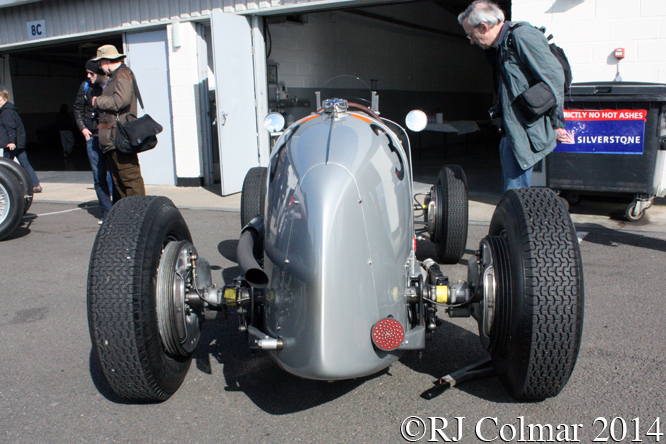
Maserati 6CM, VSCC Spring Start, Silverstone

With no financial security “Raph” took a job as a handyman and chauffeur with his friend, actor and entertainer, Maurice Chevalier.

Today #1556 is owned by Sean Danaher and is seen in these photographs being driven by Calum Lockie in the Pre ’41 race at the VSCC’s Spring Start meeting at Silverstone.

Thanks for joining me on this “Raph’s ’38 Voiturette” edition of “Gettin’ a li’l psycho on tyres” I hope you will join me for a look at a Bugatti tomorrow. Don’t forget to come back now !
Share

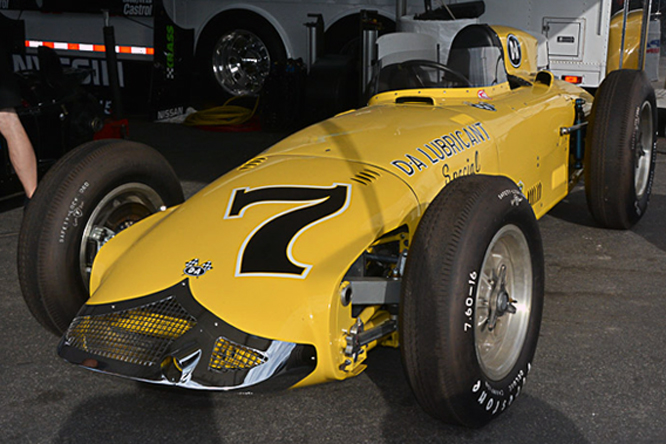
D.A. Lubricant Special – Kurtis Offenhauser KK500H

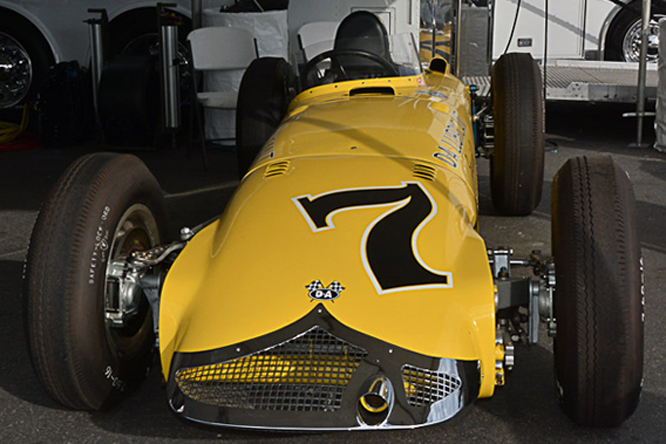
For the 1958 Indianapolis 500 D.A.Lubricants sponsored an Offenhauser powered Kurtis KK500H that was to be driven by Johnny Thomson. Unlike previous Kurtis Indy cars this one did not lift it’s inside front wheel when going through the corners because it was the first Kurtis to be fitted with independent front suspension.

Kurtis Offenhauser 500H, Rolex Reunion, Laguna Seca

Johnny qualified the D.A.Lubricants Special 22nd and on the first lap got tangled up in the accident that killed Pat O’Conor damaging the suspension. Johnny continued for another 51 laps before the team called it a day, to be classified 23rd, with damaged steering. The race was won by Jim Bryan in the Salih Offy Belond Special.

Kurtis Offenhauser 500H, Rolex Reunion, Laguna Seca

In 1959 the D.A.Lubricants Special became the Smokey’s Reverse Torque Special driven by Duane Carter who qualified 12th and finished 7th to record the cars only Indy 500 finish in a race dominated by the Watson Offy’s driven by Roger Ward and Jim Rathman. Interestingly Smokey Yunnick had realised that by reversing the direction of the crankshaft and flywheel rotation the car should have had a better balance through the corners, hence the Smokey’s Reverse Torque name.

Kurtis Offenhauser 500H, Rolex Reunion, Laguna Seca

This cars final appearance in the 500 was in 1960 when Don Freeland drove the car now known as the Ross-Babcock Traveler qualifying 11th but being classified 22nd after withdrawing from the race with a magneto problem.

Ron Fournier restored the car to 1958 D.A.Lubricants configuration and to meet current vintage racing requirements in 2007.

My thanks to Geoffrey Horton for sharing his photo’s of the car seen at last years Rolex Reunion at Lagunna Seca.

THanks for joining me on this “D.A. Lubricant Special” edition of “Gettin’ a li’l psycho on tyres” I hope you will join me for Maserati Monday tomorrow. Don’t forget to come back now !
Share

140mph Tortoise – Gordon-Keeble

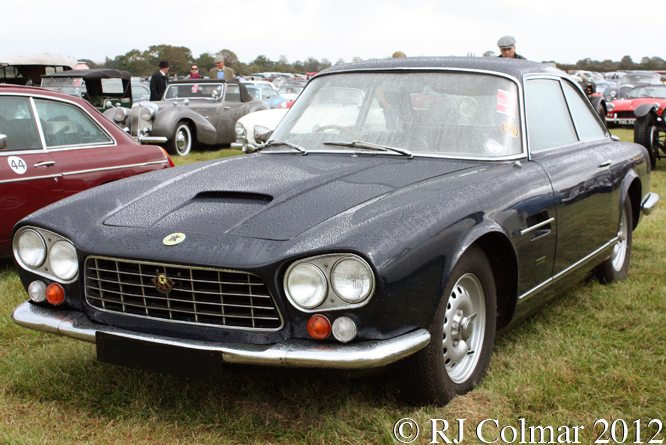
Like the Warwick GT the origins of Gordon-Keeble lie in Peerless Cars Ltd. In 1959 co founder of Peerless John Gordon teamed up with engineer and racing driver Jim Keeble to build a GT car for USAF pilot Rick Neilson who suggested fitting a a 4.6 litre 283 cui Corvette V8 into a Peerless chassis.

The steel body for the Gordon GT was designed by Giorgetto Giugiaro working for Bertone who crafted it. The Gordon GT was assembled from scratch over 3 months just in time to be exhibited on the Bertone stand at the 1960 Geneva Show, where they it was well received. Autocar would later test the Gordon GT and proclaim that it was “the most electrifying vehicle that it has ever tested.”

Gordon Keeble, Haynes International Motor Museum

The Gordon GT was later taken to the USA where Chevrolet executives gave the green light for the supply of 5.4 litre / 327 cui to be fitted to a production version of the Gordon GT known as the Gordon-Keeble.

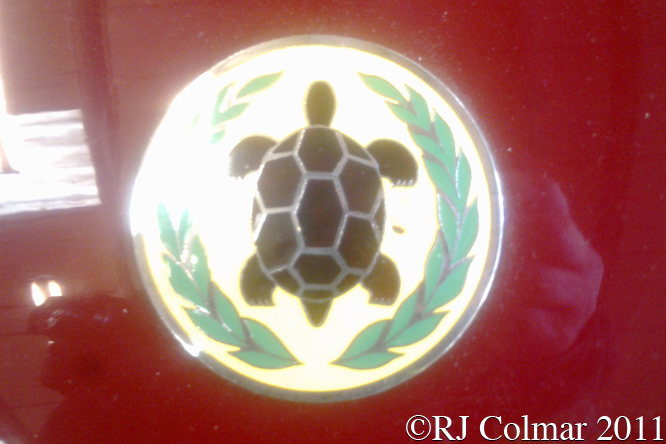
During an advertising shoot for Gordon-Keeble a tortoise wandered on to the set and it became immortalised in the Gordon-Keeble badge. The prototype achieved 70 mph in first gear and had a top speed of 140 mph.

Gordon Keeble, Goodwood Revival

Due to problems with the supply of some parts, in particular the Adwest steering boxes which were held up due to ‘industrial action’ by Adwest employees, the Gordon-Keeble did not go into production until 1964, by which time it was decided to use a fiber glass body similar to the Bertone original built by Williams and Pritchard.

Gordon-Keeble struggled financially until 1965 when it collapsed with 91 cars built. The company was almost immediately revived as Keeble Cars Ltd who built 8 more cars to the Gordon-Keeble specification before insolvency struck again. One further example was constructed from parts in 1971.

Gordon Keeble, Haynes International Motor Museum

In 1968 John de Bruyne bought the rights to manufacture the Gordon-Keeble and he built a further two cars badged as De Bruynes that were shown at the ’68 New York Auto Show.

The two cars seen here’ at Haynes International Motor Museum and Goodwood Revival were both first registered in January 1965, the blue one on the 12th and the red on the 14th.

Thanks for joining me on this “140mph Tortoise” edition of “Gettin’ a lil’ psycho on tyres” I hope you will join me for a look at an Indy Car tomorrow. Don’t forget to come back now !
Share

Sweet Talking The Wife – Ferrari 250 GT/E #4049

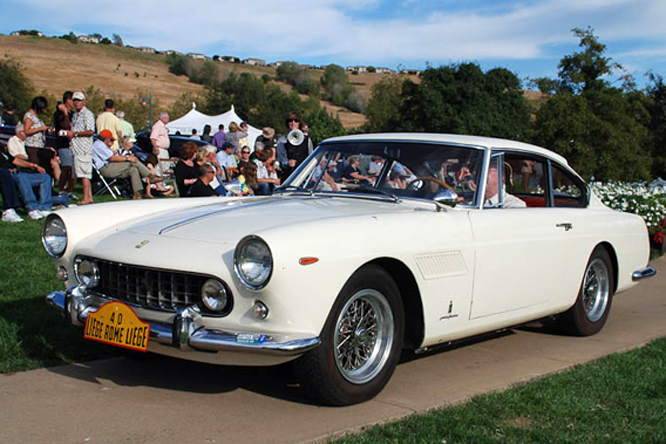
Today’s featured Ferrari is an Ivory White 1962 Series 2 250 GT/E that was originally delivered to Jacques Swaters in Belgium. By 1967 the vehicle was offered for sale in San Francisco when the previous owner bought it and used as his daily driver taking it to work at McClellan Air Force Base north east of Sacramento.

Ferrari 250 GT/E, Niello Serano Concours d'Elegance

One night the present owners son saw the car being driven through the neighborhood and followed it home and made a mental note of where it was and told his Dad Jim Bonney who at the time owned an Alfa Romeo GTV.

Soon after Jim went and introduced himself to the previous owner and established that the car was not for sale but stayed in touch for a couple of years.

One day Jim got the bright idea of appealing to the decision maker in the previous owners house and waited until the previous owner was out and then introduced himself to his wife. On ‘discovering’ the previous owner was out he left a business card with revised figure for the car on the back.

Some months later the previous owner got in touch with Jim and they did a deal which meant Jim had to sell his GTV and raise $5,000.

Jim has kept the car more or less as he bought it, the paint was last done around 1995 while the motor was last overhauled around 1980.

I’m not exactly sure why the car is carrying the #40 Liege Rome Liege plates I am not aware of a 250 GT/E competing in that event but would be glad to hear of any evidence to the contrary.

My thanks to Geoffrey Horton for sharing today’s photograph taken at Niello Serano Concours d’Elegance a couple of years ago.

Thanks for joining me on this “Sweet Talking The Wife” edition of “Gettin’ a li’l psycho on tyres” I hope you will join me again tomorrow for a rare British Car with an American motor and an Italian styled body. Don’t forget to come back now !
Share

Everything You Could Ask For – Ford Mustang Hardtop

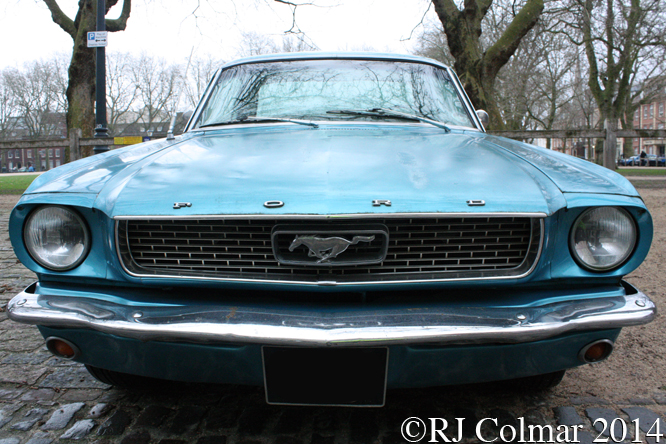
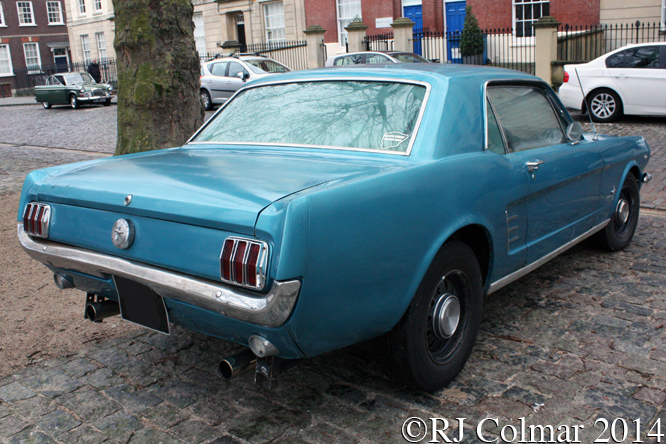
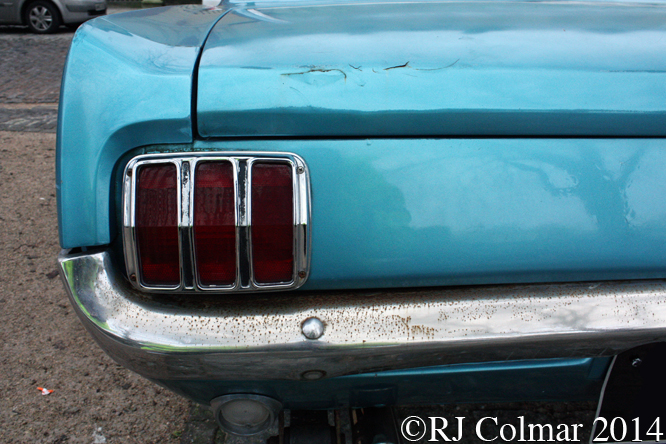
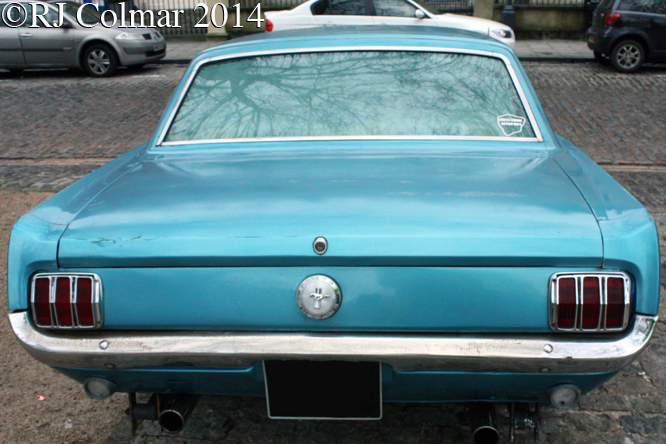
The 1966 Ford Mustang introduced minor detail changes to the original ’65 models including a simplified front grill.

 Ford Mustang, Avenue Drivers Club, Queen Square, Bristol

Below the bonnet / hood there were not many changes except the availability of the Cruise O Matic three speed transmissions on the V8 models.

 Ford Mustang, Avenue Drivers Club, Queen Square, Bristol

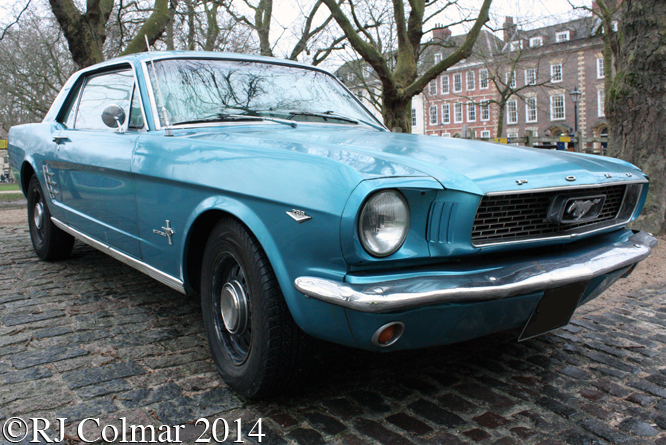
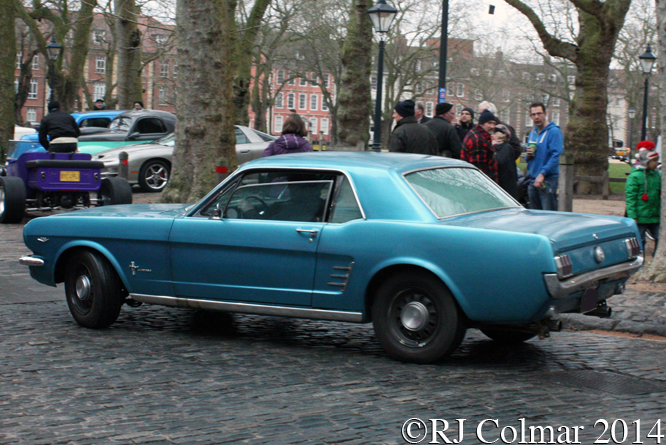
Chrome trim was also added to the faux intakes ahead of the rear wheels. Slightly different wheel trims were standard but this ’66 car seen at an Avenue Drivers Club meeting in Bristol appears to be fitted with out of period wheel trims.

 Ford Mustang, Avenue Drivers Club, Queen Square, Bristol

In the cabin the original Falcon derived interior instrumentation disappeared with a five dial cluster as standard and two in car entertainment options were offered AM/8 Track Stereo or AM/FM Mono radio.

 Ford Mustang, Avenue Drivers Club, Queen Square, Bristol

Rear seat belts also became standard in ’66.

 Ford Mustang, Avenue Drivers Club, Queen Square, Bristol

This particular was imported in 2008 and is showing signs of not having been kept in a garage since.

 Ford Mustang, Avenue Drivers Club, Queen Square, Bristol

The ’66 Mustangs were aimed at both the single girl on a secretaries salary and the man in his 50’s looking to add a little spring to his step.

Thanks for joining me on this “Everything You Could Ask For” edition of “Gettin’ a li’l psycho on tyres” I hope you will join me tomorrow for Ferrari Friday. Don’t forget to come back now !
Share

JPS Tribute TVR – TVR Cerbera

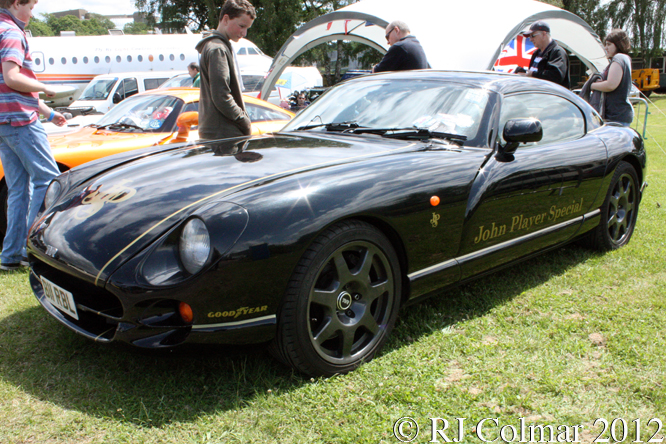
One of the coolest paint jobs ever to appear on a racing car was the black & gold JPS livery on the Lotus Grand Prix cars run from 1972 to 1986 with a two year gap from 1979 to 1981. Last of the Lotus drivers to appear in the JPS colours were Ayrton Senna and Johnny Dumfries who drove the Renault powered Lotus 98T’s.

TVR Cerbera, Double Twelve, Brooklands

Today’s featured car is a 1998 TVR Cerbera in 1986 JPS Lotus livery. This Cerbera is powered by the top of the range 4.5 litre @ 273 cui V8 which was quoted as giving 420 hp with a rest to 60 mph acceleration time of 4.1 seconds and top speed of 185 mph.

While Lotus were running their own Grand Prix team they built several models with the same colours as the Formula One Race cars including the Gold Leaf Team Lotus liveried Elan Sprint, JPS liveried Europa Special, and Essex Esprit Turbo.

Thanks for joining me on this “JPS Tribute TVR” edition of “Gettin’ a li’l psycho on tyres” I hope you will join me again tomorrow for Americana Thursday. Don’t forget to come back now !

Share